The Caliente Geraniums

tree ferns

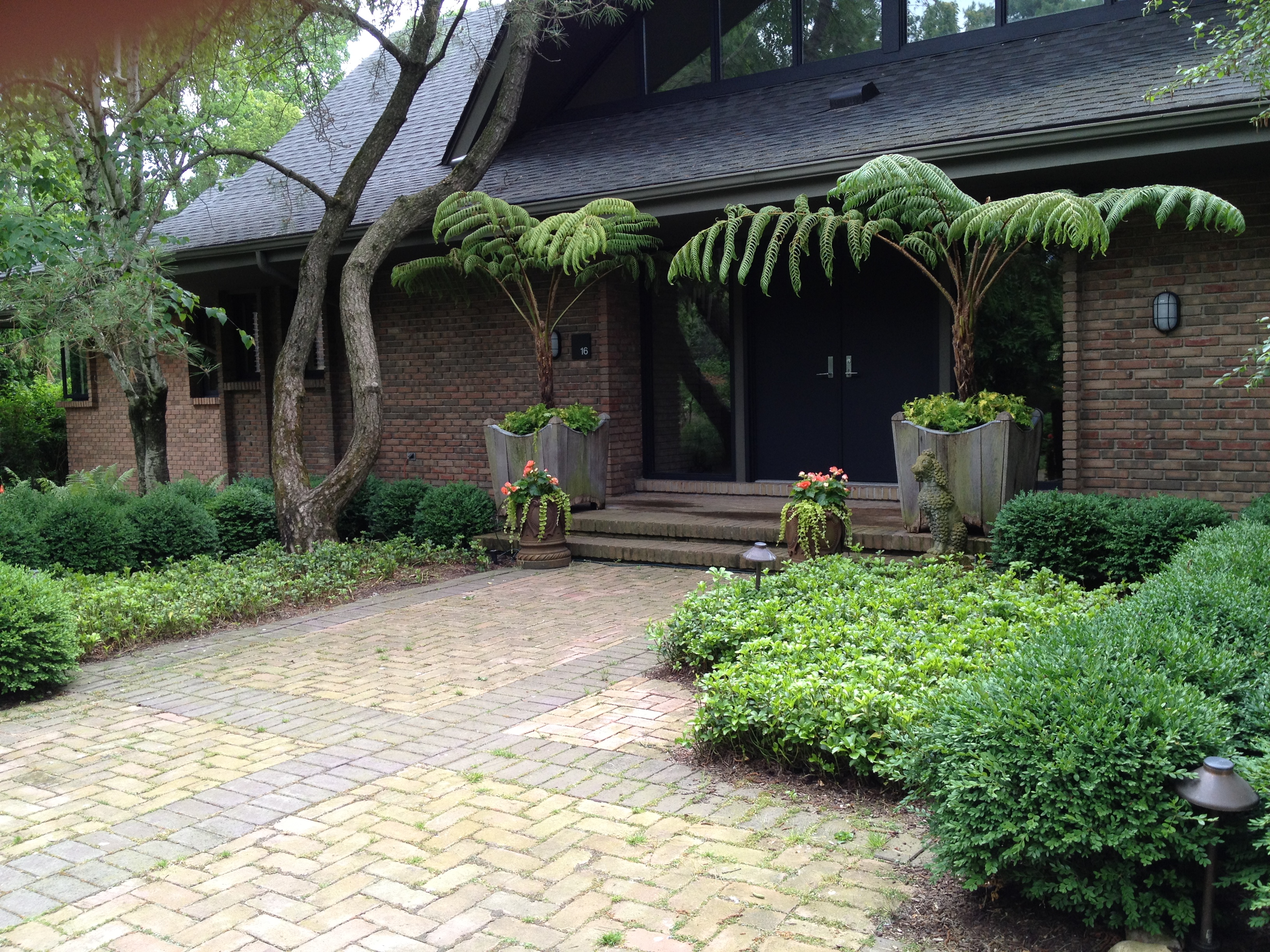
I am sure you can tell from the dearth of posts this week that I am in the thick of the spring planting season. Every year at this time I have the opportunity to experience in fresh detail the meaning of the word seasonal. Though I have a number of landscape projects underway, and the shop is incredibly busy, I make time to plant summer annuals for clients. These tree ferns which have belonged to my clients for years come under the heading of annual flowers, as we have to winter them indoors in an unheated space. They are a very unusual and unlikely summer annual-I like this about them. The wild lime coleus planted underneath, and the begonias in the chimney pots will have much more to say in 6 weeks than they do now.

waxleaf privet topiaries

We have wintered this pair of waxleaf privets for the past 10 years. I think this is the last year for them-in these pots. I love how overscaled the tops are as opposed to the green glazed bottoms, but I have root pruned them for the last time. I dare not go one bit further with that. We were barely able to get the lavender scaevola and lime licorice skirt in the pot. I advised my client that she either needed bigger pots, or new topiaries. Somehow I doubt she will give up the privet standards.
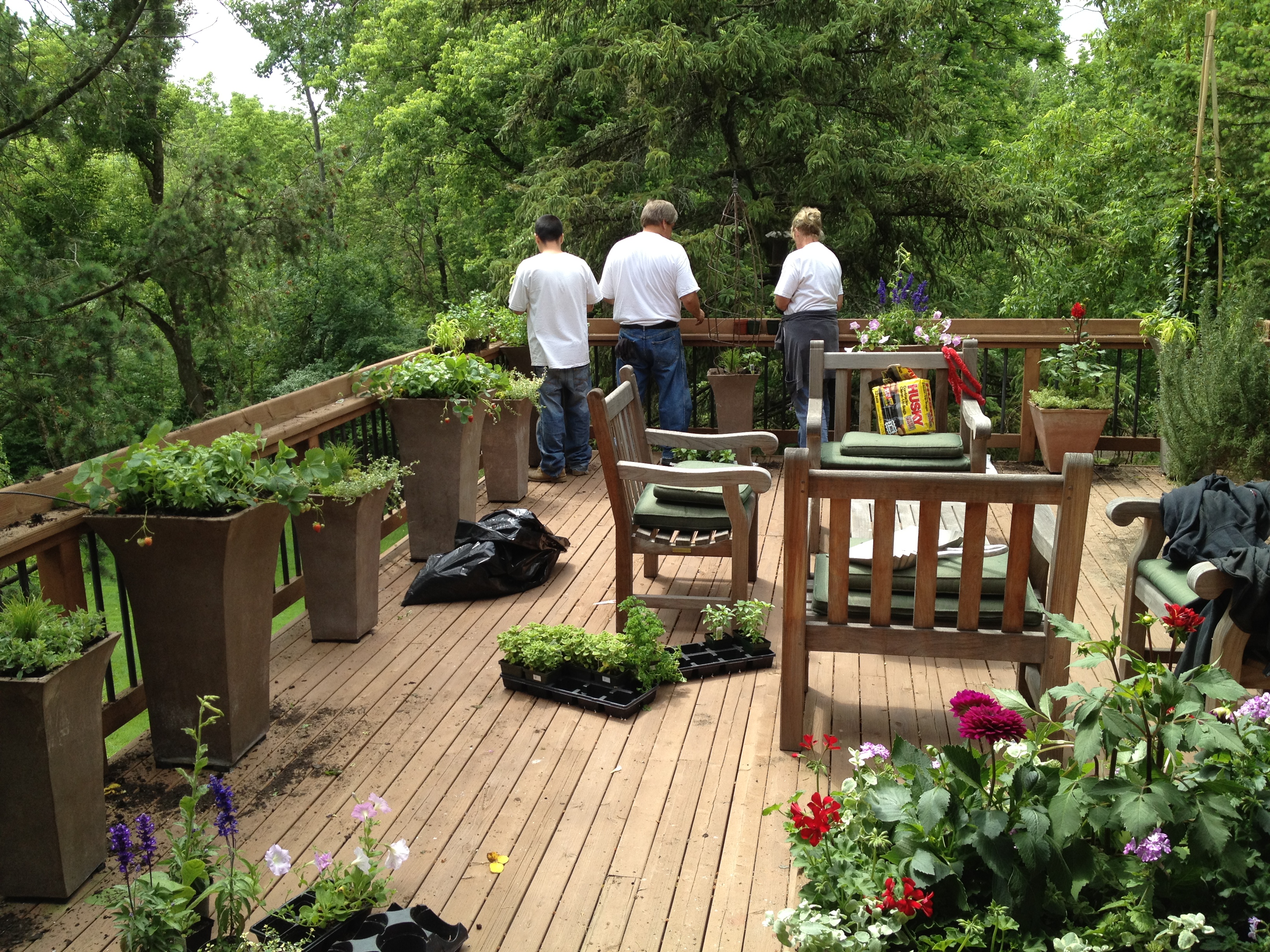
growing herbs in containers

The largest of the two second floor decks has a number of containers which we plant with herbs. What herbs? Lots of sweet Genovese basil, lemon basil, several kinds of variegated culinary thyme, gold marjoram, garlic chives, oregano, and both flat and curly parsley. These are her favorites. At the corners of the big pots-strawberries. They do not bear for long, but the leaves and trailers are beautiful in herb pots. One pot not seen in this picture is entirely taken up with an old rosemary. Just for punctuation-some flashlights millet. They will take a while to grow on.

cedar planter boxes

That old wild rosemary is visible in the top left of this picture. We store this plant over the winter; the storage is worth the trouble. The big planter box, which separates the deck from the walkway that traverses the entire rear of the house, gets flowers. As I had a request for lots of color, the box is planted with red and dark red violet dahlias. The cool color of variegated licorice and lavender star verbena makes all that color seem all the more saturated. As I like my mixed colors in threes, the border also includes Caliente Dark Red geraniums.
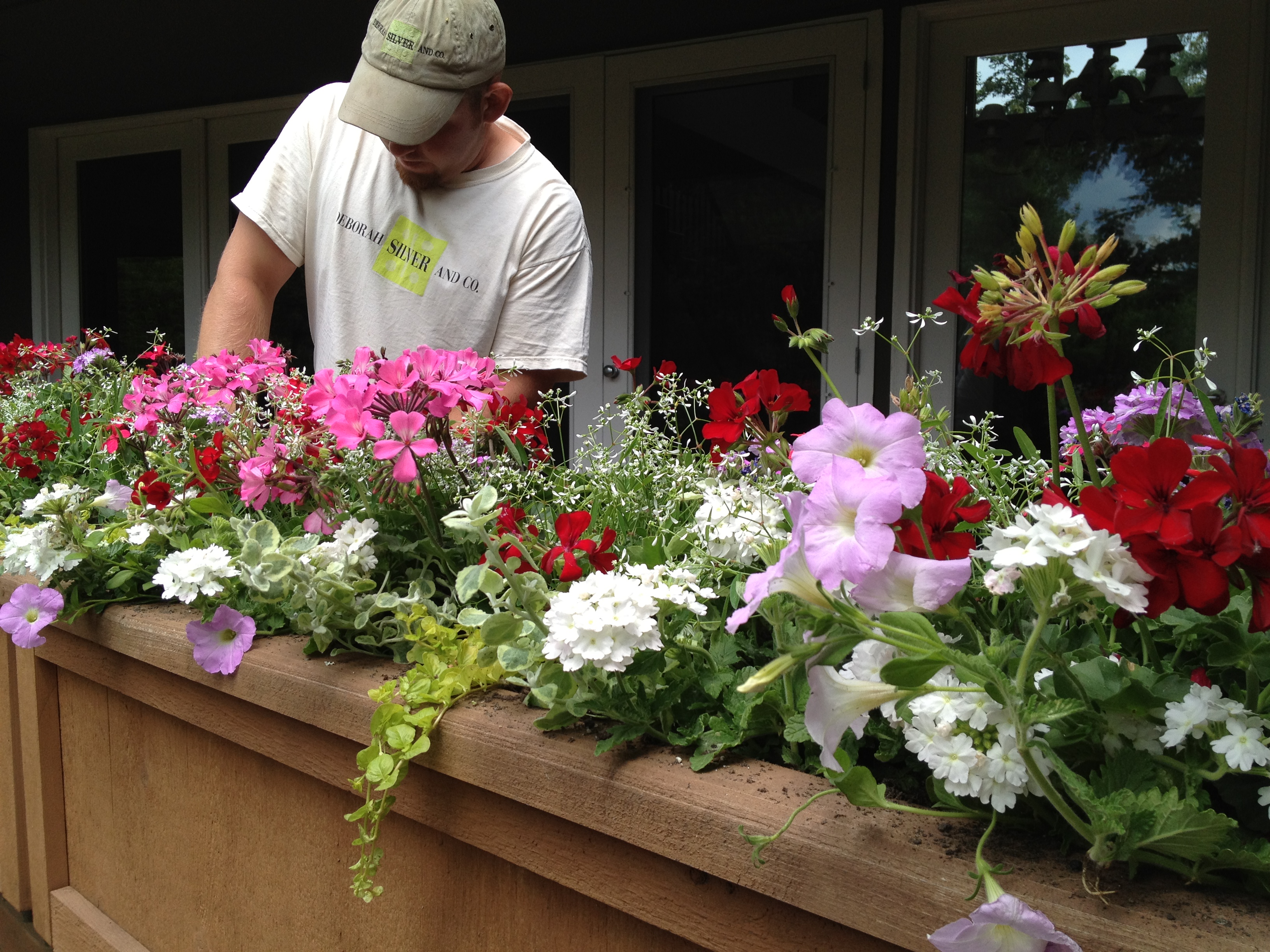
planting containers with annuals

Several years ago, at the Independent Garden Centers convention and trade show in Chicago, I heard Alan Armitage speak. He trials bedding plants at a garden at the University of Georgia in Athens. There were lots of plants he had issues with-as in poor color, substance or performance. But he was highly complimentary of the Caliente geraniums. If he liked them, I was sure that I would too. Interestingly enough, he recommended that gardeners in southern states plant them with afternoon shade.  I wondered if they would tolerate a little bit of shade that marks the locations of these boxes.
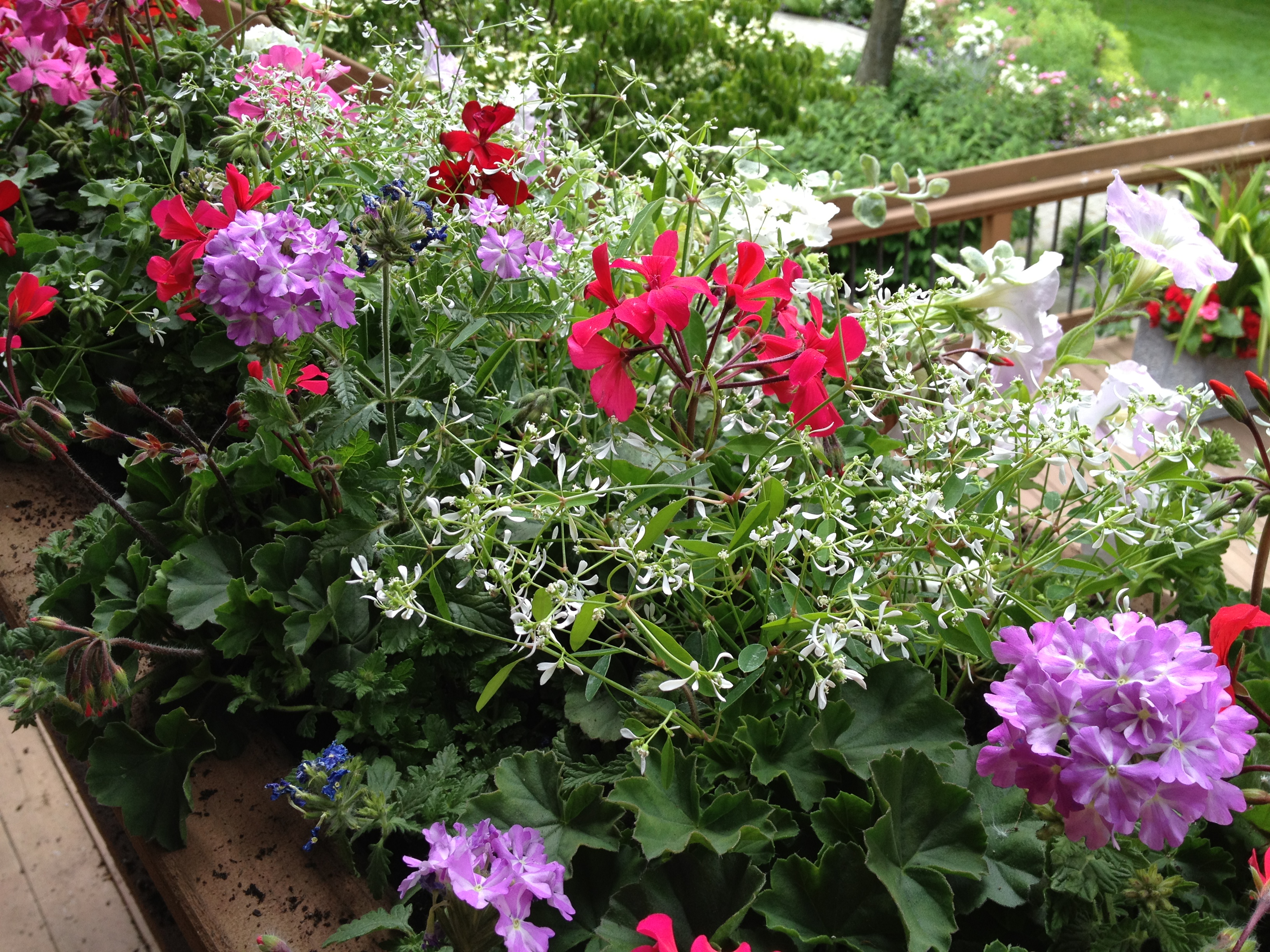
caliente geraniums

I asked my grower to grow 10 cases of each color for me last year. I planted lots of the orange variety in my roof boxes. They bloomed non-stop in that very hot and very windy location. They were virtually self-cleaning. That vivid color was readily visible from the street. Caliente geraniums are a cross between an ivy geranium, and the mop headed zonal geranium. They are vigorous growers; the colors are clear and intense. The flower heads are loose, like a typical ivy geranium.
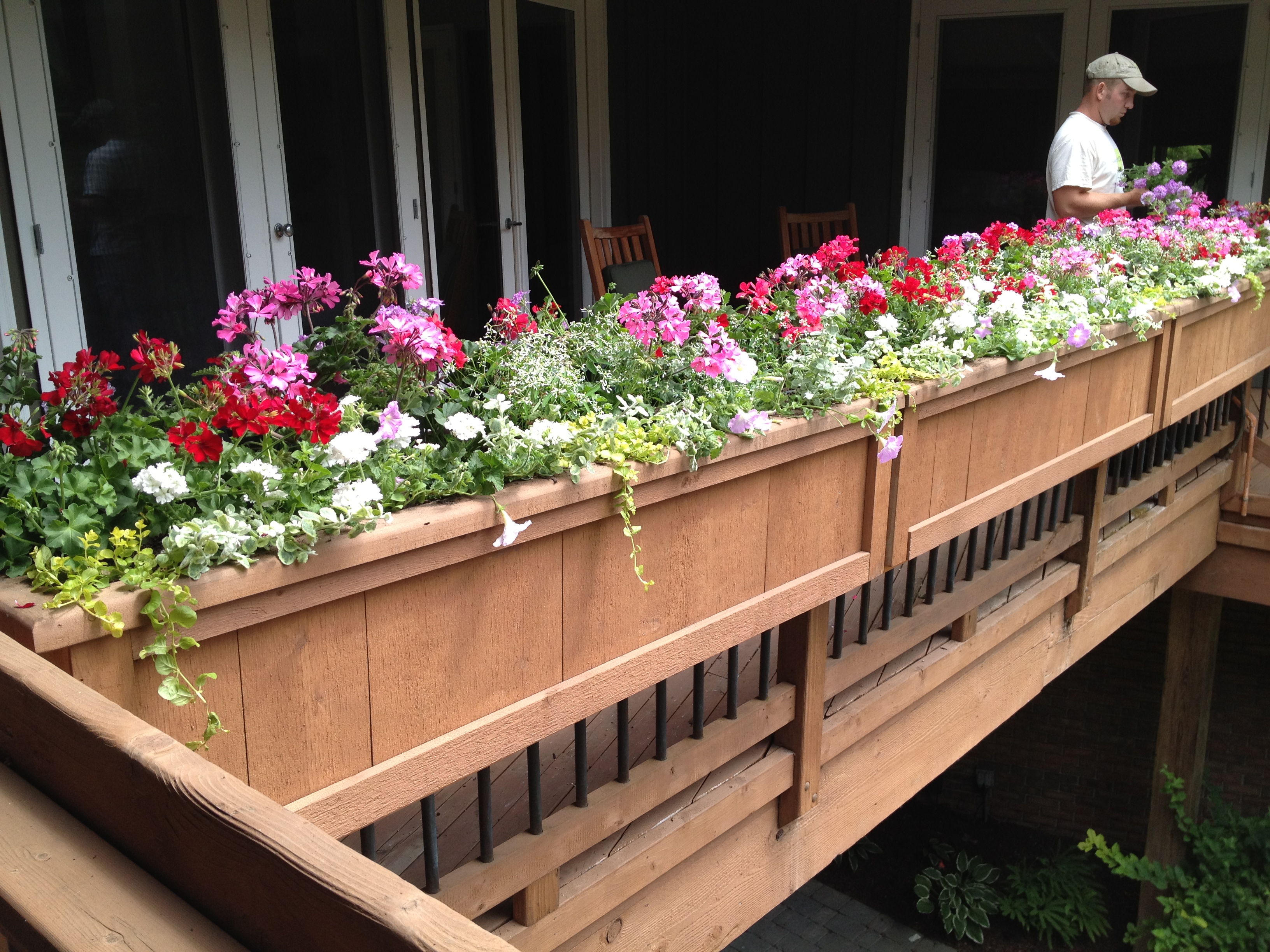
annual planting patterns

Years ago we built 2 very long boxes that are attached to the outside of the†railing of the walkway. This means the boxes drain to the terrace below, not onto the deck walk. This year I planted caliente geraniums in dark red, coral, orange and pink. The flower heads are much more informal than those of zonal geraniums, but I wanted an even looser look. I planted diamond frost euphorbia between each geranium. The edges of the box are planted with white and lavender star verbena, variegated licorice, misty lilac wave petunias and creeping jenny.
English lead boxes

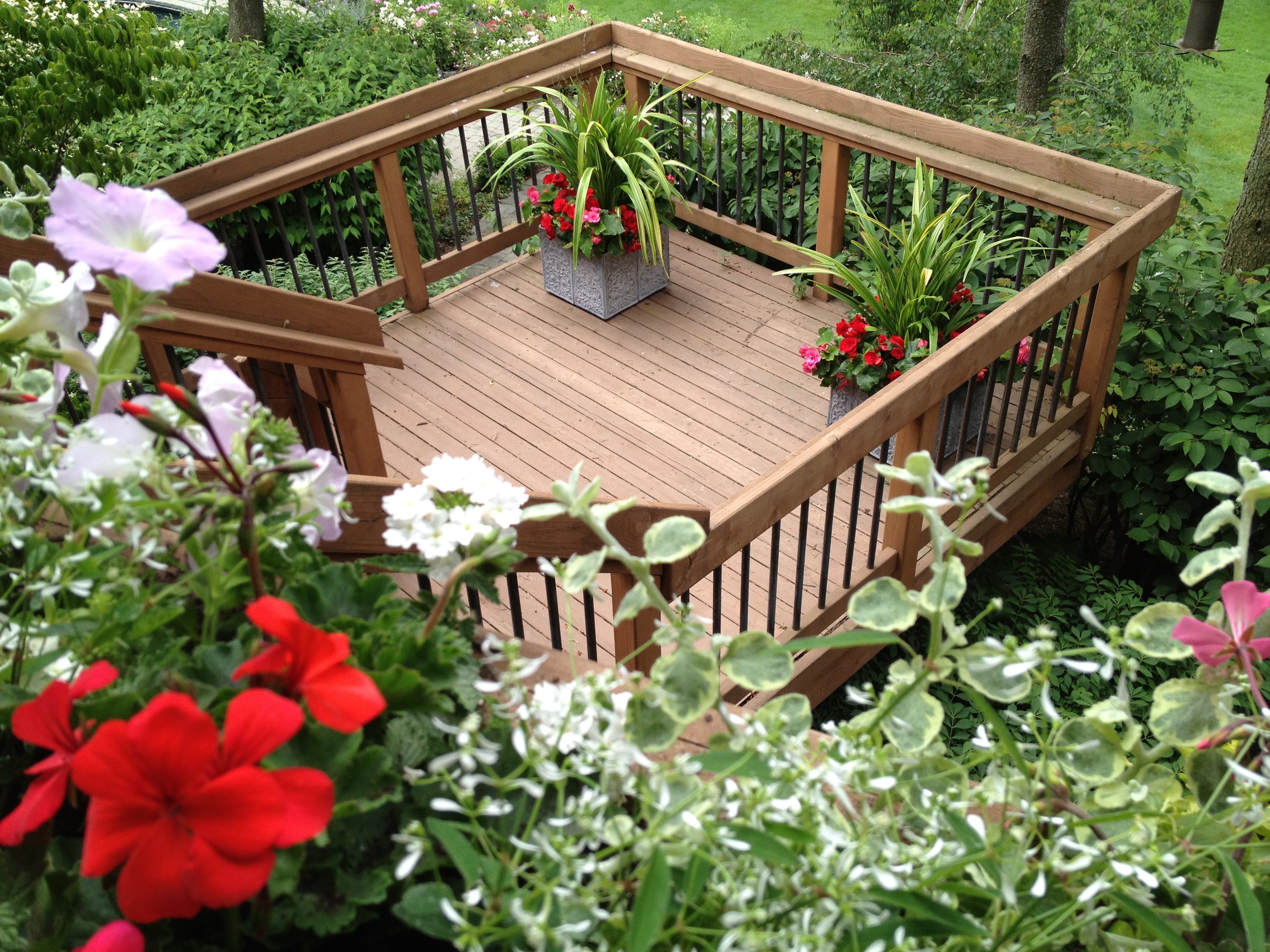
The landing of the staircase that goes to the ground floor has a pair of English lead pots. A pair of Daniella are ringed in pink and red solenia begonias. They will easily handle the part sun conditions of this terrace. The lime green variegated leaves will have some company from the creeping jenny in the boxes above, once it grows in and starts to trail.
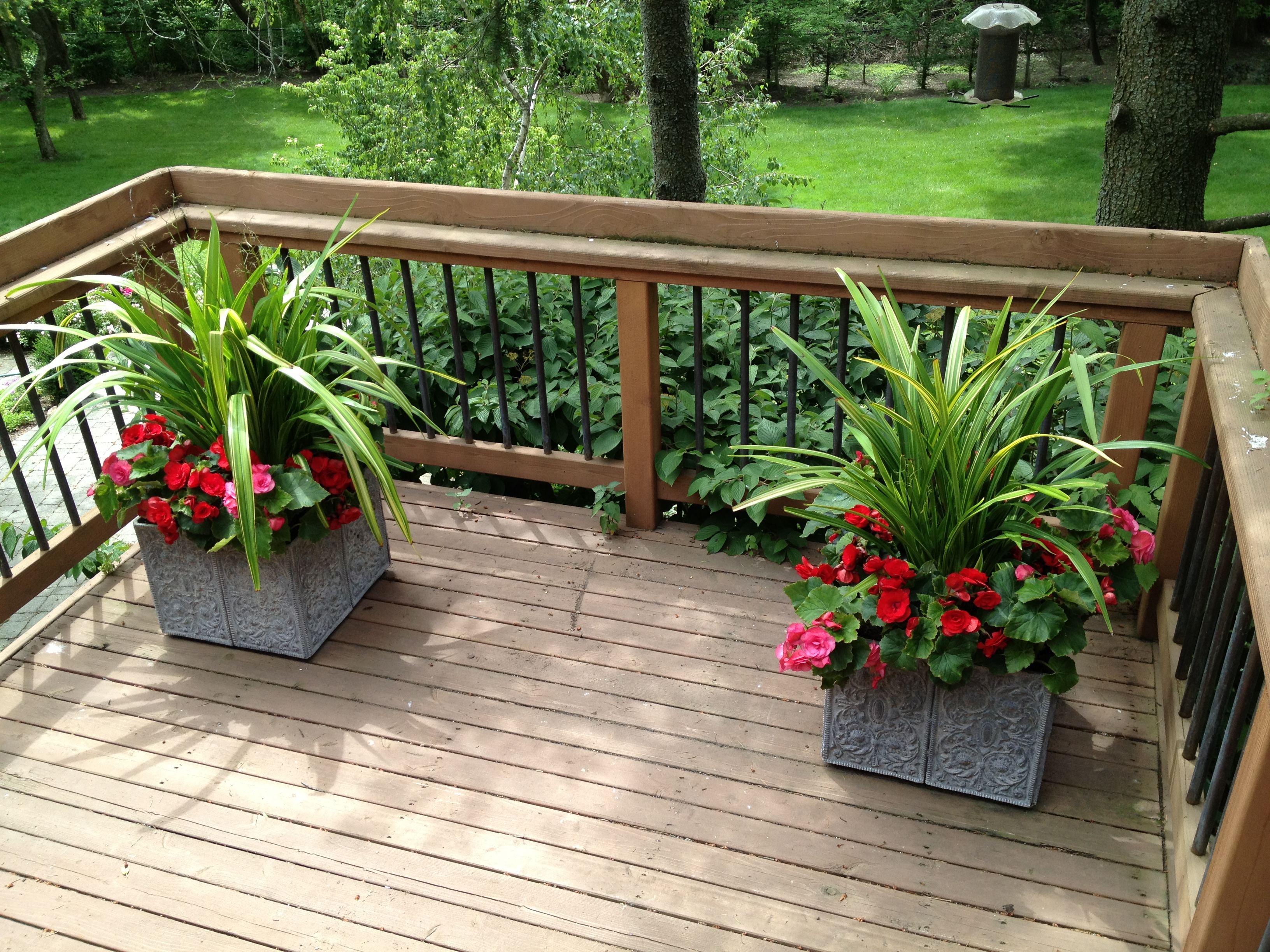
lead planter boxes

So many places I plant have pairs of pots in different light conditions. I try to pick plants that are the tolerant sort. These plants will grow in a fairly uniform manner, though one box gets noticeably more sun than the other.

second story decks

The small terrace at the far end of the house is off the master bedroom. An old varigated abutilon with peach flowers in the pot on the left came out of winter storage. A red mandevillea is paired with a new petunia variety whose petals are splashed with pink and lime yellow. The center pot is stuffed with a dahlia favorite-Hypnotica lavender. This dahlia is about the strongest performing dahlia I have ever grown. The right hand pot features an Orange Punch canna, accompanied by lime nicotiana.

kidney shaped swimming pools

On the ground floor, a swimming pool is encircled by roses, perennials, small growing shrubs, and old viburnums. We added verbena bonariensis, sonata white and Rosalita cleome, lime nicotiana, heliotrope, and surfinia sky blue petunias. They are steadfast in delivering color all summer long, while the perennials come and go. Will I come back later in the summer to take pictures? Of course.
Memorial Day Weekend

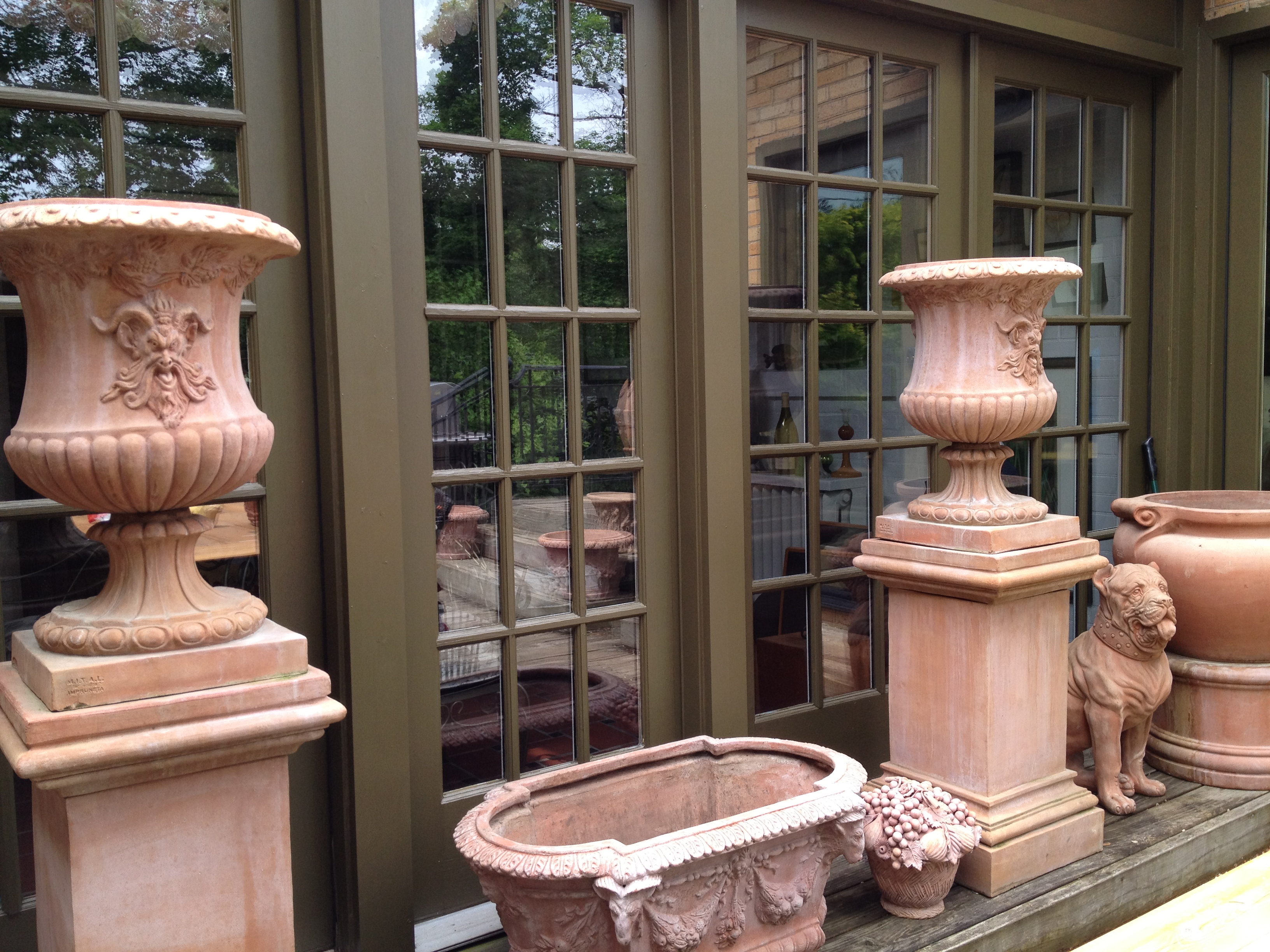
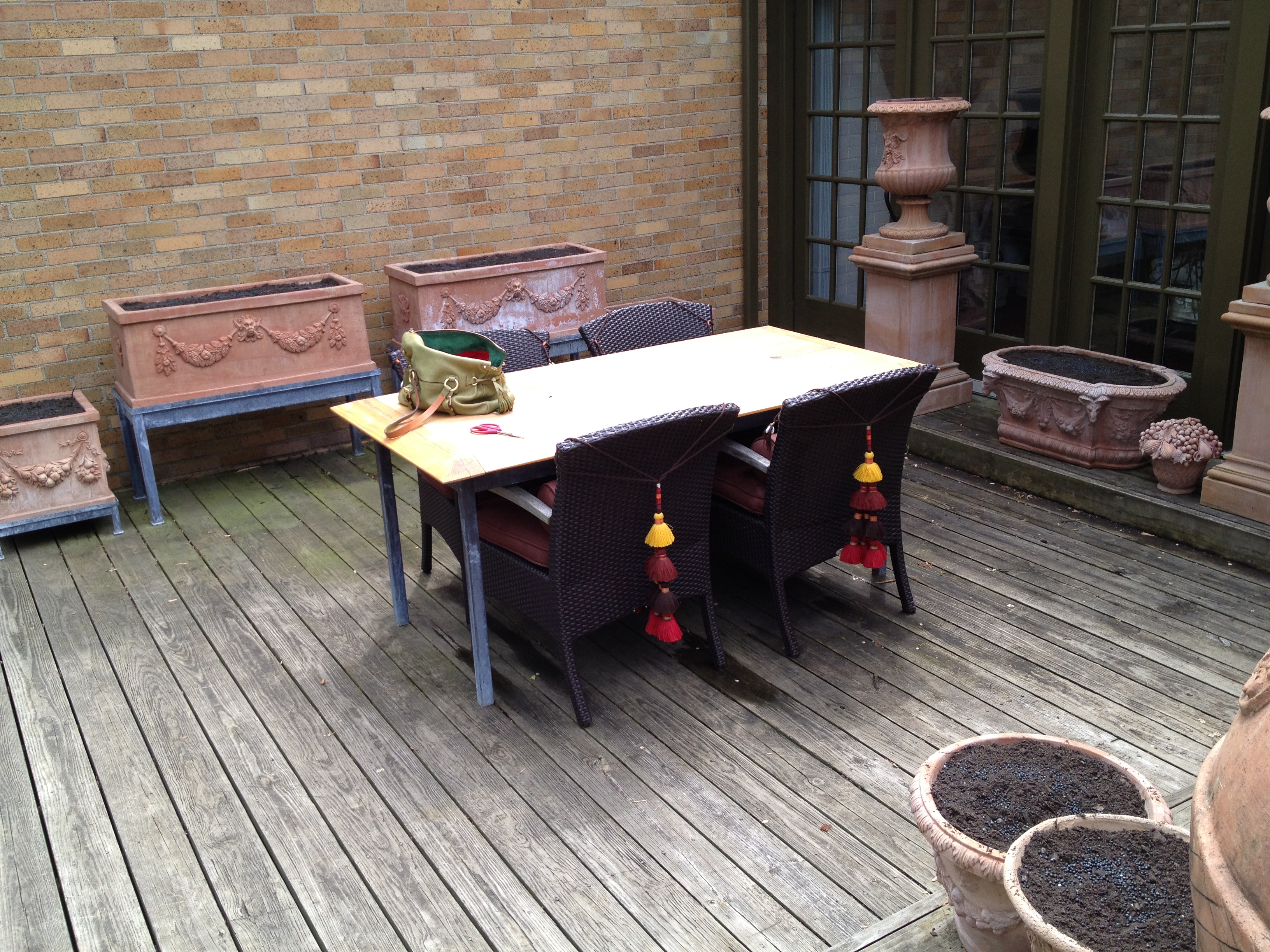
Italian terra cotta pots

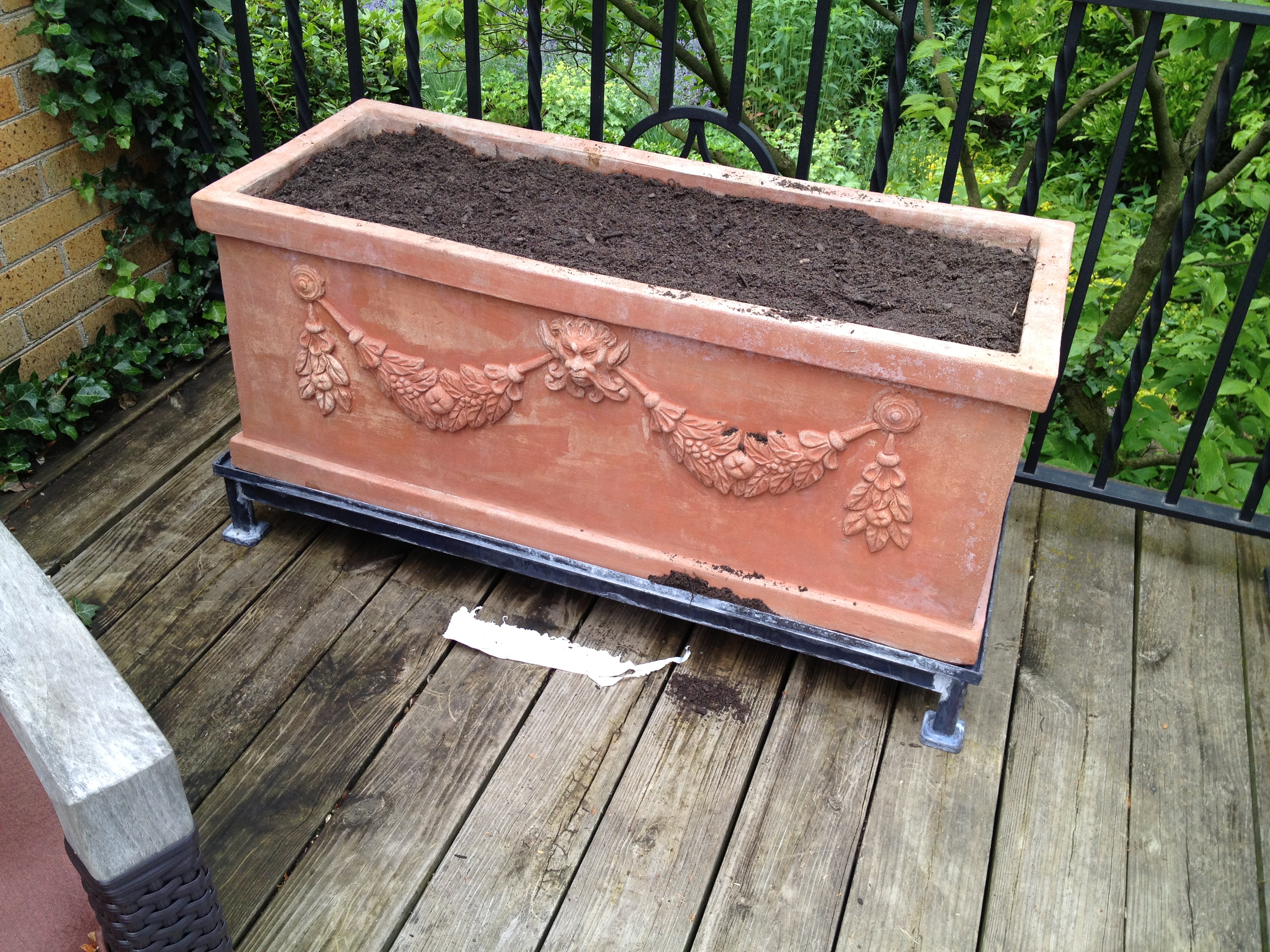
Both of my crews combined yesterday to plant annuals in containers and in the ground at one of our big jobs.  We finished up about 3:30.  It was the consensus that my pots could be brought out from the garage, and filled with soil-an end of the day job.  I was delighted with the offer.

Italian terra cotta pots

Next to the pruning of the boxwood, this is my favorite day of the year.  The pots come out of storage.  I move them a few inches this way or that.  I may reconfigure them altogether.  I have next to no warning when that moment for the placing and filling of my pots will be-good thing.  The pressure of the moment is sometimes my best effort.  When I have too much time to think and rethink, I can stall and move right into a tail spin.   

Italian terra cotta

I do not like my crews glaring at me, waiting for a decision.  They want to get the work done-with dispatch.  Needless to say, all of my pots are out and placed now, and furthermore chock full of soil.  It takes my crew only moments to get this part done.  It takes me many more moments to make a decision about what to plant.  I walked by these dirt filled pots many times late yesterday afternoon.     

container planting

That I am home in the afternoon at the end of May is a rare day indeed.  Of course I took advantage of that moment. I toured every square inch.  Though what I will plant in my pots this year is so much on my mind, I enjoyed what has been going on in other parts of my garden, in my absence.

Jeanne Le Joie

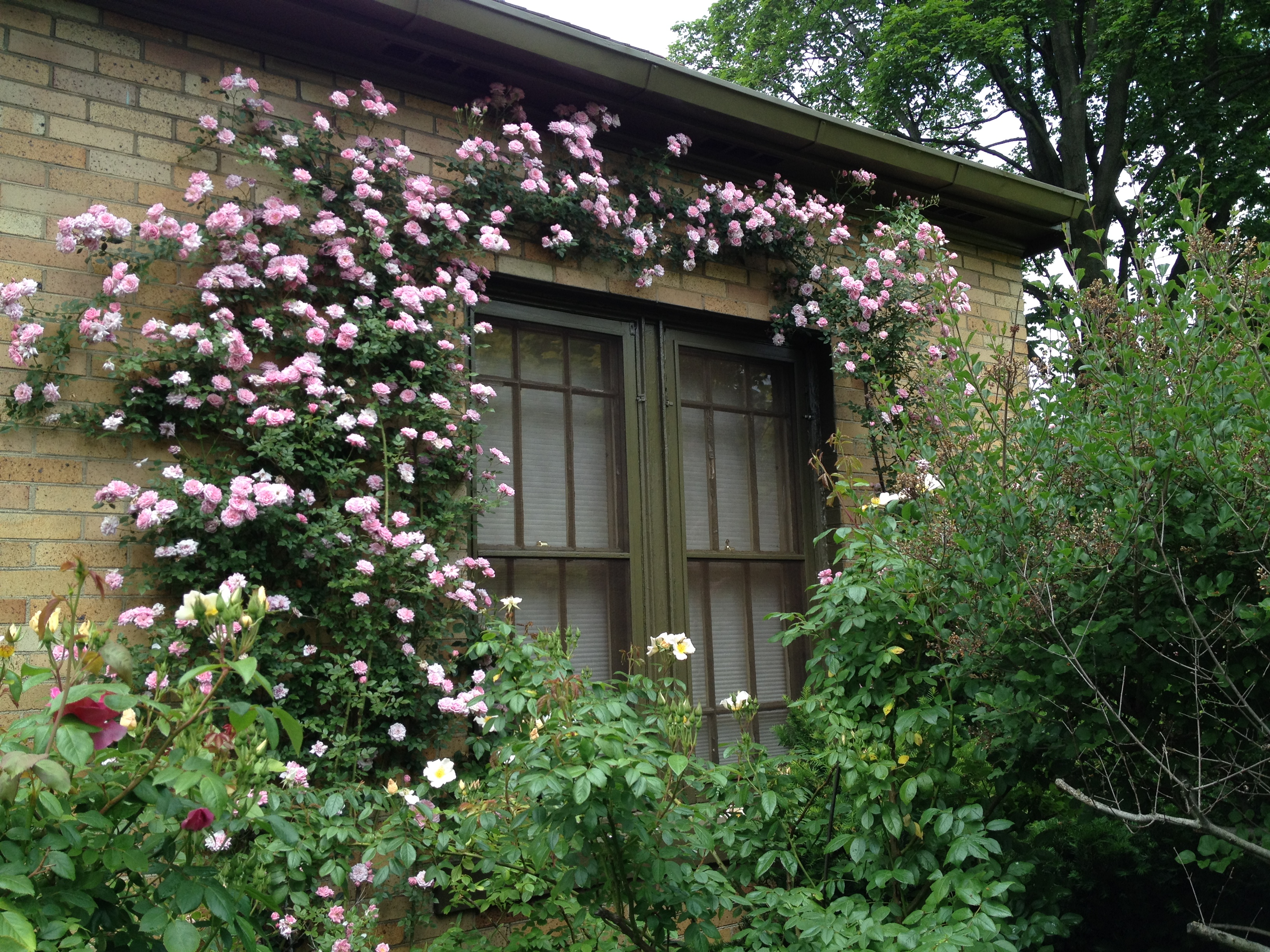
My roses are starting to bloom.  They are early this year.  The climbing roses, the dwarf Jeannie Le Joie, and the big flowered climber Eden, were not a bit fazed by our terrible April frosts.  They are coming into bloom, as though all was well with the world.  My Griffith Buck roses-another story.  The buds are small.  The extreme heat we have had the past few days means some flowers have come into bloom, and shattered in less than a day. 

dwarf climbing roses

Our late April frosts are still haunting my garden.  But it was hard to be discouraged.  I was in my garden on a sunny afternoon the end of May.  This means I was on holiday. 

late spring

I was happy to be home, unexpectedly, on the Saturday afternoon of Memorial Day weekend. 


A Formal Vegetable Garden

vegetable garden layout

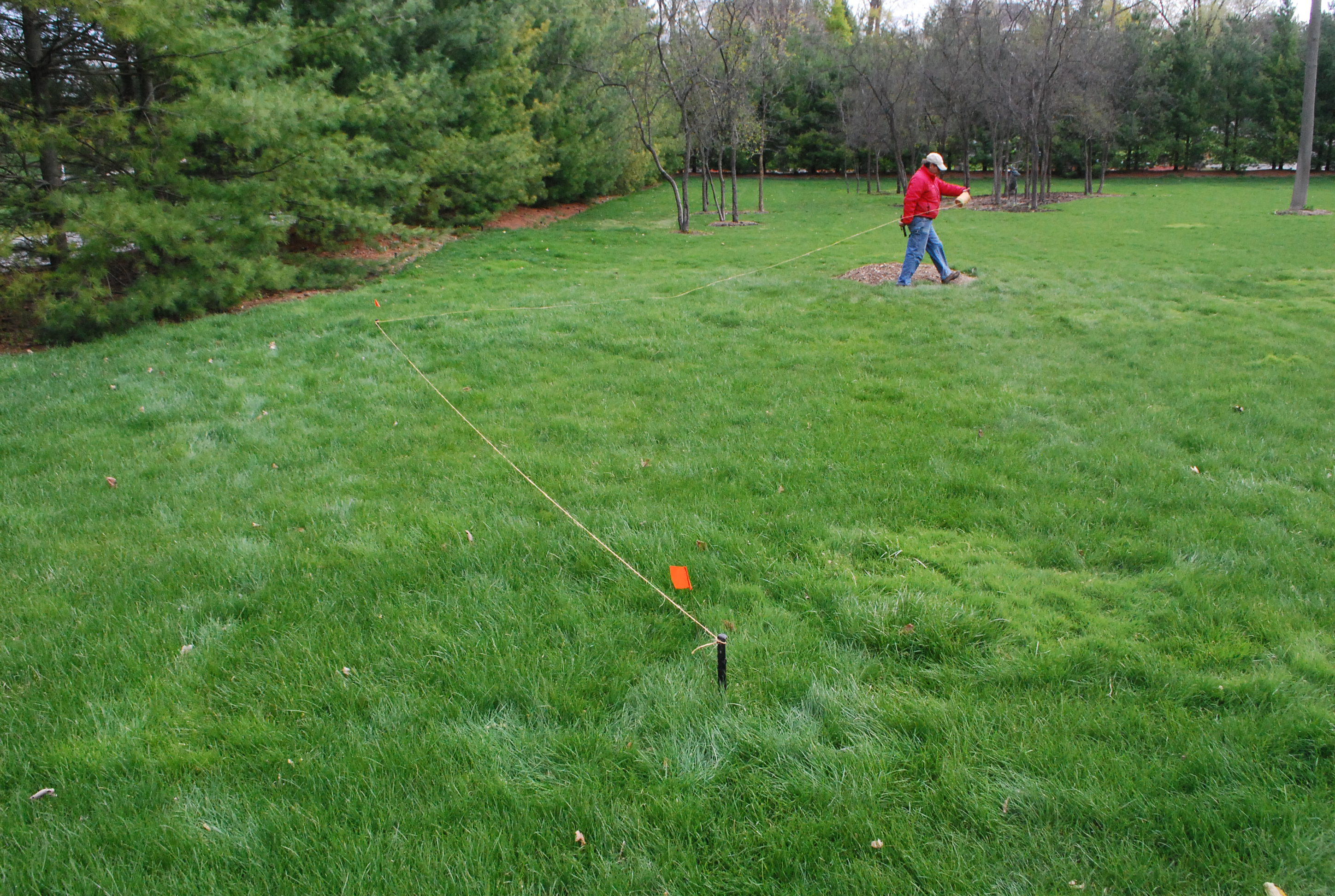
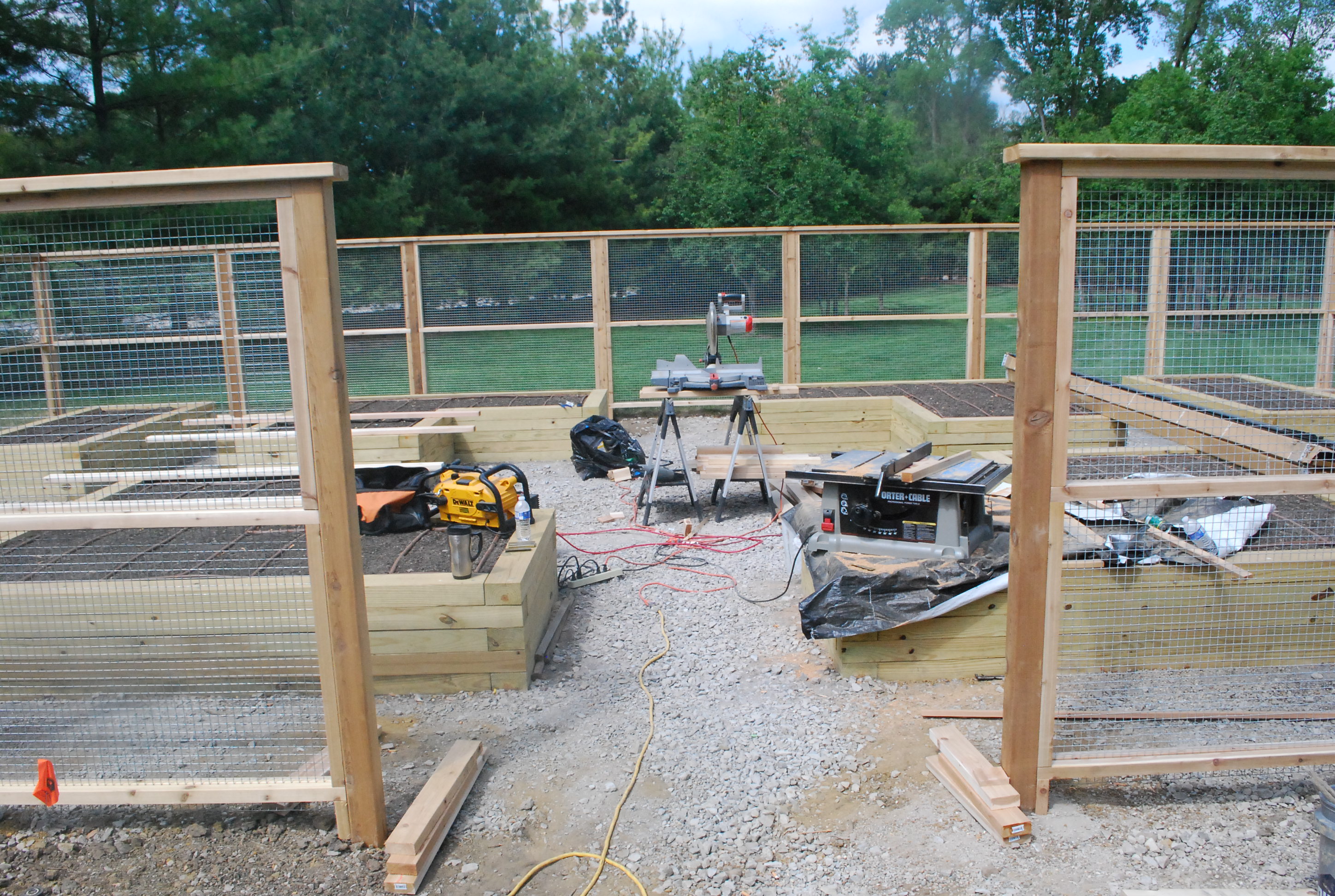
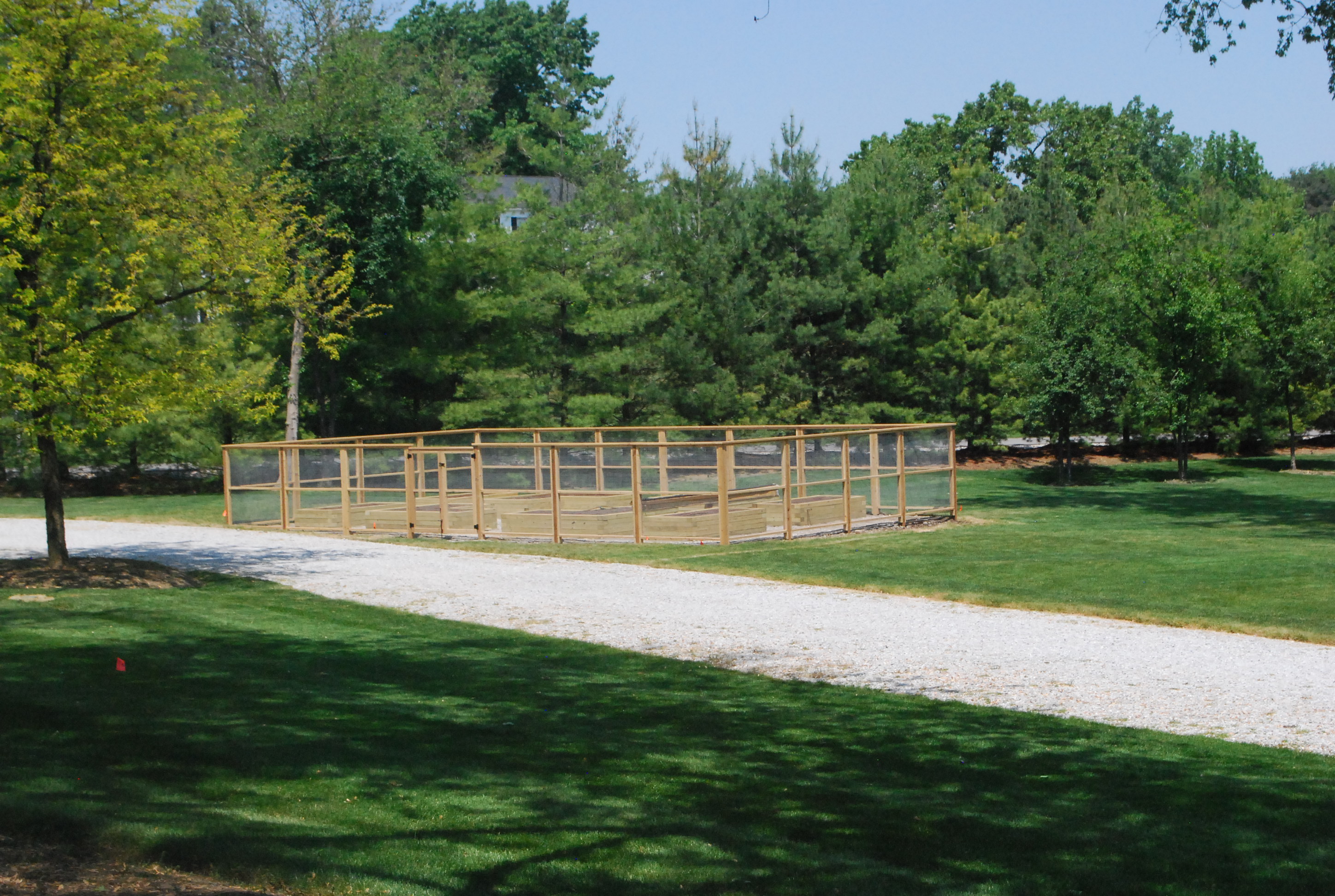
Every now and then I have a call for a formal vegetable garden.  By this I mean a garden with a formal layout and structure.  These clients wanted raised beds for their vegetables for several reasons.  They liked the idea that they could tend the garden easily.  They liked the idea that the soil mix would be especially tailored for growing vegetables.  They have children; their lives very much revolve around the dinner table.  They have strong ideas about good food, and where it comes from.  Their soil is very heavy clay, and the site chosen for the garden does not drain particularly well.  I designed the garden, and laid it out with stakes and strings for them to see. 

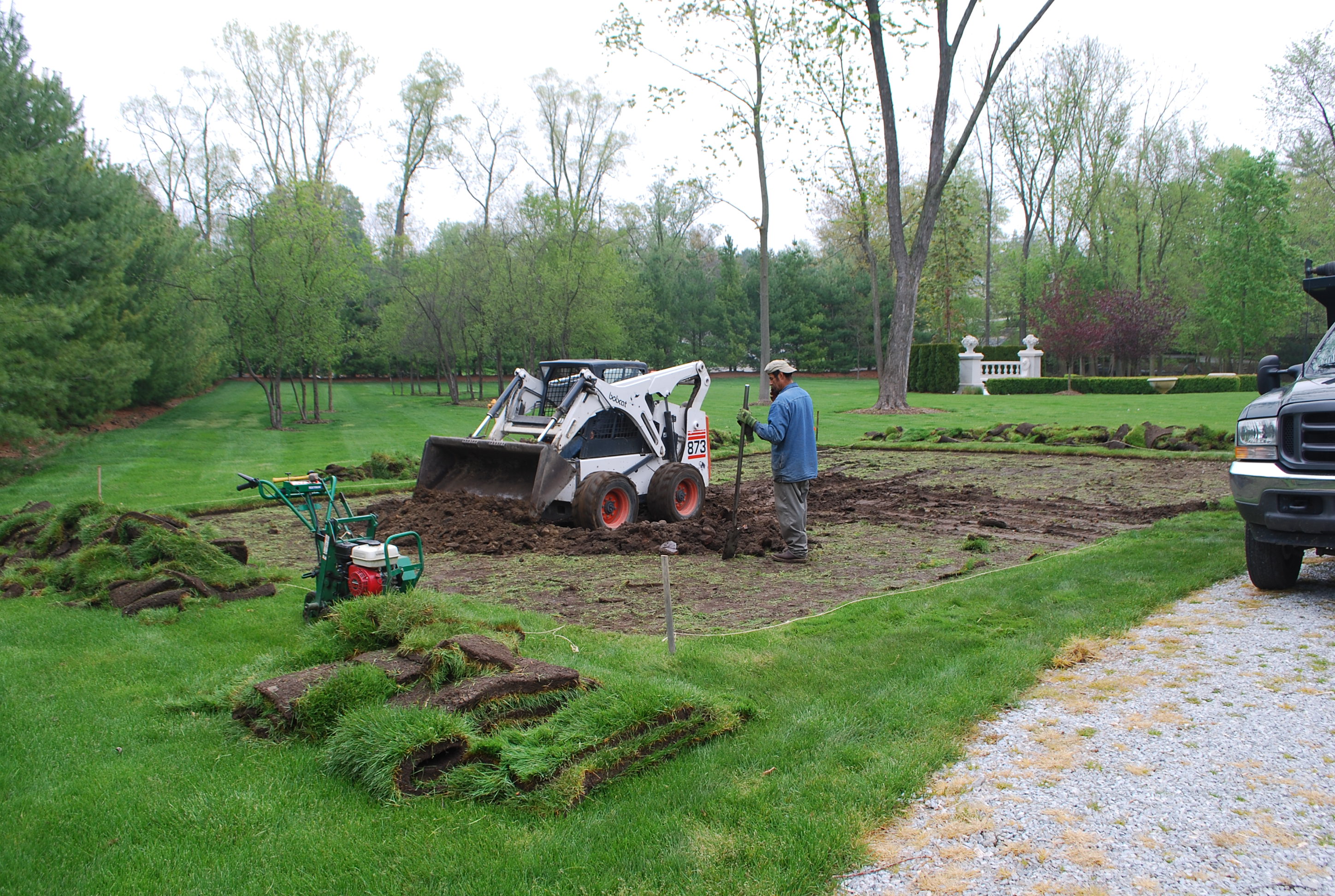
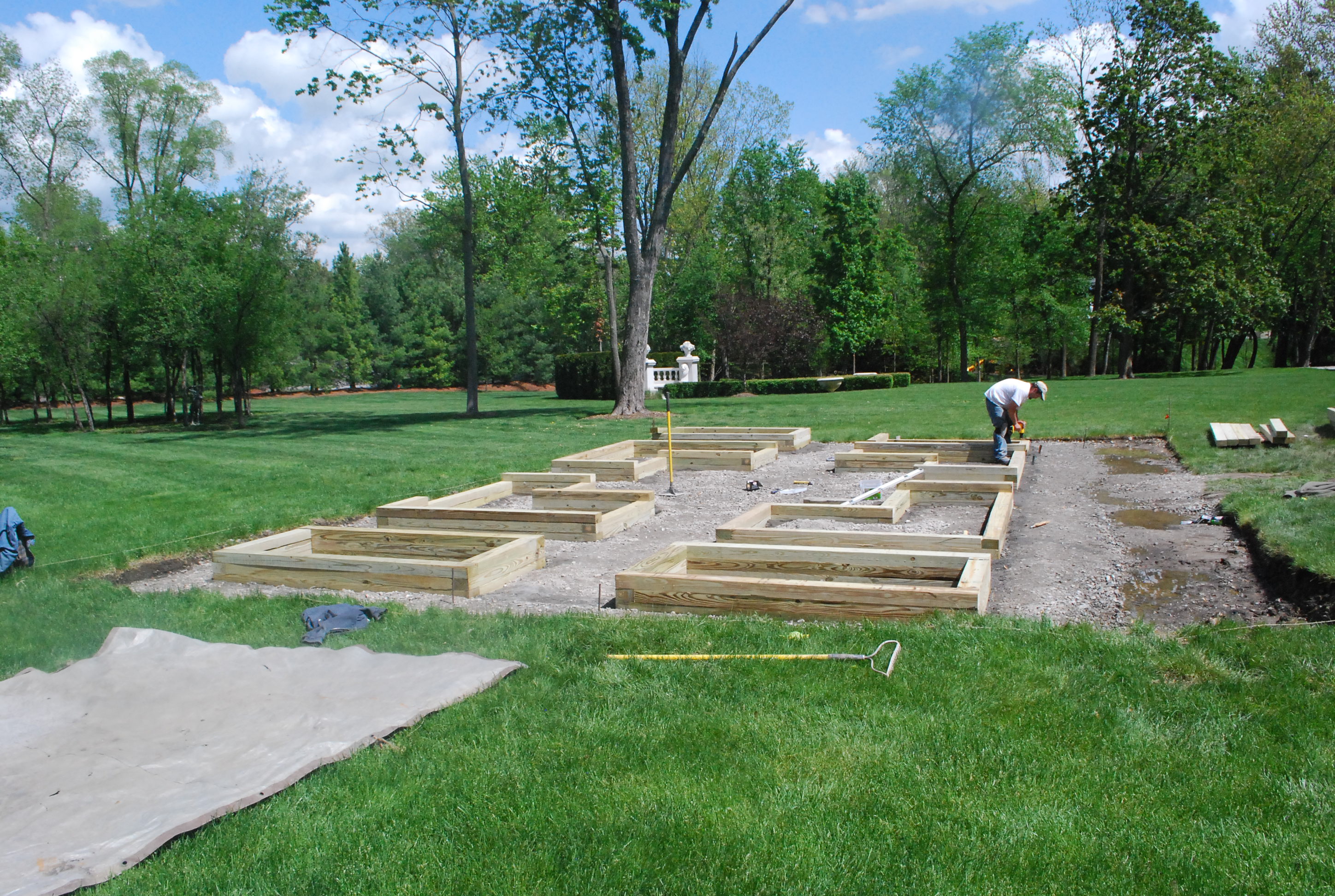
Once they approved the plan, we stripped away the existing sod. We excavated the area, as the garden would have a decomposed granite floor.  This is a great surface on which to push a wheelbarrow.  It is a surface that requires little to no maintenance. 

vegetable garden boxes

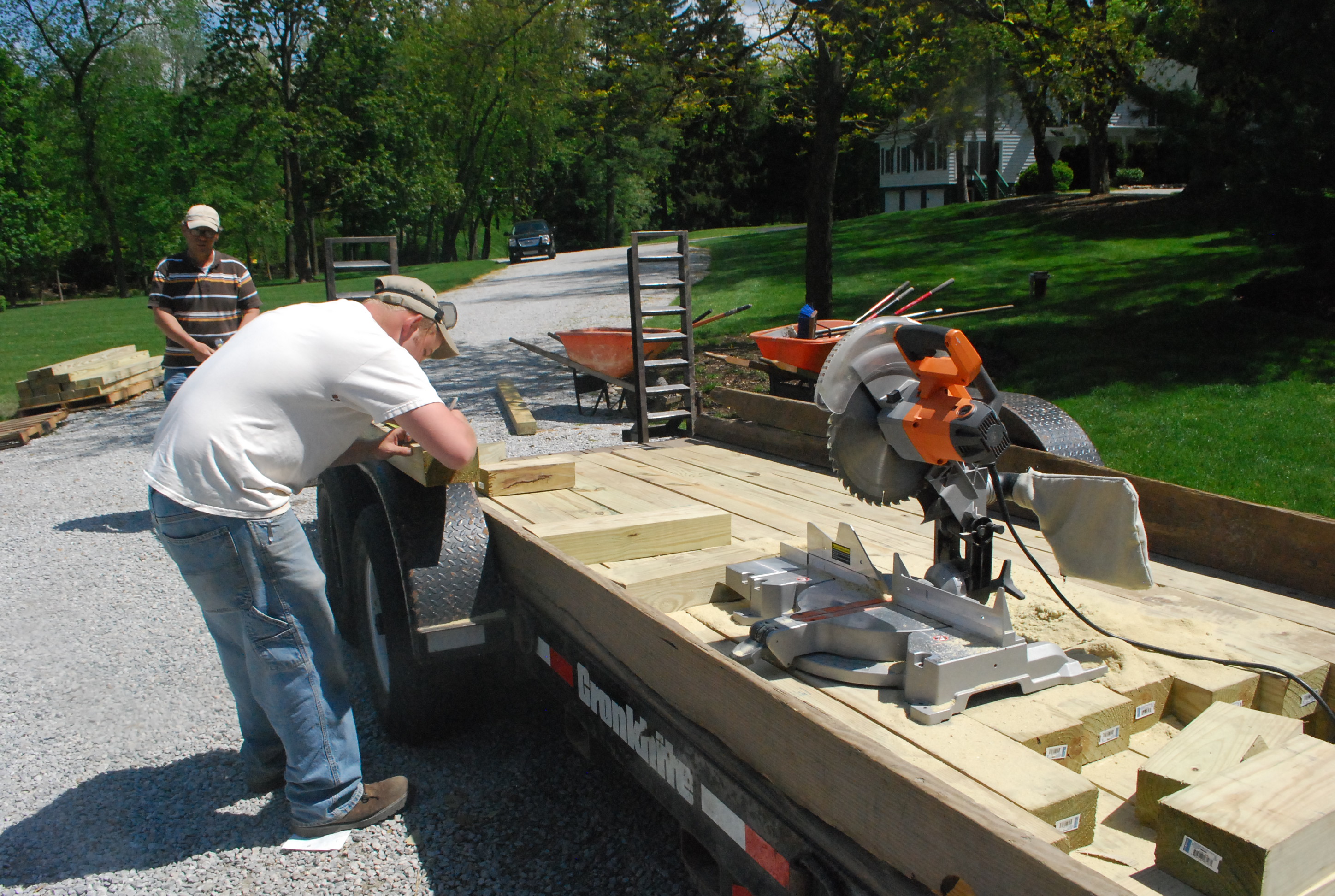
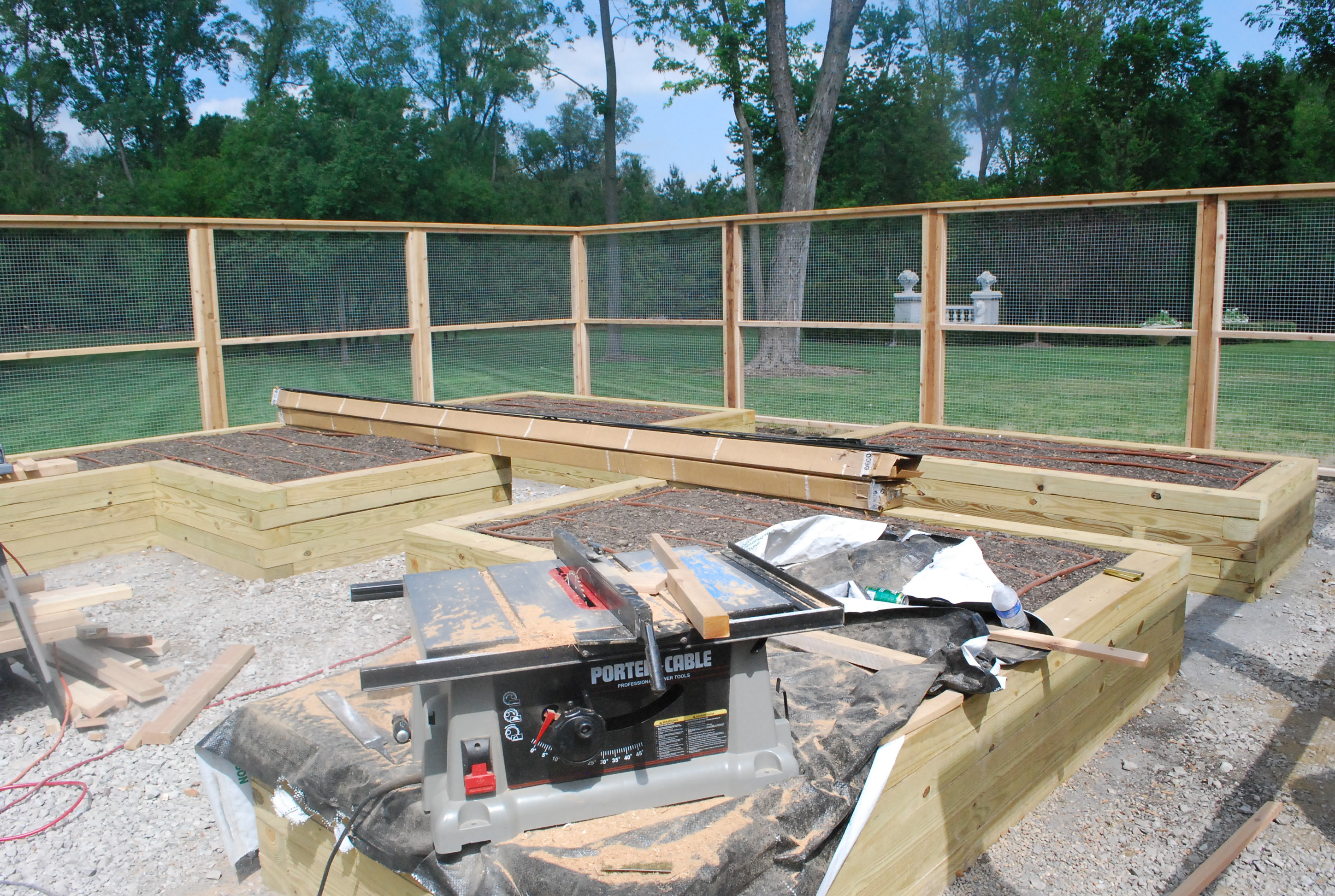
Steve and his crew built the boxes on site.  Several courses of lumber were installed below grade, and set level.  When the garden is finished, we will reconfigure the edge of the driveway to run parallel to it.  There will be some regrading involved as well.  But at this point in the project, we are a long ways away from the finishing touches. 

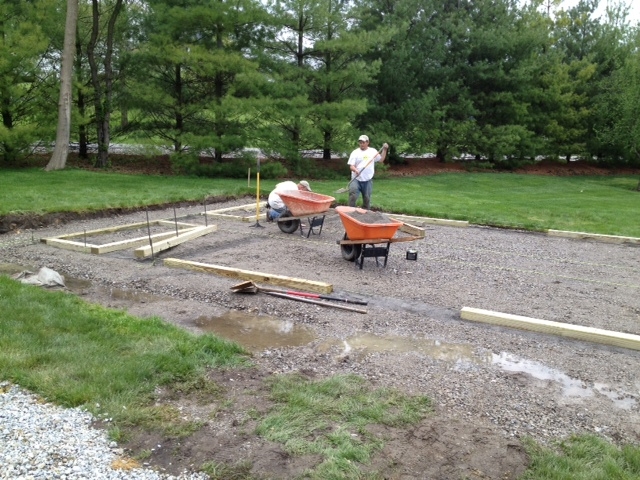
A 3″ base of 22AA road gravel levelled the floor of the garden.  The sloping lawn will be regraded to meet the finished floor of the garden.  The poor drainage became very clear after a rain!  The raised beds will insure that water drains away speedily.  Vegetables attract no end of disease and insects.  A clean growing, well draining site is a good natural defense against trouble. 

growing vegetables at home

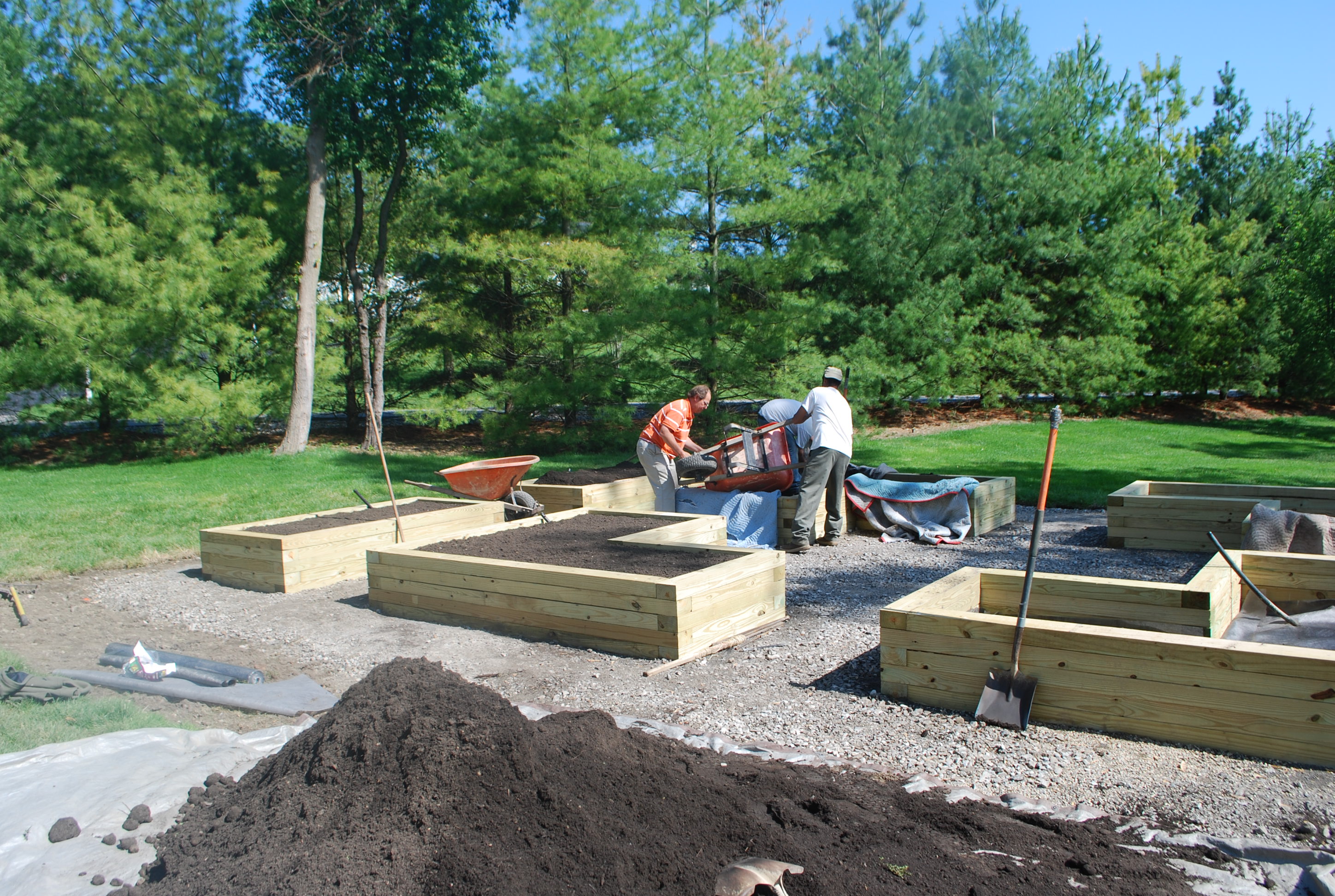
Once the bases of all of the boxes took shape, it was easier to see the overall plan.  Four boxes were simple rectangles.  The four center boxes were L-shaped.  A three tiered theatre for the center will hold pots of herbs, and culinary flowers.  At this point in the construction, we were going over lists of vegetables and herbs.  Like most families, they have vegetables that appear on their dinner table frequently.  Others-not so much.   

worm castings

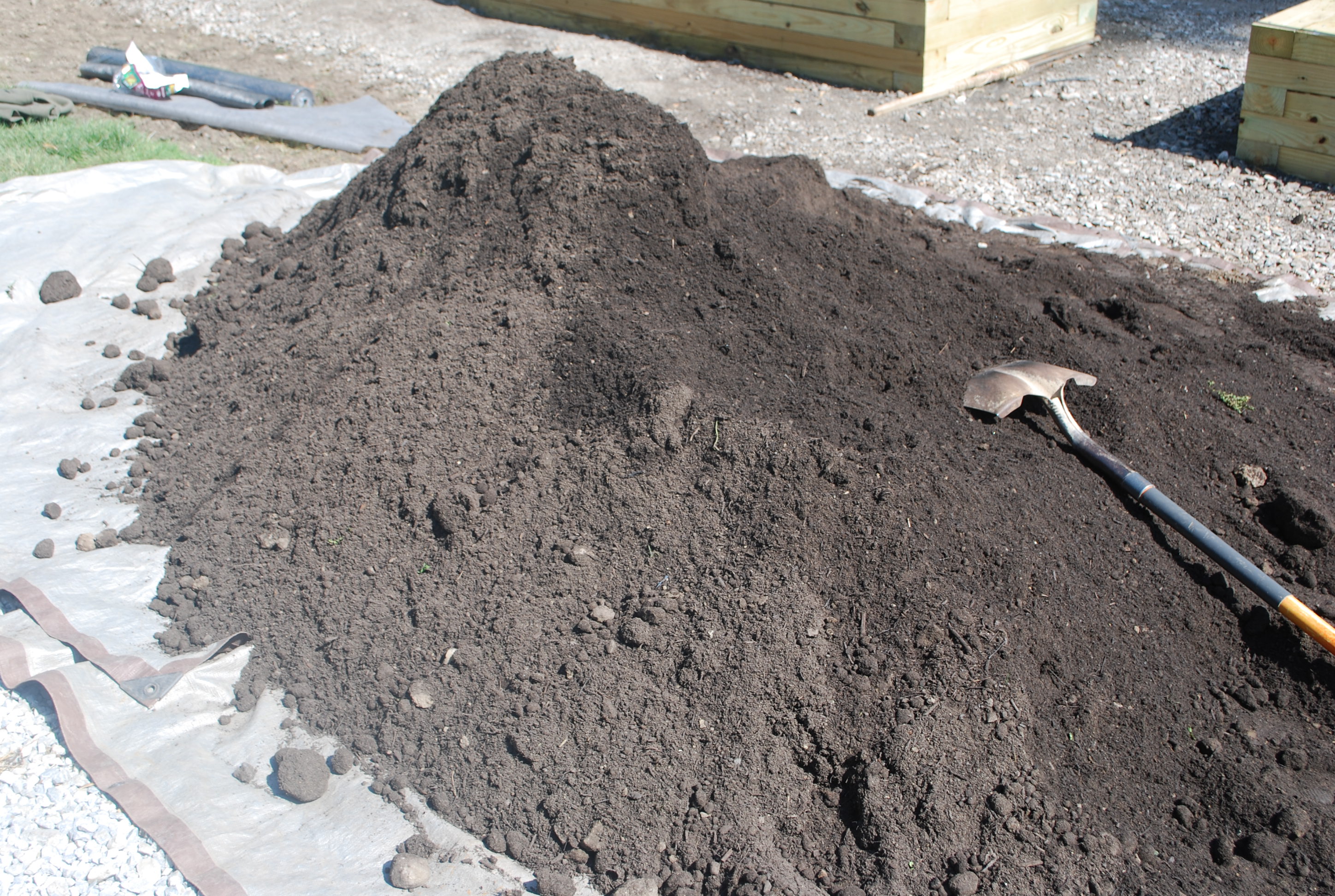
Steve is an expert with soil.  He spent 16 years as superintendent of grounds at Grand Hotel, on Mackinac Island.  The island has very little in the way of soil.  A thin layer of compost covers layers of big rocks, and little rocks.  The cost of transporting soil from the mainland was considerable.  He composted thousands of yards of soil for their 165 acres of golf courses, employee housing, and hotel grounds.  He knows how to cook up great soil.

growing vegetables in boxes

This soil is compost of his own making, to which he added sand, and lots of worm castings.  It is rich, and friable.  The the idea of worm castings raises eyebrows, but vegetables thrive in it.  Decomposed organic matter is an essential element of good soil. 

drip irrigation

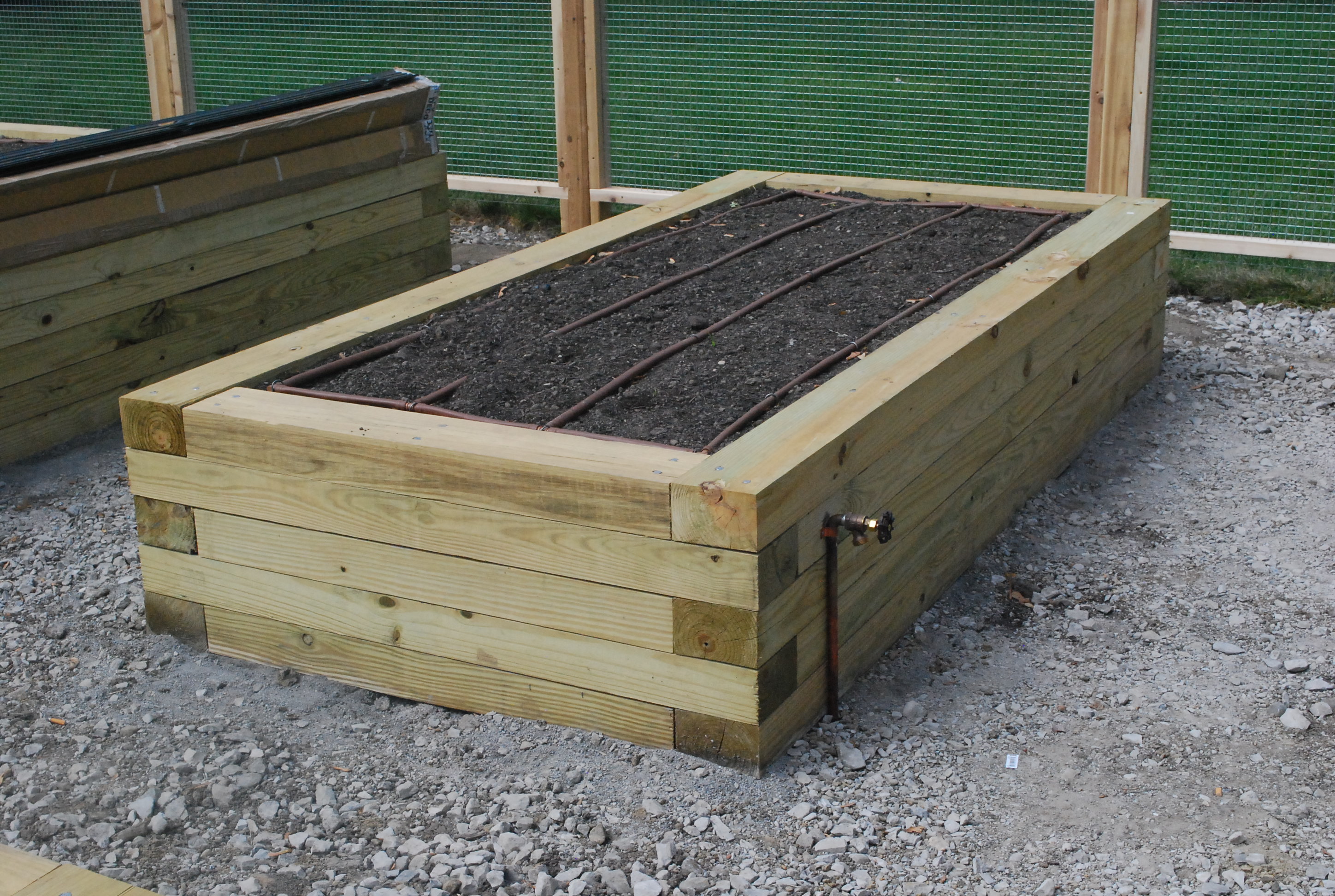
Each box has its own drip irrigation lines.  Water from drip hoses does not migrate very far away from the hose.  The drip is so so slow that the water sinks straight down-gravity, this.  Thus there is a need for multiple drip hoses, so the plants are evenly watered.  A drip irrigation system is not perfect.  A person needs to be in charge.  A person who can pick up a hose, if there is a need.  This spigot was run off the irrigation system.

vegetable garden fencing

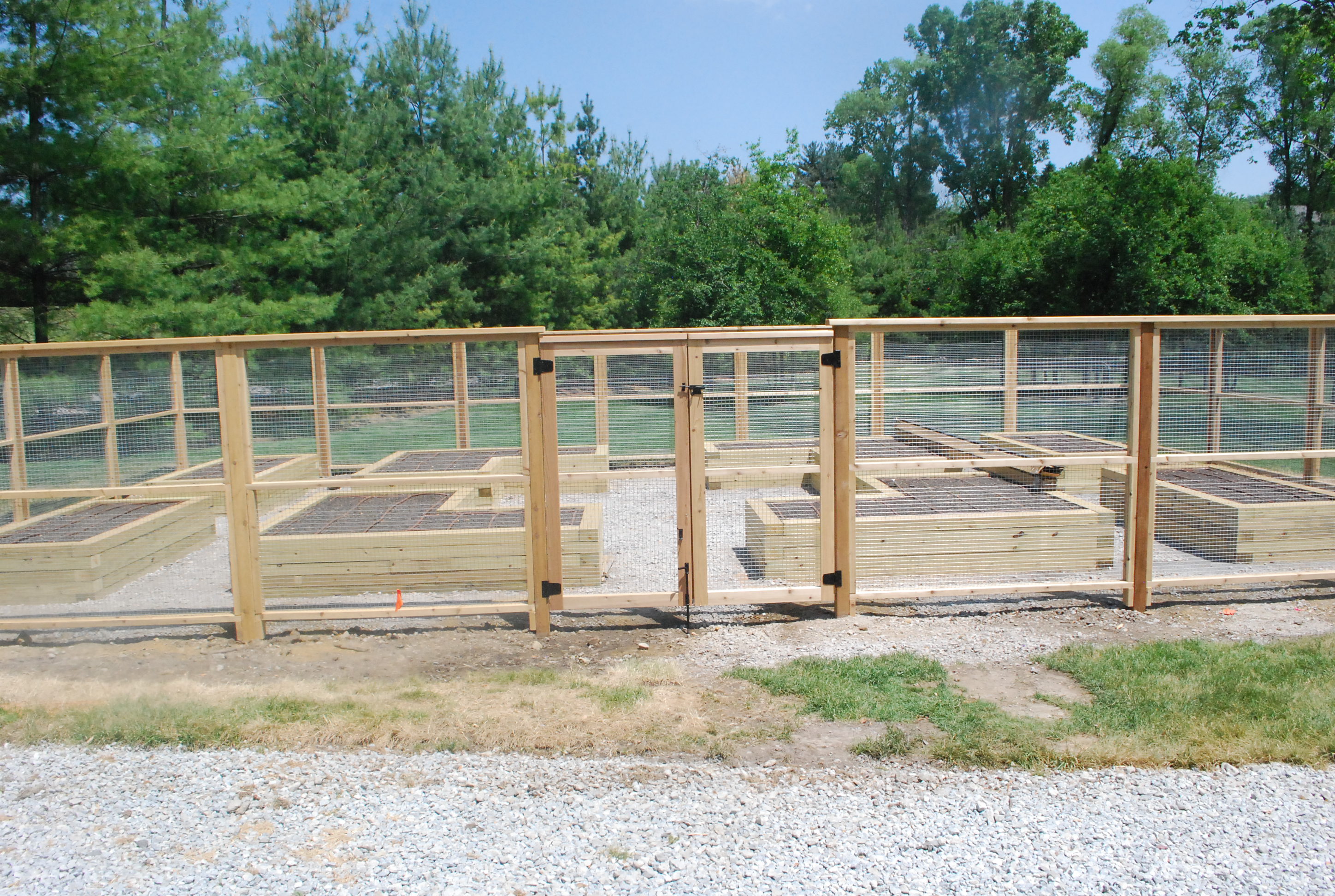
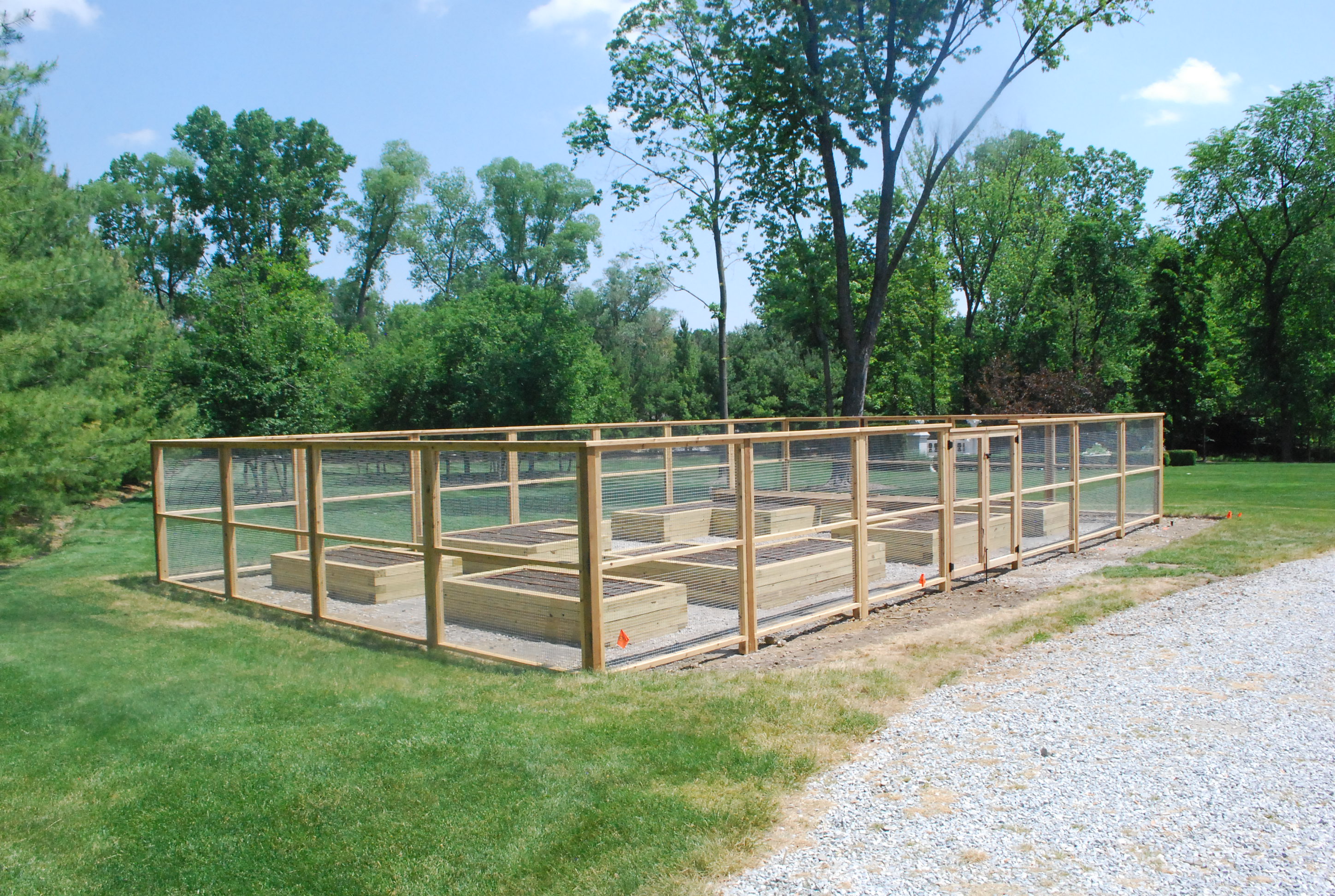
My client has 7 acres of property.  This means they have all manner of wildlife.  Deer, raccoons, mice, rabbits and woodchucks, just for starters.  The garden had to be fenced.  The mainstay of this fence is a very sturdy galvanized steel mesh. A vegetable garden has to be sited and planted to take advantage of the sun.  A privacy fence might shade the garden.  The steel mesh does not impede the sunlight.     

Each panel of steel mesh is enclosed in a cedar frame.  A horizontal bar of cedar midway up the panel adds a good bit of reinforcement to the mesh.  As much as you love your home grown vegetables, all of God’s creatures love them too.  This fence says keep out in a very simple way.   

The fence is 6 feet tall.  The 6 feet wide gates are just 3/4 of an inch shorter, to permit the gates to be opened wide.  The decomposed granite finished floor has yet to be installed.  A second short round of steel mesh will be buried below grade.  This will deter the crafty diggers and the little creatures.

vegetable gardening

We are a ways from the finish here.  The tomato towers and herb theatre will be done shortly.  7 espaliered fruit trees are yet to be planted.  The drive needs to be reconfigured.  A cutting garden will be planted ouside the fence on the gate side.  Roses for cutting will be planted on the far side.  As for the planting of the vegetables and herbs-Steve is in charge of that part.   

This is a big garden. Not like a field of corn in Iowa, or a grove of cherry trees.  This is by no means a farm.  But it is as big a garden as they will ever need.  It is a working garden.  Sturdy, simple, plain-and organized.  I hope within a few weeks it will be a good looking working garden.   


The Clematis On The Bench

garden fountain
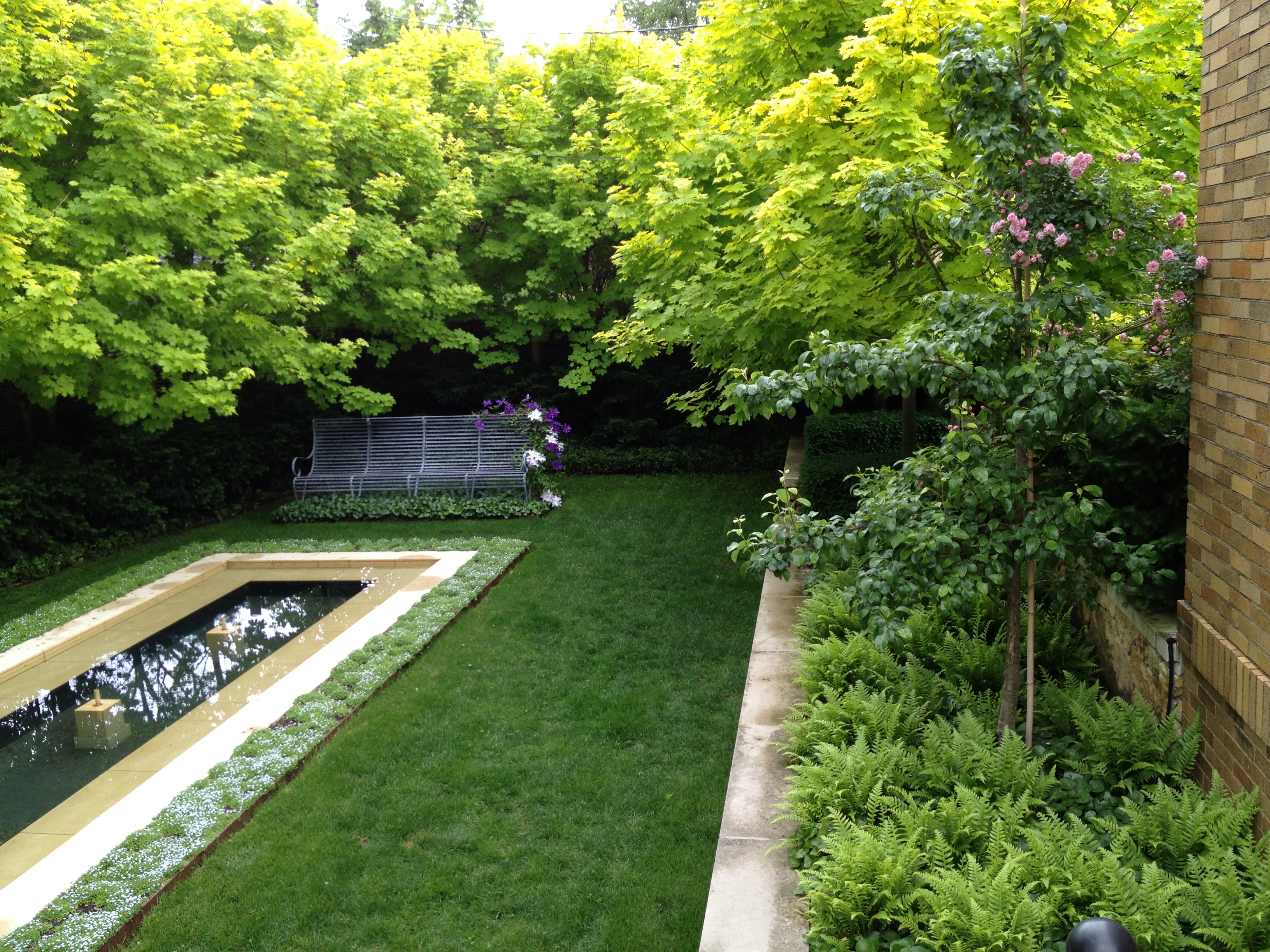
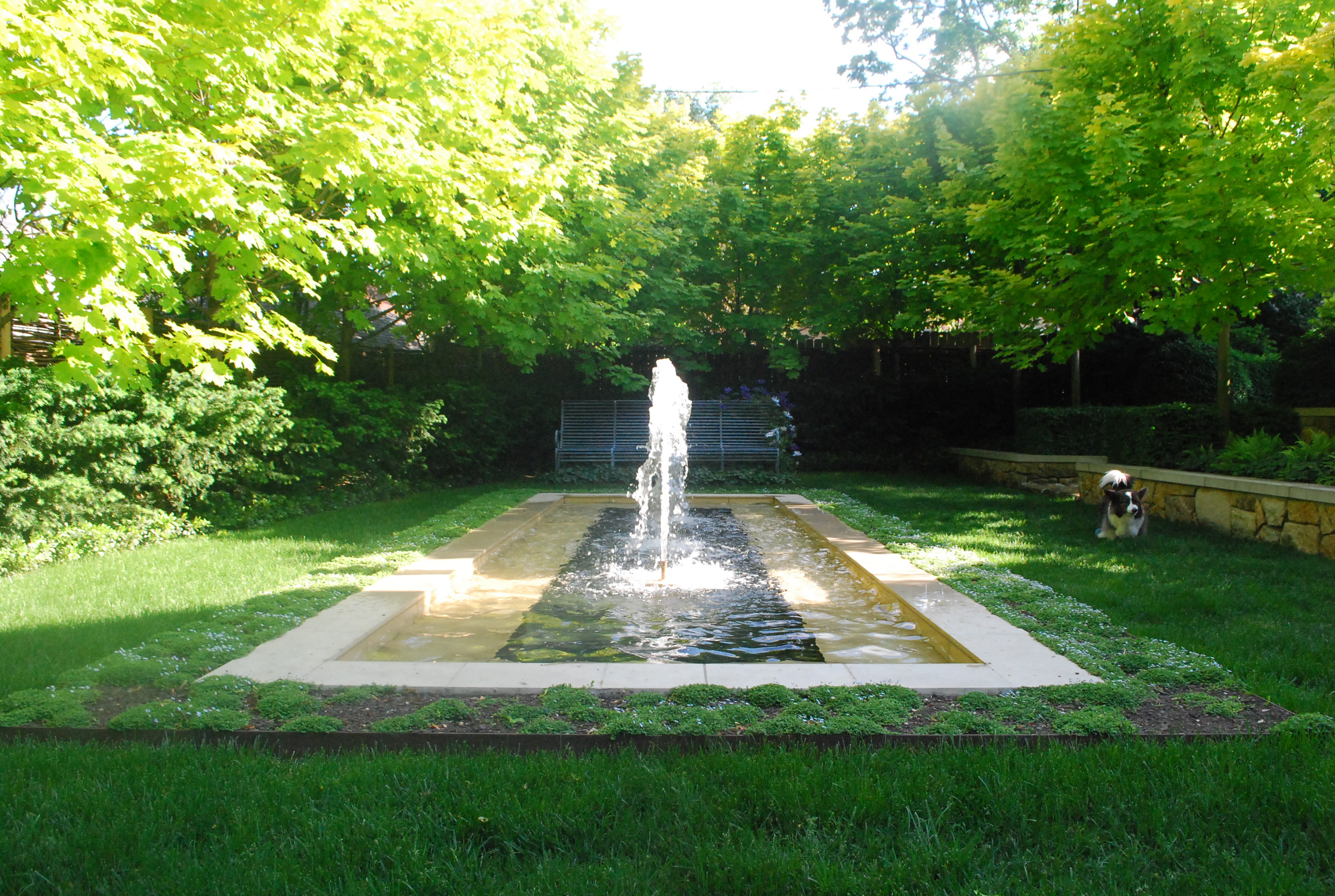
My garden is a fairly quiet affair, as evidenced in my Roundtable home garden/tour post yesterday.  A garden that provides sanctuary is of interest to me.  But as structured as my landscape is, there are those unexpected moments.  When I drove up yesterday, Buck had the fountain jets turned up full blast.  Those columns of water sparkling in the sun made me smile.  Buck cranked up those pumps, knowing I would be tired when I got home.  A little unexpected joy never hurt anyone!  Until the pots on the deck are planted, this is my first stop on my early evening tour of the garden.      

clematis trellis

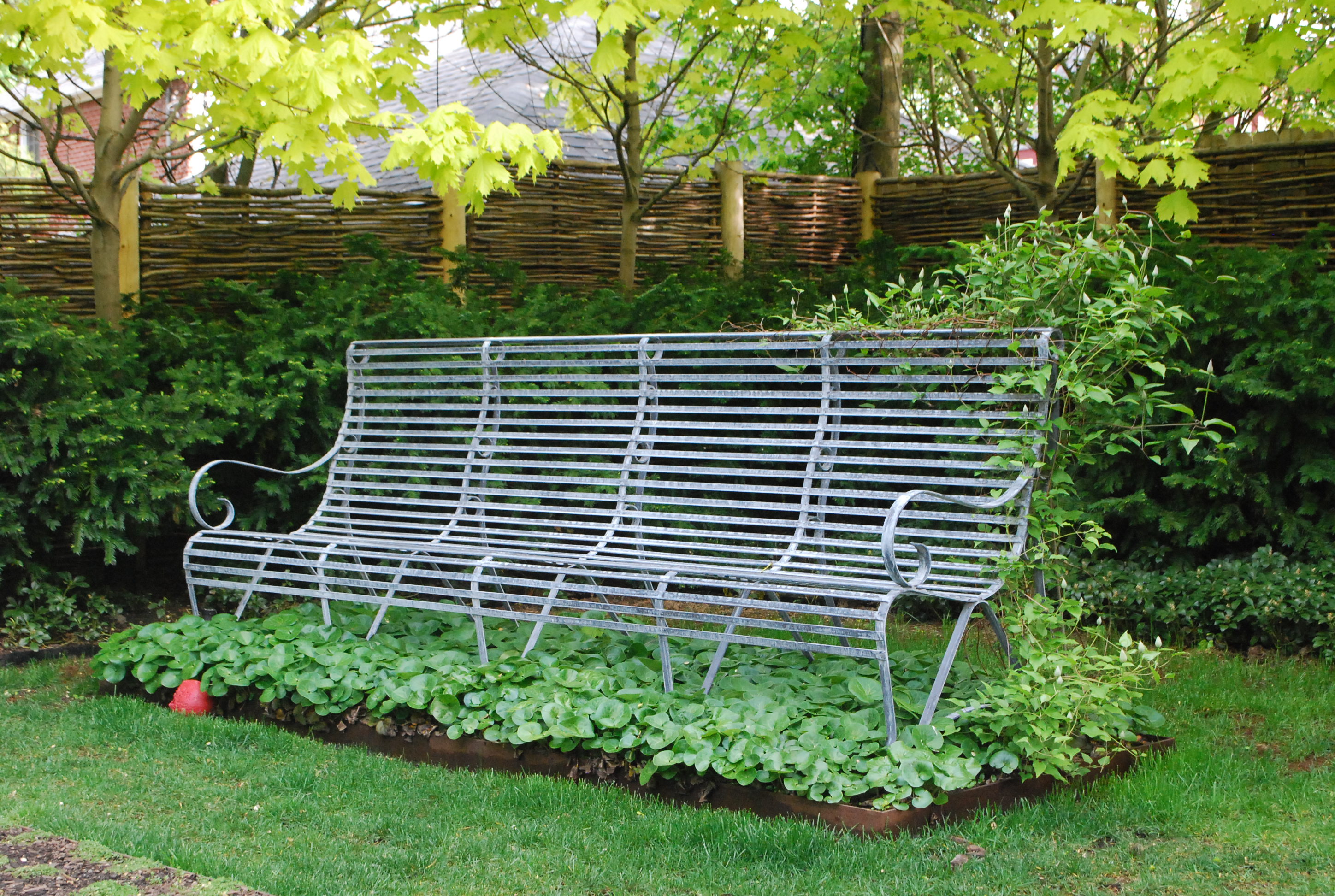
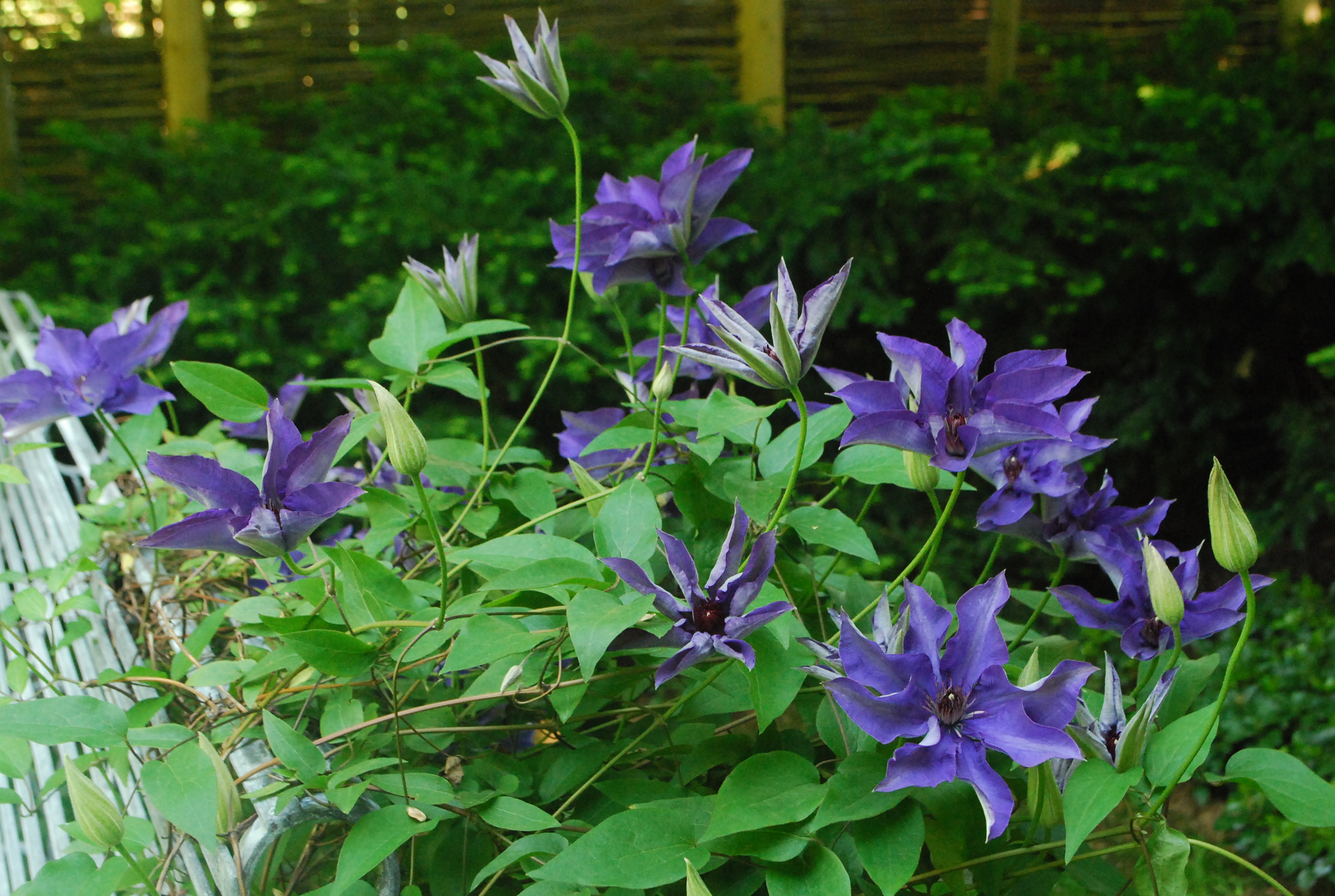
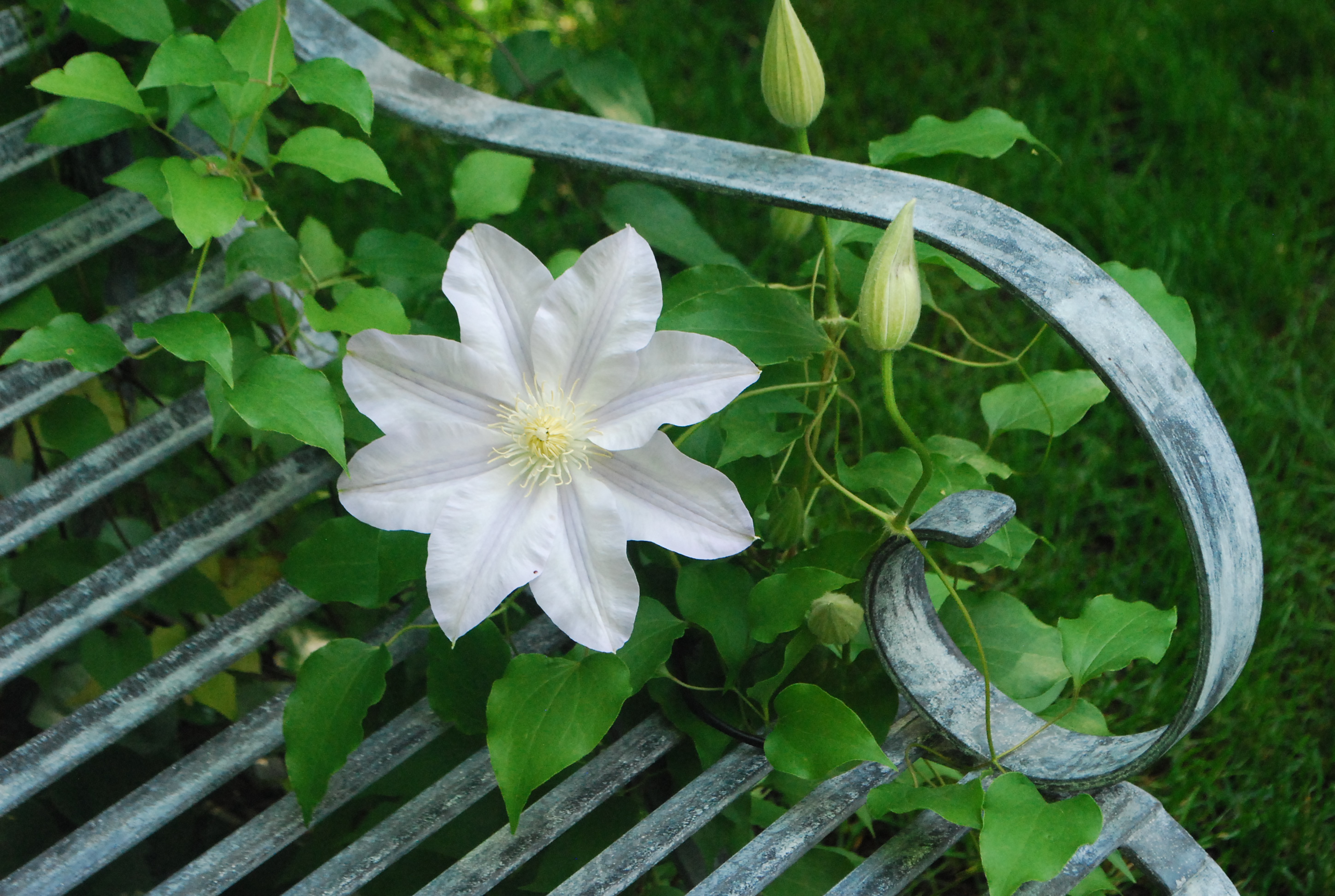
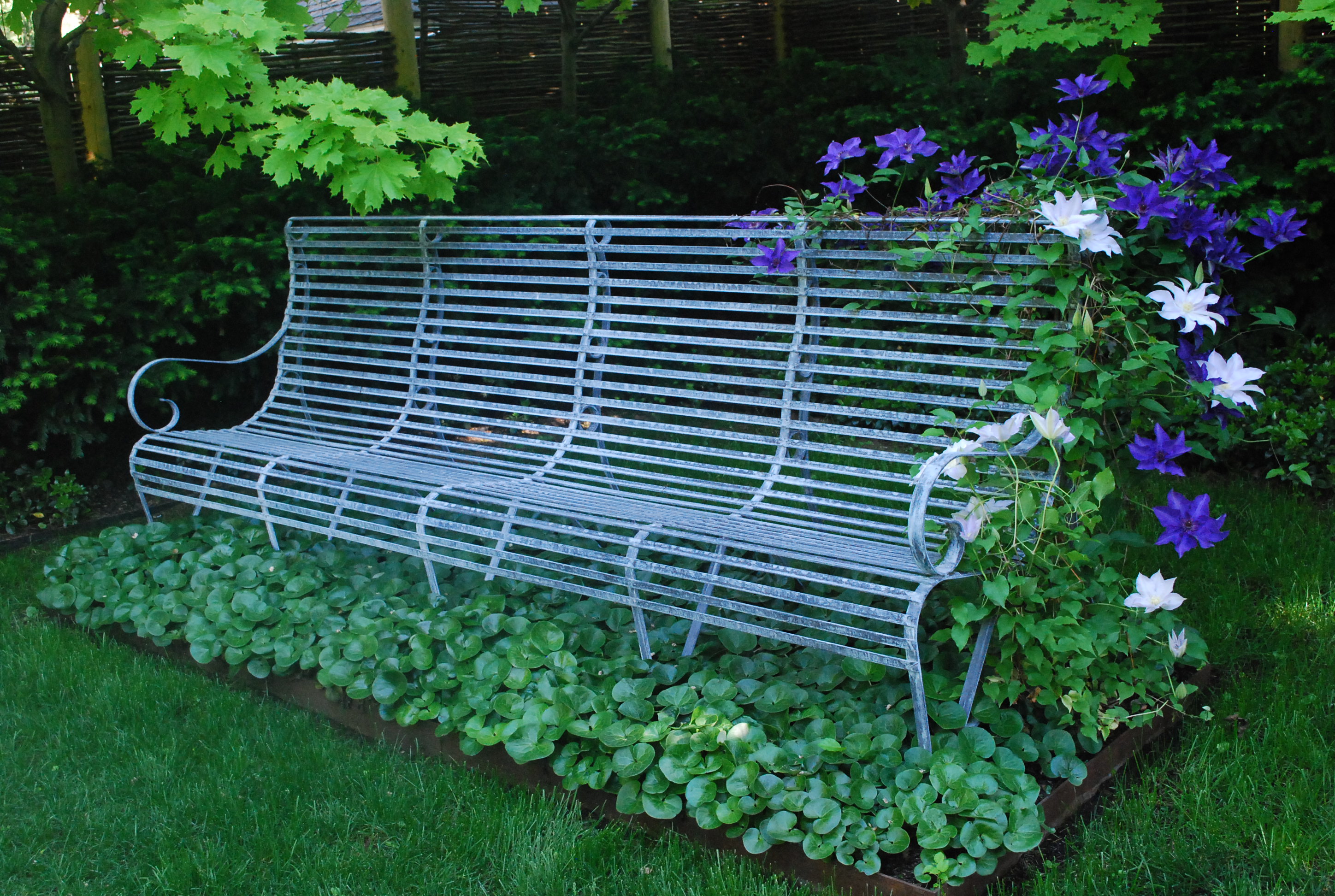
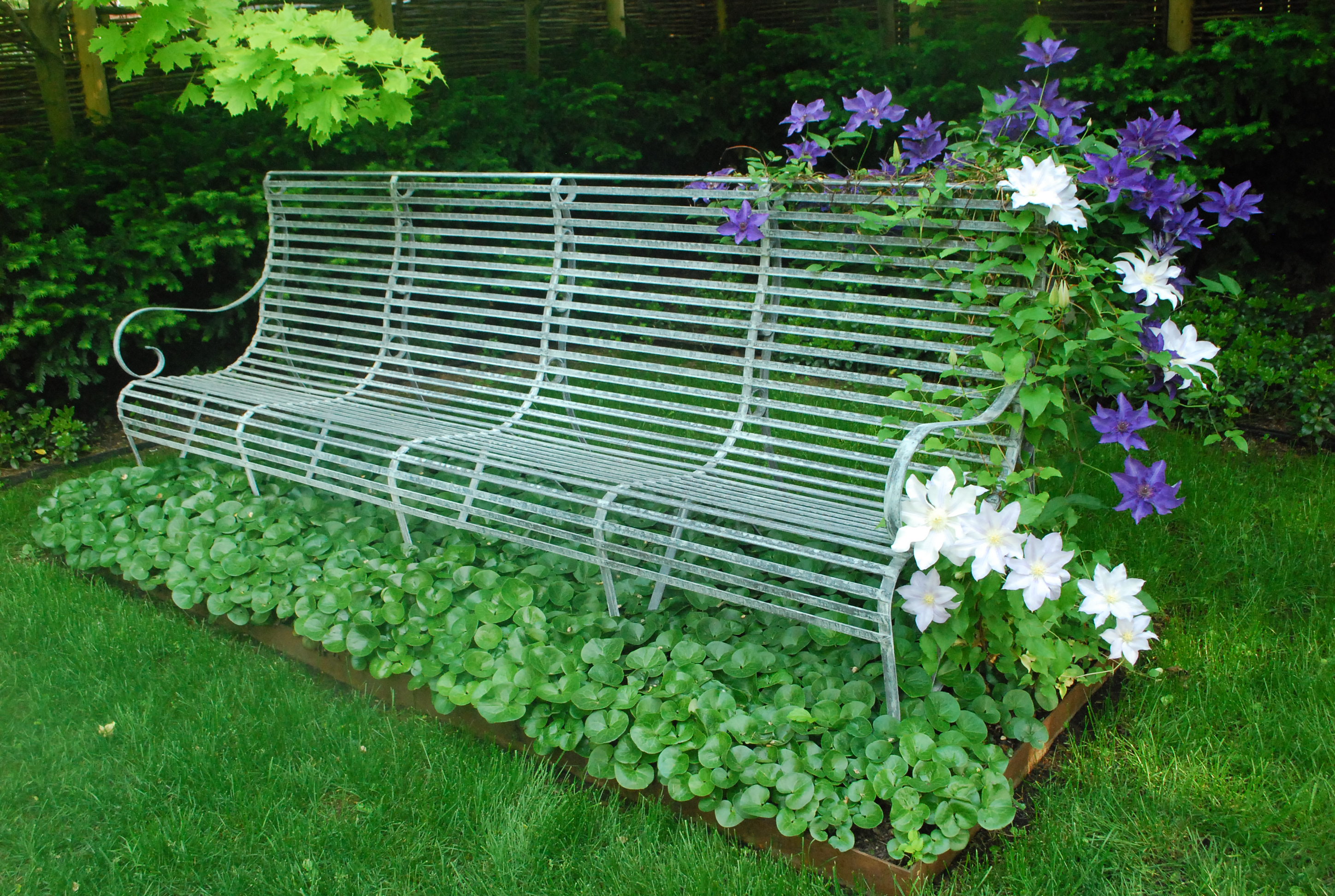
Last year I raised the bed under my garden bench, edged it in steel,  and planted it with European ginger.  I added a pair of clematis, intending them to grow up one arm, and climb along the back of the bench.  I don’t have so many options for change in this part of my garden, but this was a small change that would prove to have a considerable impact.  Our warm March triggered a lot of really early growth. The vines were up and budded up before that interminable string of freezing nights we had in April.  I was sure I would loose all of the flowers, and perhaps some of the foliage, but that was not to be.  These clematis were unfazed by the freeze.


For the past month I have come home, anticipating the latest change to the clematis.  Buck is very patient about the fact that it is the first topic of discussion.  Watching the changes has truly been a pleasure.  It has also set me to thinking about them.  

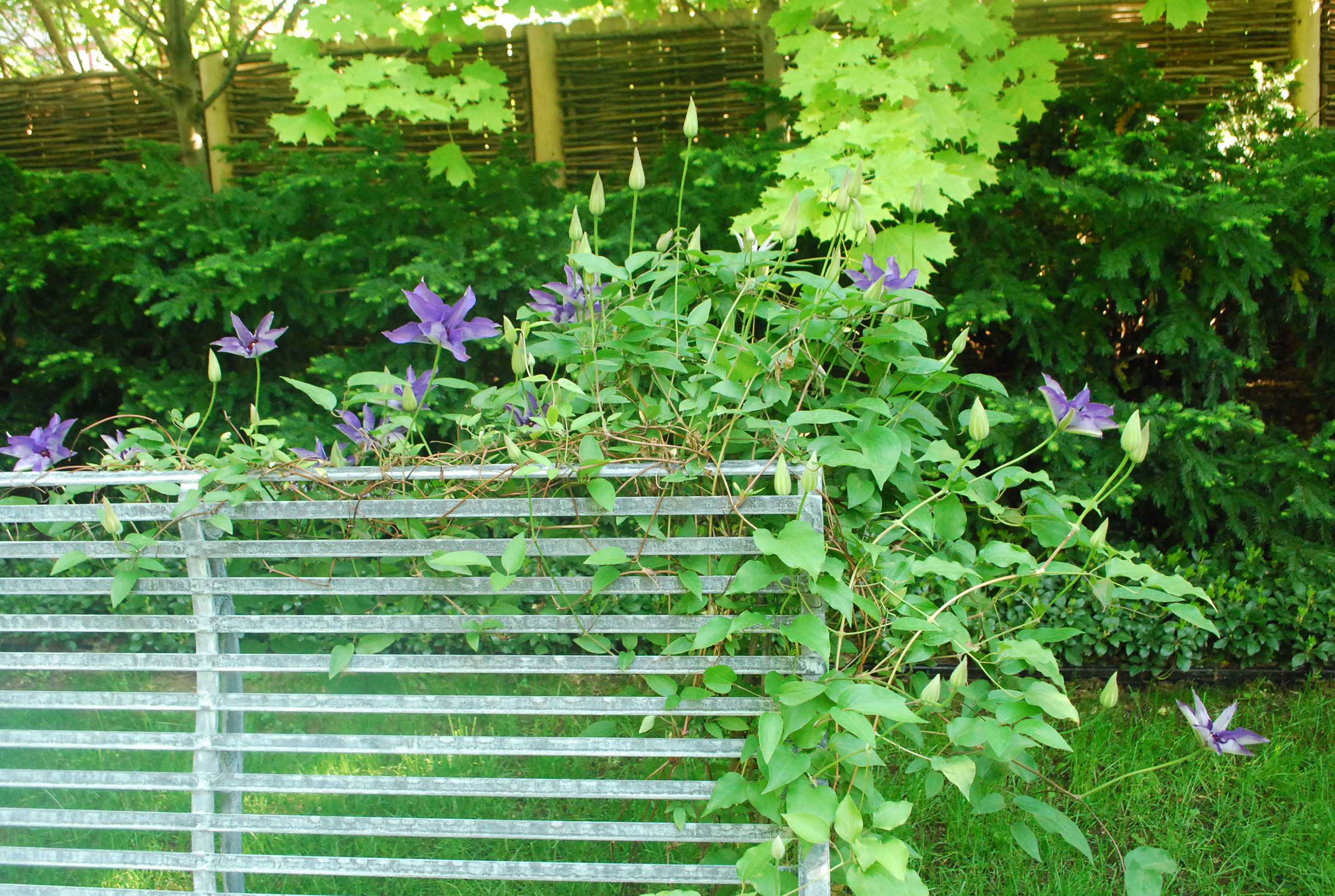
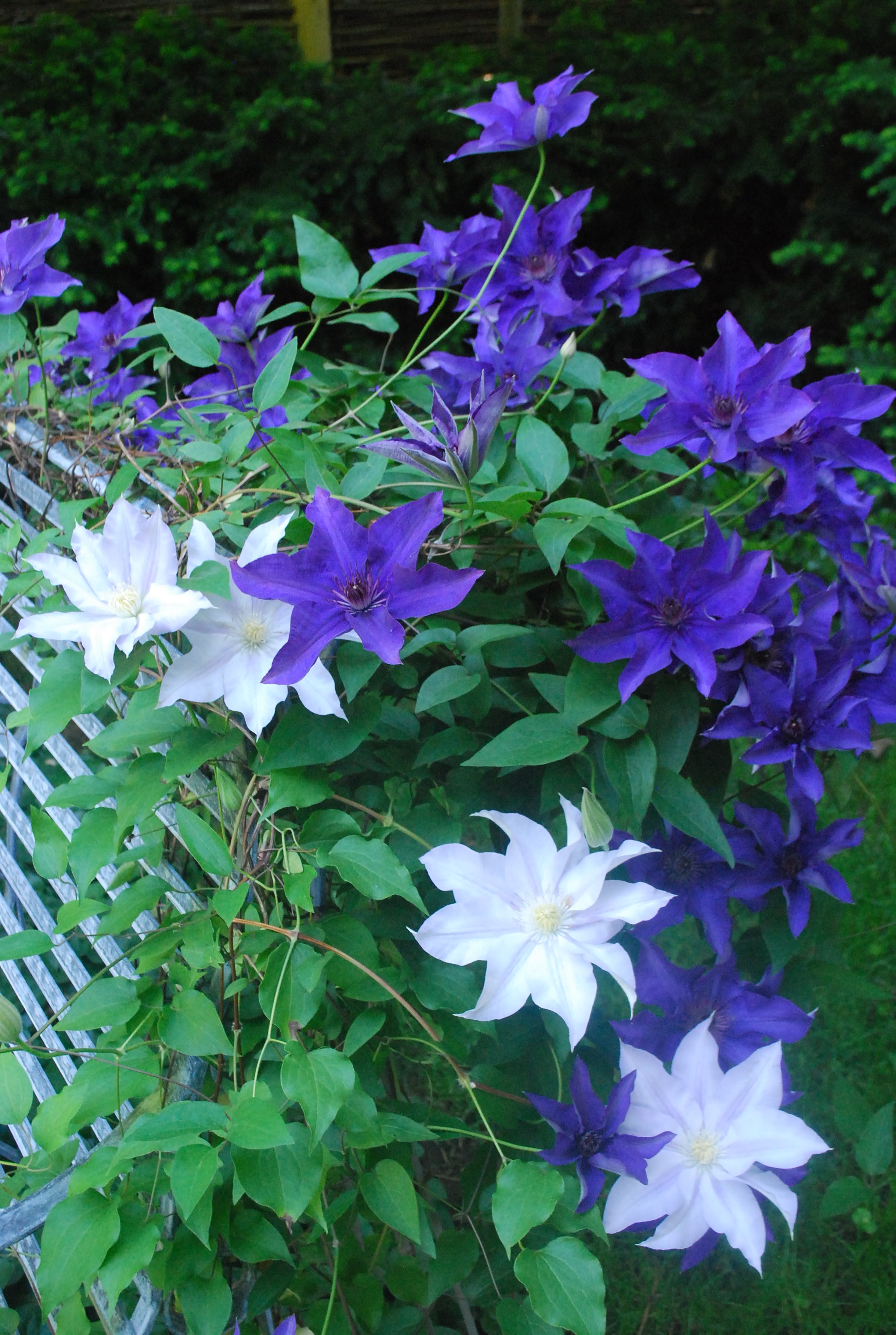
This large flowered clematis is a variety called “The President”.  I have not really grown much in the way of clematis, except for the small flowered varieties.  I really like clematis vitacella violacea, and its hybrids such as Polish Spirit.  The sweet autumn clematis, and the spring flowering clematis montana are both lovely.  Watching my pair of large flowered clematis grow and bloom has been a small but significant pleasure.

My earliest exposure to clematis on the bench dates back 50 years.  My Mom always shopped at Semrau Nursery on Gratiot Avenue.  This would be the east side of the suburbs north of Detroit.  On every bench growing geraniums, interspersed and widely spaced,  clematis.  The most beautiful clematis vines I have ever seen.  Thier stakes were at least 4 feet tall-the vines spilled over the top.  I remember how luscious they were in leaf.   I was 12-yes, I remember.  

In my 30’s, I grew but one clematis.  It was called Sho-Un.  It was the longest blooming of all of my perennials, and it obligingly rebloomed.  After 4 years in a not so swell spot, I moved it.  It never skipped a beat.  I remember how astonished I was that a vine whose stems were brittle enough to break given an unkind word would survive a major move.  Those large pale blue flowers enchanted me.  It is hard to find now-I am sorry to say.

I have read plenty about clematis wilt.  I hate a problem in the garden over which I have no influence or control.  All of that literature and documentation is enough to deter any gardener from growing them.  This might account for why I have not grown them much-beyond the small flowered varieties that grow vigorously.  This large flowered pair has done well.  They are not fussy in the least bit.  Should I rethink the clematis?   

clematis blue ice
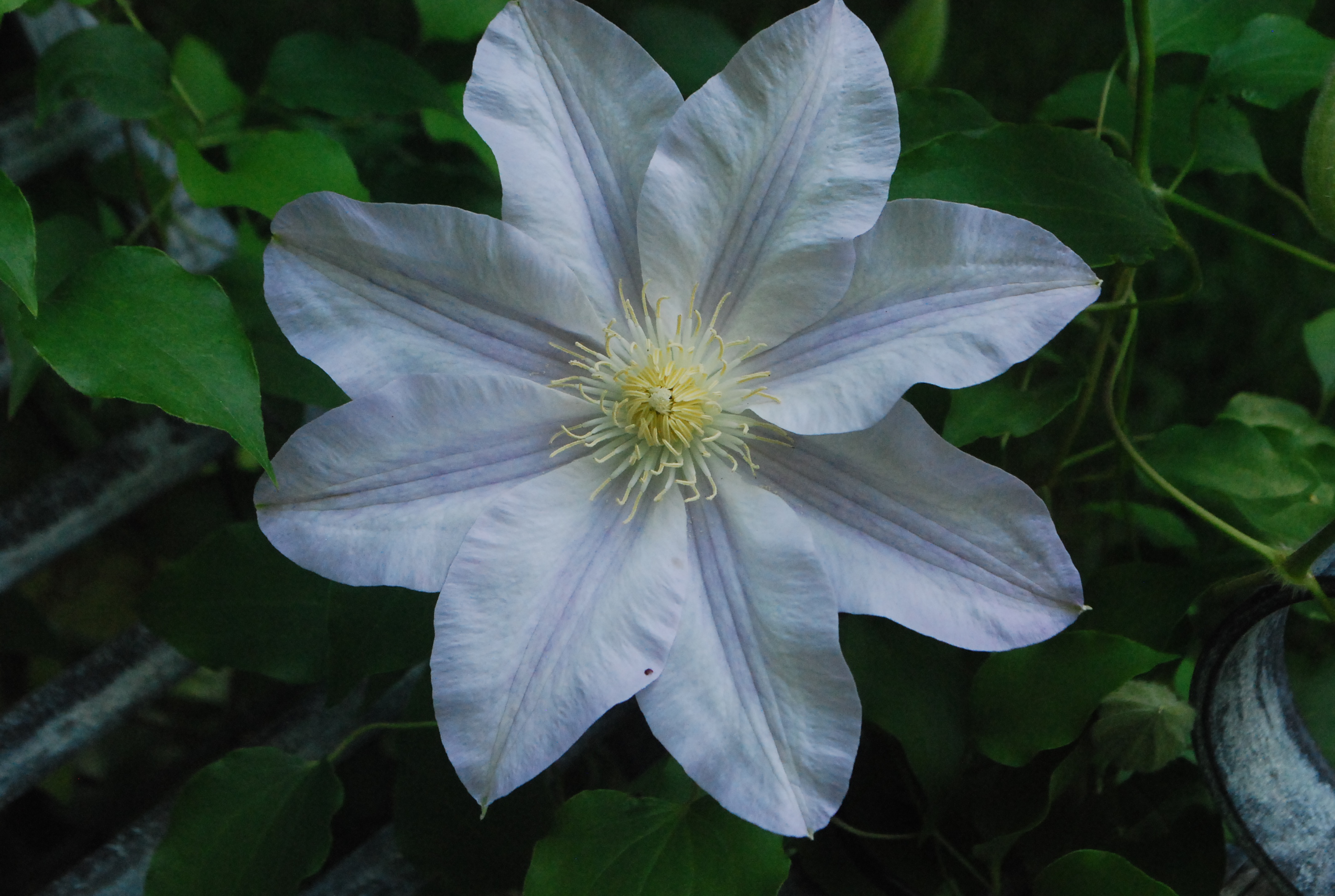
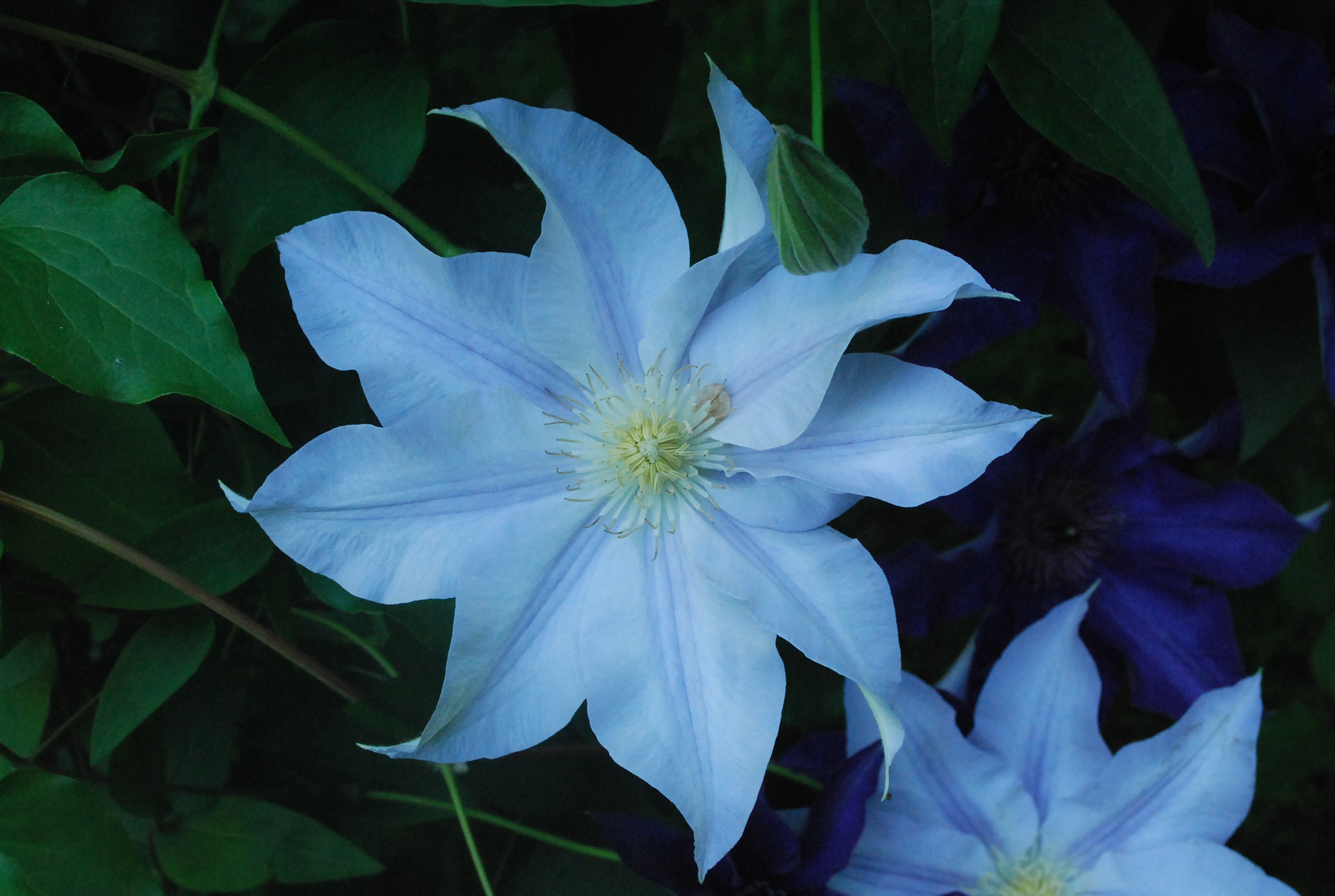
There are so many large flowered varieties of clematis available now.  Who could choose?  I chose this vine strictly on the basis of its very pale blue flowers.  I think it is called Blue Ice, but I could be wrong.  I bought the shape and the color-not a name. 

 Margaret Roach, gardener and writer extraordinnaire via her blog, A Way To Garden, posted about Brushwood nursery in the late winter.  They specialize in vining plants, and especially in clematis.  I read, and reread their list .  How would I choose?

May blooming clematis

I have a big love for the pale blue, and blue lavender varieties.  This would include Sho-Un, Will Goodwin, and Mrs. Cholmondeley (just say Mrs. Chumley-is this not friendly?).  How would I evaluate new varieties?  I did not order anything from Brushwood.  In retrospect, I should have.  Whatever seemed good to me.  Experimenting is part of the soul of good gardening. 

clematis the president

Beautiful flowers are not the only criteria for inclusion in my garden.  The flowers are next to the last.  I like plants that are vigorous.  They make me look good.  They reward me.  Tricky, stubbornly unresponsive and fussy plants leave me frustrated.  I don’t want to worry about whether I am a good and thoughtful gardener.  I want plants that thrive, and encourage me to keep gardening.

The new issue of Fine Gardening has quite an article about the best of the best clematis.  I am disappointed that there are no white, or pale blue varieties listed.  That disappointment lasted all of a minute.  Given the pleasure these two plants have given me this spring, I think I should plant lots of them.  Everywhere.  Take my chances.  I have really so little to loose.

large flowered clematis

A clematis vine takes up not one bit of space on the ground.  When properly sited, they grow towards the sky.  Their large single flowers are breathtaking.  This spring, I am thinking I should endow my garden with clematis-lots more of them. 


Do you have favorite varieties?  What pale blue, or heliotrope blue large flowered clematis grows well for you?  Do you have a white variety that you like?  Which variety is your best performer?  Where have you placed them?  How do you handle those brittle vines?  Do you grow them on the ground?  What are your favorites?  Could you please be so kind as to advise me which clematis I should try?  I am ready to try to grow more clematis.