Bold And Beautiful


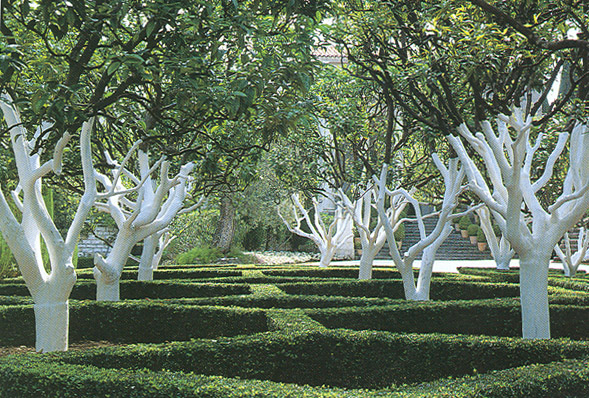
I cut this picture out of a magazine years ago-would that I could say I had designed this.  White washing tree trunks has its roots in agriculture.  Lime wash was used to prevent sunscald on ornamental and fruit trees.  Grape vines were frequently lime washed to discourage fungal problems and pests.  Kaolin, a type of clay used as a base for face powder, would be sprayed on the trunks and undersides of the leaves of fruit trees, though this has proved largely ineffective against insects and disease.  Agriculture aside, the painting of these tree trunks set in a pattern of boxwood is visually arresting-bold.      
I workede for a landscape designer in the 1980’s-Al Goldner.  He once told told me his one regret regarding his career was that he had not been bold enough. As in bold design.  Bold textures.  Bold color.  Bold curves.  Confident moves.  Bold thinking.  I remember this about him more than anything else-his committment to visually striking design. 
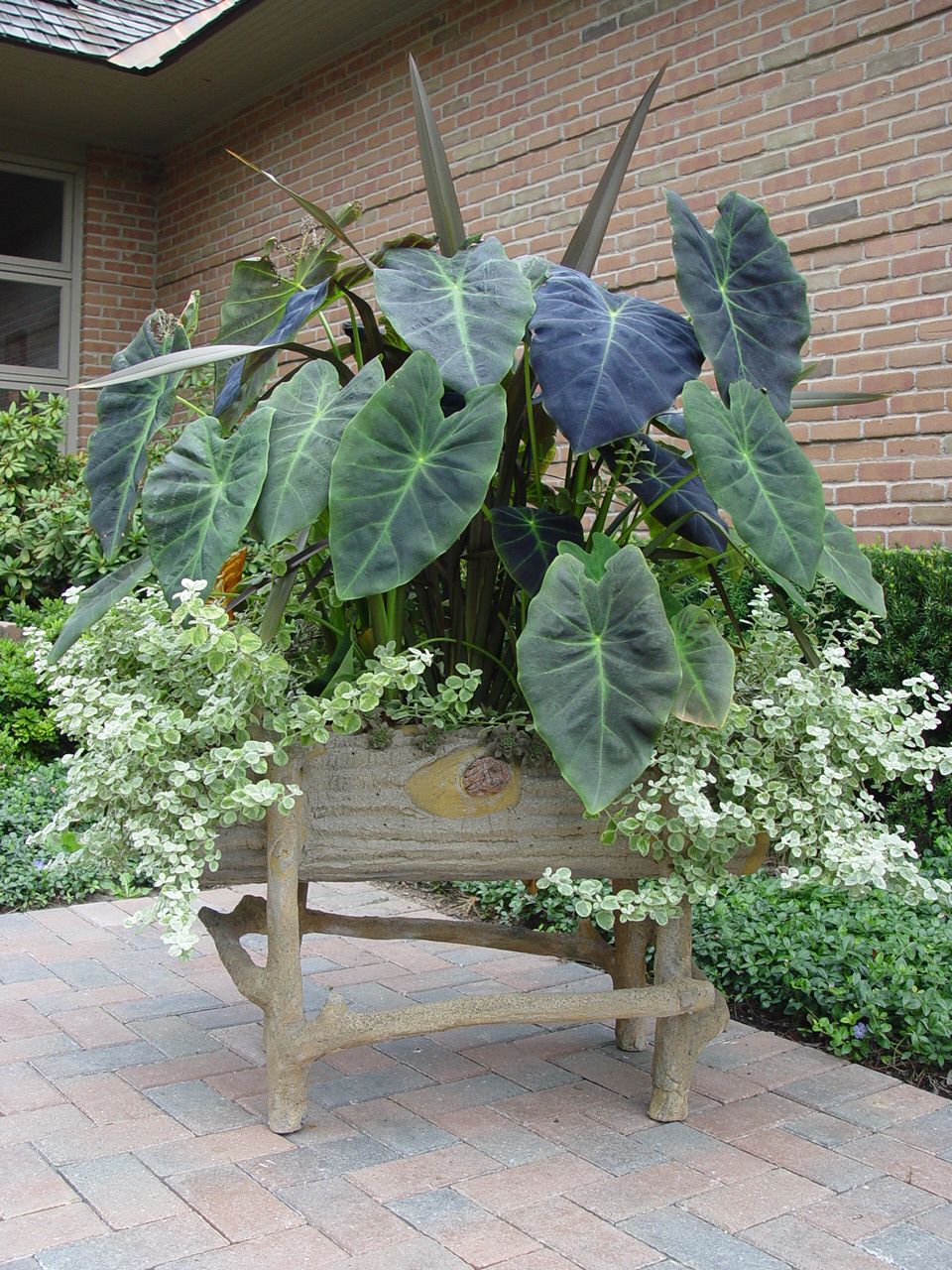
Boldly textured leaves make an emphatic statement.  The calocasia leaves holding forth over the skinny legs of this antique faux bois planter-the invention of my client.  She has an instinct for boldly textured and dramatic containers.  Black calocasia and phormium are plants perfectly capable of a bold visual delivery.  There is nothing subtle about them but for the color. This planting is about bold forms and relationships. 
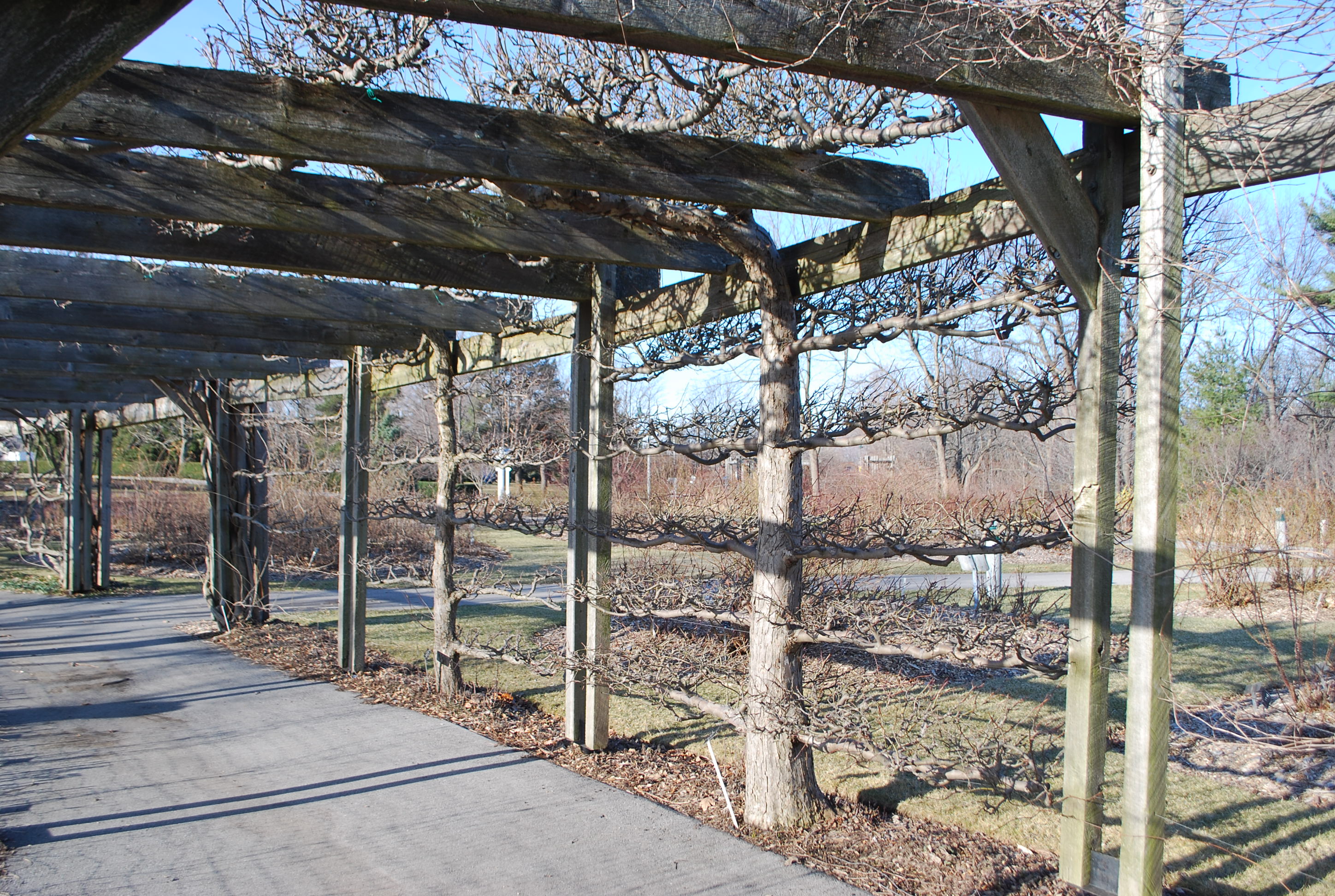
Espaliered trees are a form of growing and pruning that I greatly admire.  What is so bold about these American hornbeams was the idea to bend the leader over at the pergola roof line.  I am sure this shape was established at a very early stage in the lives of these trees.  A bold vision of what would be many years later drove this planting.  By this time the trees probably have no need of the pergola for support and guidance.  One could imagine that the pergola could be removed, and the shape represented entirely by the trees. 
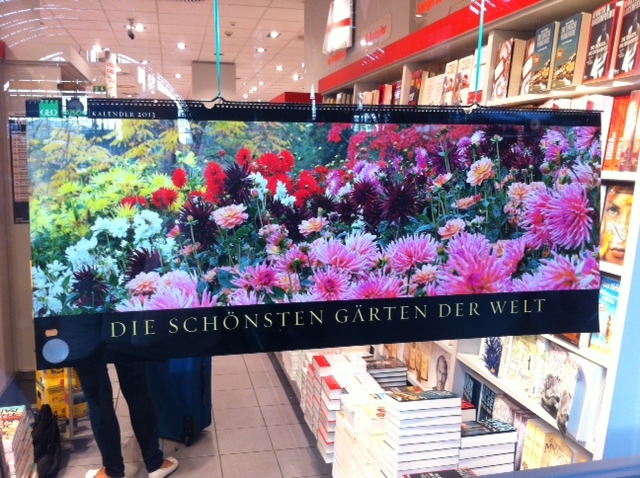
This garden calendar is bold all right.  The size is competely unexpected.  Ordinary plants in unexpectedly small or large sizes attract interest.  An overscaled element in a garden properly done can be a bold gesture. A single big idea makes a bigger impact than many little ideas clamouring for attention.        

 Amaranthus is bold in both form and color.  Small intimate spaces can suddenly acquire a romantic atmosphere with one rose in a small vase.  Big spaces may need bold gestures to create an atmosphere.  A single rose in a large room with many people will seem lukewarm and lackluster. A big part of making a bold statement in a landscape is getting the scale right.        
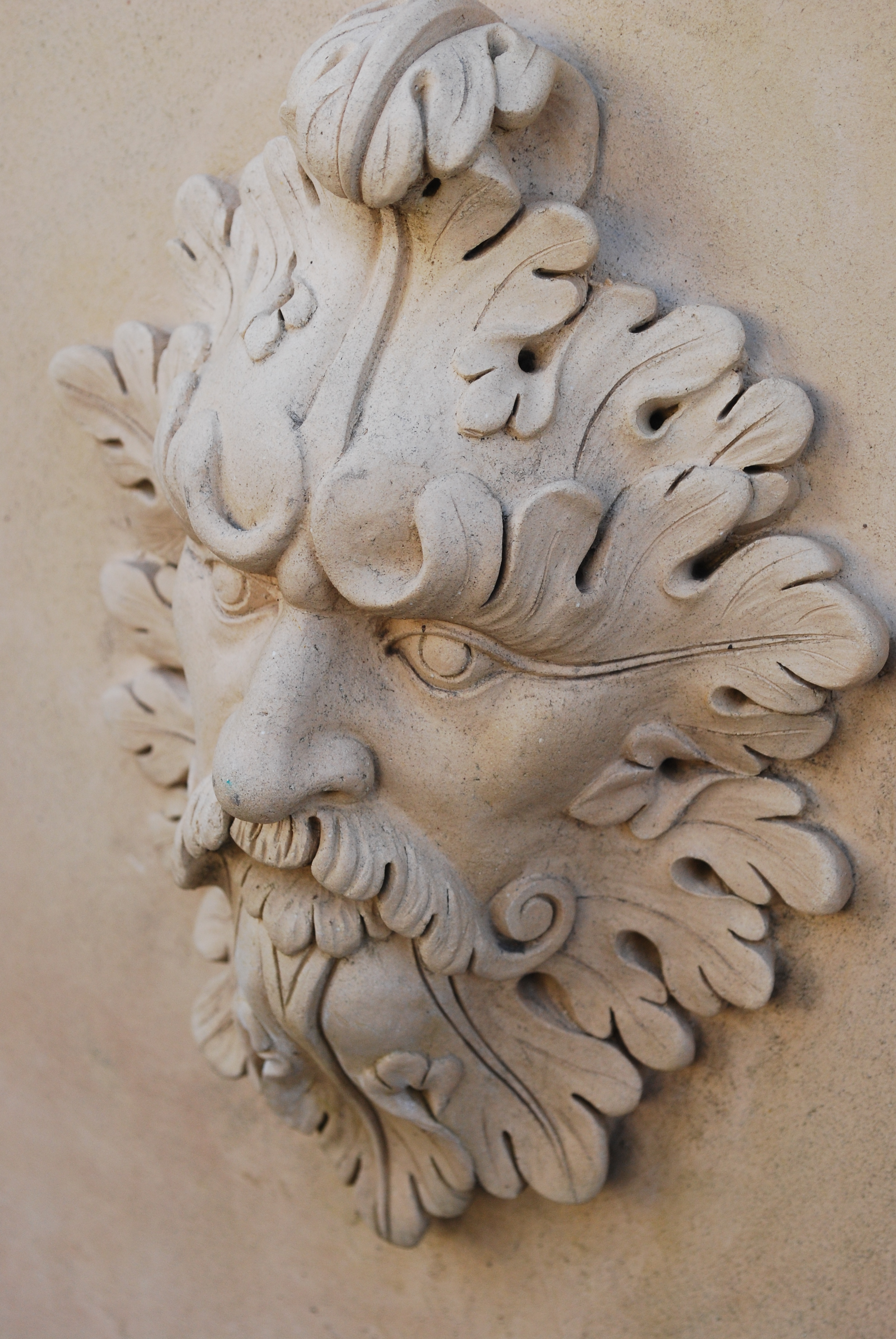

This green man medallion hand cast by Phillip Thomason on one of his modern coadestone boxes is a sculptural marvel.  Phillip Thomason may be is premier pot maker of the 21st century.  His works rarely come to market.  His commissions are many-get in the queue.  This hand made box could easily organize an entire landscape.  The face is boldly modelled; the features are distinct, even from a distance.   
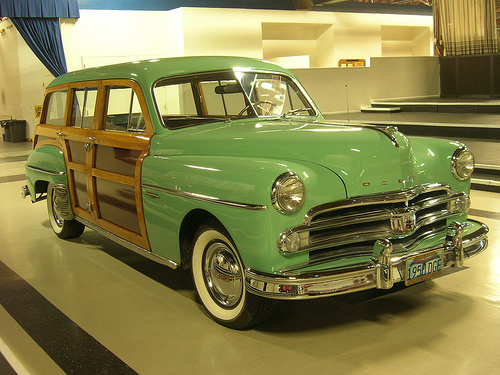
This 1950 Dodge Coronet woodie is as bold as can be.  The shape, the abundance of chrome, the color,  size and the styling-all bold.  It looks big enough to hold enough to hold a decent sized event. Heavy and strong enough to protect its occupants. Automotive designers are not just concerned with safety and efficiency, but great style.  This vintage station wagon-a sculpture on wheels.   
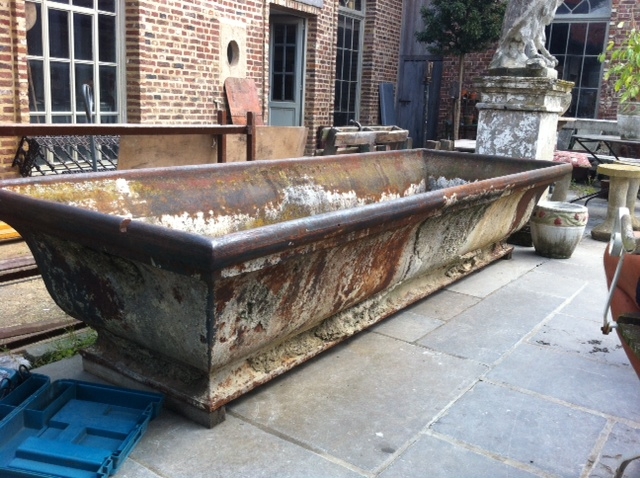
This rare and massive cast iron tank would be a bold addition to a landscape.  It has battleship like proportions, but very graceful lines.  It would come with a very bold price-much more than the original price of the Dodge Coronet pictured above.  Luckily bold design has almost nothing to do with price.  Everyone has seen landscapes that look like they cost a lot of money and have little to show for it.  Will I buy the iron tank?  I am thinking about. 


It was a bold urban planner who made the decision to line this street not far from me with London planes.  What a welcome relief they are from the standard Norway or silver maples. They seem incredibly healthy, given that these giant trees  are constrained on both sides by cement.  The maples in my neighborhood all show signs of stress from girdling roots, not to mention the sidewalk sections that are lifted off grade by their roots.  I would not have thought London planes would make great street trees, but this bold move seems to be working. 
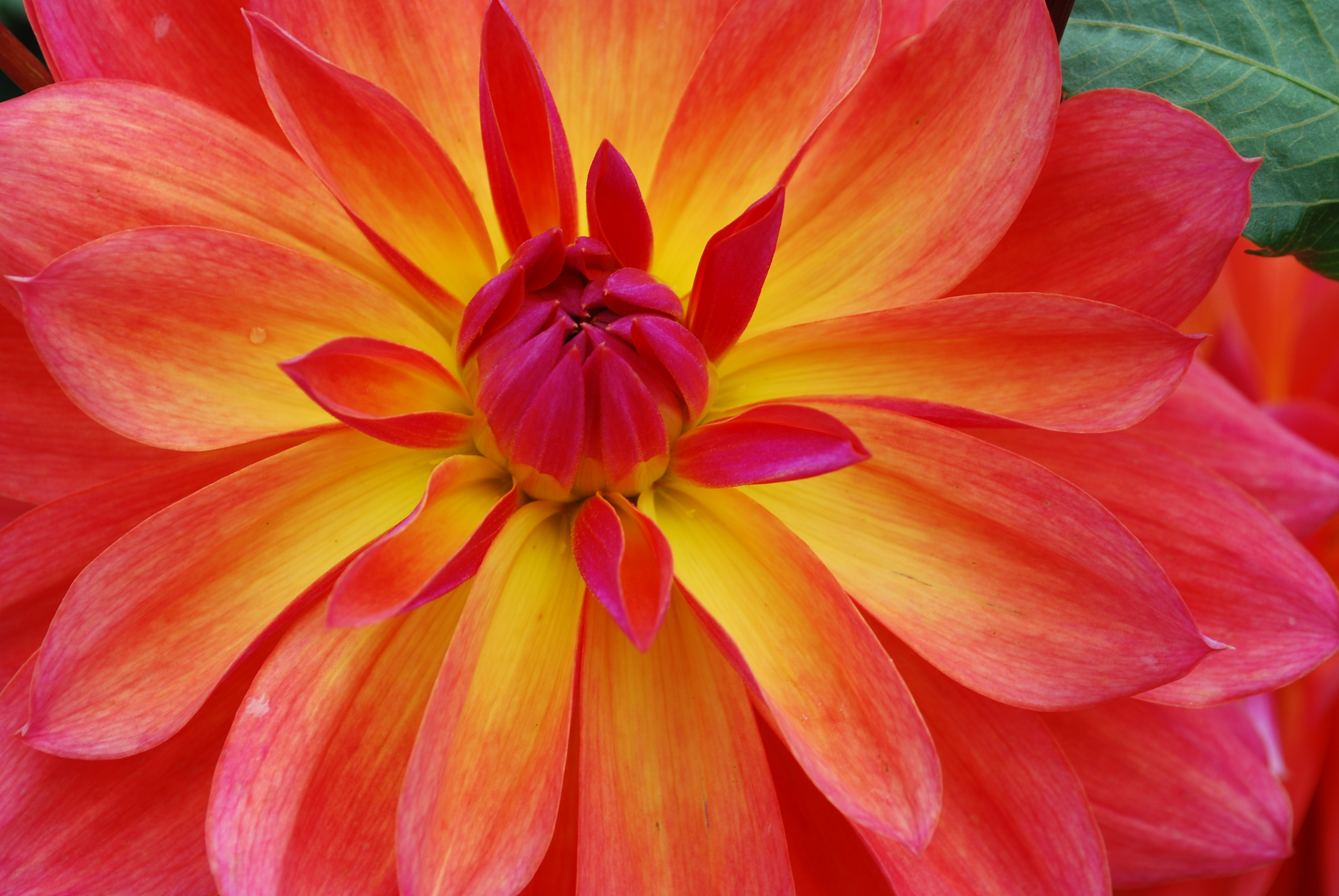
 

There are plenty of choices, should bold flowers appeal to you.  Dahlias-the showgirls of the flower world.  In that same vein, add in hardy hibiscus, delphiniums, bearded iris, giant alliums and oriental lilies. Bold flowers planted as hedges-very bold.  Someday I will have an opportunity to plant a long thick hedge of hardy hibiscus.      


Topiary evergreens have bold shapes. This simple planting in a lead box, set in a paving arrangement scaled to celebrate that box may not be moving or romantic, but it certainly is handsome.


This pair of white glazed French pots make a spectacularly bold and elegantly formal statement. All of those cut delphiniums in one place took my breath away.  There was no need for any other flowers. 
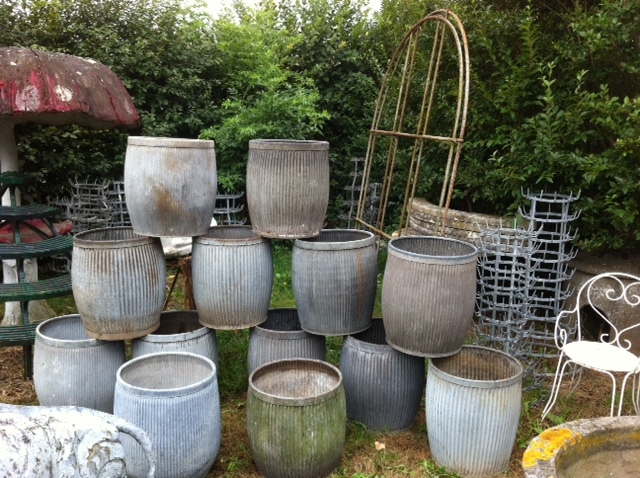
 dolly tubs

All of these vintage dolly tubs lined up on a terrace with i gallon size chartreuse dawn redwoods, or tomatoes, or dwarf horsetails  in them-every bit as bold as as that embarassment of riches in delphinium.  Bold is as bold does.
One Man’s Garden

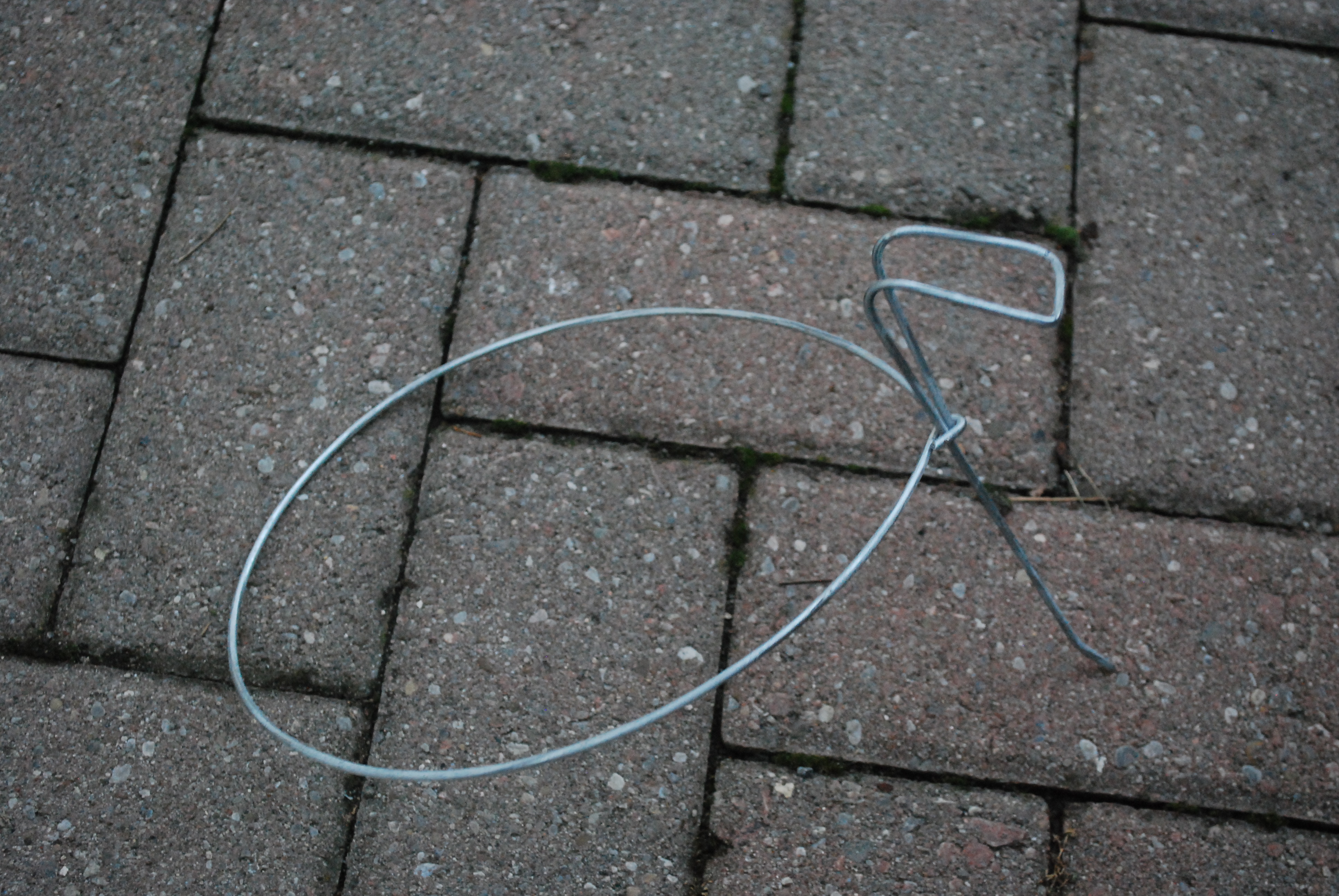
galvanized wire bracket

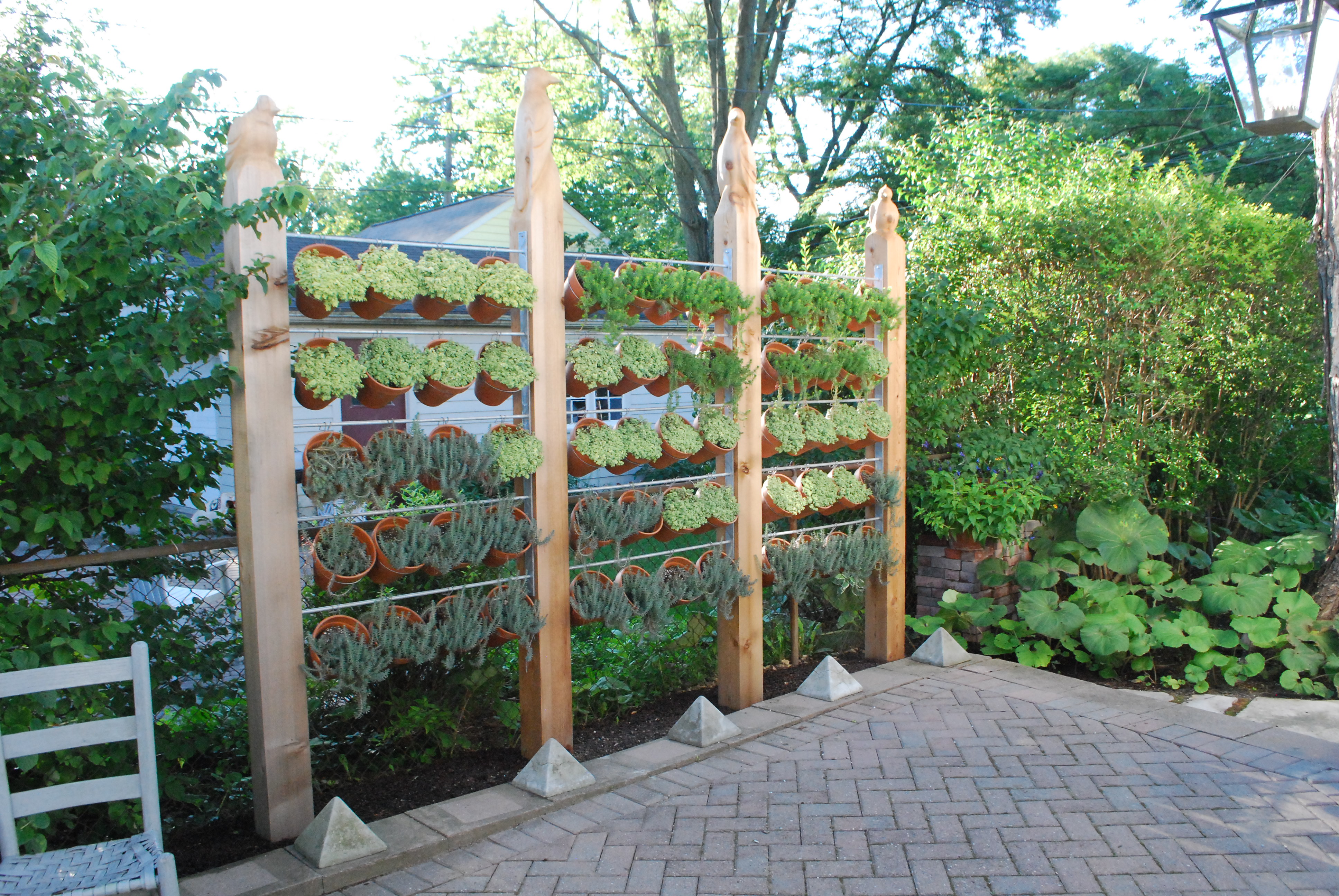
We had dinner over the weekend a the home of a good friend.  Barry Harrison is a design principal with Art-Harrison, a interior design studio well known in my area.  In addition to their interior design practice, they manufacture a line of fine furniture.  Each piece is meticulously hand crafted and carved from fine hardwoods.  Interested to read more?  www.artharrison.net.    Barry is a highly skilled designer, cabinetmaker and wood carver, as evidenced in his own garden.  Years ago Barry spent some time at Ford Motor Company-he could draw an entire headlight assembly for a owner’s manual-free hand.  Think this part through-a freehand drawing of a headlight assembly?  His talents are extraordinary.  As much a designer as he is an artist, one part of Barry’s garden began with this simple part-a galvanized steel hook that would hold clay pots.

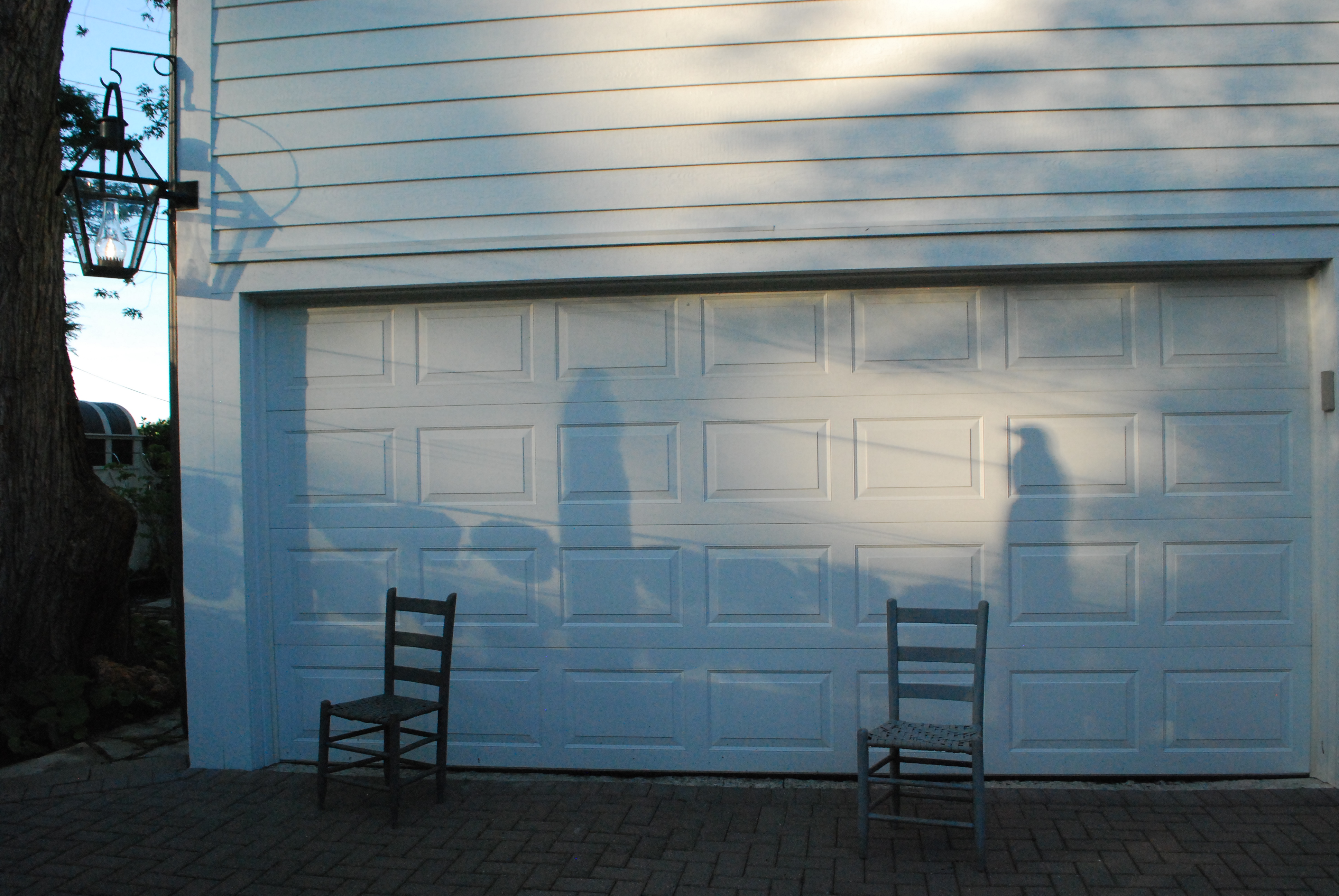
Barry lives in an urban neighborhood on a very small piece of property.  Every gesture he makes has to work-there is no room really for unresolved design.  This corner of his driveway is just a few feet from the garage doors, meaning he visits this spot every day, both going and coming.  The distance from the edge of his drive to the lot line at this back corner is 12 inches at best.  There was no option for screening plants in such a small space, but there was an option for a screen. 

cedar fence posts

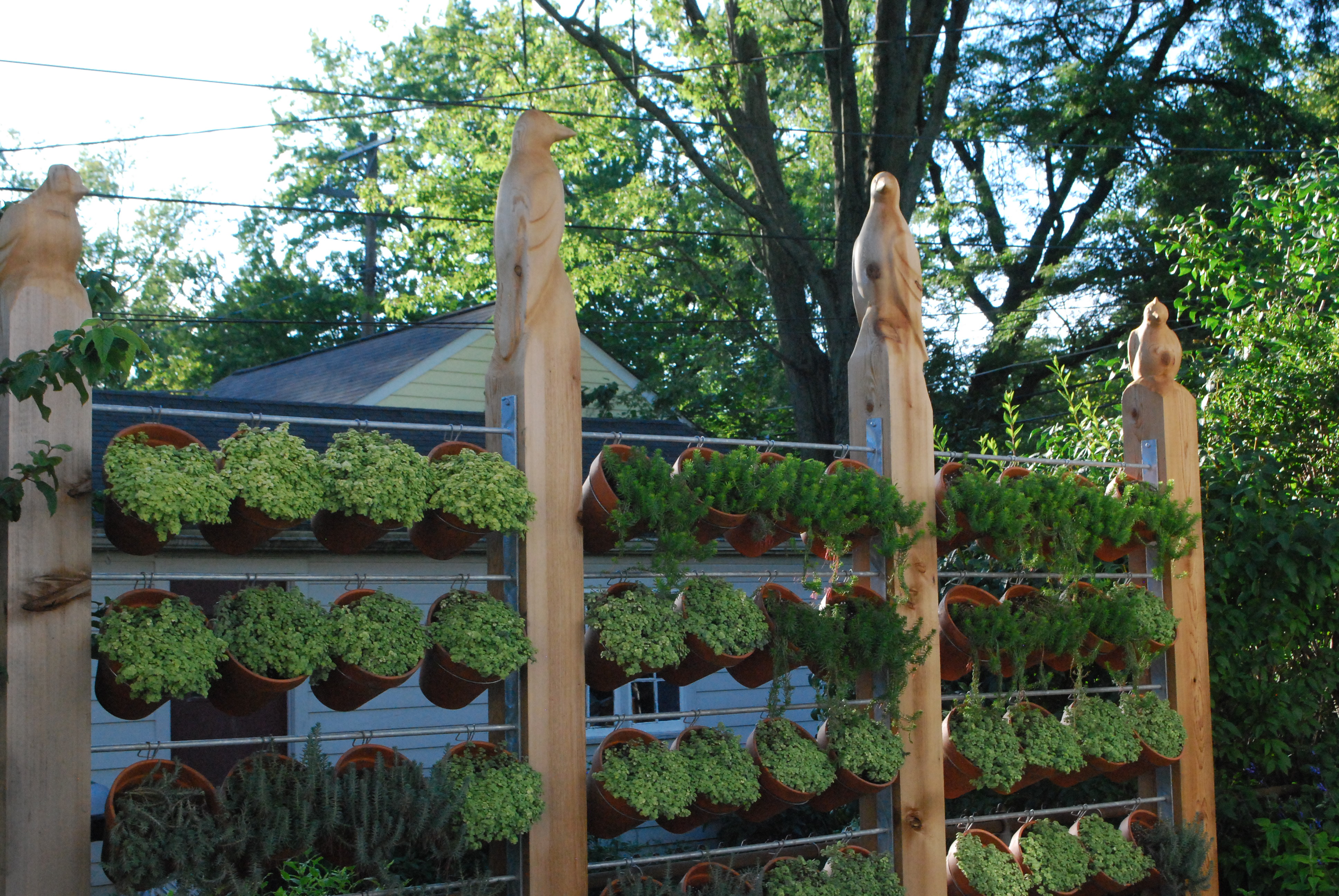
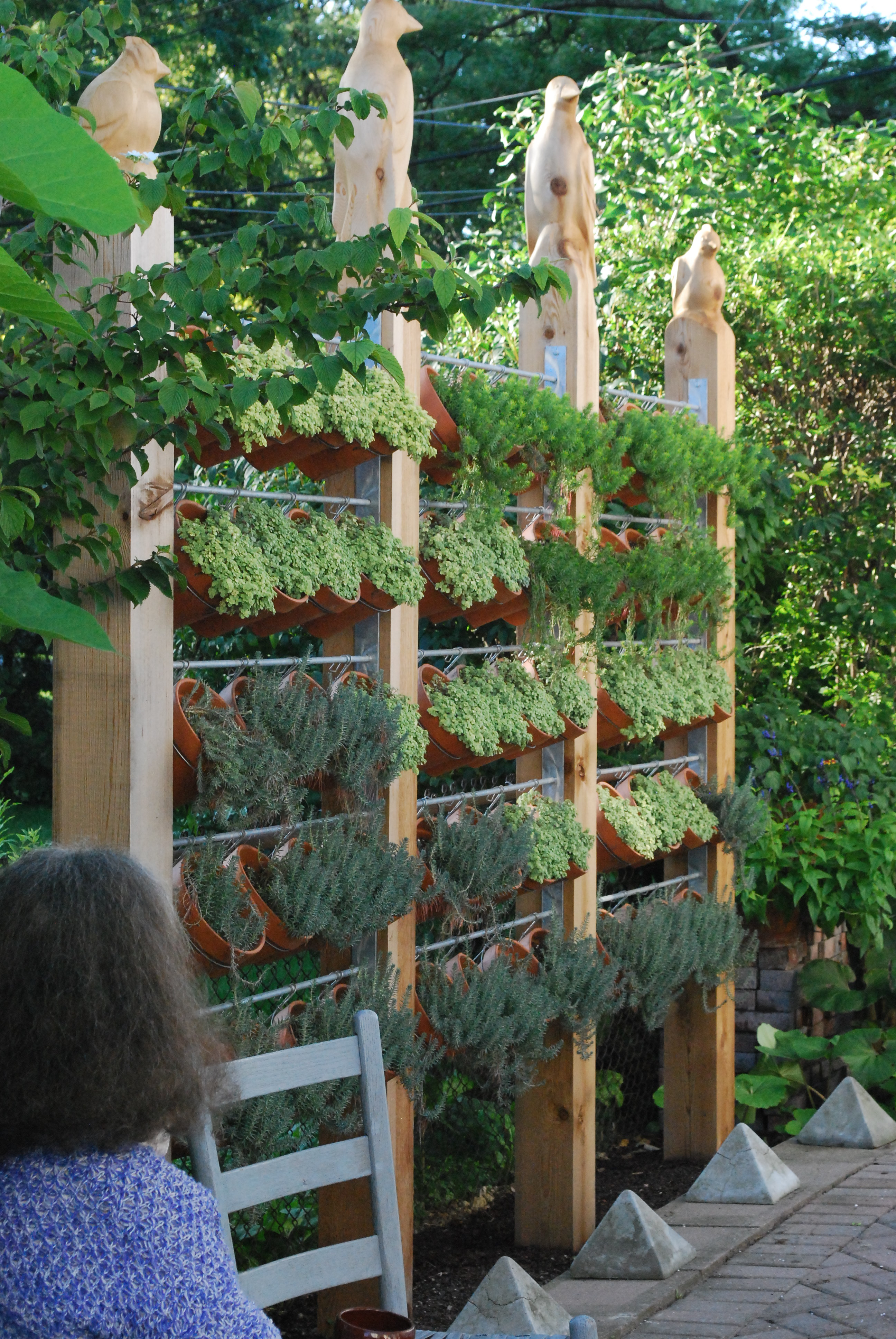
This ingenious green screen began with four cedar posts, the tops of which he carved into a pair of guinea hens, and a pair of ravens.  There was enough space to sink the posts deep into the ground.  He engineered a series of galvanized metal plates and rods, which would hold the galvanized hooks shown the the previous picture.  

The terra cotta pots were planted with succulents, and hung on the galvanized steel rods.  The watering takes some time and attention, but the plants seem to be doing just fine.  He’ll store the pots in his garage, or bury them in leaves for the winter.  I admire this inventive and low tech screening that is also so great looking.  The plants seem to be perfectly happy-spilling out of the downside of each pot.   

His succulent wall is beautifully engineered-and beautiful to look at.  Once he waters the top row, the drain water serves to water the row below, and perhaps the row below that.  Given that the screen is only 6 feet tall, it can easily be handwatered.  The succulents are not asking for much.  


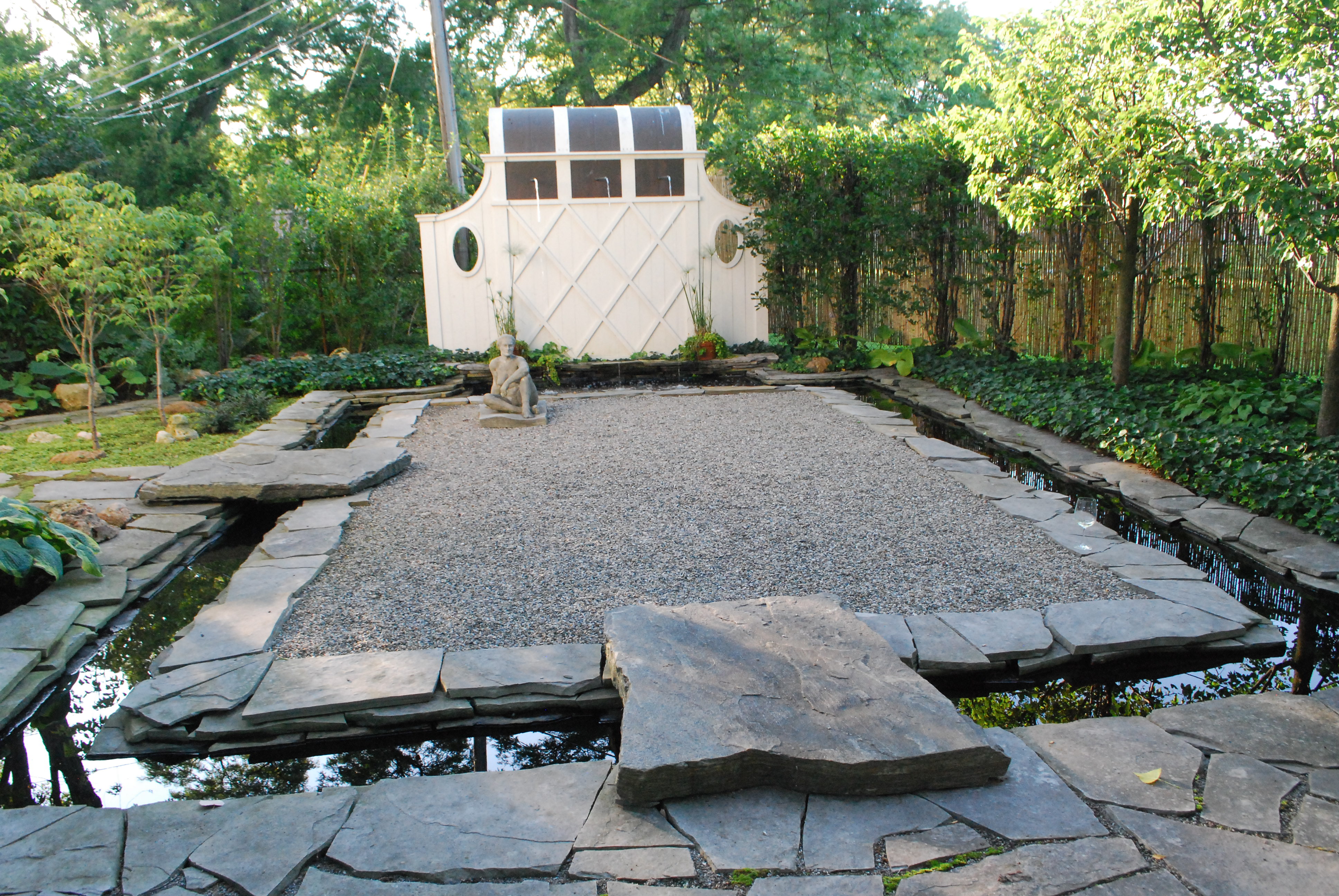
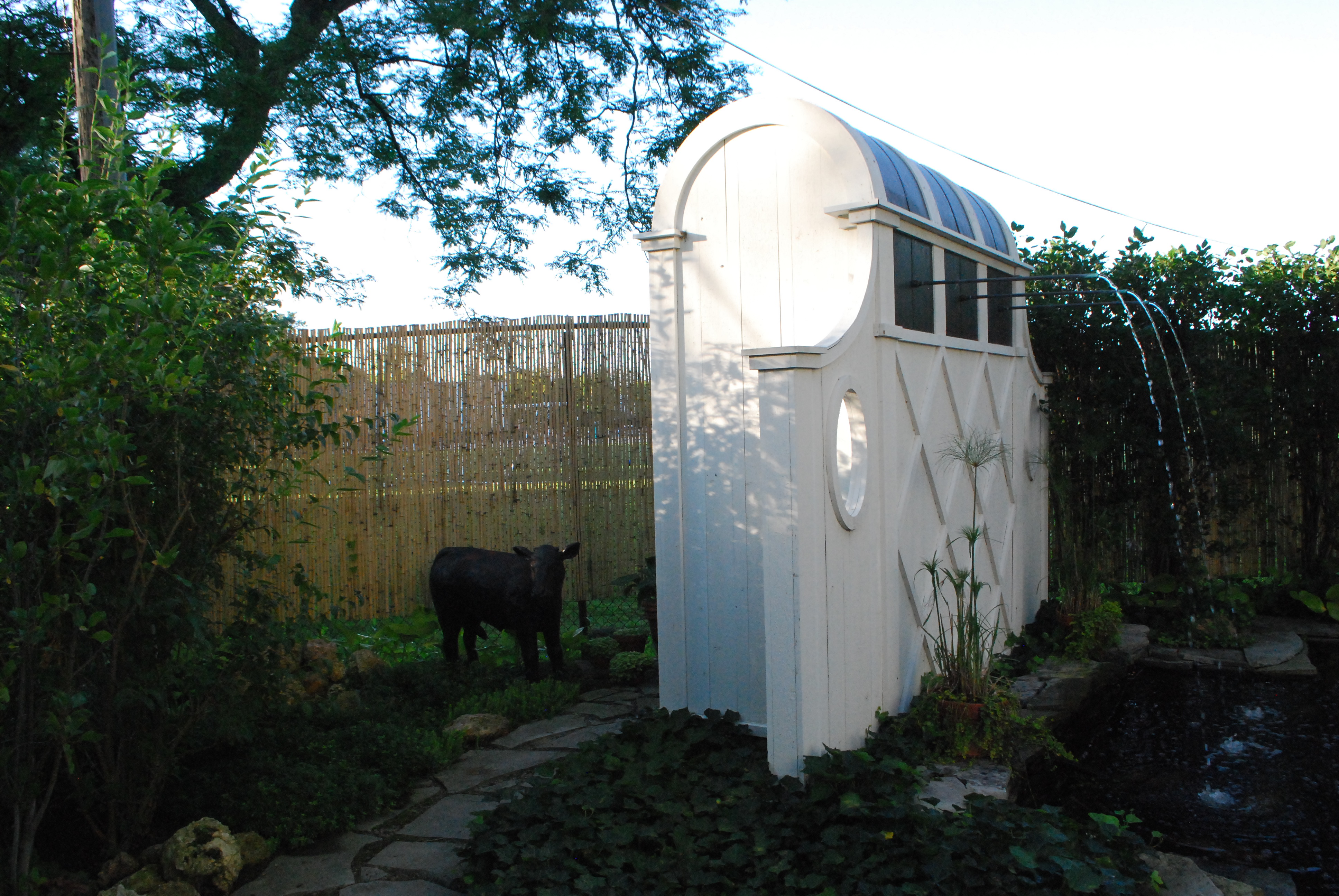
The rear yard is dominated by a gravel terrace, completely surrounded by water.  Though the width of the water is slight, the pool is 24 inches deep on 3 sides, and 36 inches deep at the far end.  This water depth, and the ability to swim in long runs, around and around, keep his koi happy.  Youy would never know that a city park was just the other side of the bamboo screening.  The structure at the far end of the pool serves a dual purpose.  From this side, the wood and copper fountain with copper jets does a great job of aerating the water for the fish.  This large, architecturally striking feature organizes every other element of the landscape.

garden sculpture

A single stone sculpture on the gravel terrace keeps a small space from looking cluttered. Easy maintenance perennials such as baltic ivy, petasites, angelina, creeping jenny and ferns makes the garden easy to look after.  The koi?  Barry has a 220 acre farm in Kentucky-the koi he raises there are cared for by his parents, and shipped to dealers and koi afficianados all over the country.

garden fountains

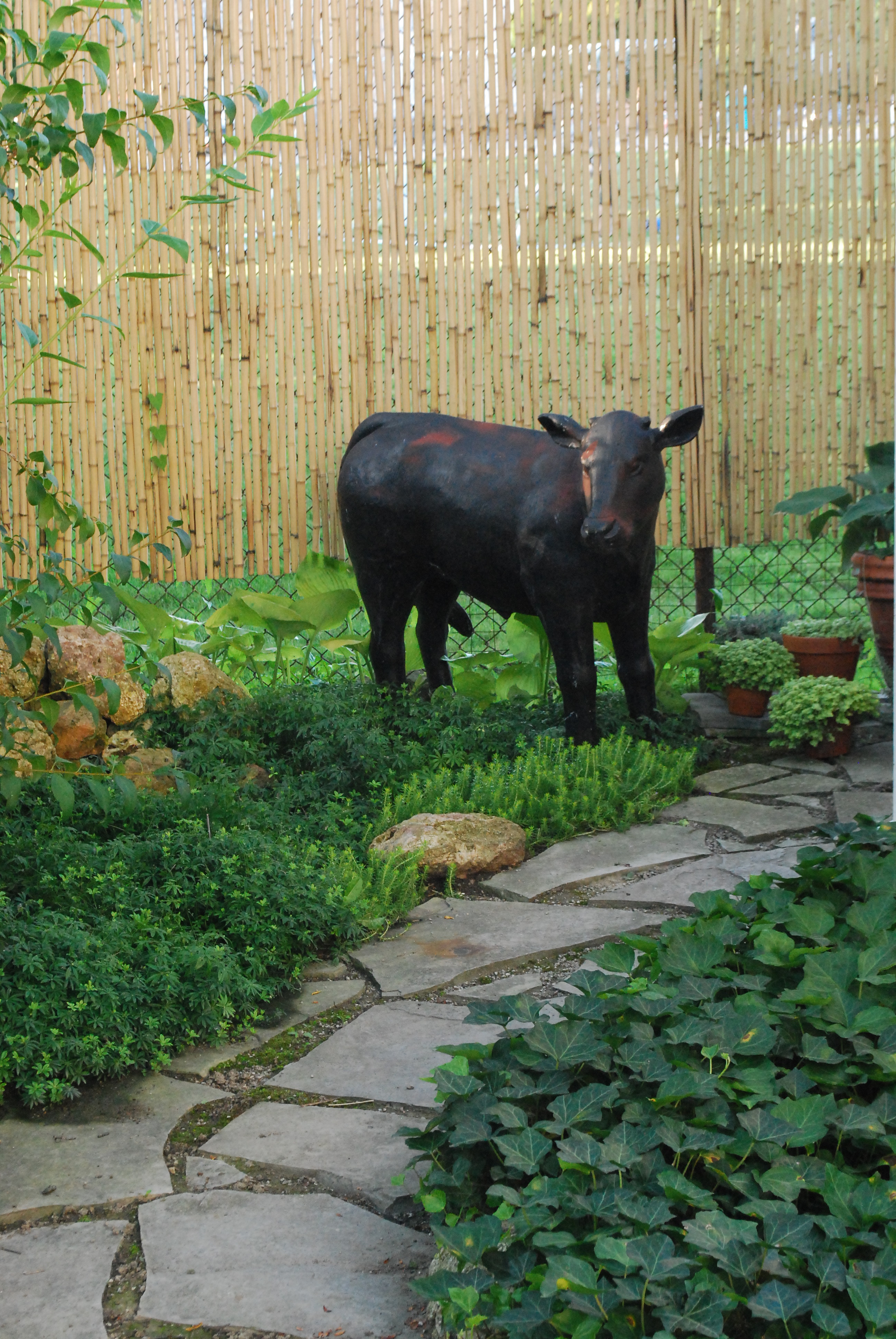
The fountain recirculates the water in the pool.  The placement of this feature on an angle to the corner of the property creates a small niche garden which features a series of pots, and some of Barry’s geode collection.  But the star of the show, at the end of a stone path-a cast iron cow. 

Even the smallest space in a garden can make a big impact.  An inveterate collector of vintage and antique objects, I am sure he spoke for this sculpture without hesitation.  This vignette is almost all of the way to another space-the garden shed.

gardenshed

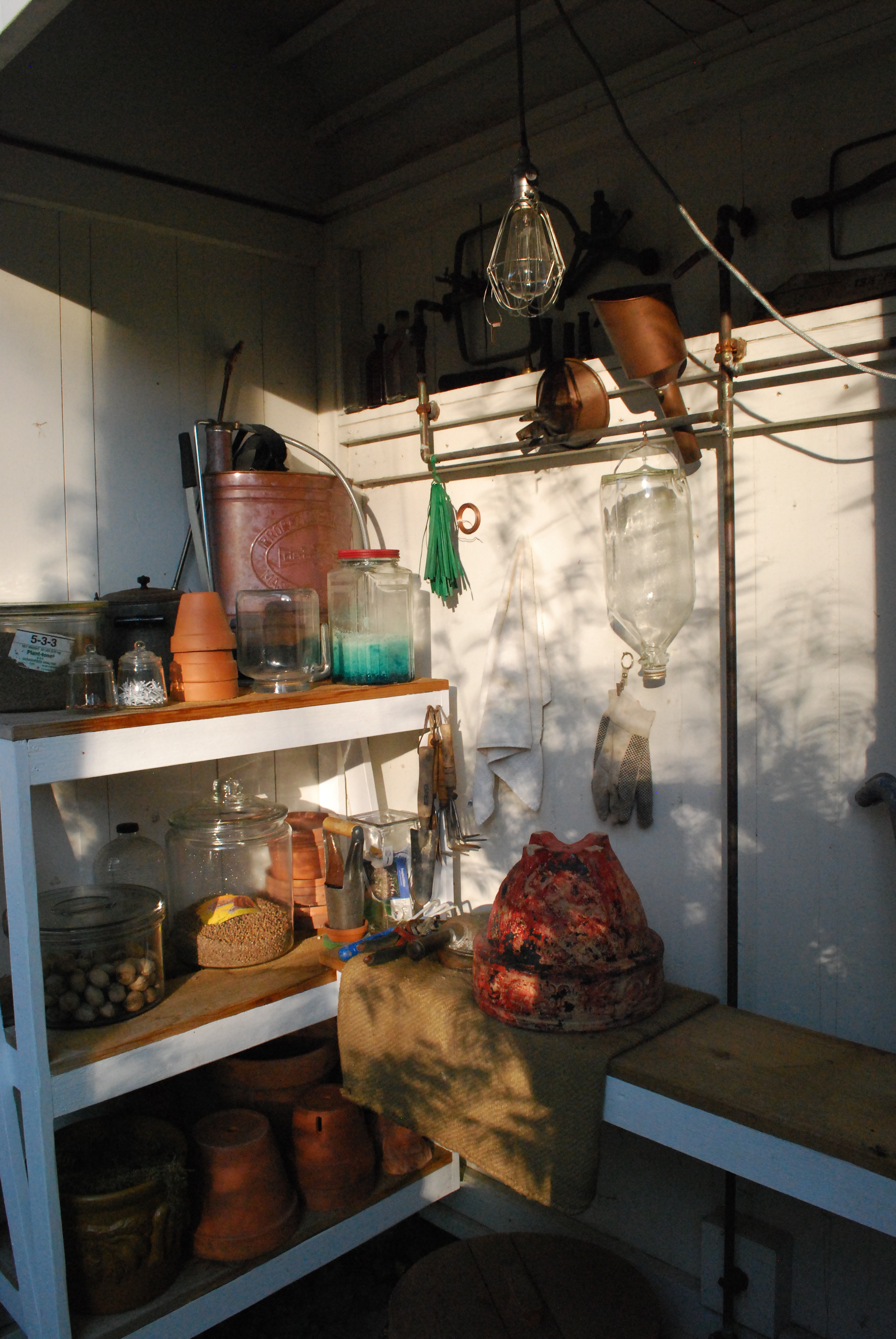
Barry’s  fountain doubles as a garden shed, which holds most of his tools, pots and soil, in addition to the filtration system and fountain assembly.  This very utilitarian space is completely hidden from every vantage point in the rear yard landscape.   

screening an air conditioner

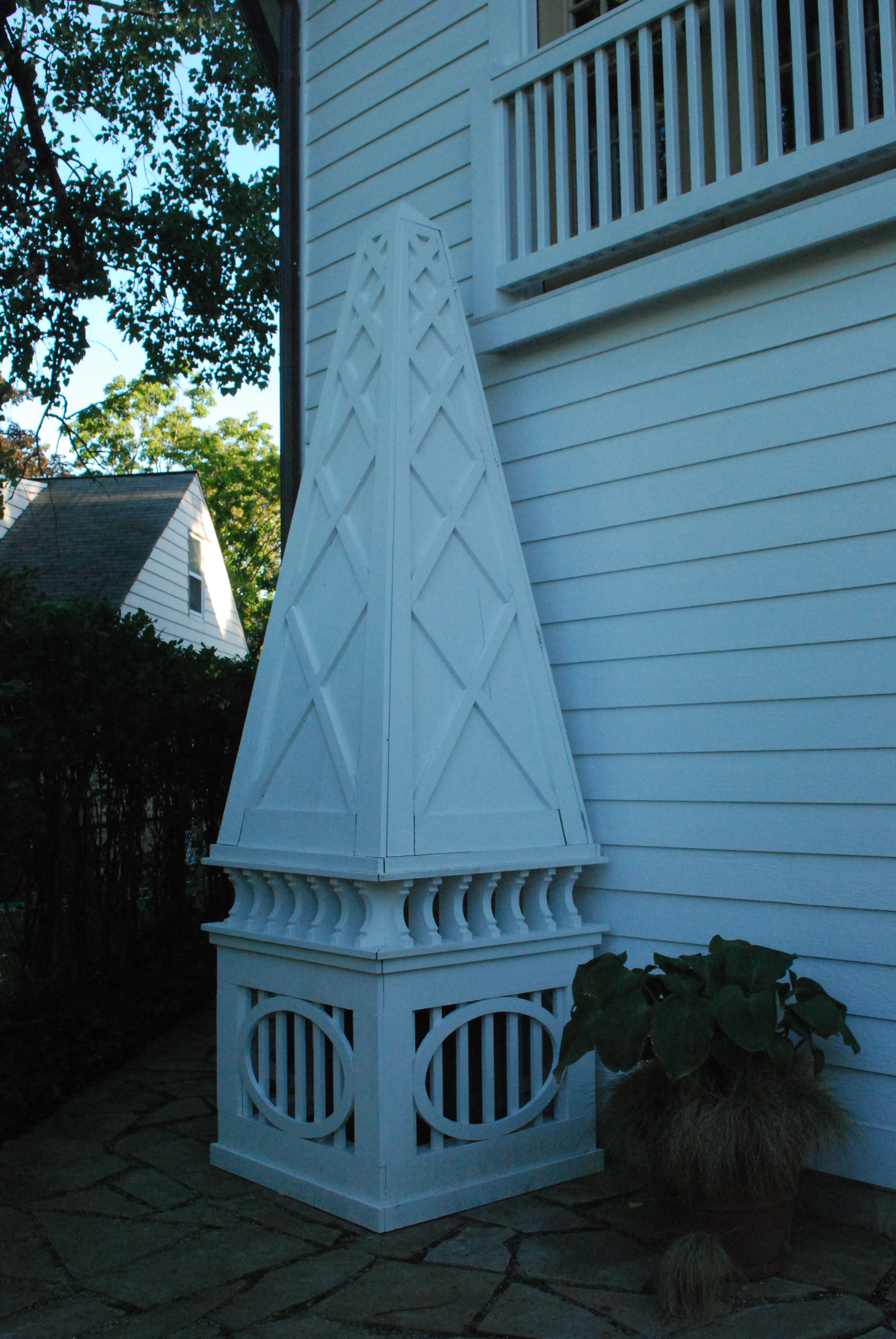
At the opposite end of the garden-the air conditioner.  The air conditioner is under this painted wood obelisk, yes.  One panel is hinged, and folds down, making service a snap. In the top of the obelisk-long handled gardening tools. 

The view out of the back yard-another view of that succulent wall.

evergreens in containers

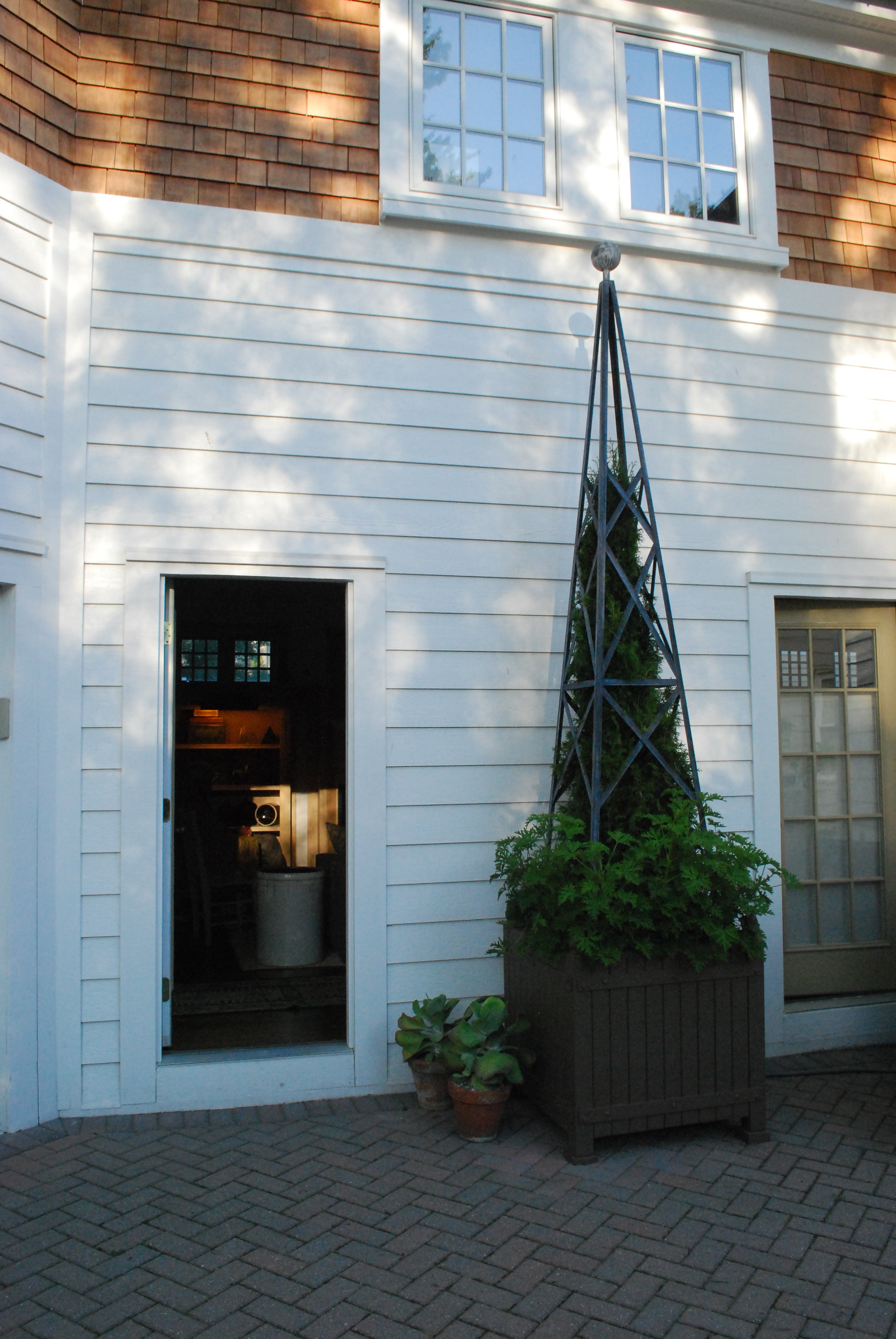
The house and garage meet at an angle in the back, near a pair of doors.  A giant painted oak box with a steel tuteur is the only nod to the garden in a fairly large paved space.  Only Barry would think to faux shrink wrap an arborvitae in plastic, and place the steel tower over it.  Not one branch got broken when the pot was planted.  At some point, the plant will grow through the steel, and be trimmed flat.  Clearly he is fond of making a few big gestures on his small property, rather than lots of little ones.   

There are as many great ideas for a beautiful garden here as I have seen on on properties many times this size.  Unlike a property which is defined by its boundaries, it’s hard to tell where unlimited creativity and imagination of this caliber might decide to go next.     


Good Grooming

annual planting design

Successful container planting depends as much on the maintenance as it does on the design.  Though I do have clients that never touch their containers once they are planted, I find that gardeners who look after their containers enjoy them more, and enjoy them longer.  If you have kept up with the need for water, this extraordinarily hot summer has been a dream come true for annual plants.  Many of them are native to hot, tropical climates.  They luxuriate in the heat.  Every plant is on top of, and competing for a dominant position with its neighbor.   

container planting design

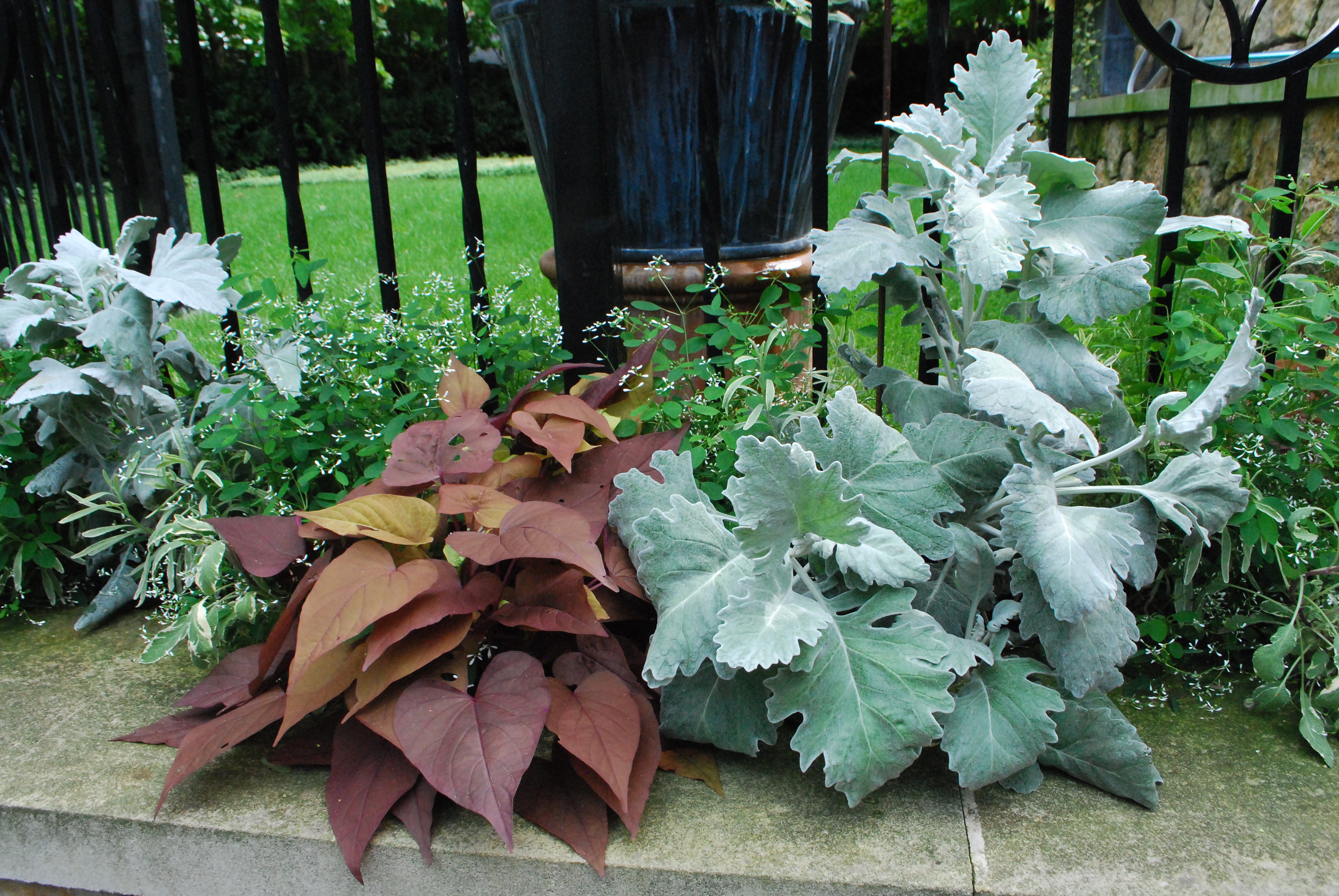
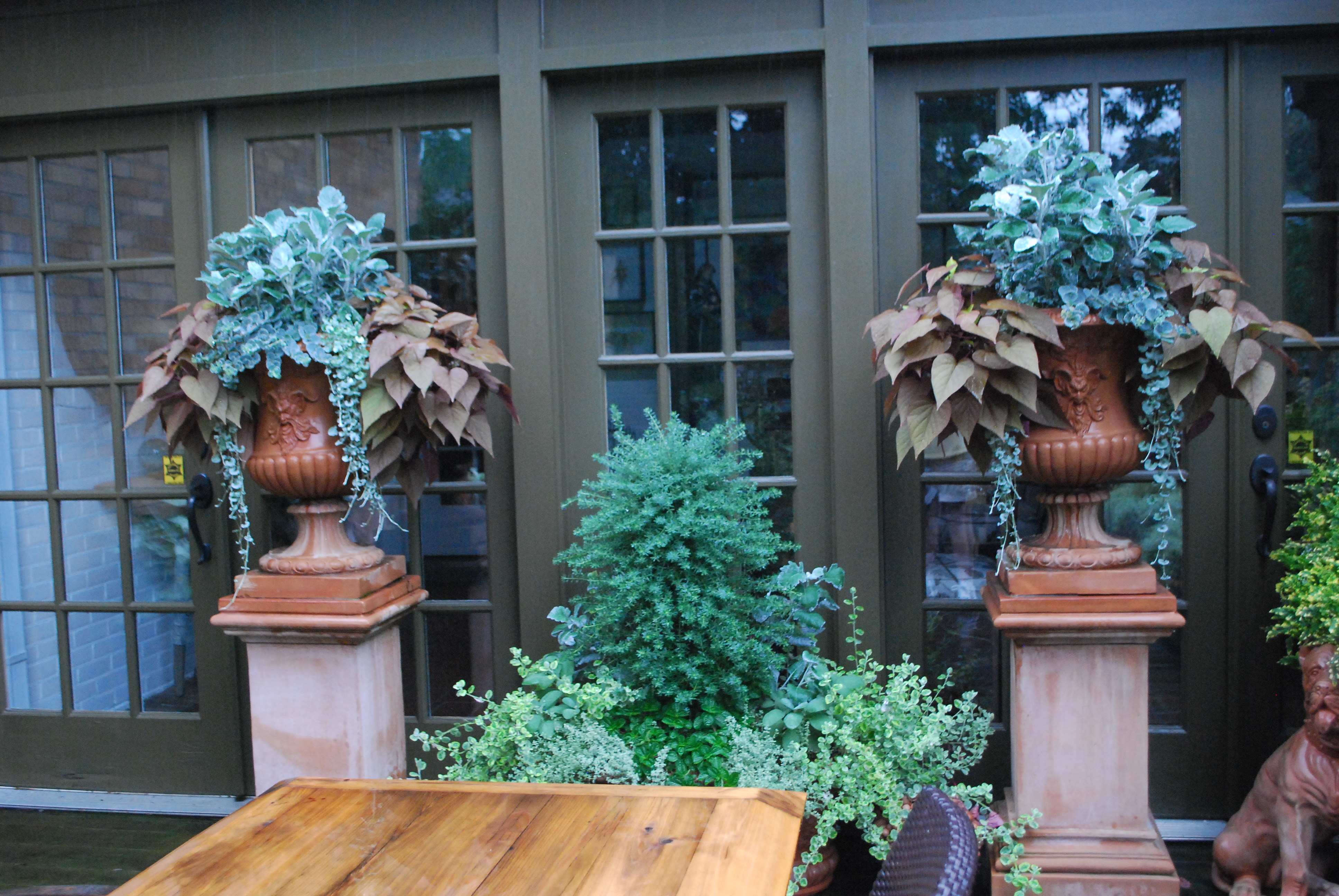
Plants compete with other plants.  Given that there is only so much light, and so much water, any garden in its simplest definition is the story of that competition.  In these urns of my own, every day the potato vine threatens to engulf the silver dichondra.  It is up to me to level the playing field.  I remove those leaves that shade or otherwise interfere with the well being of the dichondra.  I signed up for this job, as I planted two vines whose habit and vigor are very different. 

white caladiums

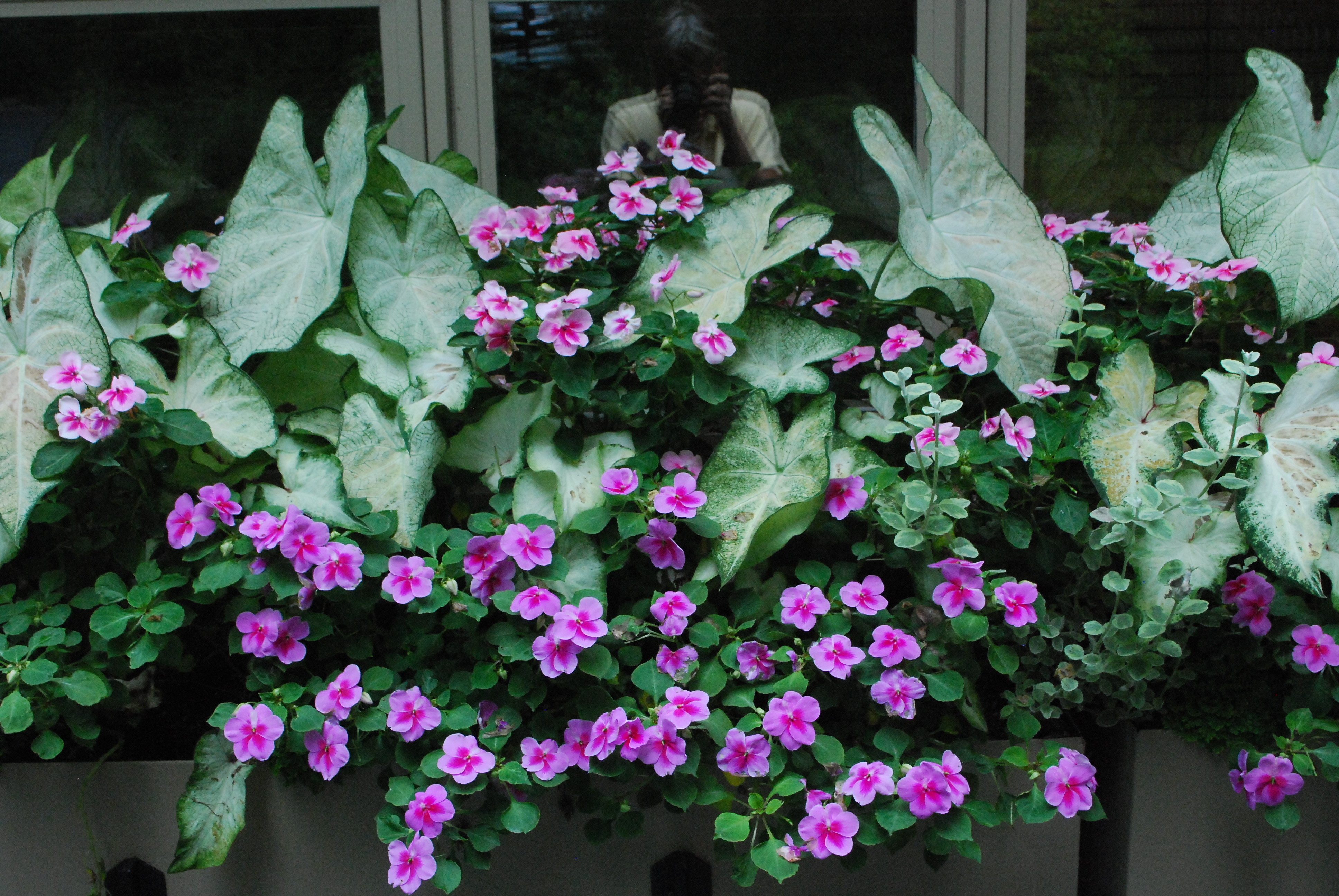
This window box that I planted for a client requires little in the way of intervention.  The caladiums produce lots of leaves, but the impatiens have found a way to work theimselves to the forefront.  They coexist-peaceably.

container planting design

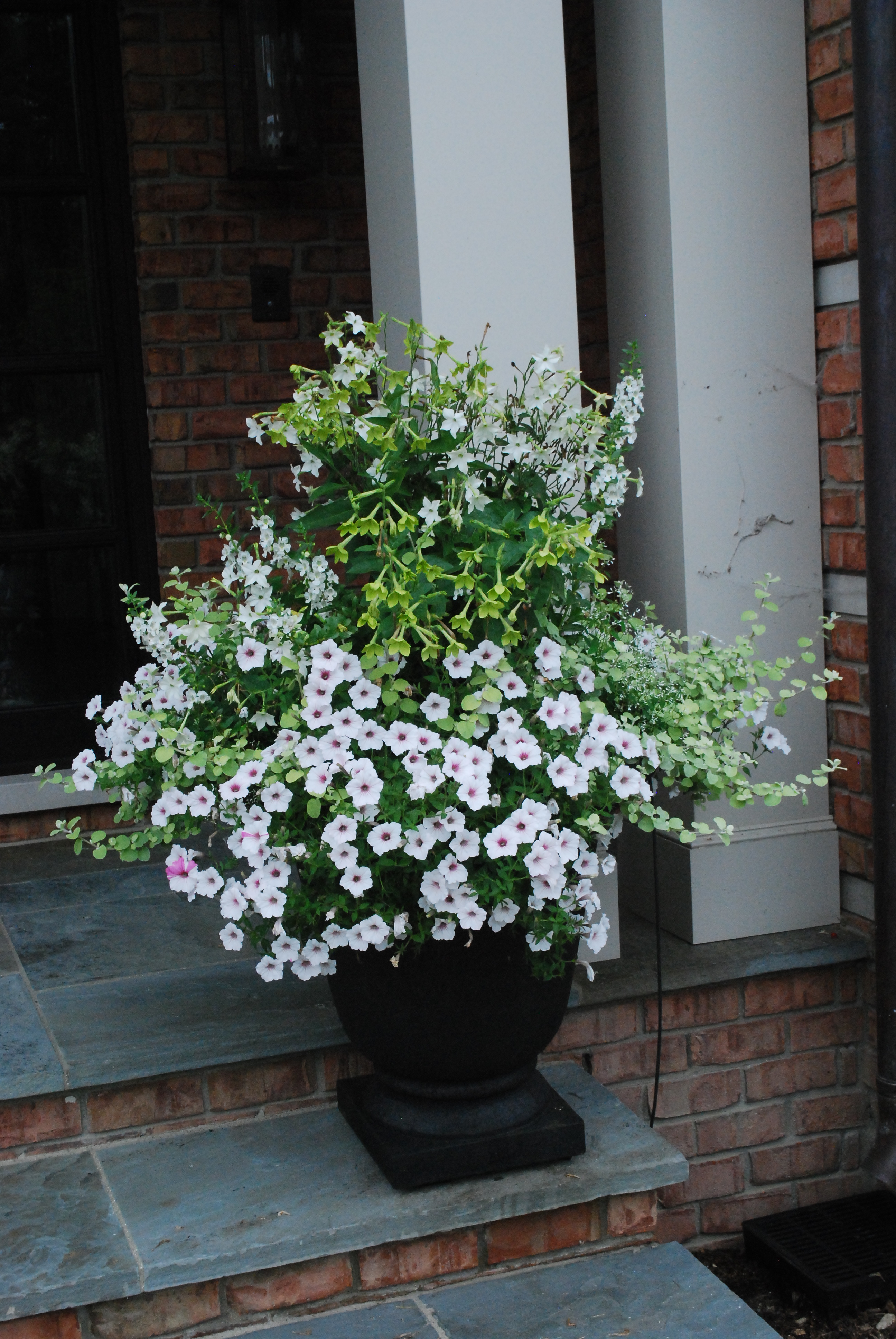
This container features plants that harmonize without much intervention.  The nicotiana are tall-and above the fray.  The petunias are very good eggs that tolerate the pestering from the stems of the lime licorice.  The Diamond Frost euphorbia is just now making a break for it.

annual companion planting

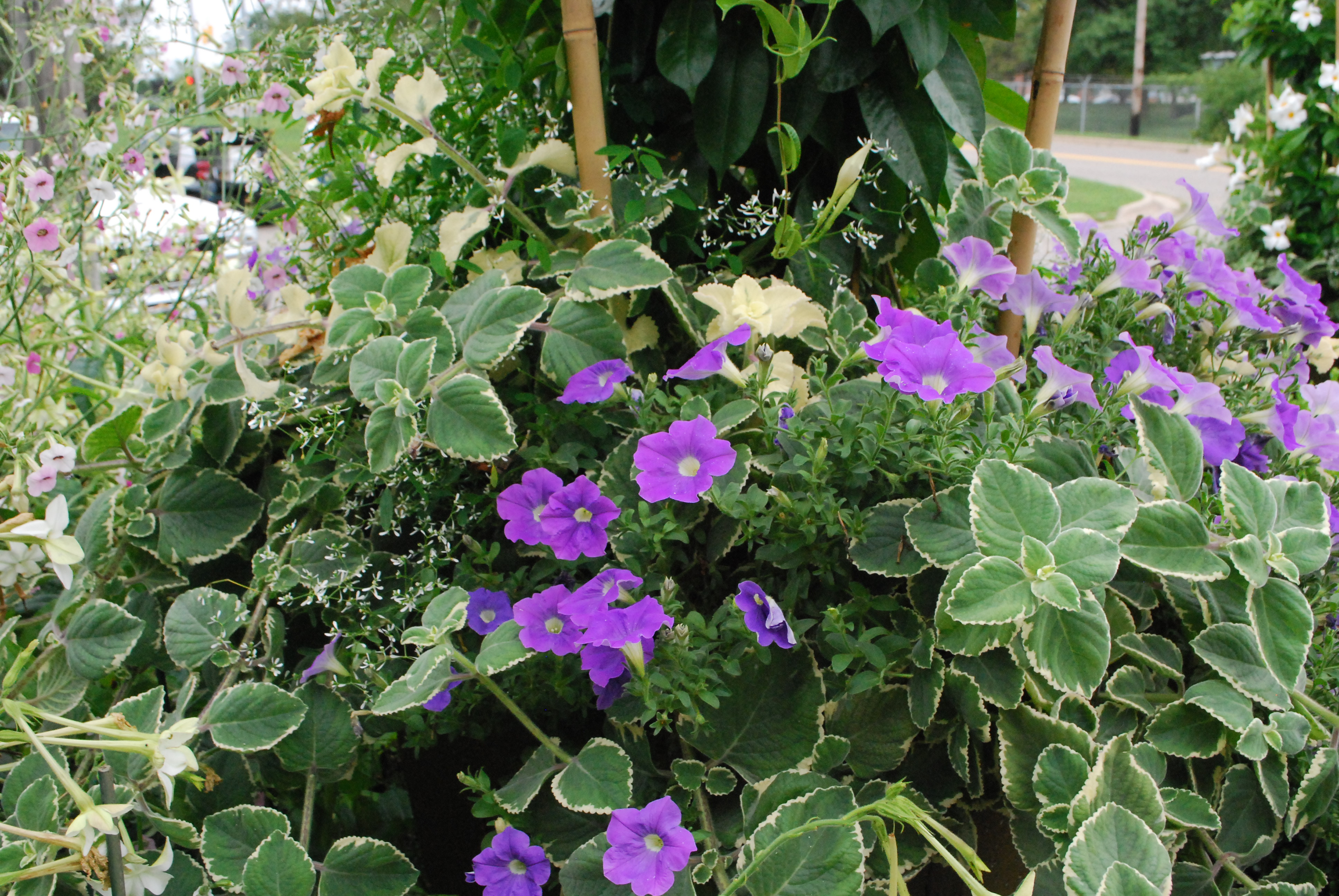
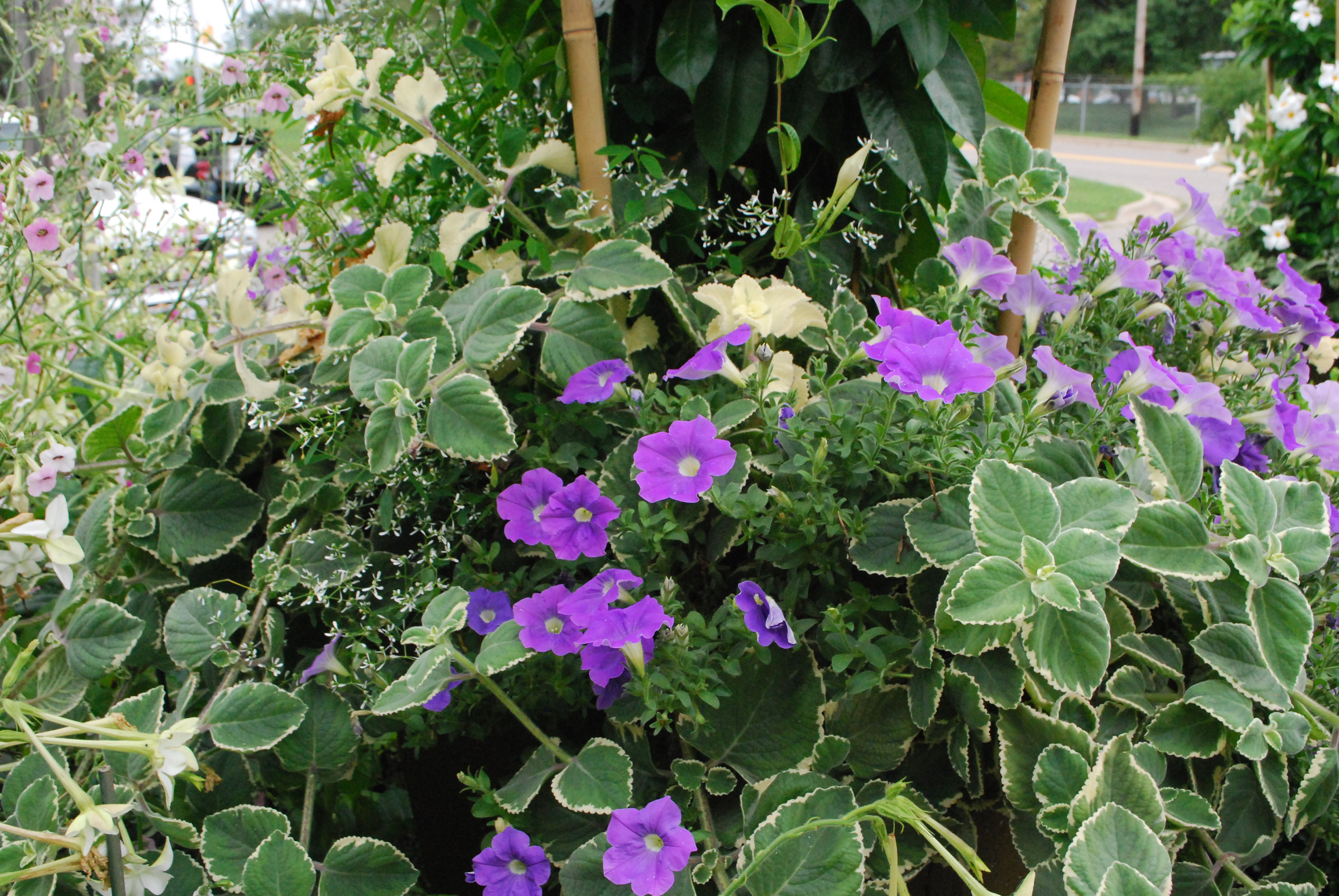
The pots in front of the shop this year-the relationships are complicated.  The mandevillea is a big growing vine with big paddle shaped leaves that produce shade.  The petunias just grow, and expect the best from their neighbors.  The euphorbia is delicate, but persistent.  The plectranthus-a big leaved thug that would smother anything in its path. 

annual plants

I planted mandevillea, as it vines luxuriantly, and grows very tall.  A month ago, I started removing the leaves at the ground level-they were shading the plants on the ground plane.  The petunias are willing and able to perform, providing they get great light, and food.  They are heavy feeders. Should you want great performance from your petunias, feed them regularly.  Grow them on the dry side.  Trim the straggly ends-routinely. 


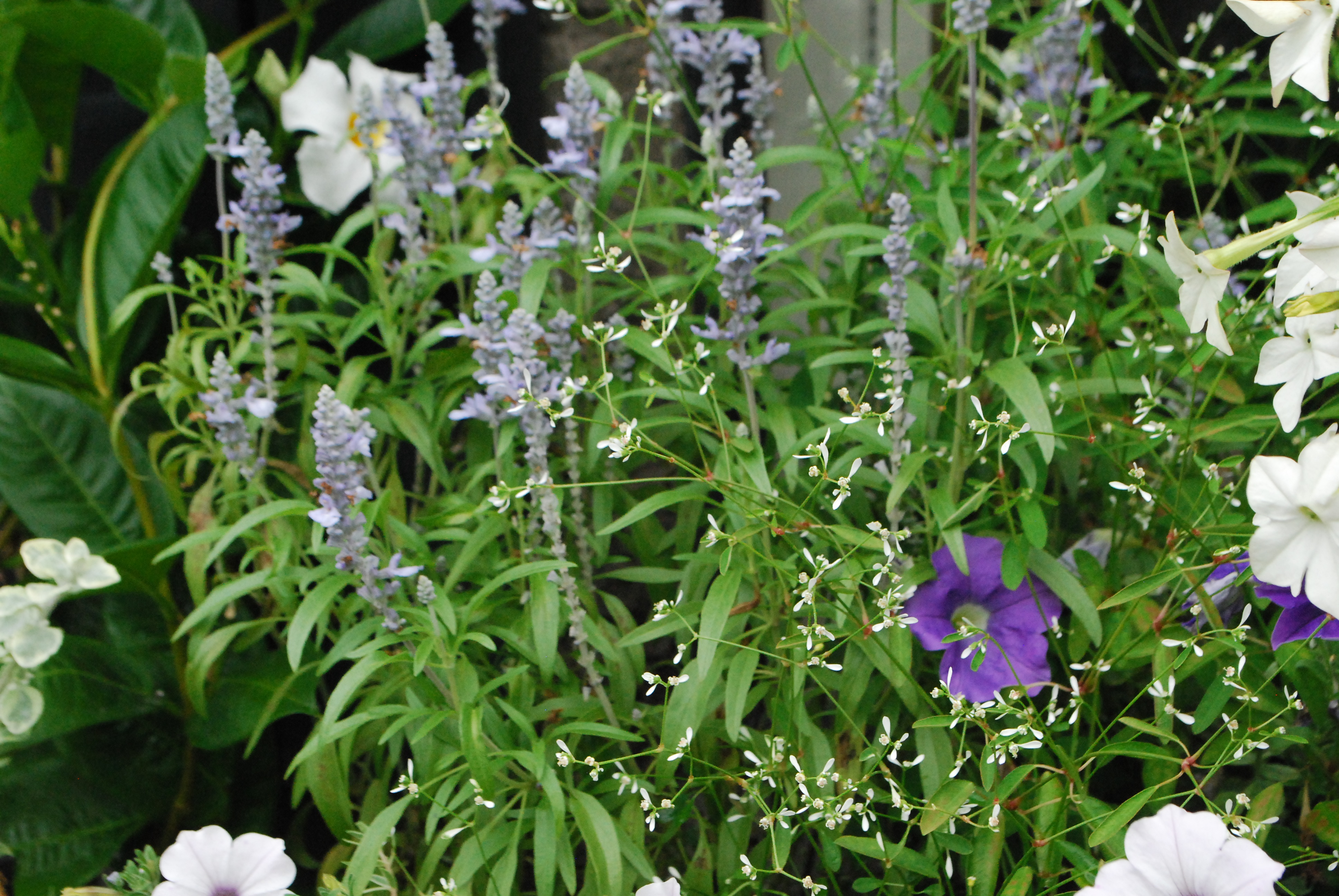
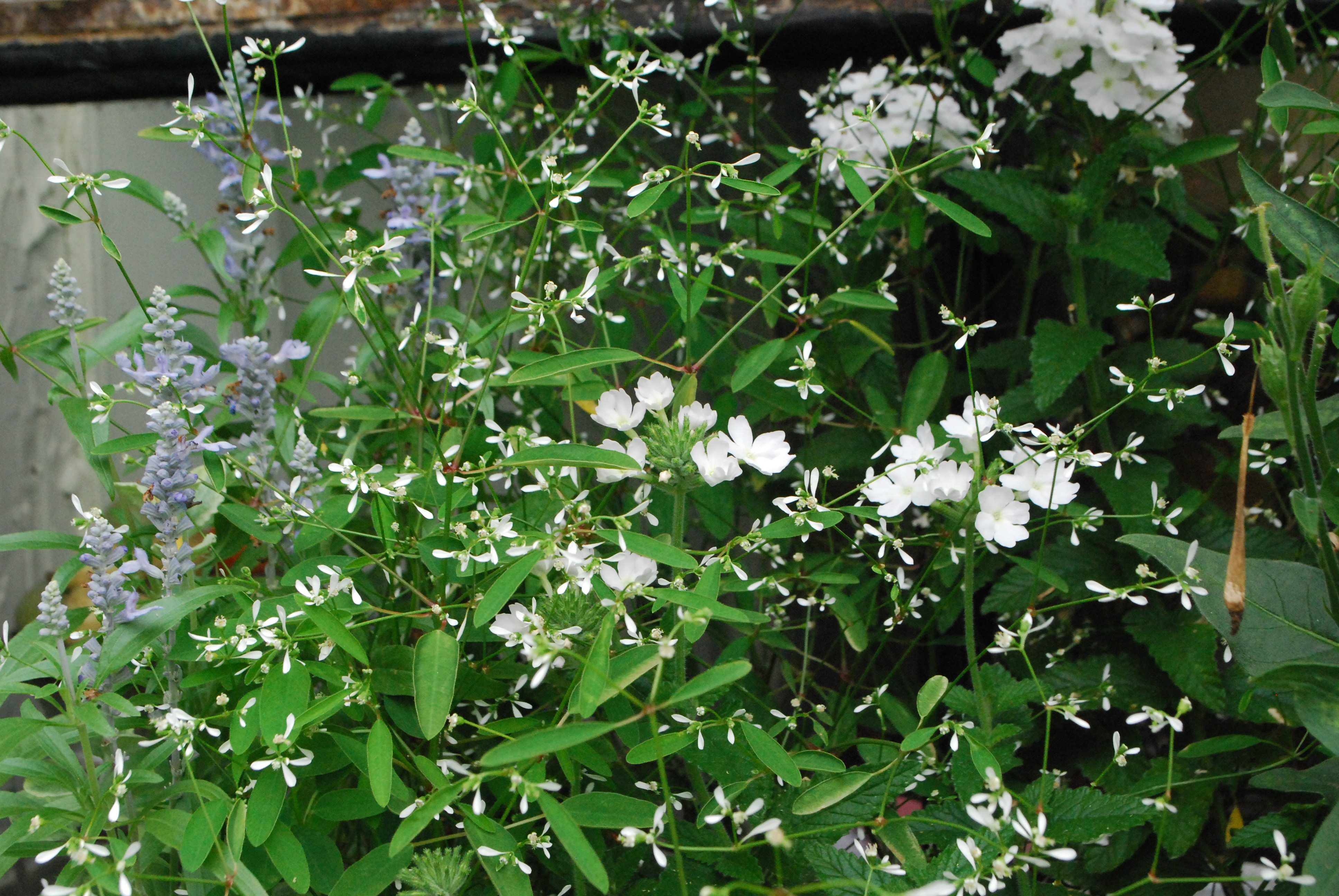
Diamond Frost euphorbia is pitiful in early spring.  That anyone buys and plants it amazes me.  I plant it, as I believe in what it can do in the home stretch.  It needs an extended period of heat to come on.  Once those slender stems and airy flowers get going, they add add an unequalled wispy volume to a container planting.     

variegated plectranthus

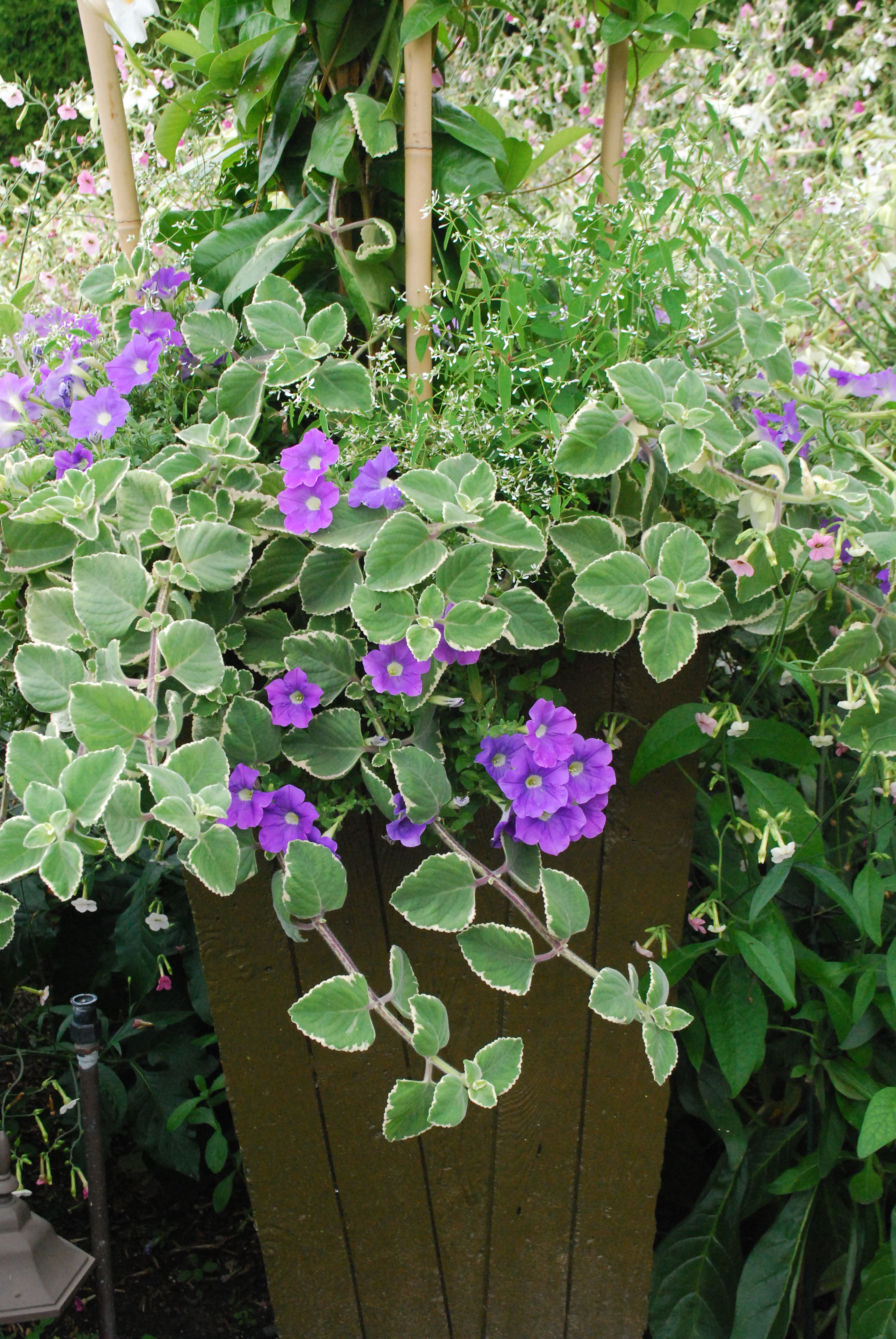
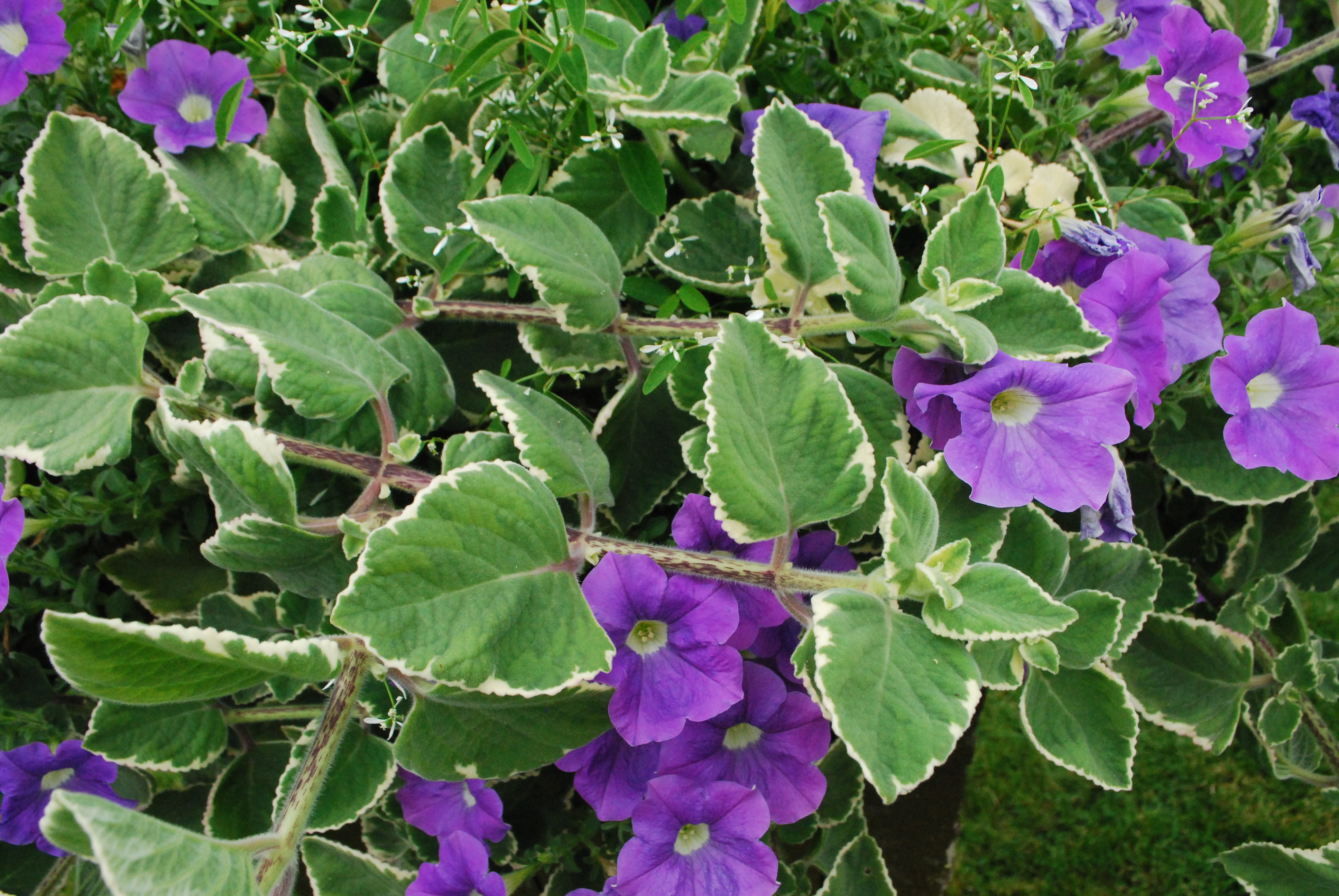
Plectranthus is a thug.  It features long thick stems, and large leaves.  It would smother anything in its path-given the chance.  Why plant it?  Few plants are better at creating and sustaining great volume and mass.  The tall pots in the front of the shop have a very small planting area.  They ask for something that grows wide.  Plectranthus will grow every which way, including wide.  How do I manage it? Like the mandevillea, I remove those leaves that threaten to smother all of the other plants.  Some of my plectranthus are bare stems, until they go over the edge of the pot.      

It is my job to make room for the euphorbia.  Though the stems and blooms are ever so slight, they have a big will to live.  I just do what I can to help their natural  process along.  This work means my late September containers will have something good to say.  Container plantings?  With care, they will prosper late into the fall.

 euphorbia diamond frost

Every plant you plant-no matter if it is shrub or a tree or a perennial or an annual-they have habits.  Every living thing has habits.  A collection of plants that you intend to represent a garden rely upon you to sort out the real relationships.  Be in charge.  A garden with a thoughtful gardener in charge?  I respect this.

Boxed In?

landscape design

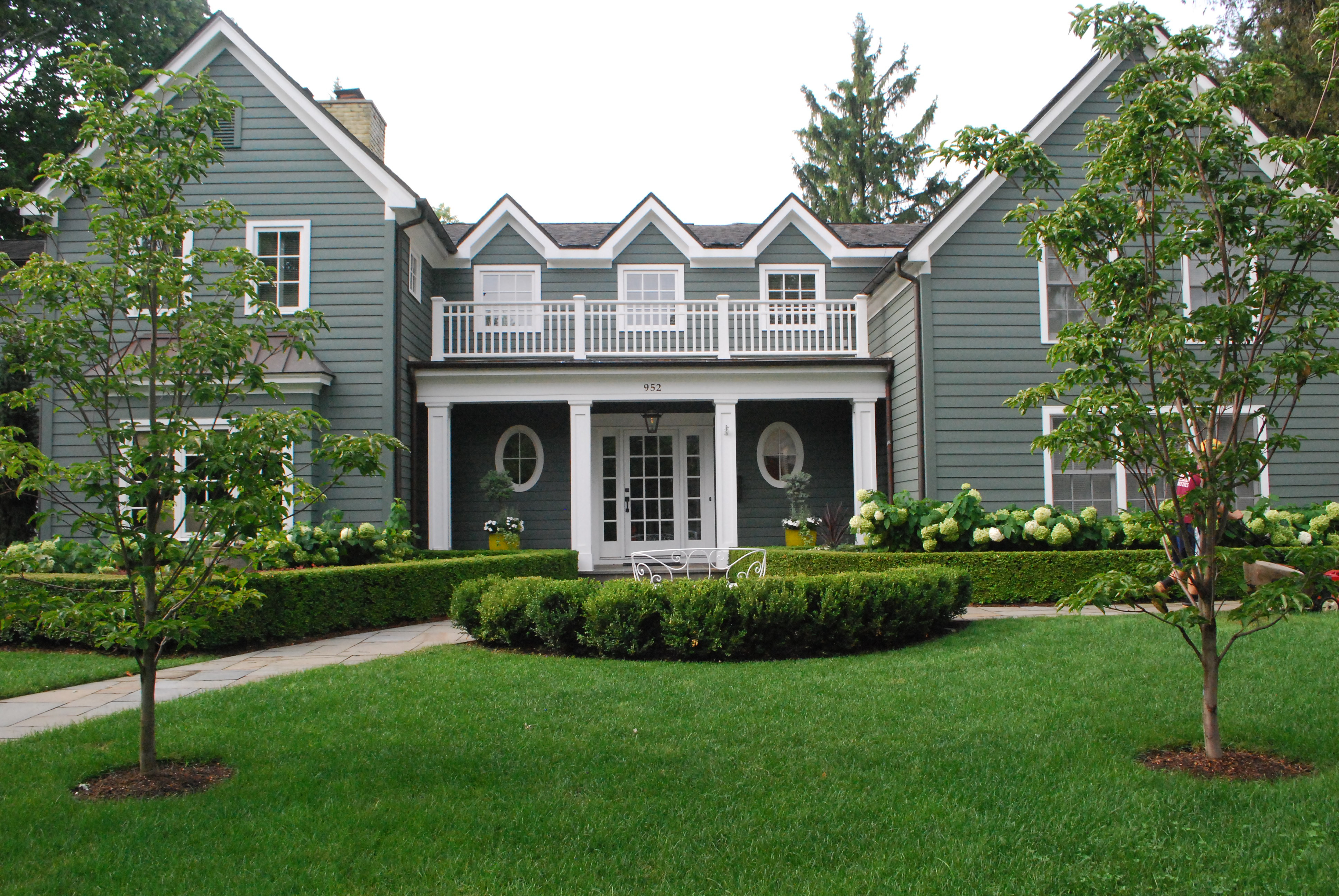
A rectangle is an easily recognizable 4-sided shape.  Like circles, ovals, triangles, and parallelograms, they define or outline a geometric shape.  This lovely home could be easily be sketched on a piece of paper by connecting a series of rectangles, triangles, squares and ovals.  Every one of these basic shapes is created by the lines that enclose, or define it. A linear representation of the front door would look like a series of squares put together in such a way as to create a rectangle.  This photograph, is its most basic incarnation, is a rectangle.  The composition of the photograph is determined in large part by its 4 edges.  Shade trees and evergreens are often described by the shape they most represent, as in “broadly pryamidal”, or “oval”. A two-dimensional shape expressed in three dimensions has its own vocabulary.  A circle in the third dimension is a sphere.  A cylinder is constructed from two circles and a rectangle.  A rectangle in 3 dimensions is a box.  A box may vary in dimension, but for design purposes, a box is a box.          

French wirework bench

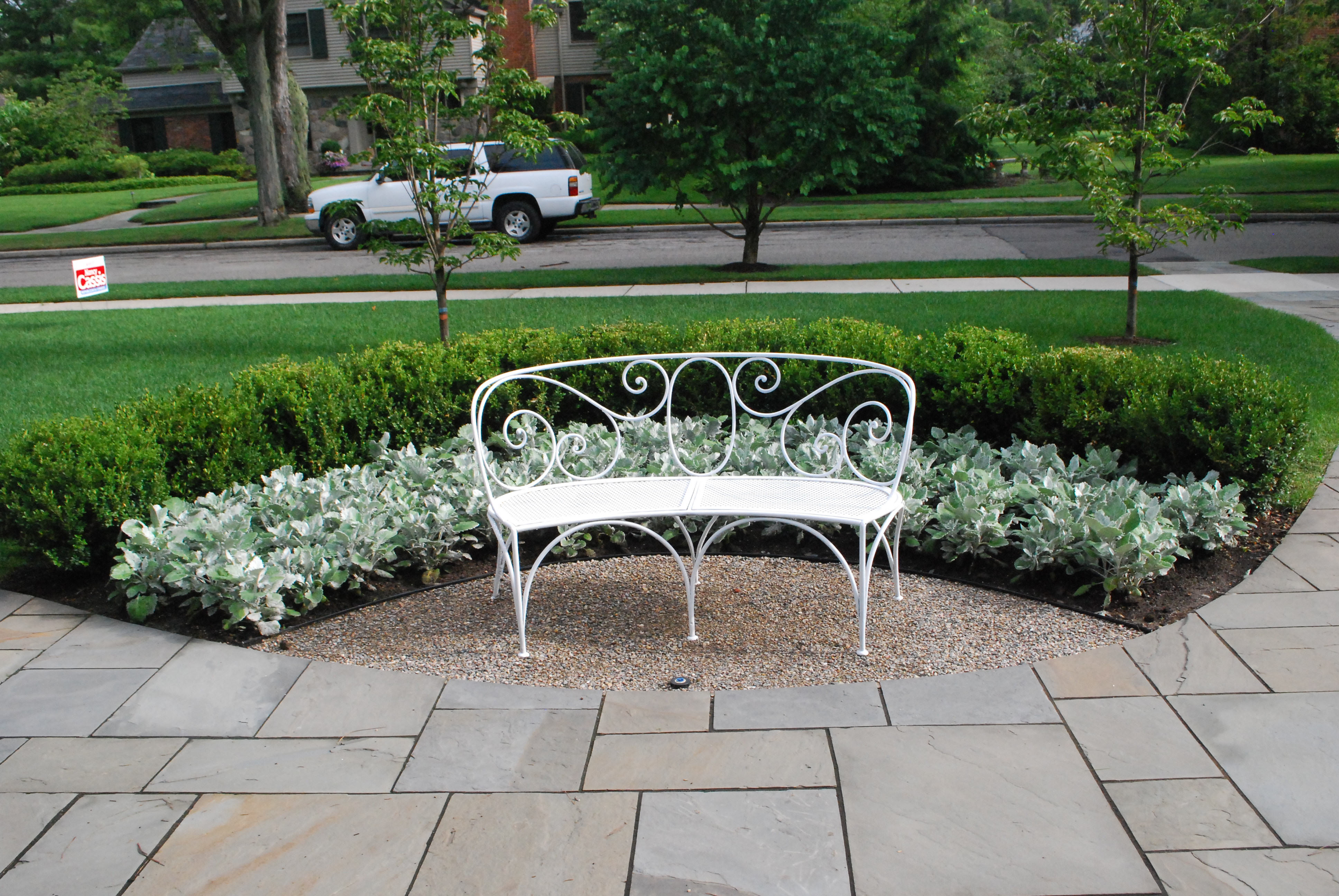
Any landscape is confined by  the edges of the property.  A property may be a rectangle or a triangle, or a combination of many shapes.  But in every case, a property has limits.  What is visually available to your property is confined only by what you cannot see, but those places where you can plant have been drawn on a piece of paper known as its legal description. There is no need for a legal description of a property to dictate a landscape design.   Most urban properties have ties to a slew of rectangles.  That could be a street or city sidewalk. A driveway.  A hedge of arborvitae planted by a neighbor.  If you visualize what is within your design reach on your property, more than likely it is a box-and a fairly plain box at that.  This property has a very beautifully done, asymmetrically curving bluestone walk.  In renovating the landscape, I admired how that curving feature both countered and complimented all of the existing rectangular shapes.  A pair of trees, a curve of boxwood, a curved French wirework bench sitting on a gravel double sided crescent, all respond to that generous and fabulous sweep of stone.  

bluestone walkway

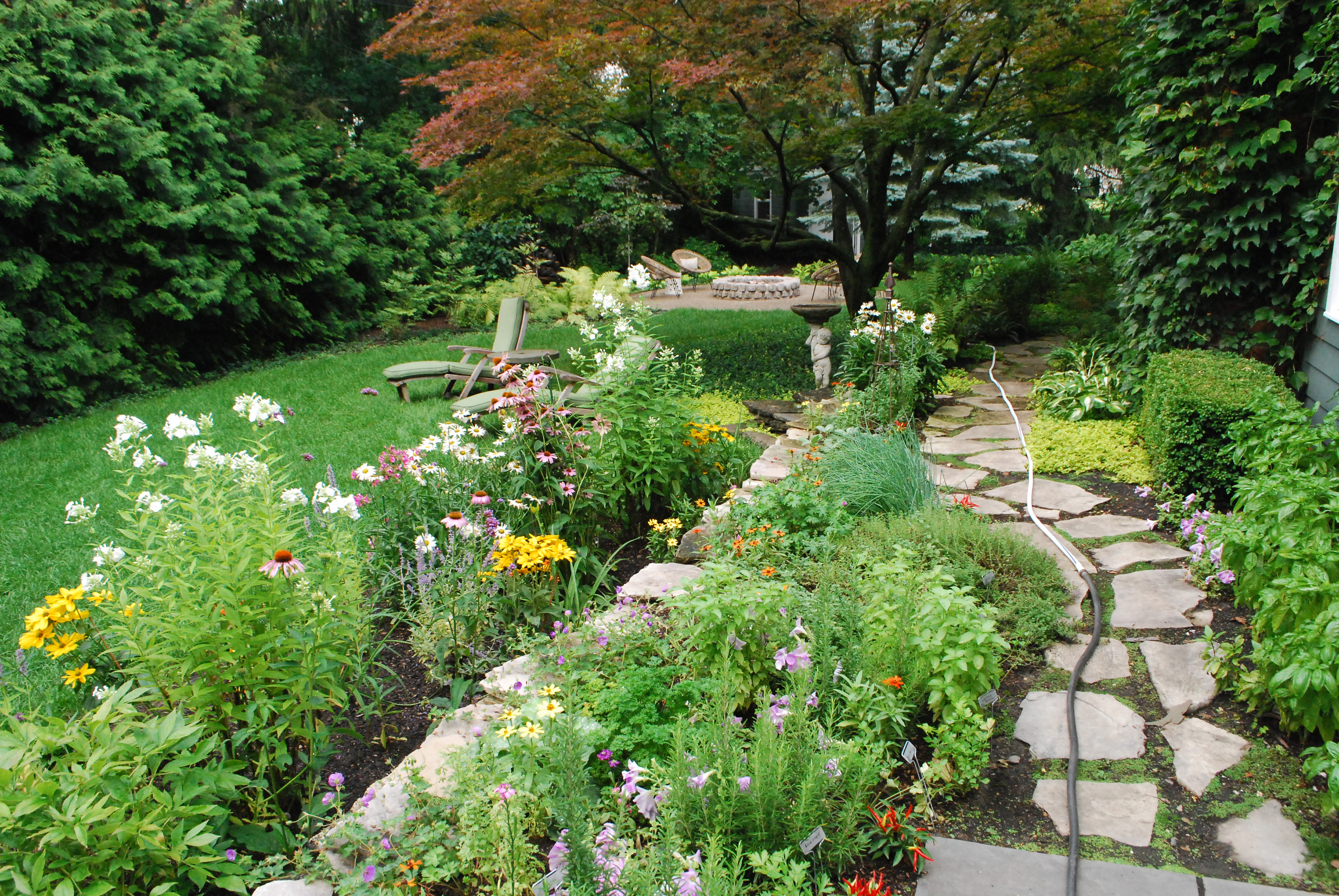
We installed a stone walk to the back yard very close to, and parallel to the garage.  This side yard is primarily an efficient means to get from the front to the back.  But the addition of the arbor to the foreground pots and bench helps to slows the eye.  The parallel bed of ivy to the right curves and crosses over the path in the far ground.  This creates a sense of anticipation for what might come next-just around the corner. 

raised stone firepit

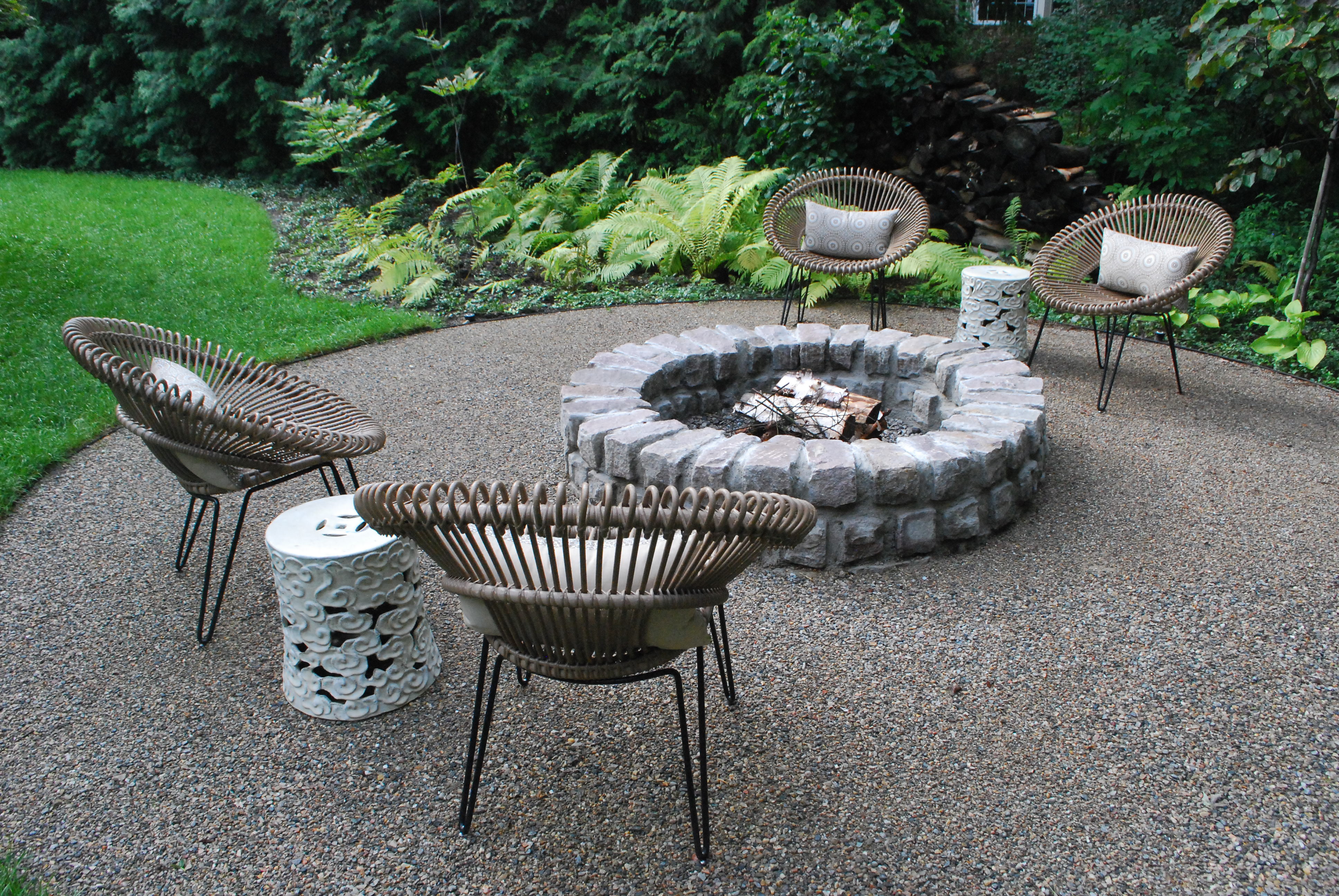
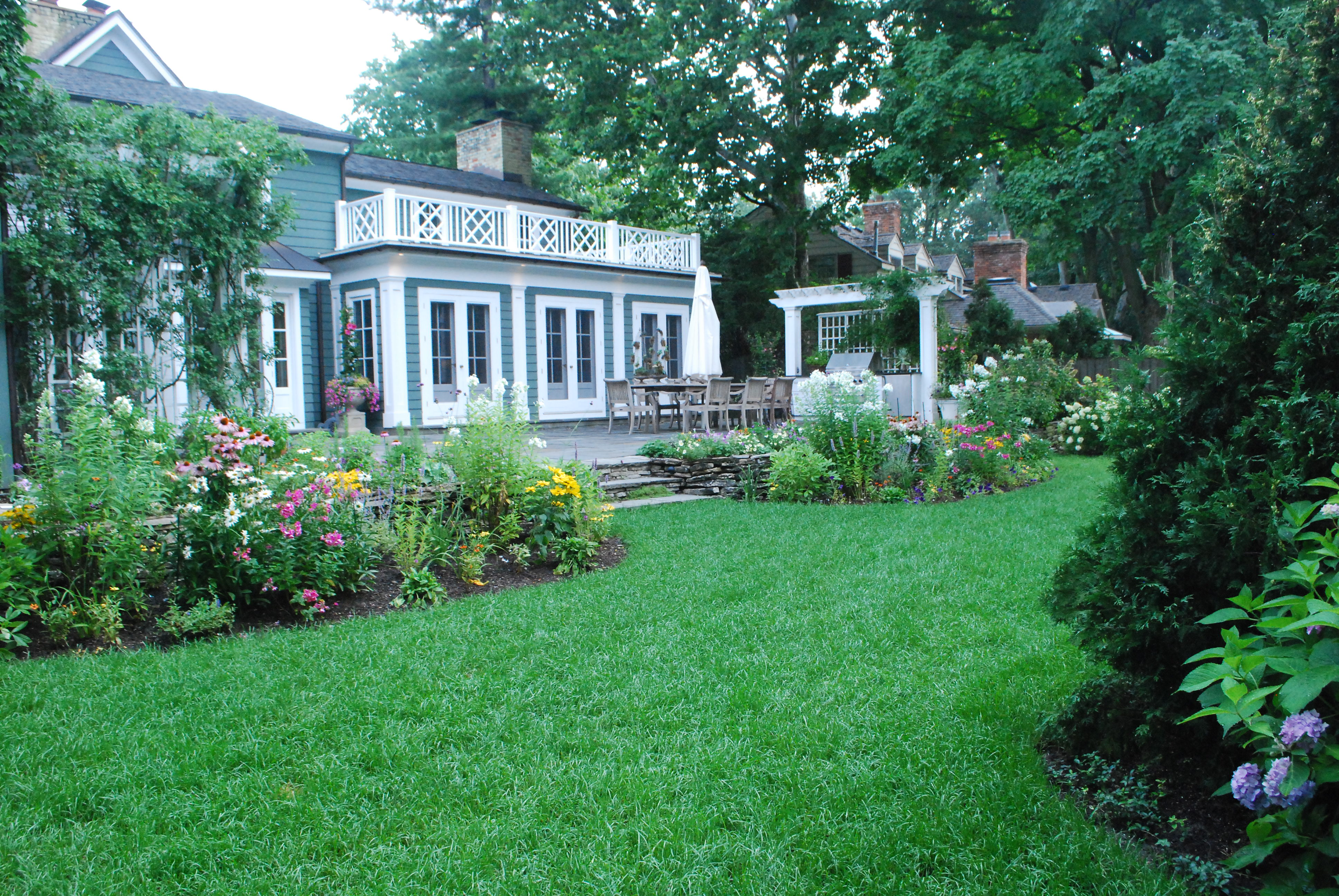
The rear property is very shallow, and long.  It is most definitely a box.  We had the idea to outwit that box.  The circular firepit in the foreground is a strong visual stopper.  It also strongly serves as a gesture that challenges the idea of a box.   The  narrow lawn that swings around the firepit terrace, widens,  and curves back to the left behind a midground seating area directs the eye around the space.  That curve is repeated on the right side; a privacy hedge of arborvitae is planted in a shallowly curving line.  This rectangular space has been scribed with curving beds that do not reveal the landscape all at once. 

granite block firepit

A landscape that encourages the eye to focus on a particular feature slows down the pace of discovery.  There is time to see and take in the relationship between the gravel terrace, the firepit fashioned from old granite setts, the cylindrical side tables and the circular contemporary chairs. 

curved garden beds

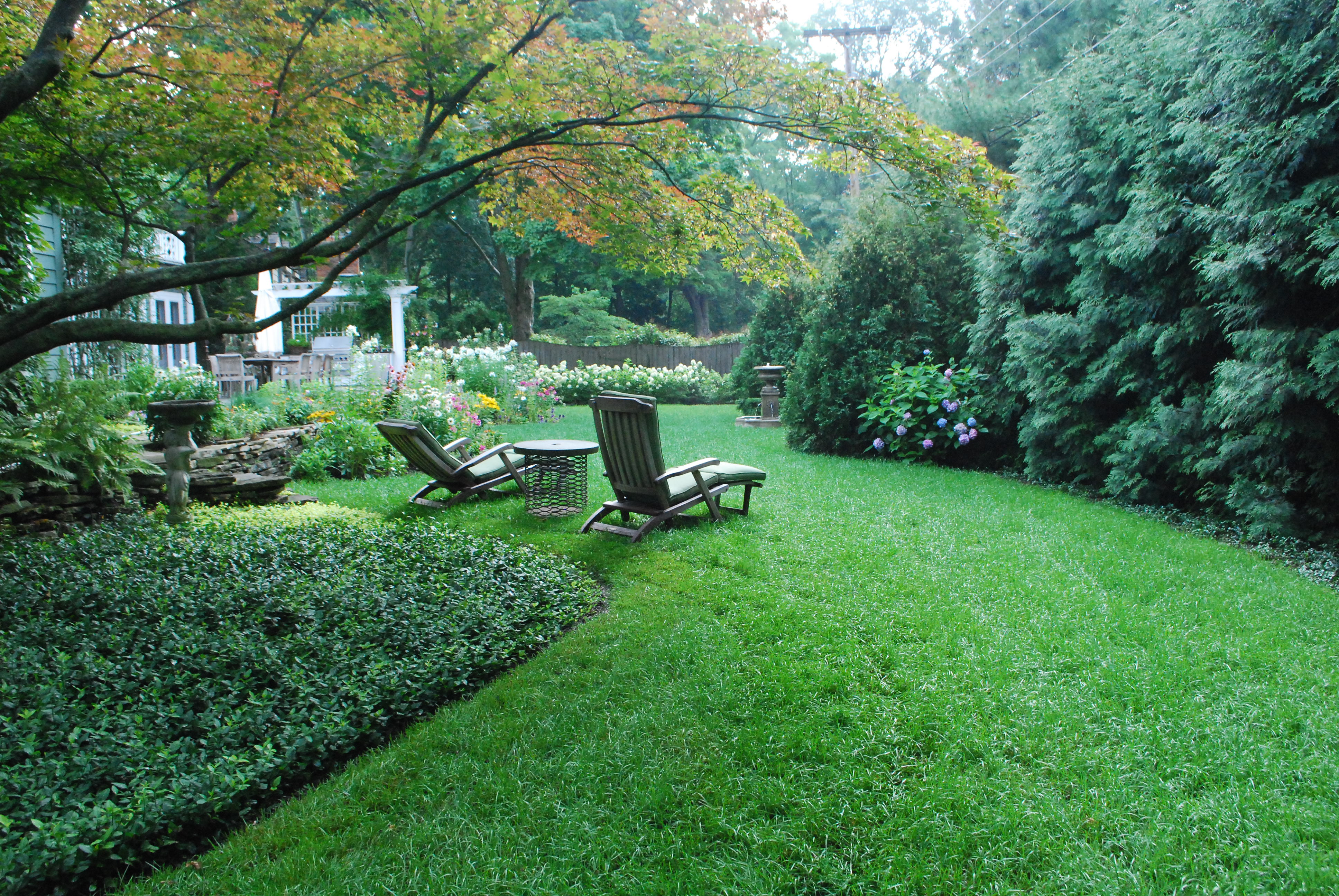
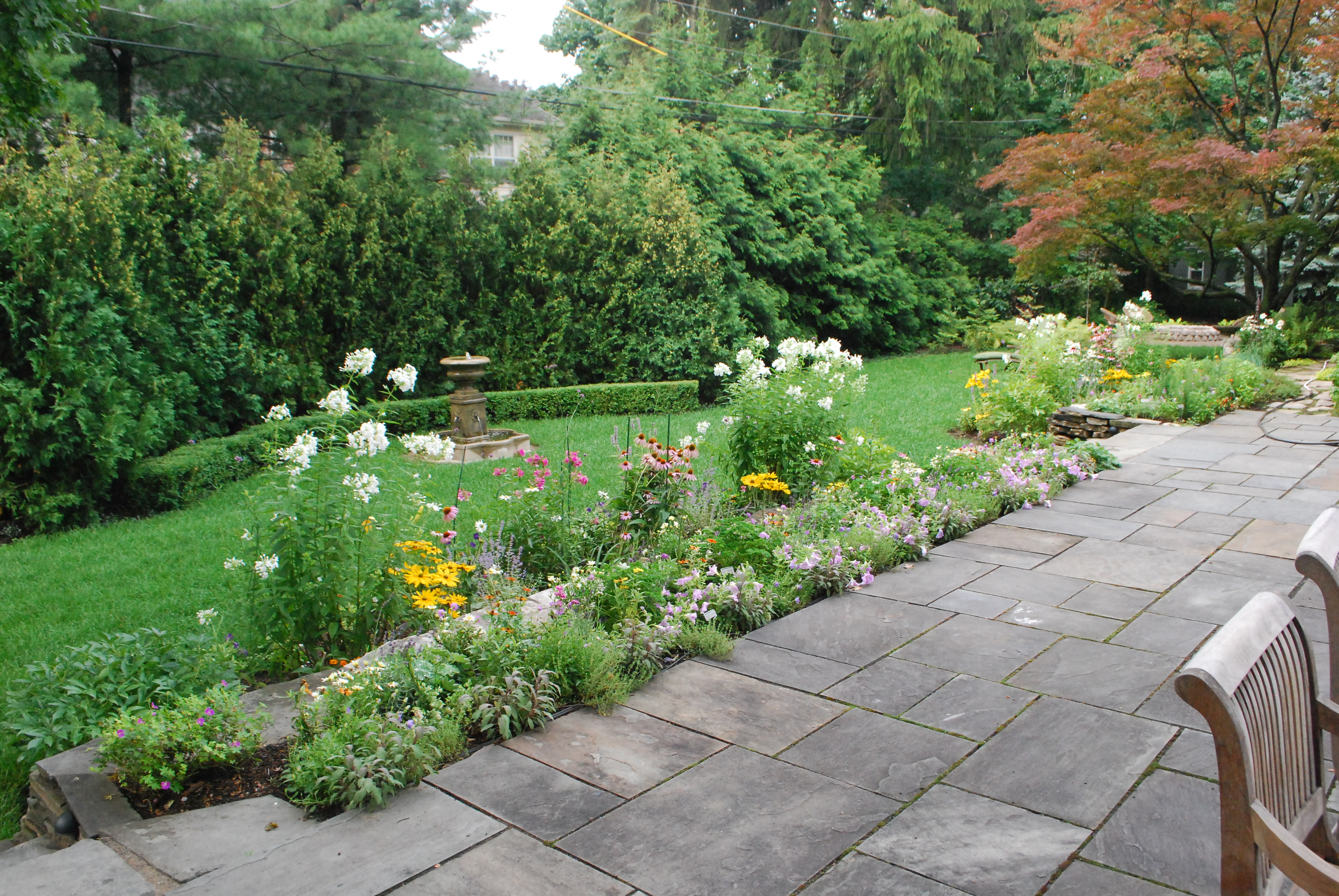
The wide grass path veers to the left, directing attention to a perennial garden, and terrace.  A fountain set in the lawn is somewhat visible at this point.  The curving lines, and furniture provide lots of interest to the midground space.

perennial gardens

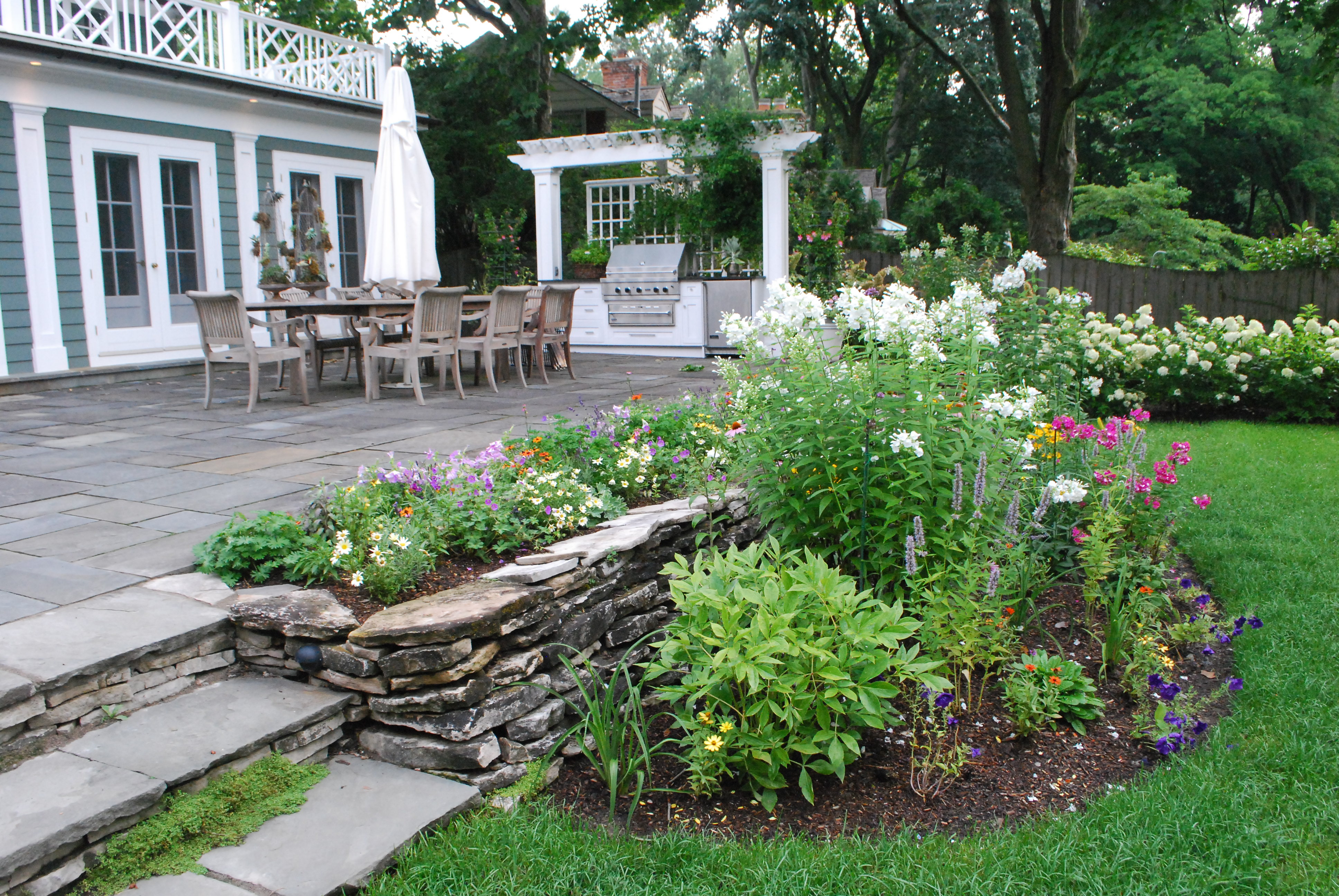
A large terrace is three steps up from the grade of the lawn.  The lawn formerly ran right up to its stone retaining wall.  The addition of the curved beds in lawn not only directs the eye to the steps, but they soften the large rectangular stone terrace.

terraced landscape beds

One area of the terrace is simply furnished with a dining table and outdoor kitchen.  The white painted pergola and trellis  give the grill plenty of garden oriented company.  This arrangement was solely the work of my client.  She has a great eye, and is a pleasure to work with.   

wood pergola

A pergola at the opposite end provides a beautiful transition from the terrace to an interior sun porch.  A climbing New Dawn rose has gracefully draped itself over the pergola roof.  Climbing plants rescue pergolas from their inherently boxy shape.  A small scalloped bistro table and pair of chairs placed in the shade provided by the rose is a beautiful touch-again from my client. This part of the landscape is not apparent until you turn the corner, and are right up to it.    

garden terrace

The fountain at one time had a home on the terrace.  Moving it to the lawn plane, and curving a hedge of arborvitae behind it makes this narrowest part of the box seem spacious.  There is actually very little space between the leading edge of the terrace and the lot line.  The round fountain, and the accompanying curved landscape minimize that boxed in feeling.

garden views

The change of level in the rear yard gifted it with lots of built in interest.  Though a space can be severely rectangular, that is not to say that the floor has to be flat.  Layers of evergreens, or sculpted soil can focus attention on what is inside a space, rather than what defines, or confines it.  Sometimes I will design from the center out to the edges of a boxy flat space, rather than from the edges out. 

gravel driveway

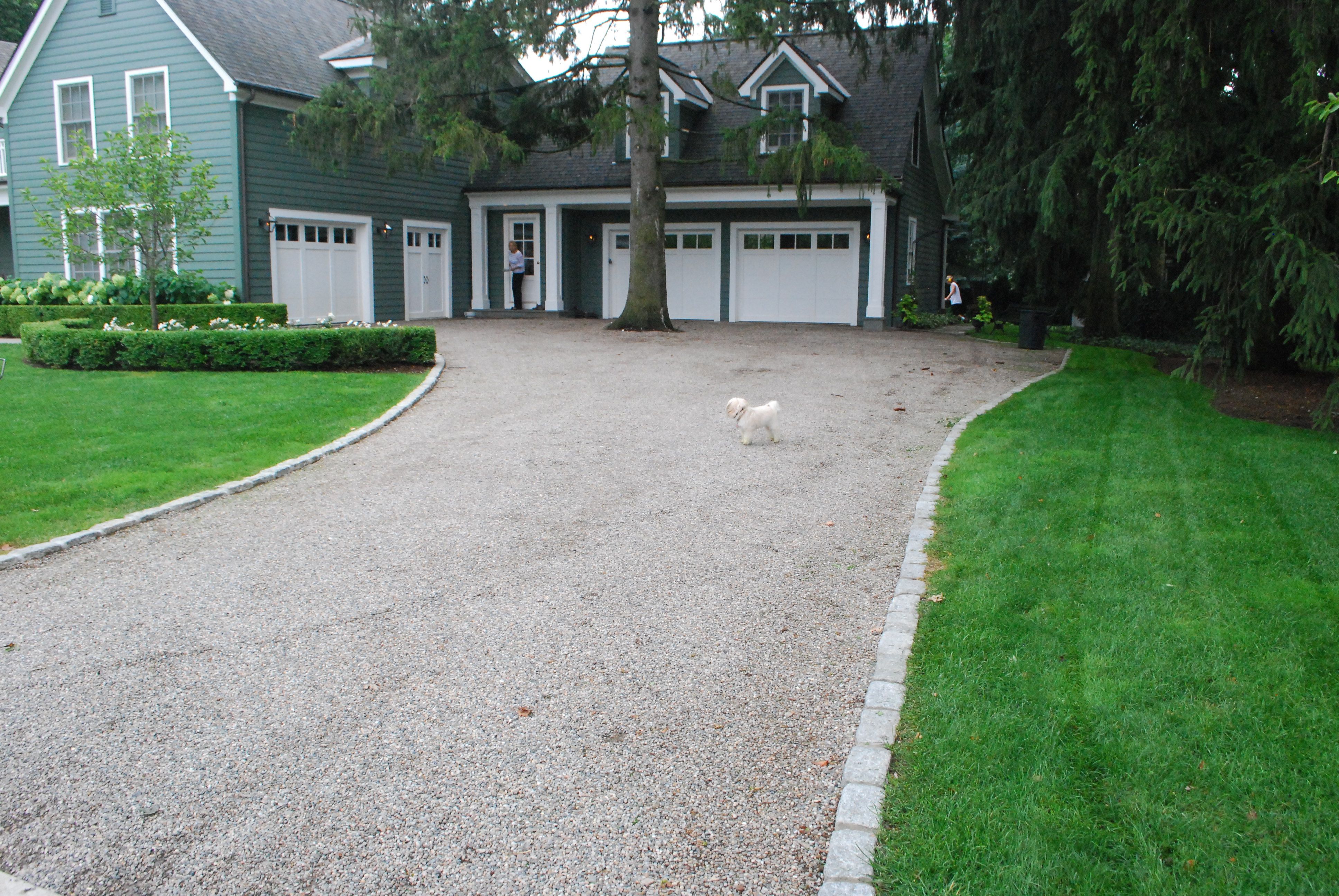
The very first work I did for this client years ago involved suggesting that her that a old spruce could be left intact the middle of her gravel drive.  Yes, they are able to drive around it, and into the left bay of the garage.  That spruce makes so much out of a small rectilinear drivecourt, as do the curving edges of the approach.  The quite serviceable driveway is an interesting feature of the landscape.  Out of the box, that is.