Garden Designer’s Roundtable: Speaking Of Texture

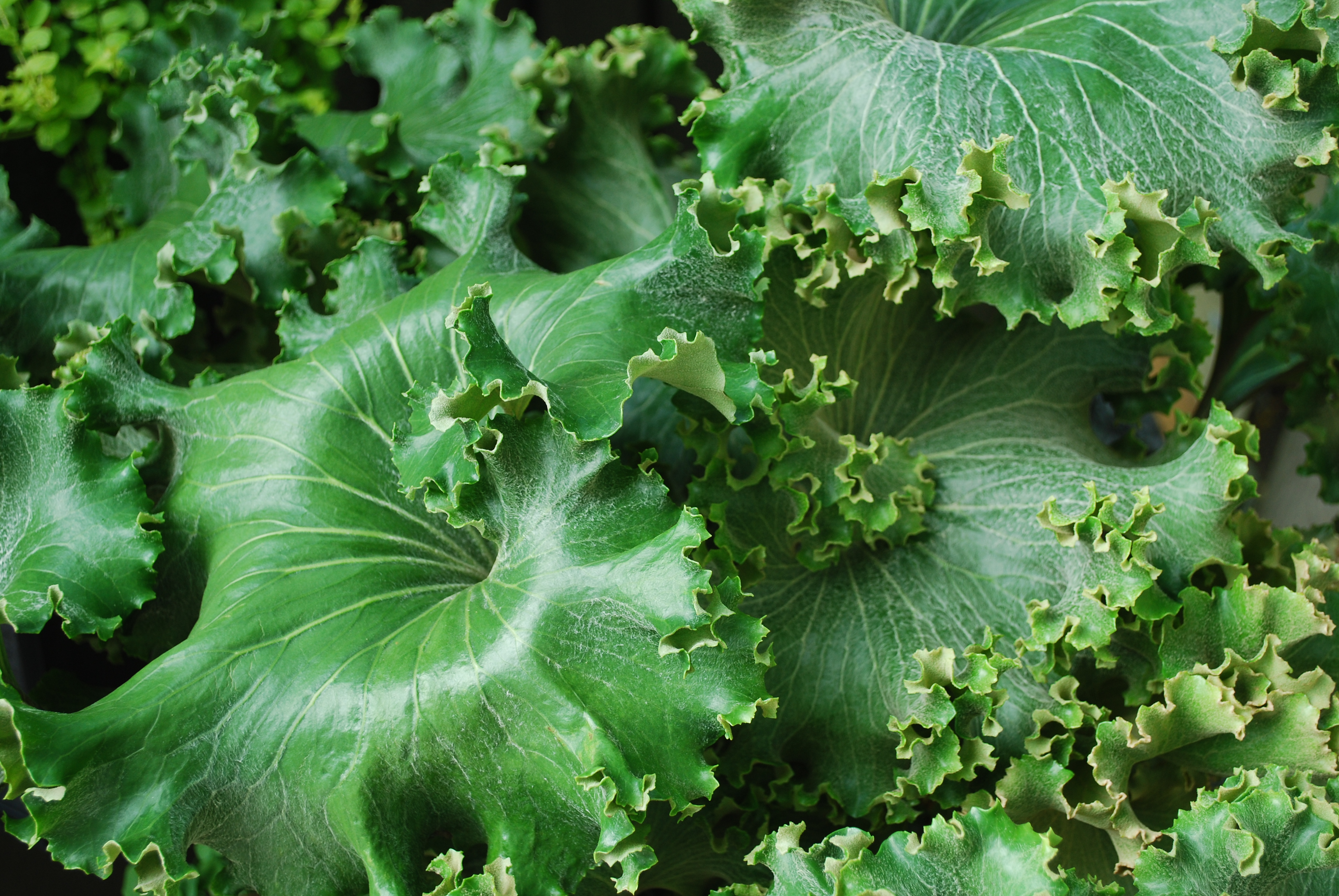
curly-leaved-farfugium.jpg

Texture refers to the quality or nature of a surface.  Any surface.  The texture of a marble sculpture might be described as smooth and voluptuous.  A china plate has a hard and shiny texture that repels water.  A lake might be as smooth as glass one day, and choppy the next. A woven fabric can be nubby and open textured, or silky.  This farfugium leaf is a study in contrasting textures.  The body of the leaf is smooth to the touch, and strikingly veined and shiny to the eye.  The edges of the leaves are markedly ruffled; the leaf edges are sharp.  Were I ever to eat farfugium, I imagine its texture would be juicy and crunchy.
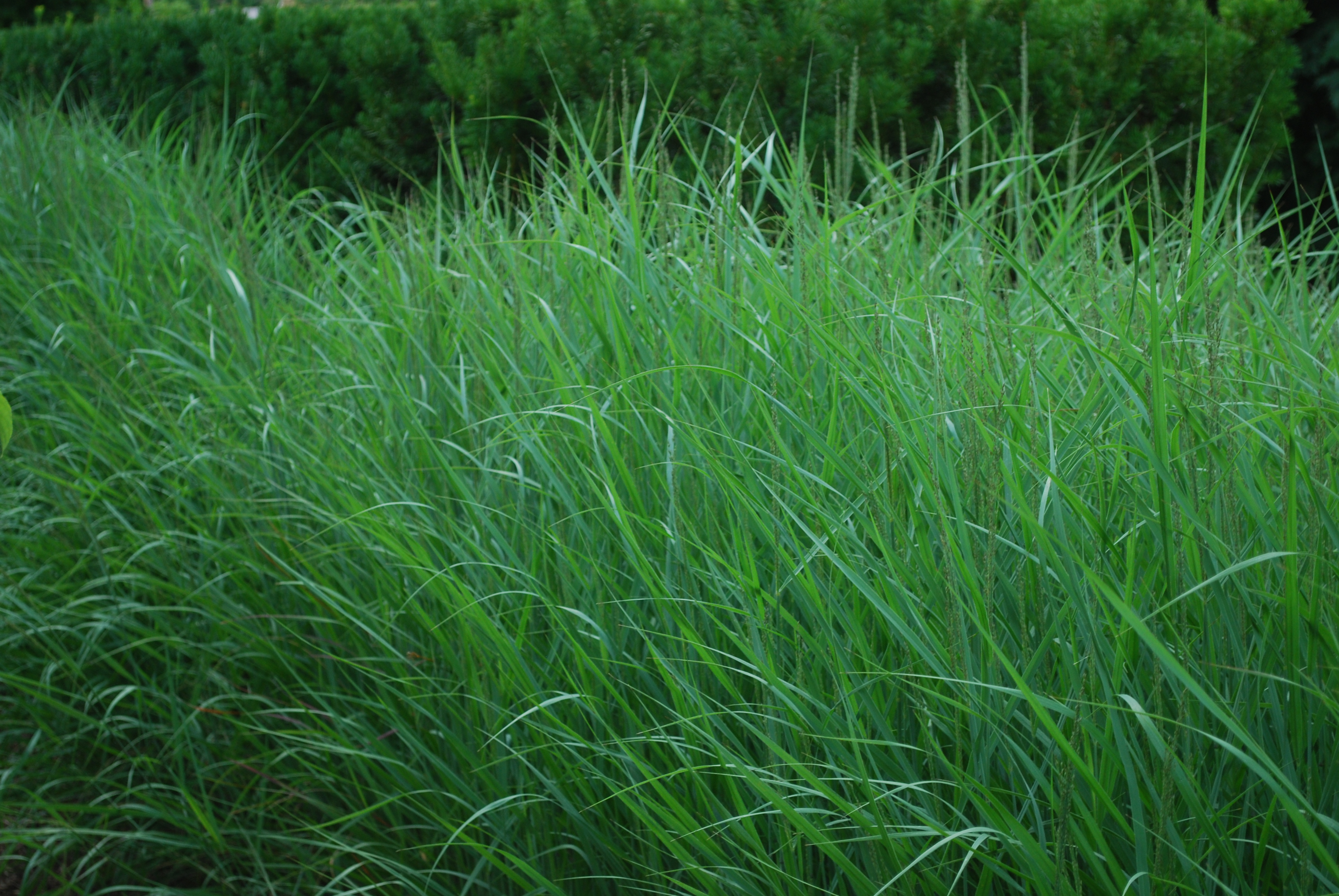
panicum virgatum

Texture engages the senses. You can see a surface. This panic grass is primarily and busily vertical, with an occasional and beautifully draping stem. You can feel the surface.  Ornamental grass leaves can cut your hands-the edges of the blades are sharp!  Feeling that texture can be irritating.  Animals who eat grass-who knows how they would describe the texture.  I would guess it is chewy and stringy.  Raw carrots are as remarkable for their crunch as much as their taste.  Oysters and okra are slick, and slide down easily.  Bread can be doughy, or dense.  Or light, as in a souffle.  Texture can be tasted.  It can be seen.  It can be felt.  Heavy clay soil can be greasy.  Sandy soil is gritty.  Soil loaded with compost has such texture that air has an easy time finding a home in it.  I cannot imagine how many adjectives exist to describe various surfaces-it would be a daunting task to make a list.
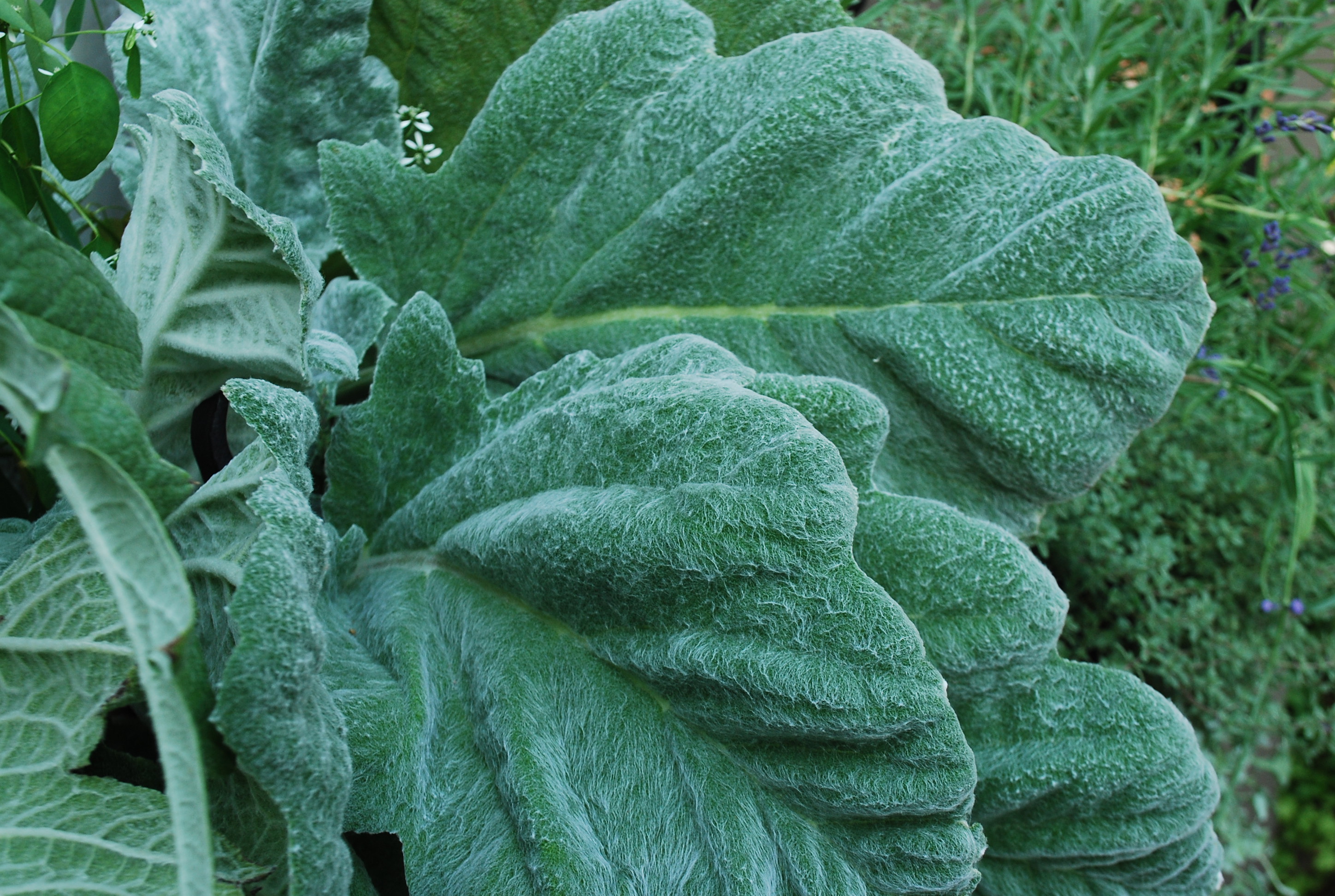
Suffice it to say that there are a multitude of utterly unique and enchanting textures in plants.  Salvia argentea is notable for its felted leaves.  It is the devil to grow, but its surface, its texture, is utterly unique.  I have no luck with this plant in the ground, and only sporadic luck with it in containers, but I keep trying.  The texture of the leaves reminds me of fur and felt both.
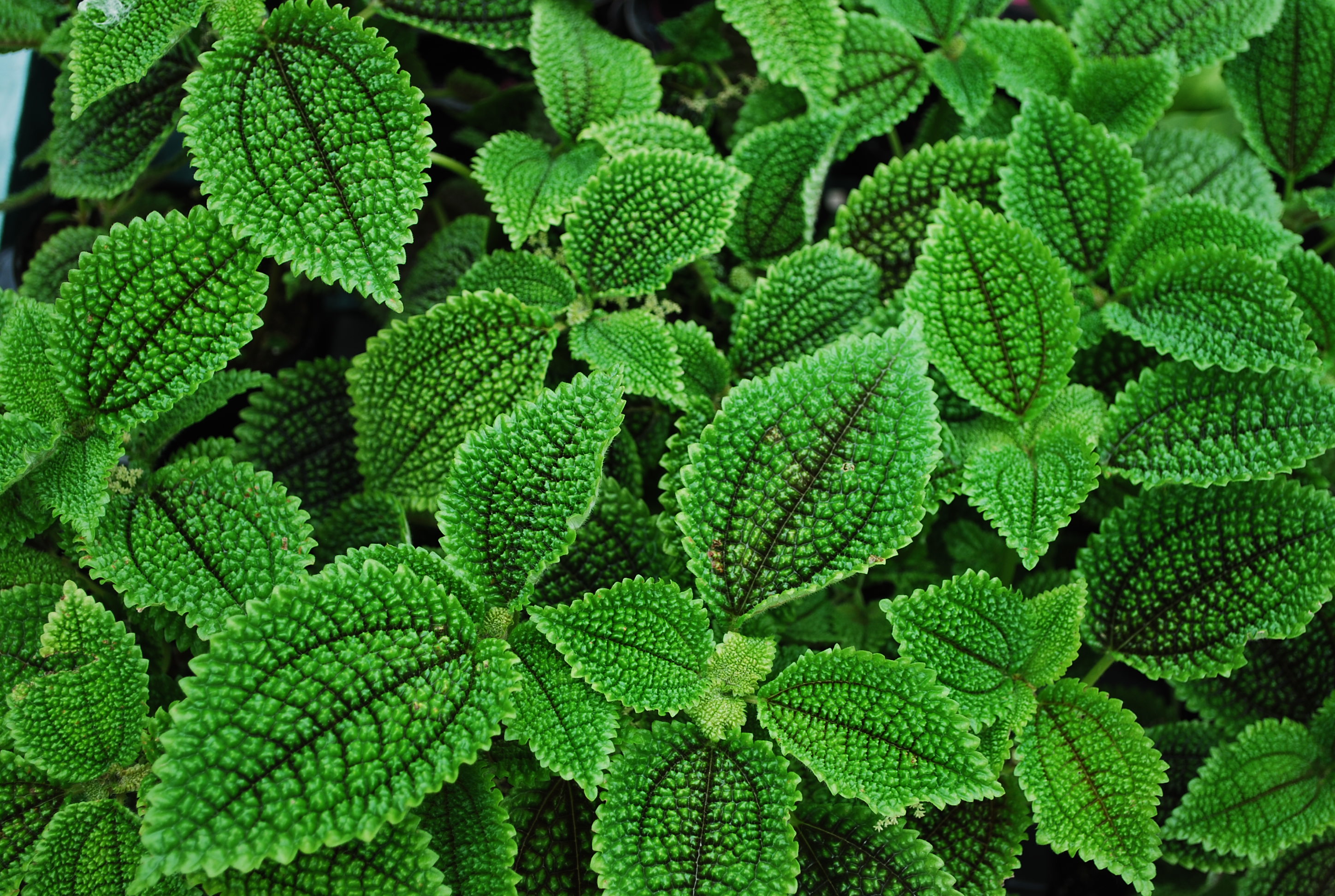
This pilea involucrata “Moon Valley” is noted for its markedly fissured leaves.  The leaf is rough to the touch.  It is interesting to the eye.  Designing a container, or a garden, or a landscape, asks for all kinds of attention beyond the horticulture. The design details can endow a planting with a special beauty.  There is color to contend with.  There is volume and mass.  There is line, and form.  And there is texture.
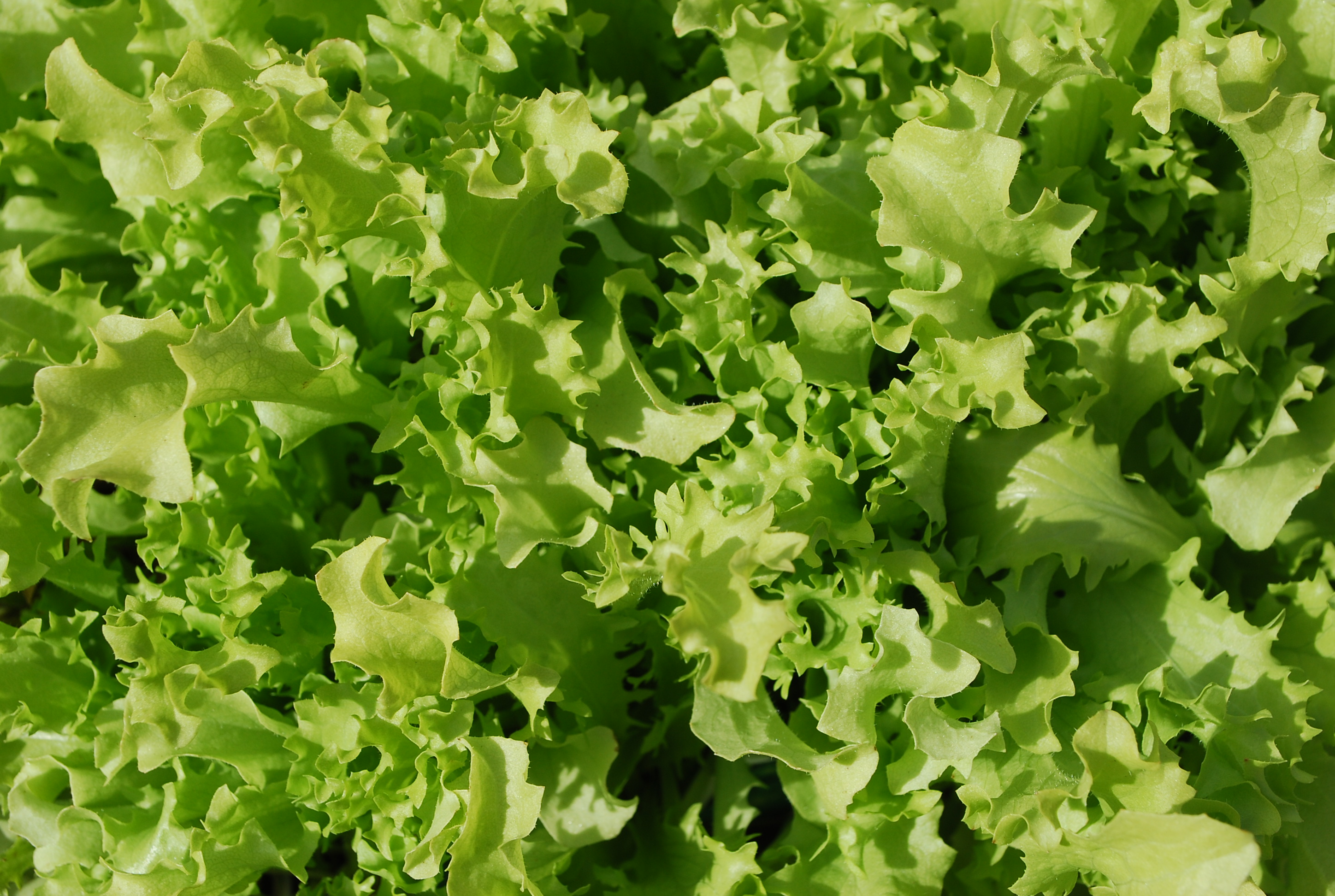
lettuce

I do not grow vegetables to eat.  But I do grow them to look at.  This ruffly leaf lettuce satisfies my eye’s demand for interesting texture, just as much as I admire the color.
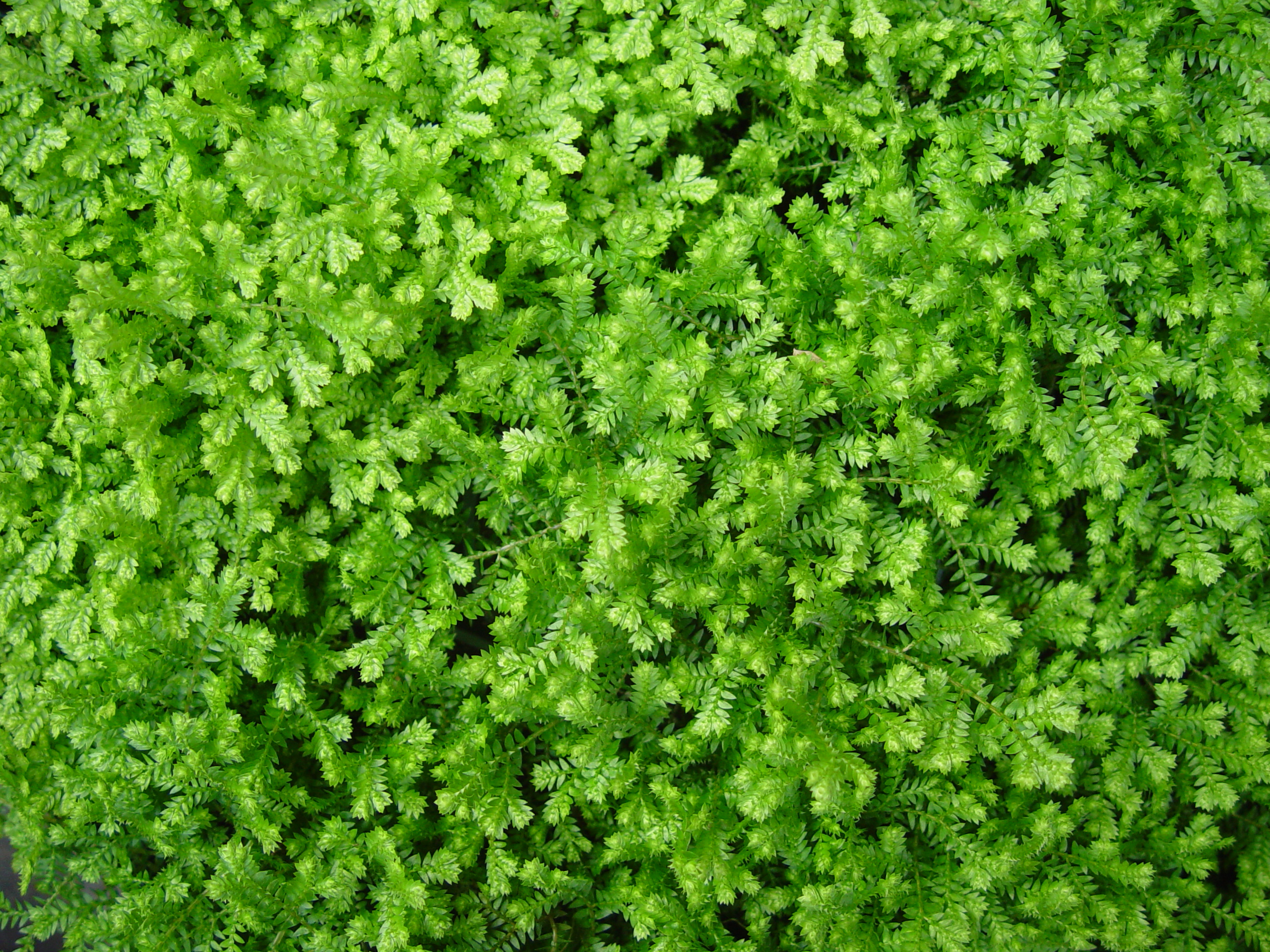
lime club moss

Selaginella, or club moss, has dimuitive leaves.  I would say it is very textural-the surface is lively.  But given that it is a very small plant that hugs the surface of the soil, I would describe its texture as densely uniform.  The idea here?  Small leaves have an entirely different texture than big ones.  The relationship of one texture to another adds another layer of interest to any planting.
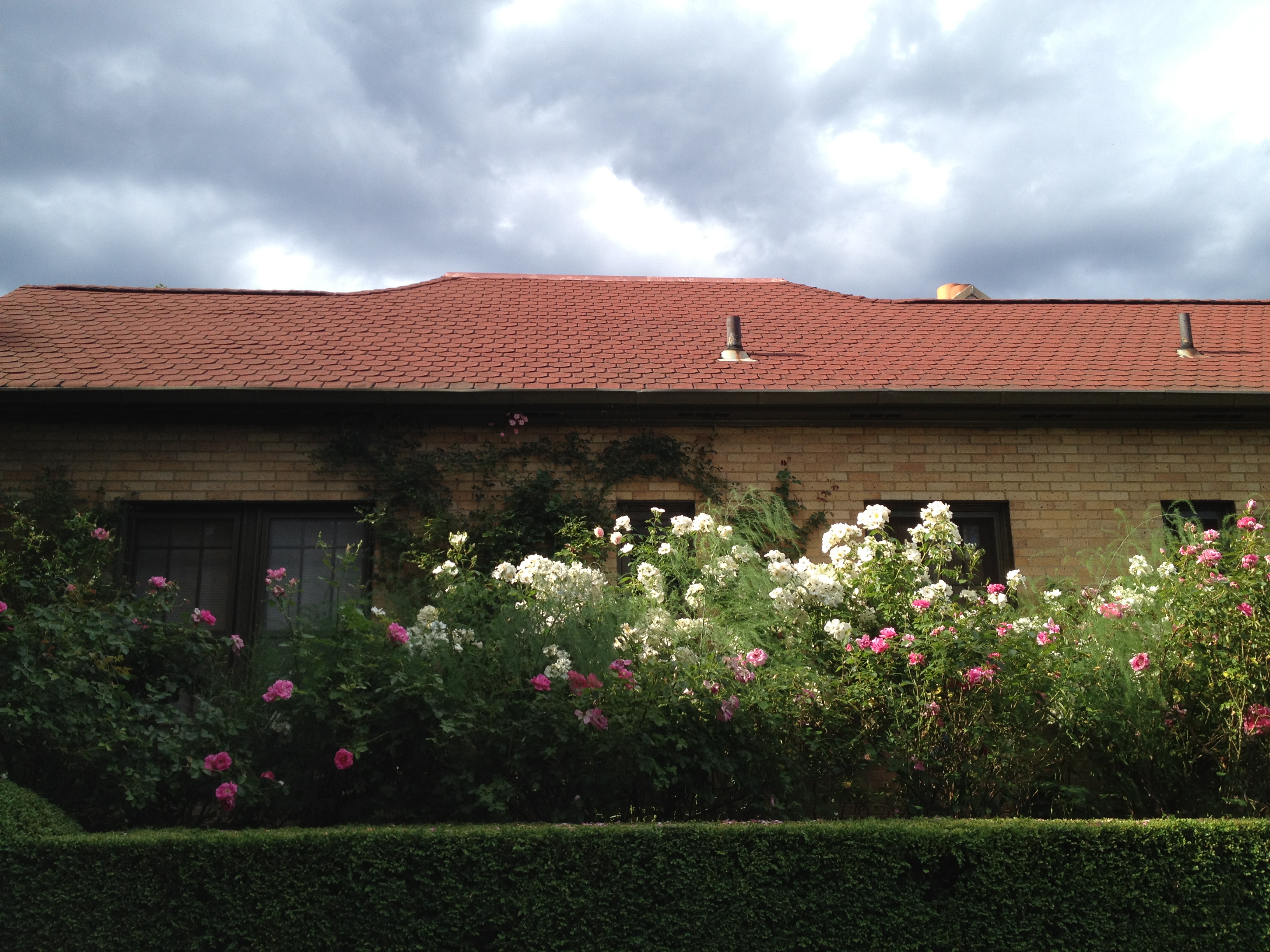
On a stormy night, my boxwood read as a mass-the individual texture of all of those individual leaves is not so apparent.  The roses are a lot of fluff, a lot of stalky canes-the blooms are soft to the touch. The roof is smooth from this distance; the clouds have a lot of color, a little bit of volume, and a weighless appearance.  Many textures are apparent here. The relationship of one textural element to another is what makes for a design party.
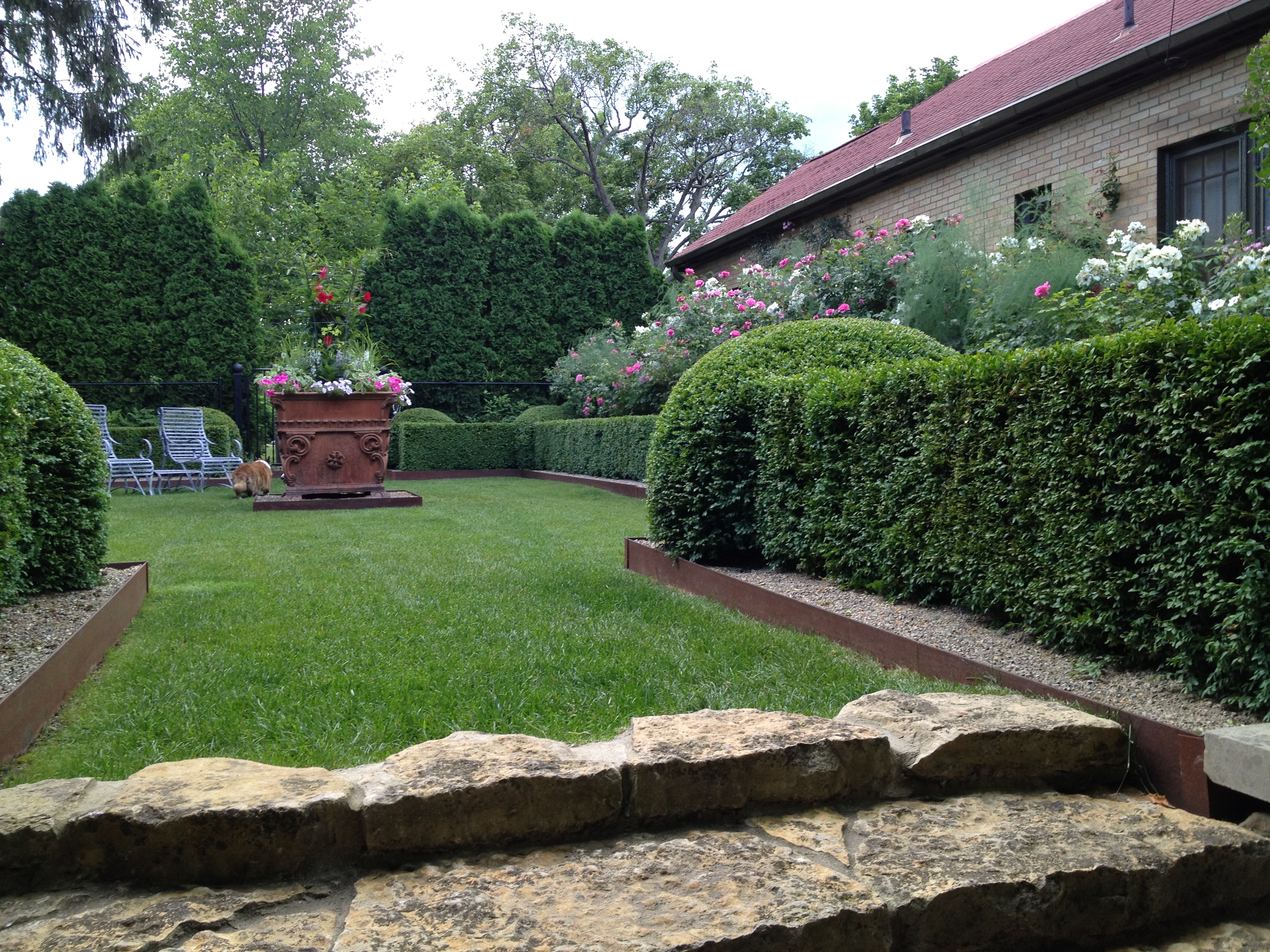
 

A lanmdscape is comprised of many different elements-each of these elements have a surface and texture all their own.  The relationship between distinctive and individual surfaces is what insures an enduring visual interest in a landscape.
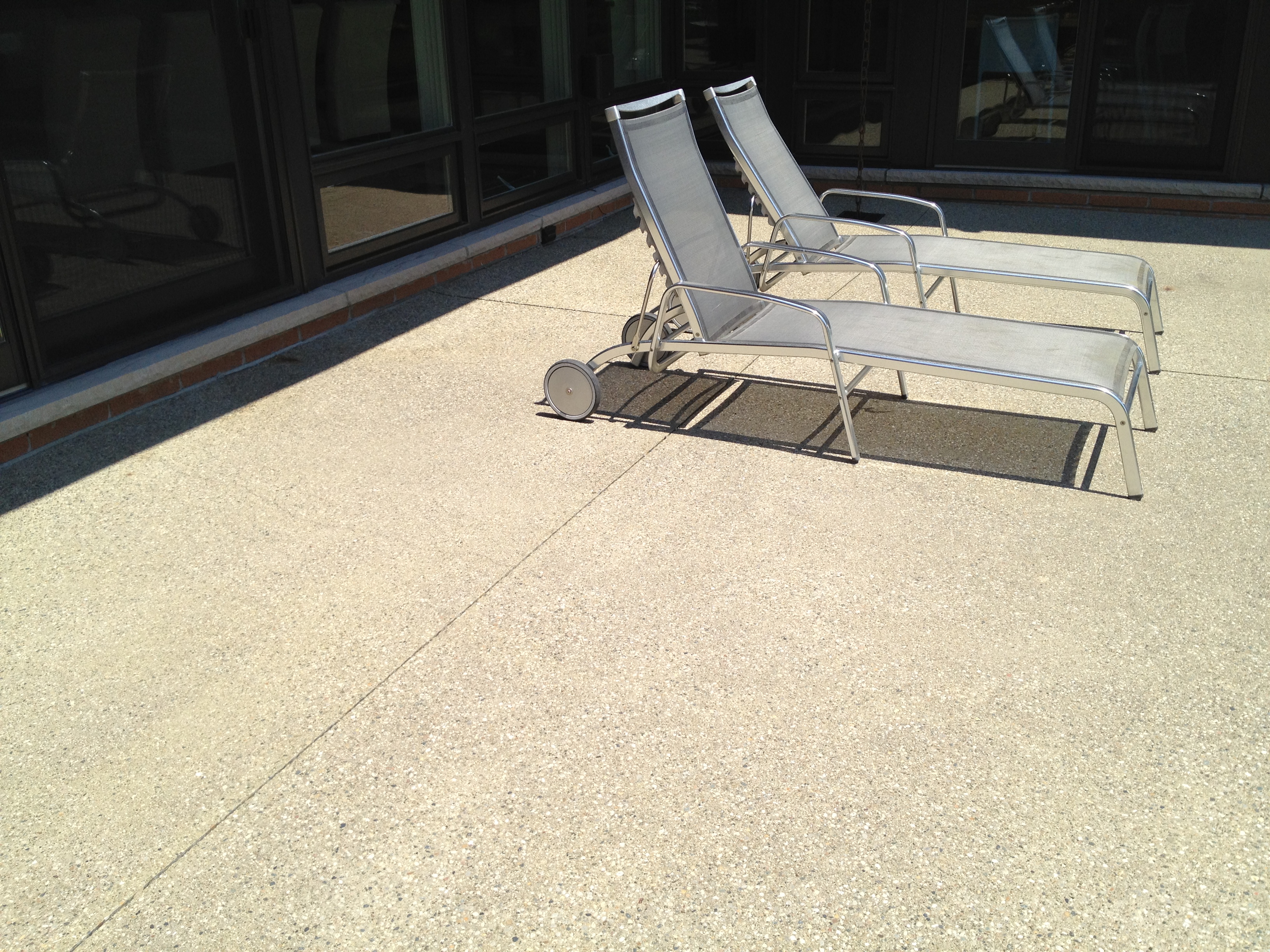
Every surface here is hard-as in impermeable, or shiny.  The textures are smooth and uniform.  My client is asking-what would you do here?  Perhaps, a contrasting texture!

This essay was written in conjunction with all of the other members of the Garden Designer’s Roundtable-be sure to check out all of their postings!


Thomas Rainer : Grounded Design : Washington, D.C.

Rebecca Sweet : Gossip In The Garden : Los Altos, CA

Pam Penick : Digging : Austin, TX

Lesley Hegarty & Robert Webber : Hegarty Webber Partnership : Bristol, UK

Douglas Owens-Pike : Energyscapes : Minneapolis, MN

David Cristiani : The Desert Edge : Albuquerque, NM
Christina Salwitz : Personal Garden Coach : Renton, WA

Rochelle Greayer : Studio G : Boston, MA

Closer To The Finish


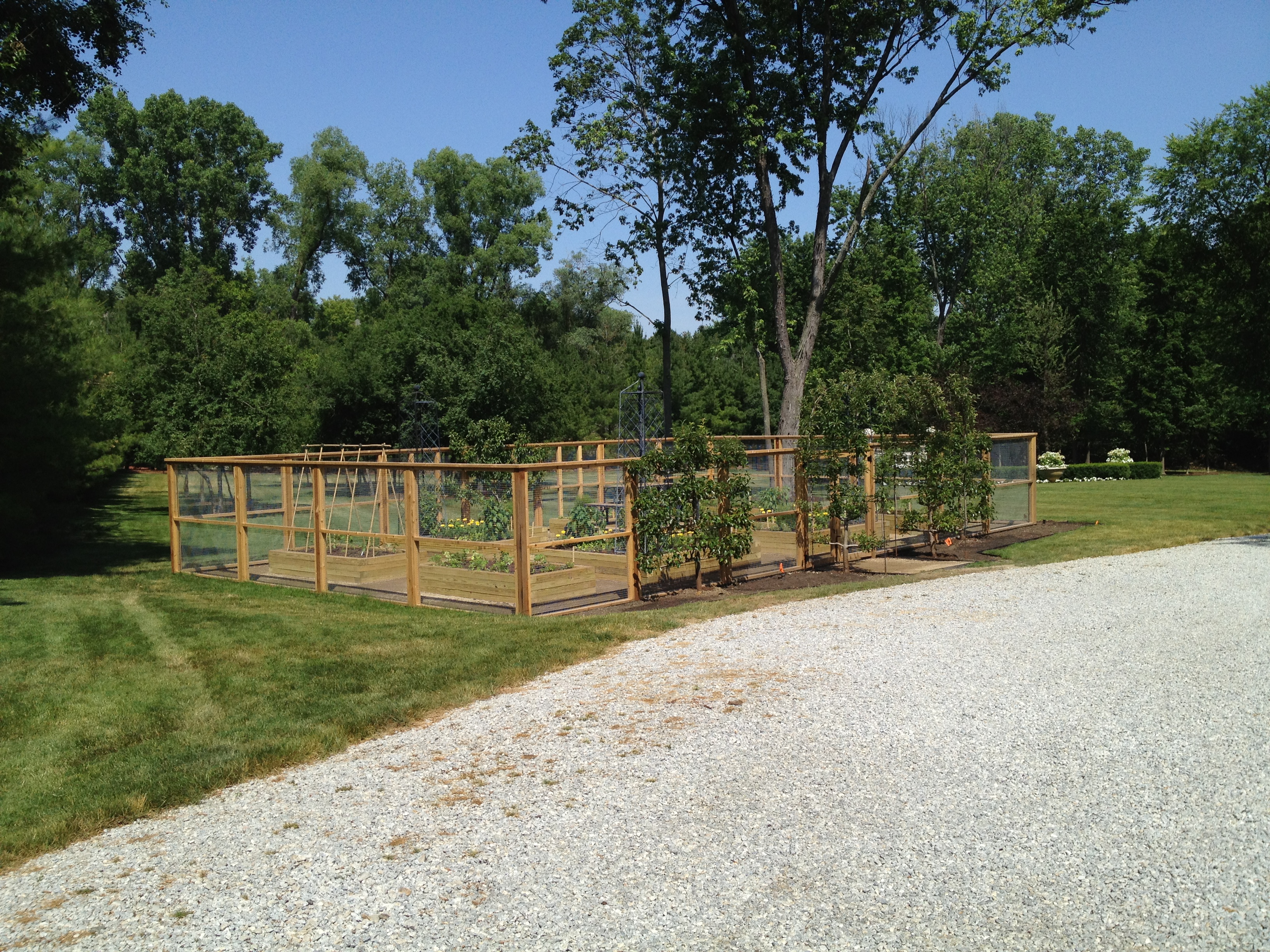
If you read this blog regularly, you may recall we started building a vegetable garden for a client about 6 weeks ago.  A lot has gone into that project, but finally the physical structure was at a stage where we could plant. 

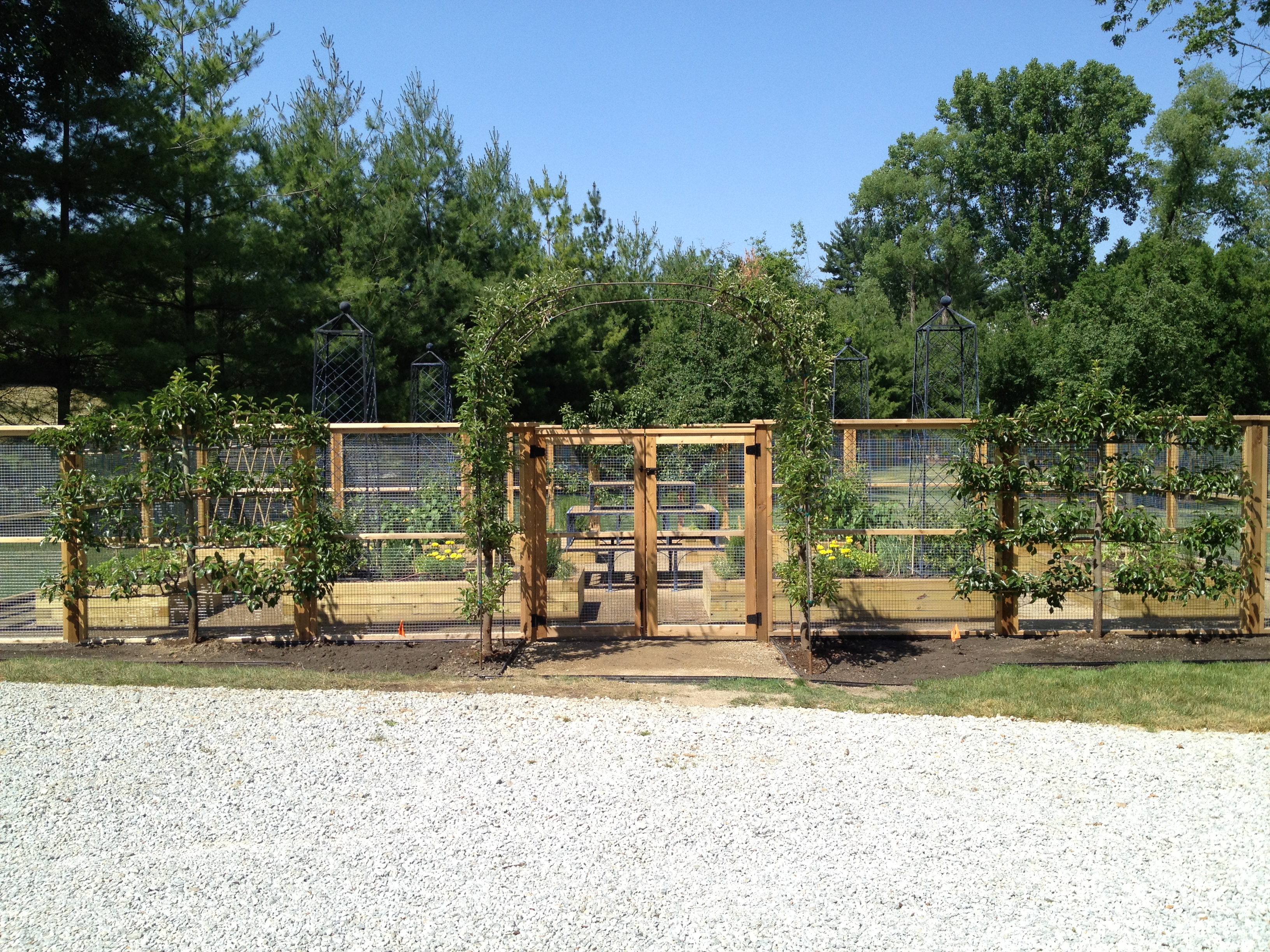
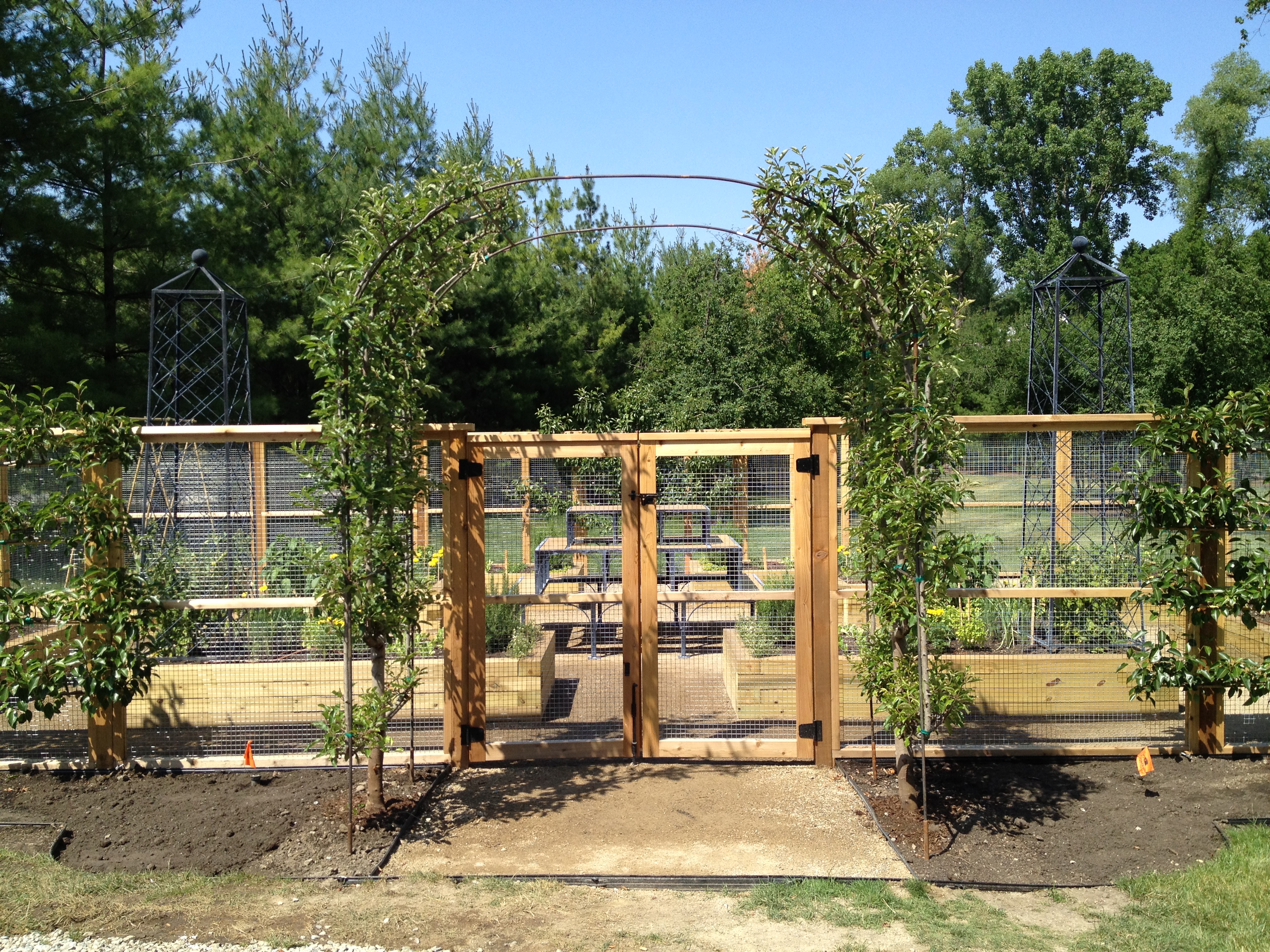
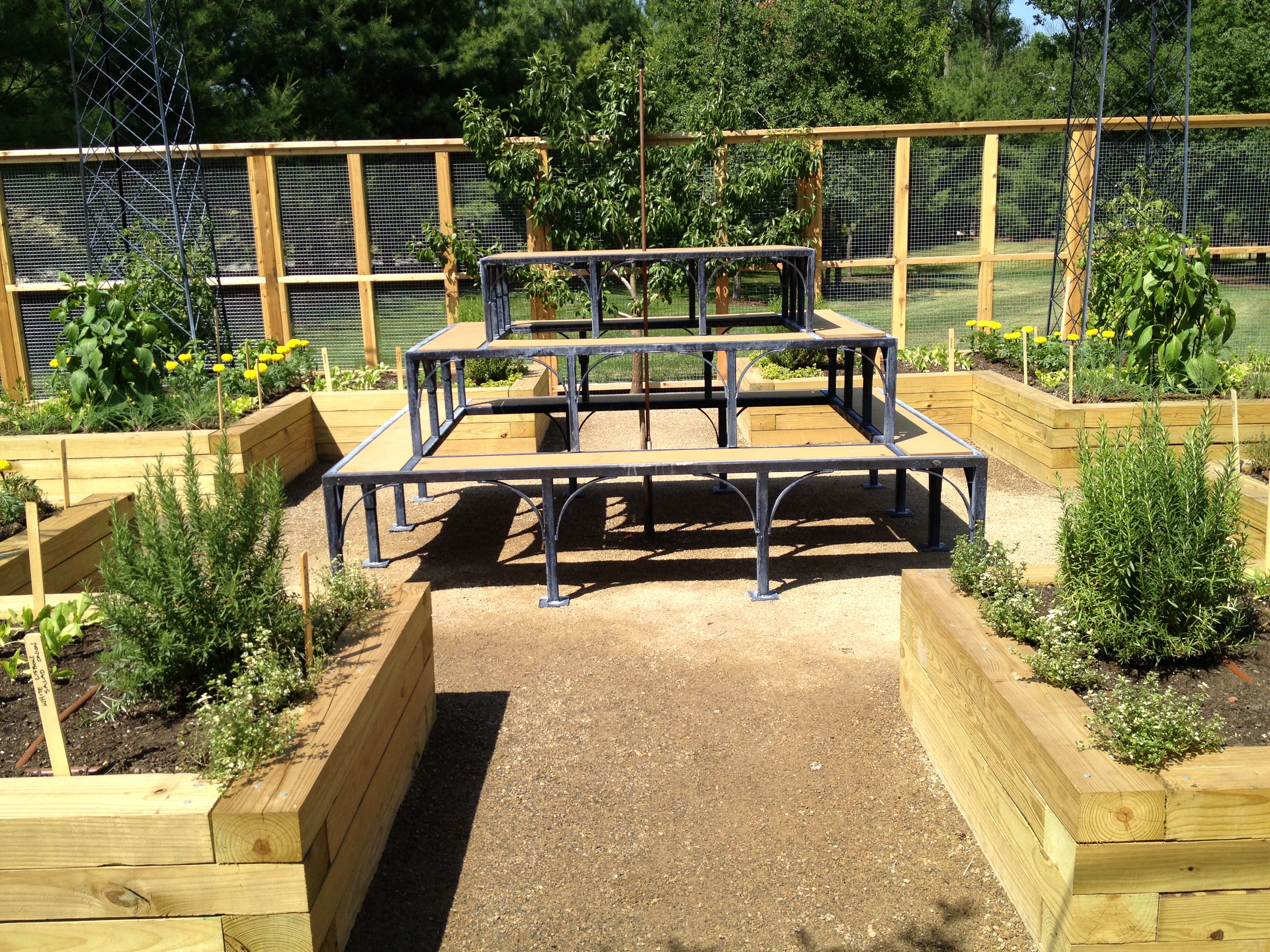
The first to be planted was a collection of 5 espalier fruit trees.  A pair of double candelabra apple trees trained in the shape of an arch were planted on either side of the gate.  Centered on each side of the fence, a pair of quadruple cordon pear trees. 

 fenced vegetable garden

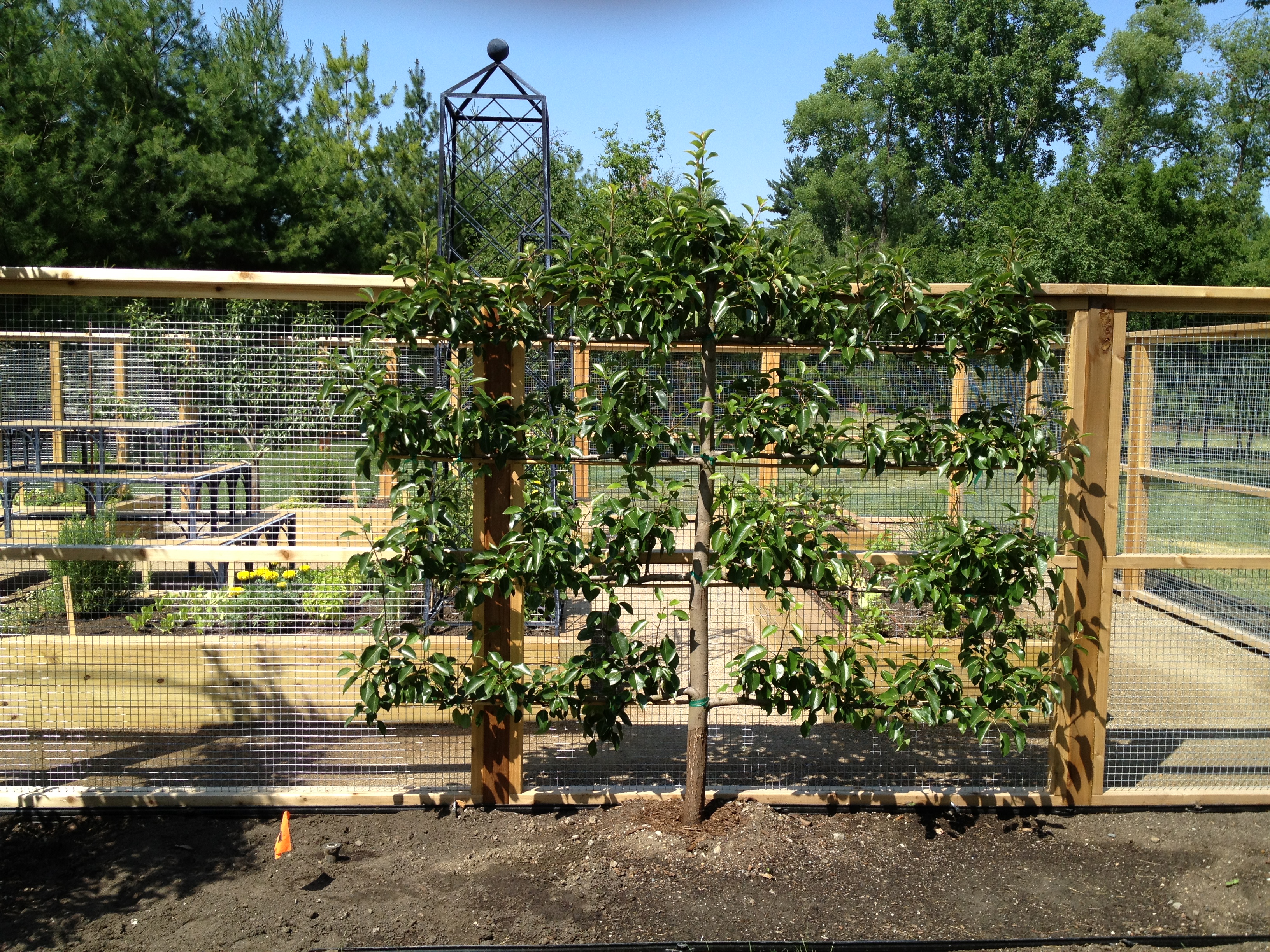
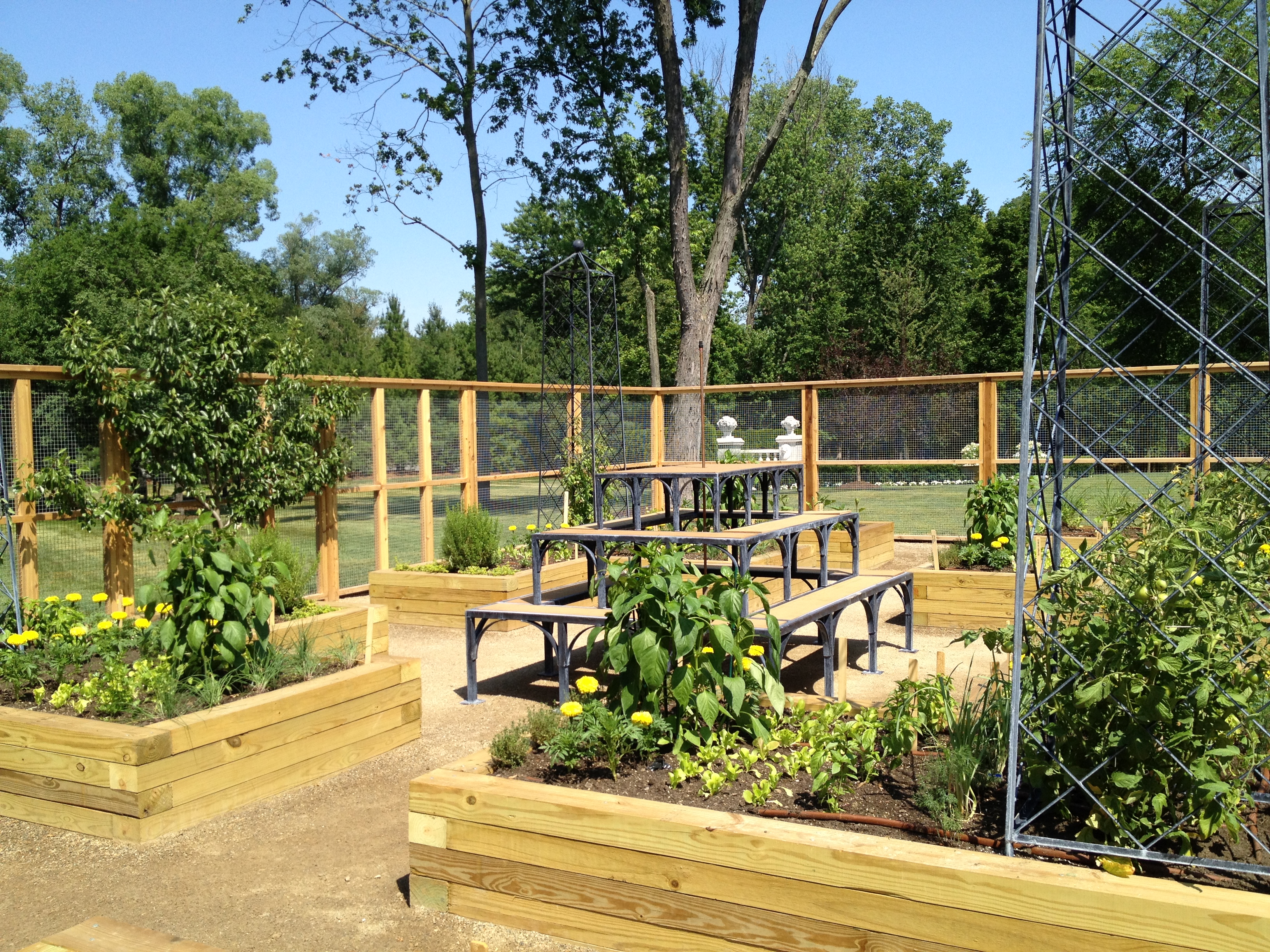
The idea is to allow the horizontal arms of the pears to grow the entire width of the fence.  Though this heavy wire mesh and cedar fence is handsome, I can imagine the entire front face of this garden covered in leaves-and hopefully, pears.  

wire fencing

Though the Gala apple arches had been trained in this arch shape for years, we built a simple steel rebar arbor onto which each branch could be tied.  Once the major branches put on sufficient caliper, this arch will no longer be necessary-nor will it be visible.  The trees had been trained to form an arch that was 4 feet wide.  I wanted the entrance to the garden at least as wide as the double gates.  The bald spot at the top of the arbor will be covered in just a few years.  The walkway into the garden, and all of the garden floor is compacted decomposed granite.

pear espaliers

Though the pear espaliers have 4 distinctively horizontal arms, the secondary branches could easily be allowed to grow out,  making a solid green wall.  The espaliers we buy are grown in giant containers, with the trunk at the back.  This makes it easy to plant the espalier close to the fence.    

tiered plant stand

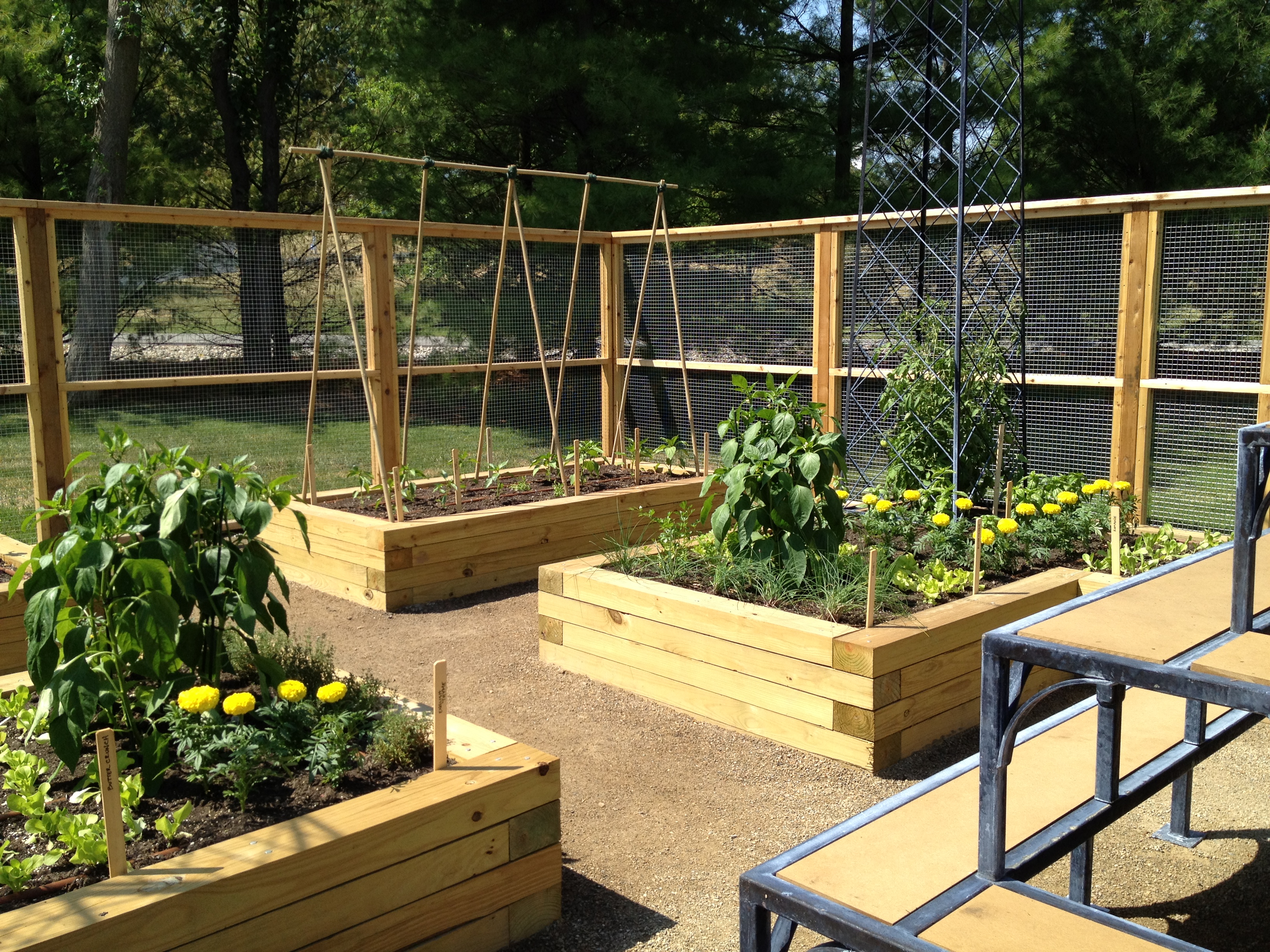
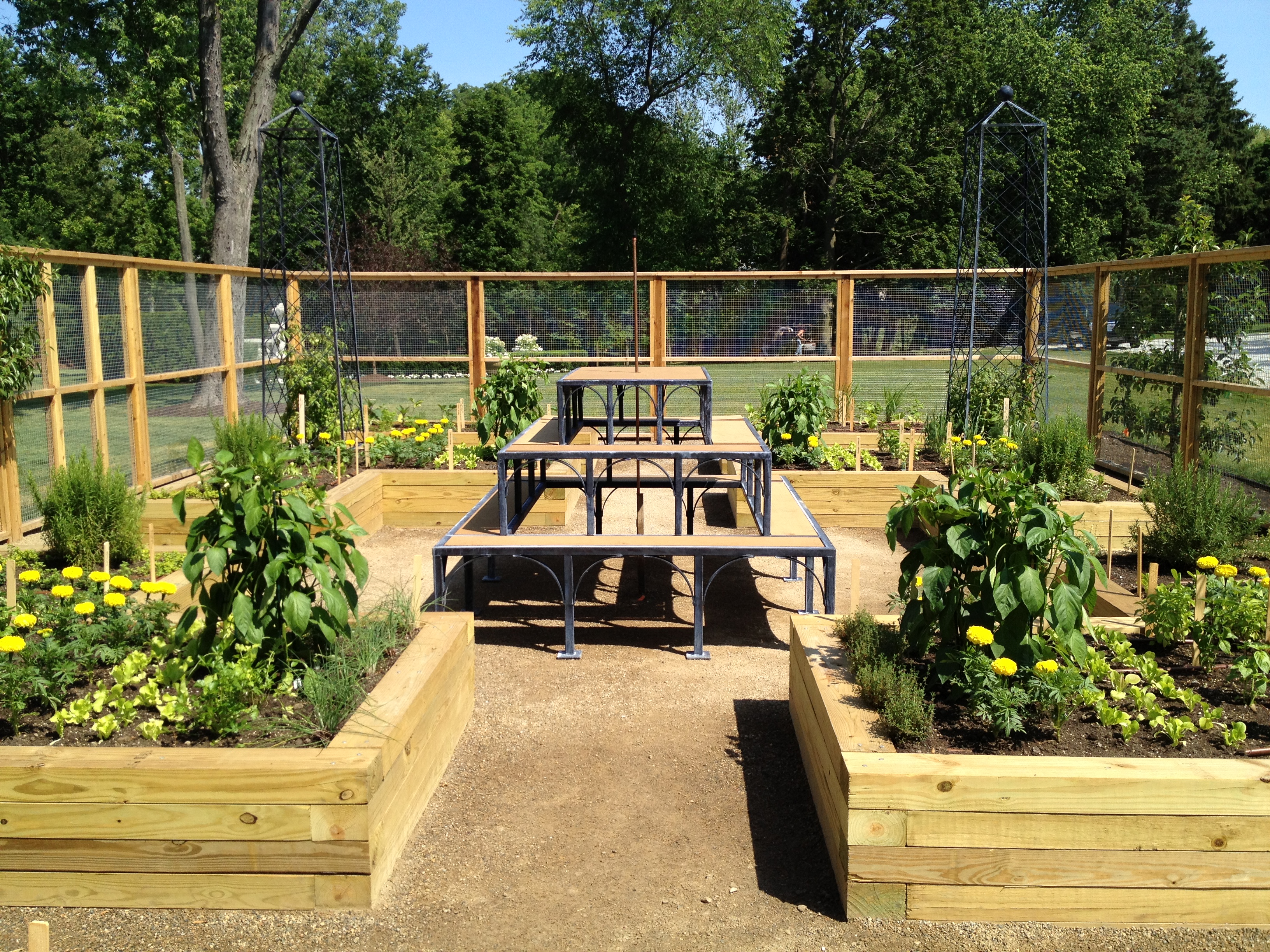
This vegetable garden table was inspired by English auricula theatres.  Tiered stands that permit the staging of potted specialty plants, as in auricula primroses were very popular in England in the 19th century.  This steel three-tiered plant stand will be covered in clay pots, planted with herbs and small growing flowers.  The copper pipe through the center of the table is for irrigation.  At the east end of the garden, a spigot was installed for handwatering.  Though each box has drip irrigation, there is no substitute for the sure hand and good judgment of a gardener. 

raised beds for vegetables

Steve built a bamboo teepee for pole beans.  The beans are planted only on the north side of the box, so the orange bell peppers planted underneath will still have good light.  Some of the vegetables have been growing in containers in a greenhouse, waiting for the garden to be ready to plant.  Each group of plants is clearly marked as to variety on large wood markers.

By no means do I mean to imply I am a vegetable gardener.  I am a serviceable gardener.  My clients have to take ownership now, and grow with this garden.   This first year will provide an opportunity for them to decide what they really wish to grow.  Everyone’s taste in food is so individual.  This first planting has a little bit of a lot going on for them to try. 


There are leeks, onions, and salad onions.  A fresh crop of lettuces.  Bell peppers, pole and bush beans, and 4 types of tomatoes.  Eggplant, patty pan squash,  and four varieties of cucumbers.  There are loads of herbs-rosemary, Greek oregano, flat leaf parsley, three types of basil, and thyme.  Three types of mint, and lots of cilantro.  Steve laid this garden out from the plants and seeds that I bought, as he has lots of experience with this sort of thing.  The yellow marigolds-just for fun.  Early next week, we will plant the clay pots, plant perennials and roses outside of the garden, reconfigure the edge of the driveway, and plant some grass.

A Day In The Life

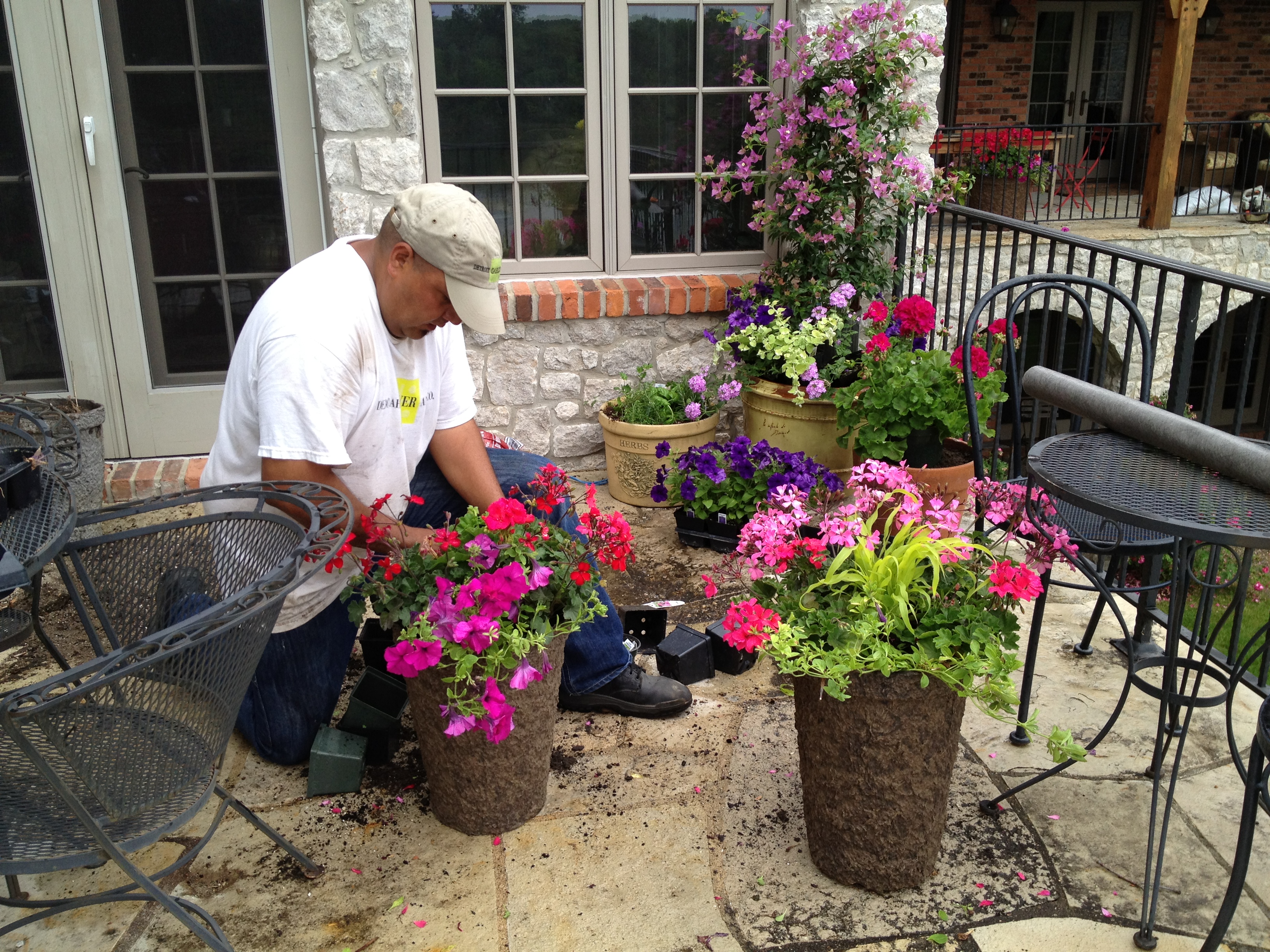
planting annual containers

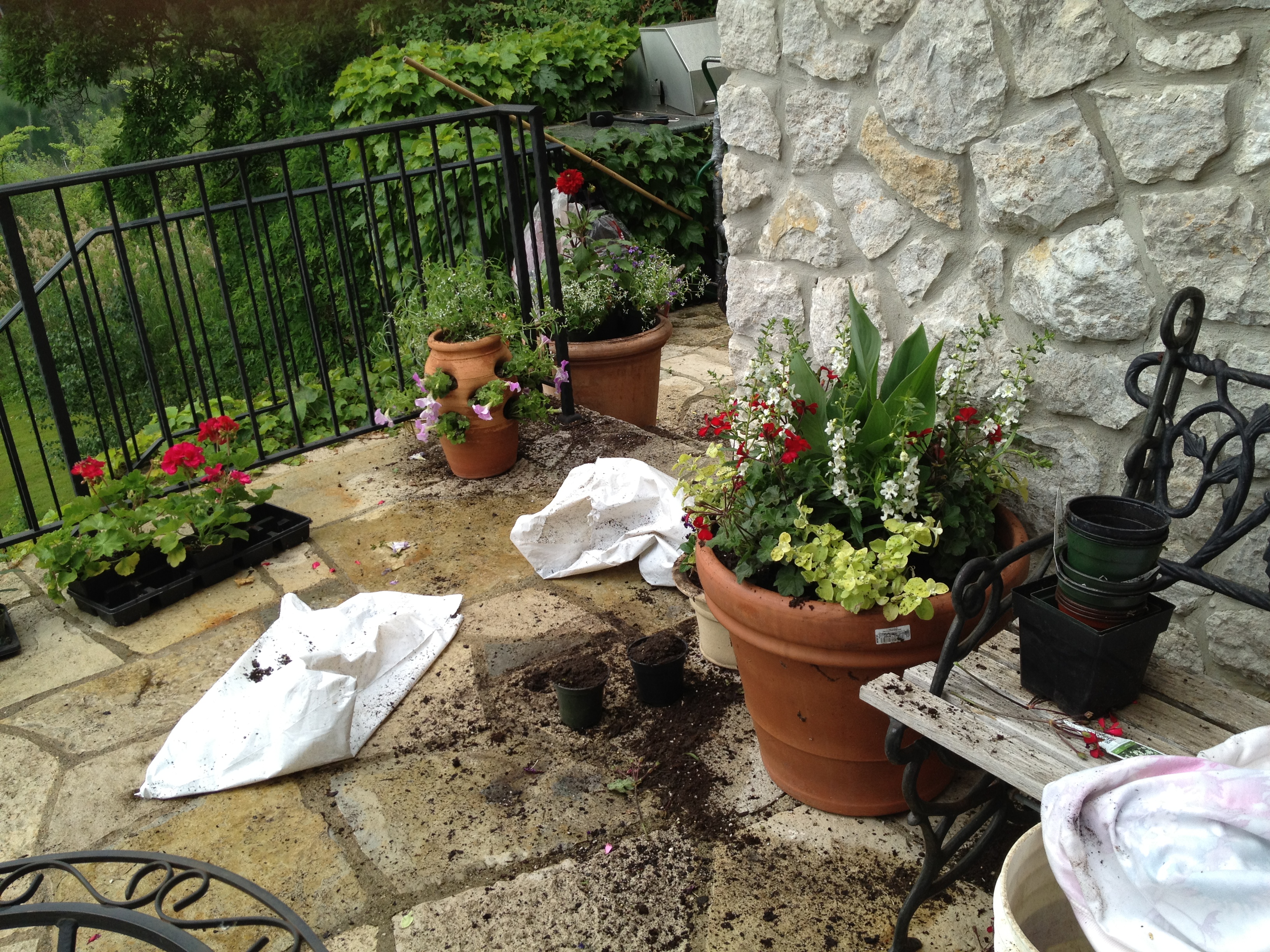
I am still out with my crew planting the flowers non-stop.  It will be close to 80 projects, once all is said and done.  The work of getting ready to plant is grueling-the design, shopping, loading, unloading, emptying out old soil and adding fresh.  A good many of these jobs take upwards of 5000 pounds of soil.  Every plant that gets planted is placed by me.  I may make a change in a design, faced with the actual plants and the actual containers.  A plan is a guide.  So extra plants get taken along, should they need to be called into service.

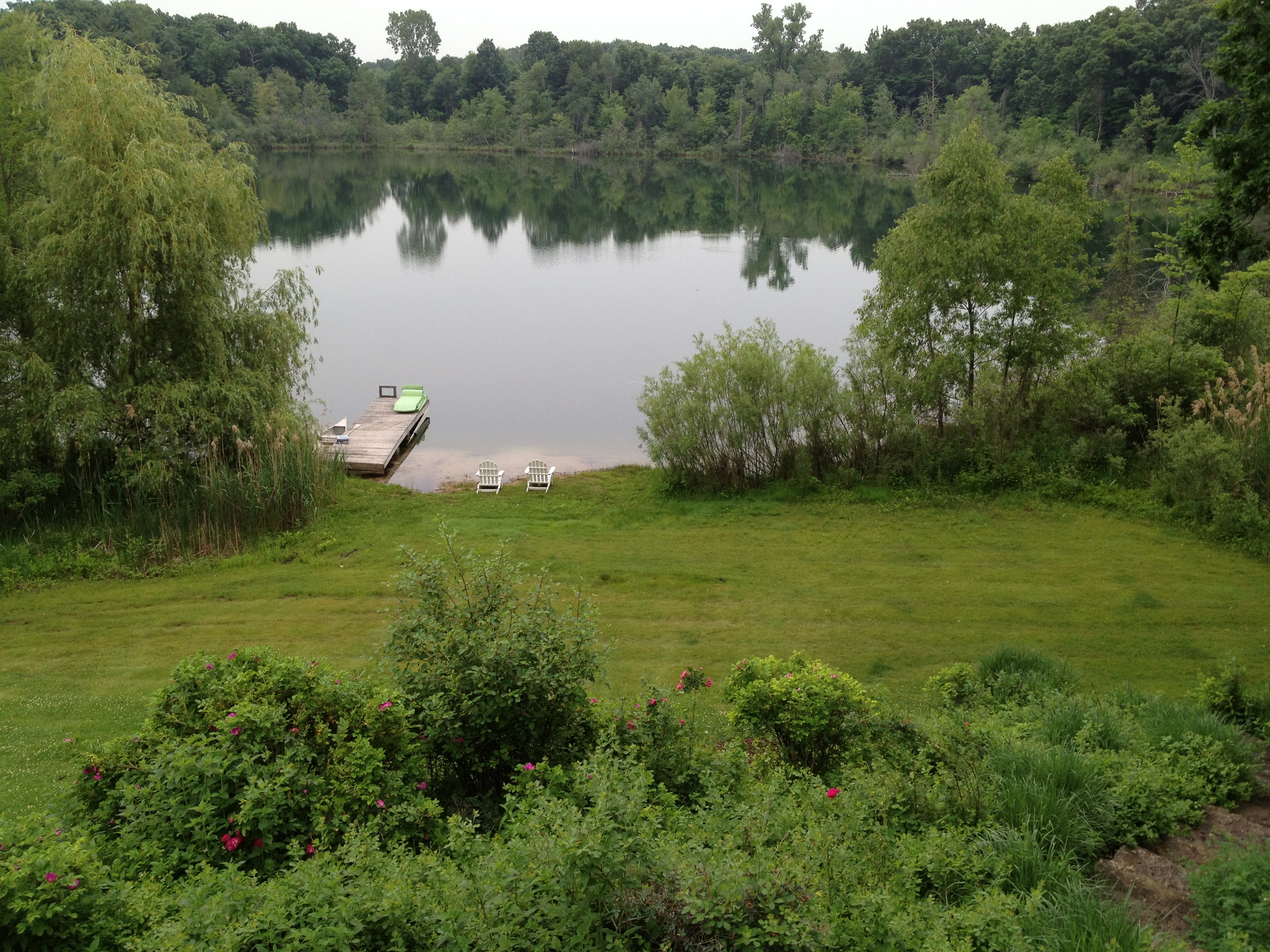
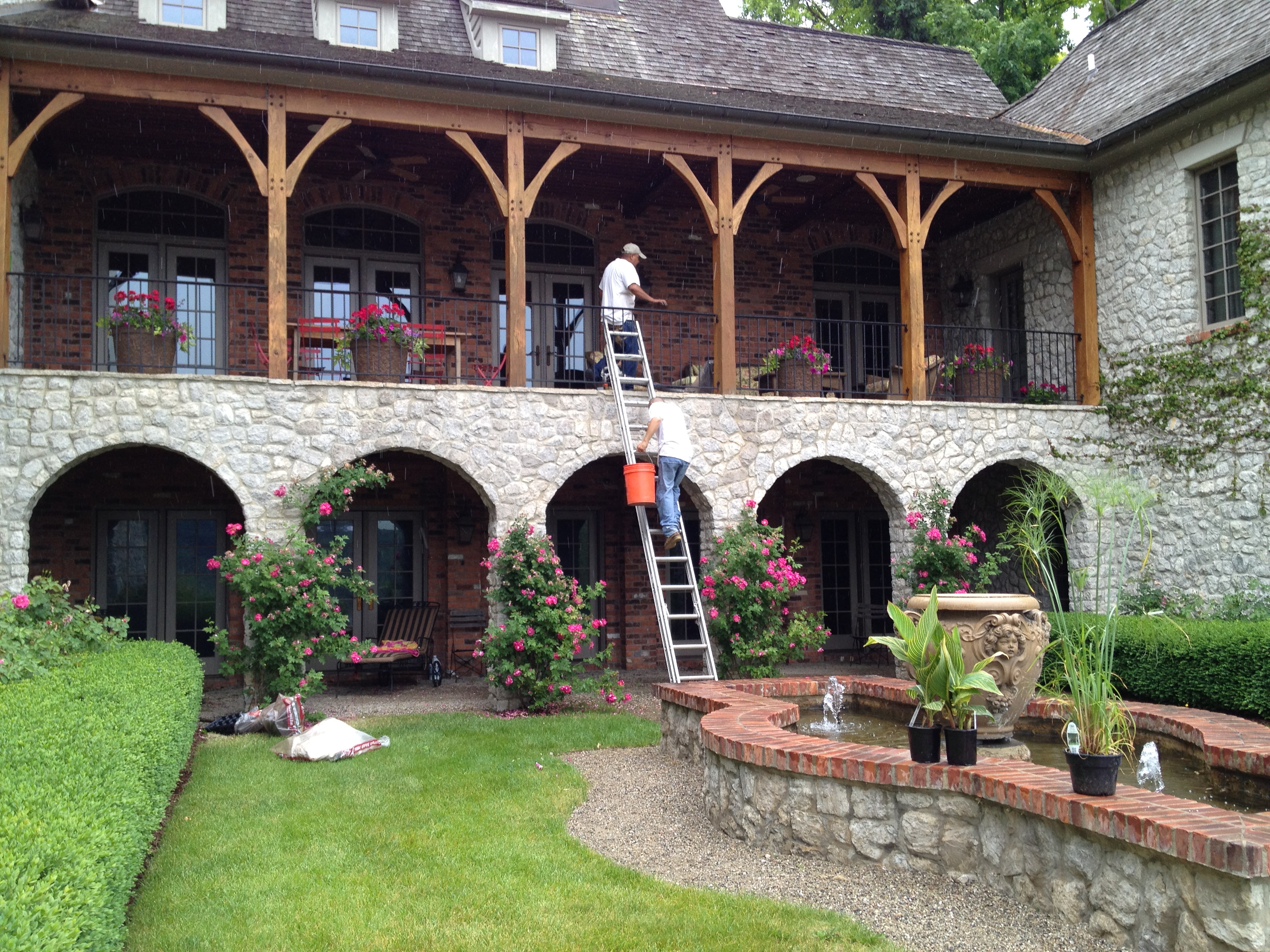
This planting is 40 minutes away from me, in a remote location down a dirt road, on a small lake.  I did the landscape for this new house probably 8 years ago.  The annual planting is not a particularly large or elaborate one.  What make the job such a pleasure is a chance to spend some time in a landscape that is getting some age on it.

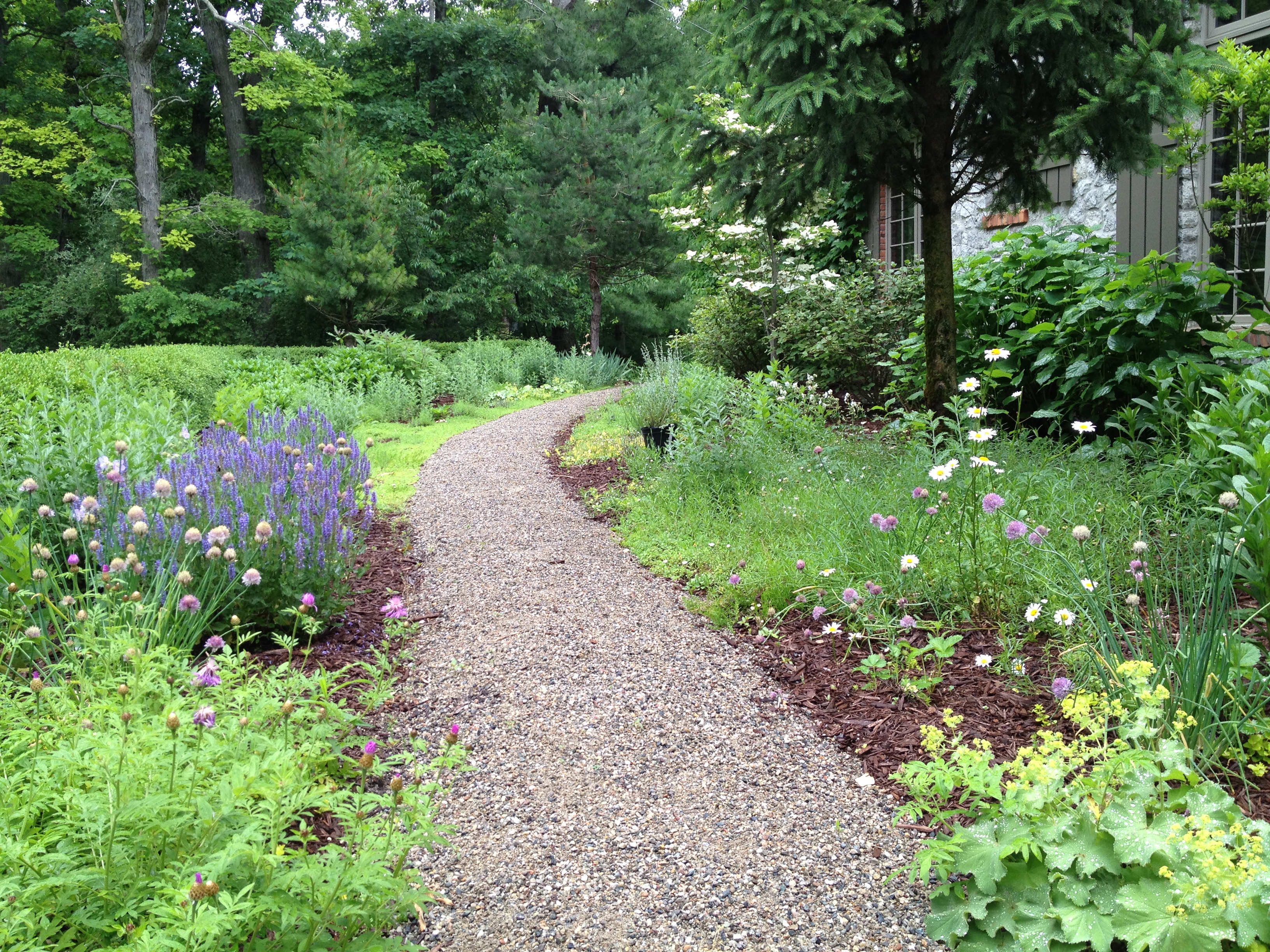
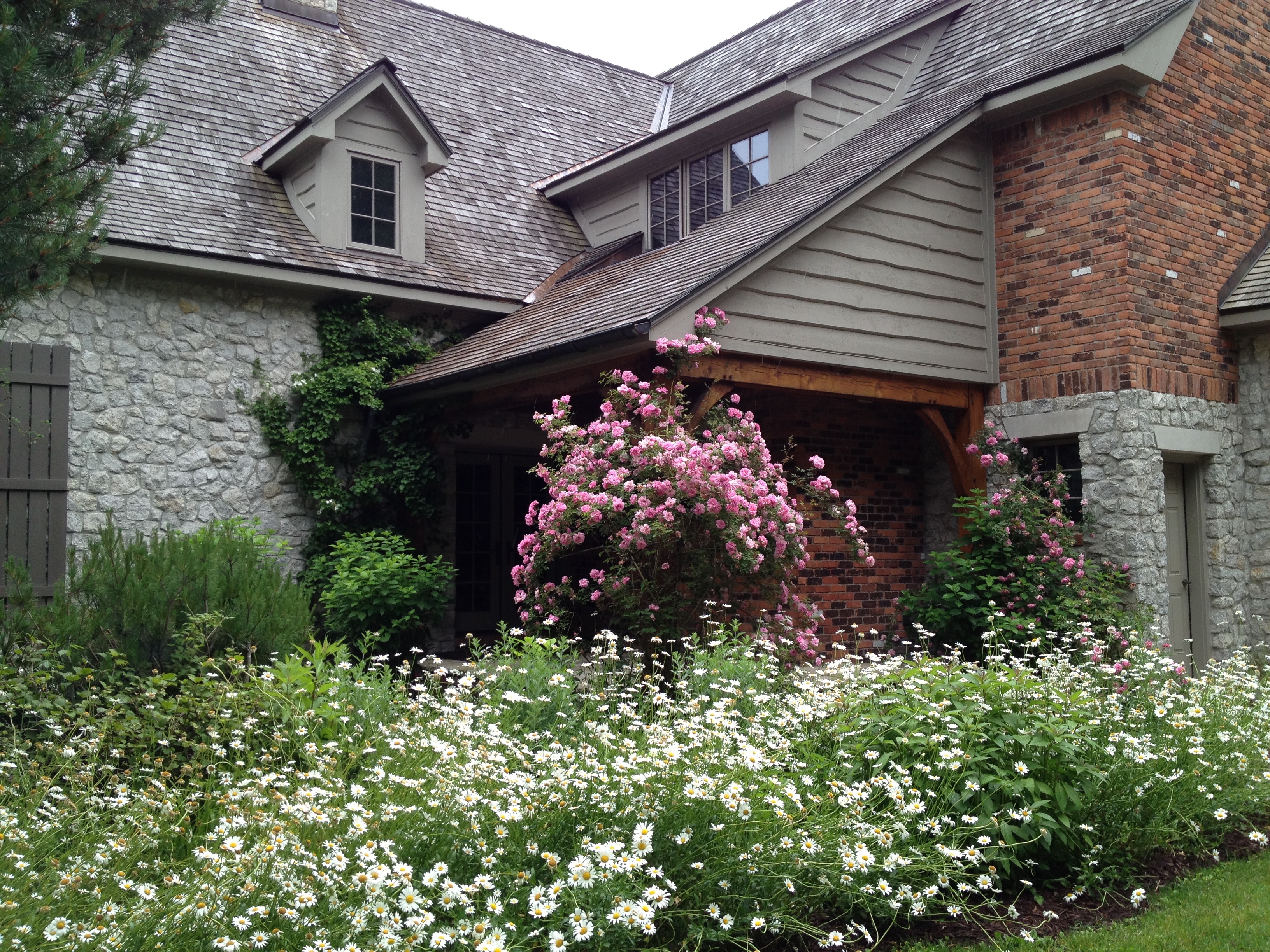
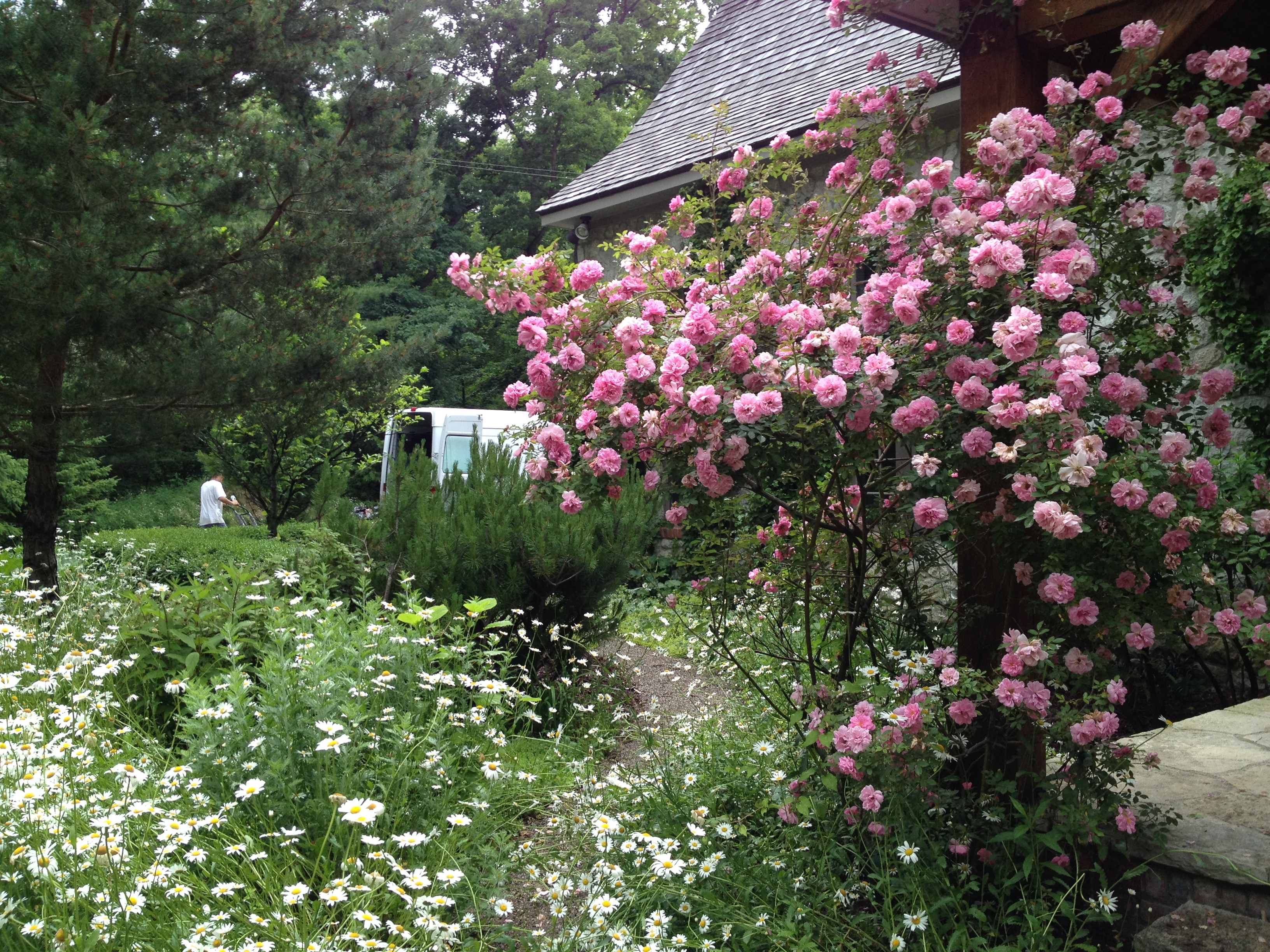
The perennial gardens are fairly wild.  Only the strongest plantshave prevailed-the soil is very sandy, the care is casual, and the wildlife is active.  My client is a business owner who loves the garden, but in a different way.  He likes that some plants have grown together, that other plants have receded. He likes that very casual cottage look. A large deer population keepsd his evergreens skirted up-especially in winters where the snowcover is deep.

I find its overgrown and unfussed over appearance very relaxing and serene.  It has evolved into a landscape that is more wild than not.  I find it has that rural French look that Rob photographs over and over again when he is abroad.

We plant lots of verbena bonariensis and cosmos in the areas where wild daisies have colonized.  We don’t touch the climbing roses, climbing hydrangeas, clematis or Boston ivy. 

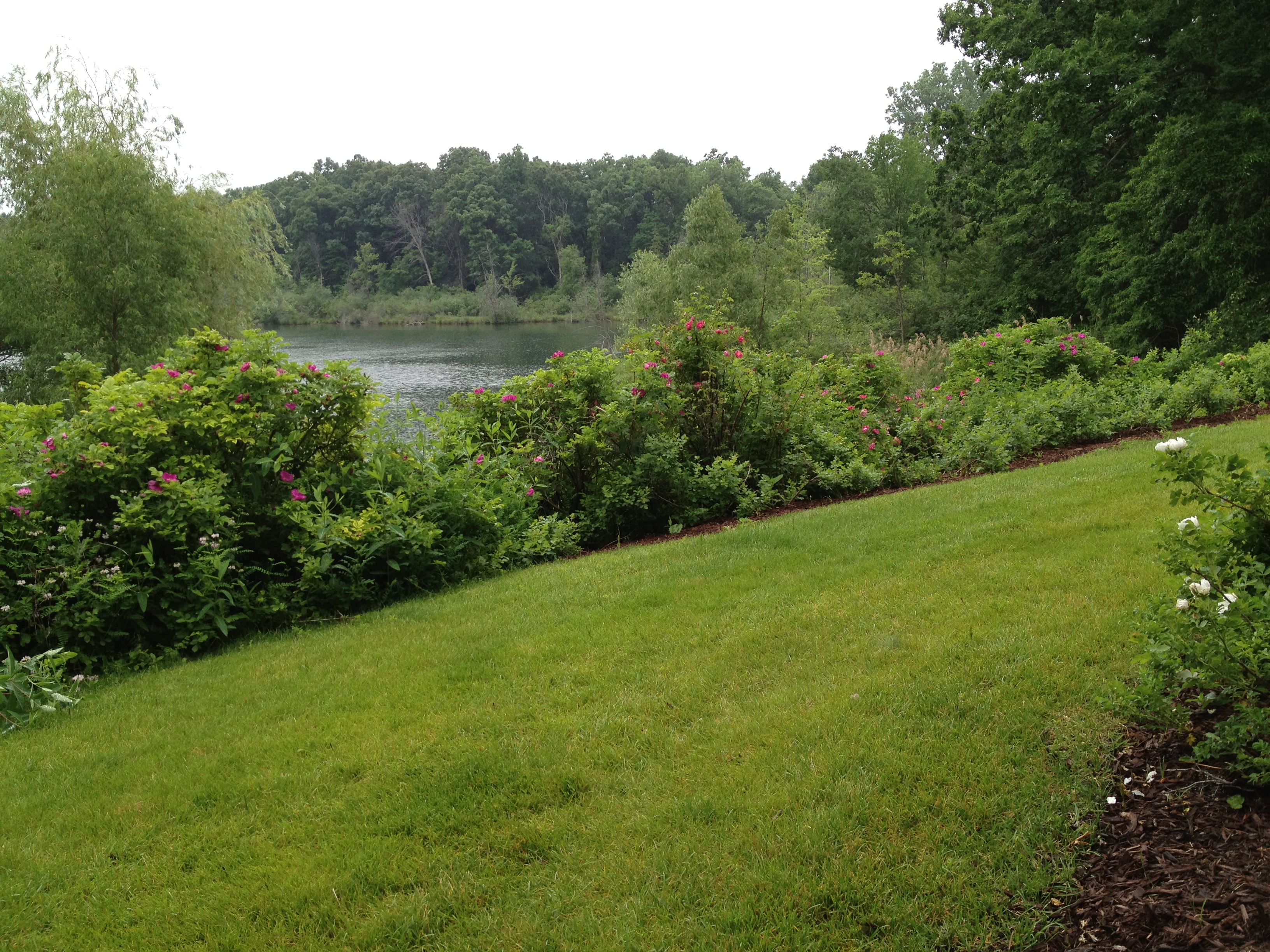
shrub roses

A steep slope in the back is planted with grasses and shrub roses.  The path to the rear large is a large and simple swath of field grass.  By this I mean the grass has violets, clover, and all manner of other short growing green plants that do not mind a mower.

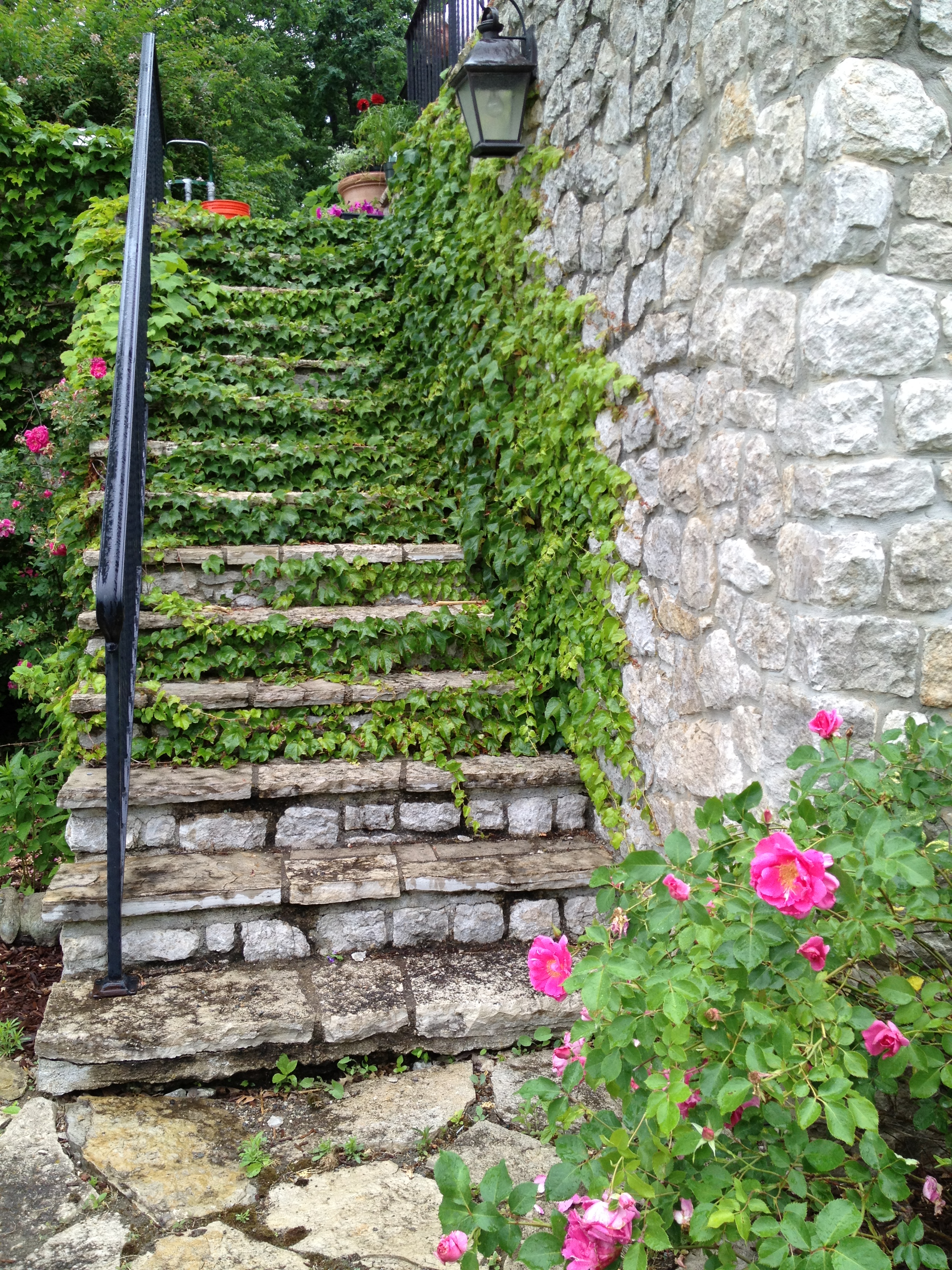
The stone staircase pictured on the right is the only safe way to get to the lake, although I can imagine sledding down this hill in the winter.  The landscape at the lake is what nature put there to begin with.  This is one of the quietest places I have ever been.  That alone makes this planting trip a pleasure.


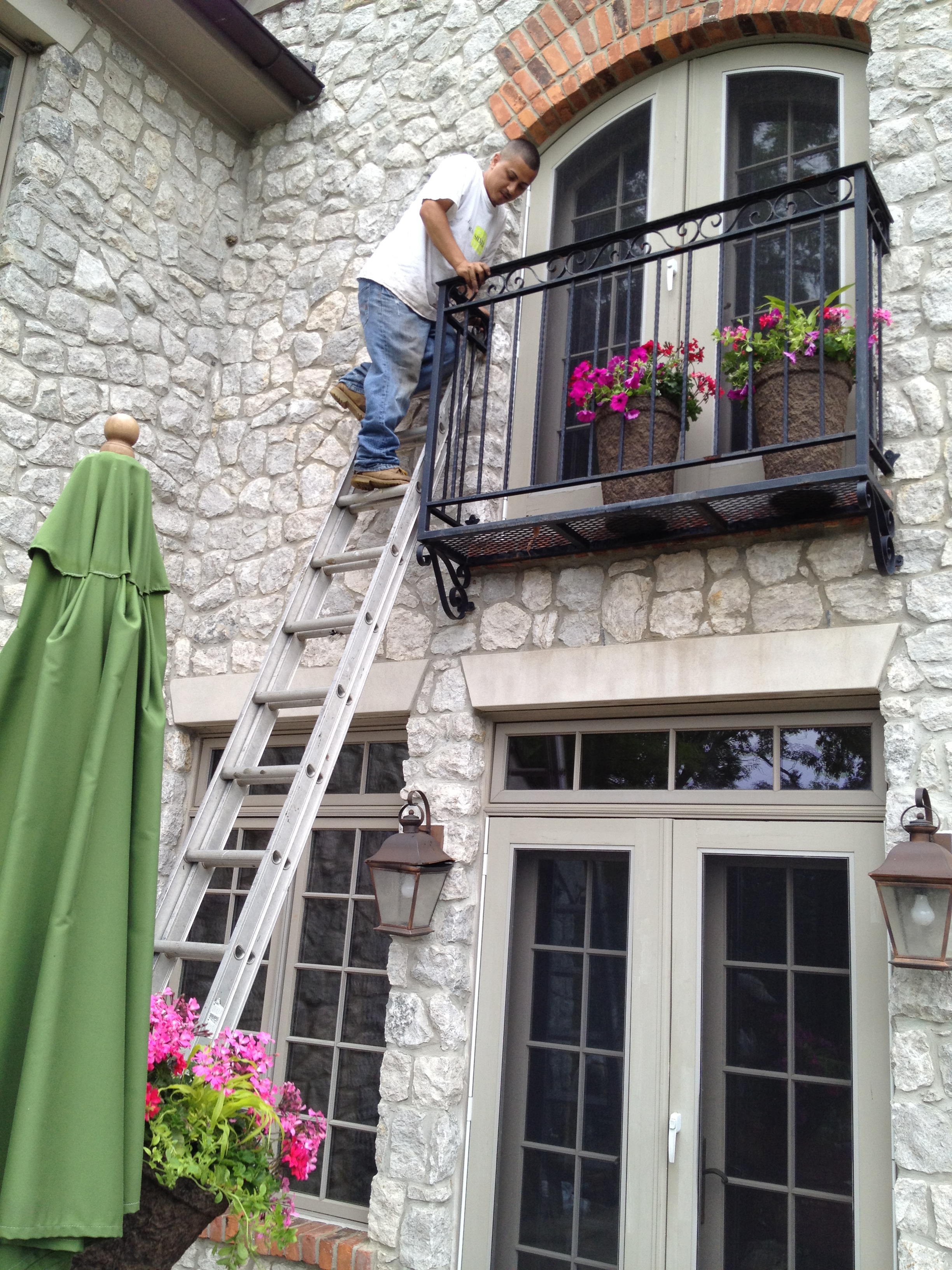
Most of the pots we plant are fiber pots, which we replace yearly.  In a month, the pots will not be visible, for the planting.  Flowers will cascade over the balcony.


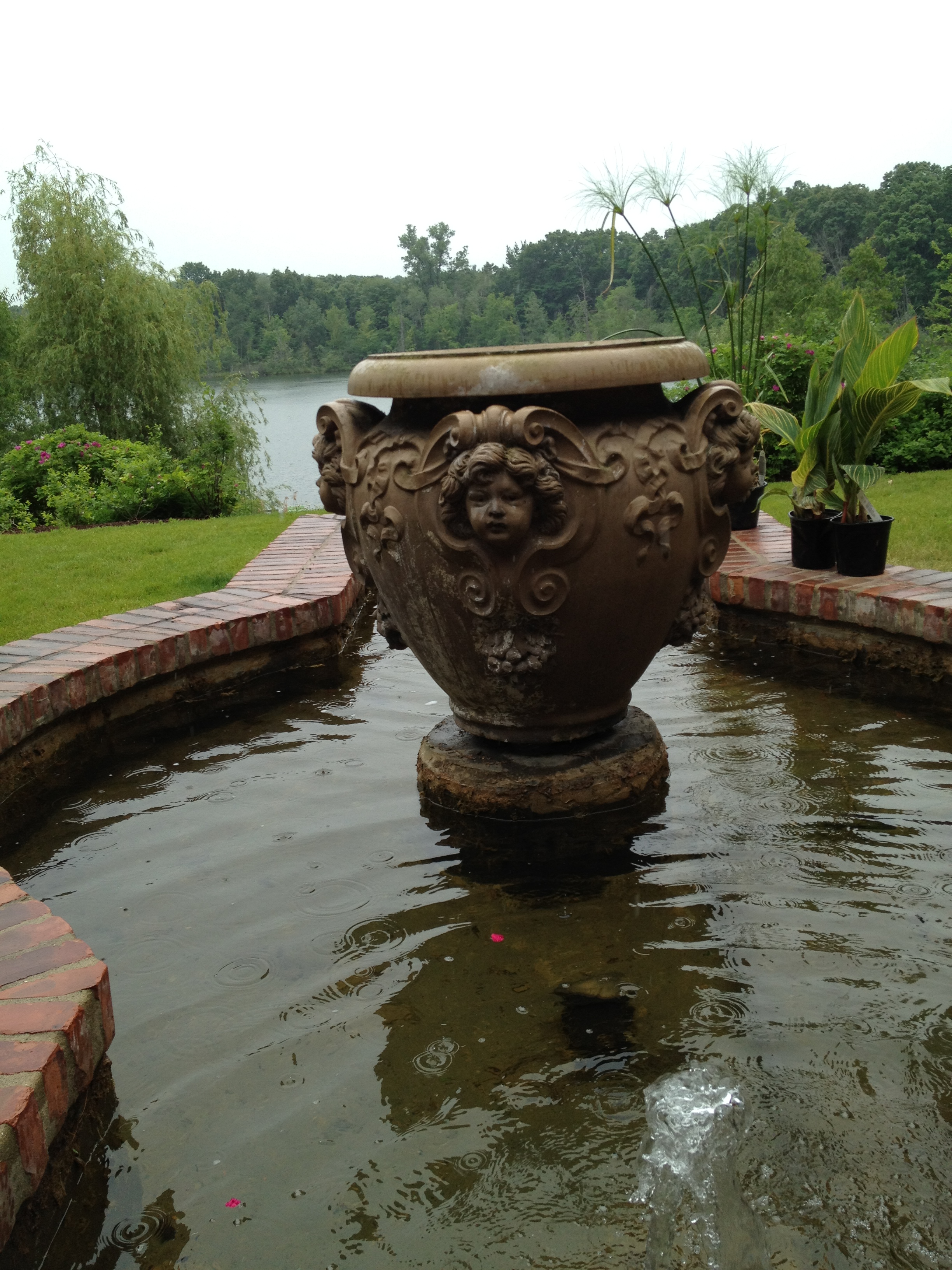
This 19th century coadestone pot made by Doulton (now the Royal Doulton china company in England) became the centerpiece of this fountain.  It is lined with a waterproof plastic container, into which we place a collection of water plants.

Boston ivy

The changes of grade are a challenge for moving plants and soil around, but they offer beautiful views of the lake. It will be a while before these pots look like much.  But this is a job which is a pleasure to plant. To be here is a lot more than work.  It is an experience I look forward to every year. 


Almost done.


Green And Graceful

planting annual containers

My work life from 4:30 am until 6 pm every day this time of year is all about planting the containers and annual flowers.  Lots of them, for lots of clients.  The 90 degree weather we had a few weeks ago has eveything believing that the summer season is already half over.  The weather is perfect and warm-where are you??  The saving grace of this very short, pressure packed, and intense season is the opportunity to get up close and focus on container plants.  This year, I have taken a big fancy to the euphorbia cultivar known as Diamond Frost.  This utterly drought resistant and casually airy white blooming annual plant makes all of the more glaringly stiff growing annual plants look better.  More graceful.   

planting summer containers

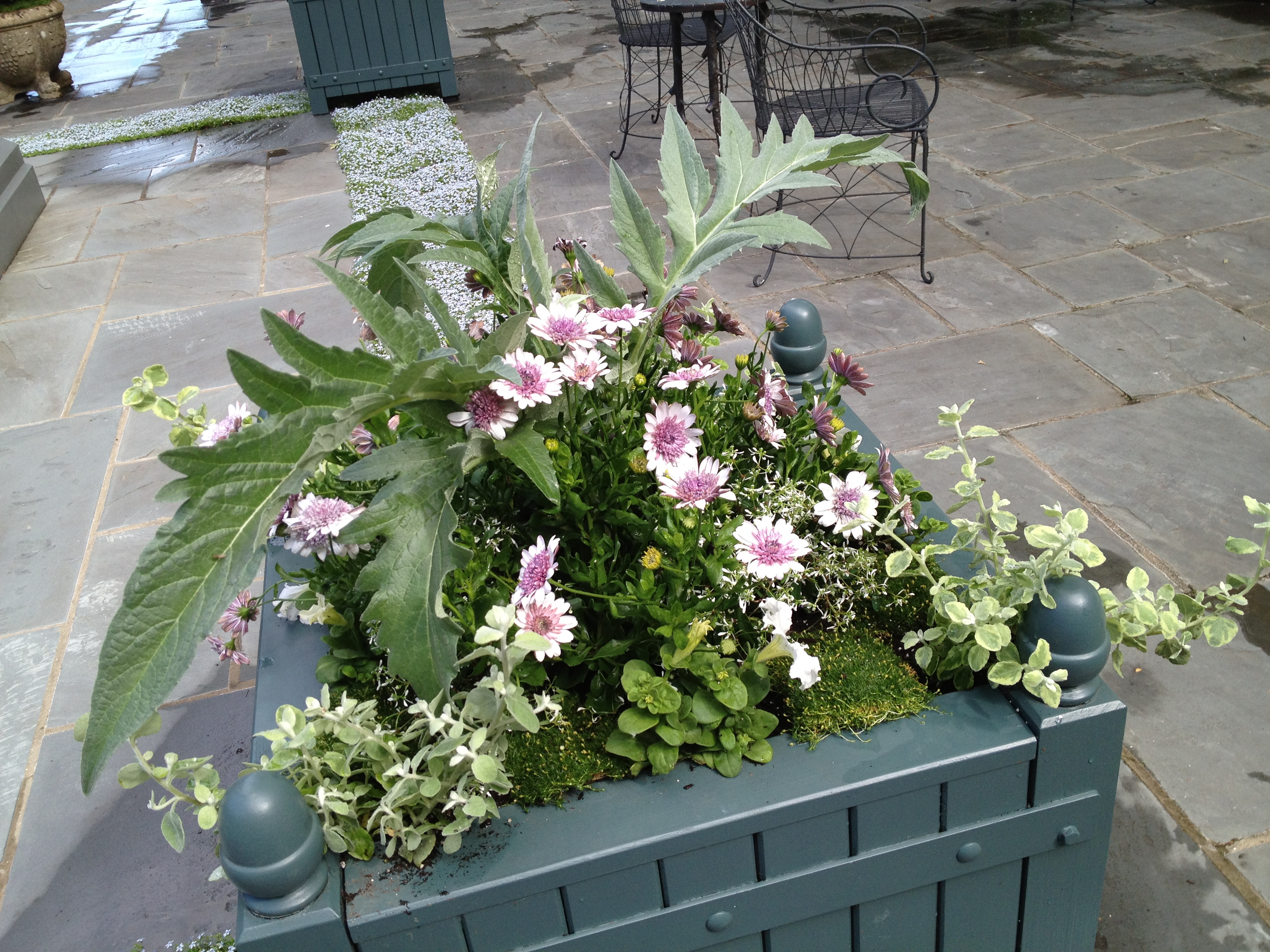
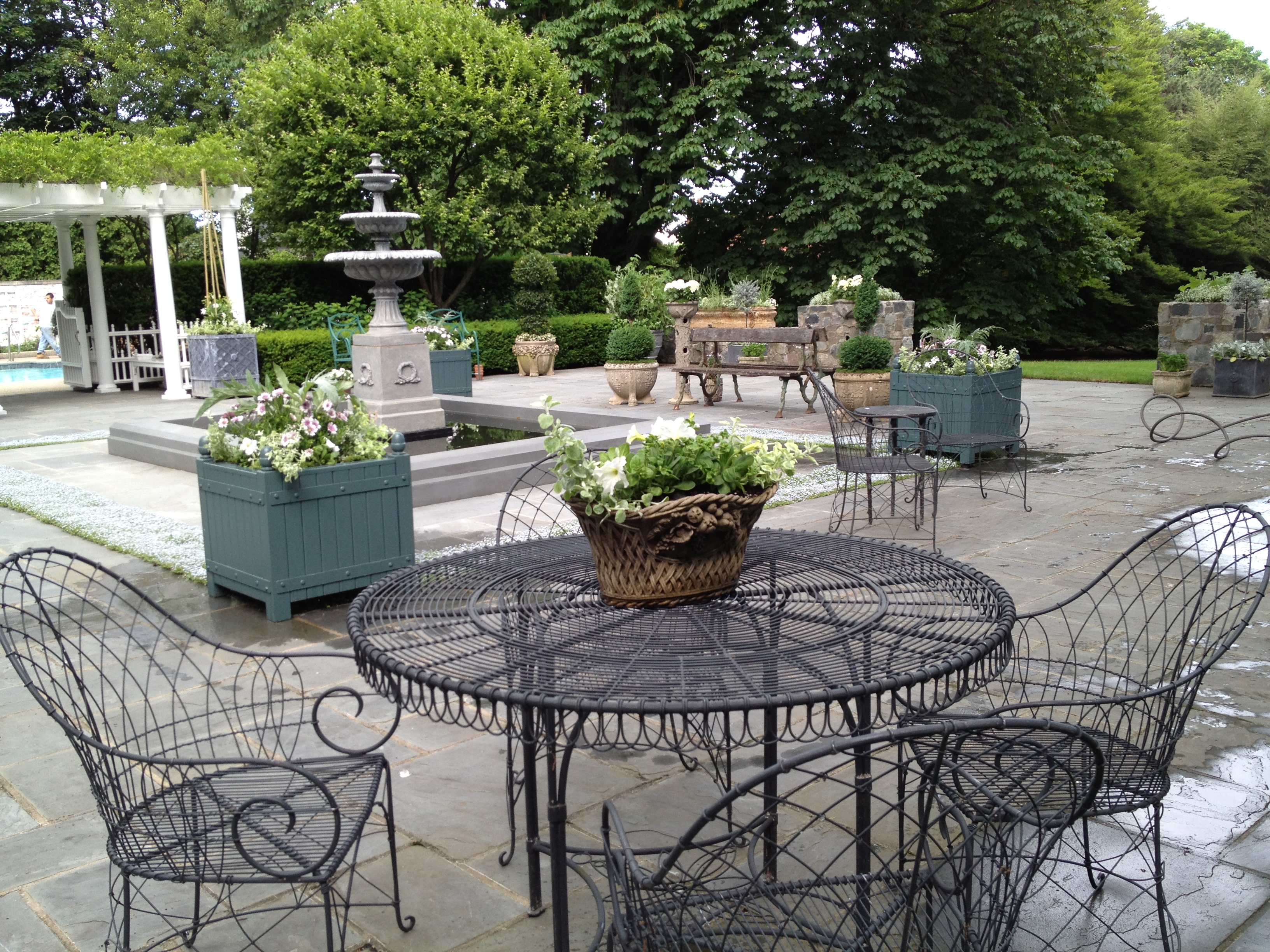
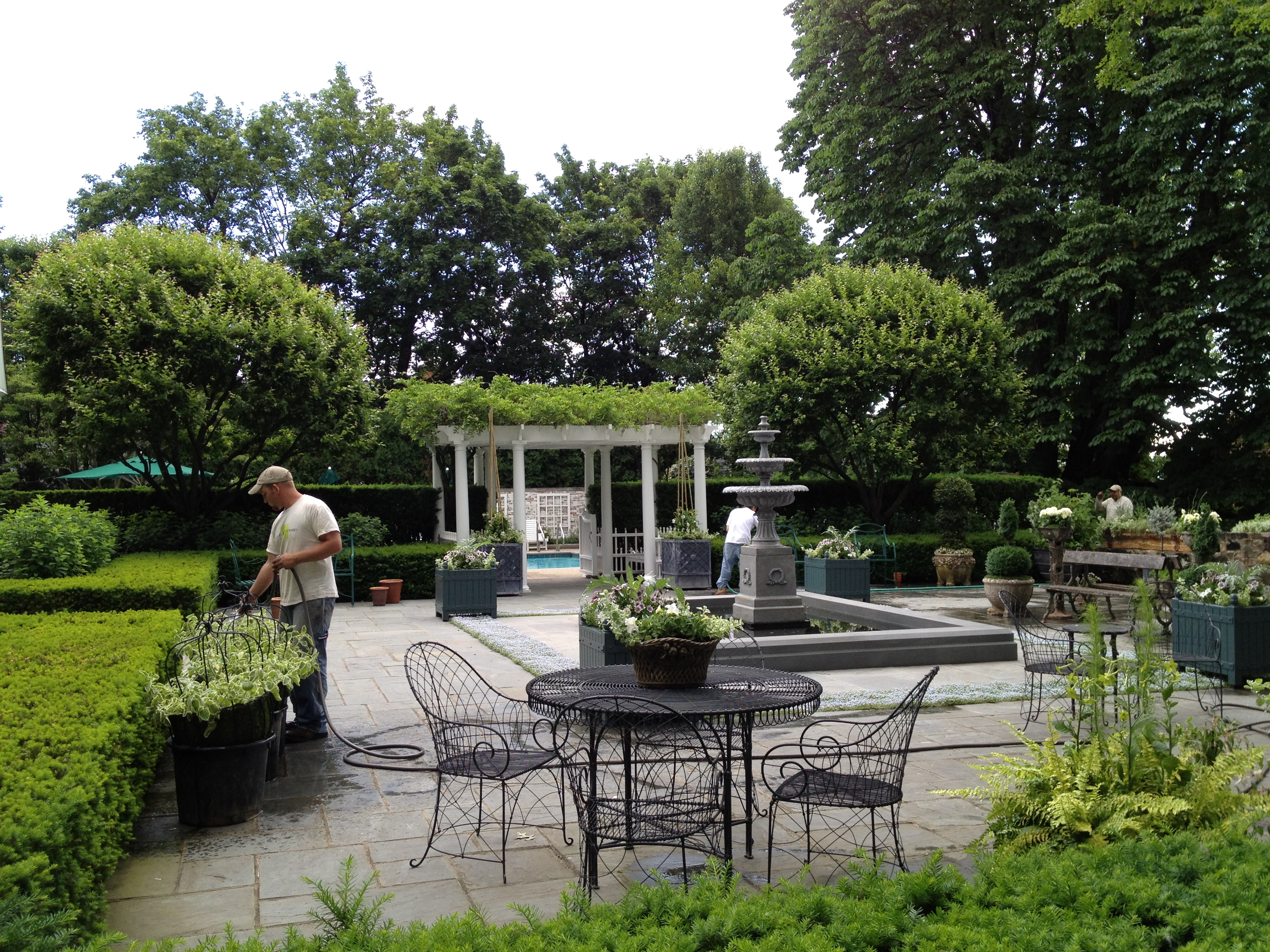
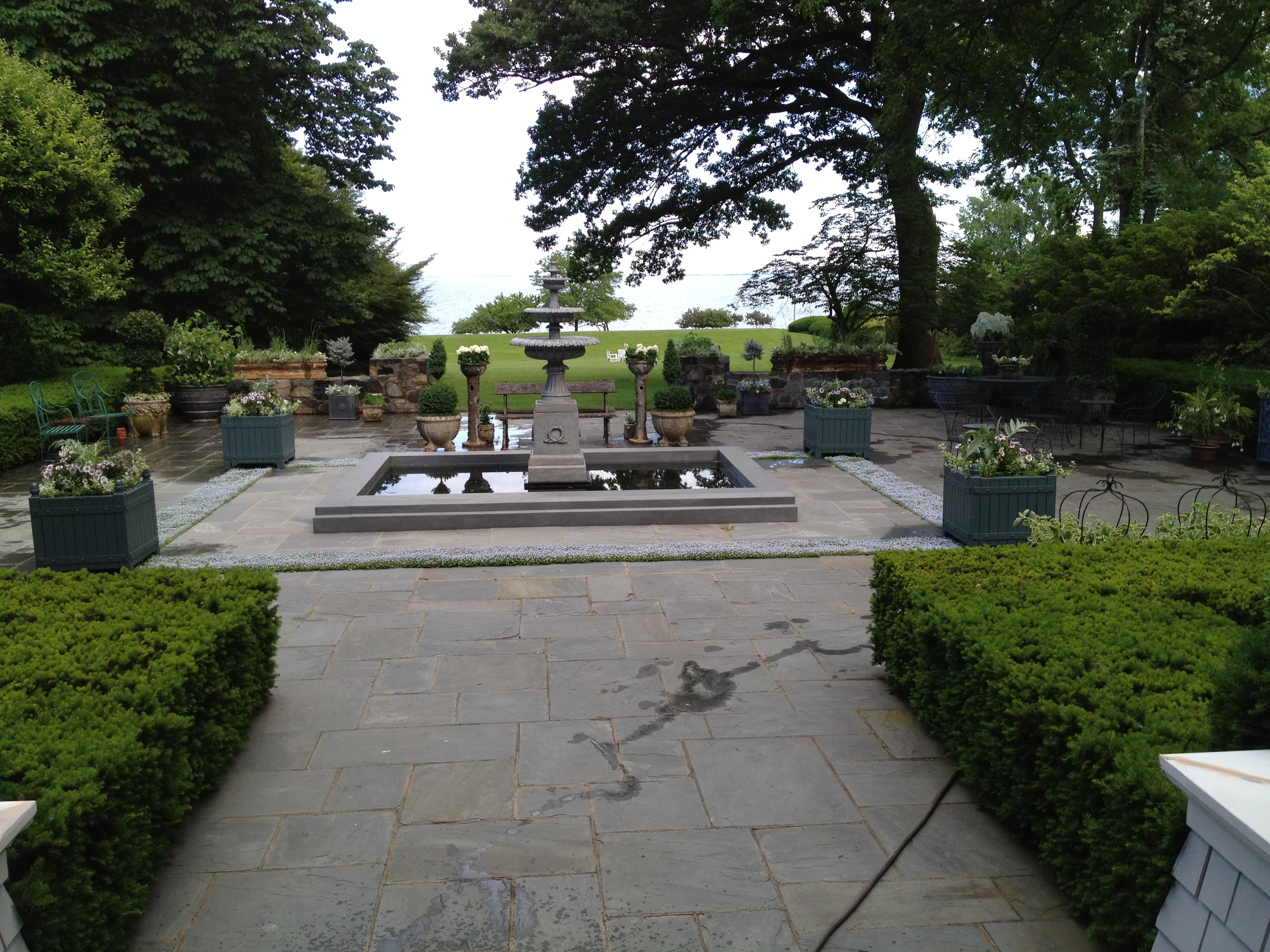
This client likes green above all.  All of the forms and textures of green.  White is good.  This year, the plantings have moved away from obviously tropical plants like agave.  The look is softer, more ferny. The Belgian boxes set around the fountain began with 3-D silver osteospermum-planted all around a centerpiece of cardoons.  I know cardoons border on that strikingly architectural look, but the daisies will help tone that down.  Frilly white petunias,  scotch moss and variegated licorice completed the planting in these boxes.  To loosen up the entire planting-each box got 4 diamond frost euphorbias.     

planting containers

A terrace can easily represent a garden.  A gardener’s point of view.  In this terrace garden, woven wirework furniture, antique stone and vintage English faux bois pots, green painted Belgian boxes and a striking 19th century American cast iron fountain have green company of the most sublte sort. The Diamond Frost euphorbia will add a little froth to the mix. 

green plants in containers
This landscape is formal, and restrained.  Though the architecture of the house is strongly reminiscent of 19th century Nantucket, my client has no problem interpreting the landscape to suit her own tastes.  This garden is about a person, not about a building.   I greatly admire her love of green plants.  I am sure that someday I will tire of all the color, and plant a green scheme at home.  Just like hers. 

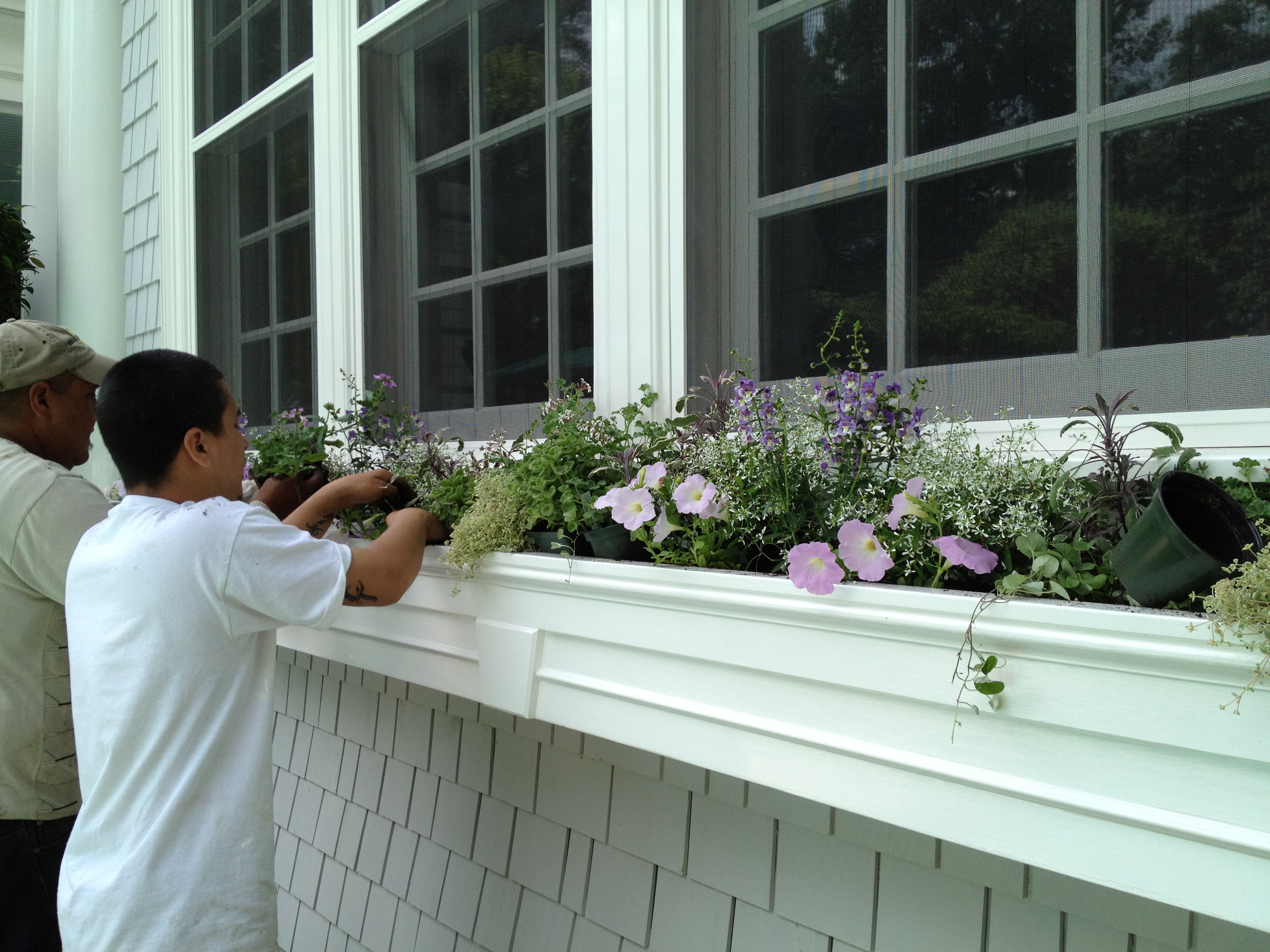
window boxes

The plantings in the pool garden has a bit more color.  The color of the water in a pool asks for a little stronger color from the flowers, unless the pool interior is black.  There are no succulents in these window boxes this year.  Just subtly colored petunias, the enchanted euphorbia, white variegated thyme and lavender, bicolor angelonia, silver dichondra, and purple variegated sage.  Soft, airy, loose.

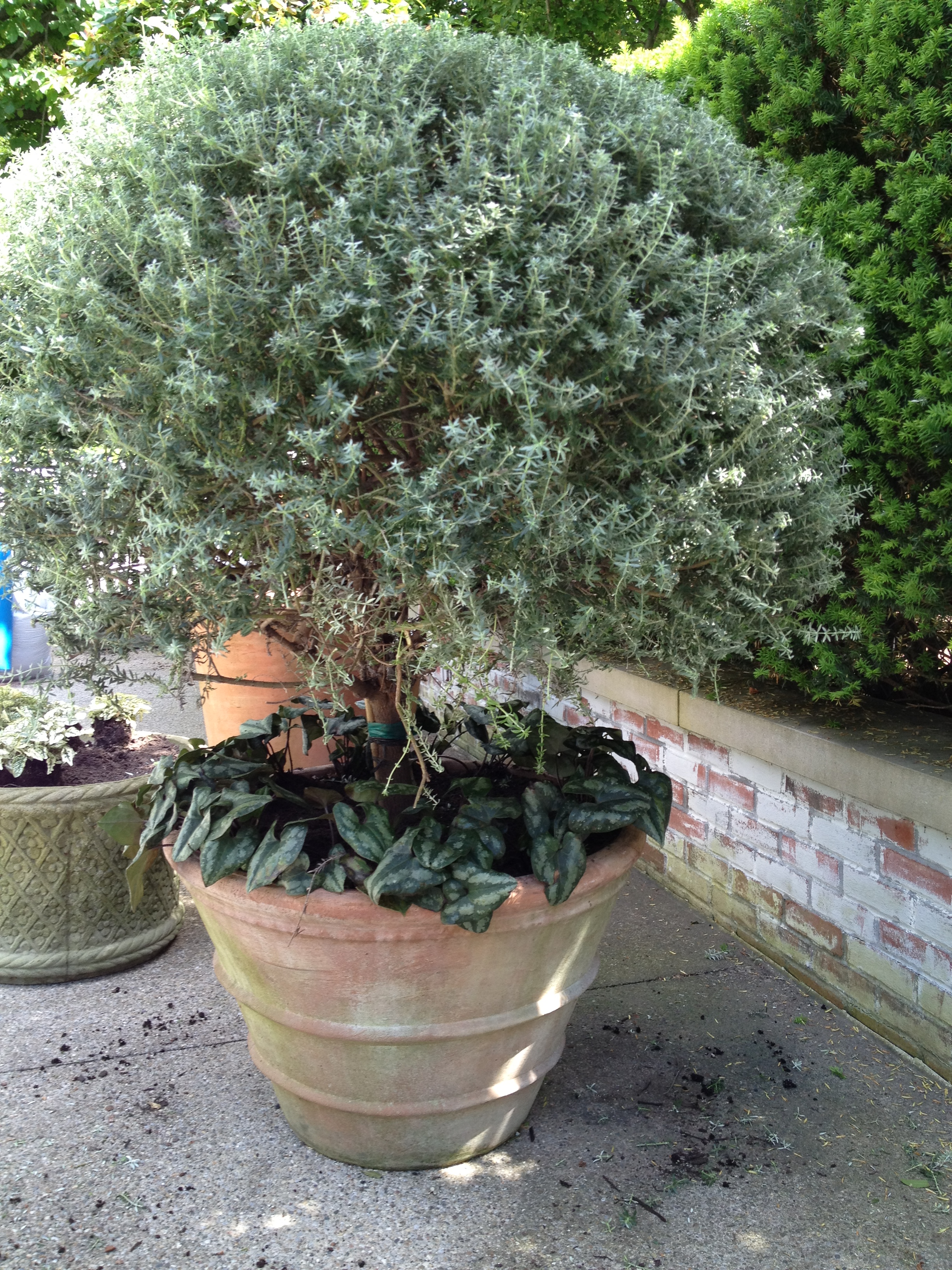
germander on standard

I have wintered her topiary plants for better than 10 years now.  This means some of them are casting considerable shade.  This year, a wild European ginger covers the soil in the shade of this old silver germander topiary.  The mass of the ginger and its silver variegation makes a lovely contrast to the fine textured germander. 

trailing plectranthus

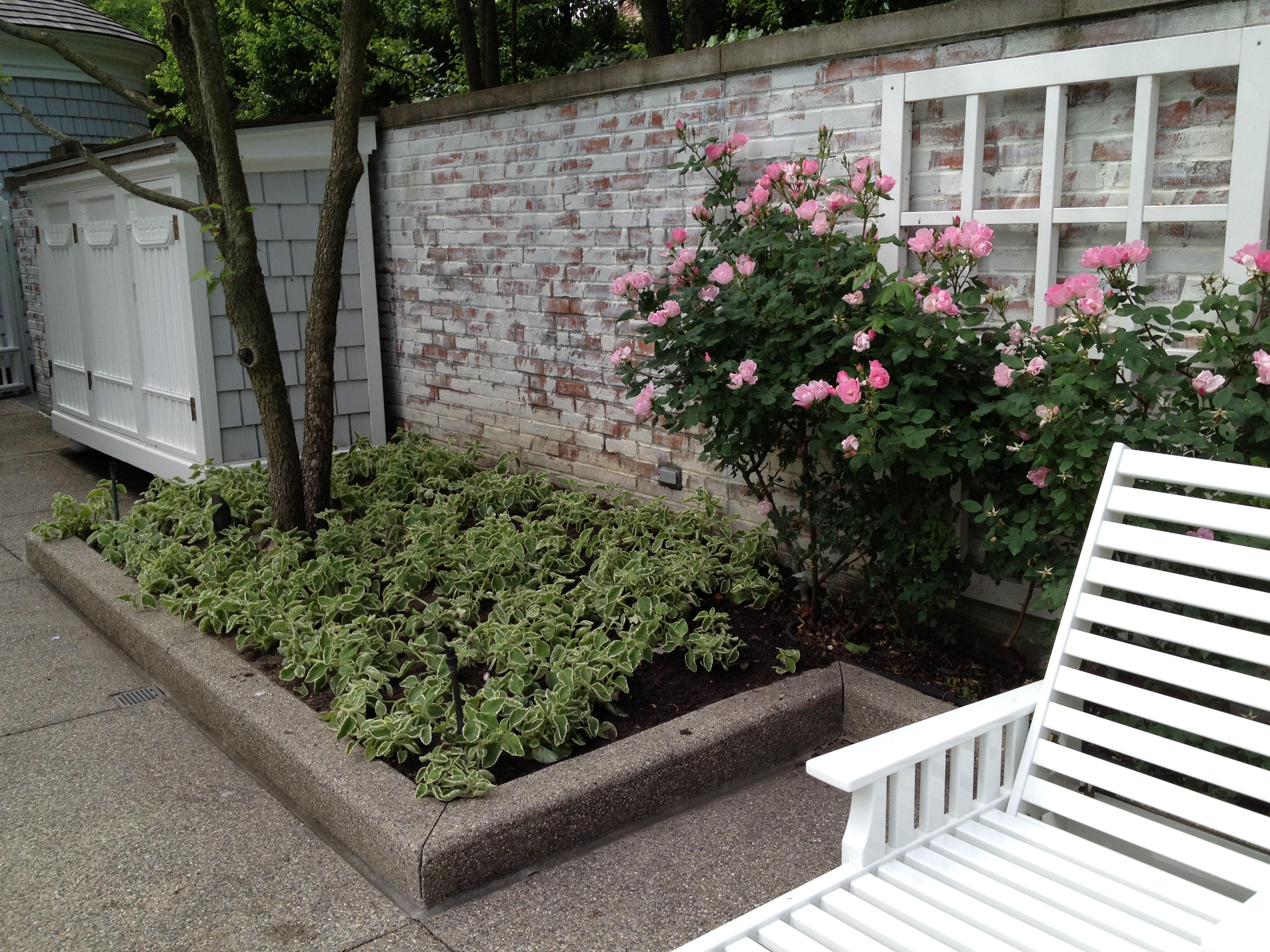
The bed under this dogwood is planted thickly with green and white variegated spreading plectranthus.  It fits in so comfortably with the whitewashed brick, the white garden furniture, and the single pink roses.   This plectranthus can soften the toughest spot-consider it. The leaves are large, and fuzzy.  Though its stems are quite strong, it has an informal habit.  Though I primarily use it in containers, it makes an unusual, and unusually beautful annual bedding plant.  

bay trees on standard

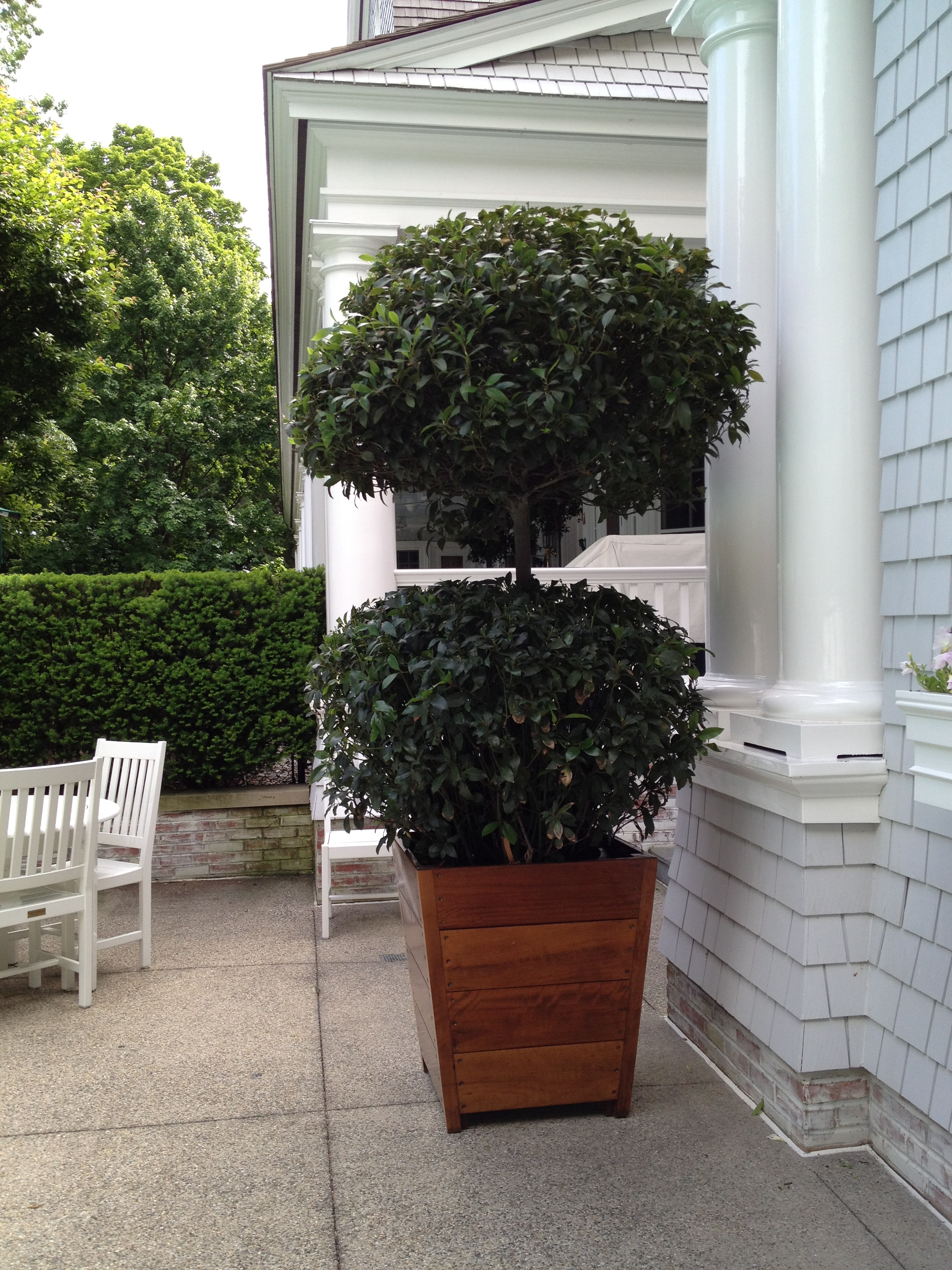
This double ball bay topiary is 15 years old.  The Belgian box has been finished in marine varnish.  This is a lakeside home that gets all manner of bad weather off the lake.  All of the painted and stained wood surfaces facing the lake get yearly attention. The age and the look of of this topiary is timeless.  There is no need, nor is there any room, to underplant.        

plant texturesll
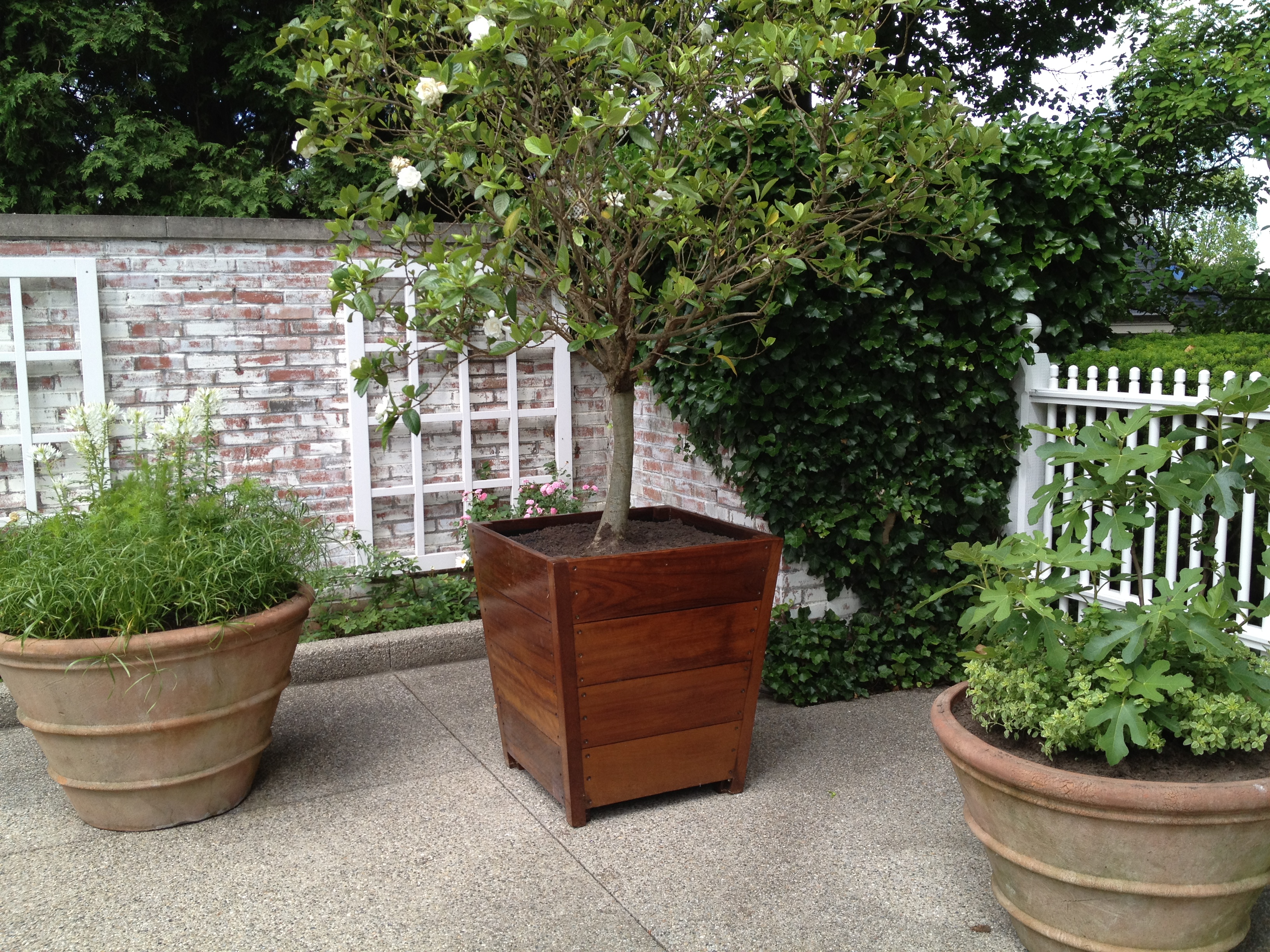
This is a planting that requires lots of old topiaries brought out of storage.  Many of the container planting has to do with what covers the soil.What did I underplant this old gardenia topiary with?  White polka dot plant, that will be sheared flat.  The left hand container is planted with white dwarf casmos and cleome, and edged all around with dward papyrus.    

annual planting

The playhouse garden is planted with white New Guinea Impatiens, and perfume white nicotiana.  I like height –  I like a mix of plants in an annual beds, unless it is a very contemporary planting.

isotoma fluvialitis

An old and overgrown boxwood hedge was removed from the terrace last year.  A larger pool suround fabricated in steel was installed and painted.  My favorite part of this garden?  The picture frame of isotoma fluvialitis that breaks up a very large expanse of terrace.  It was in full bloom the day I went to plant-a perfect moment. 

Venus dogwood
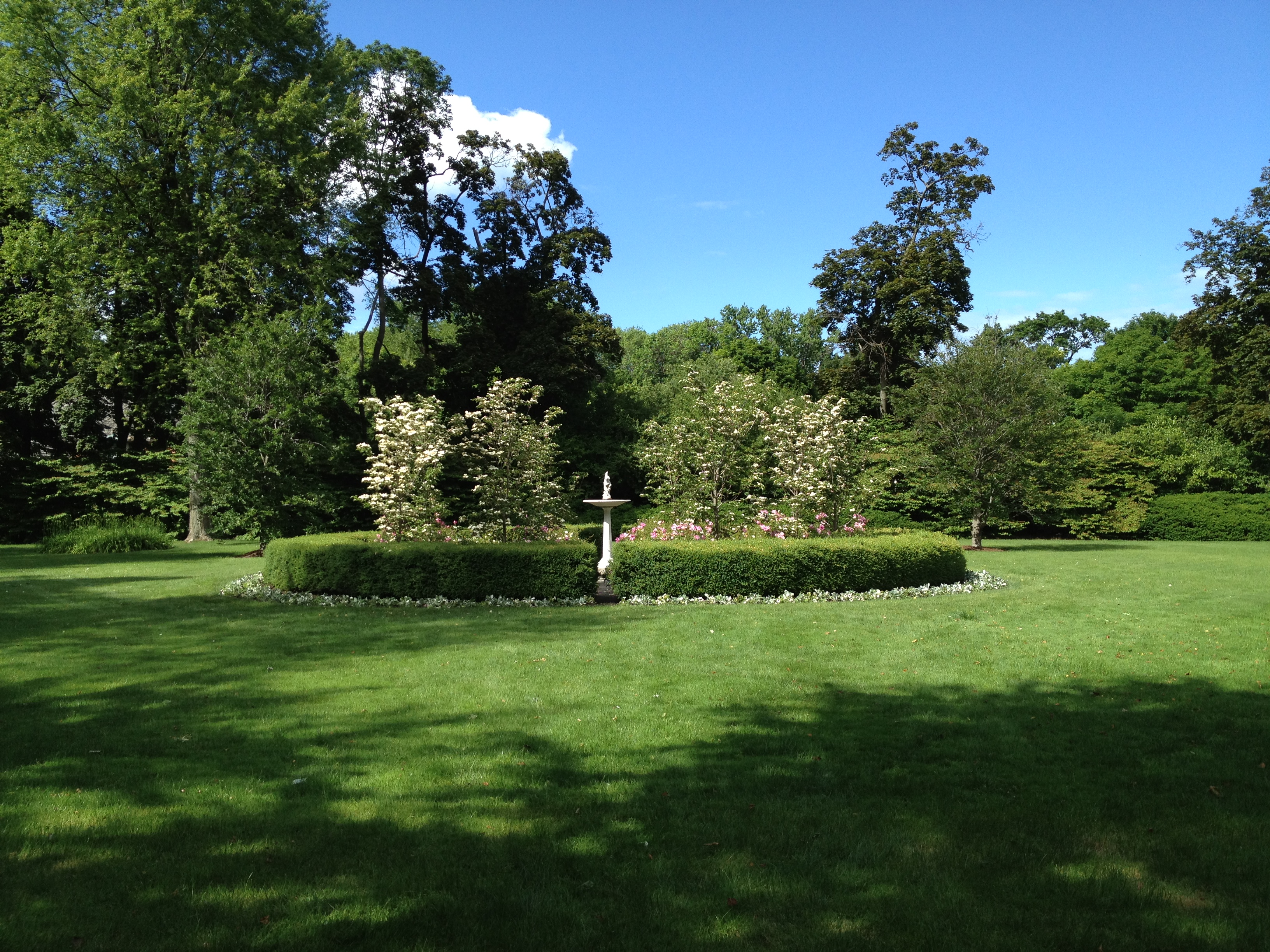
Last Summer we added a group of Venus dogwoods to this boxwood enclosed rose garden.  In a few years, those white flowering trees will make a spectacular something of this old and beautiful circle of boxwood.  This is a garden that is viewed from far away; it needed some trees.    The bed outside the boxwood was planted with cirrus dusty miller, and white Russian petunias. This planting day was a very good day indeed.  The Diamond Frost euphorbia will make themselves right at home here.