Coming To A Close


landscape project

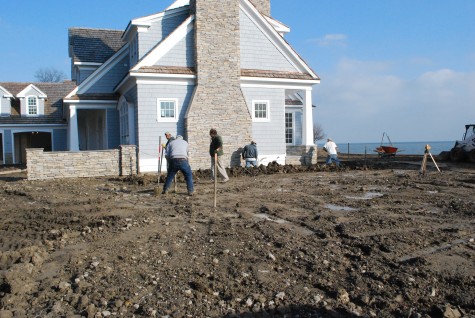
I have written about this lakefront landscape project several times before.  We have been working on it since last September.  All of last October and half of November was a wash-literally.  The relentless rain made it impossible to work there.  In late November we finally began planting the evergreens.  We managed to finished by the holidays.  After that fiasco of a working fall, I was hoping for an early spring. 
landscape design

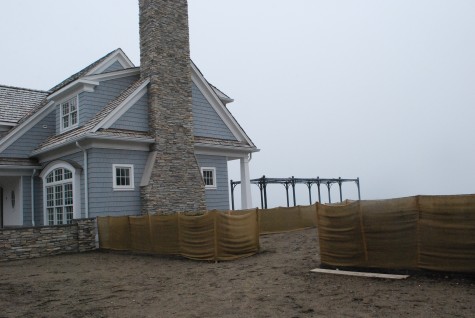
Little did I know then that we would not have any winter at all.  That worked in our favor, given how far behind we were. The fence, gates, and a pair of pergolas were installed in February.  In early March we were back to work.  We left the burlap on the boxwood and yews-who knew what would happen with the weather next.  The finishing grading of the property was the next step. 
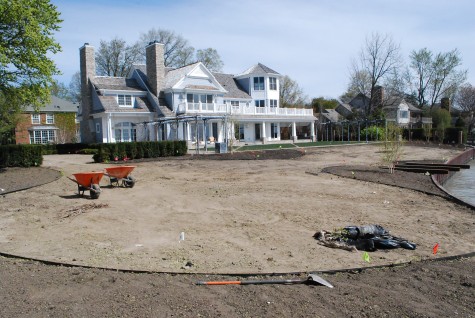
 We were able to plant 4 Whitespire birch, and 10 Venus dogwood on the lake side.  The dogwoods run parallel, and along the outside edge of each pergola.  They will supply some green backup and subtle screening from the street, and a neighboring property.  The birch are informally scattered in three different beds.  Some hydrangeas were added for height and privacy on the perimeter edges of the property.  The steel beams hanging out over the water would become a small deck.  Aluminum edger strip defines all of the bed edges-this is a maintenance issue.  The garden areas are large. I wanted them to be as easy as possible to maintain.
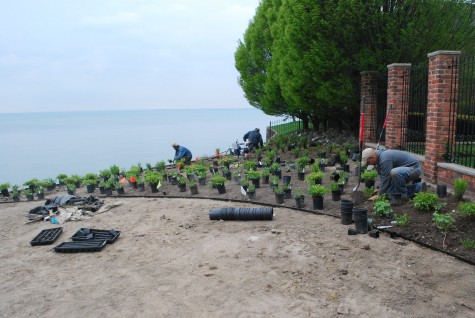
 This perennial garden is an edited version of a meadow.  Chasmanthium latifolium, or northern sea oats, will be fine with the shade from the carpinus, and the damp soil.  Added to this, aster laevis “Bluebird” , and monarda fistulosa “Claire Grace”.  In the front 1/3, Astilbe Snowdrift, notable for its lacy open blooms, a dwarf amsonia called “Blue Ice”, and Leucanthemum vulgare-oxeye daisy.  The more wild daisies, the better.  It will have a gently meadowy look.    
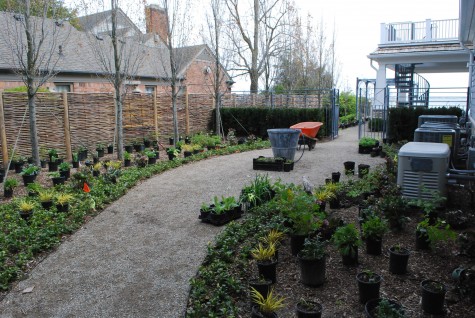
 The shade garden on the side is predominantly hostas and  ferns, but there are some snakeroot, some goat’s beard, bleeding hearts, and white Japanese anemone.  A single patch of acanthus, or bear’s breeches, will provide a tall vertical accent.  Along the fence-thalictrum, or meadow rue.  The garden has lots of hellebores, naturally. It is an informal mix of shade tolerant plants of varying heights.     
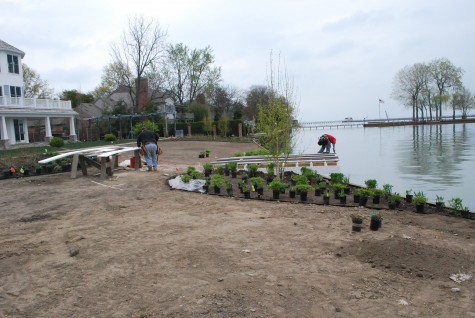
The perennial gardens have lots of purple lavender and white-as in catmint, campanula carpatica, baptisia, phlox, shasta daisies, platycodon-and a little red violet from stachys Hummelo.  Most all of the perennials are reliable in growth and habit, and have a relaxed, summery, and cottagy look.  This is afterall, their lake house. My clients like alliums; the garden has several varieties of small growing ornamental onions.     
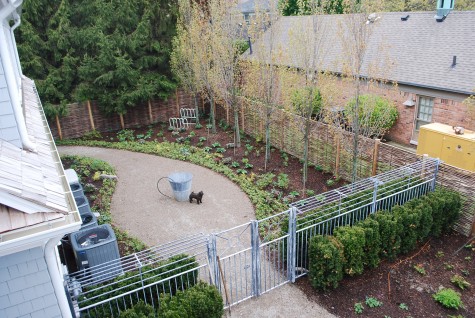
perennials for shade

This view of the shade garden was taken before the rest of the pachysandra went in, but you get the idea.  The shelf on top of the fence will have rectangular planters with flowers.  The bowhall maples, once they settle down, will do a great job of screening the house next door from the second floor.  The garden on the lake side of the fence-more of the same cultivars.
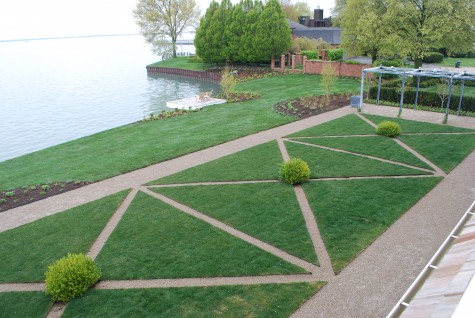
a lawn panel

A rectangular lawn plane accented with decomposed granite and boxwood is flat.  Friendly to people. The rest of the back yard slopes gently to the steel seawall. The ground ramps up at the dock-this eliminated the need for a step.  The circular lawn section at the far right will soon have a decomposed granite firepit.
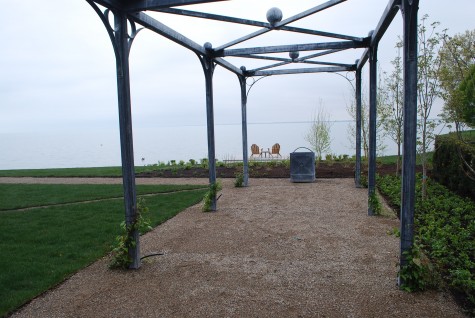
lake views
I planted the climbing rose John Davis on every other pair of pergola poles.  They will greatly soften the look of the structures, given enough time and good care. The clematis range in color from dark purple, to light purple to lavender and white-the white being planted the furthest away from the house, and the dark purple, close up.  The steel box has an irrigation line in it, which we will cap and finish with a watering head once the box is filled with soil and planted with flowers for the summer.  The Venus dogwoods on the right-underplanted with myrtle.  On the opposite side of the yard, I planted taller perennials with the dogwoods, as the ground slopes down on that side.  Taller plants on the low side will give an overall visual impression of level.
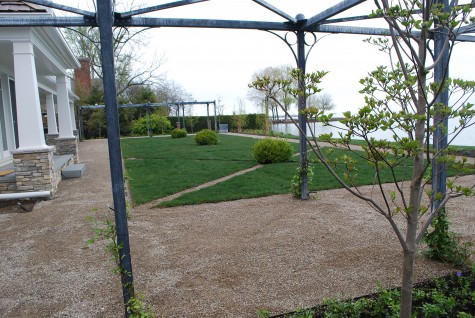
steel pergola

The Venus dogwoods will provide privacy to the back yard from the street.  Given the lay of the property on this dead end street, there are public views of the back yard.  The bed you see unplanted on the left now has white knockout roses.  It is my favorite of the series-it is a great grower, and a reliable bloomer.
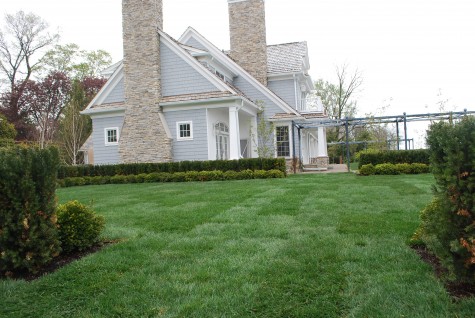
lawn

This break in the yew and boxwood hedge from the street allows access to the back yard for guests, and a deliberately cropped view in.  This large rectangular bed of grass edged in yews and boxwood-in deference to a deed restriction which allows no plant taller than 4 feet from the house to the street. Everyone living on this short dead end street will still have a view of the water. lake property landscapes
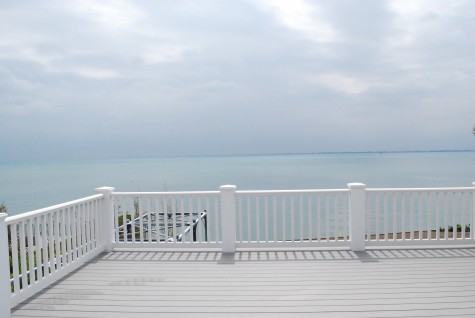
This project has taken many months to complete, but it is just about there.  Given all the months I have spent working here, I understand what is so magical about living on the water.  The weather on the water-incredibly beautiful.    My clients moved in 10 days ago-they like how it looks.  They are very special people-I wanted them to a landscape and garden as distinctive as I could muster.  Time will tell.
One Pair Of Hands


I have plenty of clients who like to do their own gardening-LW is one of them.  How she finds the time, I have no idea.  She is a PPWC-a professional person with a full time job who by the way has children.  I greatly admire this kind of determination to garden.  Why would a gardener who does all of her own work want a landscape plan from a designer professional?  It takes just as much resolve and money to plant a visually disappointing landscape with a poorly chosen plants as a good landscape with interesting and well chosen plants.  She wanted a plan.  My plan-a birthday gift to her from a close friend.  


do it yourself landscape installation

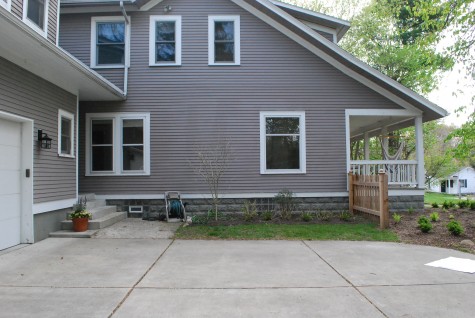
I cannot remember how long it has been since I did the plan, but I recently got a call-she was ready for the next step.  This small spot near her back door is just as it was when I first visited-and I did not specifically address this area in the initial plan.  We decided in just a few minutes to bring the front yard boxwood pattern through the fence panels that visually enclose her drivecourt, and return it to the wall of the house.  That her plan had called for a double row of boxwood, it was easy to see an espaliered fruit tree as the ending element of the boxwood.  The same set of perennials planted in the front yard would be planted behind the boxwood in this section.  But the big treat of the visit was to see what she had already installed from the original plan.


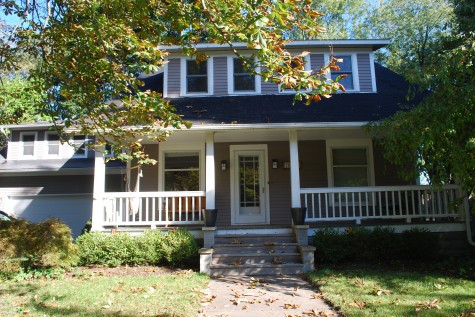
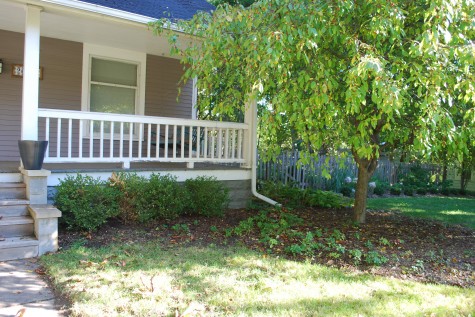
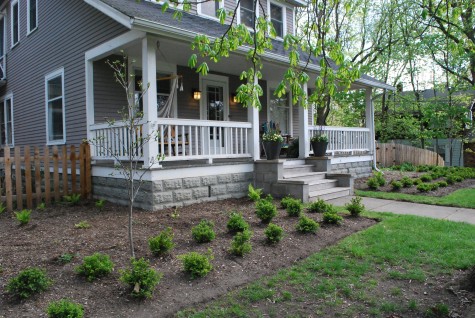
The original landscape featured boxwood planted on either side of the steps, and against the foundation of the porch.  The front bed seemd too shallow for the size of the staircase, and much too routine.  The Japanese maple on the left looked forlorn, and neither here nor there visually.  An old weeping cherry on the right end of the porch was in very poor health.  

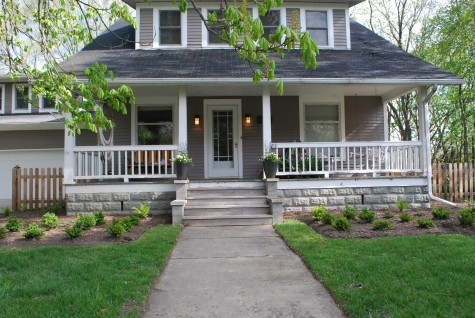
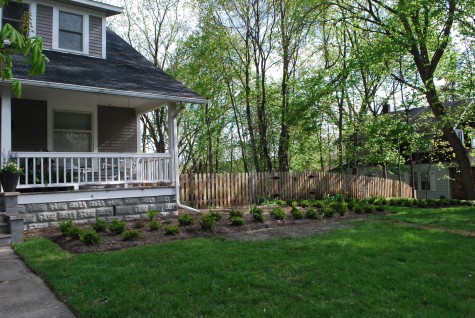
I kept the boxwood-it would be a fine compliment to the architecture.  But I moved the hedge out past the bottom step of the porch-away from the foundation.  The porch has a much stronger presence now.   And I specified a double row, so the depth of the hedge would be generous.  Once these small boxwoods get to be 30″ tall, that 6′ depth will add a strong green element to the presentation of the stairs, porch, and front door.  Moving the boxwood away from the foundation meant that she could grow tall shade tolerant perennials in the space behind them.  Her landscape would not substantially alter in appearance over the winter.  The side yard would get a new fence.  I suggested adding a pair of fence panels on the left side of the house  This makes the garage less prominent, and the front view stronger.    

The right hand side of the steps featured a large bed whose main reason to be had to do with the shade under the cherry.  I suggested that the front yard landscape would benefit from a planting scheme that was consistent, all the way across the width of the property.  This would provide for an interesting transition from the front yard to the side.


Each end of the porch is visually anchored with a Venus dogwood.  The planting does look sparse, as the plants are spaced correctly-but plants grow.  It will be faster than she thinks-the growing in part.  Every year will look some better.


The grass path to the side yard gate is a transition from the front to the side and back yard.  When the boxwoods have matured, and the perennials have made big clumps, it will be a pleasant walk.  Transition spaces in gardens serve the same purpose as a foyer in a home.  The moving from from one space to the next is graceful and unhurried.

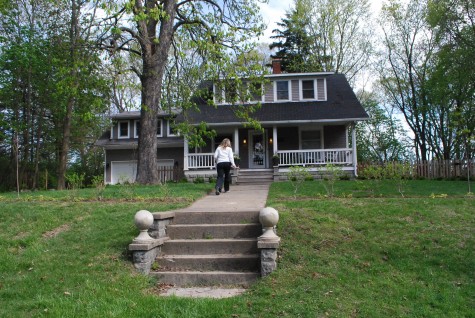
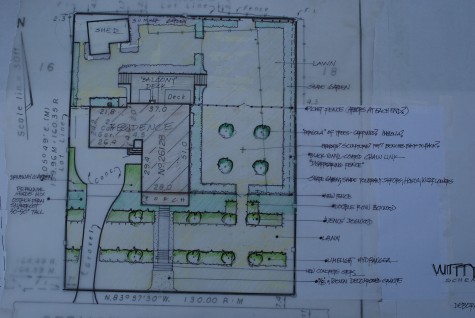
 Though the hydrangeas had not yet leafed out, it is easy to imagine that from the street the foreground view will be about the staircase, and attending hedge of limelight hydrangea.  Venus dogwood are set within this hedge too, so they repeat the dogwoods in the boxwood.  4 more Venus dogwoods frame the street view to the side garden gate-the picture of the plan makes the idea clear.  The hydrangeas will help make the midground lawn space much more private. The sidewalk and staircase will be visually enlarged with the addition of decomposed granite on each side, and the walk will be carried all the way out to the street.  She has plans to do the drivecourt garden, and the sidewalk additions this year-but would I take a look at the side yard, to look at the design in a less schematic, and more finished way?  I like her style-already, she is making plans for next season.

Tins Crates Baskets and Tubs

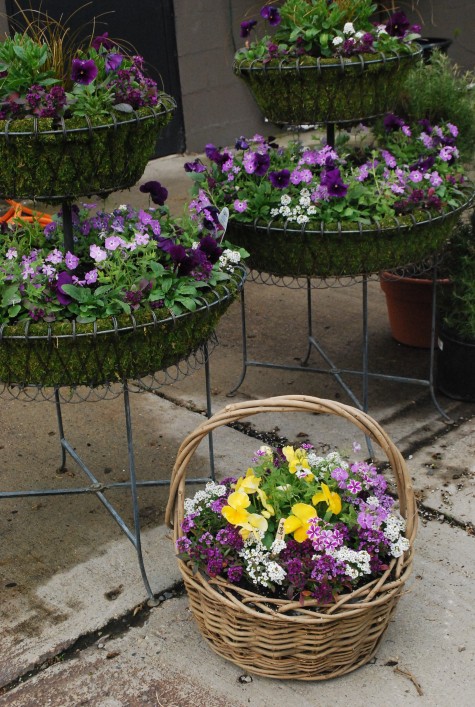
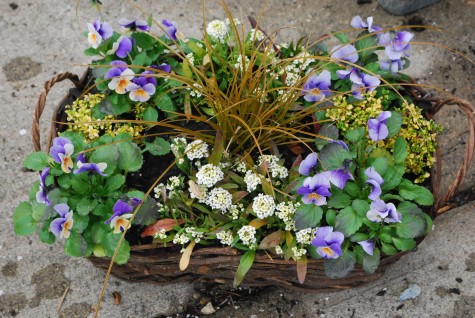
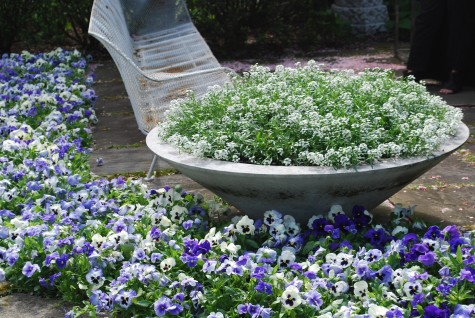
The little and special plants that mark spring containers-how I love them.  I love the tubs, pails, baskets and crates that make great homes for those little and special spring plants.  I did post some of these pictures on the Detroit Garden Works facebook page today, but I couldn’t resist posting them here.  These spring container plantings make me smile.  What about you?  

heuchera, angelina, and citron alyssum

spring container plantings

spring purple

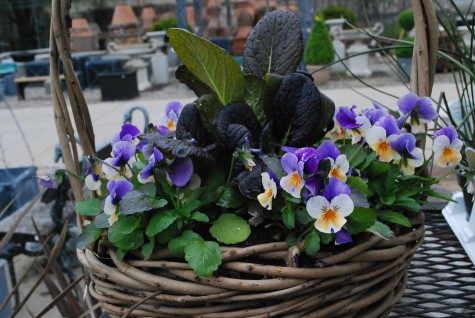
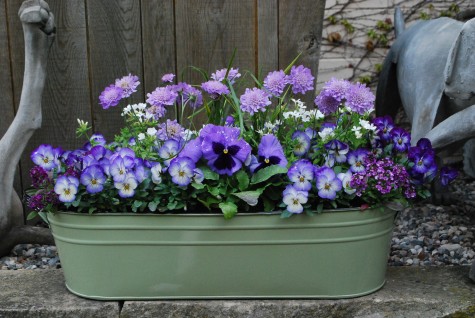
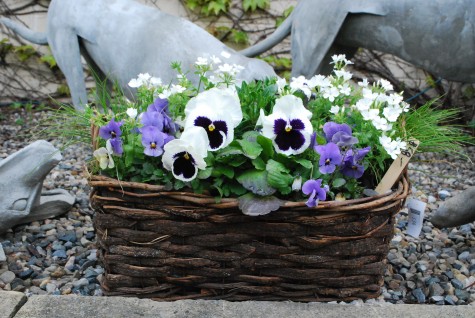
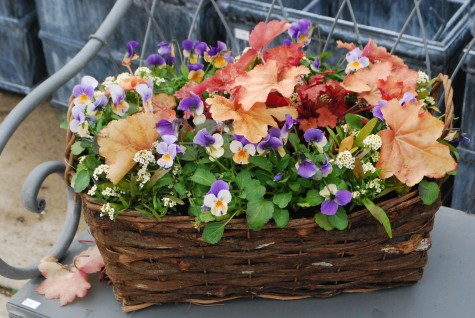
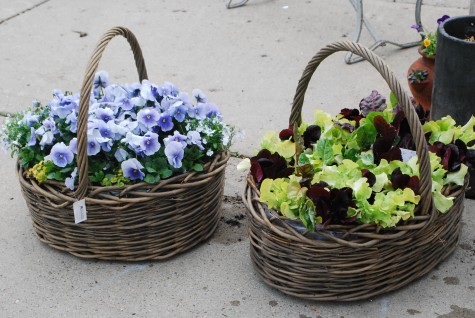
a basket of pansies, phlox, and lavender violas

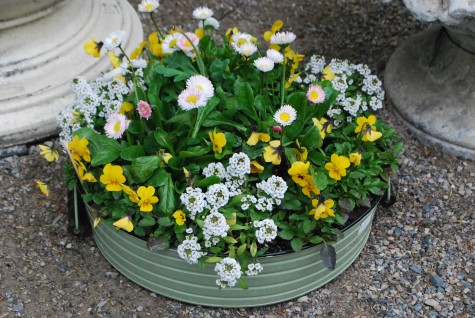
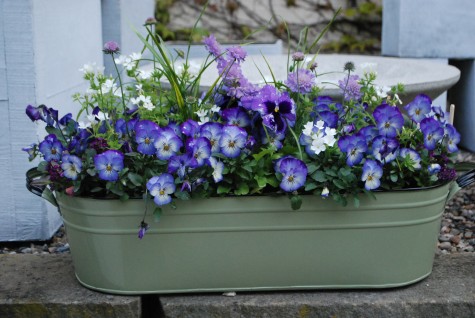
A round tin of spring flowers

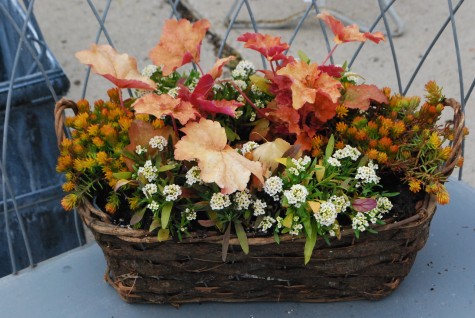
A rustic basket featuring heuchera and citron alyssum

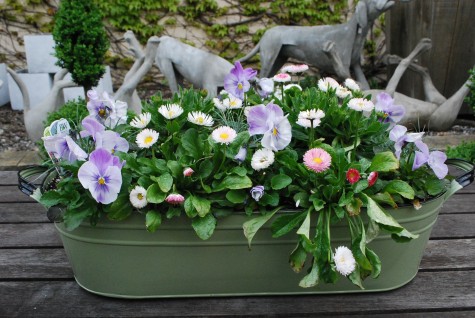
An oval tub of English daisies and violas

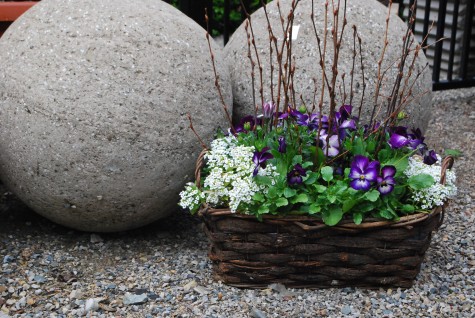
A rustic basket of violas, white alyssum, and twigs

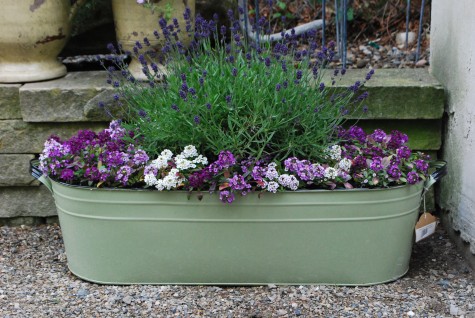
Lavender and alyssum

An orange carex and trailing violas

Enamelled tub of spring flowers

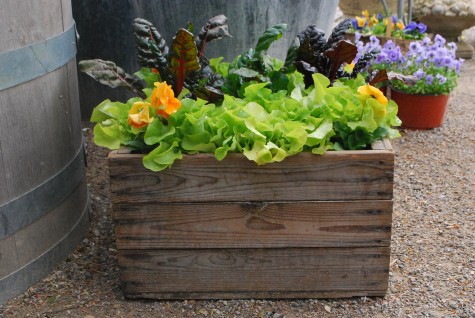
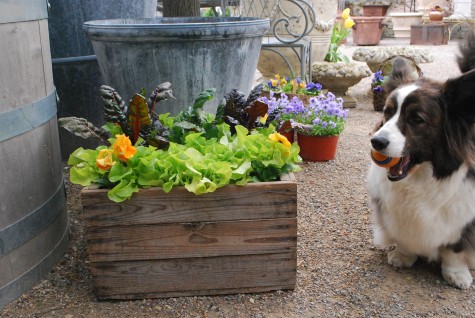
a crate of chard and lettuce

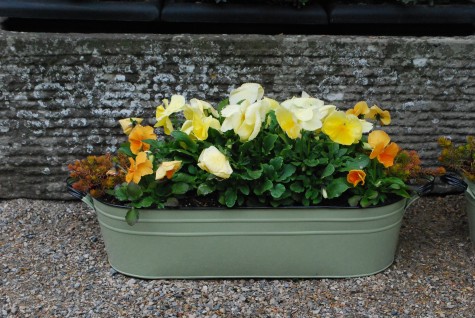
 Citrus mix pansies and angelina

spring baskets

spring pink and yellow

A birdseye view of spring

Milo has a great view of this crate of chard and lettuce!

At A Glance: More Spring Plantings


Blue in a Michigan garden?  That would be blue pansies and lobelia.  OK, there are some true blue delphiniums, and cornflowers to come later on.   But if you have a big love for blue, express yourself now. 

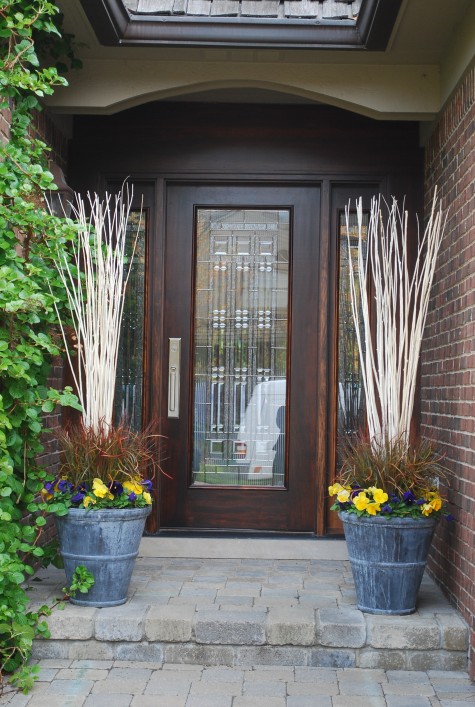
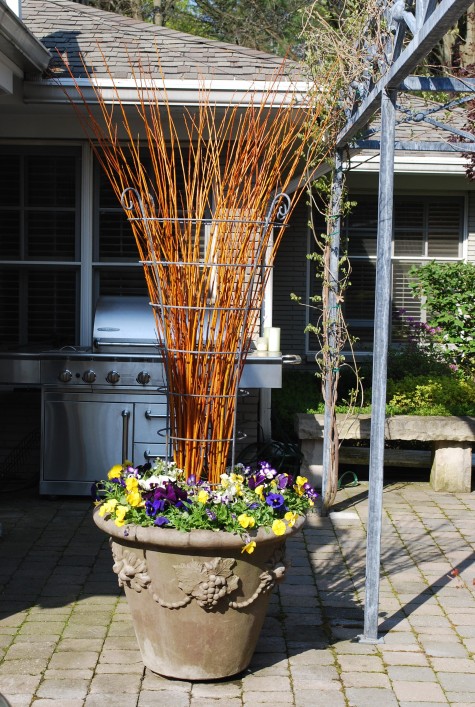
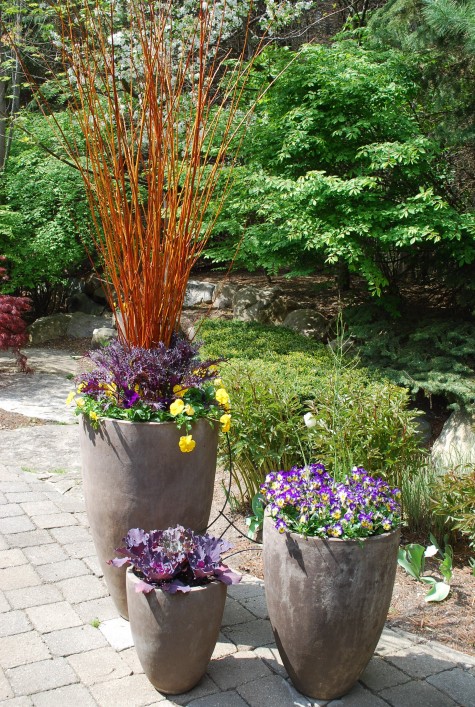
Bright yellow and dark purple pansies, orange grass, and cream stick stacks-a spring wake up call. 

creme brulee coral bells

Creme brulee heuchera-great in pots.  The habit, the leaf size and shape-and that color-the stuff that spring memories are made of.  I am not crazy about black and silver leaved coral bells, but these enchant me.    The backs of the leaves-a faint version of red violet-echoing the punch of red violet from these dark pansies.

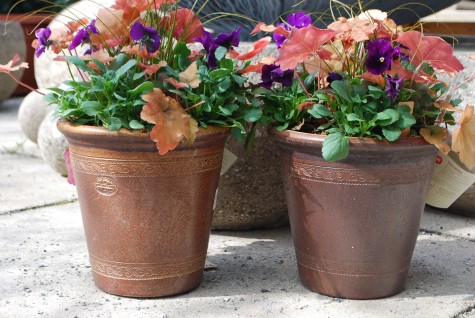
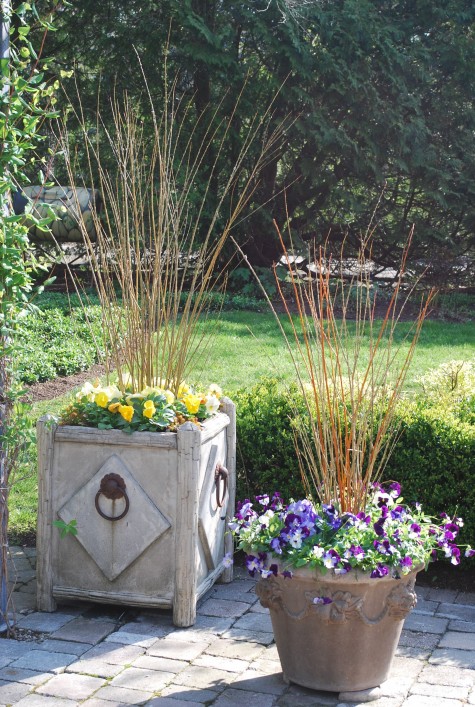
Fresh cut copper willow twigs, and a spring assortment.  I like lots of spring voices looking for a little harmony.  This-a simple pleasure. 

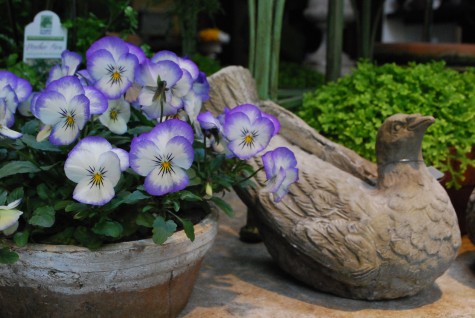
Picoteed and whiskered violas-I love them all.  They look especially at home in small low terra cotta pots-bulb pans, we call them. 

On the right, a trailing viola I have never seen before.  It may be my favorite bicolor viola-what a treat that it trails.  Pale blue and dark purple-stunning.  On the left, clear sky yellow pansies and angelina. Prairie and copper willow provide a little natural vertical interest.

planting for spring

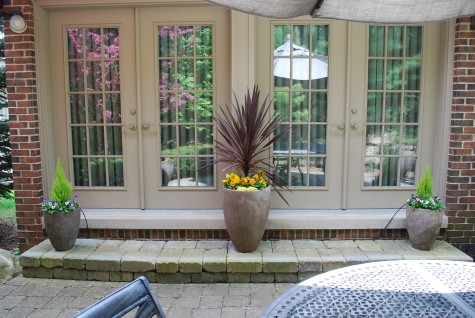
Lemon cypress and dark red dracaena contrast dramatically with each other.  The softening part?  lavender and peach violas with that lime.  Citrus mix pansies and Ogon sedum with that dark spike.

Ornamental kales and cabbages are great for spring pots-they will grow to a decent size before they bolt.  Barely visible in the right pot, a one gallon pot of asparagus. 

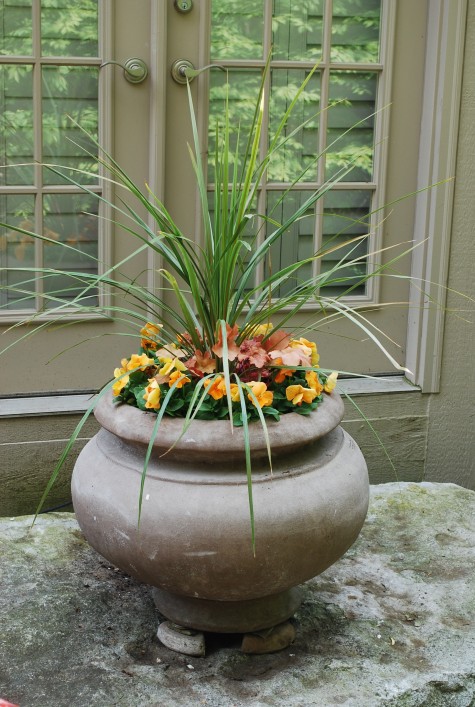
Green spikes are common in summer pots-but they handle the cold in the spring and fall very well.  Any ordinary plant used in an unusual season warrants a fresh look.
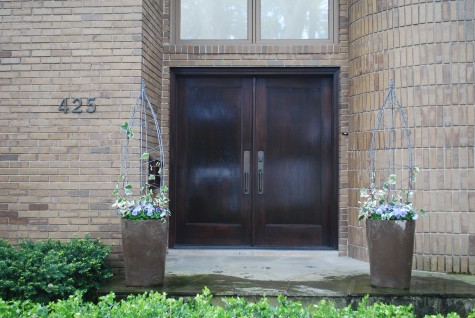
This tuft of a lime cypress will grow up to a shrub of considerable size, should you baby it over a few winters.  That lime green says spring like no other color.  Other choices?  Bibb and leaf lettuce.  Green oakleaf lettuce.  Lime green hostas.  Lime green hops.  Lime green leaved columbines and bleeding hearts. Green flowered hellebores. Lime green leaved tradescantia.  You get the idea. 

 Any spring pot makes a better show right off the bat with a plant climber in place.  Some seasons ask for a little backup from some structure.  In this case, steel structure.   Given a few weeks of warm weather, these blue pansies and white variegated ivy will grow, and make a better statement.  All of these plantings need to grow on and up.  But today, these freshly planted pots still say welcome to my spring.