Mulch

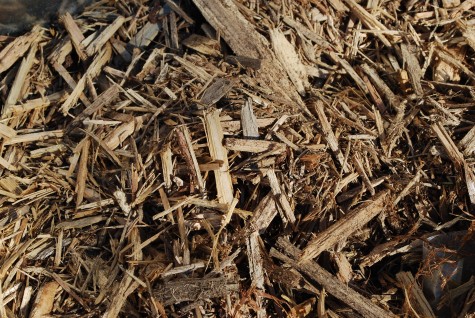
 bark mulch

What exactly is mulch?  Well nothing much relating to gardening falls under the heading of “exactly”, but in general mulch refers to a covering applied to the surface of the soil.  It might help to think of it as a blanket.  The blanket on my bed keeps me evenly warm throughout the night.  The key word here is not warm-it is evenly.  If I am hot and then cold and then hot again, I wake up.  If I am evenly comfortable, I sleep undisturbed. 
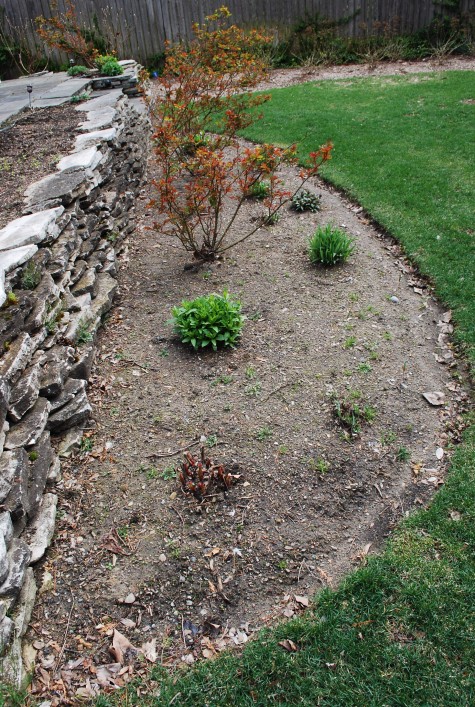
 

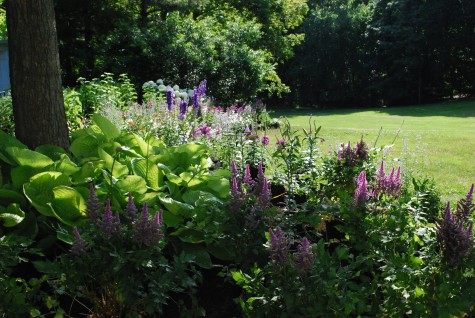
Bare soil, exposed to sun and air, looses its water via evaporation quickly.  A cover layer of mulch, which might be hardwood bark mulch, bark fines, or leaf mold slows the evaporation rate considerably. Mulch not only conserves existing water in the soil, it is easy to saturate with water-either from the sky, or the hose.  Water on hard dry soil can run off before it has a chance to be absorbed.  Peat moss mixed into soil aids in the retention of water, but as a mulch it has distinctive drawbacks.  A thoroughly dry layer of peat is an excellent moisture repellant.  The perennial bed pictured above will loose water at a fairly rapid rate on a really hot July day.  Once we add more plants to this bed, we will mulch it. 
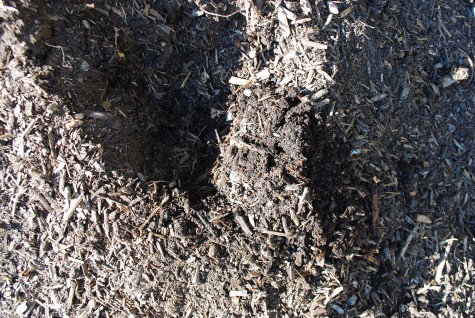
 

 Mulch discourages weeds from sprouting and growing.  If weeds do sprout through the mulch, they are easier to pull from moist soil.  Mulch applied in a very thick layer can smother plants.  A thick layer of old newspapers decomposes slowly enough such that any plant underneath will perish.  This can be handy, if you are trying to convert a grassy area to a garden.  This method of preparing a bed for planting takes a lot less muscle than digging.  What it does require is patience-time.  It’s important to distinguish thick from solid.  A pile of matted down grass clippings is missing one important component essential to decomposition. Air.  Airless decomposition smells and looks bad. It feels like a cross between slime and sludge.   
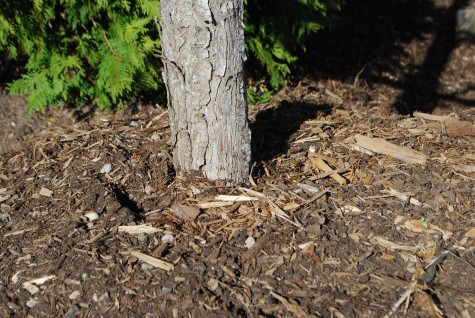
A thick layer of mulch is not necessarily better.  2-3 inches is plenty. When that layer of mulch decomposes, add another layer. Mulch piled up much higher may seen like a good labor saving idea, but this can suffocate plants-and this includes trees. 
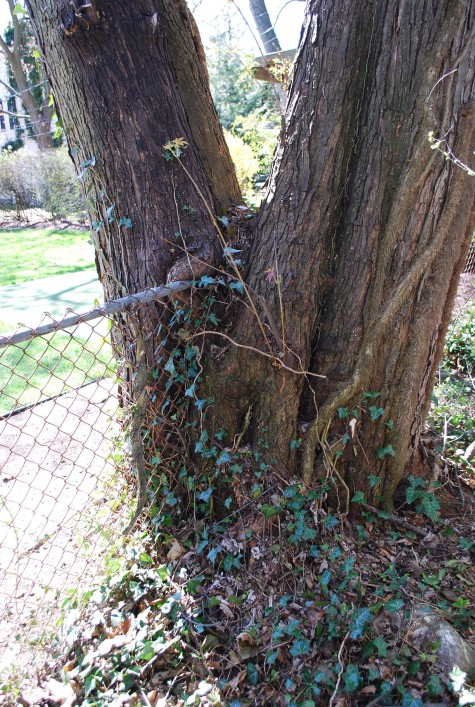
   This tree grew into, around and through a chain link fence.  It is thriving, despite this injury.  8 inches of mulch piled up around the trunk of this tree could do far more harm than what this fence has done.  Note that there is groundcover, and a light layer of leaves at the bottom.   
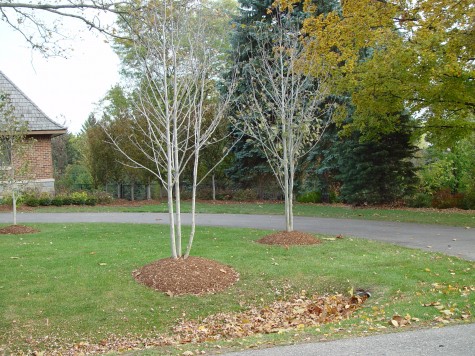
 

I have never been a fan of mulch rings around trees.  I like trees set in the lawn, or in a garden bed.  Mulch rings do discourage a person operating a lawnmower or weed whip from getting too close to, or injuring the bark of a tree, but it is much more utilitarian than it is beautiful. 
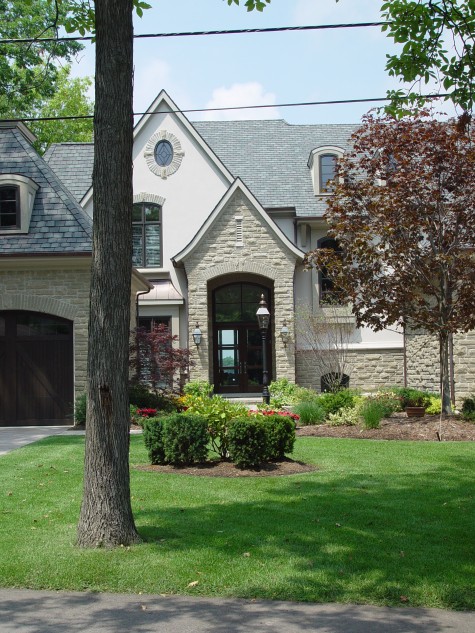
 

 This tree rises gracefully out of the lawn.  This has a much more natural, and park-like look.  The other landscape beds have a lot of bark visible.  Mulch is good for plants, but it is not a substitute for plants.  Granted plants need proper spacing from their neighbors in order to promote healthy growth, but bark mulch does not a garden make.    

I  
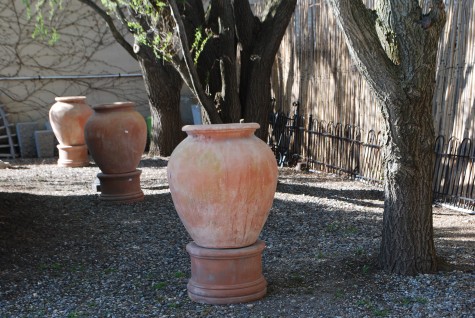
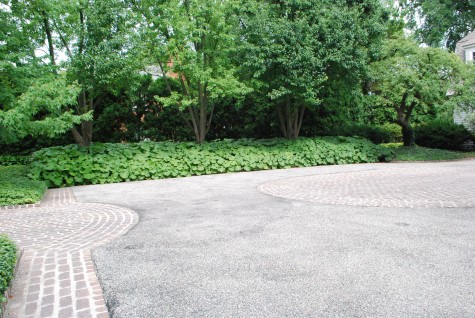
 There are other materials that work as a mulch.  Gravel is one of my favorites.  Stone does decompose, but it decomposes imperceptibly.  The entire side and back yard at the shop is mulched in gravel.  Water drains through it.  The wheels of our carts run over it easily.  And it shades the ground from the drying eyes of the sun.  The willows on the back lot line are planted in what amounts to big and little rocks, mixed with sand.  The decomposed granite mulch helps to slow the evaporation of water from the gound long enough so the trees can get a drink. 
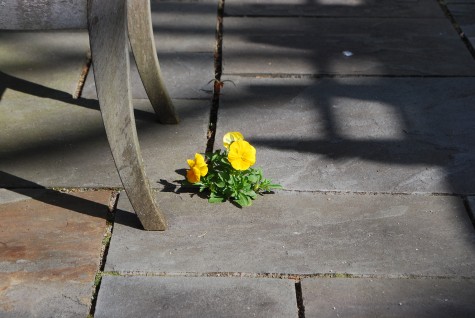
 

Seeds will germinate, and plants will grow when conditions are right for them.  The smallest bit of gravelly soil between the stones on this terrace provided the perfect conditions for a pansy seed to germinate.  A sunny spot to bloom, and cool moist soil for the roots-courtesy of the mulch provided by this stone terrace.
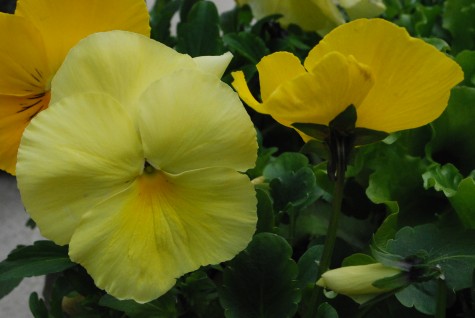
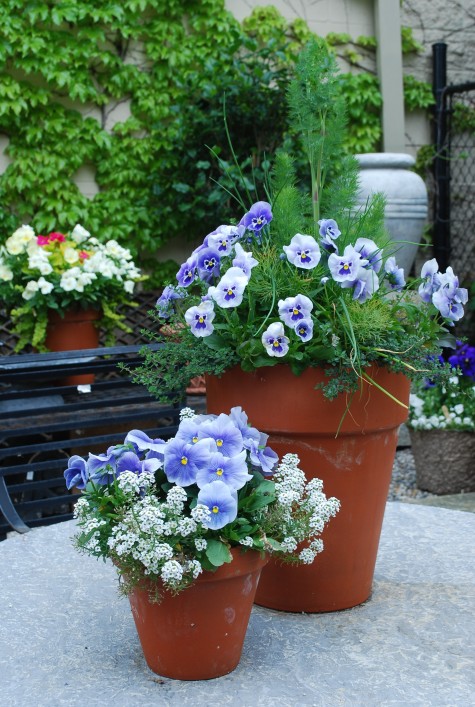
At A Glance: Fresh Faces

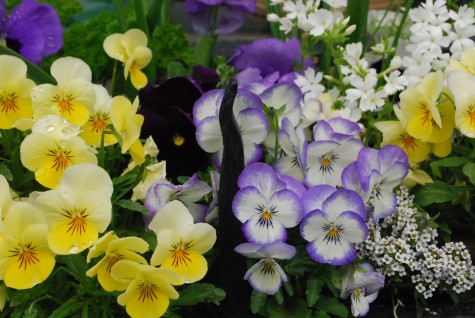
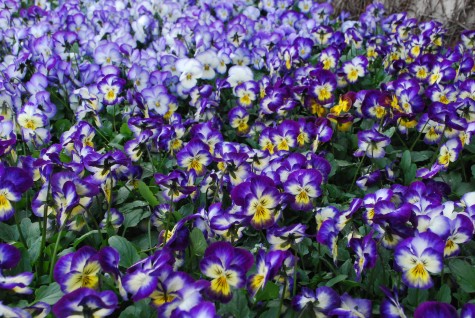
clear sky pansy “Primrose”

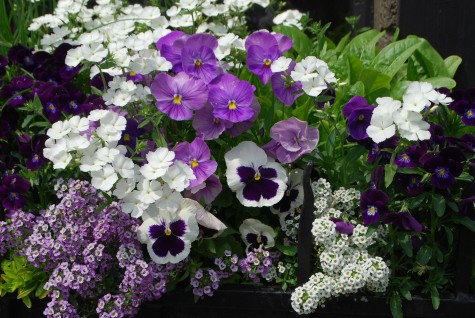
blue pansies with dill, thyme, chives, and alyssum

viola

mixed whiskered violas

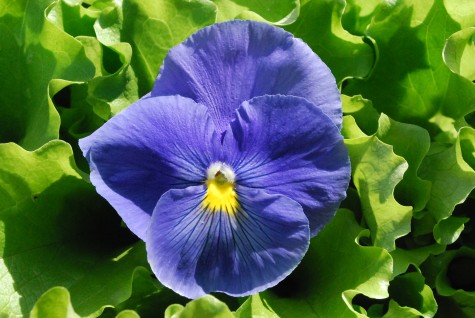
clear sky pansies

clear sky blue pansies

bicolor violas

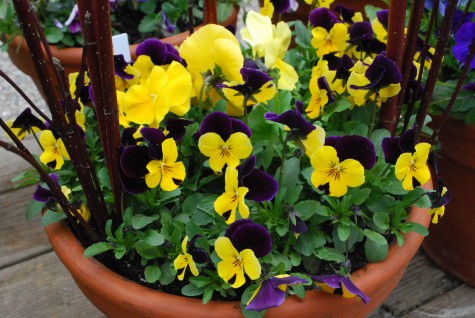
bicolor violas, yellow pansies and red twig dogwood

spring window box detail

yellow violas

yellow violas

lavender violas

violet and lavender violas

violas, grape hyacinths, black twig dogwood, and lettuce

citrus mix pansies

spring flowers

spring planting with yellow twig, prairie willow, nemesia, pansies, heuchera and phlox

whiskered violas

violas with whiskers

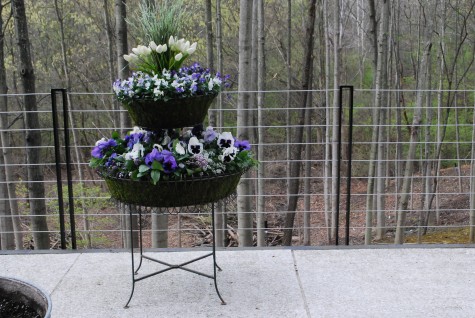
wire plant stand

wire plant stand planted for spring

Easy Does It

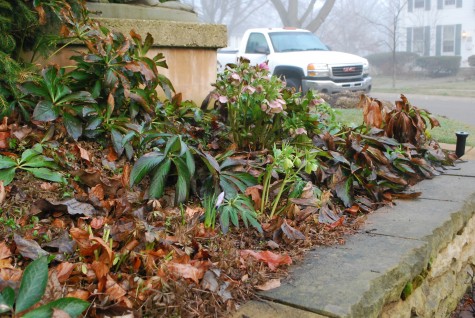
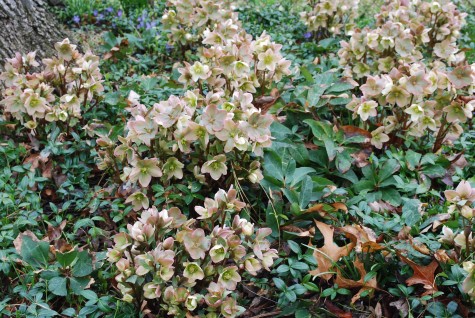
helleborus hybrids

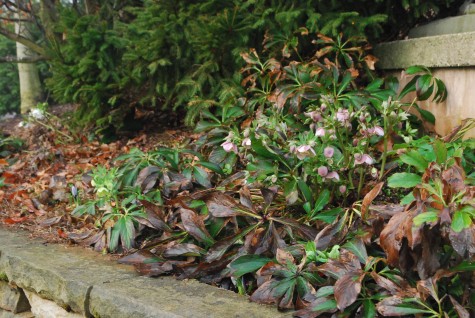
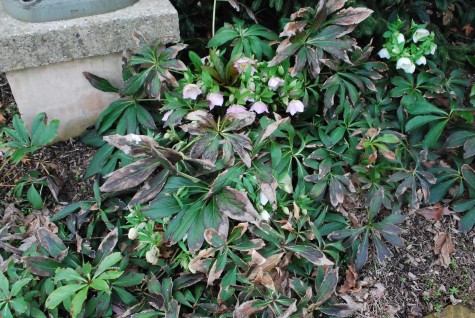
If you are experiencing a spring astonishingly fast forwarded as I am, you have a garden usually sleepy in mid March that is marching dramatically on to a drummer you have never met before. I am struggling to keep up. I have 2 areas in my garden devoted to the cultivation of hellebores-why wouldn’t I?  Their leaves are evergreen until late winter.  Their flowers are intricate; the sepals are astonishingly colored.  Once established, they make big gorgeous clumps, even in fairly shady locations. It is the first perennial to break ground and bloom for me in the spring. This is one of my most favorite moments of the gardening year. 

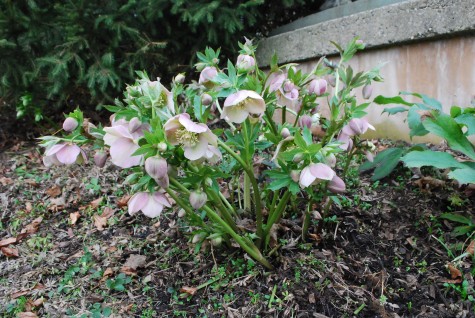
helleborus orientalis

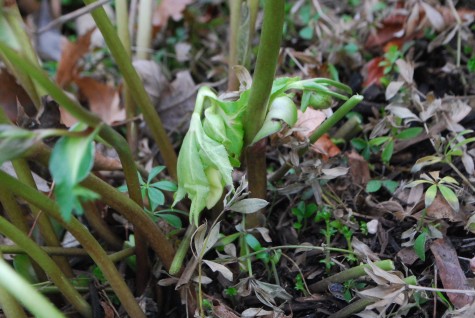
The leaves are stubbornly stalwart-they do not go brown until late in the winter.  The bare flower stalks emerge early in the spring; the new leaves will come later.  Just when gardeners are about to go mad from the endless grey and cold of the winter, they deliver.  The flowering stalks of helleborus orientalis emerge early in the spring-this usually means early April.  The sustained 80 degree temperatures had thrown my hellebores into full bloom in mid March.  My magnolias, PJM rhodendrons and maple trees were not far behind.  I have flowers everywhere, at a time I usually associate with the last of the winter.  

No matter how much I might write about the natural order of things, the real news is that I have hellebores blooming way ahead of my usual spring cleanup.  The late winter tattered leaves in concert with new bloom stalks-not my idea of a good look.  The early spring has caught me by surprise.  To say I was not ready for the hellebores to represent is putting it mildly. 

 My impulse was to clip and clean up-fast.  But how could I?  I am used to cutting off all of the dead foliage on a plant with one swipe, as I usually do this before the bloom stalks stir.  This year I had to proceed with caution, for fear I would mistake a bloom stalk for a leaf.  I did cut off two flowering stalks-how irritating.  One of my greatest spring pleasures has become a marathon I had no chance of winning.      

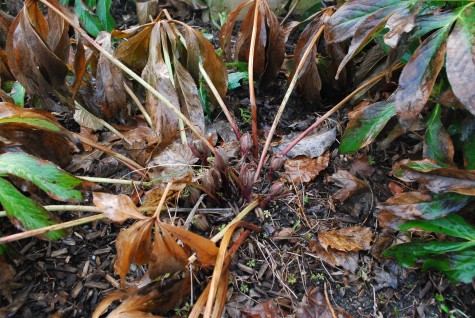
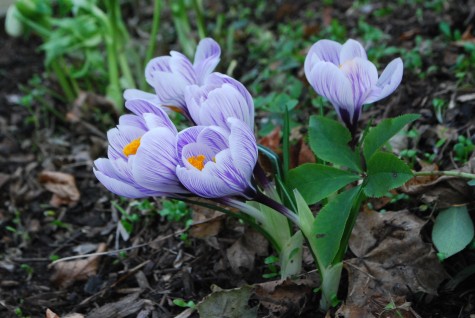
A fast cleanup given the very early and unseasonably warm weather might rake away a moment you do not want to miss. This clump of crocus was buried undeneath last years hellebore foliage.  Any carelessness on my part would have been disastrous. I am happy to say this little crosus clump was beautiful for 2 days, until the heat made it collapse in a heap.  But 2 days was better than no days.  I knew enough to take a picture, that this flowering would be ephemeral.  Beyond my shears, the only tool I put to this cleanup was my fingers.  Any garden accumulates leaves and sticks and other garden memorabilia over the winter.  Each bit came out of this garden one cautious handful at a time. 

 The new and tender shoots of your hellebores might benefit from those gentle fingers-they are so easy to break. New growth is as extraordinarily tender as it is beautiful.  Easy does it is the only way to do it.  So for 2 nights after work, and two weeks late to the game, I cleaned up my hellebore patches. 

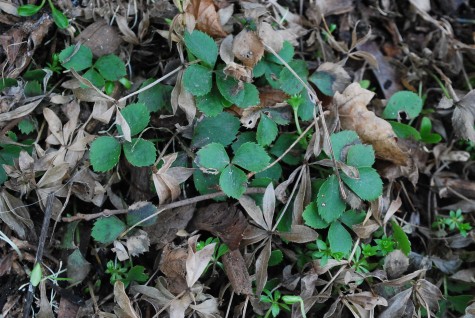
My old hellebores are sprouting from seed like crazy this spring.  How pleased I am about this!  A gentle spring cleanup does not dislodge the babies.  My hellebores are grown with sweet woodriff, and crocus.  I interfere as little as possible with what goes on here.  I do not worry them about anything.  I water when they need it-that’s all.     


Rob’s Ivory Prince hellebores are planted in myrtle.  This taller vining groundcover can make the spring cleanup all the more time consuming.  He tells me the hellebore cleanup is finished-and on to the next part of his garden that needed cleanup a week ago.  Both of us have held off on any pruning-sure enough, night temperatures in the mid 30’s are forecast for next week.  The ride could get bumpier.  We’ve have snow and freezing temperatures in April plenty of times. 

My hellebore patch looks much better now.  Now on to the roses which are completely leafed out, and still sporting dead blooms from last fall.  And then there are the 6″ tall weeds in the isotoma and herniaria.  And the emerging leaves of Jack Frost brunnera encircled by their winter remains.  Have I mentioned that my holiday wreath and magnolia garland are both still in place?  And that the greens in my winter pots have gone brown with the heat?  My delphiniums are a foot tall.  My Magnolia Stellata started dropping petals after one 88 degree day in bloom.  My Yellow Butterflies magnolias are showing color.  My maples are blooming.  I have talked of nothing else to Buck for 2 days.  In celebration of my out of season garden and my attending hand wringing for the last 2 days,  he drummed up some of his favorite Christmas music for me last night.  What else could he possibly do for me?  Funny, that guy.  Not so funny, this weather. 


Structuring Perennial Gardens

Structured perennial gardens-the phrase is something of a contradiction in terms.  Perennials die back to the ground with the frost, and do not reappear in my zone until 6 months later.  Certain perennials, such as asparagus, butterfly weed, some ferns and grasses have a strong winter presence as their stems dry and persist.  Some gardeners leave their perennial gardens as is in the fall.  Others cut all of the perennial plants back to the ground.  The butterburr bed pictured above (enclosed below ground by a 24″ barrier of galvanized sheet metal, I might add)  is a dirt space for the winter. The big stems and leaves collapse and turn to mush, once exposed to a frost. However, they do a fine job of screening the scraggly lower branches of the arborvitae hedge in the background.  I wedged them into the rooty ground as best I could.  True to their invasive nature, they covered the space by the second year.  Their giant leaves are very architectural in the summer, their absence in the winter is mitigated by by other large woody plants nearby.  The structure of this garden comes from the repetition of a single plant, in a defined shape.         


Perennial gardens can be organized by plants that require similar conditions, by color, and by form.  This garden is relatively small, so it features plants with spike like flowers, or a narrow habit of growth.  This means bulb lilies, delphinium bellamosa, platycodon, and phlox.  Most of the plants are white, and shades of red violet, pink, and purple.  The mature clumps of Sum and Substance hosta provide a visual foil for this organization.  Its mass anchors the garden, and the lime green leaves light up the shadiest part of the garden.  The garden was placed between a pair of trees, and is backed up by a row of Annabelle hydrangeas.  This provides the garden with a context. garden structure

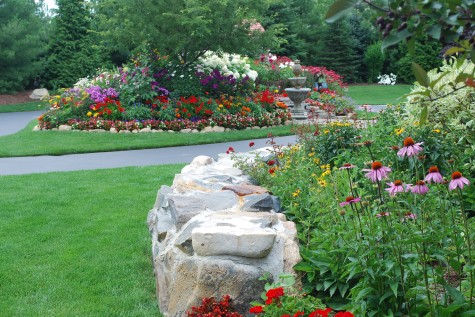
This perennial garden is planted with a collection of mixed perennials and annuals.  Locating a perennial garden in a traffic island can be a dicey move, but this planting has a few things going for it.  There are a couple of small trees.  There is a children’s playhouse (not visible from this angle), a good bit of stonework, and a fountain that help weight the garden.  The elevation of the soil, and the massing of both perennial and annuals give the garden visual heft.  Big annuals planted in a perennial garden can provide season long color as ther perennials come in and out of bloom.  This garden benefits from the fact that it has one clear idea. Lots of color, and bloom time has greatly influenced the selection of plant material.  Big stands of Monarda, shasta daisies and phlox celebrate the summer season.  Focusing on a single season means that season has the potential to be stellar, and the other three-quiet.   

pots in the garden

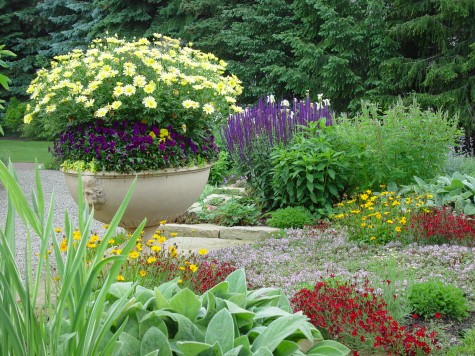
A perennial garden gains visual stature when associated with a favorite pot, a beautiful arbor, a fountain, or a sculpture.  An ornament for the garden can provide that garden with atmosphere. 

decomposed granite

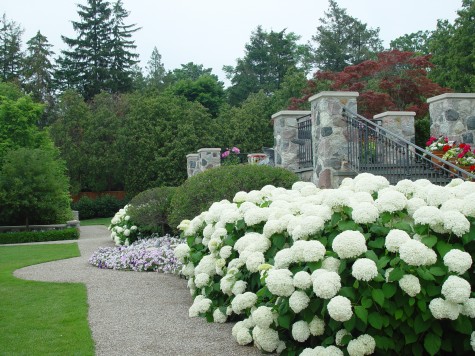
This garden backs up to a large stone wall, and is faced down with a generously proportioned decomposed granite walkway.  These hard surfaces enclose the garden-both on the ground and in the air.  The mass of the Annabelle hydrangeas is a good match for the mass of the wall.  The lavender petunias surround a fountain pool; the rounded front of that pool is repeated by the petunias, the gravel, and the lawn.  The petunias are more than just petunias.  They are a shape that makes sense with the entire garden scheme.   


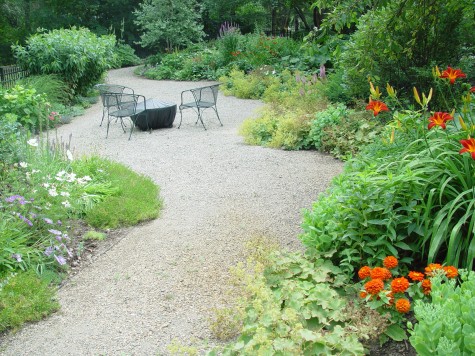
 This decomposed gravel path is large enough to accomodate seating in the garden.  The gravel is contained by aluminum edger strip to keep it from migrating into the garden.  However the perennials are planted close enough to that edge to encourage them to spill over.  This giving the garden a relaxed and low key feeling without loosing its strong sense of shape. 

perennial gardens

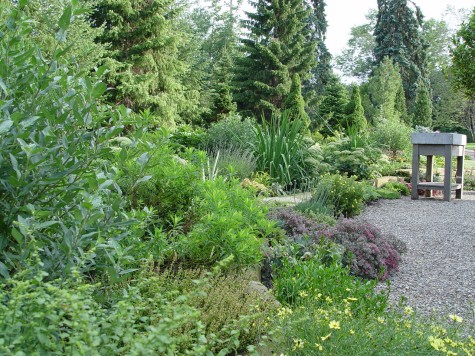
Any garden is green, most of the time.  Shades of green can be contrasted; a garden where all of the greens match or are similar can be very striking.  The textures, sizes and shapes of leaves can be contrasted with one another.  The relationships forged between individual plants can be more important that this individual plant or that one.   

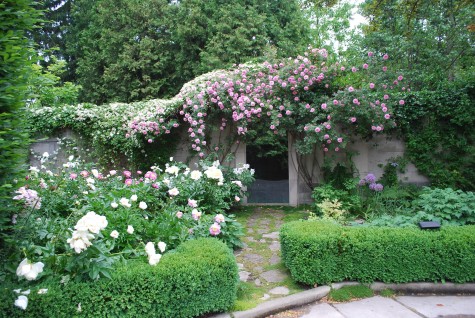
 The flowering of the roses and the peonies is glorious, and short lived.  That said, I still would not dream of foregoing either pleasure.  Some years they bloom at the same time.      

rose gardens

Though the roses, clematis and peonies have a place all their own, they belong to a bigger group known as Janet’s garden.