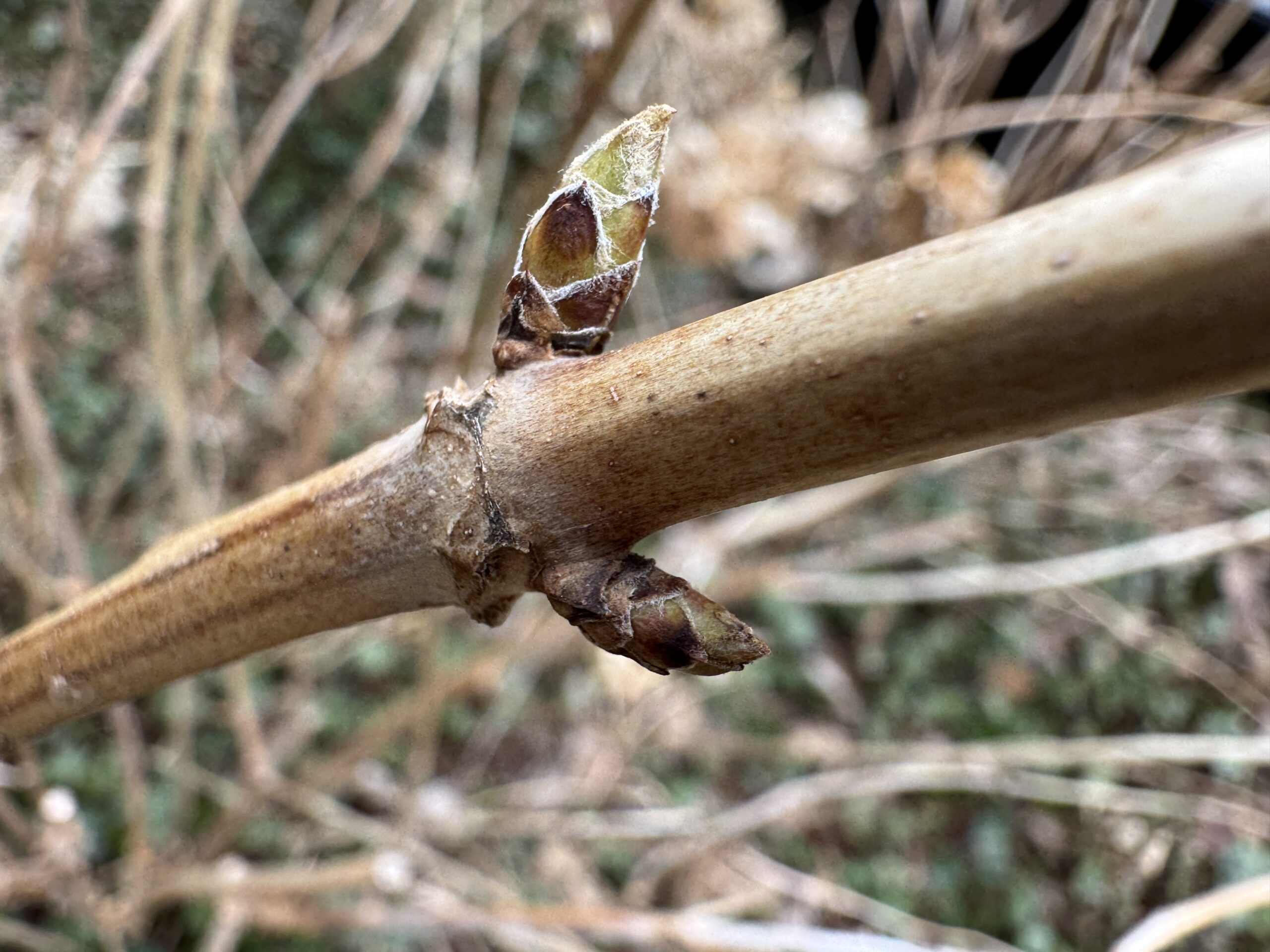
I usually write about hydrangeas in the late summer, when they are gracing most every garden in my zone with their armloads of marvelously frothy flowers. Ha. Hopefully that written description sounds just as extravagant as they appear in full bloom. This shrub, and all of its many iterations and cultivars, energizes and endows our late season landscape with an unparalleled and succinct representation of summer. Who doesn’t swoon over hydrangeas in bloom? I do. Each properly placed and well grown shrub is covered in flowers for weeks at summer’s end. It is indeed the super nova stage of the summer landscape. A brass band playing loudly in perfectly brassy unison, if you will. Hydrangeas representing in all their glory define what it means to be robust. They are so willing, and eminently worth cultivating. They give so much more than they need or demand. They are not wall flowers, or delicate ephemerals, or gracefully weedy perennials-nor are they on that tough to grow list. They are like a freight train pulling in to the station with steam billowing up from the tracks and a horn blaring. Are you ready? If the leaf buds have broken dormancy and are swollen all along the stems of the shrubs – and if those swelling buds are greening up – it is time to prune.
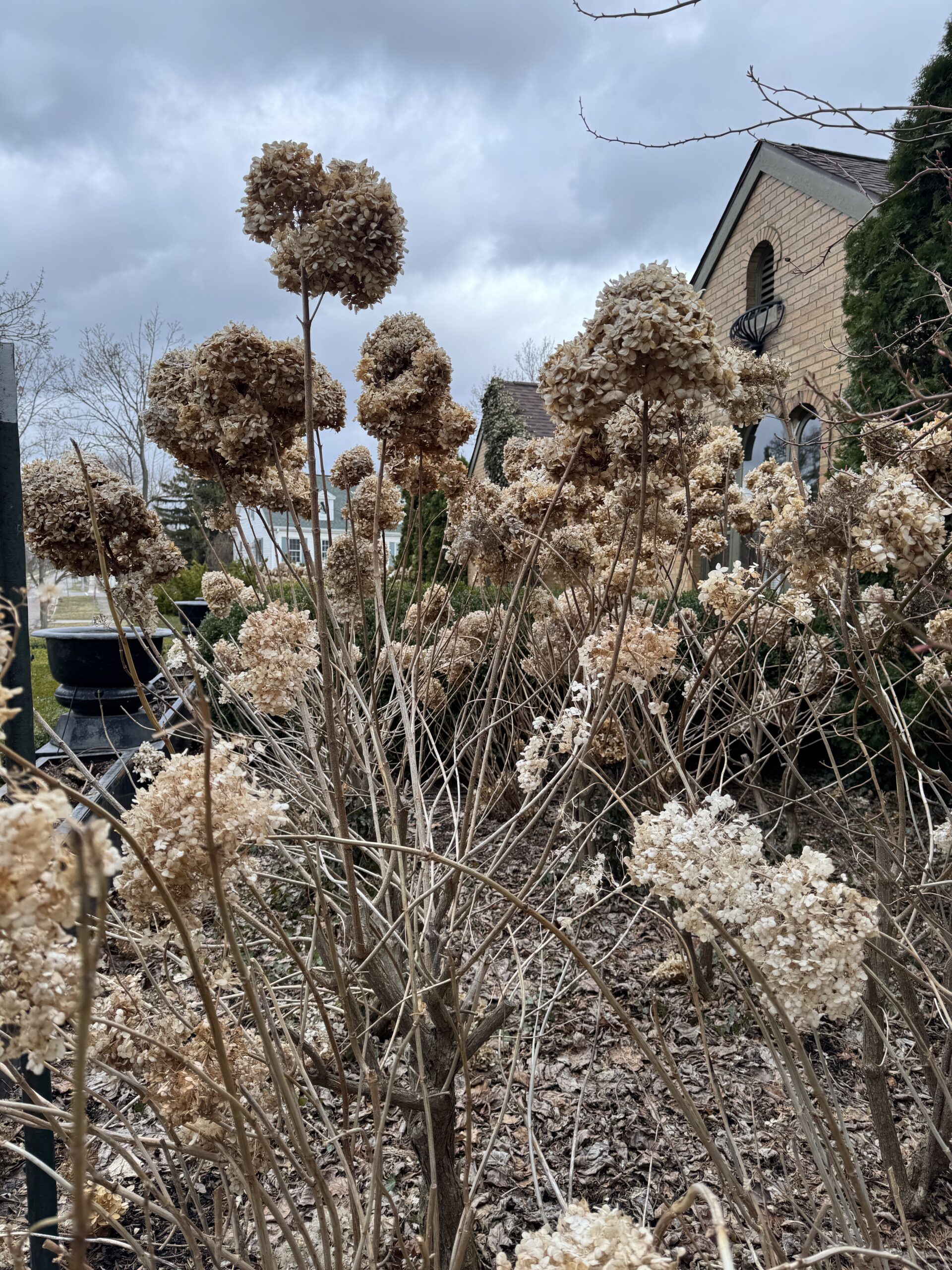
Let me get what not to do out of the way first. My opinion on the matter is all I have to offer. Do not prune in the fall. Pruning is a call to grow. Encouraging a shrub that is facing the winter to get up and grow is just not a good idea. Your best move is to encourage the long sleep. Movement towards winter dormancy in woody plants starts in my zone in August. Once the leaves turn color, mature, and drop, leave all of the rest of the shrub intact. The most important thing to do to hydrangeas in the fall is nothing. Do not cut the flower heads off. They look lovely with snow on them, and they wave in the winter winds. That cinnamon brown color is beautiful with evergreens. If you must remove the flower heads, OK, but do not cut these shrubs down to the ground in the fall. That will force them to sprout from below ground in the spring. Be merciful. Leave at least 3 or 4 buds above ground when you prune-in the spring. If you are growing big leaf hydrangeas-as in hydrangeas that bloom on the previous year’s wood/growth, do not prune in the fall or the spring. Prune them promptly and only after they finish blooming. If you don’t know which type of hydrangeas you are growing, find out before you prune.
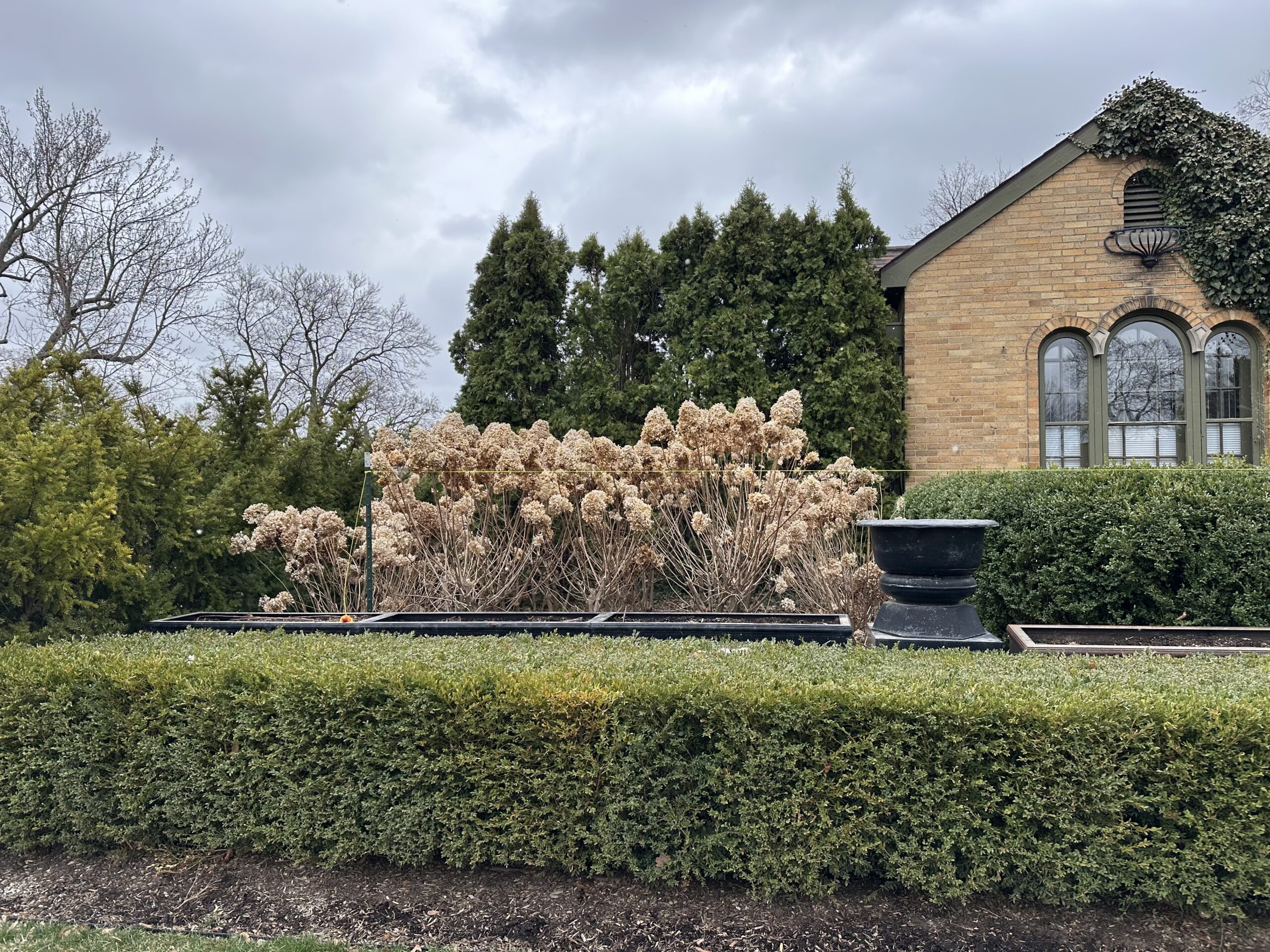
Hydrangeas do not respond very well to a formal shearing. Few plants do. Shearing hydrangeas encourages multiple breaks below the cut, which result in a dense thicket of stems and leaves at the top. The bottom half of the shrub gets shaded. I am amazed at how many hydrangeas I see pruned like this, but it is not good for the health of the plant, or the flowers. I give my hydrangeas a shag haircut, keeping the stems at the top shorter and the stems nearer the bottom longer. The idea is to provide a sunny and airy space for each branch to live free. You can see this arrangement in the location of the flower heads in the photo above. Each branch has its own address.
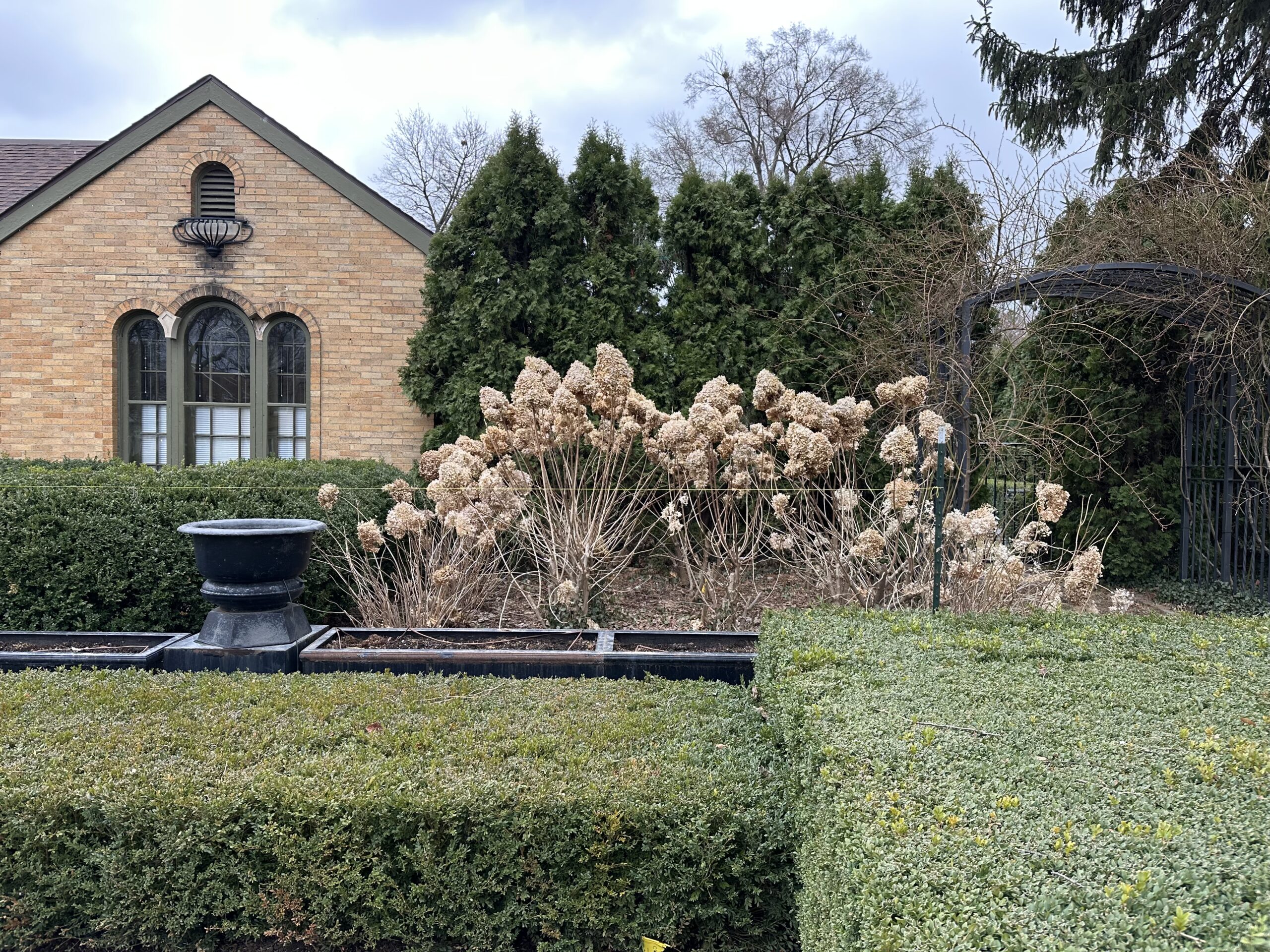
What might not be so obvious is that these last 2 pictures show two different types in hydrangeas. On the far left and far right of a center block of Limelight hydrangeas, as in Hydrangea paniculata “Limelight”, are rows of Incrediballs – Hydrangea arborescens “Incrediball. They add flowers at a lower level, and they bloom earlier than Limelight. Their upright plant habit and carriage is vastly superior to their predecessor, the storied “Annabelle”. You can see the Incrediball flowers are fairly round, and the Limelights are broadly cone shaped. A certain amount of legginess is inevitable with Limelight. That mess of twigs is what you get over the winter with them. The Incrediballs help cover up those bare legs. These cultivars have different parentage, but they are pruned the same way. They bloom on new growth. On what will be the current years growth.
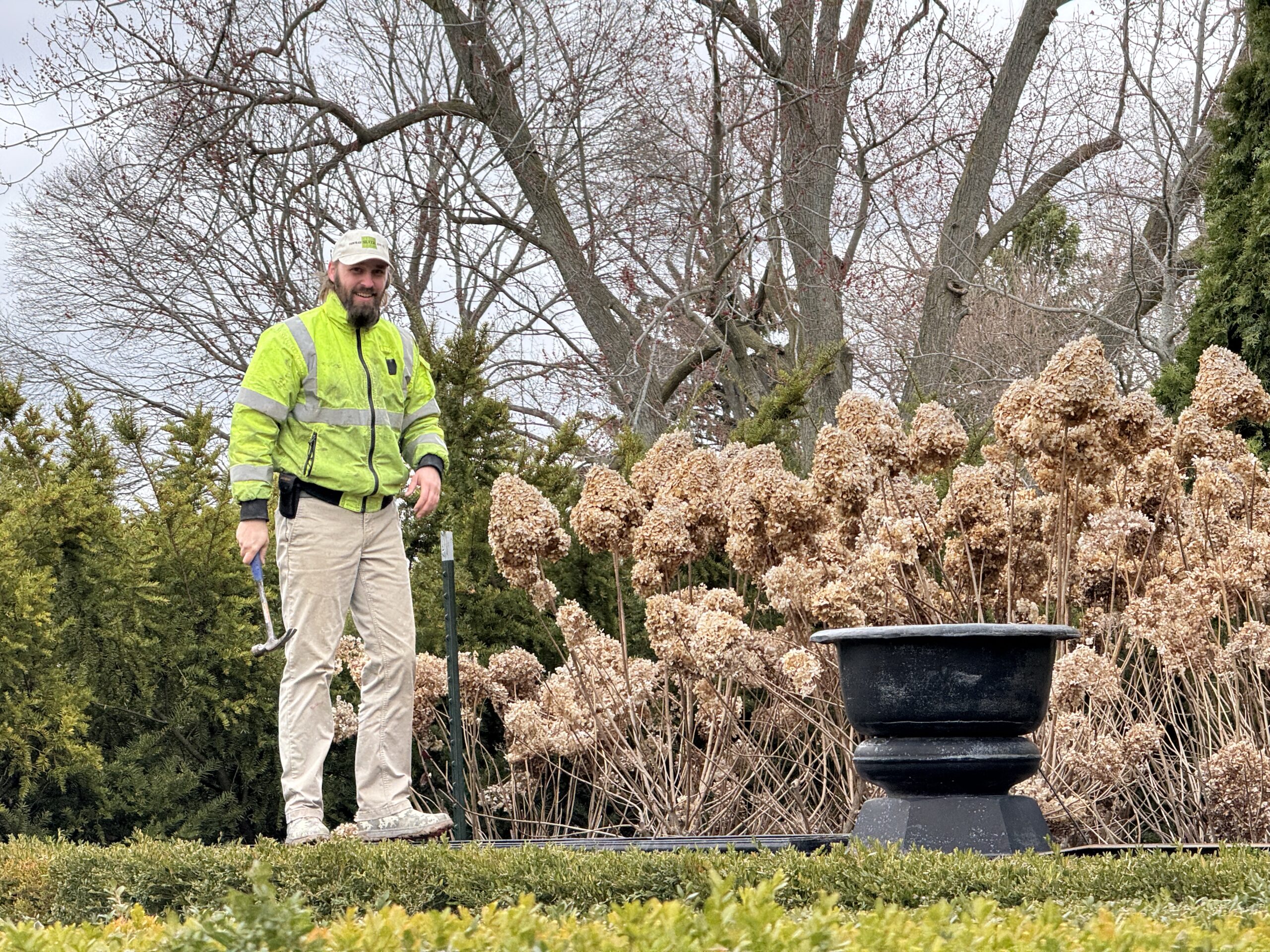
So if it’s not appropriate to prune hydrangeas by shearing, what is the purpose of setting stakes and string? My yard, where these photographs were taken, slopes dramatically from one end to the other. The blocks of hydrangeas are a good distance apart. I would want those blocks to loosely resemble one another. The only way to tell if they approximately occupy the same spot in the landscape composition on both the north and south is to set up a level line. It’s easy to do with a bamboo stake or metal fence post, and a ball of spring. A tiny level can be clipped on to the string.
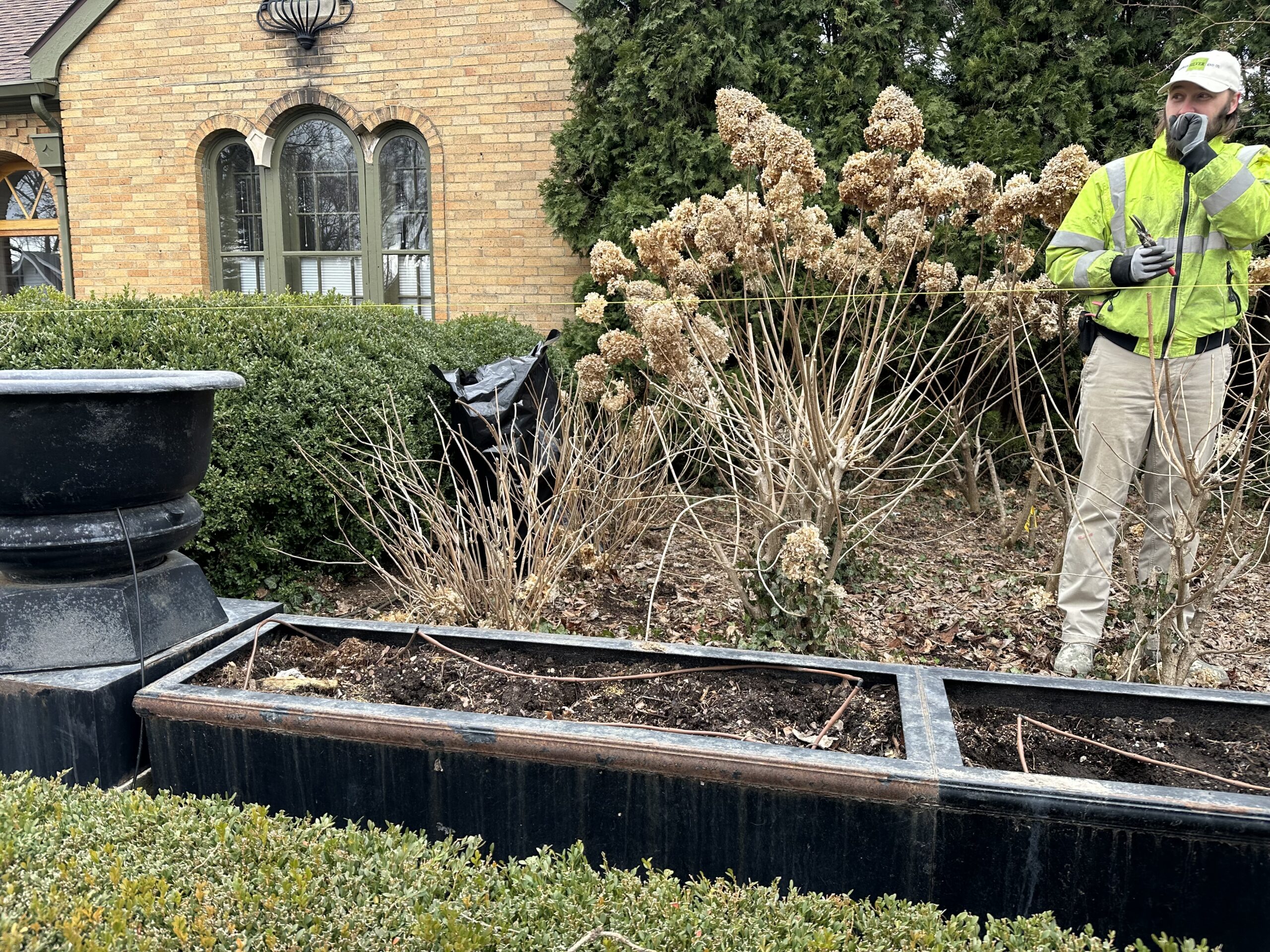
Pruning by eye can be incredibly inaccurate. I see a lot of that too. Pruning that matches uneven terrain, or follows a sloping driveway. Or pruning just to prune, with no thought to the horizon. I see that too. Sometimes it is hard to believe a level attached to a string line is accurate, but it is. I would never trust my eye to see a level line for pruning. It is terrible to wade through a big pruning project only to discover your vision for them is lopsided. And what is required to set it to right is not possible until the mistake grows out. I shudder to think of that. Happily most plants are very tolerant of off the cuff pruning. The recovery just takes time.
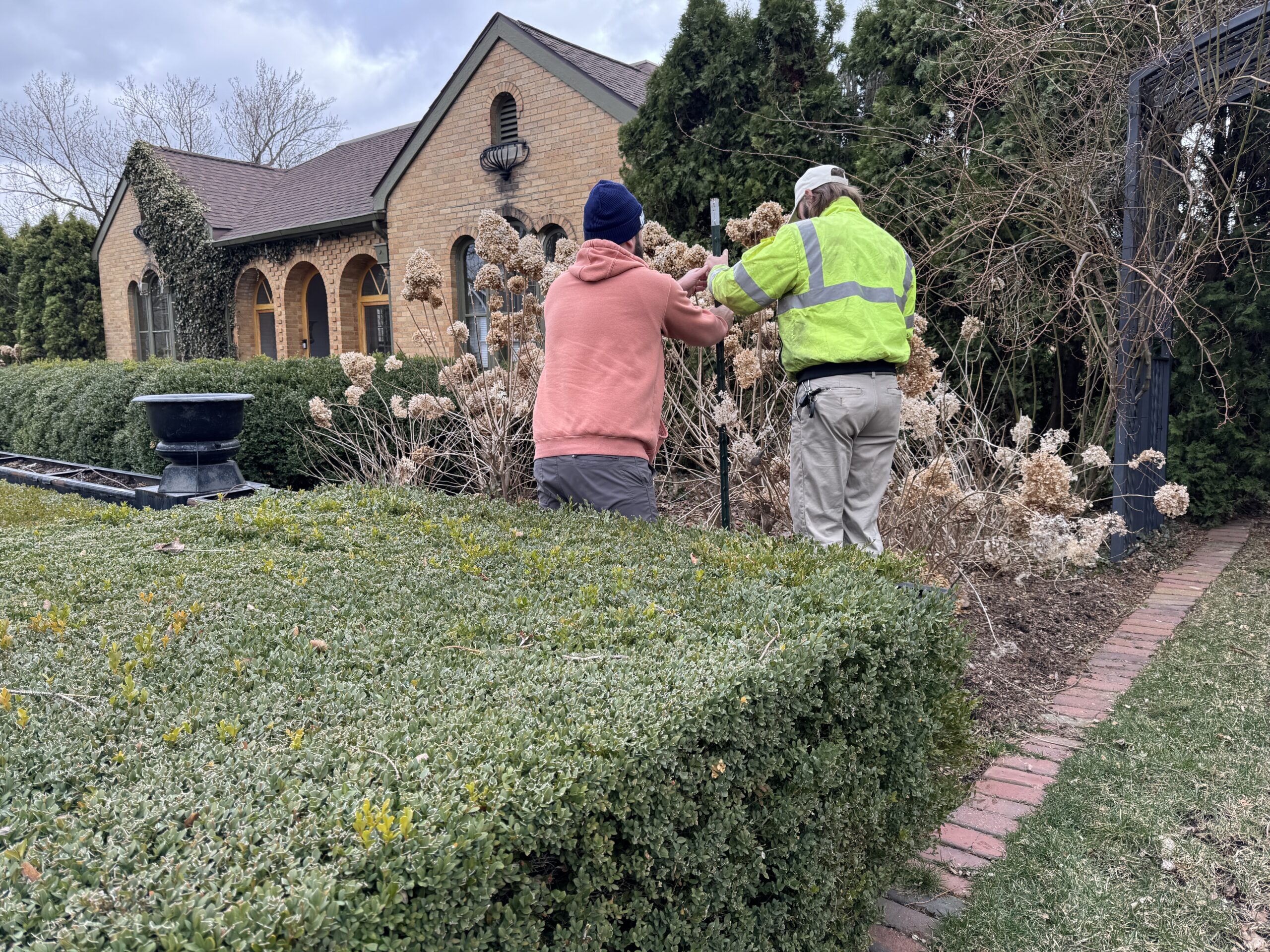
My level line set up is an approximation of the horizon. In the ballpark, as it were, or within shouting distance. It is not exact. It does not represent or enforce a rule. Nor does it rule the pruning process. It provides orientation. As in up and down, and left and right. It provides a framework from which to work. Taking the time to set up 2 poles and a level line is a way to walk away from the the noise of the day, and study on this first foray into the new garden season. It is a way to get ready for the job at hand. But in spite of all this, should you decide to prune your hydrangeas from the hip, Mother Nature will treat you just the same as any other gardener. Indifferently. But indeed you will notice the difference.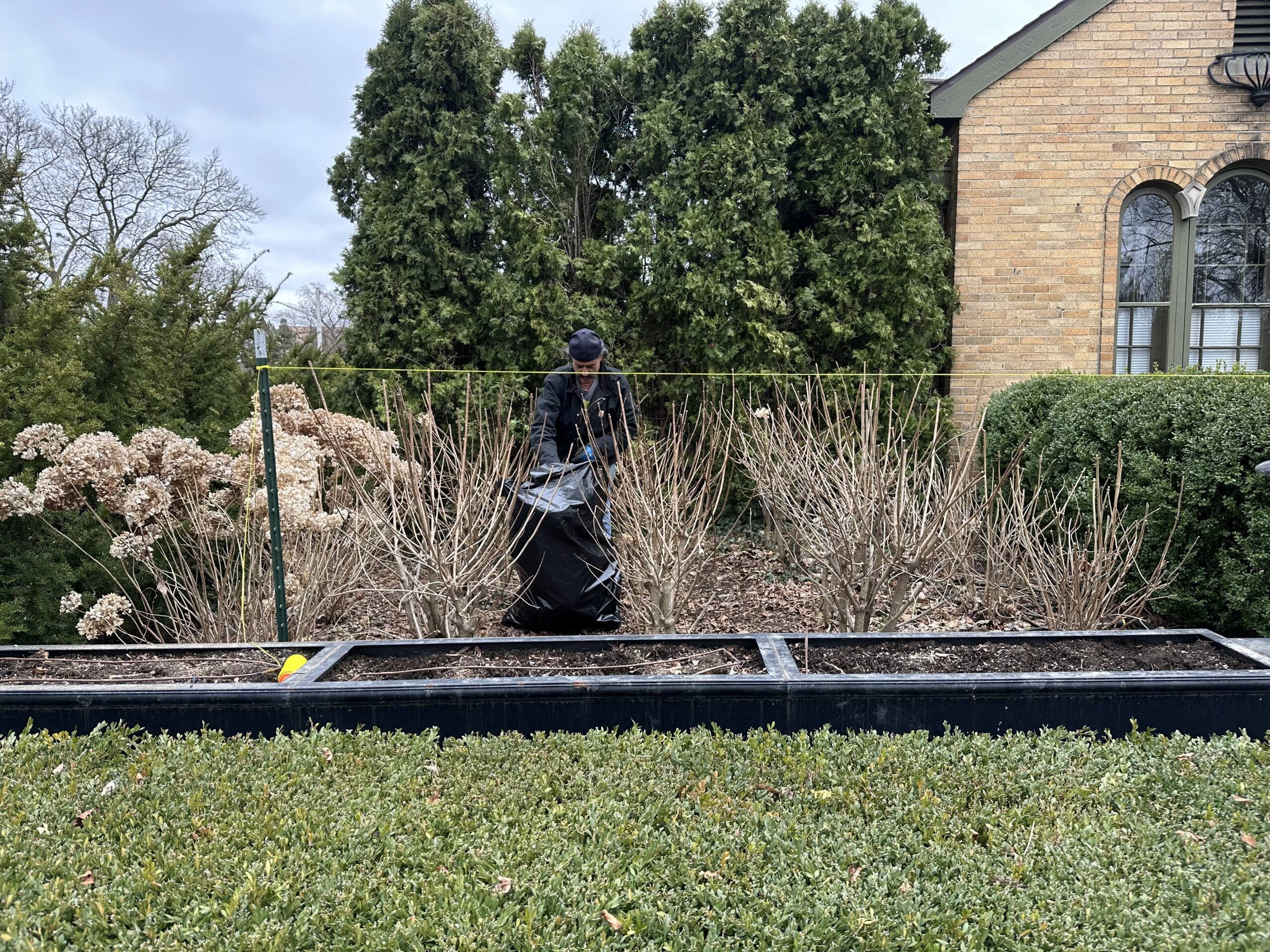
The pruning of my hydrangeas is underway.
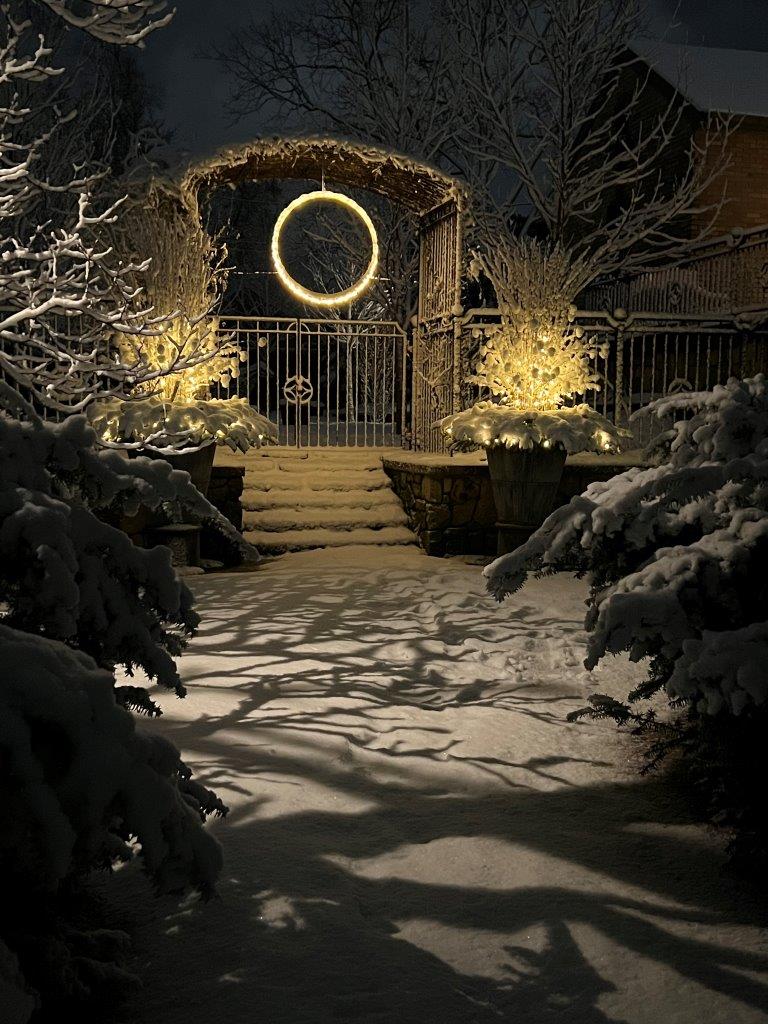

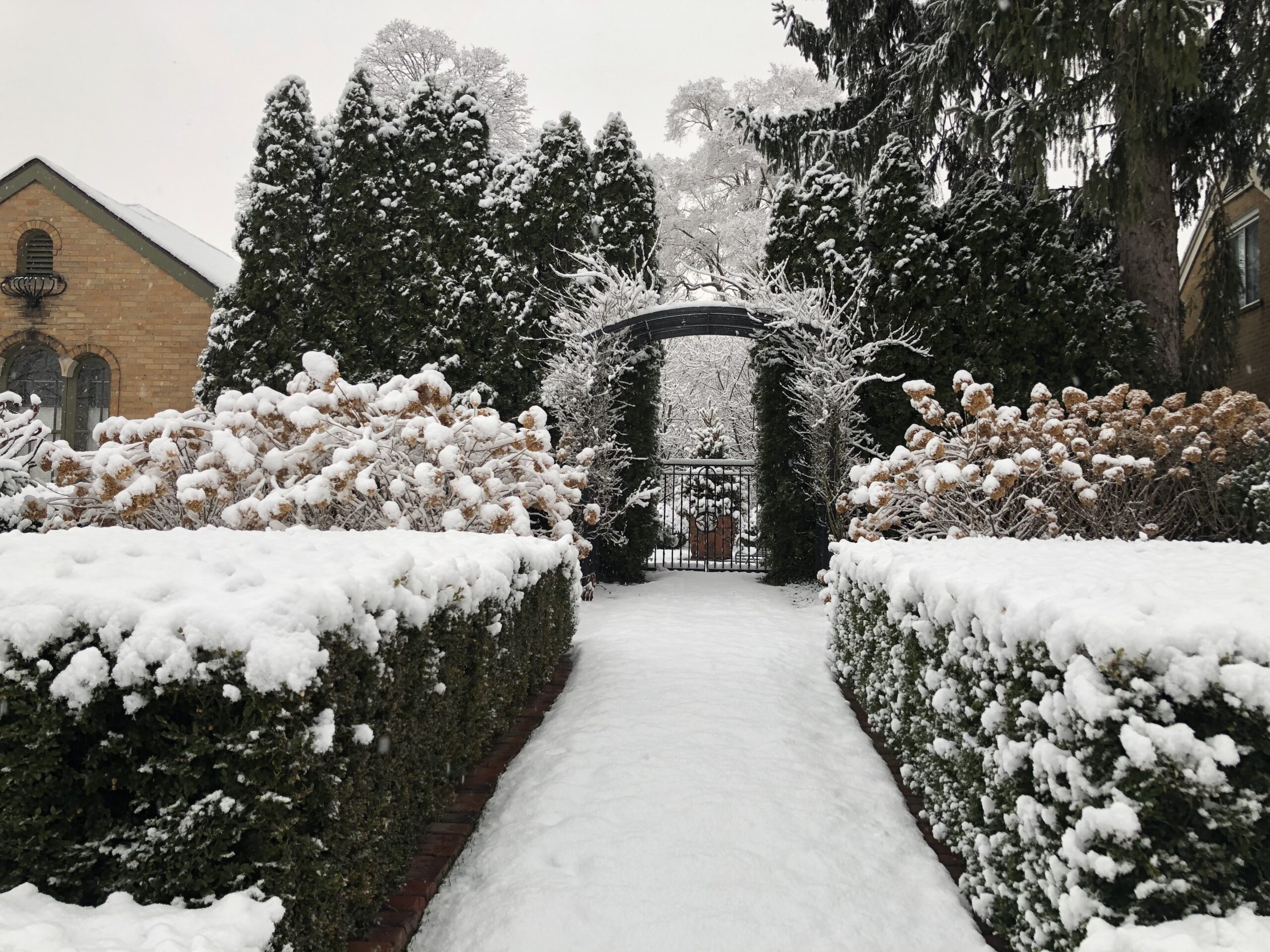 The picture above was taken in the early morning of Jan 3, 2021. I remember waking up well before dawn to a landscape whose every surface was transformed by mounds of snow. Giant snowflakes floated downward on the still air like feathers, and stuck to whatever surface they touched first. The quiet was disconcerting. My yard was truly a fairyland – the first time ever quite like this. Every shape in the landscape was faithfully described and added to by this extraordinary snow. Within minutes of opening my eyes, I was dressed, out the door, and marveling. I took photographs for several hours, and several hours after that the snow had completely melted and was gone. This was an incredible weather event of breathtakingly striking and shocking beauty, the likes of which I had never seen before.
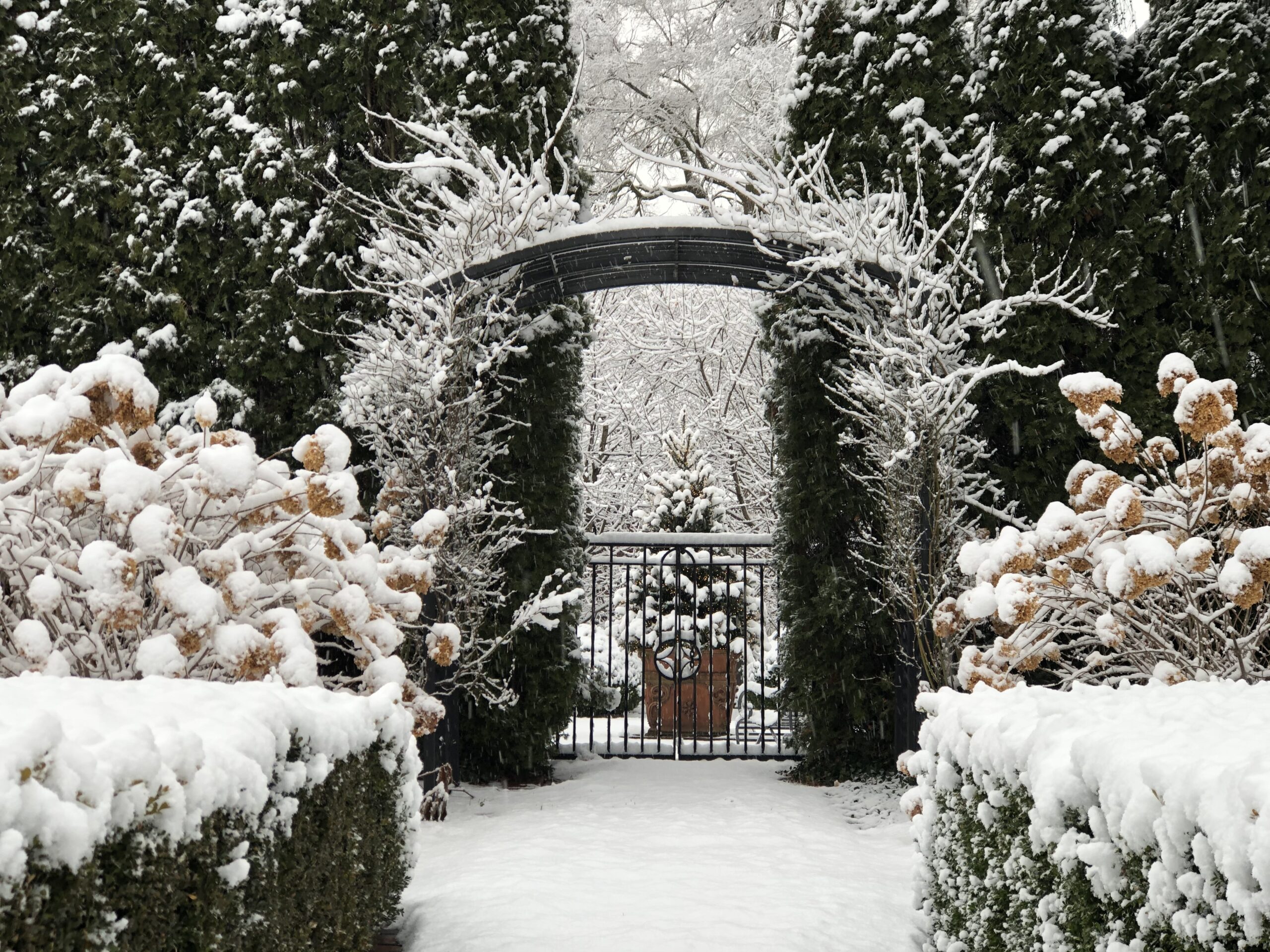 That snow dispassionately described the landscape design. I was happy about what that revealed. A good landscape composition celebrates the depth of a space by beautifully revealing its background, mid ground and foreground. Of course a landscape is a sculpture – a three-dimensional object, if you will. Great landscape design explores that uniquely spatial quality created by land and sky-and edges. I can’t really explain what I mean by edges, except to say that everything and everyone has them. Expressing depth in a composition fuels the means by which a landscape space can be wrought and experienced. A design. Depth in a landscape composition creates mystery, and reveals surprising outcomes at unexpected or opportune moments. Some designers describe this as flow. Others describe this as rooms with transitions in between. The background space above is a thicket of tree branches indicating trees that are a ways away. The focal point of that background space is a a centrally located container with a cut evergreen tree inside. That planter box is in the front of the back – ha. The mid ground space is defined by the hedge of arborvitae that is open in the center to permit travel and views through. The gate marking that entrance and exit is overseen by a steel arbor wreathed in a pair of John Davis roses. That gate explains how the end of the mid ground space becomes the beginning of the foreground space. That arbor is centered in the transition between the front and the back. It also separates the public space from the private. The structure of those climbing roses in the snow is every bit as beautiful here as they are in bloom in June. I mean this. The foreground space features Limelight hydrangeas, faced down by hedges of clipped boxwood, and opens up to a widening path of snow covered grass. This composition features layer after layer of plants from front to back. What is it that makes the relationships established by this design so dramatic and clear? The weather.
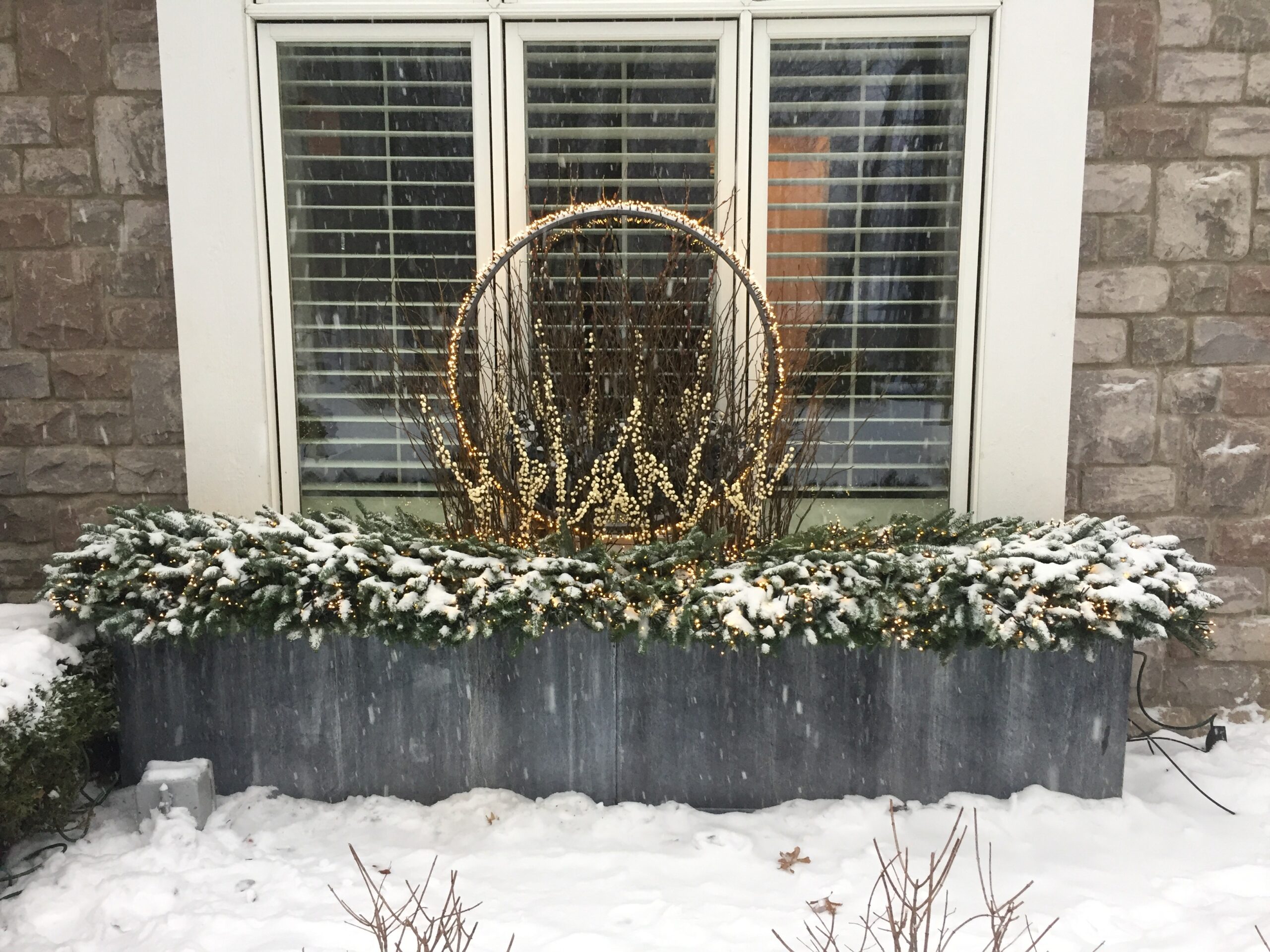
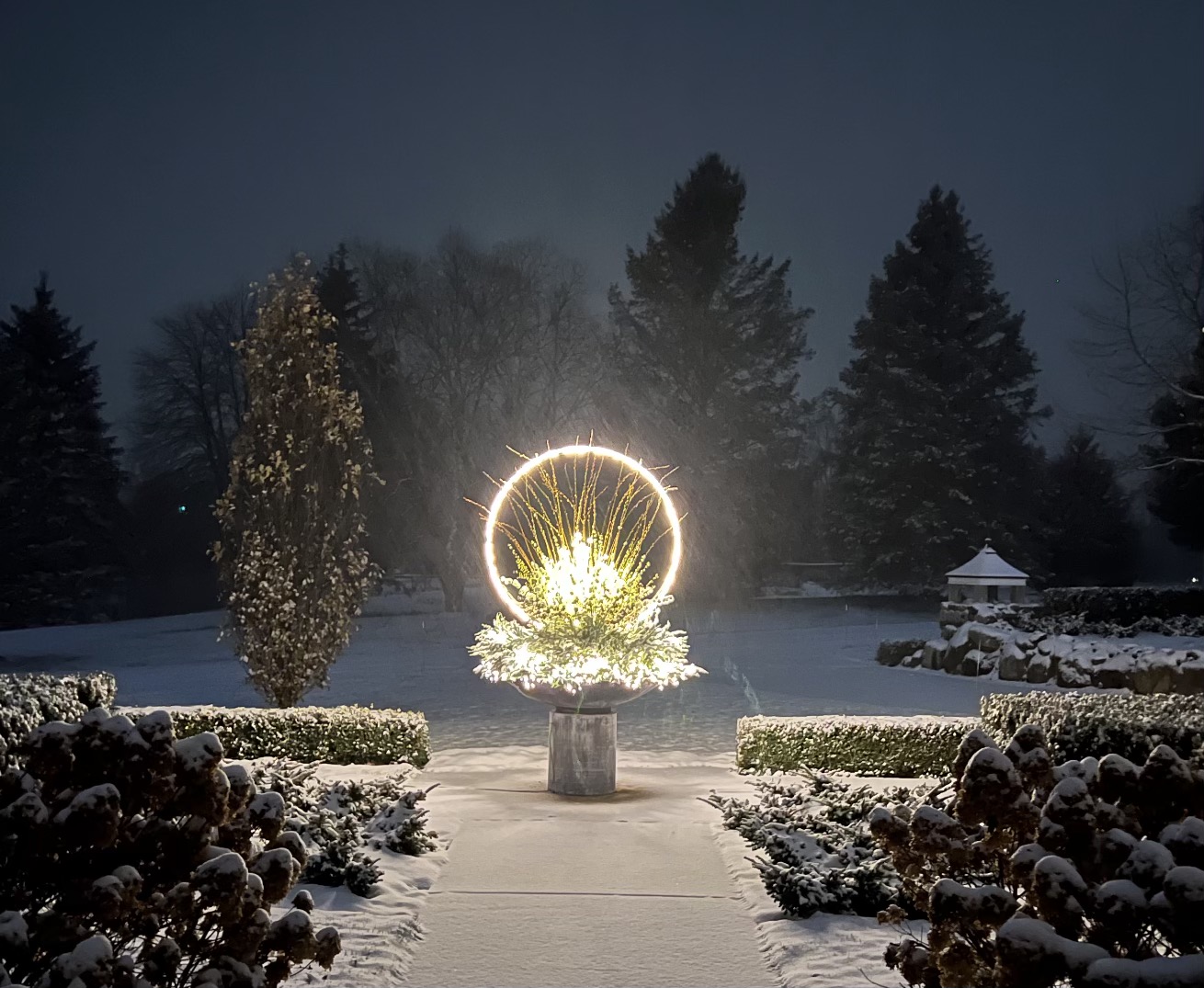
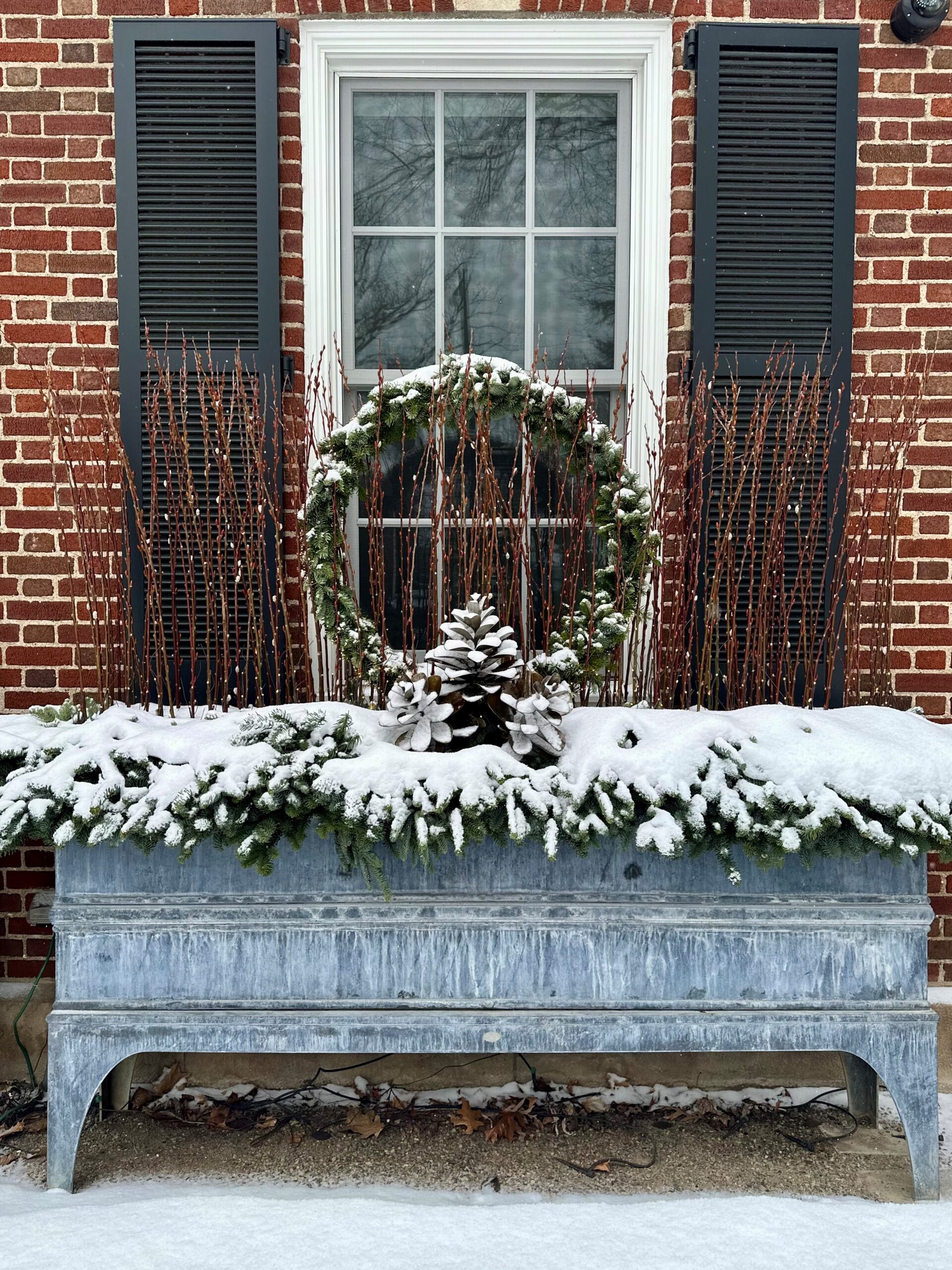
 Our most recent snow was not nearly as spectacular as the 2021 storm, but it was good nonetheless. The skirt of this container is set with cut evergreen boughs that radiate out from the center. A second set of evergreen boughs are set on end against the centerpiece. Separating the vertical fir from the horizontal is a loosely defined ring of green and white pine cones in a nest of lights. A single evergreen material has special visual interest given its multi-dimensional placement. This simple arrangement with only a few elements is all the more striking given the landscape around it. The snow tells that story.
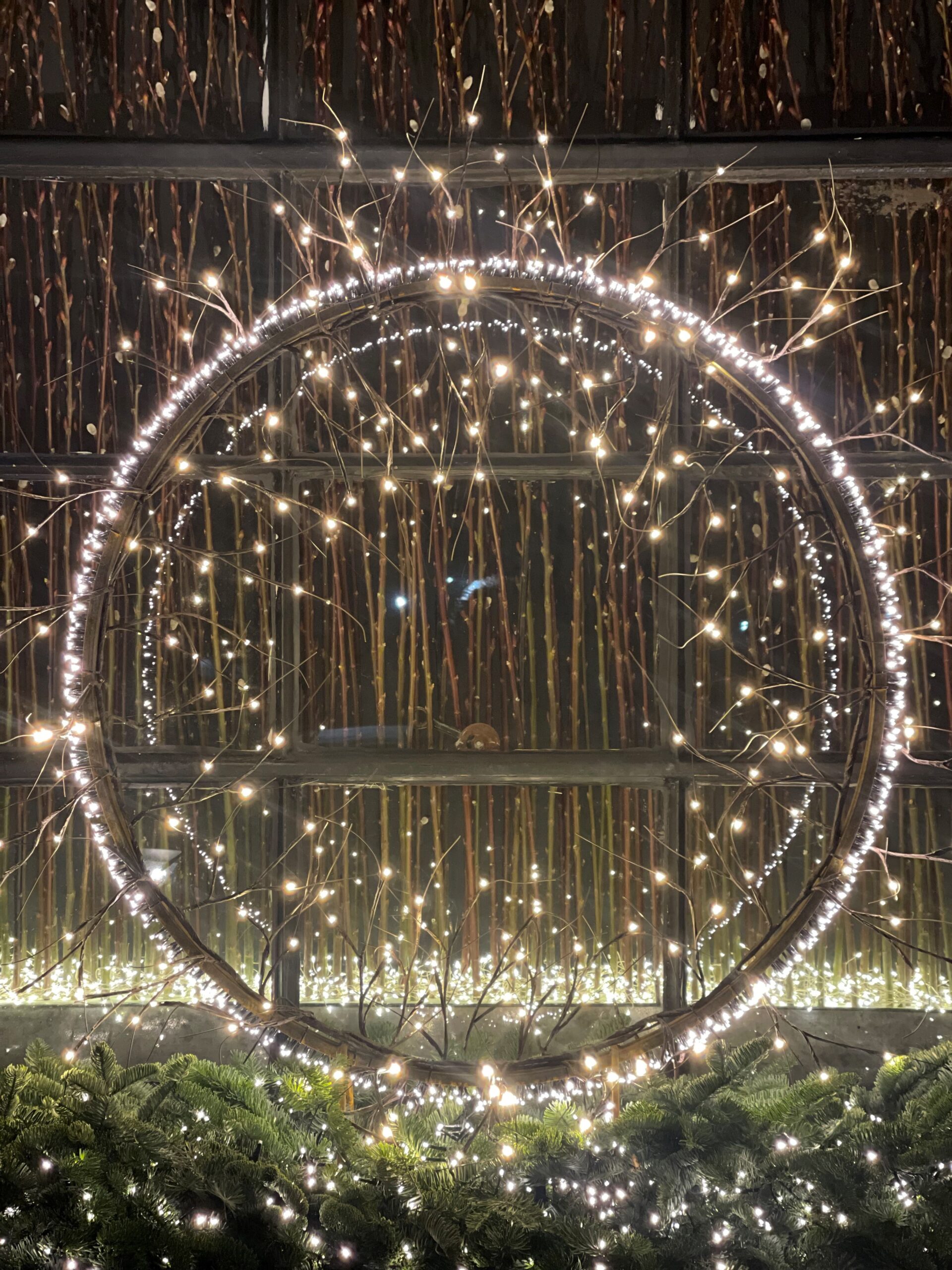
 A different year in this location, the container sparkled with an abundance of lights. An unusually textural snow cover produced yet another visual version of this landscape. Over the course of a year or a gardening season, the weather should play a major role in the landscape design. I am an advocate of landscape design which takes a sweeping bow to that element we call nature.
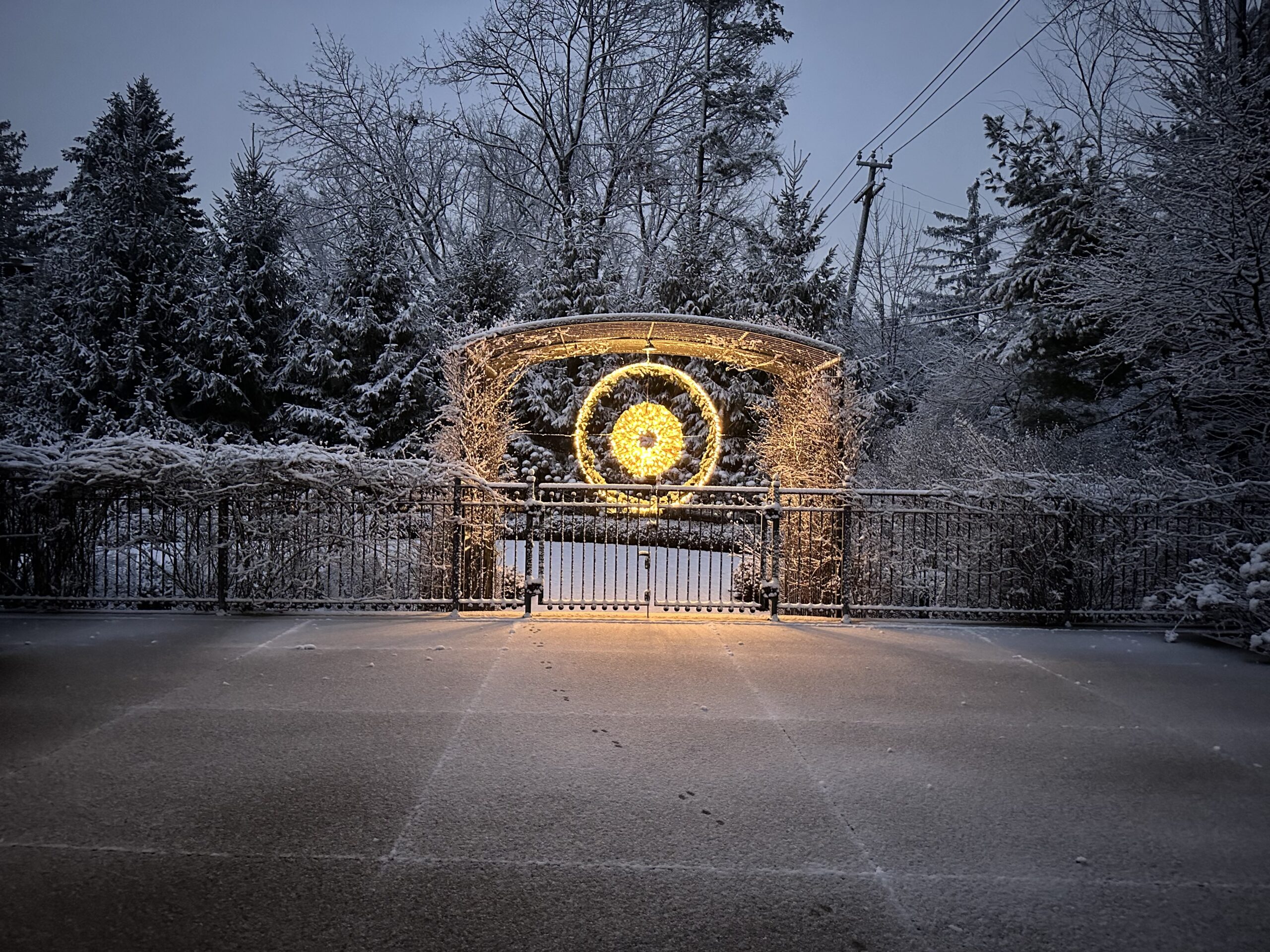
 That same night, the snow illustrated the transition between the driveway and the fountain garden. The pots, arbor and fence occupy that mid ground. That middle ground space can be the most difficult to define and develop in a landscape. It sometimes involves putting an idea or an object or a plant out there in the middle and building from there. Starting a design at the front or the leading edge or the beginning is not necessarily the best or only way forward. A landscape will speak back, if you give it sufficient time. This mid ground space took many years to establish. There is no substitute for age on a landscape.
 This is as close as I have been to that extraordinary snow in 2021. I am happy for it. Beautiful snow is a hallmark of our winter. Having a well designed landscape on which beautiful snow can act makes the winter season welcome, yes. The fence pictured above, punctuated by a gated arbor and flanking pots, is not that unusual a treatment of an outdoor space – but the considerable change of level does give pause. But the simple arrangement of bold and thoughtful forms emphasizes the main idea. The legibility of intent is key to good landscape design.
 Most of my landscape is going on 28 years old. That age has enriched design decisions made decades ago. Sometimes it is good to stay the course, and see what grows.