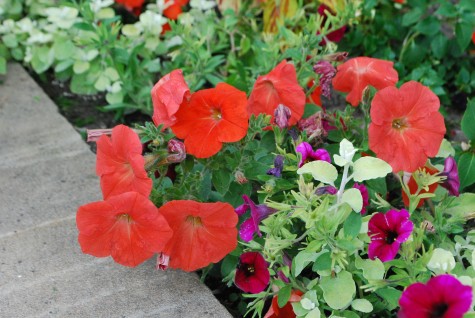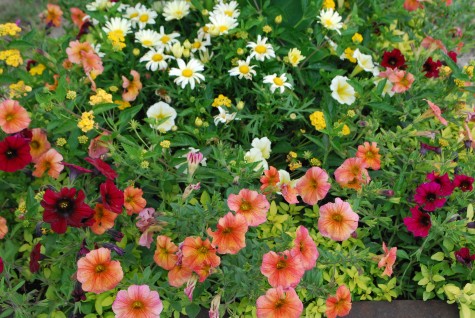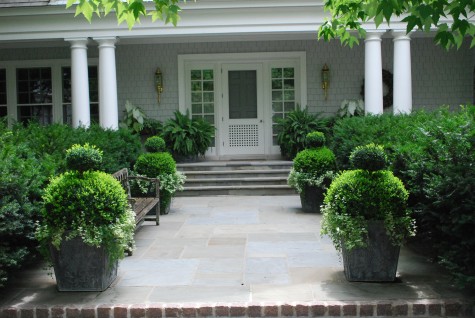
I have never had the discipline to plant my containers with green plants. I am soft in the head about flowers, and color. Every year I think about greening it, after which I invariably buy pink or orange or carmine flowered plants. I have been planting containers that feature the color green for this client a long time. This years containers are making me think about green all over again. The boxwood balls with attending topknots get overwintered in an unheated greenhouse space. The skirt of variegated licorice is all they need. The late afternoon sun dusting the boxwood-a beautiful moment.
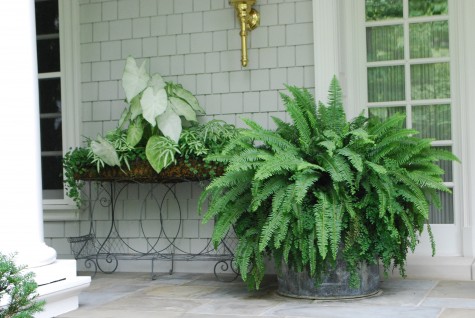 The Kimberly ferns that were lanky in the spring are holding forth some 2 months after planting. The maidenhair ferns planted underneath them are in a trailing phase-this I like. The caladiums and pteris ferns in the wirework planters are a delicate foil for the massive ferns.
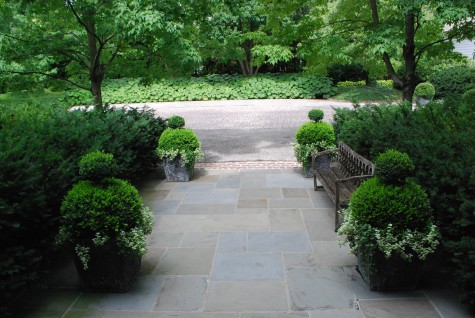 The view out from the porch is just as green. A planting of butterburrs contained by sheet metal set 24″ deep into the soil is a big textured groundcover for a series of Bradford pears. The densiformis yews either side of the walk are thriving. Everywhere I look, I see green. What a pleasure.
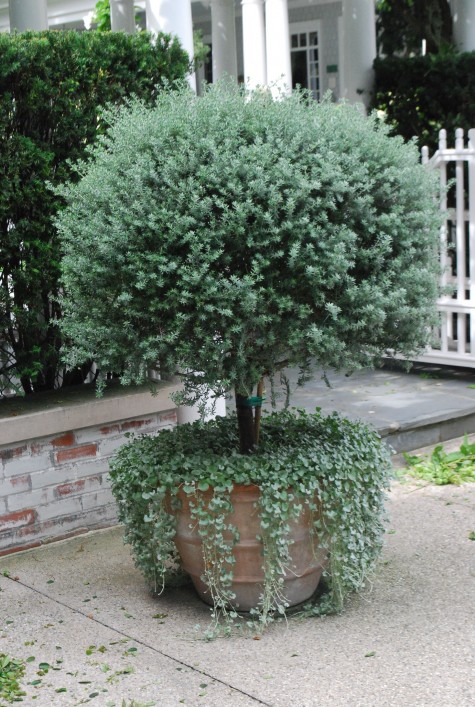 She has a collection of topiaries which we winter over with the boxwoods. This silver germander, teucrium fructicans, grown on standard is a standout. It has been wintered over successfully for many years. The trunk must be over an inch in diameter; the head better than 4 feet across. Wintering topiaries is a nuisance, but this germander is not hardy in our zone. A topiary like this is worth the trouble to cultivate.
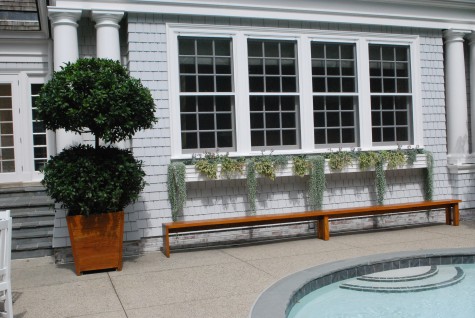 A double ball bay tree is older still. The window box is so narrow and shallow, I would not think of planting it with anything else than heat loving drought tolerant plants. That dark green paired with all of those blue grey diminuitve plants, an interesting conversation about contrast.
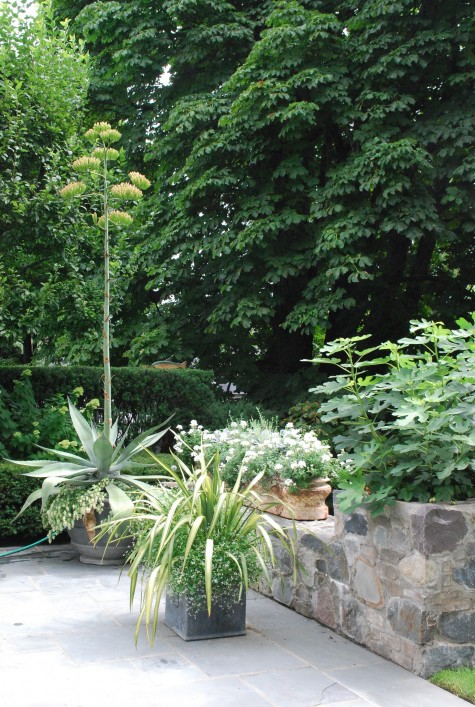 A collection of pots on the terrace is dominated by an agave; the bloom spike is spectacular. The agave is underplanted with showy oregano. I like the relationship of the giant stiff agave leaves, and the drapy stems of the oregano. That idea is repeated with the lime striped phormium, and euphorbia. The stone planter box was planted with 3 one gallon Chicago figs-so called, as they are root hardy as far north as Chicago. They are happy enough to have set fruit.
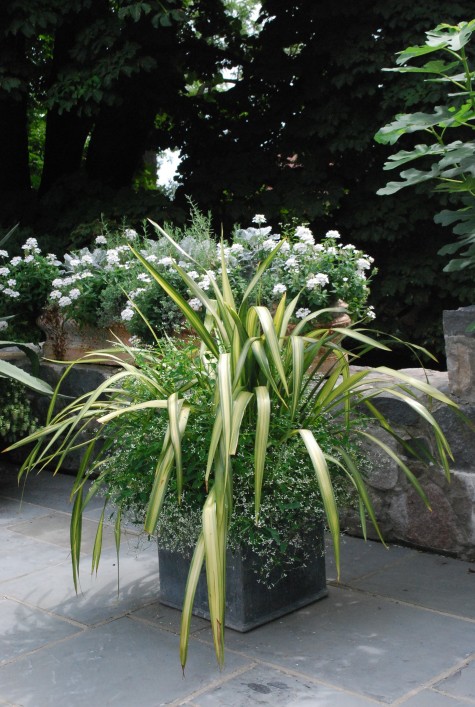 The visual success of this planting is all about the relationship of one plant to another, but the spot on watering ranks right up there. The container has been watered sparingly, in spite of all of our heat. The long iron box-stuffed with lavender, cirrus dusty miller, white trailing verbena, and a trailing blue succulent whose name I do not know.
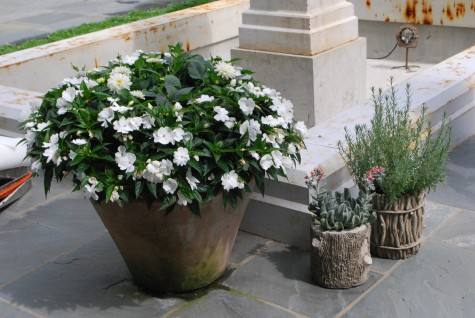 White New Guinea impatiens are neither rare nor remarkable, but for the size of the flowers, and their color. This is the cleanest, freshest, brightest white in the annual kingdom. They also have a very dressy look-a decided contrast to the lavender. The white dahlia in the center, about to send forth another round of blooms.
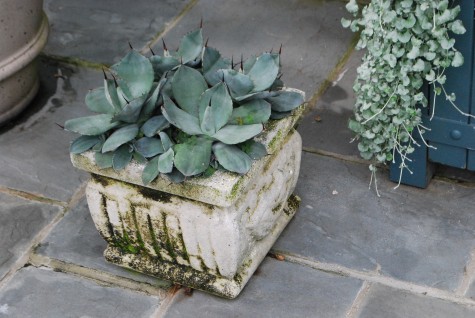 The quartet of baby blue foliaged agaves just filled this old concrete container. Each of these two elements makes the other look better. The silver dichondra in the adjacent box is the same color, but of a much different form and habit.
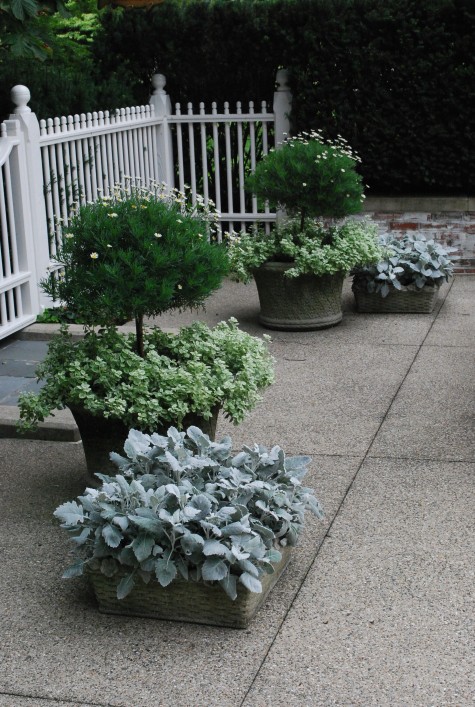 The white marguerites bloom heavily a few times over the course of the summer. The sporadic blooms in between are fine. The dark green ferny foliage takes well to clipping. It is a lush look, even without flowers. Variegated licorice and cirrus dusty miller are surprisingly good together. The dusty looks so blue-the variegated licorice so lime/yellow. Very subtle the contrast, and very satisfying.
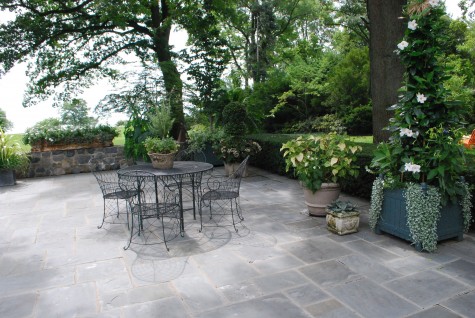 Some of my favorite plants that are predominantly green, or green and white? Lime irisine, phormium, white Sun Parasol mandevillea, maidenhair ferns, white trailing verbena, lavender, licorice, dichondra, basil, plectranthus of any kind, and euphorbia Diamond Frost.
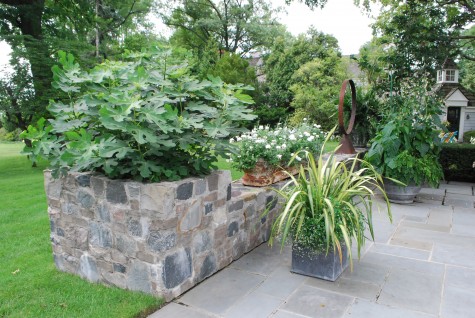 The giant growing nicotiana mutabilis on the far right is the only plant that flowers with any color to speak of. I cannot hold those pink flowers against one of my most favorite summer plants.
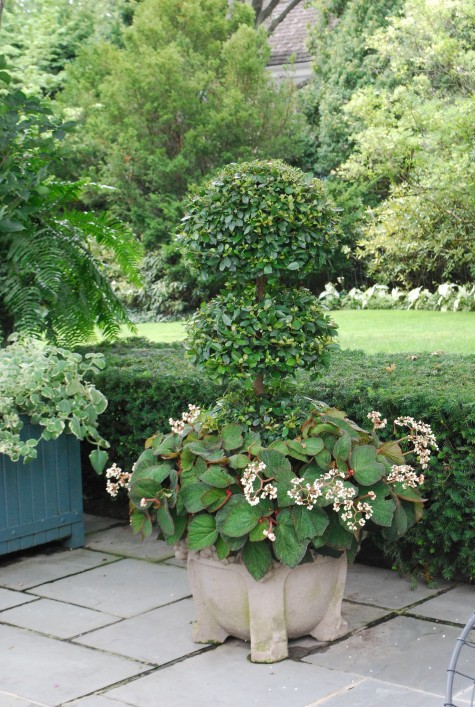
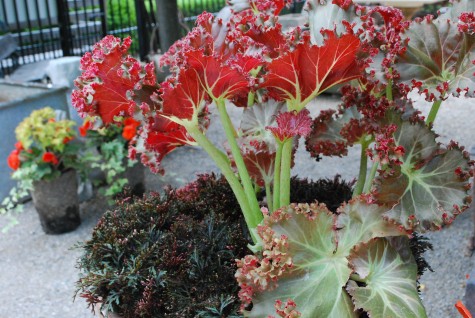
I winter a number of triple ball brush cherry topiaries for this client-I sprinkle them all over the terraces. The begonia which is the underplanting here-I have not the faintest idea of its name. I just knew the texture, the shape of the leaf, and the plant habit would work well with this green scheme. A gorgeous green garden-I think I might have to have one.