In Anticipation


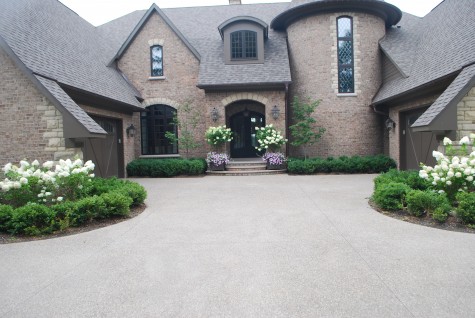
This client has a very distinct point of view about what she likes, and a sincere interest in the landscape.  She is a young person with a flock of young kids-how she manages to even think about it surprises me.  What we do for her is very low key and simple.  The hydrangeas on standard in her summer pots we winter over in the ground.  Most times we plant white, sometimes there is a little lavender or purple.   
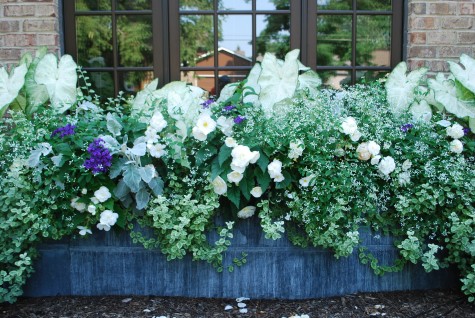
A few years ago we made these steel boxes for her; they sit on the ground, as her windows are very low.  I took this picture of one of those boxes September 5-this was the first time I had seen it since it was planted.  The white non-stop begonias were thriving; I was impressed.  They are not the easiest plant to grow. The heliotrope has faded from the picture, but the box by and large looked great.  June Bride caladiums, euphorbia Diamond Frost, cirrus dusty miller and variegated licorice have all grown together quite companionably.    
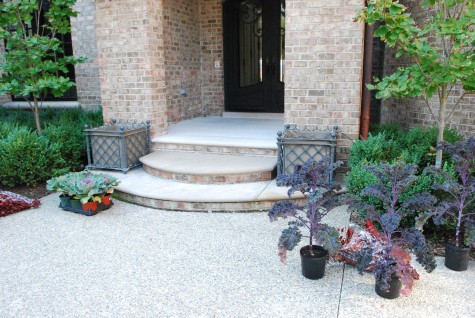
All good things must come to an end-I wonder if Chaucer’s summer pots were waning when he wrote this.  Can you hear me sighing?  Steve cleared out all but one of my deck pots yesterday-I cannot bear that look of decline.  I should do like this client.  When summer comes to an end, she moves on to the next season.  Having kids, she was interested in a containers that would look just right for Halloween. 
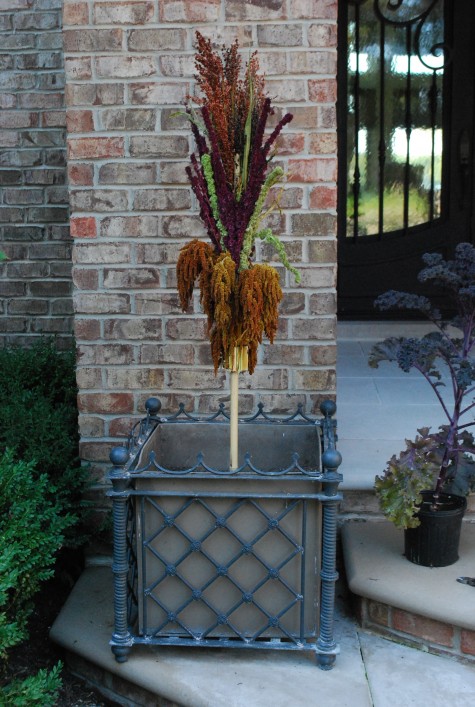
I like Halloween.  The best are all the kids that come to the door in costume.  Next best, I love any holiday that depends greatly on the plants and props native to the season, presented in a suitably holiday way. I could not engineer anything as horrifying as what the average 10 year old could dream up, so I focus on the plant part.  First up for these pots, a centerpiece of broomcorn, and 3 colors of amaranthus, zip tied to a stake that goes most of the way to the bottom of the box.  A good deal of the soil had been removed as part of the rootball of the hydrangea on standard.  We topped up the boxes with new soil. 
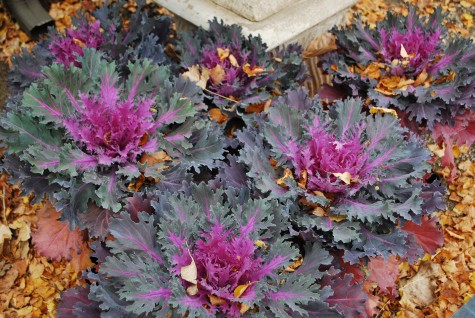
The cabbages and kales I have written about before.  There color only gets better, as fall progresses.  But when I am thinking Halloween, my kale of choice is Redbor.  Redbor kale is stalky growing, and krinkly leaved.   
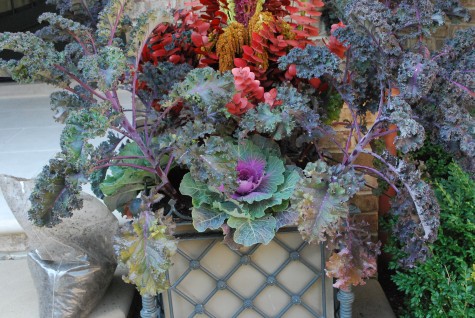
The color of redbor is an amalgamation of grey, turquoise, purple and black.  As the night temperatures decline, that color gets a little more emphatically black.  Black for Halloween?  Perfect.
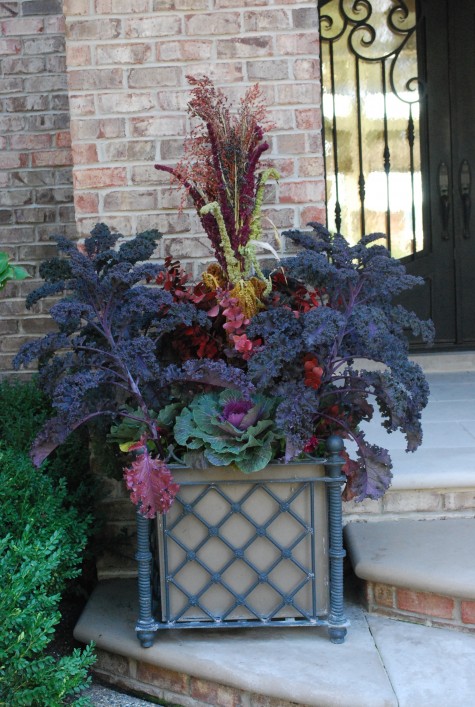
I planted the kales in the outermost corners of the box, and angled them out.  Tied around the bottom of the centerpiece-2 bunches of molten orange dyed eucalyptus. We like a little fire going on at the center.  The turquoise and cerise cabbage front and center is a little tame and off color,  but it will keep the planting looking great and full until Halloween.      
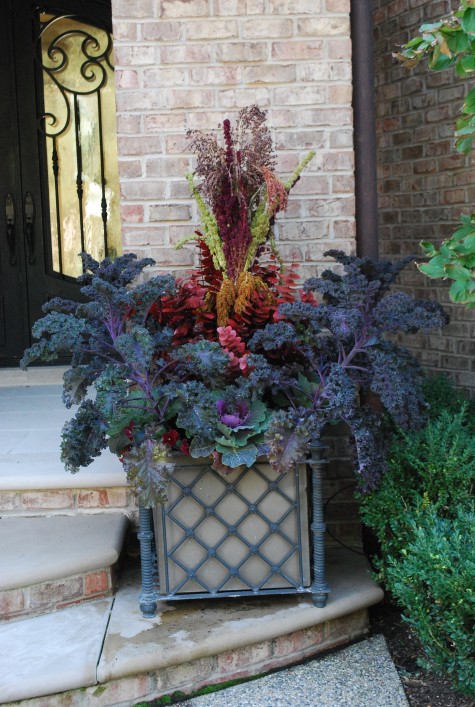
The orange eucalyptus appears to have pushed to redbor kale outwards.  This is a very easy way to be spooky-plant the plants out of kilter.  What might take the place of that cabbage in the front?  A lit pumpkin?  A skull?  A giant spider?  A skeleton hung over the side? A mummified hand dripping in plastic blood?    No doubt I will consult the kids about that.  In the meantime, my client is happy to have a lively planting in her boxes at the front door.   
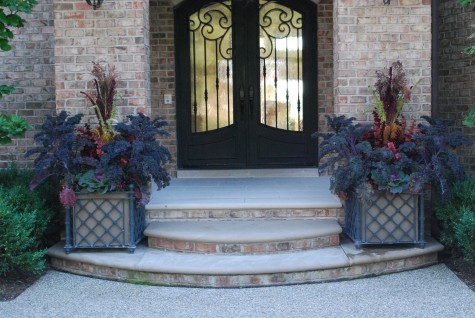
Every nursery, farmer’s market, roadside stand, grocery store, garden and vacant land has materials that look great in fall pots.  As for the spiders, skulls and skeletons that need to be added that one night, any kid can help you get ghoulish.
Black Leaves

Plants with leaves a color other than green-exotic.  I have never counted the numbers of plant species in my yard, but every one of them has green leaves. In my green world, a red/black or purple/black leaved plant would most surely be exotic. That exotic quality attracts attention. The numbers of urban properties featuring a Bloodgood Japanese maple somewhere in the landscape is an indication of the attraction of black.  Central to the color composition of these four containers of mine several years ago pivoted around purple oxalis triangularis and purple threadleaf alternanthera.  The purple black oxalis in the center pair of rectangular planters has the best black color of any black leaved plant I know.  It is not muddy.  The black/red alternanthera is not bad either.  But critical to the appearance of that black has to do with the choice of company.  Gartenmeister fuchsia has black/green leaves.  Variegated licorice provides startling contrast. These plantings are all about good company.

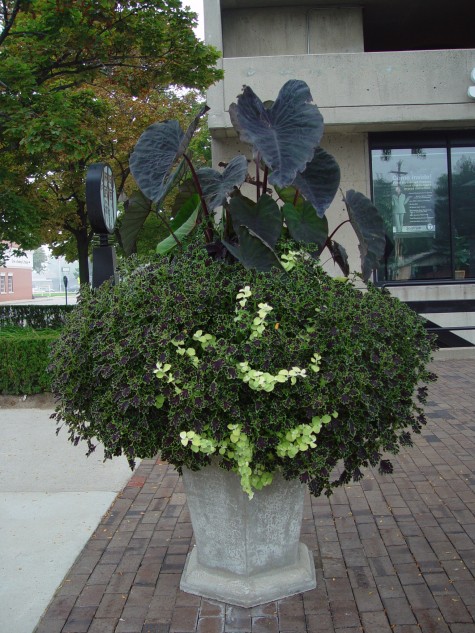
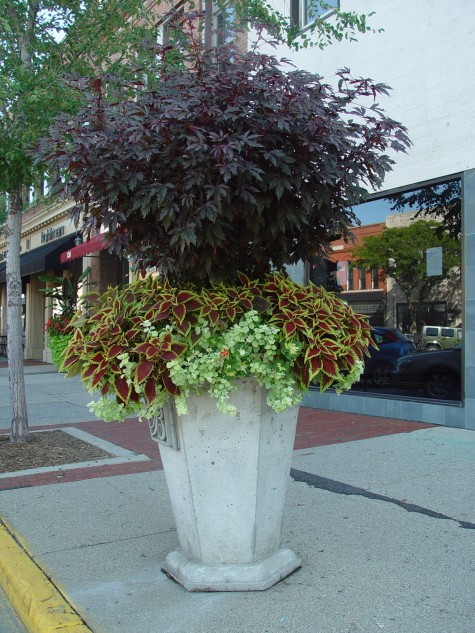
Black calocasia has plenty going for it.  The very large wavy leaves are a standout.  Its willingness to grow is only limited by the size of the container in which it is grown.  For me, the difficulty is finding suitable companion plants.  As a general rule, once I start a container planting with other than green leaves, I need the companionship of some other than green-leaved cast members to make the entire picture work.  Inky fingers coleus is a favorite. The black leaves are outlined in the most outrageously electric kelly green.  In this container, the color black is the dominant element.  The contrast of leaf size is swell.  A small dash of lime licorice, which in this instance reads as green tinged yellow, is just enough to keep all that big black from looking gloomy.

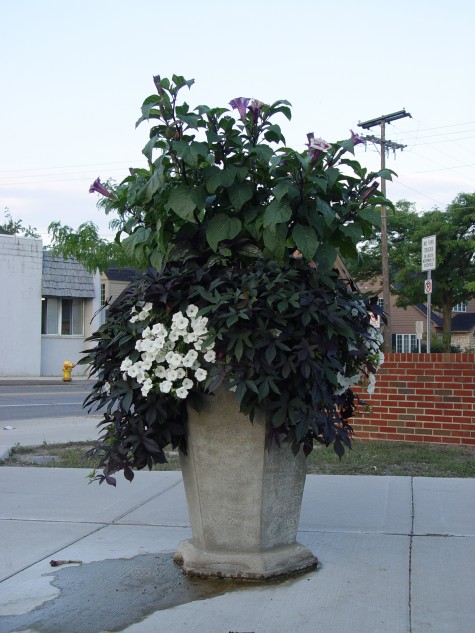
Black sweet potato vine is a beautiful color and texture, provided you plan for the cascade. This is a good ratio of plant to pot.  Pots completely smothered in black sweet potato vine have that Cousin It look.   In this planting, I knew the green leaves of the white petunias would never be a part of the big picture.  Petunias bloom so heavily one can ignore the size, shape and color of the foliage.  The double, or hose in hose datura has green foliage, but it is very dark green.  Moody, this planting.  Moving off moody, it has balance.  Black can be dominant, or fade away.  Container plantings are all about partnerships, relationships.  Like any other partnership or relationship, things can be difficult.  Most of what I do as a gardener is weed, and mediate. 


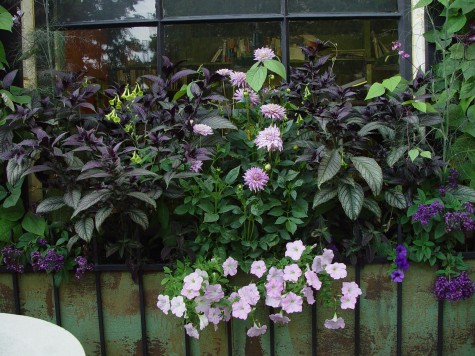
The leaves of Persian Shield are a color complex of purple, green and black. A dark foliaged dahlia harmonizes.  The lavender flowers contrast in such a way to assign depth to this discussion of black. 

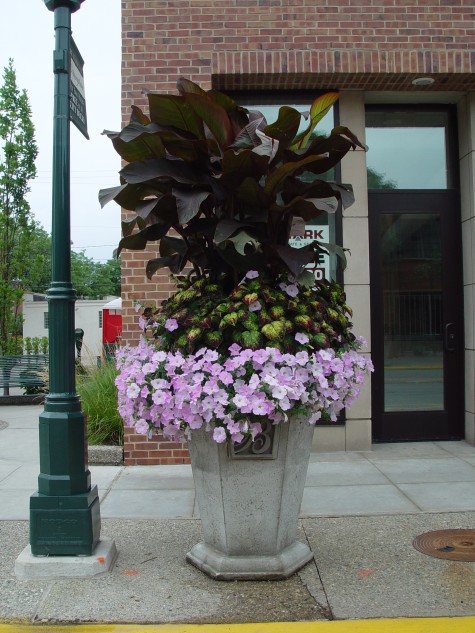
The canna Australia is a better black than Calocasia black.  I attribute this to the substance of the leaf.  Calocasia leaves are very thin; they transmit light.  That transmitted light dirties the color.  Canna leaves are very thick; these leaves are emphatically black.  Opaque-not transluscent.  The representation of color is strong and dramatic.  The edges of the leaves of the coleus Arizona Sunset repeat that wine red black in a different texture and dimension.  The Misty Lilac wave petunia skirt lights up the night life going on above.

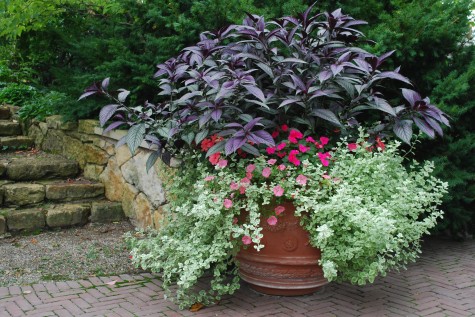
This planting of Persian Shield, pink New Guineas, peach petunias, and variegated licorice is from my yard a few years ago.  The variegated licorice picks up the cool green of the Persian shield.  A little intermediary peach petunia action and some hot pink New Guinea flowers feature the iridescent quality of those featured black leaves.  

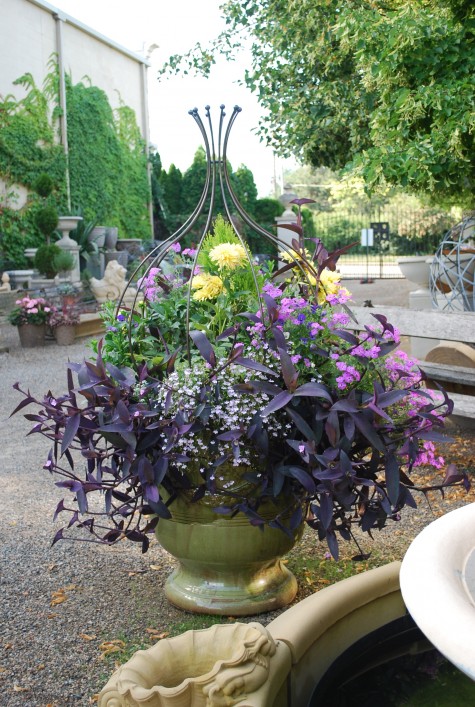
Moses in the Cradle is a common name for a black variegated Wandering Jew-I think.  I have always known this plant to be a tradescantia, but some literature indicates otherwise.  That said, this black foliaged trailing tropical is amazingly tolerant of cold, sun, shade,-whatever weather comes its way.  Planted in early spring with Italian cypress, yellow dahlias, annual phlox, this planter still looks good in August.  Imagine this planter without that frothy skirt of Moses-boring at best.  On the outs, at worst. 


Hibiscus Red Shield is a red/black foliaged plant that will grow to astonshing proportions over the course of one season.  Not surprisingly, the flowers are insignificant.  Note that I underplanted it with a red coleus with lime edges, and lime licorice.  Green leaves underneath would have put out the fire.  Mix the variegated plants with more variegated plants.  Should you decide to go for black, chose your chorus accordingly.

Loud And Clear

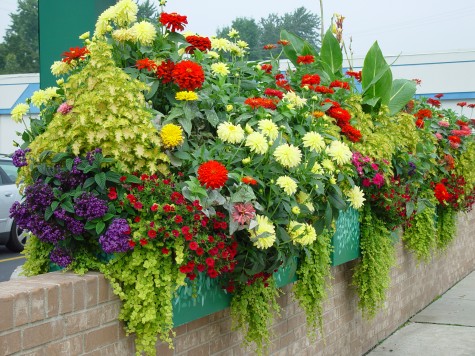
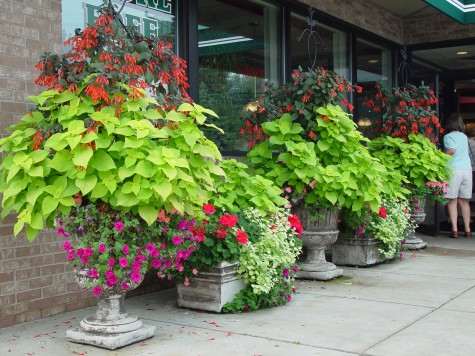
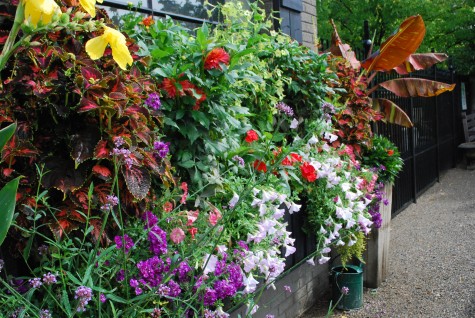
Airy and wispy container plantings are not for everyone.  Furthermore, there are some places that they simply don’t work.  These planter boxes sit on the wall enclosing a parking lot of a restaurant only a median away from a busy four-lane road.  The speed limit is 45mph; the noise is deafening.  In the 2.5 seconds it takes to zip past this wall, there is an impression that will register with even the most garden-deaf driver.  The combination of colors is ebullient, enthusiastic, splashy-friendly.  The boxes are overflowing; the plants all look healthy.  My client takes great care of them-just like she takes care of her restaurant. That message is loud and clear.              


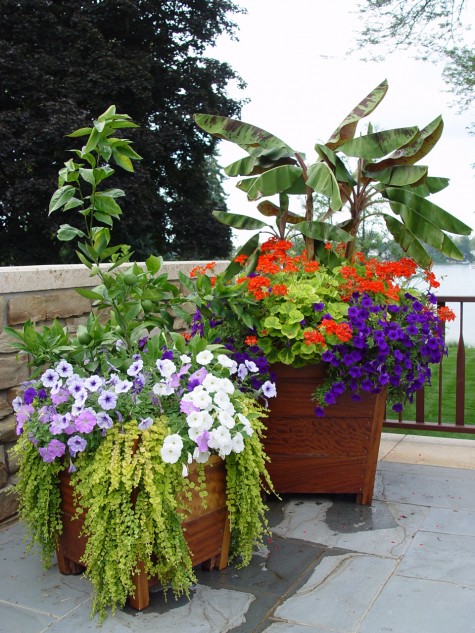
These large Belgian boxes are visual stoppers at the corner of this terrace.  They ask for a robust planting.  Plants with large leaves and substantial size go a long way to capture the eye.  Bananas, calocasias, alocasias, cannas, farfugium, tibouchina grandiflora-there is a long list of tropicals that can easily handle holding down the fort. Vigorously growing plants in bright colors will chime in.  The smaller planting of a lemon tree, and a pastel mix of petunias, though robust,  would be lost without the big backup.       

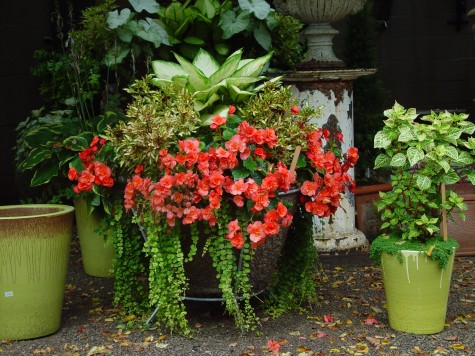
A solidly robust planting has much to do with the choice of plants.  The three plants comprising this pot have grown together in a shape that is dense and low overall. Just try to get by it without looking.  Chartreuse makes every other color pop all the more; creeping jenny is a vigorous perennial that loves some shade, and will grow in a bog. There is nothing subtle or airy about this planting-this is by design.   

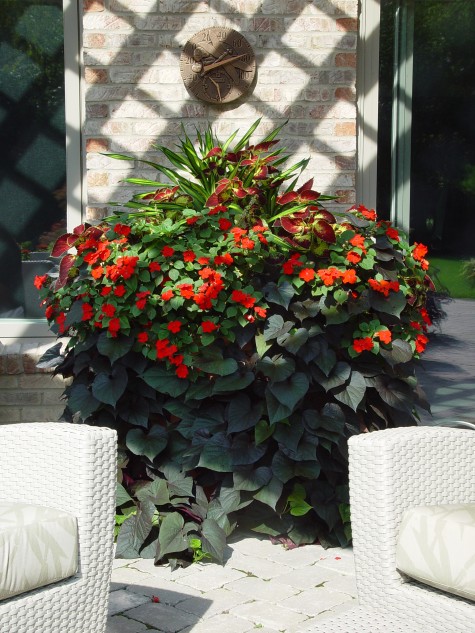
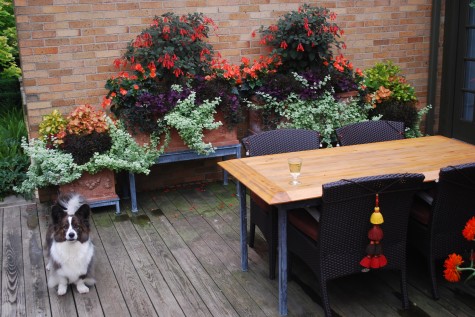
I can say the same for this pot.  It has grown so vigorously that the pot is no longer part of the composition.  Black and red; red and green-these color combinations are dramatic.  The contrast with the off white wicker furniture is all the more dramatic.  This modern furniture is very chunky and overscaled. These two chairs have some planted company that is even larger, and more chunky. The topknot comprised of a dwarf yellow variegated dracaena and a coleus-that look is in no way planned.  Just natural.  

Gartenmeister fuchsia is an upright variety that handles hot weather like a pro. It can grow to a substantial size, and can easily be wintered over.  However, the dark foliage and small tubular dark orange flowers are rather subdued.  A tutu of lime green coleus turns up the heat.  The red geraniums,magenta petunias and lime licorice don’t hurt. This fuchsia is naturally very airy growing; its woody shoots grow every which way. The colues masks all of those wild hairs; these plants grew together densely in a cone shape.  

Big growing plants are accompanied by lot of leaves.  The leaves of the trailing verbena and petunias are barely visible in this picture, but there is no mistaking the coleus and dahlia leaves.  My office is dark, given this window box planting.  Any container design warrants some study.  Do I need this planting to block an untoward view?  Do I want a container to stand out, or integrate into the large landscape? Right now is a very good time to be looking over your container designs; I take notes.    

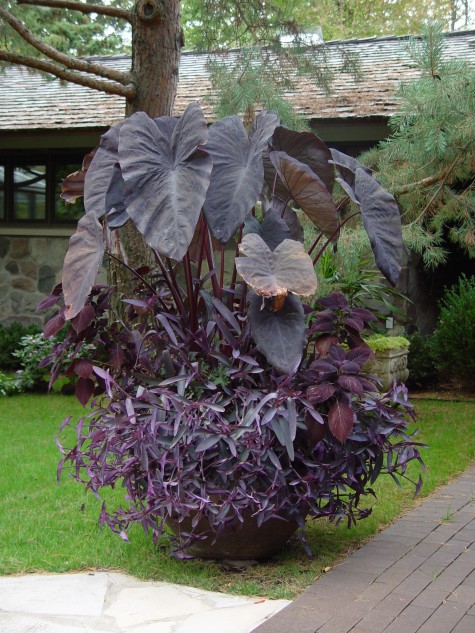
A very large terra cotta pot with a purple chocolate glaze is home to this monochromatic planting. Black calocasia, a purple black leaved coleus, and moses in the cradle, makes a sizeable statement about volume and texture.  Calocasia ia a very obliging tropical, in that it will grow as big as the container into which it is planted.  This planting is the better part of 8 feet tall.  This discussion of texture anf form-loud and clear.

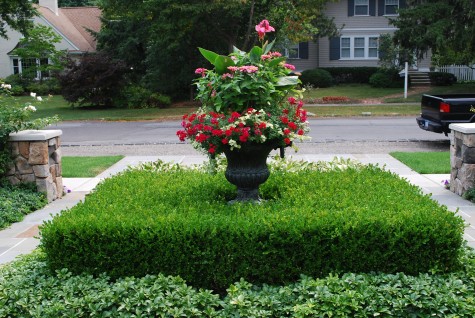
Cannas and zinnias-they both are big growing and leafy.  A skirt of trailing geraniums and lime licorice add lots of color at the base.  A neighbor standing behind this pot on the sidewalk would not be seen.  Sometimes a blocky and solid planting can organize a space-in this case, it presides over a densely growing square of boxwood.  Solid, dense and visually clear-this is how I would describe this spot in the landscape.

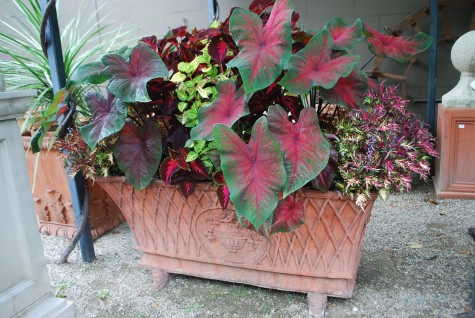
Large leaved caladiums depend on their size and shape to make a statement.  I like how lush a well grown plant looks.  I am leaning towards planting a lot of them next year.  Loud and clear is much about vigor.  I would much rather work to keep a growing fool of a plant in line, than every day have to convince a prima donna of a plant to choose life.  This is a personal preference. Even the subtle and wispy growing plants that I favor are strong growers.  

But back to loud and clear.  On that list of plants that can deliver that for you-big growers, dense growers, robust growers, large leaved plants, large growing plants, brilliantly colored flowers.  Brilliantly colored leaves; leaves with great shape and texture.    It is up to you to put them all together in a way that enchants your eye.

Night Light

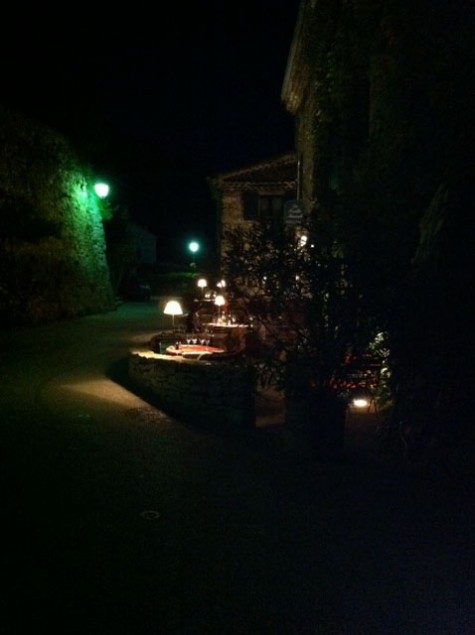
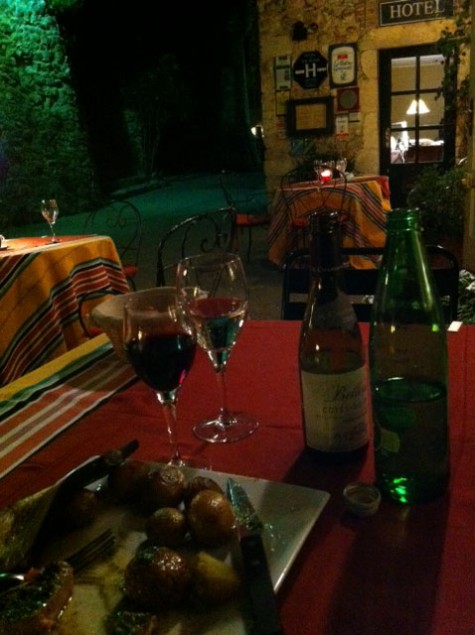
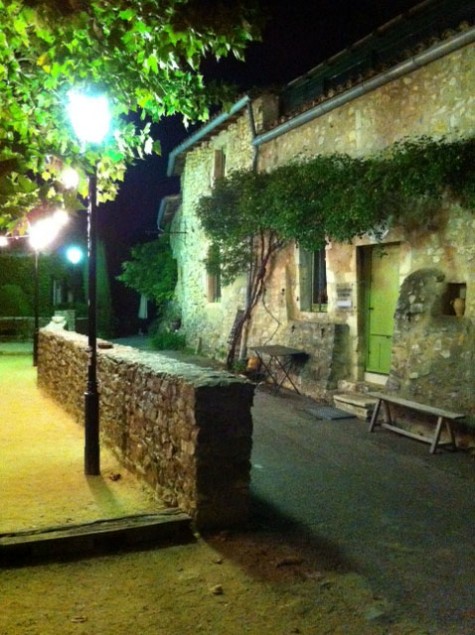
Rob has been putting in some very long days.  He doesn’t quit until the daylight is gone.  He sent me an entire group of pictures about his 9 o’clock dinner hour.  Rural France is not in any way lit like my neighborhood at night.  The light is intense, but just every so often.  The dark is punctuated by the occasional light.  I cannot imagine having dinner outdoors only inches from the road.  Public American landscapes are all about medians, curbs, and most importantly, big spaces.  Big segregated spaces.  Rural French landscapes are about a very close relationship between travel, commerce, farming, neighborhood, and the natural landscape.  It is a small country.  Dinner on the edge of the road-a unique experience.         

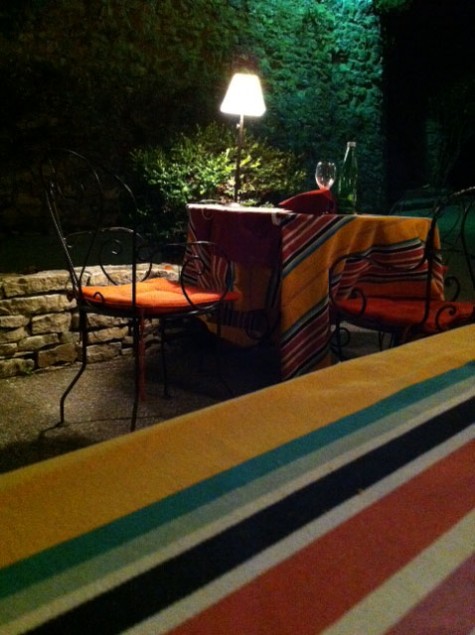
 The lamp illuminating the striped tablecloths-just enough light to make the space cozy.  I have mixed feelings about landscape lighting.  Lighting for safety’s sake is a given.  Stairs, doorways and sidewalks are spaces that get used regularly at night need to be well lit.  Lighting the landscape is so easy to over do. The best light-natural light. Sunny, overcast, early late, stormy-natural light is much about climate and weather.  What comes next is about artifice.  How much artifice is too much, and how much is just right?       

Up lighting gives every element of the landscape a theatrical look-as in the the drawings and paintings Degas did of dancers in the theatre.  Down lighting, expertly done, believably replicates the the light of the moon.  In this picture, all of ther light is coming from the top down, or from the side.  Up lit trees have a very theatrical and unnatural look to them.  I light my pumkins in my pots at Halloween-it gives them an extra measure of holiday creepiness.  At the Christmas holiday, I pull out all the lighting stops.  We have more dark than light, and our natural light is likely to be about grey and overcast.  

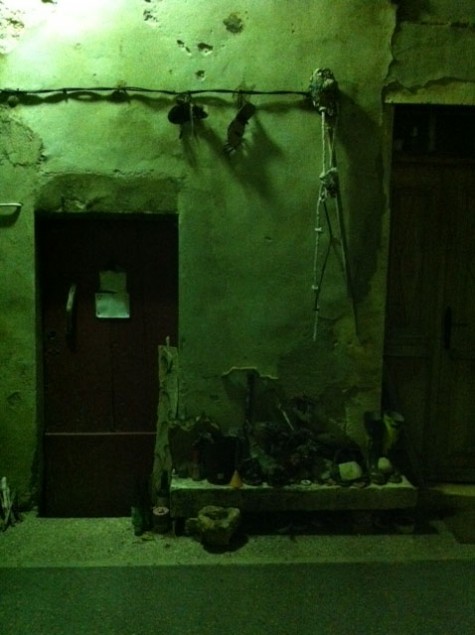
Rob’s pictures are provocative.  Perhaps uneven lighting creates an exciting atmosphere.  Very bright street lighting is about providing safe passage, but has that carnival, rather than theatrical look to it.  Black shapes, and long shadows are visually striking. The CFL’s-or compact flourescents are cool to the point of being cold.  The CFL’s,  in combination with incandescent lighting-the French are doing such innovative work with combining the two.     

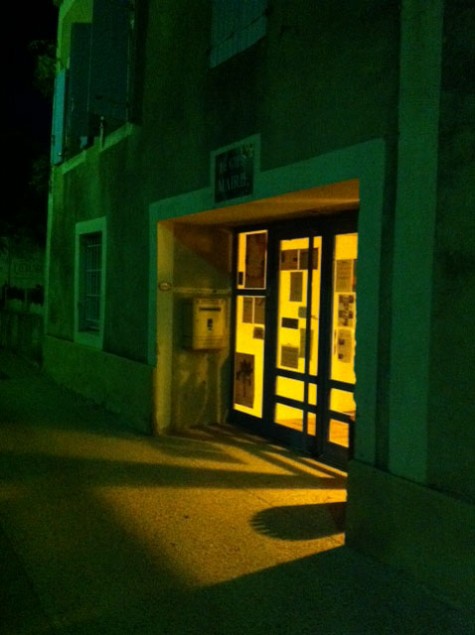
Artificial light is not one bit like the light from the sun.  This is not to say that one source of light is better than another.  Just different.  This lit doorway has a lonely but starkly beautiful look.  This is a landscape experience of a different sort.  Rob has a big interest in lighting.  I am sure I will see the results of this evening in France somewhere is his winter and holiday lighting schemes.   Rob’s late evening in France was as much about the light as the place.  The deserted streets in the evening is much different than in my neighborhood, where there is activity almost all night long.  Every season I vow to spend more time thinking about how a landscape can be beautifully lit.  This is not to say I do not consider the lighting-I have a contractor whose point of view and skill I really like.     

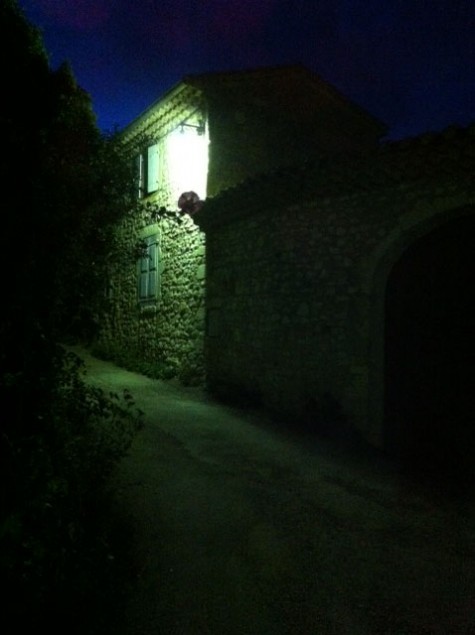
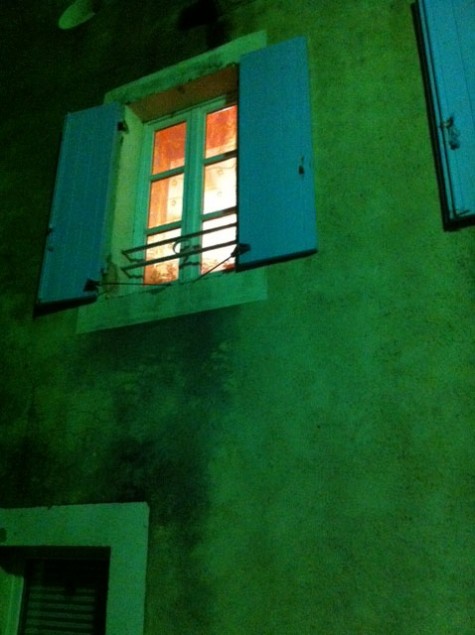
The warm light illuminating this building comes from within.  The green walls appear all the more blue, given the compact fourescent light from the street. The green walls, blue shutters, and orange light-vivid.

This is the mayor’s office.  The warm yellow orange light from the interior spilling out into the street is comforting.  The contrast of light and dark is graphic and moody. 

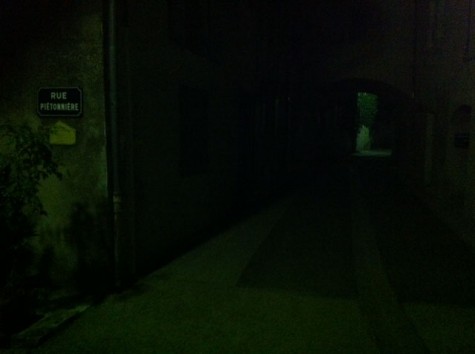
The sign designating the Rue Pietonneire is still visible, even in low light at the end of the day.  Haunting, this.