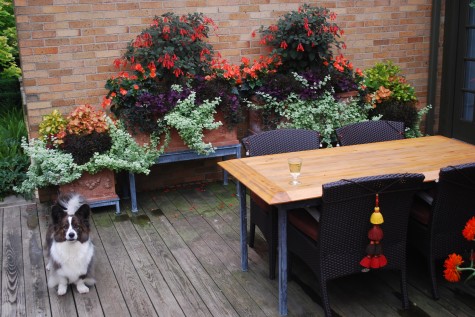
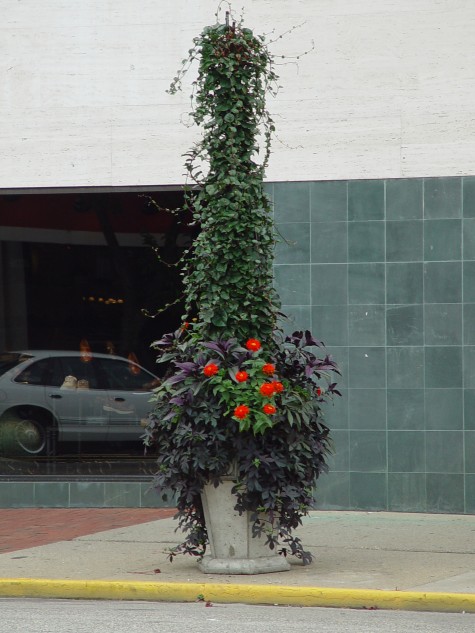
 Plants with leaves a color other than green-exotic. I have never counted the numbers of plant species in my yard, but every one of them has green leaves. In my green world, a red/black or purple/black leaved plant would most surely be exotic. That exotic quality attracts attention. The numbers of urban properties featuring a Bloodgood Japanese maple somewhere in the landscape is an indication of the attraction of black. Central to the color composition of these four containers of mine several years ago pivoted around purple oxalis triangularis and purple threadleaf alternanthera. The purple black oxalis in the center pair of rectangular planters has the best black color of any black leaved plant I know. It is not muddy. The black/red alternanthera is not bad either. But critical to the appearance of that black has to do with the choice of company. Gartenmeister fuchsia has black/green leaves. Variegated licorice provides startling contrast. These plantings are all about good company.
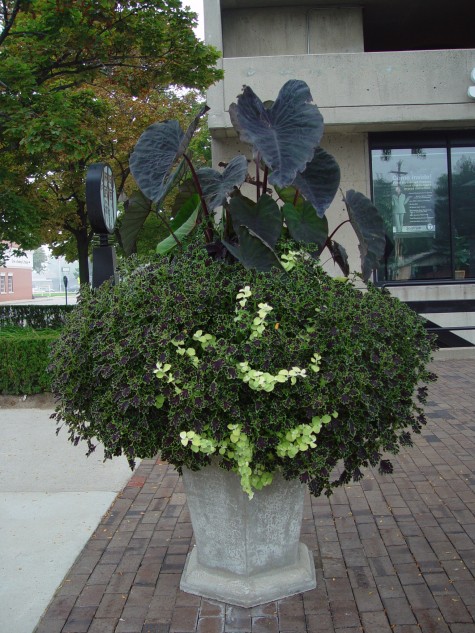
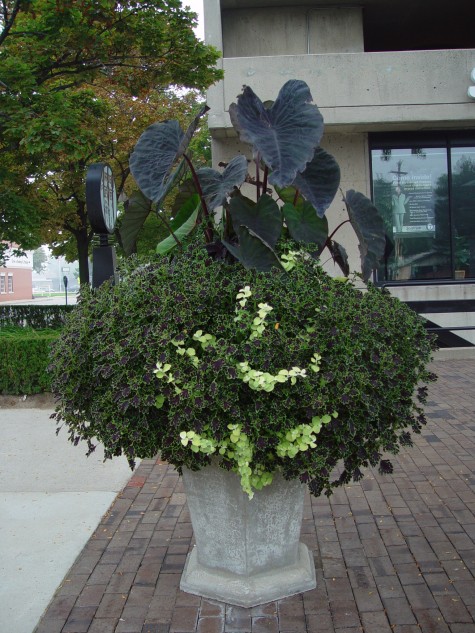
Black calocasia has plenty going for it. The very large wavy leaves are a standout. Its willingness to grow is only limited by the size of the container in which it is grown. For me, the difficulty is finding suitable companion plants. As a general rule, once I start a container planting with other than green leaves, I need the companionship of some other than green-leaved cast members to make the entire picture work. Inky fingers coleus is a favorite. The black leaves are outlined in the most outrageously electric kelly green. In this container, the color black is the dominant element. The contrast of leaf size is swell. A small dash of lime licorice, which in this instance reads as green tinged yellow, is just enough to keep all that big black from looking gloomy.
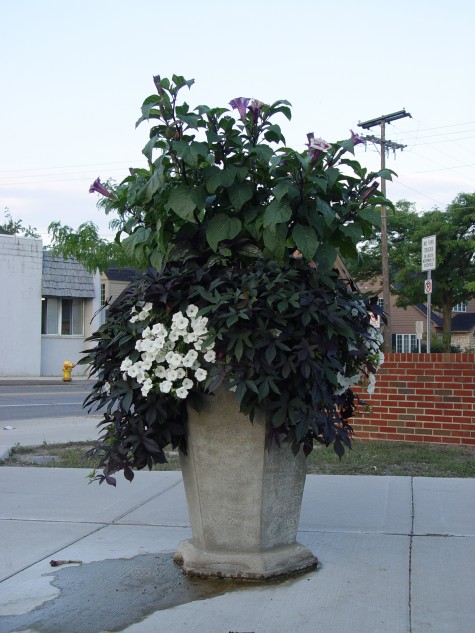
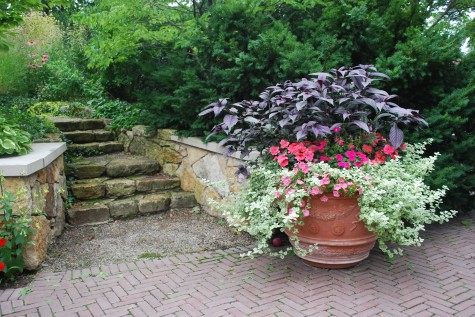
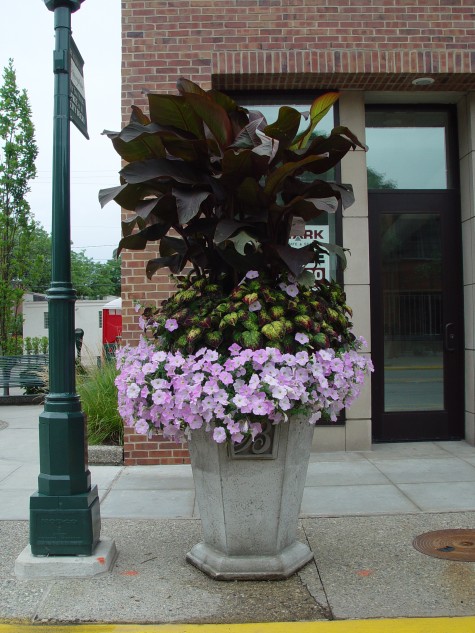
Black sweet potato vine is a beautiful color and texture, provided you plan for the cascade. This is a good ratio of plant to pot. Pots completely smothered in black sweet potato vine have that Cousin It look. In this planting, I knew the green leaves of the white petunias would never be a part of the big picture. Petunias bloom so heavily one can ignore the size, shape and color of the foliage. The double, or hose in hose datura has green foliage, but it is very dark green. Moody, this planting. Moving off moody, it has balance. Black can be dominant, or fade away. Container plantings are all about partnerships, relationships. Like any other partnership or relationship, things can be difficult. Most of what I do as a gardener is weed, and mediate.
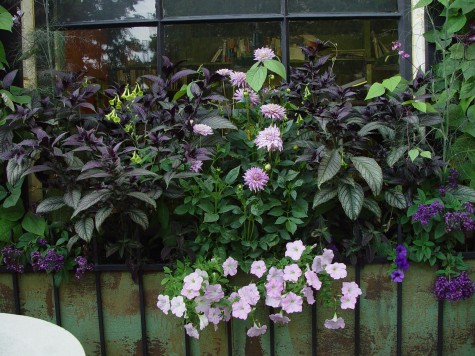
The leaves of Persian Shield are a color complex of purple, green and black. A dark foliaged dahlia harmonizes. The lavender flowers contrast in such a way to assign depth to this discussion of black.
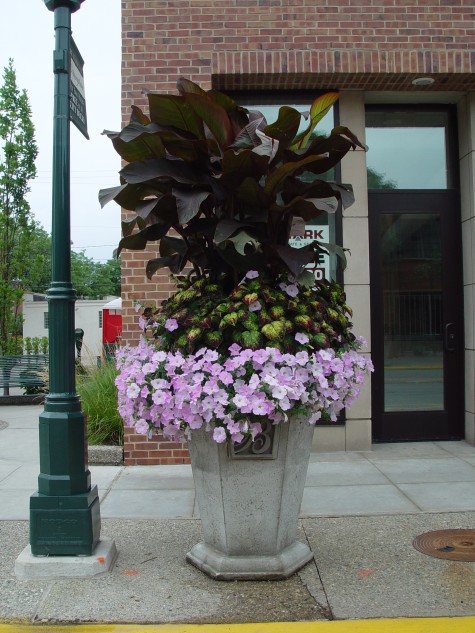
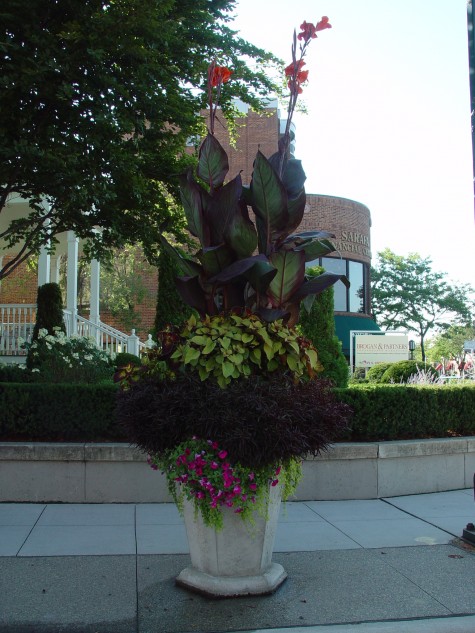
The canna Australia is a better black than Calocasia black. I attribute this to the substance of the leaf. Calocasia leaves are very thin; they transmit light. That transmitted light dirties the color. Canna leaves are very thick; these leaves are emphatically black. Opaque-not transluscent. The representation of color is strong and dramatic. The edges of the leaves of the coleus Arizona Sunset repeat that wine red black in a different texture and dimension. The Misty Lilac wave petunia skirt lights up the night life going on above.
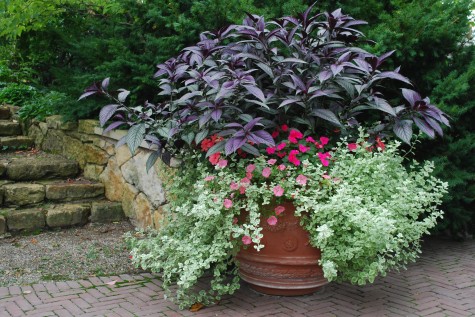
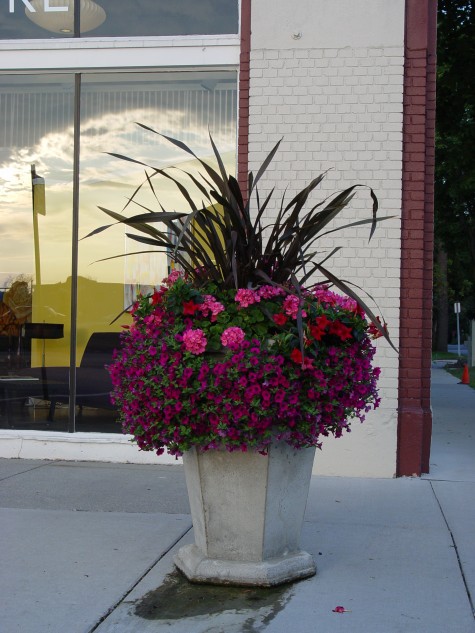
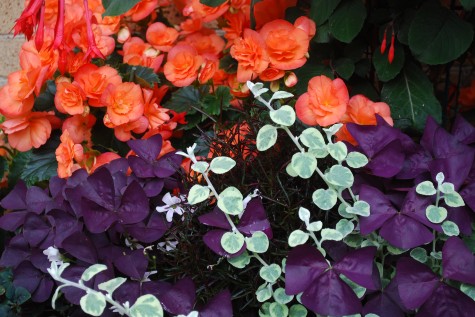
This planting of Persian Shield, pink New Guineas, peach petunias, and variegated licorice is from my yard a few years ago. The variegated licorice picks up the cool green of the Persian shield. A little intermediary peach petunia action and some hot pink New Guinea flowers feature the iridescent quality of those featured black leaves.
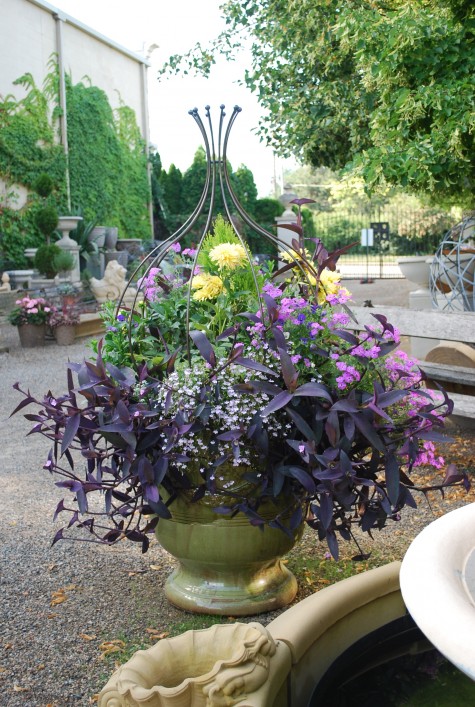
Moses in the Cradle is a common name for a black variegated Wandering Jew-I think. I have always known this plant to be a tradescantia, but some literature indicates otherwise. That said, this black foliaged trailing tropical is amazingly tolerant of cold, sun, shade,-whatever weather comes its way. Planted in early spring with Italian cypress, yellow dahlias, annual phlox, this planter still looks good in August. Imagine this planter without that frothy skirt of Moses-boring at best. On the outs, at worst.
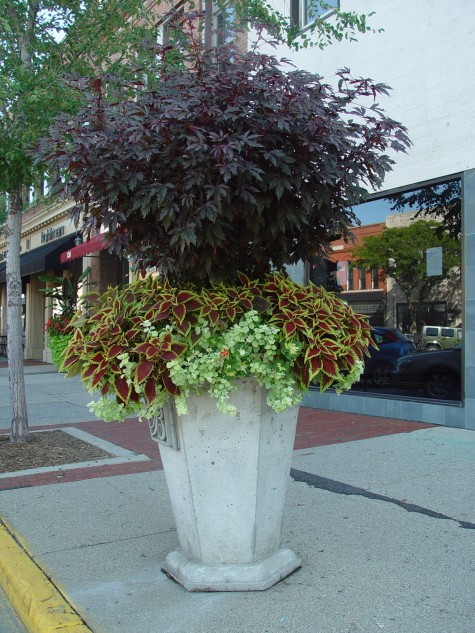
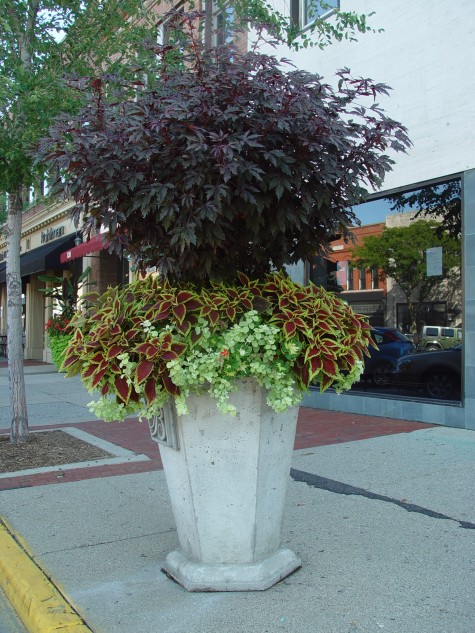
Hibiscus Red Shield is a red/black foliaged plant that will grow to astonshing proportions over the course of one season. Not surprisingly, the flowers are insignificant. Note that I underplanted it with a red coleus with lime edges, and lime licorice. Green leaves underneath would have put out the fire. Mix the variegated plants with more variegated plants. Should you decide to go for black, chose your chorus accordingly.
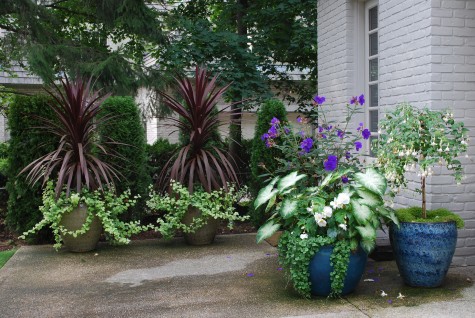
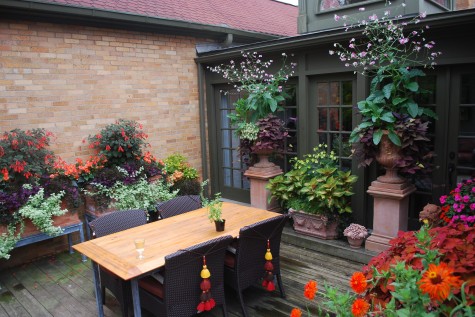
 I like the fireworks going-on feeling of my terrace pots this year. Most of that has to do with how they have grown. I picked the colors and plants yes, but nature has proved unusually cooperative. We have had cool temperatures all summer, and now, regular rain. The usual bugs and disease must be at someone else’s house.
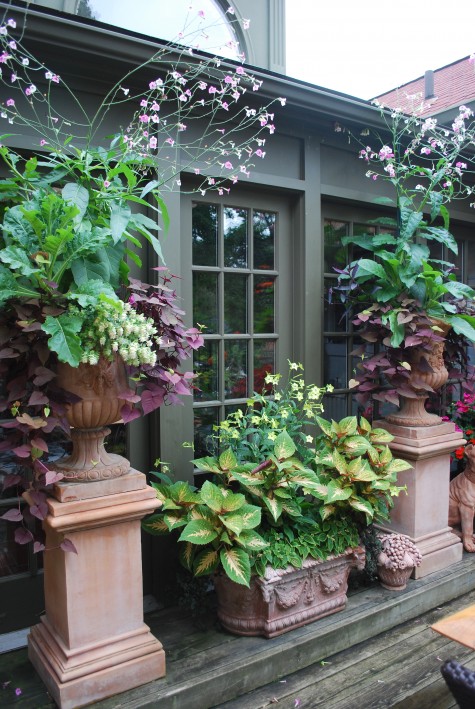
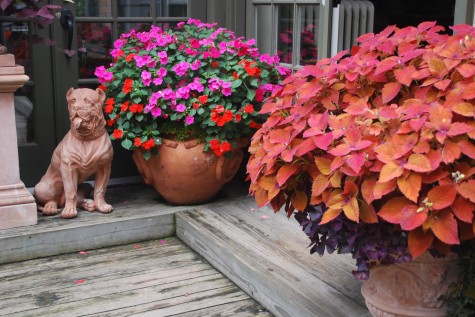
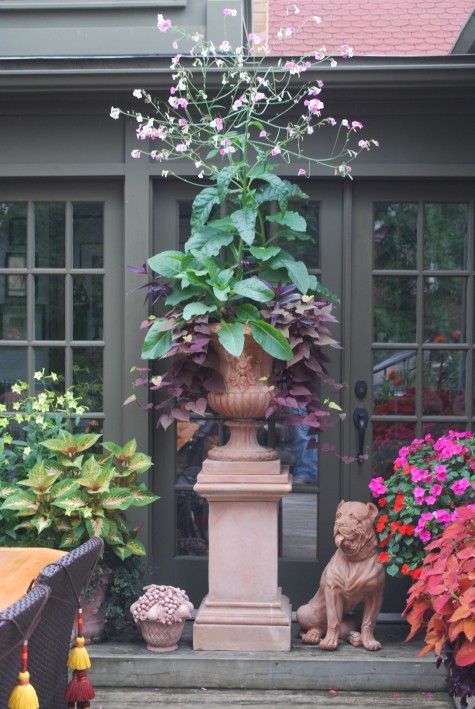 The Mital terra cotta gargoyle pots on their pedestals have never looked so rowdy and profuse. I grow nicotiana mutabilis every year for exactly the reason you see here. The showy oregano in this pot gave up and died, but I hardly notice. Besides, this pair of pots started out mismatched-I like that they will end up mismatched.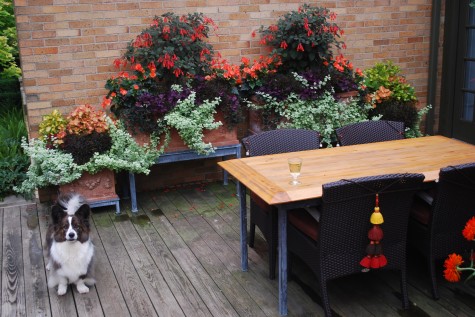
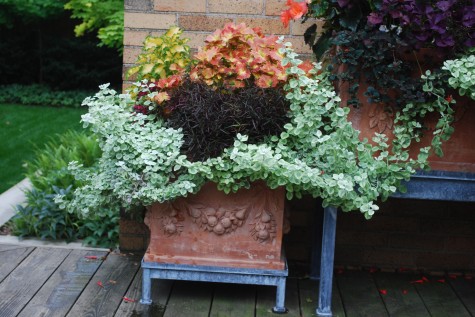 These two licorice plants have made a flared skirt of themselves. The shape is especially attractive with the garland pattern on the pot. Did I plan this part-absolutely not. Anyone who gardens gets to enjoy the unexpected.
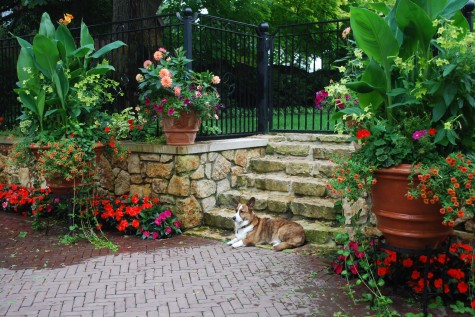 The New Guinea impatiens this year are unbelievably gaudy-what fun. Even my million bells, which usually sulk as I have very alkaline water, are cooperating. My dahlias do not have mites or mildew. The cool weather has slowed the flower production on the cannas, but the foliage alone is well worth having.