Holiday Red

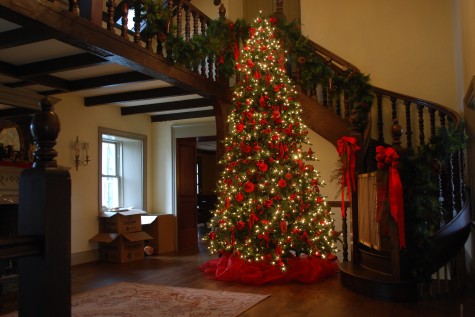
Everyone reacts strongly to color-I am no exception.  I am not crazy about red in the landscape.  I design with red foliaged trees and shrubs on rare occasions.  Something or someone has to nudge me in this direction.   I am a card carrying advocate of green.  All kinds, shades, and manner of green.  In summer container gardens, red can be ruthlessly overbearing.  Too bright and cheery.  But I will try anything-won’t you?  The year I featured red in my containers was a good year, but not my favorite.  Red in the spring-that color after a long winter is so welcome.  Red tulips underplanted with lavender pansies-scrumptious.  Red at the holidays is a blessing.  The skies, the ground, the trees- most everything in the landscape goes drab. Trees with persistent red winter fruit, and red-stemmed shrubs are prized by northern gardeners, for good reason. I decorated this Christmas tree some years ago; I still love this celebration arranged around red.  My clients had just moved in.  Moving boxes were everywhere.  This red ornamented tree, and its red sinamay tree skirt stood out-a reminder that the color red celebrates every warm gesture people make at the holidays.  Instantly this newly restored house felt much more like home.  
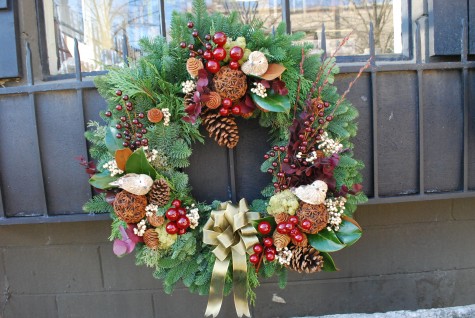
I have a client that orders up a pair of holiday wreaths.  One for her front door, and one for the library.  I concentrate on whatever natural materials are available to me.  Pine cones, anise balls, red preserved eucalyptus, reindeer moss, platys seed pods, dry tallowberries, fresh magnolia leaves pack this mixed green wreath with a variety of colors and textures.    
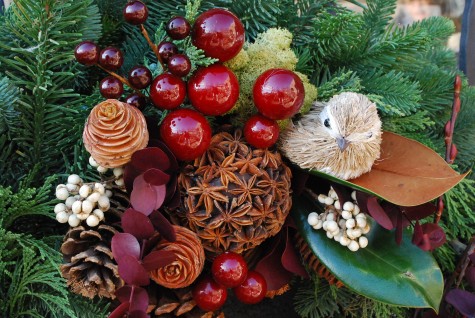
The red berry picks energize all of the other elements.  No real red berries exist in my garden  like these, but I have no problem with these shiny faux red berry picks.  It’s the red that represents the spirit of the holidays.       
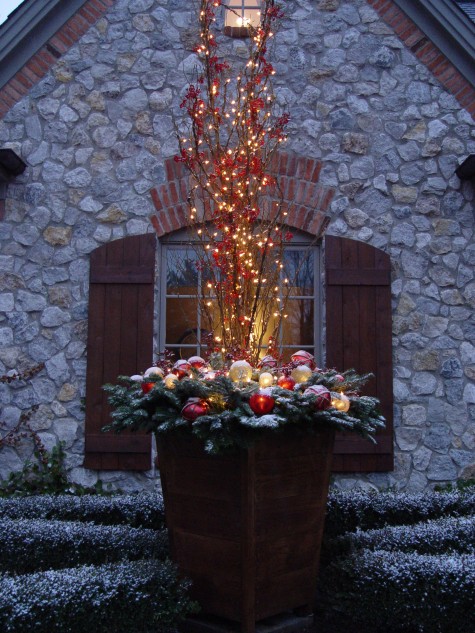
I decorated this house for the holidays 6 years ago. I have published a few of my pictures from this project before; I still like it.  The red light covers look like glass ornaments during the day.  They glow red at night. The lit vertical stems are intertwined with a few very long red berry stems.  That red reads from a distance both day and night.  In early evening, the landscape is muted and somber.  This red in the wood boxes is a visual version of happy holidays, friends and family-welcome to this home. 
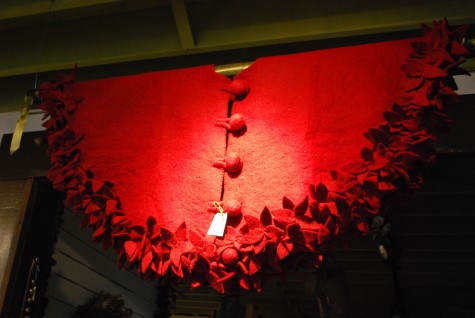


Holiday red can take a lot of forms.  Red ribbon, berry stems, preserved eucalyptus,  pomagranites, apples, red twig dogwood, glass ornaments-in this case, a red felt tree skirt with a felt pointsettia petal border.        
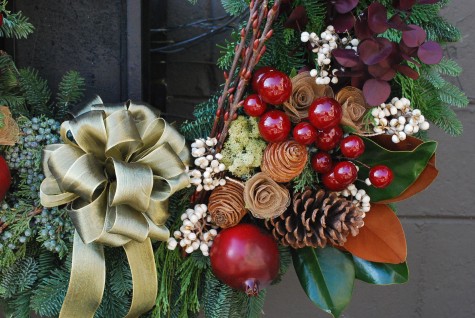
Red can be very dressy. 
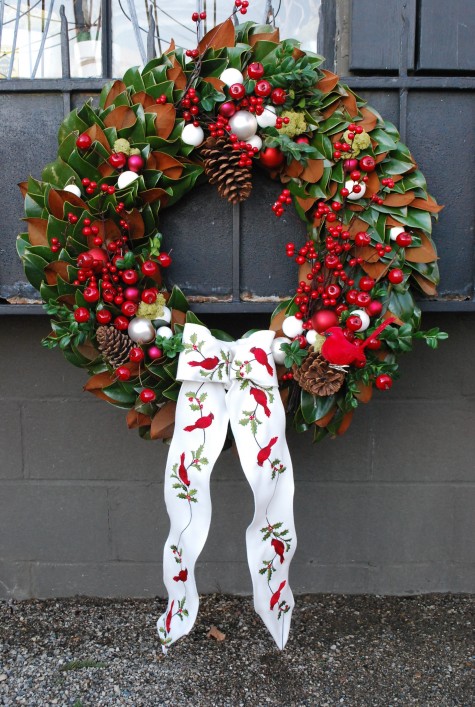
Red can also be simple and striking. The client who gets this wreath has a collection of nutcrackers that sit on her porch for the holidays.  The colors of those figures are bright, and accented with lots of white.  In this case, the white ornaments and white based velvet ribbon help pop that red all the more. 
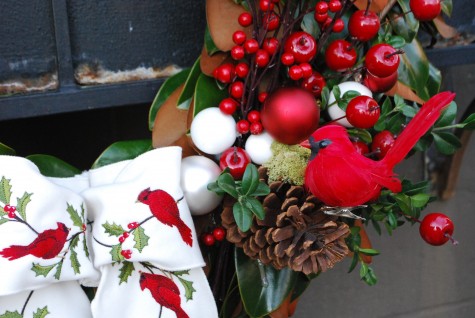
The cardinal on this wreath is the last of the 256 of them we had in the shop.  Gardening people appreciate the birds; cardinal red is the name of one of the cultivars of red twig dogwood whose branches we stock at the holidays.       
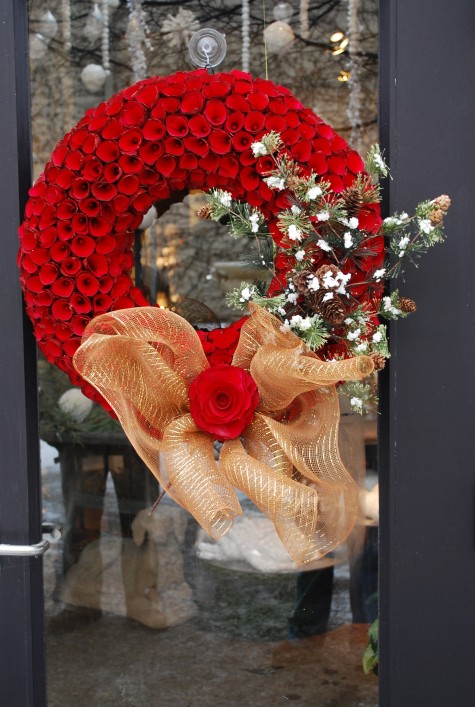
 

This wreath made of giant wood curls, and its wood rose have been dyed the most intense shade of red.  Though red may be a very traditional holiday color, it never fails to catch my eye.  Should your holiday decorating plans seem a little anemic, try a little red.  
 

Twig Time

Our leaves are finally beginning to turn color, and drop. Or drop without having turned color at all, as the case may be.  The grape leaves on the fence were beautiful this morning, with the sunlight coming through.  Once the leaves have dropped, our landscape is much about the twigs, the trunks, the branches and sticks.  This spot will soon be a plane of brown woody vines.    

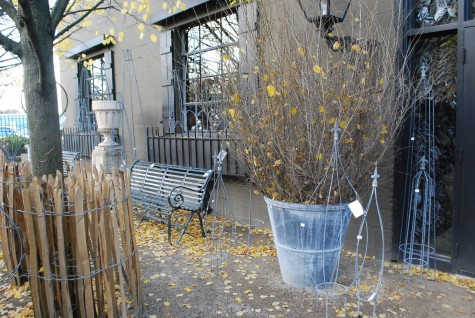
These hackberry tree branches are fairly representative of what there is to see here in late fall.  This pot has lots and lots of branches in it, but the effect is delicate and subtle.  The color of these branches is what I call winter drab.   But not all branches are created equal. 

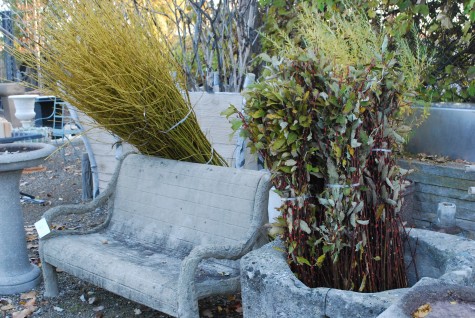
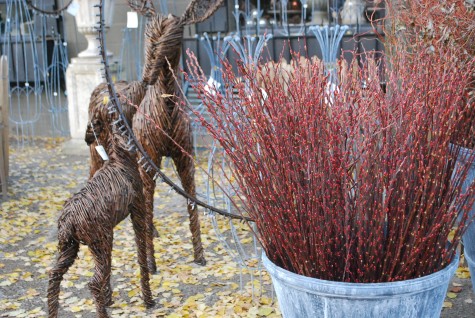
Our shipment of fresh cut twigs arrived yesterday.  These are branches of a different sort.  The stems have great color, and form.     The mainstay of our winter container plantings involve natural branches.  Lucky for us, there is a farm that grows shrubs with the specific purpose of harvesting branches.  A twig farm.  Beautiful branches are on my short list of plants I would be happy to farm.  This bale of red bud pussy willow still sports the last of its leaves.  This means we have to do a little stripping.  Who knows the mechanism, but if a branch is cut, it will take lots more time for the leaves to fall.

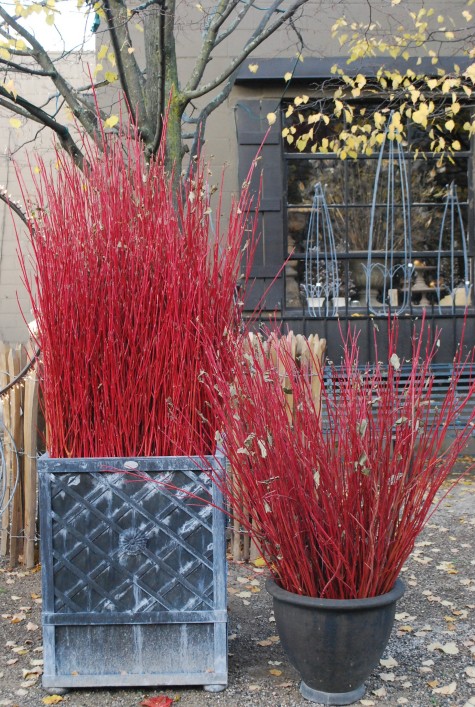
 I would grow all manner of Salix-most certainly.  Prairie willow.  Japanese fan willow.  Curly willow.  Flame willow. Black willow.  Pussy willow.  I love the willows.  The markedly fasciated fan willow is particularly beautiful.  I would grow a whole host of stoloniferous dogwood-there are lots of beautiful varieties. Cornus sericea Cardinal” is a particularly bright red form of the species dogwood.

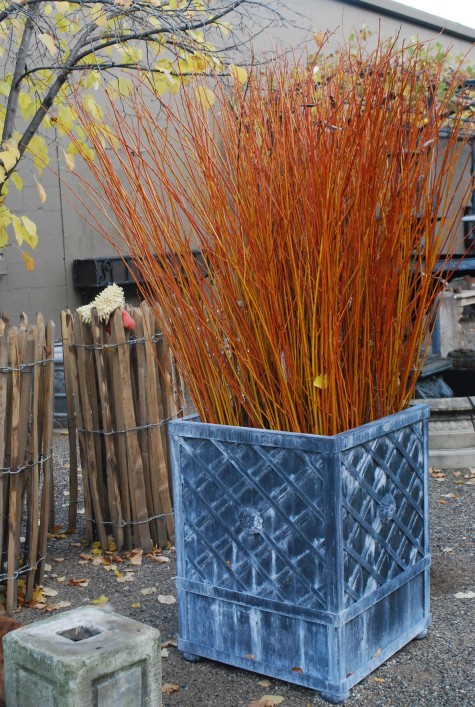
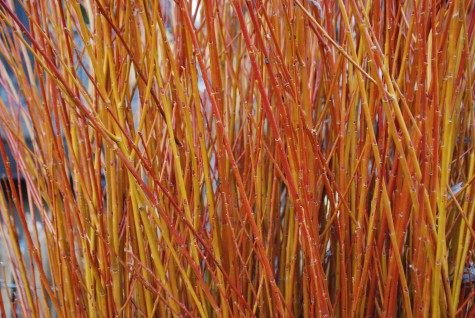
Flame willow branches are a particularly beautiful and vibrant shade of orange.  The shrub likes regular moisture, and full sun; it can grow to 20′ tall.  Like most shrubby willows, their shape and leaves are not their long suit.  But the winter color of their branches is spectacular. 

Red bud pussy willow is aptly named.  Branches of this willow will frequently root if stuck in soil in the fall.  This makes these branches a great choice for a fall, winter-and an early spring container planting.  This is one of the few twigs that we purchase both in the fall, and in the spring.  

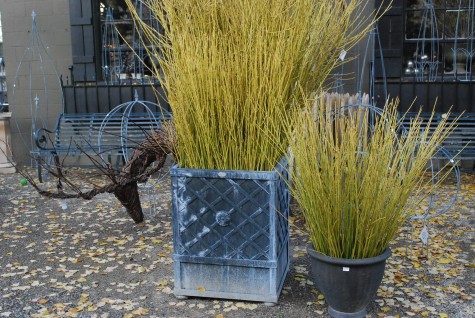
Fresh cut yellow twig dogwood provides lots of color in the late fall and winter.  The branches are amazingly easy to bend and twist into shape you choose.  The branches make great wreaths; they can easily be formed into topiary shapes.  They retain their color remarkably well, as they dry.

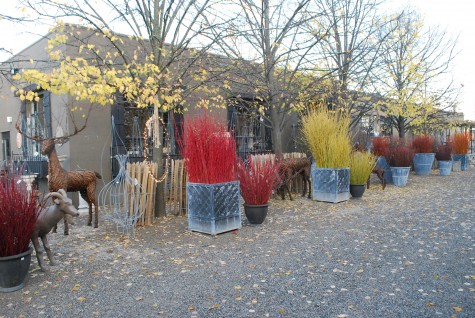
Cardinal red twig is much more vibrant in color than the species.  The best color on any dogwood branch is the current season’s growth.  Stems that mature take on a brown cast as they age.  This brilliant color looks great at the holidays, and throughout our long winter. 

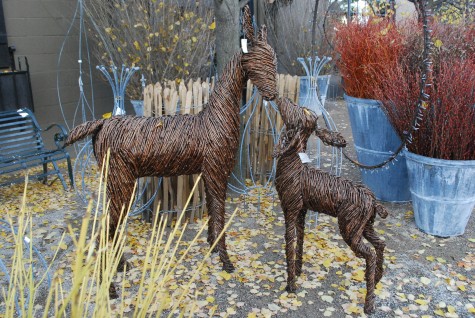
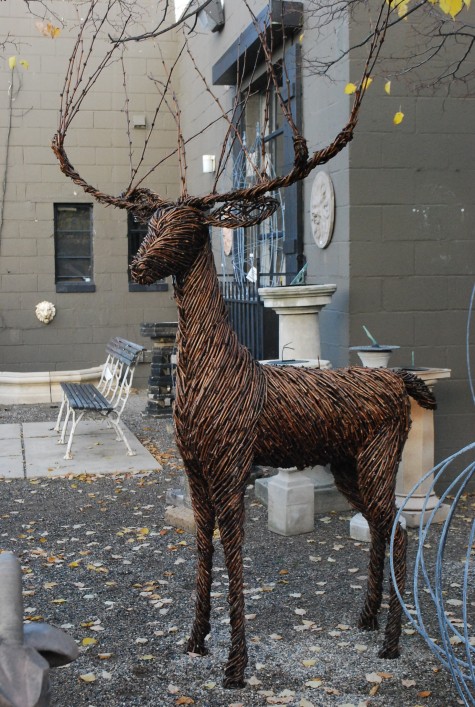
Grapes are a woody vine with long lax branches that can be shaped over forms.  We have had on occasion grapevine wreaths, spheres, picture frames and nests-but these deer are the most elegant expression of weaving and sculpting with grapevine I have ever seen.  The forms are heavy steel, and each vine is laid in parallel to its neighbor, and then woven into the whole figure.  They look great paired with all of the twigs. The people who create these sculptures-artists, each and every one.  They weld their frames, and weave the grapevine in a very individual way.  This doe and fawn pair is distinctly the creation and look of the person who made them.  My next pair will have a different look.

The standing Buck is particularly handsome.  Each antler has a steel pin that slides into a steel cylinder embedded behind the ears.  The Buck stands almost 7 feet tall.  This is my favorite species of deer for the garden! 

I can think of lots of places for the deer.  As for the fresh cut twigs-what would you do with them?

Tulip Time

I have not lost my marbles, thinking about tulip time in October.  This is the time to plant spring blooming bulbs.  My supplier sent me 22 emails today regarding the details of the UPS shipments of my bulbs. I plant lots at the shop.  I plant for clients too.  I wish I planted more.  It is very hard to appreciate the fragrance and beauty of spring flowering bulbs 8 months in advance of the event.  But I will try to express that-hoping it will encourage you to plant for spring.   

I hope my pictures encourage you to plant ahead. The one characteristic I admire most about gardeners the very most is their stubborn hope for the future.  A better garden next year.  A better spring for magnolias-next year.  The slip of a plant that becomes a major plant in a few years.  The spring to come.  Your spring is in your hands.   

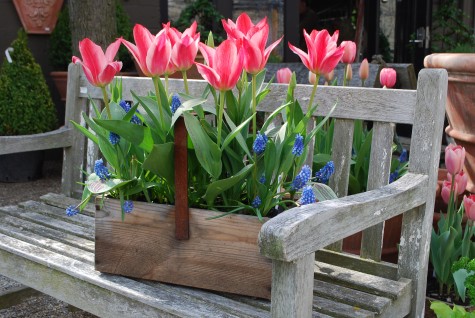
Those brown tulip orbs of varying sizes represent a future garden.  Think about tulips, and move on.  There are lots of other spring blooming bulbs.  The spring anemone blanda bulbs are shrivelled peas when they arrive; soak them for 24 hours, and plant. The grape hyacinths are available in plenty of variations.  They are one of the longest lasting spring bloomers.   The tulip bulbs with their papery coating promise a plant with wide and luscious leaves culminating in a bloom of extravagant proportion.  Tulips fit into an established perennial garden as well. Order up plenty of those brown bulbs.    

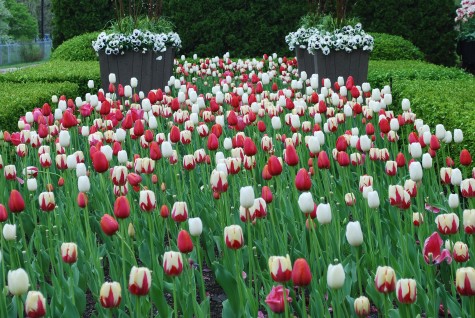
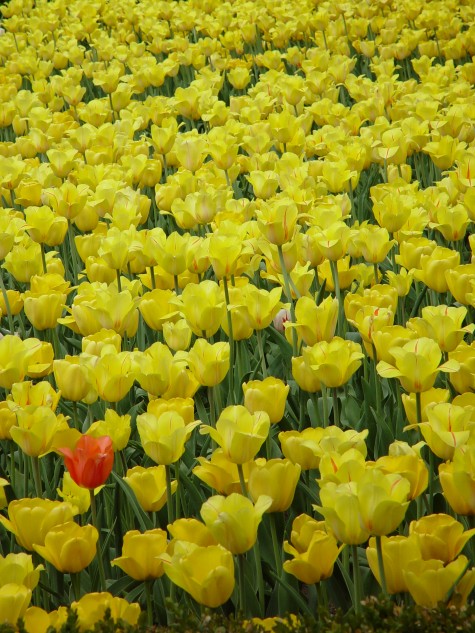
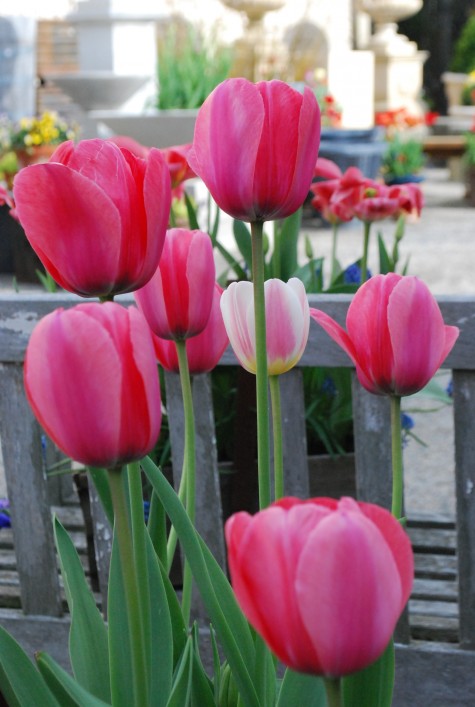
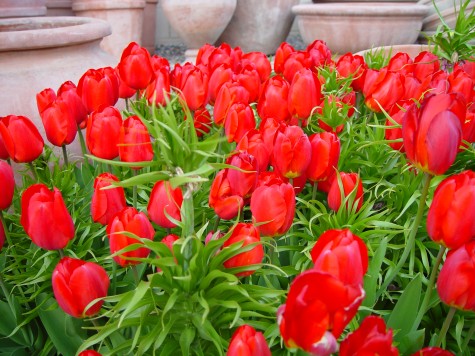
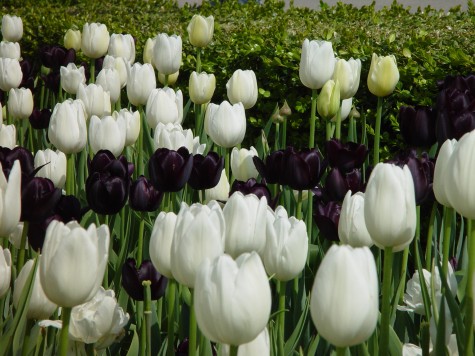
There are many species and hybrids of tulips available, whose bloom time spans late April until late May.  They are  the showgirls of the spring garden.  After a Michigan winter, I am ready for their beautiful globular forms, their fresh fragrance, their supremely green stems and luscious leaves.  I am as grumpy about the fall as you are.  Our fall has been balmy so far-this is perfect planting weather.  Thinking about bulbs in late November-plant them in pots, in ther shelter of your own garage.      

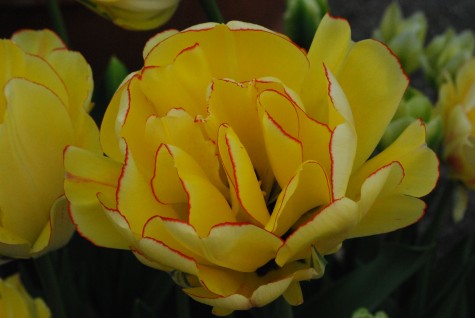
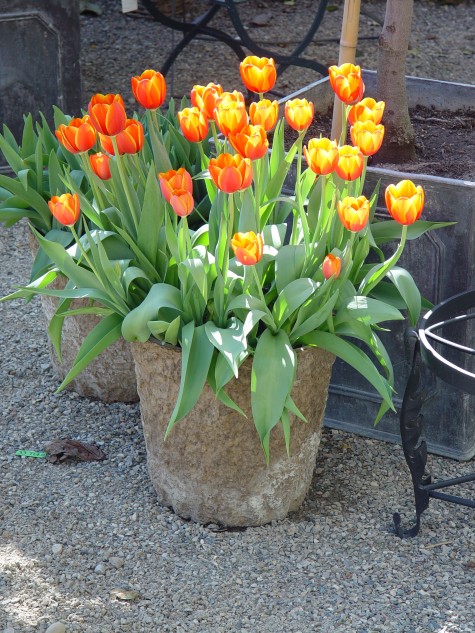
This double tulip Akebono is exquisite.   My order of 100 bulbs last fall has been increased considerably.  A group of 10, or 25, or 110 planted in your garden this October will reward you handsomely next spring.     

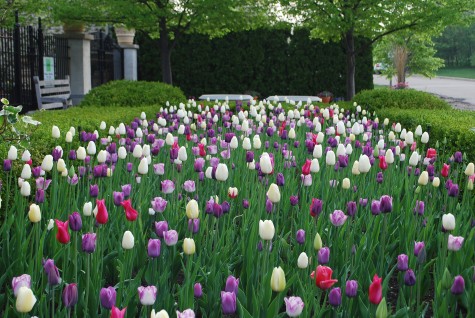
Winter in the Midwest is a tough go.  Part of what gets me through that bleak season is the promise of spring.  Those various brown knobs and orbs, sequestered underground, ready to represent, once the snow melts, and the weather warms. No garden should be without tulips. I like to plant a mix in the big bed in front of the shop.  Next spring’s scheme will be very different than this.   

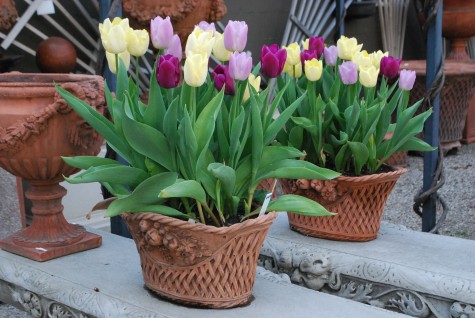
Should you have a perennial garden with but a few spaces available for tulip bulbs, there is always the option to pot them up the fall. A pot of tulips on the front porch in early May is a very good look.  It is easy to bring on potted tulips-give it a try.   

 Our winters are notable for the grey.  Grey skies, dirty snow, low temperatures.  Should you have a mind to emerge from the winter in fine style, plant some tulips. Plant lots of tulips.  Plant a fistful of tulips in an important spot. A plan for little color is in order, is it not?  This box of Oxford tulips was companion planted with yellow frittilaria.  Though the flowers are gone, the foliage looks great with the tulip flowers.  

No doubt it is hard to embrace the promise of a fresh gardening season right now.  Last spring’s pictures are helping to put me in the mood.    

Your local nursery has tulip bulbs.  John Sheepers has a complete range of tulips and other spring flowering bulbs available.  Becky’s Bulbs is a superb source.  October is time of choice in my zone to plant daffodils, hyacinths, anemones, tulips, grape hyacinths, and a whole other host of spring flowering bulbs.  If you are like me, you do not want to do without the snowdrops, crocus, chionodoxa, or hyacinthoides.  Part of preparing for winter is to make time for some tulips.  Plant what you can.

At A Glance: October Orange

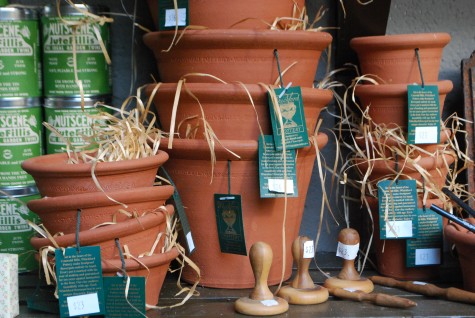
handmade terra cotta flower pots from Whichford, England

vintage Dooney and Bourke handbag

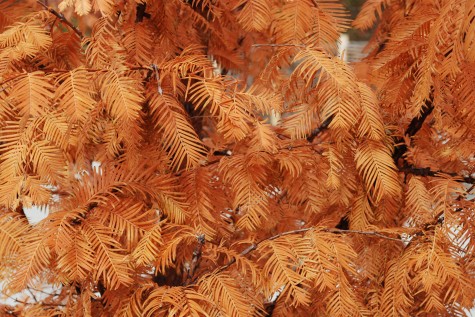
fall color Metasequoia Glyptostroboides

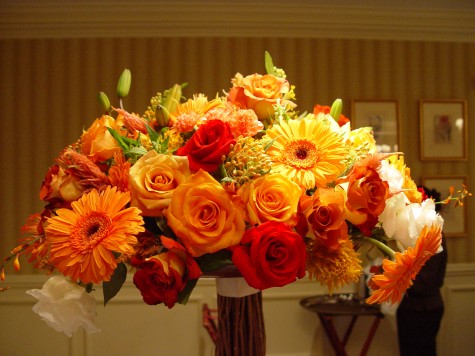
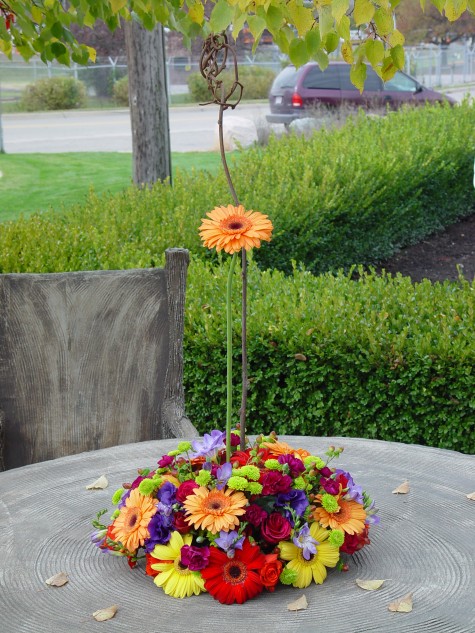
flower arrangement for fall wedding

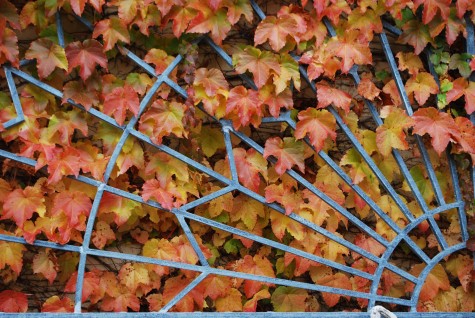
fall color Boston Ivy

fall flower arrangement with dry kiwi vine

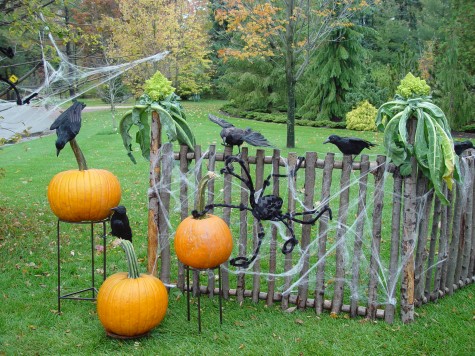
Halloween display with pumpkins and romanesco broccoli

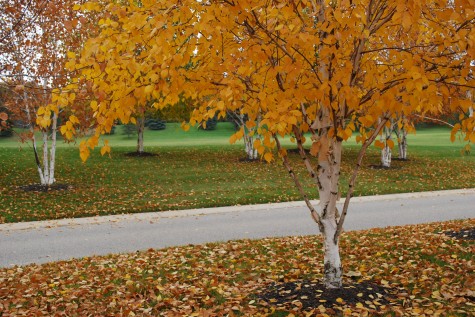
fall color Himalayan white barked birch

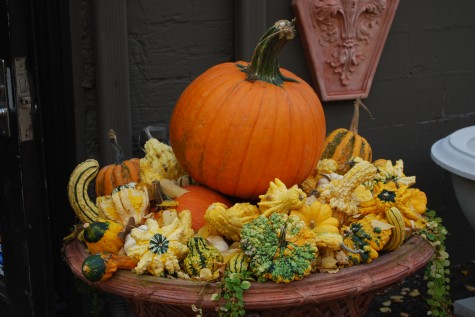
pumpkin on a gourd bed

bittersweet berries