Container Garden Design

Every move you make in a garden has to start someplace.  Some activities begin for everyone in the same place.  Should you decide to run a marathon, there is a starting gate and a finish.  If you are designing a container garden, it’s your choice where to begin, and where to end.  The inspiration for a container can come from lots of places.  A favorite flower, color, or texture.  A favorite pot, a memory of a garden from another place or time can provide a place to start.  For this container design, I started with my two Julias.  Julia the Mom from whom I inherited a love for flowers, and Julia, my friend.  Friend Julia is a plant afficianado-whether it be a dwarf evergreen, a flower, or a tree.  She spent 20 minutes with me a few weeks ago, extolling the virtue of a new osteospermum called 3D.
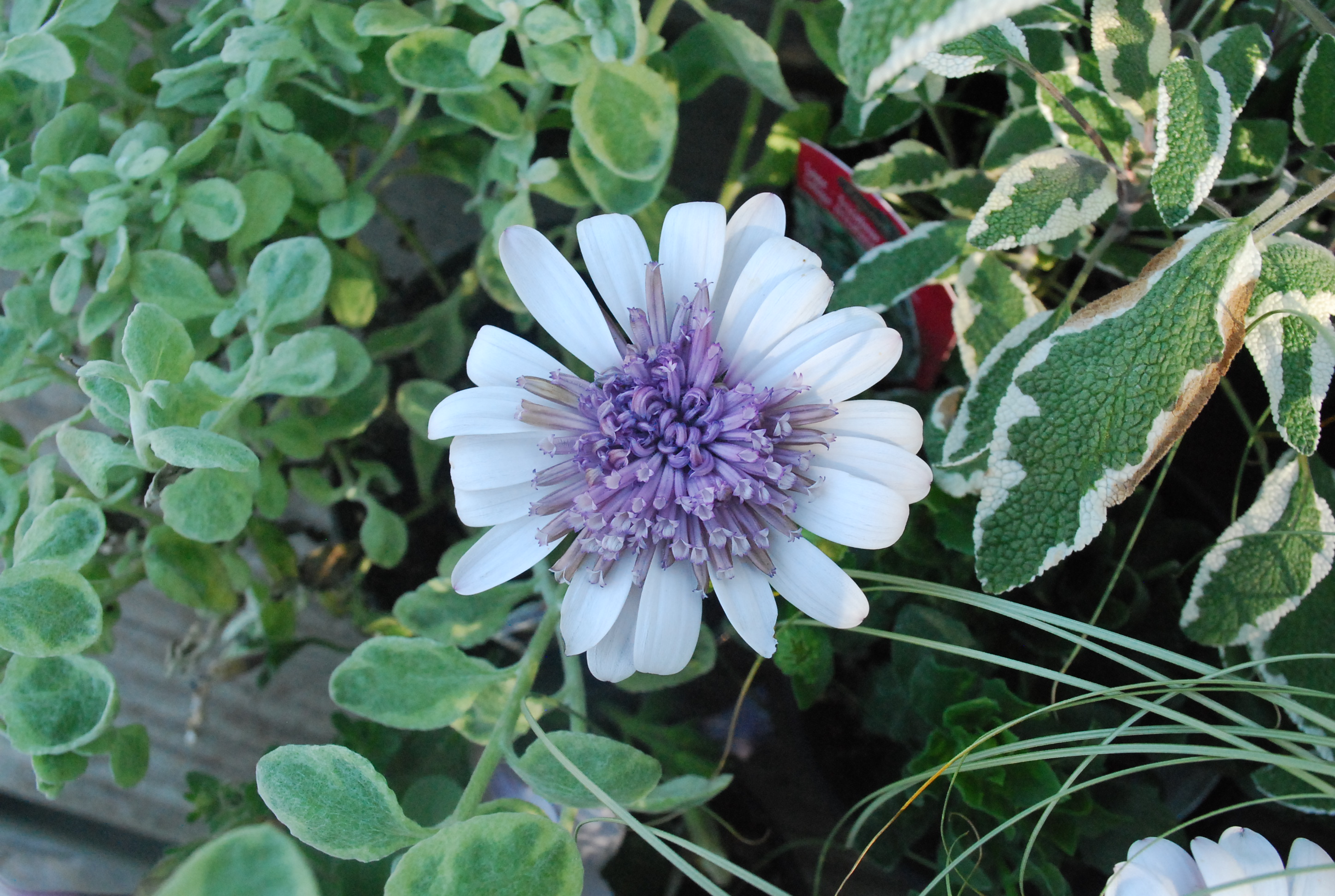
3d silver daisy

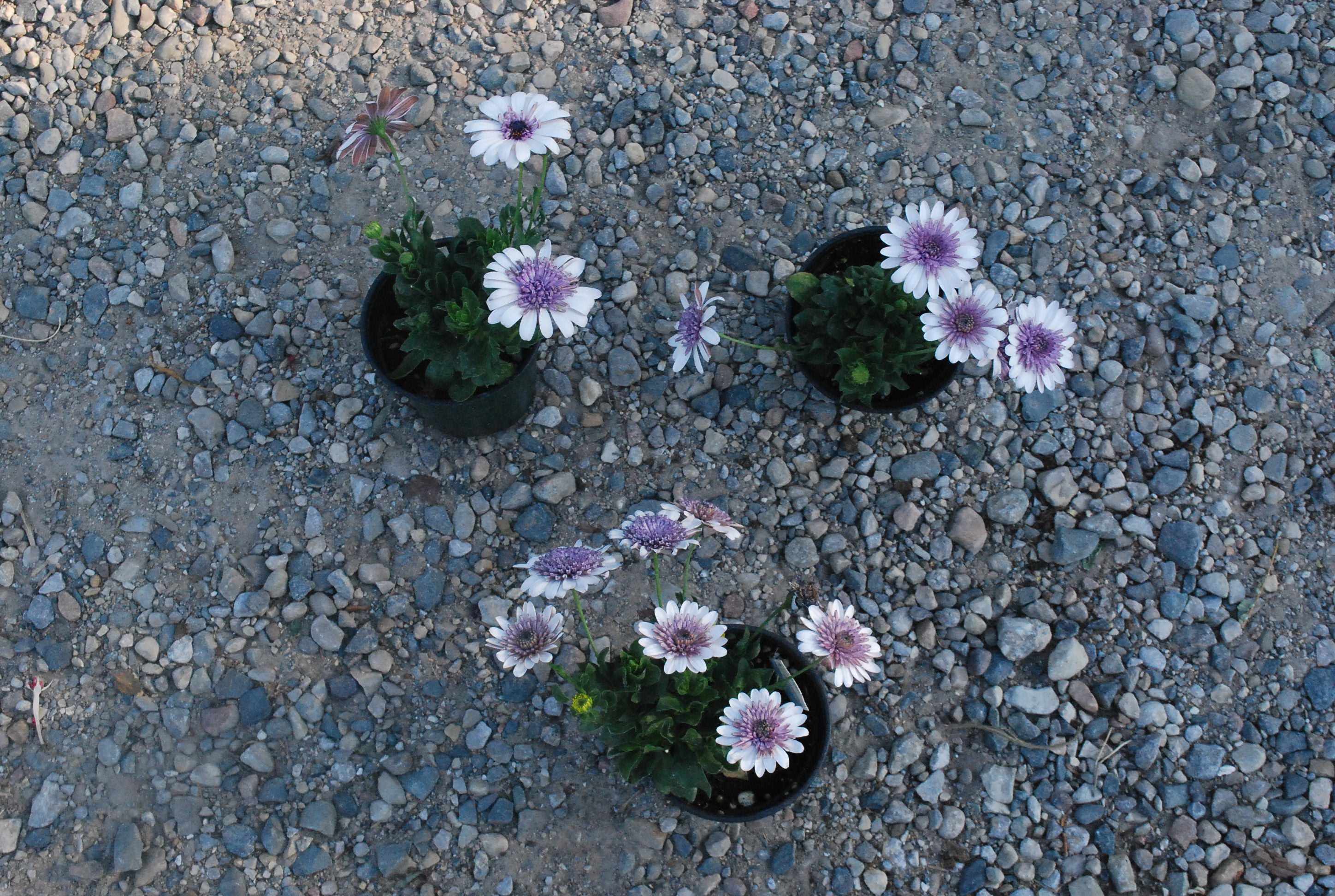
I decided to design a container around this particular plant. Her enthusiastic praise for its performance was compelling.  The flowers stay open all day-a decided improvement over older varieties.  They bloom strongly all season long; I like this too.  But I was intrigued by the color-an icy white, and a purple that was decidedly on the red violet side.  I laid a few plants out in the driveway, so I could take a closer look.
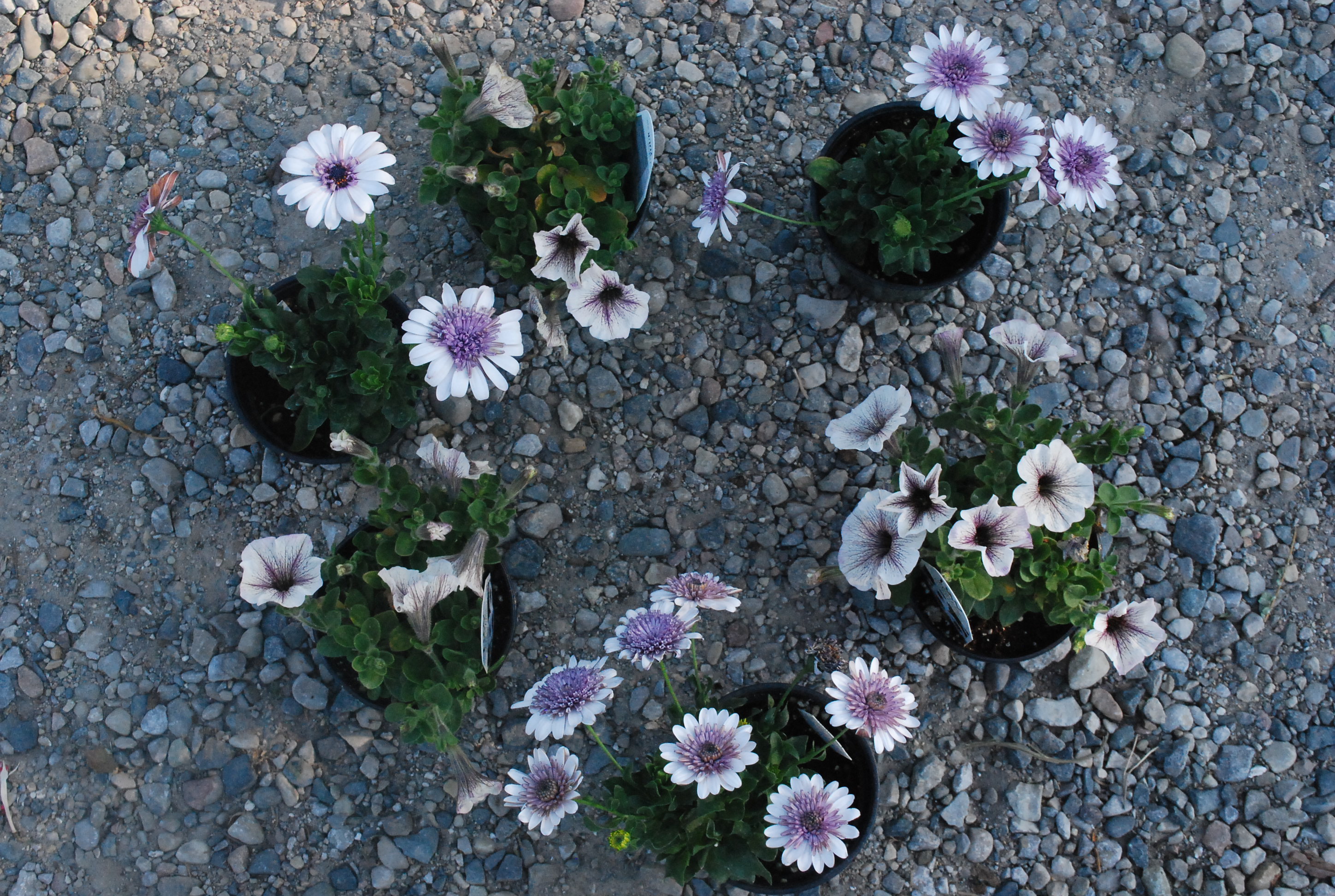
 

petunia White Russian

Julia was equally keen about a new petunia called White Russian.  Why not see if both flowers would work in the same arrangement?  After all, a pair of great plants might making for a smashing container.  But right off the bat, there was trouble.  Not all whites are created equal.  Color in nature is infinitely varied.  Some color combinations I find more appealing than others.  These two whites together did nothing for each other.
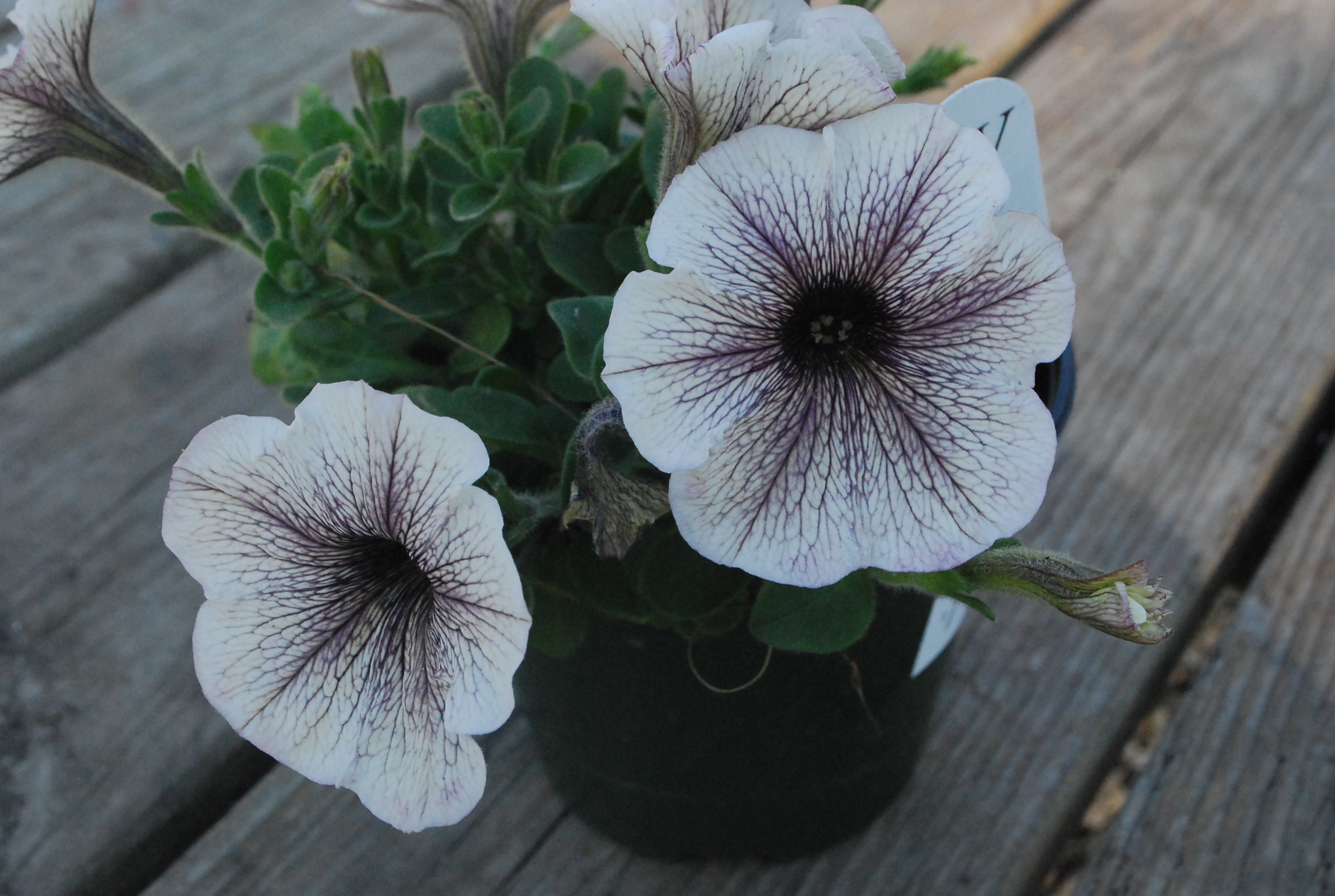
petunia White Russian

The brilliant, almost luminescent white of the daisy looked wrong with the flat white of the White Russian petunia.  The petunia took on a rather lifeless greyish look-to my eye.  But until I had some more plant choices in place, I wouldn’t rule out the combination.

annual heliotrope

Adding heliotrope to the mix was jarring.  The flower is a blue based purple-not at all like the carmine in the daisy.  This was a combination that made everyone look bad.  It looked bad to me-that is.  Everyone sees color very differently.  Whern in doubt-trust your own eye.  It also seemed that having a fine floret sized texture would be better underneath the daisy, rather than on top.  I eliminated the heliotrope.
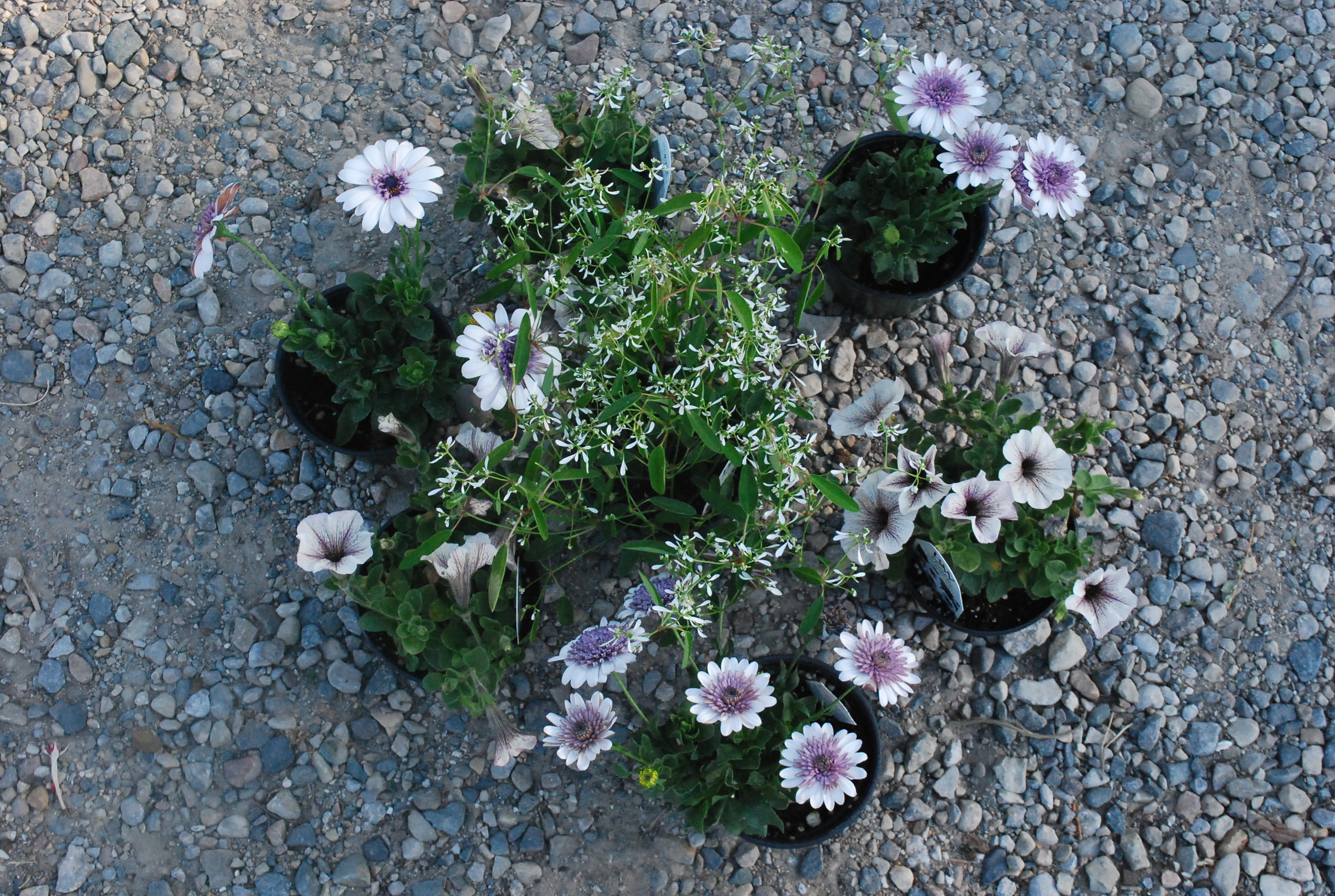
euphorbia Diamnond Frost

A pot of Euphorbia Diamond Frost moved the arrangement in a better direction.  The bright white color was the right white.  But even better is its contrasting texture.  The daisy has a rather stiff habit in both leaf and flower.  The euphorbia has a fluttery, sparkly texture that would loosen up the composition.  As a centerpiece in a pot, the euphorbia would grow fairly tall and wide-as will this osteo.  They would be fairly evenly matched.
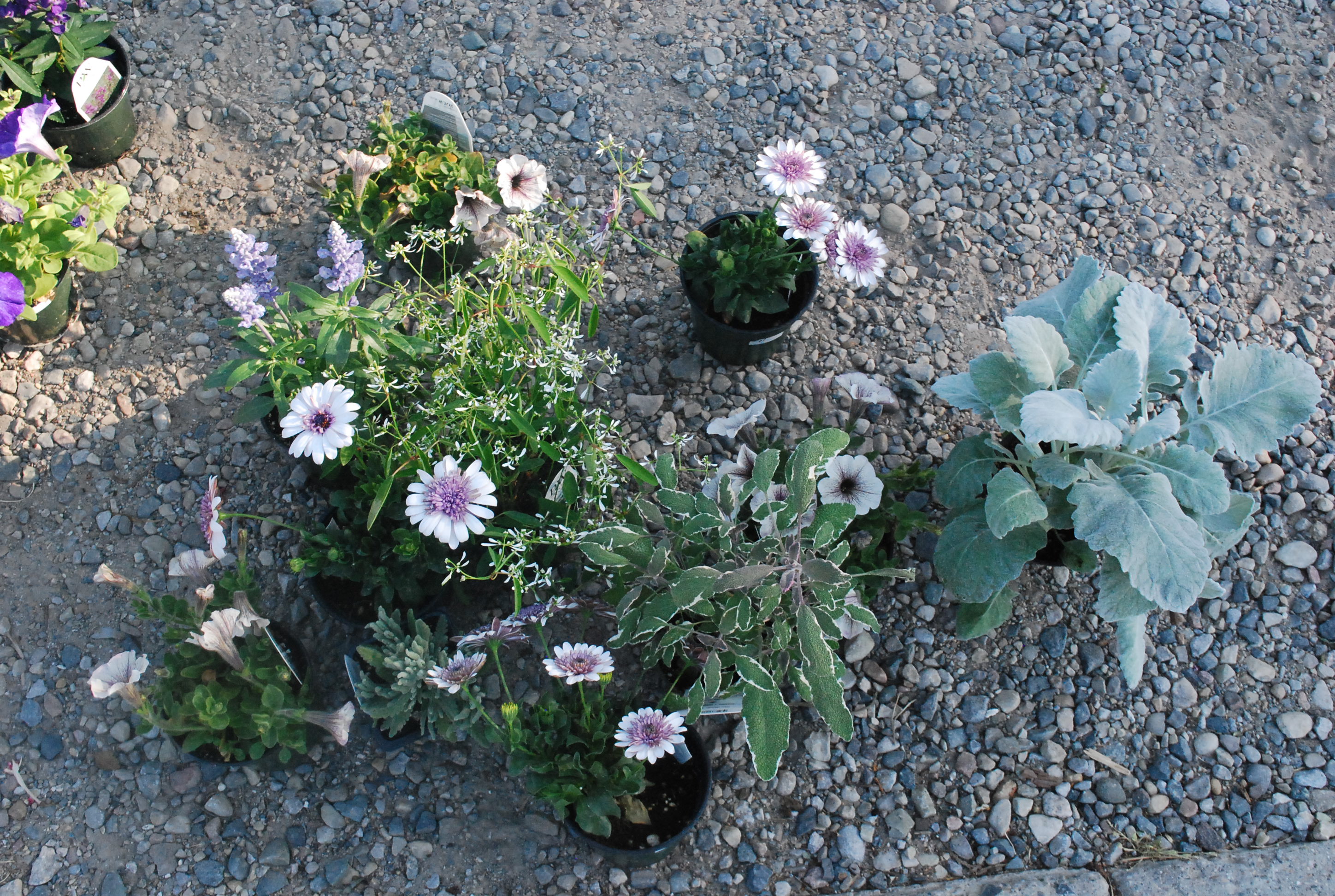
tricolor sage

On a whim I tried adding Cirrus dusty miller to the mix, but the leaf size was overpowering.  A tricolor saga had a little more grace, and that same blue green color that contrasts so well with red violet.  A salvia Cathedral sky blue-the wrong color altogether flower wise, and the leaves were not blue enough.  I thought briefly about some lavender, but if the 3D daisy was to be the star of the show, all of the other colors and textures should be chosen in visual deference to that idea.
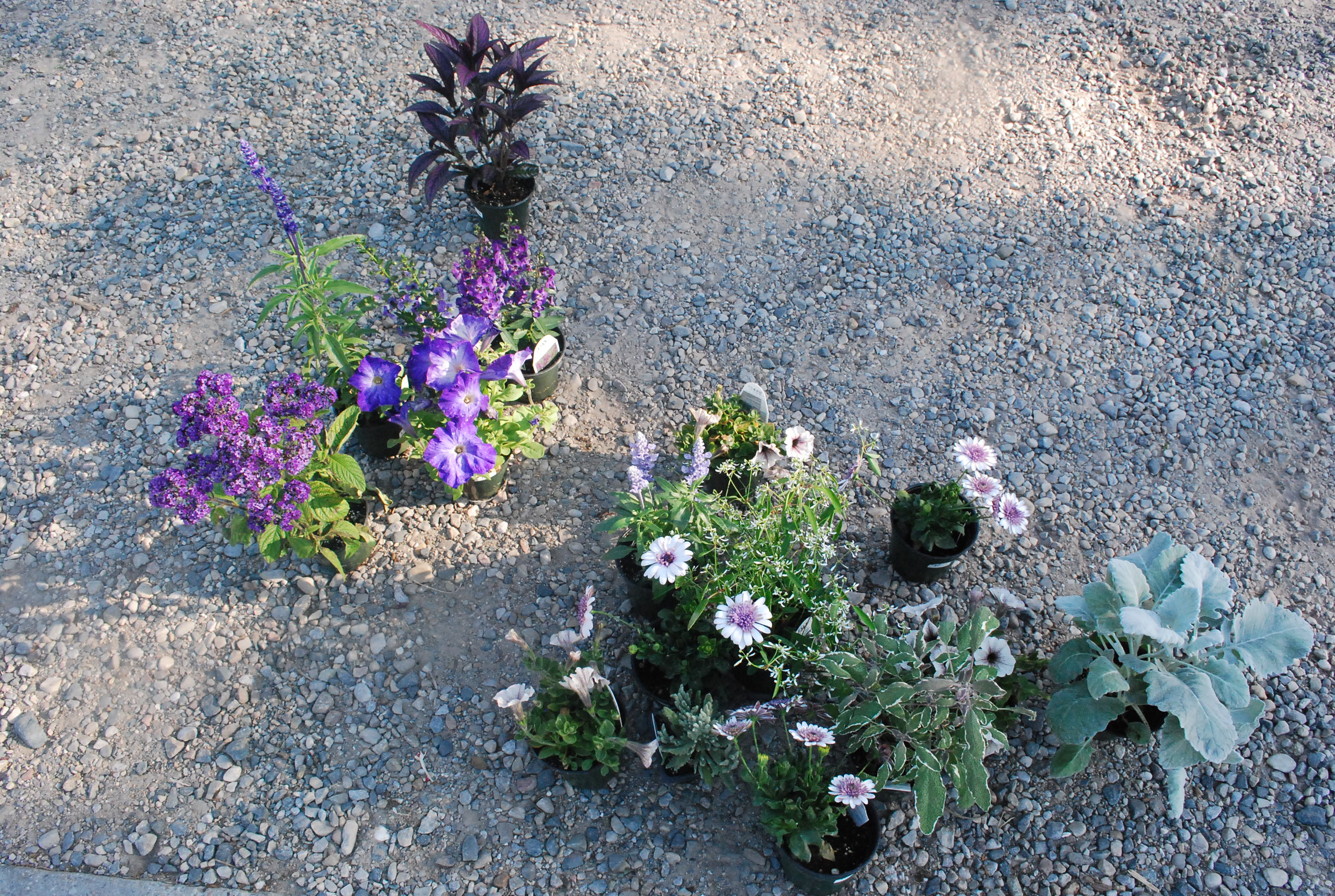
cirrus dusty miller

I have a small group of plants here, with a bigger collection of rejects.  I see Rob do this all the time when he is trying to help someone design a container.  He groups plants together.  Then he adds this, and subtracts that until he gets a composition that looks right.

variegated licorice

After putting away all of the flowers that were not going to work, I added some variegated licorice to my group.  That cool green looked good with the sage, and the cool whites.
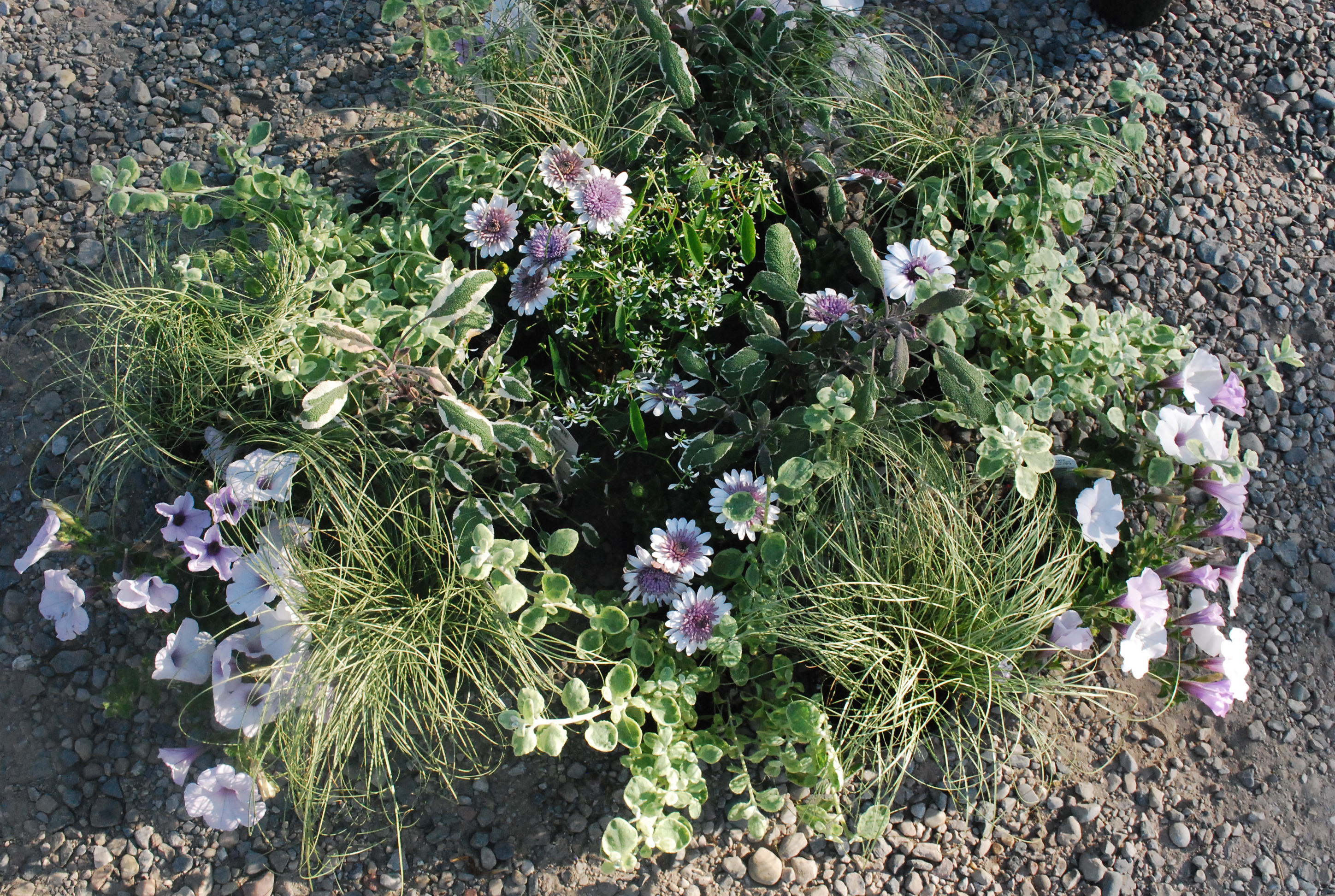
carex frosted curls

Carex comans Frosted Curls is a very similar color to the licorice, but an entirely different texture.  The delicate blades of grass would be in concert with the habit of the euphorbia.  At this point the arrangement has a subtle and delicate coloration, and just enough contrast to have visual interest.  Subtle does not mean sleepy.
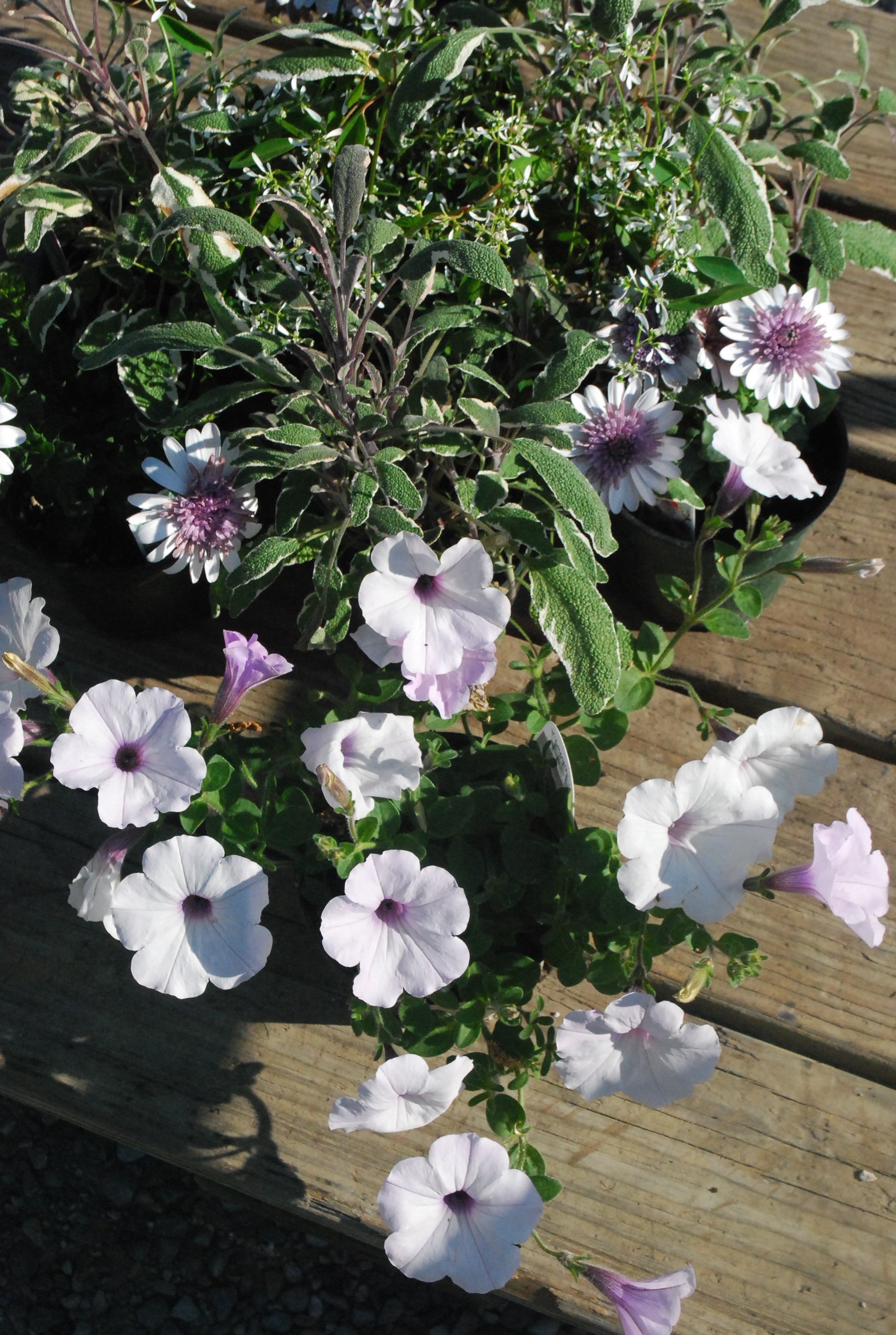
supertunia mini silver

The White Russian petunias proved to be too sleepy.  I switched them out for the supertunia mini silver.  It is a small flowered petunia that grows vigorously.  Those sturdy stems and that vigorous blooming would be a great contrast to the euphorbia.  It would also add a lot of color to the sage/licorice/grass mix.  In a container, I would alternate the petunia with the licorice, and then the grass.  A mix of 3 plants is much more lively and interesting than a mix of 2.
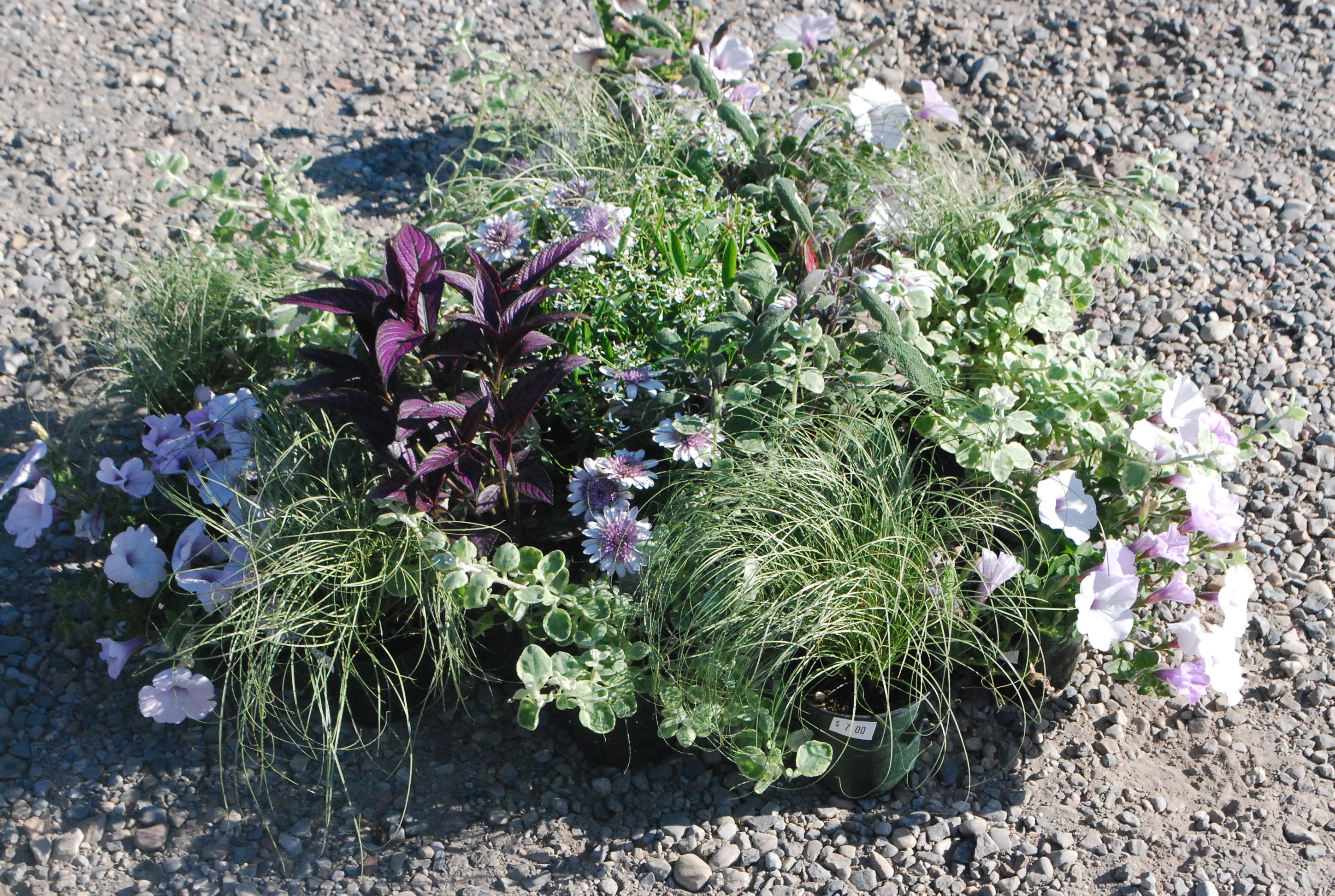
persian shield

Were I to plant a large container with this scheme, I would want to introduce a plant that would grow larger.  A Persian Shield would grow very large, so there would need to be multiple plants of the Diamond frost and 3D daisy.  The numbers of this plant versus that is about balancing the composition.  Little plants may need a bigger voice via greater numbers.
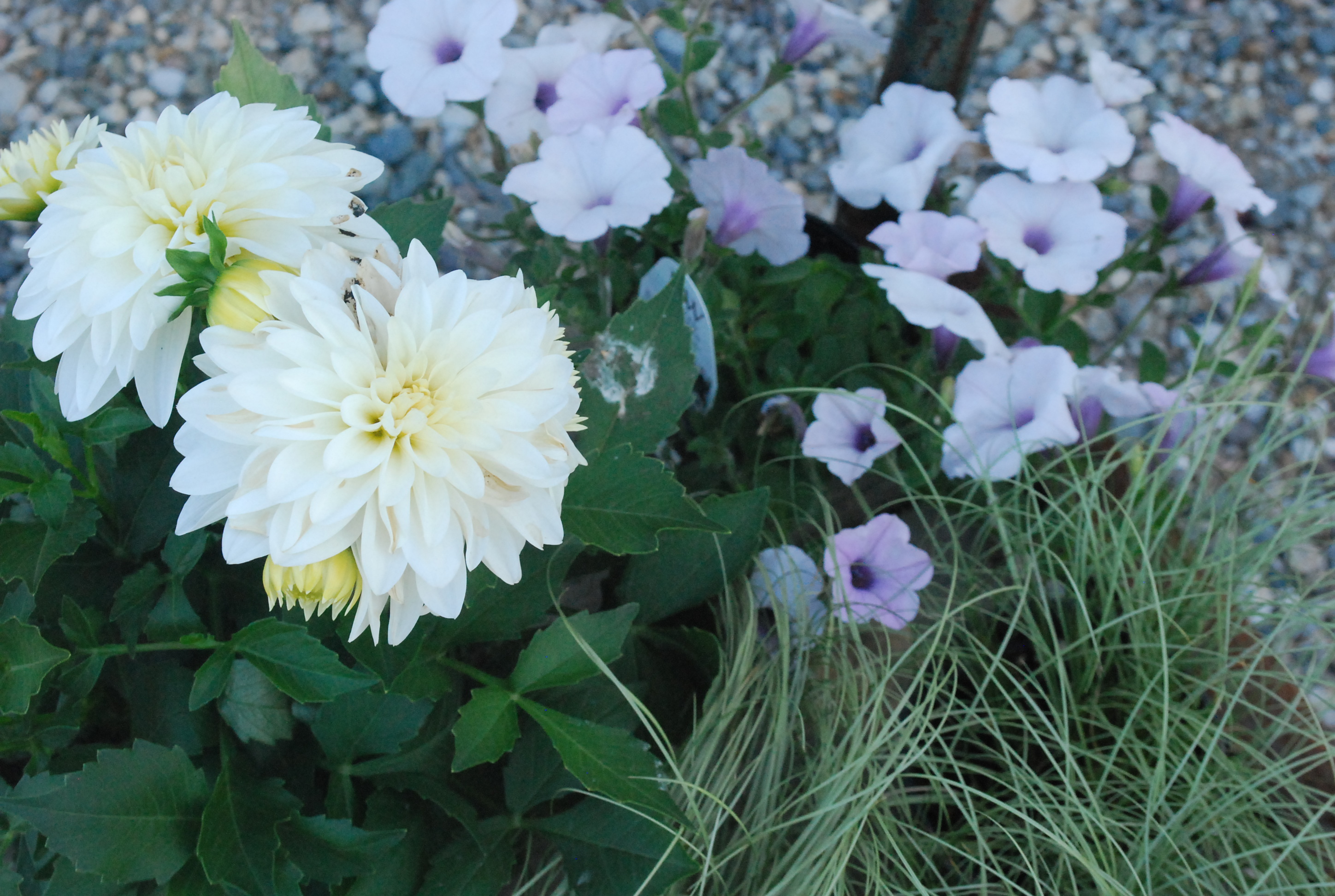
white dahlias

I could also add a white dahlia to the mix, meaning my daisy would have to become part of the supporting cast.  What I like about the dahlia idea is the yellow derived from the bud color, and center of the flower.  It would bring out the red-violet in the other flowers, and contrast with the cool greens in the foliage plants.
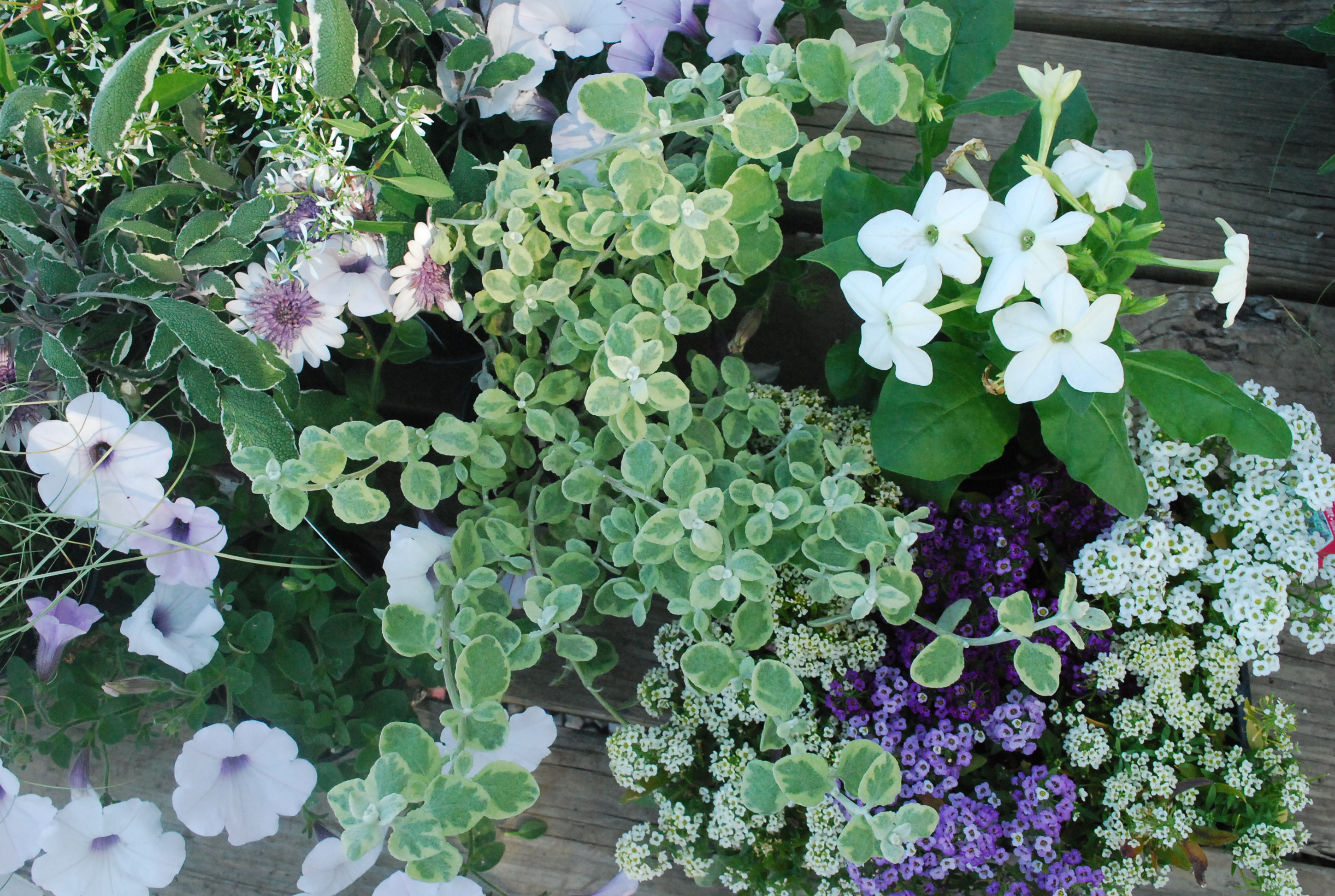
nicotiana saratoga white

I still liked the idea of the floret sized flower in this container.  Alyssum, whether it was white, citron, or red violet, would do a great job of that.  Even a mix of all of the colors would work well.
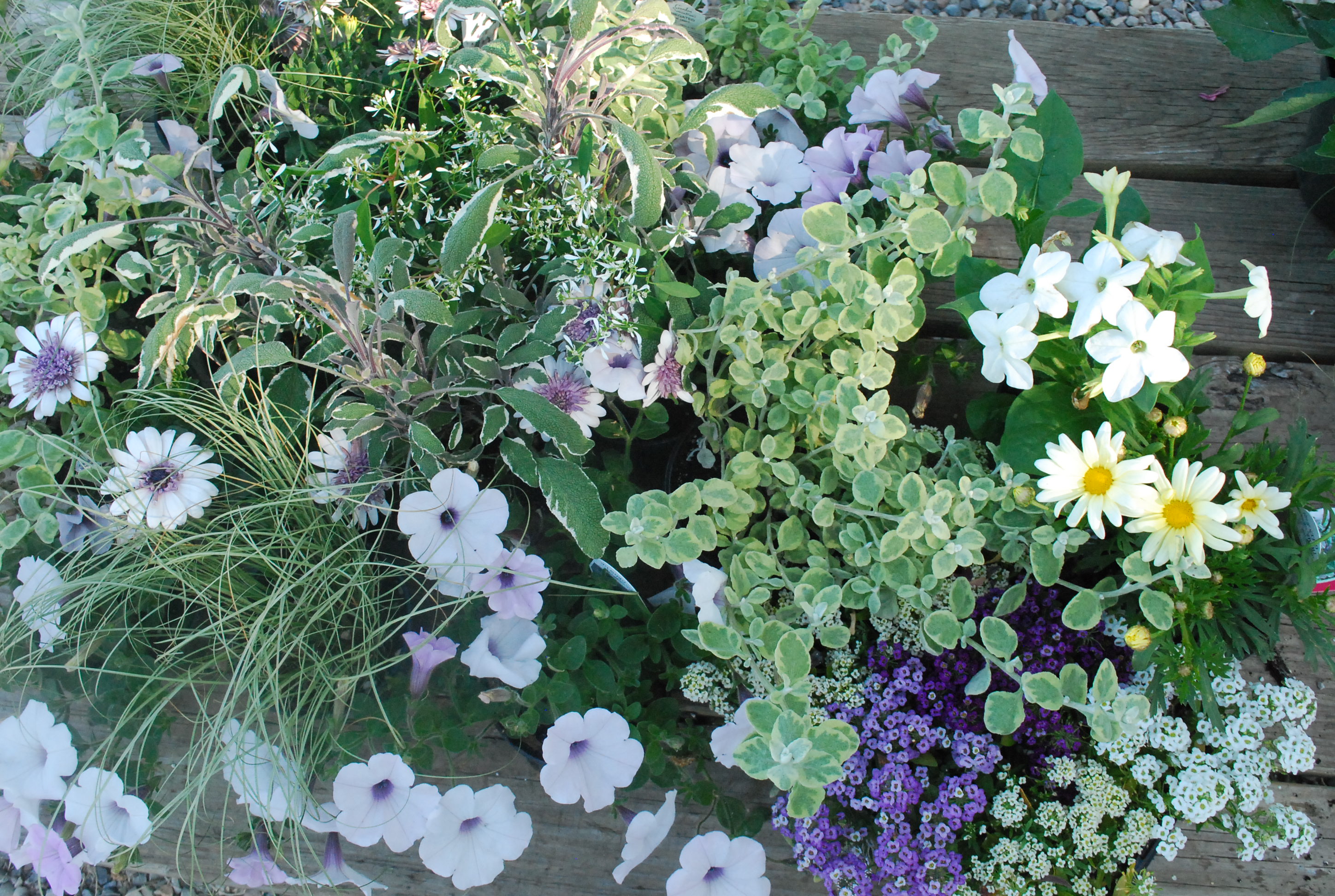
butterflies boston daisy

I could revisit the pale yellow idea with a flower that was smaller and less overbearing than a dahlia.  The butterflies boston daisy has a habit and size more in keeping with all of the other plant choices.
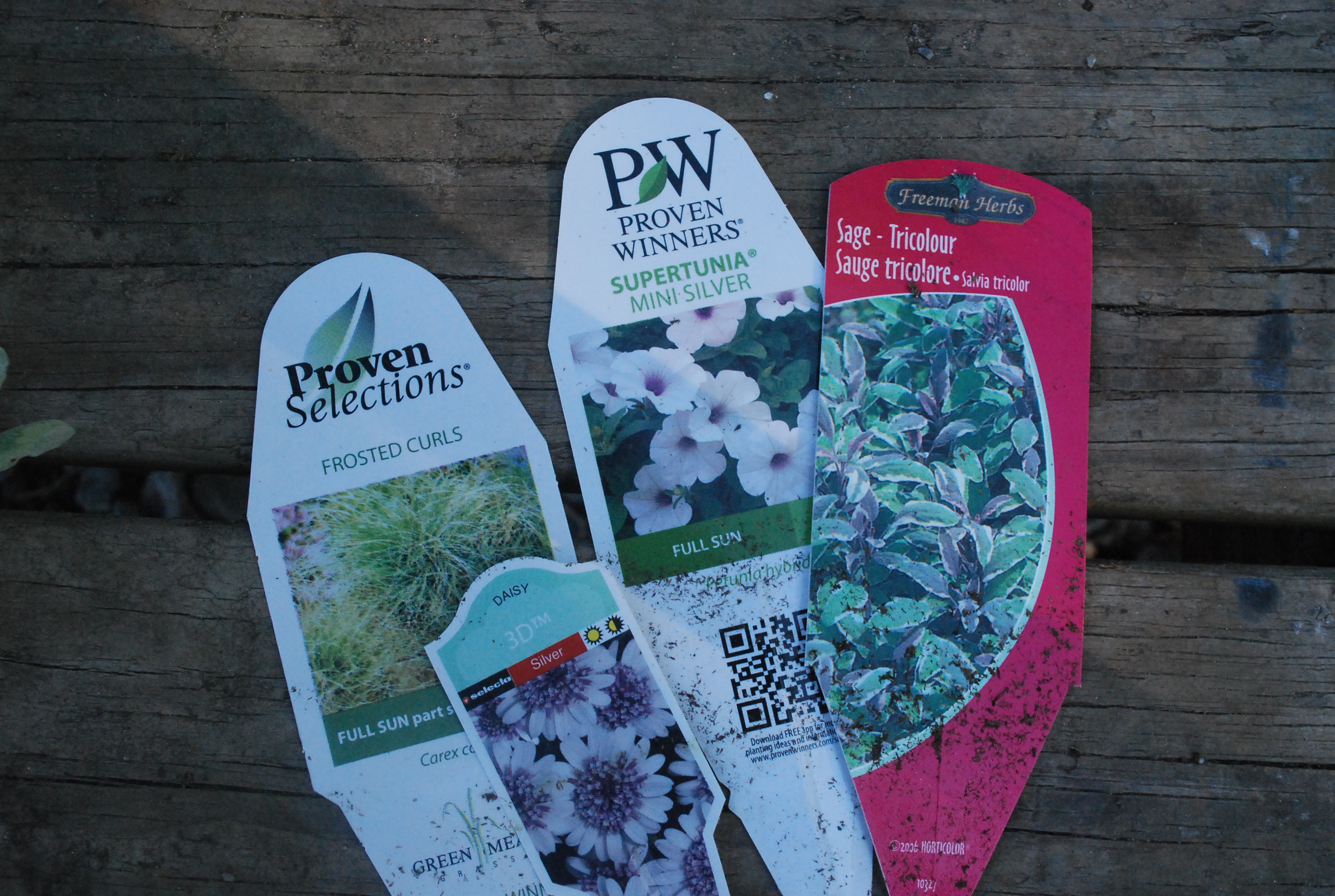
container garden design

The nursery industry has gone to great trouble and expense to include tags in their plant pots.  These tags will give you a brief overview of the eventual size of the plant, and the light and water it will require.  Taking advantage of this information means you will avoid making cultural mistakes.  Making sure you have the right neighborhood in mind for all of your residents will help your container to prosper.  I do think I am ready to plant up this pot.
Through The Lens Part 3

I heard from Bob Stefko a little while ago-he checked out Dirt Simple for the first time. He liked the snapshots I took of him working-I like that. He did admit that the cold made this shoot a real challenge. Funny how this made me feel better.  After a 12 hour day on Saturday, he and I were back to work at 6:30 Sunday morning.  By 8:30 am we had a little sun.  This meant he had to work fast.  Too much glaringly bright light can wash the color and detail right out of a photograph. This means I take pictures of the landscape on overcast days.  For him, it just means more work.


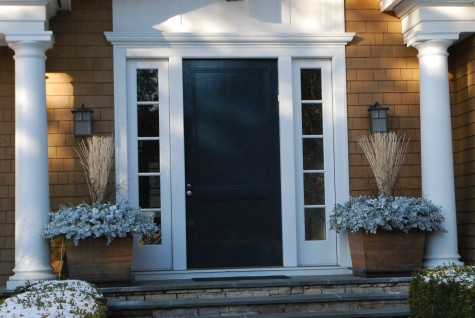
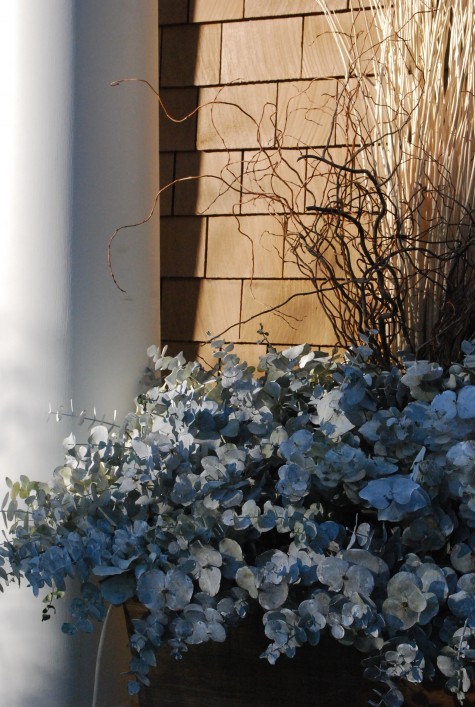
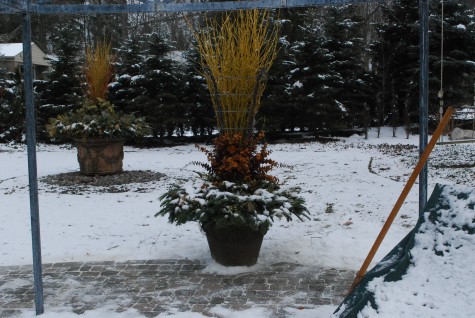
These winter pots feature whitewashed eucalyptus and natural sticks bleached to a plae cream color.  The colors are great with the tawny shingle siding, and the dark blue grey door.  The wood boxes are handsome.  The architect found them-I do not know the maker.  But I do know I like them.  The textures and colors of all of the building materials are so striking. 

The winter pots feature a subtle third element-some curly willow.  These curvy twigs are a great foil to the solid mass of eucalyptus, and the uniformly cut cream sticks.  They make for another layer of interest that is not so apparent until you are closer to the door.

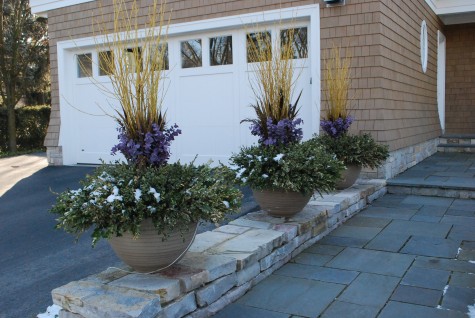
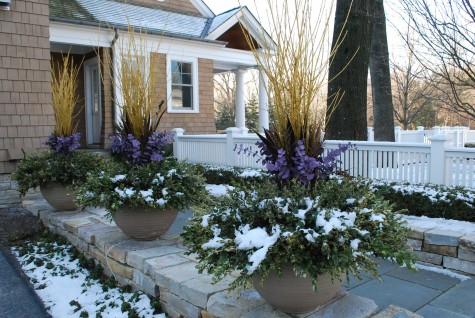
Three handmade English stoneware pots sit on a short wall that separates the driveway from the bluestone walk to the side door.  My pictures from this side, the west side, reveals what happens when I shoot into the morning sun.  The color goes dull, and the shadows really dark.

From the east side, with the sun behind me, the yellow twig dogwood, dark brown bahia spears and lavender eucalyptus look sparkly-richly colored.  The mix of boxwood, and yellow variegated boxwood looks as green as green can be, though these stems have been cut for at least 4 months.   

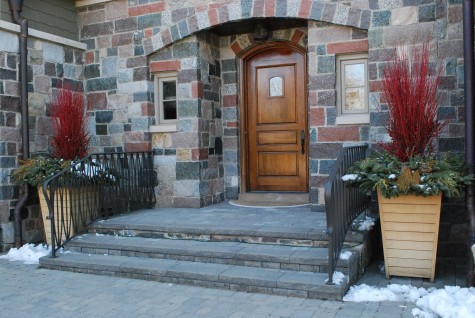
The red twig dogwood, and Michigan holly stems at this front door are just as richly colored.  Our key to insuring that the Michigan holly holds its berries throught the winter-Vaporguard.  This spray is considerably better than Wiltpruf at limiting transpiration.  With the moisture sealed in the berries, they stay plump, and hold on.  Bob had a challenge photographing these pots.  Tucked between a wall, and the step railing, the range of views was narrow.  I will be interested to see how he interpreted this space visually.   This house has very beautiful stone on the outside-the red makes much of this.

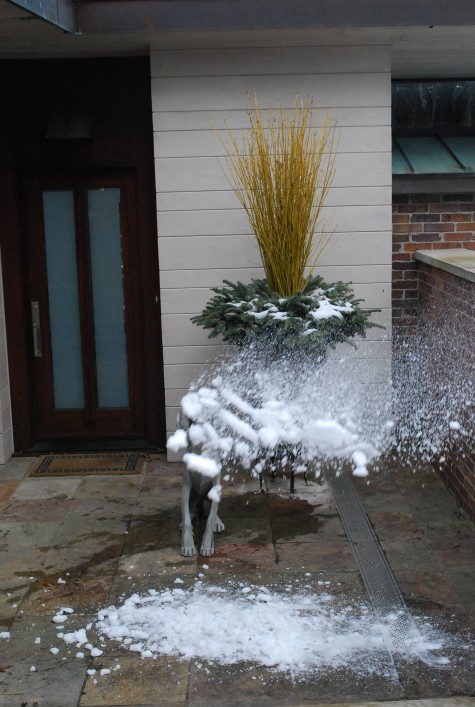
What?  You see snow in mid air here, yes.  How so?  The winter container had thawed some, putting a puddle on the terrace.  You can see that dark spot without any problem.  Bob wanted the entire terrace surface either all wet, or all dry.  We had few options for drying, but we had snow.  We shovelled snow onto the terrace, and swept it around until the entire surface was uniformly wet. 

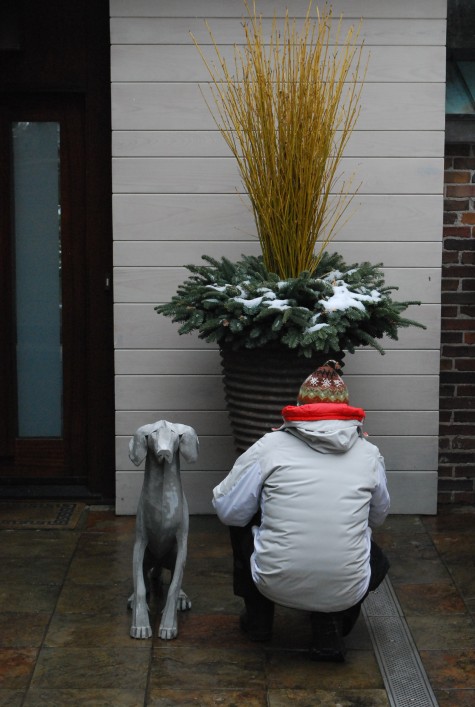
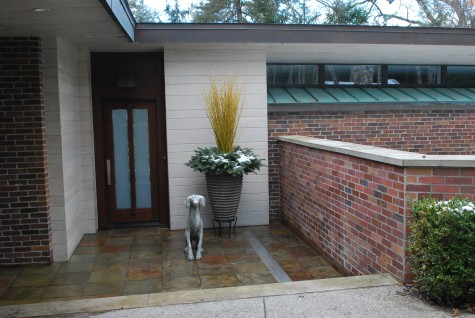
This mid century modern house designed by Harold Turner, a master builder for Frank Lloyd Wright, is  a gem of a house.  My client-better than any gem.  He insists on utterly simple and sculptural, whether inside or out.  I did bring this sculpture of a concrete hound, thinking it might add a certain something to the photograph.  The photograph would not have much detail of the architecture-nor any detail of this client, and his passions.  This is my favorite snapshot of the shoot.  Man/photographer, man/owner, container, and dog. 

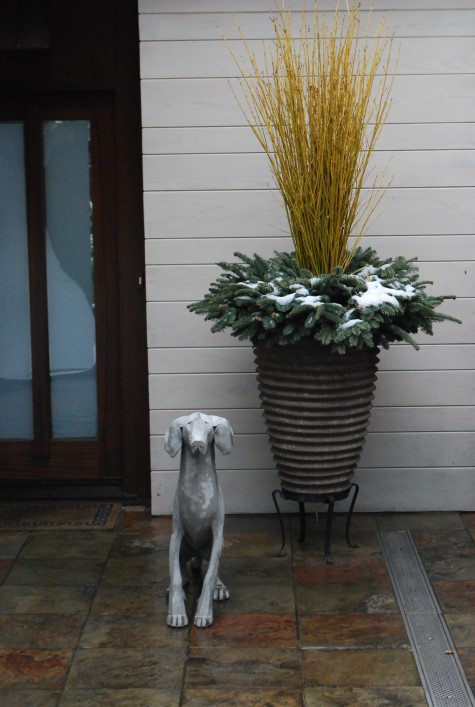
The tiles in this small entry terrace looked great, soaking wet.  The hound seemed like he belonged there.  The pot is a contemporary Italian terra cotta pot from Francesca del Re.  The clay body is loaded with minerals such, and fired at such high temperatures  that these pots are fine outdoors over our winters.  The iron stand is plain-the big idea here is to feature the sculptural aspect of the pot.  A substantial centerpiece of yellow twig dogwood is faced down with a thick and wide noble fir base.  This arrangement features the container.  That hound-he does add a certain something to this scene, does he not?

As we were packing up, my client appeared. He tells me, if this stray dog does not have a home, I will speak for him.  I was delighted to oblige. We left the hound on the terrace, just as Bob photographed it.  Irving offered a tour of the house to our photographer Bob-what a treat.  He has a particular interest in mid century modern architecture.  He got the cook’s tour.  This part of the shoot was not choreographed, or anticipated.  Every client that participated in this shoot was enthusiastic, and accomodating.  Irving-he lives with the idea that he should speak up and out.  No one says welcome better than he does.   I like that idea of his. I like that a great sculpture of a hound got a great home. 

Sunday at 1pm the shoot was done.  What an experience!  Many thanks Bob-it was my pleasure to meet, and work with you.

Through The Lens, Part 2


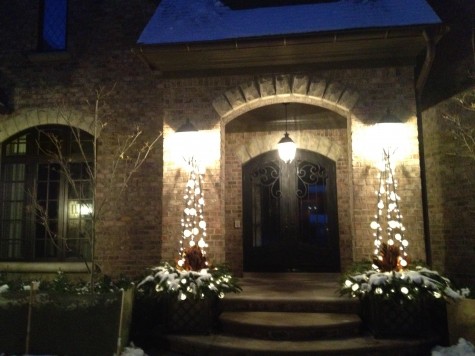
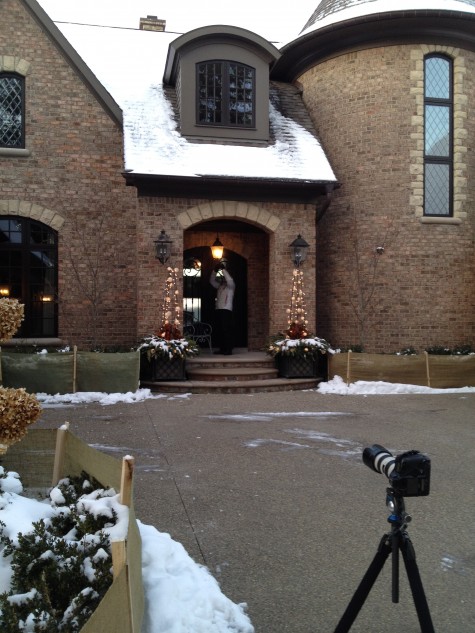
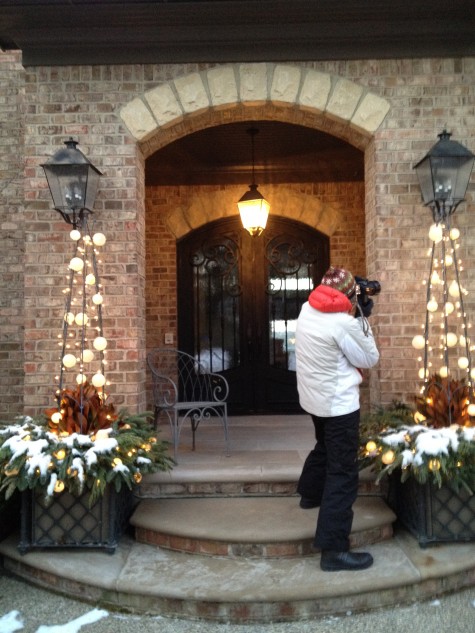
Yesterday’s photoshoot took 12 hours.  I was relieved to hear Bob was as tired as I was, at the end of the day.  We parted ways at 6:45 pm, with a plan to meet at 6:30 am this morning.  I was 5 minutes late-I was relieved he was not yet there.  Three of the photographs requested were slated by the BHG Art Director to feature winter pots with lighting.  This meant photoigraphs taken very early, or very late. Bob and I have been on deck both early and late.  I was so sleepy this morning I forgot my camera-pardon this unfocused picture taken with my iphone. I was a little alarmed to see that the lighting in the pots trumped by the lighting from the sconces on the house.  I had a feeling I would hear about this.   

Sure enough, Bob was not happy about those hot lights.  After some discussion, I asked him if he could unscrew the light bulbs in the lanterns.  6:30 am is no time to call an electrician.  No doubt,  my job was to help solve problems.     


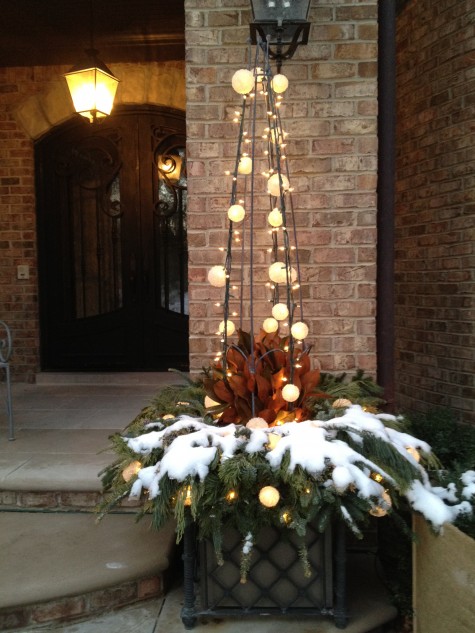
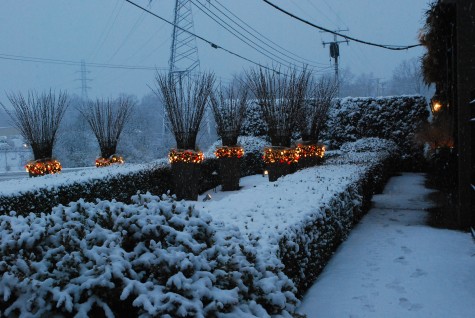
 This winter pot features strings of mini lights, interrupted every so often by a light cover.  A light cover?  Years ago a company we bought from sold boxes of plastic spheres with an icy texture-designed to slip over a mini light.  What a great idea- these globes of light are so beautiful in our dark season.  We have never been able to source them again.  When I retire, I may design and manufacture light covers-do they not look great?

I was relieved that Bob was able to do his work, once we dialed down the lumens from those lanterns.  Of course the lights in the containers went off midway through the shoot.  I disabled the timer long enough for him to get what he wanted.  After the shoot concluded, we screwed every light bulb back in, and reset the timer.   


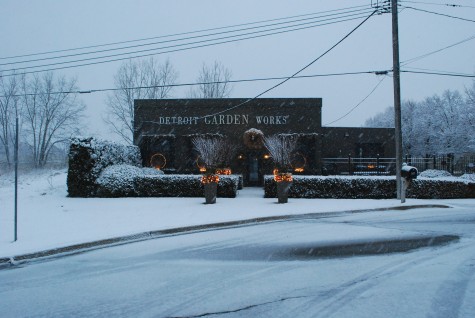
 He photographed the lights at the shop late in the day.  These pictures of mine were taken at dawn the day before he arrived.  I was ready 45 minutes before dawn to take some snapshots-this would help him plan.  The corgis were unsettled by this change in routine-breakfast at 5:30 am-really?

I never have any need for an alarm clock.  I am always up early.  But I set an alarm on a little digital clock I have had almost 40 years.  I wanted to be sure I was on time.  Once I got to work, and had a second cup of coffee, I was happy to be there.  The corgis quieted down, and rose to the moment.  We have had so little in the way of winter weather, I was delighted for this particular moment in a place I have come to every day for 16 years. I have nature to thank for that.  This particular moment. 

Bob says he was pleased with his photographs of the lighting in the winter pots at the shop.  He photographed from across the street.  Really?  Like I said, this was an educational trip. 

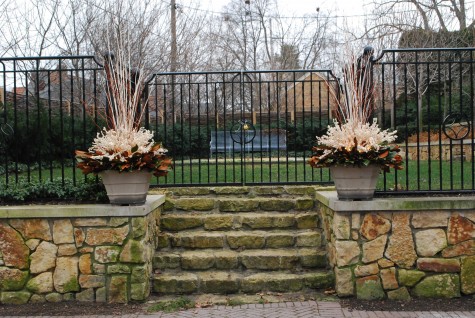
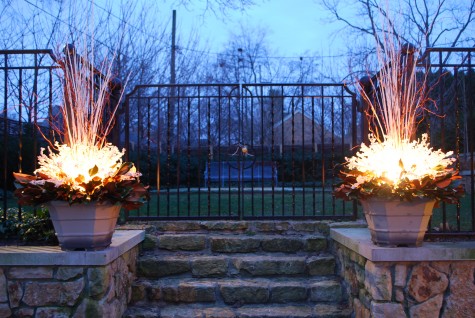
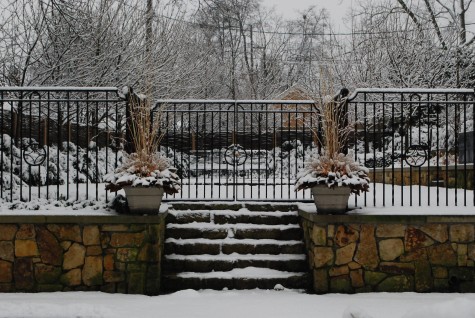
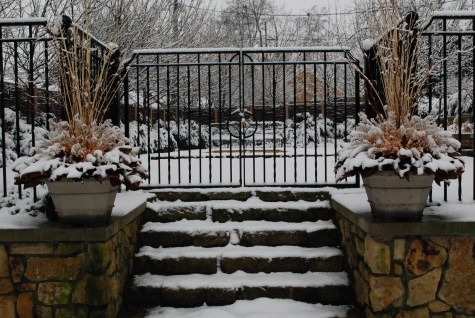
 Rob made this pair of winter sculptures for me every year.  I never ask for them.  I never make any suggestions.  What he does is a gift-I treat them as such.  They sit on top of a retaining wall at the end of my driveway.  They are what I see when I leave home in the morning.  They are what welcome me home at night.  I took this snapshot of them this past December.  They make me certain that there are certain seasonal elements in a landscape that truly do provide seasoning.  I would not want to do without them.  I take pains to make room for a little seasoning in every landscape I design.  What landscape would not be better, given the fragrance from lavender, or rosemary, or basil?  Winter pots provide a seasoning unlike any other-especially if you live in my zone.   

Late in the day, or early in the morning, these pots light my way, and my heart.   

Bob photographed them at 6:30 am the first day he was here. I was not privy to anything he did-I was completely absorbed with unfreezing the lock on the gates.  He wanted the gates open.  In retrospect, I understand this.  Every garden should issue an invitation.  An invitation to interact-an invitation to share.  I did finally get the gates opened.  What Bob photographed-I have no idea. 

The first day of this shoot was day and night.  I was great fun to be a part of that.

Through The Lens


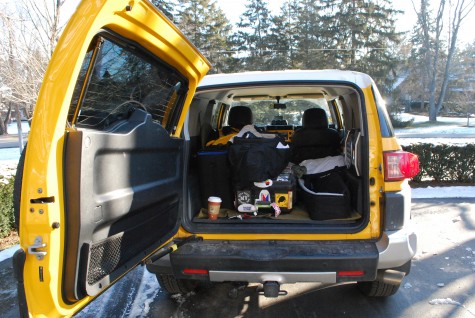
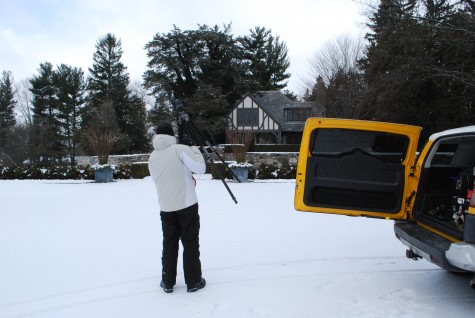
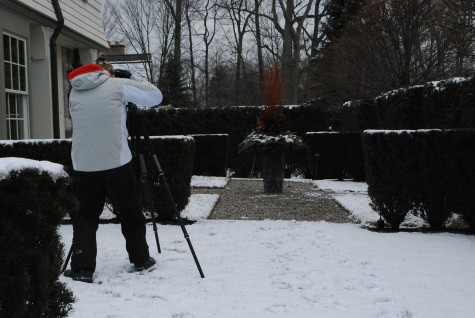
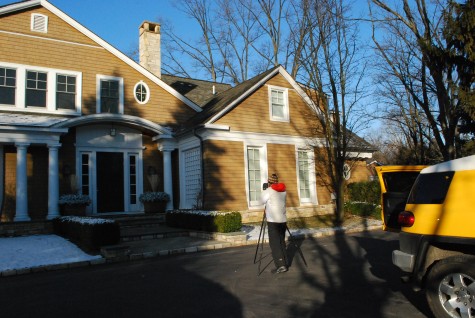
If you think the lack of posts in the past week means I must be on some late winter road trip, you are close to right.  The vehicle pictured above is not mine loaded with luggage-it belongs to Bob Stefko, a free lance photographer based in Chicago.  Better Homes and Gardens sent him over to photograph some of my winter pots.  “On assignment” means he travels with a truckload of photographic gear.  This shoot was scheduled for 9 locations-9 outdoor locations.  I was happy for the cold weather and snow.  But for that, the shoot would have been cancelled. It took a while to get permission from clients, check all of the pots, and assemble some props per the art director, and a crew to haul things around.  Once he arrived, it looked to him like it would take a day and half to take the photographs.  A day and a half for 9 pictures?  

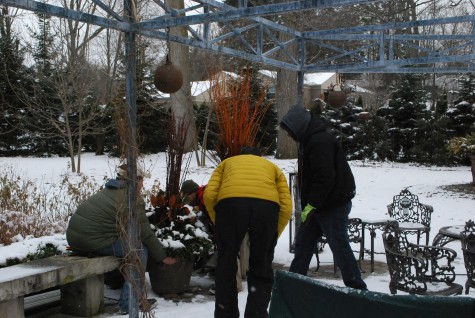
Bob obviously had experience “working on location”.  He arrived dressed in his snowboarding gear.  I would eventually envy him that outfit.  It was cold, and that cold seemed to sink in deeper every hour that went by.  Accompanying him to each location proved to be an education in what Rob calls magazine gardening.  No magazine wants to publish photographs that show any evidence of sloppy living.  Like the muck boots in a heap at the back door, or the newspaper in the drive. No dog toys, twig debris or automobiles allowed.   One of my jobs was to secure each site, so no one would spoil the new snow with footprints.  This is tougher than you think.  One mailman was very cooperative-one housekeeper glared at me, and marched up the front steps without one look back.  

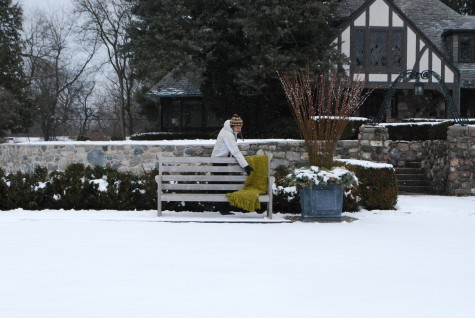
Scott Johnson, the Art Director at BHG, was skilled at getting me to fall in line with this.  He told me how much his 14 year old son enjoys fresh and unsullied snow.  Of course, I do too-I certainly did not want to look like a twelve year old.  It’s just a little harder to get that to work when it isn’t your house.  Only company uses this front door drivecourt-we were the first company after the snow.  Whew.  BHG wanted a bench that would keep this winter box company.  It could easily be that a small portion of one arm, and a glimpse of that wool throw will be all that remains of it in the final photograph.  But to get that arm in the composition, my crew had to carry it behind the boxwood, and lift it over and into place-no footprints in the foreground snow, remember?  The centerpiece got straightened straighter than straight.  The sinamay got fluffed, and some of the snow gobs were ground up, and sprinkled over the evergreen branches.  This took a surprisingly lot of time. 

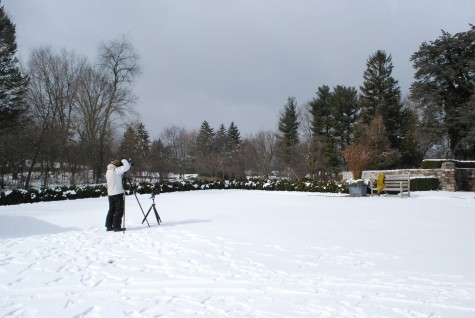
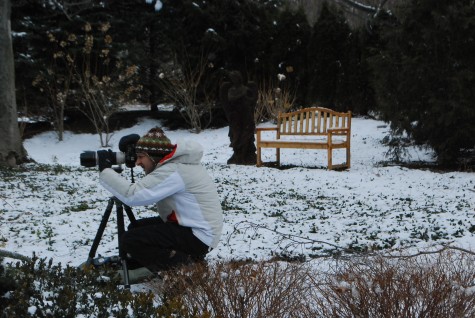
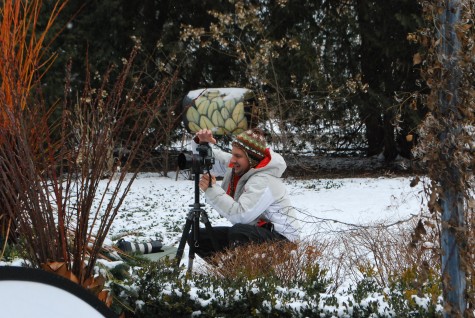
Bob took lots of pictures.  In some, his camera was held at his eye level via his tripod.  Some pictures got taken from a much lower point of view.  In the course of the 90 minutes we spent there, we had heavy clouds and snow flurries, sun, and partly cloudy conditions.  Sometimes he waited for the light to change or improve.  I get this.  The right photograph was now or never.  There would not be a second trip. 


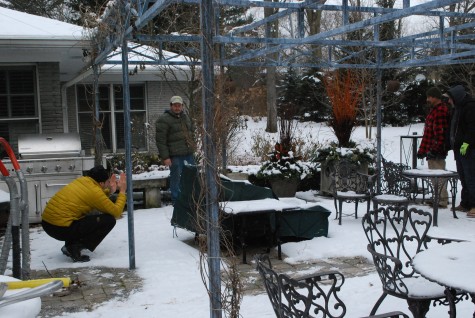
One location asked for the pots to be moved.  This is fairly easy to do, provided you have three people with lots of experience moving heavy things, and a hand truck big enough to move a good sized refrigerator.  That would be my landscape crew.  They were amused, and good natured about the events of the day.  Once the moving was done, we had to cover all of the tracks.  Snow was shovelled from the yard onto the terrace, and then swept off again. 

These pots had plastic irrigation lines in them that provide water to the plants in the summer.  Of course they were frozen in place.  I cut the lines, and made a note to be sure to get them repaired when we come to do the spring pots. (I hope my client is not reading this.)   

In hour number three, I was jumping up and down with the cold, but Bob was the consummate professional. I wouldn’t hear about the bloody cold until he was done for the day.  He did tell me taking photographs on location depends on solutions to problems.  In the studio, he is the weather maker.  By this time, my respect for landscape and garden photographers was on the upswing. 

I have 8300 pictures in the photo archive for this blog.  By no means did I work this hard to take them.  I have my camera with me all the time.  When the light, the plant, or the composition intrigues me, I snap.  My pictures are snapshots of a certain place and time.  What was going on here was the creation of an image that takes a garden to another level.  Nothing was happening here by accident.

He seemed pleased by what was going on-that’s all that mattered.  I have been involved in some photo shoots over the years.  I will confess I planted cut roses on a climbing rose for a photographer.  Do I mind this?  Absolutely not.  Every gardener hopes for a perfect moment.  Magazines do too.  A beautiful photograph can do much more to encourage me to garden than a list of must do’s and don’ts.    

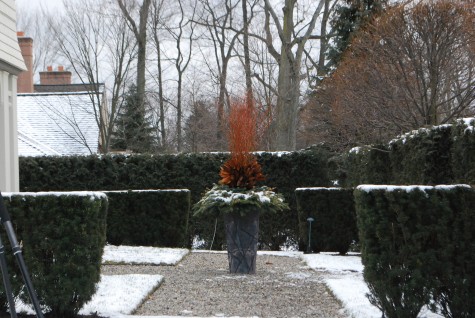
I was relieved to arrive at one location that we both agreed needed nothing in the way of props.  I do dislike adding something to a landscape not intended and put in place by a client, but I also understand this is not about them, or me.  It is about an image that will enchant someone who has never been here before.


Though I am enchanted by this garden, I feel certain Bob’s photograph will be an object of beauty, all its own. I would venture to say he will transcend the subject and weather, and the existing conditions to create an image of note.  They send him all over the country to photograph for them-they do not do this without good reason.