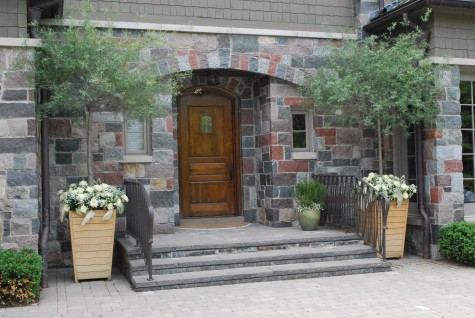
 We do plenty out of the ordinary garden plantings- given a special event. Planning outdoor parties, and timely planting for outdoor parties don’t always go hand in hand. Whenever a client asks for white tulips blooming for a mid-May outdoor wedding reception, I sigh. Try as I may, I am no better at predicting when the Maureen tulips will be at their white peak than I am at predicting the outcome of a horse race. Suffice it to say that I planted hundreds of pots of all kinds of spring flowering bulbs hoping some would be in bloom for our spring fair-not a one bloomed for the fair. I have also stuck cut white tulips in water tubes into tulip foliage in the ground. This is not cheating-this is going the distance to make an event visually memorable. I had 3 weddings scheduled this spring- two on June 4 and and one June 19. Several clients had graduation parties they planned to hold outside in mid June. The spring did little to help me out; no end of cold and wet weather kept me from planting until I had no choice but to go ahead, and hope for the best. Everything seemed to work out fine. Late May and June is not an optimal time for a garden party in my zone, unless there are a lot of bulbs, and spring flowering annuals and perennials in place. This client was hosting a wedding reception at home. The Belgian oak boxes asked for a different kind of planting to celebrate that event.
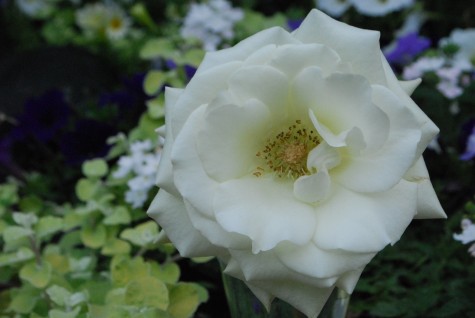 The fact is that no perennial, bulb, or annual planting will perform spot on and perfectly for an event. I encourage my clients to use cut flowers to add to what is already going on. The florist’s rose known as Hollywood is the best white rose it has ever been my pleasure to use. Though I order them up from my cut flower supplier, for all the world, they look and open like garden roses. I order them to arrive several days in advance of the event, so I have time to condition them. I recut the stems on a slant, and place them in room temperature water in a cool spot. This encourages them to take up water; proper conditioning can make cut flowers last much longer. My plan was to add cut flowers to the annual planting.
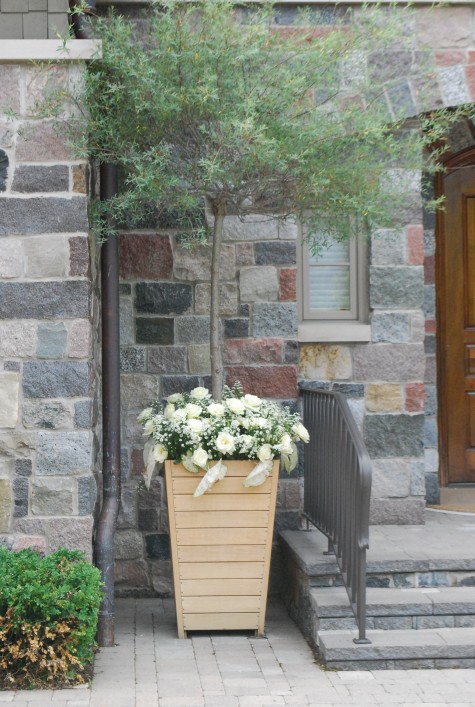 I had planted the boxes with top grafted willow topiaries, and white caladiums. Given a wedding reception, I stuffed stems of the roses, and white montecasino into the soil around the caladiums. The pots looked dressed to the nines. Hollywood roses last a long time out of water. If the air temperature is cool, I stick the stems directly into the soil. If the weather is hot, I may tube the roses. Floral supply places carry pointed plastic tubes with perforated rubber caps that permit the stem of a flower to be pushed into an individual “vase”. A rose can drink this small amount of water in a matter of hours, but often that is long enough. The pointed end of the tube can be poked into the soil. Once the reception was over, the roses are removed, and the caladiums grow on into the summer.
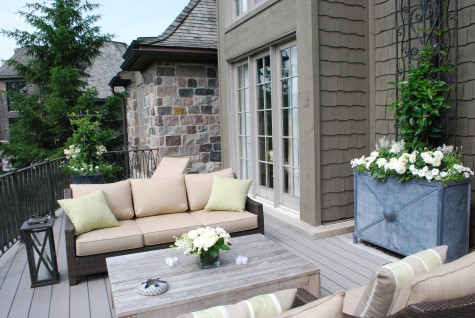 The containers on the balcony were planted with white flowering annuals especially for this event. A pair of white mandevillea vines were conspicuously green, but mandevillea likes heat to flower. By June 19, we had had but a few really hot days, and night temperatures in the 50’s. But other plants made a little white statement.
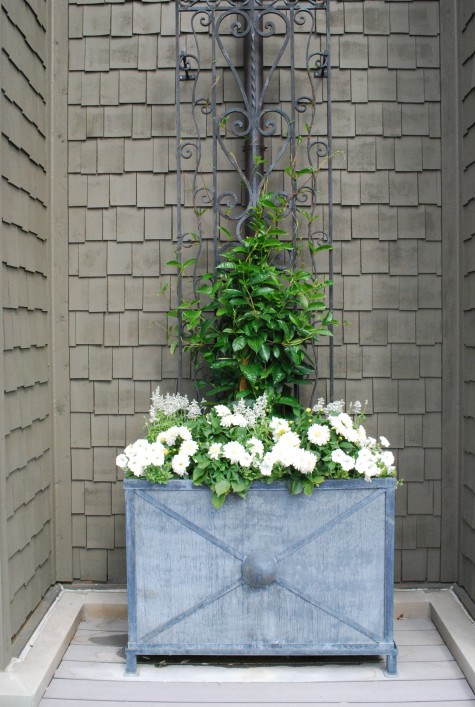 This box with its own antique scrolled iron panel is very friendly to a mandevillea planting. The niche is warm, and protected from wind. The vine will have plenty of places to wind around, and grow. It will climb to the top of this panel in no time. The placement was somewhat dictated by a giant downspout right in the middle of the wall. Whomever designed this detail had utility on their mind-and not much else. But as this balcony does not get any use in the winter, the container helps to solve a visual problem.
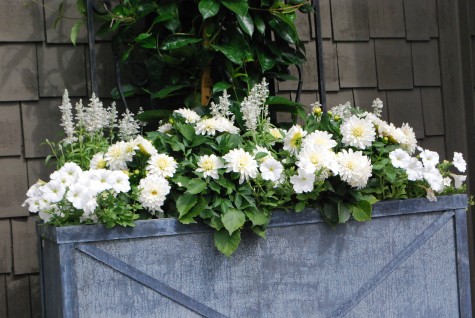 White salvia has never been a favorite. But the new Cambridge series has more substantial and brighter white flowers. The white Gallery dahlias have large flowers, as do the white supertunias. Some white flowers I stay away from. The blooms on white geraniums are so quickly spoiled by rain. Plant them if you plan to wait on them regularly.
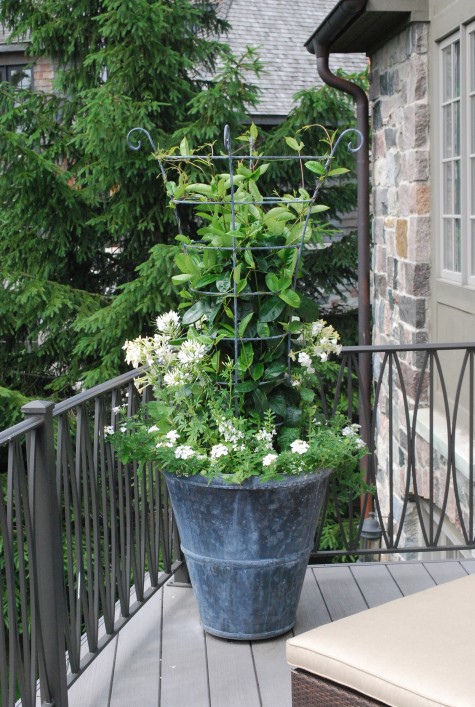
I have always liked white cleome, but this dwarf version called Spirit white is completely at home in a container. Soon there will be white angelonia, and lanai white trailing verbena. In another month, it will be the perfect accompaniment for a garden event. June the 19th, it looked perfectly fresh and lively.
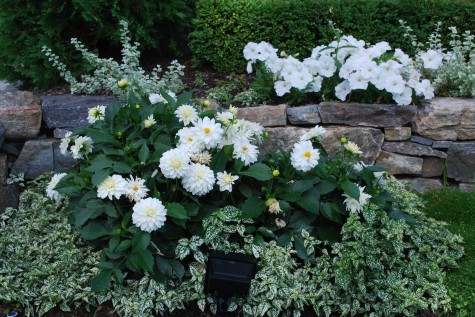
There are lots of great choices in white flowers-everyone has their favorites. The not so often used white polka dot plant is a great supporting cast plant-it is best in shade. It looks great with white caladiums. If you want to use it in full sun, as it is planted here with white dahlias, be sure it gets enough water. Variegated licorice does a similarly wonderful thing for white flowers; its cool blue grey foliage makes white look especially crisp, fresh-and very festive.