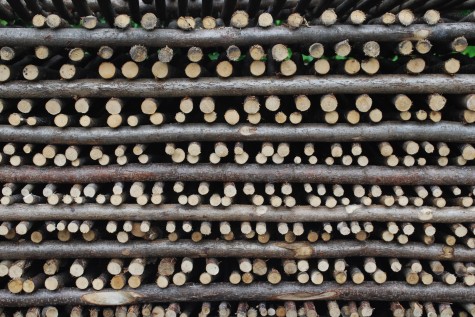
 I wrote a few days ago regarding my excitement about the delivery of a container load of hazel wood hurdles from Belgium; the order we placed in May finally arrived. Wattles and hurdles are panels, woven from the coppice wood of willow and hazel wood. I personally favor the heft and longevity of the hazel wood; it is vastly more durable and substantial than willow. Coppicing is the practice of cutting trees or shrubs to the quick, with the intent of harvesting the branches for fuel, or fencing. The shrub or tree regrows, only to have its branches harvested again. Woven hurdles keep the livestock out of the vegetable garden. They border herb and vegetable gardens. They provide privacy without being utterly opaque. They work wherever they are needed. Woven hurdles are a fence material friendly to a garden or landscape of any point of view.
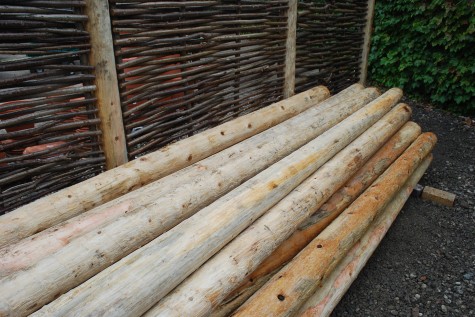 I have a client who has become a friend; he supports Michigan industry in a big way and was so pleased these stripped cedar fence poles we bought are Michigan grown. Though I ordered 5″ diameter poles, 10 feet long, they looked like telephone poles when they got delivered from a supplier in Michigan’s Upper Peninsula. As I relentlessly speak to issues of proportion, I was worried I had gone over the edge by an inch. I was wringing my hands, until the fence went up. I should not have worried. The size of the pole was perfect for the heft and texture of the fence. The bare cedar poles are a good contrast to the woven hazel wood, which has all of its bark intact.
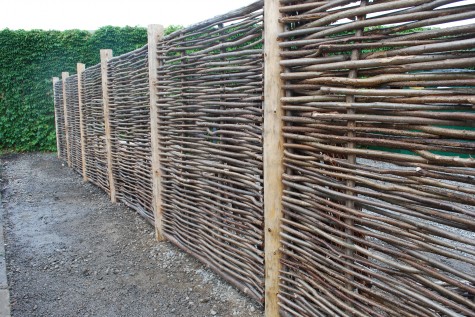 There is no substitute for the time when the talk ends, and the making begins. We set a pole down 24″ or so below grade, and set a panel up next to it. These panels are made by hand, and vary in width somewhat. One pole, one panel, and so on. This one step at a time construction ensures that the space between two poles is fitted to a specific panel. Steve toe-nail screwed the panels to the center of each post; this is a sturdy construction. What I like even better? This fence has no back or front; the panels are the same back and front. How friendly is this to neighboring properties? This fence looks good to both sides.
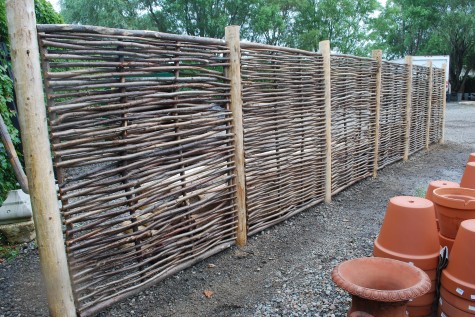 I have a client who plans to screen his hot tub with this fencing. It was the subject of intense debate today-will these hurdles screen a man who is happily skinny dipping? I vote yes-unless the neighbor plans to be close enough to see through the hurdle branches. The neighbor with his nose pressed to the fence-that is the subject of another essay, is it not? The fence is also friendly to vines that need to grip to climb. Clematis grown on this fence is especially lovely. We are careful to install the fence slightly above the existing grade of the ground. Wood in constant contact with soil will deteriorate much more quickly than wood that is able to shed water.
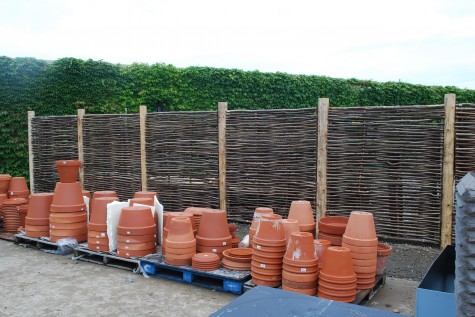 The fence is good looking with contemporary steel ornament, traditional terra cotta pots, a funky birdbath made from recycled materials, or a formal lead cistern fountain. This is by way of saying this fence looks good with almost anything. As to its longevity, imagine how long it takes a dead tree to fall and deteriorate. Branches and twigs are not good materials for the compost pile, as they break down so slowly. We have stocked this fencing for 8 years now. I have yet to have someone tell me it had disintegrated. Wood fences do age though-that is part of their charm.
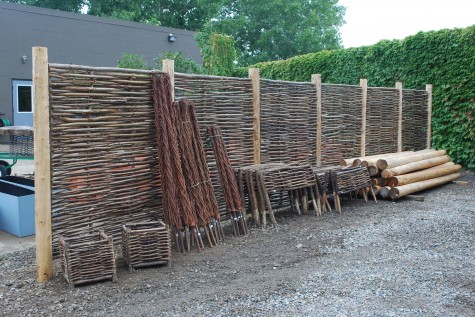
Robert Frost once said that good fences make good neighbors. I would go beyond that to say that good fences can be beautiful. They slip into tight places. They screen views not suitable for public consumption. They divide this from that. They are happy to support climbing plants. They enclose great views. This hazel wood fence goes beyond to please the eye, and warm the garden.
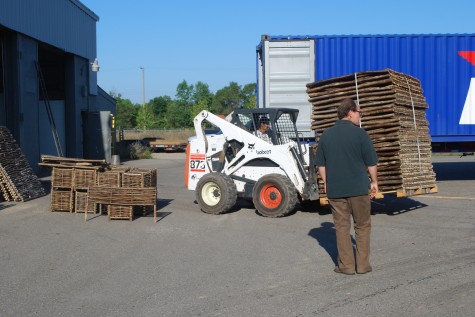 Wattle, or hurdle fencing is a traditional garden or livestock enclosure made from either willow or hazelwood. Last week we took delivery of a forty foot long container of Belgian made fencing. Though I am making a point of shopping my own country, I am especially attracted to Belgian garden ornament. Rob says the Belgian climate and topography is a lot like the Midwest. My most favorite landscape photographer Lynn Geesamon has photographed all over the world. Her images of Belgium so strongly resonate with me, as I do think they remind me of my native landscape. Some of her images can be seen at
 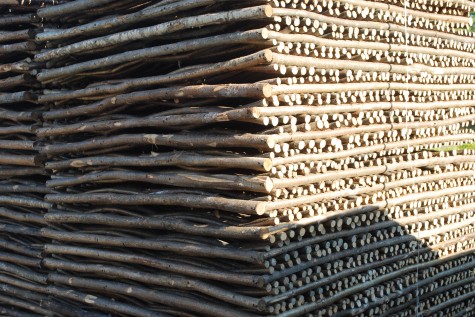 A garden ornament does need to look like it belongs to the garden in which it is placed. It takes some doing to bring these twig structures from their place to mine, but it is worth it. They are heavy, chunky and sturdy-and beautifully constructed. Each five by six foot panel weighs 100 pounds-substantial. We buy peeled cedar fence poles from a company in the upper peninsula of Michigan. This material has a very local feel.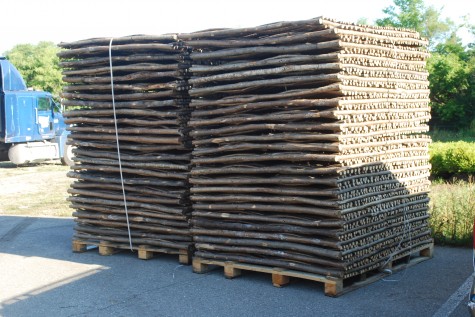
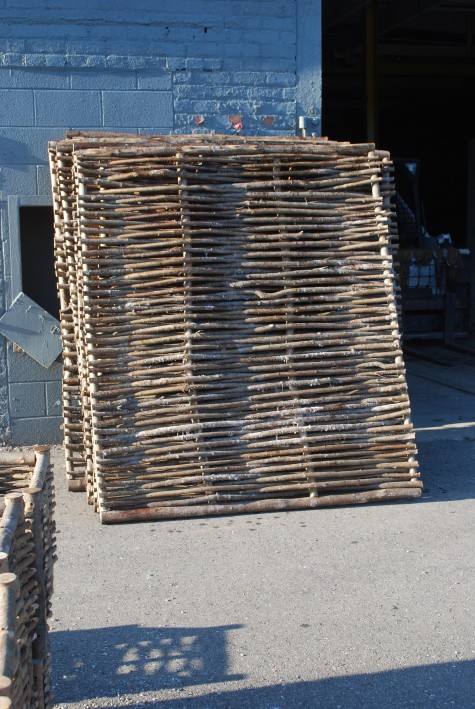 The woven branches have a great texture, and cast good shadows. The surface is lively and warm. Burt told Rob he sold Italian shoes for 25 years, before opening his twig panel business. It is easy for me to see why he would do this; it must give him great satisfaction to be making objects that celebrate the beauty of the natural world. Rhododendron root furniture, log furniture, twig trellissing-all of these things have a primeval appeal.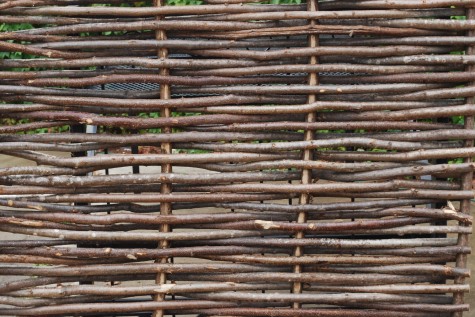
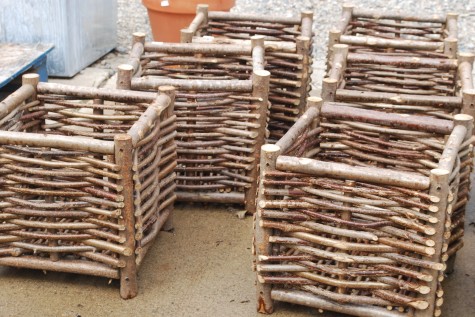
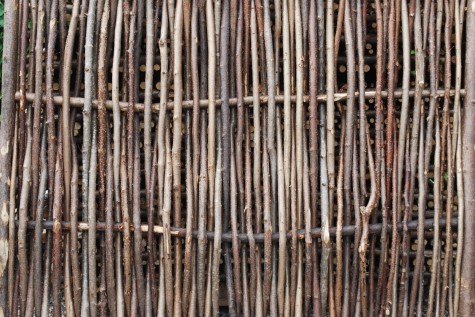 Positioned with the twigs in the vertical, the panels have a different quality about them-more sculptural and sinuous. I had a client tell me she loves the beauty of ordinary materials. Things people make of ordinary materials can be anything but ordinary. A material like this is just waiting for an inspired placement.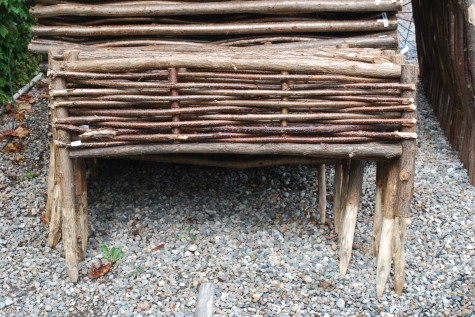
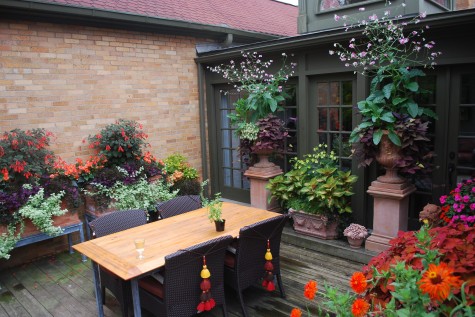
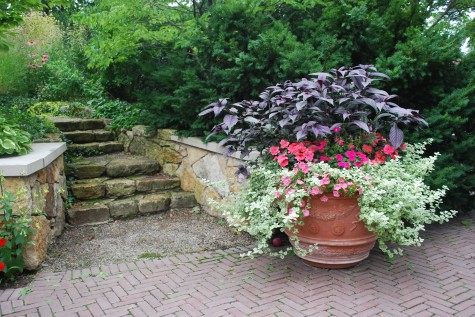
 I like the fireworks going-on feeling of my terrace pots this year. Most of that has to do with how they have grown. I picked the colors and plants yes, but nature has proved unusually cooperative. We have had cool temperatures all summer, and now, regular rain. The usual bugs and disease must be at someone else’s house.
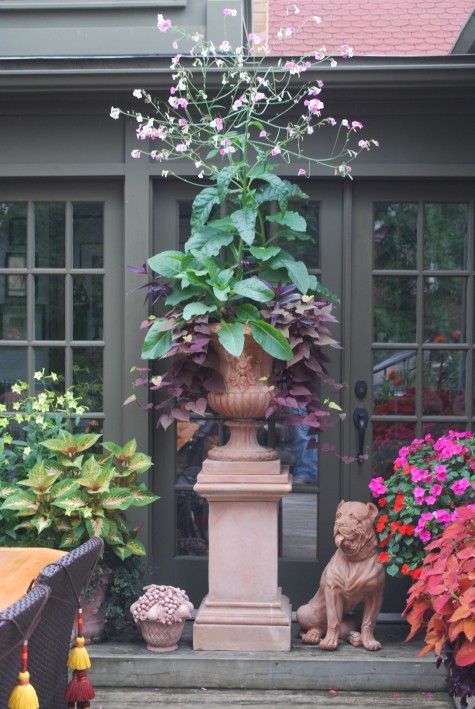 The Mital terra cotta gargoyle pots on their pedestals have never looked so rowdy and profuse. I grow nicotiana mutabilis every year for exactly the reason you see here. The showy oregano in this pot gave up and died, but I hardly notice. Besides, this pair of pots started out mismatched-I like that they will end up mismatched.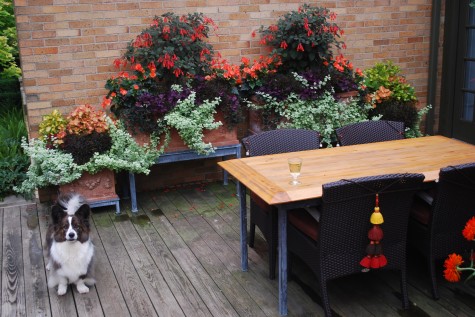
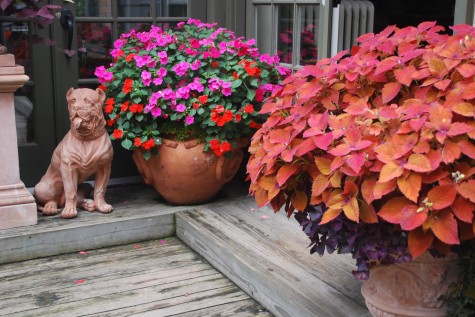
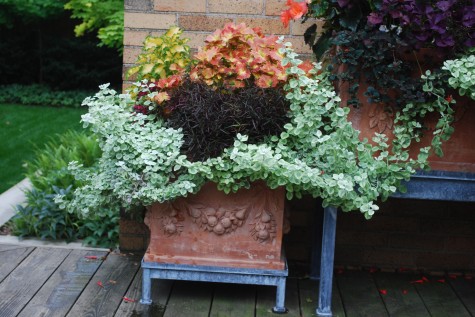 These two licorice plants have made a flared skirt of themselves. The shape is especially attractive with the garland pattern on the pot. Did I plan this part-absolutely not. Anyone who gardens gets to enjoy the unexpected.
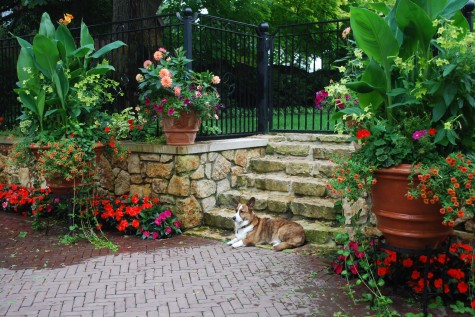 The New Guinea impatiens this year are unbelievably gaudy-what fun. Even my million bells, which usually sulk as I have very alkaline water, are cooperating. My dahlias do not have mites or mildew. The cool weather has slowed the flower production on the cannas, but the foliage alone is well worth having.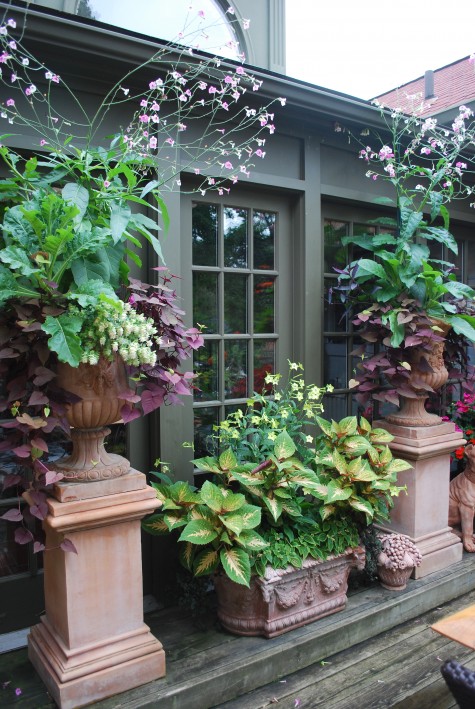
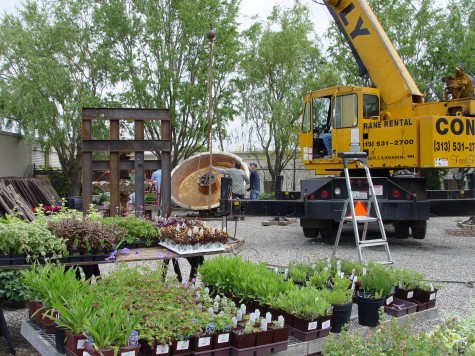
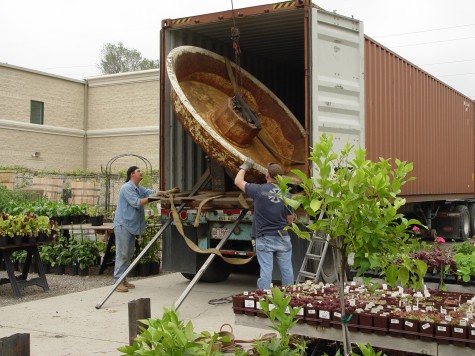 The biggest headache? The basin was too large to sit flat on the floor of the container that would bring it to the US. So, some 6 weeks and plenty of money later, cast iron crates had been welded up for the basin, and fountain. The fountain centerpiece had rusted tight to the basin; it was after all, 130 years old. The centerpiece was painstakingly removed with the help of an acetelyene torch, and then welded to its custom made steel crate.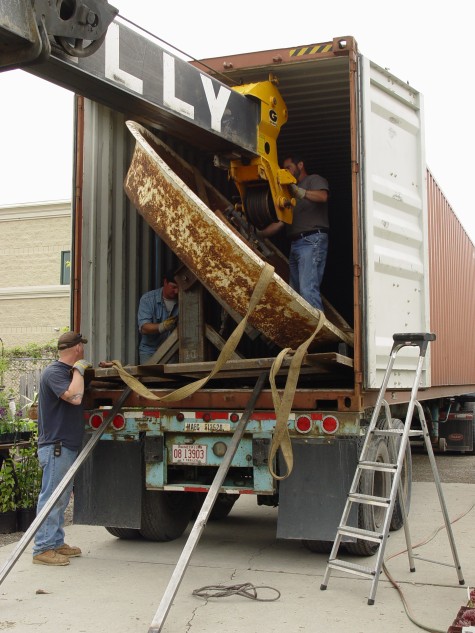
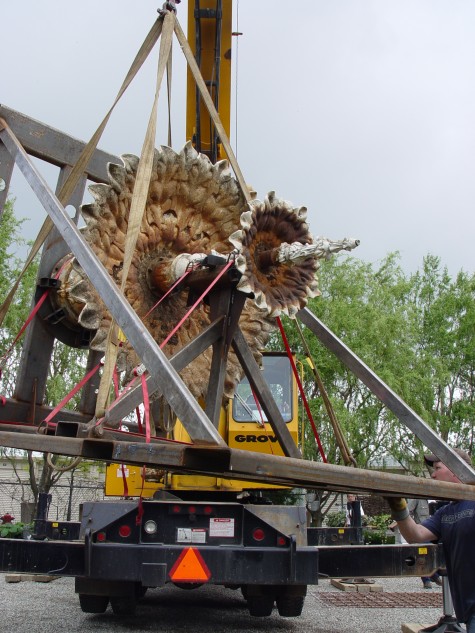 It was an operation the likes of which I have been involved in rarely; the entire day went to uncrating, and positioning that fountain. The crane people were incredibly professional and focused. At some point during the day I actually looked at what had been the center of so much commotion. It is one the most beautiful large scale fountains I had ever seen. The pattern of the cast iron leaves is as beautiful on the inside as they are on the outside-this a hallmark of very fine ironwork.
 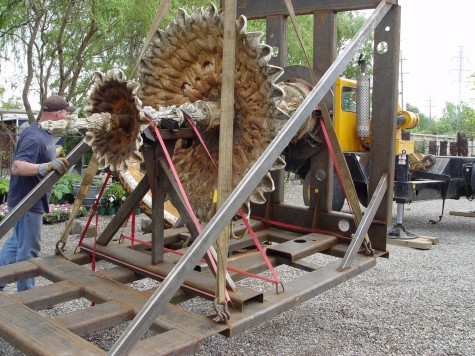 The torching and unbolted to free the pieces from their steel crates was slow and tedious.
 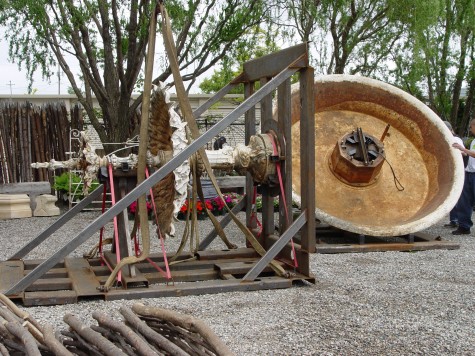 What was I thinking, that I had to have this? I had scared myself, no doubt. But today I would say once in a while something comes along that makes you feel like speaking up. Who wants to spend time contemplating their lost opportunities?
 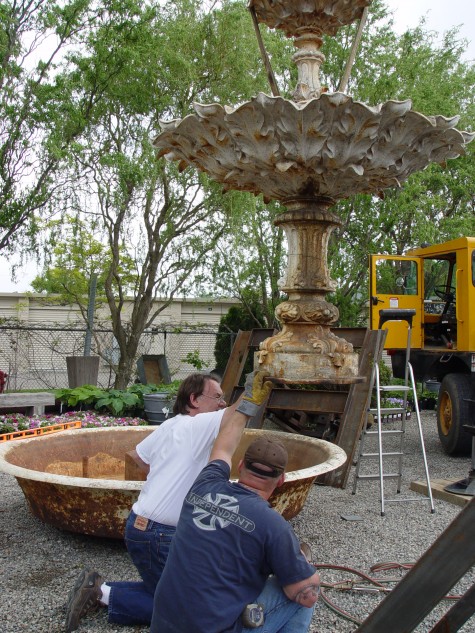 Buck helped out getting the basin set perfectly level, as we knew there would be no moving it once it was placed-except to a new home. The boom crane held the fountain piece aloft until both pieces were perfectly aligned.�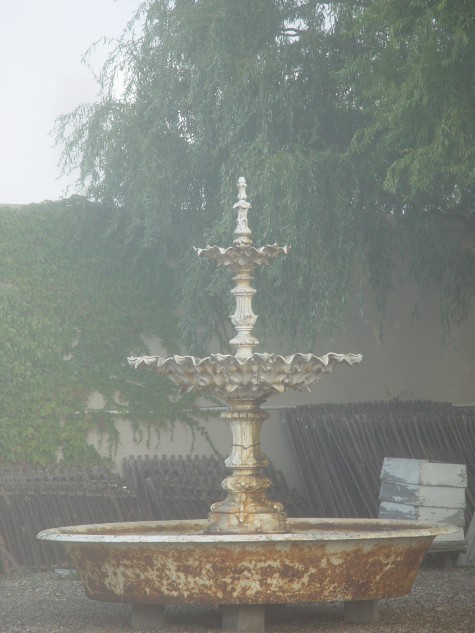
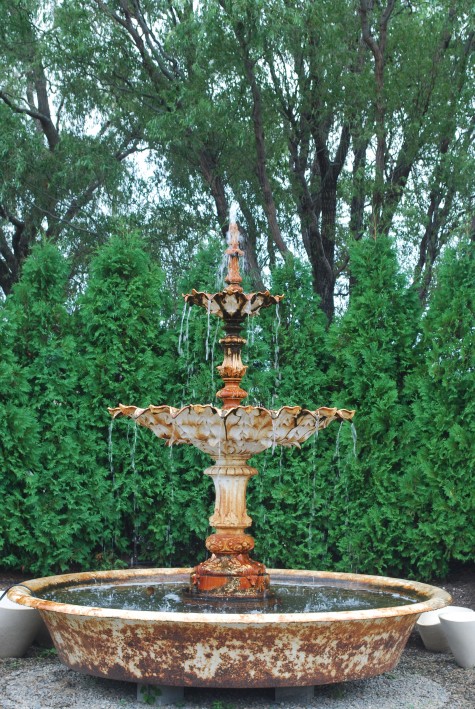 In the meantime, it is my pleasure to look at it every day. In spite of everything it took to get it to me, I know when the day comes, it will be very tough to give it up. Funny, that.