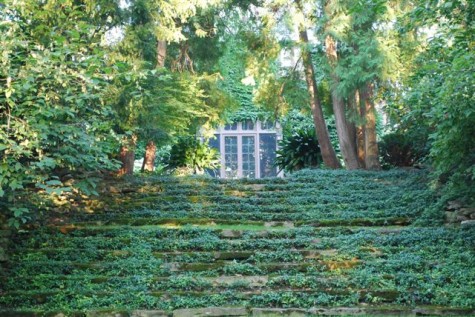
 This very old, very lovely, wide flight of stairs was once buried in soil and debris; only the center four feet was still visible and useable. I discovered it by accident, while trying to plant trees and groundcover on either side. Once I explained to my client that another twelve feet of staircase still existed just below the surface, she had me uncover it entirely. We planted the risers with myrtle. This staircase is much more about ornament and architecture, than about going from one level to another. As the lower garden is viewed primarily from the house above, the beauty of these steps is more important than the issue of how to get from here to there.
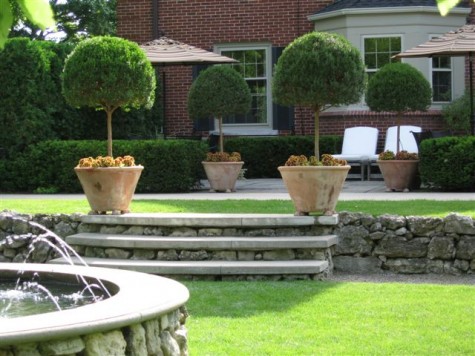 The change of level in a landscape can create interest, announce a new garden room-change things up. This previously sloped garden space was excavated and walled with the stone that had been used to edge the original beds. The steps now necessary to descend to the lower level signal the transition. The treads are shallow, so as not to intrude on the rectangle of grass below. A good height for a step is 7 inches; 8 inches will work, but is just slightly on the steep side. Every step in a flight of stairs needs to be the same height; people instinctively assume this. Note how the gravel in front of the wall, dying into the lower step, makes the maintenance of the lawn plane simple.
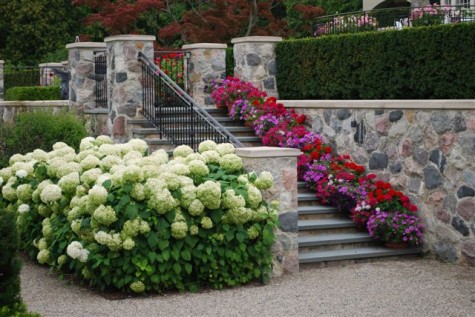 Some changes of level are dramatic, and require a flight of steps, and railings. Any stairs need to be designed first and foremost to allow for safe passage. Each of these steps is marked with its own pot of flowers. The iron railing is as sturdy as it is beautiful. Iron rails allow a garden to remain open to view while providing some security.
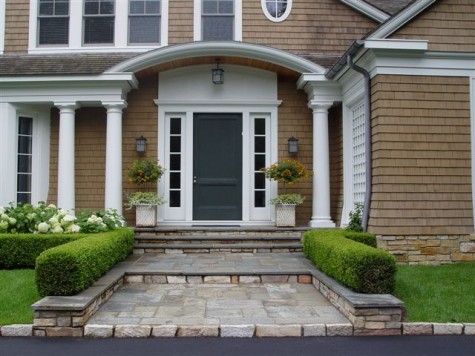 Splitting up steps can be even more friendly to guests. It is far easier to negotiate one or two steps at a time, with a landing in place prior to the next set of steps. These stairs are wider that the door and side windows; this makes for a generous and welcoming approach.
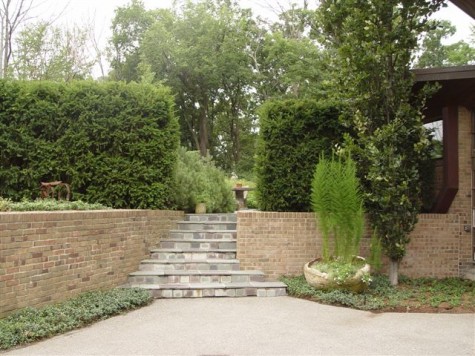 This winding staircase seems to spill out of the confluence of two walls designed and built on the bias. The variation in stair width creates a sense of motion and rhythm which is very pleasing. The wall enclosure makes it possible to climb these stairs with confidence.
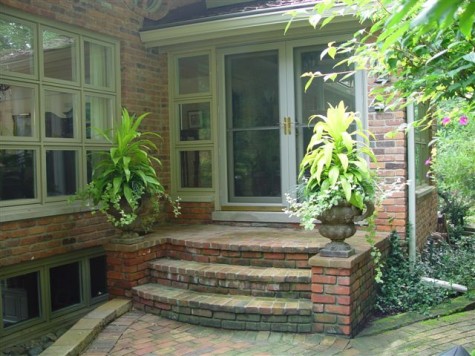 Stairs can vary in their depth. The first stair out of this front door functions as a landing-a comfortable space for greetings, and goodbys. The brick piers and pots are a succesful alternative to railings, which would have seemed so heavy handed here.
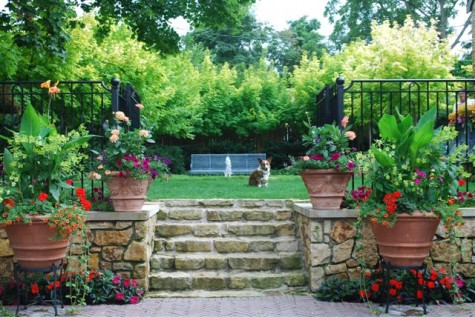 Natural stone frequently has a uneven surface. Planning for a safe ascent and descent is doubly important. The iron fence walls inset from the stairs provide an emergency handhold for anyone loosing their footing.
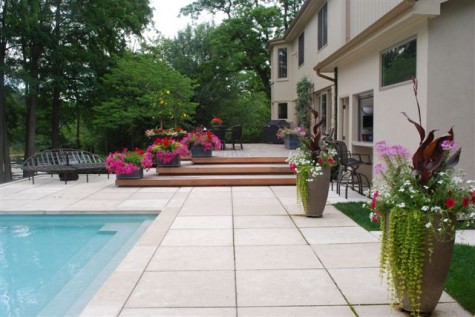 These wood stairs to the upper terrace are very spacious in every dimension. Steps with greater depth are easier to negotiate. Steps to a rear terrace are frequently used while carrying food and drink; it is better to err on the side of too deep, than too shallow. The pots announce the change of level for anyone concentrating more on keeping their tray of food where it belongs, , than watching where they step.
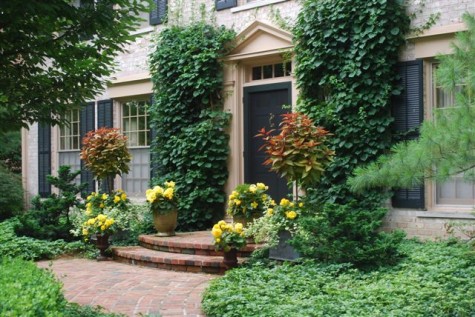
Thinking through what you need from your steps is just as important a part of the design as how they look. Will guests take them in stride? Will they be easy to rid of snow? After those questions are answered, then figure out how all your concerns can be all wrapped up in a good looking package.
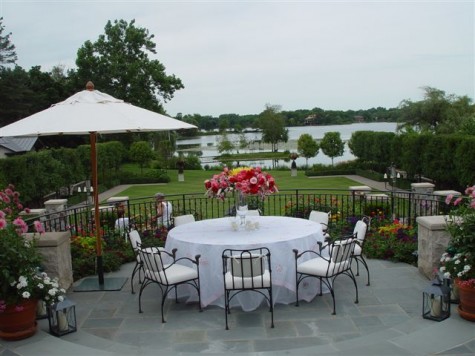 Come August in Michigan, the garden ought to be the perfect place for a party. This garden was spectacularly ready. The occasion of this party-a very special once in a lifetime event. My client was determined to pull out all the stops for her husband/gardener .
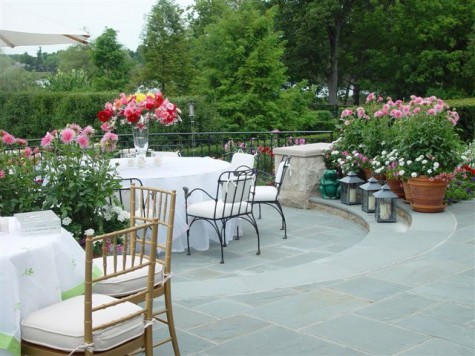 The maintenance of this garden is a regular thing, but everyone knew in advance we have a date to work towards. I did the cut flowers; my client orchestrated all the rest.
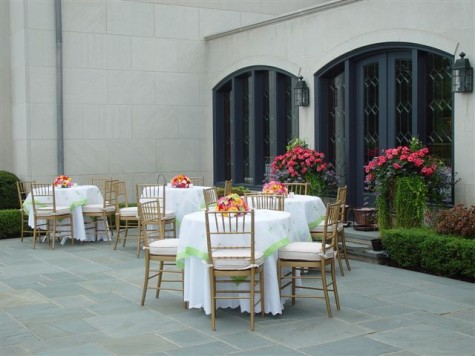 Every gardener knows what non-stop work a garden demands, but there are rewards from that work. It was breathtaking that afternoon. I delivered the flowers, and while setting them in place I had a chance to take the time to look, and enjoy. The grass cutting crew, the maintenance crew, the landscape projects started and completed over the years-the list of people involved in getting this landscape to this particular night is a long one.
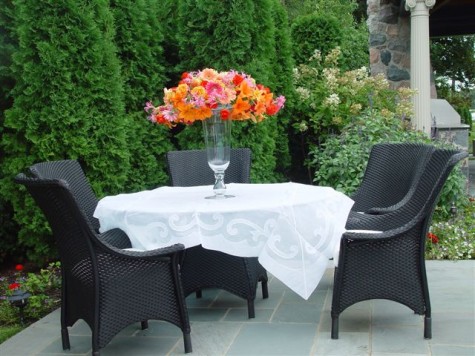
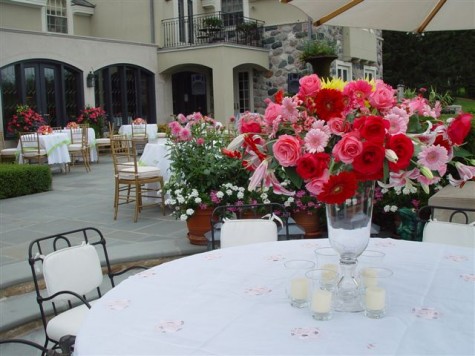 Add to the top of that list, my client, and how she graciously dressed the garden for this party, and went on to entertain a number of guests. Though this is a very formal garden to begin with, it was even more so for this event. Every corner of the garden, dressed up, and awaiting company.
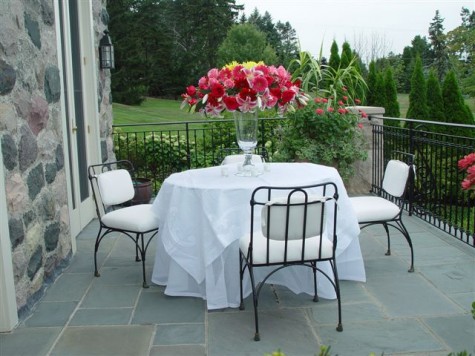 The roses and Oriental lilies were arranged in florist’s oasis on top of the vases, so as not to interfere with conversation at the table. They seemed to float above the tables; it was a very romantic look.
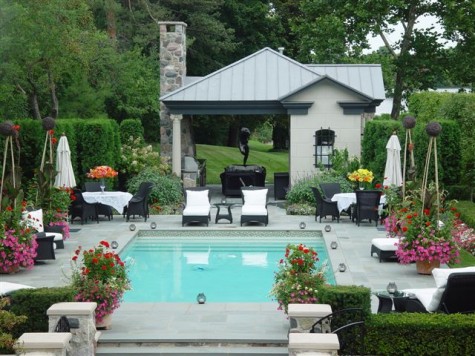 �
� I doubt I will ever entertain like this in my garden, but that does not mean I do not entertain. I have more dinner guests the month of August than any other month of the year. I take a lot of pleasure in sharing my garden. Thank heavens, Buck handles the menu, and the cooking. I do the garden.
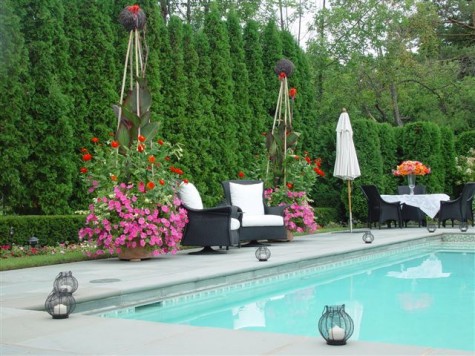 I think I am especially fond of this garden as I know how much my clients love and respect it. They are stewards of their property, in the most serious way. But this night was about the fun and the pleasure of having a garden; they more than deserved it.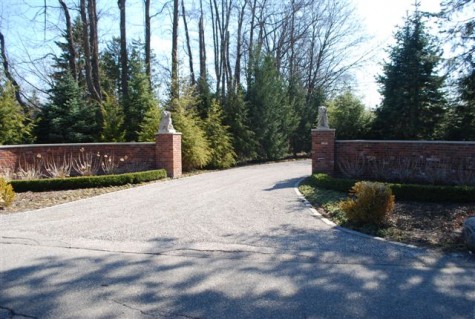
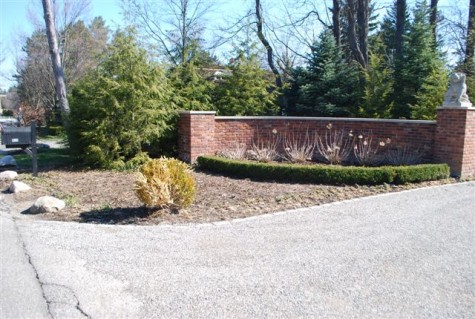 The walls are substantial, and large. They serve to announce the entrance, and enclose the private part of the property from the street. The current placement of the boxwood runs counter to the curve of the wall in a tentative way; the small scale of the boxwood is no match for the heft of the wall. The boxwood placement further chops up a space already bounded on every side by hard surfaces. Oddly enough, the smallest space is planted with hydrangeas and hostas already leaning over the boxwood. The largest space had one lonely boxwood in an ocean of winter burned ivy.
 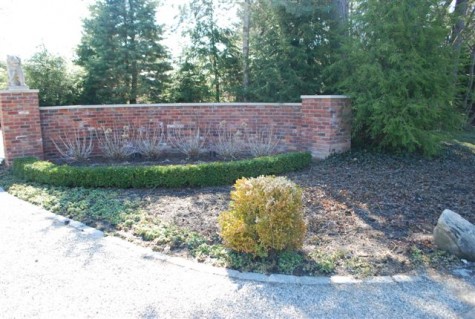 An entrance planting not well-designed can be difficult to maintain. They are a long way from the hose spigot, or the wheelbarrow. They suffer from salt spray, and the carelessly driven delivery truck. How snow gets plowed figures prominently. Good entrance design plans for all the maintenance issues without making a visual issue of them.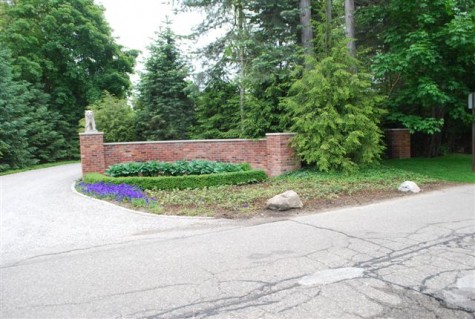
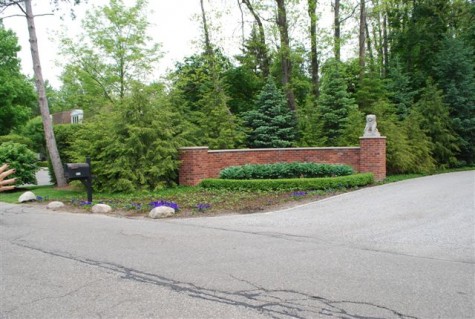 �
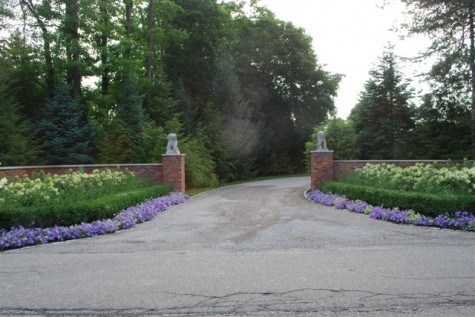
�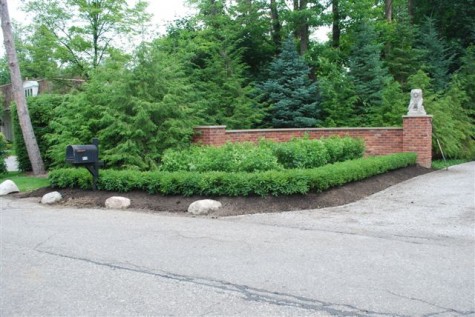 After digging out all of the existing material, we added 8 yards of soil to each side. This allowed me to roll the soil down to the grade of the road and drive. This helps keep vehicles out of the bed. Planting the boxwood at a higher elevation helps keep its foliage out of contact with salt spray from cars. In areas where the speed limits are higher, evergreen material needs distance from the road, or planting heights well above the level of the road.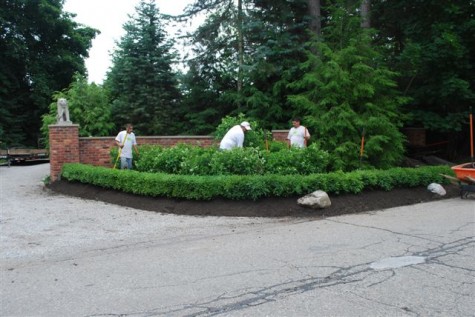
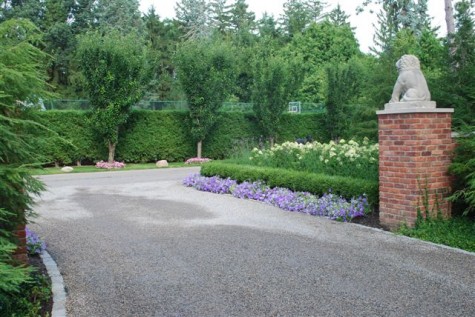 The views of an entrance planting are equally important from the inside. The boxwood is now visible from the inside, and the annuals soften the edge of the road, and describe in a beautifully way the curve to the road.
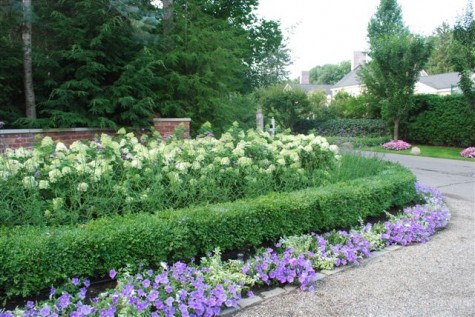 Most of the beds are woody plant material that do not demand every day care beyond watering. The blue sky petunias and variegated licorice thrive on the hot dry roadside. Should any plant material be damaged, or not do well, it will be a small thing to repair, as it is a small area. The curved swath of verbena bonariensis fills the breathing room between the hydrangeas in a light and airy way.
 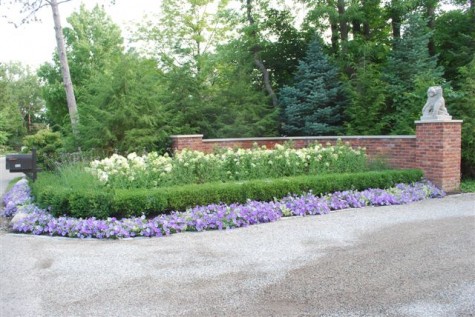 The curve of the landscape, counter to the backdrop of the curve of the wall, is the idea here; all the plantings are geared to express that one thought.
 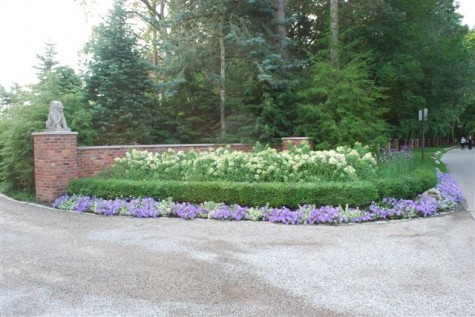 Extending the large open curves beyond the end of the wall makes for a welcoming entrance. It’s clear the property goes on beyond the wall.