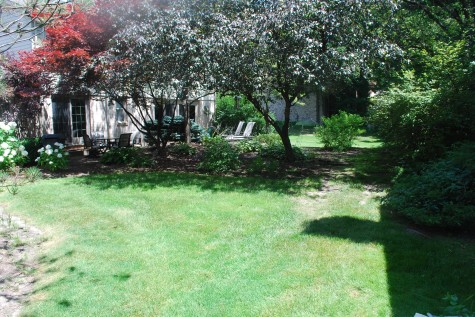
My clients have lived in their home 30 years, and were keen to update the landscape in their rear yard. The property was very wide, and open to a neighbor perched high above them, and very shallow, with excellent views of a neighbor’s wall, and chimney. An overgrown crab had plunged the entire space into the dark, even on a sunny day. The center of the space drained poorly. They wanted to have reason to get outdoors again.
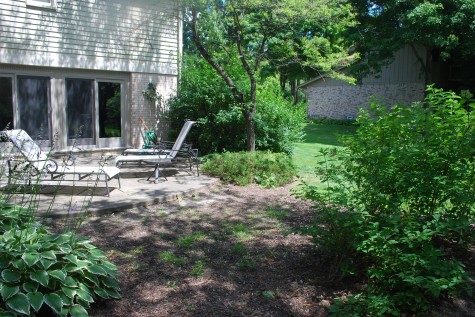
They told me that they thought the old and small concrete terrace needed replacement, and the locusts with dead branches probably needed to come down. I told them I thought the vintage concrete terrace was good looking, and in good shape-the only thing not to like about it was the small size. I also felt the locusts with pruning and feeding would provide them with light filtered shade-just what one would want overhead for sitting or dining out. I felt the real culprits were the crab, and a poorly placed blue spruce.
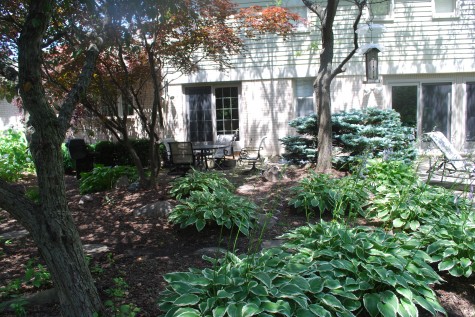
The trunk of the offending crab is in the left foregound of this picture-it had little to recommend it. The locusts and Japanese maples would prosper with more light and care. The blue spruce had long since outgrown its space, and was difficult to get by; the two terrace areas with a narrow walkway between were now cut off from each other. The dining table sat on a section of terrace barely larger than the table itself, right next to the kitchen door. This was not a comfortable space.
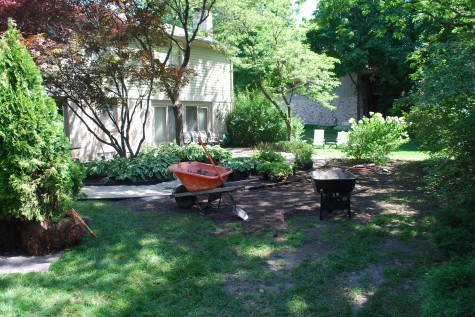
Removing the crab made a giant difference. The space seemed to more than double in size, especially when we moved all the existing variegated hostas into beds around the maple and locust.
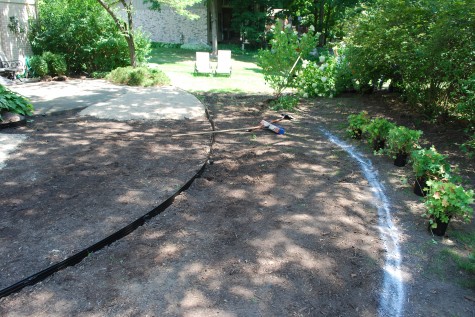
We planned for large curved swath of decomposed granite , more than doubling the size of the existing terrace space. The pale color of the granite lightened up the space considerably. A shade bed with hosta that repeats the shape of the new terrace will make the grass seem like a path through the garden. Their side yard was asking for some screening from the neighbor’s house.
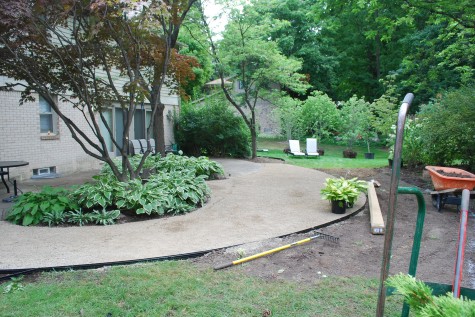
The color of the decomposed granite is very close to the color of the concrete; the visual change is about a subtle change of texture. A group of hedge maples are placed to provide screening from the neighbor. A green, white, and lime-green color palette keeps the space light and airy looking.
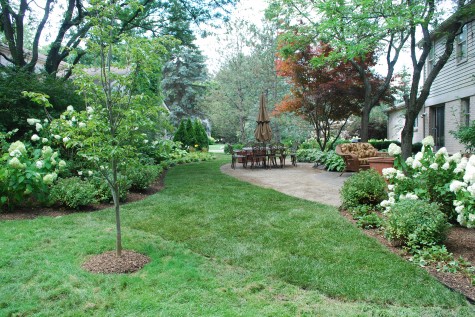
The grass path is a beautiful shape in and of itself. My clients were so pleased with the space they spent the weekend shopping for new furniture. The dining area is now in the center of their yard; the privacy plantings will enable them to comfortably entertain themselves and their guests. The curving bed lines are rhythmic and lively.
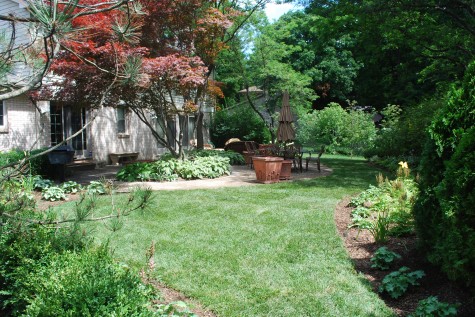
Once in a while, a few good decisions can set the stage for dramatic change. I do think the best reason to consult a designer is precisely because they have not not become used to the space. They see your space unencumbered by your history or memories. My client tells me she now thinks of the concrete portion of her terrace as “a vintage material and style suited to the period of the house”-rather than old concrete that should be replaced.
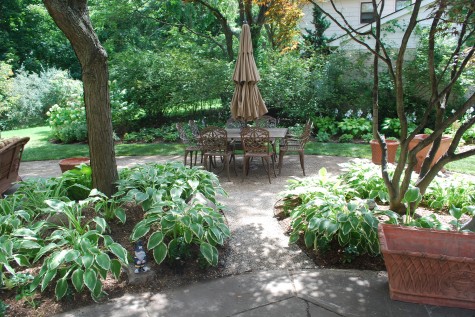
I find most people do not live in their outdoor spaces because the space is uninviting or not useable. Most people enjoy being outdoors, given the chance. I am so pleased about how much they are enjoying themselves outdoors now.
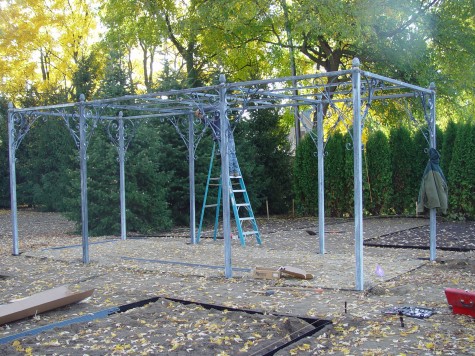
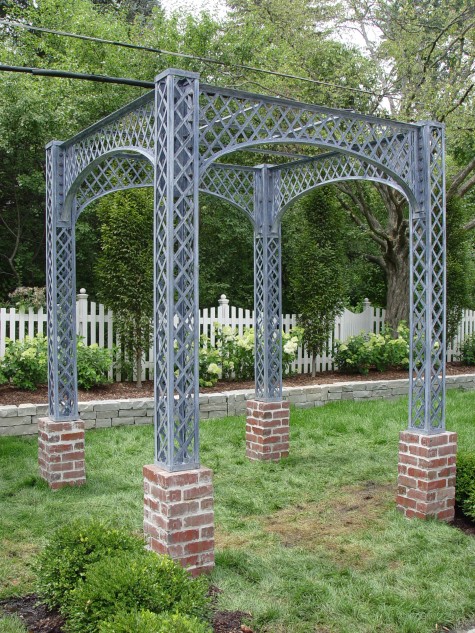
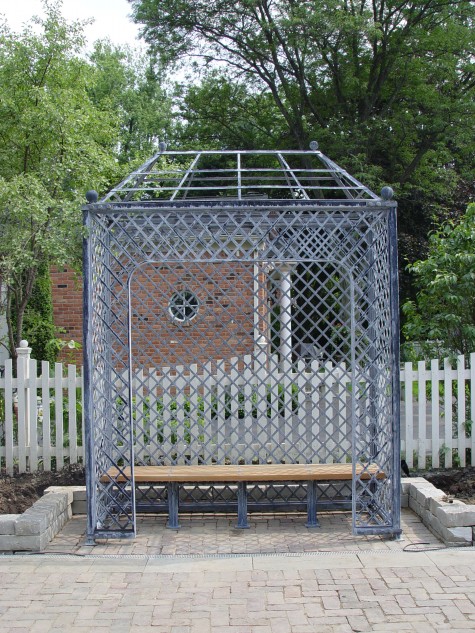
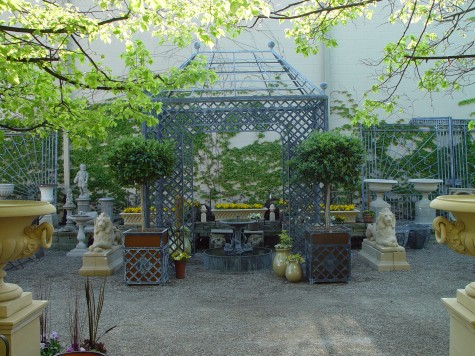 This pavilion is very much about enclosure. It would be fine with vines, and fine without. The client who purchased this steel “building” had us construct cedar and steel benches for the sides; it became a place to meet in her garden.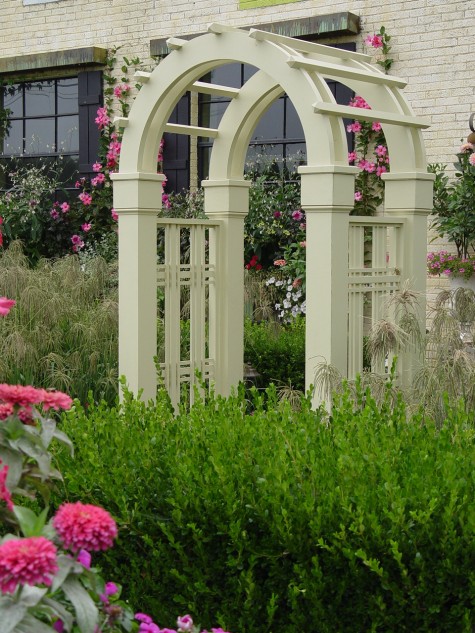
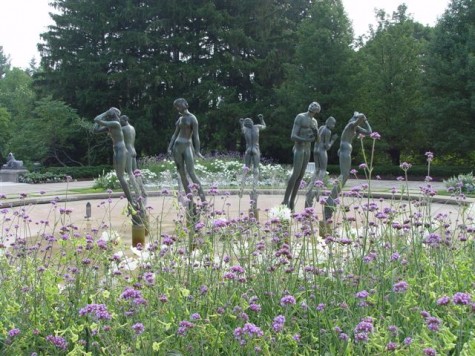
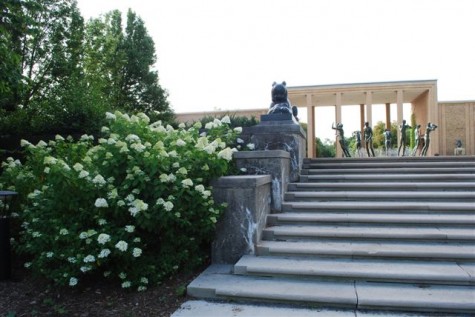 My last visit to the landscape at the Cranbrook Academy of Art was to deliver the flowers and decoration for a wedding and reception there in August of 2007. I had for several years prior donated the summer planting around the Orpheus fountain; this was a job I loved doing. This area adjacent to the stairs had been dirt and more dirt for some years; my client and I split the cost of a planting of a group of Limelight hydrangeas. I am happy to see they seem to be doing fine.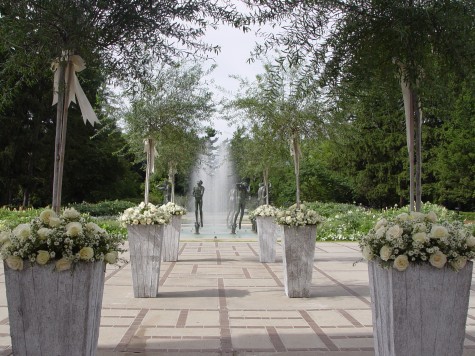
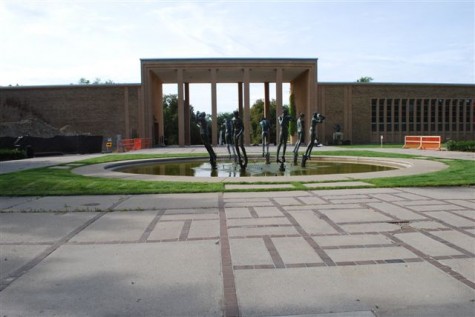 The Art Museum is under extensive renovation, so this year, the garden areas are sodded over. The fountain is closed.
 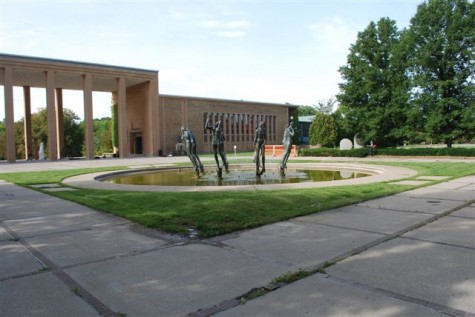 I try to tread lightly with the landscape where a sculpture is concerned. How easy it is to cross over the line trying to compliment a sculpture, and end up confusing the visual issues. Though I knew it would be closed, I was not prepared for how closed. But seeing it in its gardenless state, no water in the fountain, no sound and sparkle, had its good side. Its always a good idea to consider whether an area is all the better for your not touching it. The simple word for this is “editing”; some days I am better at this than others. Where flowers are concerned, I have a very tough time.
 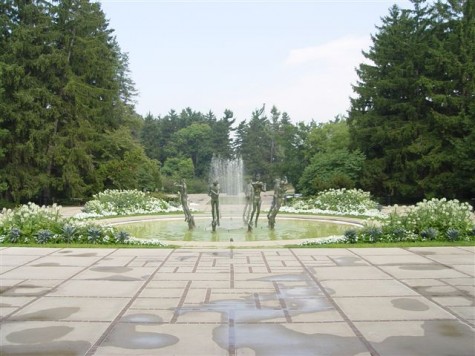 Planting white flowers is a good way to proceed cautiously. Interestingly enough, I was told the traditonal summer planting here involved a short red salvia. I had no problem ditching the red flower thing, but I thought a tall planting would compliment the sculpture and water better. I mitigated the risk with the white palette.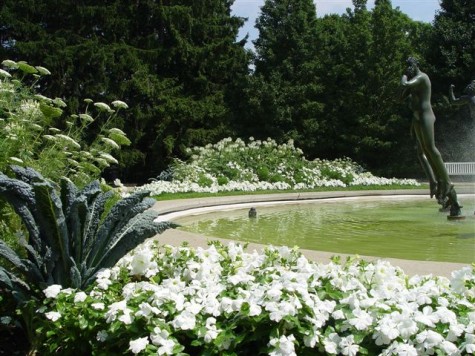
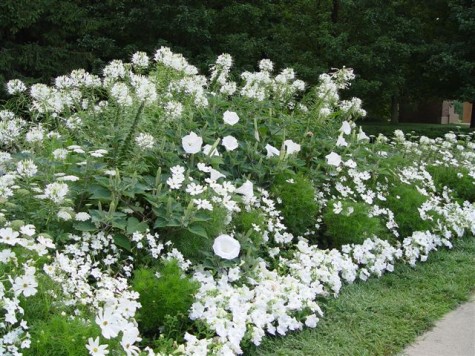 Another year I added an upright white datura, and white sonata cosmos to the mix. The white petunias did a better job of softening the lawn line.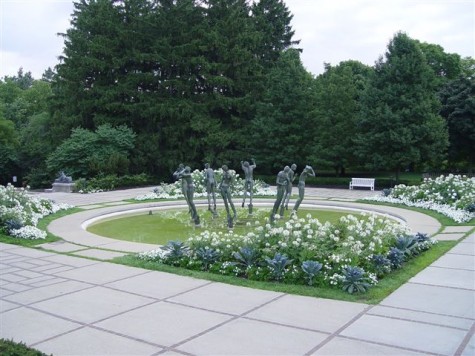
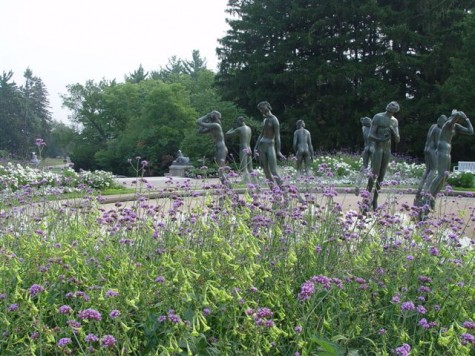 Yet another year, I added some verbena bonariensis, some nicotiana langsdorfii, and some grey cirrus dusty miller to the predominantly white mix. I do so like the cloud effect of the verbena flowers.
 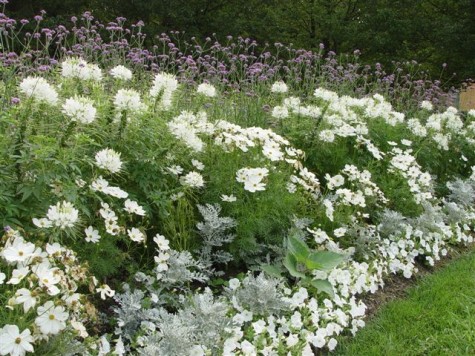 White gardens are however, unforgiving of a lack of maintenance. Dead white flower heads do have a distinctively brown-dead appearance. For this reason, I rarely plant white geraniums unless I am sure there is a maintenance fanatic waiting in the wings-and even then, a heavy rain will spoil the blooms in such a dramatic way. I knew the planting would not be the end of my involvement here.