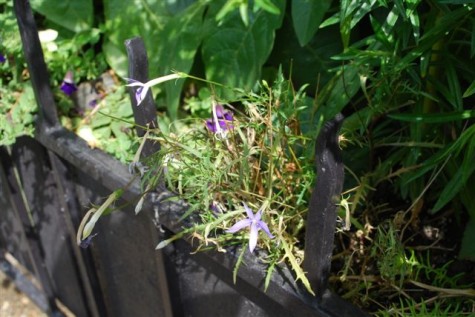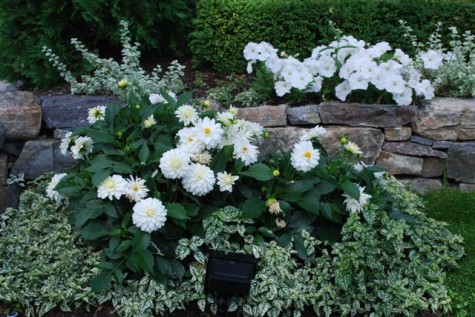
Green and white gardens interest me more now, than they did twenty years ago. They have the same sophisticated visual appeal as a great black and white photograph. Michael Kenna’s landscape photographs are breathtaking; his view of the landscape is so much about the sculpture of green spaces. The success of the great French landscapes has much to do with great, strictly edited design. I would call my personal point of view about landscape hopelessly romantic Italian-I can get out of hand fast. When I hear green and white garden from a client, I think edited and sculptural.
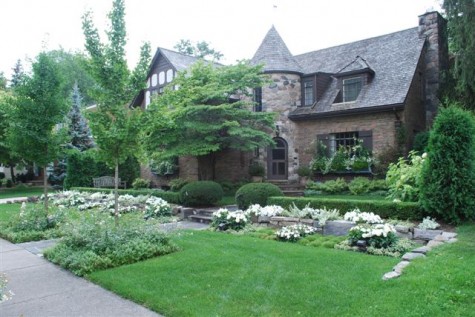 These clients have lived many years in a lovely old Tudor style house built in the 1920’s. However, they both have a love for clean, modern and edited lines. Working with them has produced a garden that has elements both friendly to the architecture of the house, and their point of view. They were both clear that a green and white garden would suit them best.
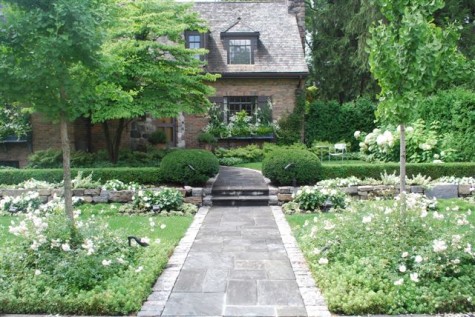 The landscape of the front of the house was already in place when I met them. My input involved the sizes of the flower beds, and the construction and installation of the window boxes. The profusion of flowers is decidedly English in feeling, but the green and white has a crisply contemporary flavor. The strong, dark green horizontal line of the boxwood hedge contrasts and compliments the mass of the oval yews. This element is balanced by the four columnar gingkos that frame the walk at the street. The simple steel windowbox is a focal point at the visual end of the walk.
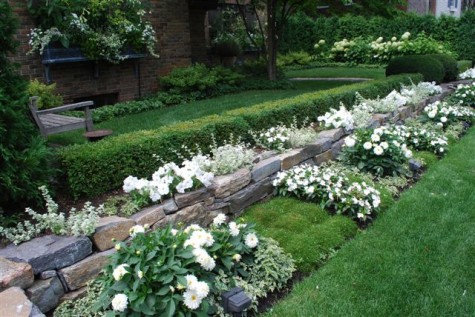
tThe flower beds were planted in stripes, perpendicular to the wall. White dahlias are skirted with white polka-dot plant. Striped of white New Guinea impatiens are bordered on both sides by simple rectangles of sagina subulata-Scotch moss.
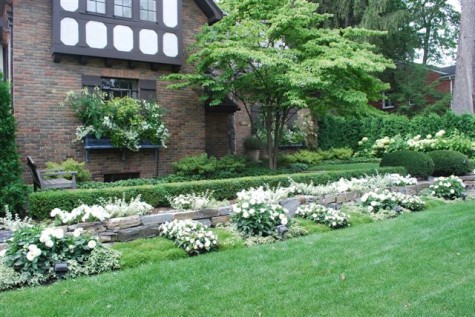 The upper level is planted more freely, with variegated licorice, white petunias and more polka dots. This bedding plant scheme derives more visual interest from its texture and layout than from the plant species.
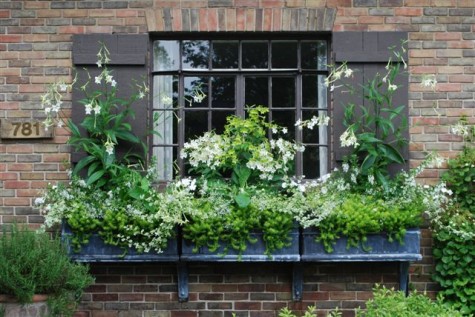 The window boxes are lush with green angelina, euphorbia, and licorice. The angular nicotiana alata white frames the more orderly growing Perfume nicotiana series in white and lime green.
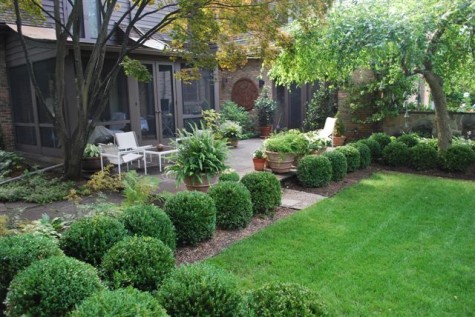
The landscape renovation of the rear yard fell to me. They were certain that they wanted water in some form, and a more orderly, primarily green garden. The shade had not been so friendly to their collection of perennials, and the winter interest was slight. The existing stone terrace off the porch was easy to dress up with Italian terra cotta pots devoted to green and white annual plants.�
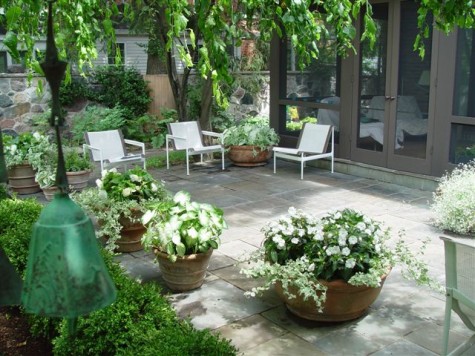
There are plenty of white foliages plants-such as caladiums and hostas, that do well with this level of shade. I did pay particular attention to planting green foliage plants of interest as well.
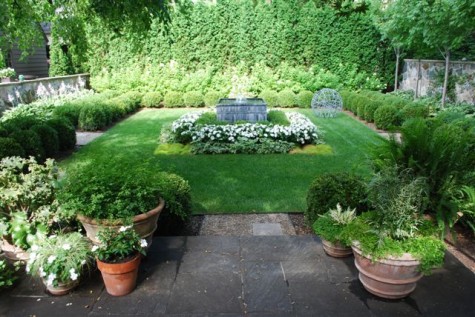 A custom made steel cistern positioned on axis to the porch, and the side walk organizes the space. It was constructed with legs tall enough to hide the fountain pump, but also to provide for the eventual height of the boxwood surrounding it. Bordered in boxwood, a run of limelight hydrangeas provides another level of interest against the green arborvitae wall.

Variegated plectranthus, white New Guinea impatiens and the lime green scotch moss echo the porch plantings.
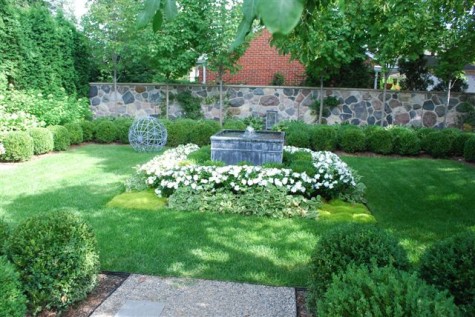
My clients do have a love for stone; the wall pictured above is but one example of the beautiful stonework on this property. Previously obscured by perennials and boxwood, the view to the wall is now unobstructed. A group of five columnar maples provide green screening above the wall. We gently sloped the bed down from the wall, and planted the boxwood at the base of that bed. That wall has taken on a very clean sculptural look, its traditional granite notwithstanding. The mix of soft and strict is a pleasing one.
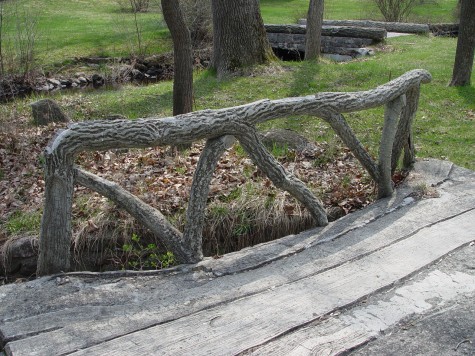 This bridge, constructed entirely of concrete carved to look like wood, is a good example of the sculpture form known as “faux bois”. Translated literally from the French words, examples of “false wood” can be found all over the world-even here in Michigan. There is a park in my greater neighborhood devoted to this art form; lucky for me. McCourtie Park, in Hillsdale County, in the Irish Hills, is a folly of the best sort-built in the 1930″s by a man who made his living in the cement business.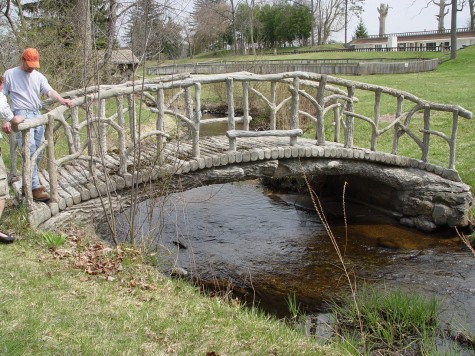
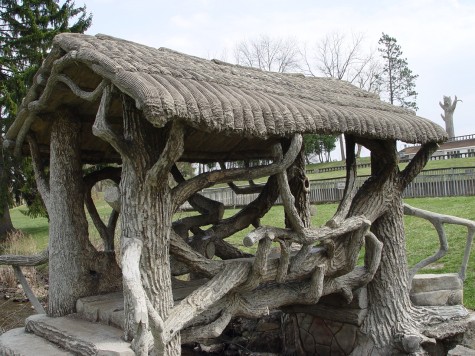 covered bridge
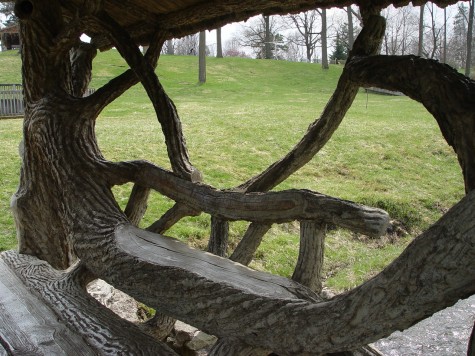 faux bois rails that become a bench
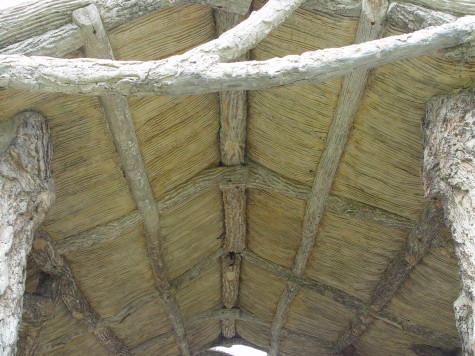 faux bois roof detail
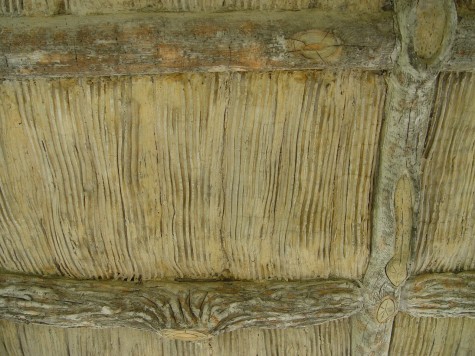 side detail
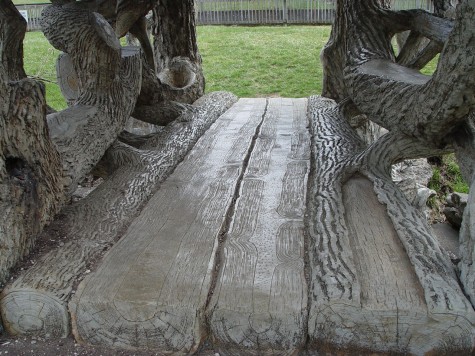 faux bois planks
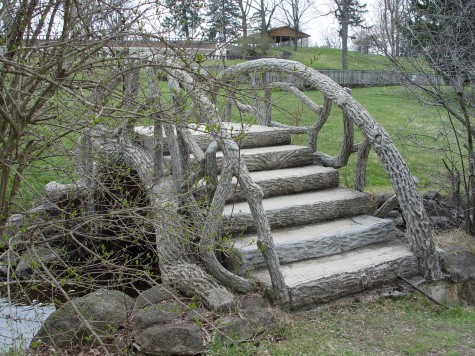 bridge
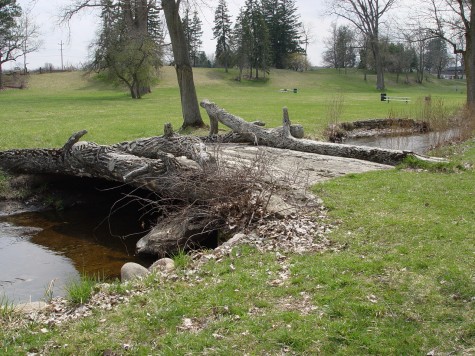 flat bridge
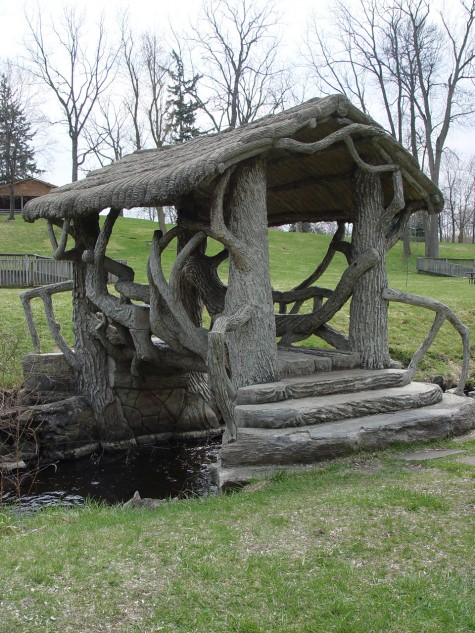 bridge house
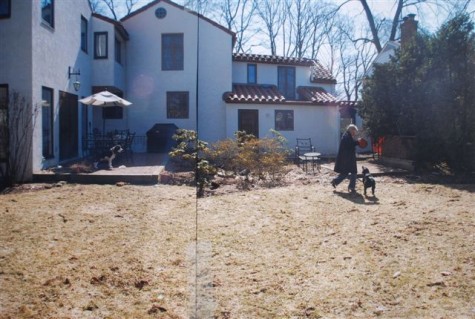 You may remember my post from July 21, Renovation Part II, a discussion of what finishing touches were yet to come in this project. If you missed that, I will recap. This beautiful Mediterranean house was in need of a landscape renovation; the new owner is a designer herself, and what she had, she knew would not do.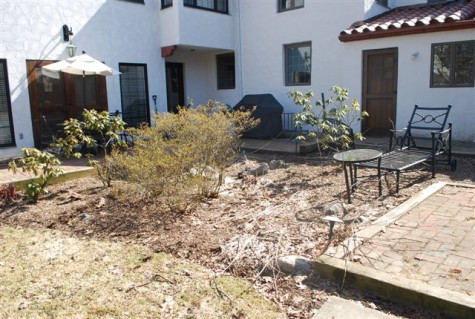
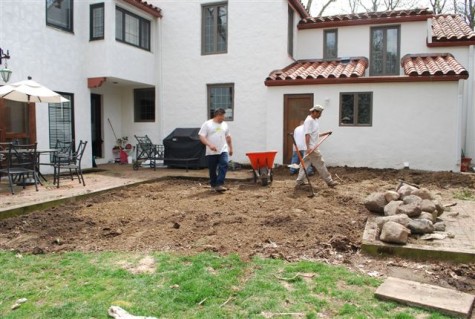 We removed all the plants, and brick, and graded out to the edge of the house; it is too awkward to step down in the middle of a terrace. In other words, we started over.
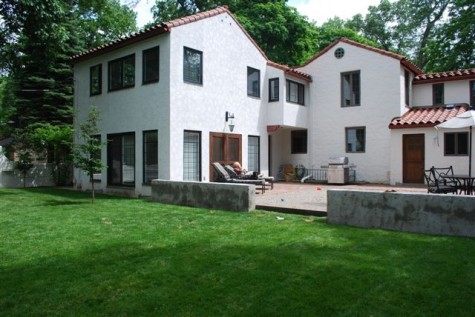 The new and larger granite and brick terrace stepped down into the lawn; a new stucco wall made for extra seating for guests, and made the suggestion of enclosure.
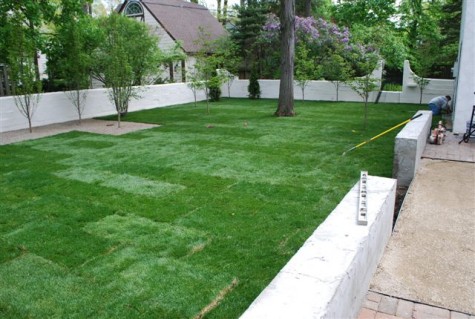 The new rear yard landscape made much of the repaired and repainted stucco wall . A grove of trees in the lawn, a formal arrangement of trees mulched in granite, and grass. Simple and striking.
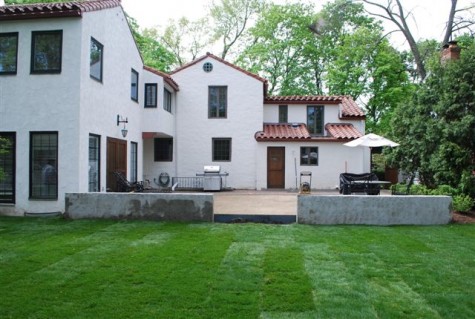 But what else did this landscape need in the way of finishing touches? Inspired by the Spanish flavor of the architecture, I thought some ironwork might be in order.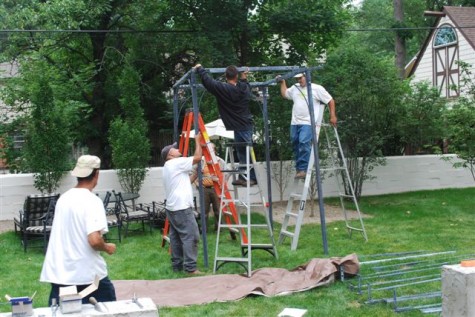
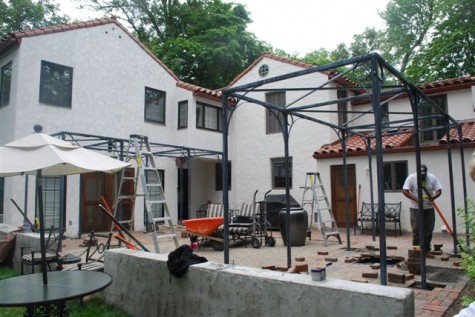 I especially like how the terrace will have two shady cool areas, with a sunny space in between them.
 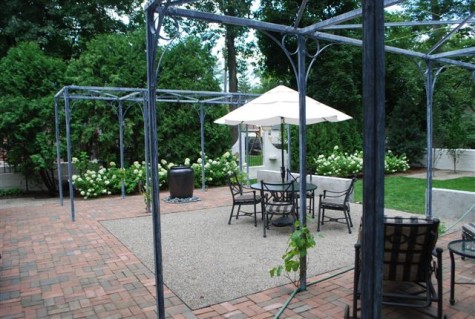 Finishing touches like this can make all the difference in the world; this space looks inviting and comfortable. A place to have dinner, a place to read in the shade, a place to entertain-all good things to plan for.
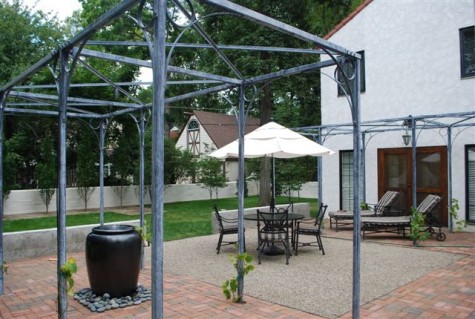 The last touch – a self-contained fountain jar. The reservoir to recirculate the water was installed underground. My client opted for a water jet barely visible. Lighting was unobtrusively installed in the pergola roof, illuminating the fountain at night. I can imagine how it will look and sound once there are grapes overhead.
 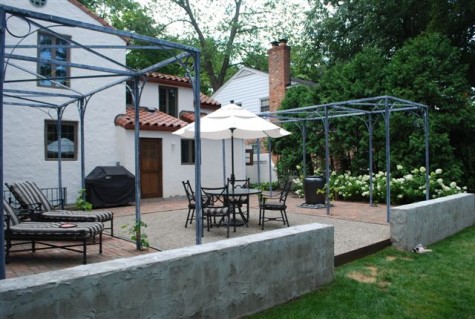 A new umbrella is on the way. Maybe there will be holiday lights this winter. Maybe next summer there will be some pots. The finishing touches phase transforms the designed landscape into a landscape for living.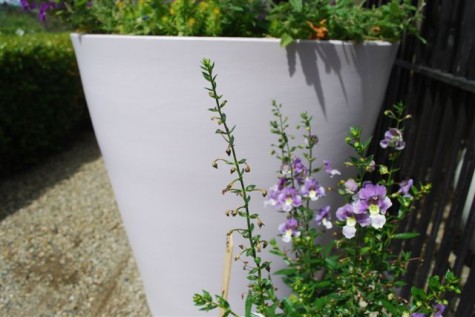
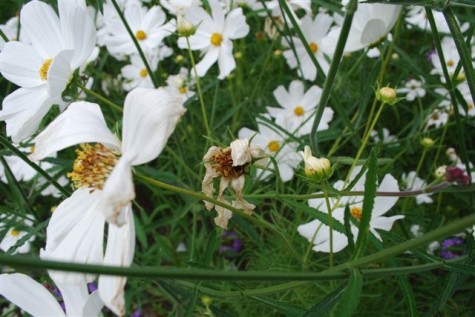
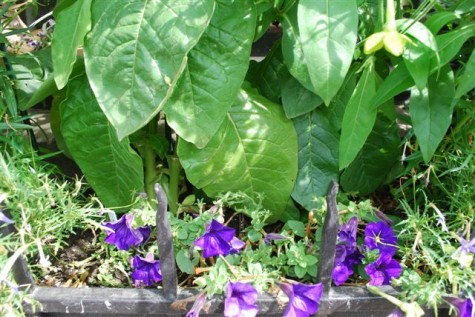 Plants grow in, and the room can get crowded. If the giant leaves of this nicotiana are allowed to shade the petunia, said petunia will pout, and finally give up. Removing leaves, or branches so everyone has a sunny spot, is good group management. A pot or window box is no place for a bully running amok. No one will like the result- least of all, you.
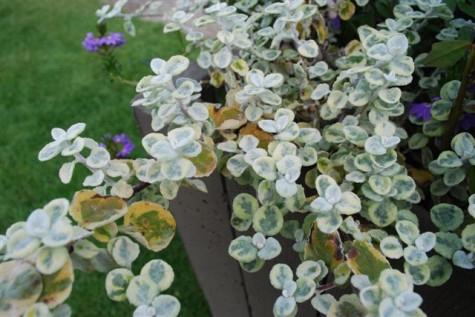 Try not to overwater. Put your finger down into the dirt. If the dirt sticks to you, there is probably enough moisture. Rotting leaves are unsightly. Worse yet, an environment that is too wet is an invitation to every fungus floating by, looking for a good home. Licorice likes dry conditions. Should you have been so bold to plant it next to an annual that loves water and more water, you’ve engineered a situation where individual plants in a community pot have to be watered on different schedules. This is not tough, just time-consuming.
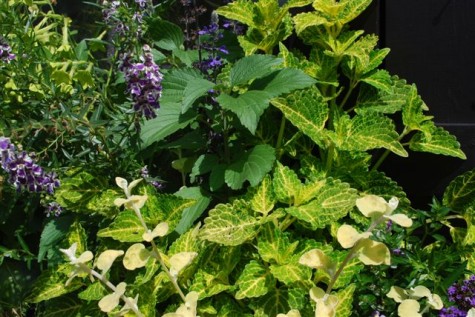 Annuals need pruning, just like shrubs and trees. Pruning the flowers from your coleus plants result in densely growing coleus. Pruning plants at different heights gives everyone breathing room. Once a group of plants are put together in one pot, or one area, they take on a collective life. Sun, water and space have to be shared. And whatever the individual plants, you want an overall shape that looks great.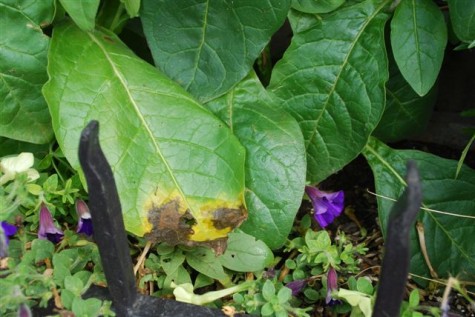
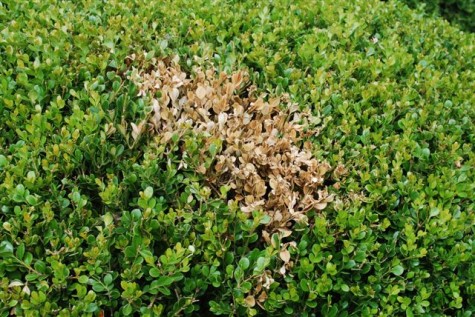 My beloved boxwood hedge was attacked this spring by a fungus called Volutella-I was beside myself over the damage. I had to get an expert to identify it for me; I have never seen this on boxwood before. We cleaned out, and raked up every dead leaf, and pruned out every infected branch with shears that were disinfected after each cut. Next spring I will spray for it. Imagine being a greenhouse grower-where plant illnesses and insects can threaten a livlihood. Most growers that I know practice close inspection of their plants, so they catch problems early. They also feed their plants; strong plants resist trouble. Once every seven to ten days I make sure my pots are thoroughly watered, then I liquid- feed them with a water soluble fertilizer with a big middle number (15-30-15) to encourage good flower production. This acts like a shot of vitamin B-12. Then I hold off watering as long as I can, so the plants take up the nutrients, before they get flushed out by the next round of watering.