At A Glance: Memorial Day Weekend

container-planting.jpg
We did start our container plantings last week-tentatively.  I was not planting coleus, begonias, lantana, basil, sweet potato vine, caladiums, angelonia, and a whole host of other plants with zero tolerance for cold.  Just two days ago, the temperature at 5:30 am-34 degrees. whoa.  A friend at the farmer’s market told me she lost half her field of summer cut flowers that she had already planted.  What a heartache.  But Erma Wiegand, one of the group of brothers and sisters that own Wiegand’s Nursery in Macomb told me 6 weeks ago that the possibility of frost in our area was a real possibility, until the May full moon.  The May full moon?  Two days ago.  She has the heart and skill of a farmer-and she was dead to right.  The weather this spring has had my back-I do not like to plant containers too early.
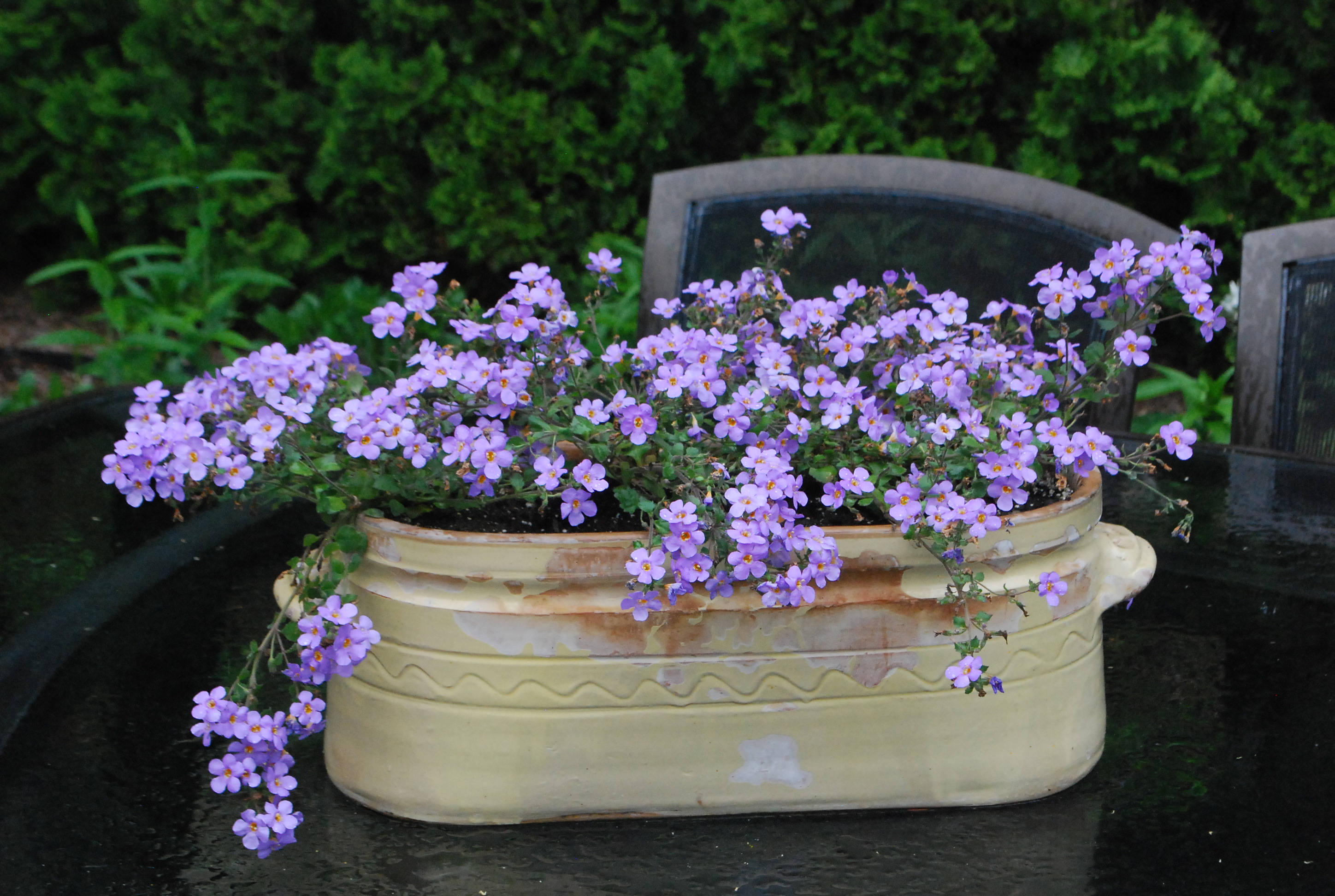
lavender-bacopa.jpgCold soil is bad for tropical plants, and annual plants native to warmer climates. I drag my feet, getting going, until it seems like the weather is really warming up. I am happy getting the container planting going on come Memorial Day-it is the right time for our zone.  Memorial Day is a national holiday, as well it should be.  But we have a lot of work to do in a very short period of time.  We were working.  Lots of people came into the shop today-they are planting too.  There is a special and particular spirit attached to every holiday.  Memorial Day weekend-a favorite of mine.  We honor the troops.  We hope for the future, and plant.
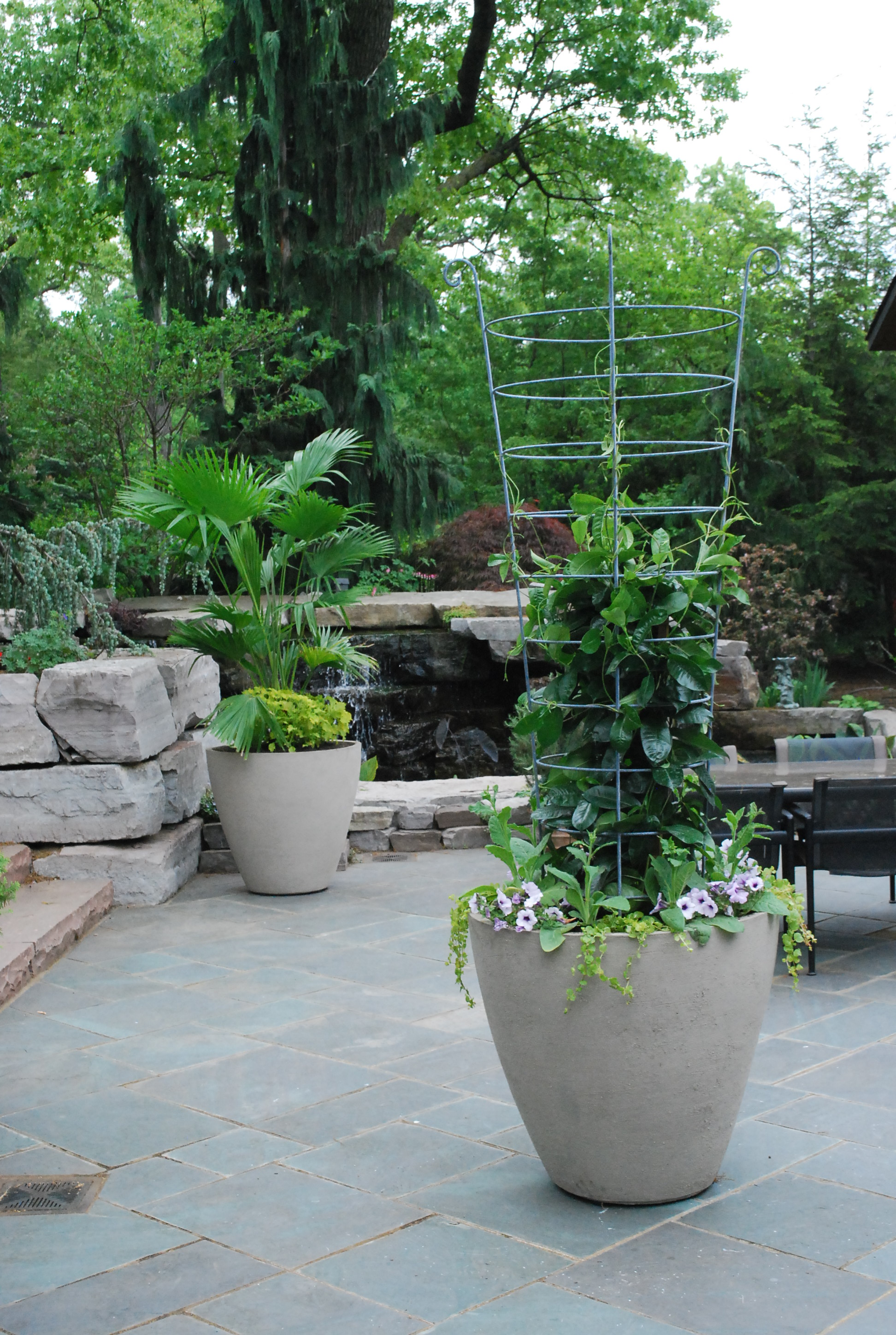
container-planting.jpgWe were not at the shop-we were on the road, planting. In the background, a fan palm underplanted with Wasabi coleus.  The white streptocarpus with a purple throat will be added on the edge tomorrow.  In the foreground, a pot located in a patch of sun.  White mandevillea, lime nicotiana alata, creeping jenny, and silverberry petunias.
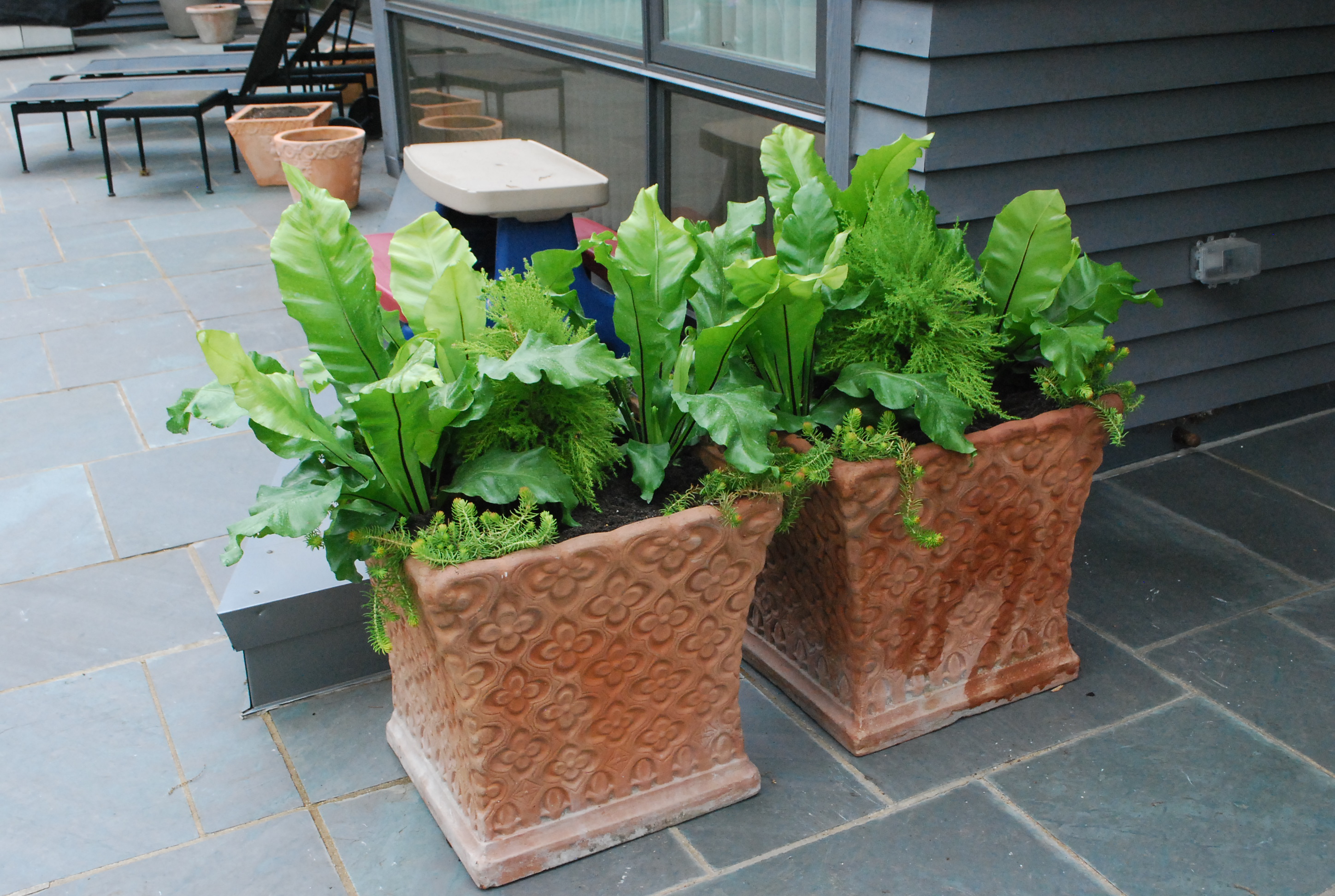
tropical-ferns.jpgBroad leaved bird’s nest fern, lemon cypress, and angelina.  I am still thinking about what to do in the front/center.  Do I leave blank spaces if I am not sure what I want to do?  Yes.
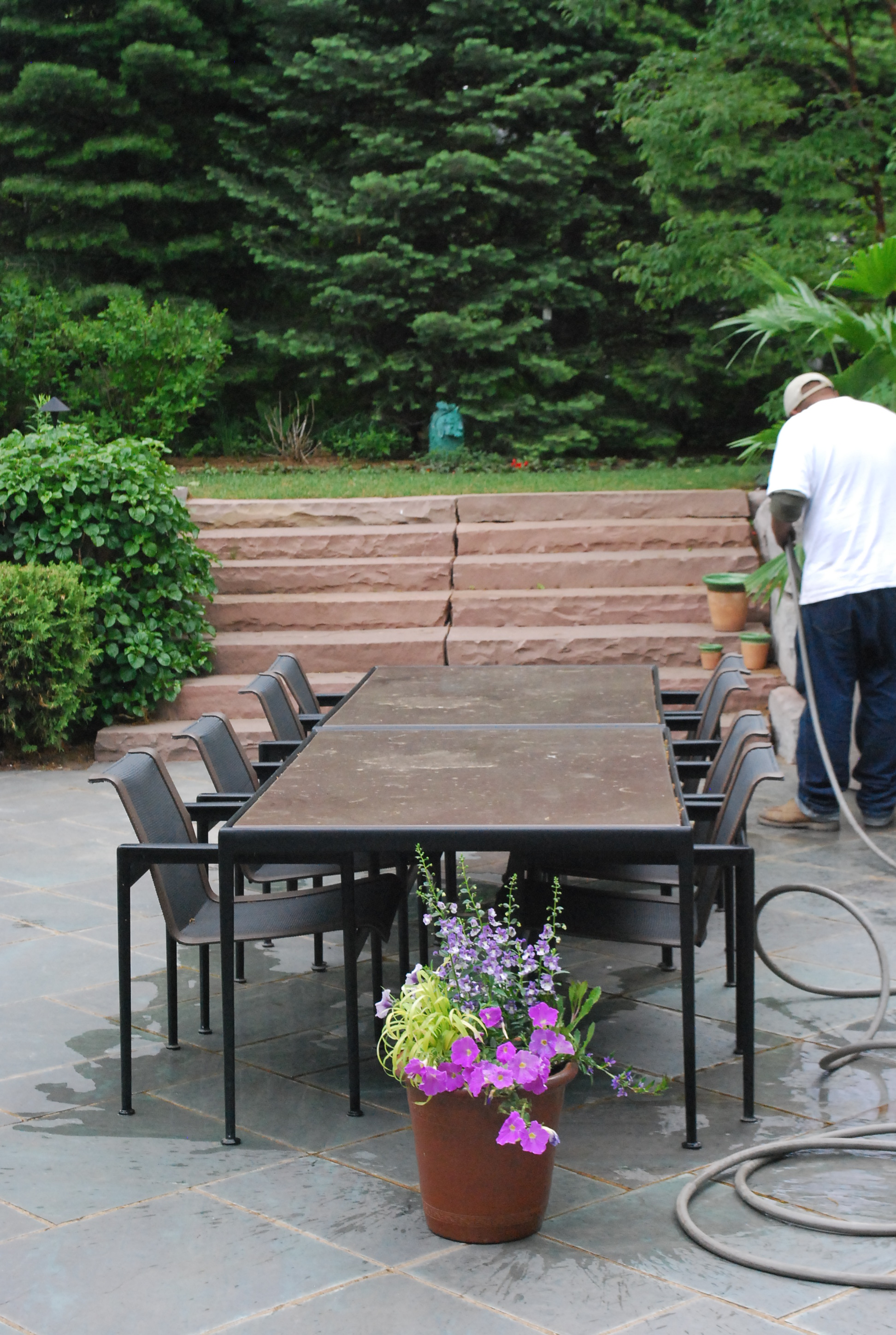
summer-planting.jpgan asymmetrical planting of angelonia, Millet Jester, silverberry petunia, supertunia lilac and scaevola.
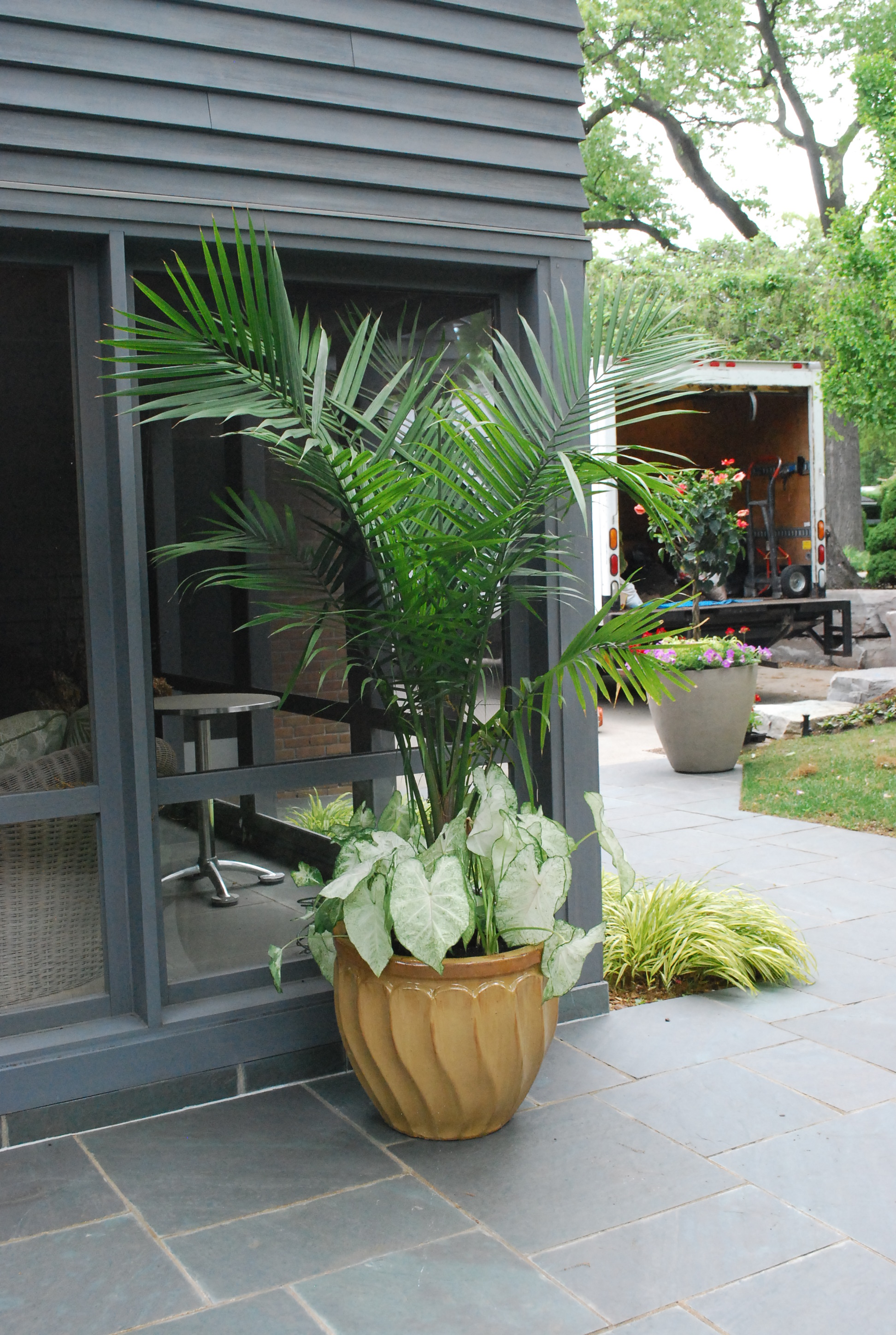
white-caladiums.jpgKentia palm with white caladiums

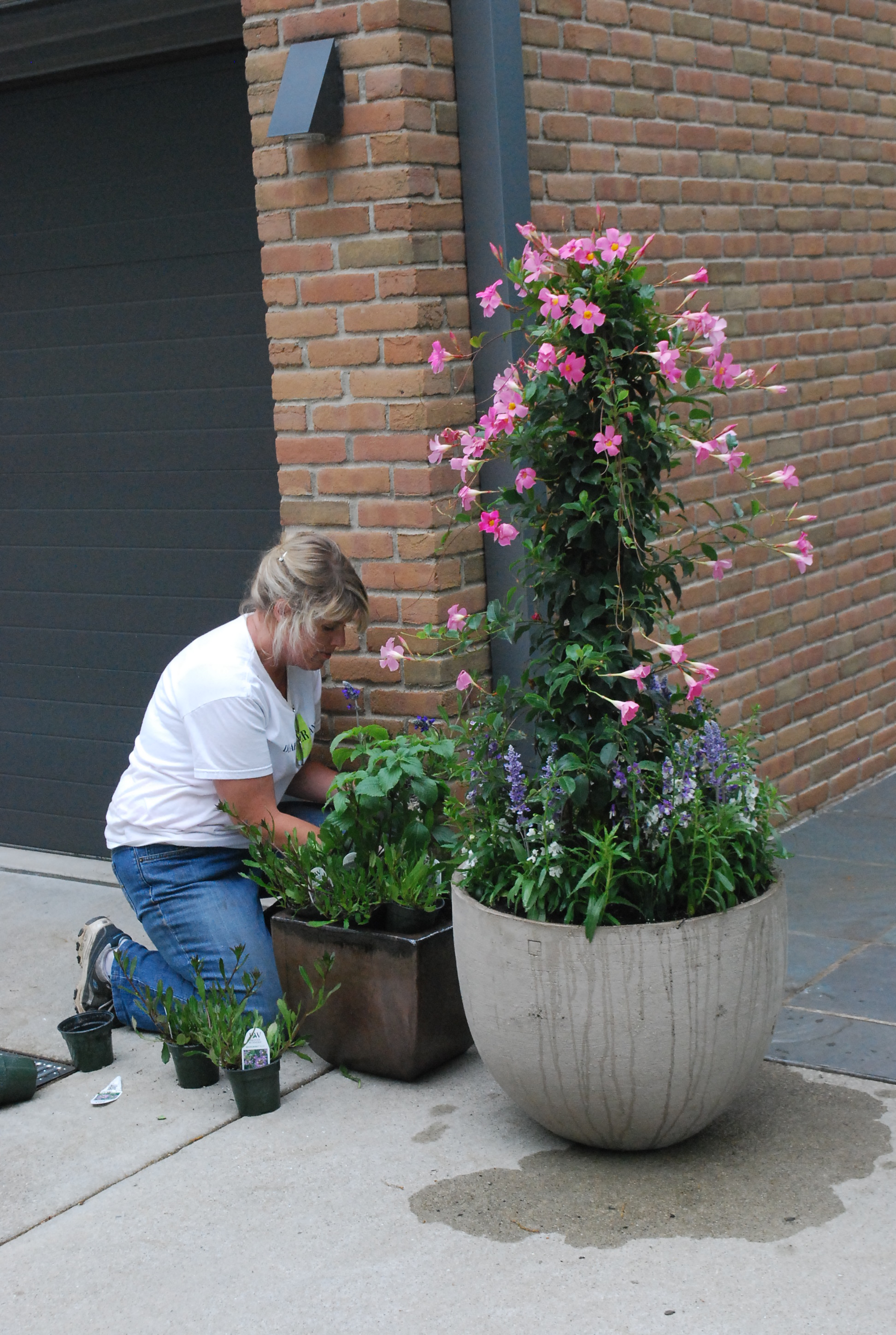
pink-mandevillea.jpgPink mandevillea with Cathedral salvia in 2 colors, and white angelonia.  The little pot-mystic spires salvia surrounded by scaevola.  Angie at the helm.
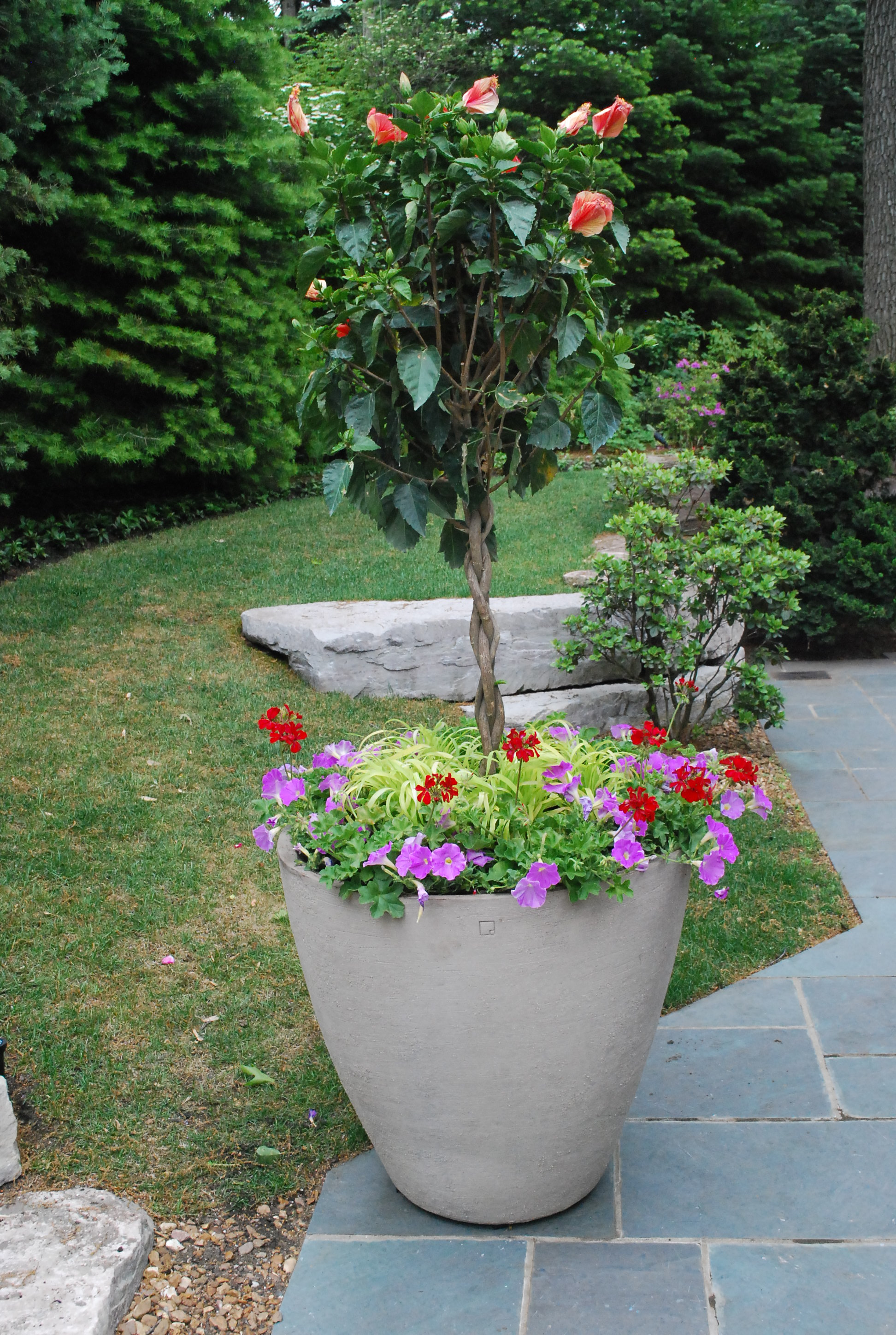
summer-planting.jpgA twisted trunk hibiscus belonging to my client is underplanted with millet Jester, red Caliente geraniums and lilac supertunias.
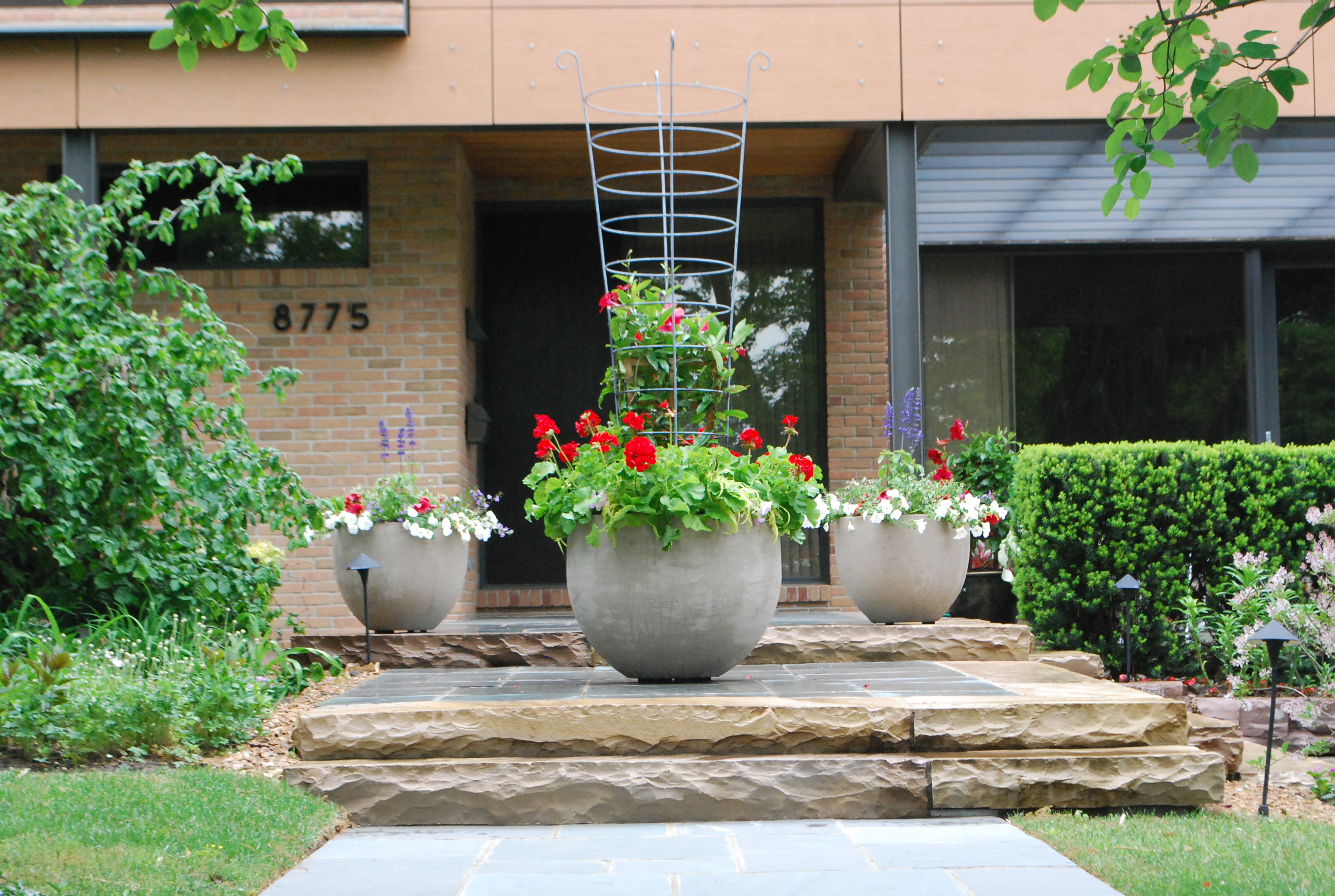
container-planting.jpgRed mandevillea, red zonal geraniums, millet Jester, and misty lilac wave petunias.  In the background, Cathedral dark blue salvia, euphorbia Diamond Frost, white supertunias, and red potunias
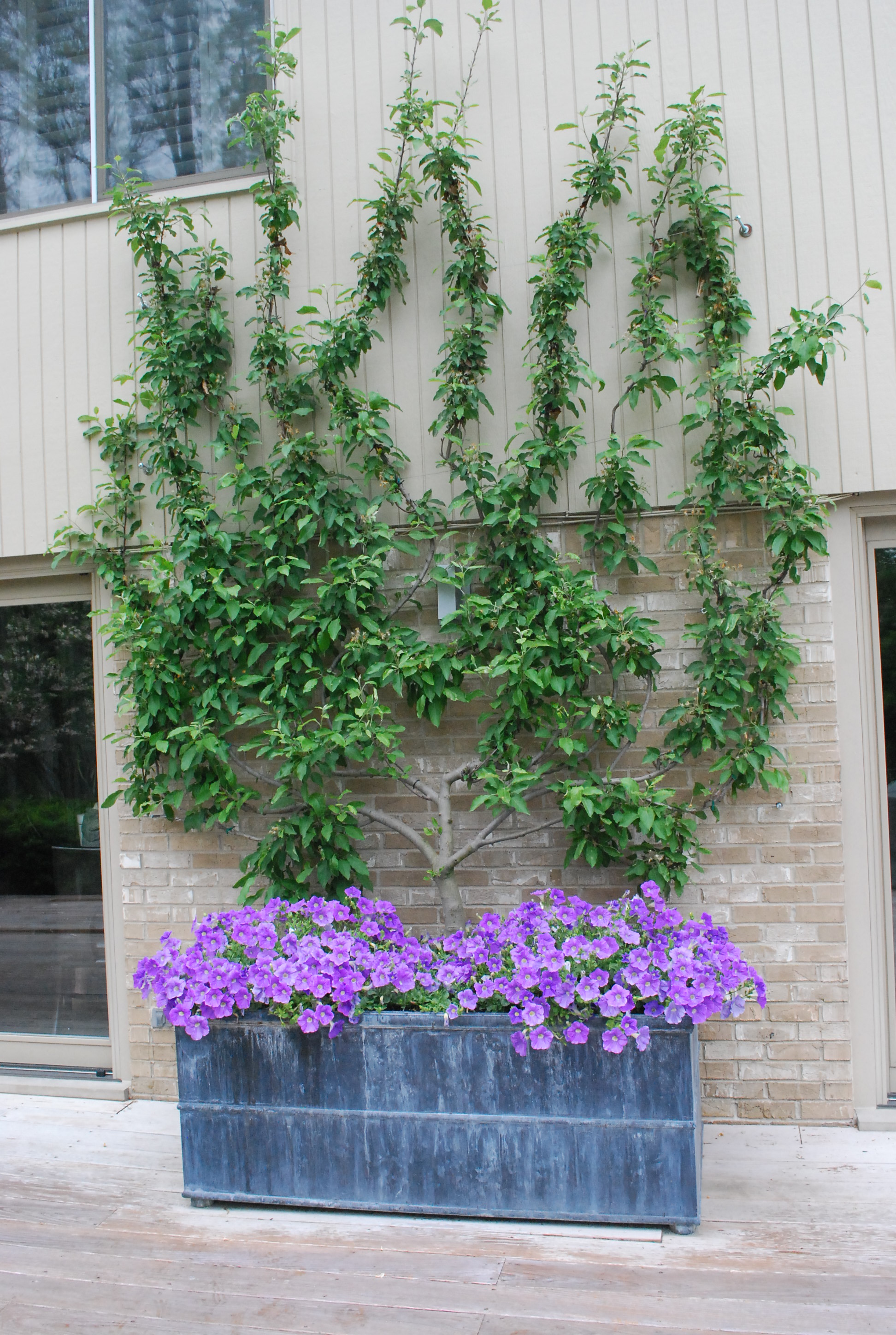
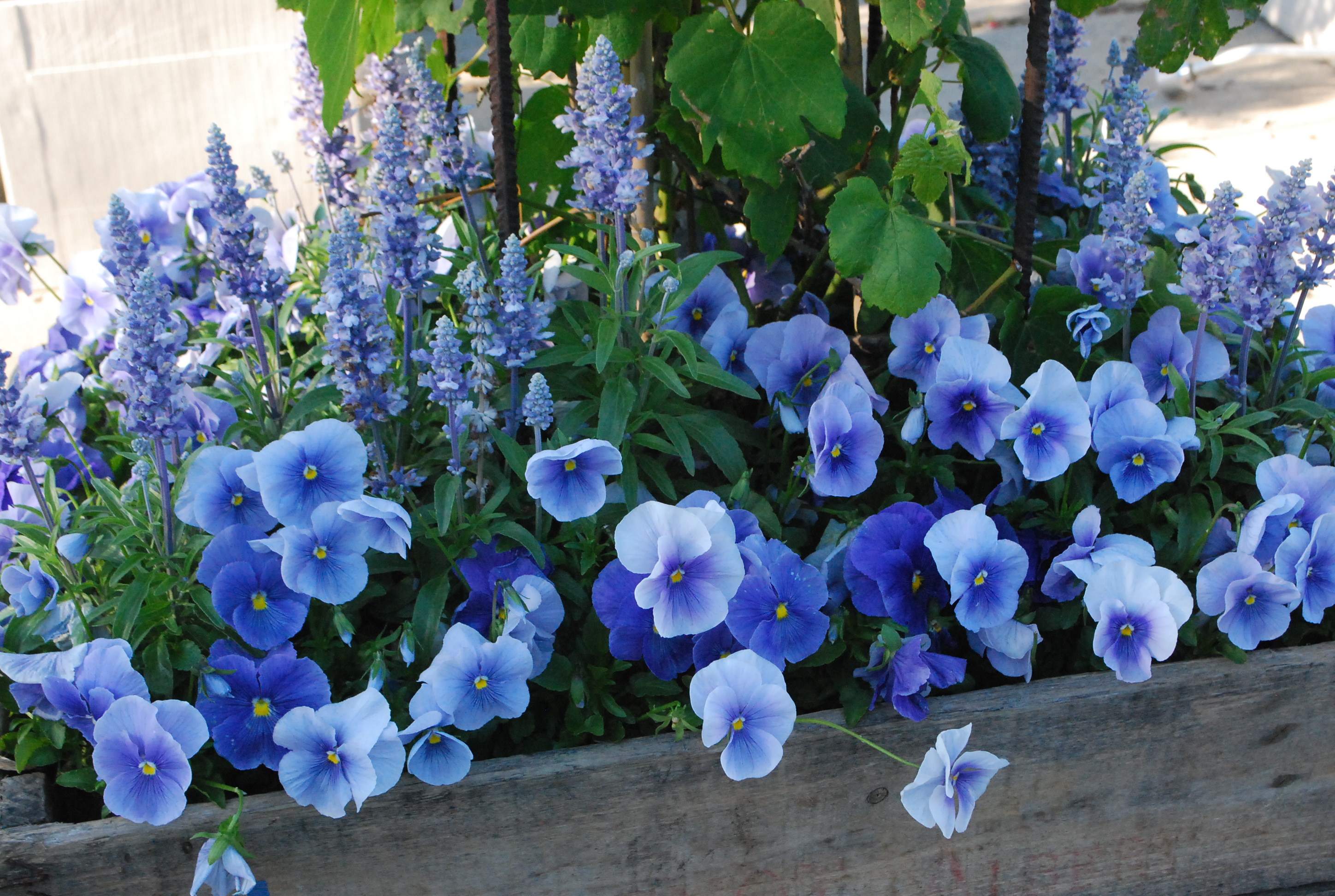
\apple-espalier.jpgsky blue petunias under an apple espalier
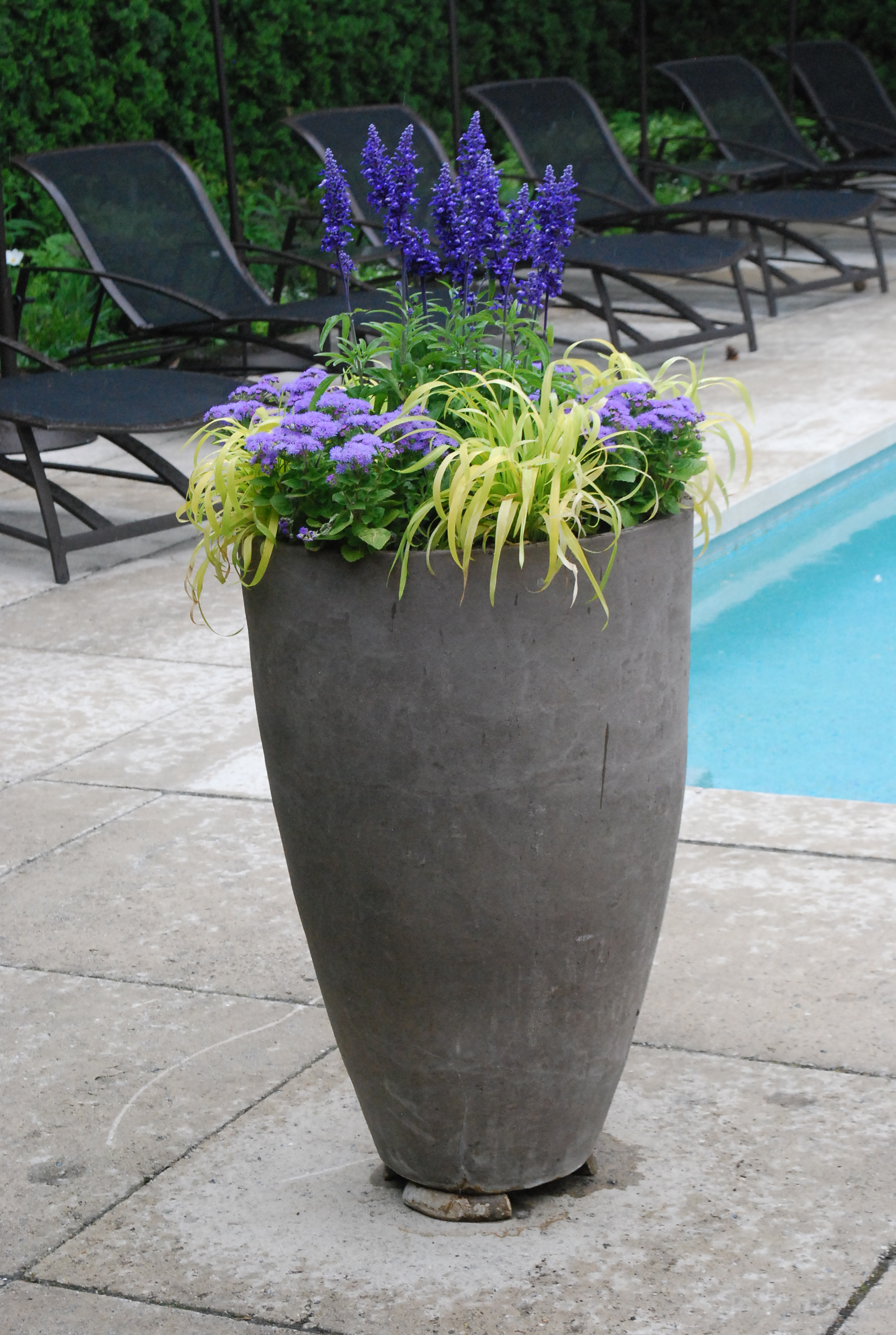
laqvender-and-lime.jpgpurple and lime green

annual-planting.jpgplanting for summer

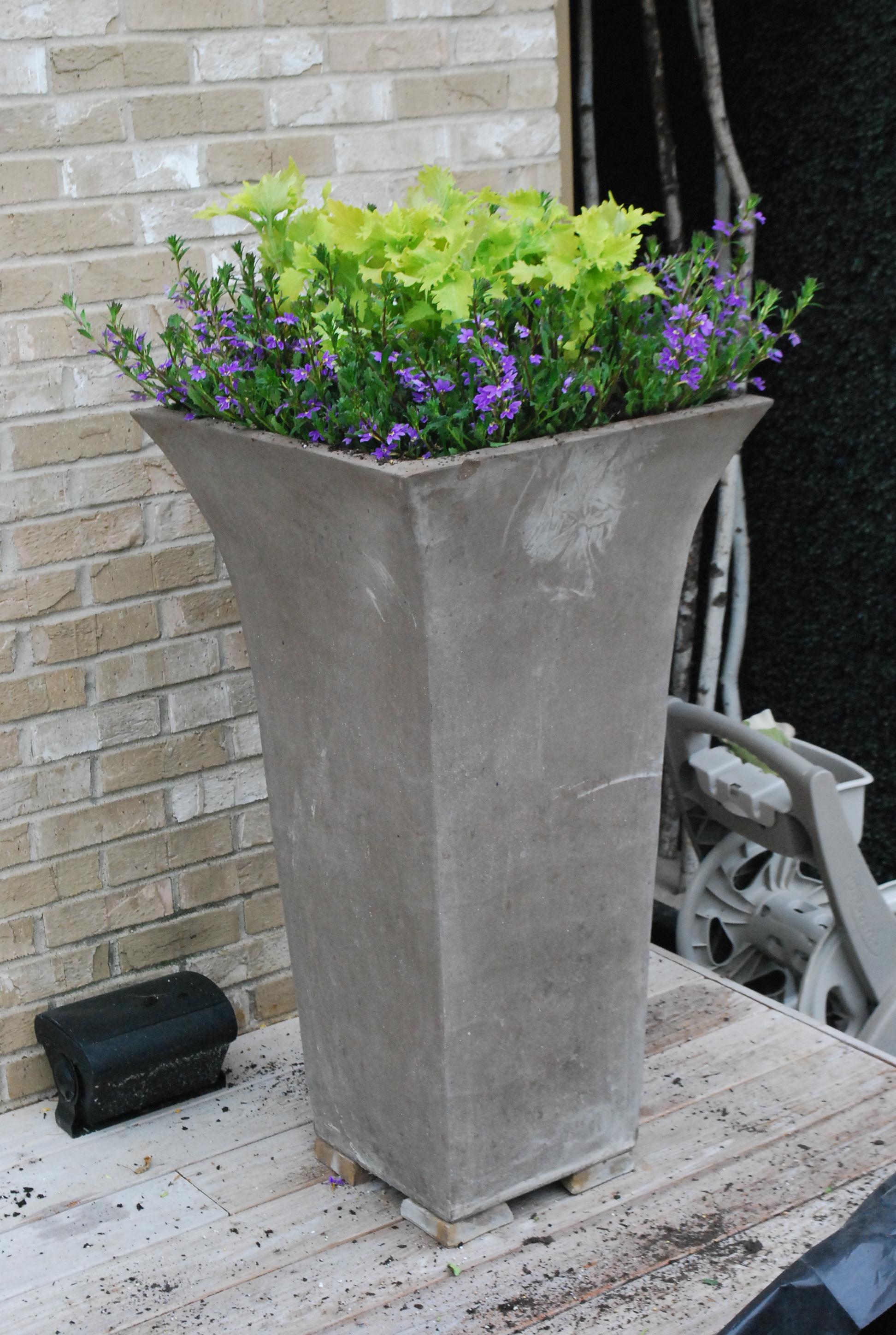
lime-and-purple.jpgWasabi coleus and scaevola

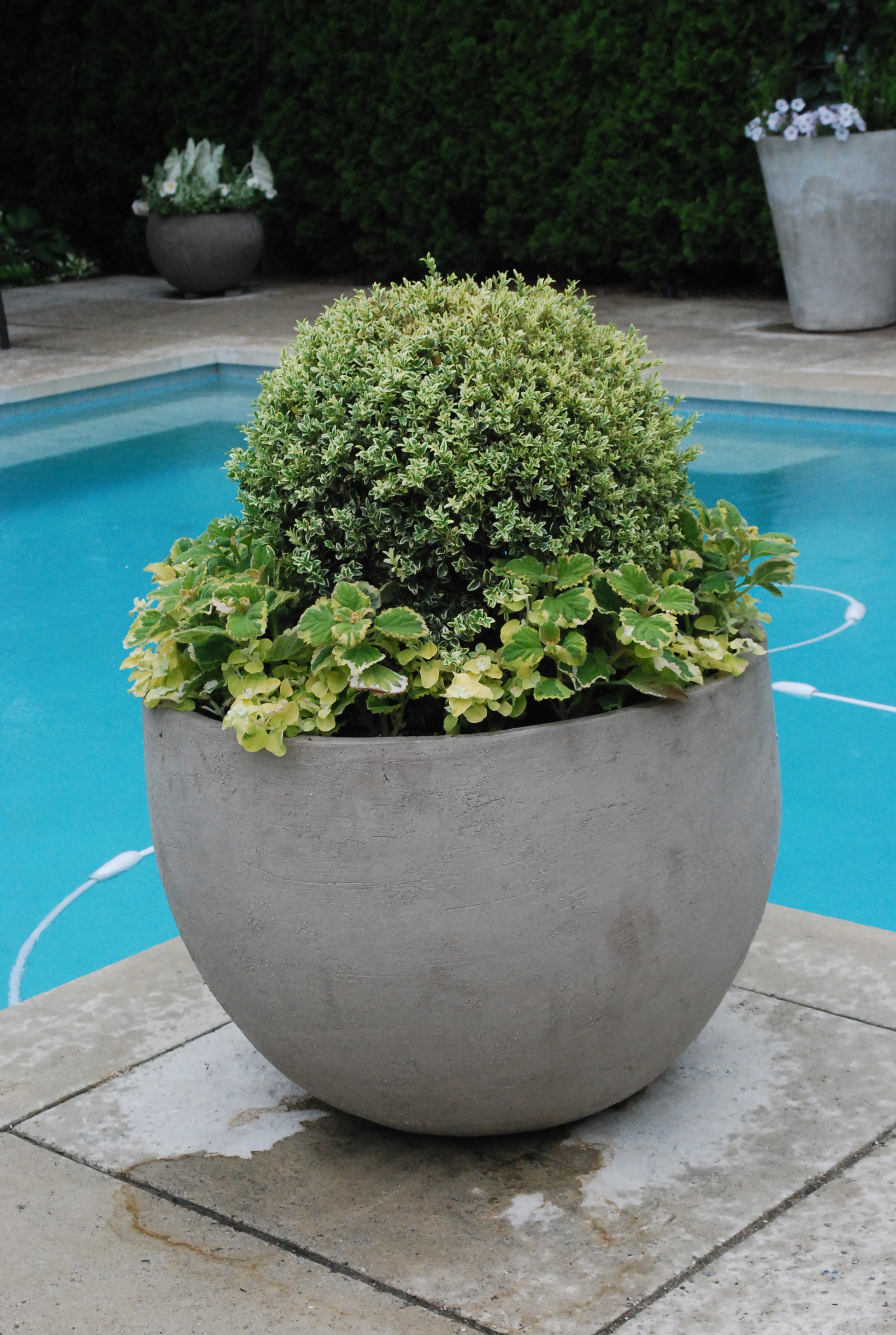
variegated-boxwood.jpga variegated boxwood sphere, lime and green plectranthus, and lime licorice.  This planting will come from behind, and be really good by the end of July.

end-of-the-day.jpgAngie plants-but she is also in charge of the numbers.  Her clipboard has her name on it-everyone knows that they touch that clipboard at their peril.  Angie, Rafael, Lucio, Matt, Amparo, Owen and I planted a lot of plants this weekend.  It feels good to get started.

A Few Thoughts About Color


red-nicotiana.jpg

Given that there are 3 primary colors, and three secondary colors, and infinite possible combinations and permutations of those 6 colors, makes the topic of color a big one.  Have you ever tried to pick a color for a room from 10,00 paint chips?  I will admit I buy a lot of quarts to try before I commit to gallons of a color.  Understanding and working with color is hard.  Annual and tropical plants provide a level and longevity of color I do not get from my trees, shrubs and perennials.  It could very well be that the reason that I so love container plantings is that they enable me to explore the element of color-over and over again. The relationship of one color to another, or a color scheme, is of interest to me as a garden designer.  Planting annuals is the best way to try a color scheme on-before you commit to it in the landscape.  Explaining why certain color combinations are attractive, interesting is not so easy.  Pictures make things easier.  This dark red nicotiana pops when it is paired with a contrasting color, and when it is placed so the light shines through the petals.  This scheme-electrically charged by the rays of the sun.

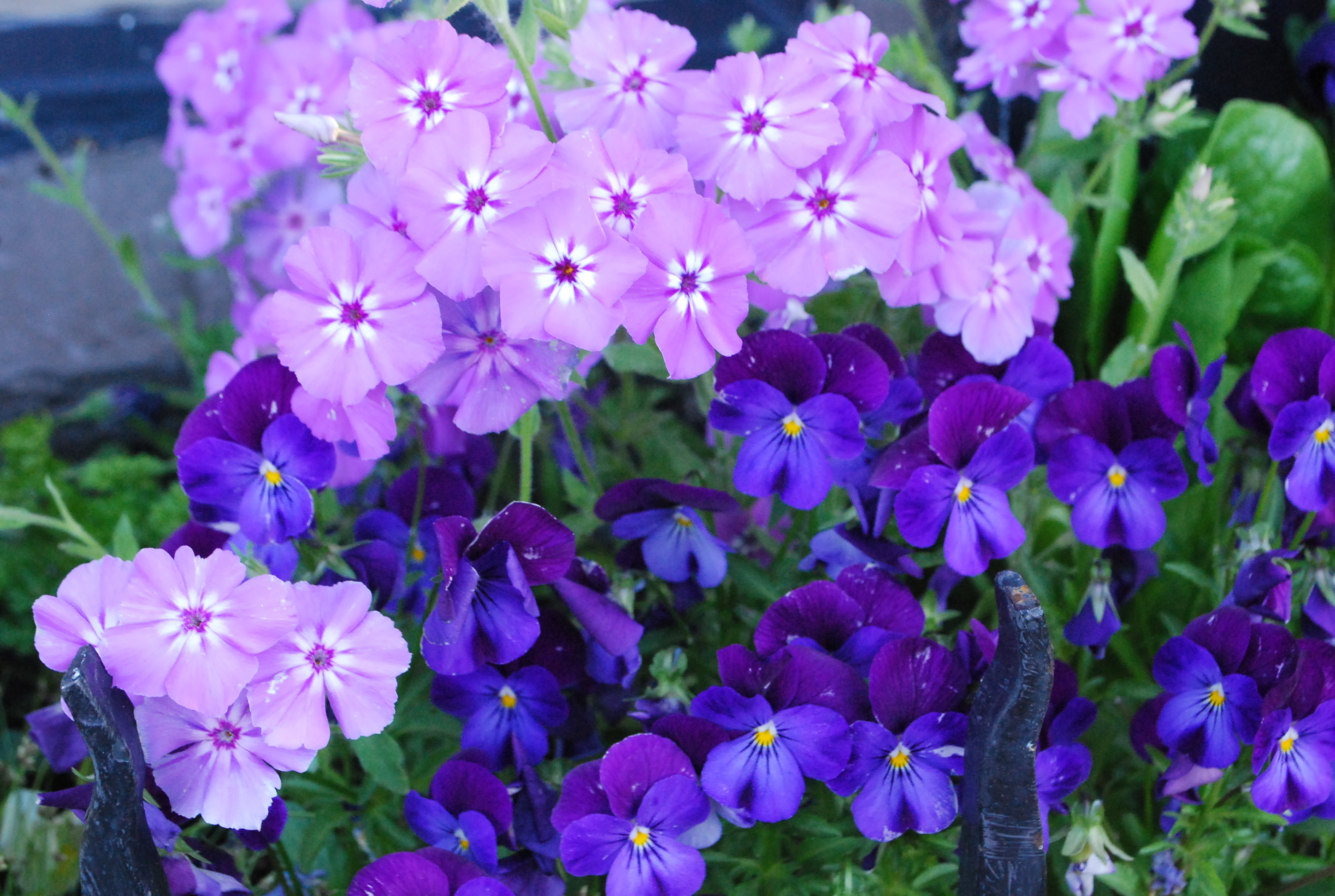
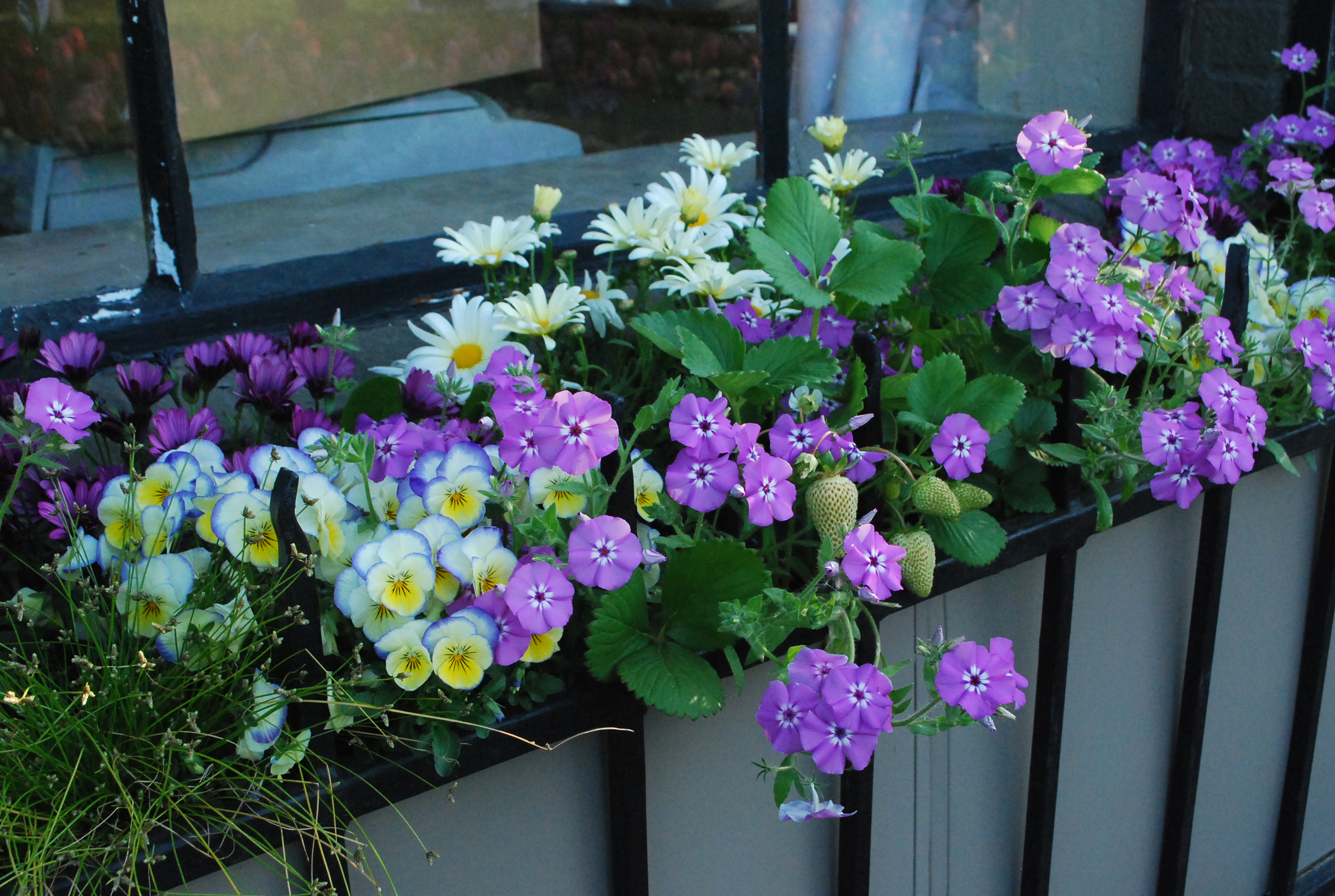
phlox-and-violas.jpgExplaining why certain color combinations work, and why some schemes are attractive and interesting to my eye-not so easy.  My approach to color is very personal and intuitive.  I am just like every other gardener.  Some schemes seem right-others seem off putting.  But there are some observations I can make about color that might abet your choices.  This picture makes it clear that pale colors appear to come forward, while dark colors appear to recede.  The idea here?  If I have a mind to plant dark colored flowers, I plant pale colored flowers behind them.  A light background helps a dark color to read.

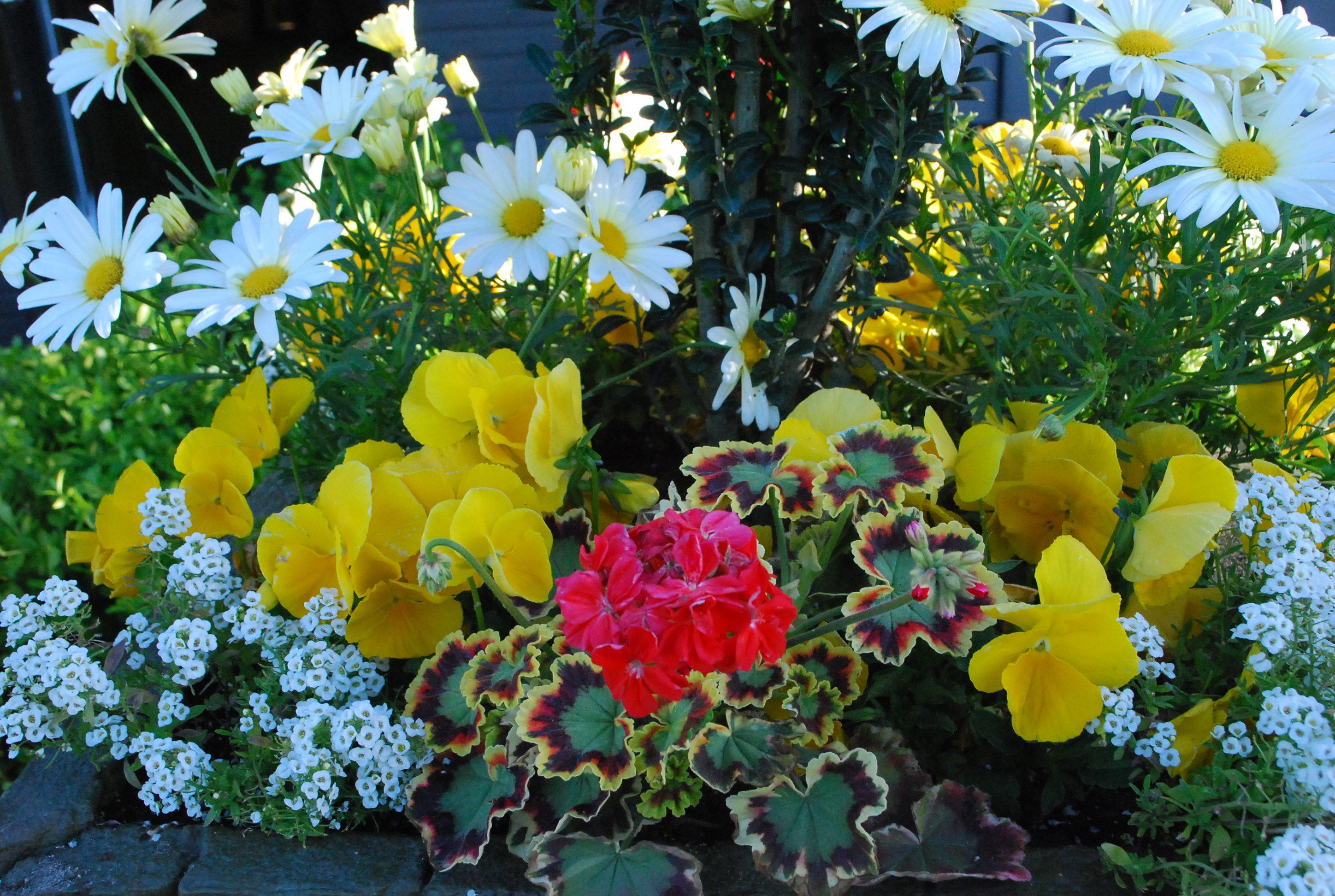
yellow-orange-and-white.jpgHot colors-as in red, yellow, orange, and hot pink, light up a shadier spot.  Fancy leaved geraniums contribute to a color composition via their leaves.  The Skies of Italy geranium has leaves of red, burgundy, green and yellow.  The color of the leaves of this geranium can help knit a color composition together.

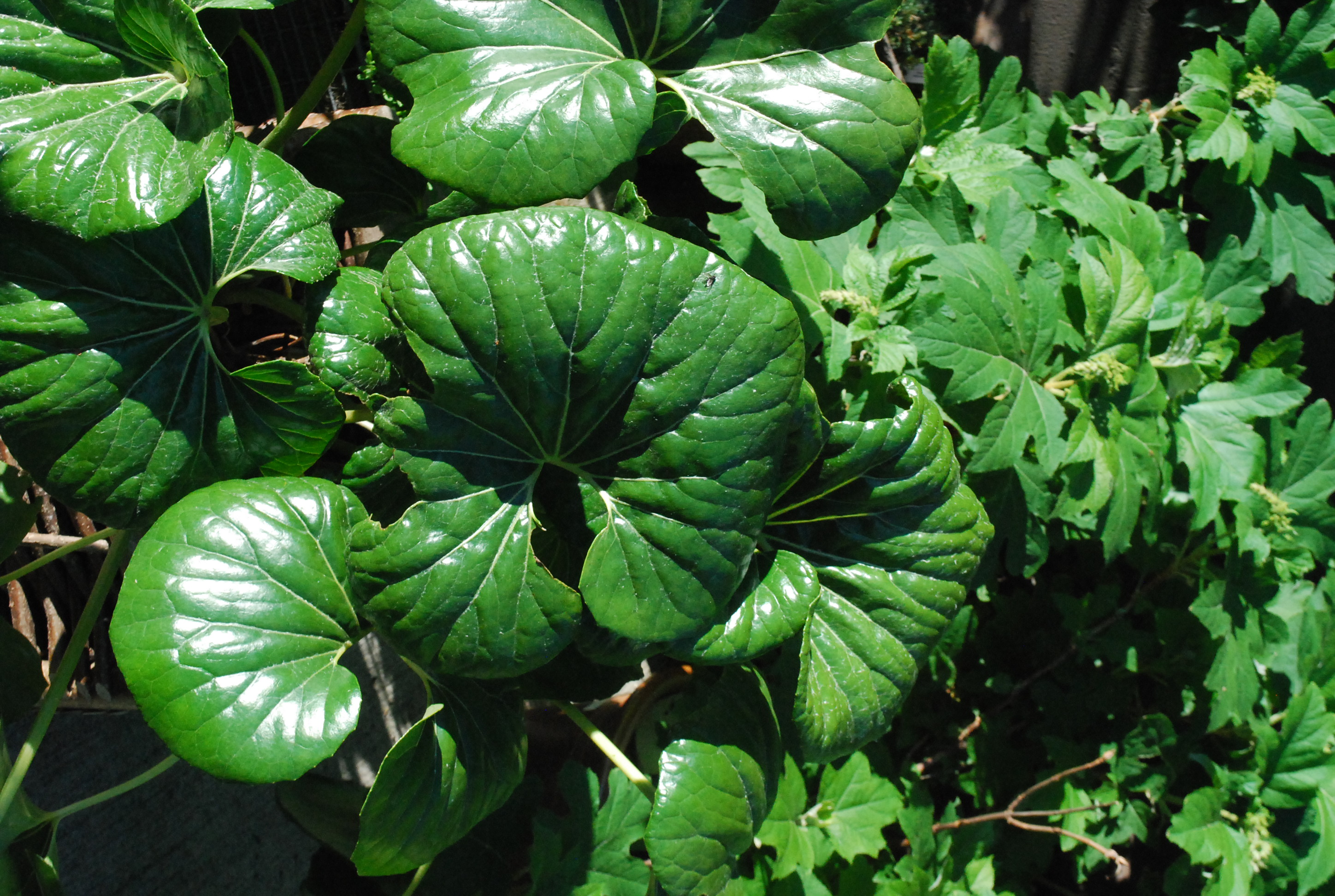
farfugium.jpgShiny green is a very different green than matte green. The surface of a color can influence how that color reads.  A dining room painted in red high gloss lacquer is a much different dining room than one painted in matte wine red paint.  Color provokes emotional and associative reactions.  The reaction that matters?  yours.  Look at  a lot of color combinations before you commit.  This makes good design sense. Emerald green is a combination of yellow and blue,  fairly evenly matched.  How does this emerald green look with the colors of the flowers you have chosen?  Choose your greens!

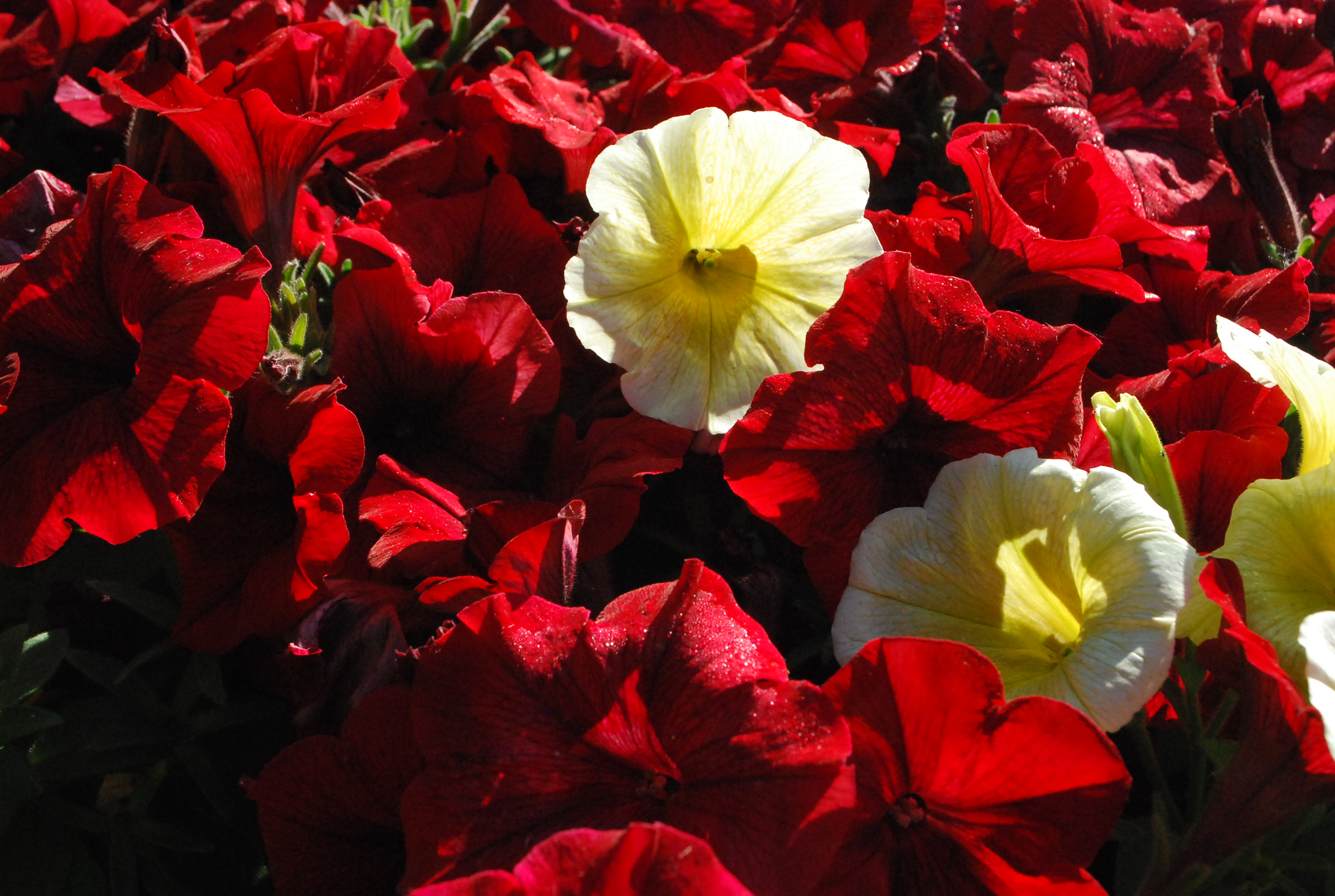
red-and-yellow.jpgRed can be dark and moody in the garden.  It can be royally rich-when paired with yellow.  Pale yellow with dark red is not quite the brass band that fire engine red and gold yellow makes.  Pasiring red and yellow has many possible interpretations.  A variation on a traditional color theme can be very striking.  My advice-if you are developing a color scheme, pick 3 colors.  Two colors is a story with not enough detail.  The third color facilitates the relationship between the first two.

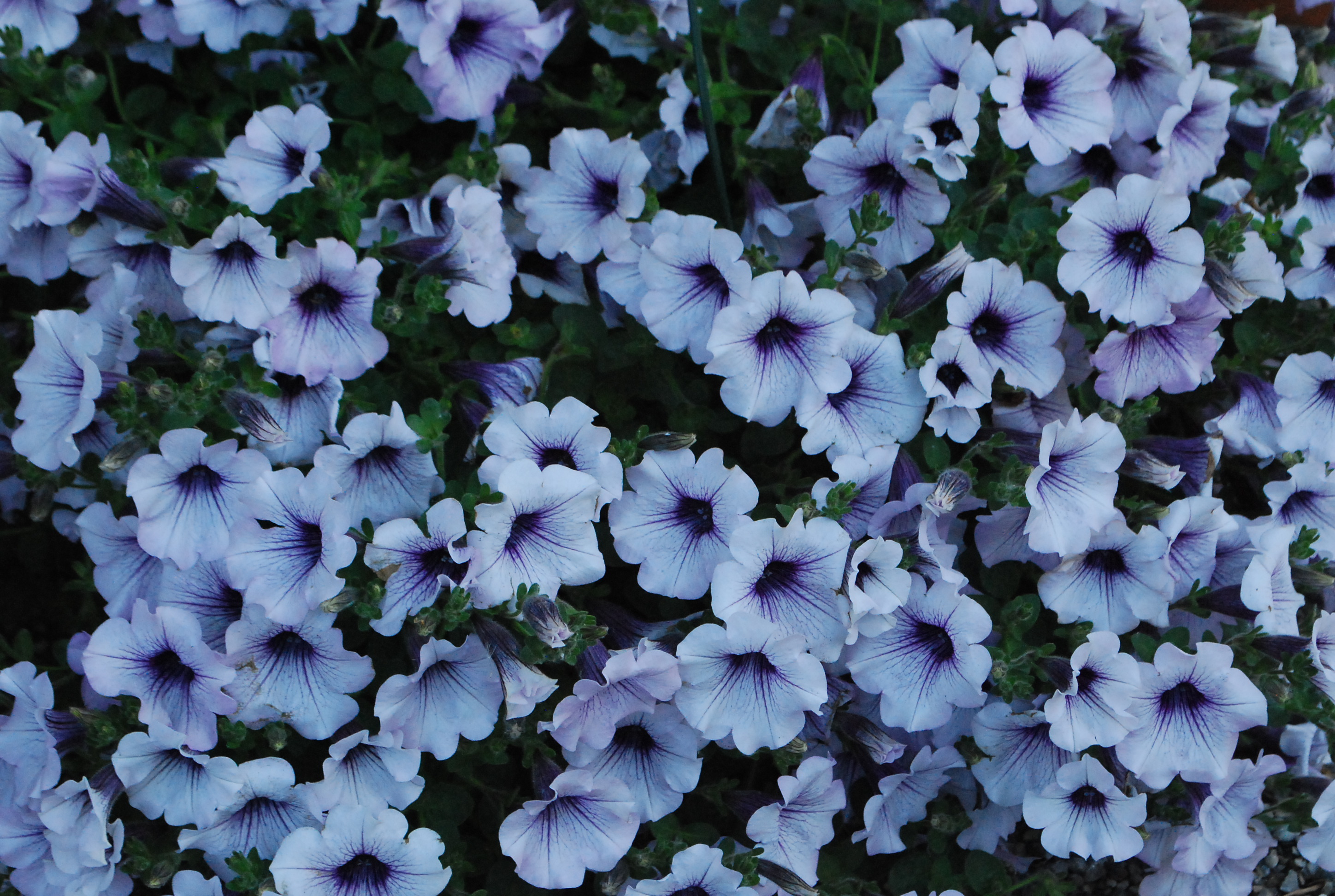
a-shade-of-white.jpgHow many shades of white are there?  White white.  cream white.  blue white. rosy white.  Greenish white.  Even an all white color scheme asks for some attention to be paid to the particular shade of white that works.  Some white flowers have yellow centers.  This would suggest that a yellow green foliage would compliment that shade of white.  Blue-white flowers, such as this silverberry petunia-yellow flowers would contrast.  Dark purple flowers would harmonize.

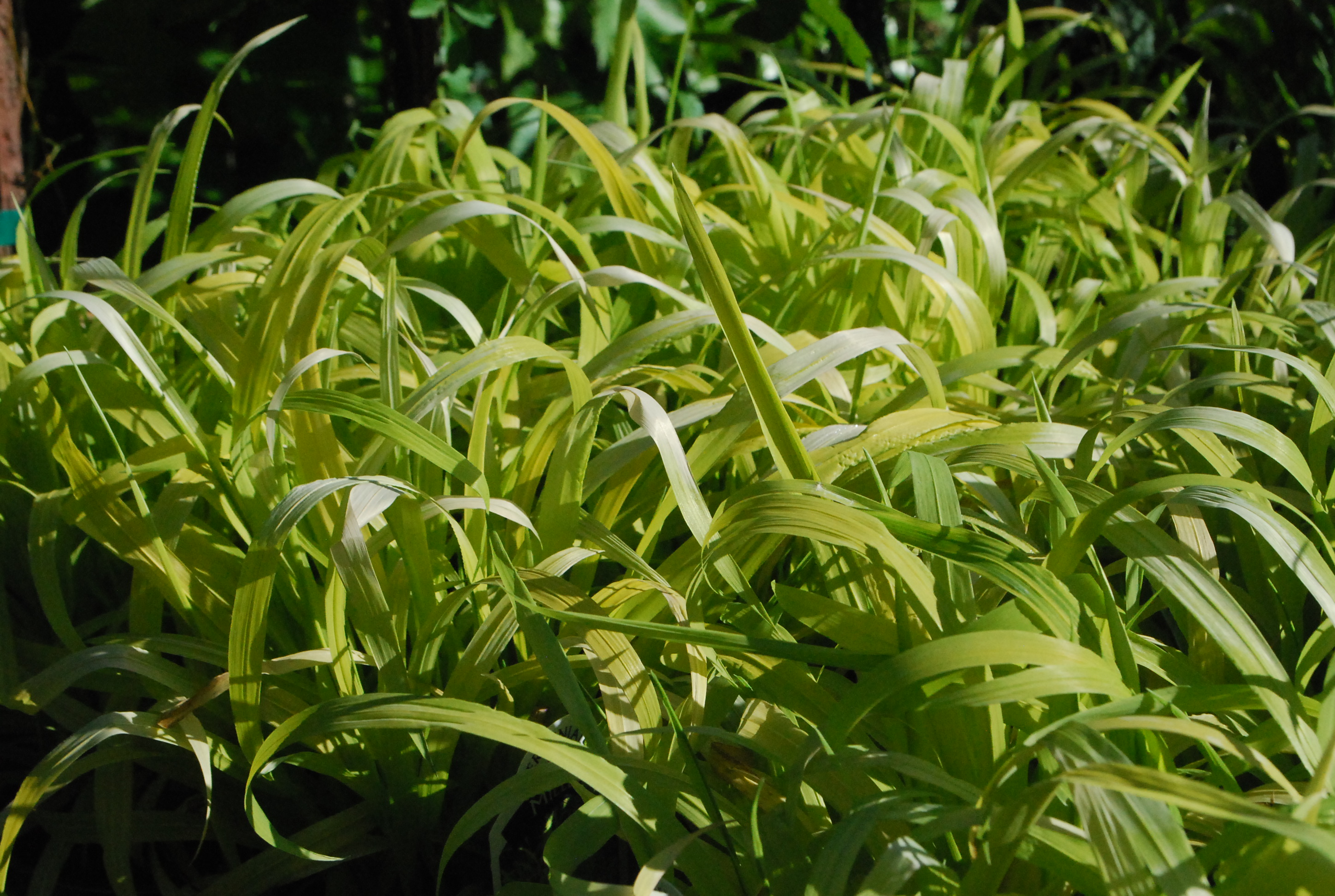
millet-jester.jpgHarmonious colors tend to be quieter.  More serene.  Contrasting colors provide visual excitement.  Lime green foliage always looks fresh and spring like.  Red with lime-very pleasing.  Lime with white-fresh.  Lime and orange-provocative.  Lime and purple-don’t you like this?  Lime green in the sun?  oo la la.  Lime green in the shade-the lights are on in this garden.  Lime green and pink-so Coco Chanel or Lily Pulitzer.  Pale lime and pale pink-fragile, ephemeral-breathtaking.  Wildly lime-a light fantastic version of green.

the-blues.jpgI will admit I like planting containers with plants all of the same tone and color.  The exploration of a single color in a lot of different plants makes a strong visual statement.  It focuses the eye on texture-another important design element.   If you are a big fan of texture, stay steady as you go with the color.  Contrast the texture.

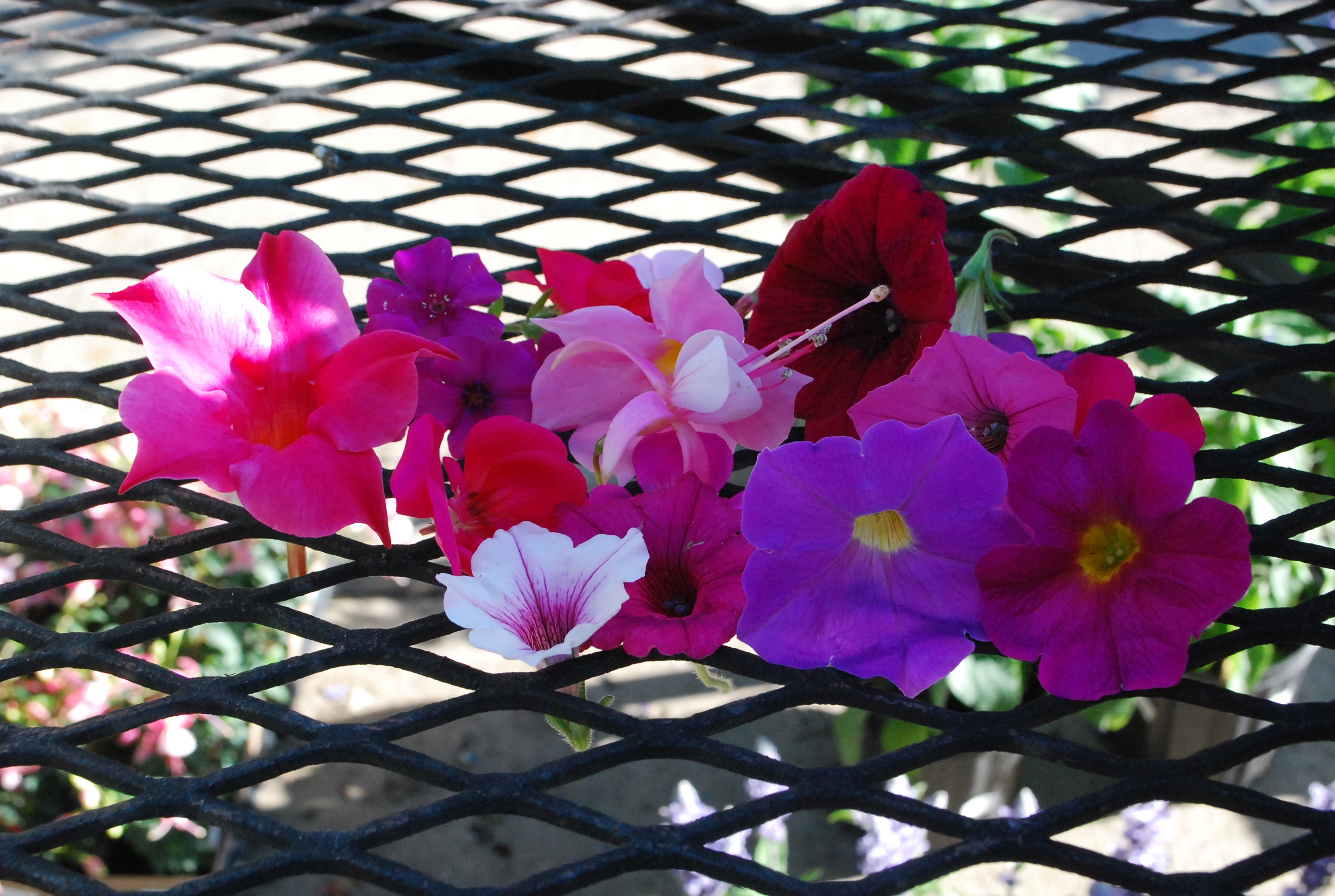
pink.jpgAre you a fan of pink?  Which pink?   Carmine pink.  blue pink.  coral pink?  pale pink?  Dark carmine pink?  Blue pink?  Not all pink flowers harmonize.  If you are hoping to stir things up, plant a variety of pinks, and let the chips fall where they may. More interested in a strong and harmonious statement about a blue pink-you eye will tell you when a yellow based pink is gumming up the works.  Put lots of plants in your cart.  Put back those plant whose flowers threaten to dilute your idea.  As for right and wrong-that applies only to moral questions.  This is gardening.  Enjoy it.  Just take the time to sort through the color relationships.

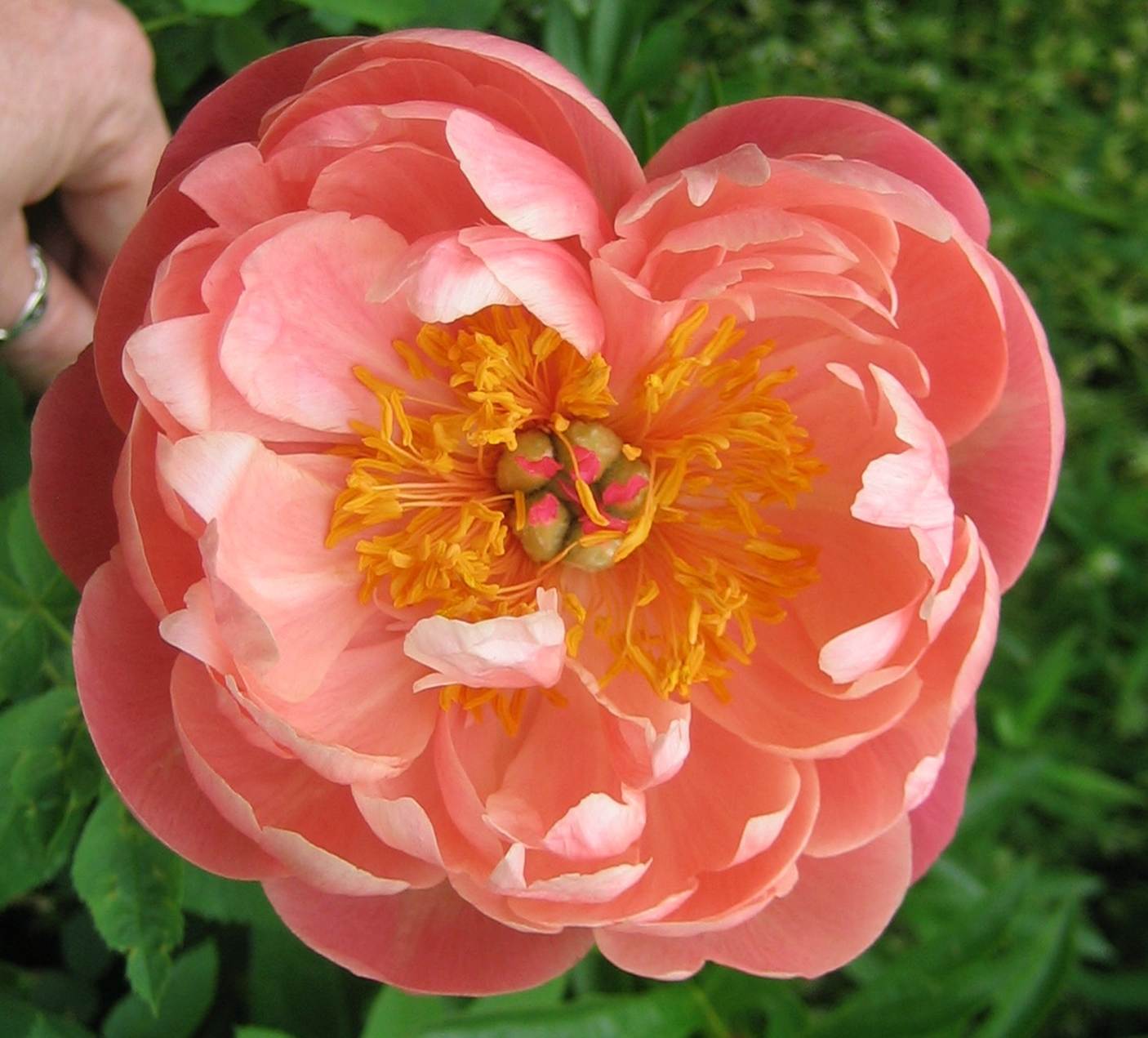
coral charm peonyI have had this photograph of a Coral Charm peony on my computer for a long time-I do not know the photographer. If this is your photograph, please write me. I am posting it, as the color of this peony is so striking and unique, that it surely would inspire a color scheme-a spring color scheme-that would pay tribute to such an extraordinary color.

light-and-dark.jpgLight and dark colors-the contrast is lively.

related-colors.jpgPale pinks with blue green foliage-a great scheme for semi shady places.

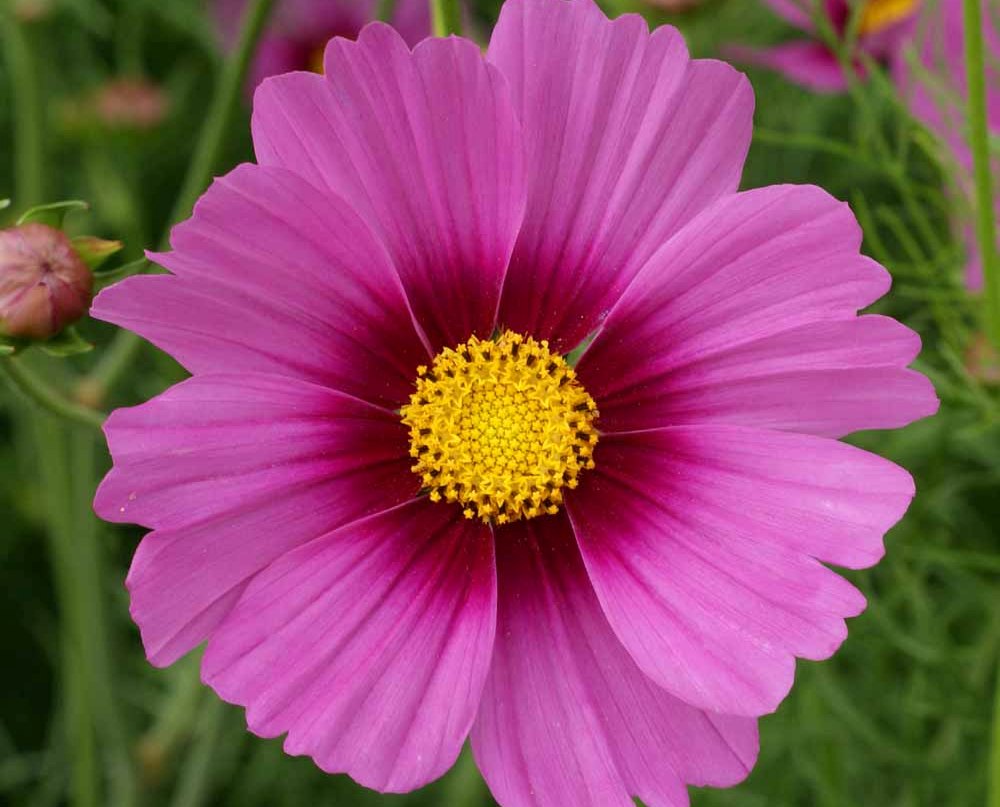
carmine.jpgThe carmine pink of this cosmos flower is all the more visually dramatic-given the yellow center, and the burgundy red corolla.  The contrast of the yellow and red center makes that carmine pink shine.

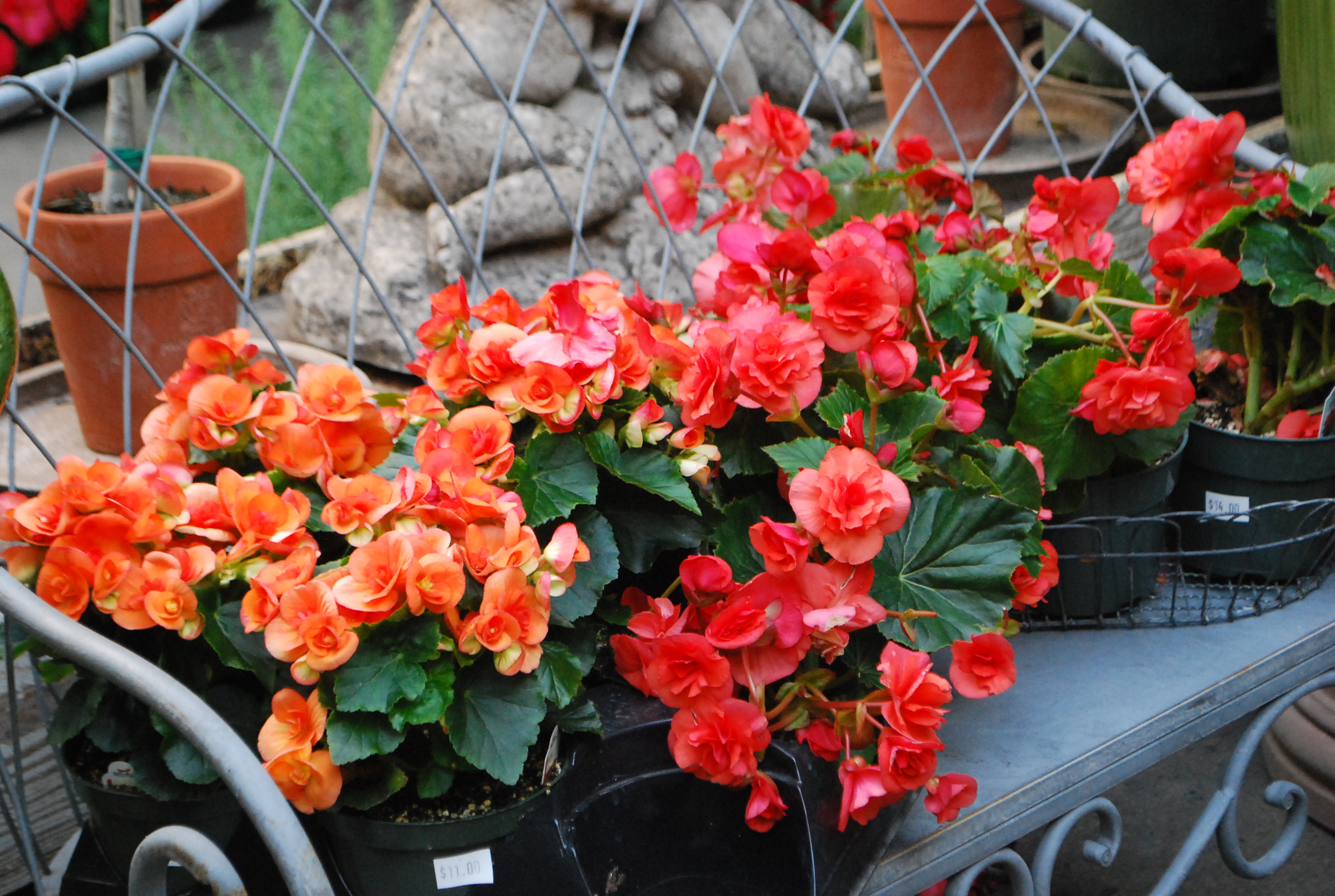
orange.jpgOn the left in this picture-an orange begonia heavy on the yellow.  On the right, an orange tipping towards blue.  There is orange.  There is another version of orange.

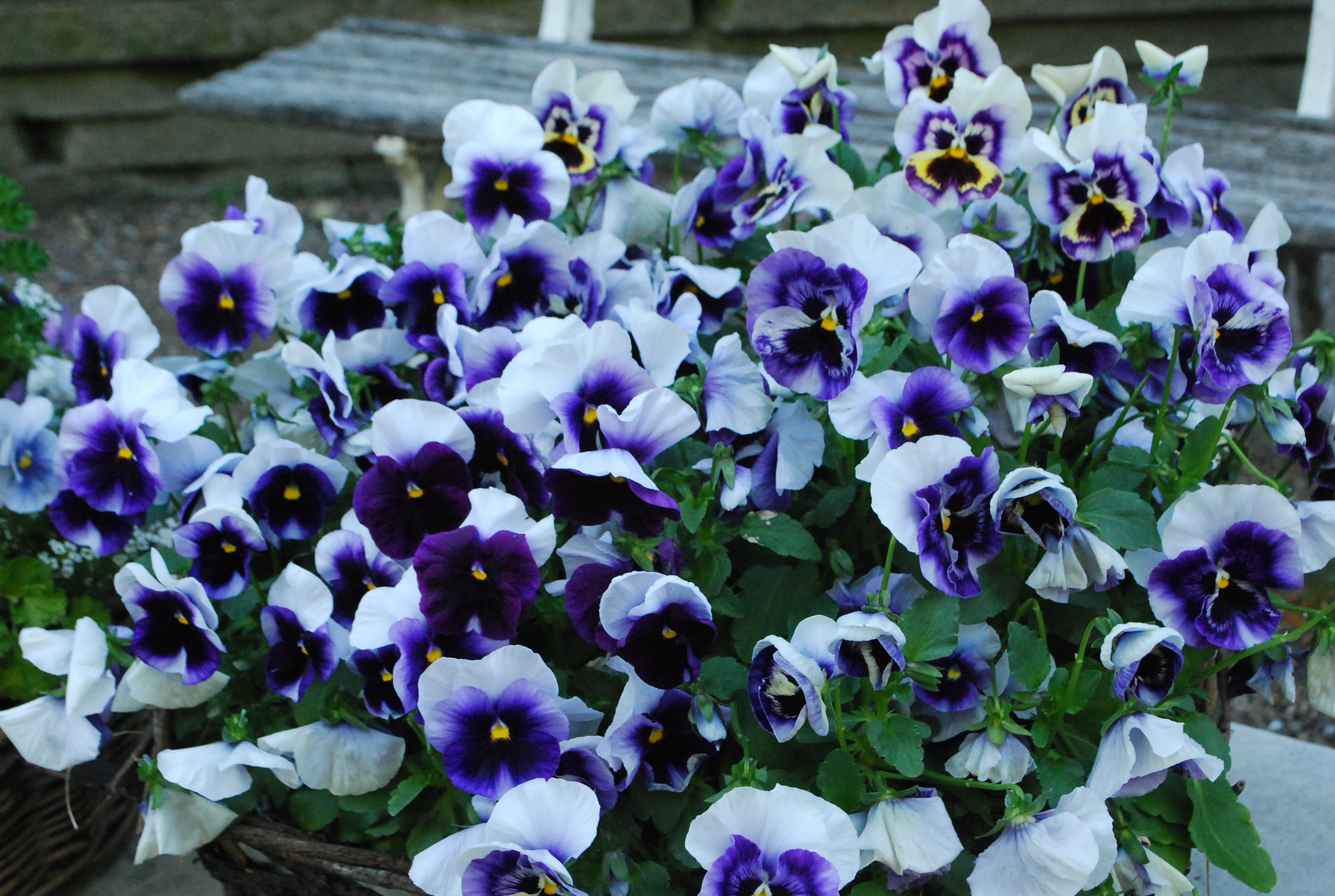
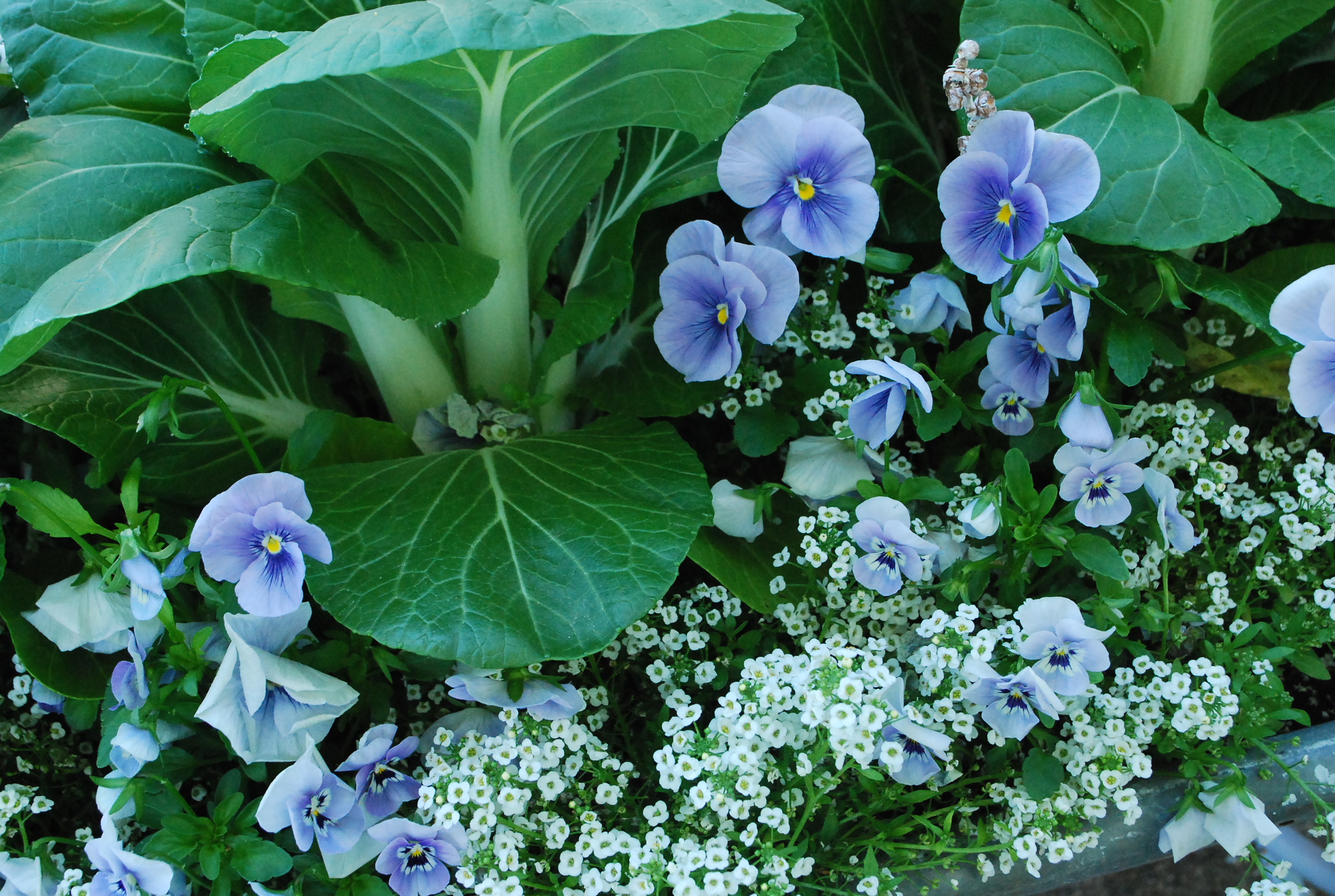
bok-choy.jpgThe blue green foliage of the bok choy clearly compliments the color of the blue violas..  The addition of white makes the scheme all the more crisp and fresh.  Cool and clean-this scheme.

purple.jpgLavender and purple-you have choices.  The sun will make its own statement about your choices.  Light and dark purple both colors can be the star of the show.  Both colors can be a supporting cast that makes your central idea shine.  Purple is a color that fits into a lot of different color schemes.

sunny-yellow.jpg

Sunny yellow-there is nothing quite like it.  Yellow is the color of the light that every garden thrives in.  Have a place for something yellow?  I recommend this level of garden cheer.  Your idea bout color is a good idea.  Another good idea-follow through on your sense of color.  Make the colors work just the way you want them to.

A Dirty Little Secret

a dirty little secretMany years ago I had the side of the Detroit Garden Works box truck identified by the phrase “dirty little secret”.  We are a shop that specializes in ornament and fine plants for the garden.  Our shop location is in an out of the way manufacturing district.  Seventeen years later, we still routinely give out directions. As for the dirty part of the phrase-everything we have been, or hope to be, starts with the dirt.  We specialize in great containers for the garden.  Sculpture, furniture, trellises, ornament-our inventory is deep, and varied.  We like 19th century French urns.  We like fiber pots-made in America. But so basic and critical to growing a good garden involves the state of the dirt.

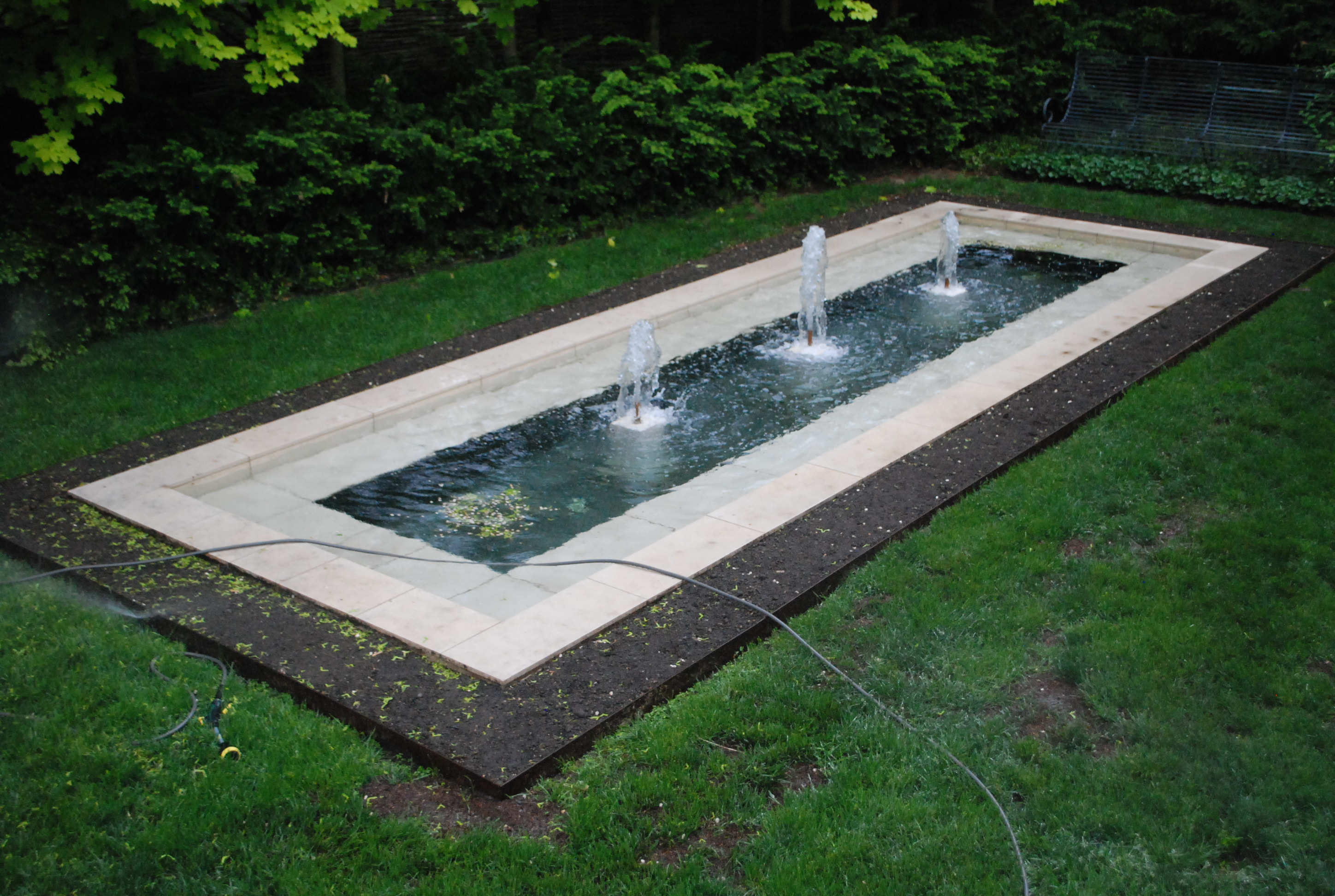
fountain gardenYou can shop our place for sturdy white china and equally sturdy wine glasses- great for outdoor entertaining.  Belgian candles that do not blow out on a breezy night. Framed herbaria from Italy.  Rusty steel spheres and topiary forms.  Oak and steel orangerie boxes.  Stone cisterns and garden antiques from all over the world.  But it could be that the most valuable thing we have available comes in a 40 pound bag-a custom mixed, compost based soil which can help your container gardens to thrive.  Our soil was formulated by my landscape superintendent, Steve Bernard.  The 16 years he spent in charge of all of the gardens and golf courses at Grand Hotel on Mackinac Island made him an expert on the topic of compost and soil.  I lost all of my isotoma fluvialitis over the winter.  I suspect because it is truly a zone 6 plant.  While I am mulling over what to do now, Steve made sure he prepped the soil down 12 inches with his compost.

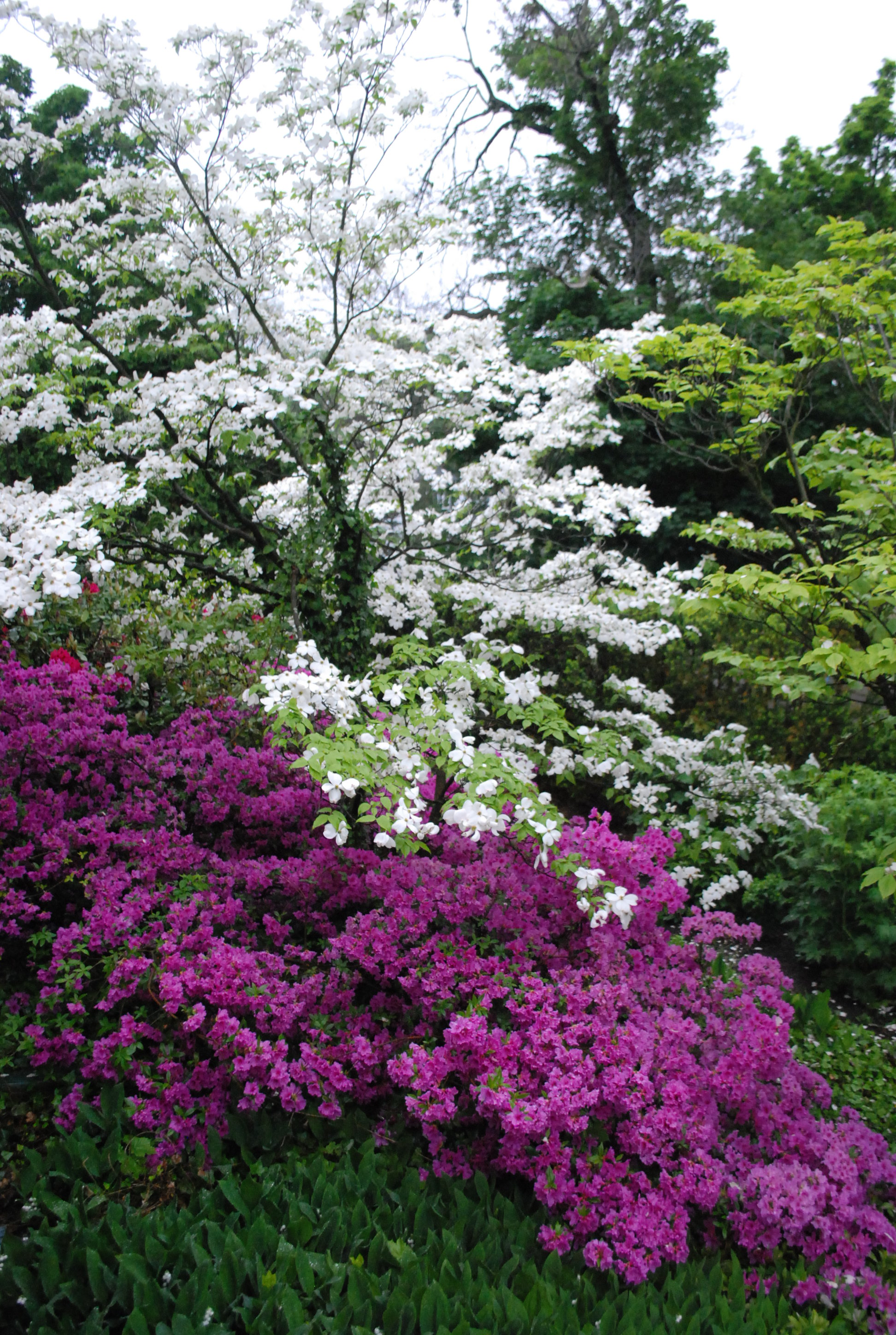
springThough my neighborhood is noted for its poorly draining heavy clay soil, I inherited my property from two men who made it their mission to improve, and leaven the soil.  It was obvious that the men who owned my house before me understood that good soil is essential to a healthy landscape.  For a good many years after I moved, I did nothing in the garden besides topdressing the beds with a yearly 3″ thick layer of composted bark fines. The dogwoods and azaleas were in place the day I took possession-some 19 years ago.  I do just about nothing to take care of them, aside from regular water. Every spring, they bloom profusely.  Over the course of the summer, they grow.  Though azaleas reputedly ask for acid soil, I am sure my soil is on the basic side.  But I do know that the soil is friable, fast draining, and loaded with worms and other beneficial micro organisms, and the azaleas like it.  The rare occasion that I have to dig, the soil is loose, friable, and dark.  An garden empire can be built upon good soil.

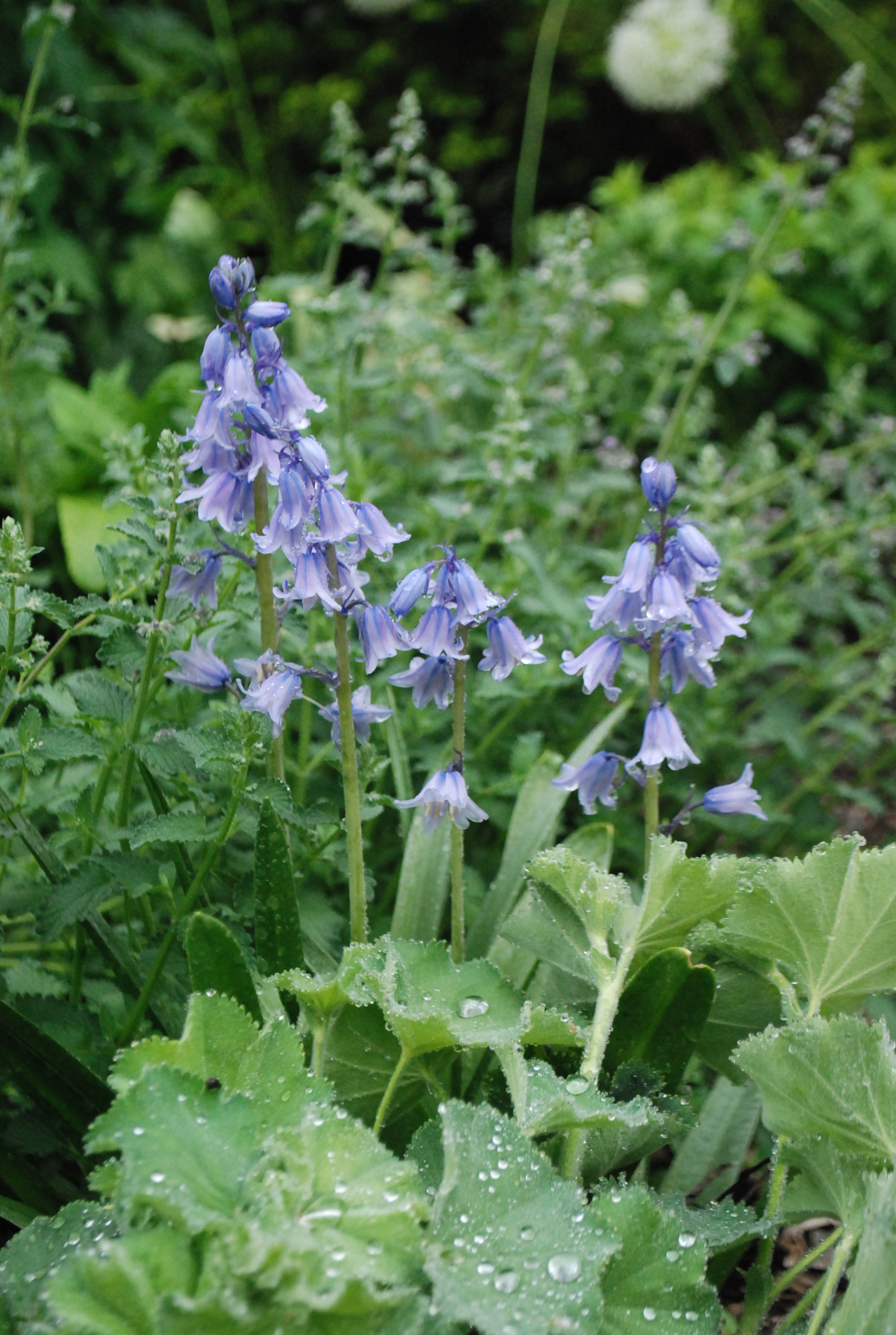
scilla Plants will colonize where the soil favors robust growth.  My small perennial garden at home has rich soil further down than a shovel will reach.  It would not make grapes, nasturtiums or cosmos happy-it is too rich and water retentive.  It would not make bog plants happy either.  But it does provide a happy home for all the plants I have chosen to grow there.

annual plantingThe soil we put in containers is topsoil mixed with sand and compost.  I do not recommend soilless mixes for containers.  While they are lightweight, and a giant bag is easy to carry to the car, the peat base gets rock hard when it dries out.  It has no nutrient value per se.  Plants in soilless mixes have to be fertilized regularly.  I favor a good quality compost enriched real soil for my containers.  Soil retains moisture longer.  Real soil has micro nutrients and organisms that are beneficial to plants.  Good soil is a complex living environment that promotes healthy growth.

soilContainer plantings perform better in good soil with high fertility.  I change the soil out in my containers every year.  The old soil goes to one of our several compost piles-for revitalization.  All of our soil gets recycled, but we do not reuse until it has had a year or two to lie fallow, and be mixed in with new compost.

garden in springWhenever I see a garden in my area where that plants are a rich shade of green, and the growth generous, I know there is good soil for growing.  In perennial beds, the soil cannot be changed out every year.  So a topdressing of compost, or ground bark fines adds back to the soil what the plants have used.

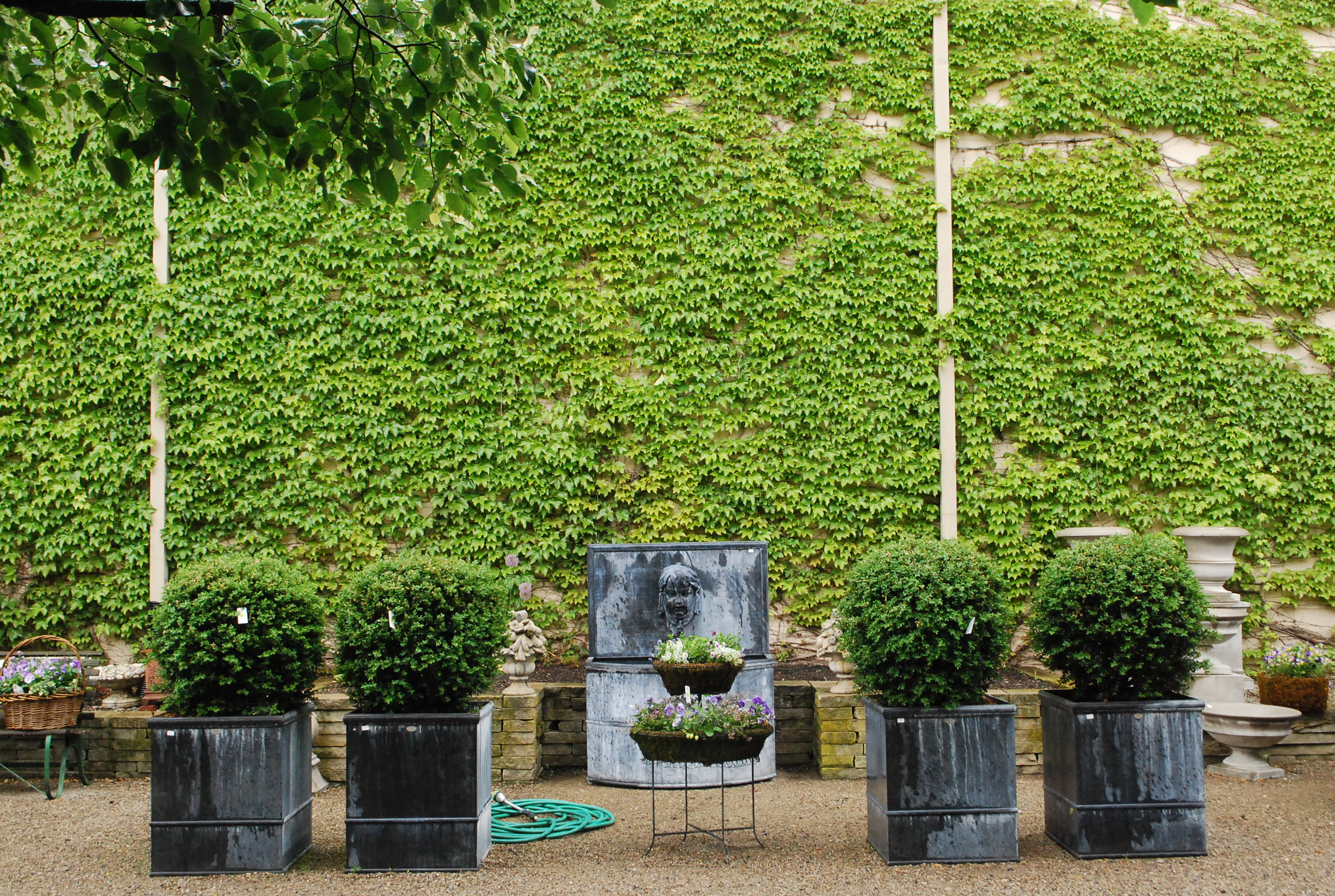
Boston ivyThe walls of the neighboring building at the shop is completely covered with Boston ivy.  7 individual plants now cover 3000 square feet of wall space.  Did we prep that soil before we planted-oh yes.  A few shovels full of compost in the fall, and liberal watering is all we do to keep the plants happy and healthy.


Planning The Pots


first-planting.jpg

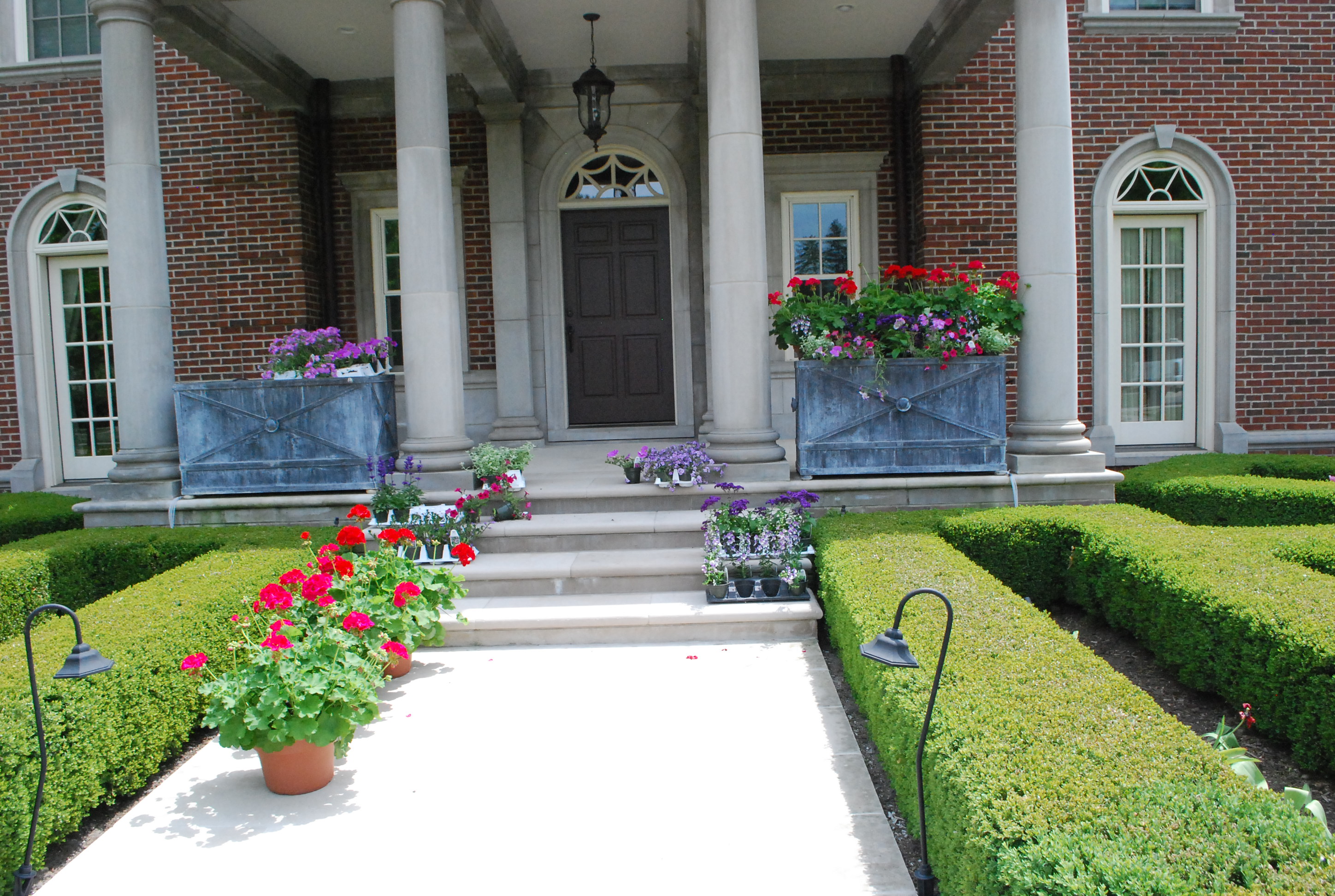
Reluctantly, I planted my first pots, this past Friday..  I was reluctant, as the overnight temperature was 46 degrees.  At 9am, just 52 degrees.  But this particular client spends most of the summer on the east coast.  She needs an early planting, so I am happy to oblige.  She knows there could be damage from cold-she is willing to risk it. She has every hope that when she gets back in late summer that her pots will still look good. What looks good early that goes on to look good late-that is a tall order.  I choose the plants that go in her pots carefully.  This means plants that can shake off the cold.  Plants that have staying power. And a great soil in which to plant.  No begonias or coleus or caladiums for her.  Good planning in the beginning makes for good results.  The big idea here-know your habits, your inclinations, your summer schedule, your availability to look after them-then plan to plant your pots accordingly.

summer planting

I am very concerned that whatever gets planted produces good results.  I am sure you are wondering why I am so interested in results-as if planting summer pots was a competition.  But there is a very real competition going on.  A love of the idea of a gardening life-lots of people favor this.  But then there is the reality.  The expense and trouble versus the effort and the result-every gardener has had that moment when they weigh the effort against the results.   A summer planting that falls down and fails is discouraging.  A successful planting encourages a gardener to keep going, and expand their relationship with the garden.  I like the idea that successful container plantings can encourage people to garden on.  Abject failure makes the time and money involved the most important issue.  I like the benefits of gardening to be the most important issue.

summer-planting.jpgGreat container plantings revolve around three issues.  First and foremost-who are you?  Are you a do it yourself gardener?  Do you work a job, or have kids? Are you a professional designer with clients who expect you to handle the summer season for them?  Are you a person that loves green best of all?  Do you have the time to individually and carefully water, or are you interested that your irrigation system do the watering work?  Are you all in?  Are you new to an interest in the garden?

summer annual planting

This why I favor advance planning.  I like to know how my clients see the garden.  This helps me to plan for them.  A planting that answers the needs of a specific gardener is the right planting.  If you are planting for yourself-ask the same questions.  Ask lots of questions of yourself-before you buy the first plant.   Answer them, as true as you can.  The second issue-where have you placed the containers?  At the front door under a porch roof?  On the pool deck?  In a shady bed?  Narrow your plant choices to those plants that will thrive in the conditions that you have. At my shop, the sun plants are in the sun, and the shade plants are in the shade-this makes choosing the right plants easy.  Most nurseries do the same that I do.  Most plants have care tags in the pots-read, before you leap. Plants are very specific about what they want, and if they don’t get it, they will languish.

annual-plants.jpg

Are you a good and faithful waterer? Do you relax, deadheading and grooming your pots?  Do you have little time to devote to the maintenance of your summer plantings?  Are you easy going about the relationships that develop in a container planting, or are you interested in being in charge start to finish?  Do you have pots big enough to handle a day without watering in the heat of the summer?  Do you have easy access to your window boxes?  Will you look after those pots as soon as your family has been looked after?  Are you up north in the heat of the summer?  This is the third issue-are you on top of the maintenance of summer annuals?

annual-flowers.jpg


Detroit Garden Works-everyone who works for me is ready and willing to help you with a summer planting scheme. But no one knows your summer life better than you do.  Every gardener’s summer  is different.  I so value the diversity expressed by the gardening community. This said, tell your story.  Your story, and our story, in concert, might make for some really  beautiful summer containers.  This is a fancy way of saying that my group likes meeting people face to face.  I will repeat this, as it is so important.  Be willing to tell your story.  A story understood mean a plan with success in its future.

window box

The plants are growing fast-how I love how they look.  I am thinking non stop-what will I plant?    What will you plant for summer this year?