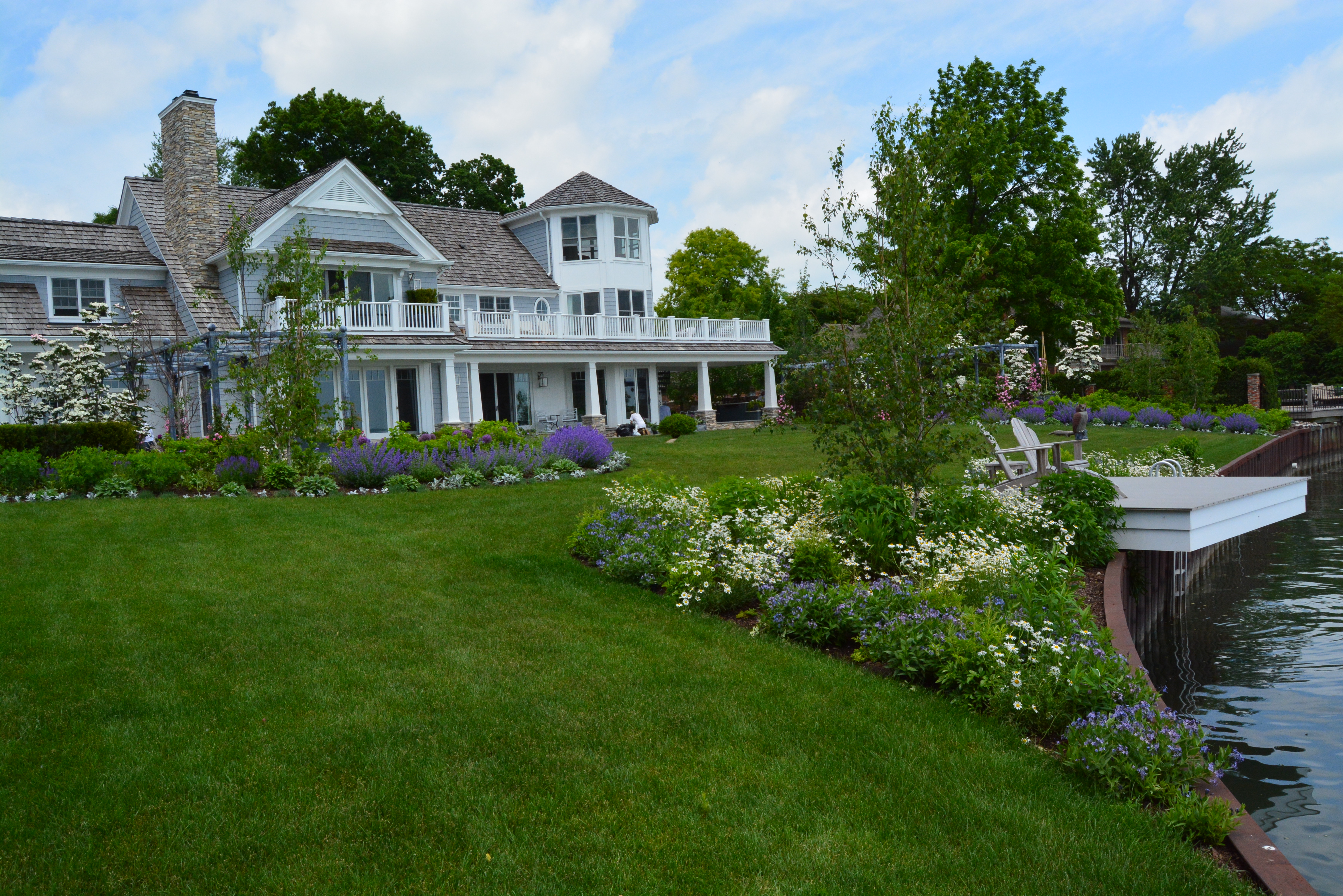
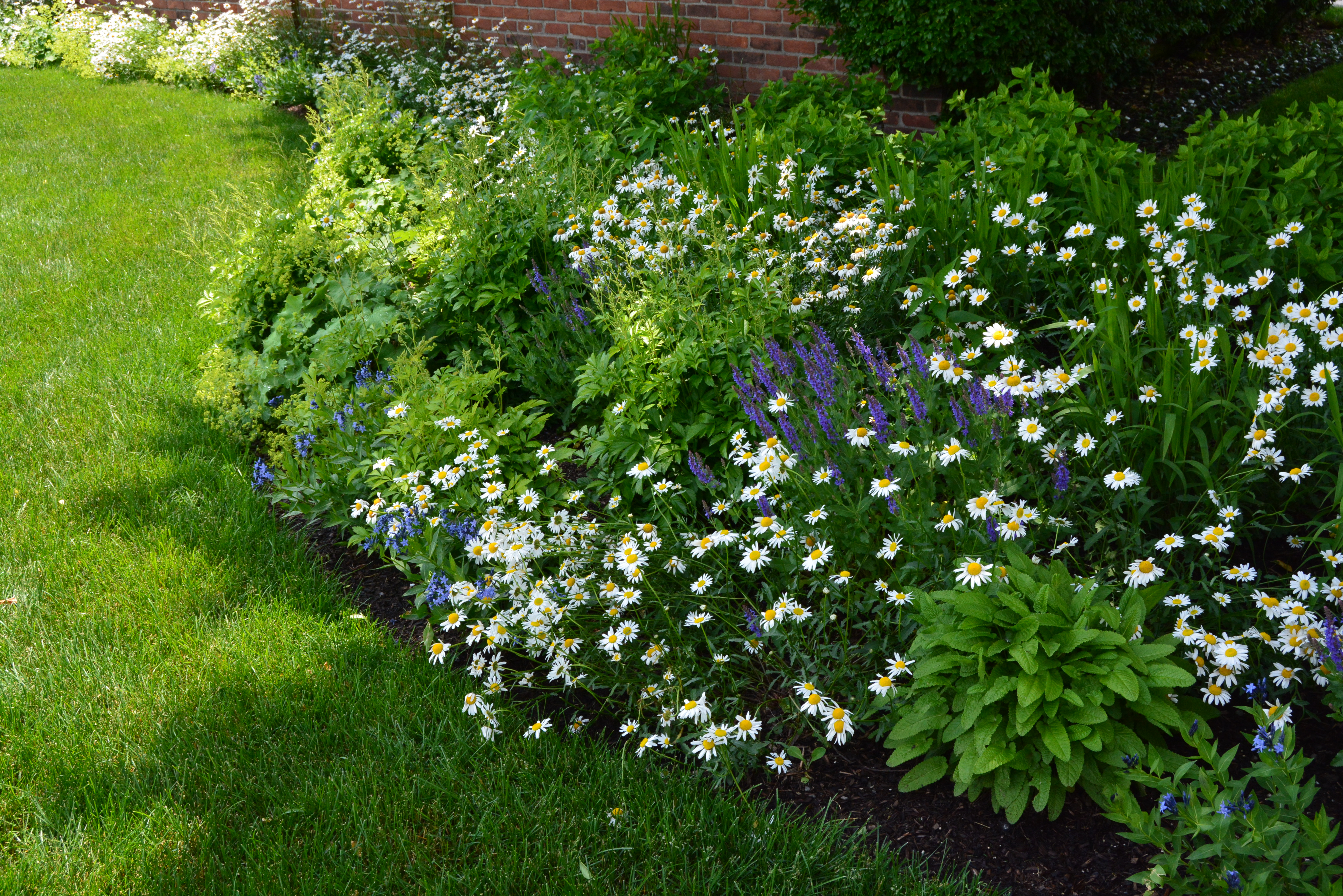
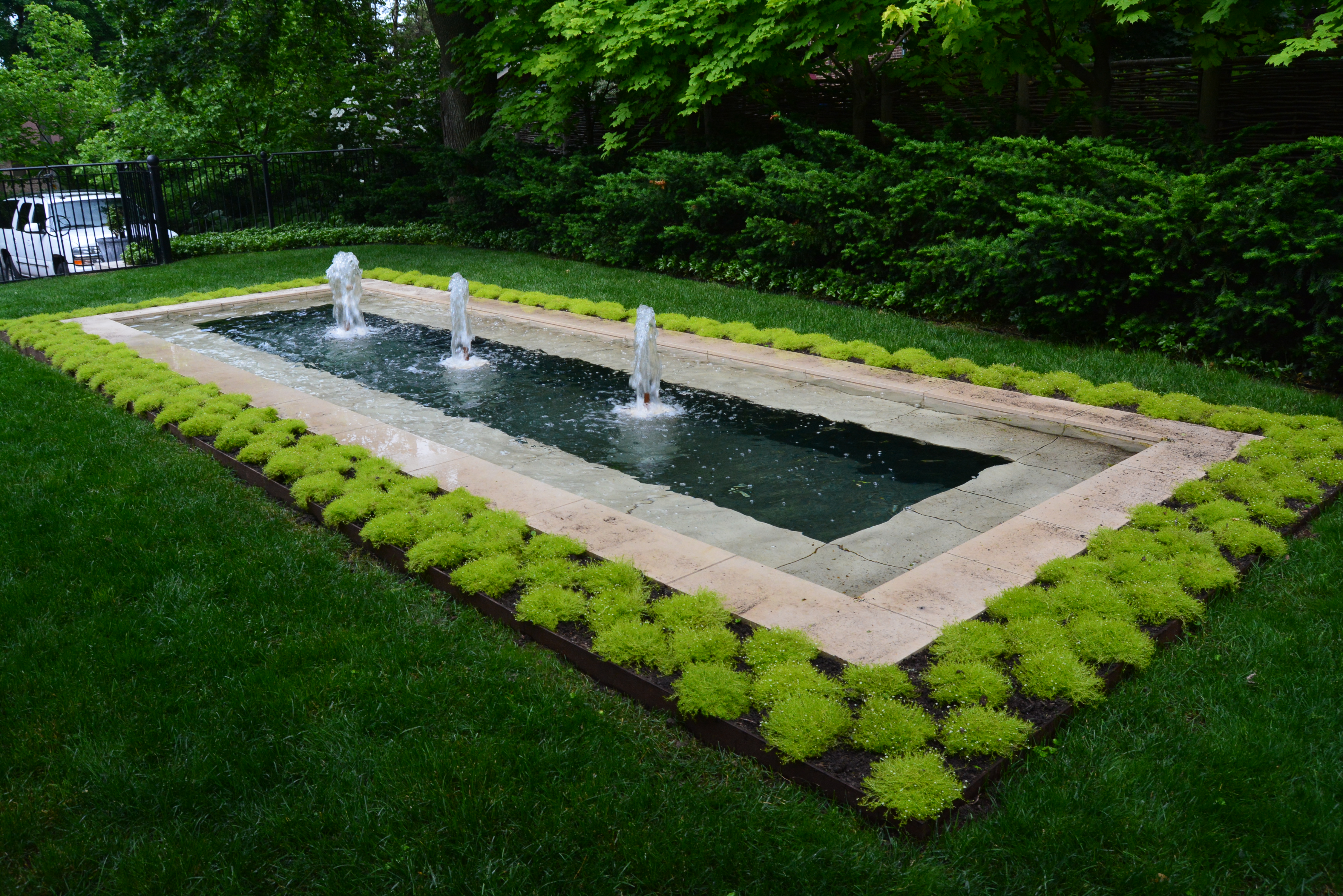
 The last 2 weeks have been wicked busy. Several extensive landscape projects swung into high gear, at the same time I began planting containers and annual gardens. There are but 10 of us that produce all of the work. We have done 67 annual and container gardens, with 6 more to go. One landscape project-a brand new house that needed everything from start to finish. The other project-a new pool and pool house needing a landscape. Needless to say, I have not done much at home. The bed around the fountain got replanted with scotch moss. I did get a few of the deck planters planted, so I wouldn’t have to celebrate my birthday looking at pots of dirt.
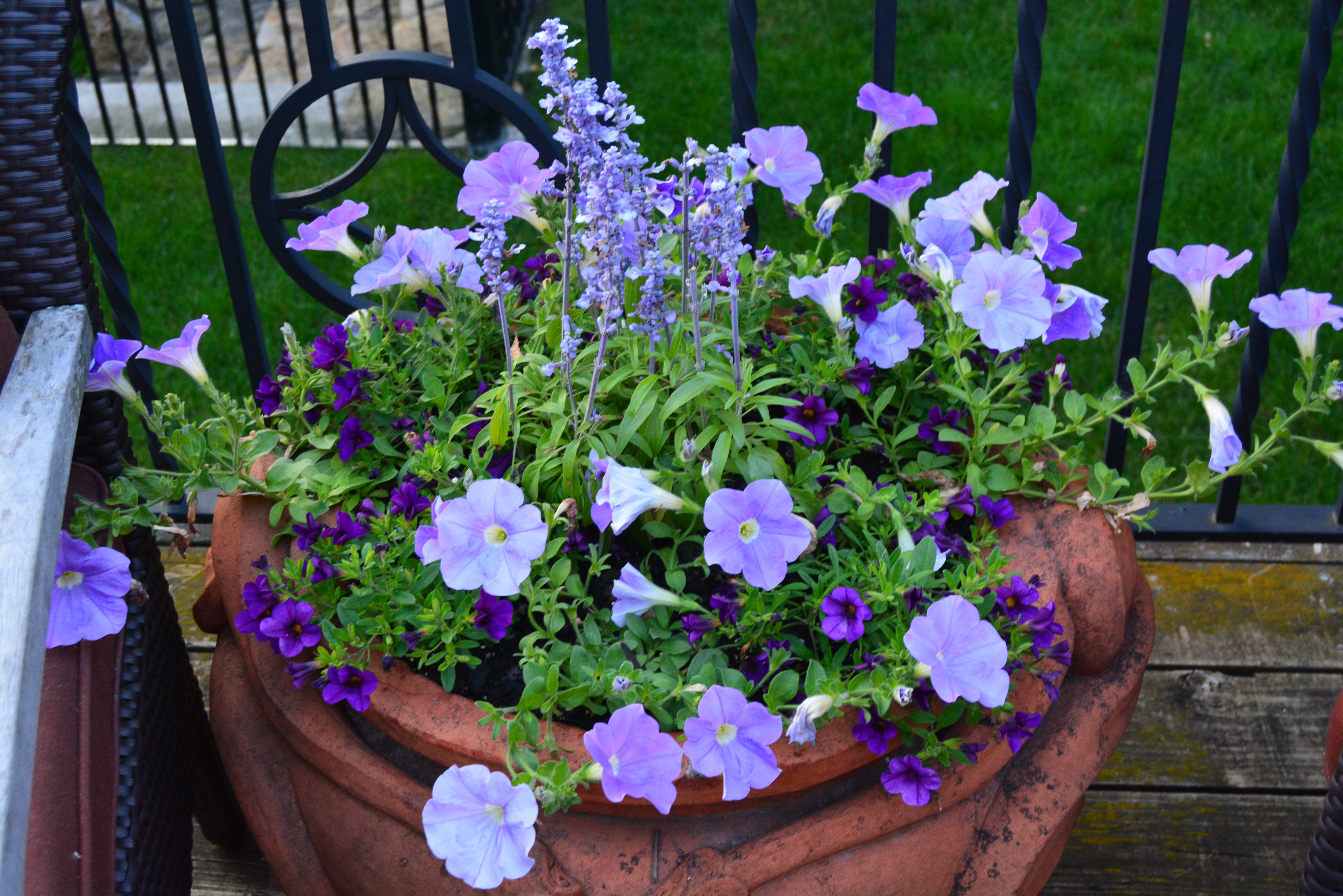 I have always liked the color purple in the landscape, but I have never made it the focus of my containers. Last year’s silver and brown containers were my most favorite ever, but I hate to repeat a scheme. The entire fun of planting annual containers is that you get to chose something new. Since I already have Princeton Gold maples, Sum and Substance hosta, and now the lime green moss, I thought yellow might be a good companion to the purple.
 There are plenty of purple and yellow annual and tropical plants. Scaevola and dark purple angelface angelonia are both on the blue purple side. Yellow thunbergia, is a vine sporting sunny lemon yellow flowers. The contrast of colors is lively and cheery. I also like the look of these colors with my yellow brick. The blue from the sky and the green from the landscape are important colors in any garden scheme. The sky occupies a lot of square footage overhead. But the color of a home will influence the look of any color you put next to it.
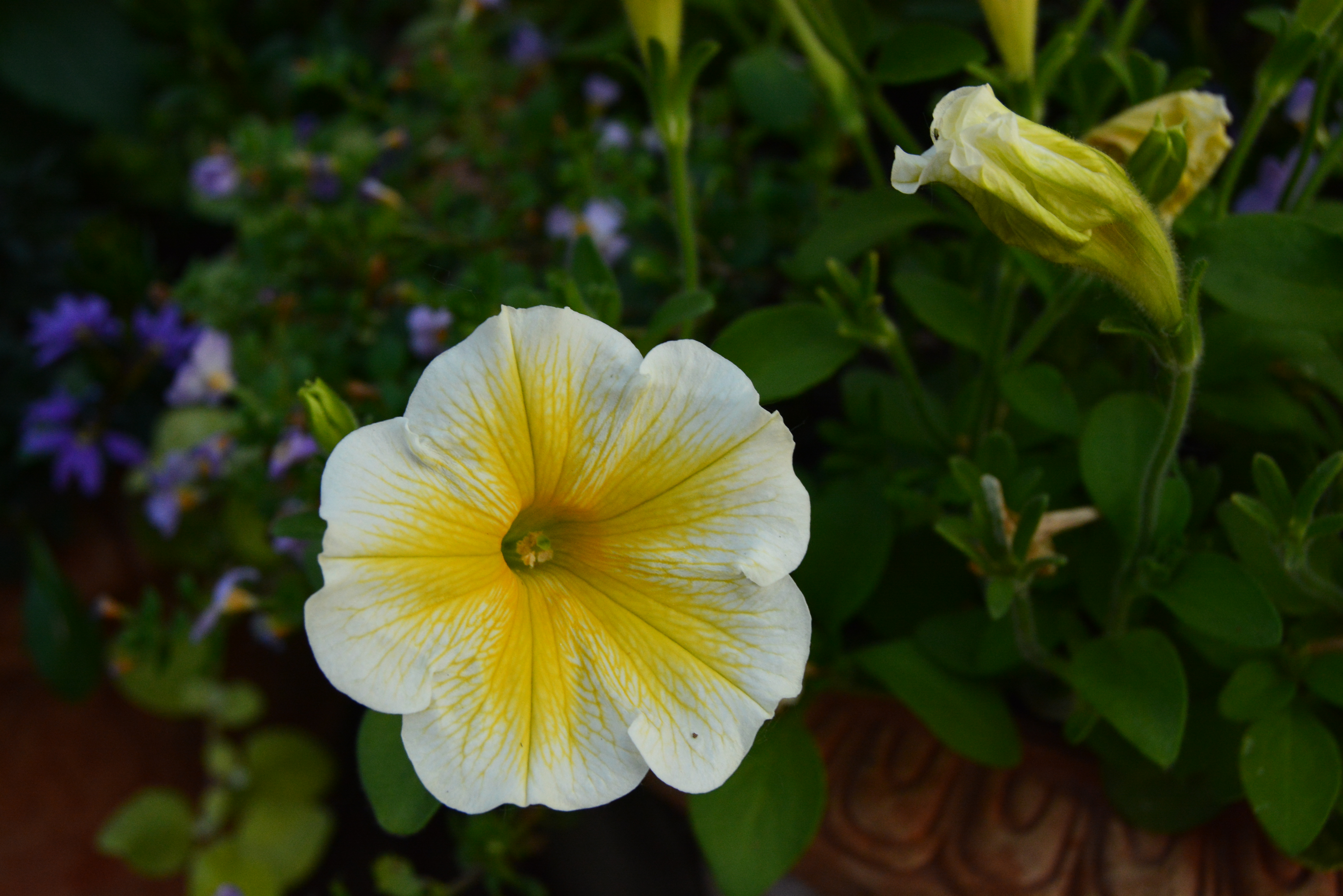
But I was interested in something else besides color. I have always been a proponent of growing plants that are willing and able to grow. Some plants are not that demanding. Some plants deliver lots of satisfaction without asking for much in return. It is easy to become besotted with Vista petunias, as they grow and bloom profusely. But this year, I thought I would try to grow some plants that would challenge my ability to grow things. The lime scotch moss-it is hard to grow in larger areas. Yellow petunias are not that easy either, although this Proven Winner’s variety “citrus” promises be be a better than usualy grower.
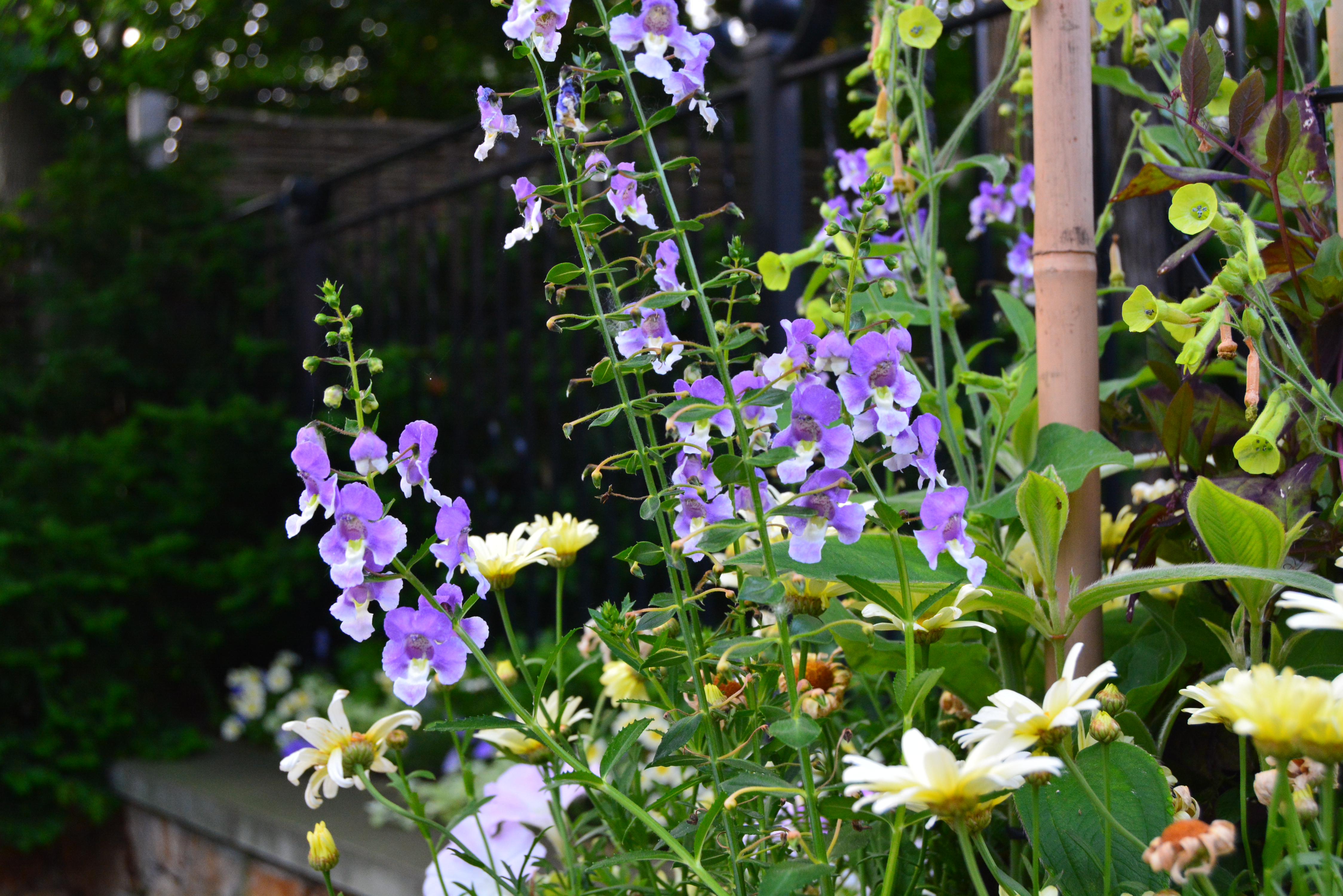 Butterfly marguerites are willing growers, but they require regular dead heading to stay beautiful. They also seem to need more attention to the water than other annual plants. If I comer home at the end of a very hot day, it is the marguerites that are wilted. Angelonia performs well, as long as it gets heat. The best looking angelonia I have seen in the past week have been in the greenhouse. Our early summer weather has been especially cool.
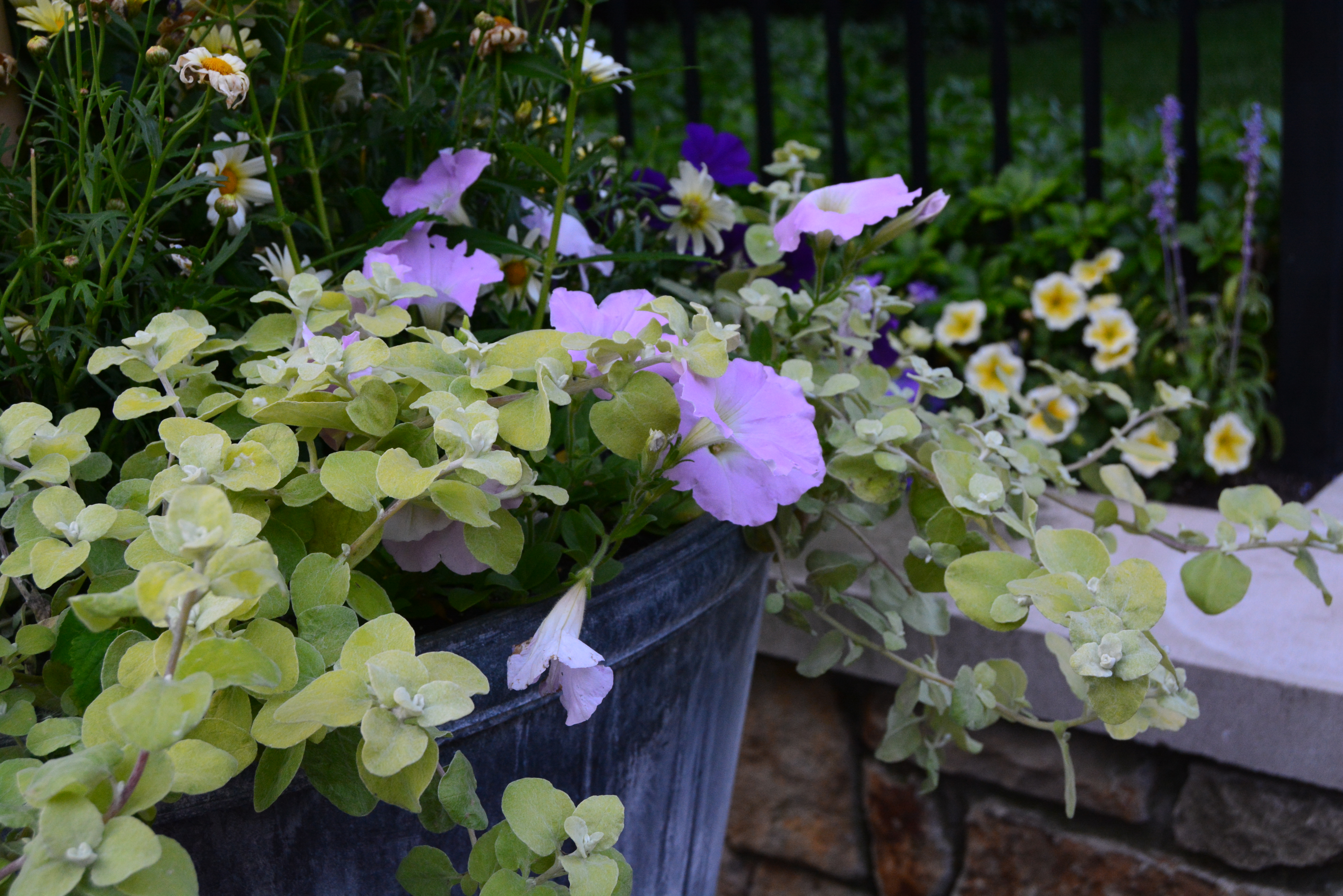 Lime licorice will not tolerate too much water. The felted leaves say that loud and clear. The leaves will bleach, if the plant is grown in too much sun. It will wilt with too little water. Finding just the right spot for licorice is a challenge. Growing it with another trailer sometimes provides it with just enough cover to make it thrive.
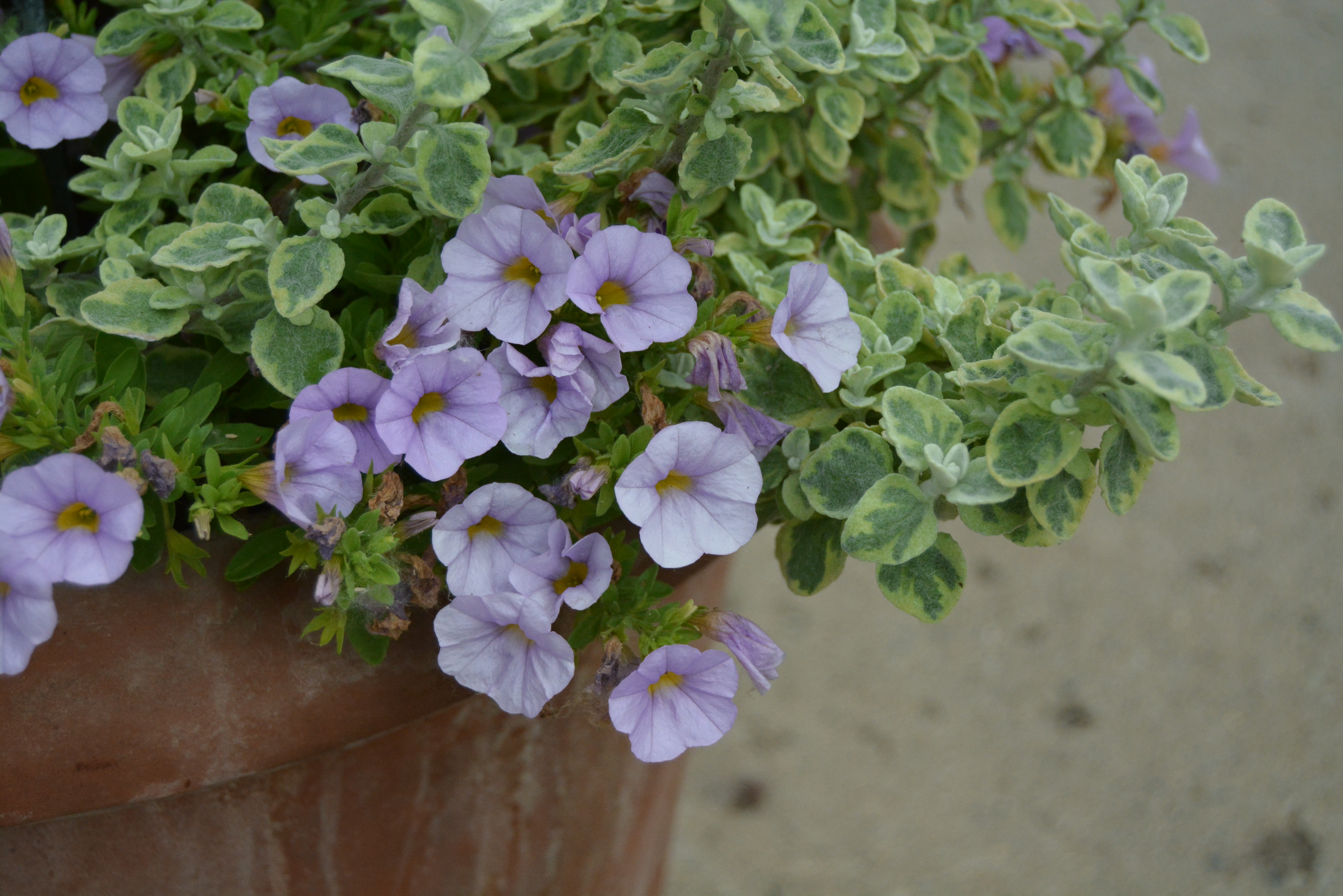
Million bells are trailing plants with loads of charm. This new variety of super bells is called “Miss Lilac”. The color is very interesting. Growing million bells can also be interesting. They rot easily, and develop yellow stems and leaves. I recommend watering in the am only, and fertilizing with miracid. Million bells do not thrive when the Ph is too alkaline. Petunias don’t mind the miracid treatment either. The color of this million bells is delicate-we’ll see if it is tough enough to withstand my care.
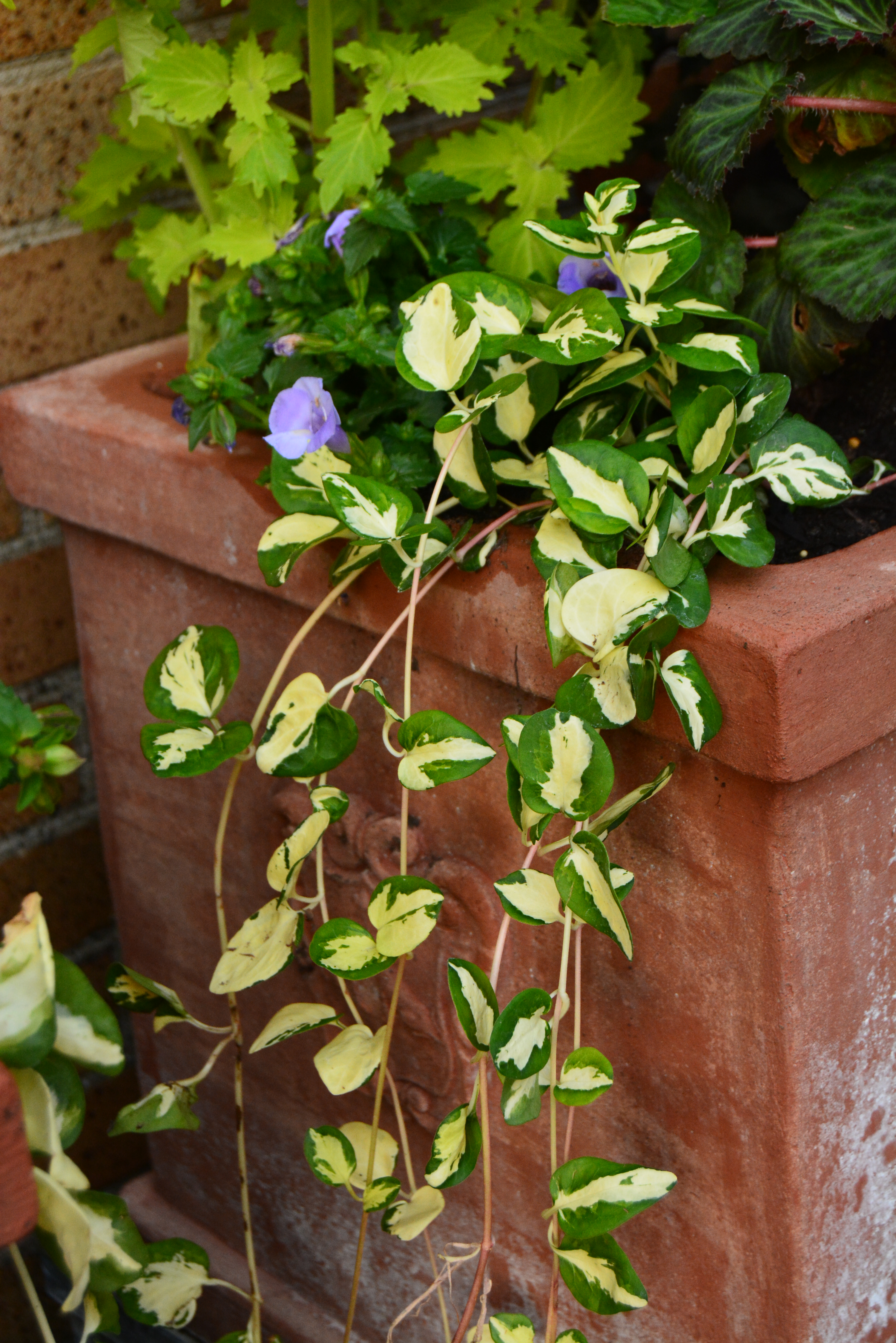 Purple annual plants for shade are few and far between, so I am trying torenia this year for the first time. It is so true that the only way to learn how to grow plants is to grow them. If I have questions about the cultivation of a plant, I like to ask a grower. This is one of the best reasons to shop for plants at your local farmer’s markets. The people who are there helping you select plants are growers.
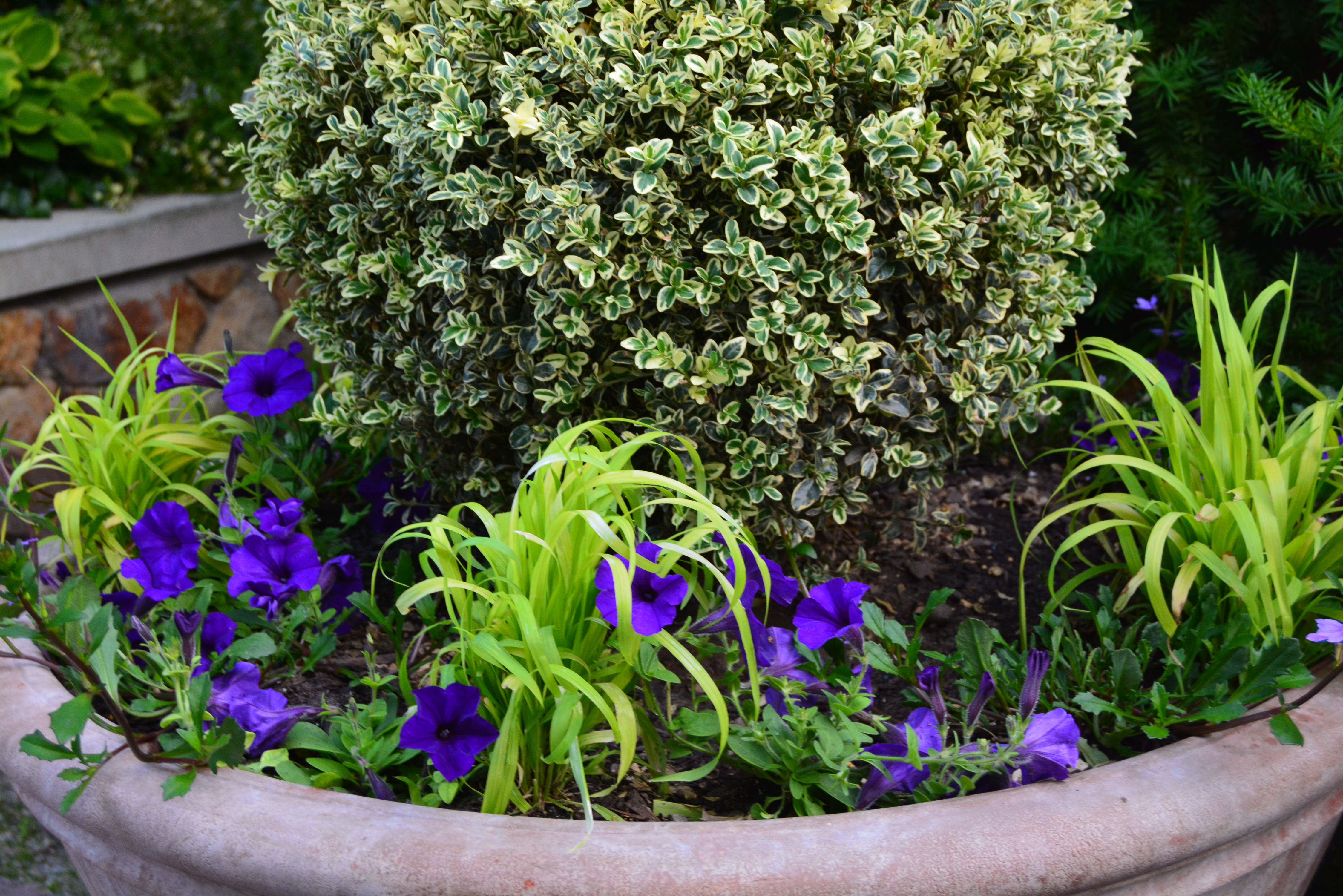 There are lots of ways to get yellow in a garden that don’t involve flowers. The millet Jester is an excellent grass whose color is an intense lime yellow. The centerpiece of this container is a variegated boxwood. The edges of the leaves are a creamy white.
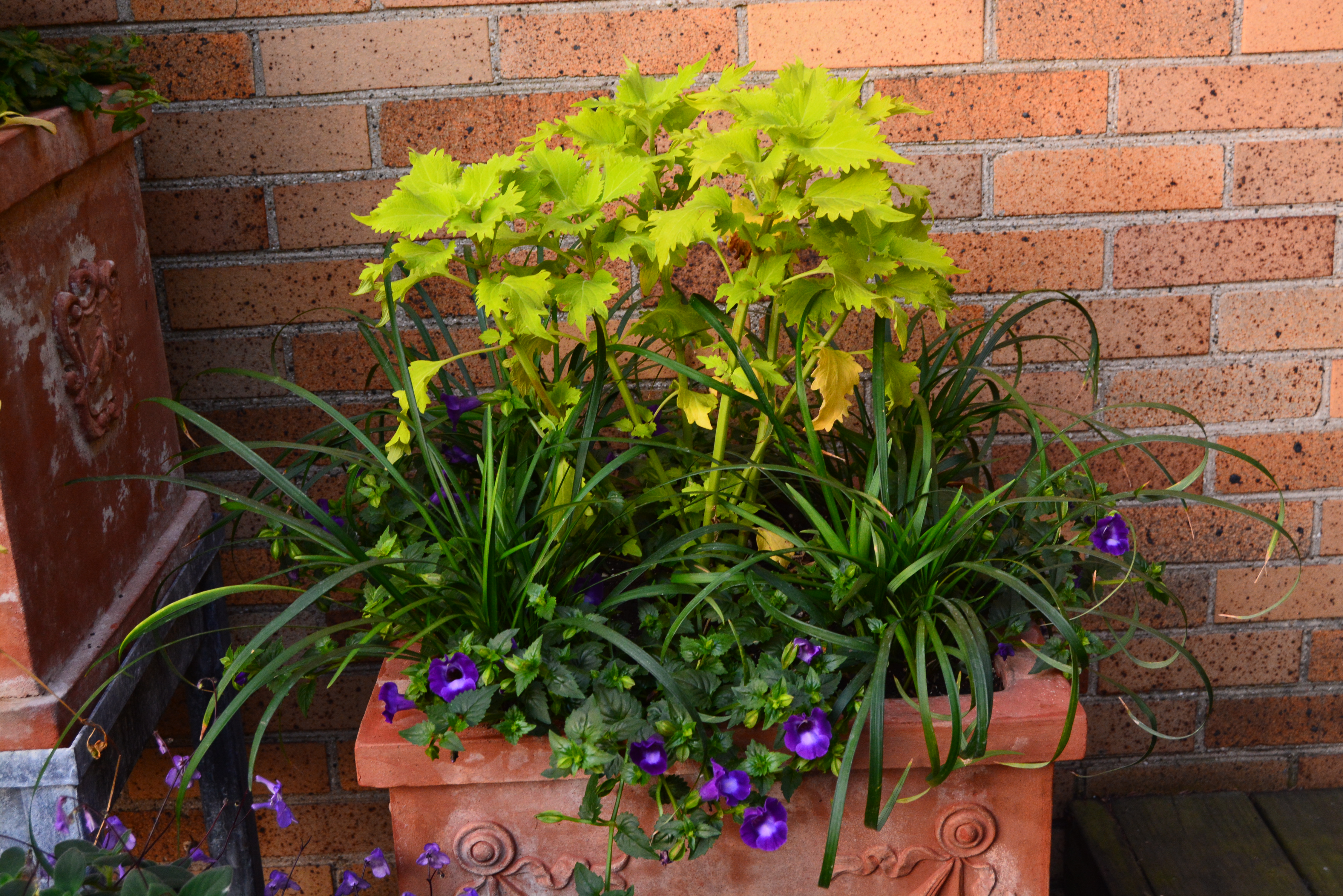 The fairly new coleus cultivar called Wasabi is a very strong grower in either sun or shade. In sun, the plant is butter yellow. In shade, a yellow green.
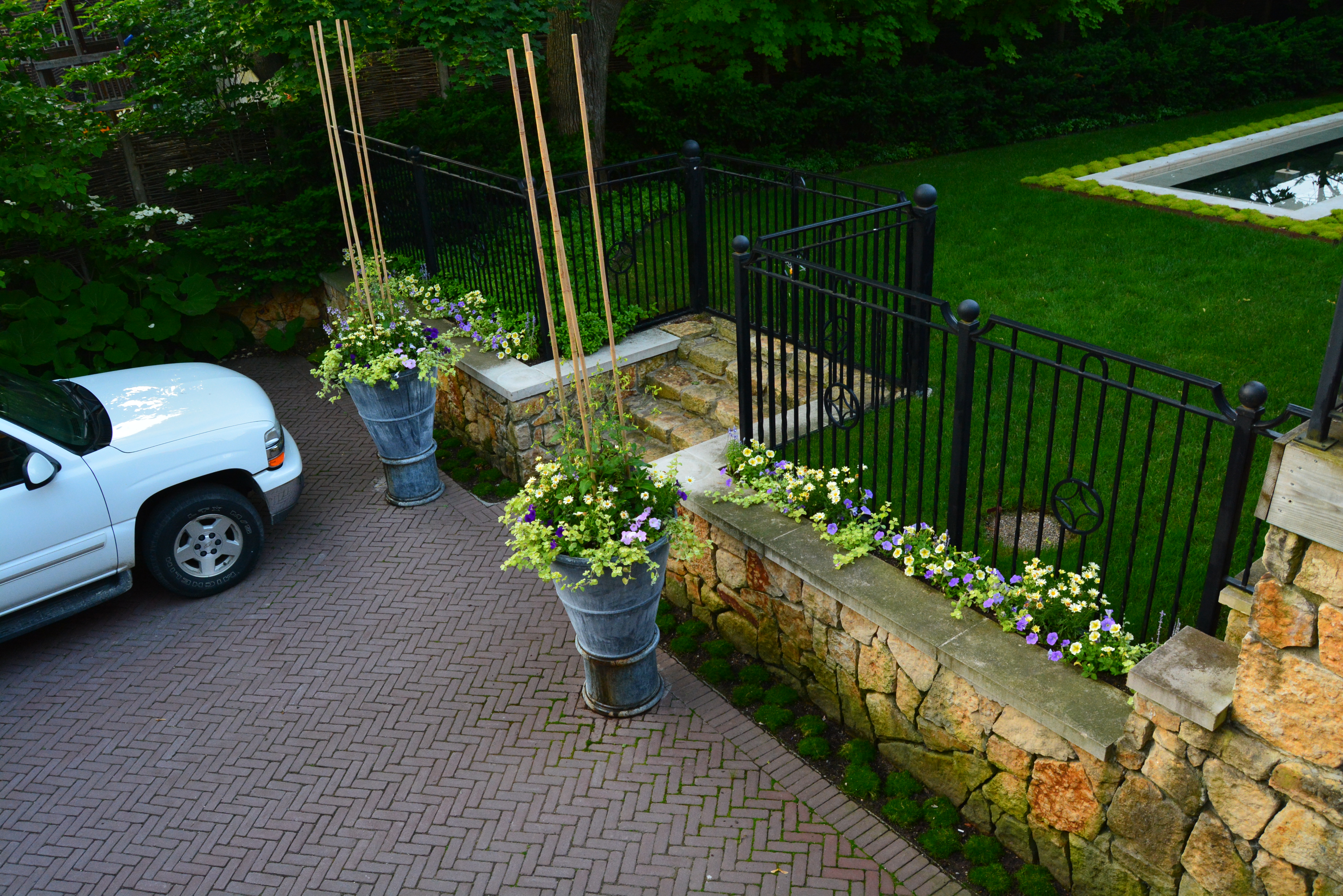 In the center of these pots, I have planted cup and saucer vines. The dark purple/green foliage sends out delicate purple tendrils which will attach themselves to the poles. This is one of the few annual climbers that does not require a lot of support. Once it gets going, it grows fast, and big.
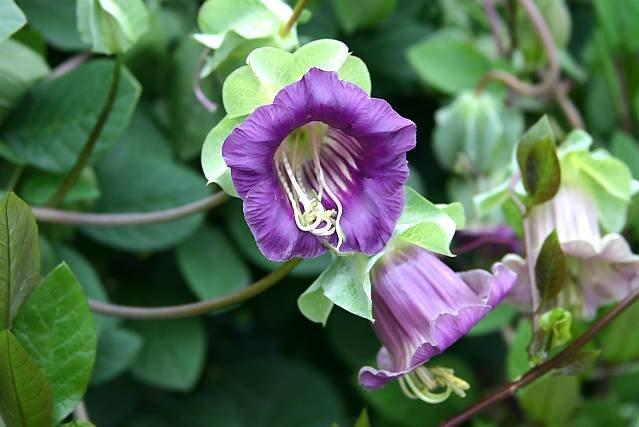
The flowers open pale green; they will turn lavender, and finally mature to a dark purple color. I have grown cobaea scandens on a wall, but I have never tried it in a pot. We’ll see how it works out.
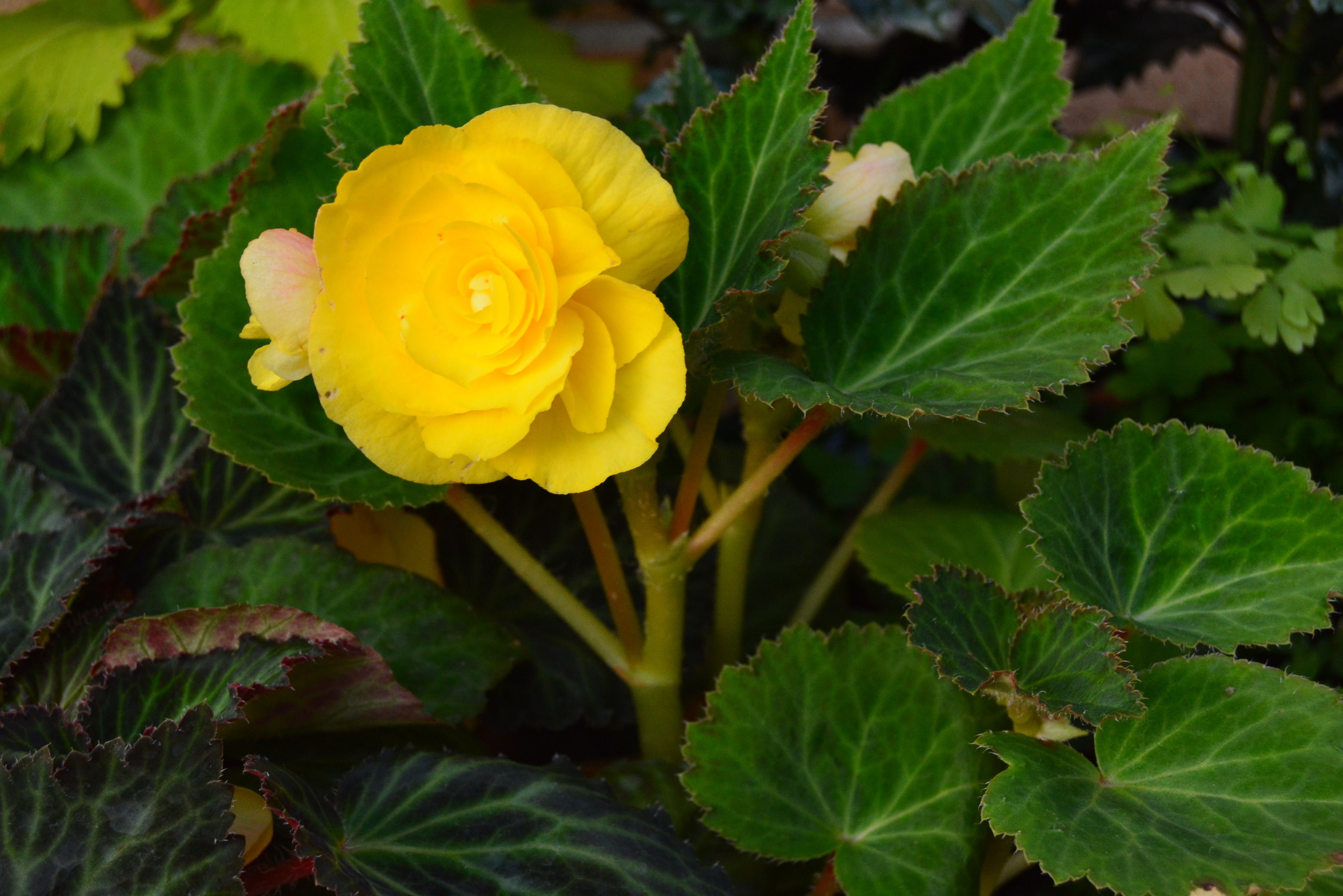 Every year I swear I am not going to grow any big flowered begonias. But in spite of the fact that they are big and gaudy, I just can’t resist them. The obverse of the leaves have a purple cast. This non-stop yellow begonia is a deliciously intense sunny yellow. I planted some. There are pots that are not planted yet. But I am beginning to feel like I will in fact get them all planted. The process of the planting comes at a very busy time of year, but is a time I truly enjoy. Next up, the growing.