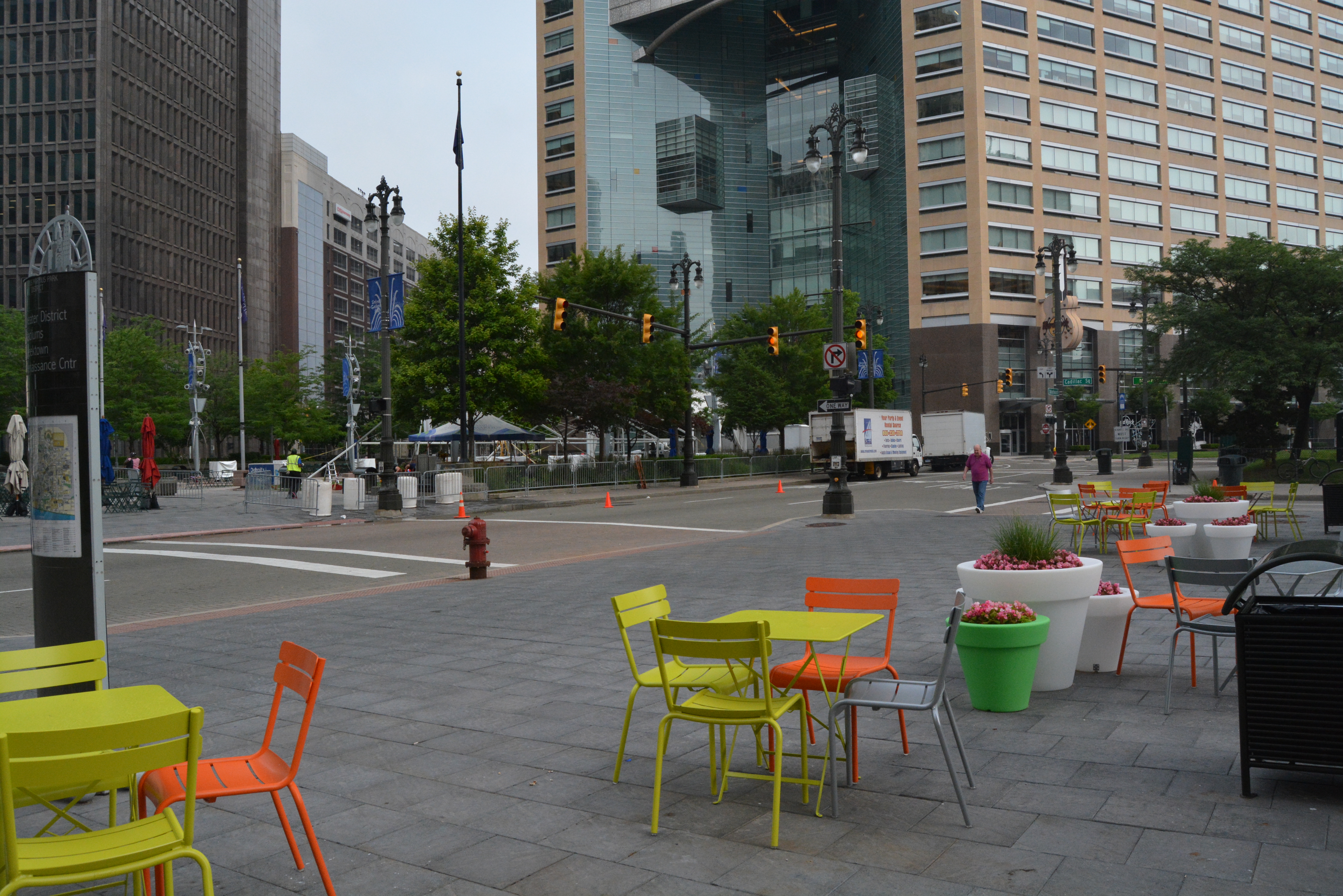
 My fourth of July was a holiday of an unusual sort. We installed and planted 9 steel Branch planters at two commercial locations in downtown Detroit. The decision to install on the holiday made sense to us. This is a hopping busy place during the week. There are thousands of people who work in this area. Parking is always at a premium, and parking for 4 trucks right off Campus Martius is just about impossible to find. The planters were located just outside the buildings. But at 8am on the Fourth of July, we were able to park close by. No Detroit police officer gave us a second glance, even though we were parked in no parking zones. Tents were being set up for Fourth of July festivities, but by and large we had the locations to ourselves.
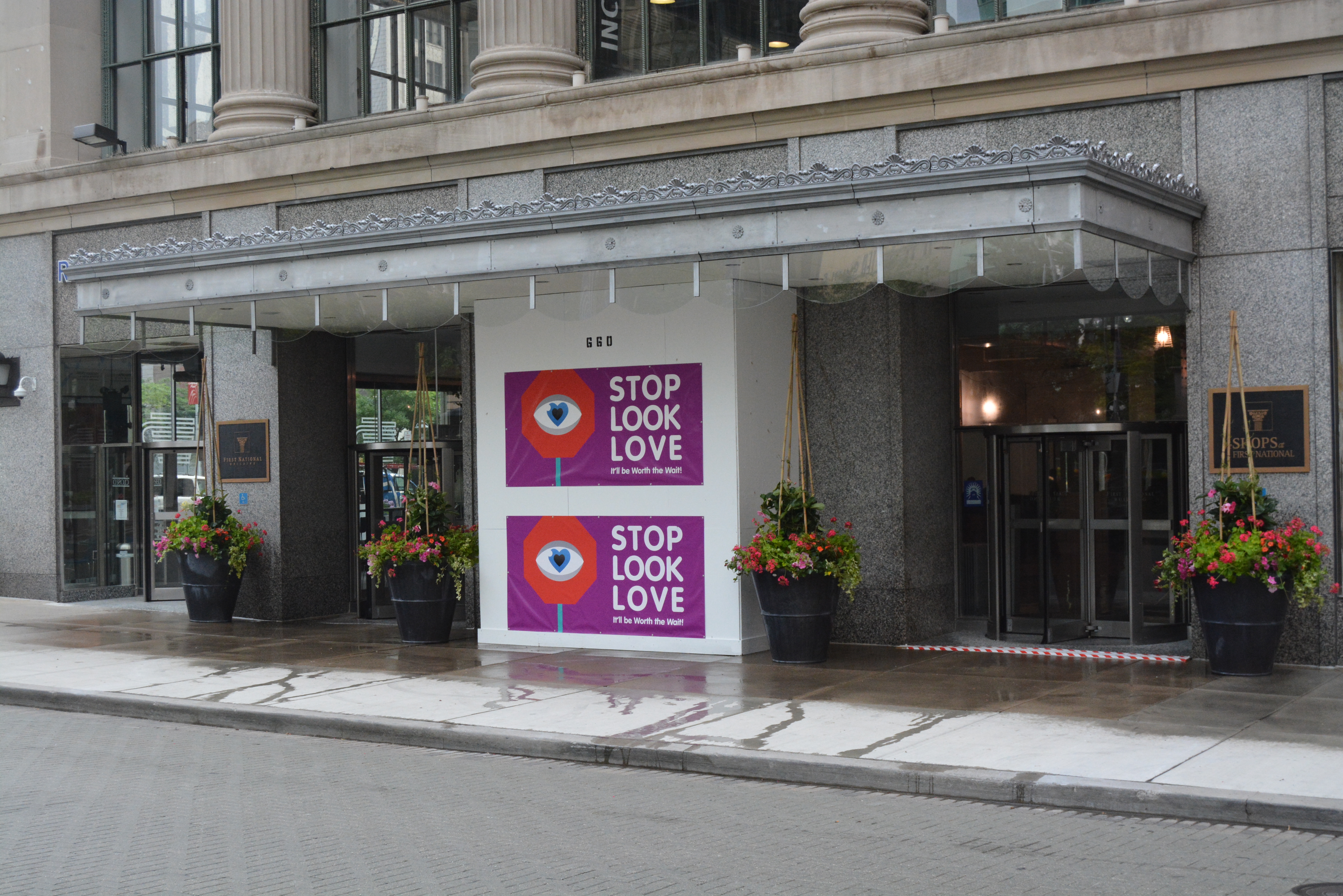
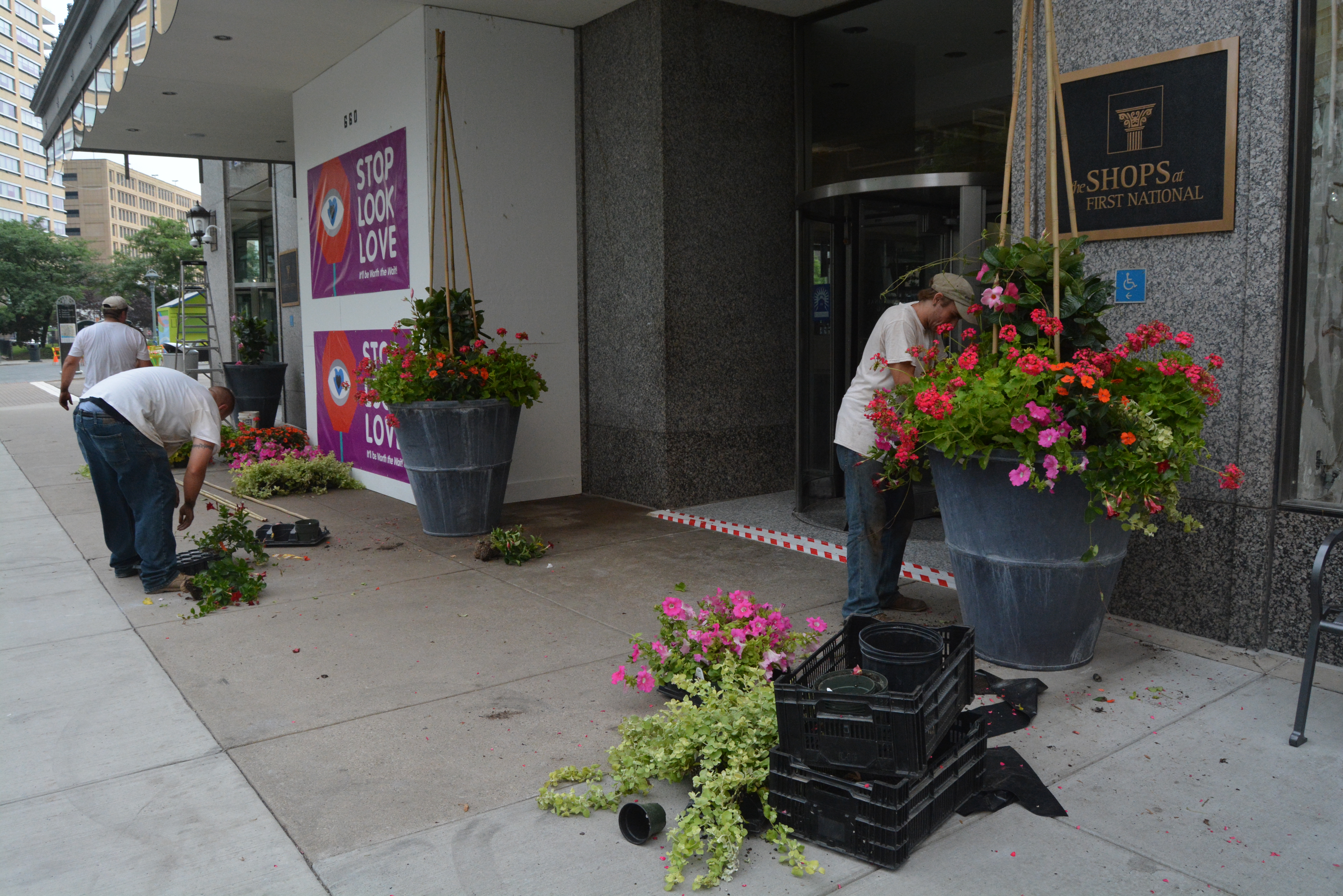 Having a favorable set up means the work goes fast. We were able to spread out and stage the work on the sidewalk, without bothering any pedestrians. The First National Building, a 25 story limestone building, was completed in 1930. The stately old building is undergoing an extensive renovation, courtesy of Bedrock Real Estate Services. The planting of these large steel Branch planters are part of that renovation.
 From what little I could see from my scouting and planting visit, it appeared that ground floor spaces were being renovated for retail use. Who knows what is going on upstairs. What a pleasure to see a historic building such as this one in loving hands. It reminded me of my trips downtown better than 45 years ago. There is an energy, a sense of purpose, and a determination to endow a downtown business district down in the heels with new life. Impressive, this effort.
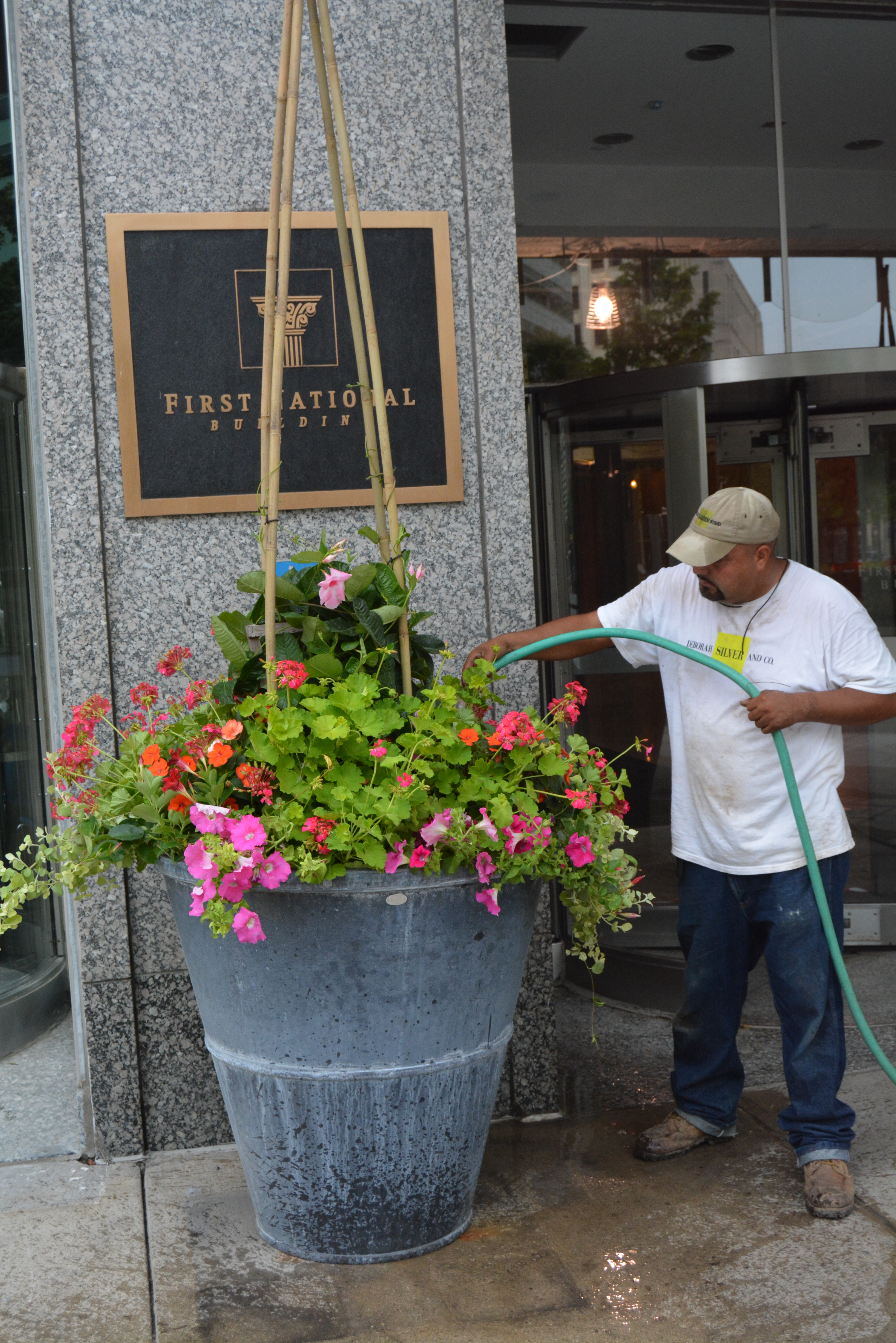 Given some time, these plantings should grow up into these very large pots. They are 36″ in diameter, and 36″ tall. The pink mandevillea Alice Dupont is the most floriferous, vigorous, and brightly colored of all the pink mandevilleas. Though I love the glossy leaves of the Sun Parasol Giant pink mandevillea, I opted for the size and heavy blooming characteristics of Alice DuPont. This cultivar will endure the hot conditions of a downtown location. The Persian Queen geraniums feature bright chartreuse leaves. Alternating with the Persian Queens, a brilliant orange sunpatiens that have already outgrown their 6″ pots. The giant pink petunias, lime licorice, and small plugs of red mandevillea will make for lots of color and volume around the rims of the pots.
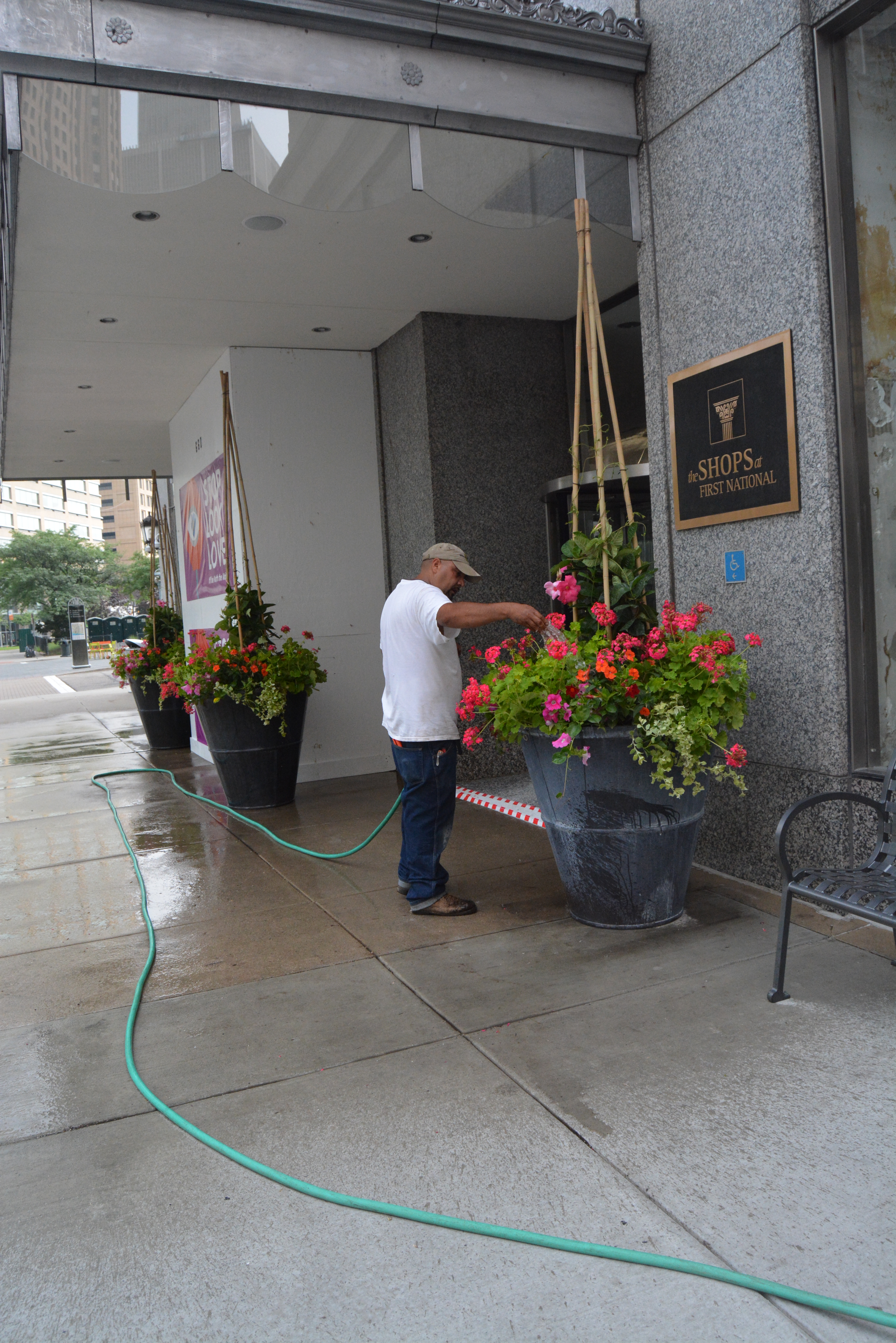 The Bedrock staff turned on the street level spigot, so we could soak all four pots. A good watering settles in all of the plants, and eliminates any air pockets. We wanted to drench the plantings with water; this is our idea of good bon voyage. Being July, we planted 3 gallon size mandevilleas, and 6″ and 8″ pots of the other materials. All of these annuals love hot weather. Given that our summer weather has only recently warmed up, I think these flowers will settle in and start to grow quickly. They have made a great start, protected by the greenhouses in which they were grown.
 Everyone we have had contact with over this project has been enthusiastic, hard working, and willing to get things done. Young people, of course. So much good energy in one place-it was a treat to be involved. I will admit I was a little bowled over. So much discussion and sharing. My design charette with them-on the streets.
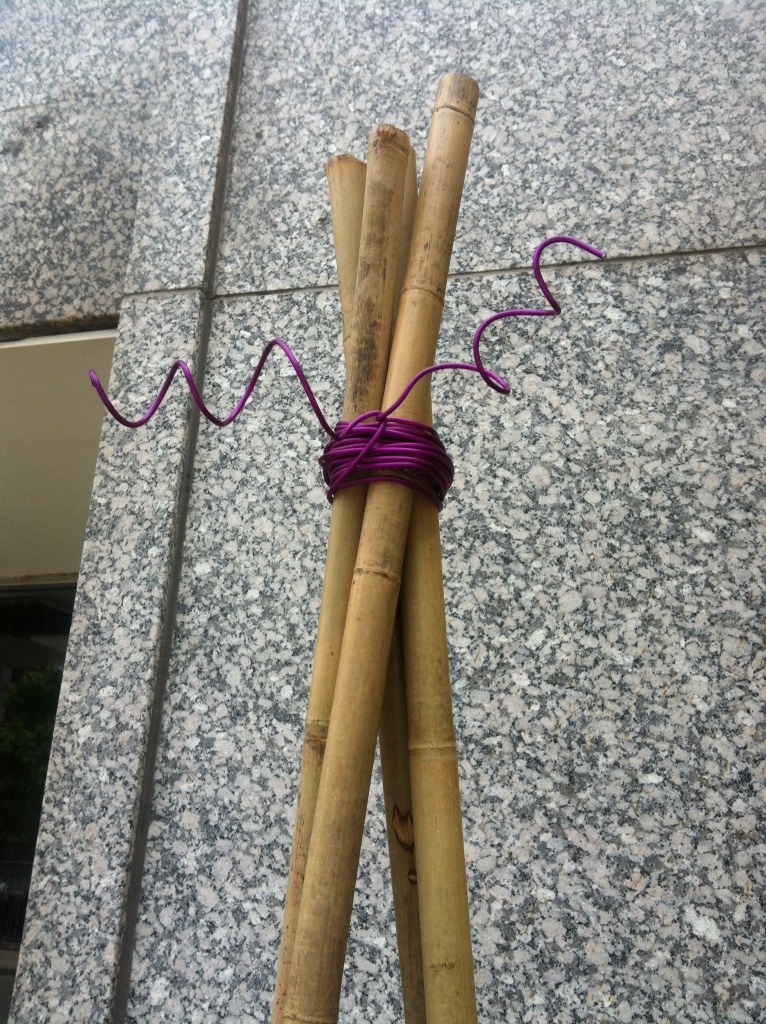 Owen and Lucio wrapped the tops of the bamboo poles for the mandevillea in purple aluminum anodized wire. It seemed to be an appropriate gesture.
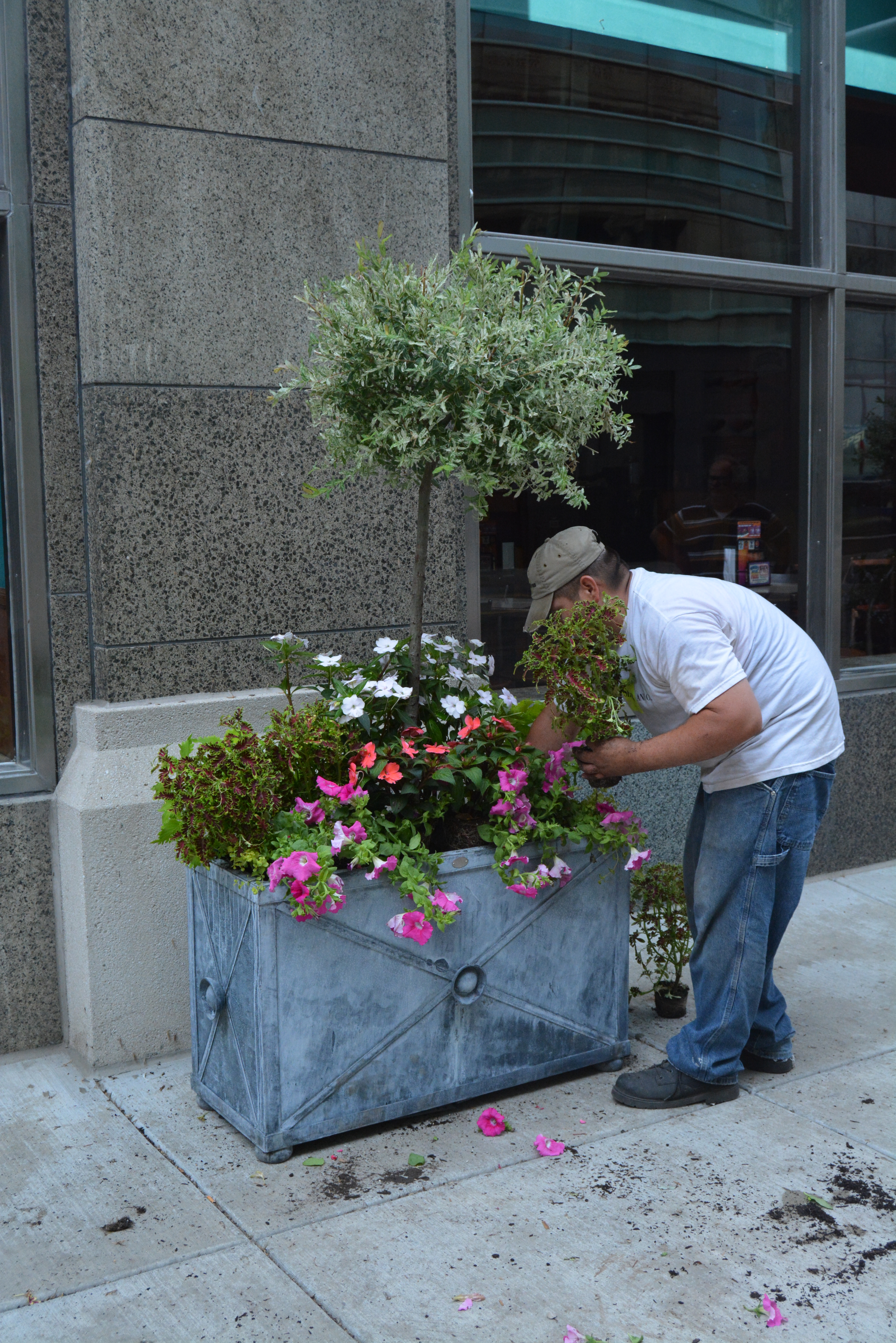 Our second location-the Chrysler House. The neoclassical building was completed in 1912, and has already undergone extensive renovation. The facade outside had some “improvements” made in the past. By this time, I was absolutely certain that Bedrock would restore the outside of this building with the same spirit and care that fueled an extensive renovation of the interior spaces. Each of our 5 steel Jackie boxes-4 rectangles, and 1 27″ cube, features a variegated willow on standard in the center. Salix integra “Hakuro Nishiki” is a dwarf cultivar with white variegated leaves. The willows grow fast, and can be left as a starburst, or trimmed for a more formal shape.
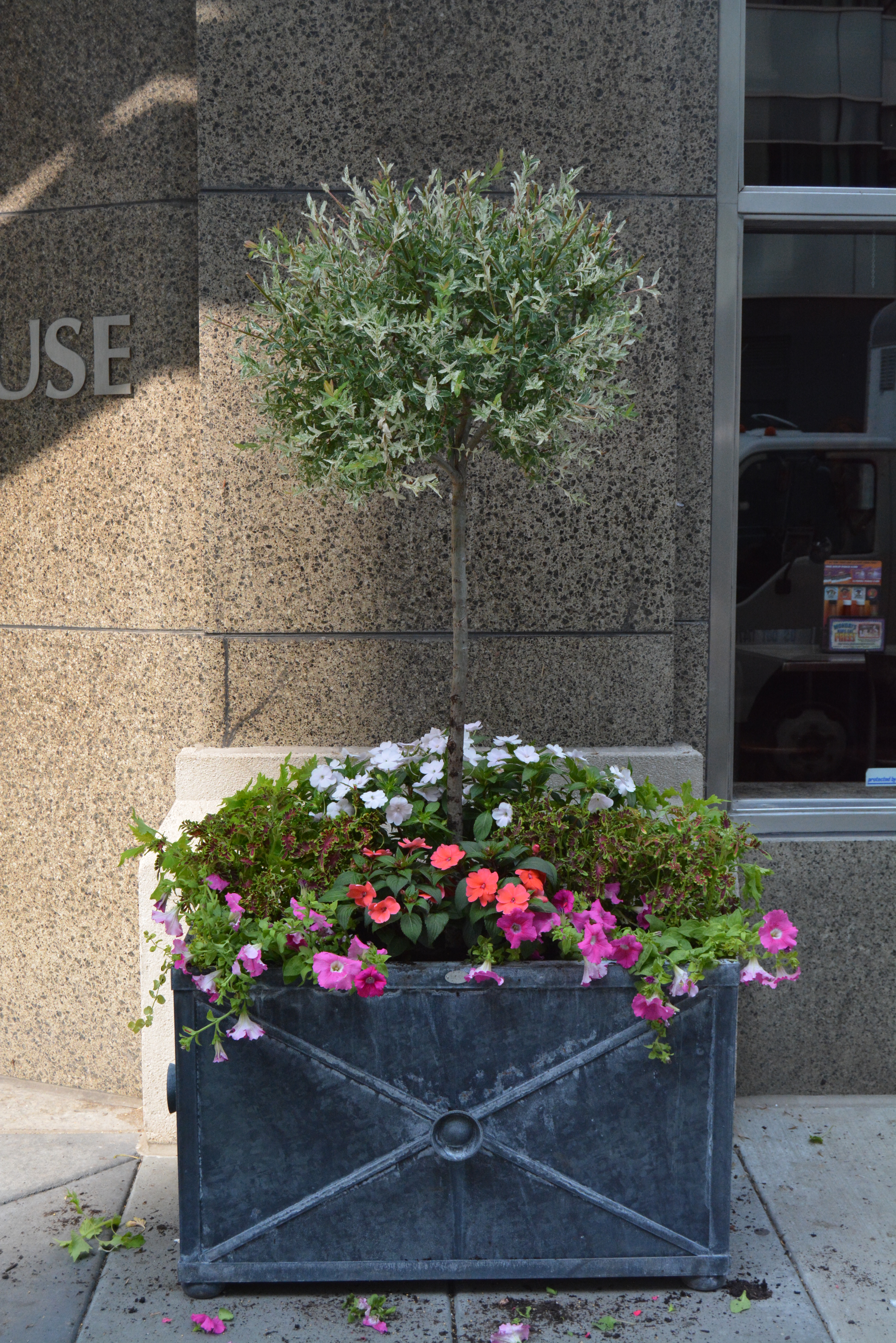 The exposure is from the east. All of these flowers and coleus will thrive in this setting. The building across the street features a glass facade. I am thinking the reflected afternoon light off the glass will provide enough sun to make the petunias thrive.
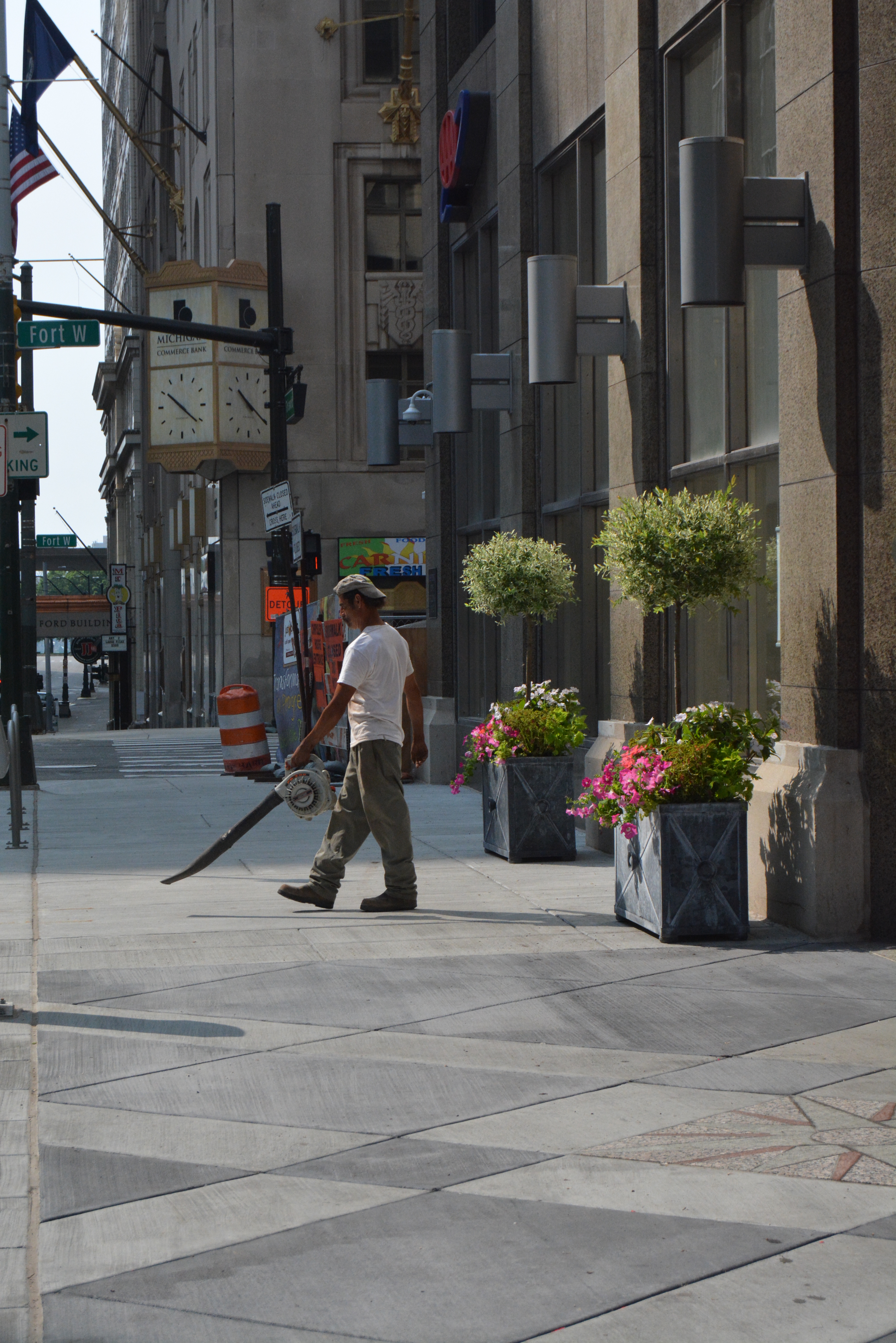 We had no access to water from this building given the holiday. We brought our own, in 3 40 gallon plastic garbage cans. I wanted to be sure the new plants were soaking wet, just in case they had to go without water over the weekend. There are advantages to choosing to large planters for commercial settings. The big size seems in better proportion to a building that is many stories high. The not so obvious advantage – a large soil mass is slow to dry out. Big pots buy you some time.
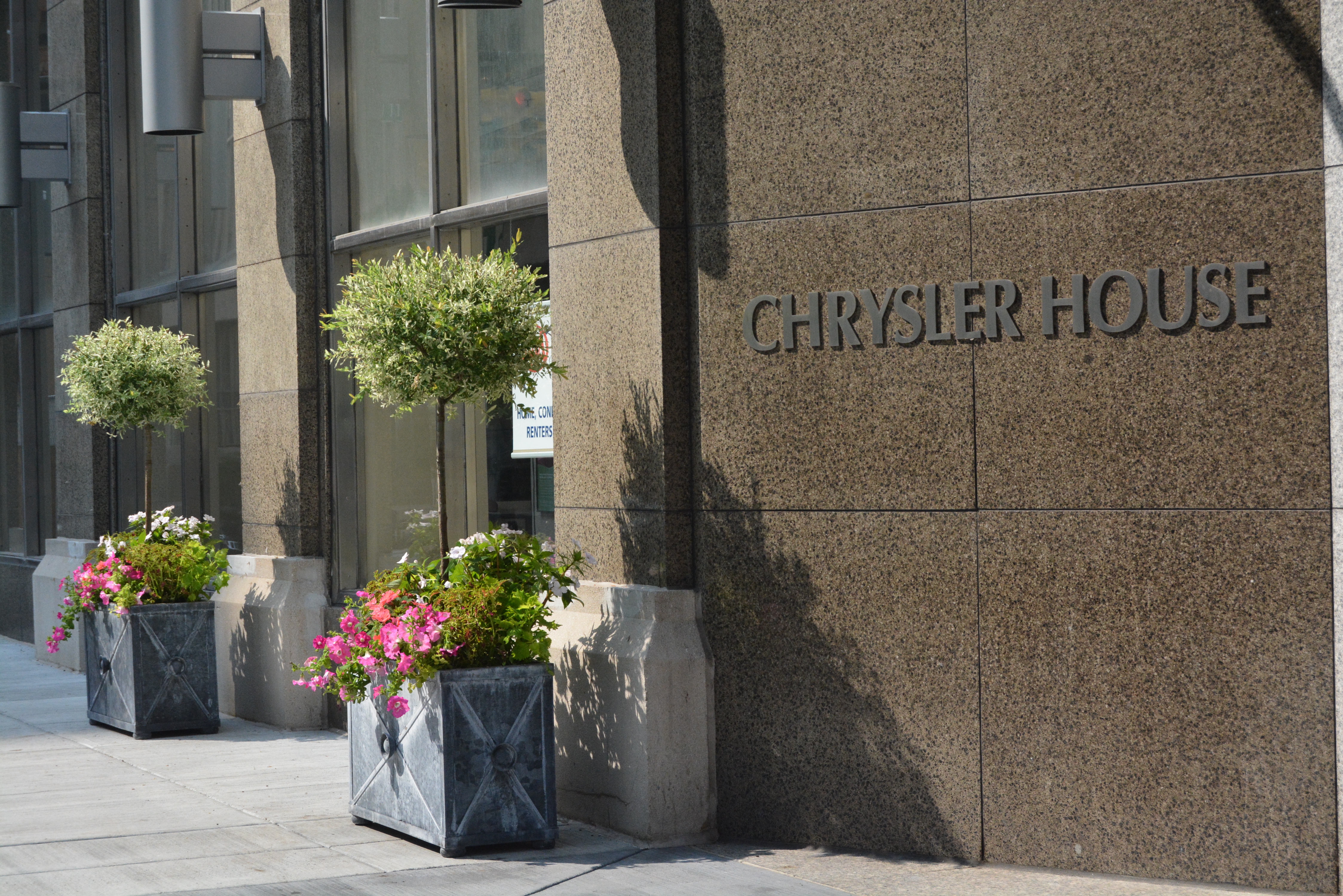 I don’t have serious concerns with the care to come for this planting. The other plantings and site furnishings in buildings on streets radiating from Campus Martius were well looked after.
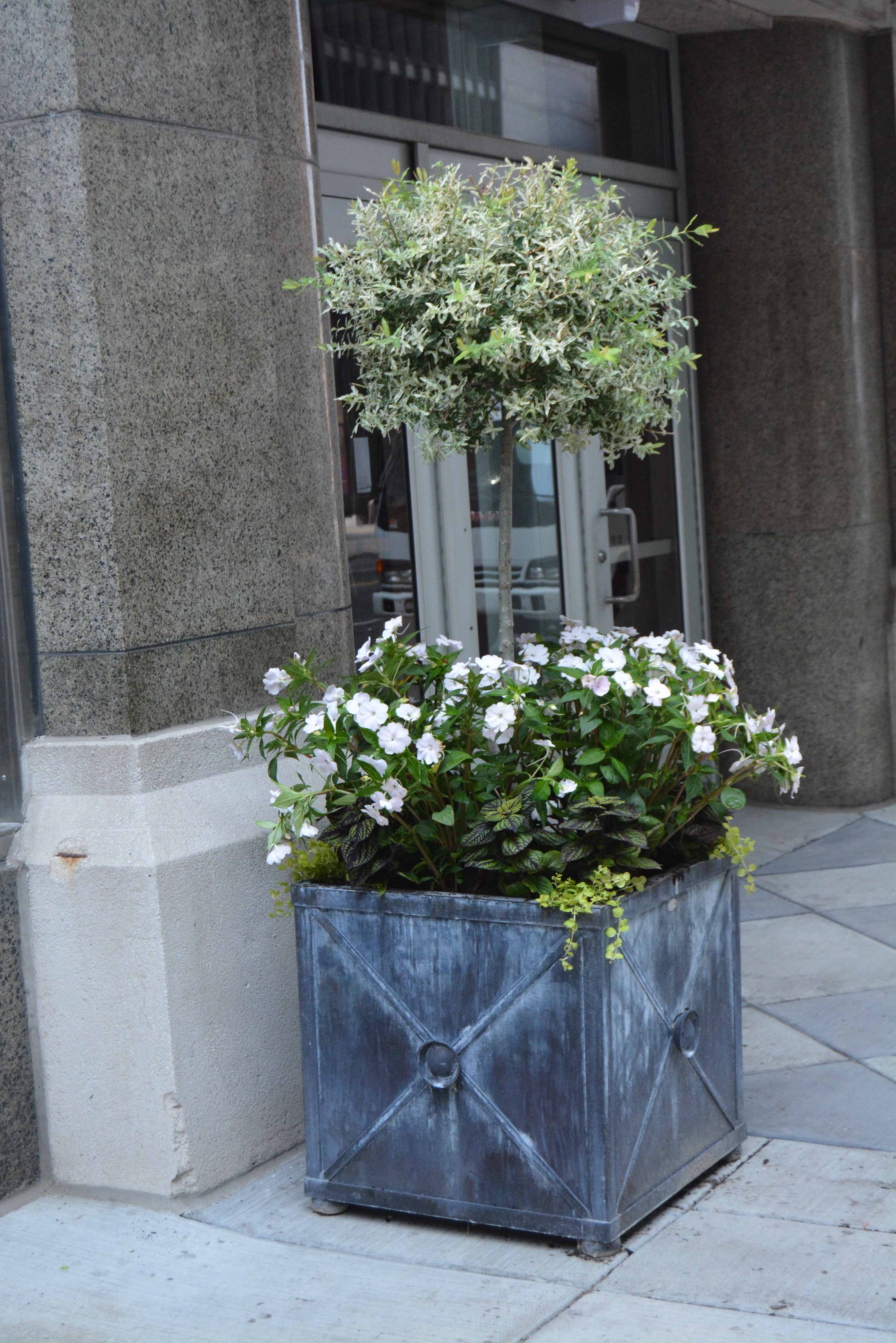 This single box sits next to the door of a ground level restaurant. Yes it belongs to the Chrysler House, but this ground floor restaurant space needs its own special sign.
 This was a great way to spend the beginning of my Fourth of July holiday. Lingering on my mind was one very independently minded business who feels a substantial investment in the renovation of our city is well worth the effort. There is every evidence of a fearless pioneering spirit that marks the best of what our country can be. Brave American fought for our freedom. Other brave Americans go on to forge a path. They take risks. They invest. They go for broke. Buck calls them the captains of industry-how apt. I so respect the investment that Bedrock Real Estate Services has made with the core idea that the city of Detroit is a city well worth preserving. A city well worth energizing. They are lending a huge hand to the future of downtown Detroit. Bravo, Bedrock.