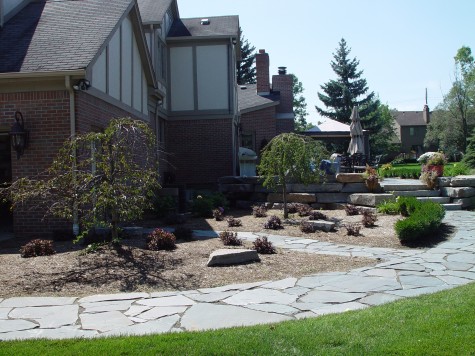
 I would not hesitate for a second, recommending that new plantings be mulched with 2 to 3 inches of bark. Mulch conserves moisture in the soil, and it discourages the germination of weeds. Transplanting is a big shock; a little mulch can be calming. I do not, however, admire decorative mulch, mulch gardens, mulch landscapes, mulch over existing weeds, or mountains of mulch anywhere else beyond a landscape supply yard. Mulch should not be seen or heard from. Whomever designed the landscape pictured above should get a ticket, three points, and a hefty fine. Who would cut giant beds, dot in a few maroon-leaved weigela in no discernable pattern, and call it a landscape? This is a bark garden, just weeks after completion. In a year’s time, the mulch will be a dirty grey, blown about by rain, bikes and wind. All the while organisms in the soil are degrading said bark such that any weed seeds in the soil underneath will soon have optimal conditions to germinate and grow. I shuddered when I saw this, and shuddered again when I realized the clients had no idea the hand that had been dealt to them.
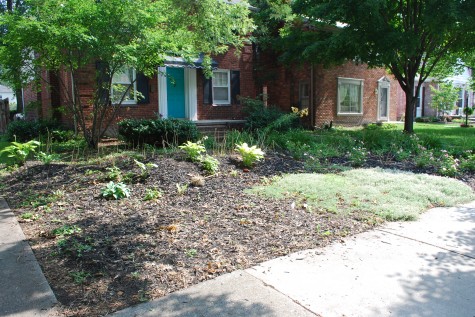 Suburban landscape/ gardens in front yards- in conspicuous lieu of grass-have become quite popular the last ten years or so. Occasionally the news tells the tale of neighbors up in arms over a non-conforming suburban yard whose messy assortment of perennials, vegetables and whatever else threatens to disturb the status quo. The debate about lawn versus garden is immaterial here-this yard is indeed a mess. What I find even more astonishing are the drifts of bark. As if bark over bare dirt,weeds, and some scraggly plants could improve the look here.
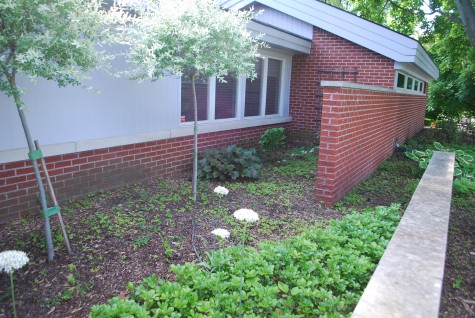 No kidding, nature abhors a vacuum. The above pictured bark is a testimonial to the fact that bare or barked dirt stays bare only a short time. Bark slows down weeds at first, but them helps them grow all the more robustly. A forest completely destroyed and buried in volcanic ash will reforest, given enough time. Some landscapes could get that fresh well-tended look if the bark were banished. It is not as if any removal is required. A landscape quick-fix? Plant more of what you already have in your bark beds.
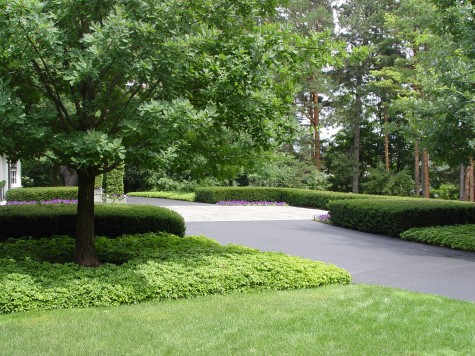 It is difficult to get plants to grow under trees; the shade and competition for water can be daunting. Planting a companion plant at the same time the tree goes in gives everyone involved a chance. I planted rooted cuttings of pachysandra with a weeding fork underneath these English oaks close to ten years ago. The groundcover has taken over the job of the bark. Though a planting of pachysandra is never going to make your heart pound, it is vastly better looking than the bark. The shape and density of growth is enough.
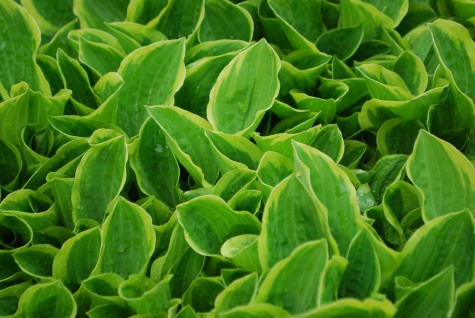 There are lots of groundcovers for both sun and shade. This dwarf hosta is a happy combination of bold texture and ground hugging scale. Not that a groundcover needs to be short, mind you. Groundcover is anything that covers the ground. For your planting trouble, you get a mass of green that conserves moisture in the soil, and discourages weeds. Does this not sound like a good idea?
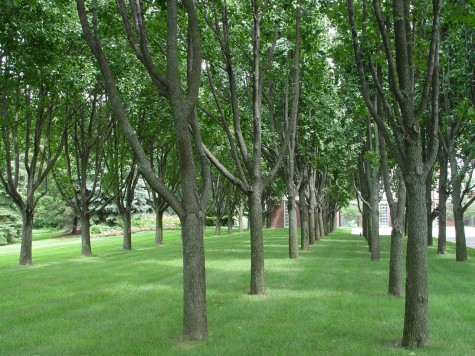 There is not one thing intrinsically wrong with grass. It is a vigorous groundcover, and it does need to be cut. It is doing amazingly well in the shade of these Bradford pears. It is as much landscape as some people can handle. A grass panel, or sculpture can be strikingly beautiful. Just because a zillion lawn care products exist is no sign you are obliged to use them. Just cut the grass. Even when my garden is weedy and falling over from neglect, I feel better when the grass is cut. I like that illusion of order.
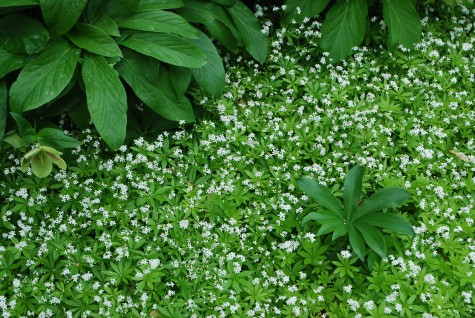 Sweet woodriff is a beautiful groundcover, but it must be sited properly. In too much shade, and in too wet a soil, fungus will prevail in late summer, leaving the garden with brown rotted leaves and bare patches. I am willing to put up with its problems, as it covers the ground under my hellebores so beautifully. My hellebores still seed here, though there is not a square inch of bare dirt to be seen.
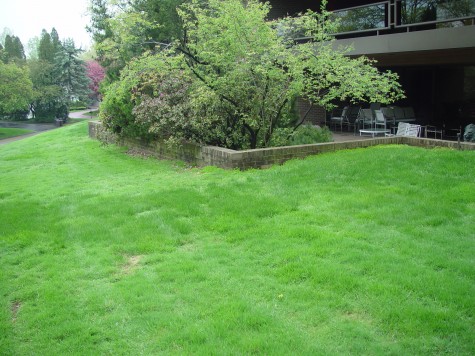 A client with a private garden carved into a hillside asked me to redo the space. The shrubs had become considerably overgrown, and a tree had died. The walled garden on the inside has been totally redone. But I was equally as interested in the street side presentation of the garden. The grass was tough to cut next to the brick wall; the grade was sloppily uneven. I stripped the grass five feet away from the wall, and added 20 yards of soil to level the ground.
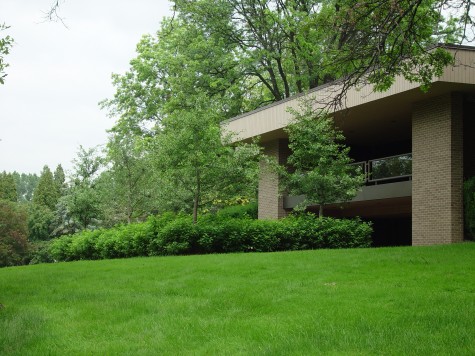
Five columnar gingko trees of unusual size and shape were planted around the perimeter of the wall retaining that sunken garden.The branches and leaves are beautiful from the second story terrace. I barked the trees, yes, but I also planted hydrangeas as groundcover. Three years later, the view from the street is green. No dirt or bark slides down the hill after a rain. It will take a few years for the trees to grow out of their hydrangea groundcover enough for that relationship to seem right. The secret garden is truly secret now; nothing in the streetside landscape gives it away. It is a gesture with a sporting chance at a future.
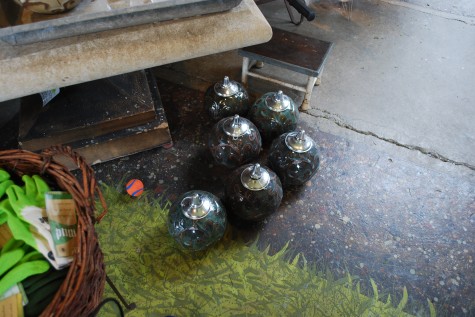 Some landscapes appear and feel spacious for no more complicated a reason than they exist on large properties. The Chicago Botanic Garden has many beautiful long views, as it physically sits on 360 some odd acres. How I visually process space has to do with what is called perspective. If I walk in the Botanic garden, and Daffodil Island is in bloom, the daffodils appear to my eye like tiny yellow dots-and lots of them. Daffodils physically measure up at a fairly decent size, but they appear smaller and smaller, the further away they are from my eye. The position of the eye, relative to an object-perspective. The most dramatic illustration of perspective? Picture yourself 5 feet from the KLM 747 Anna Pavlova; the size is overwhelming. A city with wings. 230 feet long, and wings 200 feet wide-my entire property would hold a quarter of this plane. Only moments after that plane is aloft, it appears as a black speck streaking towards the horizon. Once a black speck, I know it is miles from my eye. These Anamese oil lamps pictured above are on the floor beneath me-I know this, as I am looking at their tops. They are also 10 feet away from my eye.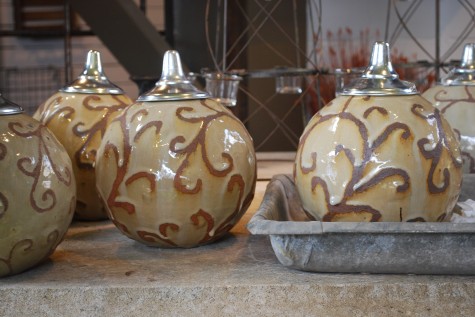
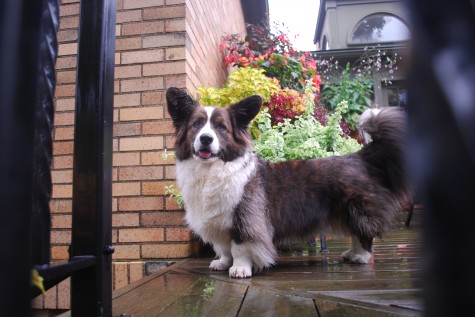
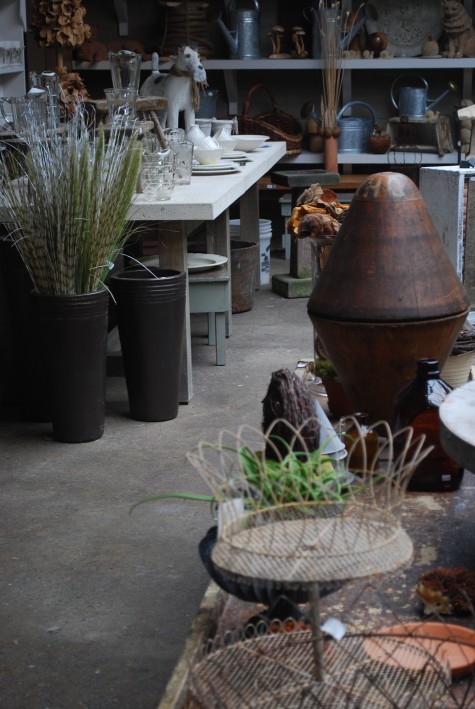
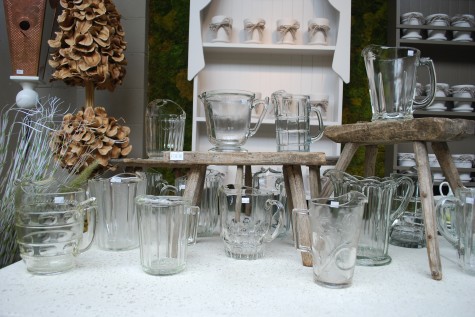 I am in the process of putting the shop back together, as we reopen for the 2010 season next week. The logistics of this has been a little daunting, as my on my feet time is somewhat limited yet. Luckily my four wheeler has a seat-so I can take a break. This puts my eye at dining table height. The table and pitchers loom large in the foreground space. The exaggeration of the size of the foreground elements moves the background even further back.
 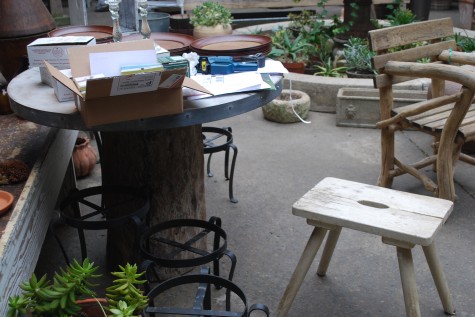 Varying the heights and sizes of the foreground elements helps to give the foreground itself dimension. The visual path your eye takes from one object to the next reveals that each object is in a different plane. A recognition of multiple planes makes for the illusion of space. This is after all, a flat object we call a photograph. But visual space is represented here.
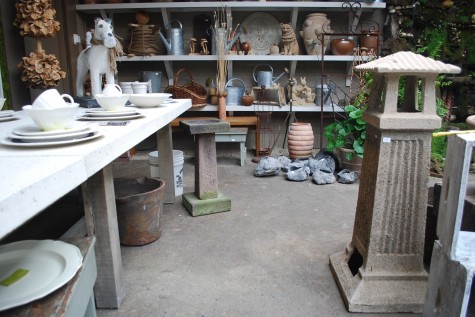 The position and direction of the concrete table in this composition moves the eye into the deep space of the photograph. The table is so wide in the foreground, it runs off the edge of the page. The table width appears much smaller, as the table appears to move back in space. The large masses of table, and lighthouse contrast with the objects on the back wall that appear so small.
 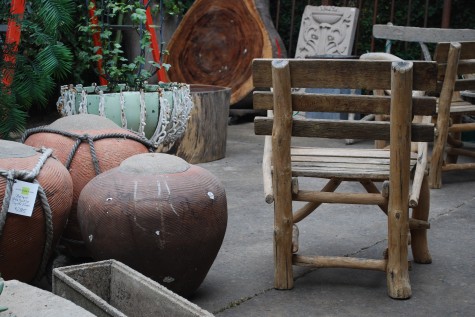 Not every bench in a landscape needs to be placed at the end of a garden. Placed at the beginning, with its back to your eye, the sense of space from front to back is exaggerated. The bench back is like a fence-enclosing the space beyond.
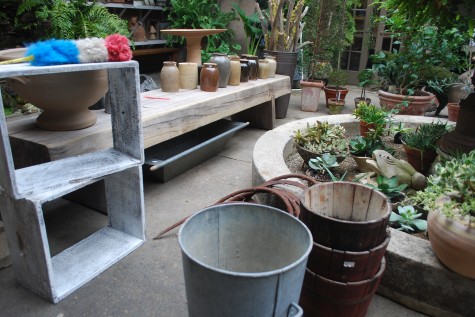 It is important in any composition to direct the eye of the viewer from the front to the back-and out again. The white wood rectangle in this picture frames a view of the foreground appearance of this bench. The frame invites the viewer to focus on what is within the frame. The bench then appears to go back in space-quickly. In the far background-a pair of doors suggesting another space beyond.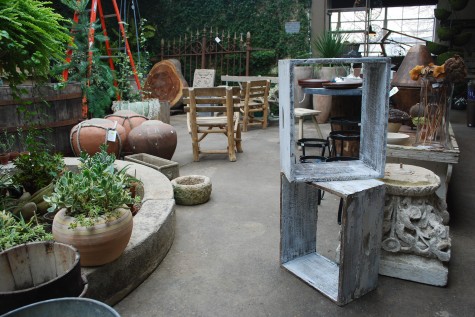
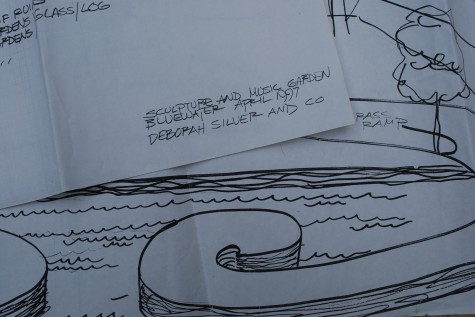 As my layout table has its first new coat of paint in 14 years, all the prints I’ve had stored there are piled up in my office. OK, I couldn’t resist taking a look before I put them back in storage. Some of them entertain me-I can see exactly what was influencing me at the time. The roll of drawings for the Bluewater project was just that-drawings. These unpolished sketches of landscape elements for a commercial project were highly conceptual-and certainly predate any computer programs that are now readily available to designers.
 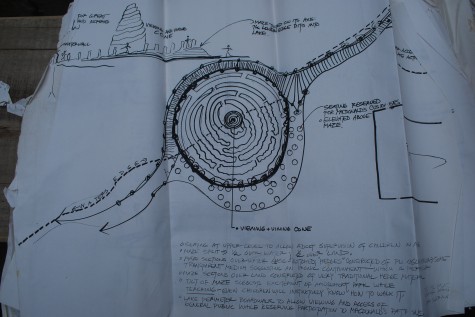 Land forms have always been of great interest to me. A big chunk of my library deals with mazes and labyrinths, land sculpture and earthworks. Robert Smithson’s 1970 sculpture “Spiral Jetty”, constructed in 6 days on a leased piece of the Great Salt Lake in Utah, is now completely landlocked as the lake is so low. The sculpture spent 20 years or better completely submerged. The sculpture has presented in many forms over the past 40 years. I have always admired it; no doubt this conceptual drawing of a maze half in and half out of some water was directly inspired by Smithson’s work.
 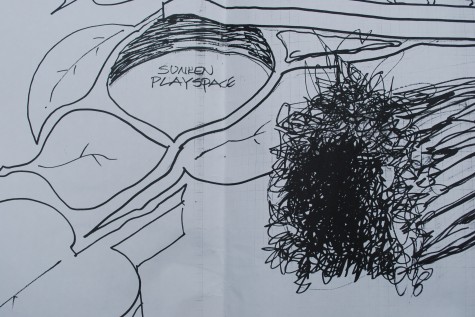 Another favorite-the land form drawings of Hans Dieter Schaal in his book “Landscape as Inspiration”. Inspired indeed. His sprawling and energetic drawings of natural forms exposed me to an entirely different way of thinking about dirt and nature. I had never seen landscape spaces rendered in this way before. I was equally taken with the beauty of the drawings. They are by no means scaled prints, they are gestural and interpretive marks on a page. This work inspired me to take up a marker and put it to a page, and see what happens. I refer to his book regularly.
 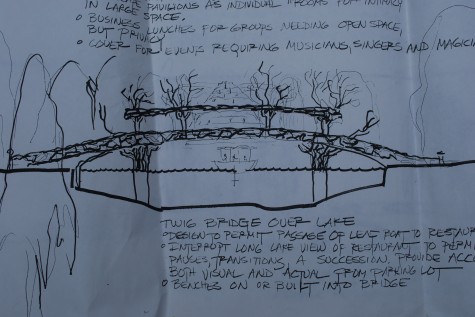 Any reference to natural forms intrigues me. A log twig bridge over Bluewater’s man-made lake seemed like just the right combination of architecture and natural materials. Buck shakes his finger at me when I design with no regard for construction, but I still think a little free spirited doodle drawing has its place. A sketch that seems to be going no where is easily discarded-provided you have not spent so much time with it that you have become attached. It is difficult to be objective about one’s own work-so I try to work fast at the conceptual stage. Anything I have invested a lot of time and work in can be hard to trash-even when trash it I should.
 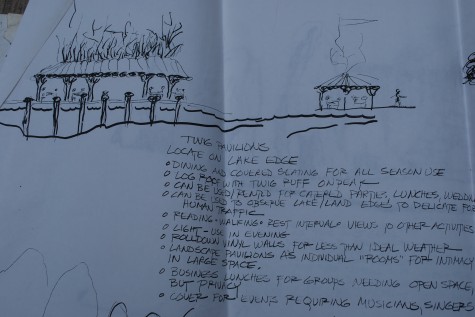 None of these drawings would convince a client to commit their time and money. But they might convince a client that there was a reservoir of ideas from which something of interest might emerge. If you don’t believe your designer is a person of interest, then a collaboration on your project is unlikely. If you are designing for yourself, drawings can bring ideas to the surface you didn’t know you had. Keeping a waste basket handy can be a comfort!
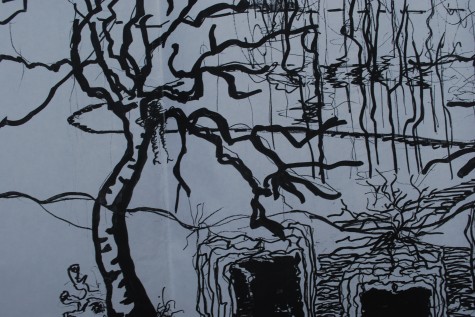 I am happy to have these drawings, not for their design, but for their energy. Being the fan of science that I am, I wholly subscribe to the notion that everything in motion tends to stay in motion-and what’s at rest tends to stay still. This applies as much to a design sensibility as it does to the physical world. Inertia being gravity that has gotten the upper hand, I make the effort to feed whatever energy I have regularly.
 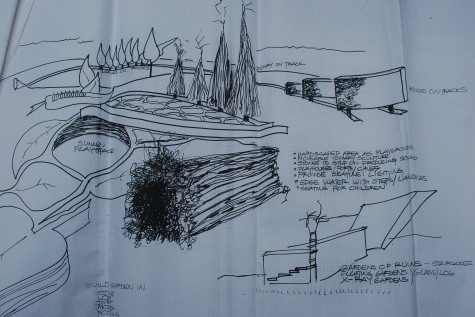 This drawing suggests at least 6 different ideas. They have similar elements, but are disconnected from each other. At the end of a series of drawings comes the integration phase. How visual and sculptural elements relate to each might be more important than any given piece. That relationship provides for good flow and rhythm. I see lots of landscapes that have good bits, but no flow. In the print, I plan for the transition between one space and another to have its own space.
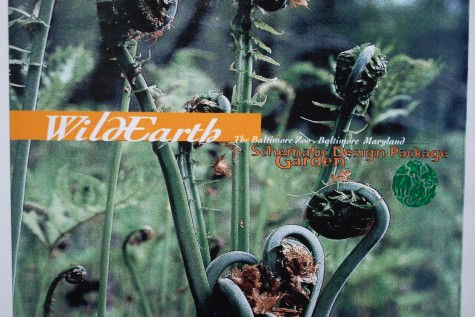
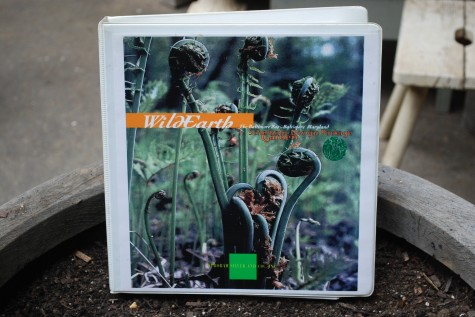 A number of years ago I was fortunate enough to be a member of a team charged with submitting a schematic plan for the redesign of the Baltimore Zoo. One of the oldest zoos in the country, it featured giant iron cages for the animals, and a system of roads such that visitors could drive by the exhibits. This antiquated and self-defeating organization was kept company by an infrastructure beyond repair. The team assembled was a large one; architects, exhibit planners, zoo exhibit architects, engineers, teachers, zoo scientists- all had to work together to form a viable schematic plan.
  Why me? The idea was to give the zoo a second, different and compatible attraction-a botanic garden. Our group did visit the Cincinnati Zoo early on; what an incredible place this is. Some exhibits were based on the flora and fauna of a specific ecosystem. We were locked up; the animals had fairly free range of a habitat. Each exhibit made much of identifying all the plant material being used. Some exhibits featured recordings of the sounds of the animals. Other exhibits featured the most amazingly realistic concrete trees and steel lianas I have ever seen; zoo animals can destroy a natural habitat very quickly.
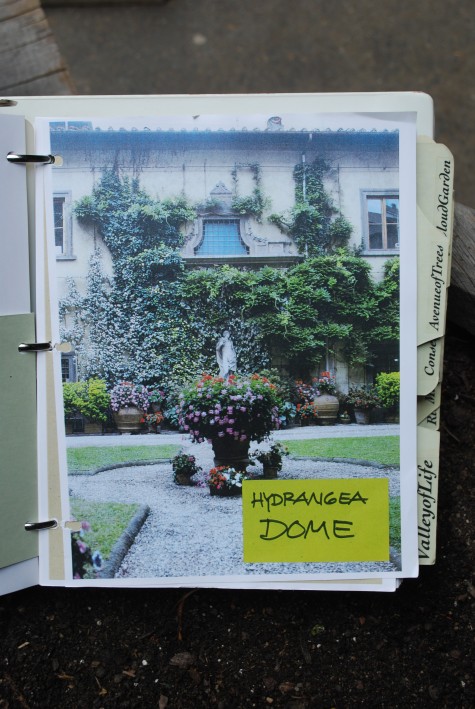
 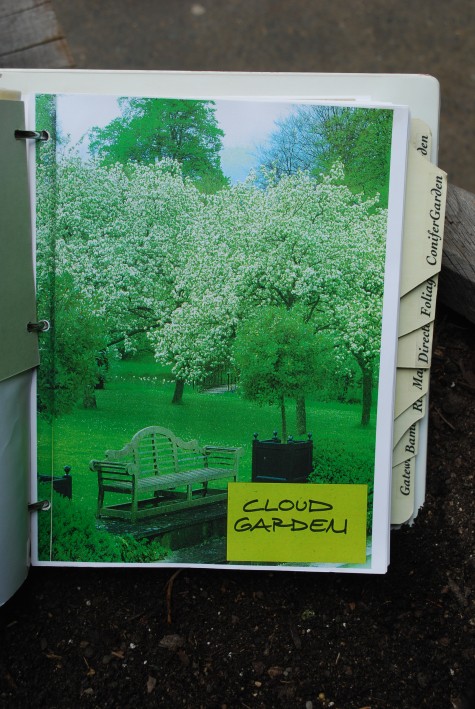 My part was to design landscape areas that would provoke the interest of any visitor. A zoo is a very expensive place to maintain. They need a substantial number of new and repeat visitors to stay afloat. It was not enough that the landscape be beautiful-it needed to entertain, enchant-and teach. A steel dome covered in climbing hydrangea would certainly attract attention. The cool leafy interior would enchant any child, and teach them about climbing plants. My cloud garden put every visitor on a catwalk winding through the garden-in the clouds, as it were. A meadow below of plants whose flowers and seeds were cloud like-entertaining. Of course I envisioned lots of butterfly weed.
 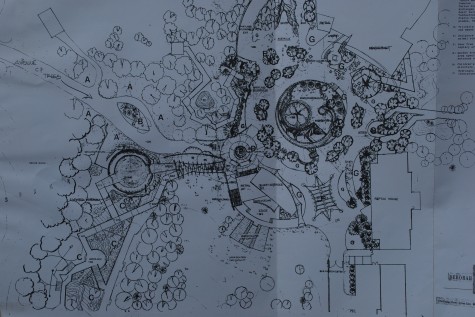 This project had many prints associated with it. This master print reveals that the zoo would have a center named Wild Earth. This large piazza would have places to sit, to have lunch, and environments for children to play. Each major habitat of the new zoo began, and ended in the center. This master plan took great pains to engineer the experience to appeal to all the senses, and the intellect. The big idea-the importance of our wild earth.
 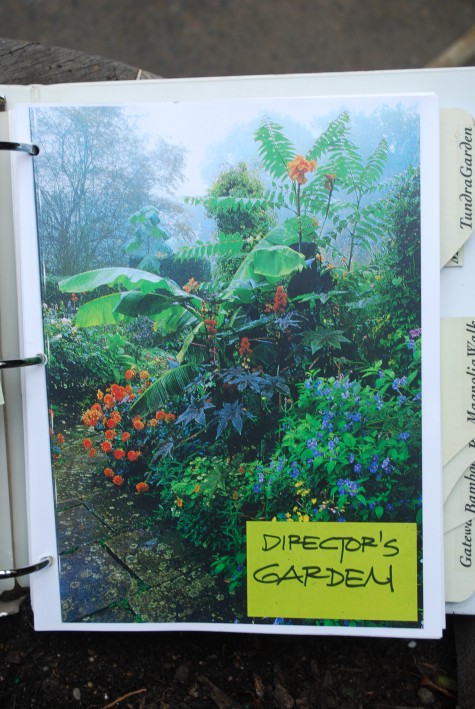 The Directors Garden is an annual garden display. This garden would be planted new every year by the group, nursery, or design build firm chosen by the zoo director. Its placement and size would attract attention from a distance. The spoke walks radiating from Wild Earth needed an element in the distance that would encourage people to walk, and explore.
 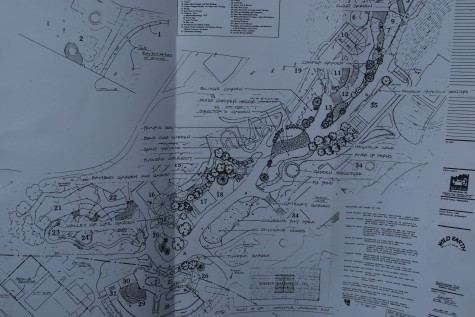 Each of the named gardens were interspersed and integrated into the animal habitats. This print is an overview of one of the zoo spokes. It is most valuable in detailing the flow of the space. The prospect of large numbers of people demands ease of travel, with plenty to look at along the way.
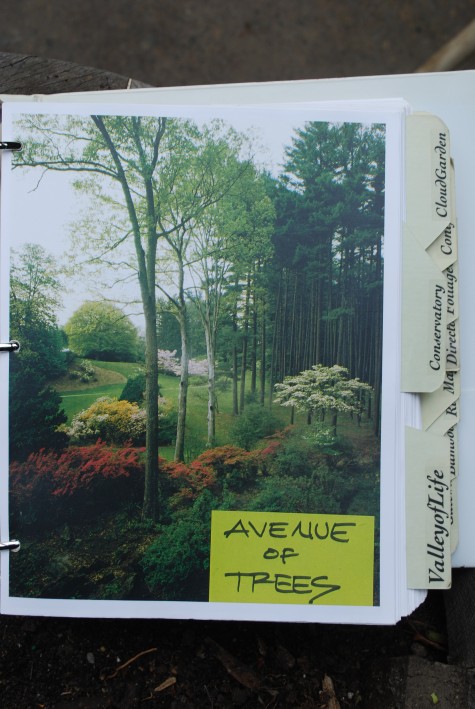 This design work was done very differently than most things I do. The prints were accompanied by all sorts of visual materials that helped to illustrate the concept. The avenue of trees print came with detailed botanical information on a number of tree species that might be worth including, and why. As I would not contract the work, the schematic plan needed as much information as possible-both visual and written-in support of the intent. In the end, I knew a collection of specimen trees would be planted. At this point, the main idea was an avenue from which to view the collection. This garden would be located on both sides of the car approach to the zoo, with plenty of walking paths for those wanting to go for a closer look.