 A good bit of my working life revolves around prints. A print is any mark made on or impressed into a surface-like these footprints imprinted in the snow. My boots aside, I draw prints. I explain them-I work off them. The drawing/print of the landscape is a two dimensional means by which I am able to explain my ideas about a sculpture with a client. Installations are done from prints that are drawn to scale. A print which is drawn exactly the same size as a property would need a piece of paper as big as that property; I doubt I need to detail the problems that would arise with this. So one foot of length on your property would be represented by 1/10th of an inch on my print. A properly scaled, flat, and miniature version of my idea is what you would get from me.
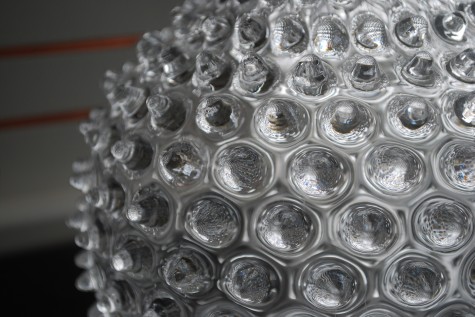 Prints are not easy to read, if you have not had practice. Prints are lines and shapes that make patterns. A pattern you might see if you were flying over your property. Who does that? Google Earth can provide you with a print that has recorded the patterns evident on your property. Look up your property-there may be something there that inspires you. The hobnail glass pictured above has a distinctive pattern, but also a volume, a sculptural shape. Each circle is in fact a tuft of glass; the location of each tuft in turn describes the curve of this pitcher. A print of the pattern of this glass would give you the plan view-the view from a bird flying over. Flat and circular, the pitcher shape in outline. The sculpture which is this pitcher is another story- entirely.
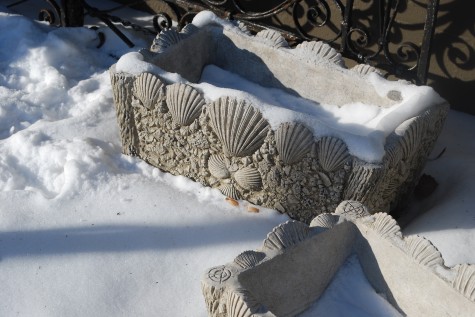 This concrete pot is made from a mold. The mold material records a three dimensional surface in every detail. I have seen the production print for this pot; I could barely follow it. It was very much like trying to read words from a language not my own. Where am I going with this? What a first rate landscape designer has to offer may be more than worth your while-or not. But for sure, you need to read their print. But that big fluid and certainly sculptural situation which is your property-no print truly describes that. Get involved with your designer. Speak your peace, and then some.
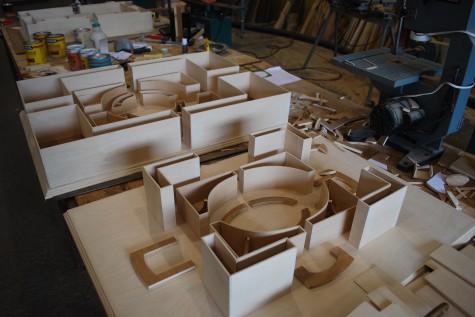
This winter I drew prints for gardens I doubt anyone will ever ask me to build. My idea is that one can get the gardens of one’s dreams, one way or another. Buck took my prints, and is building sculptures from them. Basswood 1/32nd of an inch thick was his material of choice. It bends obligingly. He constructs everything he builds with incredible precision-I knew the models would be beautiful; they are indeed. He has two models finished and ready for me. Where will I go now with them?
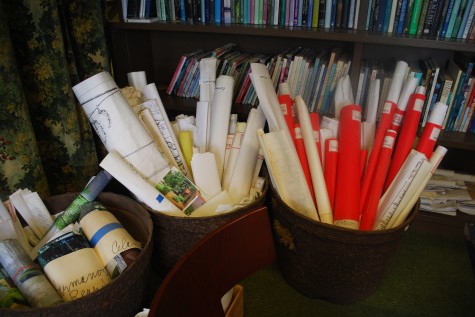 Steve tore apart my entire office, to clean and paint. Over the course of 25 years, I have amassed a goodly number of prints. He stuffed them into a number of fiber pots. Good, bad, or indifferent, there are lots of them. He wants me to go through them, and decide which old prints I want to keep. I have not told him yet, but I want to keep all of them. These marks on a lot of pages add up to a life. Many times I stuff mud stained prints into my back pocket, and work with what is in front of me. But those original prints-I save them. The print is but a mark recording intent-nothing more. Intent-this counts for a lot, from my side of the aisle. The skill of the drawing-don’t be fooled. Beautiful landscapes are about a lot of things-but gorgeous drawings of poor designs most certainly exist. My drawings are simple-but they involve some doing that might require years.
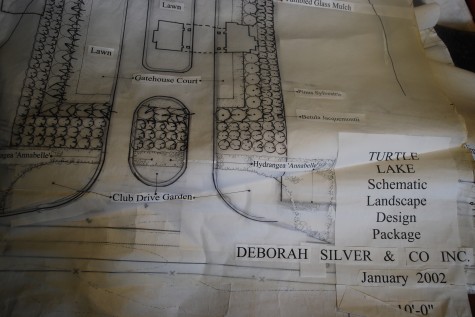 I think, design, and draw for a living. This is how I buy groceries, and pay my mortgage-but enough about me. Should you be designing gardens for yourself, I would encourage you to put a pencil to a page. What is in your heart-draw this. Take your mortgage survey and blow it up. Look at your spaces, your edges, how your house sits on your property. Loosen up. Make marks on the page. A print is a drawing-not a committment to build. Make lots of drawings. Sleep on everything you draw. Erase, and start over. Don’t bother to diss your drawing skills. No beautiful garden was ever about skilled drawing.
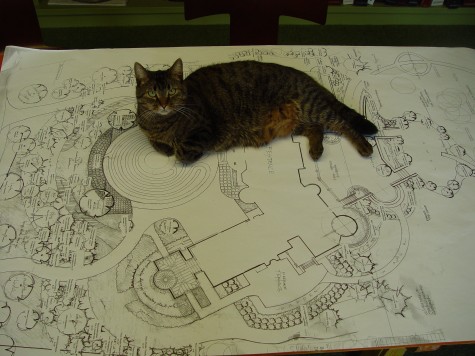
MCat loves my drawings; the paper keeps him warm-nothing more. Those sketches you might be inclined to make this third week of February-they could be a good warmup for spring. They could be the start something. Should you have prints from a landscape designer, squint, and see what questions you have. No print is precious-it is a tool that might help move a project along. A print is an opening gesture, nothing more. Make your own, or find someone whose prints will encourage you to speak. I actually love prints-they are a lifeline from me to you, and back again.
 Though the shop garden is very much frozen in time, there is work under way, under ground, in anticipation of spring. We planted 2600 tulips in this garden last fall. Each and every one of those bulbs is programmed to wake up and grow, come the spring thaw. Everything needed to grow and bloom is stored and waiting inside that bulb for that moment when the switch flips. Though it seems hard to believe, tulip bulbs do not freeze solid through and through. Planted some 8″ below the surface, they spend the winter chilled to right around 32 degrees. They need that hibernation time to properly spring forth.
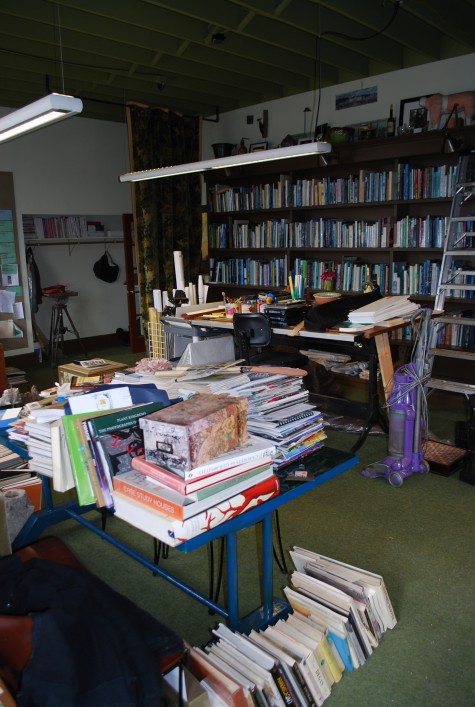 Inside the shop, it takes plenty to get ready for spring. We do a spring cleaning in February; once spring actually comes, there is no time for that. I do not mind that I have missed this part at all. Steve took every book off the library shelves, dusted them, cleaned the entire space, repainted the room, and put it all back together-all I had to do was choose the colors. Green for the walls of course-but a very light green this time. The room looks light and airy now. For the shelves and trim-what I call Belgian chocolate.
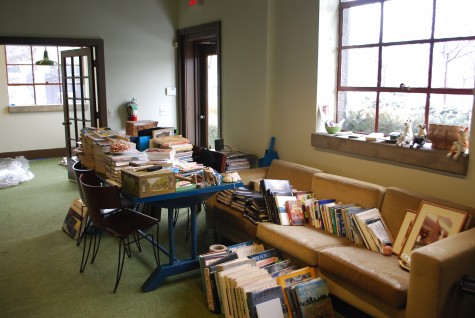 The floor of my office is courtesy of Flor-the company that makes carpet tiles in all kinds of colors and textures. This series is called house pet-it is so easy to pull up a stained square, and replace it with a new one. Gardening being the dirty business that it is, I think I am due for all new squares. Having a project indoors helps the winter fly by.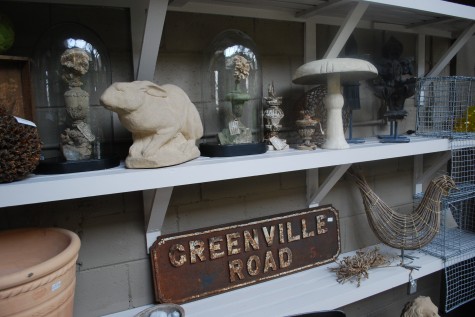
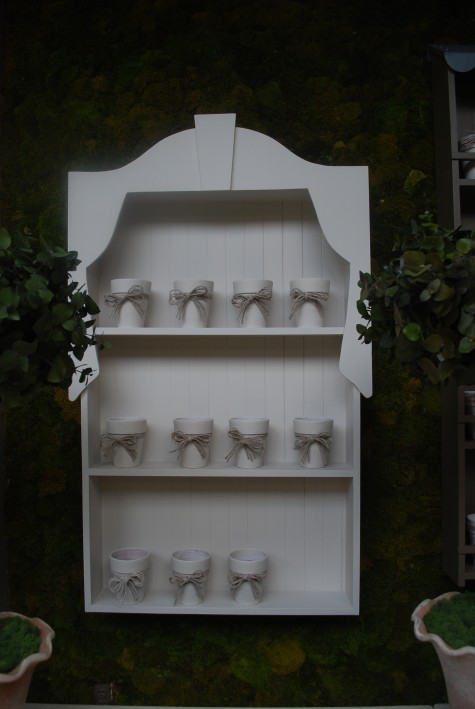 The auricula theatres got new outfits as well. The best fun was finishing the terra cotta pots. Each pot was primed in UGL basement waterproofing paint. This gave the pots a substantial gritty texture. This also keeps the top coat of paint from peeling off, once the pot is a home for wet soil. Each pot got a jute knot or bow. With the finish coat of ivory paint we soaked the bows in thinned paint; I like the look. I could see these pots planted with small growing herbs-or succulents-or even miniature ferns.
 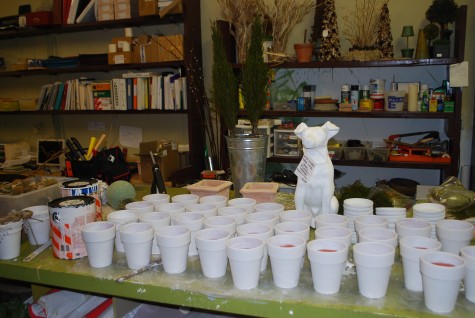 They layout table was handy for painting the pots. I could never again do without a table at a height comfortable for me to stand and work. This we made with a 4 by 8 foot sheet of exterior grade plywood. The top is held up by a pair of shelves four feet deep. These shelves hold long blueprints that I need to store.
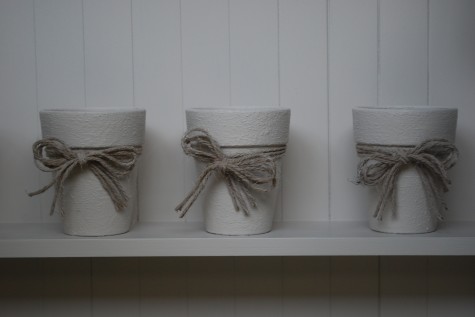 The little pots look great. Machine made terra cotta pots can be finished in so many ways, when you tire of that orange clay. This shape is called a rose pot-they are taller than standard terra cotta pots. They are great for growing plants with long root runs. Bareroot roses that are potted up for sale at nurseries are generally on the tall side. Large rose pots are also great for growing tomatoes. Rose pot and long tom are interchangeable common names for pots taller than they are wide.
 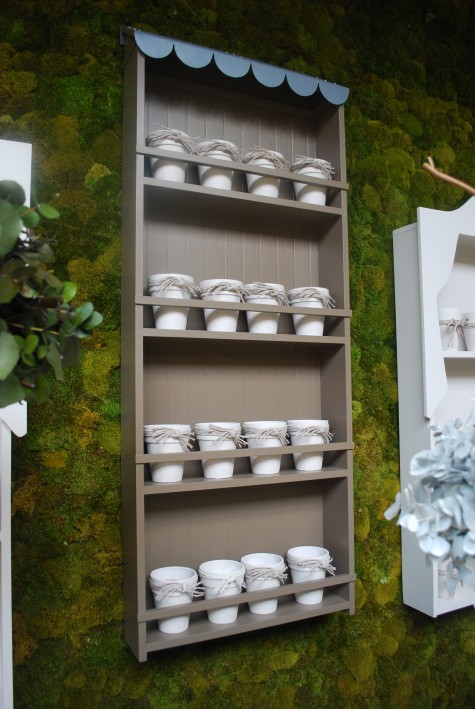 One of the plant theatres got a coat of Belgian chocolate paint.
 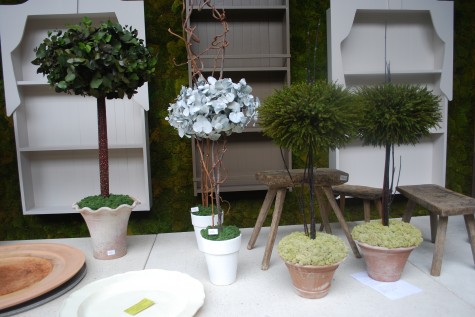 Pam has been making small topiary sculptures from preserved eucalyptus and other preserved greens. The trunks are made from cedar whips, kiwi vine, and fresh blacktwig dogwood. They are great for spots indoors asking for something soft, that will not support plant life. As I have no interest in house plants, these suit me fine.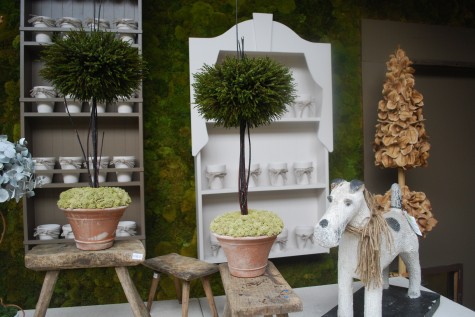
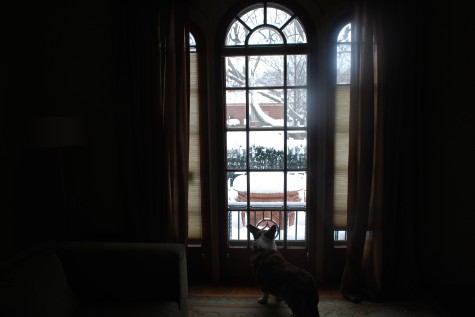 What does winter mean? Housebound. Even Howard gets stir crazy. The cold, the snow, the blustery winds-these things force me inside. My house, which usually seems large enough to live in, and more than large enough to clean, is the moral equivalent of a hamster cage in winter. I take three steps, and a wall looms. In self-defense, I am studying my views from inside out. I pace from one room to the next-this a condition from which there is little relief. But today I am not only pacing, but thinking about the views from my rooms. Placing a container that is good looking piled high with snow improves this view.
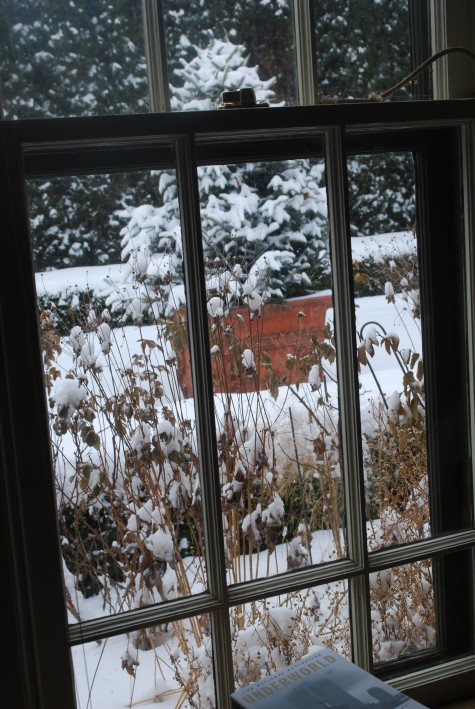 I am happy that my rose and perennial garden I thought to spare a full fall cut back. I like seeing the frail brown sticks out my window. My winter view has texture, mass, light and dark. I like a congested, visually lively, winter perennial landscape. I could write on like a fool about this. But suffice it to say, from indoors, I like to see something going on.
 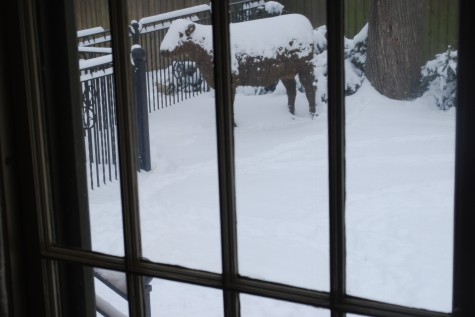 Lady Miss Bunny, my steel and moss sculpture patterned after a breed of English cow, stands out my bedroom window. She weathers. Every morning and every night I check her out-some winter days I wonder how she manages. I like seeing her there, on duty. Never mind the rain, the wind, the snow, the sleet-I see her the last before I climb into bed, and the first thing when I get up.
 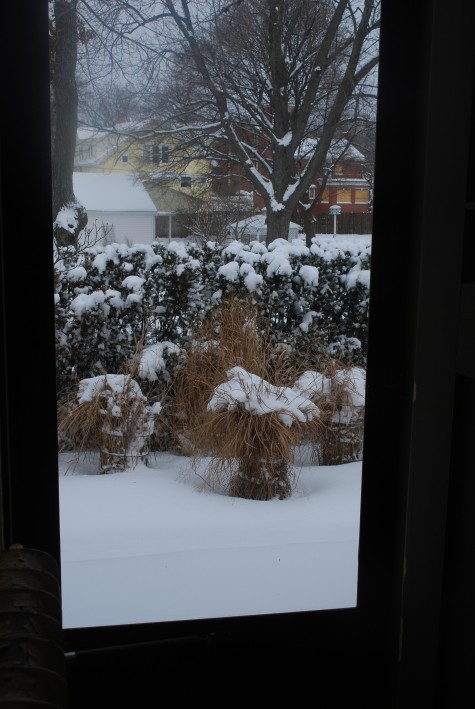 My kitchen door is full length glass- the largest uninterrupted view I have from indoors. A yew hedge is faced down with the thatched remains of some large clumps of panic grass, and not much else. This view could definitely stand some improvement. I am equally at ease choosing something that has great appeal, with no location in mind, as I am able to keep a spot in mind that needs something. Something center of interest that works well in the summer in this spot no doubt will improve my winter.
 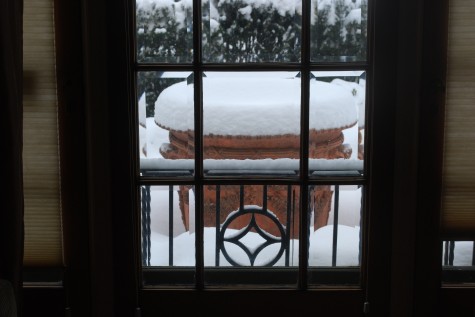 The pattern of the window panes figures in the view. What I see standing up is different than what I see sitting down. But what I see as the biggest issue-designing the views out such that privacy is maintained. I have been in homes with lots of windows, where the drapes are always drawn. Those drapes work to insure privacy inside, but they also keep people unnecessarily cooped up. I have designed my landscape such that I am able to see out, without being the object of someone’s attention from the street.
 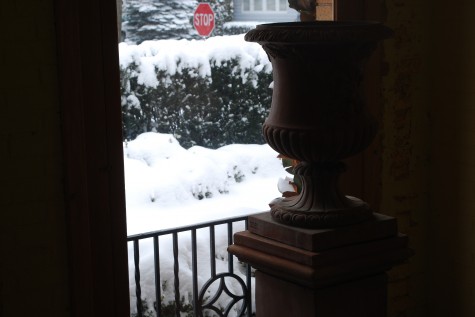 My enclosed front porch is almost entirely glass. One has to come through the porch door, to get to the front door. This architectural feature provides for privacy from the outside to the inside. In addition, my five foot tall yew hedge runs along the entire north and south side of my corner lot some 11 feet out from the house foundation. The hedge is the backdrop for the public presentation of the landscape from the street. It is likewise a backdrop for my view out. No one outdoors can see me standing in the window, nose pressed to the glass; this is a good thing.
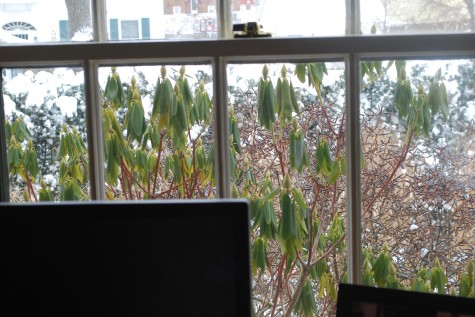 My office at home has windows on three sides; the space can be very chilly on a cold day. But I more value being able to see out. The landscape here is layers of yew, grasses, and rhododendron through which I can see. They screen my window from the outside. I am incidentally able to tell fairly well what the outside temperature is, based on the degree of droop of the rhododendron leaves.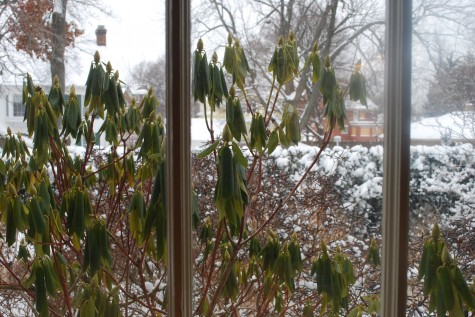
![100_2166[1]](https://deborahsilver.com/wp-content/uploads/2010/02/100_216611-475x356.jpg "100_2166[1]") One of the better parts of my work is buying trees; I buy lots of them. They may come from Oregon, or North Carolina, or Tennessee, or Macomb township just a few minutes from me. I do not own a nursery; I buy trees for specific projects. I choose based on what a client space and environment demands. The branch structure on these beech give me a great idea of their eventual shape. Jim’s son in the picture-I have a good idea of the size of these trees. As much as I would want to have one gorgeous specimen of every tree hardy in my zone, I have to make choices. These oval growing beech-perfect for a spot I am looking to plant.
One of the better parts of my work is buying trees; I buy lots of them. They may come from Oregon, or North Carolina, or Tennessee, or Macomb township just a few minutes from me. I do not own a nursery; I buy trees for specific projects. I choose based on what a client space and environment demands. The branch structure on these beech give me a great idea of their eventual shape. Jim’s son in the picture-I have a good idea of the size of these trees. As much as I would want to have one gorgeous specimen of every tree hardy in my zone, I have to make choices. These oval growing beech-perfect for a spot I am looking to plant. ![100_2191[1]](https://deborahsilver.com/wp-content/uploads/2010/02/100_21911-475x633.jpg "100_2191[1]") Some trees can screen an untoward view. Other trees provide shade from the summer sun. Trees have function; a well placed tree can cut the temperature inside a home by plenty on a hot July day. Trees also delight the eye in a landscape, via their shape, stature, bark, blooms, leaves, berries. They are the giants of the garden-proper placement is essential. These cooly columnar European green beech would do a great service screening a neighboring play structure in a very narrow space-their architectural shape and bearing-a big plus. A straight European green beech-step aside, and provide lots and lots of room, and an equal amount of time.
Some trees can screen an untoward view. Other trees provide shade from the summer sun. Trees have function; a well placed tree can cut the temperature inside a home by plenty on a hot July day. Trees also delight the eye in a landscape, via their shape, stature, bark, blooms, leaves, berries. They are the giants of the garden-proper placement is essential. These cooly columnar European green beech would do a great service screening a neighboring play structure in a very narrow space-their architectural shape and bearing-a big plus. A straight European green beech-step aside, and provide lots and lots of room, and an equal amount of time.![DSC_5337[1]](https://deborahsilver.com/wp-content/uploads/2010/02/DSC_53371-475x317.jpg "DSC_5337[1]") White pine is the state tree of Michigan. In woods of age in the Upper Peninsula of Michigan, their open growth and gorgeous towering shapes are all anyone would ever need in a tree. Should you have acreage, that is. Sheared native white pine is just that-sheared. Columnar white pine is very unlike our native species. Elegantly tall and narrow, they can give a garden stature without bulk. I have seen white pines in Michigan that could easily shade my entire property-they are not for me. This edited version I could much more easily find a home for.
White pine is the state tree of Michigan. In woods of age in the Upper Peninsula of Michigan, their open growth and gorgeous towering shapes are all anyone would ever need in a tree. Should you have acreage, that is. Sheared native white pine is just that-sheared. Columnar white pine is very unlike our native species. Elegantly tall and narrow, they can give a garden stature without bulk. I have seen white pines in Michigan that could easily shade my entire property-they are not for me. This edited version I could much more easily find a home for.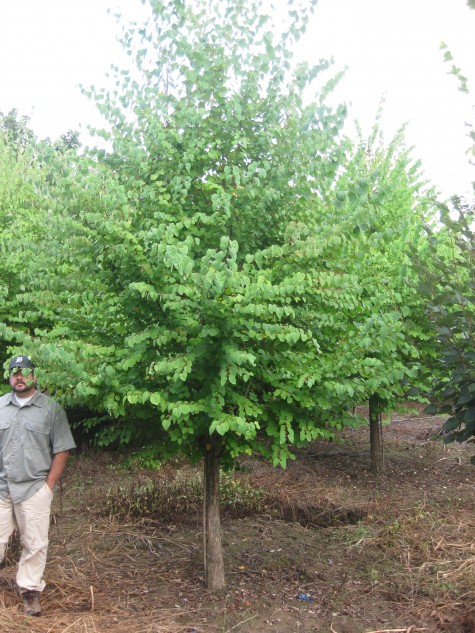 I have a great fondness for Katsura trees. Known formally as Cercidiphyllum Japonicum, their shape and quiet density make them one of my favorite trees. They have no blooms of note, but they do have extraordinary heart shaped leaves that are blue green, with veins decidedly purple. This coloration is unique to this species. These trees have been pruned; the effect is dense, and topiary-like.
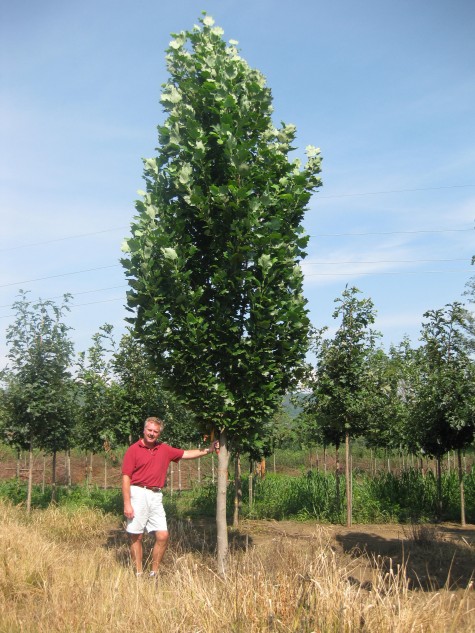 Liriodendron tulipfera, or tulip tree, is one of the largest growing trees in North America. Their green and orange tulip shaped blooms are lost on most. The trees do not begin blooming until they are old, and very tall. You need to stand off, with a spyglass, to appreciate this blooming part. I have a client with screened porches high in the air-I should talk to her about these trees. The columnar tulip tree you might be able to handle. The same smooth grey bark, the same luscious palmate leaves-in a narrow version.
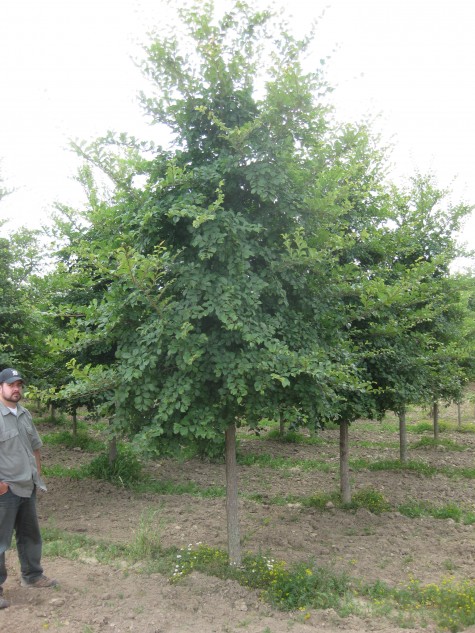 This untrimmed katsura presents very differently than those that are pruned. Many trees are seed grown, producing great variation from tree to tree. If you are looking for a tree, look in person. Even a young tree will give you a hint as to what it will become. Make friends, then buy.
![securedownload[2]](https://deborahsilver.com/wp-content/uploads/2010/02/securedownload2-475x315.jpg "securedownload[2]") These espaliered Bradford pears I am considering buying-with no project in mind. I think I might just have to have them. They are old enough to stand on their own-no structure needed. This winter aspect makes my heart pound. How they catch the snow-so beautiful. It is a sign, when you don’t think you can live without something. These trees have that feeling.
These espaliered Bradford pears I am considering buying-with no project in mind. I think I might just have to have them. They are old enough to stand on their own-no structure needed. This winter aspect makes my heart pound. How they catch the snow-so beautiful. It is a sign, when you don’t think you can live without something. These trees have that feeling. ![securedownload[1]](https://deborahsilver.com/wp-content/uploads/2010/02/securedownload1-475x315.jpg "securedownload[1]")