The Garden Hose

My most intimate conversations with my garden take place over the watering. Proper watering takes patience, and even more time. Time to really see what is going on. Time to shed the babble of the day, and concentrate on what is in front of my face. What I see while I am watering, and make note to attend to-makes my garden better. I resent being tied down to one spot and one task-but once I get over that resentment, I relax and tune in. I have an irrigation system, but it does not handle every watering issue I have. Were I able to design an irrigation system that could sense on its own when each individual plant needed water, deliver that water, and regroup for tomorrow or next month-I would be able to retire, afford houses with gardens all over southeastern Michigan and have a life casually looking after all of them in turn. Should I ever devise a method by which to intelligently install and maintain such a superior watering system, I would be able buy every photograph that Lynn Geesaman ever took of a landscape or garden. Since the chances of either of these scenarios coming to fruition are poor to none-I am left holding the hose. The garden hose. Since hand watering is a job, a good tool helps.

Michigan is surrounded by the Great Lakes-Lake Michigan, and Lake Huron are the biggest. Michigan is furthermore laced with inland lakes. We have an embarassment of treasure in water. I have been watering a bed of newly transplanted ferns by hand with the hose every other day this week-watching those drops drip off the fern fronds and into the soil says everything about the life that clean water affords all living things. Keeping all that water clean, a matter of pride and concern to everyone. The challenge lies in the delivery of that water. New cities, new neighborhoods, expanding populations-this is as much about the delivery of water as anything. It would be interesting to see a map showing where my water comes from, and how it is delivered and ready for me to use. Once in in the garden, my delivery system is the hose.

Does it not seem that given the long history of gardening, and the necessity of easily transporting water from a source to a plant, that a perfectly designed and executed hose would be available to me? My shop, and my home have no end of spigots, to which are attached 75 foot hoses. I hate each and every one of them. These heavy duty commercial grade rubber hoses weigh a ton-before they are full of water. They need to be long to reach the outlying districts needing water; dragging them, rolling them back up, and storing them is a colossal pain. They do not coil up easily; Buck says new hoses are directional hoses- meaning they roll up one way, and one way only. You must twist as you roll. The lightweight hoses (my preference) twist, kink, tangle and are otherwise unsatisfactory. They fail in the blink of an eye; the material splits if you look at it too long. A truck tire will crush the fittings. Dropping the hose on the pavement will put a fitting out of round just enough to leak all over you. New hoses-who chose that nuclear green for a hose color? All I want is a hose in an unobtrusive color that winds up effortlessly in the twinkle of an eye, that weighs next to nothing, dwith strong well made fittings that do not leak-am I asking too much?

I am not particularly adept given a discussion of mechanics. Clients who cannot sleep at night unless they have a licensed landscape architect on their project-I try to explain that engineering is vastly different than design. The design and manufacture of durable and serviceable hose fittings-who does this? Like a hairdresser needing the perfect scissors, the chef that needs a perfect knife-I need good hose fittings. Most I have tried leak instantly, or within a week or month. The hose stop valves are the devil to turn on and off. Even if I were to forgo any fitting with a plastic part, the metal ones perform poorly too. I despise having water leak all over me when I am trying to get water to a plant. A great hose-I have been after this Grail my entire gardening life.

Plants need water; no gardener disputes this. When the shop is busy, and I have a little less than an acre to water, the design of the hoses matter to me, and more so to Rob. The watering cannot be left to an amateur-there is too much at stake. A little less than an acre to keep watered is a big job; knowing when and how to water is a skill, and an art. Rob doesn’t mind the fire hoses, as they deliver lots of water in a short time. He is able to drag them, and he knows at what pressure to deliver the drink. Clients ask me-why do your gardens look so good? Rob waters. Would that we could find a better hose, with excellent fittings-and a proper wand.

Every season I try the new watering wands. In my dreams, I would want a wand that delivers an enormous amount of water, gently. Watering wands-I fall prey to all of them. This one has so many plastic parts, I am sure something will go wrong soon. For the moment, I like being able to turn the pressure up and down with my thumb-as I am watering. I am able to turn the water off with this feature-no need for a leaking stop valve. I’ll give it a try. Buck lectures me regularly about proper fittings. Fittings-who knew that a serious discussion of landscape work would involve little parts.

A hose reel is a big part. This one-our second, as the first version came apart and fell of the wall, holds 150 feet of hose. I have no need of such an apparatus at home, but at work, it is a necessity. Rolling up the hose is a workout, as the mechanism is not particularly smooth or well balanced.

My 2010 attempt to find a hose and wand suitable for my home garden is pictured above. I can hold all 75 feet of it with 2 fingers-this I like. The narrow diameter means it takes more time to water thoroughly; I am happy to put up with that, given that I don’t perspire heavily getting it from one place to another. It seems like the wand will be good-the metal fittings are substantial. This hose must have a giant metal spring inside-it has a life of its own. I am twisting as I roll it up. We’ll see if I fall for it-our hot and dry season is just about here.
Beautiful Views

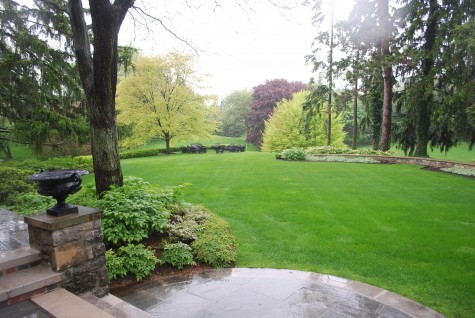
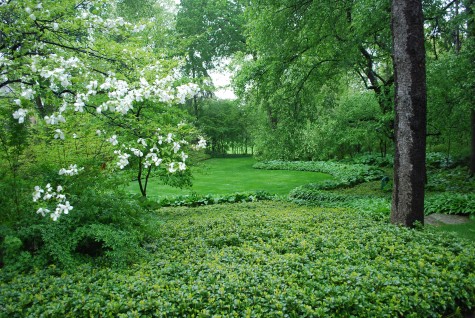
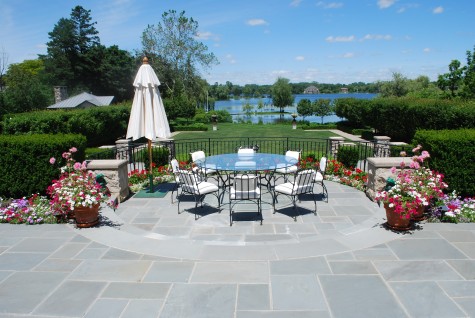
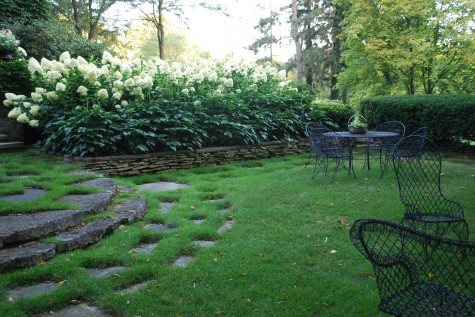
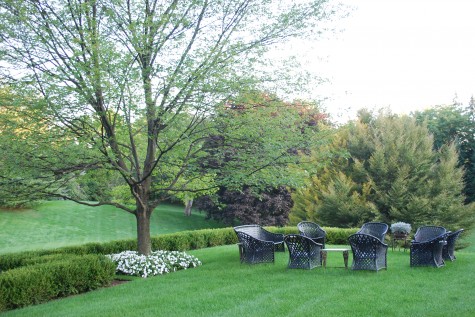
A place to be, a beautifully organized and finished space, a landscape composition-beautiful views go by many names.  I love plants as much as the next gardener, but I have a bigger interest in the plants being integrated into a whole that makes a strong statement and engages the eye.  Gardens are perpetually unfinished, but a good thought moving towards completion delights me the most.  Of course I think that-I am serious about designing landscapes. This landscape-I have worked here 25 years.  25 years means time to evolve, time to attend to the little details, time to be surprised by what unexpectedly happens, time to take an idea, and grow up with it.   

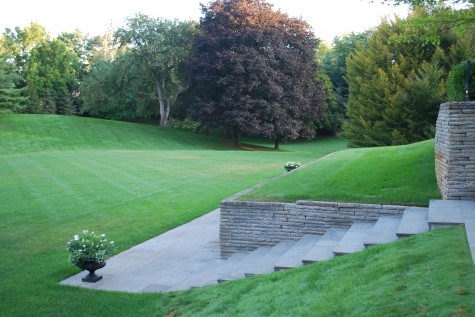
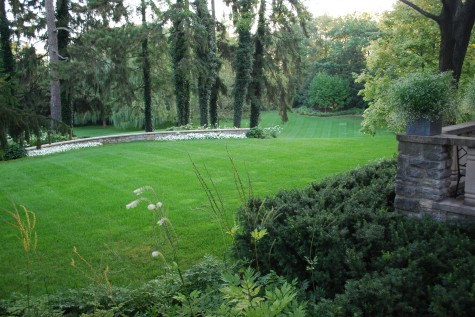
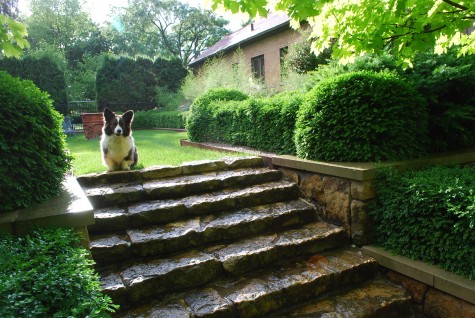
My client is an afficianado of the classic English landscape park.  She admires the work of Capability Brown, an 18th century English landscape architect who designed upwards of 170 park landscapes.  His landscapes were simple, and natural-as opposed to formal and structured. But as much as he sought to simply represent  nature, there is much evidence of his hand.  My client likes putting a subtle and natural hand to her landscape.  Most strikingly, the old trees grow out of the lawn-sans barked circles around their trunks.  Mulching trees with bark conserve moisture, and are something of a defense against damage from a string trimmer-but they are anything but natural looking. There is no bark anywhere on this property.  Many years ago we regraded the entire back yard, with the idea in mind of creating interest at the ground plane.  The ground rolls, dips and goes flat-most of this sculpture is covered with grass.   Her early 20th century tudor home, built on a substantial piece of property, makes that thought to establish a park entirely believable.   

Old stone walls, old trees, and but a few flowers-usually white- make for beautiful, and entirely serene views. I like landscapes that suggest reverie.  I am not so much a fan of landscapes that are noisy or demanding.  I see some landscapes I would describe as overwrought. The red leaved maples planted next to the chartreuse foliaged thuja-very lively.  I like to visit landscapes with great visual excitement, but at home, I want sanctuary.  It is very important to think about what you want and need from a garden before you plant.   


A property of this size is unusual in an urban community.  The public parks that exist in my community tend to be outfitted with benches, playgrounds, softball fields and the like.  A landscape park can make much about what is not there.  This landscape is quietly contemplative in feeling.  The presence of the client is felt only in how beautifully she maintains her property. 


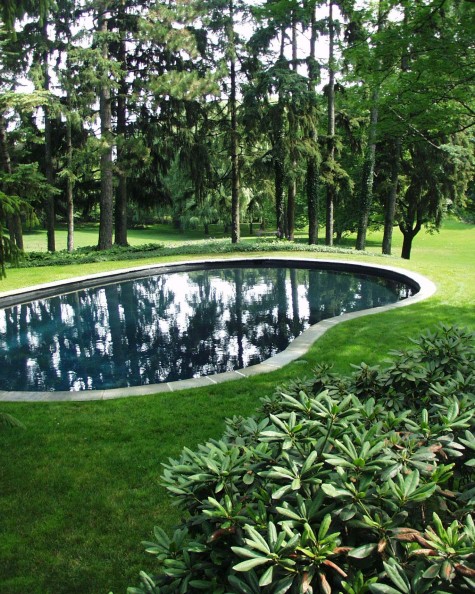
There have been plenty of changes over the past 25 years, but they are hard to spot.  This lawn area was once home to a swimming pool of natural and irregular shape.  On occasion she will entertain outdoors; the light in early evening is beautiful in this spot.


The pool had become a considerable burden to maintain, as it was very old and always in need of some kind of repair.  The lawn area into which it was set was lumpy and difficult to navigate.  When the pool was removed, the lawn was regraded level enough to make entertaining comfortable.   

It takes many years to cover large spaces such as this one with plants.  There are thriving colonies of plants here-not 3 of this or five of that. Save the mature trees, no one plant stands out and demands recognition.    

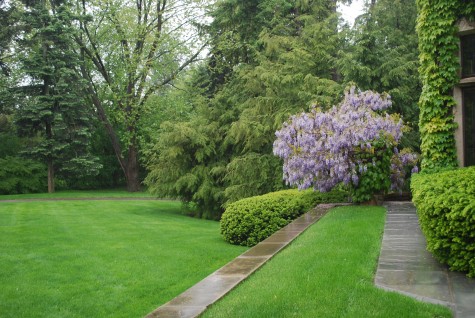
There are those unexpected moments.  This wisteria has been in this spot as long as I have worked here. This spring’s show was particularly showy. The landscape near the house, glimpses of which can be seen in this photograph, are very formal and simple.  They contrast with the flowing lines of the greater landscape-but in a quiet way.   


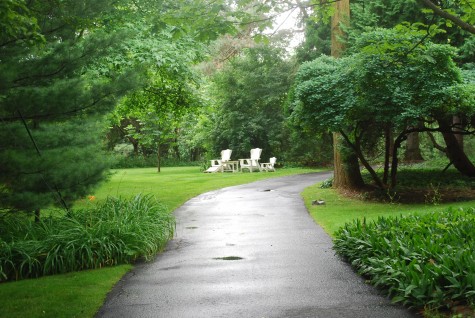
Another client with whom I am working now is studying this view of her vintage Adirondacks furniture.  Should the old honeysuckle thicket behind be removed, in order to open a view to the bigger landscape beyond?  Do the chairs need the company, or would they be more beautiful set against the big expanse of lawn behind them? We are thinking about it.

The Garden Cruise


For the past three years I have sponsored a tour of landscapes and gardens of my design or influence-in the interest of contributing to the programs of the Greening of Detroit.  I am embarrassed to say that I only became acquainted with the Greening only three years ago.  This year is their year long 20th anniversary celebration-marking a 20 year committment to planting trees in the city of Detroit, sponsoring urban farms (over 600)-and the teaching.  Teaching people how to grow, how to protect and preserve the environment. What they do for our city-astonishing.  One of their board members, the architect Michael Willoughby, nominated me to their board.  I was pleased to accept. I am not the best board member-I am better at a local, and more hands on event in support of them .

I committed to sponsoring this garden tour, the proceeds of which would go to the Greening.  100 percent of the proceeds of all ticket sales-every dime goes to the Greening of Detroit. Deborah Silver and Co, and Detroit Garden Works maintain the cruise website, advertise the cruise, and put on the reception.  I am happy to do so in recognition of what they do for our city.

I am out of my element, if the topic is politics.  I am not good attending meetings, nor am I happy to be part of a committee.  I have no interest in discussing community service-I was just raised to believe I should do my share. I was raised to believe that if I am able to help, I should.  I told Monica from the Greening-I will make it my business to organize a tour, with the intent of raise money for the important work that you do, to the best of my ability.

The past two years, the tour has raised 25,000.00 for the Greening.  Were you to ask me for a list of projects I am most proud of-this tour would be right up there.  Should you live in my area-try the tour.  This year, we had people calling in March for tickets.  The tickets are available at Detroit Garden Works.  If you cannot tour July 18, consider a contribution to the Greening of Detroit. 

 I am not the go to person for social, political or economic innovation.  But I am quite sure that the work of the Greening over the past twenty years has benefitted our city.  I would do what I could to support it.  If you are able to support it via the tour-I am asking that you do so.  Hard times have hit all of us-should you not be able to tour, spread the word however you can. The tour is exceptionally interesting to committed gardeners. Check out the tour website:  www.thegardencruise.org.

These photographs do not begin to do justice to the gardens on this year’s tour.  It is a friendly and fun event for gardeners.  I’d be pleased should you decide to join us.

A Dwarf Conifer Garden

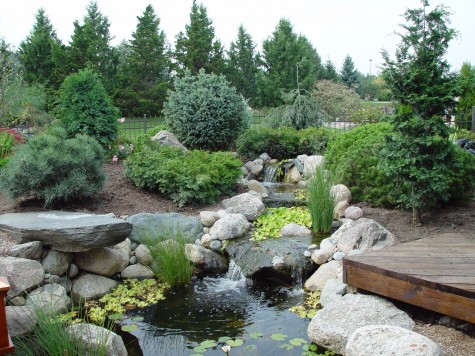
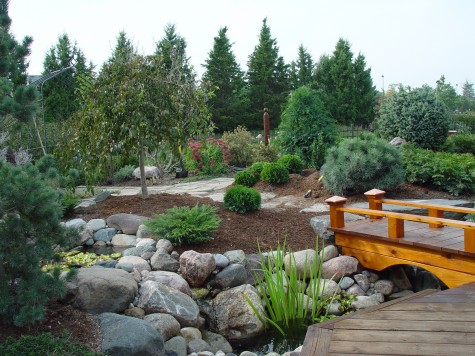
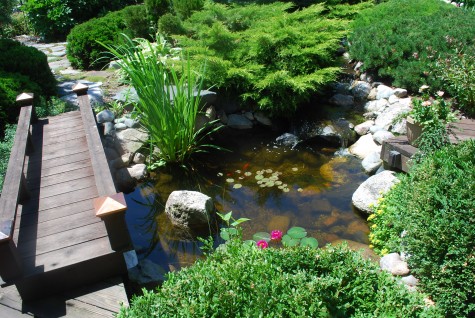
I made my first visit to this garden in 2006.  My clients-serious gardeners.  Ray is first and foremost a rock lover.  He collects little rocks, big rocks, boulders-like I said, he loves rocks.  He built a waterfall and pools in their backyard-I was impressed by his efforts.  Janice-she is a committed science teacher, and horticulturally adept.  She is a player.  The two of them asked me to intervene in their efforts.   In 2007, I planted a group of dwarf conifers for them.   

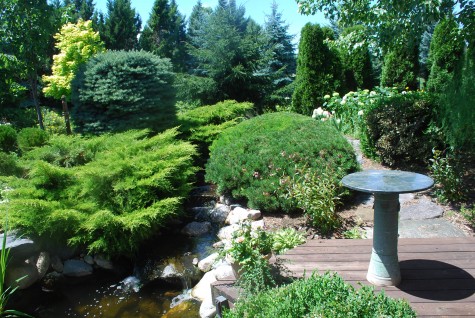
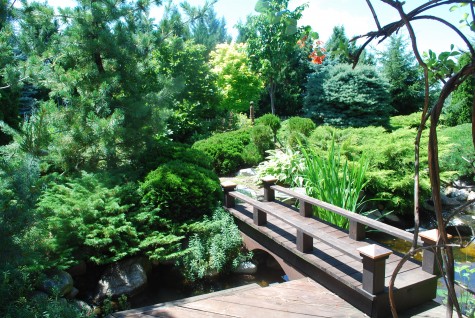
The pond bridge, the waterfall, the pools,the deck, and the perimeter plantings were largely in place when I got there.  I assembled a group of dwarf evergreens I thought would soften Ray’s rocks, and provide year round interest.  They live in a neighborhood; the views to the neighbors-not so good.  They needed a landscape that addressed their sophisticated tastes in plants, that also screened out untoward views. A private garden oriented around interesting and unusual plants.

Proper planting means big spaces in between.  Dwarf conifers grow slowly, but they grow. Some so called dwarf confiers actually attain considerable size when they age. I am by no means an expert on the topic, so I studied up on those evergreens that interested me in terms of shape or needle texture or color.  A few key or central plants, and a supporting cast for each.  The first year-there is lots of bark in evidence. 

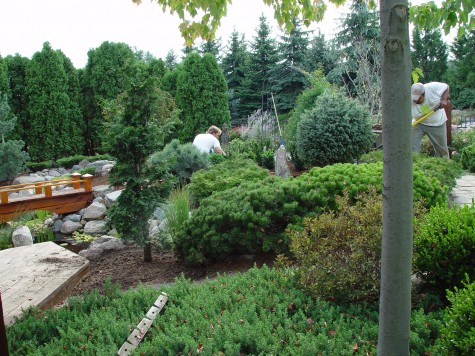
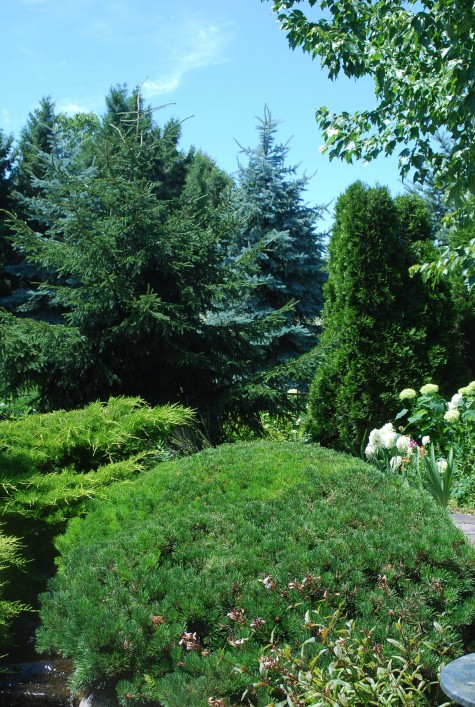
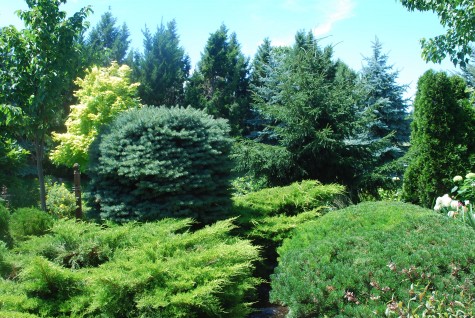
My visit today, some three years later-a different story.  They are great gardeners-every conifer has grown, and looks healthy.  I could barely believe I was visiting the same garden.  Dwarf evergreens of contrasting forms, colors and textures had covered the ground.  It may be tough to spot, but my arrangement of dwarf conifers took into account a view of a blue spruce on a community berm at a distance. Blue evergreens-they look their best far away. Study this picture.  That blue spruce far away adds visual depth to what is a small garden. Placing blue needled evergreens far and away adds great depth to a landscape.  Though this spruce does not belong to them, it is part of their garden view.   

The varying textures and colors of greens are very pleasing to the eye.  I would imagine this garden is lovely with a dusting of snow, or on a rainy day.  The best part of evergreen plants is how weather changes their appearance.  No doubt there will be some sort of weather, every day.  Planning a landscape to take advantage of  all of the seasons is worth the challenge.  A good landscape design takes the predictable growing, the weather, and the unexpected issues into account, and still reads strongly.  How this garden looks today pleases me.     

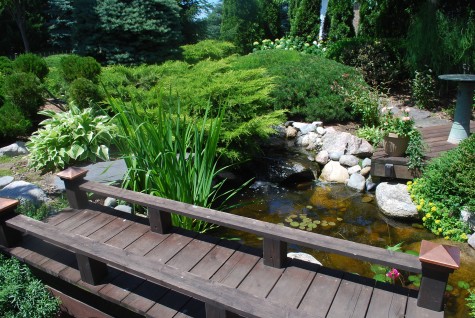
Ray’s bridge has settled down-it reads as part of a whole now, given its green company.  Goldfish swarm the pool.  There is a water lily blooming.  Most everything I planted is growing vigorously.-no garden is without loss and disappointment.   These clients have an oasis of their own making.  They have done all the work of the watering, the pruning, the feeding, the nurturing-the fussing about.  I spent two days there.  They have done four years worth of work.   

I do not mind visiting some projects, years later, with enchantment on my mind.  My favorite clients-those gardeners that scoop up the idea and the installation-and go on from there.  How I admire those clients who understand what it means to take up the reins, and go on. A Princeton Gold maple planted outside the fence, and as far away as possible, lights up the foreground planting.  It was mrecilessly hot and sunny yesterday, but the look here is lush and refreshing.     

This conifer garden-I would have it.  They have looked after it in such a way that they deserve a prize.    I do my share of the work-but a committed steward is everything to a garden.  Some days I would just as soon give away my garden as have it.  Then I have lucky days.  Yesterday Buck accidentally locked himself out of the house an hour before I got home.  All the watering chores got done.  I was only adrift for one second- I got in the fountain, and had a glass of wine.    

Their garden-beautiful.  I love going back, and seeing a project that has no further need of me.