A Garden Room

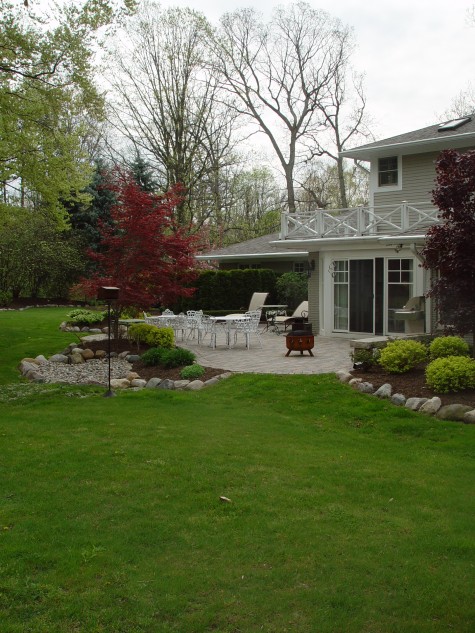
It has been four years anyway since I made my first visit to this property-and I know I did in the past discuss some of the landscape issues involved that prompted my client to call.  She is a busy executive with little time to fuss when she gets home, but she loves everything about relaxing outdoors after a long day.  The terrace was small, and the landscape not so satisfying. The landscape company which keeps up with her commercial properties came in on occasion to spruce things up.  The biggest eyesore was a gravel and rock area that made a big visual discussion of a drainage area. 
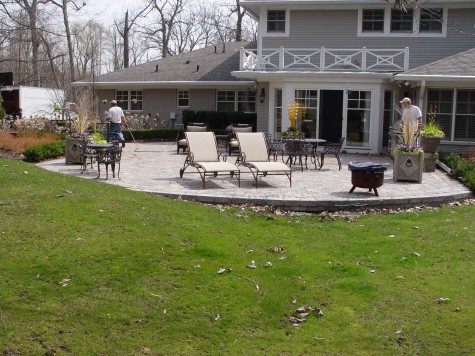

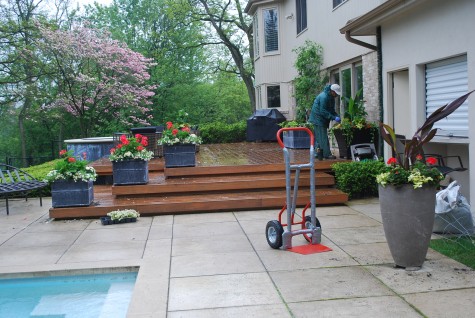
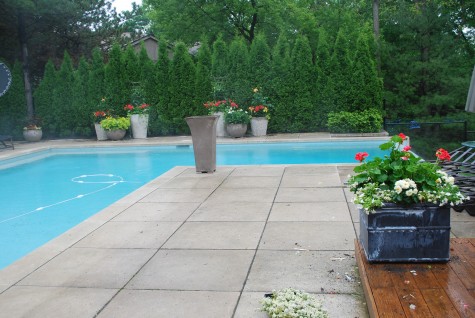
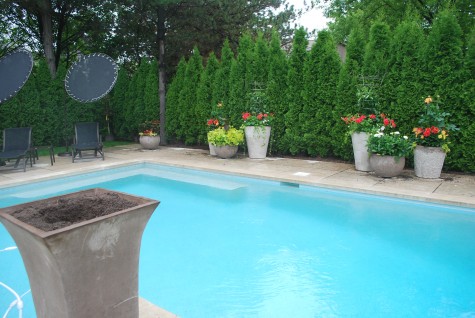
We greatly enlarged the terrace, curving the front edge out into the yard. After the installation of the terrace, we regraded the ground around it in a graceful way. The poor drainage we dealt with-underground.  We got rid of the rock edging, and painted the garden furniture a dark bittersweet chocolate color.  She bought some containers for her terrace.  These are just a few sentences that describe a big chunk of work.
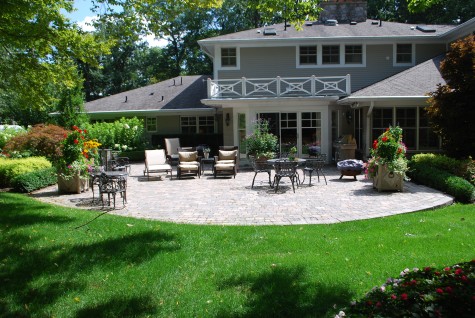
We added a fountain, and perennial gardens off the terrace-views to something from inside and out.  But one problem yet remained.  The terrace is in full sun all day long.  This sun is not so condusive to relaxing, reading, or entertaining.  We began to talk about a pergola.  A pergola not only encloses a space, and provides structure, it can provide some welcome shade. A pergola can transform an outdoor space into a garden room.  They can provide a framework upon which to grow plants.  Big vines, such as wisteria or grapes need very sturdy structures.  Friendly vines such as clematis, Dutchman’s Pipe, honeysuckle and the like are just greatful for the support.  Tall lax growing plants such as climbing roses are lazy and sprawling-a pergola can introduce some order.  But my client was interested in shelter-some shade for the space that would make it more comfortable.  
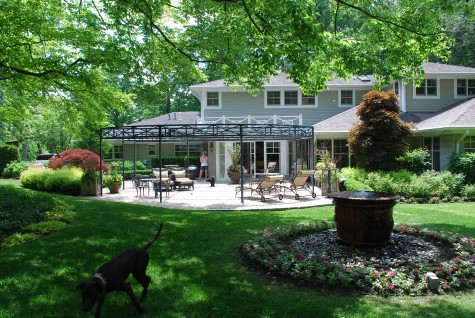
I designed a very large pergola, some 15 feet deep, and 20 feet long.  It covered the better part of the terrace.  The design is simple; the detail repeats the X detail of her upstairs balcony terrace. It took Buck quite some time to design how to build it such that it would be perfectly rigid and sturdy. It took even longer to build; the main 20 foot long truss was built as a single piece, for strength.  This volume of steel is incredibly heavy; he has a bridge crane that will lift 5 tons.  He straps the steel pieces to a giant hook; the crane moves the pieces into position so he is able to weld.     
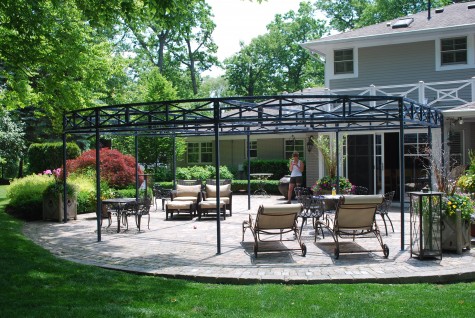
Outside of the main truss, the rest of the pergola was built in sections, so it could be transported relatively easily, and assembled on site. GP Enterprises, with the help of a miniature loader, enabled the assembly to be done safely.  One machine to lift pieces aloft-lots of people to guide, steady and bolt.  I so regret not being there to watch the assembly-I am sure it was quite an operation. The entire installation took 5 hours start to finish. 
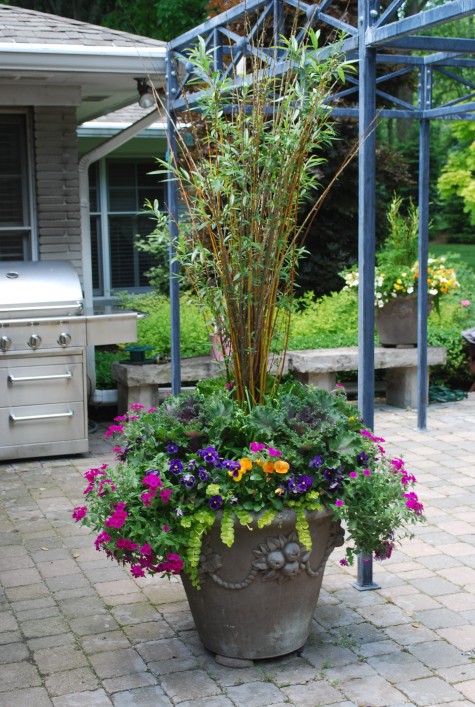
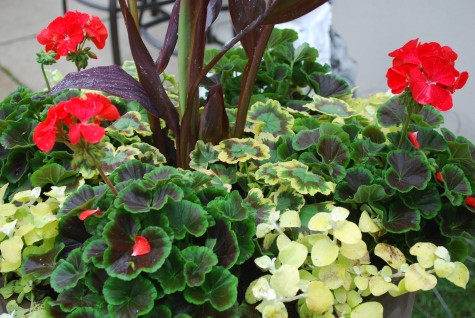
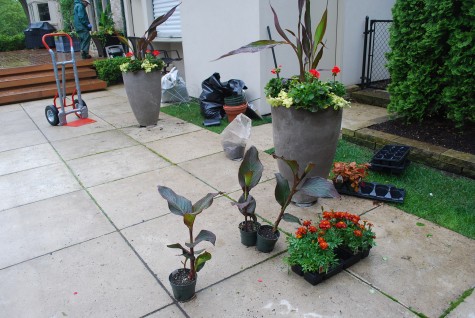
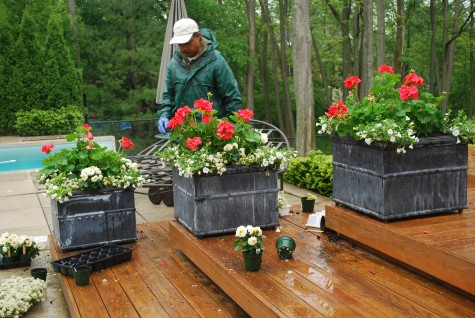
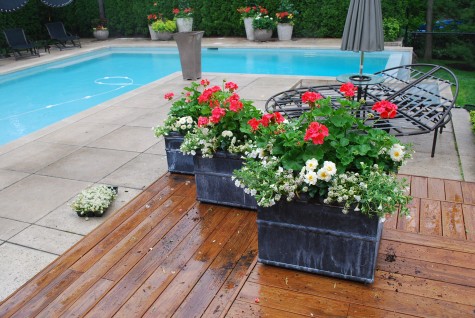
Her spring pots still look great, but I am sure we will plant them differently now that she has a garden room.  This pot could easily be a home for a morning glory, or hyacinth bean vine.  Malabar spinach would run wild over this roof.
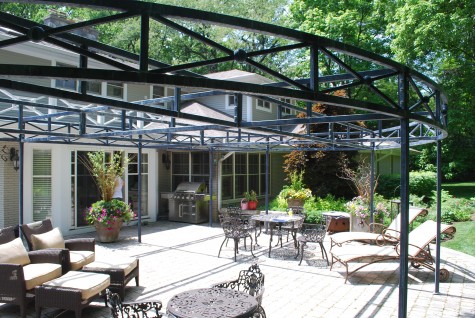
We plan to plant perennial vines, but that will take some time.  I made the suggestion that a fabric roof panel might provide some instant shade while the planted roof is growing in. 
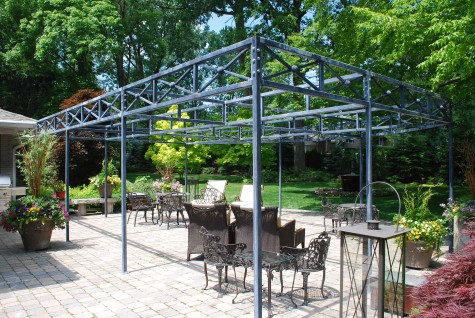

It will take some time for this very big object to be assimilated into the space.  Every gardener knows a garden is a work in progress, and that spaces evolve.  When I first met her, I do not believe she spent much time outdoors.  Some years later, I think she is very excited by the prospect of outdoor living.  From the first picture to the last-there have been a lot of changes made here-all of them for the better, I think.
Carter

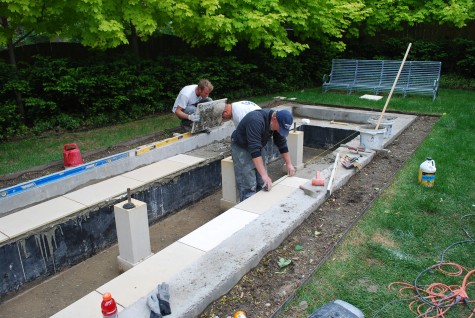
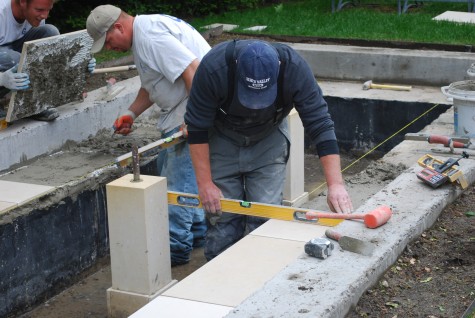
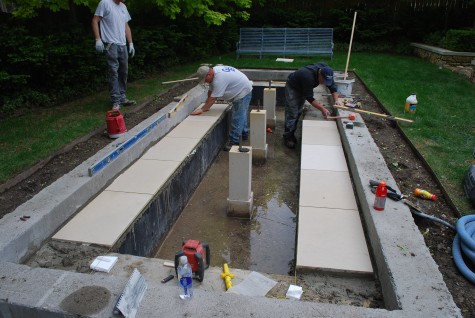
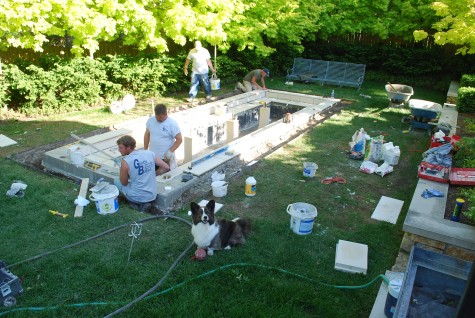
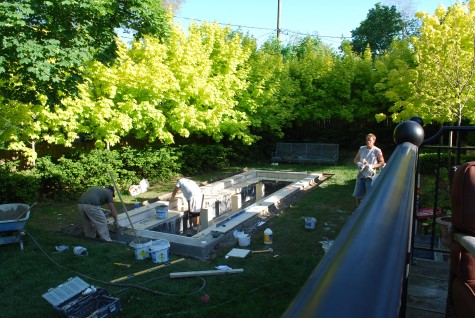
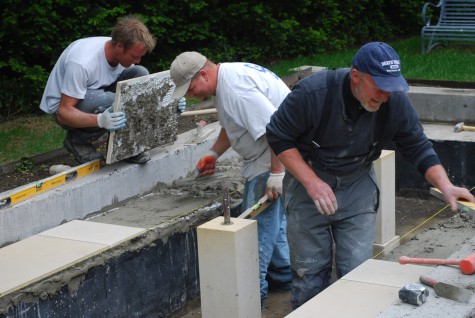
The saga of the rebuilding of my fountain begins and ends with Carter. The man with that short scruff of a white beard, the navy shirt, vest, and cap-that’s Carter.  A combination of considerable brains, even more experience, patience and exacting craftsmanship-he and his crew have been my pleasure to observe for the last three days.  They tore my leaking fountain apart, and rebuilt its foundation some three weeks ago.  The stone for the coping had not been delivered two days when he picked it up; time to finish.

For pools and fountain stone, I specify a stone native to and quarried in Wisconsin.  This particular limestone is dense, and has few pores.  Indiana limestone is so porous, that pool copings and decks absorb too much water-a perfect medium for moss and algae.  Though I would as soon look at moss as anything nature provides, I do not want to walk on it around a pool-too slippery. This stone is as dense and smooth surfaced as marble-and weathers my climate without a problem. 

Buck did CAD-computer assisted design-drawings for the quarry-each piece was cut to his exact specification and dimension.  Communication is the art of life, a client once told me. I could tell Carter thought it was very cool that he did not need to cut or otherwise modify any piece of stone.  I do not think I have ever seen a crew of  four measure and remeasure like Carter’s group did; when a piece of stone was laid, it was laid in the right spot.   

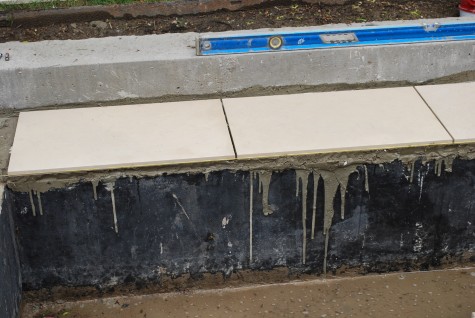
Each slab needed to be set in precisely the right location.  OK, once located, each slab needed to be set exactly level.  Watching Carter level a piece of stone is exactly like watching paint dry.  Each piece took an incredibly long time. My eyes were crossing, and I thought I might black out-watching him tinker and tap.   

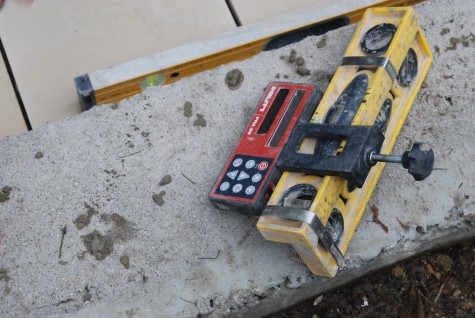
He has a tool-a gizmo-that helps him determine if a slab is set level.  The laser level-I could tell by looking at its battered casing that he uses it non stop.  But make no mistake-I could see him using, and trusting his eye.  I am very interested in the history and practice of fine craftsmanship.  I have been watching the real deal, in my own back yard, for three solid days. 

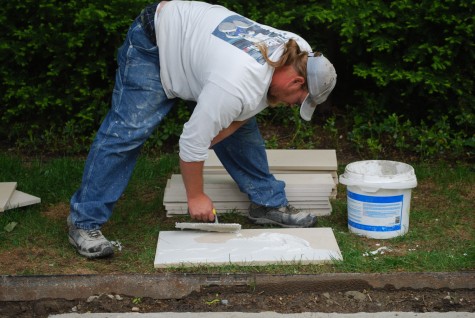
The Wisconsin limestone is so dense, Carter directed that each piece be buttered with thinset mortar before he placed it in the mortar bed.  The mortar bed was levelled and relevelled.  Think of the foundation, and finish stone as a cookie-the thinset, and the bulk mortar-the creme filling.  Unlike a sandwich cookie, the filling needs to grip both the foundation and the stone, and stay stubbornly stable in spite of stresses from up above, and underneath.   

A client remarked recently that small spaces need to be designed just so-there is little margin for error.  Any mistake in the layout or execution is all the more obvious in a small space. I did have occasion once to deal with a pool that had been dug, and shot with gunite-out of square.  Needless to say, the pool coping stone, and its pattern had to be modified.  Luckily, the pool terrace stone could be modified and recut in such a way that makes this mistake almost imperceptible.


We had quite the event going on.  I larned quite a bit about the technology and properties of concrete and mortar-not to mention the science of making something lay flat, and stick tight, for good. 

Last night at 7 they finished the last of the mortaring of all the stone joints.  I will need to wait 5 or 6 days before I can repaint the pool interior; all the work needs time to cure.  I should have running water in no time.

Neither Rain Nor Snow Nor Sleet…..

Annual planting season is an event like no other. The next six weeks are the most intense design/plant days of my entire year.  I review the plants, first.  I have a large group of plants that I custom grow, and then there is the shopping for whatever looks great and sparks an idea.  My annual design is plant generated.  They may inspire a color palette, an shape, an exciting exercise in texture, or suggest a gorgeous mass.  Groups of pots-I think a lot about the rhythm that gets established.  I could explain my process in a hundred essays-but in the end, my eye is my own. All I have to offer anyone is my point of view.  That point of view-I have no formula.  All I have is my off the cuff, late to be delivered, idea.  The big  idea here-trust your own vision, or find someone who can beautifully represent you.   Should you plant for yourself, I am happy to contribute to your effort.  But be advised-what I do in the blink of an eye, is all my own.

My client with the firebowl-she has an event on Thursday.  Flowers-especially in a zone 5 where the summers are relatively short-are a very emotional issue for Michigan gardeners.  Once the weather shows signs of breaking, I get calls.  Everyone is so relieved the endless winter is over-everyone wants to move outside, and enjoy every day of the summer.  No one has any interest in the night temperatures, the soil temperatures-why should they?  That is my job.   

But all of them have special birthdays, trunk shows, parties, graduations, anniversaries-important milestones.  Milestones that need be celebrated with flowers.  A late May early June annual garden is no looker-everyone knows that.  But when the seasonal flowers are planted, any event is all the better and happier for that expression.  My notes are as much about events that influence scheduling, as design.     

Inclement weather-whatever. There are no rain days when we plant annuals.  The annual planting season is short, so we all have gear.  The actual planting is a footnote.  The bulk of the work is the contracting for custom grown material, the contracting for a custom soil mix, the maintenance and gas for the truck, the design, the shopping, the arranging for transport, the hauling of soil, the cleanup, the disposal of debris-big, and largely unseen, work. Whew!

My client Susie wanted orange this year-she loved how my pots looked last year.  What do I so love about her? She has one big idea to express-having done so, she is confident enough to step back, and watch what happens.  We have been working together more than 15 years.  Relationships get forged, over time. Those relationships show, believe me.  Good design relationships result in work any eye would appreciate.  

We moved one pot this year to a new location-I was caught flat footed today.  I had to regroup, and come back. I spent no small amount of time deciding what should go in that Francesca del Re pot at the corner of the pool-as well I should.  Taking the time to do a thoughtful job in the middle of a frenetic season-I can be depended upon for this.  No client knows I am awake half the night worrying about their design,  their life and their installation-this is as it should be.    It is my worry about how to bring orange,white, and lime to life for Susie.   

I planned and planted surely around the pool deck.  That newly placed planter took the better part of the afternoon to resolve.  I promise to post pictures of the mature annual plantings-you can decide if you like them.

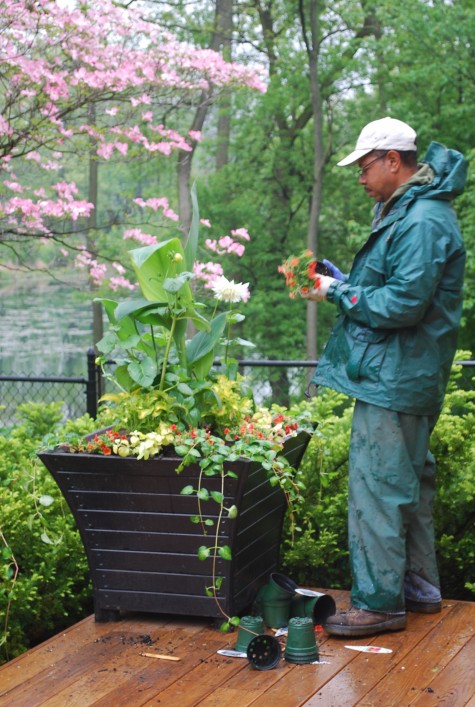
My client Susie-she bought giant white dahlias for her wood boxes.  Fine.  I tuned up.  The planting of the annual gardens and pots-lots of emotion, lots of changes, lots of conversation-lots of tuning up.  I would not have it any other way.  


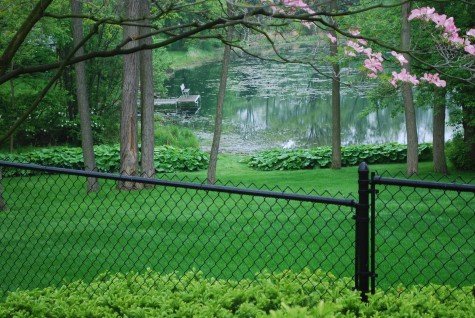
Outside her annual plantings-I am so pleased to see the butterburrs have taken hold at the pond.  The long view-so beautiful.  Any relationship forged over a conversation about the landscape-energetic, and very beautiful.  Thanks, Susie.

Beloved Boxwood


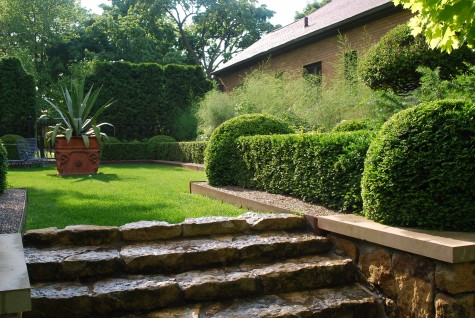
I can think of few plants that have a better service record than my beloved boxwood.  Properly cared for, they are very long lived.  Old boxwoods have an aura of age which only adds to their beauty.  They demand little, and give much.  Few broadleaved evergreens can tolerate our cold winters.  Though our nurseries are stuffed with blooming Catawbiense hybrid rhododendron in the spring, it is a constant battle to keep them happy and healthy.  They simply like Philadelphia better than Detroit.  Ilex, kalmia and the like suffer here as well.  The boxwood-they thrive.  I plant the very hardy Buxus microphylla hybrid Green Velvet; the winter color is as richly green as the summer.      

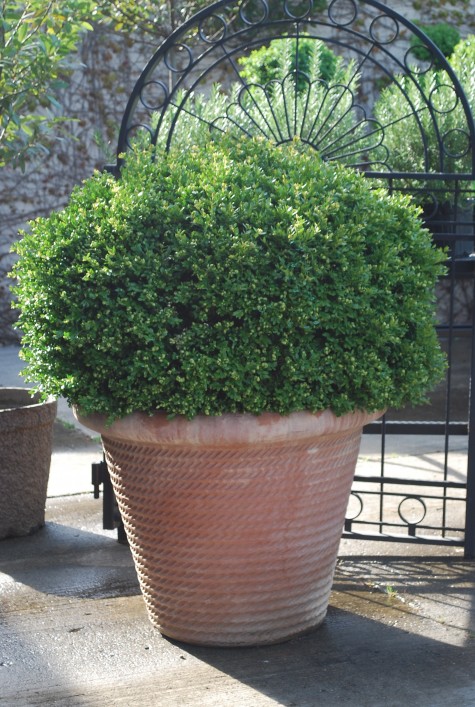
This giant untrimmed ball of buxus microphylla koreana has lived in this French terra cotta pot for 5 years.  We wheel it into the garage for the winter-to protect the pot, not the boxwood.  The garage has neither light nor heat-not a problem.  In March we wheel it back outside for another season.  Boxwood can be quite hardy in pots or windowboxes outdoors all winter; the container needs to be frostproof, and the maintenance thoughtful. The buxus microphylla which forms the hedge outside my shop will take on an orangy-olive color in the winter; this winter color is typical.  The front of the shop is a southern exposure.  The hedge has been there 12 years, and has yet to burn over a winter. Most of the hybrids of boxwood hardy in zone 5 come from this species.

Buxus Sempervirens, commonly called European, or Southern box, is the boxwood variety of my dreams.  Lush and large growing, they adapt easily to any sculptural pruning you might dream up. They can grow to twenty feet tall.   If you have seen the boxwood planted by Beatrix Farrand at Dumbarton Oaks in Washington, you know how a boxwood planting can be sculpture.  Pruned into undulating cloud shapes, this planting is a showstopper.  I have seen this boxwood planted in ground in my zone, but a particularly vicious winter has the power to kill them. They are rated for zones 6-8; this rating means what it says. I therefore recommend using them in pots, and wintering them in an interior space. They only need an unheated space; you want them to go dormant, and only wake up when the worst of the winter is past. 

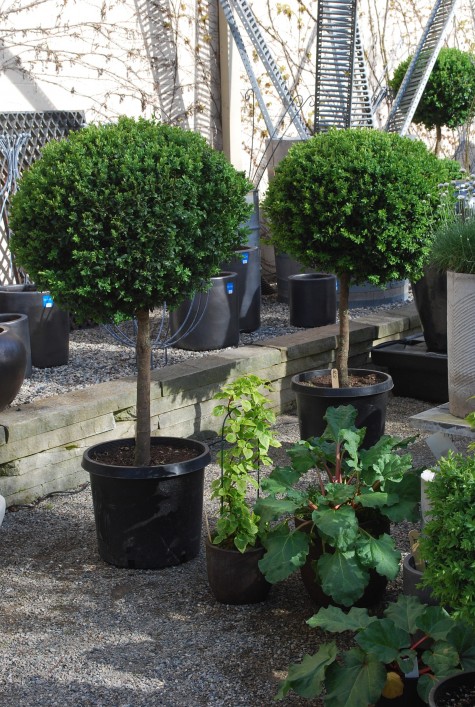
I rarely see boxwood topiary of size grown from a zone 5 hardy boxwood.  Boxwood is a relatively slow grower; it might take 7 years to get a cutting of Buxus Green Velvet” to 24″ tall. Boxwood in general are expensive.  Southern box grows faster in a mild climate, such as the Pacific northwest; they routinely flush growth twice there in a single season. As southern box is a big plant when mature, large scale topiaries such as these are usually grown from this variety.  A topiary this size, with a trunk caliper this large-very pricey.  But priceless in its return.  While it is an investment, your investment will grow and prosper over the years-what gardener could ask for more?   

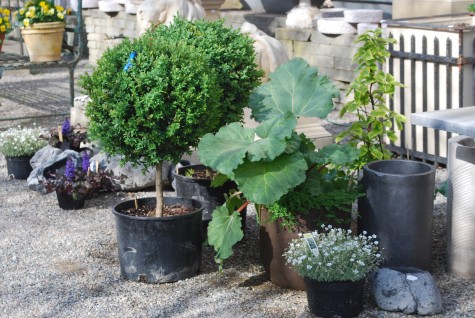
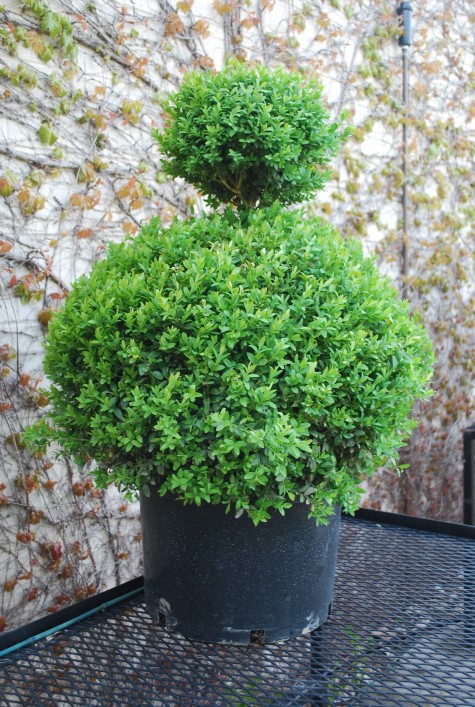
This boxwood sphere with its attendant topknot/hairdo-what a great looking and very special plant.  You might grow topiary boxwood yourself from cuttings-it just takes years.  Any grower of nursery material-how incredibly patient they are. They can see the potential for a decently sized plant in a cutting.  But very large specimen boxwood such as these do not come along so often; most growers like to sell their material in a shorter time frame.  Now and then we will find a grower who has a love for growing unusually large or largely unusual plant material; these growers interest me. 


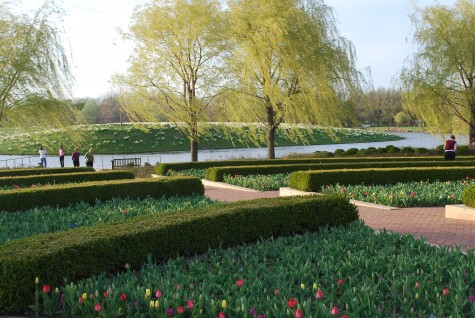
Boxwood is as happy in a supporting form as it is being the star of the show.  Their tolerance for clipping and shearing makes them an ideal formal evergreen hedging material, when a small hedge is desirable.  These large circular beds beds planted with tulips have a drama that would not be possible with tulips alone.  Their geometry and symmetry is an organizing metaphor for this particular garden.  The loose growing tulips have an excellent visual partner in the boxwood.

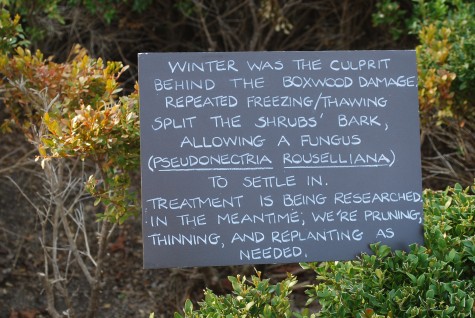
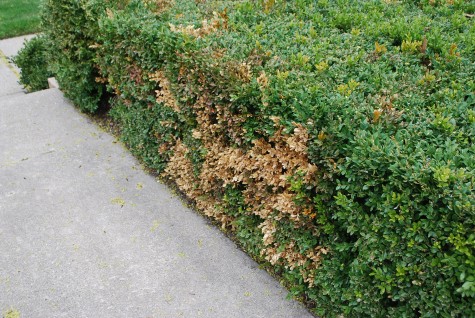
This is not to say boxwood is without its problems. The boxwood at the Chicago Botanic garden suffered terrible damage after last year’s winter-as the sign says. The boxwood in the front of my shop sustained damage much like this. In my case, huge snow loads, as well as freezing and thawing, weighed the plants down such that stems split, and allowed a fungal infection to invade.  Heartbreaking. 

These boxwood in my garden suffered similar damage-but I would not for one moment consider not growing them.  They are beautiful year round.  Gorgeous in growth.  Beautiful in the rain, or with fall leaves dusting their tops.  Beautiful as a topiary or a hedge.  Spectacular in pots.


They are a quietly handsome groundcover, under my Yellow Butterflies magnolias.   The day the petals fall to the boxwood-one of my favorite days of the gardening year.