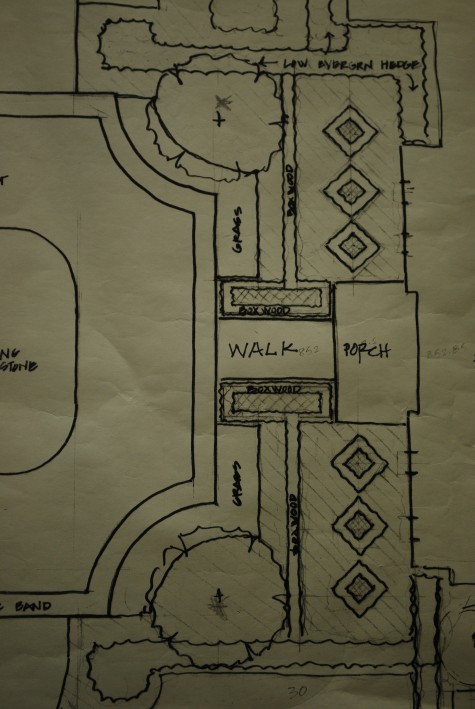
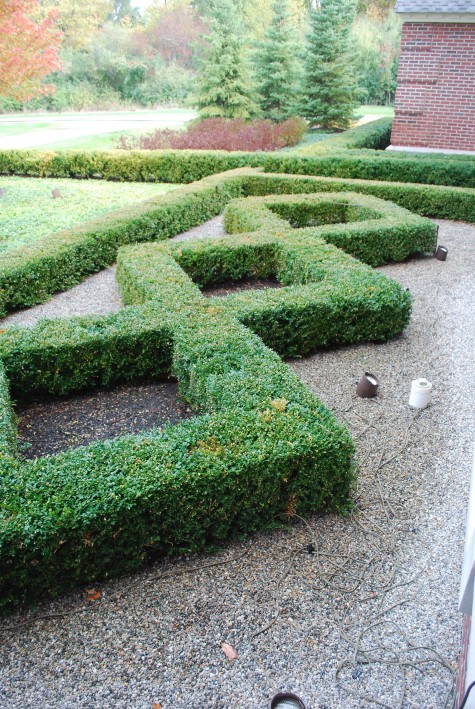
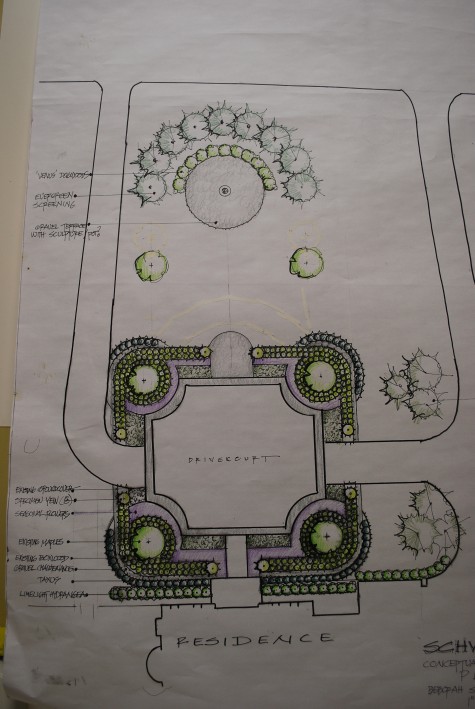
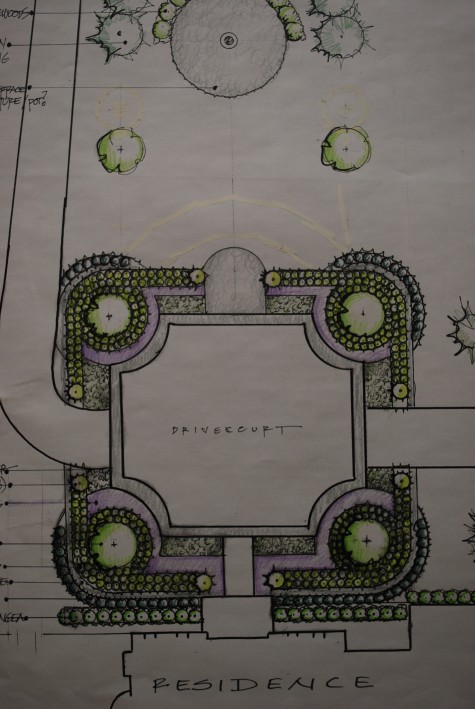
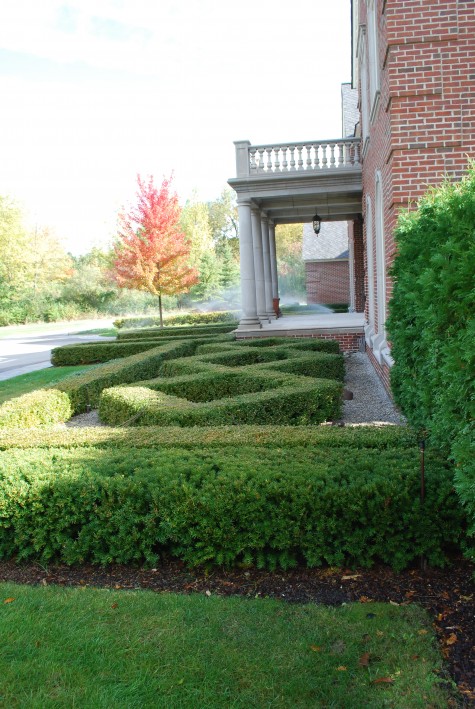
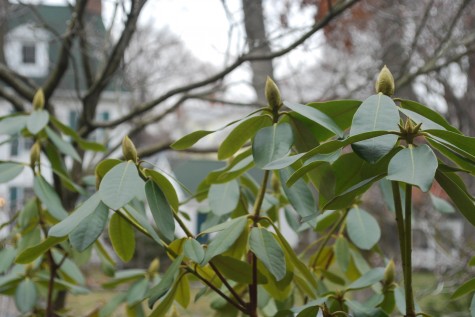
 I deliberately chose to follow up yesterday’s post about the pitiful state of my garden with a discussion of evergreens in the landscape. This garden I planted many years ago; it has been maintained with distinction. I will post this picture every so often as long as I live-is this garden not the most beautiful? Evergreens play a lead role in those transitions between the seasons. They shine in the late fall, winter, and early spring in my zone. Were I gardening in Florida or Spain, I would still give plenty of consideration to evergreens-the broadleaf ones in particular. Were I to find myself gardening at the equator, I would not be happy. I have had my seasons too many years to give them up. How to handle the transitions of the seasons-the evergreens do the work. Yesterday’s post was all about dirt and desolation, but in fact my landscape has green structure.
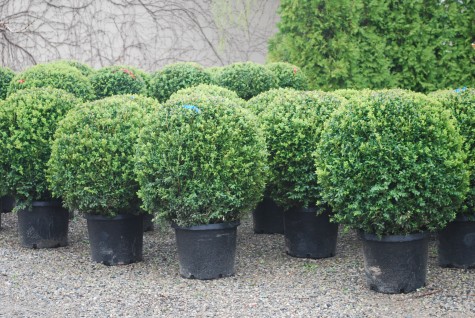 These buxus sempervirens topiary balls arrived from Oregon yesterday. This species could be hardy in ground for four straight mild winters, and then burn and die over the fifth. Why do I buy them? They are incredibly beautiful in pots; I do not fault them for needing to be stored in an unheated garage or building over our winter. This mouthwatering and luscious green sculpture in April-I cannot take my winter weary eyes off these plants. I have a pair that have been in giant French terra cotta pots for some years. They do fine in my unheated and unlit garage-outdoors right now, they focus my attention away from dirt, debris and the otherwise deadly and depressing. Gardeners are a hopeful lot, are they not?
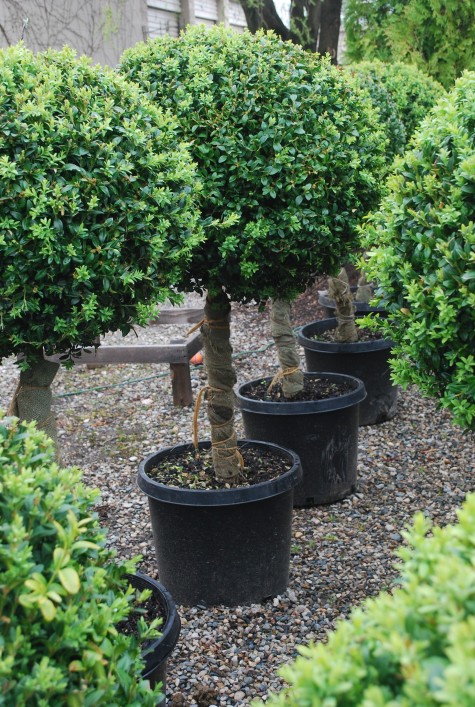 Boxwood of this size on standard-I never see this form in boxwood hardy in Michigan. It would take so many years to grow to this size, you would need to allocate your child’s college fund to buy one. Buxus sempervirens grows like a weed in mild climates; these came from Oregon. They will flush new growth twice in a growing season. They are an investment-but given our 6 months of garden off season-worth the expense.
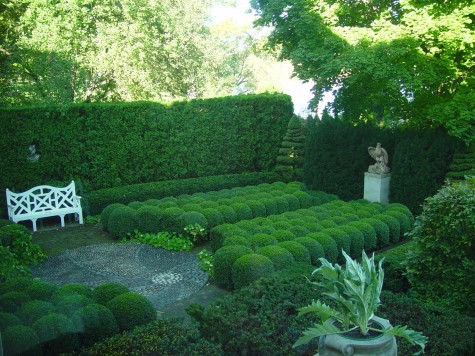
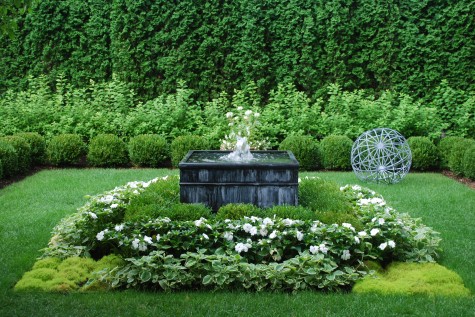 Evergreen hedges are pedestrian in the summer garden; this arborvitae hedge is the last thing you notice in this picture. They make a solid and quiet green wall onto which a gardener can sculpt their own idea of beautiful. Evergreens do a great job of serenely enclosing spaces. The center of interest in a landscape space can be encouraged, enlivened, made more special, via an evergreen backdrop.
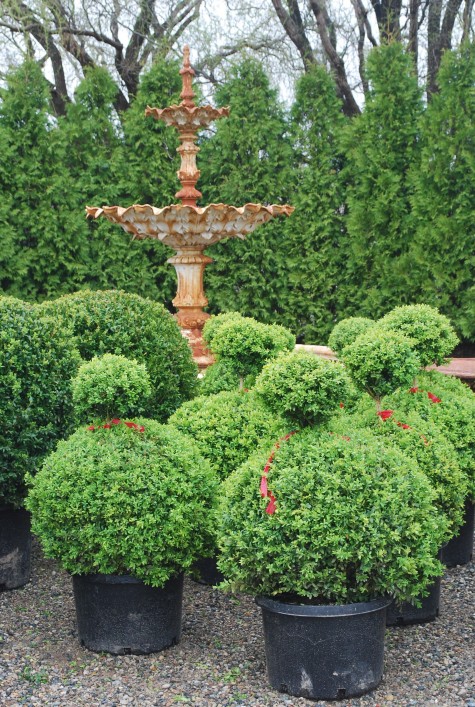 These trimmed topiary evergreens ask for a more starring role. Comfortable in the lights-yes, they are. Can they organize a space, provide star power, hold their own-no doubt.
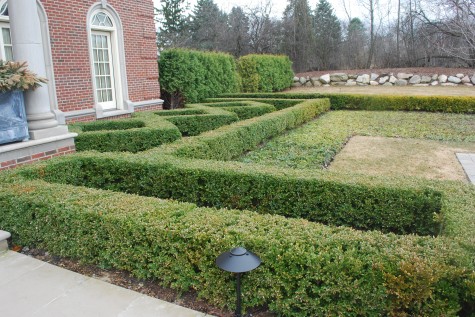
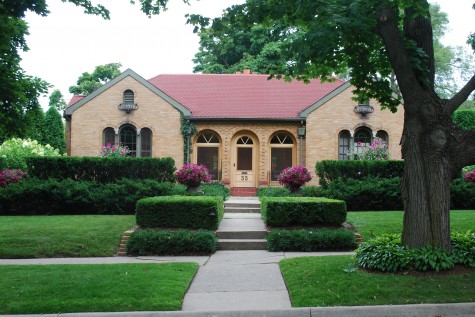 Though I published pictures yesterday of my pitiful rose and perennial gardens, and what the corgis have rent asunder, my landscape is by and large defined by its evergreens. Much behind the scenes workhorses in July, they are the star of my show in April. All of my landscape spaces are structured with plantings of those plants that stay green all year long. My public presentation looks presentable all year long. Behind these yew hedges I have perennials and pots-none of which look like anything right now. Better that I deal with what does not look great in April, than my neighbors. I do feel it is my responsibility to present a dressy and neat appearance every month of the year to others in the neighborhood. This is good manners. Those people that plant vegetable gardens in their front yards-I am happy to not be living next door to them; that would be tough for me. The beauty of a garden is year round, given committment and imagination. The neighbors aside, evergreens provide structure, privacy and peace. They break the fierce fall and spring winds-many of your other plants might prosper from the big brother or older sister an evergreen hedge might provide. Those six months I cannot garden in Michigan-my evergreens tide me over.
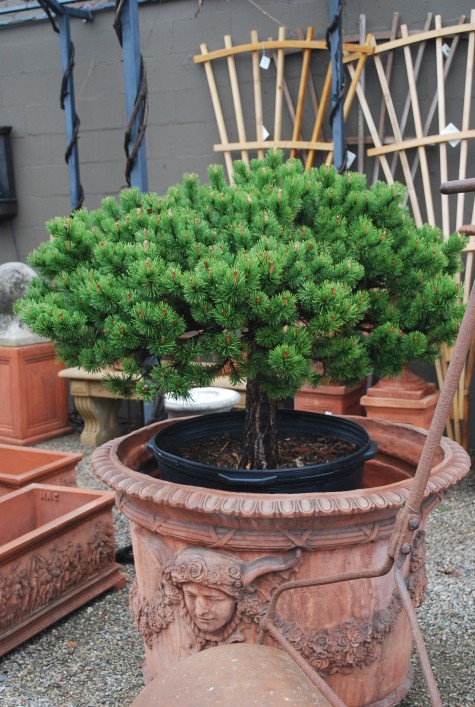 I took this picture today-the first week of April. The needles of this dwarf scotch pine on standard are are not just green-they are juicy and saturated green. Should you be planning a new landscape, or a landscape renovation, consider the evergreens. Broadleaved, needled, the topiary forms, the towering trees, the hedging evergreens-look into them. Their individual forms, their collective forms-they are a brass band that will warm your heart in the coldest months of the year.
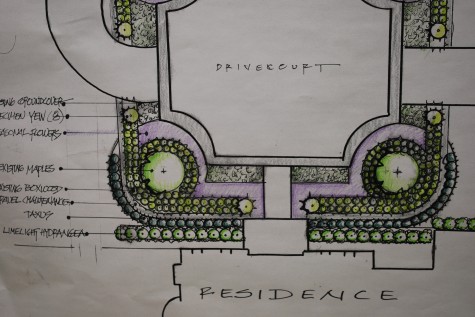
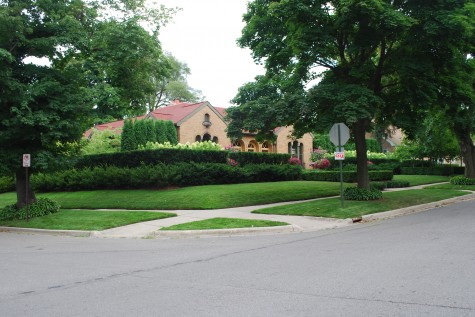 Though I took this picture on a July day last year, in my heart was a big thanks to those impassively dark green evergreens that scooped me up, and made my love of landscape a reality. Most of these plants were planted fifteen years ago. Don’t delay: plan, go so far as to master plan. Plant a few evergreens, or plant lots. Plant little plants or plant a few big ones. Think about where evergreens might provide a focus to a space, screen an untoward view, describe a space, break the wind, provide a beautiful backdrop. Today is the best day of this gardening season to think about putting a plan in place. The evergreens-they can help you.