On The Verge

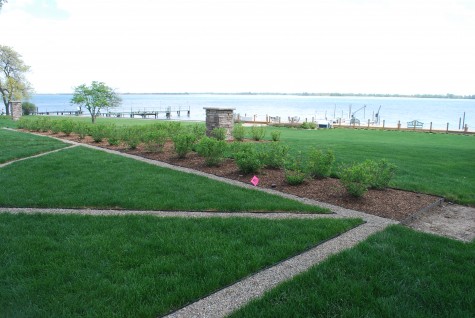
A verge is the absolute boundary between one space and another.  The Brits call the edges on their garden beds “verges”.  Years ago, taking the time to cut clean deep edges on beds with a sharp square spade for clients, asked for a name with some romance. Cuuting a verge made me feel like I was doing important work.  Edging beds-not so much fun.  I would fill those verge ditches with bark-to keep the grass from invading.  Edging beds and walks with steel or aluminum edging is an expensive investment that dramatically lowers maintenance time over the lifetime of a landscape.  In this garden, I had no interest in grass invading the gravel walks.  A steel verge keeps the spaces cleanly different.  Grass meets gravel. Grass and gravel coexist beautifully.  
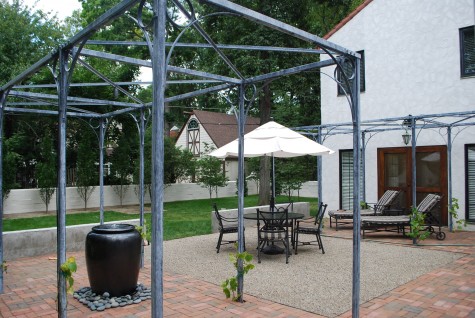

Steel or aluminum edging shines on a terrace made of multiple materials.  The extreme boundary of the gravel portion of this terrace is equal to the extreme boundary of the brick portion of this terrace.  The transition space-probably 1/8th of an inch wide.  A very crisp verge dresses up a space.   

Lawn and decomposed granite share one tendency-they both will spread out and blur the edges of the shape of a space, unless contained.  Blurred edges suit some landscapes.  I love those English style perennial gardens where the gravel is actually a mulch.  You know of which I speak-those perennials billowing over the gravel in a pattern much about plant habit, and that one random perennial thriving in the gravel.  The seed that managed to germinate, the plant that managed to take hold in the gravel, the gardener that directs all traffic around that one volunteer so beautifully out of place-this garden has no use for verges.  This particular design-aluminum verging was a must.   
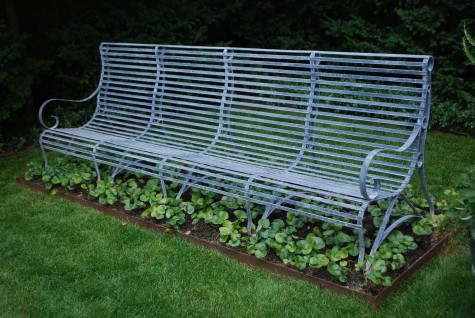
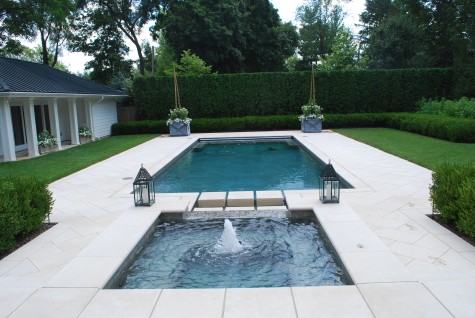
My steel bench sits on a platform set at exactly the height of my pool coping.  That platform is edged in steel.  I like the pool and bench platform set some above the lawn panel.  The why is simple.  I am very interested in the  description that landscape makes of the ground plane.  Multiple ground planes I find interesting.  Rather than ascribe this to an estoteric aesthetic ,living on minutae, I would suggest a bigger picture.  The lay of the land is a very important part of the beauty of a landscape.  Work the sculpture that is the ground- before you plant.   
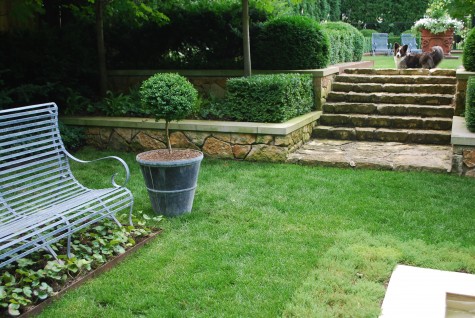
My stone retaining walls are edges, verges, on a much bigger and more noticeable scale.  Edging makes a dramatic change of material possible in a subtle way.  The changes of grade in my garden are no doubt my most favorite thing about it.  I think my landscape would be just as beautiful planted with grass everywhere, as it is now.  Picture your entire property planted with grass-would it enchant you?  If not, look at how you have sculpted your ground.  Start with a beautifully sculptural ground plane.  A great landscape design will feature the underlying structure of your land. 
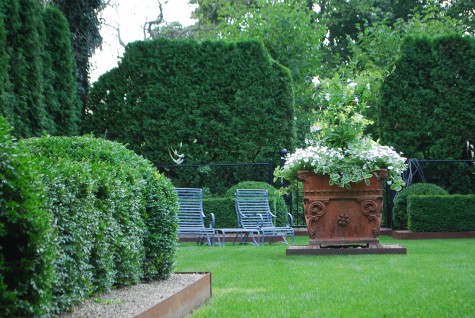
My side city half lot is very small.  I dug out the ground plane-I thought a sunken garden would be the most significant gesture I might make in a small space. Lowering the ground 8 inches-I had to go to Buck for edging for retaining that lowered space.  I had no room to roll and feather down to the lower level.  He made thick steel edging for me some 11″ wide.  And the corners, stakes, and connectors to go with.  Photographing from the fountain garden grade, you can see what my low riding corgis see every day-a gorgeous change of grade.
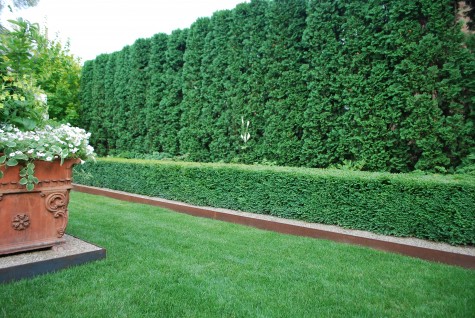
The steel platform for my English concrete pot is new this year. The 1/4 inch hot rolled, pickled and oiled steel is still that blue- grey color.  It will not take long to rust up, and turn brown.  This landscape-very simply about the sculpture that is the ground.  Sculpture in the landscape is important to me personally.  Knowing what is important to you in your landscape is incredibly important before you dig any holes.
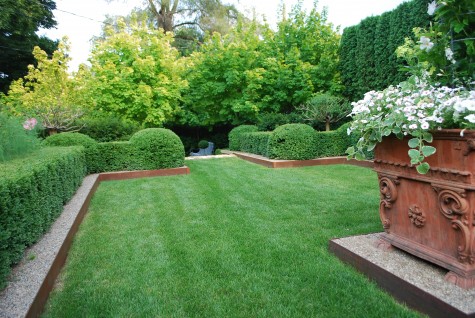
I have lived in my house, on this property, some 15 years.  My small 1.5 city lot plot demanded much more thought than action.  I am happy with my verges, no matter where they might be. The edges of a landscape composition are very important.  Painters-they are so lucky to have that frame around what they paint.  Landscape design-the edges need to be discovered, and marked.  This process can take a lot of time.  Lucky for every gardener, the earth has much more time than  you do.  Nature favors any work you do, in the long run. 
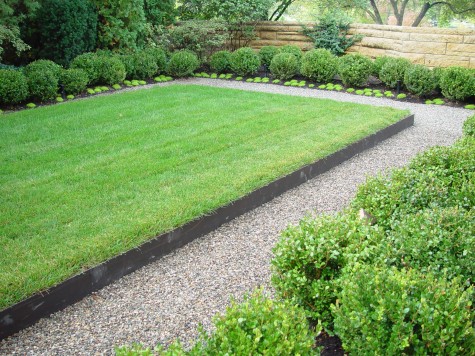
This raised grass panel, beautifully edged in steel, is not my design. My client’s interior designer engineered this for her.  He may not know the verge word, but he understands everything about space and sculpture, does he not?
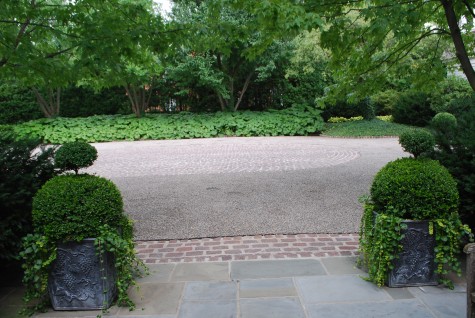
So Green, So Serene


It is an unusual client that opts for a green garden.  I doubt I have the discipline this requires-though the front of the shop is grey, green and white this year.  Truth be told, I love flowers.  All manner of flowers, all shapes, all sizes.  Little flowers-fine. Subtle flowers-I see.  Daisies-no matter that I see them everywhere, I love them.  The flowers that grace my summer-I love them one and all.   Giant flowers-what fun. Blooms-I am besotted by them.  But a green garden does have that aura of  serenity about it.

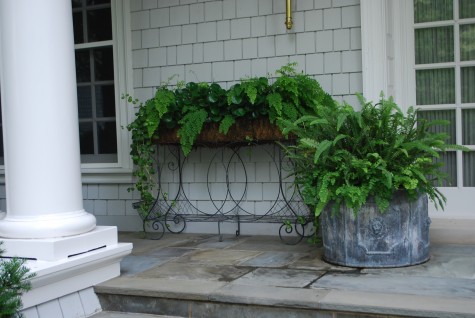
Serene does not necessarily mean sleepy. The infinite variation in color, shape, texture and mass of green plants is astonishing.  Green plants of singular form populate this planet such that one could plant any number of green schemes and never repeat oneself. These containers with ferns and pepperomia are lush growing, content on this porch.   

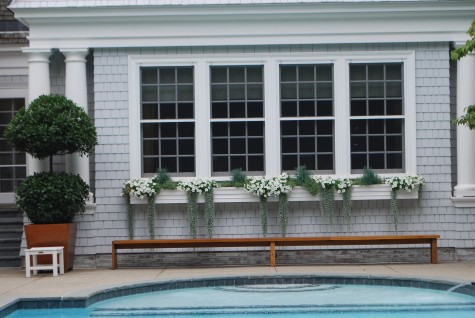
An old bay tree in a varnished Belgian box provides solid company to a long narrow window box. 

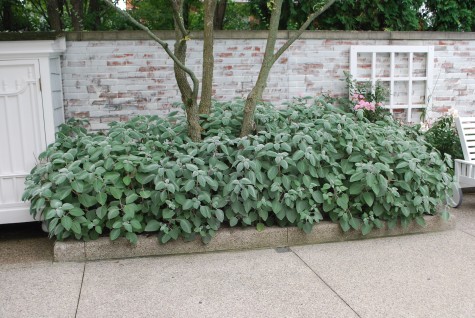
Plectranthus Silver Shield makes a swell, densely growing summer ground cover in a small space.  The thick felted grey green leaves are quite handsome.  That frosty green color persists in the sunniest and hottest spots you have, and is easy on the eyes. Its billowing habit of growth is very attractive.

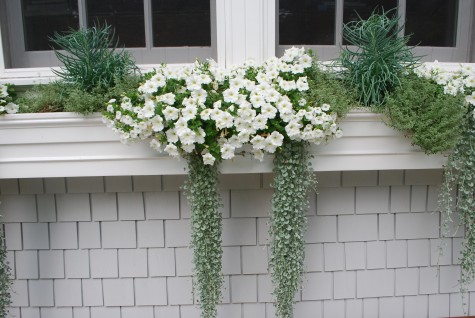
The plants in the window box look like bunting casually draping over the window box rail.  Those needled succulents are quite blue-green, and look great with the dichondra.  There is no brass band blaring here, just a plant string quartet quietly playing a simple melody. 


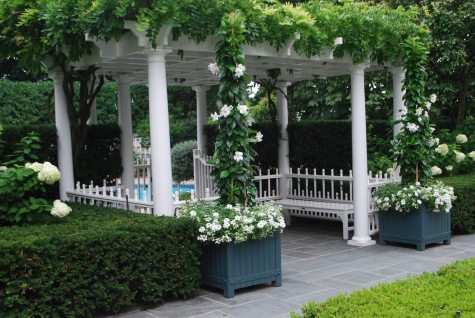
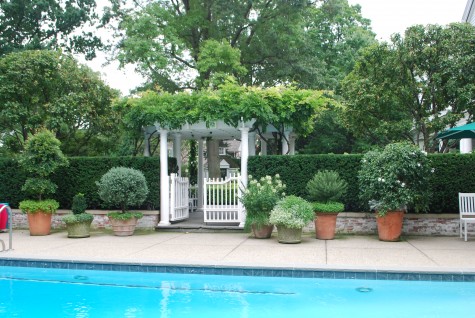
This white pergola with its wisteria roof is beautiful; there is no need to introduce a competitve element.  The mandevillea in the the boxes repeats the vining of the wisteria; the white flowers echo the white wood of the pergola.  Getting a planting to sit down and blend in seamlessly with all and any other garden elements makes for a serene space.  When plants talk too much, bicker, or compete with one another, the space will take a much more lively turn.  Deciding how high you like the volume outdoors can help you decide what and how to plant.   

Green spaces have an added attraction;  most shades and textures of green look great together.  When you use materials that are all the same color, it encourages you to see the differences.  What textures compliment or enhance each other? Big leaves look great with little leaves.  Shiny leaves look great with hairy leaves.  I am surprised I do not see more groundcover plantings that mix vinca and baltic ivy.  The contrast of leaf size and texture is subtle, and interesting.  

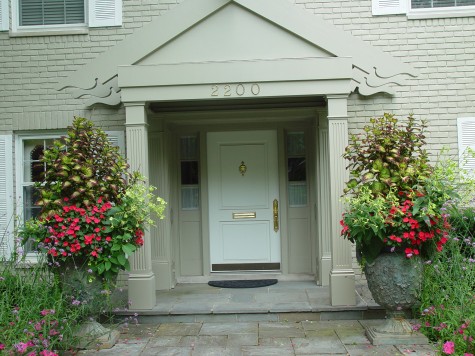
Topiary plants are a natural in a  green garden.  Many plants can be trained to grow in formally or informally clipped shapes.  The common denominator to all-the hand of the gardener, clipping and training towards an overall shape.  The effect of these groupings of pots is restful.  The formally pruned yews make a beautifully dark green backdrop for this collection of topiary. 


Lovely.

A New Outfit

If I had to do without a clothes closet, I probably could. A big box would probably hold it all. I have five choices of a dressy outfit, most of which date back at least 15 years.  I wear a Land’s End super pima cotton collared golf shirt to work every day-I have 10 in an assortment of colors.  My work clothes are comfortable and serviceable-Plain Jane, to say the least.   When they get to that ratty and dilapidated stage, Buck gently suggests that I might want to consider a new look.

 My work boots are old and comfortable.  My sneakers get replaced twice a year-they curl up and get uncomfortable from being soaking wet so often.  What a nuisance to replace something I am more than comfortable with; I do so, reluctantly.  I have 3 pairs of dress shoes.  A pair of hot pink cowboy boots with light pink toes are available, should I feel like going all out. The thought of adding to this wardrobe, or changing it out althogether, fills me with dread. I am not really great with  change.

I am always convinced I have no time to add or make changes to my appearance.  Regularly I am in the ladies room at work with a dull pair of scissors chopping at my bangs-I am sure I have no time to go see Suzette.  Never mind that she and her group at Salon Suzette cuts and styles expertly, and reasonably. Never mind how great I feel when she cuts my hair-the new do makes me ridiculously happy.  No, I persist in hacking my bangs with dull scissors, producing a result that would remind you of my second grade picture. What is my idea? 

Professional styling is not such a bad thing. But should you be reluctant to give over any design to a third party, hear this. I am  incredibly persistent in preserving my status quo.  I would bend over backwards to keep everything the same.  What so exasperates me with clients, I see myself doing.  This is what has encouraged me to spend a lot of time explaining and teaching.  All of that time spent is of benefit as much to me, as to others.  I have to be prepared-should I advise, teach, explain, or design. I sort through and verbalize my design process-hopefully to good end.  Change is disruptive, irritating, and expensive-I try to make it sound like fun.  Are you able to make your landscape renovation seem like fun?  If not, ask for help.

Hanging on to what was once historically gorgeous might be admirable.  Statistically speaking, there is an equal chance that the hanging on to what once was might be as much a product of a dislike of change as an interest in historic preservation.   I chide myself over this very issue.  Am I preserving those landscape gestures that I did 2 years ago, or 14 years ago, because I should, or because I am reluctant to make a change?

Good design is not about money.  A master plan design-it is good, or bad, or mediocre. Do not associate your money with your design-this is a bad move.  How you choose to implement that design is up to you.  Plant sizes, yearly projects-you are in charge of what you devote to a project at any given time.  Nine years separated these two photographs.  The blink of an eye, actually.  But the bits added or amended over the years can add up to a lot.  The new shoes I buy are never better than the first day I own them.  A new landscape gesture, no matter how small, done properly, only gets better with time.   

I bought my house in 1996. I never saw the horrific color of the trim, or that ghastly color visited upon the only 4 urns that the GM foundry ever made.  I saw something a camera could never record.  I was sleepy about renovating the landscape until the day I was fifty.  I realized that if I did not get going, I would die, never having had a landscape and garden of my own choice and doing.  I got going.    


Fourteen years has made a big difference.  Did I have untold money to put to the new outfit-of course not.  I did one major and one minor project a year-for years on end. This is my life and passion-of course I would do 2 projects a year. I still have the original design for the property-mostly in shreds from my years referring and reconfiguring. If a beautiful landscape is swirling around in that cauldron that is your life, one gesture a year, however small, can make can make for a dramatic change, given a decade or more.    

People with vision and determination build new houses.  I could never take that on.  Too many decisions, a too fluid situation, a project in which the end is ill-defined-this is not a good place for me.  I am much too resolution oriented to build a house.  I have plenty of clients who build beautiful houses.  I understand that when it comes time to dress the house in an appropriate landscape, people are not only tired of the construction, they have had every dollar wrung out of them.   


The insult of the construction will fade. Lots of new house landscapes are more about obtaining an occupancy permit, than a landscape that works beautifully.  The interest in a new outfit comes sooner, or later.  The house I bought has a new outfit, some 14 years in the making.  You do not see the years, just the change.  The one tree you plant today, per your master plan, will delight you in 14 years.  The 3 hydrangeas you plant tomorrow, on you way to a hedge of 30, will encourage you to keep going.

My advice? Master plan your landscape and garden-whether you do it yourself, or get help.  Then buy and plant the landscape equivalent of a new pair of shoes.  Every year.  I recommend this.

Precisely Pruned

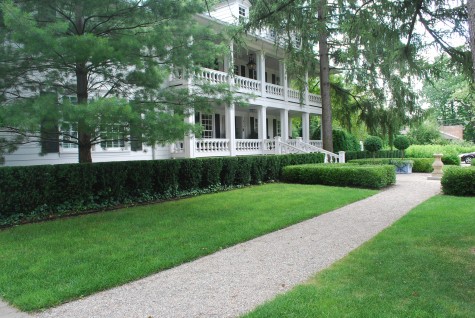
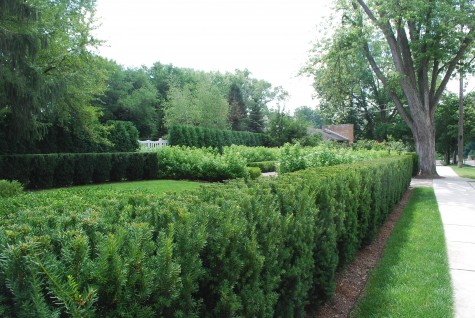
My favorite day of the gardening season is pruning day.  I would not dream of taking on the job of pruning my evergreens-M and M Flowers has charge of this job. This very moment I am looking out my window past my computer to my hedge of Hicks yews-pruned perfectly level with the horizon.  In front of those yews, my grasses waving in the breeze, and my coneflowers, and the branches of my kousa dogwood.  This is a very good looking picture, believe me.  They do the best pruning it has ever been my pleasure to witness. They come three or four times a season, and doll things up. I work seven days a week, and in return, all I want is a garden that enchants me when I get home. Their formal pruning is remarkably precise and thoughtful-I look forward to it every year.  

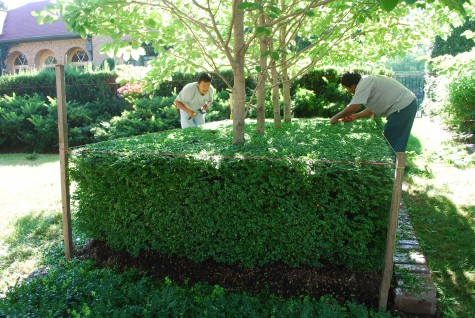
Every block of boxwood, every hedge, every shape is detailed with lines set with a level, on pruning day.  They leave nothing to the eye.  My ground swoops and drops and rises again-not so their pruning. Their trimming is exactly level with the horizon.  Formal, and very precise. The look of it lowers my blood pressure.  Pruning a hedgerow of viburnums, lilacs and miscellaneous flowering shrubs takes an eye with a gift for providing air and sun for each individual branch- and a gift for working in concert with the natural growth habit of the shrub in question.  Formal hedges, on the other hand,  demand the idea of level, level lines to go with, and a patient and persistent hand.  They prune nothing with gasoline powered hedge clippers.  This group clips by hand. 

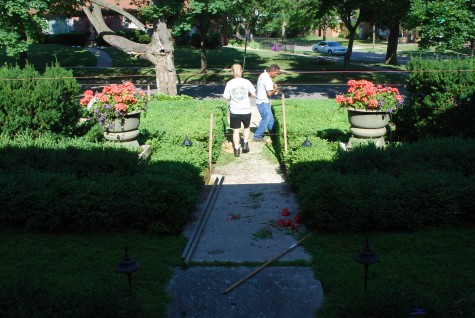
Mindy and her crew pruned these arborvitae, and their skirt of boxwood. What a gorgeous job.  She assesses each plant-she never prunes too hard, if a hedge is not ready. She understands about the long haul.   Properly and expertly pruned hedges can make a formal landscape shine.  Invest in stakes, level lines, and hand shears-should it be your idea to maintain a formal landscape on your own.  Trim carefully-some pruning ideas take years to finish.  Trim slowly, regularly, and patiently.      

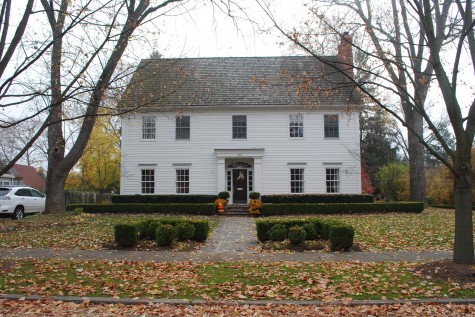
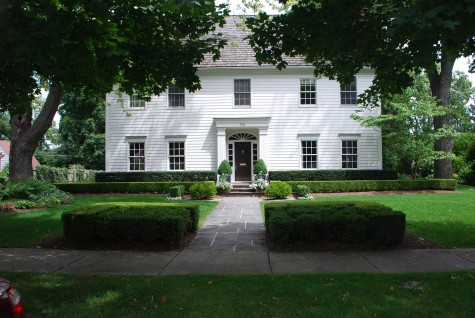
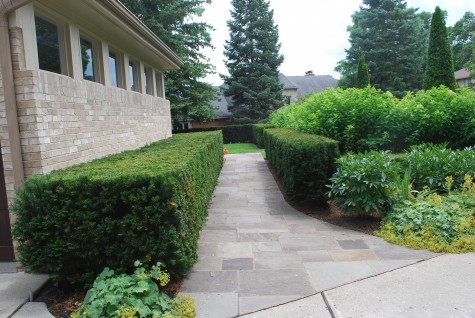
The boxwood in this photograph tells all.  Short on the house side-taller on the path side.  The horizon line exists independent of the grade of any given property. Formal landscapes do not repeat the up and down of the ground.   They are all about level. Though pruning to level is a skill, it is easy to spot when a hedge is out of level. It takes great patience to let plants grow up to the height they need to be.  I planted 100 Hicks yews on my property 10 years ago.  The shortest plant on the south side is probably 4 feet tall.  My tallest yew is close to 8 feet tall.  There were more than a few years when none of them were tall enough to prune.         

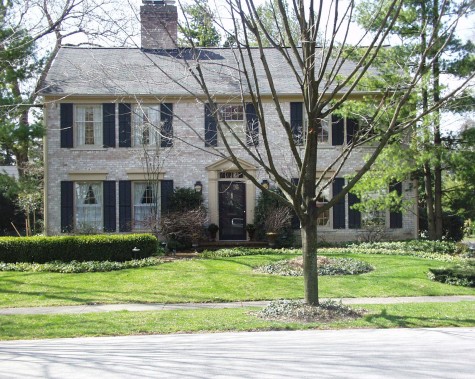
Whatever landscape element repeats the horizon line rests the eye.  I like the idea of a landscape that is restful. I like quiet, order, santuary, organization, clean and simple, not necessarily in this order, when I come home. My work life is always a big, fluid, and sometimes messy situation.  I like orderly when I get home. For clients, I favor a formal presentation on the street side, so the landscape looks beautiful in every season. The perennial garden, and the vegetables I invariably place in the back.  I do not see the need to place any plant material that has the potential for poor performance in the front.  Designing within the limits of one’s ability to maintain is important.  It is of much interest to me-if the client is a gardener. I try to tailor design to a specific set of circumstances-human circumstances.  Horticulture is not everything; people’s lives are everything. A formal landscape I find easier to maintain than an informal planting. Whenever I see an exuberant and lush perennial garden, I know a lot of committment and work is going on behind the scenes.

 Vertical growing yews handle this type of trimming quite well; there are a number of good cultivars available beyond the trasitional Hicks yew.  Boxwood tolerates shearing the best of all the evergreen plants.  No plant loves to be sheared.  Some evergreens tolerate this treatment better than others.   

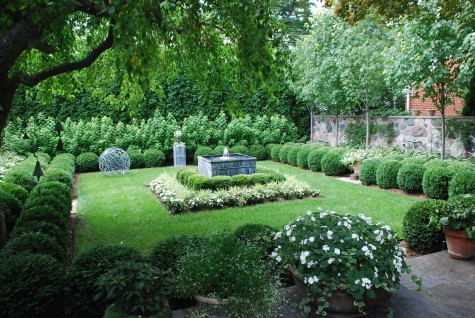
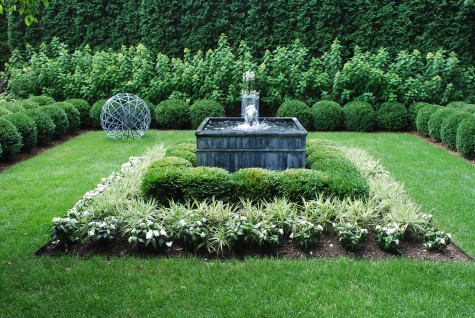
This landscape is but a few years old, though the boxwood have been here quite some time.  We moved a lot of what was here into its current configuration. The square footage of this landscape is not so large, but its impact is considerable.   This year, a pruning on the boxwood some two years in the planning, transforms the space. These boxwood spheres-beautiful. I was so delighted to see this space.    


A gorgeous landscape is very much about an idea of the natural world that gets strongly expressed. No small amount of this expression has to do with how that landscape is cared for.  It is one thing to choose plants that compliment one another, in forms that please the eye.  But once that is done, the landscape is only beginning to grow.  I tell clients to not let what they have worked so hard to achieve get away from the them.  It is so important to stay ahead of what a garden needs.

I like having this to come home to.