Breathing

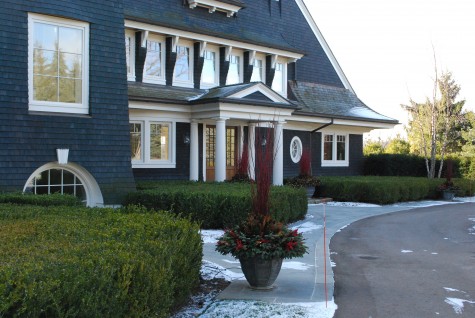
Every living thing breathes. Seals, beavers, dolphins, people, birds-and leaves. The act of taking a breath is an elemental description of life.  I know when I have a bad cold, my breathing is obstructed; challenged.  I am ready and able to take on any issue-but key to my energy is my ability to breathe in and out. Plants do the same thing-but in the winter, that rate of transpiration slows down.  A loss of moisture through the leaf cannot be replaced when the ground is frozen.  Plants go dormant in response to this-but the evergreens are still open for business.  Seeing that evergreens get adequate moisture is an important fall job, as I the time will come when moisture loss cannot be replaced. This Michigan winter seems to be settling in early. This thicket of boxwood pictured is enduring considerable cold.  This morning-14 degrees.    
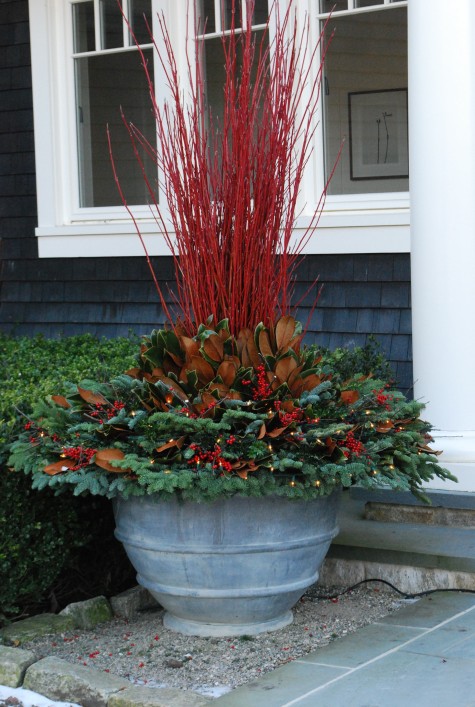
My holiday and winter containers revolve around live materials.  In this instance, Cardinal redtwig dogwood, magnolia stems and leaves, cut noble fir, and Michigan holly-ilex verticillata.  This giant Bulbeck egg cup-lots of materials are asked for. I think we did a great job of answering.  My winter design for this beautful lead egg cup-generous.  But pretty and generous aside, there is a job to be done. Hopefully this composition will stay fresh looking for the winter months to come. 
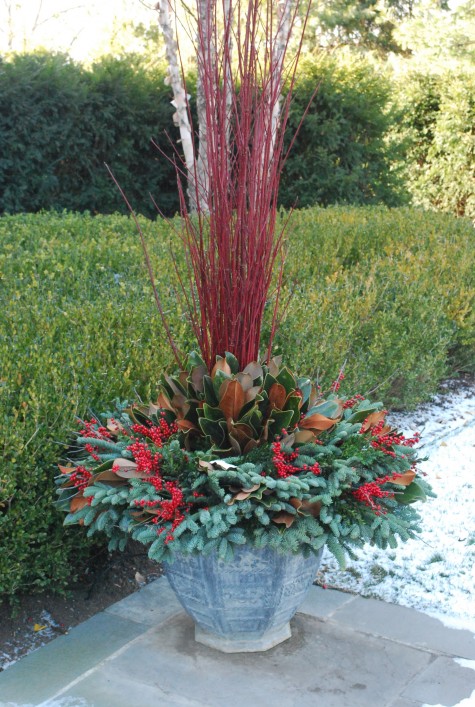
Michigan holly berries usually fade and rot when the temperatures go below freezing.  Unlesss you have a mind to intervene.  Newly planted evergreens and boxwood-I spray them with an anti-dessiccant late in the season.  Wiltpruf has for years been the anti-dessicant of choice.  This waxy substance slows the loss of moisture from evergreen leaves and needles.  This can help prevent winter burn.     

For the first year, this year, I researched a new anti-dessicant called Vaporguard.  I was impressed that newly transplanted cabbages treated with vaporgard showed no sign of wilt.  I wondered if it might help cut greens and berries to better retain moisture.  This cut Michigan holly, treated with vaporguard, seems to be holding just fine. The magnolia leaves will eventually loose all of their moisture, but they dry beautifully, and hold tight to the stem. 
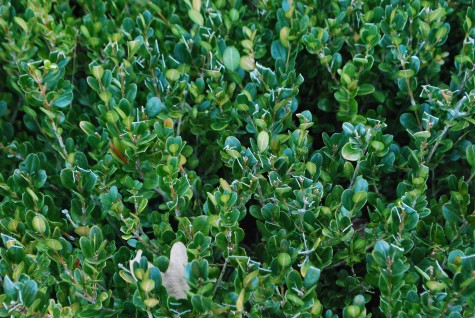
These boxwood are located in a fairly protected location.  The house does a good job of shielding them from winter winds. Though their growth began slowing down in August, how well they winter can be helped by an application of antidessicant.  Even when it is very cold, sun and wind can accelerate the evaporation of moisture from leaves. 
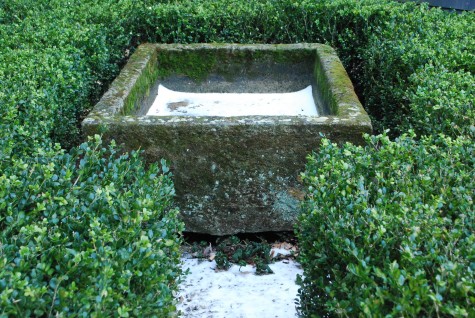
These boxwoods have been sprayed with antidessicant for the winter.  My idea is to protect them however I can. Though these plants have been in the ground four years now, I am never sure what the winter might have in store.  Since they are a major feature in this landscape, I am hoping to avoid widespread trouble in the spring.  
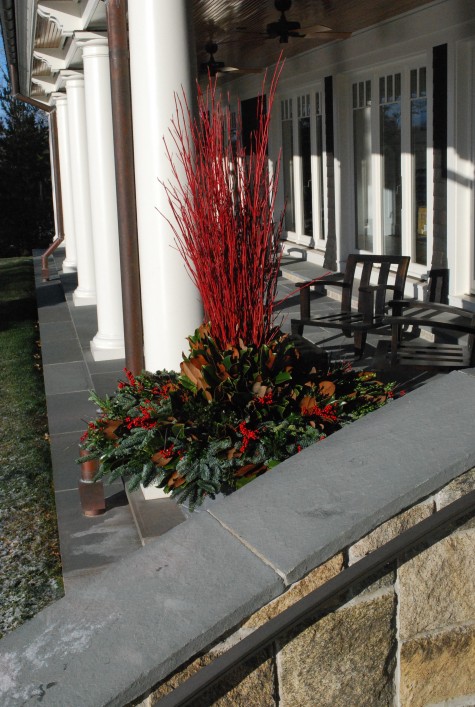

This is the first year I have ever included bunches of Michigan holly in my winter and holiday containers.  The berries seem fine and fresh, and show no signs of dropping from the cold.
The Right Height

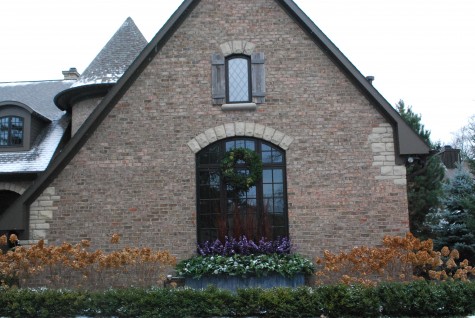
Though my own house is an amalgamation of arts and crafts and Mediterranean style, it could simply be described as a ranch.  One story and longer than wide, it has a low profile. I do however have clients with very tall houses.  Multiple stories and tall ceilings can make for a home that rises very tall out of the ground.  Pictured is such a house-even the windows are very tall. Whether I am designing a landscape or a winter display, the elevation of a house should inform the design. The landscape and window box makes a very strong horizontal statement-counter to, and in contrast to  the height of this window.  

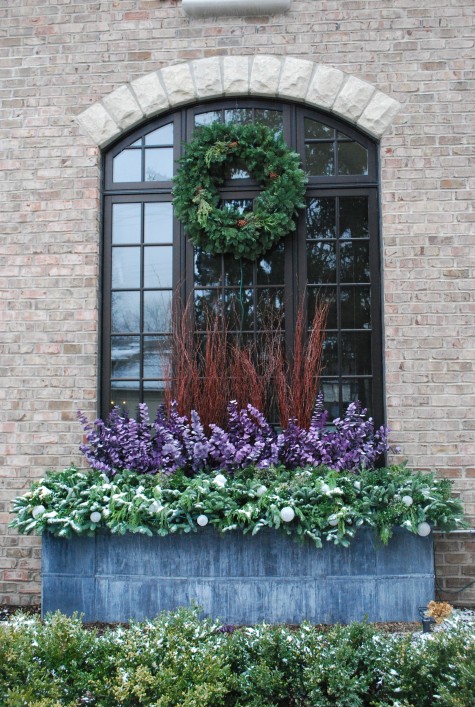
The irony of windows?  That transparent material which transmits light to the interior of a house reads dark, or black from the outside during the day.  This large window reads especially dark, given the pale brick. The winter display in this large box needs to address the window-not just the box.  My client liked the combination of lilac eucalyptus and varnished birch twigs; I think the color combination is especially pleasing.  I did the birch twigs densely-so they would read aginst the dark glass. The mixed greens in the box are a fine texture that contrasts well with the snowball light covers.  A big box needs to have a lot going on-no one wants to make their audience sleepy.  Repeating those mixed greens in a wreath secured within visual distance of the arch of this window makes for a complete thought.      

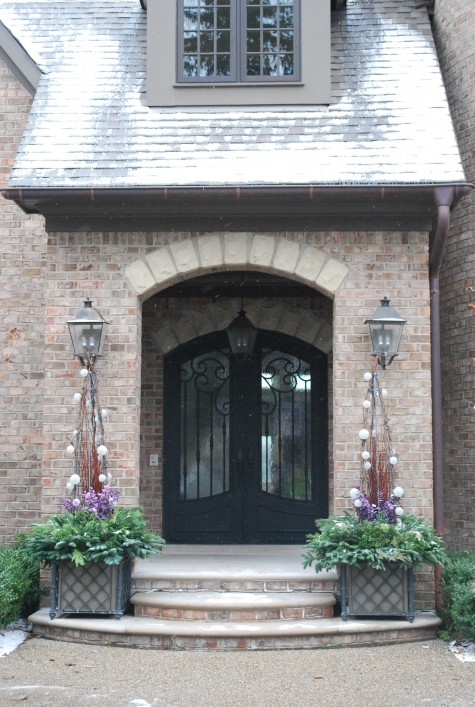
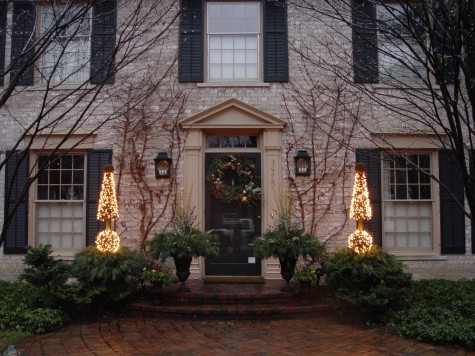
The entrance and front door are equally as imposing-the winter pots need to be the right height.  The steel tuteurs covering in grapevine and lights add a good deal of height to the boxes flanking the door.  This height is all to the good-every element in any given view needs to work in concert.  Working in concert-this sounds so simple.  I find it anything but.  I fiddle, fume, add, subtract, redo, reconsider-a willingness for this kind of activity benefits the design of any landscape-summer and winter.

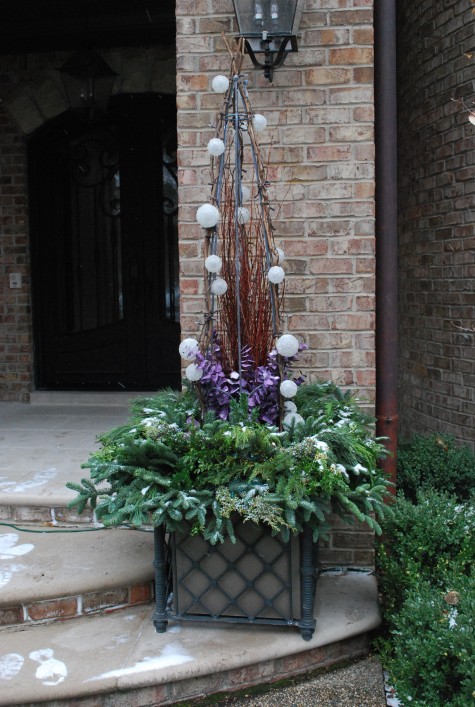
These tall plant tuteurs overlap the base of the iron light fixtures.  My favorite part of this picture-the relationship, the juxtaposition of the rolled iron fixture to the rough cut natural grapevine.  The lilac eucalyptus-I need more. The brown cords on the lights-thank heavens someone makes these.  

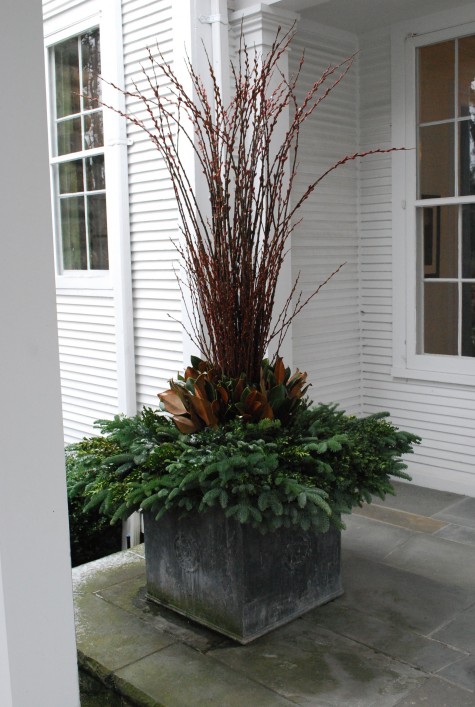
A substantial English lead box from Crowther’s is a very serious garden ornament.  I am not really talking about the material here-I am talking about size. A wicker basket of this size would demand the same-a very tall centerpiece, an intermediary and generous level of magnolia-and a low wide blanket of noble fir and boxwood.  The relationship of vertical elements to the horizontal elements makes for great visual interest. As much as I garden, I know when I go beyond a palette of materials to that stage when everything is cooking.  

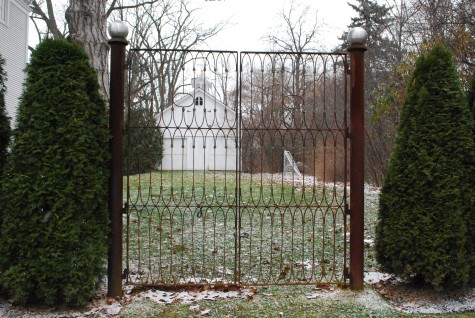
These tall Moroccan steel gates with lead dots-I cannot remember where Rob found them.  Attached to steel posts with stainless steel finials-my addition.  The height of these gates suits the property.  The barn is in plain view, beyond.  Given a few more years, the arborvitae fence will fill in-stay tuned. 


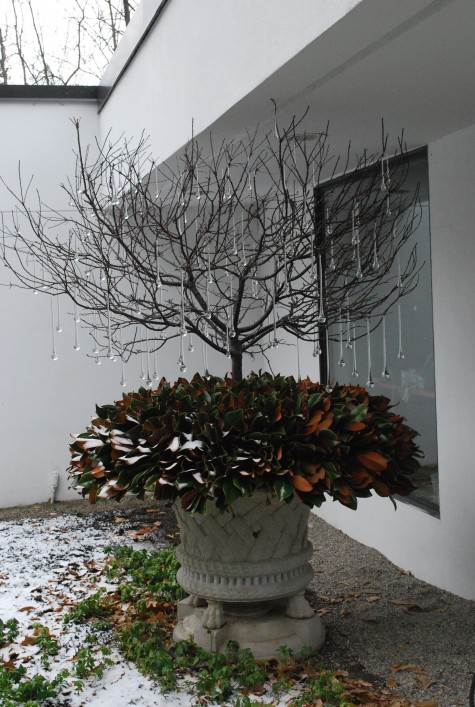
Mid century modern homes seem to be much more about low than tall.  This client bought and chose to place a decidedly traditional limestone urn-half in, and half out of a long and sculpturally low underhang.  I am impressed with her decision.  The placement of this topiary tree skeleton hung with glass drops hovering inches above a blanket of magnolia branches-pressurized.     

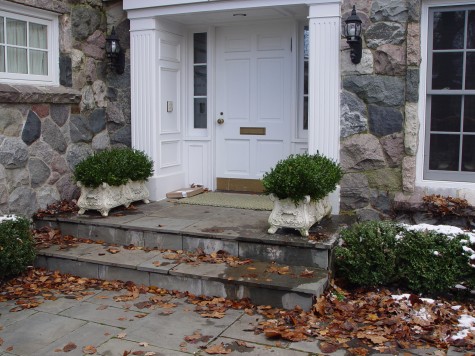
Short can make just as much impact as tall.  These limestone planters stuffed with boxwood work here.  The planters have lots of curves, and lots of detail-there is no need to challenge that.  Simple, volumetric, and friendly-a concert.

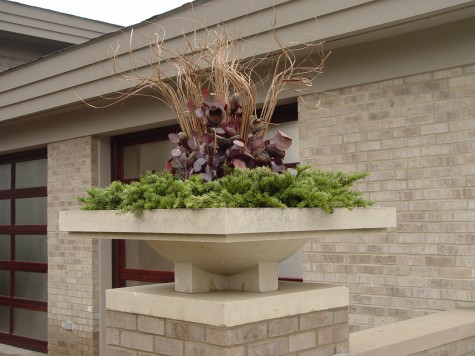
I do have clients with reproductions of planters designed by Frank Lloyd Wright.  I respect their choice.  I restrict my materials, and I plan always to make the architecture of the planters the central metaphor.  Low and simple seems to work. 


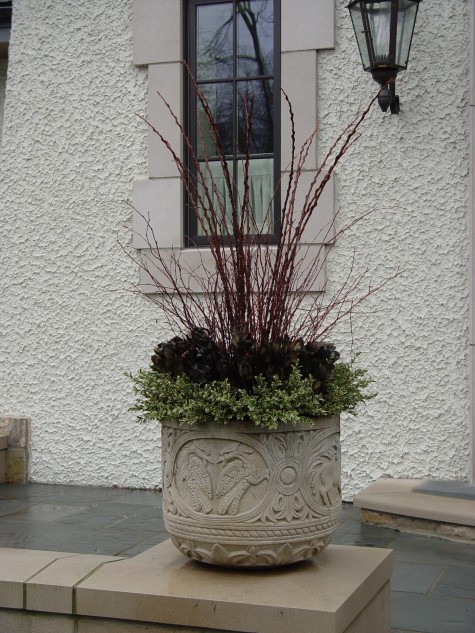
These cast limestone pots are so beautiful.  It was my idea to fill them for the winter in a way that did not in any way obstruct a view of the pots. The twig height-medium.  Not tall, not short.  The big idea here-no matter any rules, your good judgment-stick with that.  


The tall and short of the matter-every individual situation asks for an individual solution.  Your home, your garden, your landscape-it is uniquely yours.  Trust your take.  It really is good fun to construct the winter pots.  Any composition can be exactly as tall and wide as what suits you.  The moment you are done, you are ready for company.

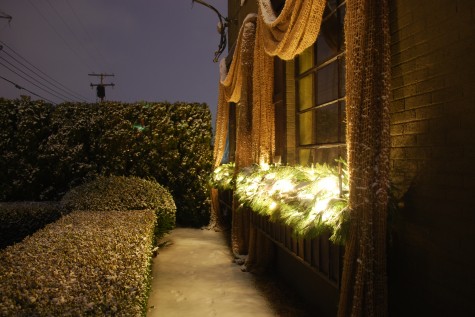
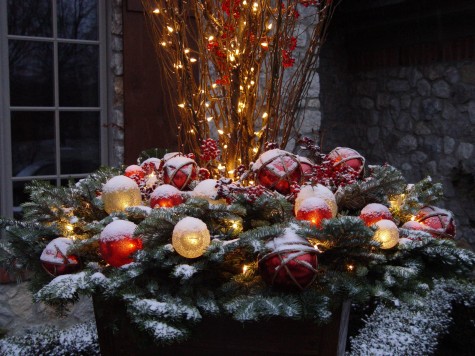
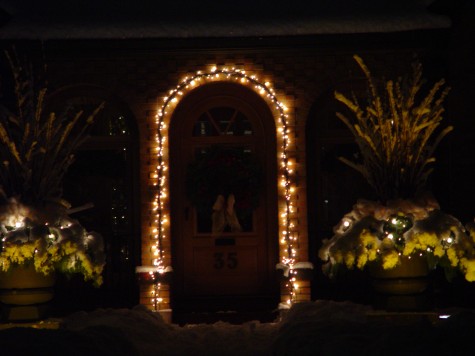
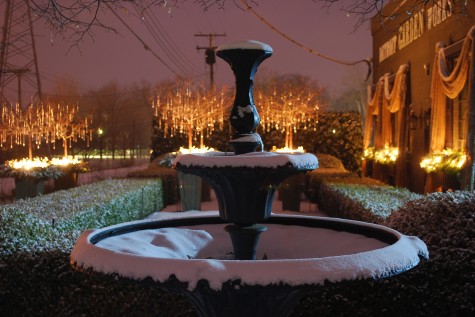
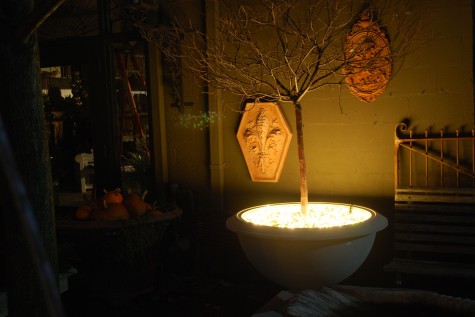
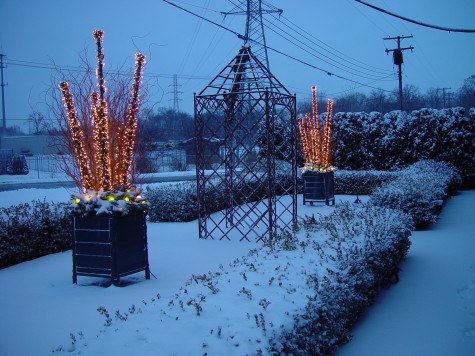
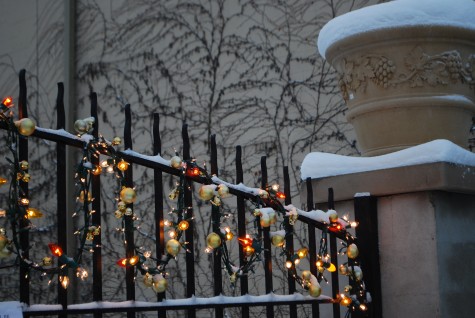
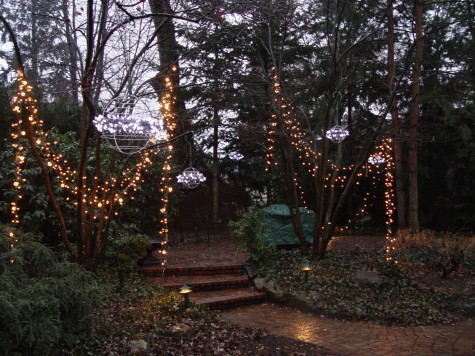
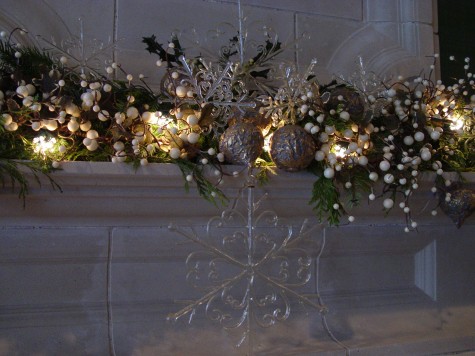
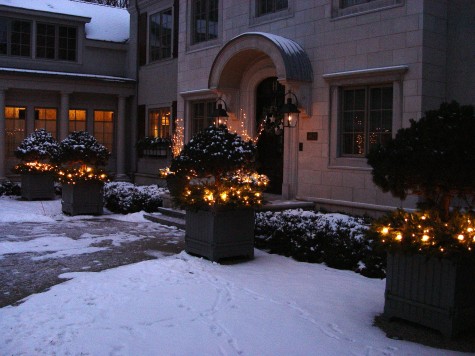
At A Glance: Night Light

Winter Pots: Old, New, and Favorite


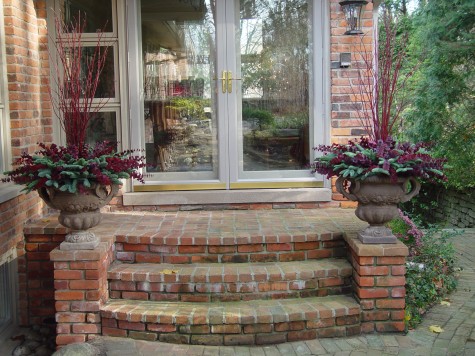
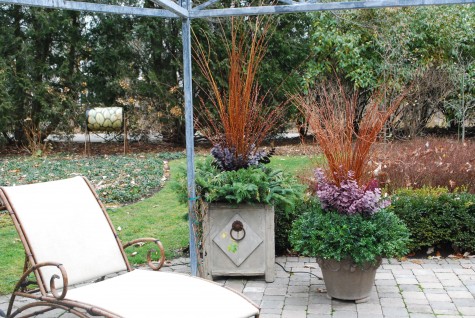
Should you be the person who hybridized the red twig dogwood cultivar “Cardinal”-many thanks for your efforts.  I have just as many thanks to the branch farm that grew this dogwood.  These fiery stems are stout and, and unblemished; these branches are the brilliant red you only get from fresh growth.  I was never so diligent cutting my dogwood back to the ground-mainly as the shrub would look like heck most of the following season.  I like using multiple bunches of professionally farmed twigs, when I have big containers to fill.    


It is tough to go wrong, if your materials are beautiful.  A well grown perennial takes root fast. A big juicy tulip bulb will mean big juicy flowers in the spring.  What fistful of beautifully grown fresh flowers looks bad in a vase? All of the materials in these two pots were beautifully grown; this lends a formal and elegant air to the arrangements.    


The work involved in creating any container garden makes me ask in advance for good materials. This applies to any plant-whether it be a perennial, a tree, a shrub, or a bunch of cut roses. I tell clients all the time that the effort to plant an evergreen with an undersized rootball and dead leader is exactly the same as the effort it takes to plant a healthy plant.  Every spring I see rows of 6 foot arborvitae that deathly shade of orange brown.  If you do buy marginally healthy plant material, then make the committment to baby them along.


This client will not be lounging out much this winter, but that is not for lack of company.  Materials for winter pots especially need to be well grown and fresh-they have a very long winter ahead of them.  Greens cut too early and shedding needles in November-not a good sign. Shake before you buy, or cut at home. Fresh silver dollar eucalyptus fades to a papery taupe fast; it does not hold its fresh blue color.  That is fine for some-but maybe not fine for you. This preserved lilac and purple eucalyptus bravely shrugs off the winter.  Long about February 20 I will like this a lot. 


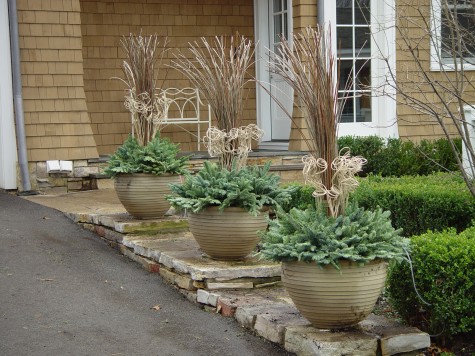
Stick stacks-how I love them.  It has been several long years I have done without them. The stems are shaved into squares-that process makes them absorb water unequally on each surface-they fan out and curve unpredictably when they absorb water. Every year I hope I will find a source for them again.  I take that back, I don’t hope.  I look long and hard for them.  Ting-those incredibly tough and wiry palm stems-easily survives our winter.  They may not be native, but they obligingly fit into a midwestern winter color scheme. 

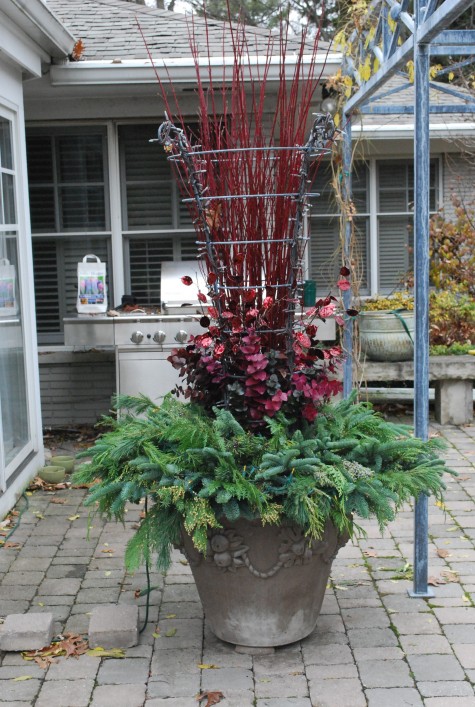
I like dressing a summer topiary form in lights for the winter season.  The red faux money plant picks will reflect that light at night.  Some daytime sparkle is good-but nighttime sparkle is more than welcome. The dark red dogwood stems-I do not know the name of this cultivar.  I just know the color seems right.

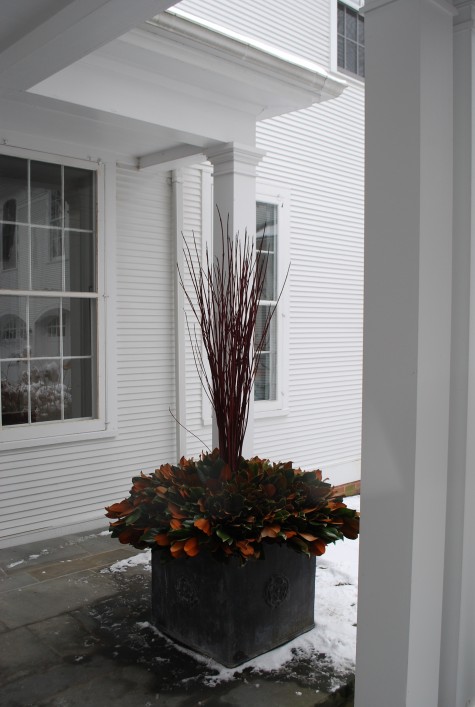
I don’t know a cultivar name for black twig dogwood either.  But I do know these purple black stems pair well with cut magnolia.  The lead squares, the black dogwood, the dark green magnolia leaves with their rich brown obverse-a striking foil to this house clad in white painted wood.  Should you favor an arrangement made from dark materials, place them in front of something lighter. Dark materials need some lighting. 

RA2, these few sentences are for you.  I know you could barely bring yourself to drain your fountain for the winter.  This does not mean you have to tarp it.  See, this fountain has a winter life ahead of it.  Given its size, the foam that securely holds the cut greens requires a circular support of exterior ready plywood. Curly flame willow provides lots of volume without the need for so many stems.  The lights in the mixed into the mixed evergreen stems-stick around. This will look even better later in the day.


These two Belgian wood planters-still one of my favorites though I did them many years ago. Three stiffly vertical bleached willow bunches are surrounded with an equal number of  giant stick stacks.  How those stacks curved so beautifully, unexpectedly and asymmetrically-I had nothing to do with that outcome-but I sure do like it.  The natural bristle snowflakes-a winter ornament of perfect scale, and completely in keeping with the overall arrangement.  Handsome.