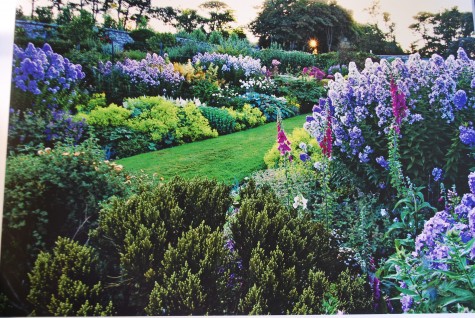
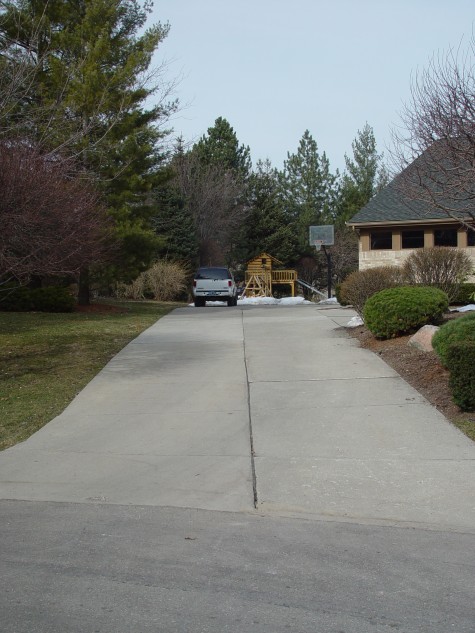
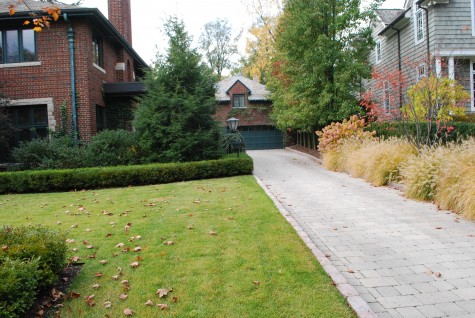
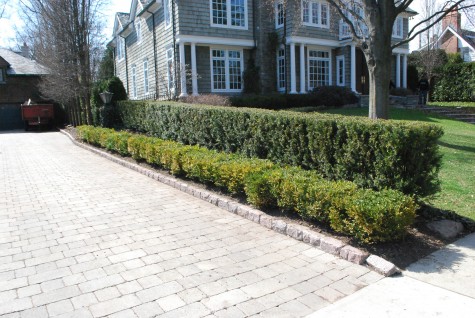
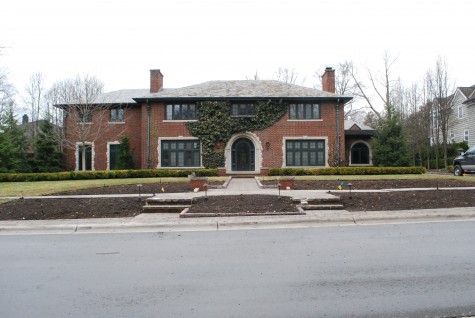
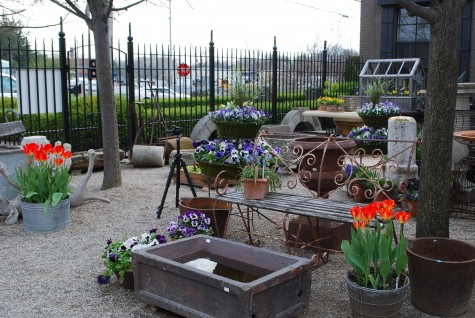
 I took a picture of my tripod outside the shop today. I shortened the telescoping legs as much as I could. This height put my camera just 24 inches above grade. What is my idea here? The perspective from which you view a garden, or a landscape, much influences how it should be designed. My driveway is set at the same grade as my basement. This means that even though I have a 1 story ranch, I see my driveway from a deck which is one story above that basement. I don’t really spend time in my drive. I load the dogs, and drive to work. I unload the dogs when I come home from work, and walk up the basement steps to get into the house. But Buck and I frequently sit on the part of the deck that overlooks the drive. This means we are looking down on that landscape. This garden is an overlook garden.
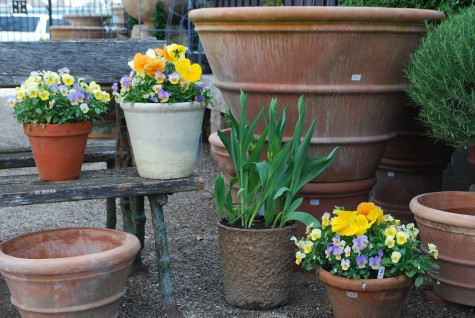 My tripod set at 24 inches tall records a different view. The view I see when I am seated in my garden. This post is not only a discussion of those factors that influence landscape design; it is my prelude essay to talking about choosing and planting containers. The questions I ask first up, whether it be a consult for a landscape, garden, or containers-how will you view it? Will you be looking from a second story window? Will you be sitting next to it on a lounge chair on the terrace? Will you be looking as you drive or walk by? Is this a space you view from a window, or a place where you sit and spend time?
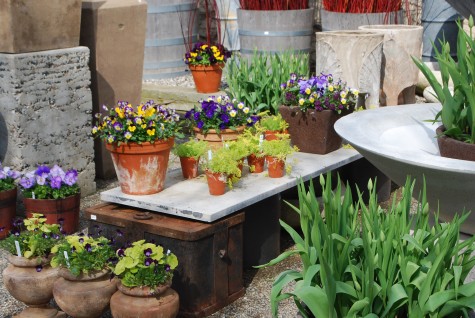 Small containers are perfect on an outdoor table. When you are seated, the presentation of a container and a planting is close to eye level. The view of an 8 inch diameter pot when I am standing-a bird’s eye view. Small pots, containers and urns need to be elevated for good viewing-and placed where you are likely to sit.
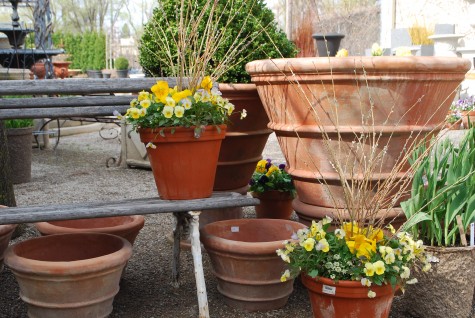 Seated on a bench, I have a great view of these handmade Italian Terra cotta pots from the side. I also have a great view of a pair of machine made Italian terra cotta pots. What do I make of this? Those places where I sit in my garden, those containers need to be every bit as beautiful as what is planted in them-I have a view that asks for that. I sit in my rose garden. I have faced down my arborvitae with boxwood; I need a landscape element at eye level that is beautiful. Arborvitae tend to get thin and straggly at the bottom. Were I viewing the arborvitae from the second floor, I would be less concerned with their habit at ground level. What is all around me in that part of the landscape where I spend time needs to stand up to close observation. Places where I am looking from afar, or looking down-I need serviceable containers that feature the plants. Any fabulous pot or garden ornament needs to be places where it can be seen-regularly.
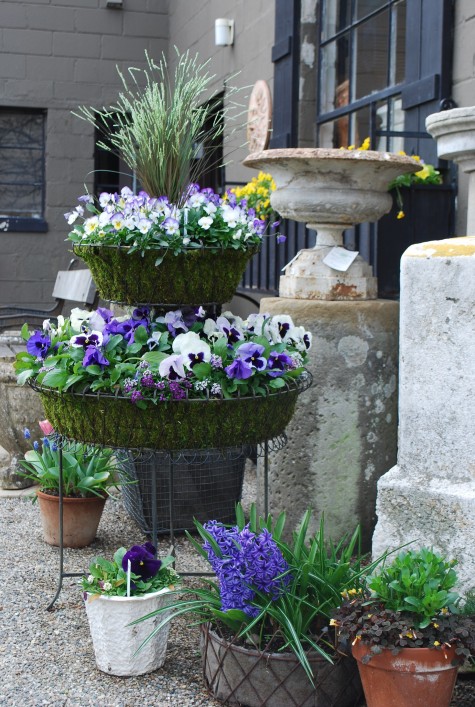 Though I might be seated in a garden, I would not want every element at the same level. A change of level provides great interest. This two-tiered planter welcomes other elements at its feet. It also permits a view through to an element further away. The Cotswold stone pedestal is a visual stopper; it is solid and weighty. The mix of the delicate steel legs and solid stone, the objects set at different levels is visually interesting. Every element here is providing company to what I see when I am seated.
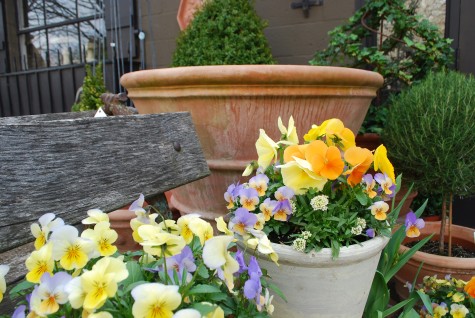
When I stand in my garden, the sky, and the trees of my neighbors comprise a large part of my view. When I am seated, the sky is eliminated from my view. The view as pictured above represents a much more intimate garden experience. Landscapes that involve mountains and sky make for a much different, less personal experience.
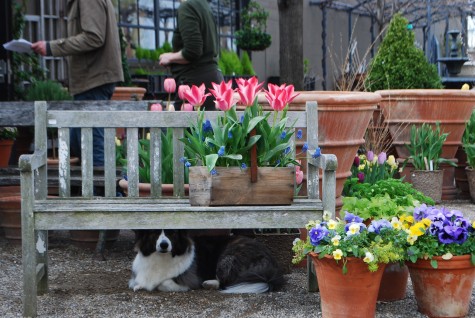 I have been made much more aware of the importance of what goes on at eye level, thanks to my corgis. Their legs are barely 8 inches long. They experience the world at a level that I never do-unless I am lying down on the lawn in my yard. The world is entirely different from this perspective.
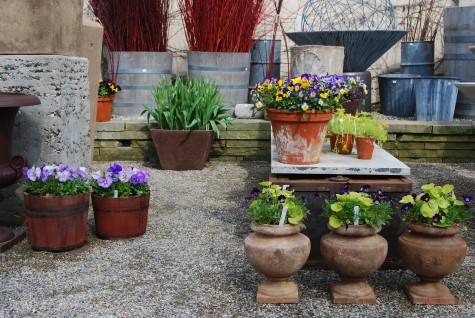 I love how I am seeing every container in this picture from the side. Low to the ground makes for clear observation of the details. In the landscape industry, some trees are designated “park grade”. This means they will suffice visually at a great distance. A poorly grown tree will not survive visual scrutiny up close.
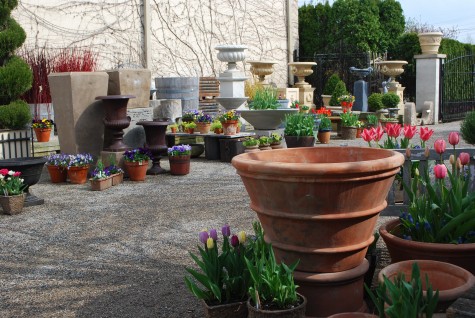 Many changes of level are represented here. Were I to photograph the same spot while I was standing, the changes of level would not read nearly so well. The idea here? Any place you view your landscape standing up should be tall and taller-and then very tall. Create an interesting great view at eye level. The pots you choose for your front porch need to read from the street, and read when friends come to call. This means large pots, planted rather tall.
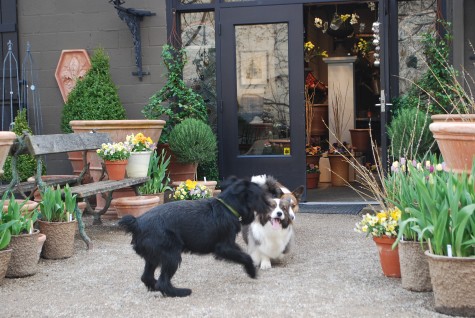
All of the dogs are greatly entertained by each other, and by what goes on near the ground. It is a landscape they recognize-a world friendly to them. There is a lot going on here-at their eye level. What goes on in your landscape needs to engage your eye-wherever that eye of yours might be. Well done landscapes engage on many different levels.