Through The Lens, Part 2


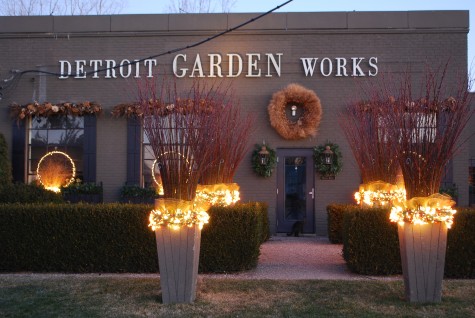
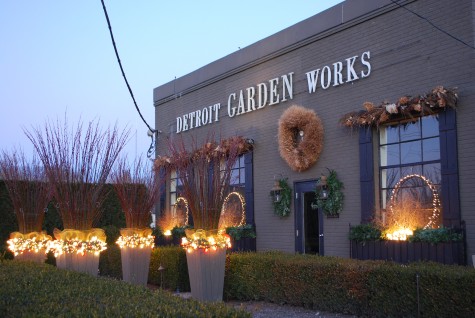
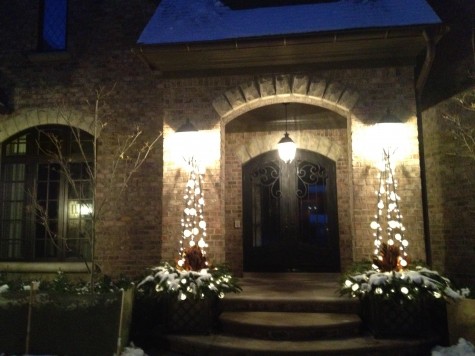
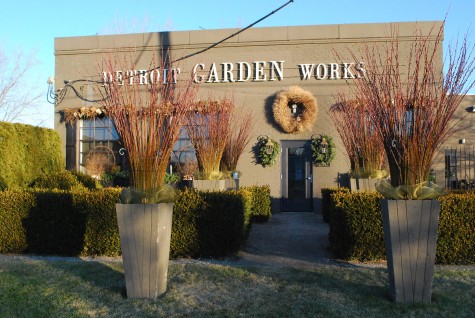
Yesterday’s photoshoot took 12 hours.  I was relieved to hear Bob was as tired as I was, at the end of the day.  We parted ways at 6:45 pm, with a plan to meet at 6:30 am this morning.  I was 5 minutes late-I was relieved he was not yet there.  Three of the photographs requested were slated by the BHG Art Director to feature winter pots with lighting.  This meant photoigraphs taken very early, or very late. Bob and I have been on deck both early and late.  I was so sleepy this morning I forgot my camera-pardon this unfocused picture taken with my iphone. I was a little alarmed to see that the lighting in the pots trumped by the lighting from the sconces on the house.  I had a feeling I would hear about this.   
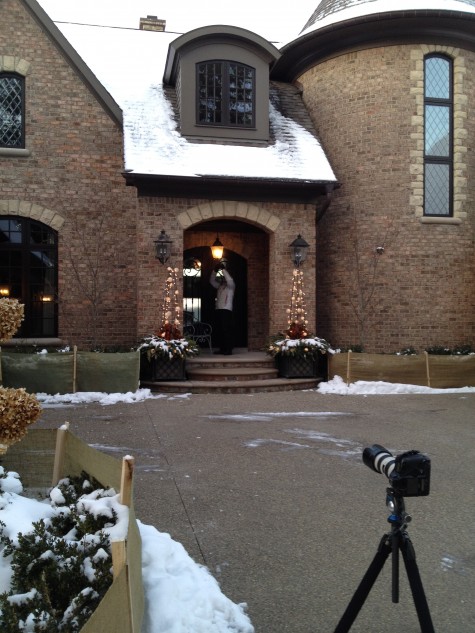
Sure enough, Bob was not happy about those hot lights.  After some discussion, I asked him if he could unscrew the light bulbs in the lanterns.  6:30 am is no time to call an electrician.  No doubt,  my job was to help solve problems.     
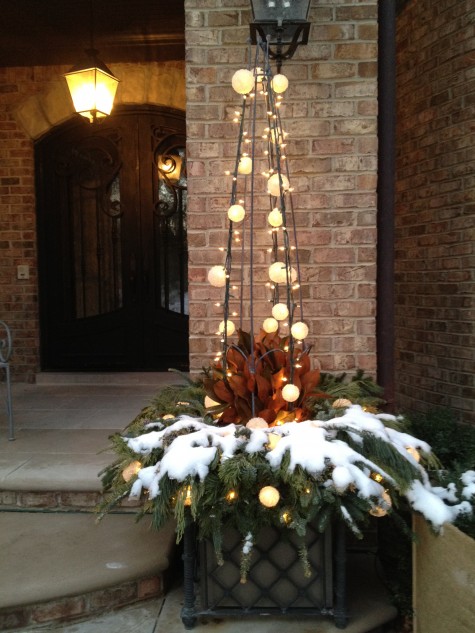
 

 This winter pot features strings of mini lights, interrupted every so often by a light cover.  A light cover?  Years ago a company we bought from sold boxes of plastic spheres with an icy texture-designed to slip over a mini light.  What a great idea- these globes of light are so beautiful in our dark season.  We have never been able to source them again.  When I retire, I may design and manufacture light covers-do they not look great?
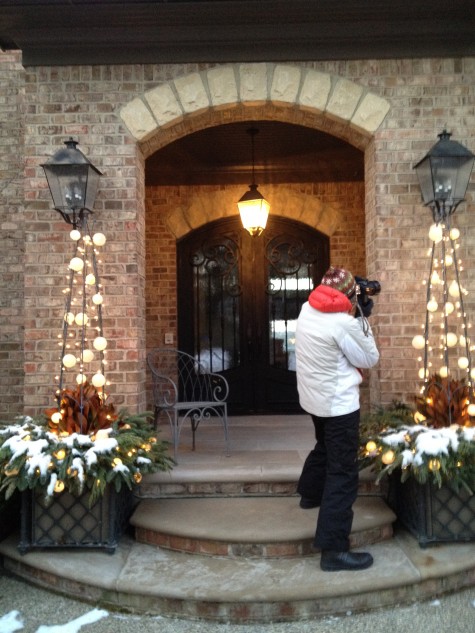
I was relieved that Bob was able to do his work, once we dialed down the lumens from those lanterns.  Of course the lights in the containers went off midway through the shoot.  I disabled the timer long enough for him to get what he wanted.  After the shoot concluded, we screwed every light bulb back in, and reset the timer.   
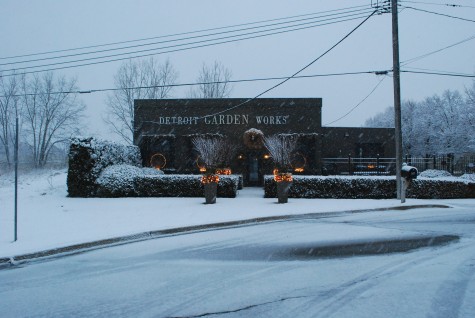
 

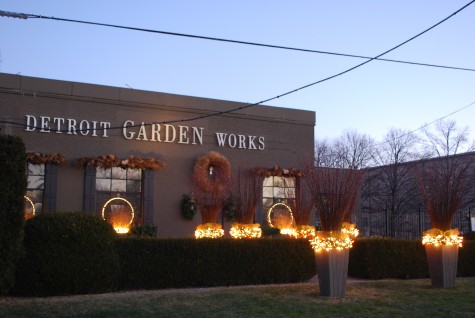
 He photographed the lights at the shop late in the day.  These pictures of mine were taken at dawn the day before he arrived.  I was ready 45 minutes before dawn to take some snapshots-this would help him plan.  The corgis were unsettled by this change in routine-breakfast at 5:30 am-really?
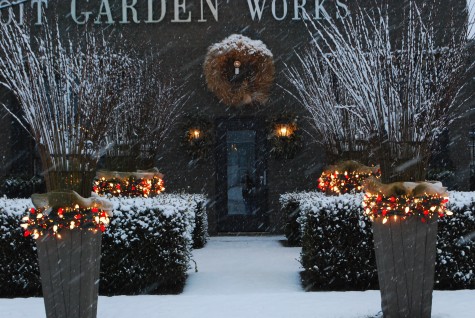
I never have any need for an alarm clock.  I am always up early.  But I set an alarm on a little digital clock I have had almost 40 years.  I wanted to be sure I was on time.  Once I got to work, and had a second cup of coffee, I was happy to be there.  The corgis quieted down, and rose to the moment.  We have had so little in the way of winter weather, I was delighted for this particular moment in a place I have come to every day for 16 years. I have nature to thank for that.  This particular moment. 
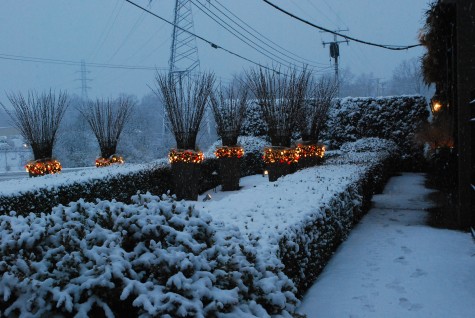
Bob says he was pleased with his photographs of the lighting in the winter pots at the shop.  He photographed from across the street.  Really?  Like I said, this was an educational trip. 
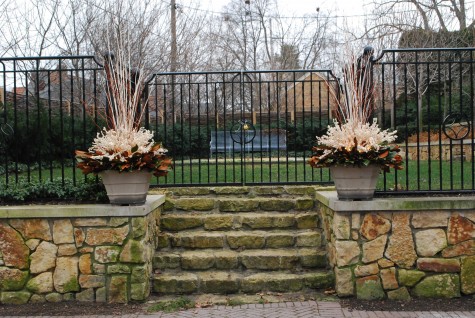
 Rob made this pair of winter sculptures for me every year.  I never ask for them.  I never make any suggestions.  What he does is a gift-I treat them as such.  They sit on top of a retaining wall at the end of my driveway.  They are what I see when I leave home in the morning.  They are what welcome me home at night.  I took this snapshot of them this past December.  They make me certain that there are certain seasonal elements in a landscape that truly do provide seasoning.  I would not want to do without them.  I take pains to make room for a little seasoning in every landscape I design.  What landscape would not be better, given the fragrance from lavender, or rosemary, or basil?  Winter pots provide a seasoning unlike any other-especially if you live in my zone.   
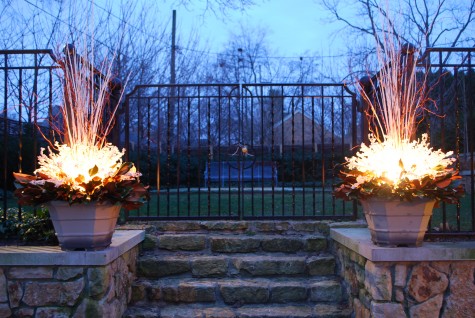
Late in the day, or early in the morning, these pots light my way, and my heart.   
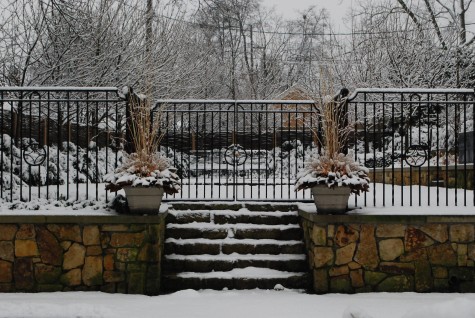
Bob photographed them at 6:30 am the first day he was here. I was not privy to anything he did-I was completely absorbed with unfreezing the lock on the gates.  He wanted the gates open.  In retrospect, I understand this.  Every garden should issue an invitation.  An invitation to interact-an invitation to share.  I did finally get the gates opened.  What Bob photographed-I have no idea. 
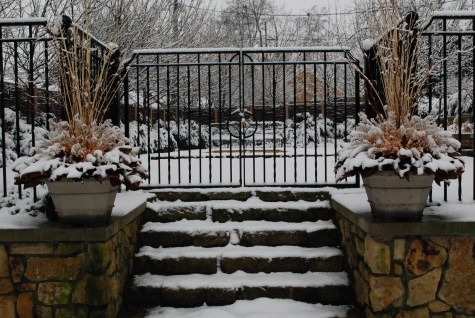
The first day of this shoot was day and night.  I was great fun to be a part of that.
Christmas In February


At the end of the first week of January, I reluctantly took the Christmas light garlands draped around these pots down, and put them in storage.  After all, the holidays were over.  This year I was especially reluctant for the holiday season to end-we had had no snow.  Though the temperature was chilly, we were denied that one ingredient that in my mind makes for Christmas-the snow.   

This photograph with all of the lights blazing taken just before Christmas does seem to lack that special seasonal element-does it not?  I felt we were so ready for the snow-that snow that never came. 

Winters in Michigan are notable for their grey skies, and their abundance of snow.  For whatever reason, our clouds were dry as dust.  It looked for all the world like we had the heat up much too high-and unnecessarily.  We designed a winter display based on the norm for our winters.  The norm went into hiding. 

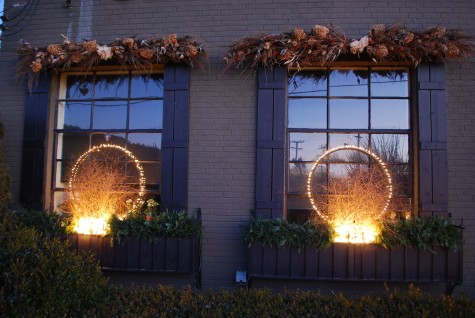
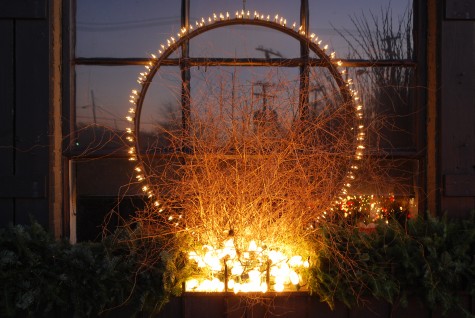
The collection and placement of these dried stalks of asparagus-Rob had an idea to fragment and diffuse an intense source of C-9 light with those stalks.  This is his version of snow or ice defining every branch distinctly-only that distinction was drawn with light.  Snow on the evergreen boughs in this window box would have added a whole other dimension to this arrangement.  Nature was not interested in cooperating.

I took photographs anyway.  But I so would have loved seeing the front of the shop buried in snow, with the lights running.  Who knows what that might have looked like. 

I took the lights down January 7.  But if you happened to drive by the shop in the past few days, you would have seen those lights going back on the containers.  Lest you think I have gone way over the deep end, Better Homes and Gardens has a photographer arriving Saturday to photograph some of my holiday and winter pots.  The lights had to go back on the pots, as they want to photograph them.   They were insistent that they wanted snow on all of the containers they wanted to photograph.  So the holiday lighting came out of storage. 

 Needless to say, we have been talking about this photo shoot for several months.  This snow squall in late January, just about our only snow this winter, lasted for all of about 3 hours.   2 weeks ago,  it looked like we might have snow showers tomorrow and Saturday.  The Chicago based photographer made some plans to travel-we were at a do or don’t moment.  They have 8 winter pots they want photographed.  Saturday. Who knew the weather would deliver in spades.  

This morning I read that our area has 5 to 8 inches coming tonight.  1 to 3 inches on Friday.  Snow squalls and cloudy skies on Saturday.  Mother nature suddenly has a mind to cooperate mind to cooperate in a big way.  8 inches, no kidding?  We loaded a truck today with props for the shoot, branches, snow shovels and brooms.  We loaded up a blower too.  If every pot is buried, we need to do a little uncovering.  I have already told everyone who works at the shop-do not walk across the lawn and come to the front door-take the side entrance.  The photographer has already asked for fresh snow, and not snow with boot prints.

A photograph of a garden in its finest moment bears no remote resemblance to a real garden.  But a beautiful garden photographed at its finest moment might encourage someone who has never gardened to give gardening a try. This is important to me.  Anyone who paints, photographs, gardens, writes, manages,  composes, sculpts, makes movies, or designs-  they all share this in common. That which gets created implies an audience.  There is a story over which a relationship can be forged.  I am so very pleased that we are about to get snow.  That snow means I will be in touch.

Up and Down


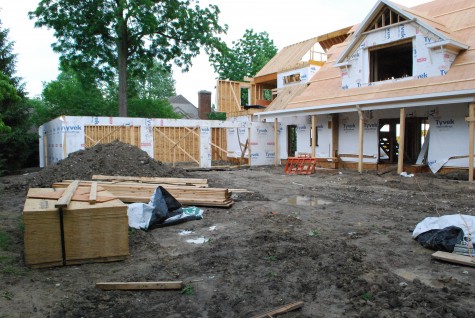
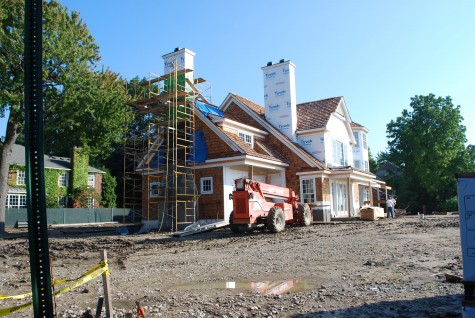
The installation of a landscape for a new house is a lengthy process, as it needs to be.  Though some disciplines cross over, there will be the excavators, the rough carpenters, the plumbers, the inspectors, the finish carpenters, the gutter people and the air conditioning techs, the kitchen designer, the pool and spa people, the painters, the stone masons-the list is long.  Coordinating a project of this size is a challenge.  There are bound to be things that don’t happen on time, or things that happen out of order.  The landscape is last of the outdoor work.  I have been on this project since last August, with a long hiatus born of relentless rain from mid-September through October.  Delays are the order of the day on a large project.


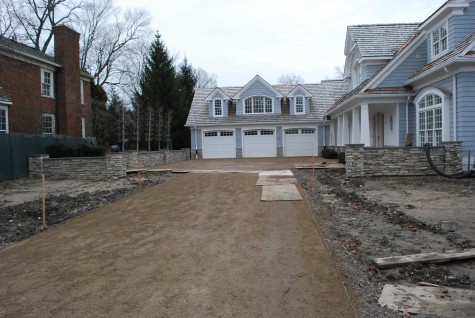
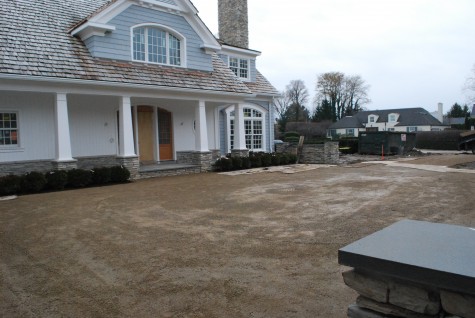
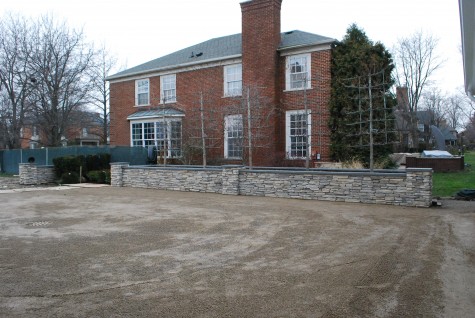
 But in December, after the walls and planter box were built, the stone installed on the front porch, the outside of the house finished, we were able to install the crushed granite drivecourt.  At least the front of the house would be somewhat presentable for the winter. Everone involved did a great job-it just took more time, more space, and was more messy than anyone anticipated.  

 The stone on the lower portion of the walls of the house were inspiration for the wing walls on either side of the drive, and a stone planter box on the lot line.  On the ground level, the drivecourt is surrounded by stone.  A drivecourt was necessity; no parking is permitted in the cul de sac, and the street parking is chopped up by a substantial number of driveways.  The idea was to make this utilitarian space as visually pleasing as possible.


A large stone planter box is home to 5 katsuras, which will be underplanted with boxwood in the spring.  This will provide evergreen screening on the ground plane from the downstairs windows of the neighboring house.  Some Himalayan white-barked birch will be planted in the spring to the left of the stone box.  A short hedge of arborvitae will be planted on the lot line to the right of the box.

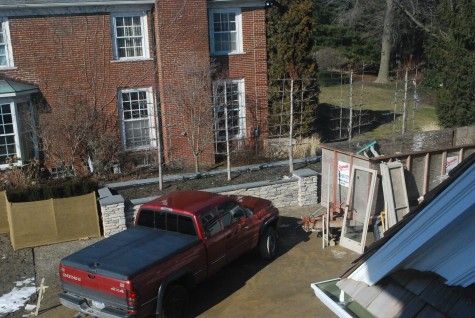
The view from upstairs is equally as important.  The living areas upstairs will be as private as that narrow space between the lot line, and the corner of the garage allows.  As the espaliers grow, they will create a green wall that takes up relatively little width. This is an old neighborhood, where the homes are quite close together.  Addressing visual issues downstairs and upstairs is important. 

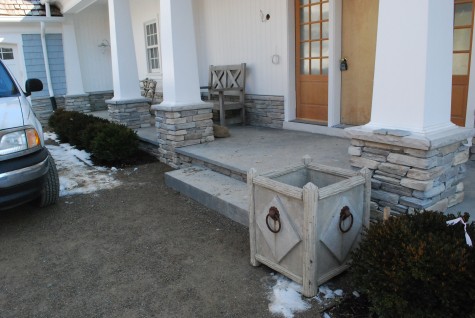
We were there on Friday, trying out some pots and furniture for the garden.  A pair of these concrete boxes with diamond panels and iron rings will flank the front step.  A small vintage English teak bench looks great on the porch.  Settling these details before early spring gives me hope we will finish the project well before the onset of summer.

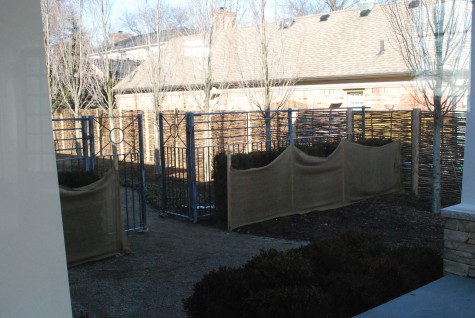
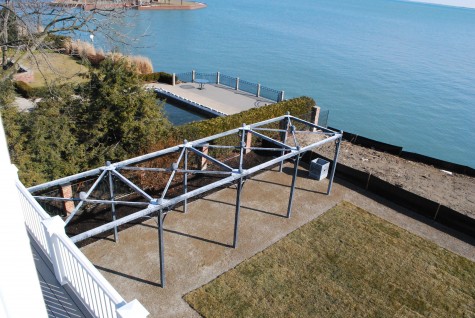
We had installed the iron fencing and gates, and the pergolas a few weeks ago.  The winter weather has been so mild, we were unexpectedly able to get this part of the project finished. The property perimeter fencing was chosen especially for the privacy it provides.  The iron fence running from the property line to the house will insure good views into this part of the garden, and provide a safe outdoor space for a beloved dog. 

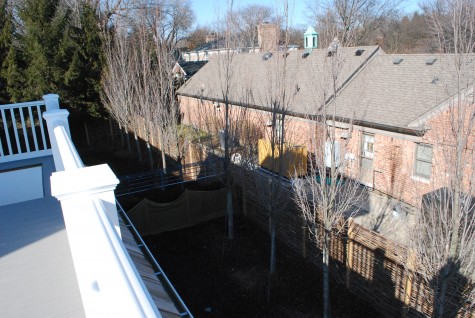
Upstairs, the second floor balcony terraces are done.  I can see that the  12  6″ caliper columnar red maples planted last September will provide great screening  from the house next door during the summer, at a time when privacy matters most. Evergreens provide great screening on the ground level.  They tend to be too narrow at the top to screen an upstairs view.  If they are large enough to screen a view 20 feet off the ground, the width of those trees on the ground floor is considerable.  Lacking the luxury of ground level space, these columnar trees will do a great job where they need to.  The Belgian wattle fencing will handle the job on the ground floor.  

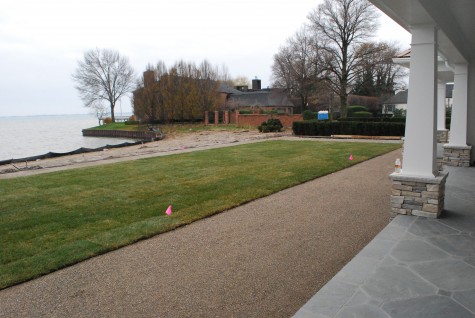
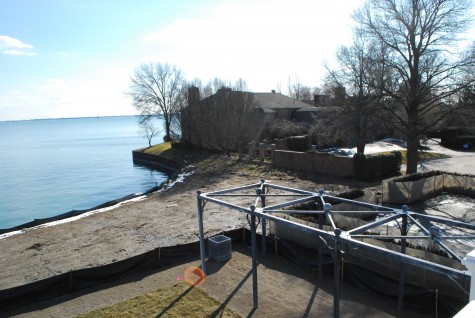
The lakeside was a muddy mess for a long time, but we were finally able to get in there and grade, and set the major lawn panel and its crushed granite frame.  A pair of steel pergolas almost 40 feet long each were slated to be installed off each end of the house, and frame the lawn panel on the ground floor. 

 This picture was also taken in early December.  The major grading, the majority of the evergreen planting, and this lawn panel got done-I was pleased to have this much finished.  But this lakeside rear yard is still quite exposed to the neighboring homes on the cul de sac side.  The screening issues were complicated by the fact that nothing over 4′ tall could be planted in the space between the cul de sac curb and the house.  This restriction would enable everyone who lives on the street to still have a view of the lake.

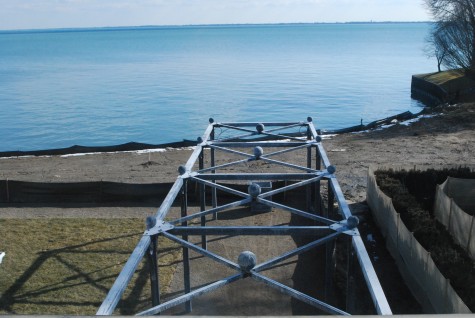
Restrictions are an invitation for good solutions.  The pergola, outside the setback line, is 10 feet tall, and will never be any taller than 10 feet.  This means no view of the lake will ever be obstructed.  Both of the pergolas have a great look from upstairs.  Who wouldn’t  like to wake up to this view?   Once it is planted with climbing roses and clematis, there will be that much more to see from here, and some shade to sit in downstairs.

The pergola on the opposite side will be planted in a like matter.  Venus dogwoods will be plated to the outside of each of the pergola, in an effort to screen both neighboring houses from view.  

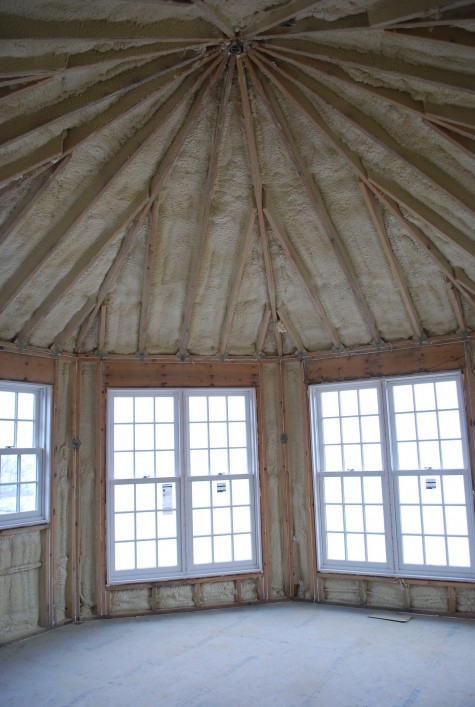
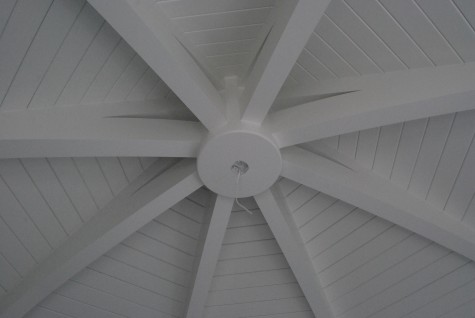
The views from the third floor cupola clearly reveal a foreground space dominated by the pergolas, the midground gardens yet to come, and the far view which is the lake. A widow’s walk, or deck enclosed with railings on the roof, is an Italianate architectural feature popular in American houses built near the sea in the 19th century.  This widow’s walk is a completely enclosed all weather room.

 The room is ringed with windows to take advantage of all of the views.  The opportunity for a bird’s eye view of the landscape and the lake in every sort of weather, and all of the seasons-very special indeed.

Both the house and the gardens show a lot of progress. It won’t be long now, to the finish.

A Particular Planting

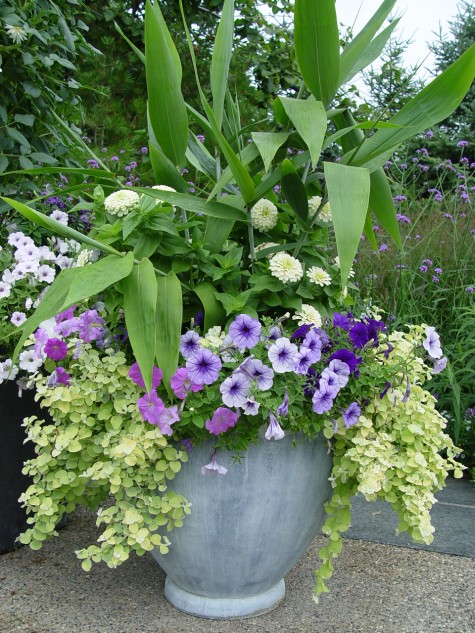
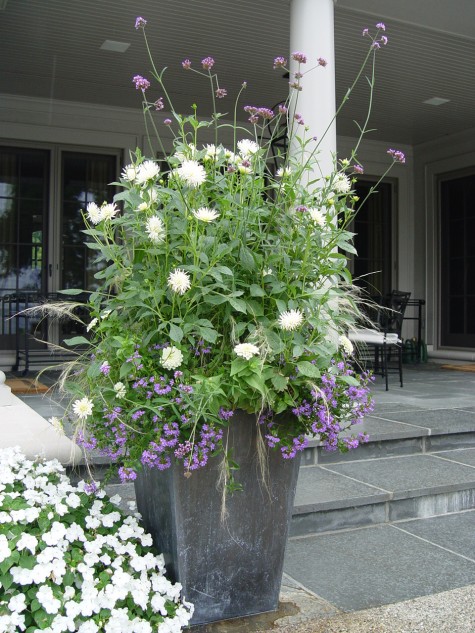
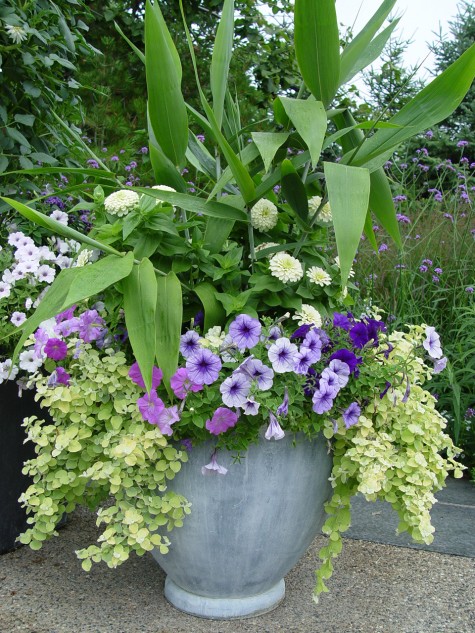
A friend much more tuned into the 21st century than I let me know that this container planting of mine from 2005 was getting considerable interest via Pinterest.  Pinterest?  I was curious.  Based on my recent research, Pinterest is an on line venue by which anyone, any invited anyone, can post images they fancy, in personal albums organized by subject matter of their own choosing.  As for who posted this collection of photographs from my blog that had been pinned by lots of different people, I have no idea-it was not me.  http://pinterest.com/source/deborahsilver.com/   This picture of a container planting I did in 2005 has gotten a lot of interest.  Though the Wedding White zinnias from Burpee, the petunias and the lime licorice are easy to identify, I am embarassed to say I have no idea what the center plant is.  I am almost certain it came from Landcraft Nursery.  For several years we bought unusual and exotic tropical plants from them.  A quick scan of their plant list did not ring a bell.  If you can identify this plant, will you please write me?    

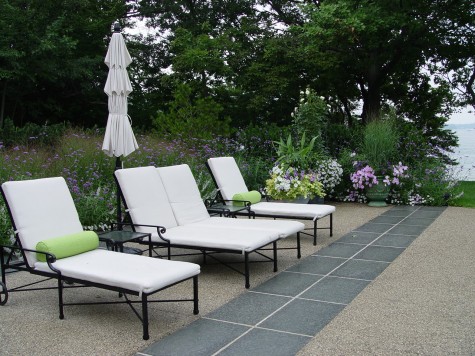
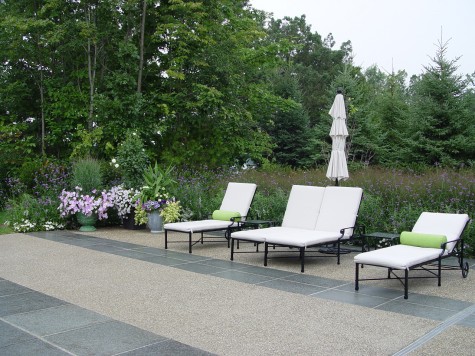
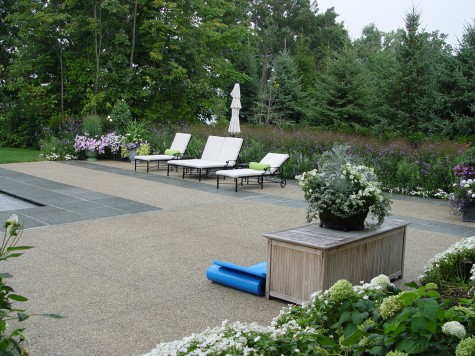
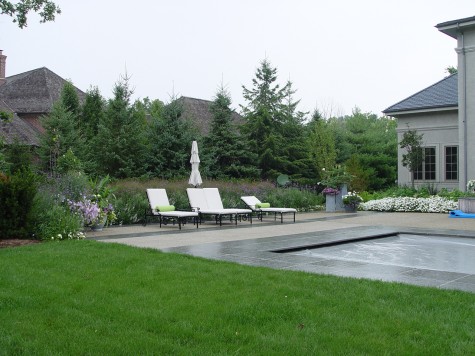
I am very pleased to see an annual container planting generate some interest.  Gardeners are happy to share-I am no different.  This was a new house, with a landscape design and installation imagined by my clients and I from start to finish.  Once I was close to that finish, there was the matter of selecting and planting containers.  The pool terrace was an obvious choice for containers.  My clients planned to spend a lot of time there.  The pool deck of concrete aggregate with bluestone detail was part of the original landscape plan.  My client chose the furniture all on her own-and did a great job of it.  The French flavor of the landscape asked for simple and spare choices in plant material, lots of pleasingly simple geometry, and a largely green palette for the plants in the pots.   

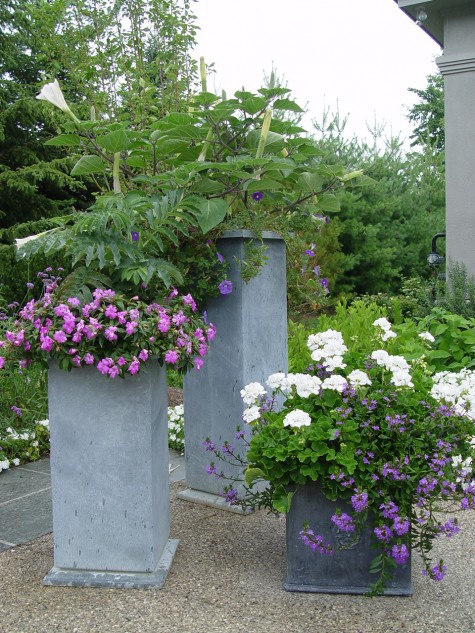
This pair of tall Belgian zinc planters in contrasting heights are kept company by one low simple English lead square.  The star of the show in the tallest pot-datura metel “Belle Blanche”.  In the shorter, melianthus.  The low lead box features a fistful of white geraniums.  I like green plants.  Datura, melianthus and geranium are eminently attractive in leaf.  The flowers are welcome, when they come.  

In keeping with what I would call a landscape with a French flavor, the plant choices are simple, and edited.  Lavender, white and shades of green.  Simple, elegant, spare. 

Dahlias do not come into their own much until September and October.  But during the summer, the dahlia plant has significant stature, great texture, and presence.  A little in the way of Verbena bonariensis and scaevola, and tufts of a grass whose name I cannot remember makes for a container planting that is much about form and mass-stature-, and not so much about flowers. 

Simple and serene, this.  The containers stand proud, but not too proud.   

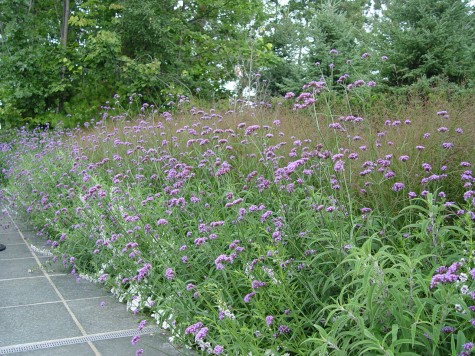
My favorite part?  A border of Panicum Virgatum, faced down with a tall salvia and verbena bonariensis.  A rhythmic and subtle planting that spills over the edge of the pool terrace. 

A good landscape does a lot of things.  Trees get planted, where there were none.  Spaces get created that are friendly to people.  Plants of visual interest to people and of vital interest to butterflies and birds get added.  Everywhere you look, there is green.   

 In April I will have been been posting essays about gardens, landscape, and the design thereof for three years.  As a matter of course, I post lots of my own pictures in support of what I write.  Generating those images takes every bit as much time as the writing.  An image can no doubt be very powerful, and compelling.   This is what is interesting me so much about Pinterest.  What we see matters much.  An image speaks in a way all its own.