Permanent Structures

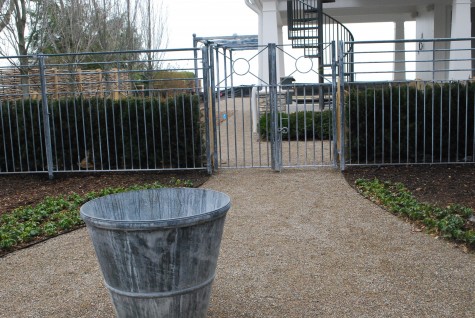
Most landscapes have basic structures, as in driveways and walkways.  This under construction landscape project features site specific architectural elements that address certain needs. The lower portion of this steel fence will soon be hidden by a row of yews matching the lakeside planting.  This fence and gates enclose a dog run, and were specifically designed to keep a local population of coyotes out. The horizontal vineyard bar in the top portion of the fence repeats the branch motif of the privacy fencing on the lot line.  The plan for the garden includes drifts of shade tolerant perennials, and lots of groundcover.  A single pot that splits up the gravel path through the garden is tall enough to keep the dog from rummaging through it.  A tall planting will be visible from outside the the run.    
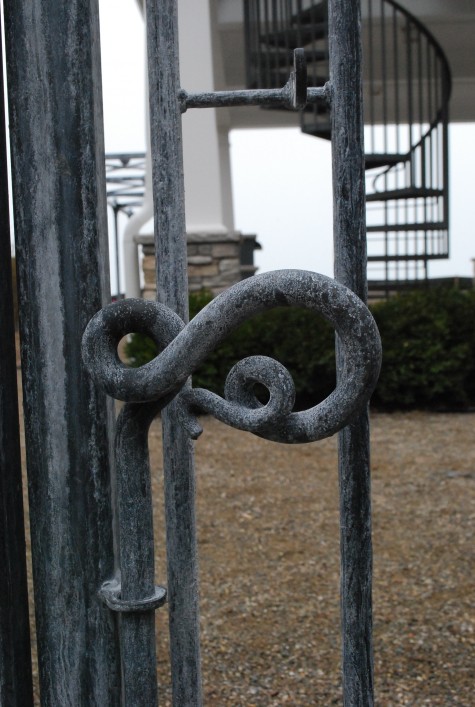
cane bolt handle

Though the fence has a specific purpose, that does not mean it can’t be designed for some visual interest.  A cane bolt is a long piece of steel that goes down into the ground.  This keep one of the two gates in a fixed position.  The bolt needs to be lifted up to release the gate.  The handle on this bolt is not only easy to grasp, but it is friendly to the eye. The curves echo the circular staircase which connects the lower level terrace to a second story terrace. There are lots of structural elements in this one area of the garden-not the least of which is a covered porch with stone-clad columns.  I like iron and steel as a material in the landscape, as it can be very light and airy looking, as well as strong and stury.   
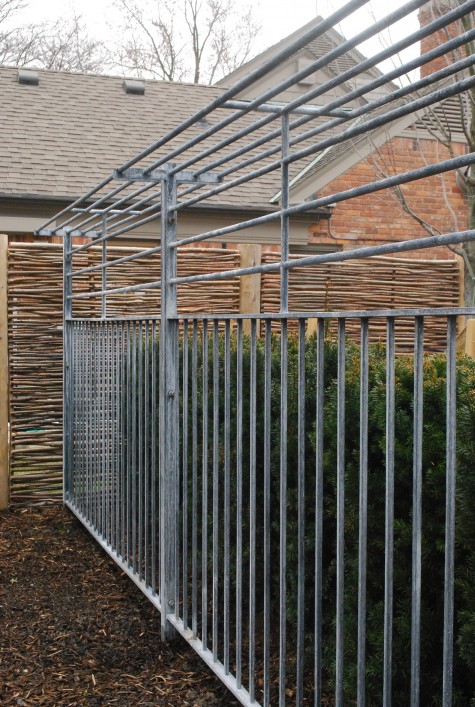
steel fence

The top of the fence culminates in an iron shelf.  I have never designed a fence with this feature before, but I have never designed with coyotes in mind either.  The shelf will hold rectangular wire baskets, with summer plantings.  Apparently coyotes do not grip and climb-they leap over fences.  The hedge of flowers 6 feet in the air will be much tougher to leap over that a fence.  The double hedge of yews is 6 feet wide.  Any coyote hoping to get in here will have to get up a full head of steam, and leap 8 feet in the air, and sail a considerable distance before they land.  I am by no means sure this will work, but it’s my best effort and securing the space.  Not to mention that I think flowers on top of the fence will look great.
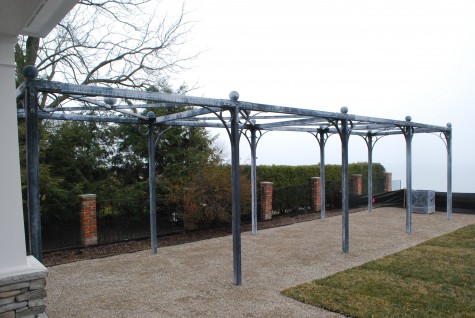
garden pergola
Landscaping a lakefront property poses challenges relating to the view of the water.  Most people who live on lakes prize their views of the water-that seems only natural.  The placement of trees are restricted in some communities, so no neigfhboring views are compromised.  This pergola will be planted with roses and clematis, and perennials in the gravel.  The steel structure will not only be softened by the plantings, but it will eventually provide shade underneath from a source alternate to a tree.  Even when the plantings mature, they will never obstruct the upstairs views of the water.   They will frame specific views from the terrace and library.  Between the pergola, and the neighbors iron fence, a hedge of small growing trees will screen the lot line.   
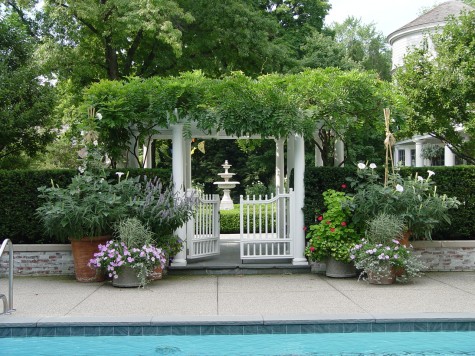
wood arbor

Hard structures in the landscape can take many different forms, and are built for all kinds of reasons.  Some structures are built whose primary utility is a personal expression about beauty.  I enjoy this part of gardening as much as I do the plants, as I value seeing the evidence of the human hand, and the hand of nature, in concert.   
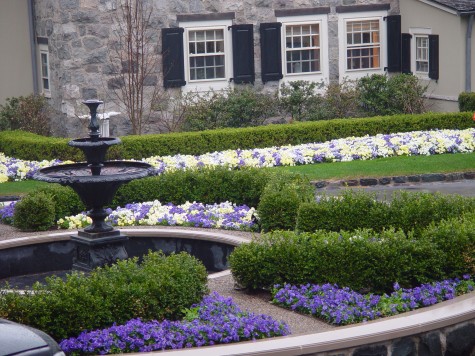
cast iron fountain

English cast iron fountain

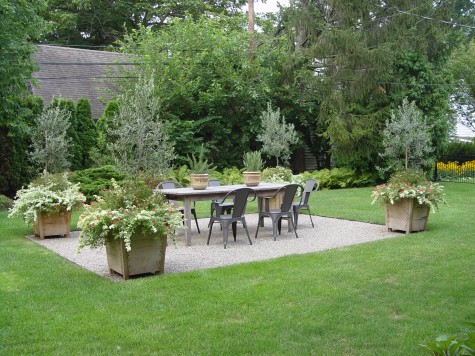
garden dining

decomposed granite terrace

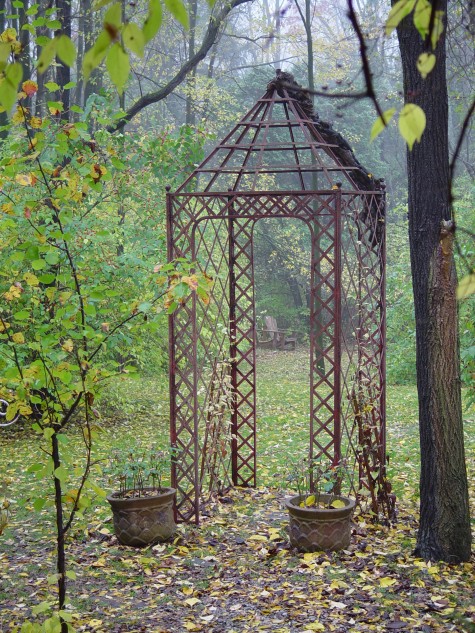
antique French iron gloriette
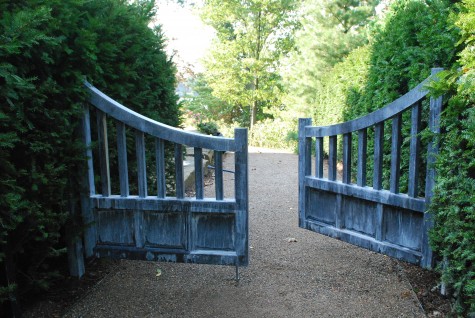
garden gates

steel garden gatesfaux bois arbor

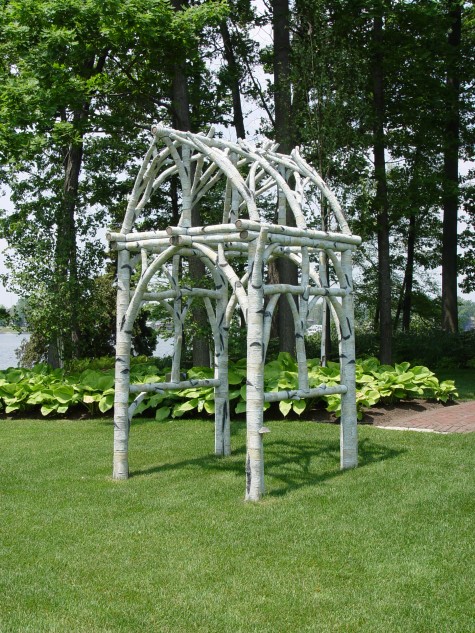
concrete faux bois birch log arbor

alfresco dining

garden dining table and chairs

fountain pot

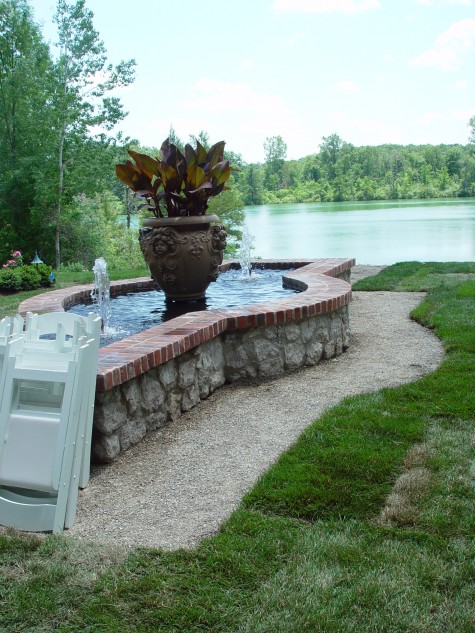
fountain and antique Doulton face pot overlooking the lake
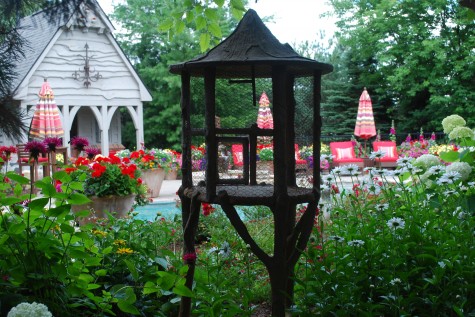
antique faux bois

antique faux bois bird cage

stucco wall

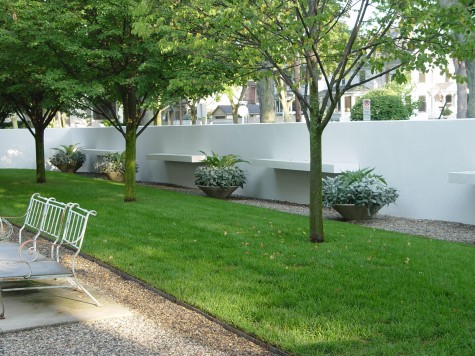
stucco wall with integral shelves

stained concrete pots

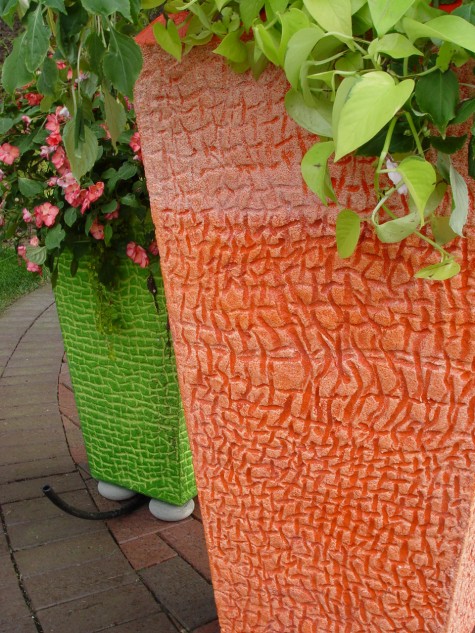
acid stained concrete pots

garden furniture
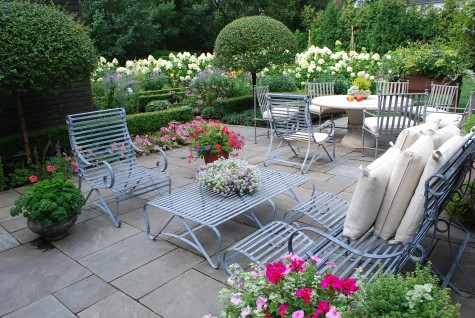
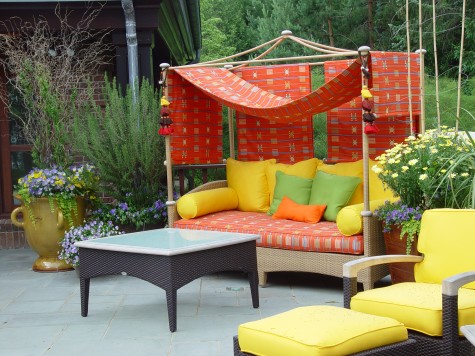
garden furniture

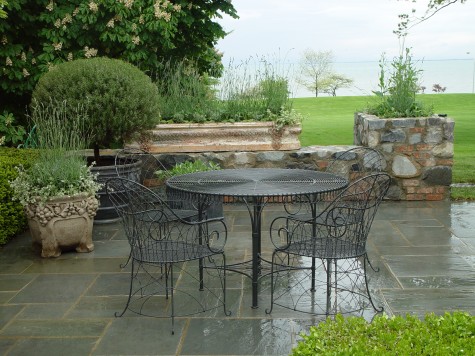
bluestone terrace

dining terrace

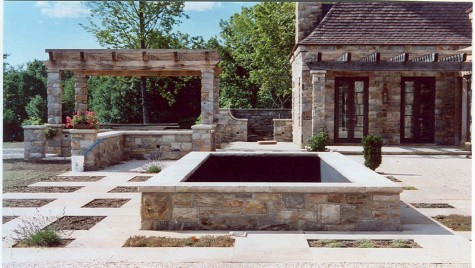
stone walls, pergolas, fountain and terraces under construction
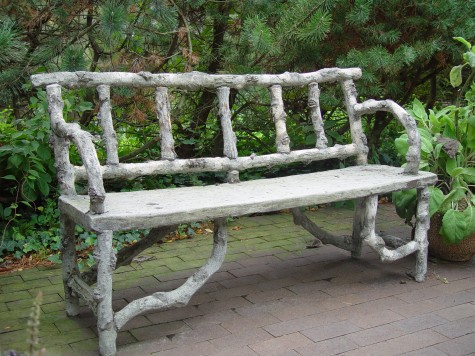
antique faux bois

antique French faux bois garden bench
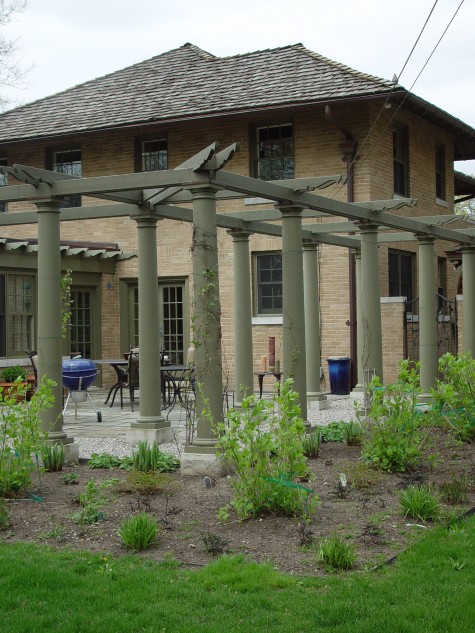
wood pergola
wood pergola

Valders stone

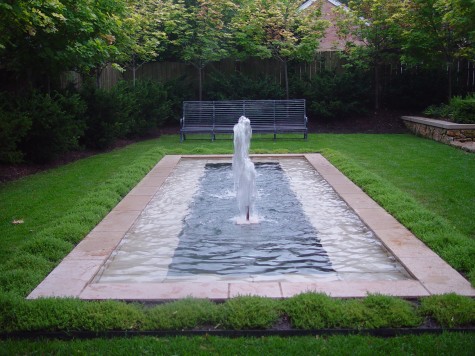
This fountain is one of my favorite things about my own garden.  I built it with money my Mom left me 10 years ago.  It reminds me of her, as she was an avid gardener who also encouraged me to take some time off now and then-you know, maybe go to the beach.   It provides me with a place to unwind, and take a little time off.  In addition to the history behind it, I like the look and the sound.  I like to get in it when it’s hot.  This is a big structure in my small garden that gives me a lot of pleasure.
Structuring Perennial Gardens

Structured perennial gardens-the phrase is something of a contradiction in terms.  Perennials die back to the ground with the frost, and do not reappear in my zone until 6 months later.  Certain perennials, such as asparagus, butterfly weed, some ferns and grasses have a strong winter presence as their stems dry and persist.  Some gardeners leave their perennial gardens as is in the fall.  Others cut all of the perennial plants back to the ground.  The butterburr bed pictured above (enclosed below ground by a 24″ barrier of galvanized sheet metal, I might add)  is a dirt space for the winter. The big stems and leaves collapse and turn to mush, once exposed to a frost. However, they do a fine job of screening the scraggly lower branches of the arborvitae hedge in the background.  I wedged them into the rooty ground as best I could.  True to their invasive nature, they covered the space by the second year.  Their giant leaves are very architectural in the summer, their absence in the winter is mitigated by by other large woody plants nearby.  The structure of this garden comes from the repetition of a single plant, in a defined shape.         


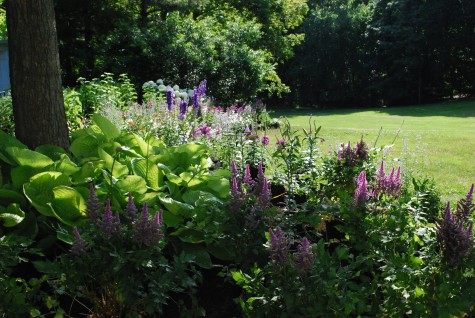
Perennial gardens can be organized by plants that require similar conditions, by color, and by form.  This garden is relatively small, so it features plants with spike like flowers, or a narrow habit of growth.  This means bulb lilies, delphinium bellamosa, platycodon, and phlox.  Most of the plants are white, and shades of red violet, pink, and purple.  The mature clumps of Sum and Substance hosta provide a visual foil for this organization.  Its mass anchors the garden, and the lime green leaves light up the shadiest part of the garden.  The garden was placed between a pair of trees, and is backed up by a row of Annabelle hydrangeas.  This provides the garden with a context. garden structure

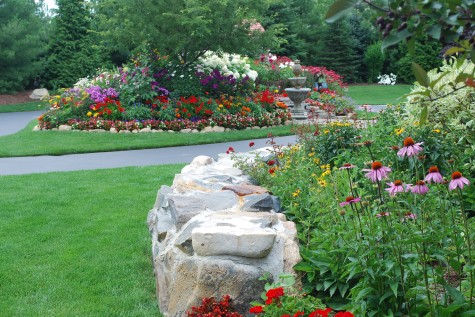
This perennial garden is planted with a collection of mixed perennials and annuals.  Locating a perennial garden in a traffic island can be a dicey move, but this planting has a few things going for it.  There are a couple of small trees.  There is a children’s playhouse (not visible from this angle), a good bit of stonework, and a fountain that help weight the garden.  The elevation of the soil, and the massing of both perennial and annuals give the garden visual heft.  Big annuals planted in a perennial garden can provide season long color as ther perennials come in and out of bloom.  This garden benefits from the fact that it has one clear idea. Lots of color, and bloom time has greatly influenced the selection of plant material.  Big stands of Monarda, shasta daisies and phlox celebrate the summer season.  Focusing on a single season means that season has the potential to be stellar, and the other three-quiet.   

pots in the garden

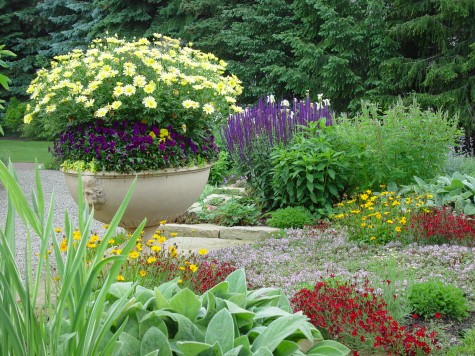
A perennial garden gains visual stature when associated with a favorite pot, a beautiful arbor, a fountain, or a sculpture.  An ornament for the garden can provide that garden with atmosphere. 

decomposed granite

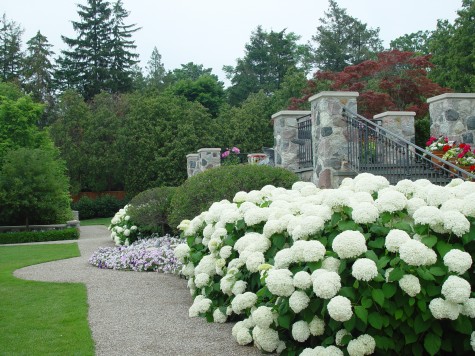
This garden backs up to a large stone wall, and is faced down with a generously proportioned decomposed granite walkway.  These hard surfaces enclose the garden-both on the ground and in the air.  The mass of the Annabelle hydrangeas is a good match for the mass of the wall.  The lavender petunias surround a fountain pool; the rounded front of that pool is repeated by the petunias, the gravel, and the lawn.  The petunias are more than just petunias.  They are a shape that makes sense with the entire garden scheme.   


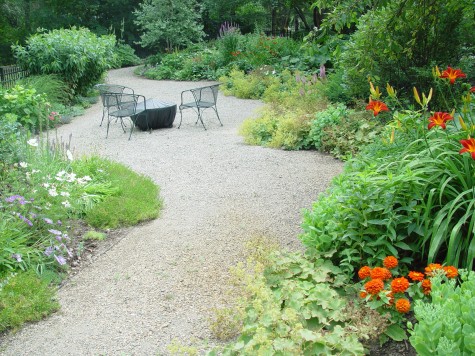
 This decomposed gravel path is large enough to accomodate seating in the garden.  The gravel is contained by aluminum edger strip to keep it from migrating into the garden.  However the perennials are planted close enough to that edge to encourage them to spill over.  This giving the garden a relaxed and low key feeling without loosing its strong sense of shape. 

perennial gardens

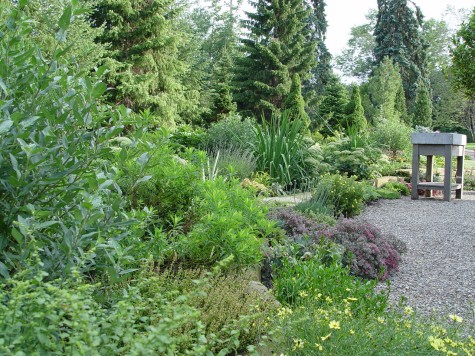
Any garden is green, most of the time.  Shades of green can be contrasted; a garden where all of the greens match or are similar can be very striking.  The textures, sizes and shapes of leaves can be contrasted with one another.  The relationships forged between individual plants can be more important that this individual plant or that one.   

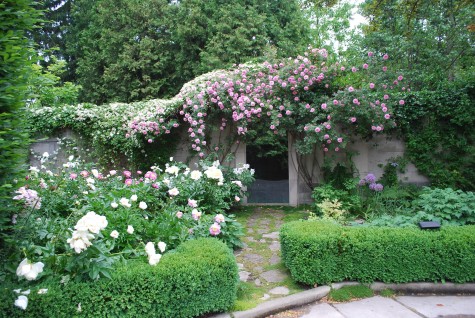
 The flowering of the roses and the peonies is glorious, and short lived.  That said, I still would not dream of foregoing either pleasure.  Some years they bloom at the same time.      
rose gardens

Though the roses, clematis and peonies have a place all their own, they belong to a bigger group known as Janet’s garden.

Leafy Structure

English oaks

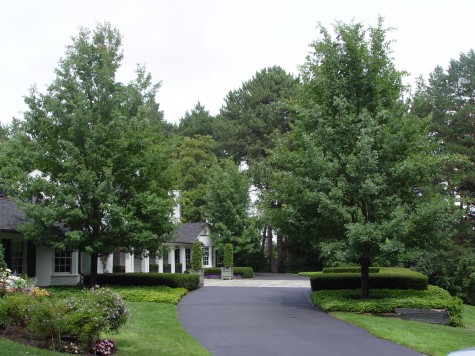
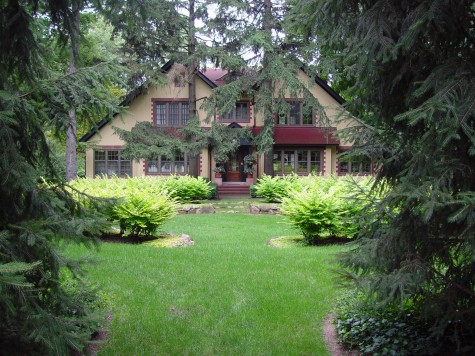
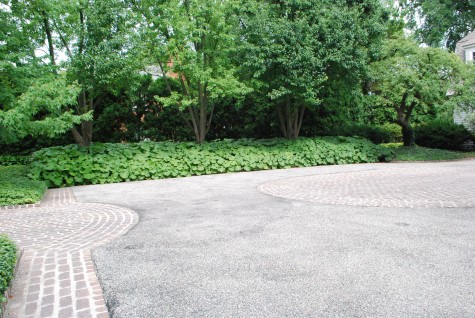
Leafy plants, more formally known as deciduous plants, are essential to a great landscape.  Though evergreens can provide a certain kind of dense and geometrically gratifying presence in a landscape, deciduous plant material have a textural contribution all their own.  I designed and planted this landscape many years ago.  Four English oaks, some 14 years later, now provide an overhead structure for the drive court.  The biggest technical challenge was providing flat ground for parking to the right of the driveway. That accomplished,  the U-shaped triple thickness yew hedges do a great job of describing level ground, and screening a parking area from view.  The maturing oaks provide overhead structure to this space.  They have great size, heft, and presence.        

columnar beech
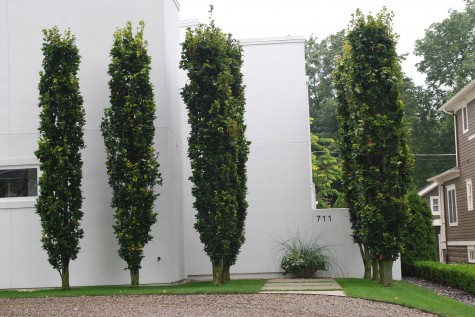
Deciduous trees can go a long way towards endowing a landscape with structure.  These columnar beech were planted more than 15 years ago.  Each one has been planted and maintained as if they were individual living sculptures.  These leafy trees compliment the architecture without obscuring it.   


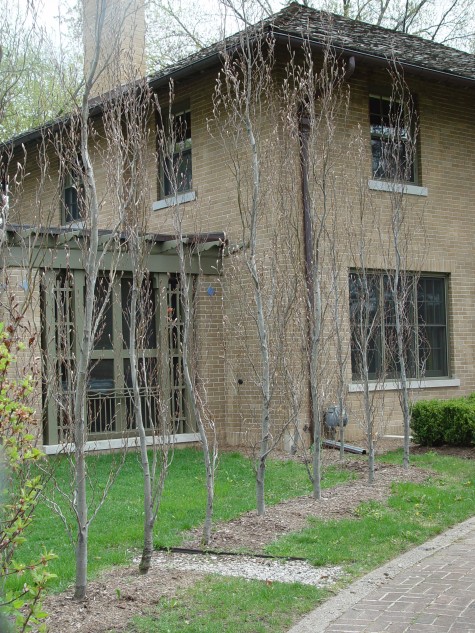
 Smaller columnar beech planted fairly close together will eventually form a hedge of a height to be determined.  This beech hedge is fairly new.  Given some age, these trees will grow together to form a leafy structure in the summer, and a densely twiggy screen in the winter. A single beech, planted in an open area that permits it to grow unobstructed is a specimen.  Multiple beech planted in a line are structural, as they have more visual significance as a wall.  Multiple beech planted in a block, or shape, are as much about sculpture as they are about beechiness. 

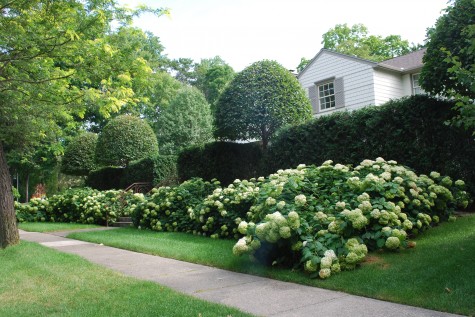
Annabelle hydrangeas

Annabelle hydrangeas are difficult to place in a landscape.  The flower heads are large, and the stems weak.  I rarely plant them, unless I have a chance to place them on sloped ground.  They can provide great structure on a sloped site.  I hate having to prop them up-I prefer to plant them on top of a wall.  Their large leaves, and extraordinary flower heads can structure a landscape space beautifully, given a proper placement.  

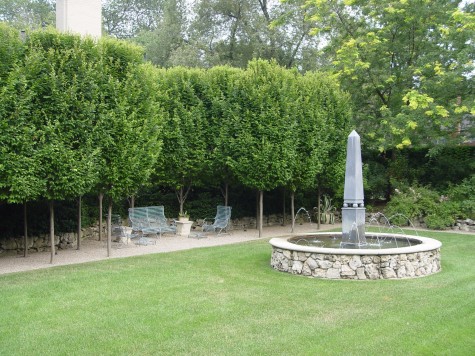
hornbeam

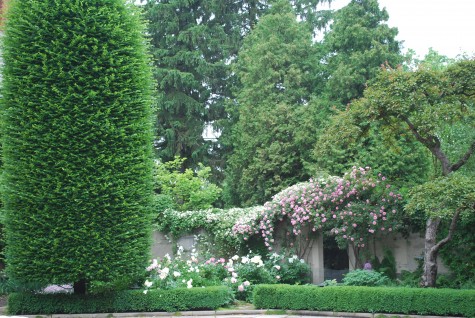
Carpinus, or hornbeam, is a tree eminently suited to provide structure to a landscape.  They grow large.  They tolerate pruning well.  These 30 foot tall carpinus settled down in a new home some 8 years ago without much fuss. Are they thriving-yes.  The late spring freeze in 2007 resulted in some twiggy dieback, but they have since grown out of the insult. They now structure a garden, a fountain, and a collection of roses-affably.   

columnar carpinus

Carpinus is a favorite tree when I am seeking structure in a landscape.  These columnar carpinus created a leafy pergola that to this day, many years later, organizes a landscape, provides shelter, and visually endows a landscape.  These carpinus have been limbed up; the bare lower trunks mimic the poles or columns of a pergola.    

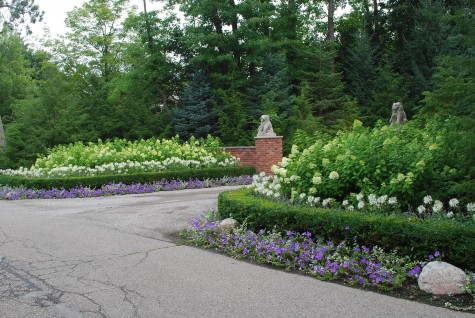
Limelight hydrangeas-if you read this blog regularly, you know I am a fan. This leafy deciduous shrub needs little in the way of maintenance.  The large leaves,  the long lived blooms, and its sturdy habit of growth make it a great source of structure in a garden.  The annual plantings would have little impact without the strong structure provided by the boxwood, and the hydrangeas. 

Even when the Limelights are in their green stage, they happily provide structure to a landscape.  In the winter, the dry flower heads and twigs are an effective contrast to evergreens. 

Himalayan white barked birch

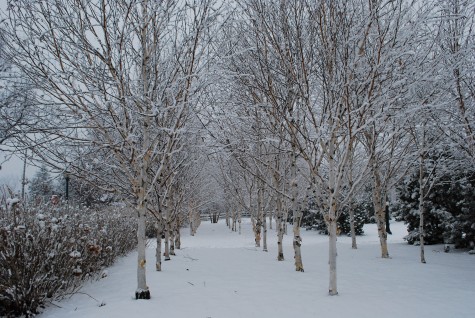
Winter structure is important in my zone.  Winter always lasts longer than I think it will.  The white bark and lacy branch structure of this Himalayan white barked birch is as beautiful during snowy weather as it is during the summer months.  The hedge of Annabelle hydrangeas in the left of this picture-densely twiggy. 

gold vicary

Gold vicary is a shrub that was much more common in the landscapes of my childhood than it is now.  Why is that?  Plants fall in and out of favor just like anything else.  The lime green leaves are strikingly different than the dark green of the spruce needles.  As a single specimen, the color can be difficult to balance.  This circular planting of gold vicary encloses a rustic sunken garden planted simply with grass.  

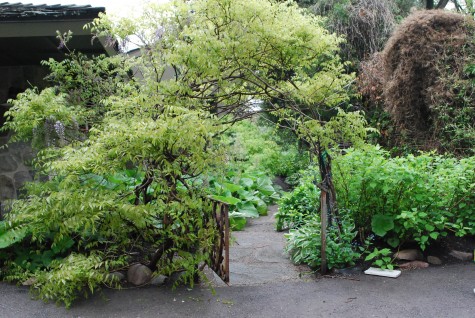
An old wisteria trained over, and about to overpower the gated entrance to this garden is a great example of how any leaafy plant has the potential to organize the presentation of a garden.

Structure From Evergreens


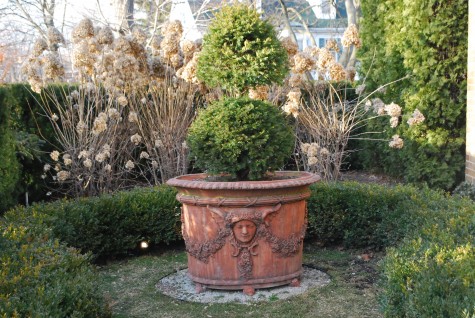
 The structure afforded from evergreen plantings is never more apparent in my zone than in the month of March.  Debris litters the ground in the garden, no matter the quality of my fall cleanup.  The hydrangea heads have been blown off their stems by gusting winds.  There are places where the visuals are not the best.  But my evergreens go a long way towards providing my winter landscape with structure.  This is the third season for this double ball yew topiary in this concrete pot.  The boxwood semicircle, the topiary and the hydrangeas organize this part of my garden in every season.  


spiral juniper topiaries

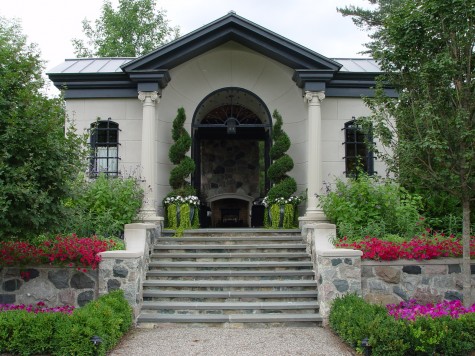
 Evergreens planted in pots is a beautiful look, but they require special care.  They ask for pots of a good size.  Beware evergreens that have small rootballs.  Healthy and well grown evergreens oftentimes have rootballs wider than their tops.  They need water early in the spring, late in the fall, and perhaps in the winter.  They can be worth the trouble-what they do for the entrance to this pool house is considerable.  They soften and compliment the architecture.  They bring a sense of the garden all of the way up the stairs.  They are of a size and shape which is proportional to the hard structure.  They make the entrance visually welcoming. topiary boxwood

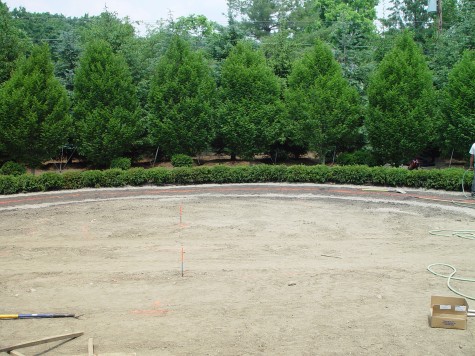
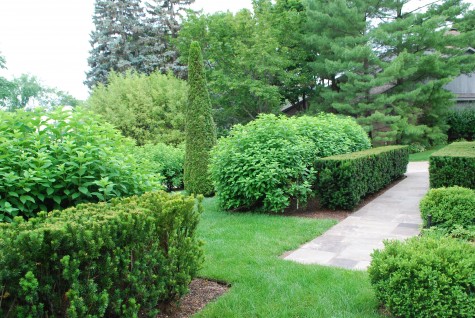
Some evergreens are amenable to formal pruning.  Boxwoods tolerate precisely geometric pruning quite well.  Heavy snow can burden formally pruned boxwoods such that branches crack, leaving the plant vulnerable to fungal infections.  I make an effort to keep the snow load on mine at a minimum. This formally structured garden is beautiful no matter the season, or the weather.  The enclosure provided by the arborvitae, and the yews makes this living world complete unto itself. 

annual borders

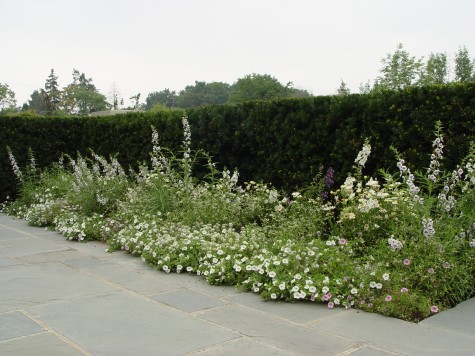
 Annual borders can be subtle, wispy, rowdy or structured.  Annuals cannot provide much structure to a garden, but they certainly benefit from it.  The formally pruned yew hedge behind this garden provides a strikingly simple and effective backdrop for a collection of delicately colored and structured flowers.  This hedge of evergreens is darkly beautiful in shape, size and mass, but it is the contrast of the annual border that so strongly makes that point.boxwood parterres

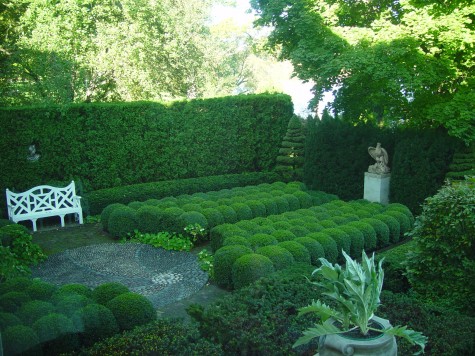
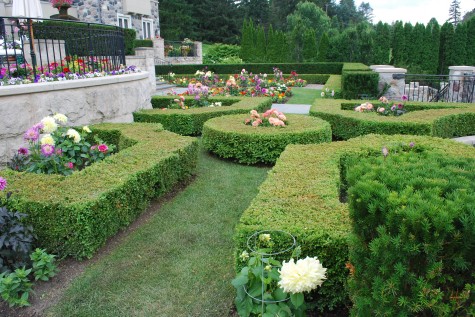
Boxwood has been planted in shapes both rectilinear and curved for centuries.  One boxwood on its own can be quite lovely, but many planted to form shapes gives the collection a sculptural quality.  The grass in the foreground, the yews in the mid ground, and the arborvitae in the background create a landscape with four distinct layers.  The flowers provide considerable seasonal interest, but the landscape composition is still as strong visually in the winter months.

evergreen structure

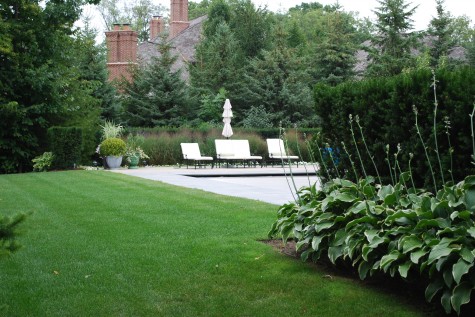
Large evergreens do a great job of screening out untoward views.  They can provide a landscape with a sense of privacy.  The yews at the lower level provide additional privacy to anyone seated in the garden.  The pool and terrace are not completely enclosed; the wide opening is an invitation to a lake view not pictured here.  The transition from bluestone terrace to lawn helps a highly structured landscape breathe.

topiary carpinus

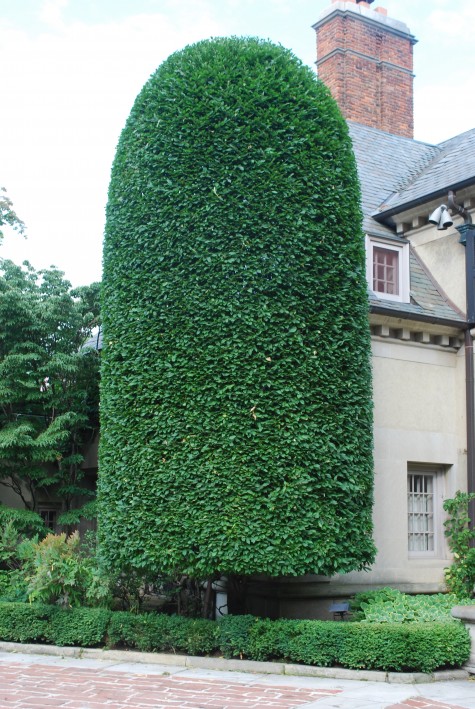
I planted this carpinus as an 8 foot tall tree when I was young.  Its mature size and formal shape is stunning.  Carpinus is not evergreen, but its leaves hang on quite late and on into the winter.  Sometimes they do not drop until they are pushed off the branches by the new season’s emerging leaves.  The boxwood hedge in front provides a little structure which helps the ground the tree.  The trunk is virtually invisible, given the dense shade under the bottom leaves.  Without the boxwood, the tree would appear to be floating.

evergreen hedge

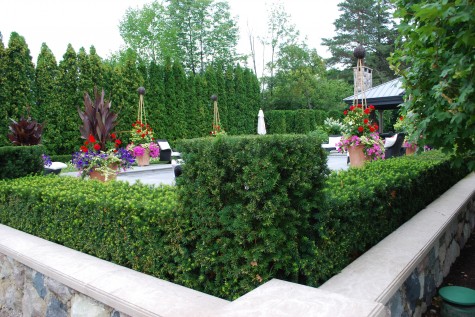
This yew hedge repeats the structure of the wall and its limestone cap.  The repetition of the shape of the wall with a hedge somewhat taller than the wall organizes the pool terrace garden.  The pots are filled with many kinds of annuals in a loose and flowing way.  The structure provided by the evergreens highlights those plantings.  From outside the pool terrace, the wall seems all the more important visually for its yew lining.

structure in the landscape

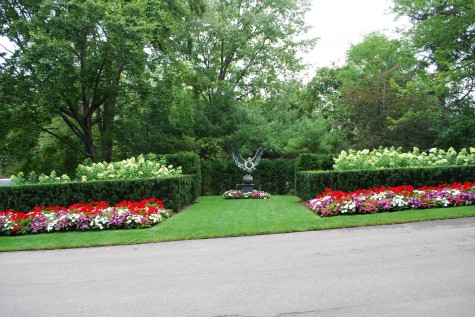
A sculpture is given special visual prominence in a landscape by the evergreens that surround it.  The tops of the yews are being pruned with the horizon, and not the grade of the driveway.  It will take a few more years before the hedge is completely level.  Standing at the entrance to this garden, there is much less of a sense of a sloped space.     

walled garden


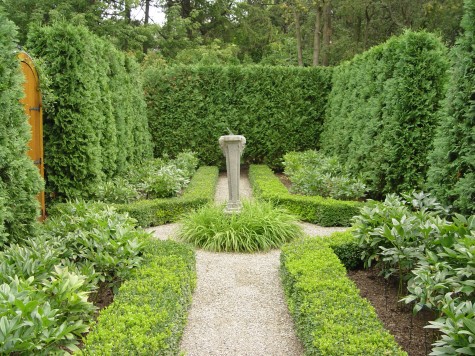
This small private garden is completely walled by evergreens.  The boxwood provides interest on the lower level, and makes much of an antique sundial.  The peonies bloom but for a short time in the spring, but their big glossy leaves are a compliment and contrast to the evergreens all summer long.  I would doubt there are many visitors here in the winter, but it is an enchanting secret garden in the summer. 


yew hedge

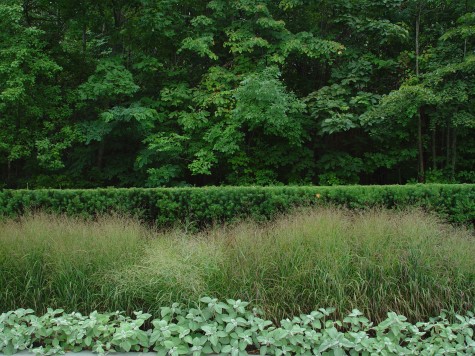
In this instance, the yew hedge provides a graceful transition from the mature deciduous trees in the background.  Though the panic grass obscures 3/4’s of the height of those yews, it lends its weight to the panic grass hedge. That hedge has a very prominent role in the winter landscape, as the grasses are cut to the ground, and the blue grey plectranthus succumbs to the first frost.

grass sculpture

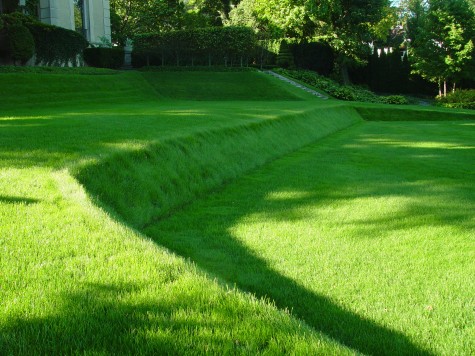
Grass does not immediately come to mind when one thinks of evergreens, but in my zone it is green most of the year. Though it grows beneath your feet, it can be a very important element to the structure of a landscape.