Pastoral Landscapes

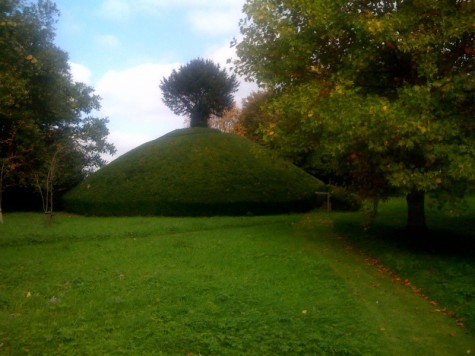
Rob’s shopping trip abroad for Detroit Garden Works is well into its second week.  He has attended some antique faires, as well as visiting dealers specializing in vintage or antique garden ornament.  His route from this country faire to that rural dealer has been dreamy to say the least.  I have gotten scads of pictures.  Many of them have a very painterly quality about them.  Boxwood Hill, with its path to the top looks like a scene from a Tolkien novel-a pastoral landscape fraught with history.  This photograph of surely trimmed boxwood, and a path up to the tree on top set in rough grass is heart stopping-can you imagine seeing this in person?     
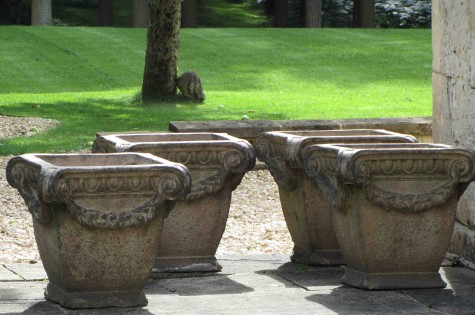
These four terra cotta squares, made at the the Liberty Company in London at the turn of the century, look particularly beautiful displayed against the park like landscape.  These rare signed and stamped pots have a quietly classical and architectural presence that suits me just fine.  They have that chunky and solid English aura about them that rings true.  Any genuine expression I admire.      
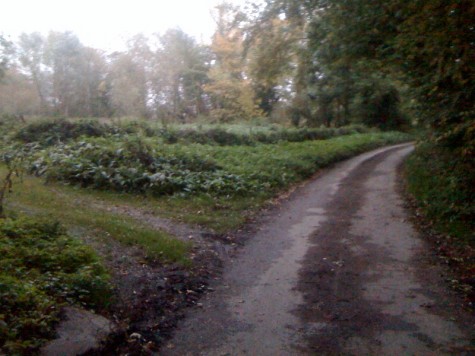
Where Rob was when he took this photograph, I have no idea.  It looks to me like the junction of the road, and the road not taken- made famous by the poem by Robert Frost.  I will have to ask Rob which road he eventually took, as his camera recorded that moment seconds before he made his decision.  There is not a building nor a sign to be seen-striking, that.  This pair of two-tracks; each one holds promise. 
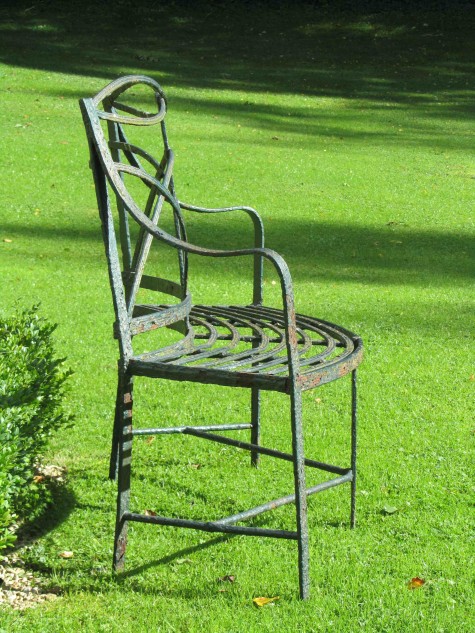

Like this antique curved iron bench or not, the combination of bench, lawn and light is beautiful.   
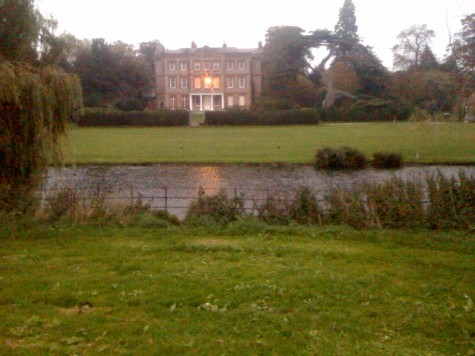
This country house is of a grand scale, but the attendant landscape is seems barely touched by human hands.  Field grass like this-full of all sorts of plants and infrequently cut or grazed is completely unlike what I would call lawn.   The grass adjacent to a wild garden I once had was overrun in the spring with every color of violet imagineable.  I don’t think I knew how good it was until it was gone.  A lawn overrun with violets;  what could be better? 
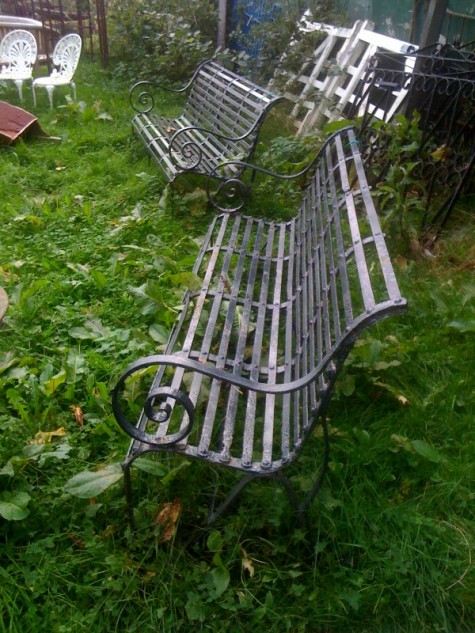
Many of the places that Rob shops have deconstructed landscapes such as this.  The look is lovely, natural and soft. In charming disarray, this landscape has a life of its own, with a minimum of interference from a human hand.  Though some may say this is evidence of neglect or poor housekeeping, I like how this space has been colonized. The natural landscape fringes and grows up onto the benches, gates, chairs, and ironwork-a natural, and beautiful relationship.   
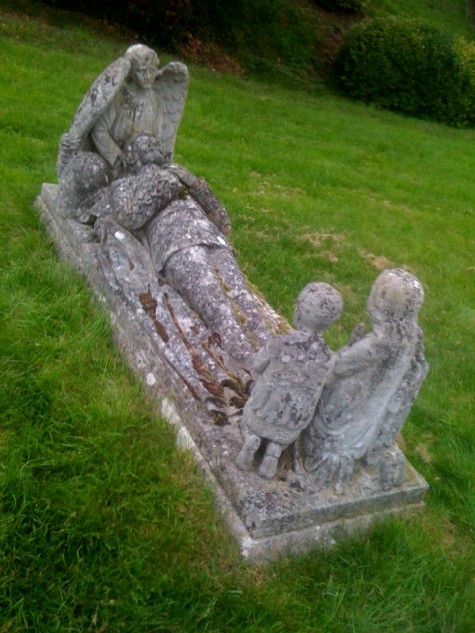

This ancient limestone sculpture in a church yard cemetery is amazing.  The children seem to be praying for the immortal soul of the deceased-already firmly in the hands of an angel.  The expression on the face of the angel-no doubt he takes his job seriously.  Many lichens have grown up and over this old sculpture-not to mention the rough grass.    
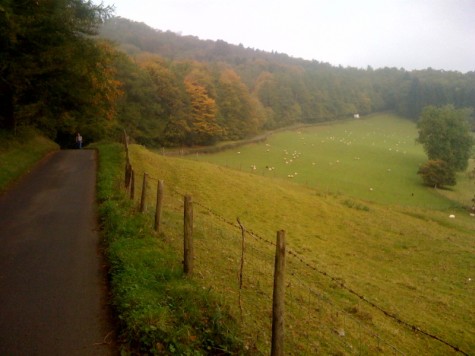

A winding and narrow country lane high on a ridge provides Rob a great view of a herd of sheep, placidly grazing. This is a landscape of a time and place unbeknownst to me. There is eveything to be learned from landscapes that have evolved from agricultural, commerce, country, and community. There are no strident notes.  Nothing contrived, or trying too hard. What is hard- the work of a life. What gets done-a sign of a life well lived.     
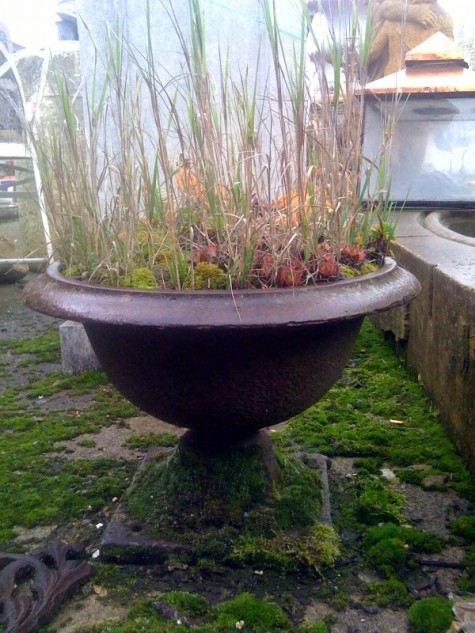
This container may have had some hens and chicks planted in it a long time ago, but what you see here is a container planting gone wild,  and a moss lawn establishing itself-the handiwork of a hand far greater than mine. I cannot really explain why this photograph appeals so much to me, but I doubt I need to.
Good Days

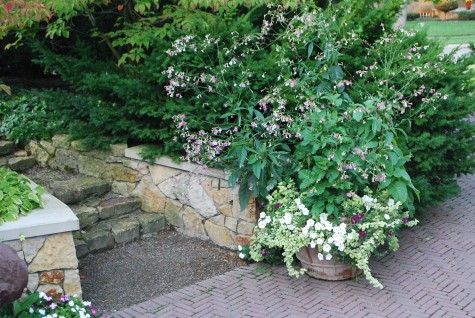
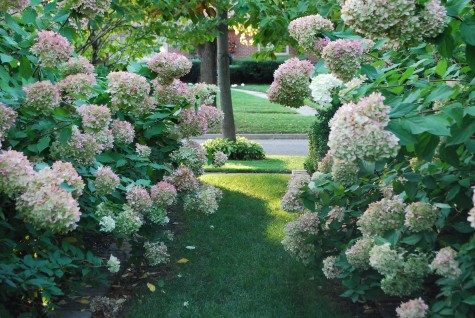
There are those times when the garden has a good day.  Good all over. The late day sun slanting across the lawn, and the hydrangeas going pink-just good.  I poked my camera lens through the gate for this picture.  One of my favorite parts of my garden-I see nothing of the neighbors, and very little of the street.  The hydrangeas spilling over the lawn makes it all the more like a garden hideaway.

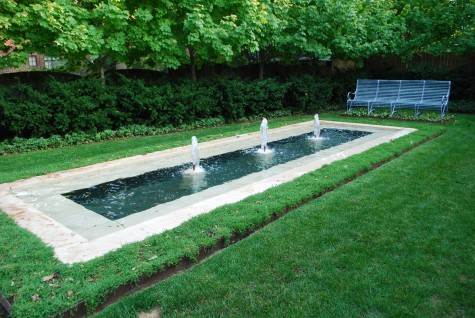
The fountain garden is back to being its serene self-post new drainage work, giant fountain repairs, all new herniaria-and a new bench.  I cannot tell this part of my garden was under siege until mid July. Buck is testing the waters already about shutting the fountain down for the winter-I am waving him off.

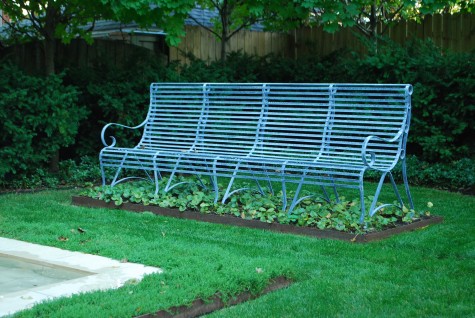
A client that needed a 9 foot long scroll steel bench right away for an event got mine.  Though I wasn’t so happy at the prospect of being without a bench until a new one could be made, no doubt I had a chance to tinker with the design.  I had the new bench made four inches taller than the original.  This is much more comfortable for me, and considerably easier to get in and out of.  I had originally planted herniaria under the bench; it was not happy with the shade.  A new planting of European ginger seems to be working out fine. This is a better place now.

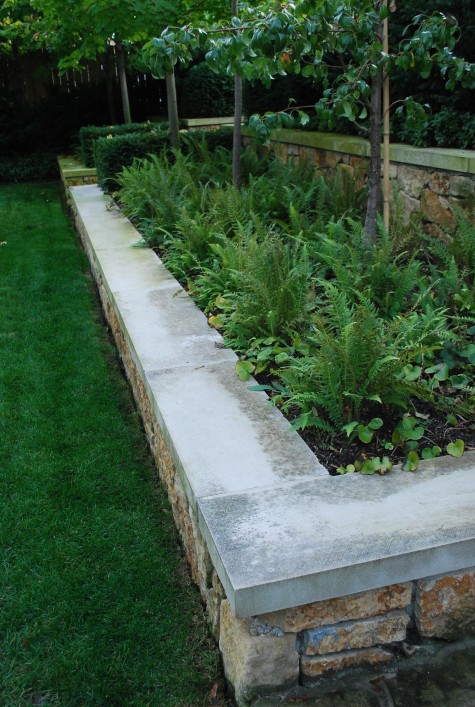
This bed of beech ferns once had Helleborus Angustifolius as a companion.  Try as I might, they suffered terribly in the winter.  As this species blooms on old stalks, even the bloom period was unsightly.  After 5 years I gave them up for European ginger.  The planting is lush and thick.  I am so glad those gawky hellebores are gone.

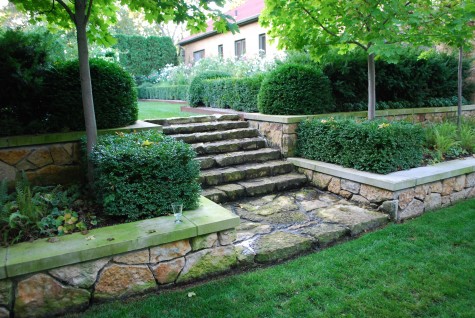
The rose garden is much brighter in the evening than the fountain garden; I like walking up into that light.  The stone stairs have been in long enough to have acquired a little moss. 

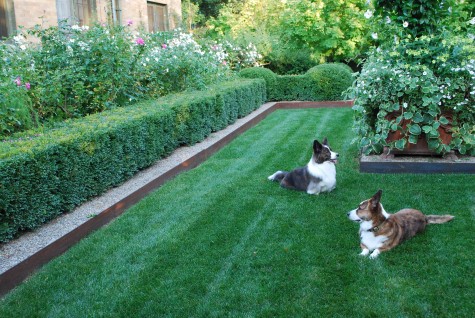
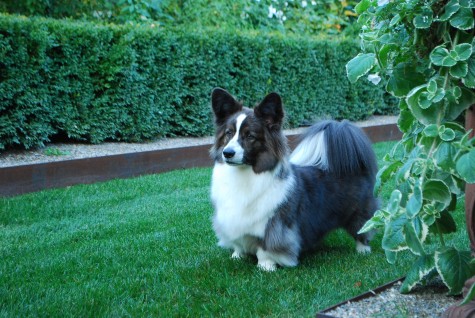
The rose garden is a destination in the evening; a pair of chairs and small table make it a perfect spot to sit and rehash the day.  The grass got cut yesterday; the corgis appreciate this.  When the grass gets long, they look like they are swimming through it, rather than running over it.  I still have intermittent roses; the boltonia and Japanese anemone are in full bloom.     

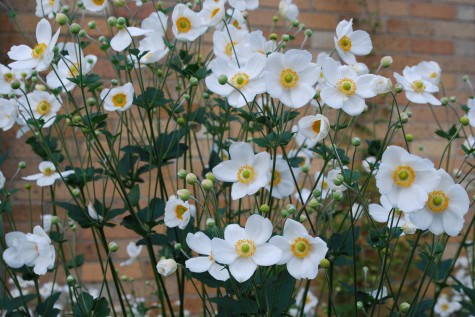
Japanese anemone is one of my favorite perennials; I like single flowers. I especially like late blooming single flowers.  I also like that I do next to nothing to it except look at it. It thrives in this garden for going on ten years now. 

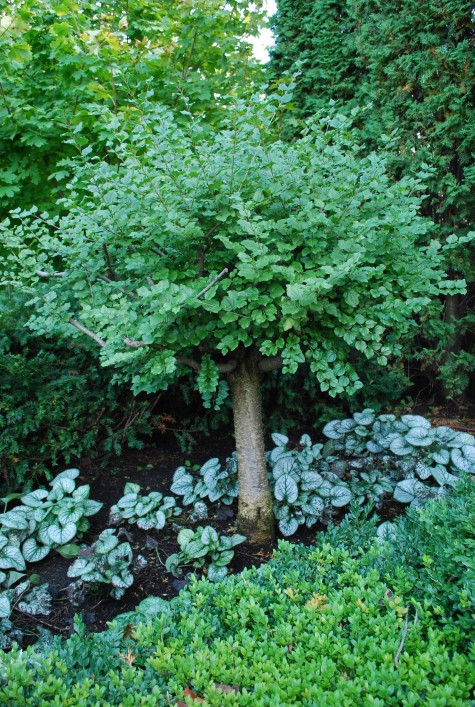
I pollarded my overgrown Palabin lilacs on standard; it scared me , how hard I cut them back.  For weeks, not a peep out of either one of them.  They are starting to look good to me.

I am not sure why this sunken garden has a feeling unique to my garden. It might be the quietest spot in the yard.  I am only one block from a 5 lane street.  The fountain and the sunken garden minimize that urban noise.   

On the driveway, the nicotiana mutabilis is still going strong.  It will send up giant new shoots all fall long; I keep adding stakes.   

The mum-ball is turning pink-can you hear me sigh?  It actually does not look all that bad with the purple kale.  The bloom period is actually not that long here-I already have plans to trim it back to a green ball once the flowers fade.   


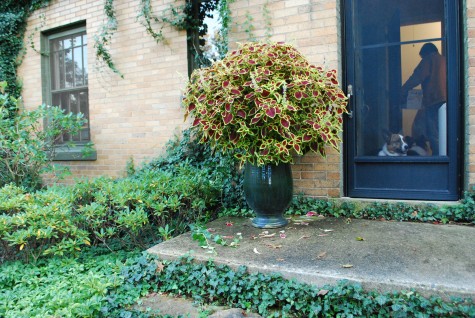
This coleus is done growing; the nights are getting quite cool.  Hopefully it will last a while longer.  The shape is good.  Some days in the garden are just good.

Made By Hand


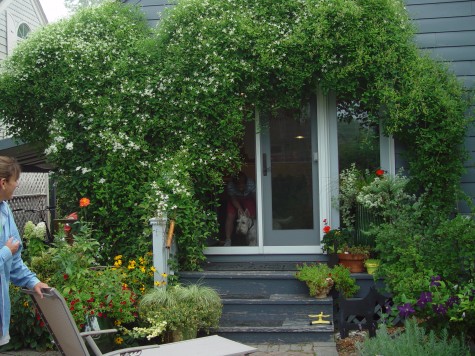
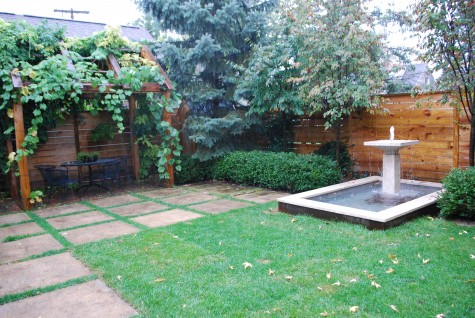
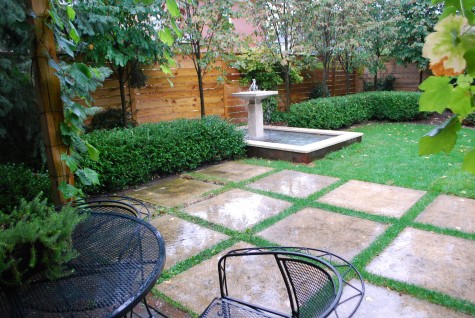
My crew superintendent bought a house some 5 years ago featuring a small garden overrun with vining plants. The sweet autumn clematis was threatening to completely engulf the back door. The porch steps were deteriorated and rickety.  A pair of giant wisteria were draped over and crushing a metal arbor never meant to carry such a load.  A few poorly maintained trees were kept company by overgrown yews, languishing spireas and countless daylilies.  It was perfect. He knew no matter what landscape came with the house, he would want to design and install his own.  He also had the interest in doing the work himself.        

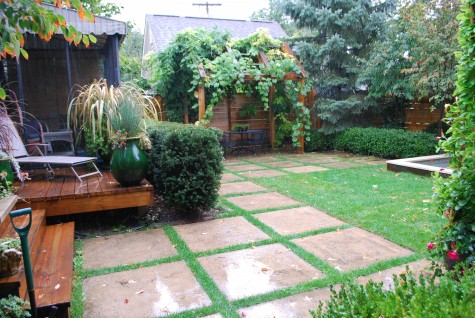
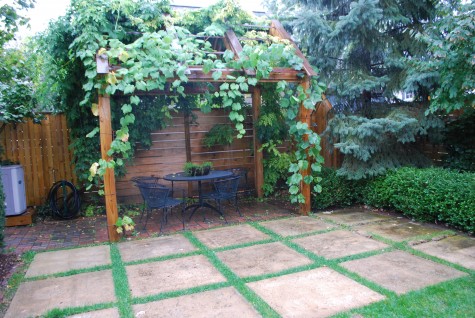
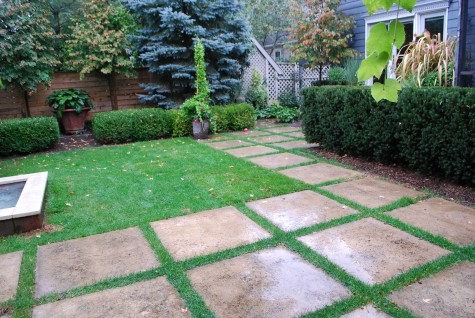
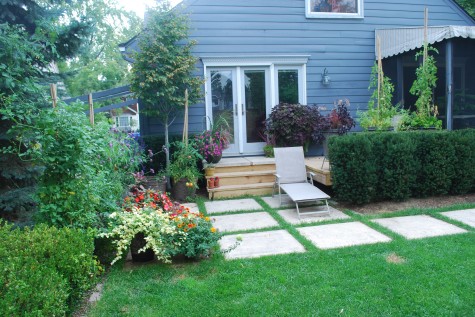
Those deteriorated porch steps and an attached deck were replaced first with natural cedar.  How he learned to work wood I am not really sure, but people who are determined to do for themselves usually take the trouble to aquire the skills and tools that permit that.  The pergola was his next target; the sturdy cedar pergola will shoulder the load of the wisteria-and a newly planted pair of grape vines.  The wisteria in the back is making quite a comeback, after having been chopped to the ground last year.   He built forms for the 3′ by 3′ concrete tiles, and cast them himself.  He somehow persuaded his good natured spouse to help him set these tiles in the lawn.  The heft and scale of both the pergola and the tiles is so effective in this small space.      

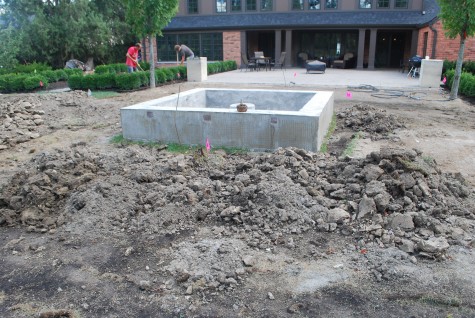
He dug the hole for this fountain himself-last year.  That hole sat, until he finally decided that it might be good for someone else to pour the concrete shell.  Albaugh Masonry was happy to oblige, and go on to side the pool in steel; he was half way to a fountain. In the meantime, he installed a fence of cedar boards run horizontally around the back yard.  His design takes relatively inexpensive materials and makes something unusual and beautiful from them.  Columnar serviceberry-or Amelanchier ‘Cumulus’, is a perfect scale for screening a small space.  They take up little room in the yard, and provide great screening for his second story windows.        


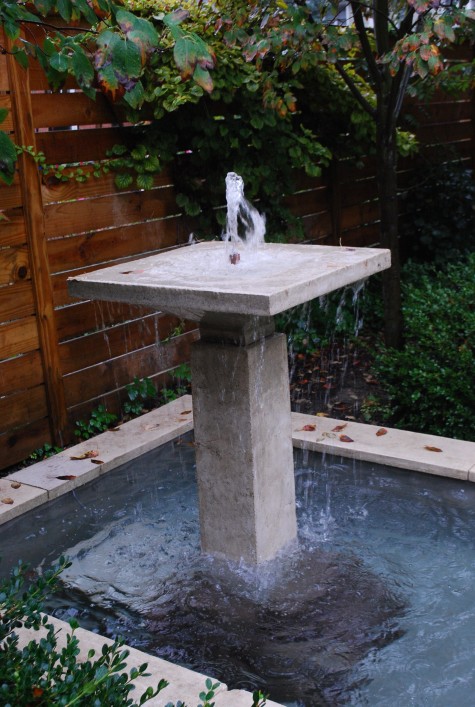
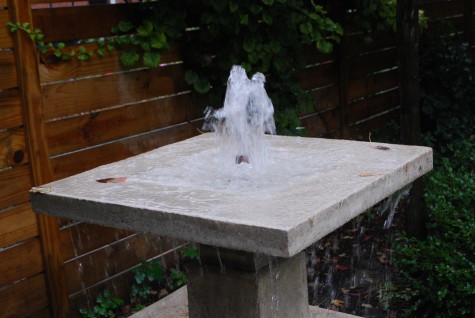
The fountain is an amazing piece of work.  Not only did he design it, he built wood forms, and cast the pot and pedestal in concrete. He tells me this is his first foray into concrete sculpture.  The form was constructed entirely of straight pieces of plywood, some of which were sealed with duct tape.  The pedestal has a wide base that sits on the fountain basin floor that tapers as it rises out of the water.  The interior of the fountain pot is an exact replica of the outside. The pedestal is tall; water falling from the rim has a long way to go to the surface of the pool .  This makes for lots of visual action.
This fountain reservoir is very shallow; the sound of the water from the jet hitting the surface makes for lots of splash, and really great sound.  I see he must have thought this all through.  Deep water in the reservoir would absorb the enegy of the water from the jet; it would have less action.  No photograph can convey the sound that water in action makes, but the sound coming from his fountain is strong and musical.   

The pergola is small; there is just room for a table and four chairs.  But what makes the space so effective-beyond the pergola itself, is the switch of paving materials.  The brick under the pergola sets the space apart from the rest of the yard.  Cozy.

The view out is more than entertaining.  It is well put together, and satisfying to the eye.  I am sure that at the end of the day, most landscape professionals have no interest in a landscape that demands lots of their hands on attention. If you do all of your own gardening work yourself, it’s important to consider the maintenance.  This back yard has a pergola, a fountain, a lawn, a terrace, landscape and pots-all working together in a graceful way.  There is a lot here to enjoy.     

Today was the first time I had seen the yard in a long time.  As you can see, it was a very rainy day, and we were in the neighborhood.  How he transformed a disheveled jungle of a garden into this lovely space-I was very impressed.   


He is thinking of extending the screen porch visible on the far right up to the back doors.  Sounds like maybe a sleeping porch is in his future.  I have no doubt he will build the porch addition himself. It is impossible not to admire people who make things happen with their own two hands.

The Fountain Vase

A recent project about which I have written several times finally came to a close. The centerpiece of the landscape design-a fountain of generous proportion and clean lines.  My clients have a decided interest in contemporary design, and an equally decided interest in classically symmetrical spaces.  The right mix would serve them well.  I am lucky in that both of them are articulate, and interested in being involved in the process. A contemporary landscape with reference to classical design-my intent. 

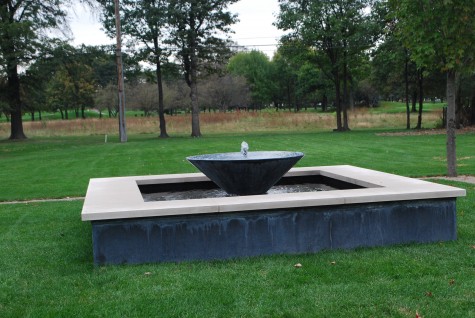
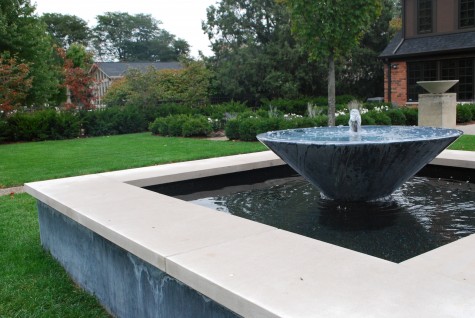
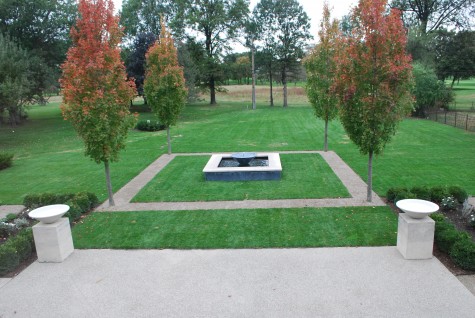
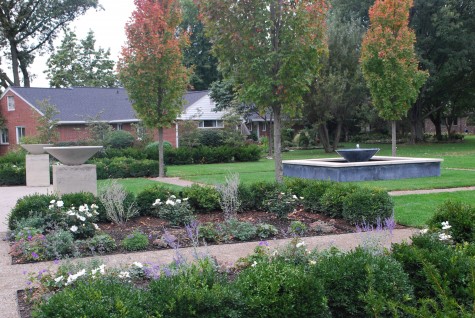
The last part of the landscape to be finished might be my favorite part.  The fountain basin, clad in acid washed steel with a limestone coping set at seat height, and a fountain vase forged of the same acid washed steel- is the strong and simple foreground element to the focal point of their property-a beautiful golf course.  The dark blue-black surround,vase, and pool interior reads in stark contrast to the softly green background. 

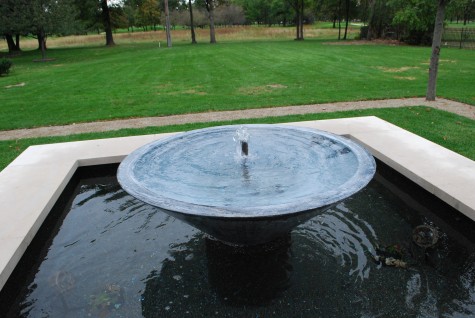
A 3-point leveling system of bolts in the bottom of the vase made it possible for Buck to level that pot after he installed it.  Should you use a pot as a fountain, setting that pot level is the most important part of the installation.  Water always sits level; should your installation be askew, it will be obvious.  The action of the jet water hitting the surface is producing clearly concentric circles; the vase is level.

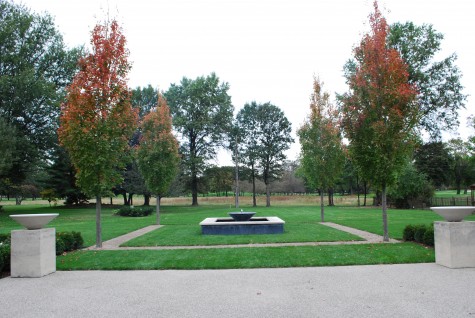
A pair of cast stone pots on hand cast concrete pedestals- identical in shape but smaller than the fountain vase- flank the fountain.  A limited palette of shapes and colors speaks to massing a central idea. One idea, sufficiently explored. Contemporary landscapes ask for serious editing.  

On the ground plane, the central portion of this landscape is spare. A concrete aggregate terrace, concrete pedestals, ad the decomposed granite are variations on a same materials theme.  Four trunky and columnar trees are set in a level lawn  plane.  The rest of the story-the golf course.

The view of the frame of decomposed granite surrounding the fountain is available only to my clients-from upstairs.  From the public view via the golf course-you might miss all the action going on; this I like. The best of contemporary landscapes do not lecture; what they have to say requires  a thoughtful and inquisitive viewer.       


These clients of mine-they made this.  I speak a few languages, and I can interpret; this was my part.