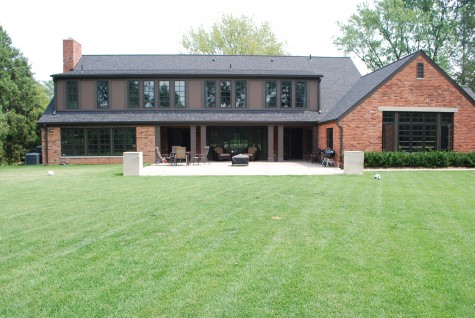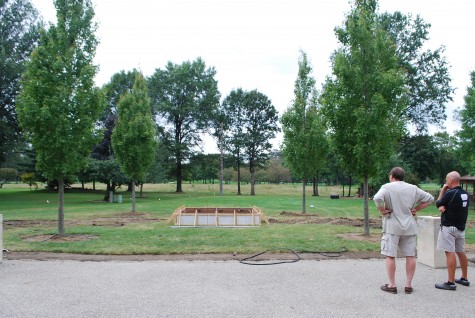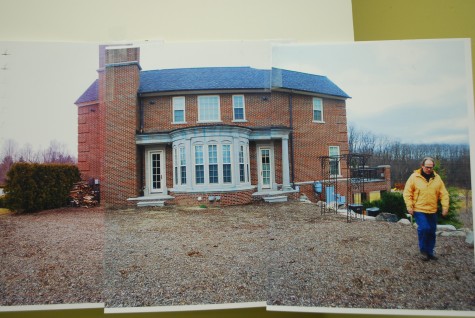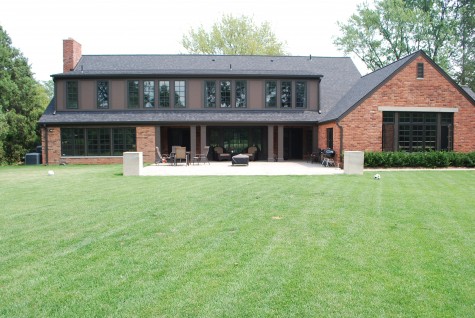
You may remember this photograph from a post I did a few weeks ago called ” A Michigan Gardener”. If you knew my client, you would understand how until he could have the entire landscape, he would have nothing. The design had been drawn and presented for quite some time; out of the blue, they were ready.
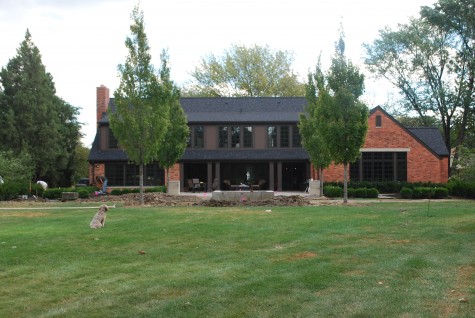
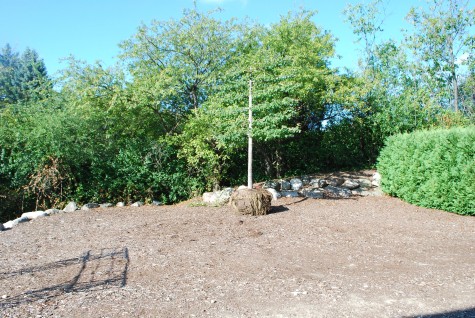
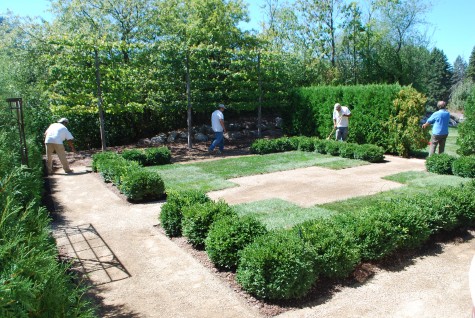
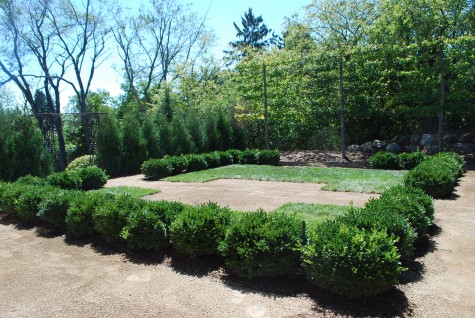
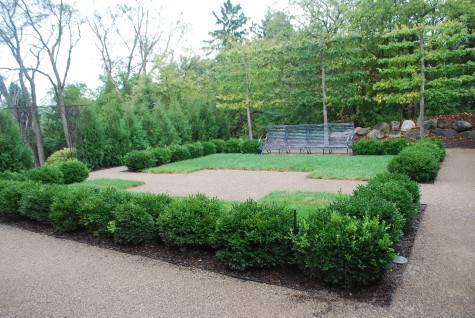
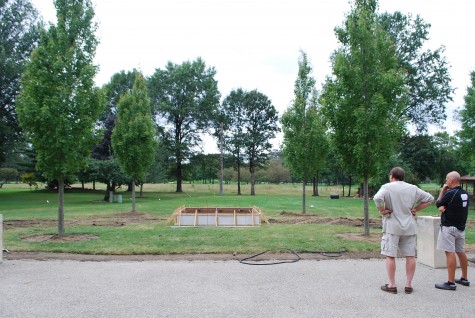 They have a unique situation; their property backs up to a golf course. They are able to take their golf cart out of their garage, and drive to the first tee. Their love of golf is another story all together; preserving their view of that course was my main concern. I wanted a very strong foreground element that would hold its own against all that golf course acreage, and a landscape that would frame, and not obstruct those beautiful views out to the course. Central to the design, 4 Bowhall columnar maples, which would be inset in a picture frame of decomposed granite. In the center, a fountain.
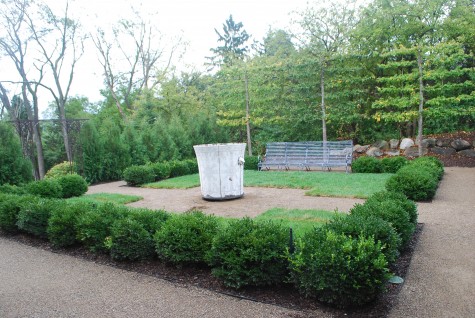
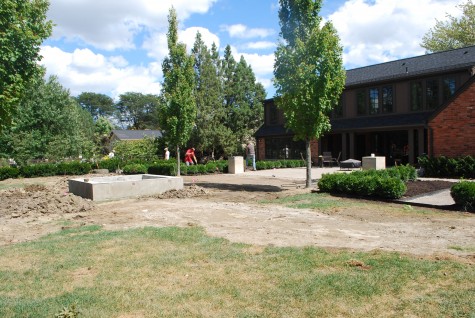 A fountain-this sounds so simple. It is, once every dimension is carefully thought through. Once all the proportions and construction are sorted out. Even the smallest most simple self contained fountain is a great addition to a garden. A fountain of this size would be a place to congregate, and entertain. My clients are young, and appreciate modern design. But they did not want to be limited by a “modern” definition-they wanted a landscape which would please and suit them. This means a landscape that allows them to easily entertain outdoors.
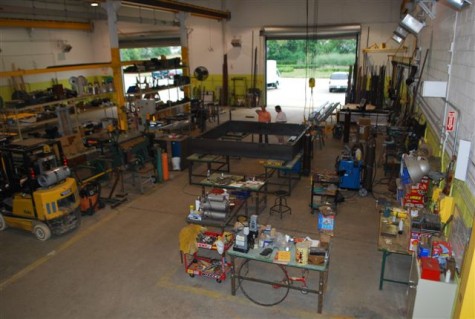
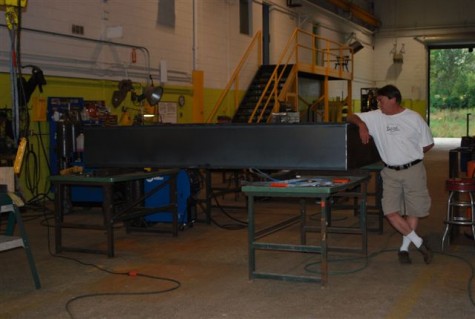
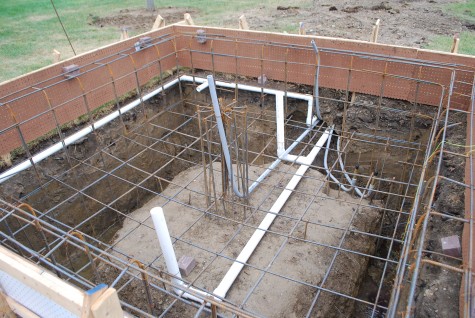
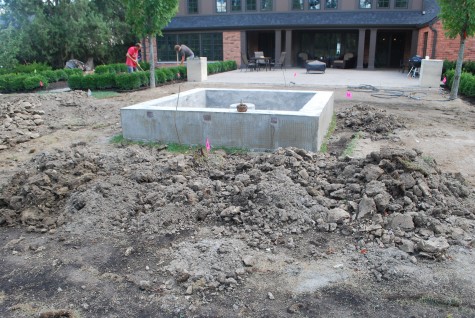
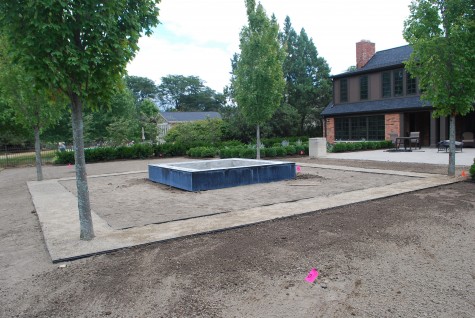 The fountain footprint is 10′ by 10′. My clients have 2 young children and very busy lives-I insisted that this fountain be constructed and cleaned as if it were a swimming pool or spa. When I make much of a central landscape feature, it only makes sense to cover the maintenance. My client contracted Gillette pools to construct this reflecting pool; Buck built the acid washed steel surround. Transporting that welded box to and from the galvanizer, and to the site-at which point 8 men carried that 900 pounds of steel box and dropped it over the concrete shell-a big deal. Once the surround was in place, the frame of decomposed granite was installed.
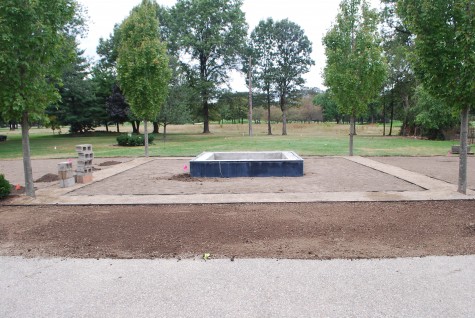 I played with no end of possible dimensions for the fountain, as did my clients. I envisioned the limestone cap at seat height. The kids in the fountain on a hot day. A coping wide enough to accomodate a plate and a glass of wine. The limestone cap-two inches larger than the walls, inside and out. A low profile. The golf course, and everything that park- like view represents to my clients-keep that intact. There would still be a wide expanse of lawn. That large lawn space visually melds their property to the golf course property. Most of the formal landscape is close to the house, and off to to the sides.
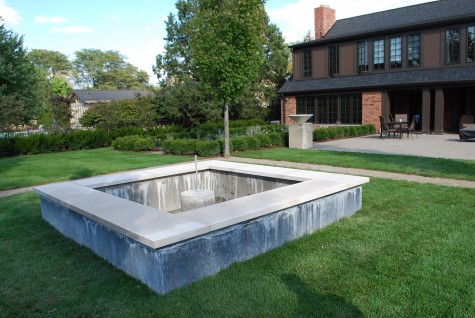 The attendant landscape is clean and crisp. It provides privacy from the adjacent homes. Perennial gardens with a limited plant palette will provide interest throughout the summer. White Knockout roses, dwarf Russian sage and shasta daisy “Becky” will be easy to maintain; this is my client’s first foray into perennial gardening, and I want him to be successful. My client tells me he did not exactly know there would be perennials. I did label certain areas on the plan as “garden”. I will admit I did not discuss that much with him. I am not only sure he will be able to handle it, I am even more sure he will really enjoy it. His interest in landscape and garden is genuine-that is always easy to spot in someone. The maples, the granite picture frame, and the lawn celebrate the fountain still under construction. The work should be complete by week’s end.
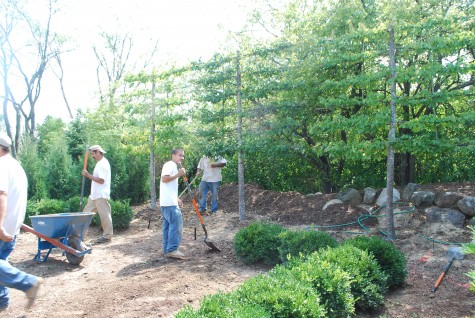
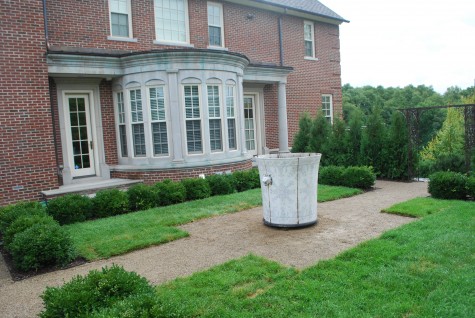
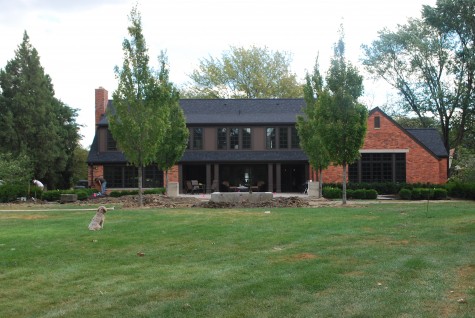 In my opinion, a big measure of the success of this landscape has to do with the views from the golf course. I had an interest in my clients sustaining privacy from the course. Sometimes privacy has less to do with walls, and much to do with invisible. Every element and plant hugs the ground, but for the maples. Ros of yews on either side are punctuated with Venus dogwoods; someday those trees will be spectacular for 6 weeks in the spring. Fot the rest of the year, they will gracefully provide screening from the neighboring homes.
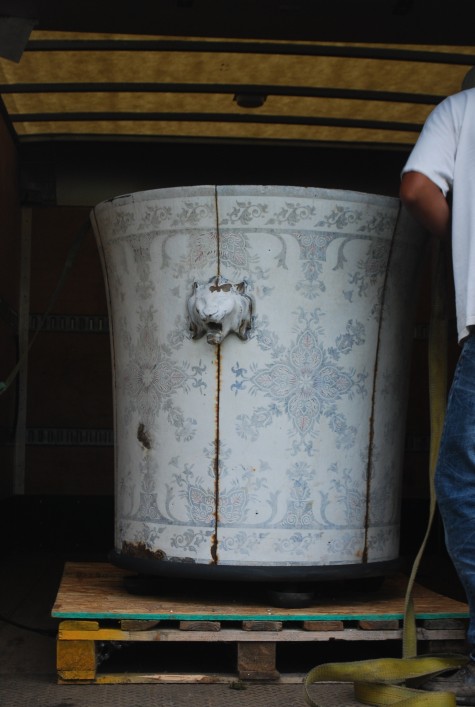
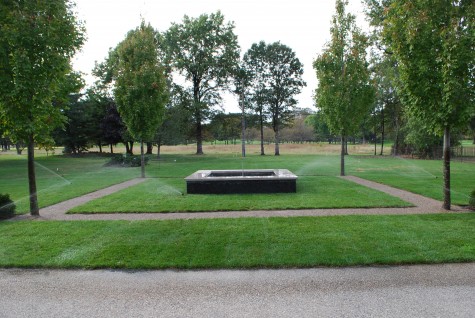 We brought in soil, and graded away from the house. The lawn always comes at the end of the landscape project, but it is very important. Lawn describes the shape, drop and drift of the land. The lawn plane is to my mind, beautiful. Those trunks of the Bowhall maples bring the golf course landscape up close. The fountain vase-coming up.
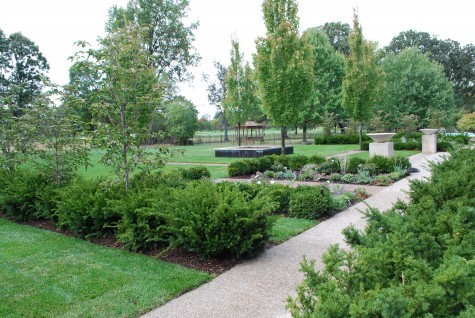
Venus dogwoods, yews, boxwoods, and sparsely furnished perennial gardens round out the landscape around this fountain. A formal landscape concept has a decidedly modern execution. Always on my mind is how I can apply and go on from the history of design to projects from real people who engage me. The fountain will have its vase and jet installed this week. More to follow.