Good News


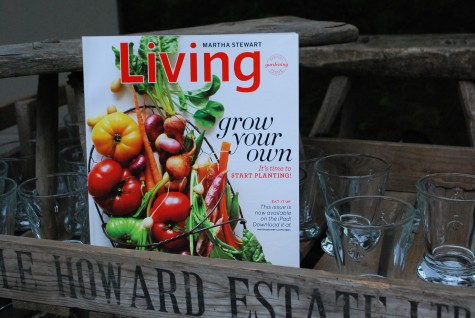
When Tony B. from Martha Stewart Living Magazine emailed me this past October that they were interested in featuring some objects Detroit Garden Works carries for their March garden issue, my heart skipped a beat.  OK, maybe many more than one beat.  Why wouldn’t my heart pound?  Martha Stewart has done plenty to make gardening mainstream.  I so admire how she connects thoughtful living, decorating, celebrating, cooking, gardening and growing-I read every issue.  I bring the recipes home for Buck.  Why is this?  I have choices about how to live my life day to day.  But I am, like many other people, interested in her take.  She has devoted an enormous amount of time to documenting and inspiring creativity.  In the home.  In the kitchen-and in the garden.  For regular people-coast to coast, and beyond.  She made a gorgeous garden seem attainable. 

 Like you, I have failed miserably to repreduce her gorgeous outcomes-no matter how detailed her instructions might be.  My years ago kitchen never recovered from my efforts to reproduce her spun sugar.  My garden in no way looks like hers.  This has never really bothered me.  The important thing is that she encouraged me to try all sorts of things. She tells me where she shops.  Whom she admires.  She sows all kinds of seeds-she is a teacher.  Regularly and reliably I will run from learning something.  Maybe that’s from worry that I cannot learn something. But I seem to have no problem trying out what she suggests.  I treasure her for this.

I am not always so interested in what is hip, current and fashionable-I have my own ideas about things.  But I respect her take.  I can be fancy-talk to me about hellebores, landscape design, good garden plants, winter containers, garden antiques-and so on.  But I can also be a plain and simple citizen-interested in a little guidance, a few fresh ideas.  Anyone who sows seed gets my respect.  Seed sowers-they are a breed all their own.  They might generate an idea, a recipe, a design; they plant.  They conduct.  They advise.  They suggest.  They connect with you and me and lots of others.  One seed at a time, they make a difference.  One seed at a time, they speak up. 

In any event, I could not be more pleased that Martha Stewart Living reserved a place for three items we carry-in their “Great Finds- Our 50 favorite products, projects and places inspired by the world of gardening.”  I could not be more pleased that Detroit Garden Works was included in their list.  One item, sourced by Rob.  Another-by me.  And the third-a product we manufacture.  I very much like this part.  Many thanks, Martha Stewart Living.
Pop-Up Structures


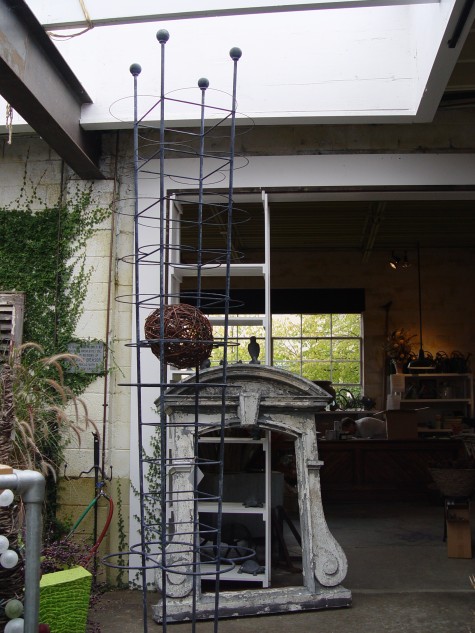
A pergola is a big heavy structural object-not a good candidate for moving around the yard on a whim.  But tuteurs, vine supports, vine towers, and plant climbers can pop up in a garden wherever and whenever you have a mind to use them.  My big complaint with plant climbers-they are invariably too short for the plants I’d like to grow on them.  My climbers have always been homemade-from bamboo.  I can make them as tall as I want. I had a mind some years ago to move on from this.  The size of commercially manufactured tuteurs are dictated by UPS regulation.  They will not ship an object over a certain size.  Motor freighting a plant climber-not one bit cost effective. I hate paying more for shipping than what the object of my affection costs to buy.  Everyone thinks twice before motor freighting.  So I removed the ship issue from my design.  I designed a whole series of plant climbers aimed at my local market.  Should you have access to a pick-up, or are fine with strapping the hatch down on your car, we have big and tall plant climbers.  This particular steel climber-available in regular and giant size.       


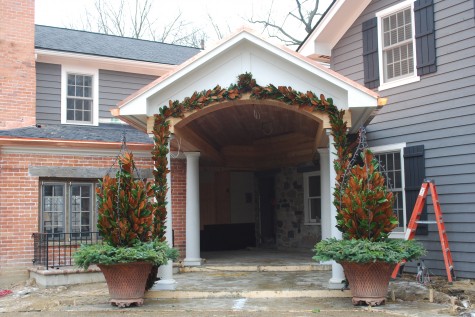
The four ribs of this giant size tuteur leaves lots of space in the middle for  display.  At the holidays, these towers get strung with lights, and outline a topiary of magnolia branches.  Pop-up plant climbers are just as useful in the winter, as they are in the summer.  Simple plant climbers pop up easily, regularly. 

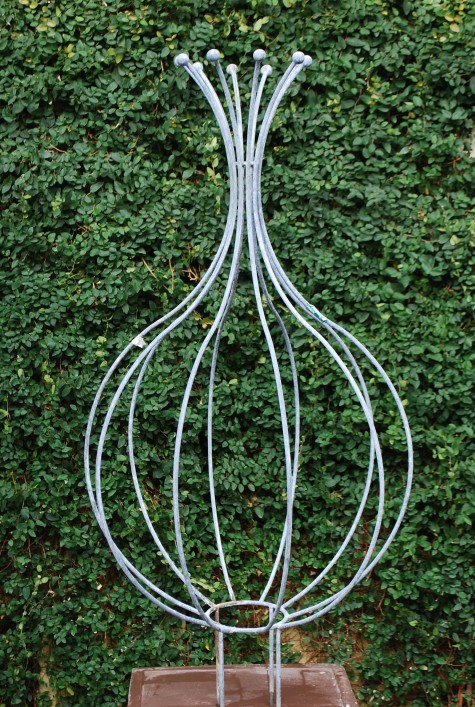
This steel garlic form, finished in our virtually rust free finish, has a graceful shape that holds its own visually-climbing plants or no.  We make them in 3 sizes.  Gardeners pop them into their containers; I like giving them a choice about the size.   

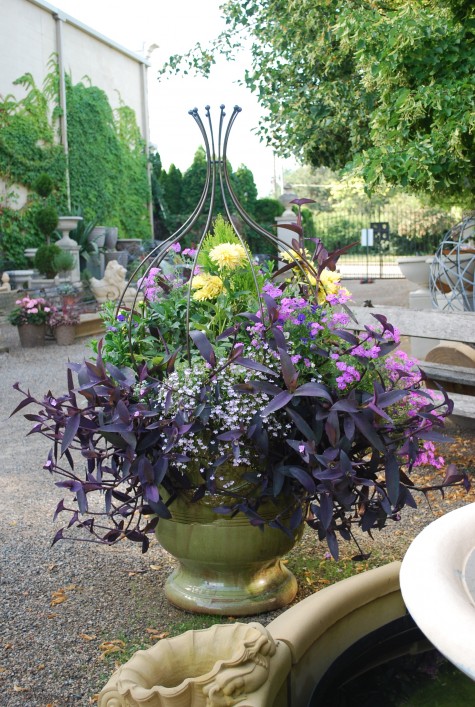
This giant garlic planter never did have a vine planted beneath it.  A yellow dahlia occupies the interior space with a raft of annual phlox. Trailing-lobelia and black Moses in the Cradle.  This spring planting carried on throught the season.  The garlic tuteur is a sculptural element-always in view.  It organizes the plant airspace in a beautiful way.  Imagine this container planting without the tuteur.  Robust yes.  But not nearly as striking as this.   

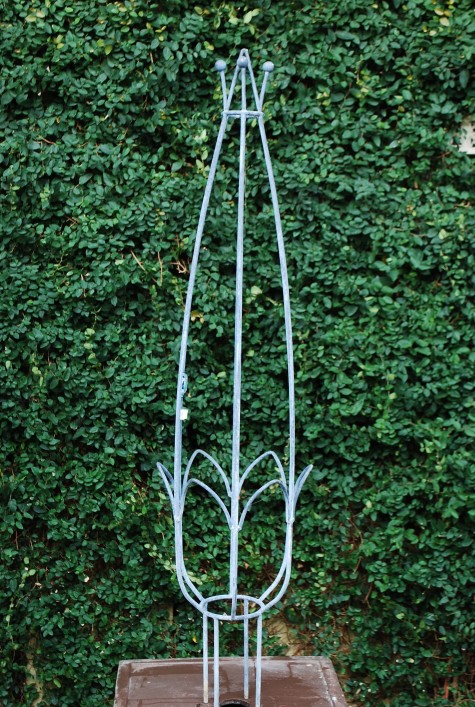
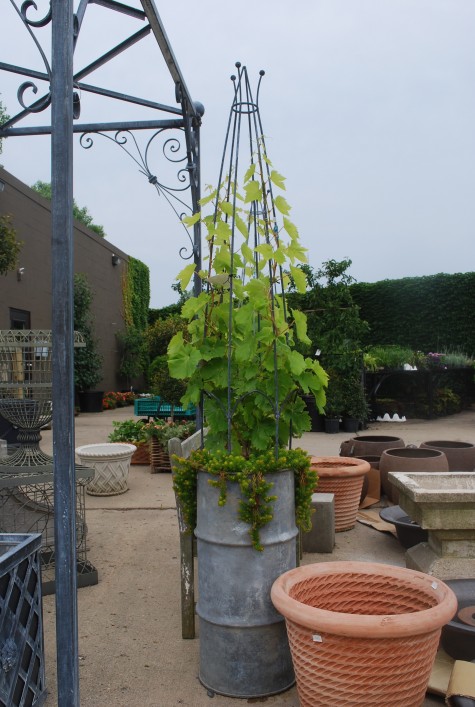
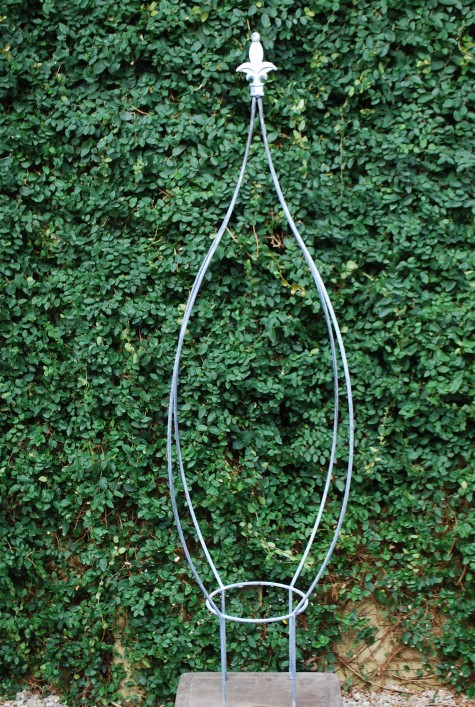
This form was designed by Rob-loosely based on an elongated flower bud. The first year we produced this form, I was too chicken to make the 9′ version.  What was my problem? 

Once a giant form gets outside, and has the sky backing it up, giant seems merely just right. This 9 foot form is larger than its galvanized container-but it works.  Growing grapes in pots?  Were someone to ask me to describe Rob, I would say he lives to grow grapes.  Grapes on pergolas.  Grapes in pots and containers.  This container, designed and planted by him, says it all.  The overscaled bud tuteur makes his idea of a gorgeous container planting a gorgeous reality.

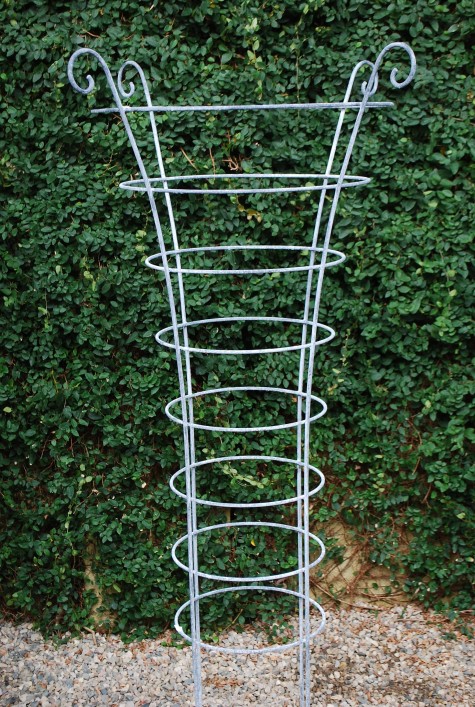
I designed this plant climber wholly based on Rob’s bamboo climbers from the early days.  He would sink 4 very tall bamboo stakes into a container at an outward angle.  He would then wrap galvanized wires in circular little, big, and giant swoops around the bamboo.  Small at the bottom-big at the top.  Most plant climbers I see pay no mind to the habit of a climbing or indeterminate plants.  Plants grow out, up, and out.  This form pays some mind to that.   The top of the plant, spilling over-as in a bower-a plant climber that scoops that up plenty of shoots-well designed.  Plant stakes-they could poke your eye out if you aren’t watching.  None of our climbers have sharp edges.  Every vertical stopper is either curled over ostrich fern style,  or capped in a mini-sphere. 


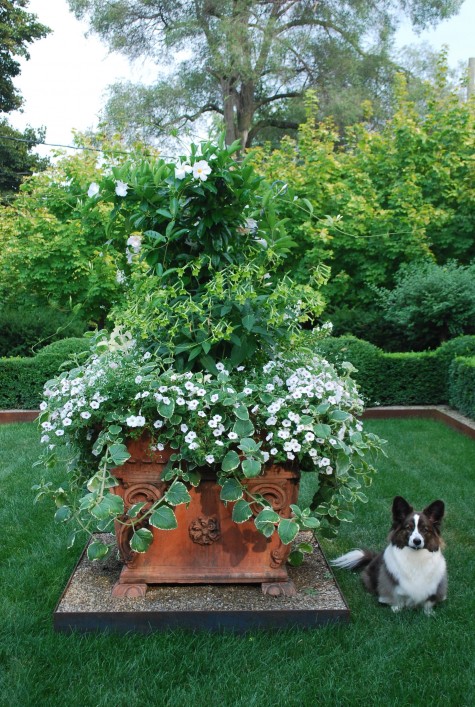
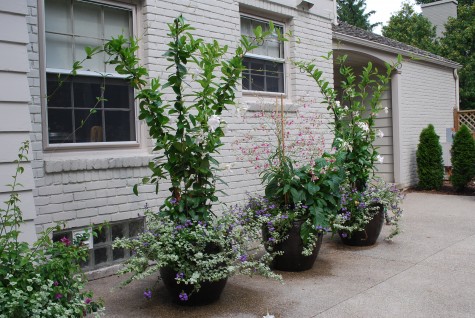
This steel version of Rob’s classic climber-not visible in late summer.  It is the structure making this container planting suitable for company.  The long flower stalks of the nicotiana alata lime are tied up to it.  The vining mandevillea has otherwise engulfed it.  Not all structure needs to be seen.  But all structures need to be strong, and scaled to handle the job. 


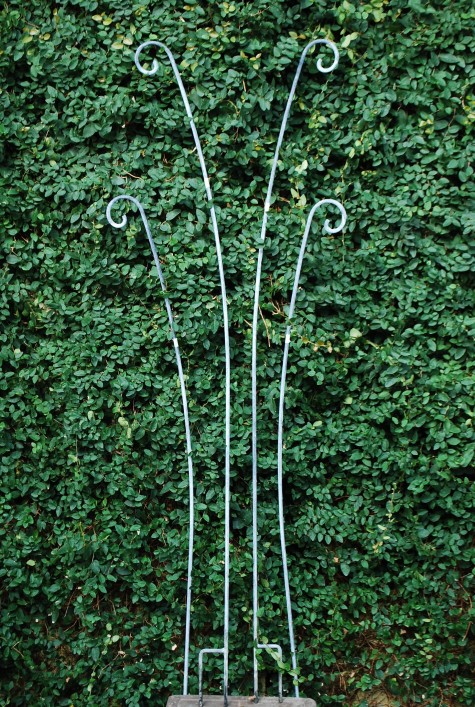
Plant stakes-what is so incredibly unnatural about them?  I understand why gardeners use stout twigs and branches to support their plants.  A natural branch is slight at the bottom, and fans out at the top.  This natural support is great for peonies, and delphiniums.  My 12 peony stems coming out of the ground may be 10 inches in diameter. That same peony plant may be 4′ across at the top.  No straight stake does not do them justice.  My steel stakes come straight out of the ground, and then curve out.  The double prongs at the bottom keep them from moving off course.  


The individual stakes in these containers are much loved by the mandevillea vines climbing them.  The overall shape of these containers- natural and pretty.  The stakes-they might be used with the asparagus next year, or grouped, unplanted, in a perennial bed next year.  Who knows where they might pop up next. 

So many years I staked every climber with bamboo.  These 12′ stakes with their twig ball finials have been in use since 2005.  As much as bamboo stakes are part of my gardening vocabulary, I am pleased to have turned that page. 

Some of our steel tuteurs-they top off a planting in a structural and sculptural way.  Not in a help out a plant climber way. Portable structures can pop up in lots of ways, in lots of gardens.      


This tuteur was Buck’s biggest-fully 14 feet tall.  Small squares and loops at the bottom-giant squares and even bigger loops at the top.  Barbara A bought this pop-up plant tuteur.  What she did with it-I hope someday I will hear.

Structure


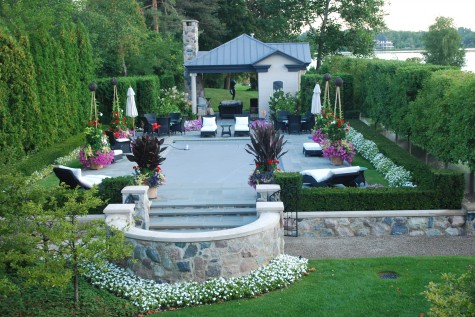
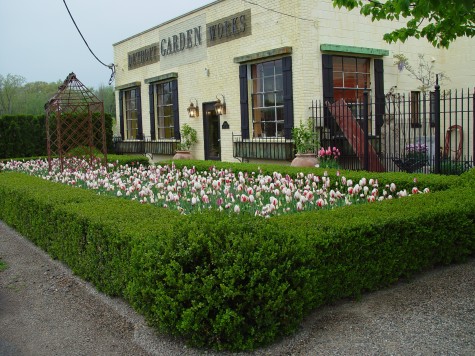
Structure in a garden, whether formal or informal, symmetrical, or asymmetrical, visually subtle or strong, is a very important element of garden-making.  A structure implies some element that is enduring.  The most elaborate sand castle will wash away with high tide.  Concrete that is not steel reinforced can crack.  A house of cards can be blown over.  Regularly, certain elements in my garden are blown over.  The annuals last but one season.  The hyssop peters out.  Roses and lilacs without regular maintenance age, and fade.  But those plants that provide structure-the evergreens, and the trees, endure, and grow to a great age.  This boxwood rectangle with its boxwood balls at the corners was planted in 1997.  It will be but 14 years old this year, but it has endured many changes of season, fungus, leaf miners, and heavy pruning.  It provides structure to this garden-the rest of which changes every season.  Tulips in the spring, annuals in the summer-the fall and winter have a still different look.  The boxwood is a living architectural, structural, element.  It provides the garden with a framework that makes a home for every other element.  In 2005, a steel gloriette arrived from France; you see it pictured here.  Still stuck in the roof, the gnarled remains of a giant wisteria. Like the wisteria and its gloriette, the spring tulips have a structural picture frame of boxwood that celebrate them.             


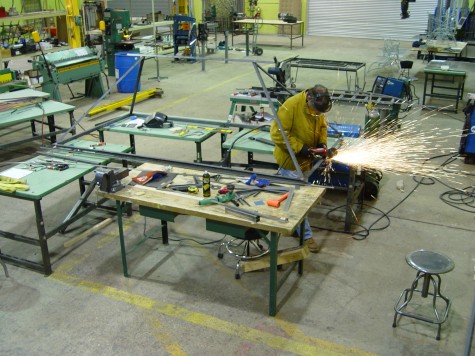
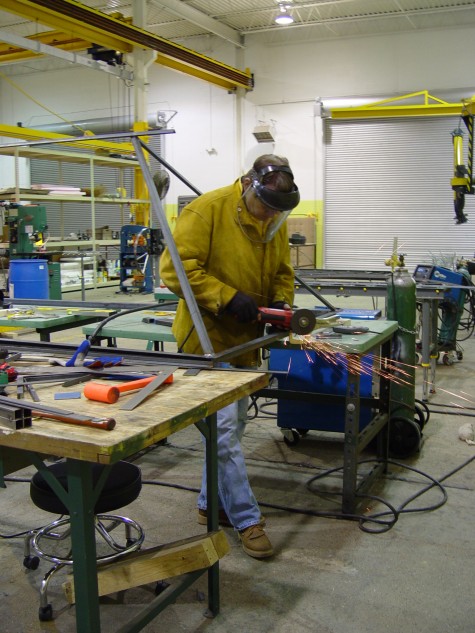
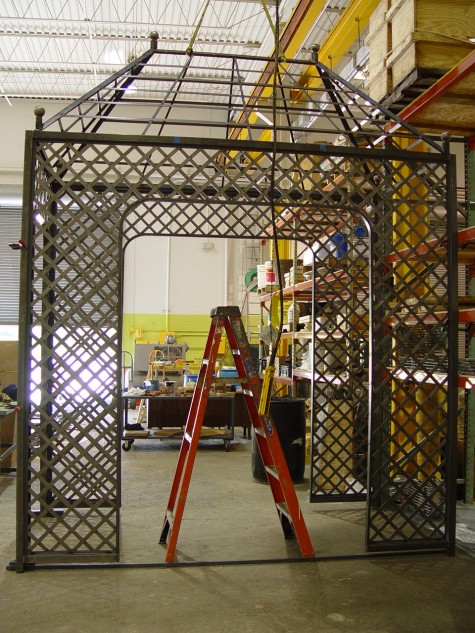
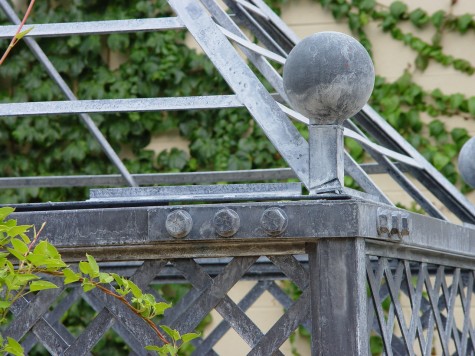
A gloriette provides shelter-as does a house for a family, a library for a reader, a road for a traveller, or a grocery store for a cook.  I decided to build a gloriette, in an expanded dimension, for the shop.  Buck obligingly drew one up in a retangular shape, and set immediately to making the roof.  The angle iron pictured here is a stock steel shape.  What he does with that angle iron is create a structure that will endure.  Structural elements in gardens stand in stark contrast to what is ephemeral.  Seasons come and go.  Perennials thrive, and fade.  As much as a garden is about change, and constant effort, more permanent elements provide comfort.  The hedges I planted 15 years ago make me feel like my life as a gardener has meant something; what I did in my garden when I was 45 persists.   

The gardens of my twenties and thirties do not exist anymore, but for the trees, and the evergreens.  They have persisted in spite of an ownership without a gardener.  The structure they provide still organize a property that is not much looked after.  I regret that I gave that property up.  The structure still in place-a comfort.   

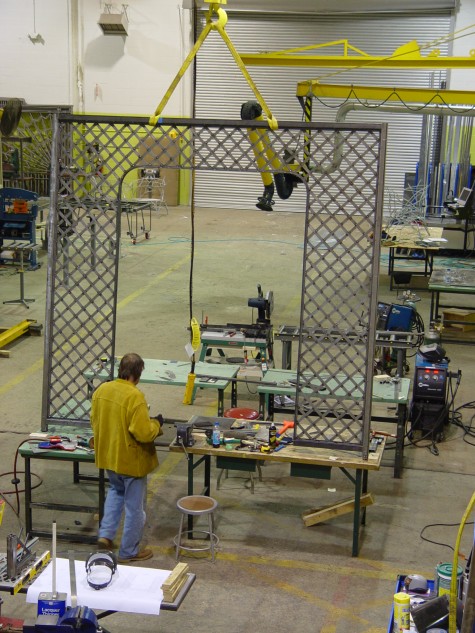
Buck builds giant structures, with the help of a bridge crane.  This single panel of the gloriette under construction dwarfs him.   Plenty of structures both man-made and natural, make me feel the same way.  The Grand Canyon, Yosemite, the Taj Mahal, the Washington Monument, the Lake Michigan dunes, the redwood forests-you get the picture.  My house has been standing in the spot I now occupy- uninterrupted- since 1930.  I like this.  I very much like an idea bigger than me, a world view that makes me just a member of a big group-what gardener doesn’t?           

This modern version of my square French gloriette is long, and very tall.  I imagined that anyone who might place it in their garden would want a home for climbing plants that would get them skyward where they want to be.  I imagined they would want to walk underneath, and perhaps sit with a solid roof over their head.  The Branch Studio has close to 30 foot tall ceilings-room enough to build a structure within a structure.  

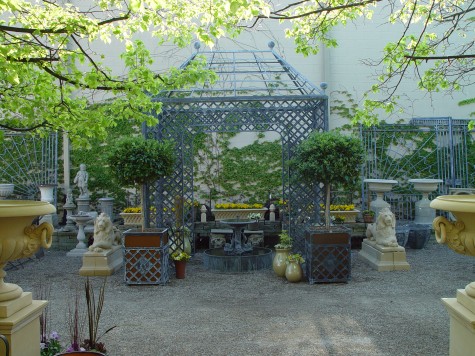
The first season I had the gloriette at the shop, we dressed it very formally, with associated tall lattice boxes, and an English lead fountain. Looking good, Buck.  I so like how the lower branches of the shop lindens frame the roof of the gloriette.  The woody structure and the steel structure overlap in a graceful way. 

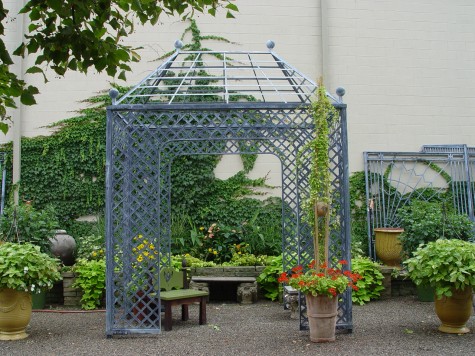
The second summer, we dressed the gloriette in a far less formal way.  Rob’s Italian pot with a bamboo pole plant climber curved out with a wedged wood sphere-this is a great look.  This treatment spoke up; we sold the gloriette.

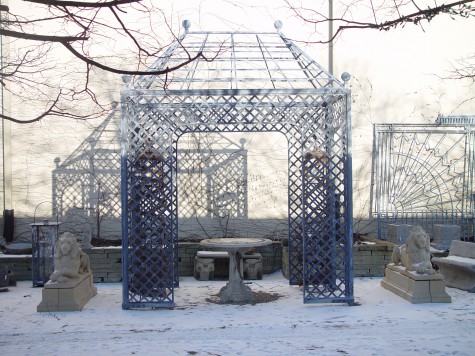
My garden is actually quite handsome in the winter, for its green structure.  I know there will be something there, once the snow melts.  The gloriette likewise had considerable impact in the winter.  The shadow on the wall behind it-so beautiful.  Creating structure in a garden asks for everything.  All of your thought.  All of your effort.  All of your history.  All of your resources.  This spring, gardeners everywhere will be buying beech trees.  Trenching for hedges.  Setting walkways.  Installing fountains.  Building gates, pergolas, and benches.  Planning to provide structure. Are you ready?  


Every year I think about a cottage.  Were I ever able to afford one, I would have no garden.  I would move in, and do nothing outdoors except go there and look.  In the woods, I would encourage the existing trees right up to and onto the foundation.  Were I on the water, I would slog through the sand, and appreciate the reeds.  Were I in the Smoky Mountains, I would put the smallest structure possible in a trillium field.  If I ever had a cottage, what nature had in store for me would be more than enought to make me happy.  Lacking a cottage on a wildly beautiful piece of property,  my home landscape asks for structure.  Steel and green.  Sounds good to me.

Objet Trouve

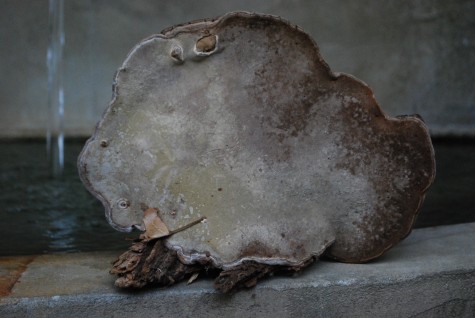
Correct me if I am wrong Delphine, but I believe the French phrase “objet trouve” translates literally as found art.  Any ordinary object, prized in some way for its aesthetic qualities, qualifies.  as art, that is.  I have questions.  Are there are rules about what constitutes art?  I am instantly over my head here.  Question 2-if there is art that is found, who does the finding?  Is part of the art in the finding?  These questions I can warm up to.  I go to a museum, expecting to find art.  A museum provides a home for art treasured by the greater community, yes?  Generations of museum directors, curators, artists, art historians and museum boards presumably recognize art and fund acquisitions.  In this instance, I am a viewer, not a finder.  I will admit I see some works in museums or galleries that I would not identify as art, except for their address.  This might be ignorance, or it might be that the eye of the beholder counts for something. This particular bracket fungus has been with me at least 30 years.  It means something to my eye.  The shape, the mass, the line, the color-everything about it engages me.  It is beautiful.  It is also the fruiting body of a deadly fungus.  I am a gardener-I think about life, death, and second chances every day.  This bracket fungus is by no means a Degas sculpture; it is an objet trouve.  I am the finder. 


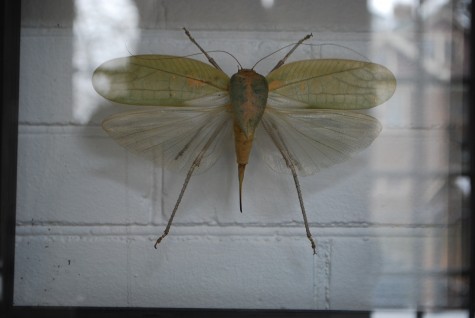
I do collect bugs. Big bugs from Indonesia, Malaysia, wherever-suffice it to say any jewel of a bug will catch my eye.  My bugs-I buy them mounted and framed. Someone else was a finder.  This bug-its size is astonishing. Not the kind of thing I would want to run across in my garden or closet, but behind glass, I can appreciate it.  The substantial body sustains four wings, and a pair of really long legs.  The artist of record here-nature.  There are those of us who would frame mounts of what objet trouve nature has to offer; I am one of those.  

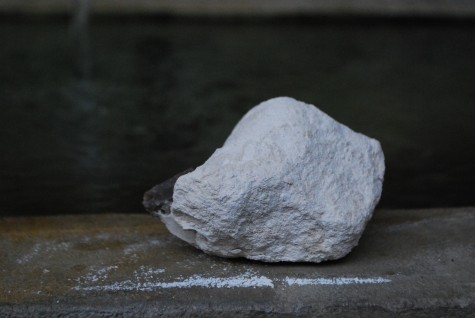
This rock, take my word for it-an objet trouve. This is not just any ordinary white rock; the history is as follows.  This is a chalk rock, from the white cliffs of Dover.  Dover, England.  So many years ago, on an early shopping trip for Detroit Garden Works, Rob found himself on those cliffs.  He pocketed this rock for me, and brought it home.  An English chalk rock with a flint toe that he collected on my behalf-an objet trouve.  It is an object from a place I have never been.  It smells like the ocean.  It was meant for me; I had a part in this trip, but not a presence.  I will admit I chalked the concrete surface it sits on before I photographed it.       


The minerals of the world are can be very flashy and exotic looking, once they are cut and or polished.  Someone had the idea to treat this rock as something very special.  It has been cut in a spherical shape, and the interior surfaces are exposed and polished.  It is gallery ready-the gallery at my house, that is.    

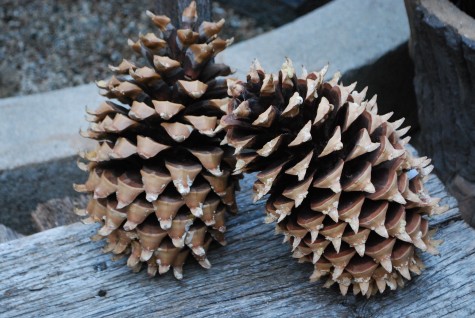
The coulter pine produces some of the largest pinecones in the world.  This pair of cones are 12 inches tall, and weigh 3 pounds each.  The woody scales are enormous, and impenetrable to a a knife or a screwdriver.  The seeds of this pine are indeed well protected.  The ends of the scales are sharp, and coated in congealed pine pitch.  They are hefty and very handsome objects.�
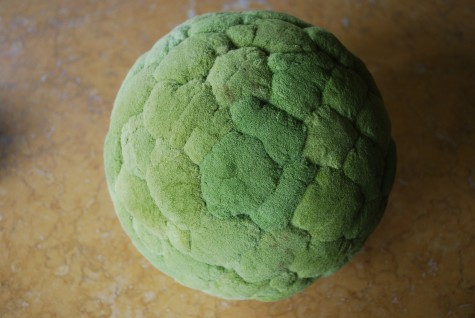
Cattails can be found in any and every marshy place near me.  I have collected them plenty of times for a fall arrangement.  Someone had the idea to cut them in sections, affix them to a sphere shape, and dye them; they did the finding.  Once they determined that a cattail was an object of aesthetic interest, they transformed it in such a way that this particular idea of beautiful is clear to me. 

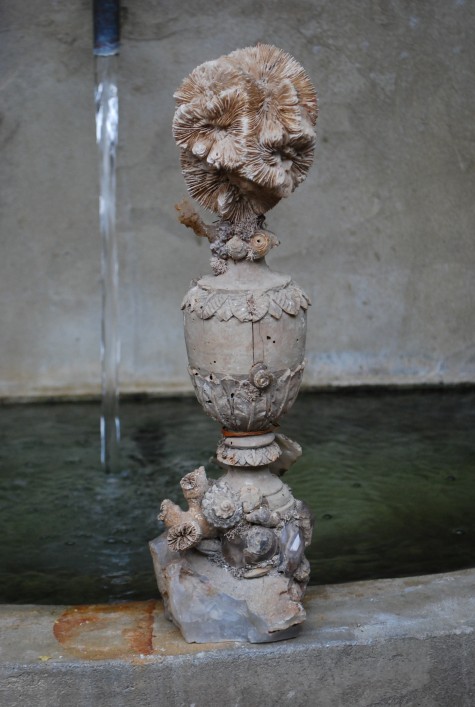
This very old Italian wood fragment was the beginning of a sculpture which includes a stone base, shells,and a finial of fossil coral. When I first saw it, I thought the wood fragment had gone down with a ship, and been preserved in some primordial mud.  Not so.  The objet trouve is the introductory and organizing shape for the sculpture that came later.

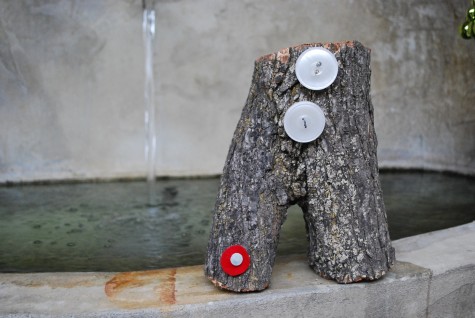
Jenny made me this sculpture for Christmas.  Clearly, it is a pair of pants.  This forked limb had some quality that attracted and interested her.  The resulting sculpture makes that clear.  I like it for what it was; I like much better what it has become, given her sculpting.   

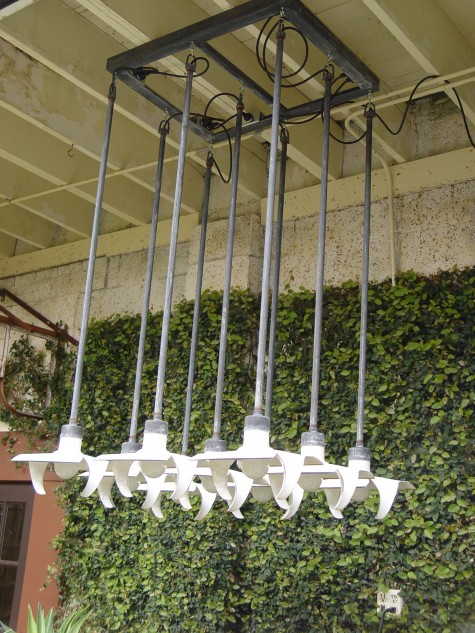
These white porcelain objects are lights from an English dairy farm.  I have no idea why they have this shape.  I am sure it was not a matter of what the cows or the farmer would find pleasing.  It is the special visual gift of utilitarian objects that they are designed simply to function properly and efficiently.   Buck arranged 9 of these lights in a grid.  A light fixture from found objects.  


Found objects have their place in a landscape, or a garden.  A landscape and a garden can provide no end of objet trouve.  I so like a street that goes both ways.