Tins Crates Baskets and Tubs

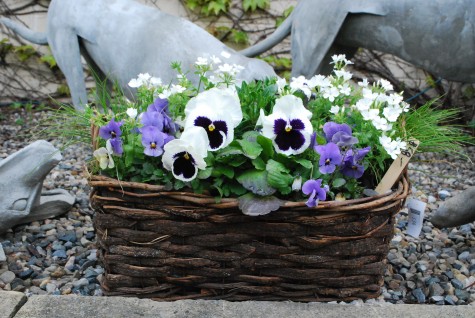
The little and special plants that mark spring containers-how I love them.  I love the tubs, pails, baskets and crates that make great homes for those little and special spring plants.  I did post some of these pictures on the Detroit Garden Works facebook page today, but I couldn’t resist posting them here.  These spring container plantings make me smile.  What about you?  
heuchera, angelina, and citron alyssum
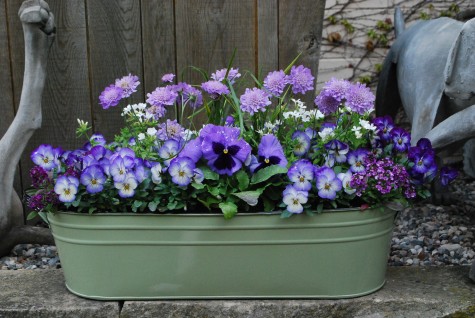
spring container plantings

spring purple

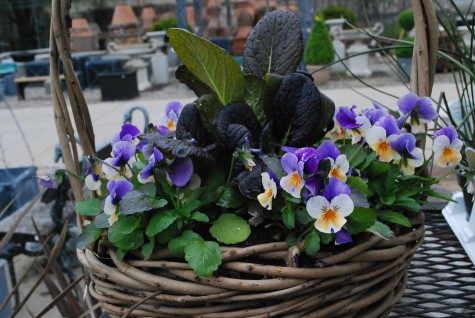
a basket of pansies, phlox, and lavender violas
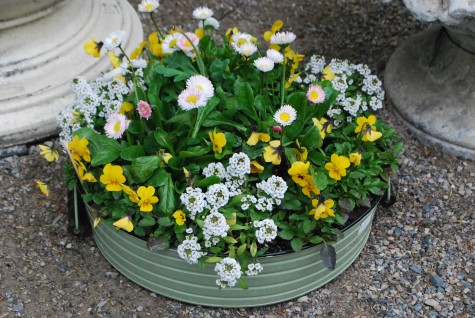
A round tin of spring flowers
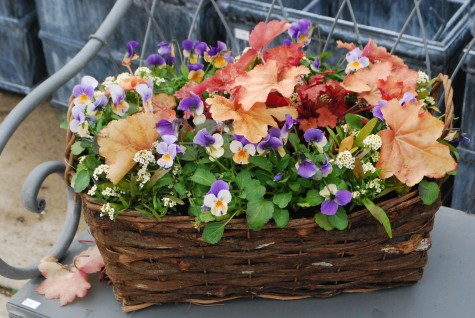
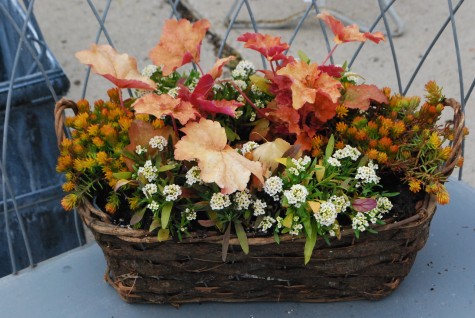
A rustic basket featuring heuchera and citron alyssum
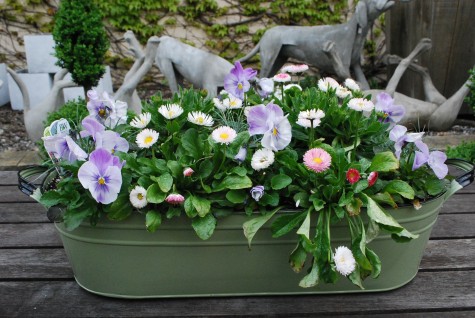
An oval tub of English daisies and violas
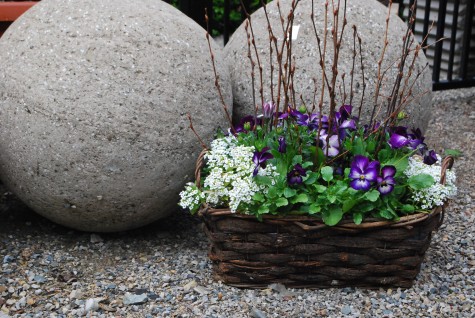
A rustic basket of violas, white alyssum, and twigs
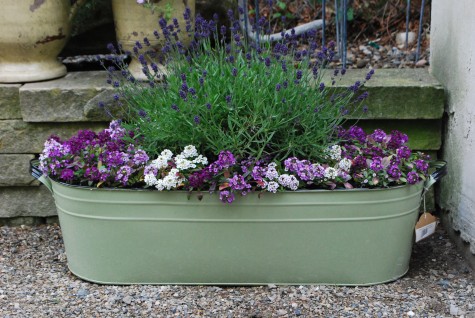
Lavender and alyssum

An orange carex and trailing violas
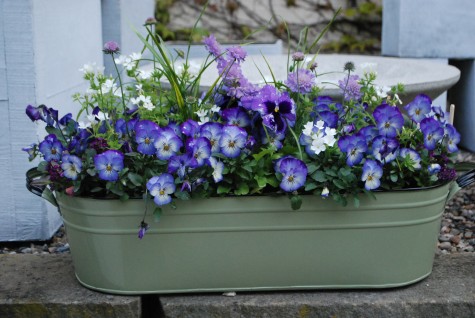
Enamelled tub of spring flowers
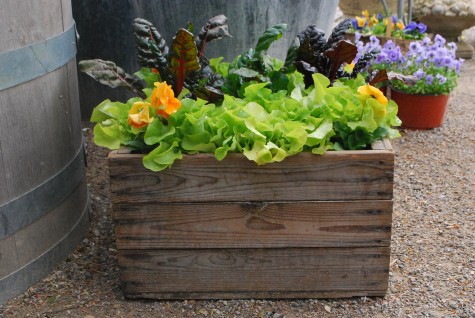
a crate of chard and lettuce
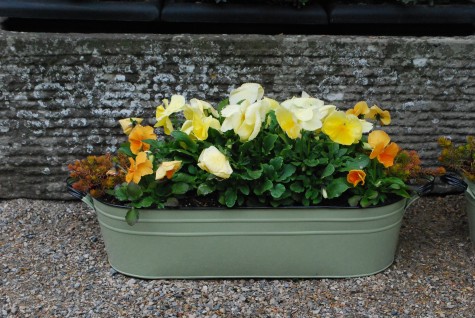
 Citrus mix pansies and angelina
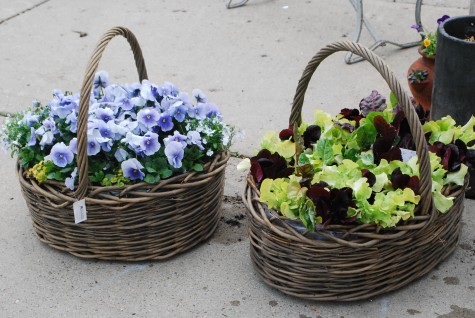
spring baskets
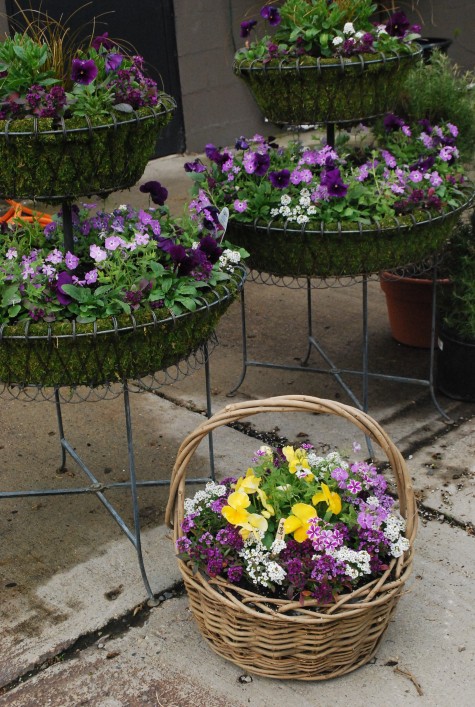
spring pink and yellow
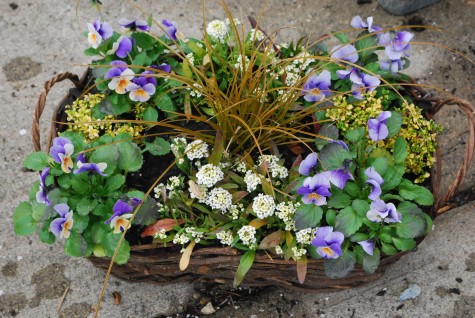
A birdseye view of spring
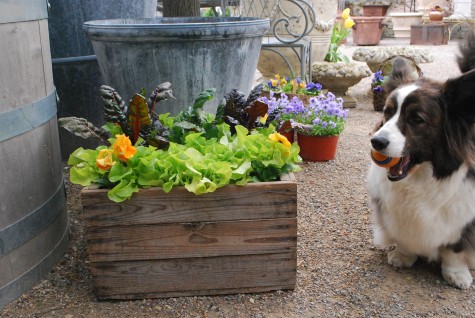
Milo has a great view of this crate of chard and lettuce!
Finished Fountain

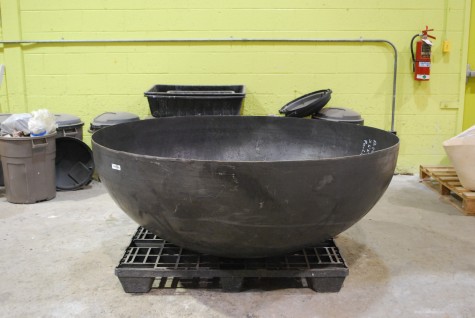
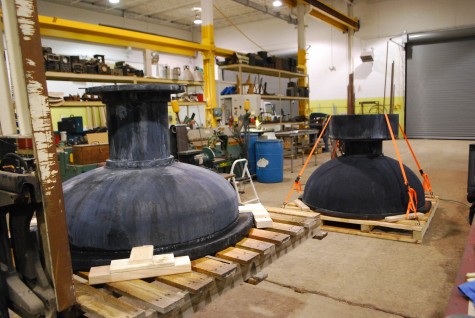
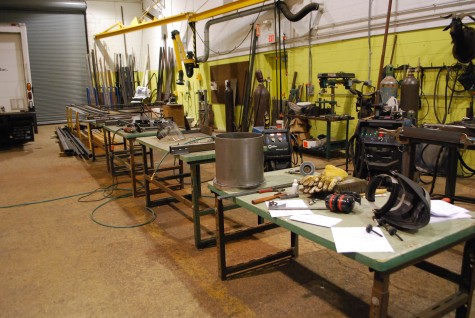
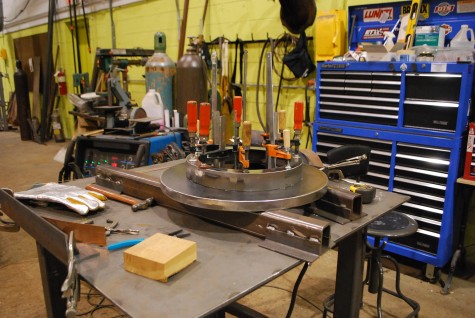
The welding studio has been busy the last 3 weeks.  Buck had a special order for a fountain, and a matching urn for a client in California, and a destination in Fort Worth Texas.  The sheer size of the fountain meant the base and scuppers needed to be very strong, and the steel thick and heavy.

The project under construction has a landscape architect on retainer.  He designed both pieces, and we fabricated from his designs.  The drawing from the LA needed to be drawn in CAD-this is short for computer assisted design.  It is an enormous skill in and of itself to master the CAD program.  Buck is an expert, given his 30 year experience as an architect specializing in technical design. That CAD drawing enables him to fabricate an object true to every dimension specified in the design.  

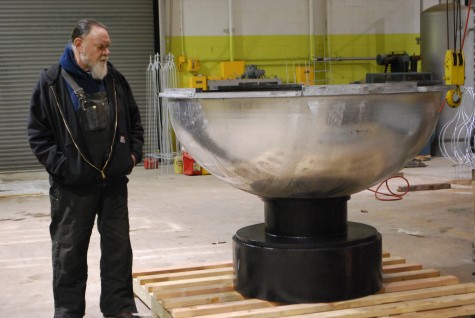
The hemispherical fountain bowl is 60 inches in diameter. Creating this shape from a solid piece of steel involves a lot of technology, a surprising amount of finesse, and loads of skill.  This bowl is not perfectly hemsipherical, but it is extremely close.  Close enough to convince the eye. 

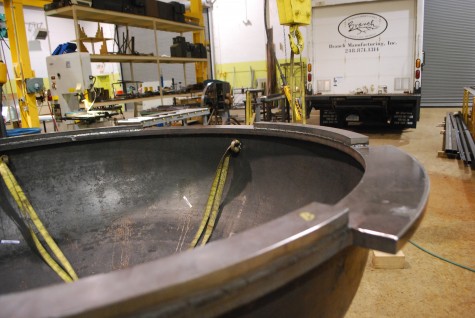
Once the bowl had a 2 inch thick lip of steel, interrupted by 4 evenly spaced scuppers, it was ready to be welded to the base.  Scuppers? The steel lip keeps the water inside the bowl.  The scupper is that place where the steel dam had been breached, allowing water to flow and fall over the edge. Once the steel is galvanized, Buck applies our finish.  He finished the inside of the bowl, and the base first.  Then the entire fountain, with the aid of a bridge crane, would be flipped up side down for the finishing of the bowl. 

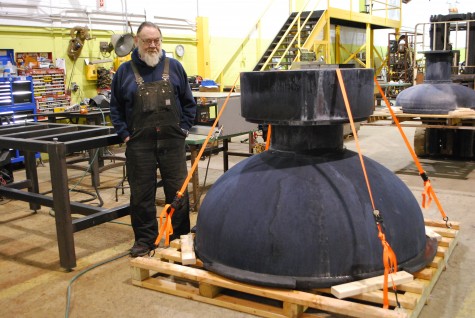
The fountain design is very simple, but massive.  The finished piece weighs close to 1/2 a ton.  It will be placed in a large pool-I am not sure of any of the installation details.  It will take some skill to size the pump properly, so the water sheets over the side without runing back under the scupper, and down the side of the bowl.  Fountain design, fabrication and installation takes a lot of skill. 

The urn, on the forklift in the foreground, is much smaller than the fountain, and will be placed in some other location on the project.  This piece will be planted.  Both pieces were shipped up side down, for obvious reasons.  All of the weight of the steel is at the top.

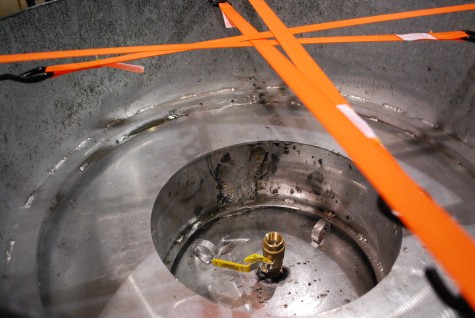
The fountain does not have a jet.  The pump will push water hard enough to keep the water flowing fast over the 4 scuppers and into the pool.  The contractor for the project wanted this copper pipe and stop valve installed just as you see here.  

Buck did not crate this piece-what crate would be stronger than this steel?  Circular shapes are very stable and incredibly strong-even more so when they are made of steel.  I have heard I will get pictures of the installation once it is finished and running.  I have my fingers crossed about that. Buck tells me the level of the base and the level of the top of the fountain is within a 1/16 of an inch of being dead on.  Dead on and level is very important where water is concerned.  In a perfect world, water will fall over all 4 sides equally.  In an imperfect world, within  1/16 of an inch of perfect will work. Buck and his crew make lots of things that are a part of something bigger.  If no pictures are forthcoming, I have some help.  Buck has family in Fort Worth.  What fun, that they will get to see something he made, available for the looking,  just across town.

The Little Things

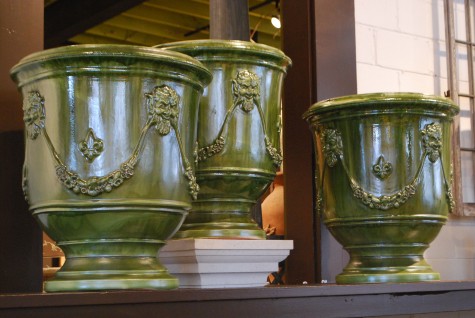
The more time I have to spend with these new French glazed pots, the better I like them. These were made at one of the few potteries in Anduze still hand throwing, or rope throwing, their pots.  These pots rank among the best quality available in handcrafted French pots.  Originally produced to provide homes for citrus trees, these pots have been in production for centuries.  The custom glaze created for us is more olive than blue green, and less shiny than the traditonal French glazed pots.  This particular design by renowned French potter Jean Gautier in the late 18th century features the faces of cherubs, garlands, and fleur de lis-a stylized depiction of a lily so strongly symbolic of all things French. The double roll of clay just beneath the garland is a detail from the original that takes much time and skill to model.   

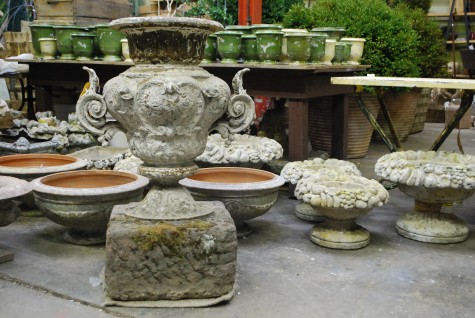
This ornate French cast iron pot and its base, hand hewn from a solid block of stone, dates back to the 19th century.  It is an antique ornament that exudes French garden history.  Colonies of lichens have made homes here.  I am sure once they are exposed again to rain, they will regain their volume and color. If you like classical garden ornament, this is a breathtakingly beautiful and one of a kind example.   

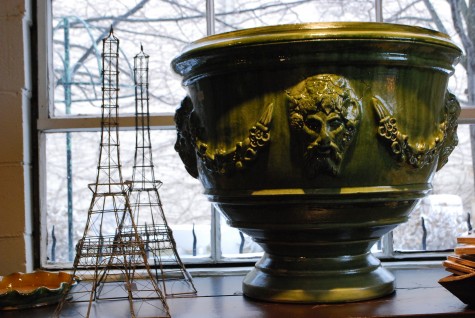
This coupe, or cup shaped, planter is my favorite of the glazed group.  The bacchus medallion and garlands are modelled in sharp relief; the shape is exquisite. The glaze sunk into the deeply incised cuts, and appears almost black.  This pot, I would have.  There are a lot of new things here, given a pair of containers from France, each object in each one chosen to give pause.  There are lots of stories, and history that comes with them.  But that is no means all there is to see.  Rob has a particular gift for the little things.  He does not overlook those small things that satisfy.  What constitutes a small thing that satisfies?  An old trowel that is a favorite trowel.  Warm winter boots that have spent the previous night warming up on the radiator.  A zinnia poking its head through the soil just days after sowing the seed.  Cruising the garden after work.  A favorite perennial freshly in bloom.

We will have a house full of fabulous for the spring-new, vintage and antique.  One of a kind and handmade.  Ornament, sculpture, tools, structures-and of course, the pots.  Great French platters for the summer dinner table.  But we do none of this at the expense of the little things.

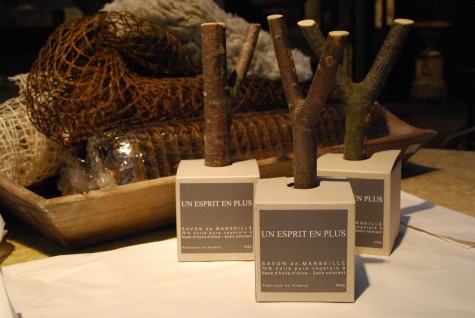
In 1668, a law was passed in France stipulating that only olive oil based soaps made in strict accordance with ancient methods could be labelled “Savon de Marseilles”.  Olive oil, alkaline ash from sea plants, and salty water from the Mediterranean are heated in cauldrons for ten days, after which they are poured into open pits to harden.  This Savon de Marseilles happened to be poured around a series of stout branches.  Soap on a stick.  A little thing this-but what gardener would not be pleased to see it, and use it, over and over again?  Company coming?  Soap on a stick in the powder room-friendly.  Engaging.

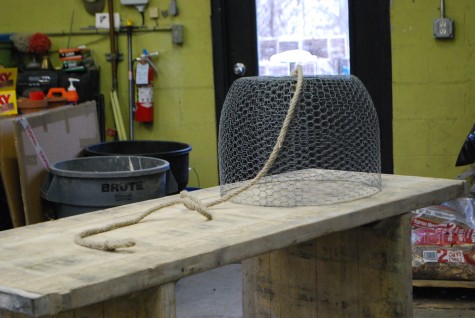
This chicken wire cloche has a wood top, and a stout rope attached.  The intent here is to keep the rabbits away from your spring lettuce.  Its a small thing, keeping the rabbits from getting to your lettuce first, but an important thing.  A very simple structure made from the most ordinary of materials that works-excellent.

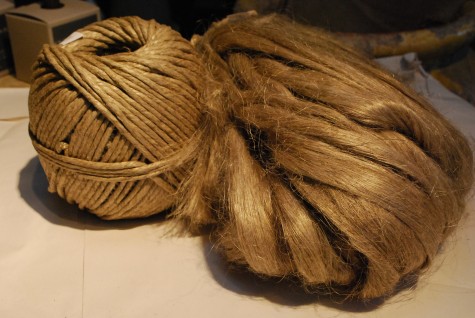
A ball of twine is a little thing that gives great pleasure.  The balls are wound in a beautiful way.  This is French linen twine.  The texture, color and scent is irresistable.  It might be used to tie up a plant to a stake, or wrap a package for a good friend having a birthday.  On the right,  a hank of raw flax fibers-the material from whence linen is made.  The fibers have been carded into parallel strands known as roving.  Lustrous and beautiful, this.  What would I do with it?  All the possibilities for this are part of what I would call a gardener’s simple pleasure.

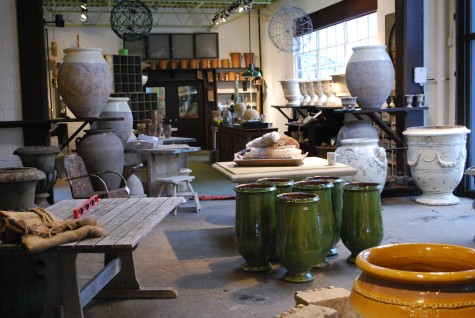
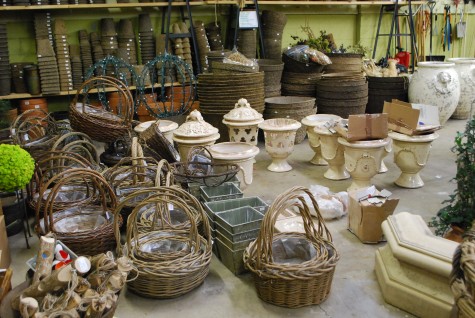
These white French glazed terra cotta pots and lanterns are striking.  The simple and unpretentious woven baskets on the left will hold flowering bulbs, annuals and early spring vegetables, come spring.  A little basket of spring for my front porch-a small and simple pleasure.

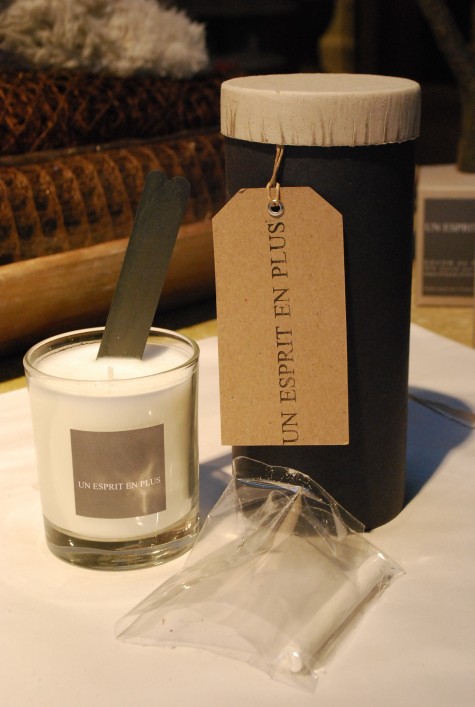
This small candle comes with a chalkboard stick inset in the wax,  and its own piece of chalk. What could be written on that stick?  You decide.  

Rob found this collection of miniature pots at a flea market.  They are maybe 2 inches across.  Who made these, and why?  I spent time looking and thinking about them-many more than 2 inches of my time.    

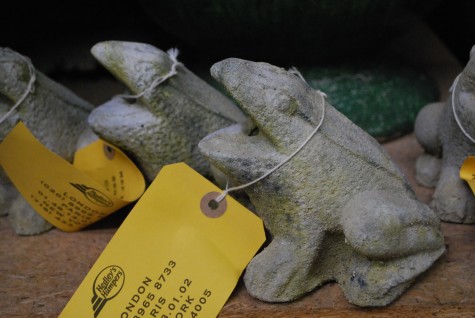
These little concrete sculptures frogs have a great surface.  They would occupy next to no space.  The place a gardener reserves for the little things is an important place.  Packets of seeds rubber banded together.  A great dibble.  A thermometer.  A hard cultivator, or a decent pair of muck boots.  A favorite pair of gloves.  The little things can be about those very personal things.

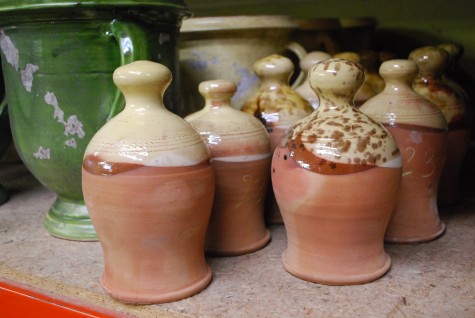
If you wonder what these are, I did too.  This is a French terra cotta watering bell-for seedlings. The bottom of this bell is terra cotta, perforated with lots of holes.  You immerse the entire bell jar in water-there is an unseen hole in the top.  Once the jar is full of water, you put your thumb over the hole in the top.  When you move your thumb off the hole in the top, a gentle shower of water exits the bottom. Watering a seedling tray with this-a little pleasure.  

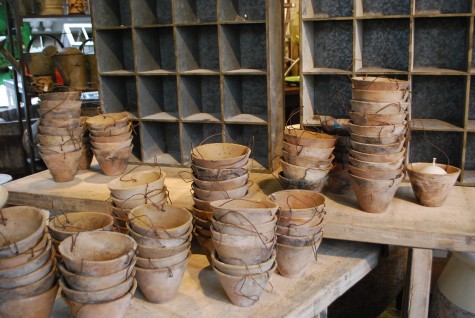
These small vintage French terra cotta pots came with rusty wire handles embedded in the clay.  Rob bought substantial spherical candles with long wicks that fit perfectly into these little pots. A few hung in a tree near the terrace and lighted-a little thing attending a quiet dinner in the garden. It is not a simple thing to remember the little things that give gardeners great pleasure, with great style.  I greatly admire Rob for how and that he does this.   


Rural France: The Gates And The Doors

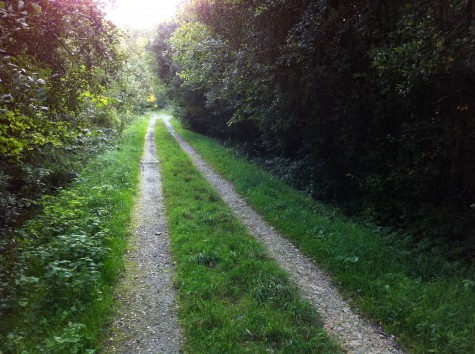
rural French road

This week is all about the garden-French style.  Our first container stuffed full of glazed French terra cotta has been unloaded.  Our second container sailed through customs, and will be delivered Friday morning.  Though we represent the garden as expressed in many countries and periods, our spring will equally celebrate French garden style. Our first container of artisanal French glazed garden pots makes a big move in that direction.  The second container is chock full of French garden ornament both antique and vintage, most of which Rob sourced from small local antique markets.  When I say local, I mean to invoke the rural French two-track pictured above.  To describe Rob as a buyer is a bit of a disservice.  He is an afficianado of garden culture wherever that might take him.        

Dealers in French garden antiques and vintage ornament appreciate this.  His respect is sincere, and his efforts to be educated about another place-considerable.  He is incredibly observant and tuned into what he sees.  All of these pictures are from his trip to France last September, most of them from rural areas.  The garden is very much a part of French culture.  Like many other places, the roots of the garden are agricultural.  The production of olives and olive oil, lavender, cheese and bread have very much influenced the landscapes.  But the French manage to go on to represent the most utilitarian garden features with great style.   

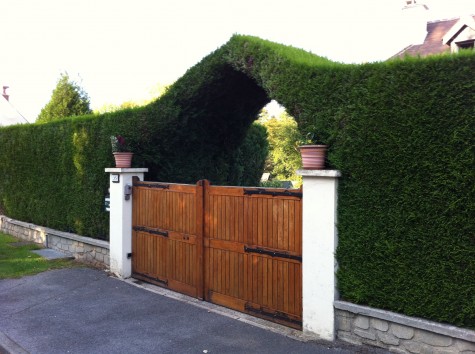
French garden gate

Much has been written and photographed about the grand and formal gardens in France.  The photographs of Michael Kenna are especially extraordinary. But rural France-the buildings, the roads, the landscapes, the gardens, the farms-there is much to be learned about how French people celebrate their relationship with nature. 

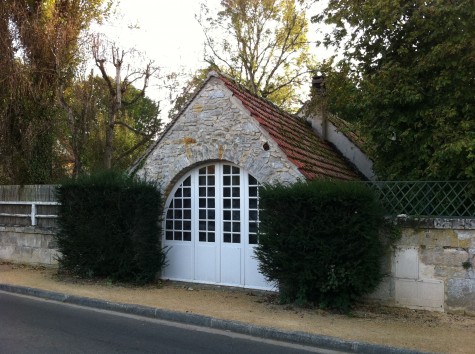
Every picture he takes is a visual representation of his impression and interest.  I am quite sure he was enchanted by this carriage house entry, the white entry doors, the stone walls, the shingles, the lattice iron work on one side only, the robust and unpruned yews, the gravel surface.  This is well designed, but not overly precious.

gated garden

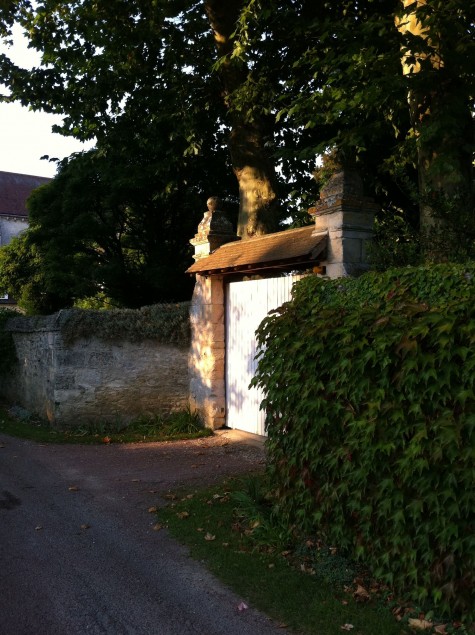
 Many of the walled gardens featured ivy of one type or another.  This garden gate features massive walls and gate piers with elaborate stone caps.  The shallow shingle roof and tall wood gates make for a friendly statement about privacy.  The vines on the walls are asymmetrical-they have been left to their own devices. 

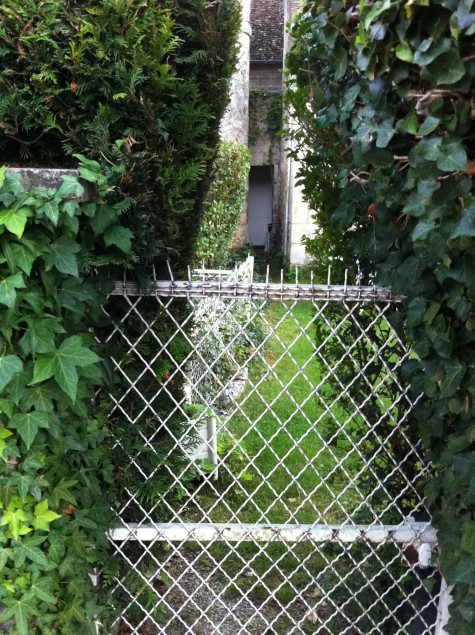
This crimped wire gate based on diamonds is quite tall and narrow.  How the wire emerges from the top of the gate, is charmingly unfinished.


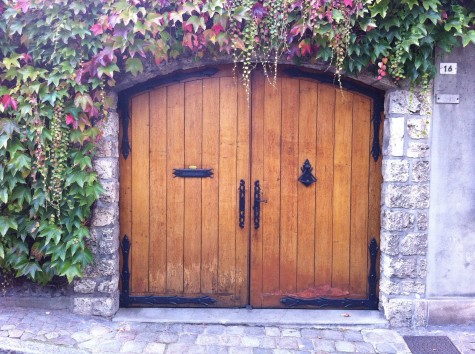
The boston ivy swept over one side of these pair of gates is lovely.  I am sure the ornament on the right gate is an iron door knocker.  On the left? The iron work on the doors is strikingly organic in design.

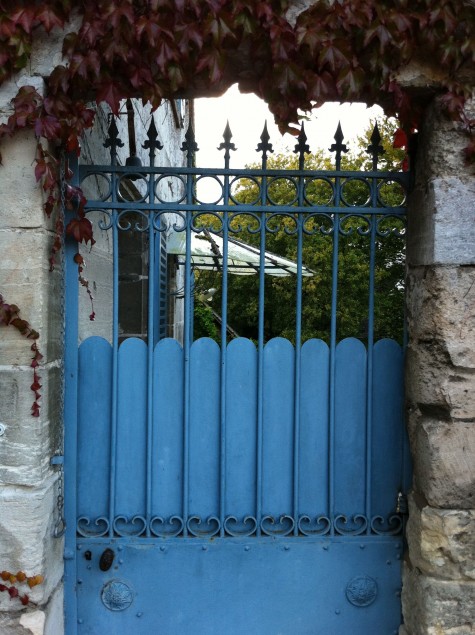
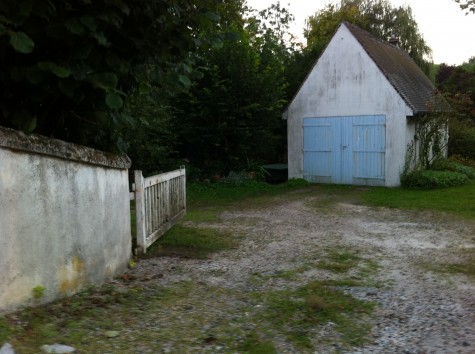
Many of the places he visited, the garden outbuildings and walls were utilitarian. The low and massive wood gate is more about invitation, than closure.  They are working buildings.  The color of these barn doors is a variation on what I call French blue. I find it very hard to make blue work in a landscape, but here the color seems so the color seems so perfectly right.   

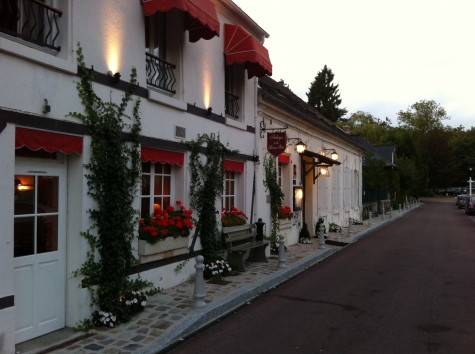
I was so struck by the proximity of the road, to the buildings. In our country, we have very wide roads, turn lanes, and curbs.  Our buildings by zoning law are only allowed to be built far off the road.  This photograph-all about intimacy.  The traffic bollards-useful, and beautiful.  The road and the building-close.         


It would take some discipline for me to live with this front door landscape, but I am very sure I would be the better for the experience.  Knowing what needs editing, and what doesn’t may be more of a gift than a skill.

Rob visited places in rural France I am unlikely to ever visit.  How he travels the backroads and the small French villages means I have a better understanding of French garden culture.  And a better idea of how to cultivate a garden.

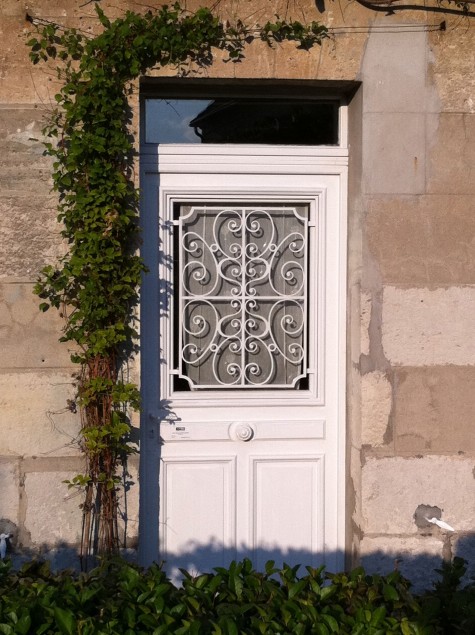
This French door with an iron grille drenched in sunlight-beautiful.  The vine swagging over the door isn’t bad either.

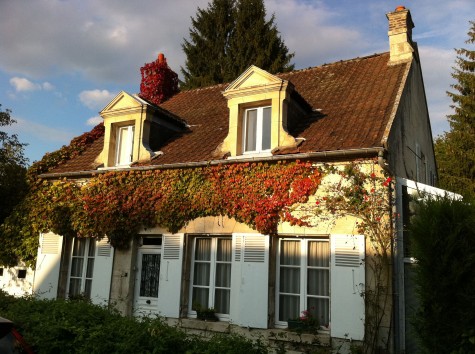
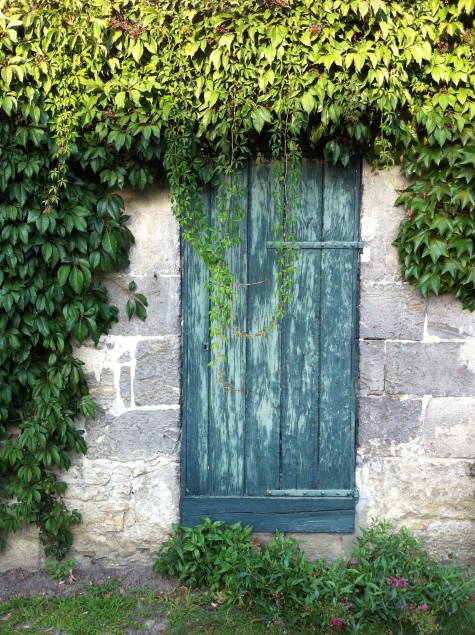
This simple weathered wood front door, and its attending boston ivy-just as beautiful.

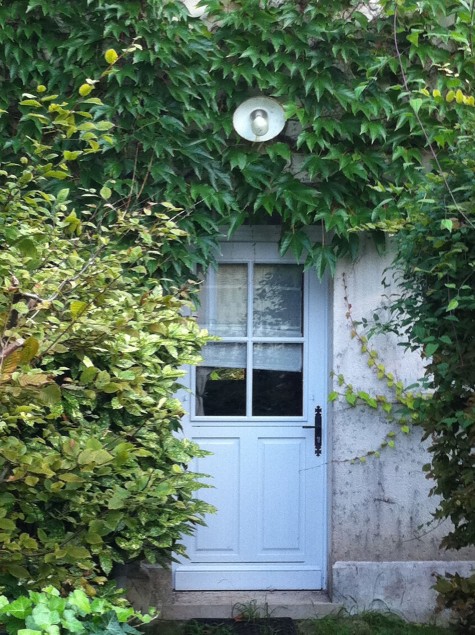
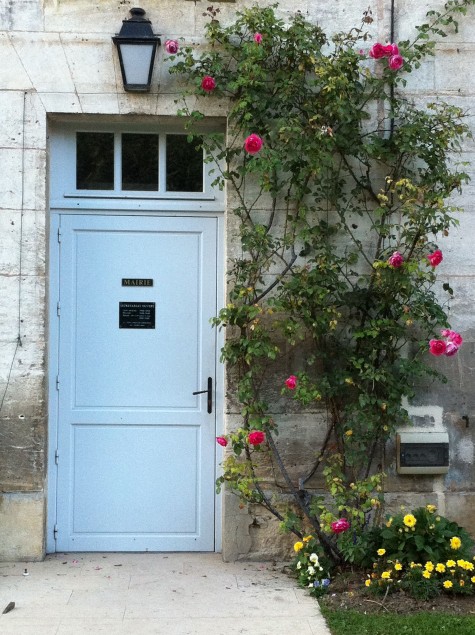
 A blue front door, casually attended by a climbing rose on the right side-this is as much about living and breathing as it is about gardening.