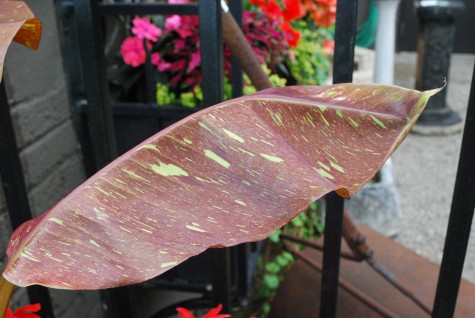
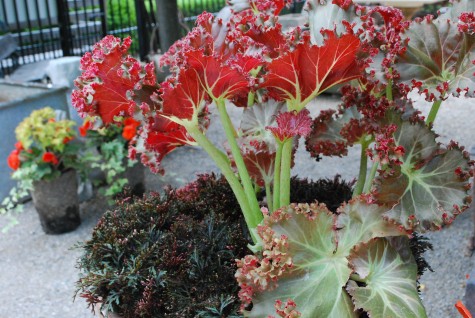
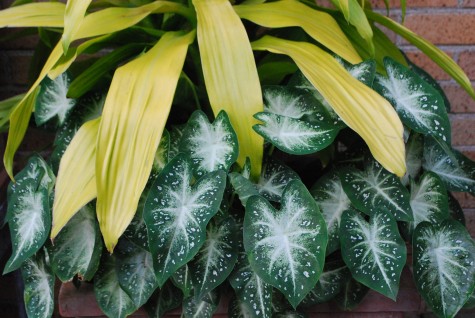
 How I enjoyed my fourth of July holiday. The weather was perfect-partly cloudy, and not too hot. With only one annual planting left to go, I had time to catch my breath, and tinker in my own yard. My container plantings are coming on just fine. As usual, I planted caladiums in my planters on the north wall-they thrive in that bright shade. This small leaved variety whose name I do not know looks a little like fireworks-does it not?
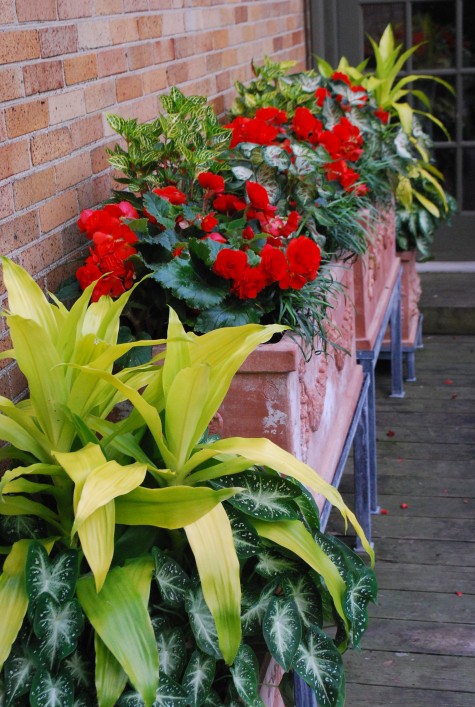 I suppose the fireworks designation really belongs to the Janet Craig dracaenas. The large strappy lime colored leaved make a big statement in shade. It will grow readily in very low light; direct sun will burn the leaves. I trimmed off the lower leaves, to make room for the caladiums.
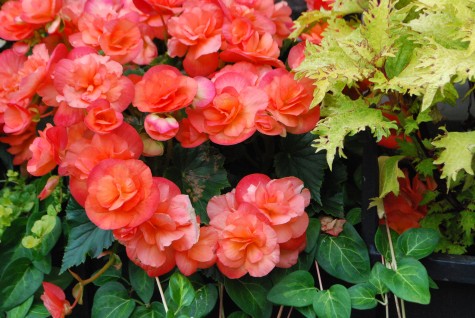
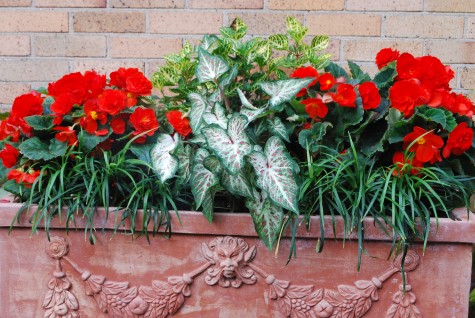 I have planted one color or another of solenia begonias in the terra cotta boxes for years. Non-stop begonias are not that easy for me to keep-but here they are, in the most intense shade of orange. They succumb to rot so easily. My plantes are staked up for better air circulation, and I remove any deteriorating foliage at the first sign of trouble. The green and white caladium with terra cotta blotches face down some lime irisine that needs more time and heat to get tall. I like the change of texture provided by the liriope in front; lots of perennials are great looking in containers.
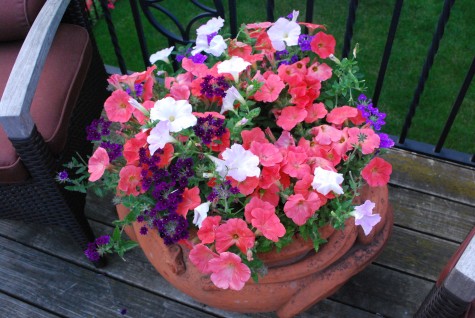 My potunia verbena pot has finally stabilized; the heavy and just about daily rains have abated. I keep this pot on the dry side. The container is placed between two chairs, so I plant for a top view, rather than a side view.
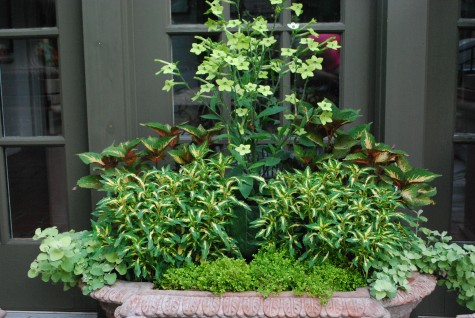 This pot always gets planted green in some form or another. The nicotiana alata lime is in its usual spot. Nicotiana is probably my most favorite annual flower. The cooly lime green, simple star shaped single flowers are my idea of a really great looking flower. Two varieties of coleus some lime licorice and selaginella complete the planting. I have had a tough time with licorice this year-I suspect the early cold rain is to blame.
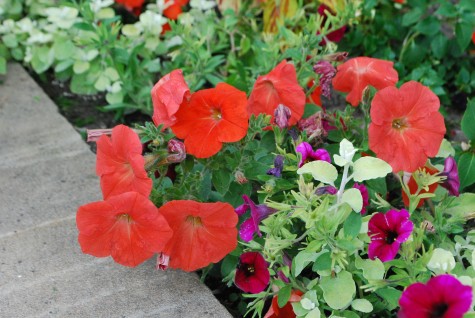
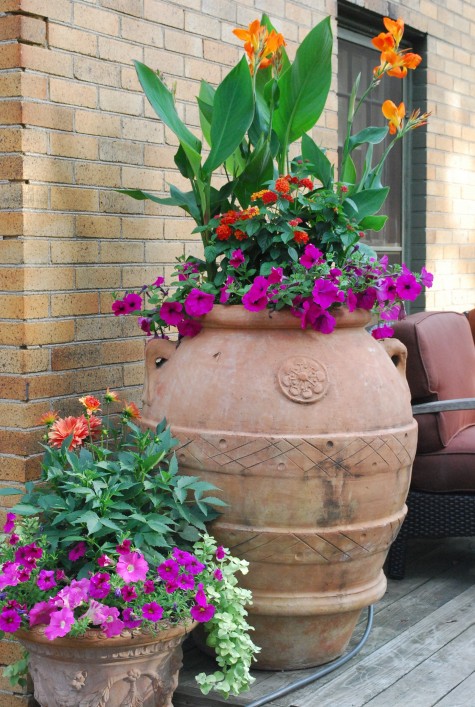 Though I planted an embarrassment of riches in Orange Punch cannas at the shop, I had to bring one home; my olive jar is the perfect place for a tall growing plant. A shrubby growing orange lantana, and a couple of purple wave petunias complete the ensemble. The companion planter is planted with the same scheme orange and carmine color scheme. The heat of July will bring on the flowering of the dahlia.
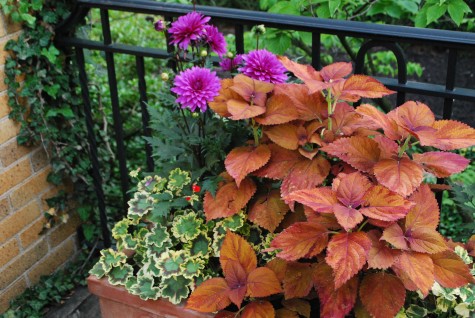 The University series of dahlias is new to me; this purple variety is a great color. My coleus needs a little pinching, and my tricolor geranium needs to grow up, for all of the volumes to balance out. Annuals in my zone shine in July and August.
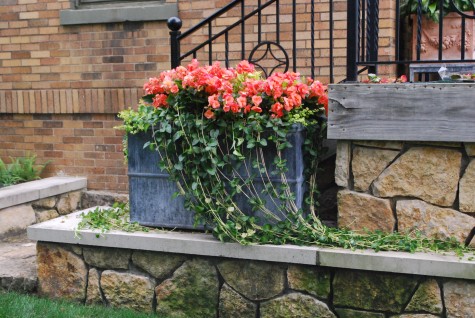 The lime irisine in this box has yet to make much of an appearance, but the solenia begonias are thriving. Like the non-stop begonias, I stake them with bamboo. The solenias will fall over with the weight of the flowers-this habit makes them great for hanging baskets. The vinca maculatum has grown so long, I swept it up on the ledge. I will be interested to see if it continues to grow, in this horizontal position.
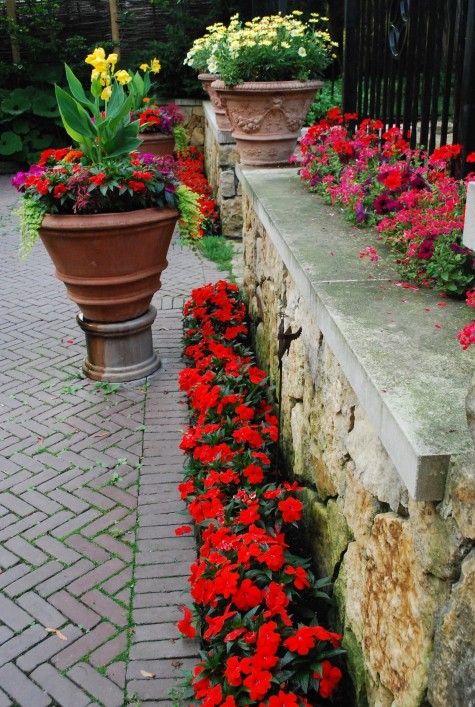 There are 5 containers on the drive, and 2 in ground plantings at different levels. I have tried a lot of color schemes here; warm colors seem to look the best with the yellow and orange stone.
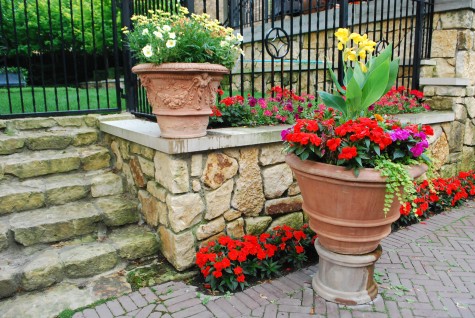
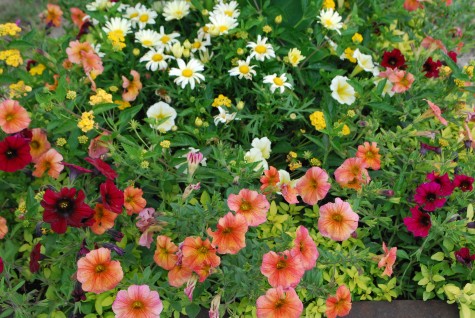
I have never planted any yellow flowers here before, but I am liking how it looks. Yellow butterfly marguerites are a nuisance in the deadheading department, but when they are good, they are very good. It seems like they are happy; they should double in size before the end of the season. As much as I love yellow petunias, they are not particularly vigorous. We’ll see if I can manage to keep them happy.
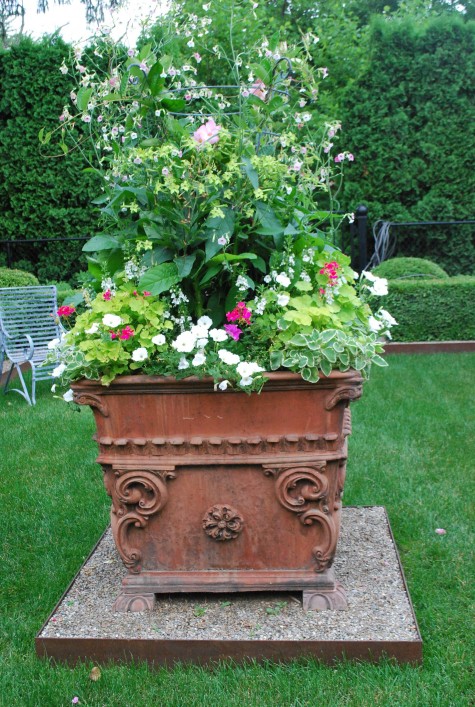 In the rose garden, a different color scheme all together. In deference to my pink and white roses, I have pink mandevillea, nicotiana mutabilis and alata lime, white angelonia pink and white petunias, and Persian Queen geraniums. Faintly visible is my steel plant tower; the vine and nicotiana get a lot of help staying upright from it. By summer’s end, it will vanish from view. This Tuscan style square is a very large pot; it asks for a planting that will grow large. Watching plants grow is my favorite channel.