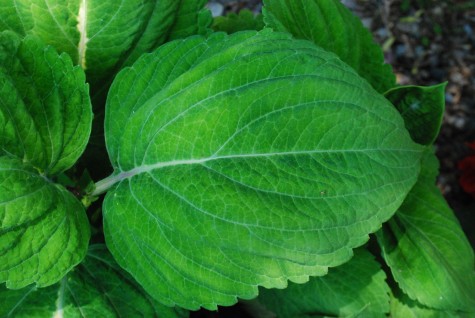
 My spring season has been notable for heavy and regular rains. Every leaf seems twice its normal size, and twice as juicy. As a result, I have been thinking about leaves with largesse-those leaves that reward a gardener’s eye with their generously scaled appearance. Plants with big leaves always catch my eye; I love lush in a landscape. The Kong coleus series features big leaves. But none of the series with color capture my heart like this green cultivar. The leaves are like velvet-stunning.
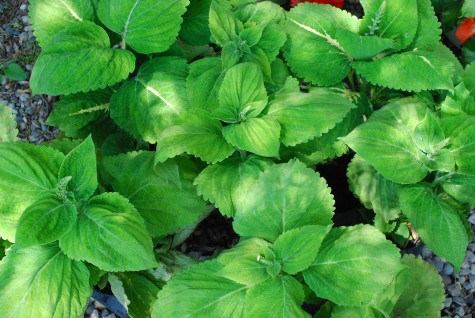 My photograph offers little in the way of scale, but these leaves are huge. Bear in mind they are still growing in 4″ square pots-what will they do, given free range via an expanse of garden soil? A case of 4″ pots takes up a lot of square footage-I think I will plant some of these coleus, somewhere.
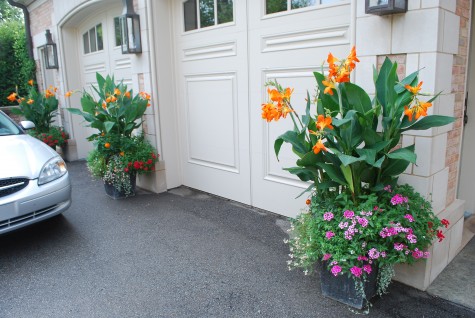
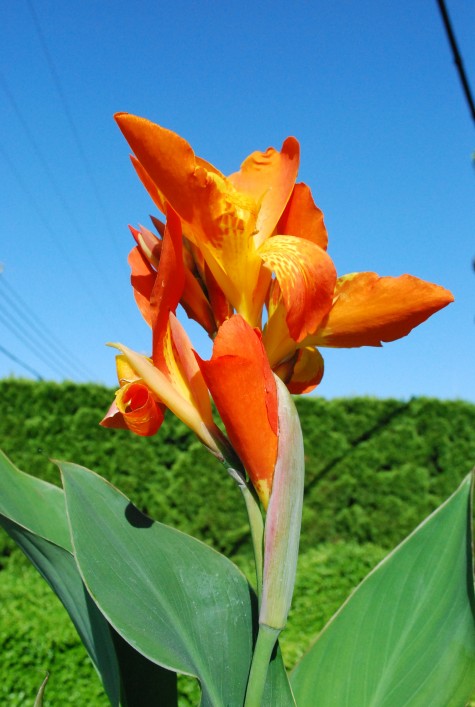
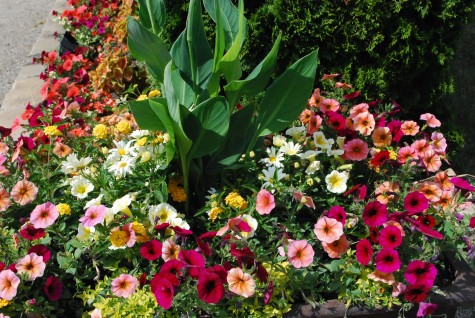
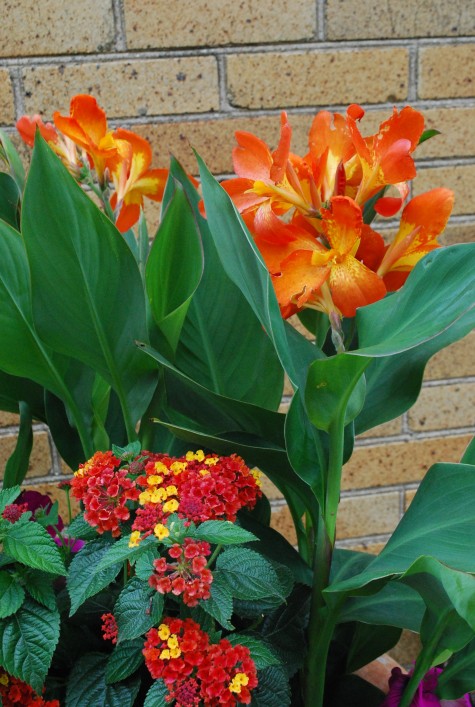 Cannas have big blue green leaves. This plant is a living sculpture-never mind the flowers. They look dark green and juicy, even when the air temperature is close to 100 degrees. This canna variety Orange Punch I planted in my roof boxes, and in the 6 pots in front of the shop. I am intrigued by the color orange this year, but those big leaves will provide stature, volume, and scale appropriate to the size of the building. The big green leaves of cannas-luxuriant.
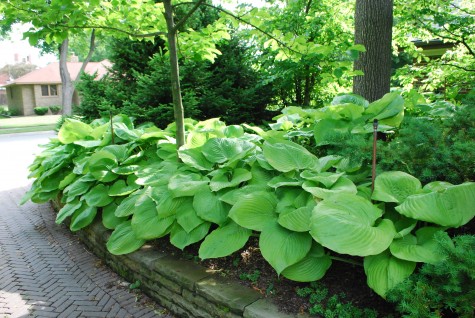 The heavy spring rains proved to be a big dose of multi-vitamins to my Sum and Substance hosta. The leaves are so large this year they scrape the sides of my Suburban when I back out of the drive. Not so many plants that are hardy in my zone have that overscaled tropical look; large leaved hostas can grace large shady areas with hundreds of umbrella sized leaves. All of these chartreuse umbrellas-looking good.
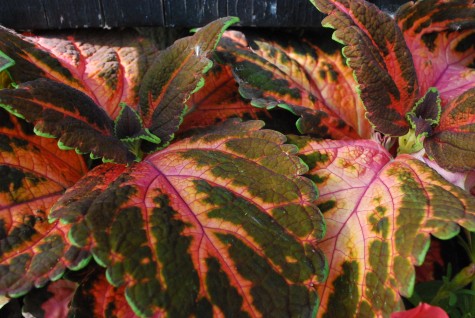
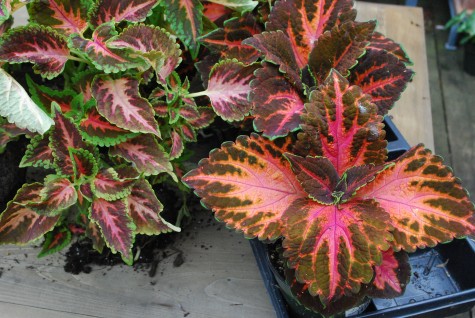 The coleus Rainbowe Festive Dance has extraordinary coloration. Olive green, orange, hot pink-do you see the French blue green on the edges of those big leaves? The coleus variety on the left side of this photograph has medium sized leaves, and muddy coloration. This variety does not pique my interest nearly as much. Big leaves, whether green or of color, are exclamatory statement in a garden. I am talking about rhythm. Big leaves slow down and engage the eye. Use them where you want the eye to pause, absorb, and reflect, before moving on.
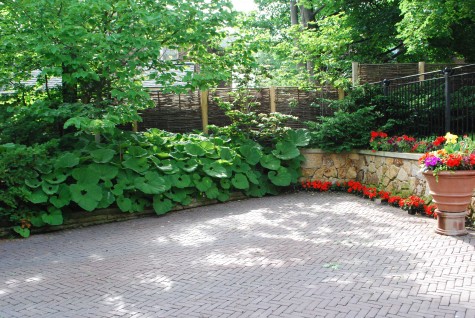 My butterburrs-how I love them, and how I hate them. The giant green leaves are a texture like no other in my garden. The flip side-they are invasive, and impossible to eradicate. Do not plant one, unless you have plans to live with it til death do you part. I am forever chopping them out of places they do not belong. Once I dug up this entire bed, and threw away every scrap of root I could find. They came roaring back two weeks later. I decided to go along with their program. Early every spring Gary Bopp, the grower for Wiregand’s nursery, comes and digs out all of those plants that have wandered away from this bed. He could easily come again-I see some popping up 20 feet away from this spot. Their giant leaves make them worth having-just be prepared to do battle, regularly.
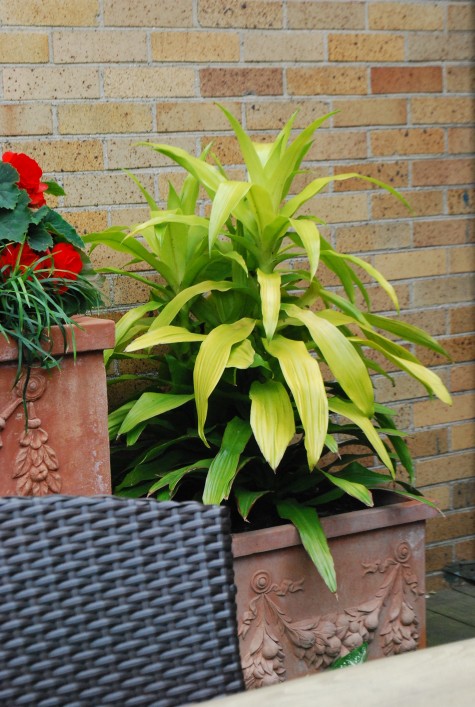
The dracaena “Janet Craig” does not have giant leaves per se, but the width of these strappy leaves is considerable. The chartreuse color makes it impossible to miss. They are happy in deep shade; this makes them a very useful focal point in dark places. In fact, any sun whatsoever will burn the leaves.
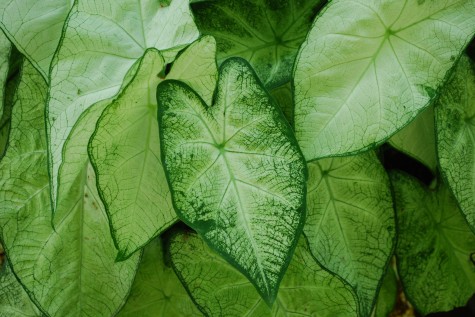 I have always planted caladiums in shady places. Imagine my surprise seeing a municipal planting of this white leaved variety along a busy downtown street, in full sun. They made such a strong statement in a visually confusing setting. They were thriving-not a sunburn mark anywhere. Some plants that ordinarily want some protection from sun can thrive in sunny spots, given sufficient water.
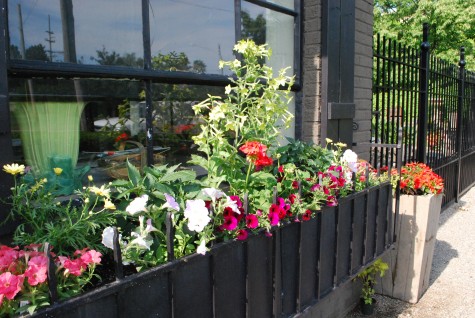
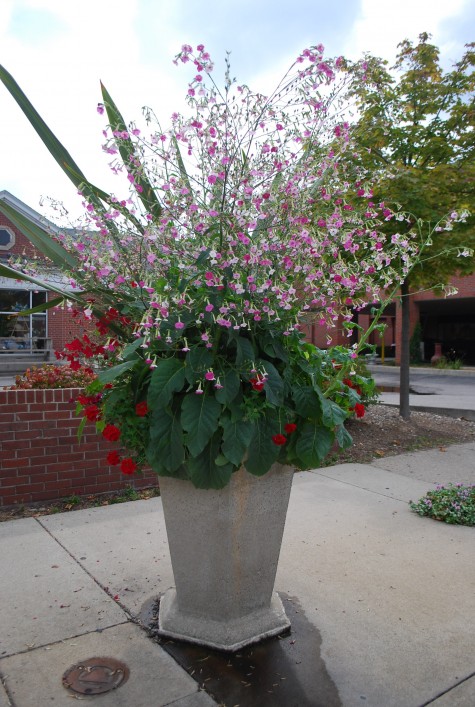 Nicotiana mutabilis is one of my most favorite annual flowers. I love that tall and airy look. I usually pull off the giant leaves that growe at the bottom, so my underplantings can get some light. This city of Birmingham pot I planted some years ago had no such maintenanace-and all for the better. The giant leaves are as much a part of the beauty of this planting as the flowering stalks.
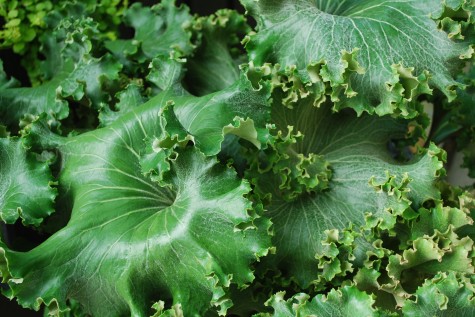
Few plants have large leaves that could rival the beauty of this crested Farfugium Japonicum. These giant, shiny and substantial leaves are an exciting visual study in big curves and flounces. Would that they were hardy in my zone. They are fairly easy to winter over indoors. The yellow flowers, somewhat similar to their relative the ligularia, are not nearly so beautiful as the leaves. Leaves such as these-a visual feast.