Lush Life


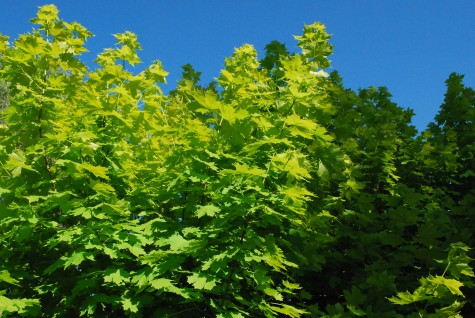
I know that Lush Life is a fabulous shop in Atlanta, Georgia-but it also describes my garden post the second rainiest spring on record since 1880.  Over 14 inches-that is an embarrassment of riches in rain. I can see the effect of that rain every place I look. The Princeton Gold maples have leaves the size of dessert plates; their chartreuse green spring color is all the more intense for all of the rain. 
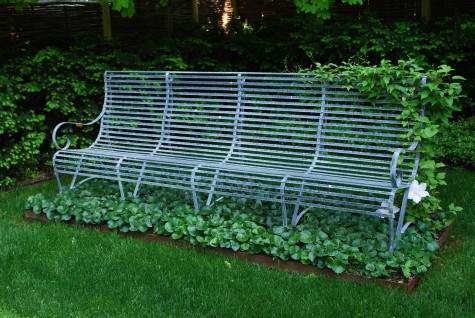
The European ginger leaves are huge.  It has to be the most beautiful groundcover for shade ever. The glossy rounded leaves grow parallel to the ground plane.  Circle after circle of dark green shiny leaves growing densely just a few inches above the ground.  It is completely happy underneath my steel bench, even though the light must be very low.  I planted a pair of clematis at the rear right side of the bench early this spring.  The very pale lavender and white cultivar-I have forgotten the name.  But I will not soon forget the flower.  The dark purple “The President” will bloom later.  Should someone ask me what romance in the garden means, I would show them this picture.
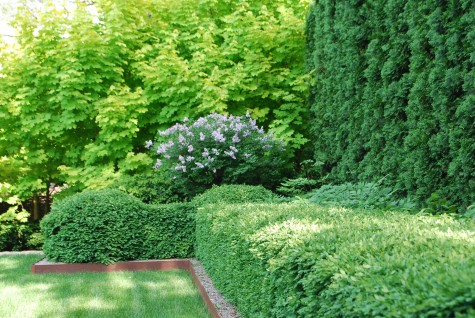
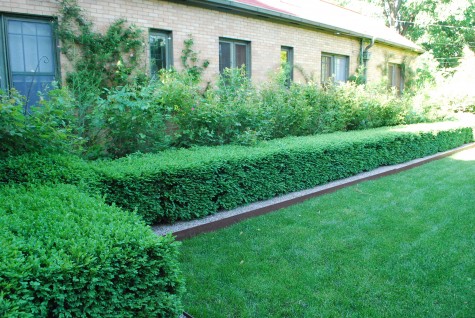
The new growth on the boxwood is bent over with its lavish spring flush-it will be impossible to trim for at least 2 weeks.  My pollarded Palabin lilacs have roared back with lots of foliage, and a decent bloom.  They should be spectacular next year.  The snakeroots are already over 3 feet tall.  
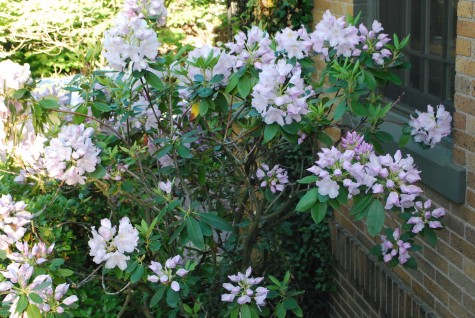
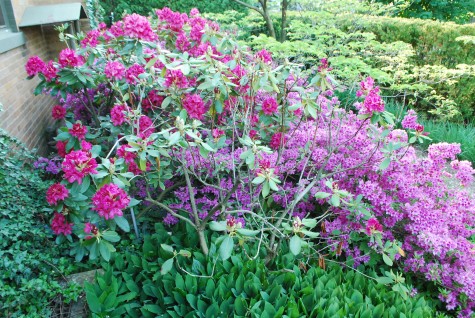
My rhododendron are in their glory.  They came with the house 15 years ago-they have never looked this good.  The giant flowering trusses are spectacular.  I pruned them considerably last spring after they flowered.  I am pleased to report I have at least 2 breaks every place I pruned.  Night temperatures in the low 50’s, and daytime temps in the low seventies will extend the bloom time considerably. My magnolias and dogwoods flowers blew away with two days of 90 degree days and high winds.  I am hoping for a good many days with my rhodies. My yews are flushing so fast and so much they are chartreuse green to my eye.  This is a different look than the one to which I am accustomed.  That new growth phase on evergreens is so beautiful.  This spring greening is lush beyond all belief.
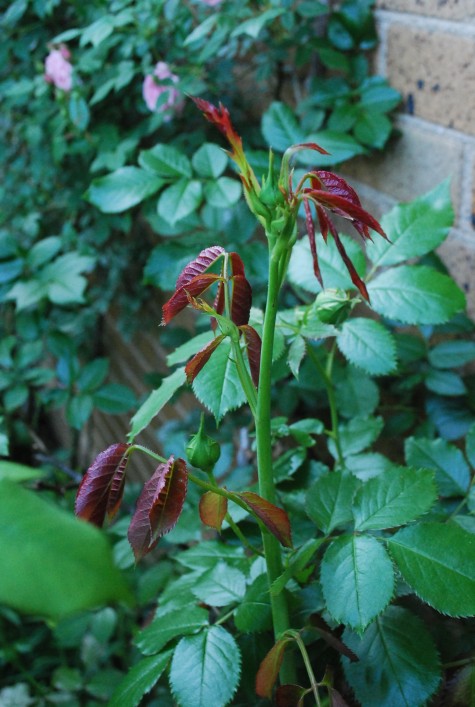
May I talk a little about my roses?  I do not have a big collection, just a concentrated collection.  Carefree Beauty, Carefree Wonder, Sally Holmes, Jeannie LeJoie, and Eden-these are my girls.  Two Carefree Griffith Buck shrub roses, one old English bred shrub rose/climber Sally Holmes, and two climbers.  The dwarf Jeannie LeJoie is a great foil for that heavy headed very girly climbing rose-Eden.  They are so loaded with buds right now I think I should be planning a party.
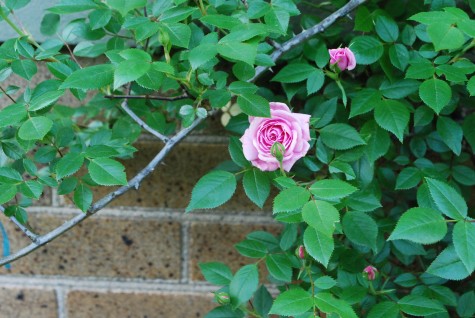
The foliage is lustrous and unmarked by fungus or bugs.  There is not an aphid in sight.  Every day after work Buck and I go up there to check on the progress.  The dwarf Jeannie LeJoie is always the first to show color.  I so highly recommend this rose, if you are partial to roses, but not necessarily a rosarian.  These climbers grow vigorously, and reward with thousands of little pink double flowers.
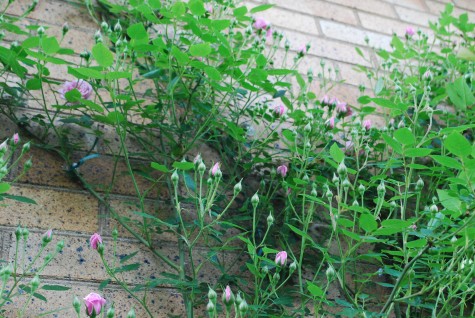
My Jeannies can be devastated by aphids and fungus, but never enough to challenge the life of the plants.  Truth be told, I never spray anything, except rabbit repellant.  The rabbits exasperate me-I am happy to shoo them off. Otherwise, I live with the holes in the leaves.  Fungus however can be debilitating to a collection of roses-I will intervene, should I think I need to.
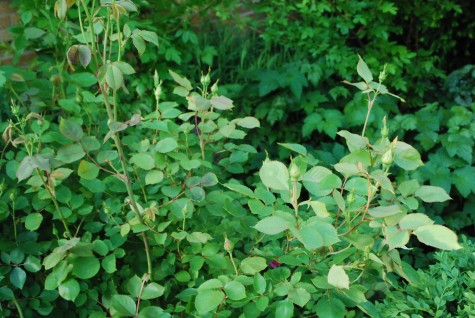
But this moment all that is on my mind is the giant leg up all of the rain have bequeathed to my roses.  Every one of them is 5 feet tall or better.  Pam gave them a thorough and thoughtful pruning this spring.  Thousands of buds-this is what the rain provided. 
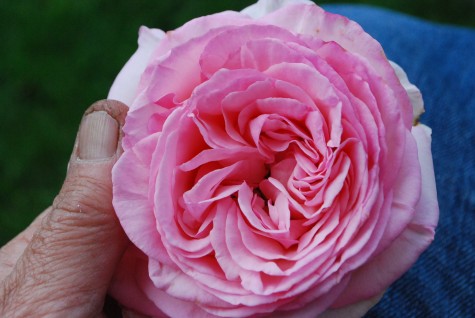
 This is the first flower from my climbing rose Eden.  They have so many petals their heads hang from the branches.  This bloom got set on the dinner table flating in a glass of water. I read the garden blog written by Paul Gervais regularly; his post on his roses, including the so fabulous Eden, is delightful.  http://gervaisdebedee.blogspot.com/2011/05/few-roses.html
Other plants have not so loved all of the rain.  The herniaria around the fountain looks pale green.  I have dead patches.  Too much rain.  At the shop, we moved all of the succulents into the greenhouse; I was fearful of rot. The alyssum has suffered much.  Many flats we simply threw away.   Too much rain ruined many of them; the high winds further burned them.  The high winds damaged a lot of plants.  The calla lilies have wind whipped leaves.  Some topiary plants were blown over multiple times; we were treating a good many broken arms a few days ago.   Cases of heliotrope were dessicated by the winds-those irreparably burned plants we threw in the trash.  The nicotiana are listing in a windward way in their pots.  I am not posting any pictures of that mess.
Every season has its lingering triumphs, and its shockingly stinging disappointments. Does this not sound similar your gardening life?  My professional gardening life is incredibly busy right now. I have barely posted this week; most all of my waking hours are about designing, getting plants delivered, and being out there, planting.  The saving grace of the rain?  When I go home, I see a garden growing vigorously-even though I am not there so much to help out.
A Couple Of Days Worth


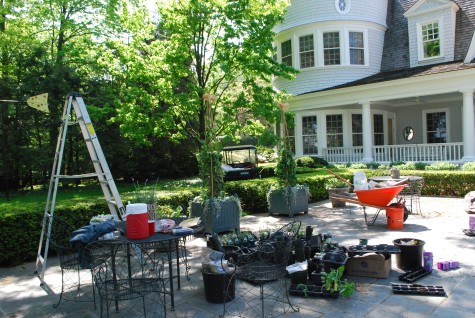
My annual planting season is in full swing.  My cork board is filled with job cards-there is a lot of work to do.  I do the design work-but that part is a fairly small part of the process.  Finding and ordering plants is followed by an installation and cleanup.  We like to check back fairly soon after a planting to be sure everything is growing ok. 

 It is a well known fact that only one person at a time can drive a bus.  What goes into planning and planting a job is much like delivering a busload of people to a destination.  A lot of seats on the bus are occupied by growers of perennials, annuals, tropical plants, herbs, and vegetables.  I know them on a first name basis.  I only ask for special help when I really need it.  I try to order by the truckload. I have a lot of respect for people who grow plants for a living-it is not easy. 

Some seats on the bus are for the people who plant.  They get seats in first class.  The most outstanding design on the planet means nothing if the installation is not first class. They know to water plants before they load them on a hot day.  They will water again-any plant they bring back at the end of the day.  They plant expertly, and quickly.  They know which side of a plant should face forward.  They know how to plant a rootball crooked, so a plant stands up straight.  They know how to soak a planting through and through.

There are two seats on my bus for the people who supervise.  They see to it that everyone is focused on a common goal.  They make executive decisions on the spot when they are needed.  They organize and direct every move.  They all work together amazingly well-I can barely keep up, placing the plants.  There is one seat for a runner-he delivers forgotten plants and materials to to the job.  There is one seat on the bus for Monica.  Every project has a job sheet detailing the scope of the work, the plant material, the hardgoods, and the time spent.  She is really good at spotting what might be missing from a sheet.    

  There are several seats on the bus for me.  Three days a week I shop the markets-between 5:30 and 6 am.  I need to get in and out in a timely way,  I go when the traffic is sparse. I am likely to run into other people who garden professionally; a few minutes may be spent socially, or in a discussion of a particular client that we have in common.  Several other days a week I drive to this greenhouse or that one-to see what looks good.  Then there is a seat I call the order desk. Plant numbers must be calculated, plants ordered, and a delivery coordinated. I direct the crew pulling material for a job.  Sometimes I draw the planting scheme on a picture of a pot from a previous year.  Sometimes I place the plants personally.   

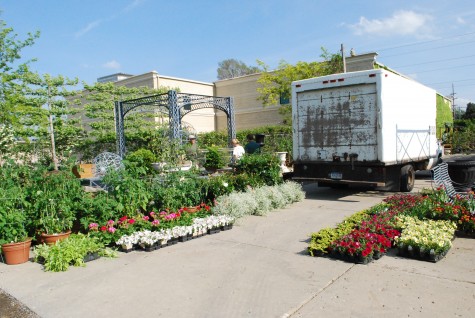
A truckload of plants provide a couple of days worth of material.  Some jobs take a day or better; other days we may do three projects.  In any event, I have a lot of projects swirling around in my head.  I know instinctively when I see a plant that would work for a project-or a plant around which a project can be organized.  Some plants I need I might have to pass on.  Maybe there are not enough available, or they are not the quality I had hoped for.  Selecting the plants is one job I cannot delegate. 

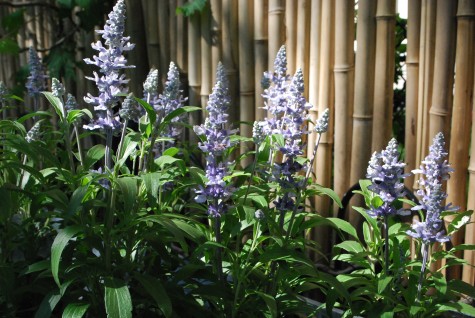
 Blue salvia has never particularly appealed to me; so much undistinguished foliage with not so many flowers.  The Cathedral series is an intriguing one- it comes in a dark purple, white, lavender, and blue sky.  The mix is really good looking, especially if you like subtle color.  I signed up for 24 cases. We’ll see what comes of that decision.  Tomorrow I will shop the market, and order another truckload that will get me through the weekend.  It’s the time to plant the annual flowers. 

75 degrees today, and sunny.  I’ll take it.

Scheming

This is the time of year I start planting annual plants for clients.  I am hoping we are at the tail end of the third rainiest spring on record; I planted all week last week in the cold rain.  It is a good thing I really like to do this; it kept my mind off my wet feet.  I have other things to think about besides being wet-like a color scheme, for instance.  I just planted one small garden at the shop, in illustration of the idea of scheming.  Scheming can refer to some underhanded activity-I prefer to think of it as an orderly way of working, or a way of working where all the pieces fit together in a satisfying way.  The concept of a color scheme for a garden is easy to understand.  Putting plants together where all of the respective colors workwell together-not always so easy.  

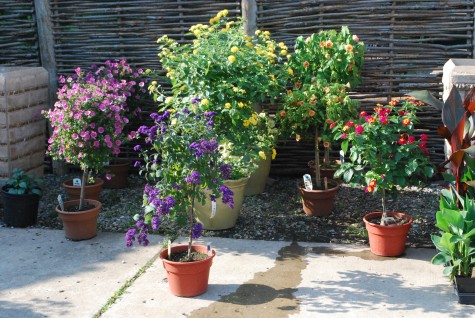
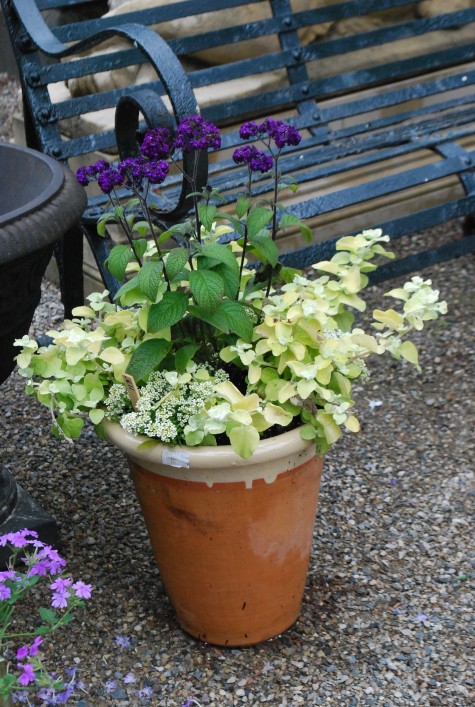
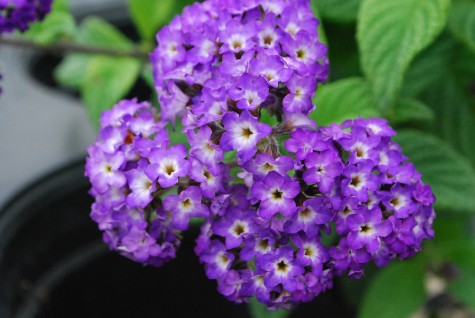
Color schemes that feature contrast will be lively.  The wild card of course is that every flower comes with a plant that has leaf color. The heliotrope pictured above has intensely purple flowers.  The leaf color is a medium green.  Flower color may be your primary interest-but there is a green scheme that needs attention too.  The lime licorice in this pot is a green that contrasts well with both the flowers and the leaves of heliotrope.   

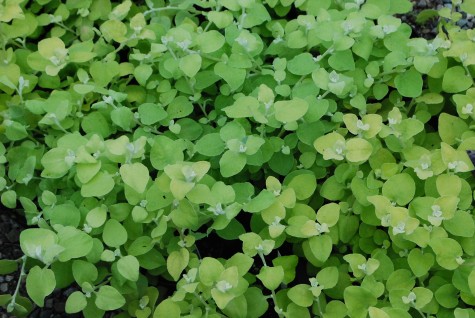
Both the lime and variegated licorice are invaluable in planning a color scheme.  This lime green will read yellow, when planted next to yellow flowers.  It will read very lime green when paired with red flowers.  Red geraniums and lime licorice is a color combination that reinvents the red geranium.

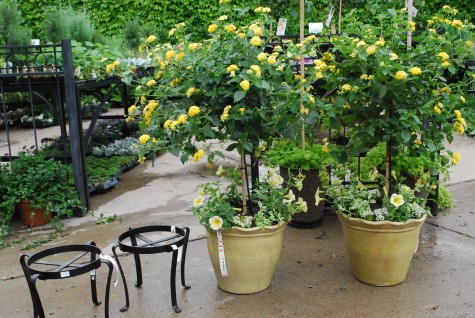
This lantana topiary has several shades of yellow in the flowers.  Both lemon yellow and deep yellow are represented.  Why did I choose variegated licorice in this pot?  That more blue green leaf relates better to the deep bluey-green of the lantana foliage.  The alyssum chosen here is called “citron”.  In a composition featuring yellow, it reads cream yellow.   All of the greens featured here are related.  All of the yellows relate.  

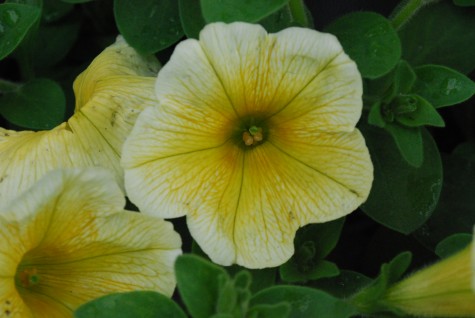
The third element in the lantana pot is a yellow potunia.  Potunias are a series of petunias developed  for a compact habit of growth, making them perfect for a container planting that does not necessarily ask for a trailing element. The lantana pot has a piecrust rim and band at the top-I would not want to completely cover that interesting detail.  The pot is not that large-I would not want it to be overwhelmed by the planting.  But the best part are the two tone yellow flowers-a perfect element for a yellow and green scheme so strongly suggested by the lantana standard.  

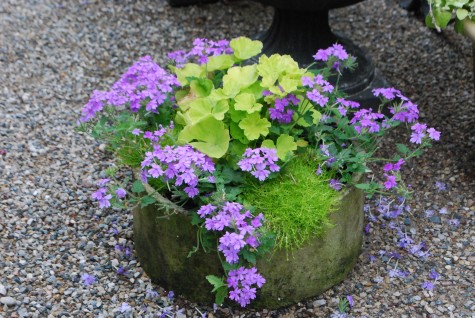
Persian Queen geraniums have brilliantly lime green leaves; I value this about them more than their hot pink flowers.  The lavender trailing verbena is a cool and striking foil for both the Geranium, and the scotch moss (sagina subulata aurea). Purple and lime green is a great place to start scheming. 

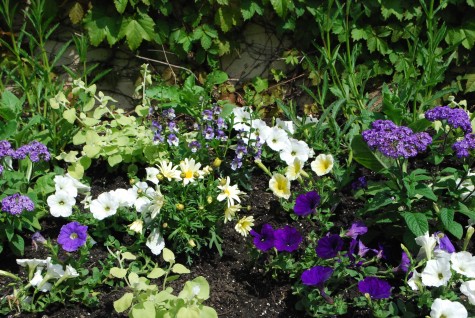
Variations on a color create visual interest.  Heliotrope can vary from deep dark purple, to lavender.  Sky Blue petunias are a very pale version of Royal Velvet petunias.  Yellow petunias with Sky Blue and  Royal Velvet petunias- a color scheme begins to tune up.  Add some white petunias for bright, and some lime licorice to the green scheme makes for a series of color relationships that create visual interest.

The scheme for this small anuual garden is as follows.  Lavender verbena bonariensis, lime and white nicotiana alata are my tall elements.  Mixes of three plants mix more evenly overall than mixes of 2 plants.  My mid level plant-bicolor angelonia-white and purple in the same flower.  Vanilla Butterfly marguerite is the pale cream yellow verson of the intense lemon yellow “Butterfly”.  Purple heliotrope and yellow potunias finish up that level.  On the border, white, sky blue/lavender and dark purple putunias mixed with lime licorice.  This color scheme-white/purple and lime, with a dash here and there of yellow.  If you think you see petunias and licorice planted from back to front between my tall flowers, you are right.  The big growing annuals take a long time to come on.  I like a bed of flowers that engages my eye from the start as well as the finish.  We’ll see if my scheming amounts to something good looking; I have my fingers crossed.  All is in the hands of the plants, and how they grow, now.

A Plant Collection


Planting containers is a big job, especially when there are lots of them.  I plant almost 40 containers for this client every year; I plant 27 pots of my own at home every year. Every year I have to fight off the urge to plant more pots.  That said, I have a few ideas about how to keep the project manageable-both in design and execution.  Every bill I send is completely detailed as to plant varieties and numbers.  Feel free to try this at home.  Keep track of how many plants it takes to plant your containers.  Take pictures.  Keep notes about what you like-and do not like.  This helps keep the shopping part organized.  I know ther numbers of plants this job requires;  I plan ahead.  This is essential, as she lives 45 minutes away from the shop.      

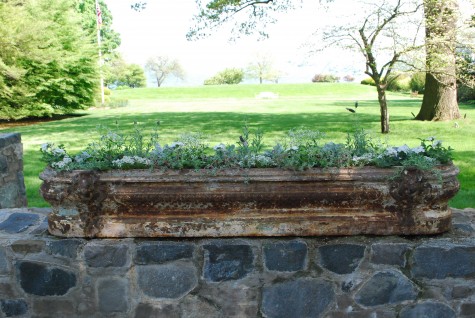
Round containers-think of them as needing layers of plants-planted in rings.  A centerpiece plant is ringed by a mid layer ring, and an edge ring.  Bigger pots need more rings-smaller ones need fewer. This long rectangular planter needs 2 long rows of plants.  When I lay out the planter, I start in the center, and work to each side, so the planting is symmetrical. This planter, just like a window box, only has so many spaces for plants.  I pick my palette, and then figure out how many repeats I will need.  The repetition of plants establishes a visual rhythm.  In contemporary plantings,  I may plant just one plant all over, and hope that plant has a favorable season.    

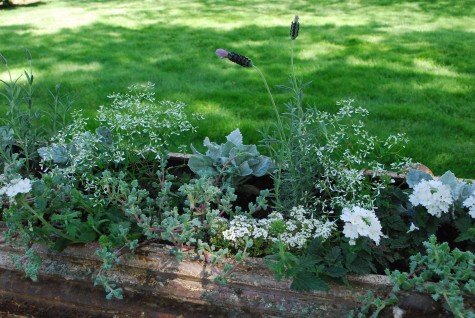
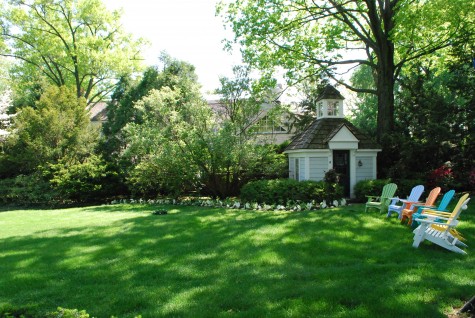
Once I have some numbers in mind, I think about what plants make good neighbors-both side to side, and front to back.  My diamond frost euphorbia asks for something with a denser texture and bigger flower-does it not?  Verbena is a great companion plant.  Cirrus dusty miller has big, matte, felted leaves.  A good companion? The tiny and angular leaved shiny succulent pictured above provides good contrast in form and texture, while repeating that grey-blue color.  A good companion to lavender, whose flowers and foliage are so wispy, is alyssum, which flowers low, and profusely.It is hard to see what is going on in this annual bed far from the terrace-but for the blobs of white.  That white is from the leaves of caladiums-they read well from a distance.  Later in the season, short white and tall lime green nicotiana will bloom.  The ground cover under all-white polka dot plant.  This shade planting is a much more interesting solution than white impatiens.  Lime green coleus would look great here as well.  This is a collection of plants that work well together. Larger growing plants means you do not need so many to make a statement.  Space your plants in the ground knowing how they will mature.  In-ground plantings spaced too close together not only invites disease, it can result in an overall shape that is not distinctively shapely.

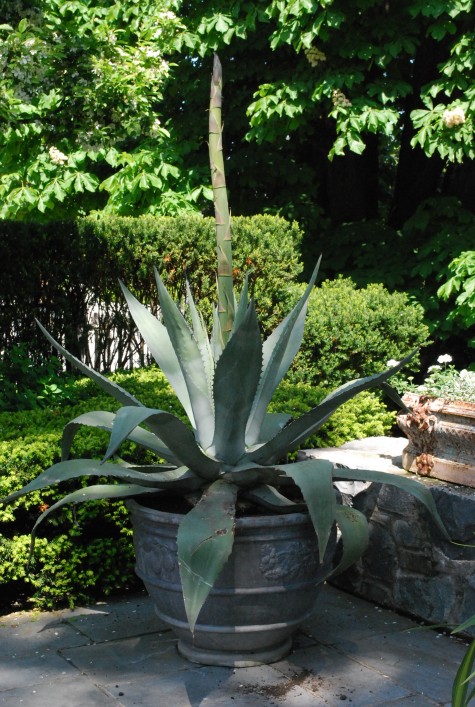
This old agave-this is its final year.  Agaves need to be quite old before they bloom.  Once they bloom, the parent plant dies, leaves the baby offshoots to continue. This bloom stalk could grow to 14 feet or better.  This agave is part of a collection of plants my client has had for a number of years. We underplanted it with a mass of Kent Beauty oregano, a soft, drapy, and delicately colored ornamental oregano that will highlight the visual architecture of the agave by way of considerable contrast in scale, texture and form. 

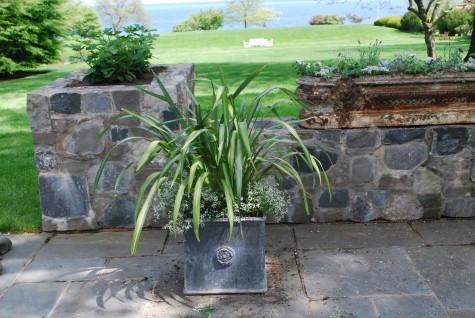
Phormiums, or New Zealand flax have an architectural presence on a smaller scale.  The diamond frost  euphorbia will froth up and spill over the container.  This is a collection of two that looks handsome together.

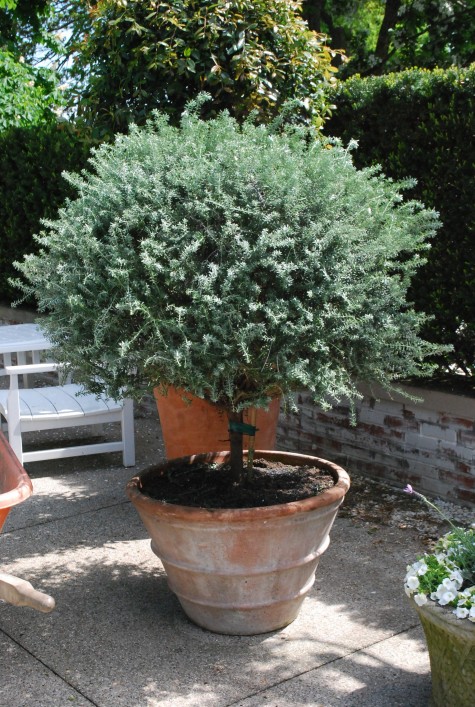
Another member of the topiary plant collection, a Teucrium Fruticans on standard.  Bush germander has silver needled leaves, and grows 4 to 6 feet tall in warmer climates.  This topiary has to be wintered in a barely heated light space.  Any collection of plants that can be wintered over in a light space or garage has two advantages.  They not only live a much longer life than most annuals, they grow and become sizeable. This germander is almost 10 years old; it is a beautiful container plant indeed.

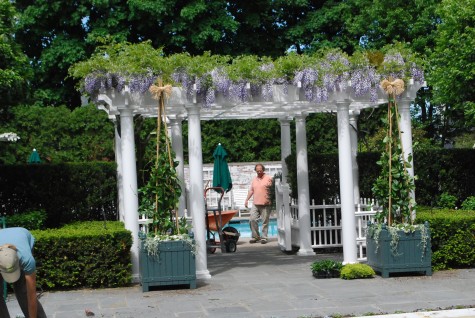
We planted white mandevillea, and staked it on four 10′  natural bamboo poles.  We secure the poles with concrete wire for strength, and covered the wire with simple raffia bows.  Lime nicotiana, white angelonia, silver dichondra, white anyssum and white million bells rounds out the collection.

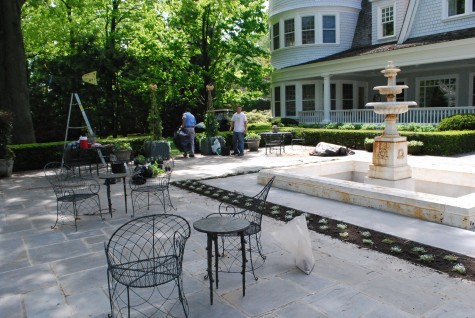
The newly created plant frame around the fountain is planted with Isotoma Fluviatilis.  I spaced the plants at a foot apart, as it grounds very quickly.  Hardy to minus 20 degrees, and tolerant of heavy foot traffic, it will barely break the plane of the stone.  The new stone around the fountain is angled slightly away from the fountain, so rain will not pool there.  The plant frame helps to minimize that stone set on a slightly higher grade than the original terrace. 

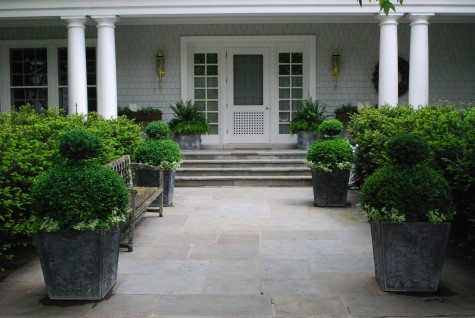
Four lead pots sit on the front walk, each with its own boxwood topiary.  These boxwood are hardy in my zone 7 out of every 10 years, so I winter them in an unheated dark space for the winter-just to be sure.  The ball shaped boxwood with attending topknots is a good contrast to the tapered shape of the lead pots.  Variegated licorice at the corners, with a green dichondra in between completes the planting.


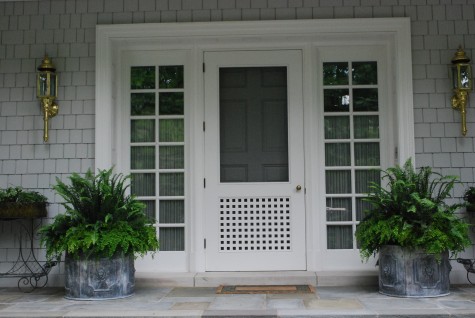
A lovely pair of Kimberly ferns flank the front door.  As they tend to grow upright in a vase shape, I planted maidenhair ferns as a groundcover under the Kimberlys.  This puts the overall edges of the planting gracefully out over the edges of the round lead pots.  I do so love pots planted green.