In Anticipation


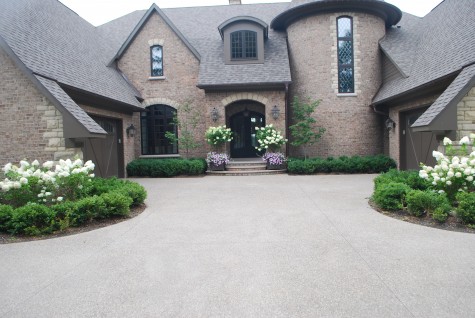
This client has a very distinct point of view about what she likes, and a sincere interest in the landscape.  She is a young person with a flock of young kids-how she manages to even think about it surprises me.  What we do for her is very low key and simple.  The hydrangeas on standard in her summer pots we winter over in the ground.  Most times we plant white, sometimes there is a little lavender or purple.   
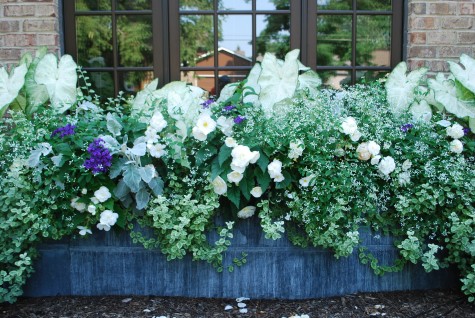
A few years ago we made these steel boxes for her; they sit on the ground, as her windows are very low.  I took this picture of one of those boxes September 5-this was the first time I had seen it since it was planted.  The white non-stop begonias were thriving; I was impressed.  They are not the easiest plant to grow. The heliotrope has faded from the picture, but the box by and large looked great.  June Bride caladiums, euphorbia Diamond Frost, cirrus dusty miller and variegated licorice have all grown together quite companionably.    
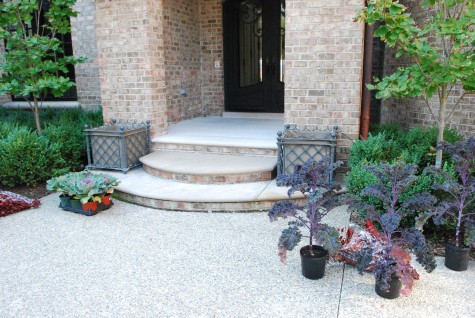
All good things must come to an end-I wonder if Chaucer’s summer pots were waning when he wrote this.  Can you hear me sighing?  Steve cleared out all but one of my deck pots yesterday-I cannot bear that look of decline.  I should do like this client.  When summer comes to an end, she moves on to the next season.  Having kids, she was interested in a containers that would look just right for Halloween. 
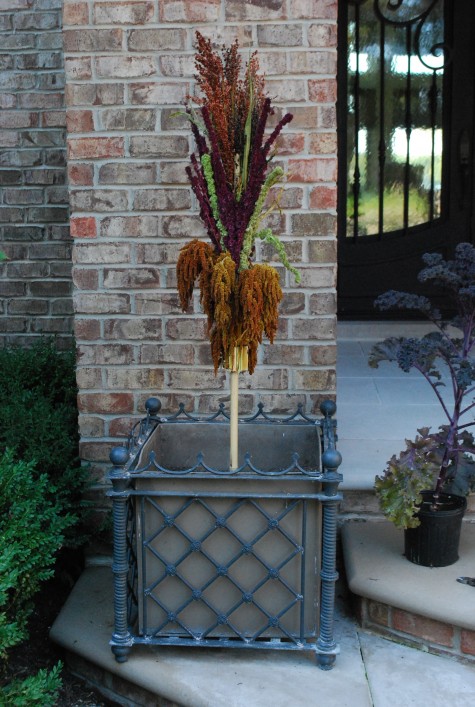
I like Halloween.  The best are all the kids that come to the door in costume.  Next best, I love any holiday that depends greatly on the plants and props native to the season, presented in a suitably holiday way. I could not engineer anything as horrifying as what the average 10 year old could dream up, so I focus on the plant part.  First up for these pots, a centerpiece of broomcorn, and 3 colors of amaranthus, zip tied to a stake that goes most of the way to the bottom of the box.  A good deal of the soil had been removed as part of the rootball of the hydrangea on standard.  We topped up the boxes with new soil. 
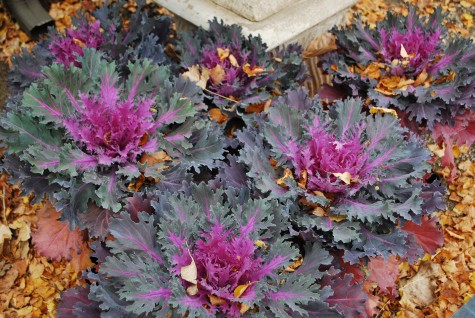
The cabbages and kales I have written about before.  There color only gets better, as fall progresses.  But when I am thinking Halloween, my kale of choice is Redbor.  Redbor kale is stalky growing, and krinkly leaved.   
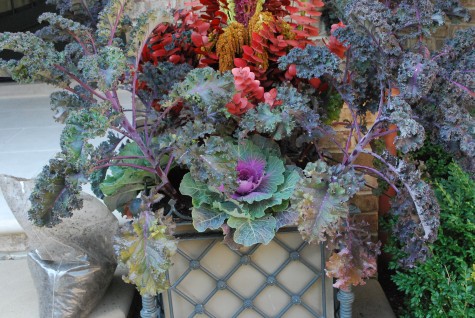
The color of redbor is an amalgamation of grey, turquoise, purple and black.  As the night temperatures decline, that color gets a little more emphatically black.  Black for Halloween?  Perfect.
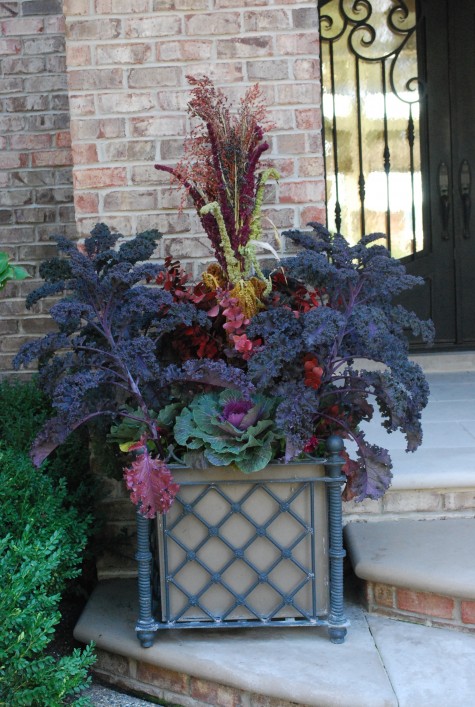
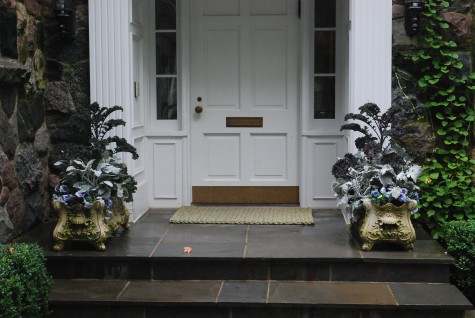
I planted the kales in the outermost corners of the box, and angled them out.  Tied around the bottom of the centerpiece-2 bunches of molten orange dyed eucalyptus. We like a little fire going on at the center.  The turquoise and cerise cabbage front and center is a little tame and off color,  but it will keep the planting looking great and full until Halloween.      
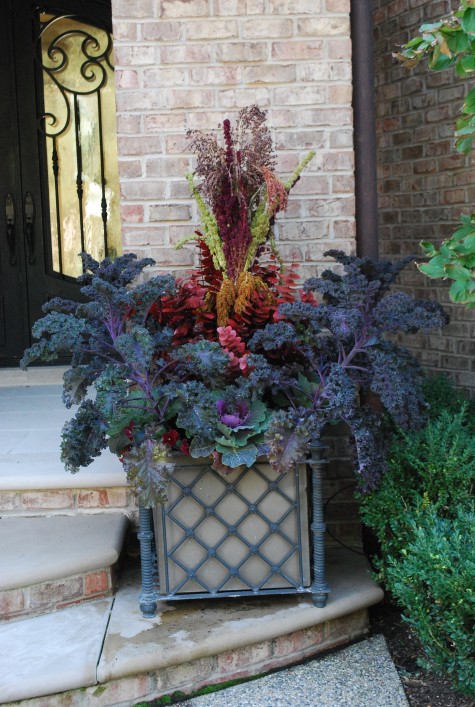
The orange eucalyptus appears to have pushed to redbor kale outwards.  This is a very easy way to be spooky-plant the plants out of kilter.  What might take the place of that cabbage in the front?  A lit pumpkin?  A skull?  A giant spider?  A skeleton hung over the side? A mummified hand dripping in plastic blood?    No doubt I will consult the kids about that.  In the meantime, my client is happy to have a lively planting in her boxes at the front door.   
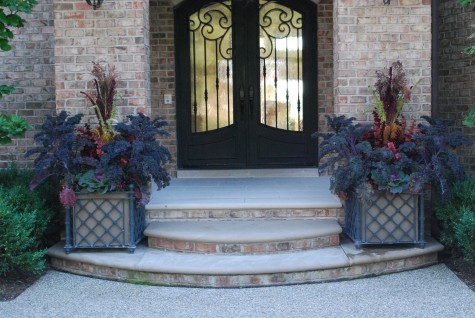
Every nursery, farmer’s market, roadside stand, grocery store, garden and vacant land has materials that look great in fall pots.  As for the spiders, skulls and skeletons that need to be added that one night, any kid can help you get ghoulish.
Walking The Field

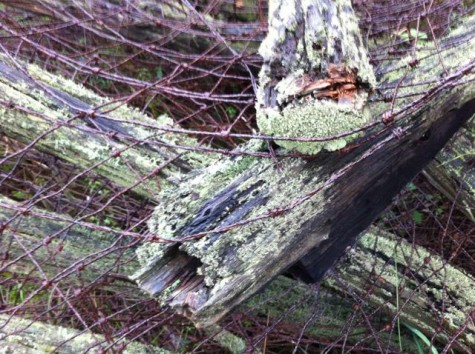
I would bet that if I organized and offered a shopping trip with Rob, it would fill up in an instant.  There would be a waiting list.  He has an eye for where to go, what to see, and what to commit to that interesting and beautiful.  His less obvious searches includes sifting through the debris and dried materials that tends to accumulate in vacant land.  This abandoned tangle of wire fencing and rotted posts may not upon first glance seem like much seem like much. But I would say the chances are excellent I will see this found object, or this combination of colors and textures and materials, or some semblance of this idea somewhere soon.   

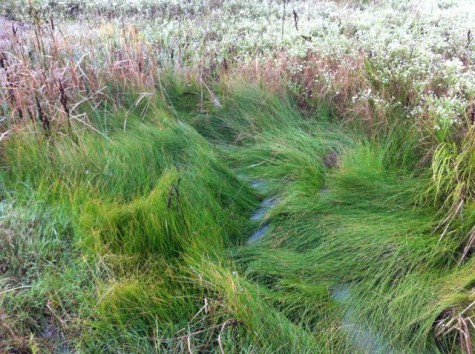
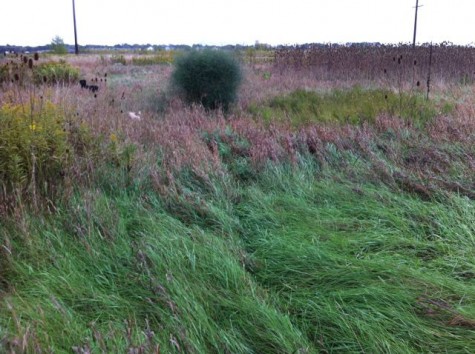
Vacant land has a story to tell.  This grass likes the watery ground.  Other species only come so close, before conditions are no longer optimal.  Plants are very specific about what they want-this picture makes that clear. Given this picture, it is no wonder that lawn saturated with water from automatic irrigation thrives.  Other plants are not so crazy about it-they stay away, if they can.  I know him well enough to know this wild grass laying over is appealing.  Some spot or another in the shop will have this look.            

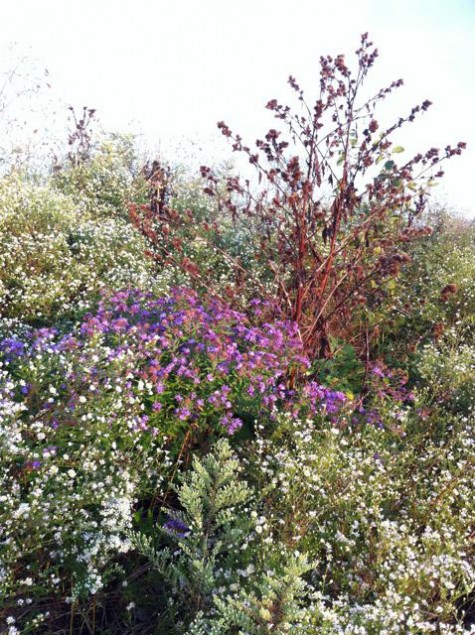
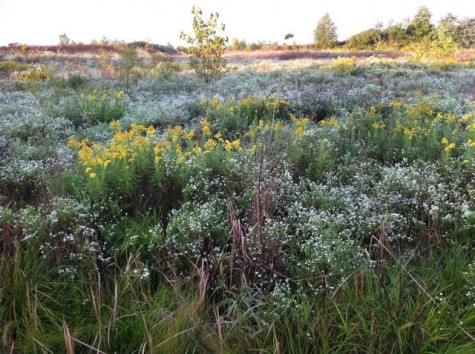
Wild asters have small and insignificant individual flowers, but large colonies of them can be very beautiful.  Weedy and wonderful, this.  Rob’s pictures are a harbinger of what is to come from him.   The other day Rob nailed a  twig bird feeder to a chestnut fence post, and set the post in a tall limestone cylinder.  Wedged into the cylinder around the fence post, a few wisps of weedy plastic grass.  The idea of plastic grass appeals to no gardener, but should you come in, take a look.  There is an utterly natural and believable look to the entire assembly.      

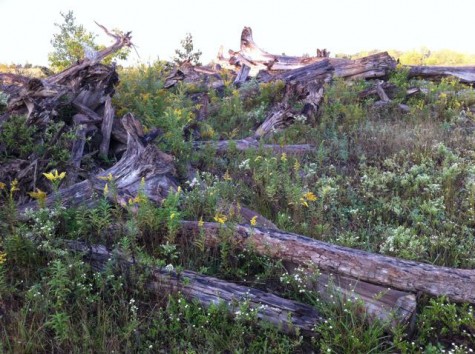
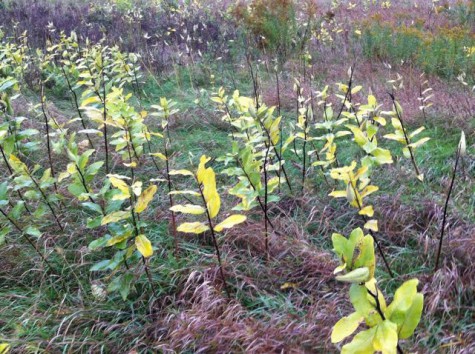
This vacant land is littered with giant logs, the remnants of their roots intact.  The goldenrod and asters have grown up around them.  The story that lies behind this picture is unclear.  They do not look cut, they look rotted off at the very base.  They look like they were dumped here. But perhaps this land was inadvertently flooded long enough to kill all of the trees.  I am just waiting for Rob to ask if I can send a truck and trailer after them.  They would be the perfect material for a stumpery. 

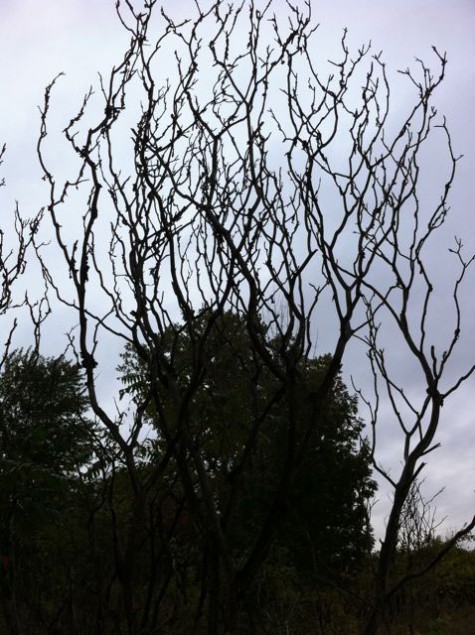
 I have no clue what thesese shrubby trees might be.  They have been dead long enough that the bark is peeling away from the wood from a long standing sun burn.  Spooky branches, he calls them.  Would they not be perfect for a Halloween vignette?  Rob is just as likely to find inspiration from spooky branches in a tract of vacant land as the library.  To put it mildly, he has an active imagination.  A genuinely original imagination.    

He and I both love asclepias tuberosa-milkweed.  Few wild and weedy plants have big luscious leaves like these.  The story of how milkweed seeds mature, and are sent aloft is one of the most delightful stories that nature has to tell.  When the pods mature, and crack open, the seeds are packed tight in that pod with the unopened parachutes attached, just waiting for a stiff breeze to send them all aloft. An afternoon sky full of milkweed seeds is one of the best visual pleasures of fall.   

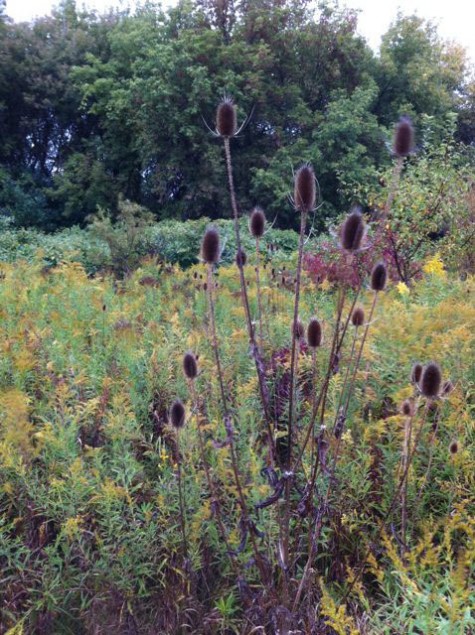
Thistles are a pernicious weed in cultivated gardens.  They are almost impossible to eradicate; the roots go very deep, and are very strong.  Who would want to touch one?  But the seed pods are beautiful.  The seeds nourish many a goldfinch.  They look great in fall arrangements. If you know of any tract of vacant land in zone 4-5, there will likely be a thistle patch.        

There is a fall party going on here-undisturbed.  No one has had a mind to refurbish, zone, or organize this space for residential use.   Vacant land in no means implies a vacant space.  There are plenty of plant species thriving with no need for any supervision.  It may be that the most beautiful places on earth are places that are solely supervised by nature.   Every gardener appreciates this.  

Rob took all of these photographs-of course he spotted this giant thickly growing clump of asparagus.  Did it grow from a seed?  Was there a farmhouse here decades ago?  The mystery that is nature is alive and well on this vacant land.  A shopping trip with Rob to a vast tract of vacant land?  It might be better than you think.

Fall Color

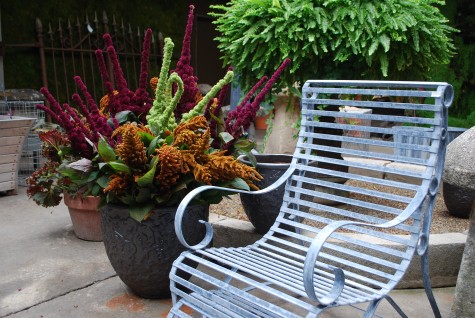
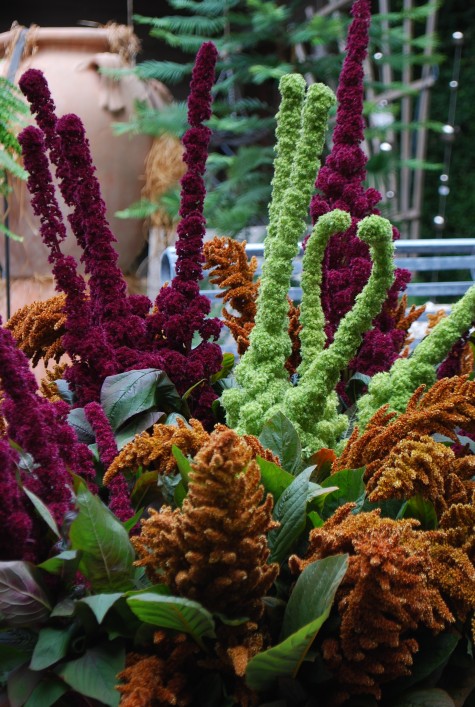
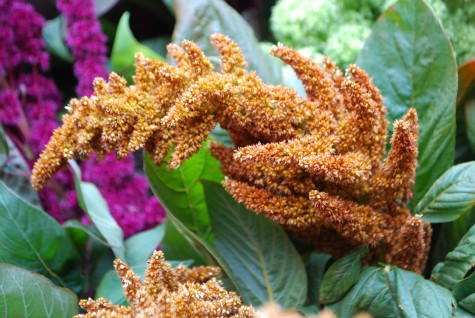
The phrase fall color usually refers to leaves that color up.  The gingkos go gold, and the sugar maple leaves turn the most amazing shades of yellow, peach, orange and red.  But there are those late blooming plants whose flowers are richly saturated with color.  Jewel like-as in the wine red and lime green of amaranthus caudatus Fat Spike, and the the golden topaz of amaranthus Hot Biscuits.  These big rangy growing cultivars of grain amaranth bloom with colors I associate with the season.      

.The amaranths dry incredibly well, but the color is at its most dense and brilliantly jewel-like the moment they are cut.  I buy them by the bunch loads when they come into season.  There is something about their velvety color and texture I find irresistable. I do use them in fall containers, especially clients who will replace their fall planting with a winter one the end of November.  

Hot biscuits is just as beautiful in a vase.  I remove all of the leaves and cut the thick stems on a steep slant. 

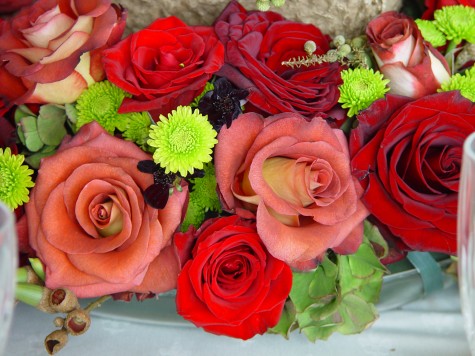
 Mixed with the orange rose of my dreams- “Star 2000”, the yellow and orange bicolor rose “Confetti”, and the florist’s button chrysanthemum “Yoko Ono”, the result is a spectacular discussion of color particular to fall. 

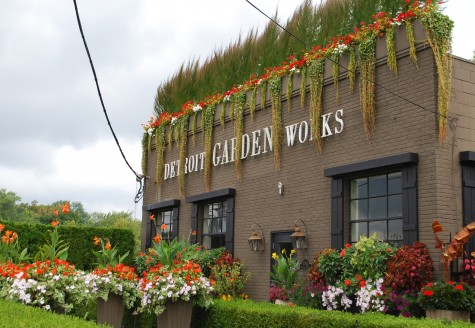
The orange summer planting at the shop looks perfectly appropriate this October 1.  The copper leaved banana, the orange dahlias and red violet coleus have taken on a different, more saturated look.  The forecast for temperatures in the 30’s tonight does not augur well for a good look tomorrow-I thought I had better take a picture.   

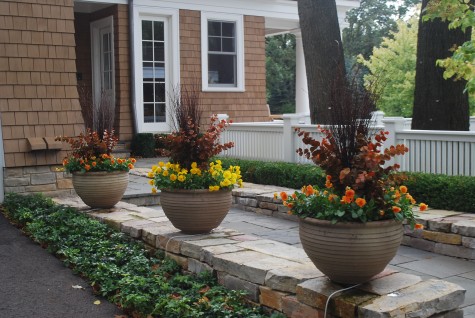
Clear sky orange and yellow pansies look particularly appropriate for fall.  Some dark twigs, with a substantial collar of eucalyptus dyed orange completes the look.  These pots will look all the more beautiful once the leaves on the trees change color.   

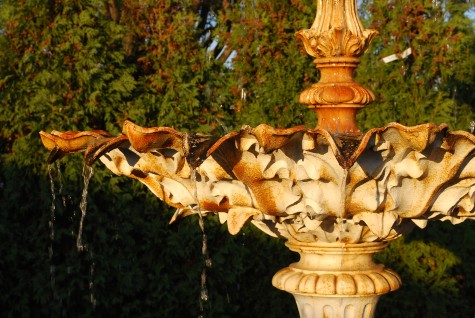
Some fall color is as much about the quality of the light as the color.  This antique white fountain with its paint rusting looks cream, gold and orange in the low in the sky, late day sun. 


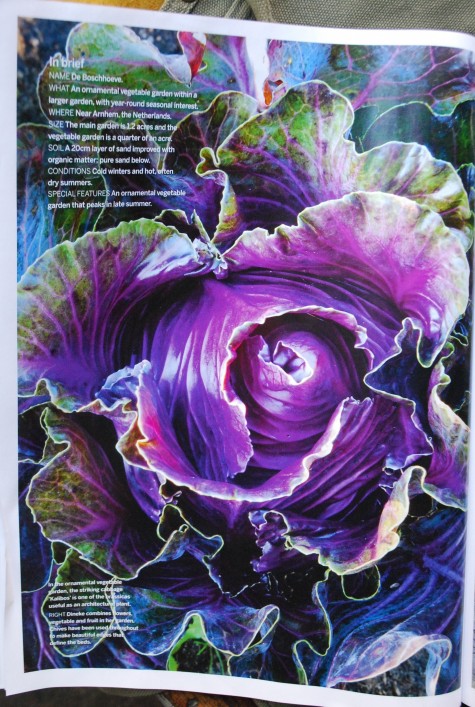
Have you seen the new issue of Garden’s Illustrated?  It is superb.  My most favorite article is about the Dutch garden Boschoeve, owned, designed and tended by Dineke Logtenberg.  Her ornamental kitchen garden is full of varieties of edible plants that are beautiful in their own right.  This photograph of the cabbage “Kalibos” by Elke Borowski says everything there is to say about the color of fall maturing plants.

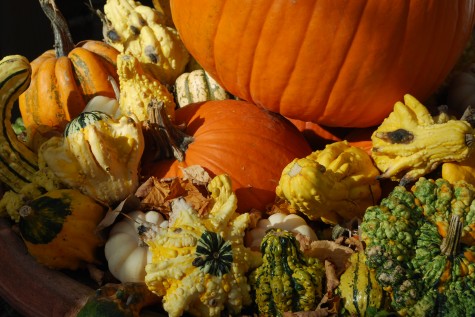
The pumpkins and gourds are ripening.  They will be cream, butter yellow, orange, peach, and black green.  This color is unlike any other season.    Their colors are all that much more intense, given a little late summer sun. 

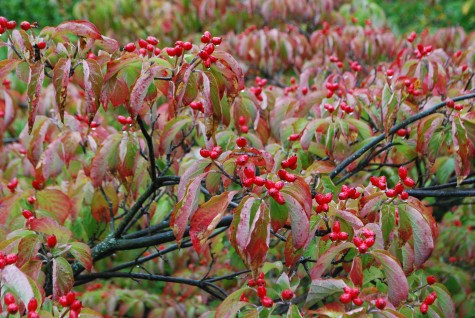
 My trees are just beginning to turn color.  The kousa dogwoods are always the first.  The brilliant red berries pepper the green leaves in the process of turning red.  This look is some consolation that spring is several seasons away. 

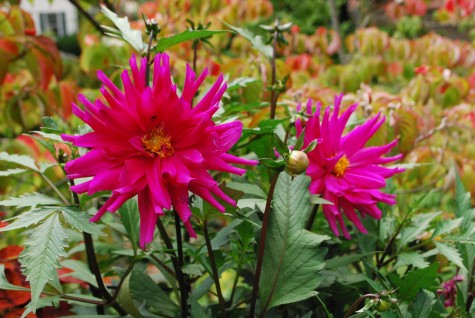
Dahlais are especially beautiful in the fall.  Provided they have survived the spider mites and mildew, they will bloom like crazy towards the end of the season.  There colors will intrensify with the beginning of the cold.  This carmine pink University series cactus dahlia has bloomed faithfully all season; it is especially good right now.  

Not all fall color is bright.  These plantings of red bor kale, cirrus dusty miller and blue pansies are moody, just like the rainy blustery weather we have been having the past few days.  No summer planting looks like this.  Color in the fall is an experience like no other.

Broom Corn Shocks

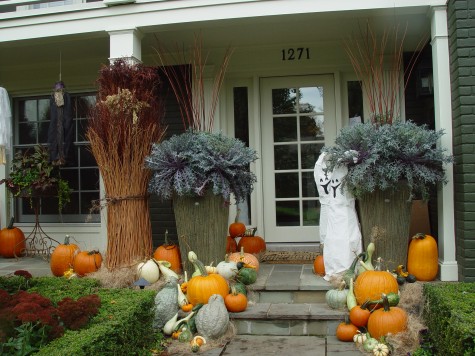
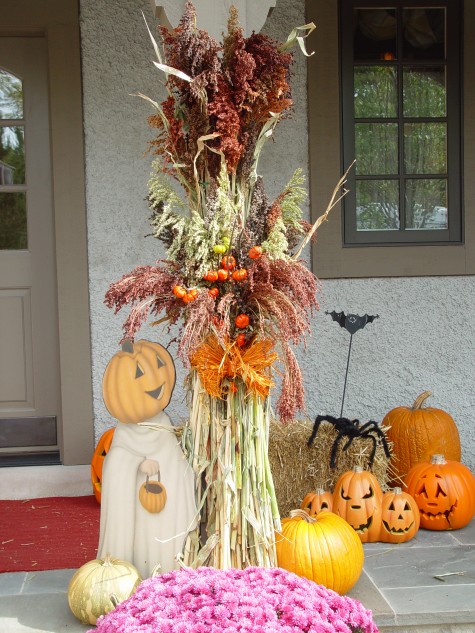
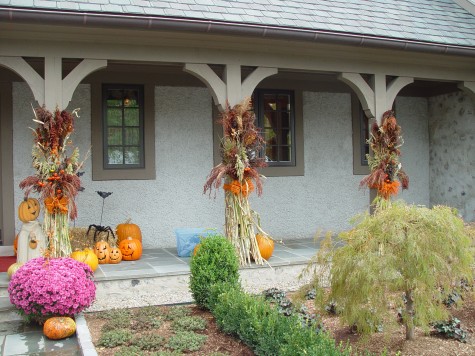
Given Michael’s comment about the centerpiece in the pots I wrote about yesterday, maybe I need to expand a little about broom corn.  I wrote about it in great detail a year ago-type “broom corn” into the search line of this blog, if you are interested.  The porch pillar in this picture has been completely engulfed with broom corn shocks.  The wiry stems of the seed heads of the sorghum plant I call broom corn is indeed used to make brooms.  The stems and long lasting seed heads on their long stalks are a favorite fall material of mine.  They stand up to the weather, they represent all of those great colors we associate with fall.   This client clearly has has kids-thus the Halloween slant on fall. We encased the stalks of the broomcorn in dried willow stems.  A double loop of bark covered wire keeps the shocks securely skyward.      

The shocks I buy at market are 6 to 8 feet tall.  I remove most of the lower leaves.  The upper leaves that I leave dry and twist in a way I cannot predict, but always like.  We wired the shocks to this porch pillar; a giant bow of orange raffia that covers that wire adds an unexpectedly dressy bow tie type note to those natural stems.  I try to edit as little as possible.  Preserving the feeling of a naturally grown plant is an essential element of using cut materials.   


The fall season is all about slowing down, going dormant, preparing for winter.  That said, there are certain plants that are never better than they are just before a hard frost.  That fall leaf ripe with fall color that moment before it falls-beautiful.  The broom corn seed heads hang on tenaciously throughout the fall-they insure that my fall season container plantings goes long.  Plan to be at your local farmer’s market early on Saturday.  You will not be disappointed.  Any plant in the garden speaks modestly.  Once you have a mind to feature a certain plant, modest moves up and out.  Any beautiful move in a garden, a landscape, or a container depends on you.