 Amazingly enough, it was my fifth grade science teacher that taught me the color basics. I remember that she covered individual panes of some of the classroom windows with sheets of red, yellow and blue acetate. Her explanation of the term “primary colors” was simple-these three colors come standard issue in nature-they cannot be made from any other colors. She had a stack of giant acetate rectangles every color imaginable, and we did spend a lot of time trying to overlay sheets in some form that would produce yellow. We never made any yellow, but we did make lots of other colors-the secondary colors. Secondary, meaning the result of the mix of any two primary colors. Then we made tertiary colors-any mix of three colors.
 This may have been science, but it was pure fun. Once we had green from mixing blue and yellow, and orange from yellow and red, and purple from blue and red, we pasted these combos on the windows. Over a period of days, every window in the room had a distinctly different color. In the center, the single sheets of the primary colors. At the edges, stacks of acetate sheets that looked like the color of mud. I remember how enchanted I was with all that color; to this day a set of pastels, markers, yarn samples,colored pencils, paints and the like interest me. I did not so much grasp the relationship of color to light, but I could see it. The quality of light greatly influences the appearance of color-anyone who has loved a paint chip at the store, and put it on a wall at home to disastrous effect understands this.
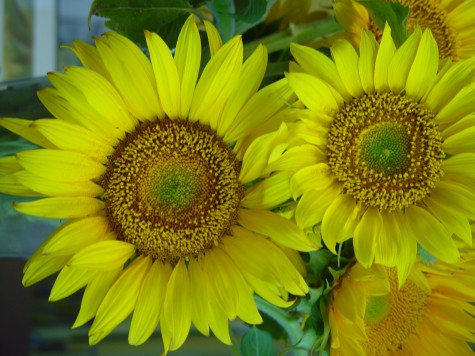
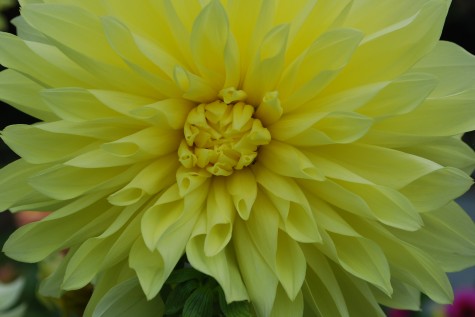 Color in the landscape functions the same way. The primary colors have an electricity that comes with the territory, but where and how color gets placed determines how it looks. Yellow reads brilliantly at a distance; use it in places far away from your eye, or to back up other darker or more subtle colors that would otherwise fade from view. The transparency of yellow makes it a perfect choice for areas in the landscape that are back lit-it will look like the lights are on. The edges of these dahlias petals have gone green; they are too thick to transmit light well. The dark behind the dahlia turns the yellow dirty yellow-green.
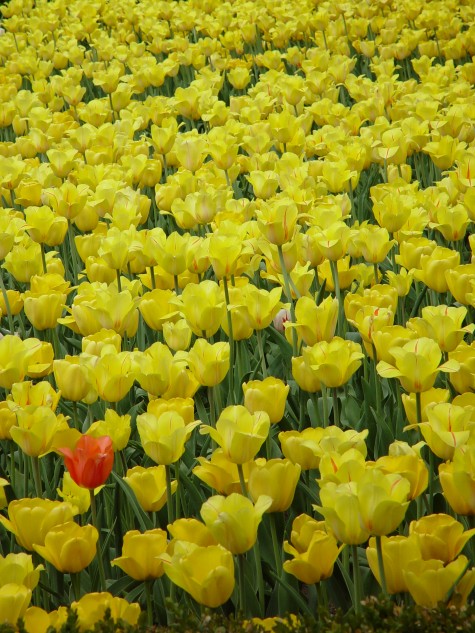
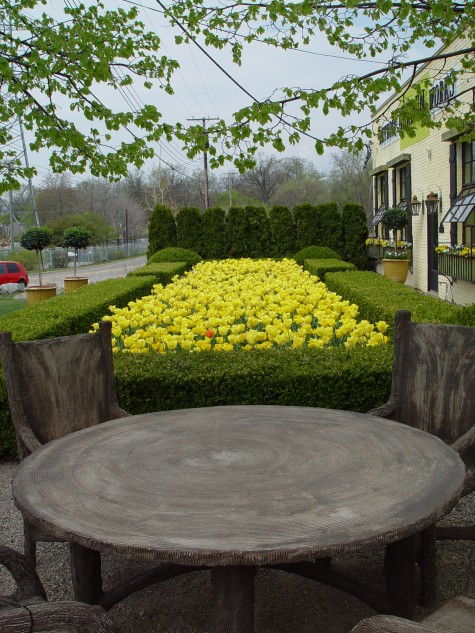 This composition is first and foremost about yellow. It draws your eye, and keeps your visual attention. It is secondarily about tulips, yews, boxwood, geometry-and so on. Notice how the color far away in this photo are subdued, muddy, and indistinct-but for the green of the emerging leaves. New leaf green has a lot of yellow in it-that yellow reads at a distance.
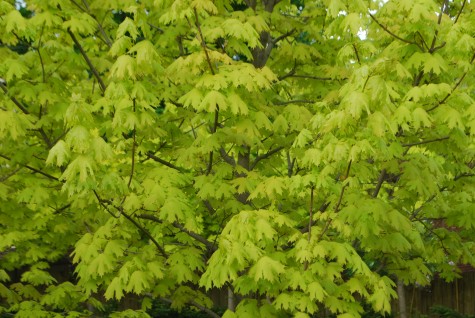 Princeton gold maple leaves are really yellow with a green cast when they first emerge.
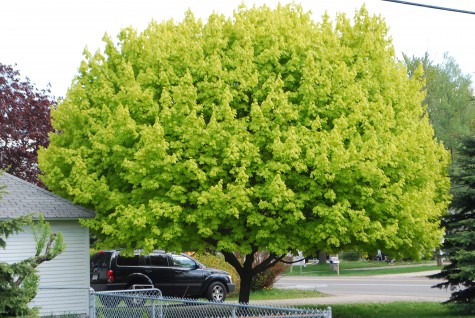 In a sunny spot, the leaves read yellow to the eye at the top, where they get the most light. As your eye looks at this tree from top to bottom, the color changes. The leaves with least exposure to light are the darkest. The change in value-or relative lightness or darkness-from the top of this tree to the bottom is considerable. The trunk of the tree looks black, given all the light behind it.
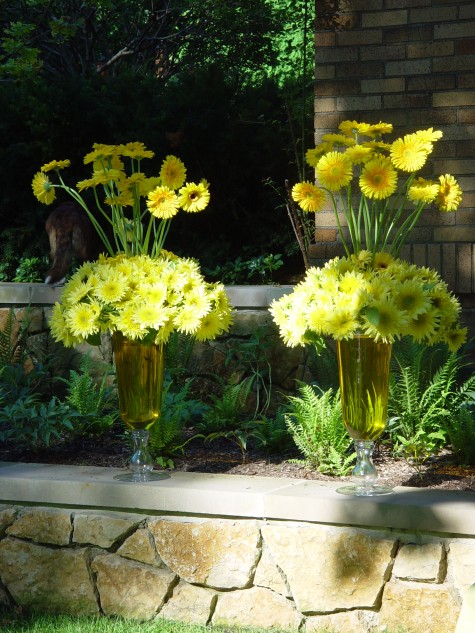 Yellow has the ability to light up a shady area. The gerberas at the top glow in front of the yews whose color almost appears black. Densely shady gardens can die visually if some effort is not made to introduce contrast. One landscape project involved a densely wooded area; cutting out the brush and sapling trees in a few selected areas created pools of light. The contrast of light and dark added visual interest, but also made it possible to see the more subtle colors of the plants in the ground.
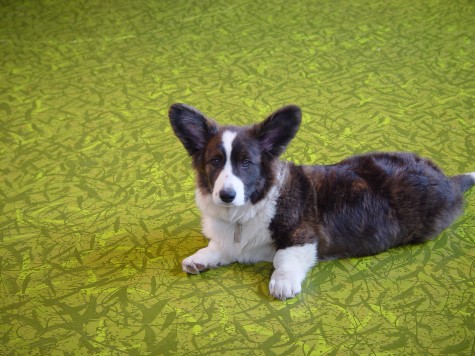 Likewise, painting the concrete floor of one room in the shop these grassy-shaped variations of chartreuse and yellow green made it easier to see everything that would be placed in the room. Milo’s coat color is known as “dark brindle”. All the individual colors present in his coat read much more clearly than they would should I have photographed him with a dark background.
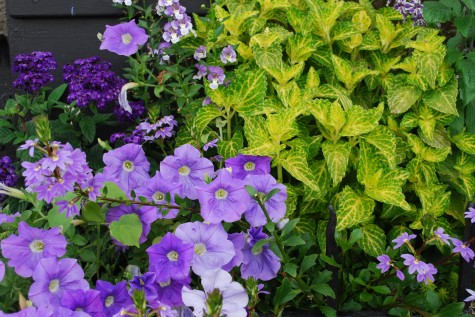
Yellow may or may not be a favorite color, but how it makes other colors look makes it useful. The color of these blue petunias, heliotrope and angelonia appears clear and striking, given the contrasting companionship of the yellow coleus. These same flowers, planted with brown sweet potato vine? fugue-like. How you use color helps insure that what you design reads just how you intended.
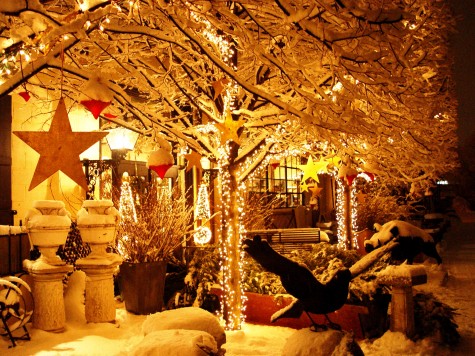 But for staying out until 3am at a rocking great affair at my brother’s New Years Eve in 2000, I am not a New Year’s Eve party aficianado. The weather can be both challenging and boorish; the after midnight drivers even more so. Some years I would head home at 11:30, and listen to the festivities on the radio in the driveway. But in 2005, nature put on an unforgettable New Years party.
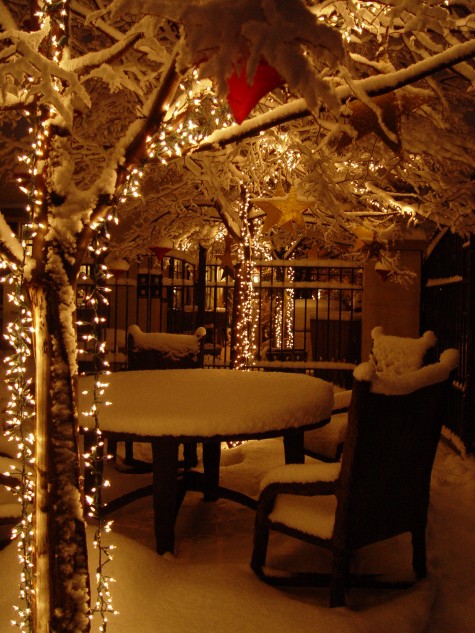 We had hung big gold stars and red modern sputnik ornaments in the lindens on the drive in November-it was a good look. I think ornaments look much better on deciduous trees than evergreens-they can swing free and be easily seen. Rob has a way of casually dressing the trees with lights that at first glance looks like his blood pressure is too low-but a second good look says otherwise. So far, so good. Branches, red and gold-what could be better?
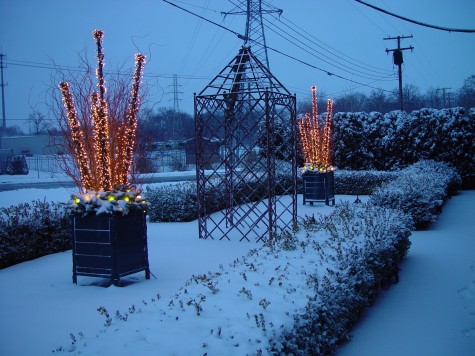
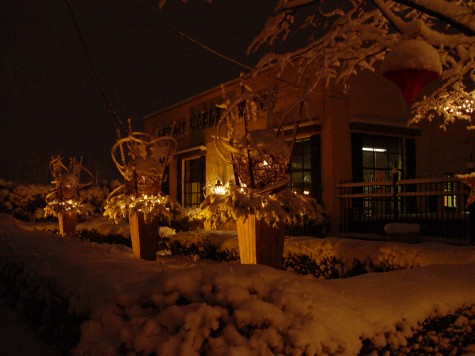 Better was on the way; December 29 we got snow. Not a snow storm-a blanket of snow. It fell softly and steadily all day, and all night, and on into the 30th. Snow souffle-everywhere. All that white fluff changed the landscape completely. I had placed hickory fence poles in each corner of the front pots and wedged a giant grapevine sphere in between them-all in an effort to figure out what to do with some 25 lengths of hickory wood and bark strips Rob had brought over from Belgium. Do you see those curving strips? Truth be known, they were nothing much until the snow came. The snow was beginning to make something substantial of something gestural.
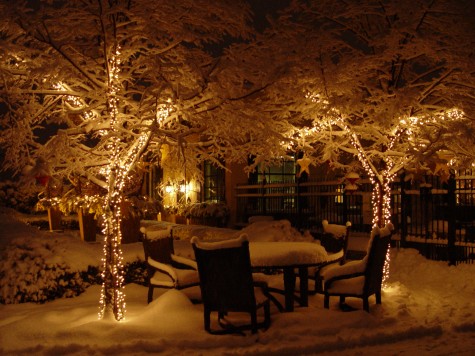 The thicket of linden branches overhead caught a lot of this snow-it stuck and kept on sticking to every branch, top to bottom. Never have I seen branches so dressed up. The hot garland lights shed the snow, and kept on glowing. What was to come had nothing to do with me, and everything to do with the weather. Timing is everything-is it not?
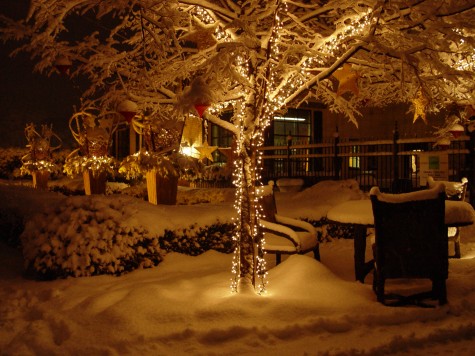 The snow kept coming, amiable and relentless. Slogging through it during those two days was a workout, but late that New Year’s Eve stands out in my mind as the most breathtaking collaboration of electricity, frozen water and landscape that has been my privilege to witness. Happy New Year to you, best regards, Nature.
 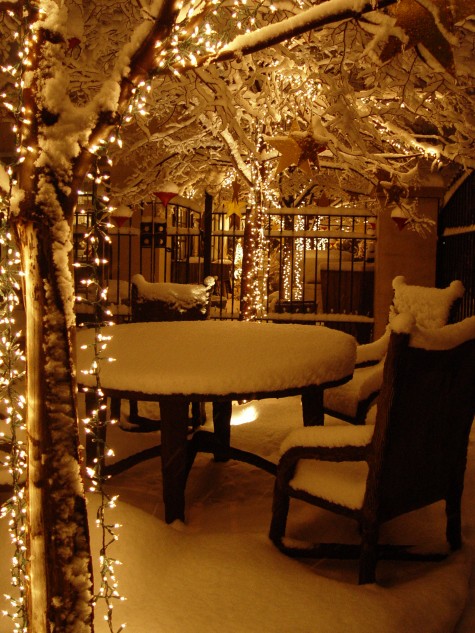 A nine inch frosting of snow on this concrete table and matching chairs brings their design to the fore in a way a sunny July day would never do. All that white snow ramps up and multiplies the effect of those diminuitive lights-never mind that garland lights eliminate all that useless cord and concentrate the light. Fine, some good holiday lighting technology – the entire shop was in a very special state of reflective illumination beyond my efforts.
 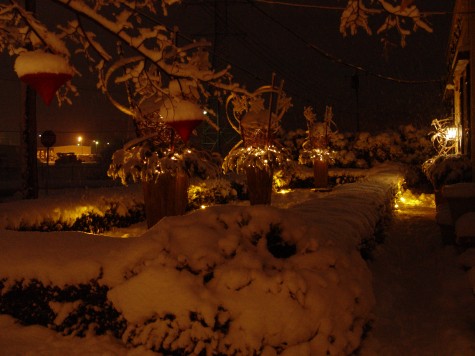 The boxwood eventually succumbed, and splayed out from the weight of the snow. I know not to fuss with frozen evergreen branches, but I was wringing my hands seeing this. The older I get, the better I am in not intervening in situations beyond my control. The bugs, the rabbits, the fungus-they get the run of my place. The snow-I have no plans to intervene, only some plans to watch.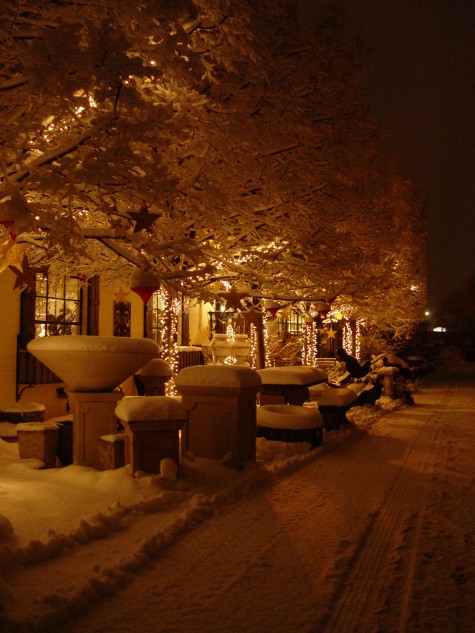
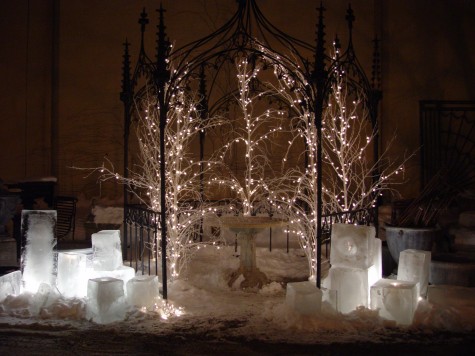
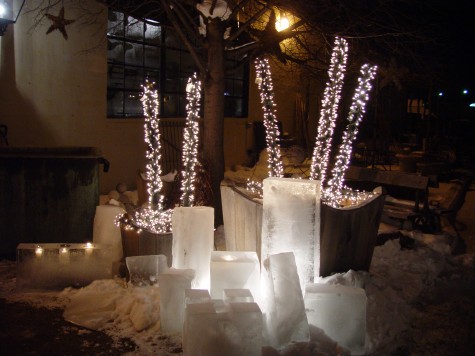
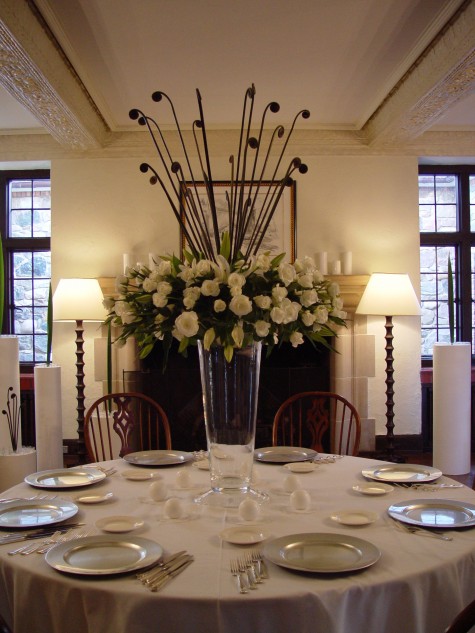 We carried this winter snow and ice idea from the outside, inside. We outfitted sonatubes used for forming concrete cylinders into giant candles. A platform set just below the rim was stuffed solid with 10 hour votives in individual glass holders. Single leaves wedged in the center created a flame shape. The guest of honor’s table was dressed in white roses and lilies, and fern curl flames. The overhead flowers make an immediate statement at eye level when guests arrived. This treatment also makes it easy for guests to talk across the table.
 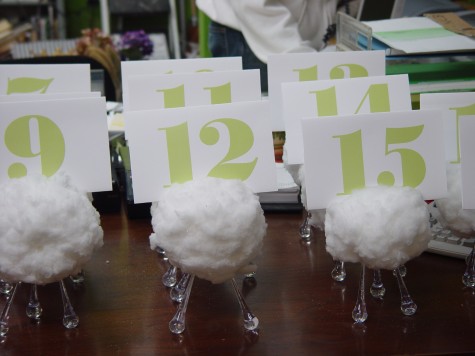 Some parties call for table numbers. We set cotton batting snowballs on tripods of glass drops; this makes an organizational element part of the fun. Formal occasions do not necessarily mean stuffy occasions.
 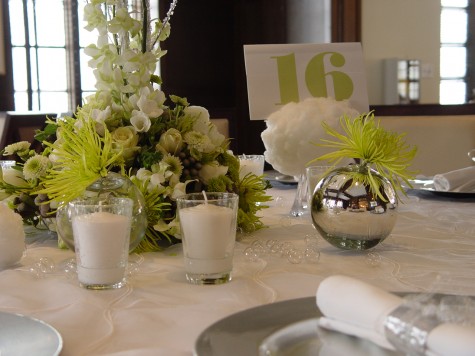 My client did want some color in evidence-chartreuse she liked. The quality of cut flowers in the winter can be hit and miss, so I stuck with varieties that are readily available, and tolerate winter travel well. Hollywood roses are my favorite white rose, but I need to order them well in advance to get them. White freesia and the white button mum “Green Peas” I can count on. White dendrobium orchids, and chartreuse spider mums are equally foolproof. White ranunculus can be good, and can be equally horrid; if I decide to use them, I order extra.
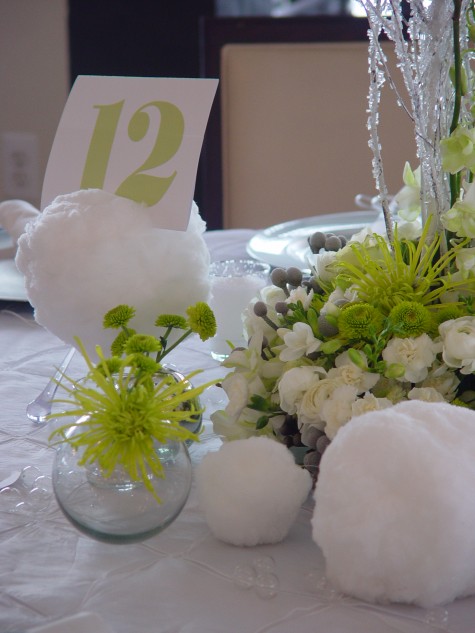 Glass bubbles in different sizes, shapes, and surfaces were spread on the tables, along with more snowballs. White twigs encrusted with plastic ice gave a little height, and lots of sparkle.
 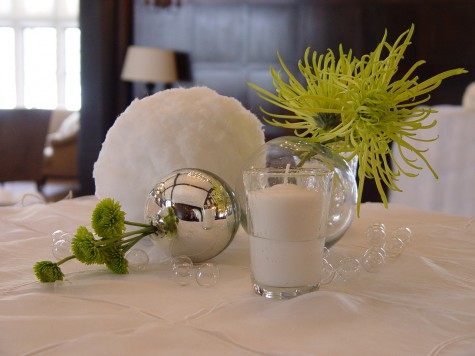 The chartreuse button pomp Yoko Ono is a cut flower workhorse. So much color from such a small flower. They can be used without water, if need be. The oversized votive candles have water in the bottom-this makes it easy to clean the wax out after the party, and re-use the glass holder.
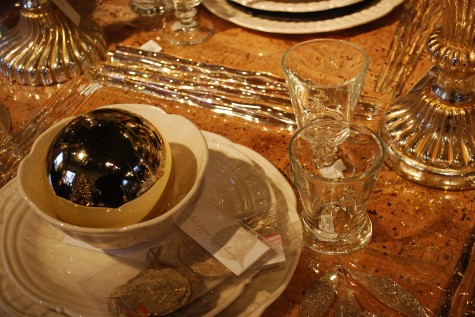
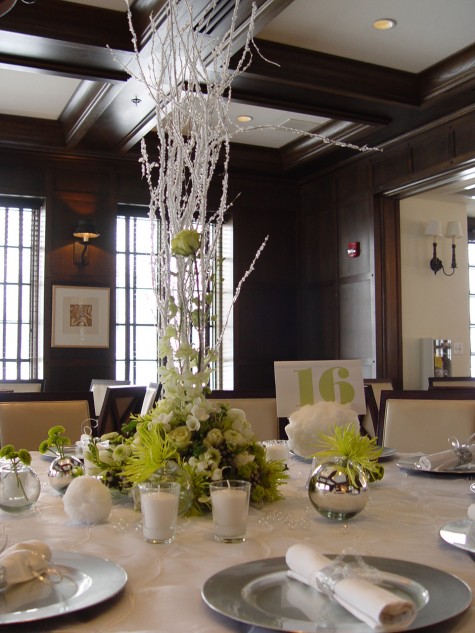 Silver chargers, and white napkins wrapped in silver ribbon complete the table decor.
  <
<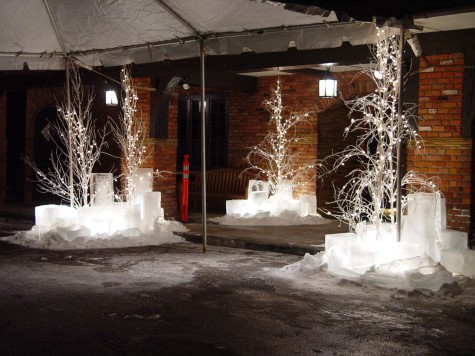
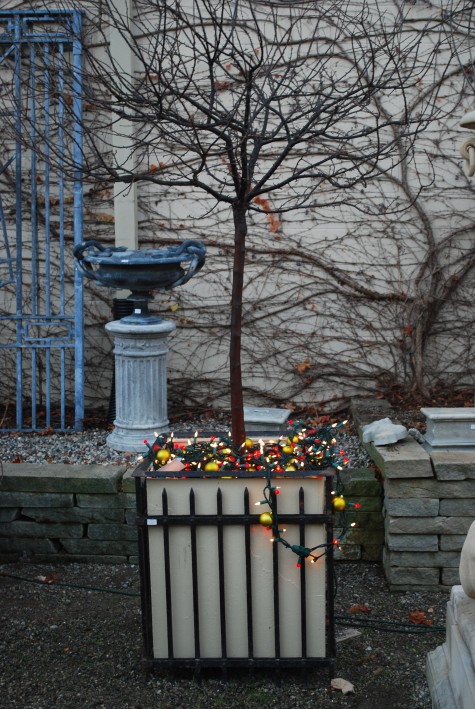
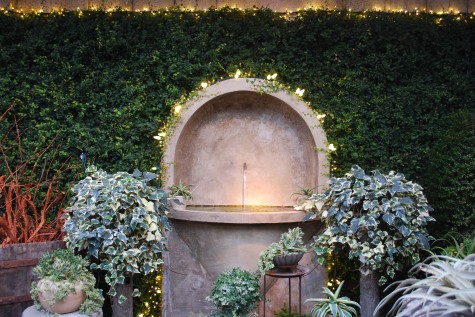
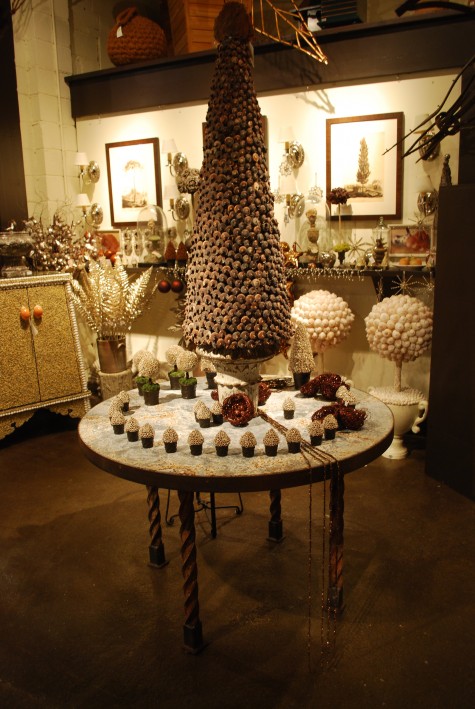
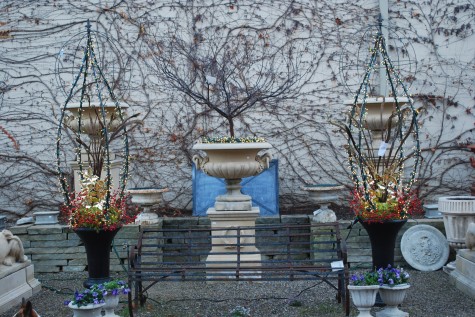
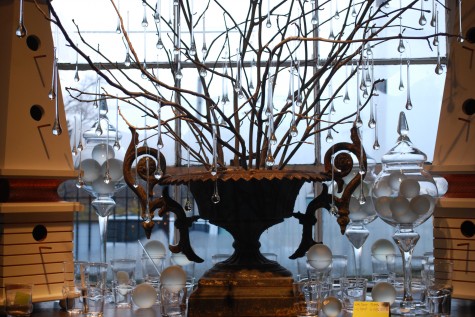
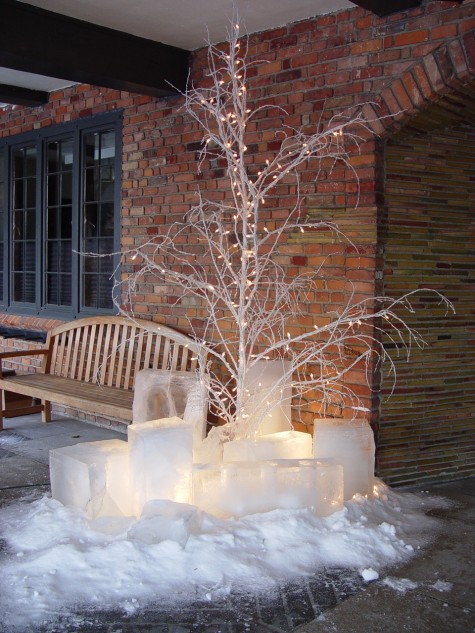
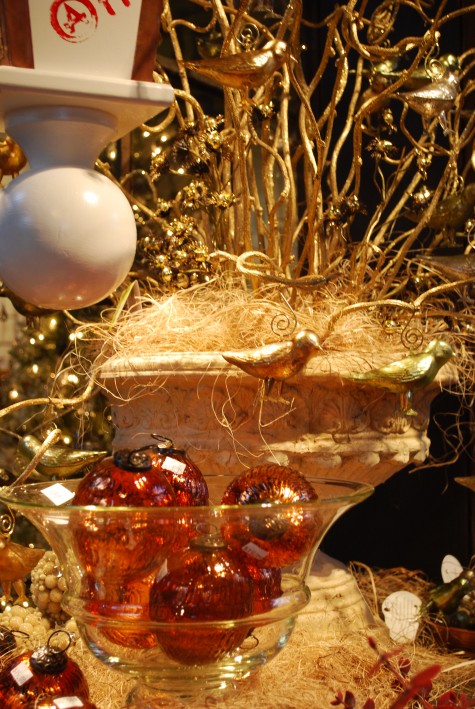 Anything that transmits or intensifies the available light I find hard to resist. Michigan is one of those states with mostly cloudy days in the winter.