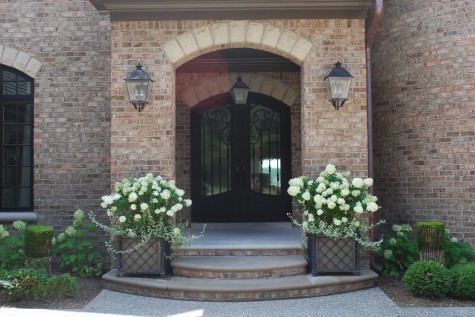
 When I first opened Detroit Garden Works in 1996, my only clients were my landscape clients; they were all so great about supporting my new venture. Fourteen years later, the shop has clients of its own, many of whom are not aware that I offer a full range of landscape services from design through installation. This client shopped the store this past spring, and invested in this pair of English lattice work boxes. Rob referred her to me; planting advice and installation comes from the landscape company. I have a concern that anyone who purchases containers from me gets coached such that their experience with the gardening part of their ownership is a good one. A beautiful pot does not necessarily imply a beautiful planting; I arranged to meet with her.
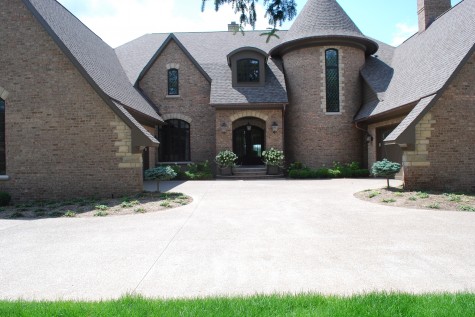 She told me she liked hydrangeas, simple plantings, and white, so we planted her new boxes with limelight hydrangea and lots of variegated licorice; they looked great. I accompanied the crew on the delivery, as she had several possible placements in mind. Once placed, I could see her landscape was struggling with what I call a distribution challenge. Her lakefront home had little flat land upon which to build a house, and a pair of garages necessitating a large drivecourt. What little land she had left over from all this hardscape dropped precipitously on each side. Properties where the hard surfaces dominate make it tough to design a landscape that can hold its own.
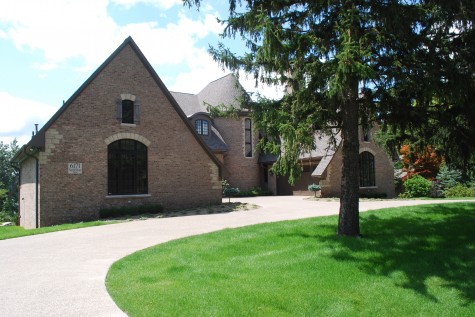 Uncertain about what to do, she had planted hydrangeas on either side of the front door, and groundcover in the narrow strips of land between the drivecourt and driveway. The house wanted for a more robust green companionship, but had little room to make that happen.
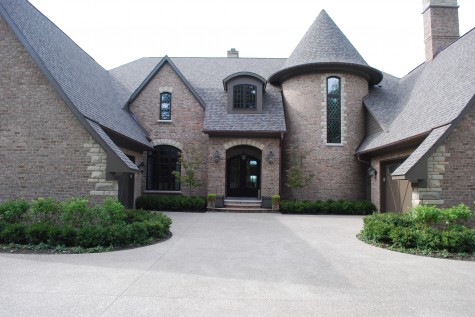 Her love of simple arrangements worked in her favor. In a very small space, using one plant in big numbers adds impact. I persuaded her to move the hydrangeas to outside the drivecourt; their eventual height would put them up over the ground floor entrance window near the front door in a not pretty way. Two beds planted solidly with the tall growing Green Mountain boxwood were punctuated with a pair of Venus dogwood. This airy growing large flowered dogwood would get some green into the airspace.
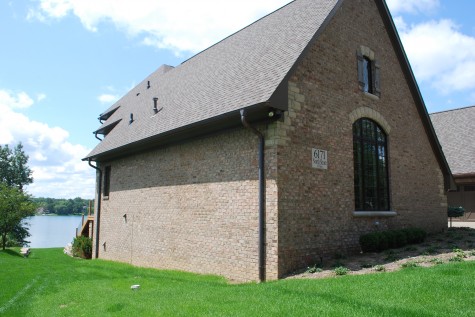 This wall was the first view of the house driving up the street; it needed a strong landscape element that would feature something about that wall other than its sheer size. The land dropping away at the corner of the house was awkward visually.
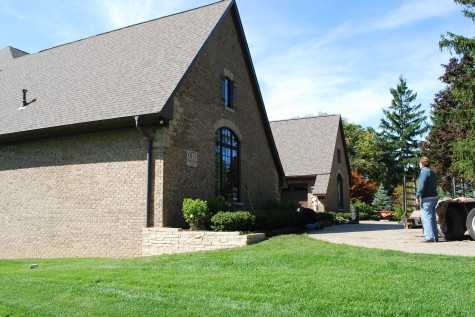
A dry laid L-shaped section of stone added the corner back to the front of the house; the hydrangeas and shorter growing Green Velvet boxwood made a long flat horizontal run, pleasingly counter to the strong vertical element of the house.
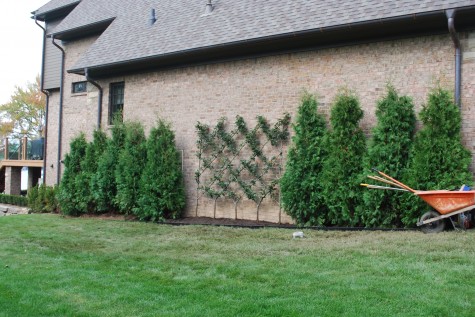 Five sections of Belgian fence, a style of espaliered trees, read in sharp green relief against the massive brick wall. The arborvitae will be pruned flat on both the top and the sides, as they grow in. We can grow both high on this wall. Once the boathouse is finished, we plan to plant a corresponding but free-standing run of arborvitae and Belgian fence on the lot line opposite the wall. These two plantings will frame the view to the lake, as in allee.
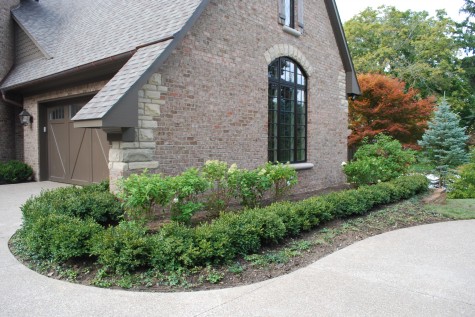 The limelight hydrangeas will grow fast, and billow out around the foundation of the house. As my client did want some flowers in front, we decided to construct window boxes that would sit at grade. Flowers at eye level would make them a more prominent part of the landscape.
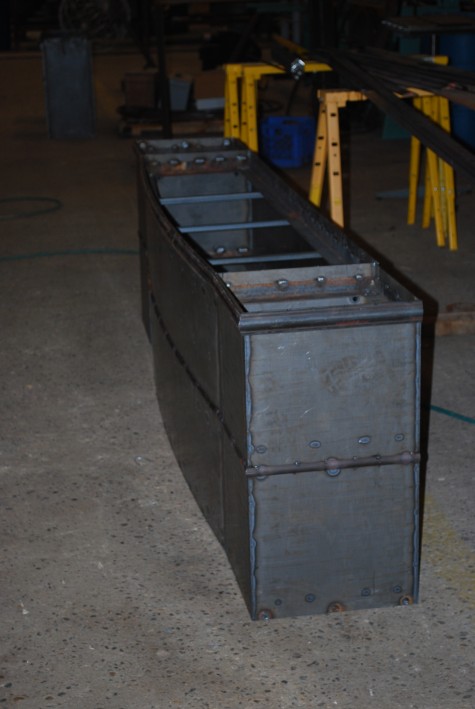 The opportunity and ability to construct garden ornament for a specific place gives me lots of options as a designer I would not otherwise have. These boxes were made specific to a length and height for her windows. These raw steel boxes would be galvanized, and acid washed, producing a virtually maintenance free finish reminiscent of the color of lead.
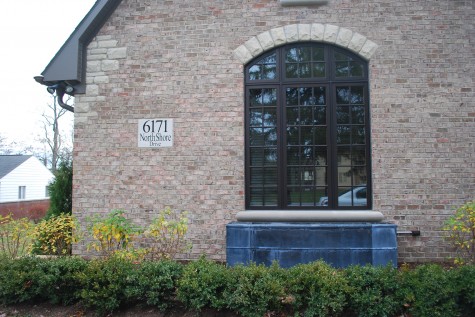
We will plant these boxes for the holiday/winter season; this will give a brand new landscape a welcome lift. There are better days to come, for this committed client, and her home.

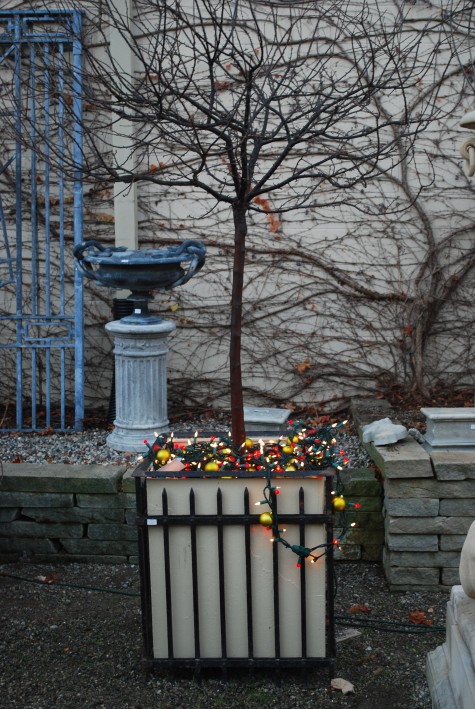
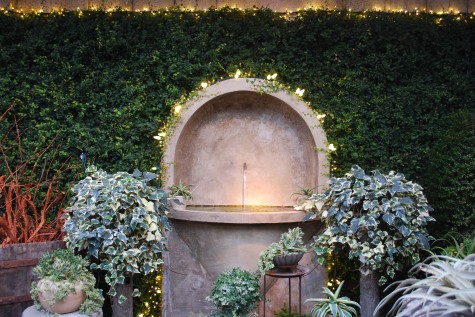
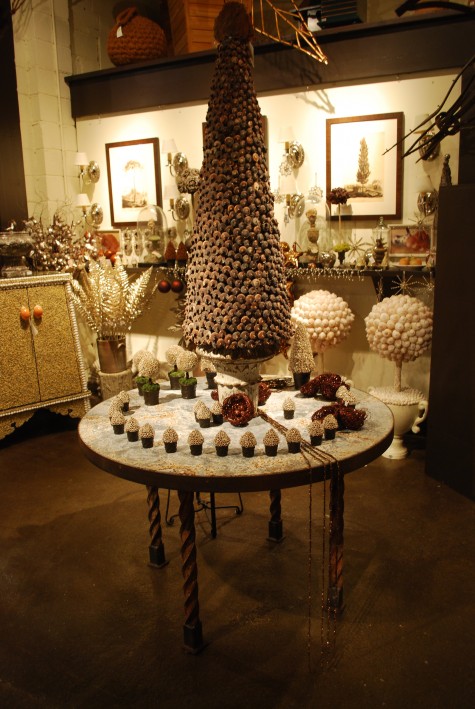
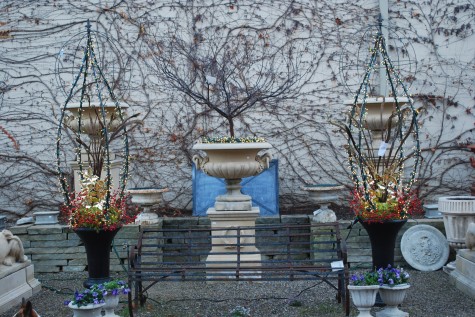
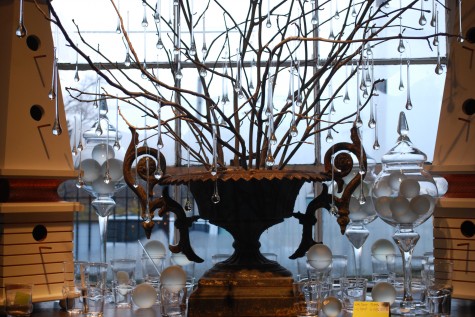
 Anything that transmits or intensifies the available light I find hard to resist. Michigan is one of those states with mostly cloudy days in the winter.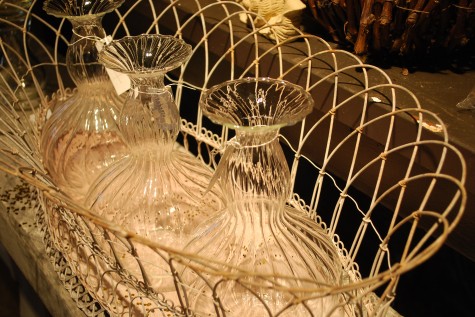
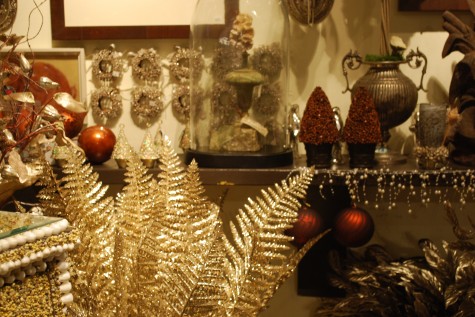
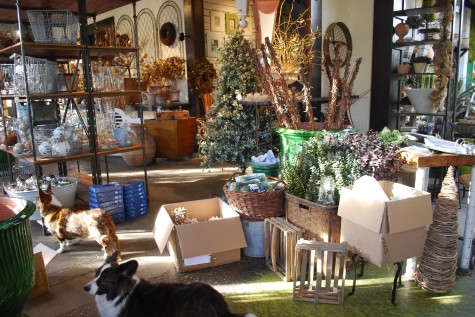 Though I shopped this past January for the holiday, and most everything was here this past August, I am never ready for what it really takes to change seasons. Have you ever? Even the corgis have that slightly appalled look on their faces. I am certain that the 10,000 square feet I have to deal with is secretly multiplying in the dead of night. It seems that everything needs to get moved-at least twice. Spaces have to be cleared-and of course cleaned-before they can be re-imagined. Sometimes it seems like my imagination will never ignite. When that everything involves stone, steel and lead, I have been known to daydream about being in the stamp-collecting business.
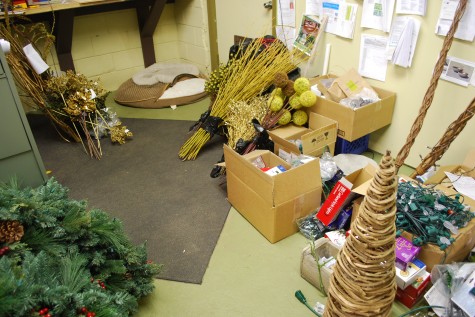 Rob likes everything imaginable in front of him all at once. The disaster that is his desk-loaded with messages, invoices, catalogues, notes, and all manner of other bits, spreads to the floorspace like a slime mold on steroids. This week he has been working away on the last of my leftover Halloween candy; the combination of his blood sugar level and his natural propensity to disorder defies description. Suffice it to say, I am living in a universe tending towards dissolution.
 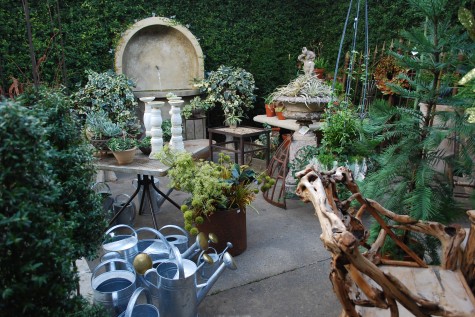 The greenhouse fernery, so gorgeous a week ago, is now bulging with all those things that have lost their homes, and have no place to go. An impossibly delicate terra cotta pot with applied roses from Espace Buffon in Paris is one of a hundred fragile items crowding my office conference table. What floor space is still available makes walking through any room, objects in tow, nervewracking. Should anyone out there know of a small scale hovercraft rated for interior use, please let me know.
 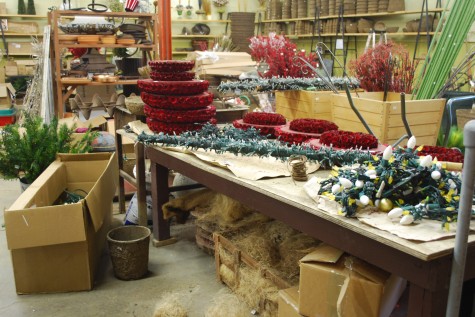 The rear portion of the shop is a cavernous garage-at least it seemed that way when I bought the building in 1995. Today every square foot has something going on, and not in any particular order. The arrangement of boxes so neatly shelved and stored has become completely unglued. The corgis treat this space like a formula one course, fraught with hairpin turns and unexpected obstructions. Great fun for them-not so much for me. This space needs to be shovelled out soon, such that we have room for the crew and materials necessary to construct of all our winter and holiday decor.
 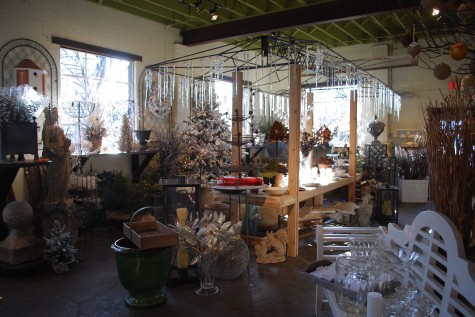 Progress has been made; certain big gestures are in place. Every box I unpack, I hope I remember what I was thinking when I bought ,works out. My idea of holiday has everything to do with materials and references to the garden. This part is simple. It takes a great deal of concentration to shop materials from 30 or better vendors such that you end up with a cohesive collection; this is only the beginning. Remembering what I had in mind over 10 months ago-even my notes don’t ring any bells. The materials pile up faster than I can do display; just this morning a semi truckload of twigs arrived. At this moment, the driveway is impassable.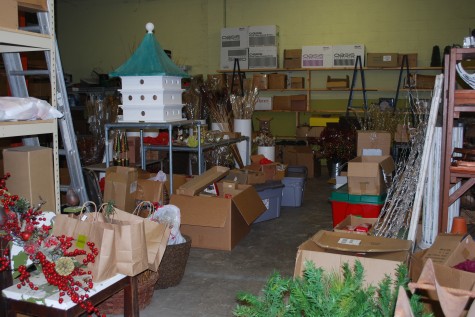
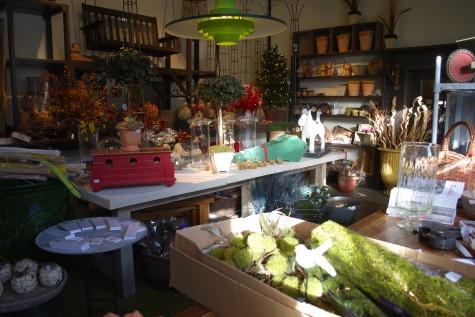 Next week Thursday November 12th is our deadline. We host an evening holiday preview and shopping soiree for our clients. Our 4pm to 9pm event ran until 11:30 last year. We serve a little something to eat and drink; lots of people come, and we have a great time. We aim for picture perfect, we are 6 days out and counting. I don’t see how we will be ready this minute, but somehow we will get there. Stop in, should you have a chance.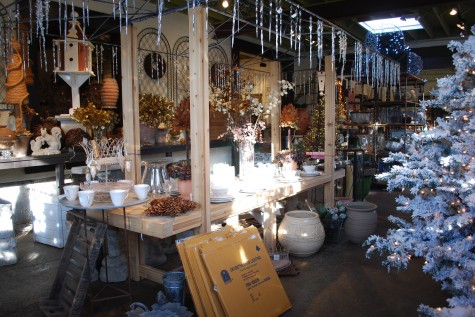
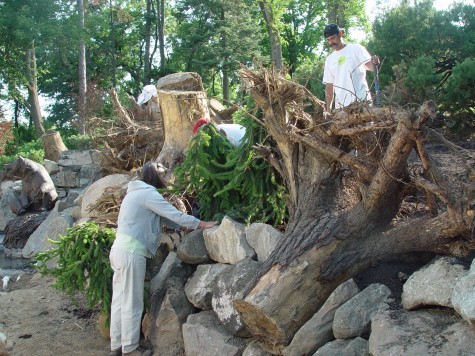
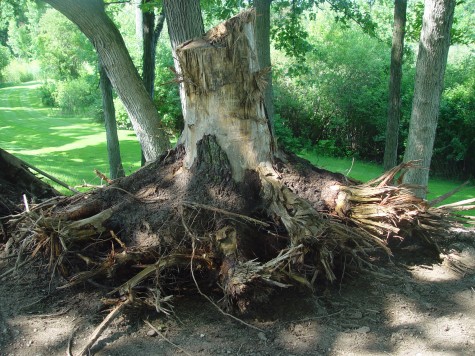 Some months ago I wrote an essay about designing a landscape for a sculpture, but perhaps equally as sculptural were the tree trunks that played such a critical role in the realization of that design. I do not think I ever physically understood what a tree was all about until I was face to face with these stumps. Farmers need to clear land to plant their crops; this means digging out the stumps. The microorganisms that decompose wood work at a snail’s pace. In farm areas in Michigan it is common to see fences made from these stumps. For this project, I persuaded a farmer to part with 150 feet of his fence. The experience would provide me with a graphic understanding of what goes on inside the bark of a tree.
 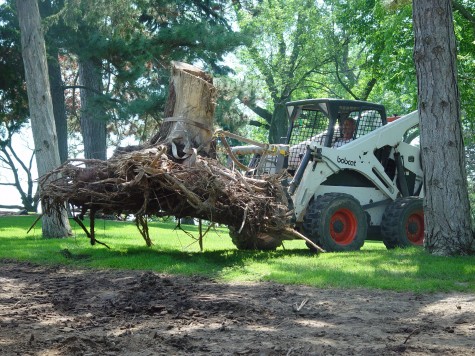 What arrived by flatbed was vastly more than I had bargained for. They stood eight feet tall and were much better than that in width. Though the fence had been in place for 10 years, handling the size and weight of them was a strain both for my crew, and my bobcat skid steer. The thick wiry roots were as unyielding as steel. It is so easy to stop truly seeing those things one sees every day. A lifetime of seeing these giant living things rising out of the ground to incredible heights had apparently dulled my sense of them.
 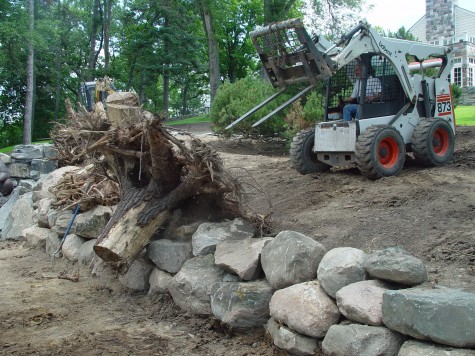 I was so struck by how the heart of a tree lives on long after its green life has gone down. The heartwood is transformed by an internal chemical process into a material of great strength. The wood of a tree enables nutrients to travel from the roots to the leaves, its core function is to keep the plant upright. This exposure to wood is much different than looking at planks, or plywood, porch furniture, or fuel for my fireplace. Processed wood is obviously a material that few could do without, but these raw forms are incredibly beautiful.
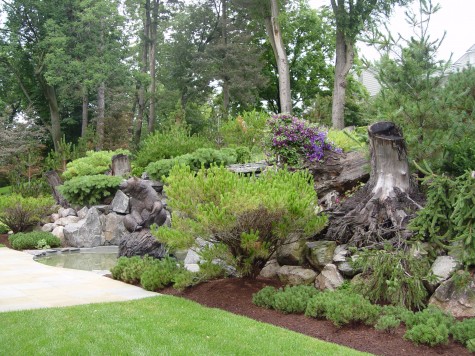
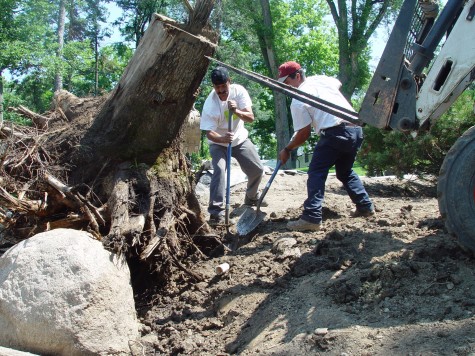 Setting them in place took days. Placing them close to the final location was done by machine. This was just the beginning; as I wanted them to look as though they might had always been there, we dug them in. The forks on the skid steer held the stumps in place, as it would have taken an army to do that by hand. Though this group of trees was no longer living, the story of how the network of feeder and support roots broadly rise out of the ground and grow to support these very large plants is there to read.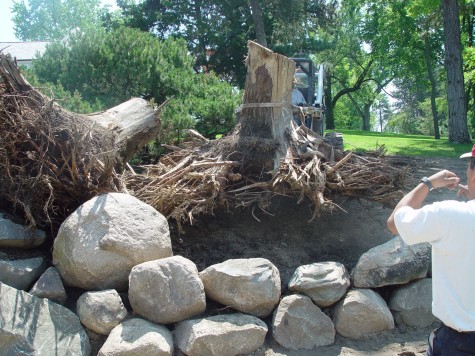
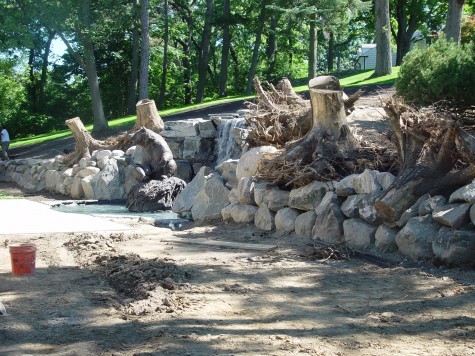 It is a very good idea to consider what will need to go on below ground, and what will eventually be-before planting a large growing tree. I have had occasion to tell clients that their silver maples were an excellent example of God’s biggest weeds. Urban lots and tree lawns are poor locations for giant trees. They suffer from restricted space and rootzones. Given that it takes a long time to grow a tree, imagining the eventual size at the beginning only makes good sense.
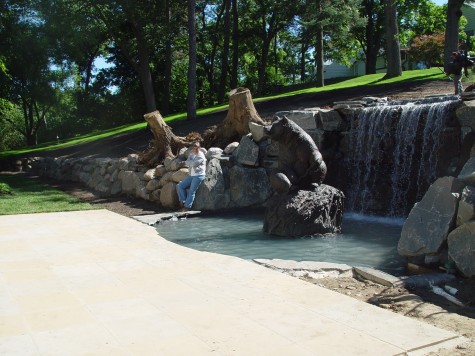 This nine foot tall bronze bear seated on his beaver’s nest is getting some company of a similar scale. The rain to come will wash the stumps. The digging in will deposit soil in pockets, enabling plants to grow. A collection of dwarf conifers would cover the ground.