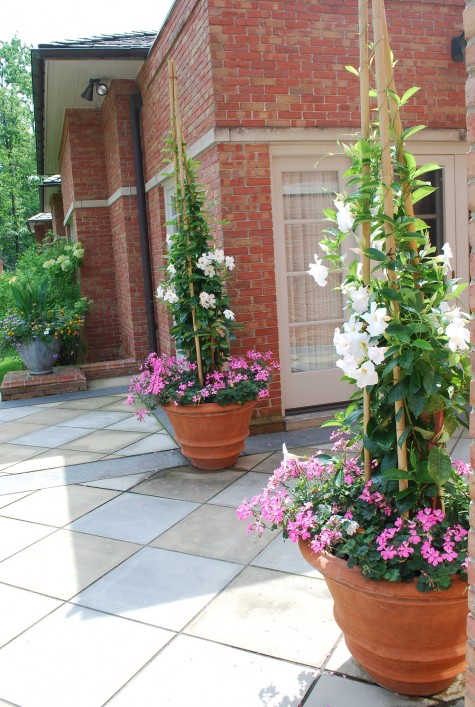
The containers on my deck have grown like crazy in the past month-we are approaching peak season. The weather has been perfect; most days have been sunny. Even so, we have had night temperatures lately in the 60’s. There are signs of summer’s end, as much as there are signs of summer’s peak. Though I could easily do with this weather a few more months, September 1st is just 2 weeks away. Once labor day comes, our summer is in decline. The nights are colder; it seems like less heat and energy comes from the sun. 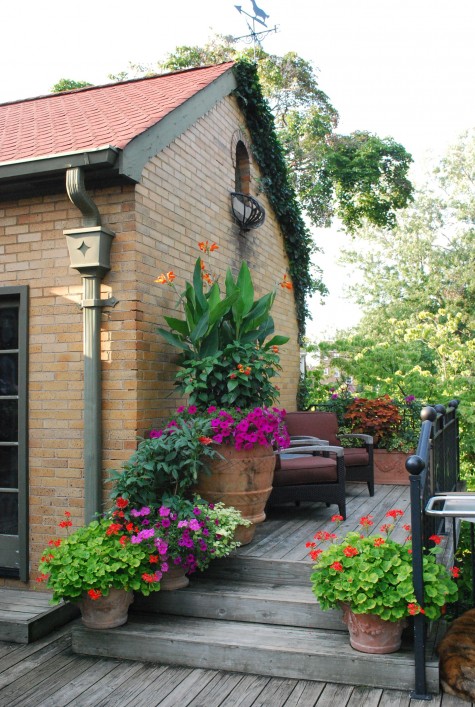 Annual plants grow and bloom with one end in mind; they need to set seed, before they are done in by frost. This is an exhausting task. All the while my container plants are putting on size and blooming great, there are signs of stress. The mildew I have struggled to avoid on my dahlias-it has claimed a few stalks. The fancy leaved geraniums pictured above are so rootbound I have to soak them every day. The Japanese beetles have discovered my canna flowers. The coleus despises the cooler night temperatures.
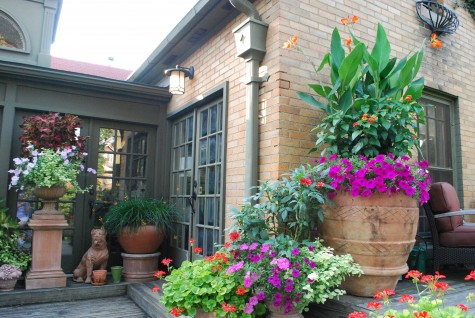 The mildew seems to be spreading to my petunias, for heavens sake. And the aphids on my licorice-this is a first for me. Do all of my containers grow to perfection-not even close. Just close enough to provide me with a lot of pleasure, looking after and at them. There are a few things I do to make the best of the last leg of the summer. I do feed my pots with liquid fertilizer regularly. Geraniums like lots of feed-ferns, not so much. Each one of my containers has a lot of plants in them, or plants that have grown large. I soak my pots with water, and then soak them with feed. Liquid feed is like a shot of B-12; I avoid the next watering as long as I can, so the plants benefit before a watering washes it all away. I am sure to flush my pots through between waterings, to prevent a build up of salts that can become toxic.
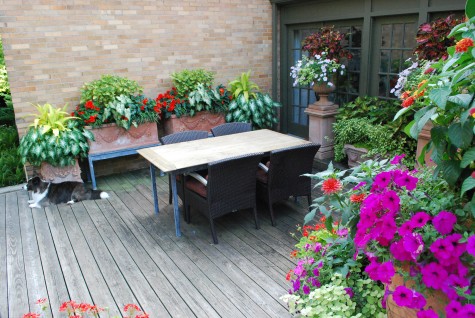 Most of my containers have grown skirts by now. When I water, I lift the plants up so I can see the soil. I water the surface of the soil-not the plant leaves. There is no sense encouraging mildew to spread. I soak them thoroughly, and then let them get quite dry. The rectangles on my north wall only get water twice a week. Overwatering begonias in hot weather is asking for rot. Caladiums will hang their heads when they need water. I snap off the old leaves out that get too tall, and threaten to engulf my chartreuse Janet Craig dracaenas.
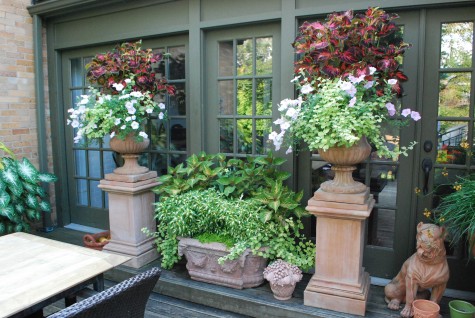 Growing plants in containers is a live and learn proposition. As in-this rainbow coleus is a very big grower. This means there are big sections of stalks between sets of leaves. This makes it tough to get a good shape from the plant in a container. These Italian terra cotta urns look like they have top hats-funny, this. This variety would make a great hedge in the ground.
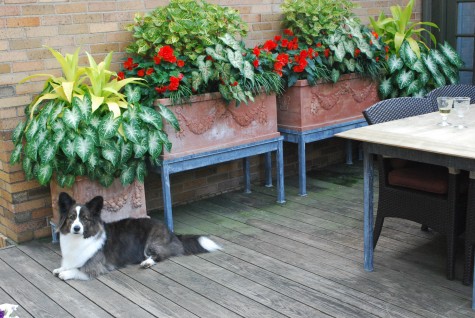 I know Milo is pretty handsome, but the message here is about keeping things clean. I remove dead or diseased foliage. I sometimes thin plants to improve air circulation. And I pick up what falls on the ground. I leave no debris. What I would gladly let decompose in my garden I don’t think is good for my containers. My big Norway maple is raining disease ridden leaves; I pick them up, and throw they away. Fungus can live over the winter. Sometimes clean gardening practices is your only defence.
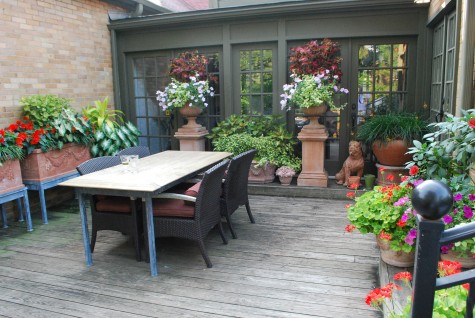
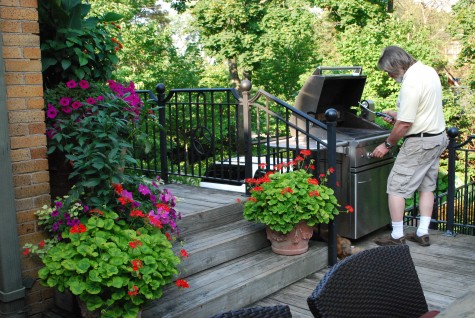 My terrace is my version of a kitchen garden. Buck cooks here, and I look after the pots. My small bi-level deck has 14 containers. It is a rare evening that there is not something to putter over-I like this. I only get into trouble when I let them go too long. Consistent attention is much better than an occasional look. Hauling the containers here from the basement, filling them with soil, and planting-that’s real work. The work now is not that tough, and at some time during the process I plain start to feel better.
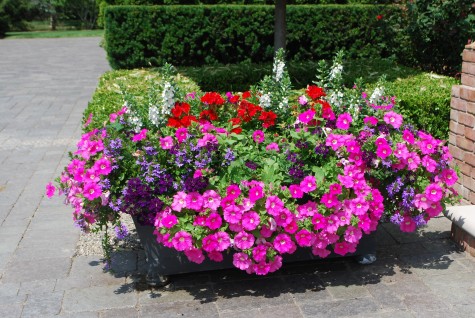
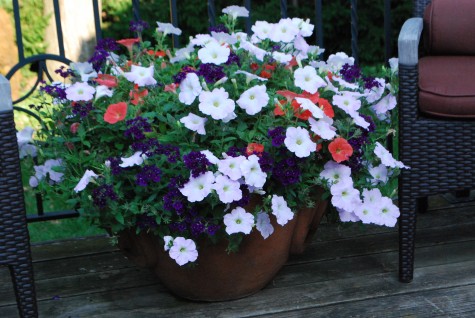 The jumble pot of petunias and trailing verbena has been great, and still looks great-even on the inside. I have been very careful to pick up the plant mass hanging over the edge, and deal directly with the soil. I have kept this on the very dry side-a strategy that seems to be working.
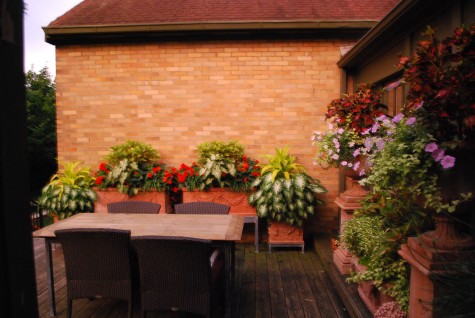 I only had one shot left on my camera before the battery died the other morning. The pink light at dawn-wow. My little garden is anything but perfect, but at moments like this, I am very glad to have it.
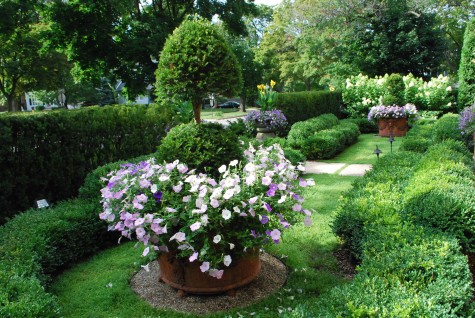
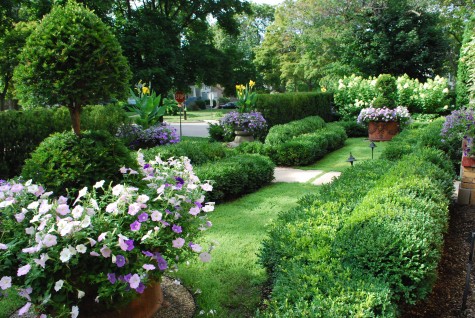
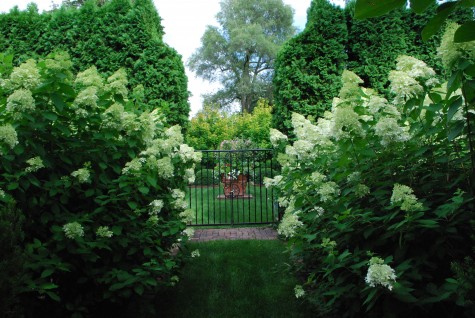
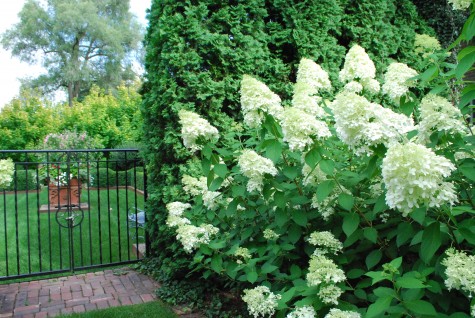
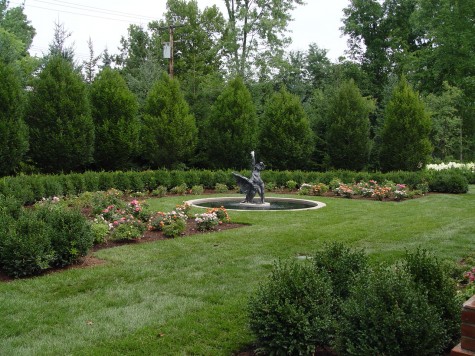
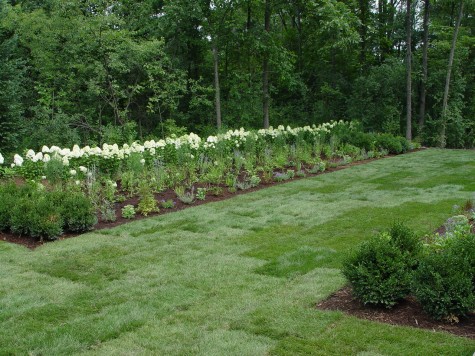
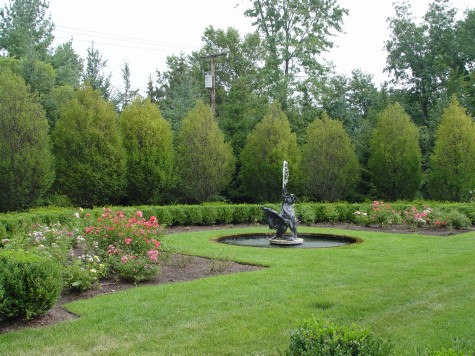
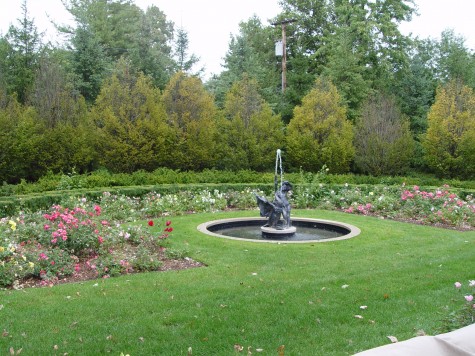
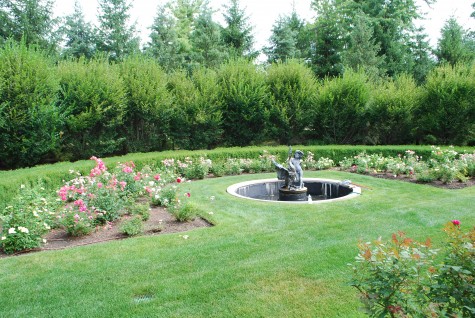
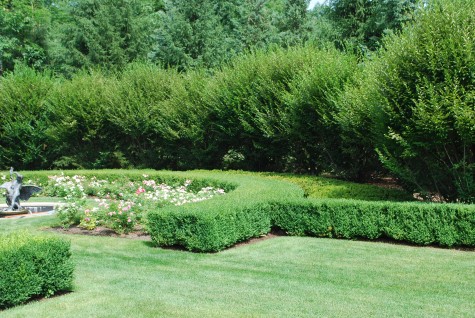
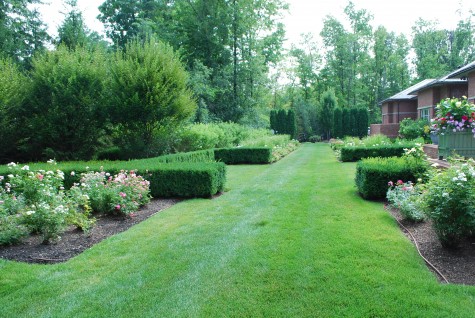
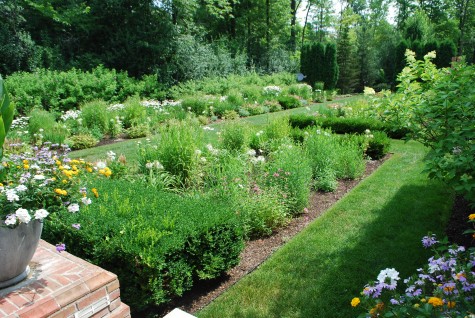
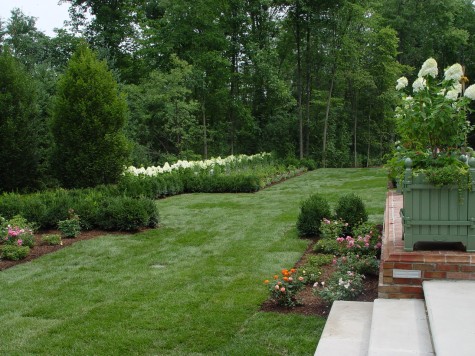 On either side of this center section, simple lawn panels edged in boxwood. At the far ends, a pair of herbaceous borders on both sides of the lawn. The wild landscape in the background would be left as is, although there were a number of ash trees dead and dying which had to come down.