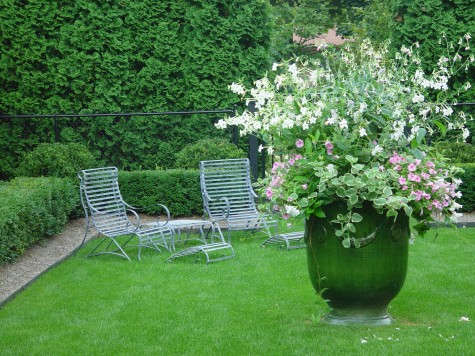
 What could be better than a giant pot stuffed to overflowing with nicotiana? OK, probably plenty of things, but no doubt I am a big fan of the nicotianas. There are a number of ornamental tobaccos suitable for cultivation in our area. The species nicotiana alata pictured above grows strongly to 30″ or better. It has a loose, rangy, and unstructured habit of growth. Sporting clusters of big leaves at the base, the flowers appear all along thin soft stems. They are indeterminate bloomers; a stalk will continue to elongate and produce flowers for months. Once a stalk blooms out, and starts setting seed, I trim it back.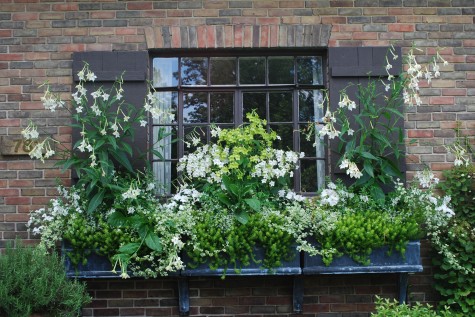
The species nicotiana alata is very fragrant in the evening, but my favorite part is the simple star shaped flowers. Individually, they have the same impact common to any simple flower. I favor hellebores, single roses such as Sally Holmes, mandevilleas and Japaense anemones for this reason. Single flowers are swell. The individual florets make a graceful mass; I like the looks of the from the sides and the back, as much as from the front. In the box pictured above, Nicotiana Alata white, Nicotiana alata lime, and Nicotiana Perfume white-the shortest of the group. 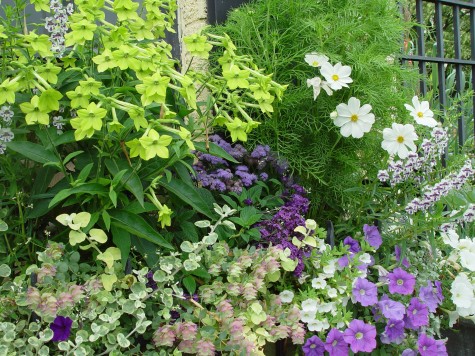
Nicotiana alata lime is a brilliant lime. The petals are thin eough to permit light to shine through. Their color makes every other color look good, and they are equally as effective if a combination of greens is your idea of beautiful. I always have them close by my deck, as hummingbirds visit regularly. I would much rather grow nicotianas and fuchsias, than deal with a hummingbird feeder.
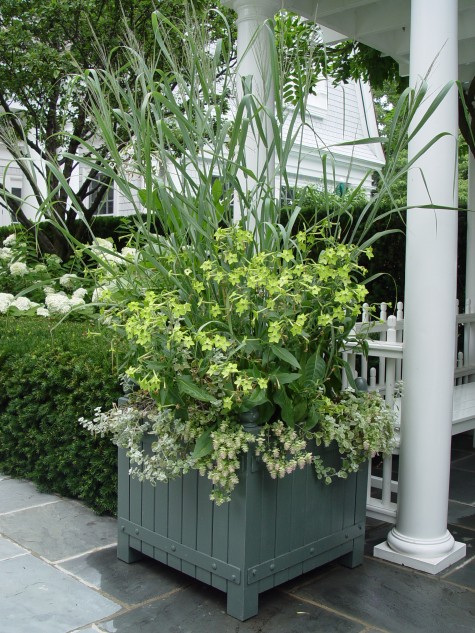 A pairing with Panicum Virgatum Dallas Blues makes that grass all the more icy blue in appearance. Grasses can be difficult to do well in a container, as they are stiff, or awkwardly floppy. Nicotiana makes for a graceful ruff here. They are not without their problems, however. The sticky soft succulent stems are a magnet for aphids. Their giant basil leaves sometimes need pruning back when they threaten to smother something else growing at ground level.
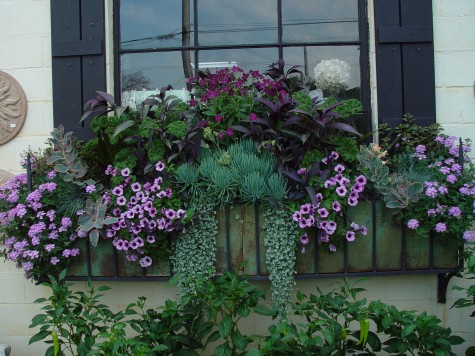
Some nicotiana hybrids are short, stodgy and airless in appearance; I do not grow the Avalon series for this reason. Of all the shorter growing hybrids, the Perfume series seems the most graceful. Perfume purple is a most unusual and intense red purple; true to its name, the smell is divine.
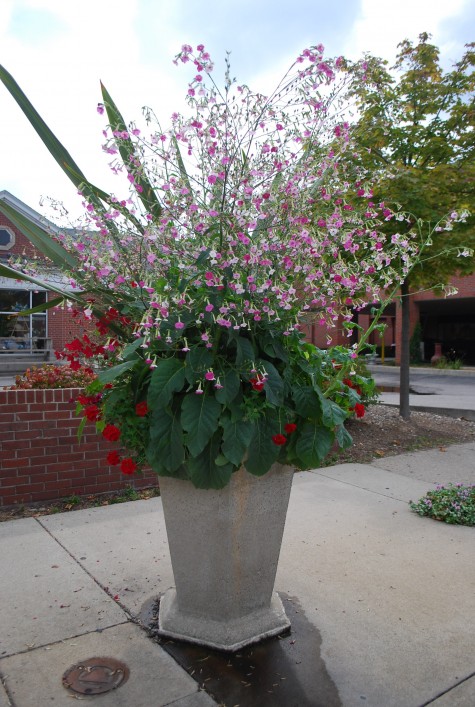 But by far and away my favorite is Nicotiana Mutabilis. It grows tall, and billows out over any edge with a cloud of small flowers that dance in the slightest breeze. Can you tell I like it? The flowers range from white to cream to pale pink to rose pink. This big thing requires secure staking from the beginning. It will pick up speed, and send out new growth from the base of the plant as the night temperatures start to cool.
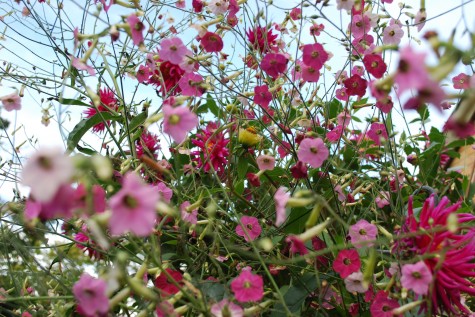 They are a nuisance to keep deadheaded-I don’t fuss so much with that. Its hard to spot which stems need headling back, and every part of the plant is sticky. This seems a fairly minor problem to me; a well grow stand of mutabilis is enchanting.
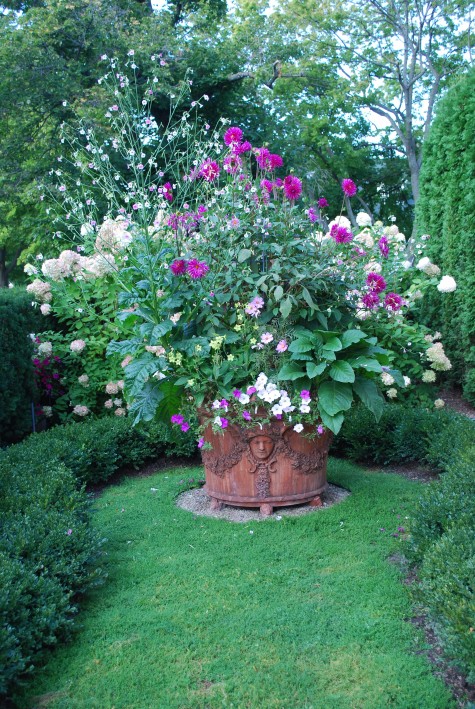 You can see the new growth pushing from the base of this pot on both sides; all of this came on strong in September, and will continue until a hard freeze. They also seem much more aphid-resistant than other nicotianas.
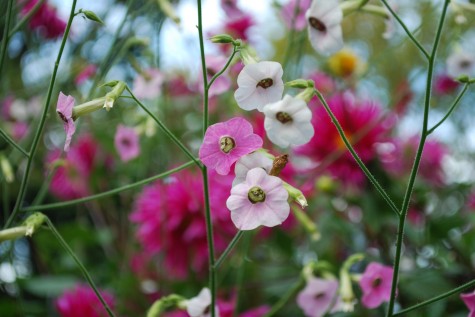 The individual flowers are so small and so delicate; the overall picture is delightfully meadow like. All of these nicotianas are a staple of my summer garden.
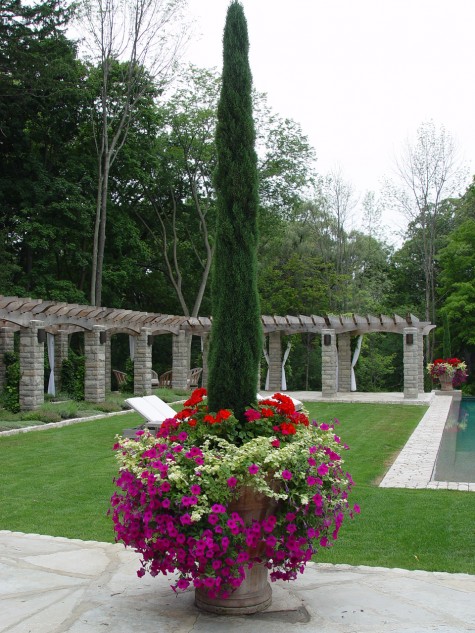 On my top ten list of frequently asked questions, the culture of evergreens in pots ranks right up there. In theory it sounds great. You invest in an evergreen which will provide you with a center of interest that looks great no matter the season. Perhaps there will be room on the edges for a few seasonal annuals. The work and expense up front is considerably more than planting smaller and less expensive plants, but then you are done. Redoing one’s pots with new plants every new season no doubt is a lot of work and expense. But as with everything connected to growing a garden, one is rarely “done”. The Italian cypress in the pot pictured above is not hardy in Michigan, nor can one leave a terra cotta pot such as this one outdoors during the winter. The cypress has to be wintered in a greenhouse cold storage area, and replanted every spring. The pot is put away. There is time and trouble hauling it back to the greenhouse in late fall.
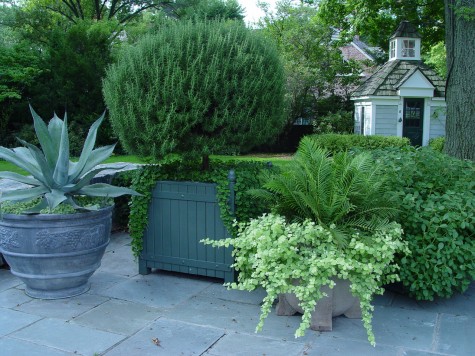 This 25 year old rosemary has spent 25 winters in a glass house. It is an evergreen-should you live in Greece or Italy, or California. Michigan winters are fiercely cold. However unfair it seems, rosemary is just not hardy here. In return for the extraordinary pleasure of owning an old rosemary such as this one, my client is willing to weather what it takes to keep it alive and healthy.
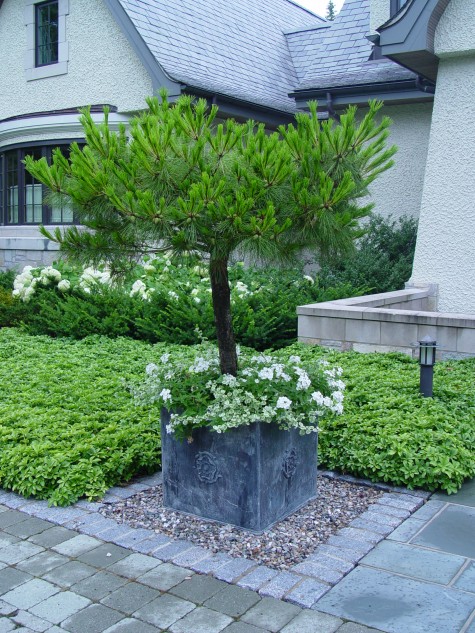 Mugho pines, both the shrubby and the topiary forms, have the reputation of good survivability in pots. Critical to that survival is proper watering. Should you quit watering this evergreen when your geraniums go down from frost, you are almost certain to loose it. Judicious watering right up until the soil ball is frozen solid is a must. If this evergreen were to unfreeze in a January thaw, a watering might be in order. When the soil thaws in the spring, the watering should be resumed-even if this is long before you plant your other pots. What evergreens in containers require is not for the faint of heart.
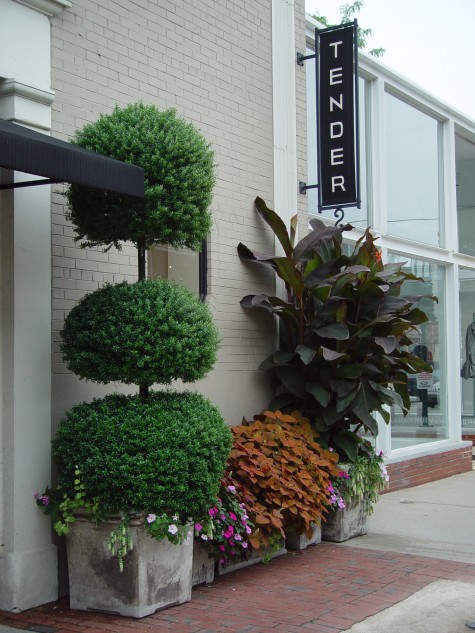 This grand old myrtle topiary was beautifully maintained, for 11 summers. The 12th winter in the greenhouse, a furnace went out, and it froze. It has been in the greenhouse for the past two years; we are trying to coax it back to health. Owning plants like this is a big committment with little in the way of any guarantee. Just because you have provided next to perfect care for a long time does not mean you cannot loose it. Evergreens in containers are for gardeners who relish risk.
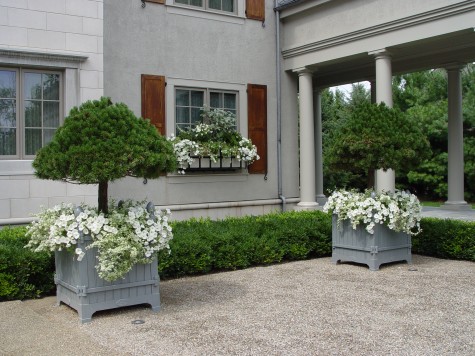 These mugho pines on standard have lived in these orangery boxes for 6 years. At some point, they should be taken out, root pruned, and reset in fresh soil. They will most certainly decline without this maintenance. No plant stays the same, just because its container stays the same. Plants will prosper and grow, or sulk and decline-one or the other.
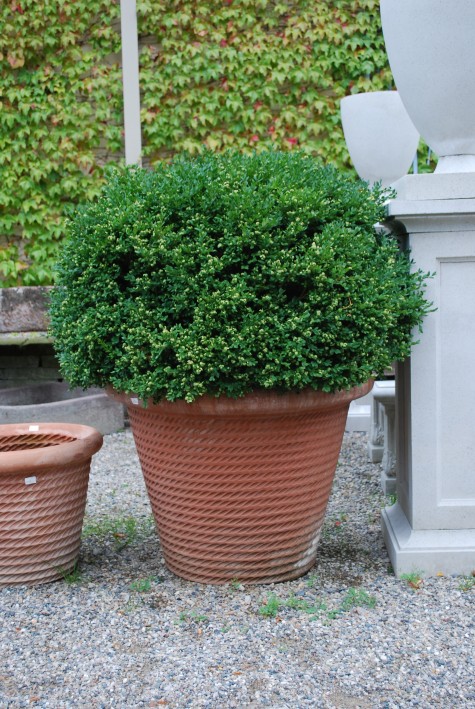 Boxwood is a good choice for a container. As this French terra cotta pot cannot be left out, I wheel this entire assembly into the garage for the winter. This species, Buxus Microphylla, is very tough; my hedge on the southside of my building never winter burns. In the same spirit, it tolerates a mostly dark and unheated garage from November until March. At the first sign of moderating temperatures, I take it back outside. A garage can get too warm for holding plants dormant long before the outside temperatures moderate.
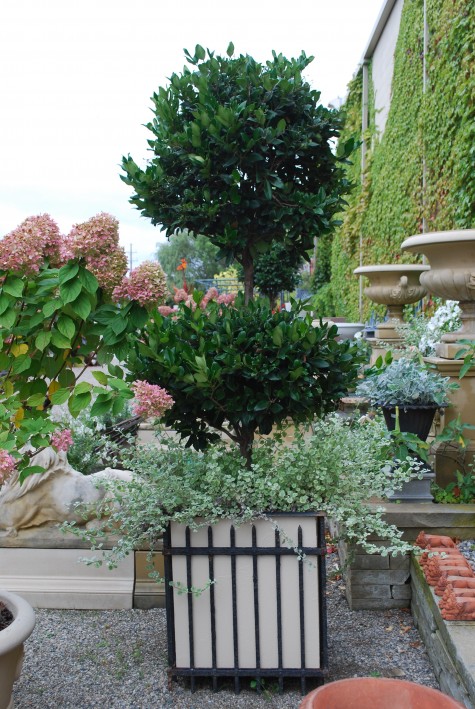 Waxleaf privets are an aristocratic cousin of our hardy privet. The large leaves are lustrous and juicy looking. They are hardy in zone 7, so they can be wintered in an indoor spot without much in the way of heat. They grow slowly, and are available in big sizes; there is demand for the topiary forms from gardeners in more temperate regions. They take well to pruning and shaping.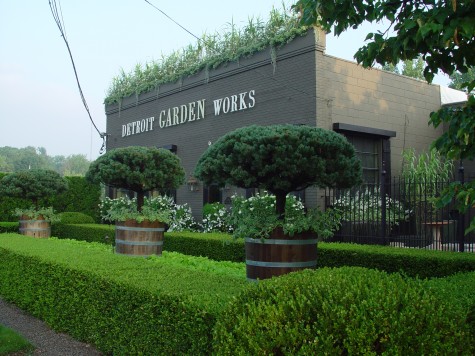
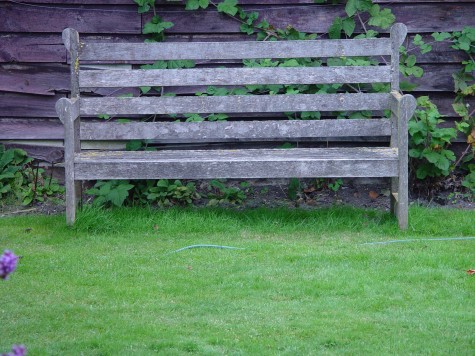
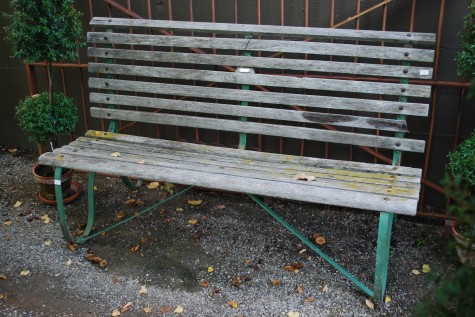 I could easily picture Gertrude Jekyll perched on this old English wood garden bench. Wearing a long skirt, a cardigan, and serviceable brogans, I can hear her in dignified fashion holding forth on some garden design topic or another with as much energy as authority. This straight-backed bench, of slight design and simple materials, is unmistakably English in origin. I have never been to Britain, and I know few people of British extraction-but I have looked at vintage and antique English garden furniture long enough to successfuly guess its origin.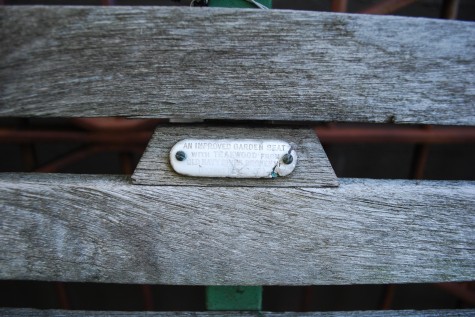
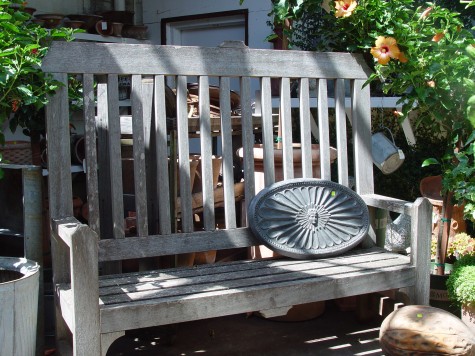 This decidedly English style high backed bench of utterly simple design is a contemporary piece that seems authentic to the culture of its origin. It used to be there were no designers, just craftspeople with good sense about proportion, practicality, and sturdy construction. What worked was also beautiful. This bench doesn’t try too hard. No doubt it will be in service a very long time, given its heft. Its visual heft makes it a good candidate for a special spot in a garden. It could just as easily hold a number of people waiting for a bus, or a pile of kids intent on climbing it.
  Sir Edwin Lutyens was a British architect of great renown whose practice spanned the late 19th century and early 2oth century. Gardeners all over the world know of him, from his association with Gertrude Jekyll. Her steadfast support of his career, and the projects upon which they collaborated are well documented. The most beautiful bench of his design might be the Hestercombe bench, but the bench most often associated with his name is known as the Lutyens bench. The distinctively curved back and scrolled arms have been the inspiration for subsequent English bench-makers; this version is a beauty.
 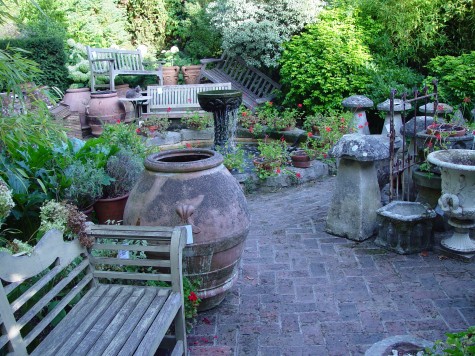 Many of our antique and vintage pieces come from dealers in England. Most of them represent garden objects from of other countries, not just their own. As much as the English gardener of my imagination is keenly interested in plants of all sizes, species and habit, the antique dealers we buy from with are game for anything that might endow a garden with beauty and history.
 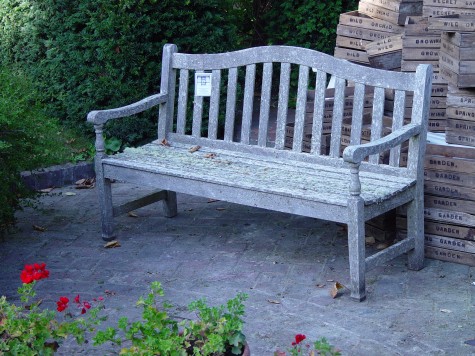 However, one must go to England to find English garden benches. Their modest and sturdy look is so appealing. Even the old benches clearly have many years of service yet to come. A colony of pale green lichens found a home on this bench-no doubt the result of many years of service in some English garden blessed with regular rain.
 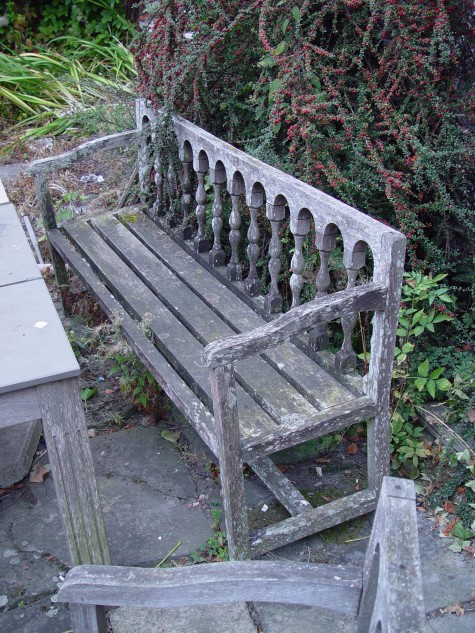 This quietly elegant spindle back bench is likewise mottled with colonies of this lichen and that moss. Its timeworn surface and low key design made it so easy to incorporate into a garden. British wood benches are team players.
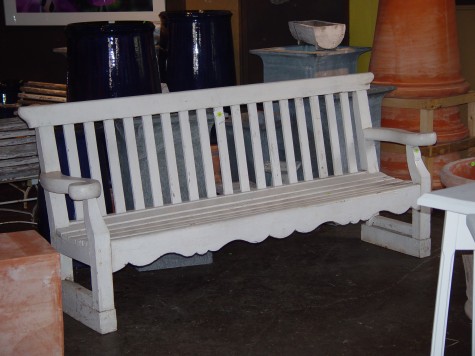 This old painted bench had sustained some dry rot from years of contact with the ground. We stabilized the legs from underneath, and placed it on a gravel terrace. Though 70 years old, I think my clients will enjoy it a good many more years. Painted furniture in a garden has a charm all its own. The frilly skirt and the angled back of this bench is a departure in form from most English benches I have known and loved-but how I like it.