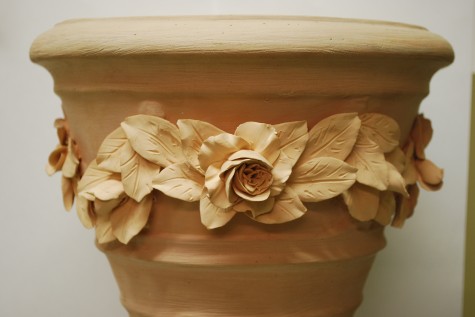
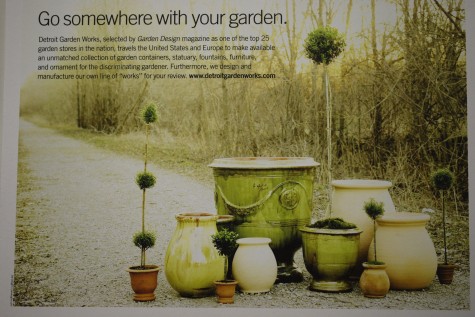
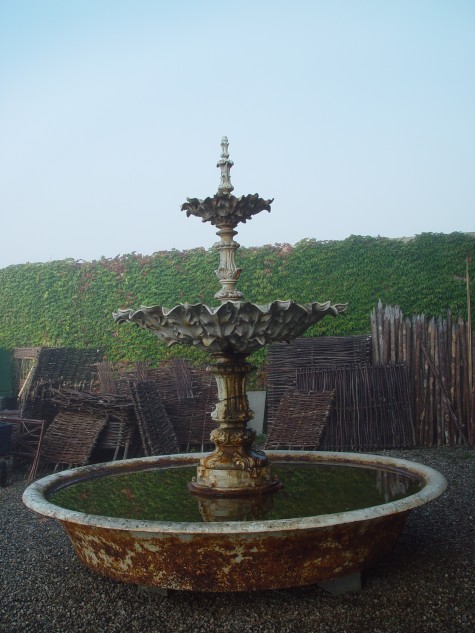
 I am sure I own the most fabulous French antique fountain on American soil-take a look; do you not agree? I detailed some time ago the process by which this incredibly beautiful piece came to me-but it is not the subject of this post. As beautiful as it is, a fountain, any fountain, is a means by which to introduce and integrate water as a decorative element in the landscape. I do such injustice to use the word decorative; what water does for a landscape is give and sustain life. What water does for a gardener borders on the sublime.
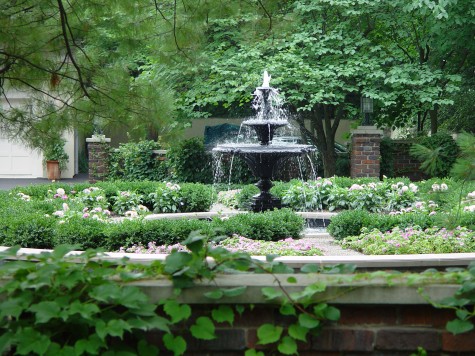 In my early years designing, I never went near any suggestion of a fountain, pond, pool, or lotus pot. I did believe anything of any importance in a garden sprang from the earth, and grew. Arranging for delightful water for a client was just over my head, and beyond my capability. It is the sorry truth that a lot of things I thought early on about landscape design proved to be provincial, ill-informed, and shallow. Thank heavens the normal course of events is to grow up into something. My age and history is a good thing. At some point I figured out that fountains were not the sole province of public parks and libraries; any home garden is all the better for water in some form. This English iron fountain I placed a few years ago-I never tire of the look of this water in motion, the peaceful sound of it.
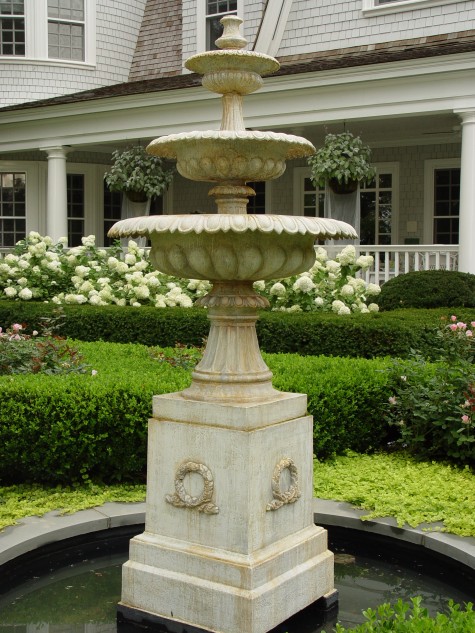 This very regal cast iron fountain is of American manufacture, mid 19th century. This part alone enchants me. Placing an American garden ornament of historical significance in an American garden was a good moment. It looks even better when the water is moving over its surface. Note the planting of creeping jenny around-water splash comes with the territory when water drops a long way. Plan for plants that like this regular shower when water is being pumped to great height.
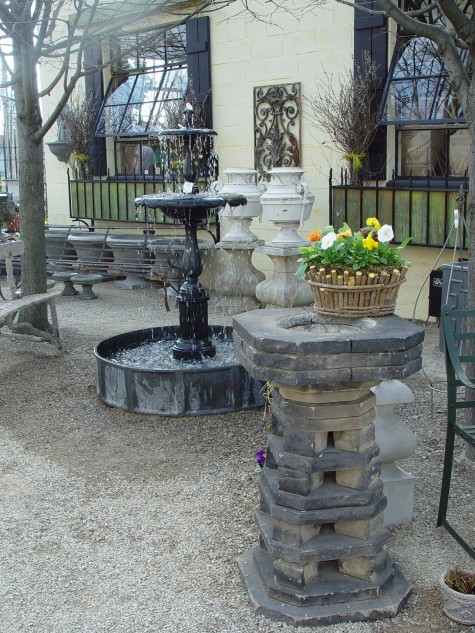 No matter any history, or construction issues, water beautifully representing in the air is available to any gardener. This small English iron version of a classical tiered fountain has a lead basin just 5 feet in diameter. This fountain is installation friendly; take it home, set it up, and plug it in. Three things are at issue in putting together a fountain. You need a means by which the water gets airborn. This could be a decorative piece like this one, any pot or sculpture which can be modified to convey water. A copper spout works fine. You need a pump of sufficient power, and the electricity to run that pump.
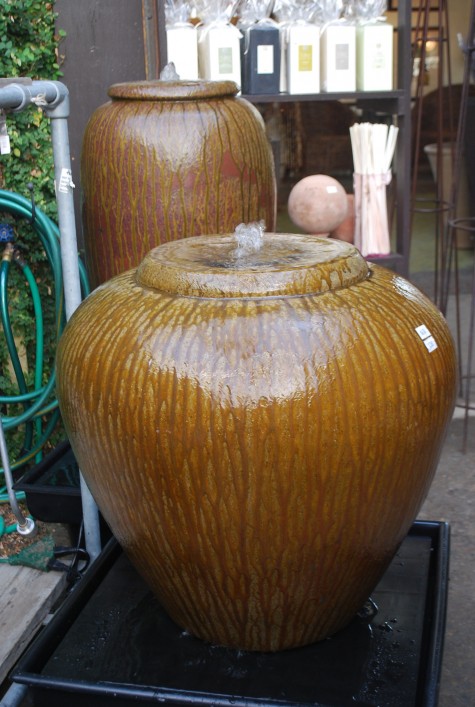 These gorgeous glazed ceramic jars have been outfitted by the manufacturer brilliantly-meaning, thoughtfully. The jar, a water reservoir , and a pump make it possible to take this complete water feature home, place it in a great spot, plug it in, and learn firsthand about what water in the air can do for a garden. The water moves so slowly that it cannot break the surface tension of the jar surface. No splash means you might consider bringing it indoors for the winter.
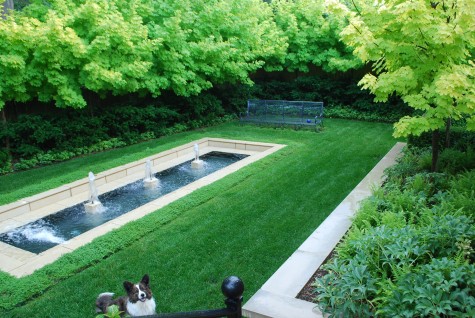 My 26 foot long by 4 foot wide fountain-a gift from my Mom. It so irritated her that I never took any time off work-she made an issue of this, when she was alive. What she left me enabled me to build this fountain. I hear the sound of it when I get out of my car at the end of the day. I get in it, to cool off, and scale back. I go and sit in its company every day. I am on vacation-at home. Some days I just look at all that watery motion from the deck. I can hear it when I get in bed. The action of the water in my garden-better than very good.
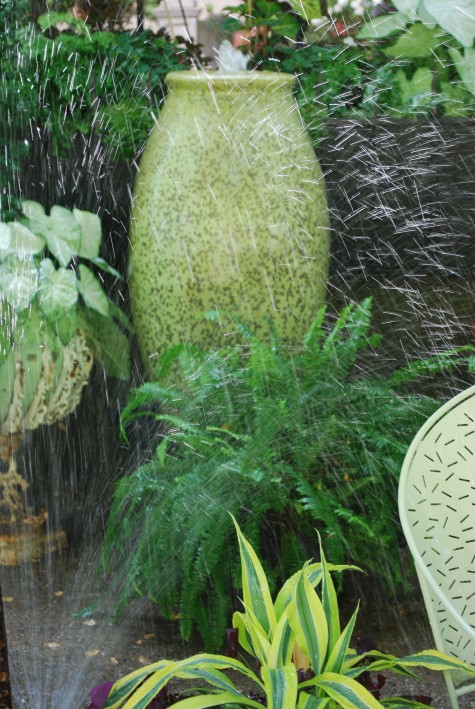 Water once meant no more than a good drink for my plants. From the looks of this, it should be easy to see how fountain water can make a garden a better place to be.
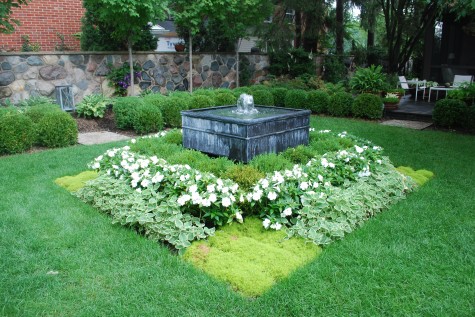
No matter the size, shape, scale or material, a fountain has great appeal. It can organize a garden space that invites visitors. It also recalls those hot summer days when standing under the hose meant really living.
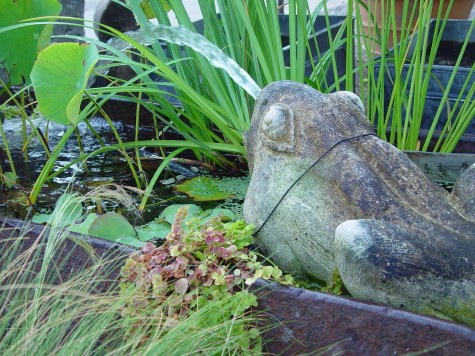
Water, anyone?
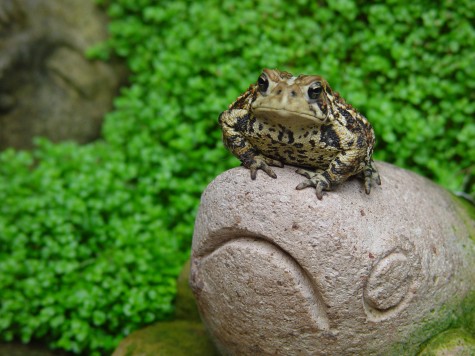 Any person who has ever had a mind to cultivate a garden has a love for all of nature’s creatures. Even the aphids I squish, and the Japanese beetles I whisk into bags for the trash, the rabbits, the white flies on my dahlias that enrage me, the bloody slugs-I still have a tough time not welcoming any of nature’s creatures to my garden. I might as well put up a sign: Any natural transient welcome: room and board available at no charge and please, stay as long as you like. No wonder that sculptures of bugs, birds, dogs, are every bit as interesting to gardeners as sculptures of the human sort.
 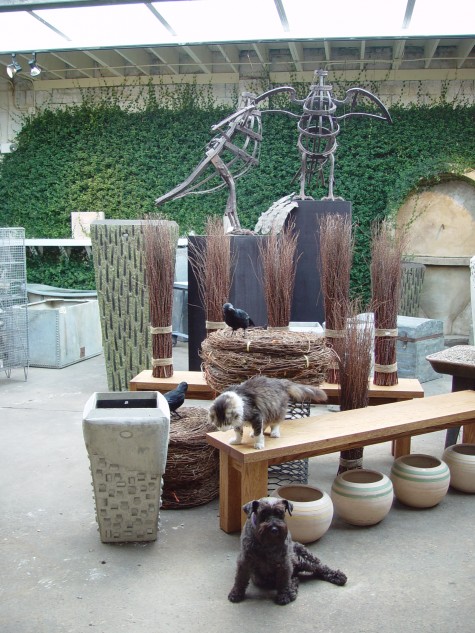 Gardeners understand that people don’t own the planet, they are but one species among a whole planet of species. My shop has always been friendly to all manner of fauna. The corgis have been here every day for the last four years, and MCat maybe 7 years; these three came during the reign of Hoppy the toad, Jojo the cat and Jack and Libby, the mini schnauzers. Who knows who or how another creature might be added to the current Corgi administration; anything can change. The place would not seem right without them; many people know them by name, bring treats, or pitch the ball down the driveway for them. These astonishing cast and wrought iron armatures are all that remain of a pair of eagle sculptures from France, some several hundred years old. Though made of iron, they have an unmistakeable air of power and vitality. The little faux crows-we like these too.
 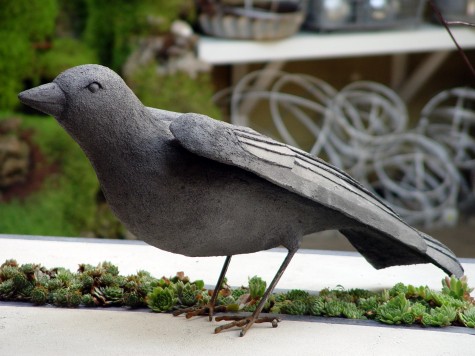 Troy’s sculptures of birds and animals speak much to his respect and love of nature. His work has great appeal, for good reason. I so love how directly he sculpts. Some garden sculpture is more about the technique of the sculptor, rather than the feeling of the sculpture itself. People readily sort this out, and gravitate towards that which strikes a chord for them. Whether it be for fun, or in memory of something or someone, an appreciation for art in a garden comes naturally.
 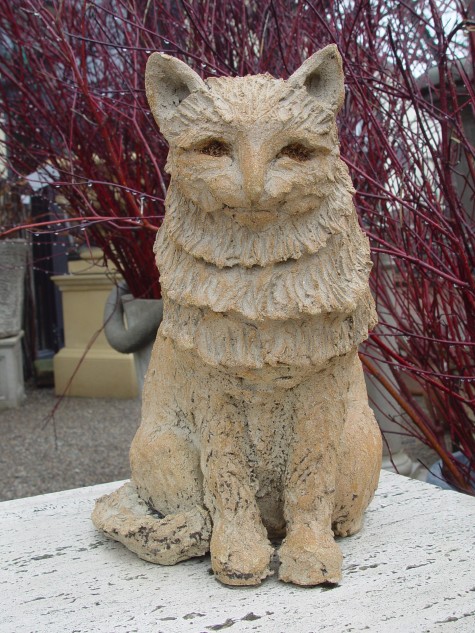 Mary Hode is an English sculptor of formidable talent. Her husband fashions garden pots I treasure. But her stoneware sculptures of cats are so beautiful, I would be confident asking any person to consider adding her work to their collection-whether for inside or out. Their faces have a distinctly human look about them; I understand this. I do believe my Corgis are people in dog costumes.
 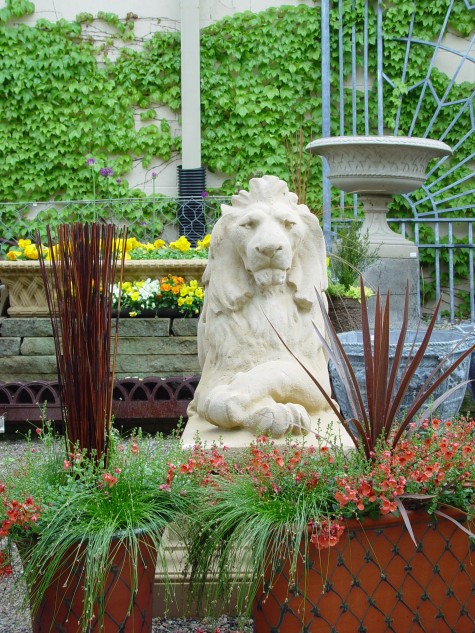 No lion lives in my zone, but the lion is a very popular motif in garden sculpture. They are on duty every day, holding court, standing watch. This English cast stone lion has a very British culture feeling to it.
 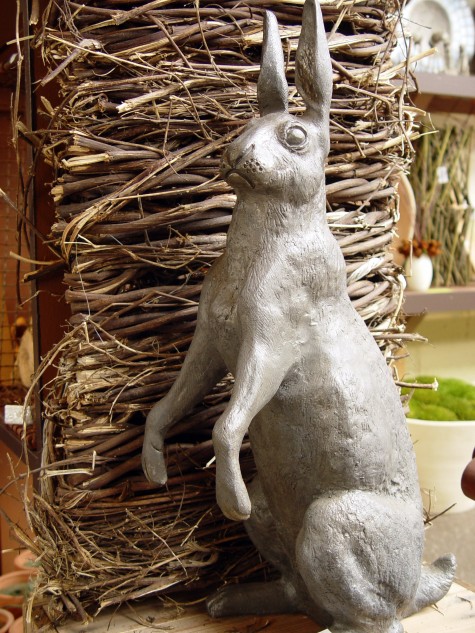 This finely detailed lead hare comes from the English lead ornament company known as Crowther and Sons. What gardener in my zone has not shared their garden with the rabbits? I do love the expression-you think he ate the lilies??
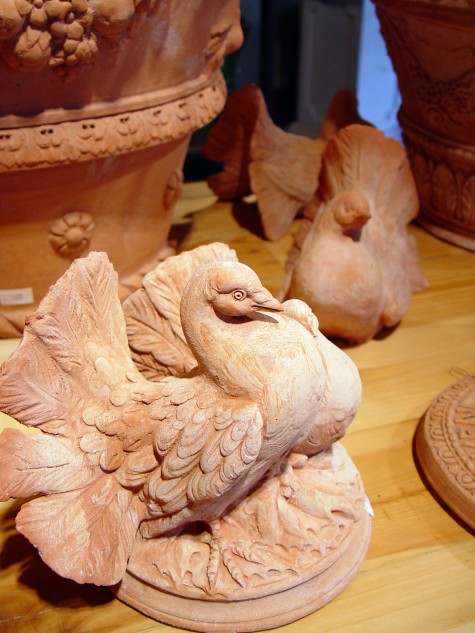 This handmade Italian terra cotta sculpture of a dove is beautifully rendered. I like small terra cotta sculptures like this, keeping my pots company over the summer. I have spots for them indoors, for the winter.
 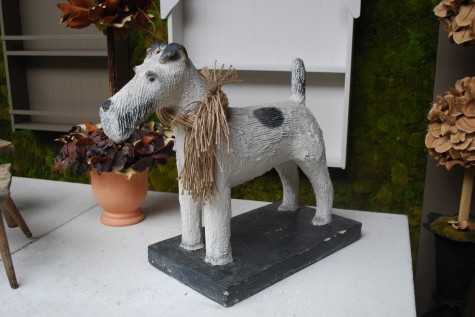 This Belgian concrete terrier circa 1930 has a sassy terrier expression, indeed. I gave him a rope collar for the winter. I never had much interest in the doll thing, but I do like dressing my sculpture for an occasion. Just for fun.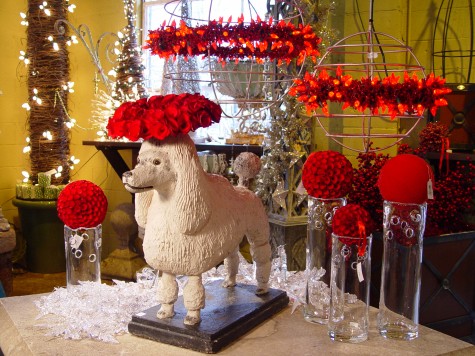
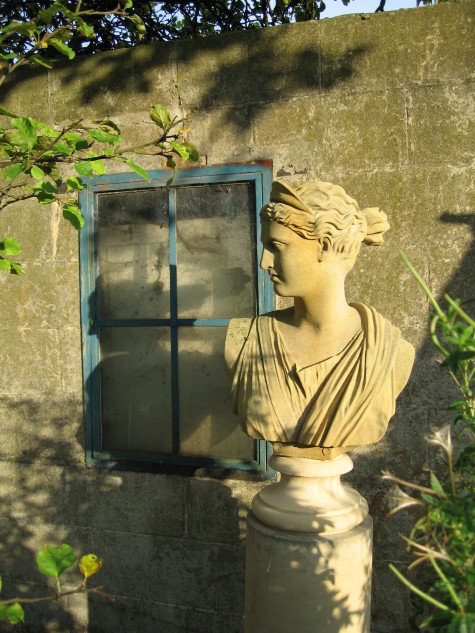 The history of figurative sculpture in the landscape is long, varied, and certainly well documented. That history is part of the attraction for me; any object in any garden has the potential to organize a planted space, create a mood, or strike a chord. Antique garden ornament makes much of the aura that comes from age; what is preserved from one generation speaks to its value. My house is eighty years old-I like that, and I like that I am doing my part to maintain it properly. However figures in the landscape need not be old to strongly resonate with a viewer. Any human face, whether from another time, that place, or right next door, engages me. It seems a lot like preaching to the choir to say that what comes from contact with people is personal, but bear with me. �
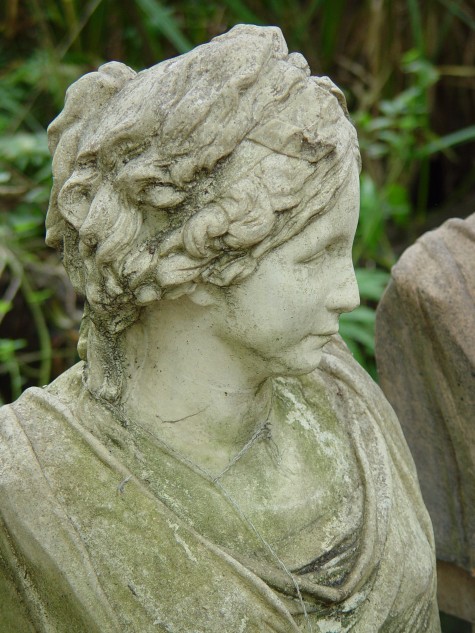 To my mind, a landscape or garden that does not personally engage the viewer, or provide opportunities for people to engage each other, lacks soul. A figurative sculpture or bust in a garden will immediately attract and hold the eye. When I buy them, I am first and foremost interested in the expression on the face. An assessment of the condition, the surface, the material, size and price are all secondary considerations. I like faces with complicated, mysterious, or striking expressions-some signs of life. This is easy-what face do you know that is not full of contradictions?
 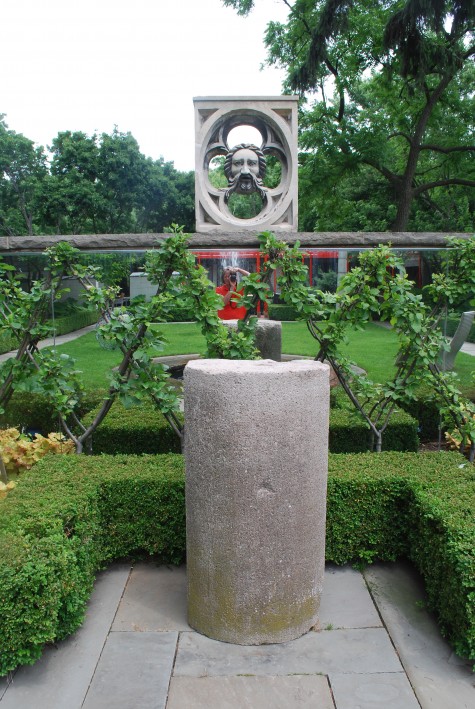 Though I see lots figurative sculpture whose faces I find beautiful and interesting, there are not so many I would want to live with – nothing surprising here. Any face in my garden needs be a face I would want to see every day-whatever my reasons. I have lots of objects in my shop that appeal to numbers of different people. The faces are different; the purchase very personal. Some people look many times, before making a decision. This antique French carved stone face has a very strong and compelling expression. Though not so many expressed interest in it, the person to whom it now belongs likes it a lot.
 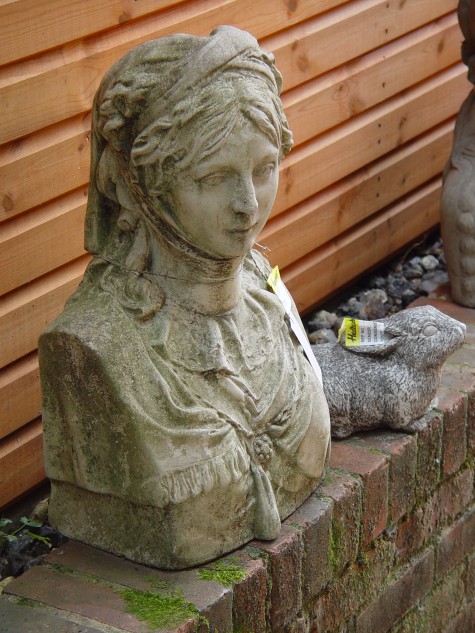 I have some clients who come to the shop multiple times; they say they miss seeing things in a single visit. But it is easy to spot a face, no matter how busy the background. From a design standpoint, placing a figure in a landscape will guarantee visual attention. A very shady garden spot, an area requiring a very strong focal point, an unexpected placement that rewards a viewer with surprise or delight can be vastly more effective given the right sculpture.
 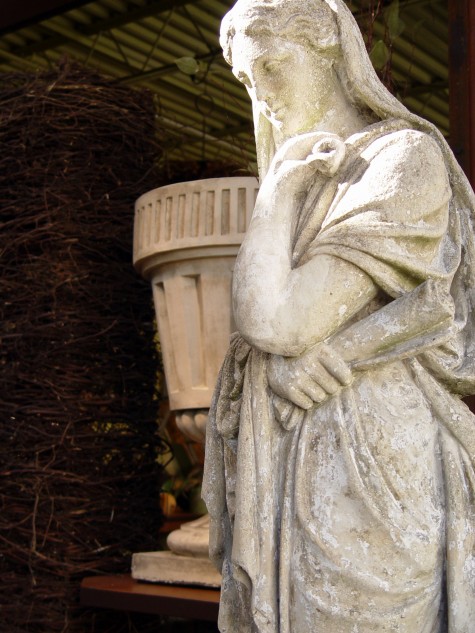 This very fine Austin and Healy sculpture dates from the late nineteenth century in England. Her expression is serene, the sculpting is fluid, the age of the piece greatly adds to its cache. I would read her expression differently any time I took the trouble to really look. Though for obvious reasons I would call this a classical sculpture, I would bet the person who purchased this piece sees her very differently than I. This is why I encourage my clients to consider sculpture in a garden. Sculpture makes a landscape a personal landscape.
 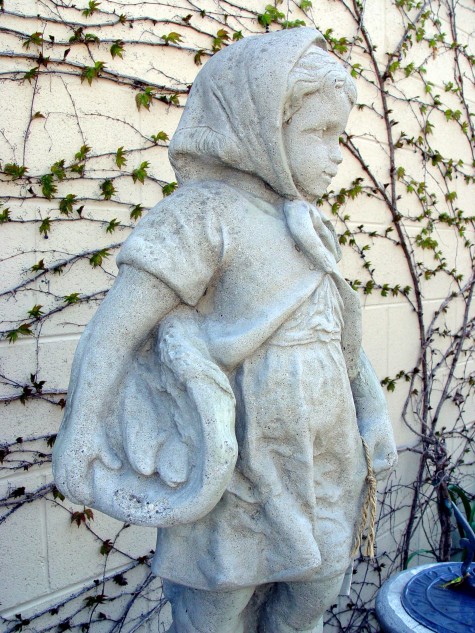 This concrete reproduction of the classic fisher girl was not expensive. The casting was not detailed-but the expression was good. I have a very strong memory of the garden in which she was placed. The client spent more than a few moments talking to me about her garden, where she hoped to go with it, and how this sculpture was going to help her get there.
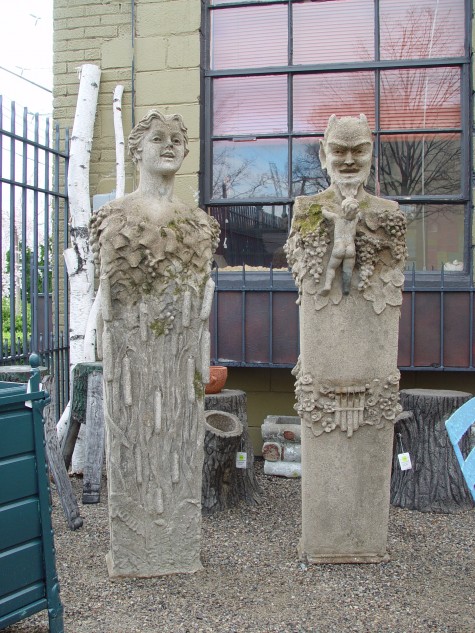
 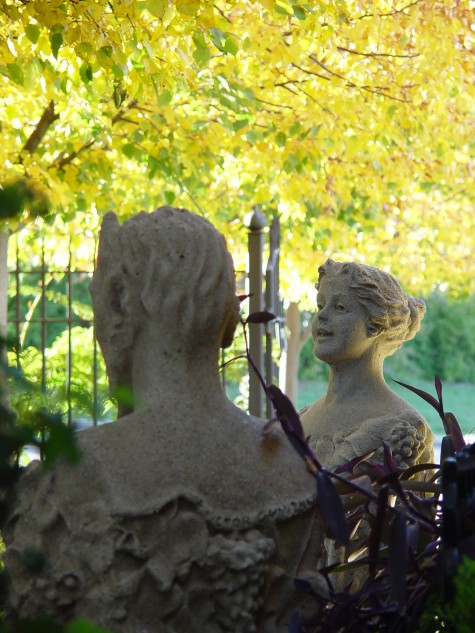 This fresh face belongs to one of a pair of nineteenth century American hermes I purchased some years ago. Hermes, sometimes known as terms, were commonly placed to mark the end, or terminus in a garden. Who is she? This figure of a young woman, who recalls the vitality that is nature, or spring, or youth, has such a strong and engaging expression. I doubt I would ever tire of wondering.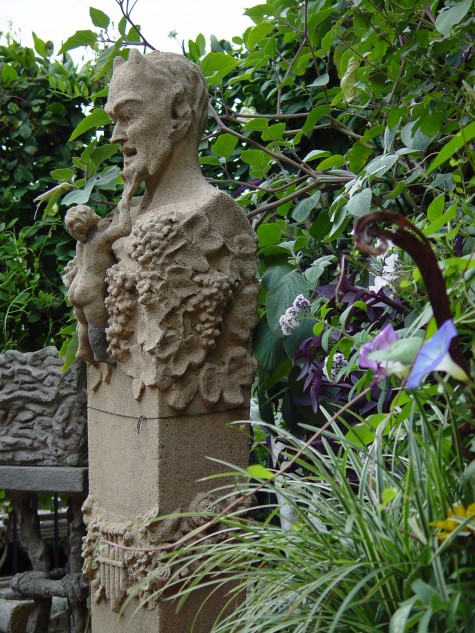
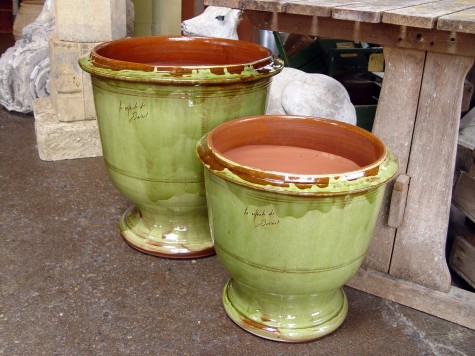 I have been importing garden pots handmade at a number of French potteries since 1992-I am as crazy about them today as I was 18 years ago. My very first purchase-a pallet of gorgeous cream colored clay pots from the Poterie Provencale in Biot. I am convinced a mutual love of beautiful objects for the garden overcame our language difficulties; I was so thrilled to get those pots. Les Enfant de Boisset does not produce an olive green pot. It was entirely Rob’s asking and their willingness to make a collection especially for us in this great color.
 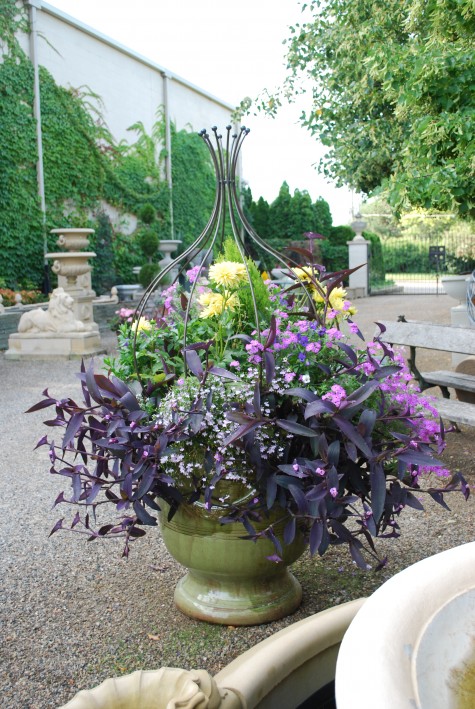 Planted up, these pots make for an entire landscape in a very small space. French garden pots are made today in much the same way, and with many of the same designs that have existed for centuries. They clearly show evidence of the human hand, and speak to their long history of landscape and garden. Some French poteries have added more modern designs, to round out their collections.
 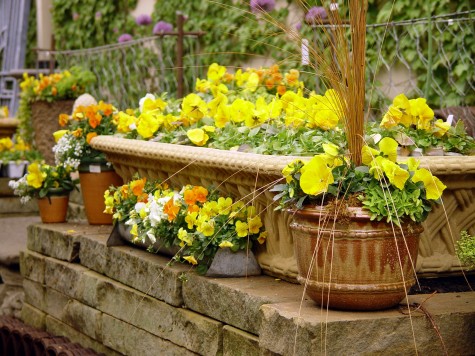 This yellow/brown glazed pot came from the Poterie De Cliousclat, a French pottery whose beginnings date back to the 16th century. Rob once brought me a small book detailing the history of the pots; the pages of the book had absorbed the smell of the clay from the dirt floors of the pottery. Though Cliousclat is no longer, I will never forget their pots, or the smell of the poterie inseparable from that book.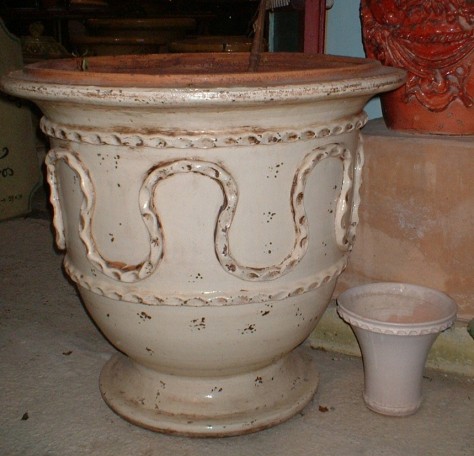
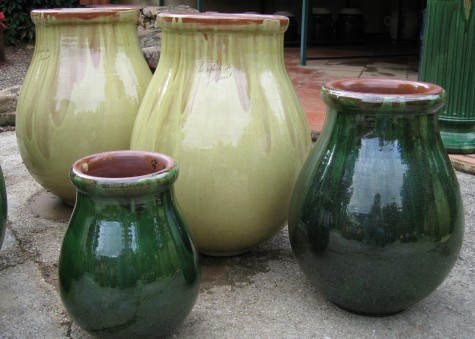
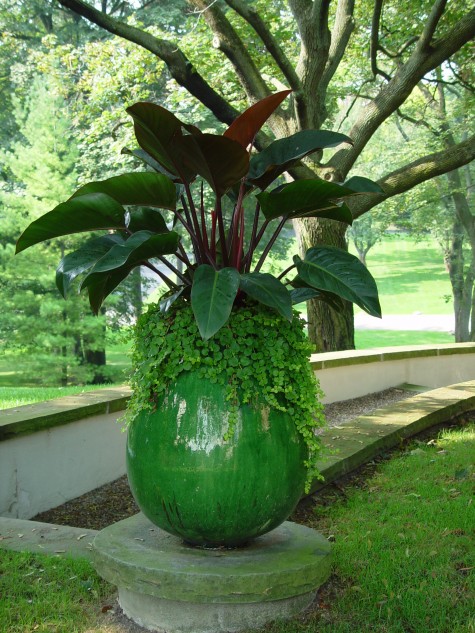
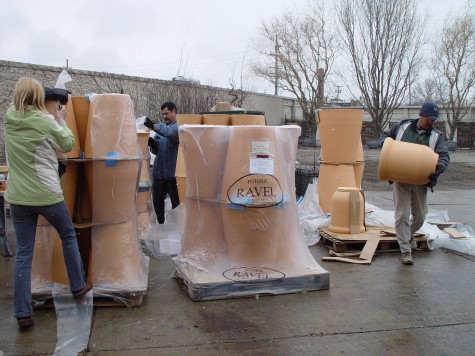 Arrival of a shipment of pots from the Poterie Ravel
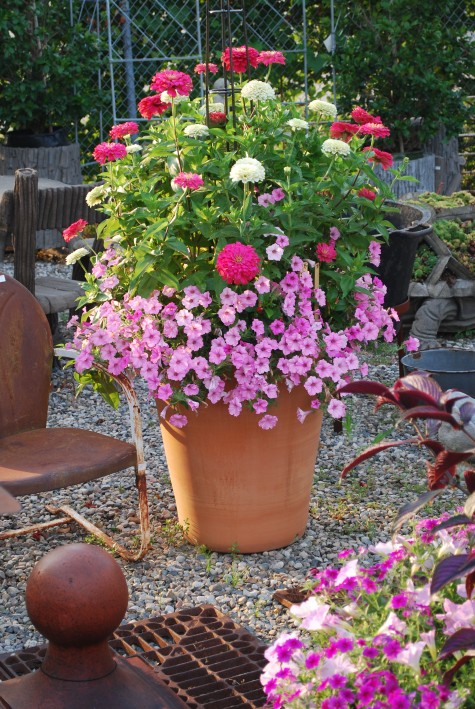 Large Ravel pot, planted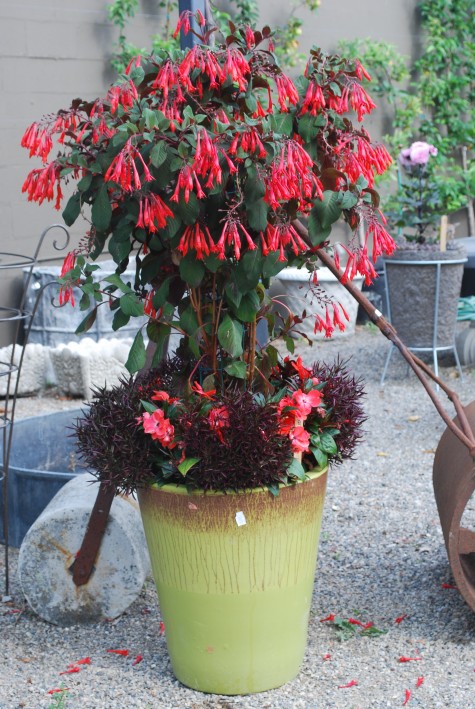
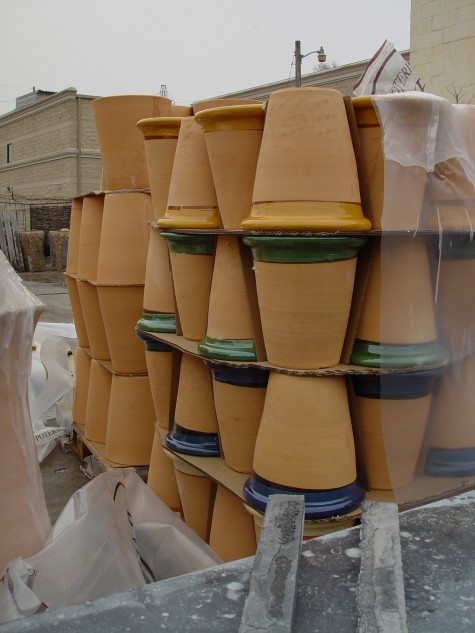
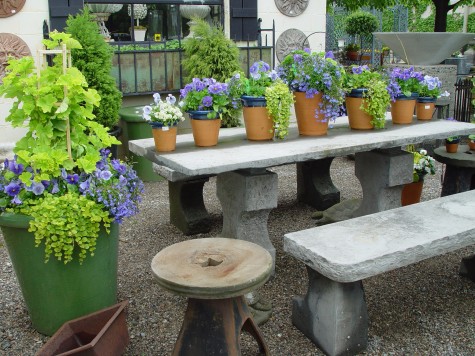 Planted Violetta pots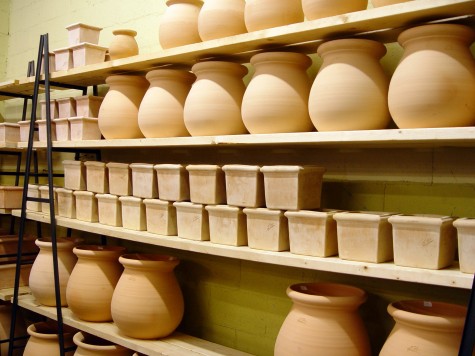
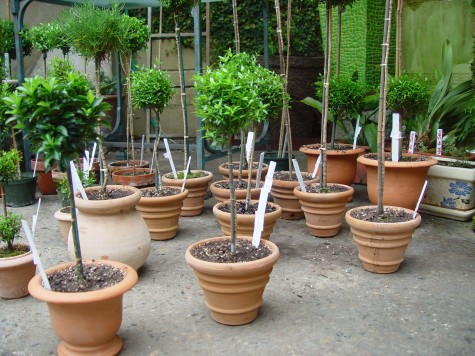
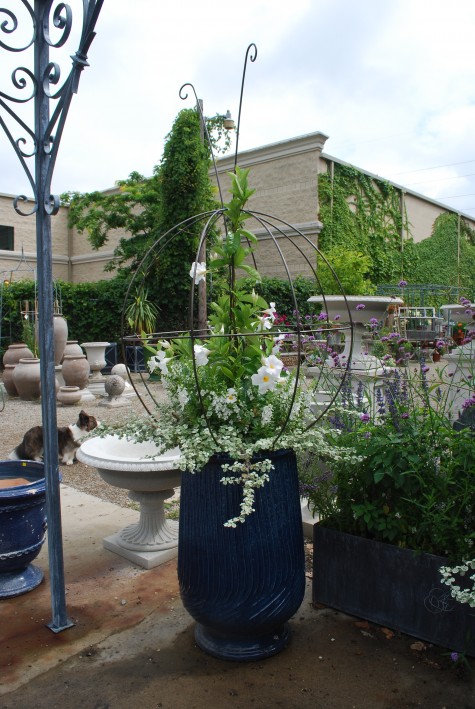 blue strie huile, from the Poterie de la Madeleine, in Anduze, planted
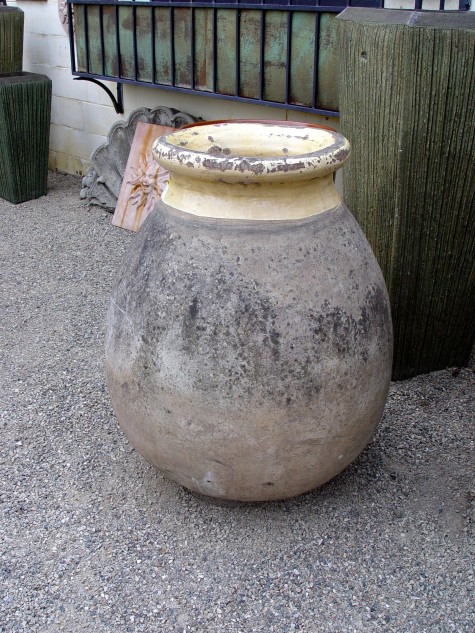
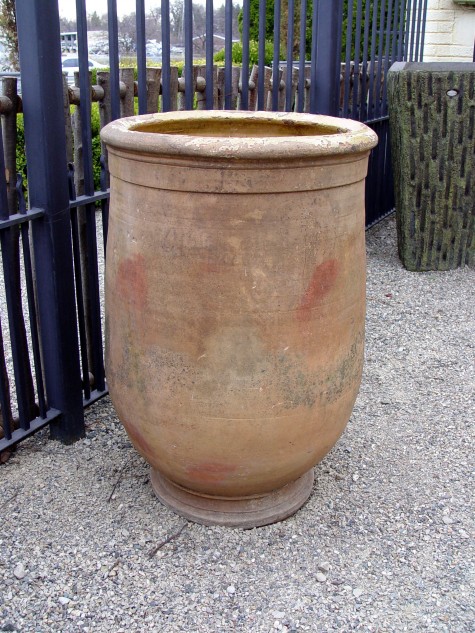 French huile, circa 1920
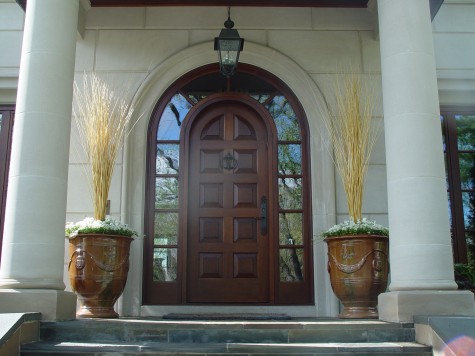 Classic Anduze pot, Poterie de la Madeleine, in the flamme finish