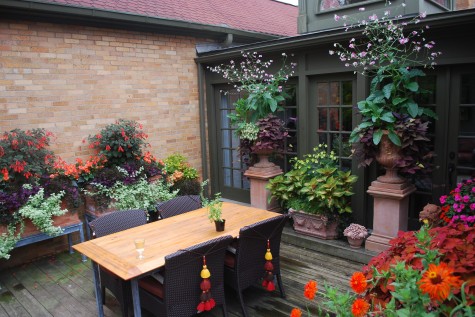
I am hard pressed to remember the last time it was my pleasure to live through such a benign August, but I have no plans to look this gift horse in the mouth. Tomorrow is Buck’s birthday; this terrace will my contribution to the celebration. They have to be the best they have ever been-although Buck says I tell him this every year.
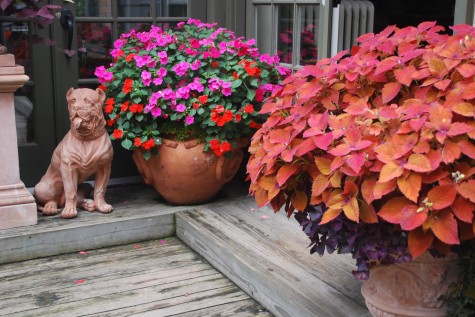 I like the fireworks going-on feeling of my terrace pots this year. Most of that has to do with how they have grown. I picked the colors and plants yes, but nature has proved unusually cooperative. We have had cool temperatures all summer, and now, regular rain. The usual bugs and disease must be at someone else’s house.
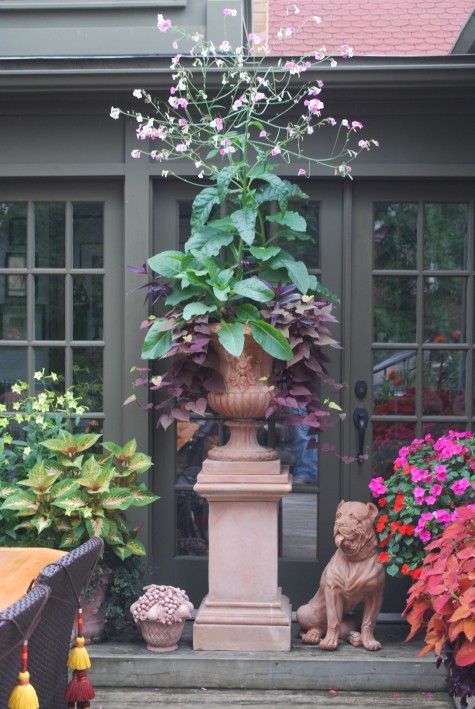 The Mital terra cotta gargoyle pots on their pedestals have never looked so rowdy and profuse. I grow nicotiana mutabilis every year for exactly the reason you see here. The showy oregano in this pot gave up and died, but I hardly notice. Besides, this pair of pots started out mismatched-I like that they will end up mismatched.
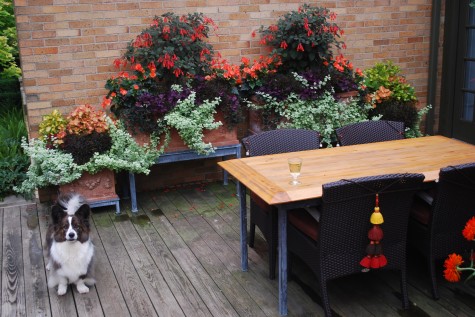
Variegated licorice has thick felty leaves and stiff stems, but it will dance through a pot in a lively way. It is a welcome contrast to the mounds of begonias and purple oxalis. Plant habit can be as important a part of design as color and shape.
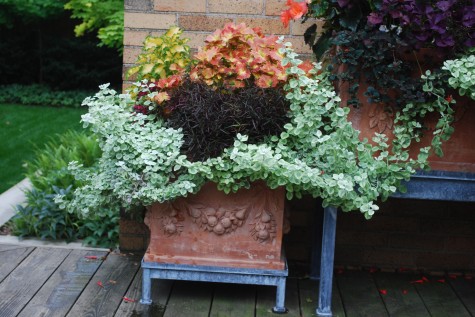 These two licorice plants have made a flared skirt of themselves. The shape is especially attractive with the garland pattern on the pot. Did I plan this part-absolutely not. Anyone who gardens gets to enjoy the unexpected.
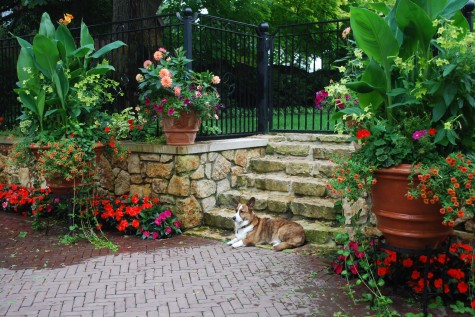 The New Guinea impatiens this year are unbelievably gaudy-what fun. Even my million bells, which usually sulk as I have very alkaline water, are cooperating. My dahlias do not have mites or mildew. The cool weather has slowed the flower production on the cannas, but the foliage alone is well worth having.
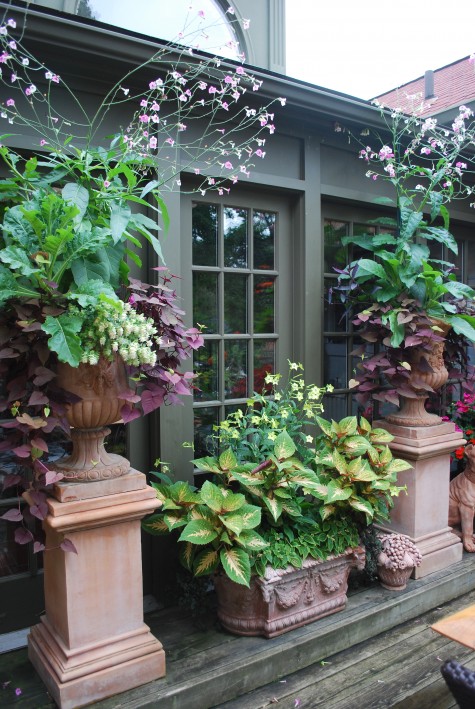
Thriving and saucy-this is how I would describe my pots. As Buck has to cook his own birthday dinner, I am glad these pots look how they do. It is a whomping lot of work to look after all this every day, but every day I am glad to get home and see what’s doing. I like being ready for a party, every day.
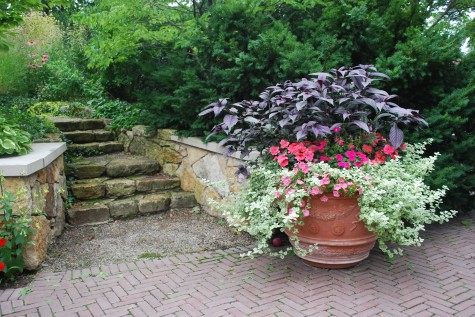
This Fourth of July feeling suits me just fine.
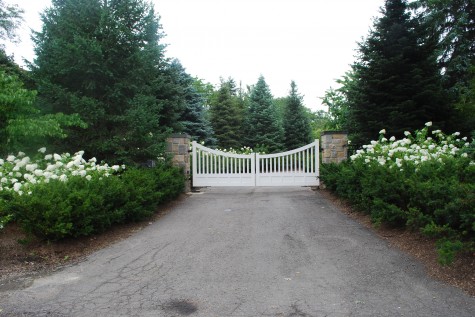
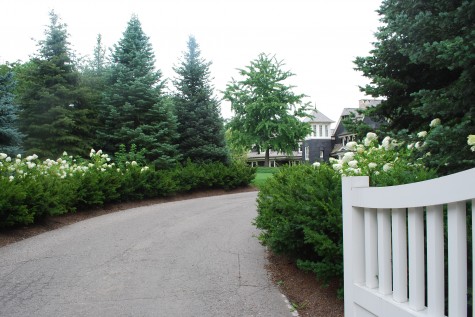 The entrance to the property has a beautiful view-in large part sparked by my client. Designers who do not listen to their clients miss plenty. I did design the drive especially to court the view; my client went over this plan again and again, until we both were happy with it.
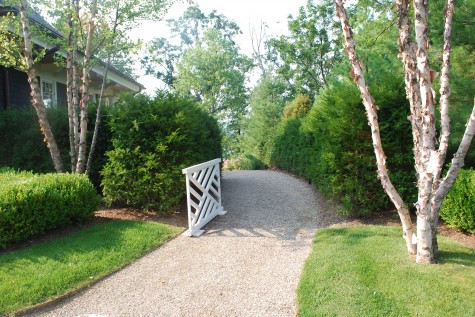 A decomposed granite walk leads to the rear yard; the gate is still in the design phase. A good walk intrigues a visitor. Vis a vis the curves in this walk-what need is there to telegraph every move a landscape makes from the start? A well designed walk anticipates interest, before the landscape delivers.
 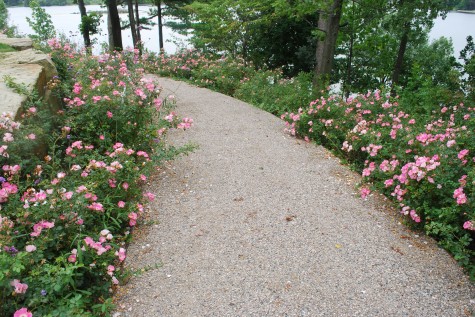 This long walk to the rear is fringed by the Griffith Buck rose, Carefree Delight. No kidding, a carefree wonder. This rose blooms and grows profusely, with little or no disease, in full sun, or part shade. This hedge performs equally, in spite of differing sun conditions, and fierce winter winds off the lake. I know a planting of them near me done by a friend-some 12 years old. Gorgeous. Carefree Beauty is my favorite rose; Carefree Delight delivers spectacularly; it is everblooming, adaptable to less than optimal siting, and happy to boot.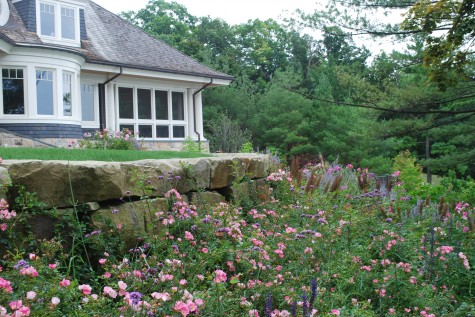
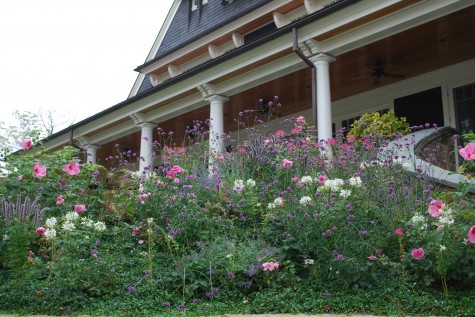 This wild summer garden is in remarkable contrast to the architecture of the house. It is, to my mind, a successful relationship. At the risk of repeating myself, I think the dynamics of a relationship far outweigh this part, or that part-taken individually.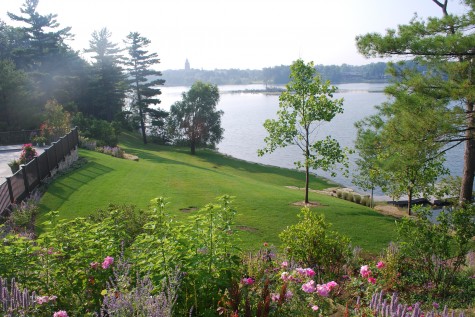
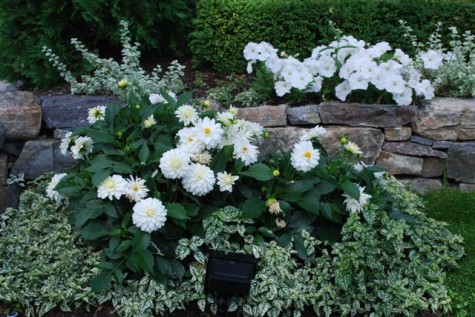
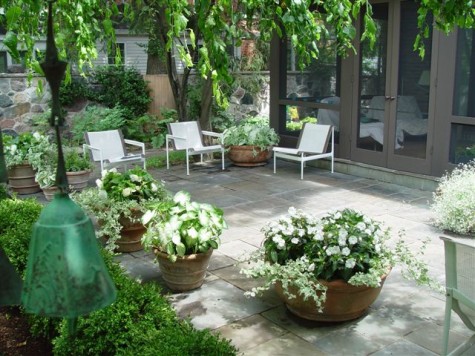
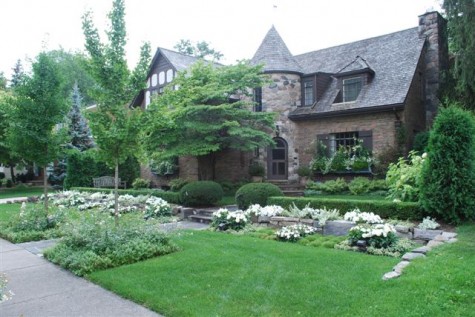 These clients have lived many years in a lovely old Tudor style house built in the 1920’s. However, they both have a love for clean, modern and edited lines. Working with them has produced a garden that has elements both friendly to the architecture of the house, and their point of view. They were both clear that a green and white garden would suit them best.
 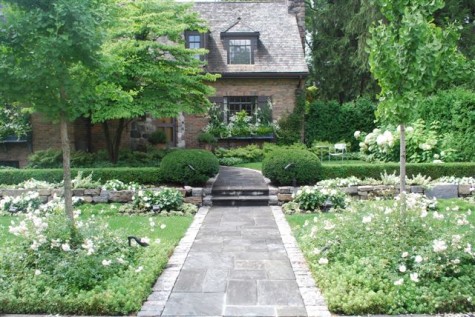 The landscape of the front of the house was already in place when I met them. My input involved the sizes of the flower beds, and the construction and installation of the window boxes. The profusion of flowers is decidedly English in feeling, but the green and white has a crisply contemporary flavor. The strong, dark green horizontal line of the boxwood hedge contrasts and compliments the mass of the oval yews. This element is balanced by the four columnar gingkos that frame the walk at the street. The simple steel windowbox is a focal point at the visual end of the walk.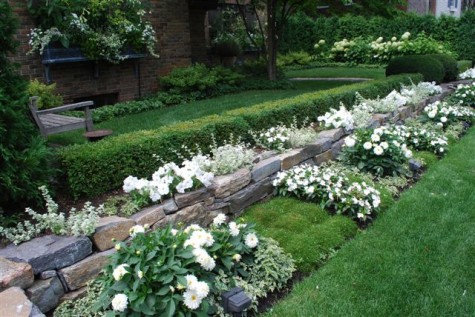
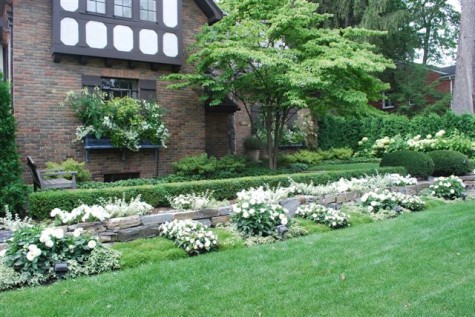 The upper level is planted more freely, with variegated licorice, white petunias and more polka dots. This bedding plant scheme derives more visual interest from its texture and layout than from the plant species.
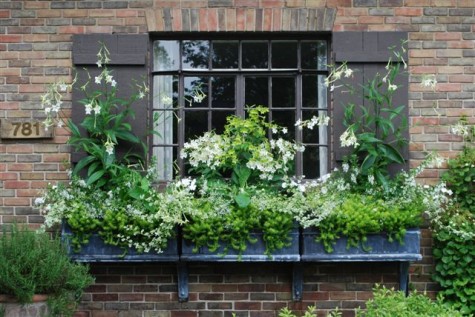 The window boxes are lush with green angelina, euphorbia, and licorice. The angular nicotiana alata white frames the more orderly growing Perfume nicotiana series in white and lime green.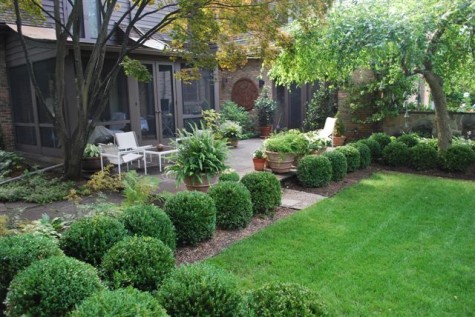
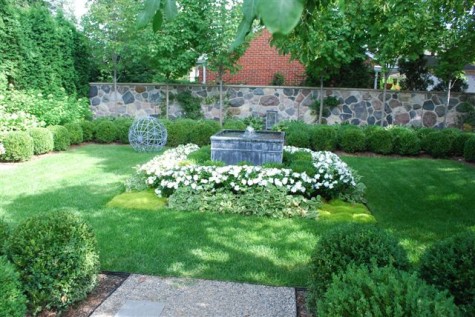
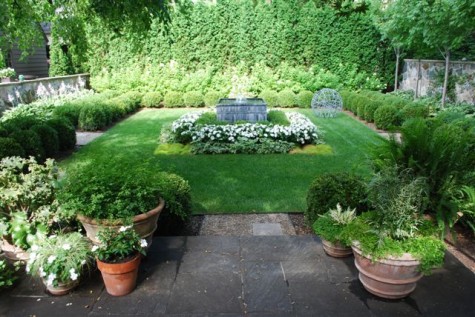 A custom made steel cistern positioned on axis to the porch, and the side walk organizes the space. It was constructed with legs tall enough to hide the fountain pump, but also to provide for the eventual height of the boxwood surrounding it. Bordered in boxwood, a run of limelight hydrangeas provides another level of interest against the green arborvitae wall.
 Every year I plant the front of the store differently; this year I wanted the planting to feel like a meadow. The big bed of violet colored verbena bonariensis and white cosmos is almost always in motion. The marguerite daisies and petunias in the roof boxes are thriving, sheltered by a hedge of Nero di Toscano kale that will be the star of the show by fall. The kale does for the daisies what the boxwood does for the verbena; their respective relationships are good ones.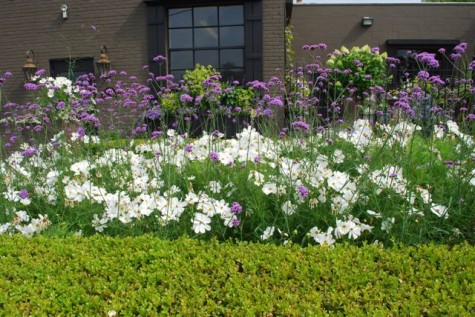
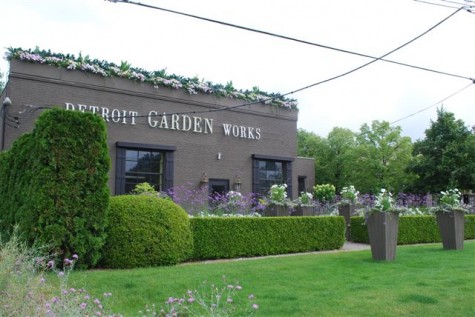
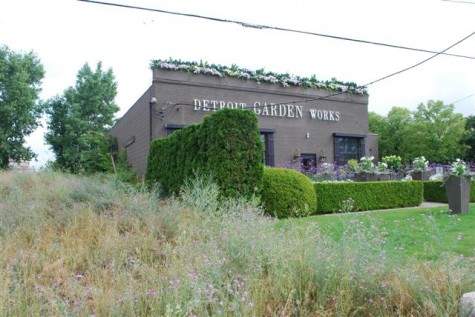 However, as any gardener knows, nature never sits. Someone once put it to me like so-nature abhors a vacuum. So this property is in phase one of its ecological evolution; disturbed ground is first colonized by grasses and other tenacious and vigorous plants, popularly known as weeds.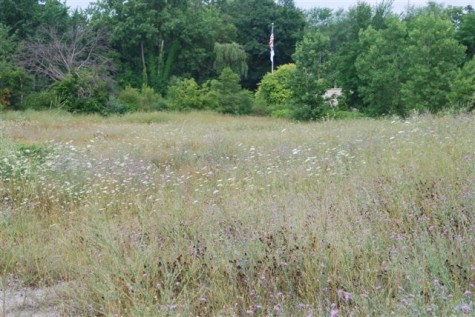
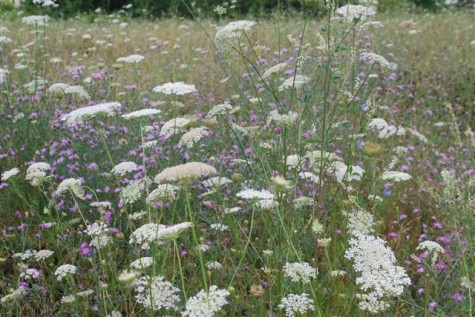 Queen Anne’s Lace is one of my favorite flowers. I buy bunches of it at market this time of year. Its tap-rooted vigor makes it a poor choice for a cultivated garden, but it vastly dignifies the look of vacant lots like this one. Its more civilized cousin, amni majus, can be grown in a garden to great effect; it is grown routinely for the cut flower trade. However, I am perfectly happy with this distant and unruly relative.
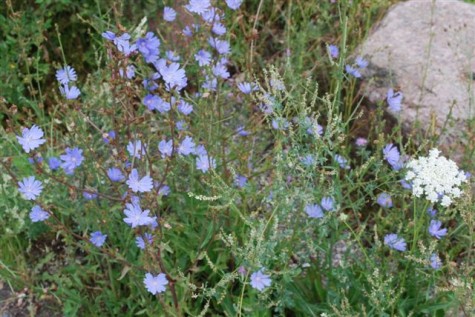 Chicory is the devil to get rid of; it is perfectly capable of worming its way through a crack in a concrete road. It is the most beautiful blue, a color not often seen in Michigan gardens.
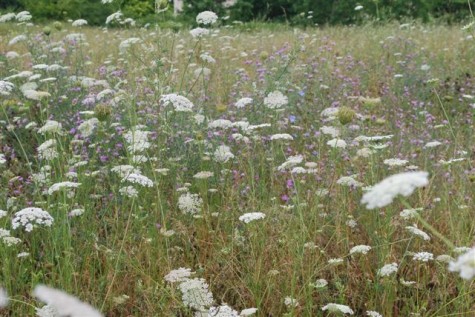 The mix of colors, the uniformly wispy textures, the motion of it all – breathtaking. There are garden flowers that have a meadow-like habit-panic grass, hyssop, bee balm, boltonia and so on-but there is no scripted garden that looks quite like this one.