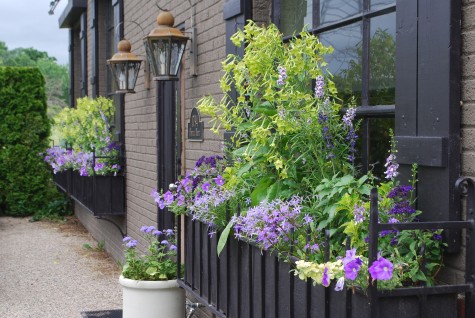
By the end of June, the promise of summer is in the air. Flowers I planted June first are taking hold, and growing. But this summer’s promise came with strings attached; night temperatures hovered in the fifties. Our first night over 60 degrees would not come until mid-July. Though small the end of June, the window boxes still had that going forward fresh look.
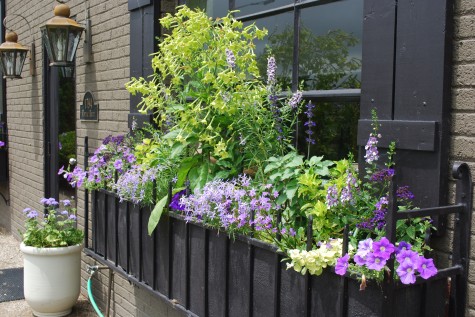 No matter what you fancy in your garden, nothing in it ever stands still. A garden actively grows, or actively sulks, or goes down. Some days I wish I could shift into neutral and coast, but I know better. I also know that as much as I would want to devote a chunk of time to nurturing all my plants, every day, that rarely happens. I have a demanding work life; moving that along every day takes priority. I hedge my bets some with plants that seem to handle the hit and miss nature of my care. Petunias thrive on this treatment; this is one plant that the more I fuss with them, the more they resent it. A trim once in a while is enough. Angelonia does not like cold weather, but it’s not a prima donna either. Once the hot weather comes, they come on strong.
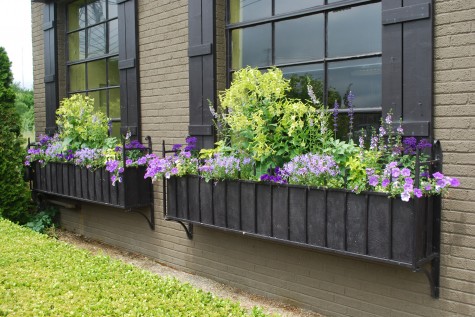 Blue salvia is puny early on; it is a late season annual. In a good year, they handle cooling fall temperatures with aplomb. I knew I would have these late. Planting the blue star-flowered laurentia was risky. Not only am I not so familiar with its habit, it has that look of an early season annual destined to peter out. This I cannot really explain, except to say some plants just look like they won’t do. The heliotrope was stuck in first gear; this plant likes hot weather. But for the moment, the lime nicotiana alata has my attention; the weather was instrumental in making it look perfectly happy. Every year, the weather is perfect for something; I thus follow the National Weather Service three month predictions with a lot of interest in late winter. Occasionally that helps.
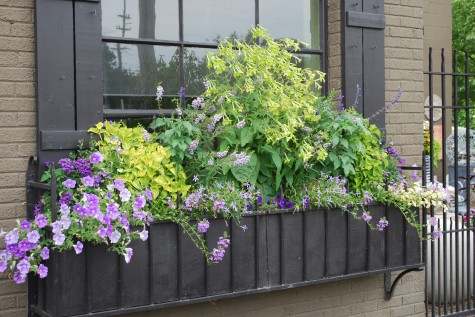 By August first, we were getting an 80 degree day once in a while. You can see the effect on the licorice and heliotrope; too little heat, too late. The flowering on the laurentia is slowing down, as I thought it would. Though the flowering is so- so, the plants are growing fine. The overall shape and the interaction of the group is the success of the box. Cool and dry made for unusually few bugs and no disease .
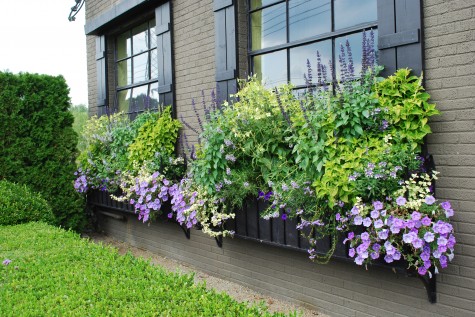 By early September, my balanced box has gone too tall-bad maintenance on my part. Trimming plants back keeps them stocky, and encourages them to reflower. However, this height is a great look from the street; the flowers are visible over the boxwood.
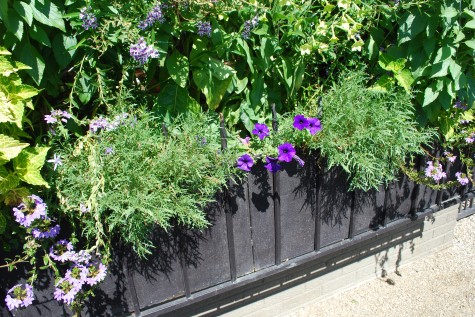 As I predicted, the laurentia bloomed out, and needs replacing. By September 15, our weather is in transition. I expect night temperatures in the high forties this week yet. However, I am not willing to rip the boxes yet; I hold on to my summer season as long as I can. We are having our warmest daytime temperatures of the season. As there are plenty of plants that thrive in cool night temperatures, I will replace as needed.
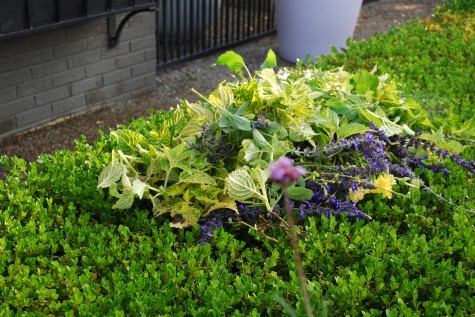 A good haircut and deadheading came first; late is better than never. As long as the warm weather holds, the coleus will respond quickly to the trim. There is no reason to give up what you have looked after all season. There is every good reason to keep what is good, and replace what isn’t.
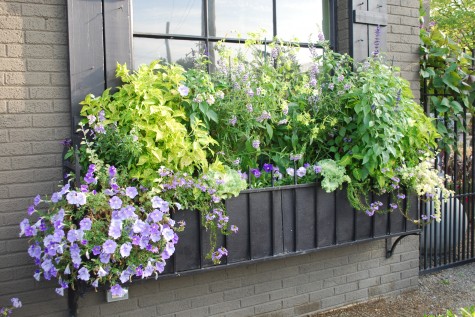
This looks better. I have unhooked all if the tall plants from their stakes; I like the loose, almost overgrown look for late summer. The laurentia has been replaced with a lavender pansy mix and a pair of frilly white kale. In another two weeks, we’ll have a different look going on here.
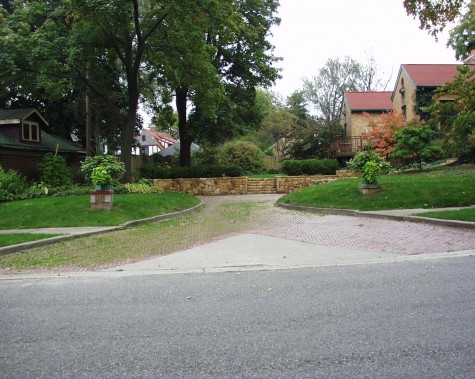 Just yesterday I was telling new clients for whom I had just finished a landscape master plan – pick one small part of your plan and install it. I told them if they got started, and kept at it, a very large piece of work would get done in no time. I did not realize how truly fast the years can go by, until I ran across these pictures of my own yard from 2000. After I moved in my house, I mulched some beds and grassed over others, until I could get to the work. I had just finished the stone wall and stairs; in 2000, my entire landscape effort was put to those walls. It would be years later before I would be able to do the limestone caps.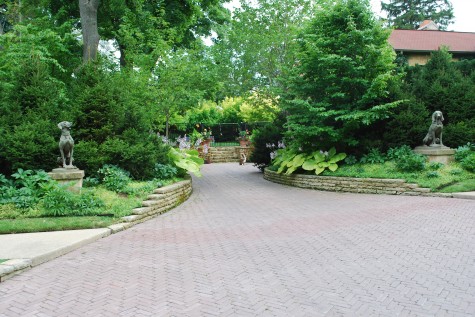
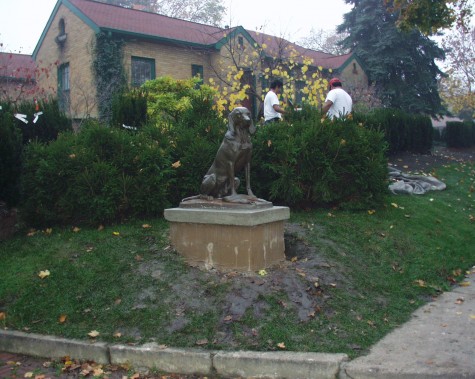 These antique French cast iron dogs guard the drive. The day of installation, my Hicks yews were 36″-42″ tall. Today they are almost nine feet tall. The dwarf picea mucrunulatum behind the dogs have more than doubled in height and width. In lieu of muddy lawn, I have sweet woodriff and hellebores. No doubt my gardening life has gotten better over the past decade.
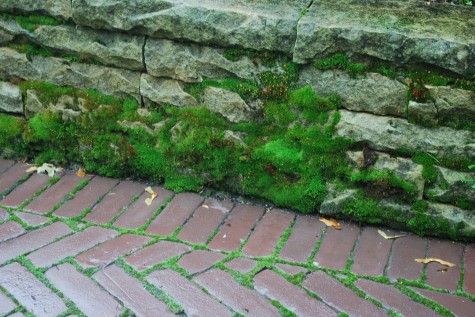
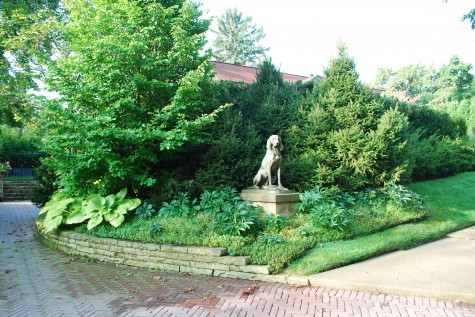 The parrotias, yews, picea, and magnolias screen my house from the street; I have a private home life in an urban neighborhood where the properties are small. The concrete pedestals built for the dogs have aged, and moss is growing on the walls.
 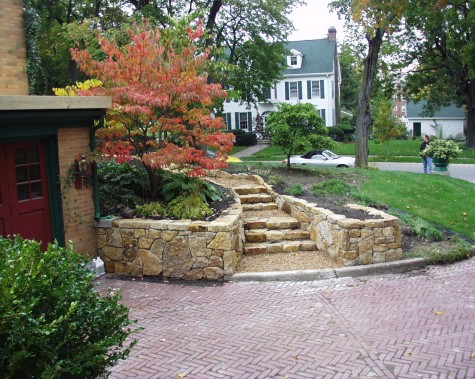 When I was at this stage of the landscape renovation, the thought of a decade of construction and growing never occurred to me. It just would take as long as it would take. The beginning of a project has its charms-the planning, the fussing, and the rethinking. The time has gone by incredibly fast; these low-tech time lapse photographs dramatically detail how much change there has been.
 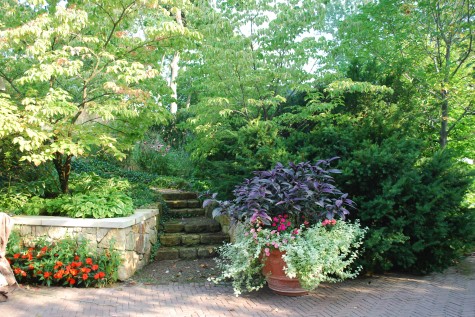 That stone staircase no longer looks so lonely and disassociated from the ground around it. The limestone caps got made for the walls. There is a woodland garden to go with the rustic staircase.
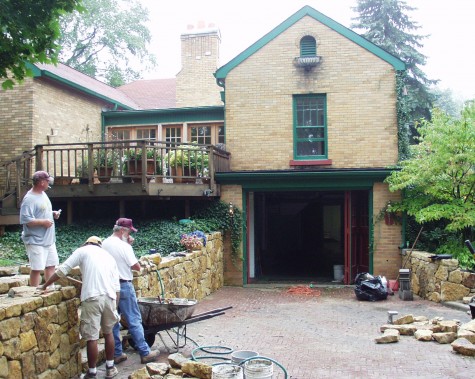 I had forgotten the red and green trim that came with the house. The octagonal wood deck would get a stone skirt, and a narrow Romeo and Juliet balcony would be installed above the garage doors. The wood rails would be replaced with iron. My folly would be installed above the back porch.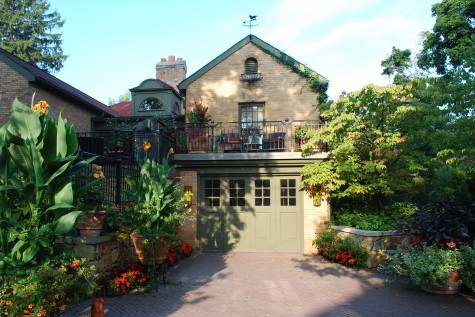
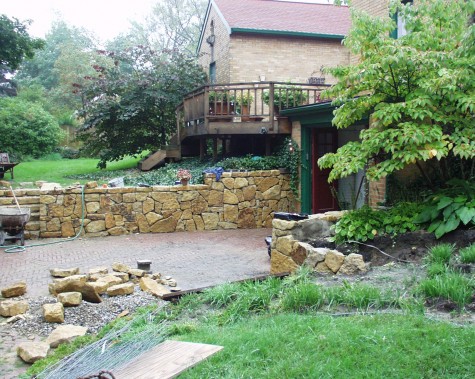 I am so glad to have these old pictures. I had forgotten how awful that deck and stairs looked. Without tearing the entire thing out and starting over, I do think the look of it is greatly improved. No landscape existed per se-I had a collection of plants. I am sure the previous owners liked each plant individually, but there was no thought put to their relationships to each other. My landscape is much more simple, and easy for me to maintain.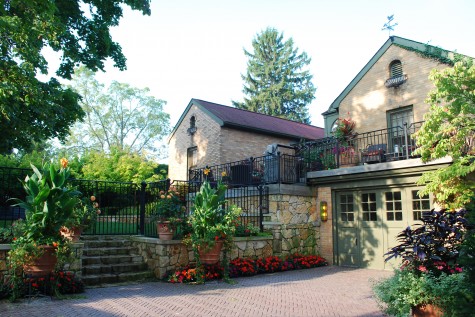




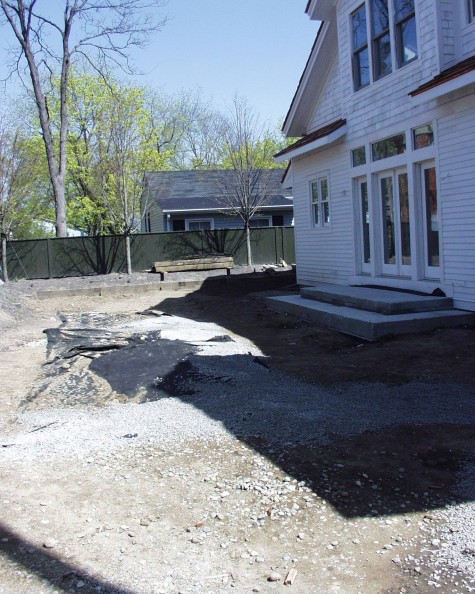
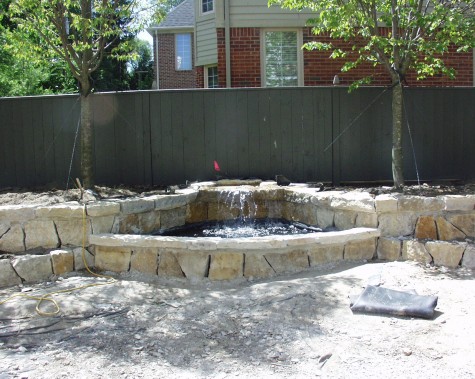
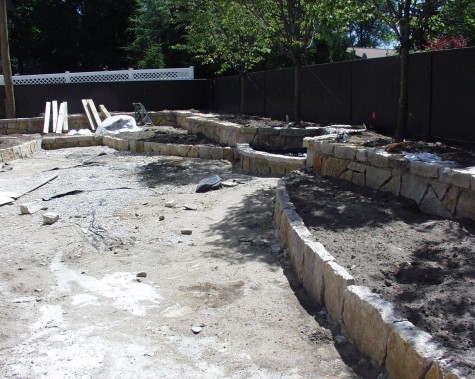
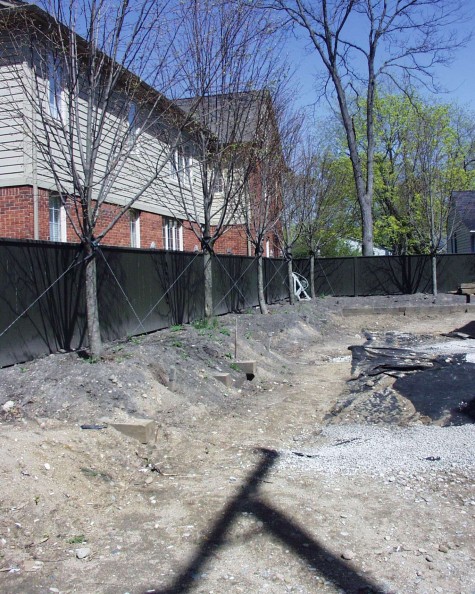 A retaining wall of pressure treated lumber was installed near the lot line; the lindens were planted some sixteen inches above grade. A six foot high wood fence, painted “disappearing green”, would provide complete screening at the tree level. My clients are very fond of the buildings in New Harmony, Indiana. All of the later additions and modifications to the original architecture have been painted “disappearing green”-a color which recedes from view such that it is easy to see the original architectural intent of the buildings. I would describe the color as a dark muddy green brown. With the trees and fence in place, the screening would be a dominant element of the garden, but occupy a very small space. I lowered the ground plane as much as I could without endangering the drainage of the loqwer level. The trees instantly gained 18 inches in height; this placement put the lower branches of the lindens just above the top of the fence. This is what I would call engineering one’s screening.
 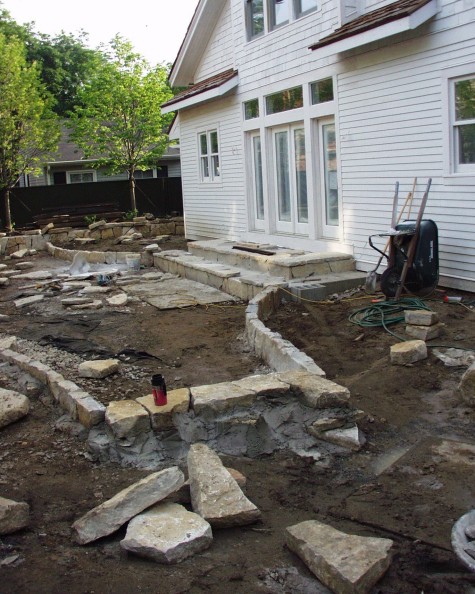 Of course that sixteen inches of soil was not going to stay put without some retaining on the front edge as well. My clients chose a rustic stone for the tree planter box walls, and the retaining for the garden beds. You see stone laid out everywhere on the site; the stone mason needs to pick and choose which stones fit together so the mortar joints are small and unobtrusive. It would be three steps up into the house; I made them deep and wide-easy to navigate. It was most important to them to have a private garden; they were willing to deal with the up and down.
 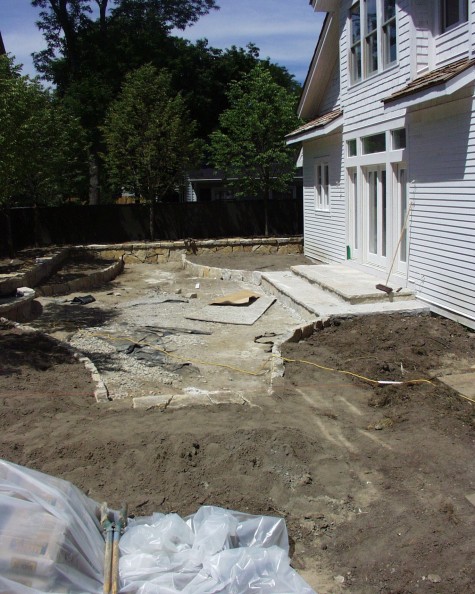 The sixteen inches of plant mix filling these beds would vastly improve the quality and drainage of the soil. The garden would be easy to plant, and weed. The worst thing about weeds-how far they are away from your fingers, and what your back has to do in order to get your fingers where they need to be. An entire tool industry is built around that distance. These gardens would be closer to the hands maintaining them.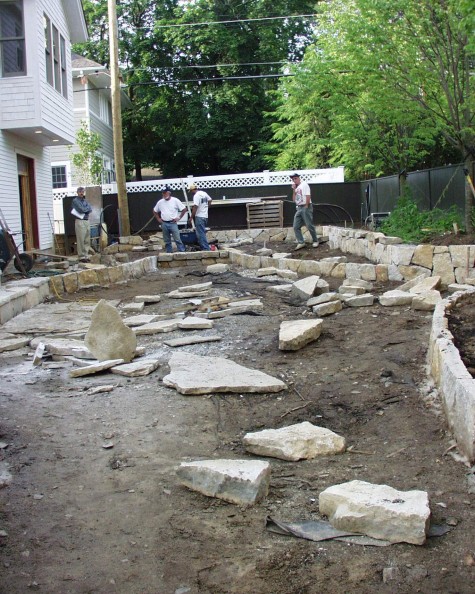
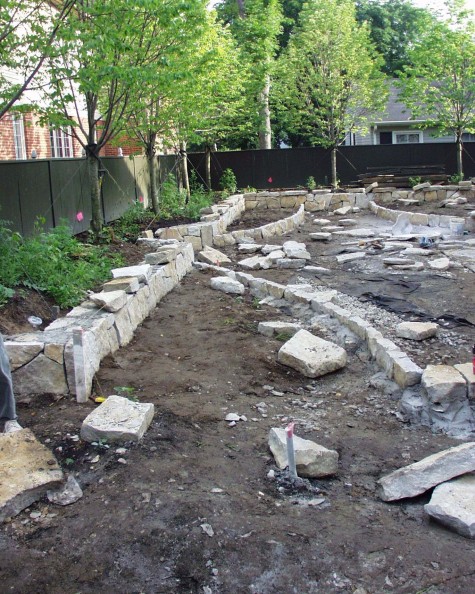 This landscape would eventually have three distinct levels. The change of grade would provide a lot of visual interest for a very small space. Not incidentally, a sunken garden dramatically reduces ambient noise. Earth is the only thing which really blocks sound; no amount of plant material will screen out unwelcome noise. Homes built in close proximity face both audial and visual screening issues. I like living in a neighborhood, but am I enchanted with my neighbor’s kids shrieking or the sound of their lawn mower-no, not so much.