Beautiful Materials

greenhouse-in-February.jpg

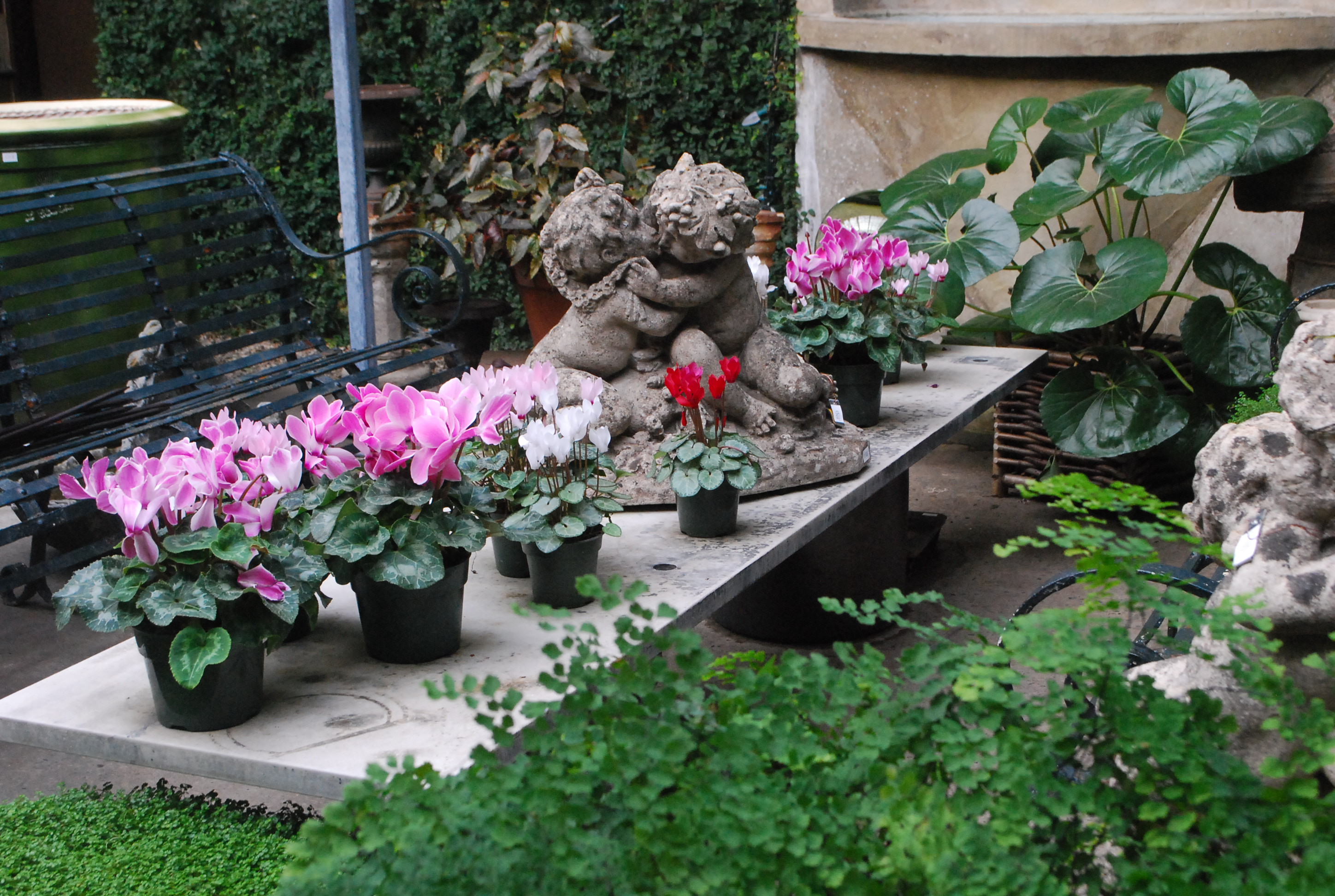
Regrettably, there are no plants in my life right now.  I think the high temperature for the day was 18 degrees, and the ground is covered in snow.  Not that I mind this-it seems so normal and ordinary.  I don’t do much in the way of plants to help my situation.  I will admit to an aversion to houseplants-plants inside any building besides a conservatory or greenhouse just seems wrong.  All of the plants at the shop are huddled together in the one room with a glass roof.  This is not an especially attractive look.  The heat is set at a very chilly 45 degrees.  The garage has a rag tag collection of boxwood topiaries we are wintering for clients, a few espaliers, and some red dracaenas I could not bear to part with. I will spare you any images of this pathetic scene.
conservatory-floor.jpg

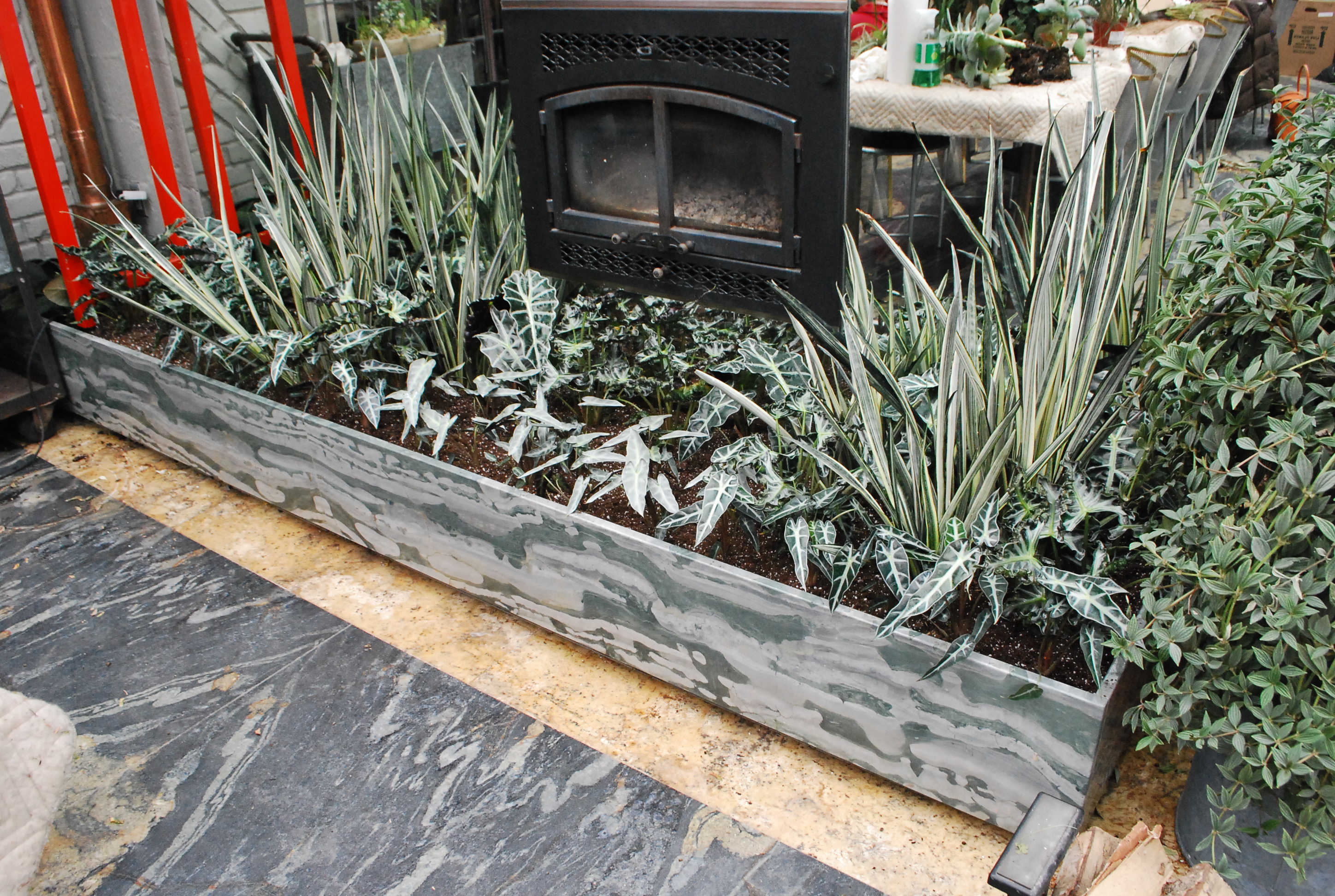
Most of my landscape design efforts revolve around the plants.  Their mature size and stature.  What they require to grow.  The color of their leaves.  Their texture and fragrance.  Their longevity, and ease of cultivation.  Woody landscape plants require stewardship, and thoughtful maintenenace.  Perennials? Successful cultivation requires a lot of time and committment.  But there are other elements that go into a great landscape that involve materials.  Materials for walkway, driveways, and terraces.  Materials with which to make shelter.  Materials for pots and containers.  Utilitarian materials.  Materials to spring on the landscape-just for the sheer joy of it.  Keeping up with the beautiful materials that are suited for outdoor use is a time consuming job.  The best time to explore landscape materials is that time when the pressure to make a decision for a specific spot is a few months away.
stone-samples.jpg

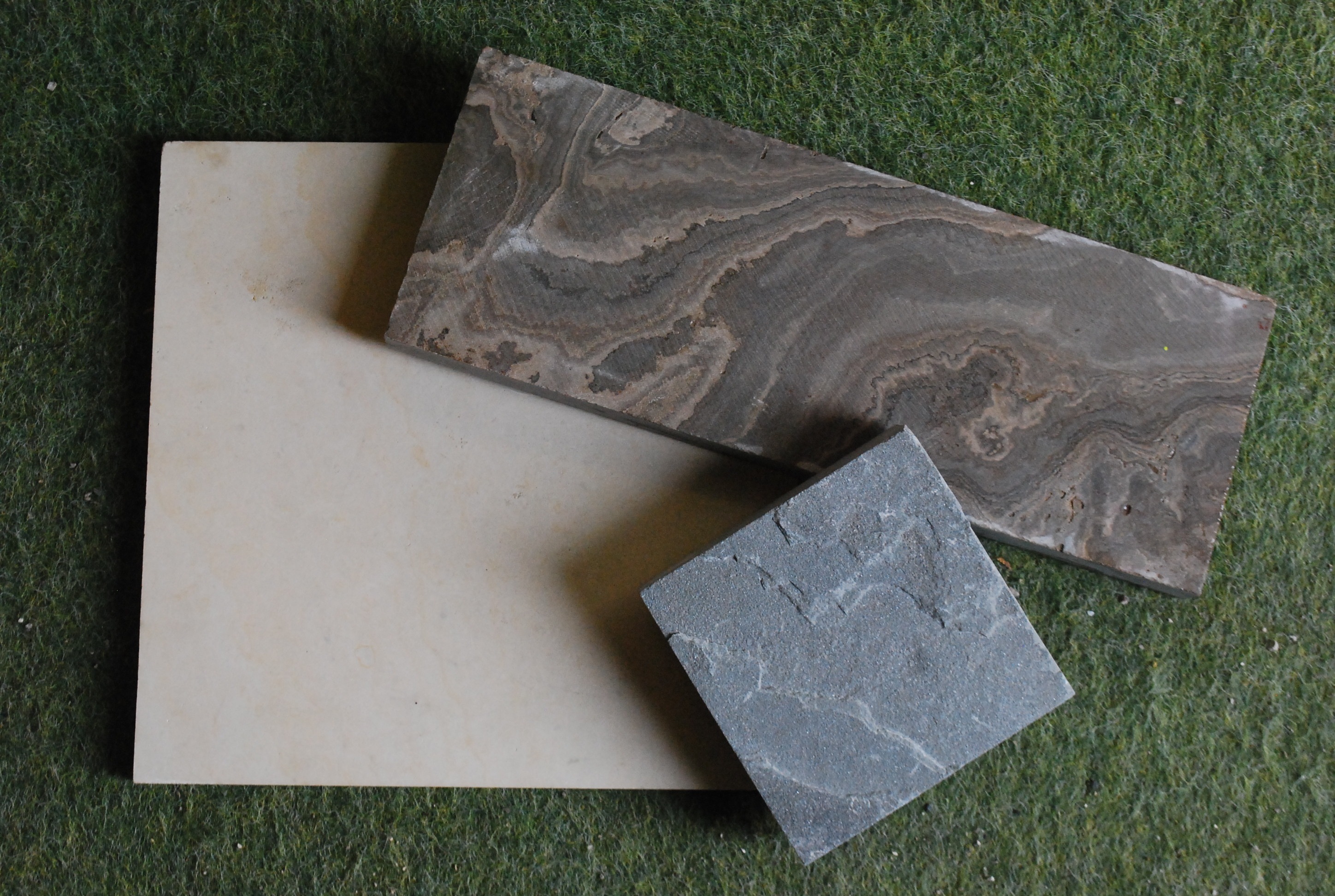
Stone is a landscape material with no end of possibilities.  Sandstone chopped into regular shapes is a great material for retaining walls.  This porous stone is an ideal place for colonies of moss to develop and prosper.  Shaped and thermal finished stone is utterly civilized, and easy to navigate.  Natural stone has an irregular surface which is pleasurable to the eye.  Local stone fits in.  Vintage stone has an aura that affects every other landscape element.
concrete-pavers.jpg

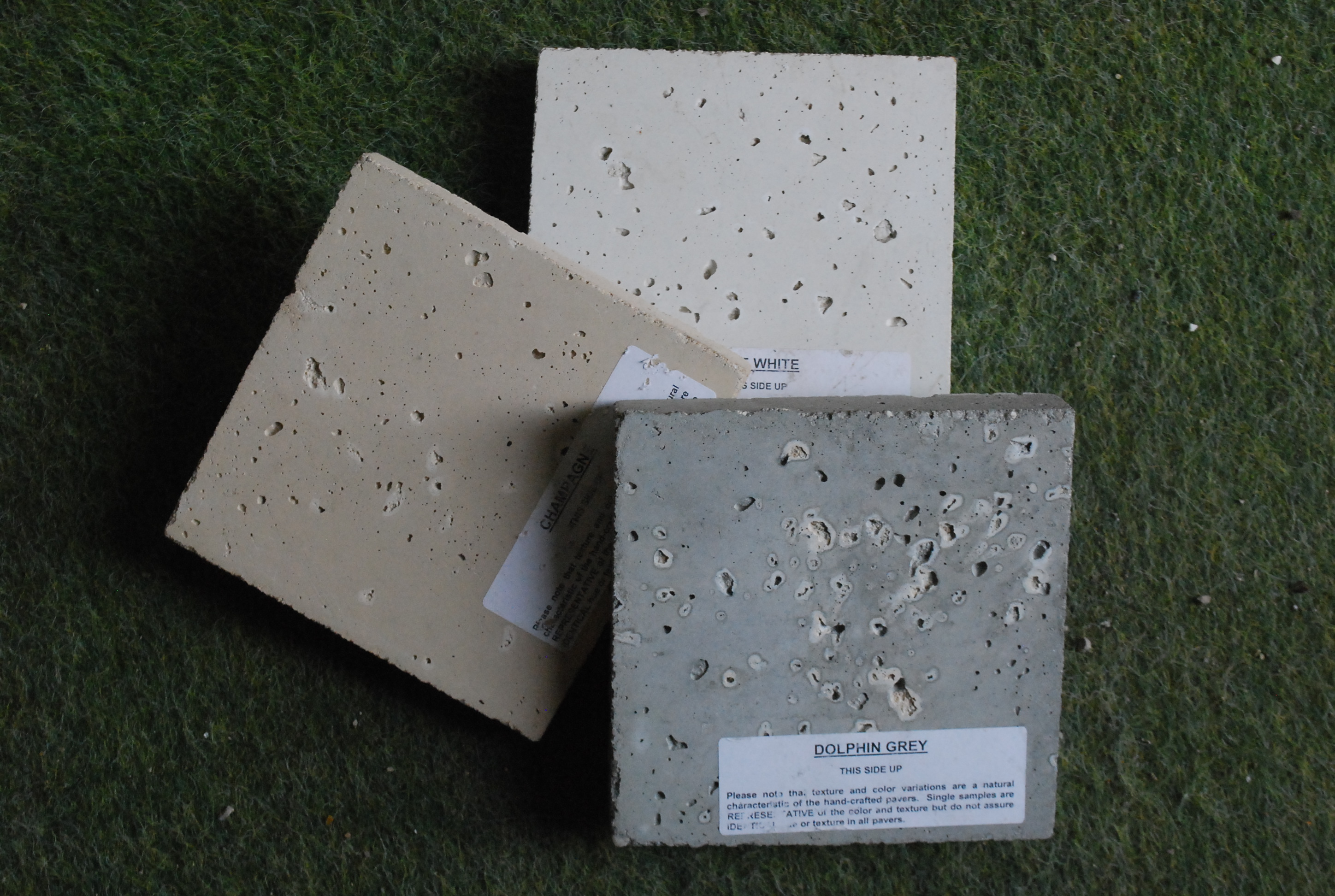
Concrete is a material with no end of incarnations.  Concrete aggregate is a beautiful material fo a contemporary driveway.  Cracked concrete sidewalks grayed with age have a charm I cannot really explain.  Stamped concrete-I am not a fan.  I like concrete in the landscape that makes no bones about the fact that it is concrete, not stamped to look like something it is not. 
wood-walkway.jpg

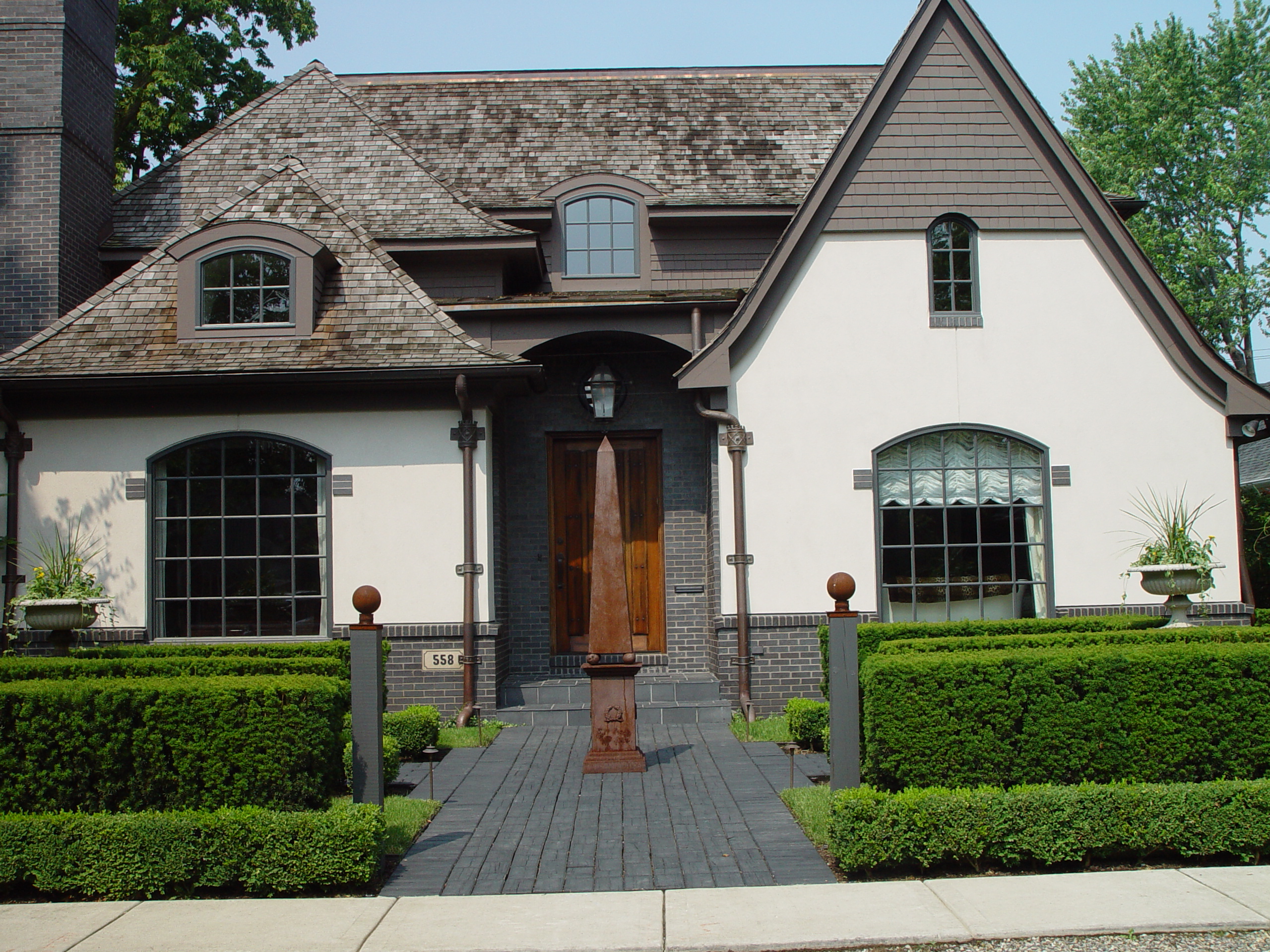
Wood, that material that comes from trees, is available in lots of species, surfaces, and finishes-some predictable, and some unusual.  This sidewalk was installed from ordinary pressure treated lumber, scored into brick shapes, and dyed with black aniline dye. 
vintage-road-brick.jpg
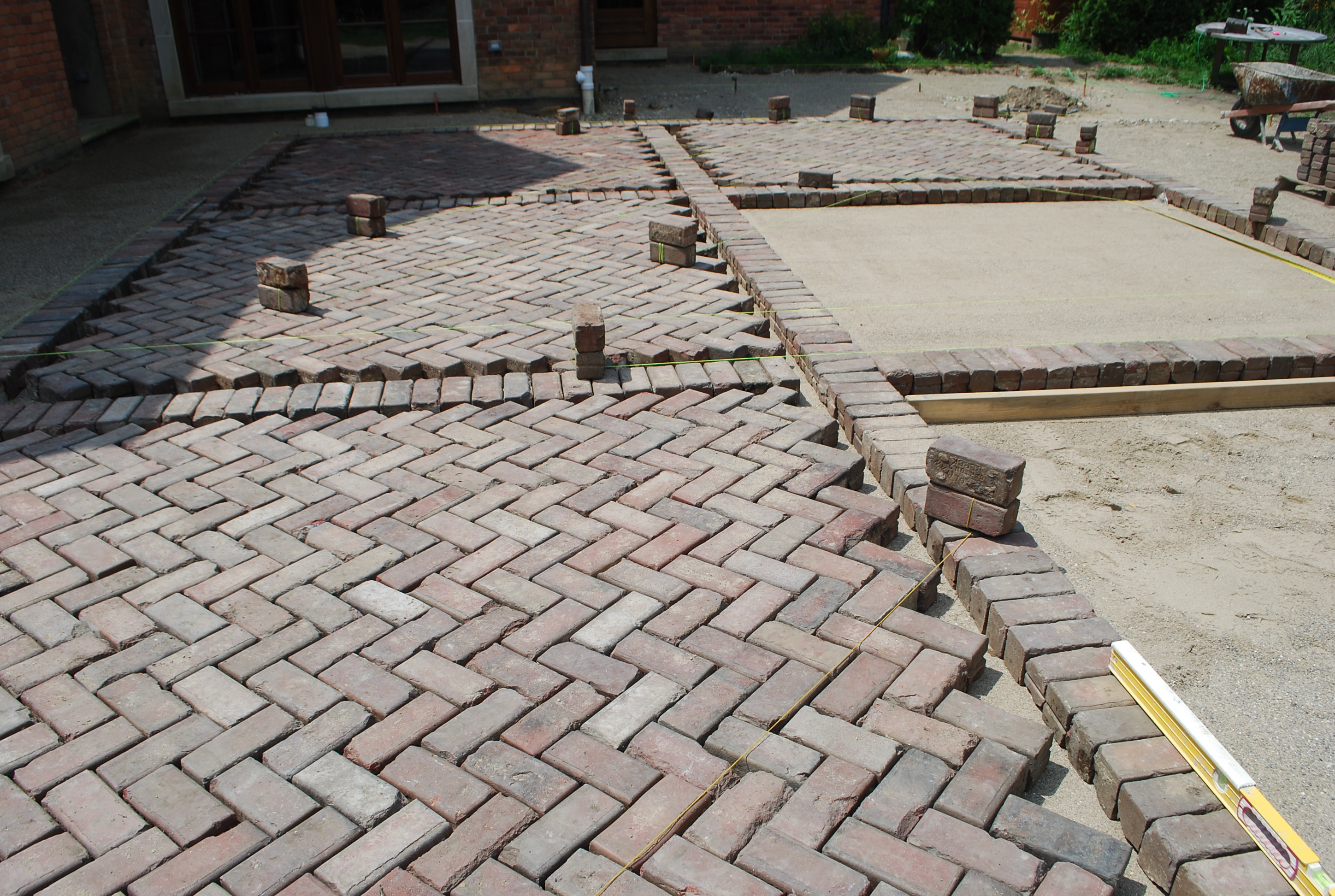
Reclaimed materials can be just as exciting as new ones.  These early 20th century fireclay road bricks made a great terrace for a 1920’s English tudor style home.
glass-tiles.jpg
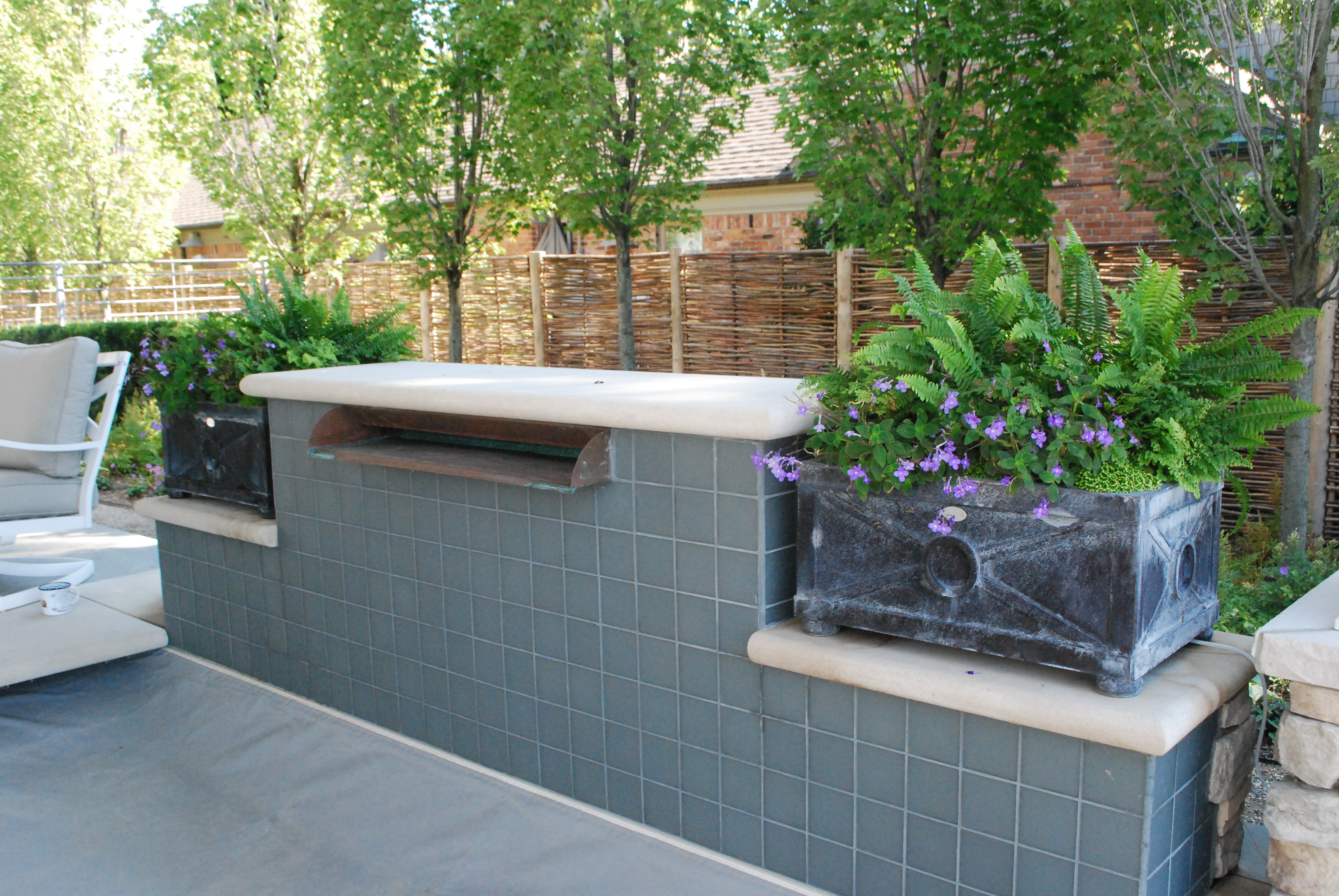
Exterior rated glass tiles are a smooth and comfortable surface for a spa.
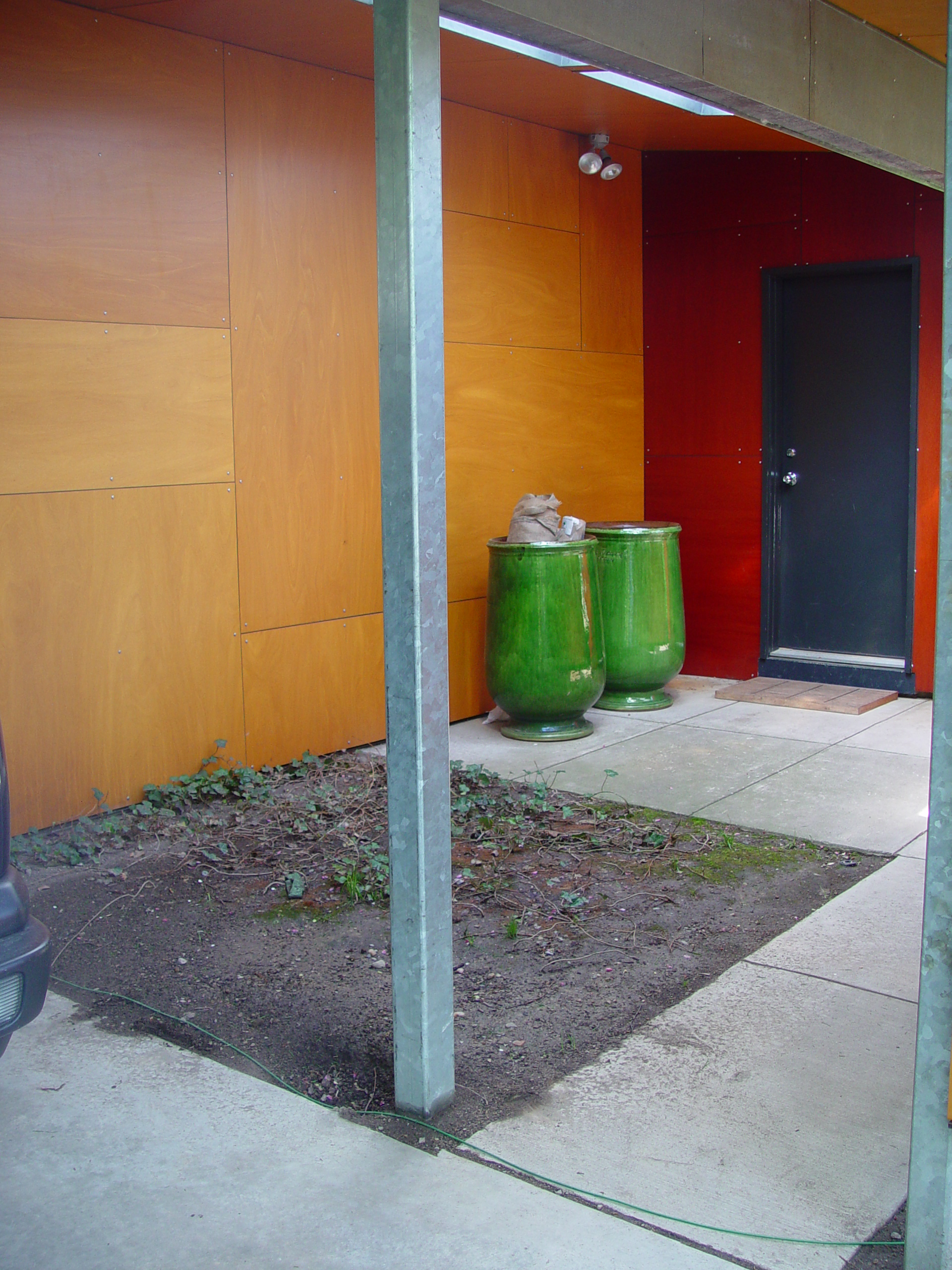
stained-exterior-plywood-sheathing.jpg
This building material was unknown to me until the moment I saw it.  What a beautiful surface it is for a contemporary home.  Most certainly this material would inspire the landscape design. 
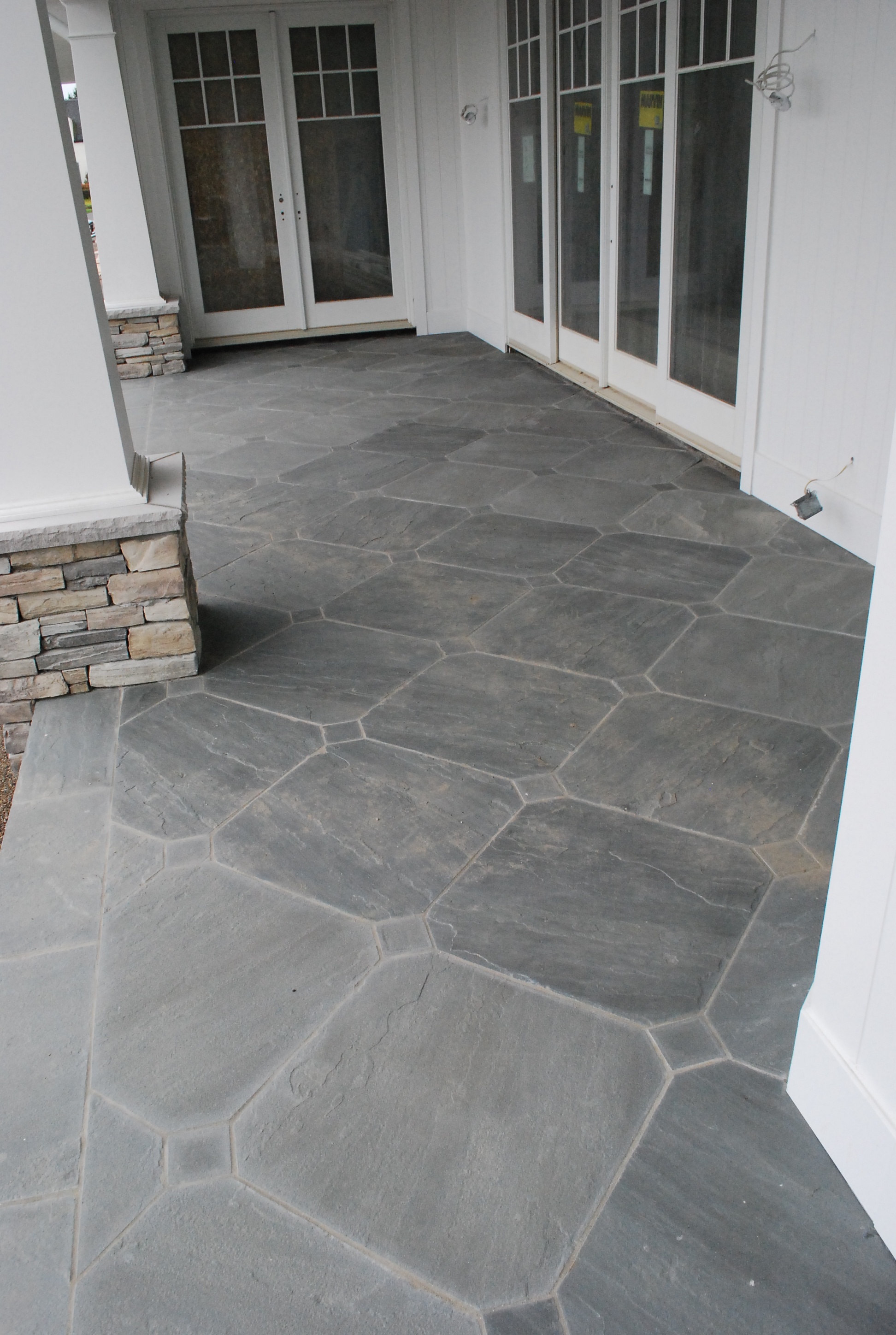
bluestone-pavings.jpg

This back porch of bluestone squares and dots features an unusual pattern installed with a common material.

beach-glass-terrace.jpg

This gravel terrace was finished in a thin layer of multicolored beach glass. 
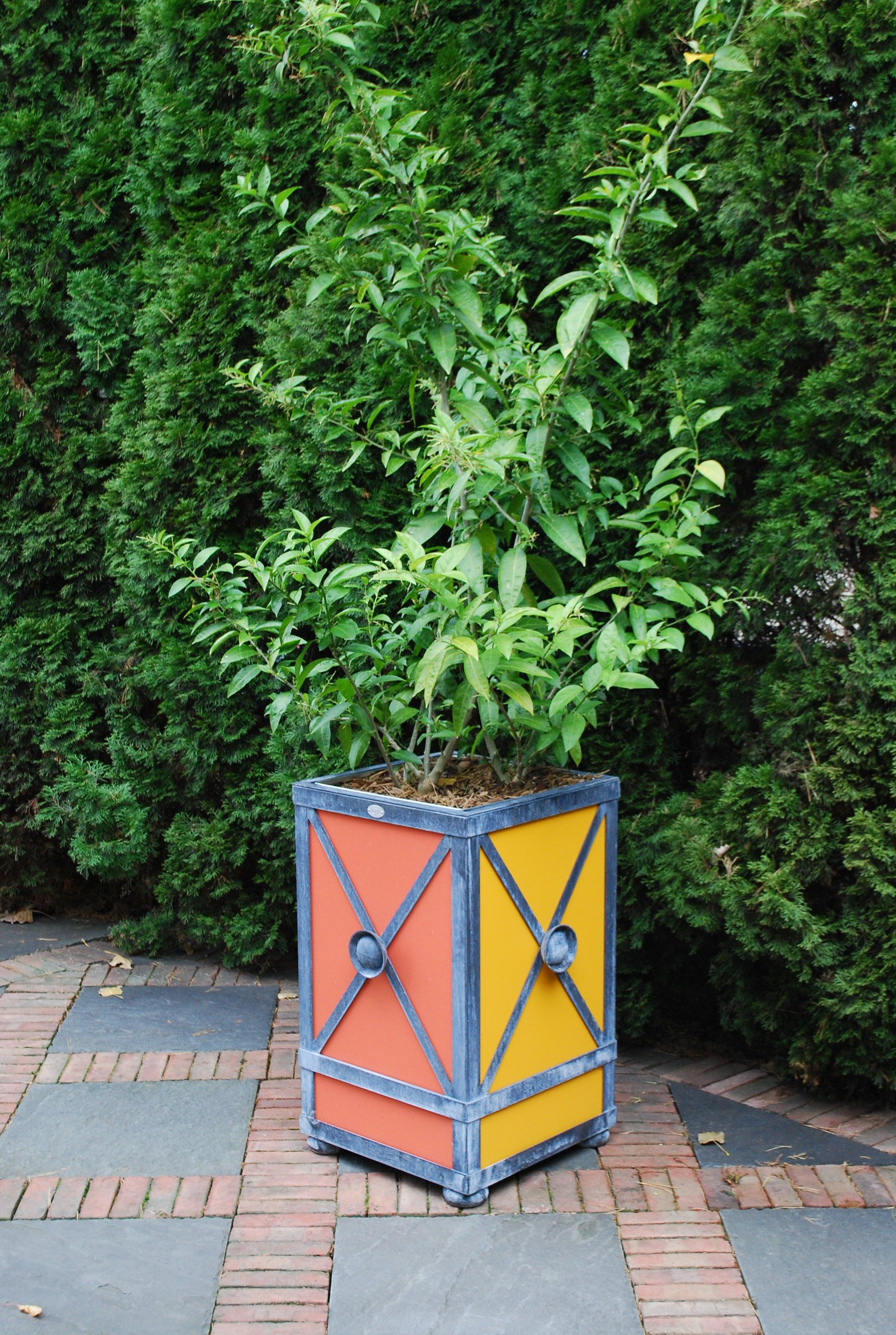
steel-and-painted-panelled-container.jpg

A steel container with painted panels in alternating colors provides a big splash of color.
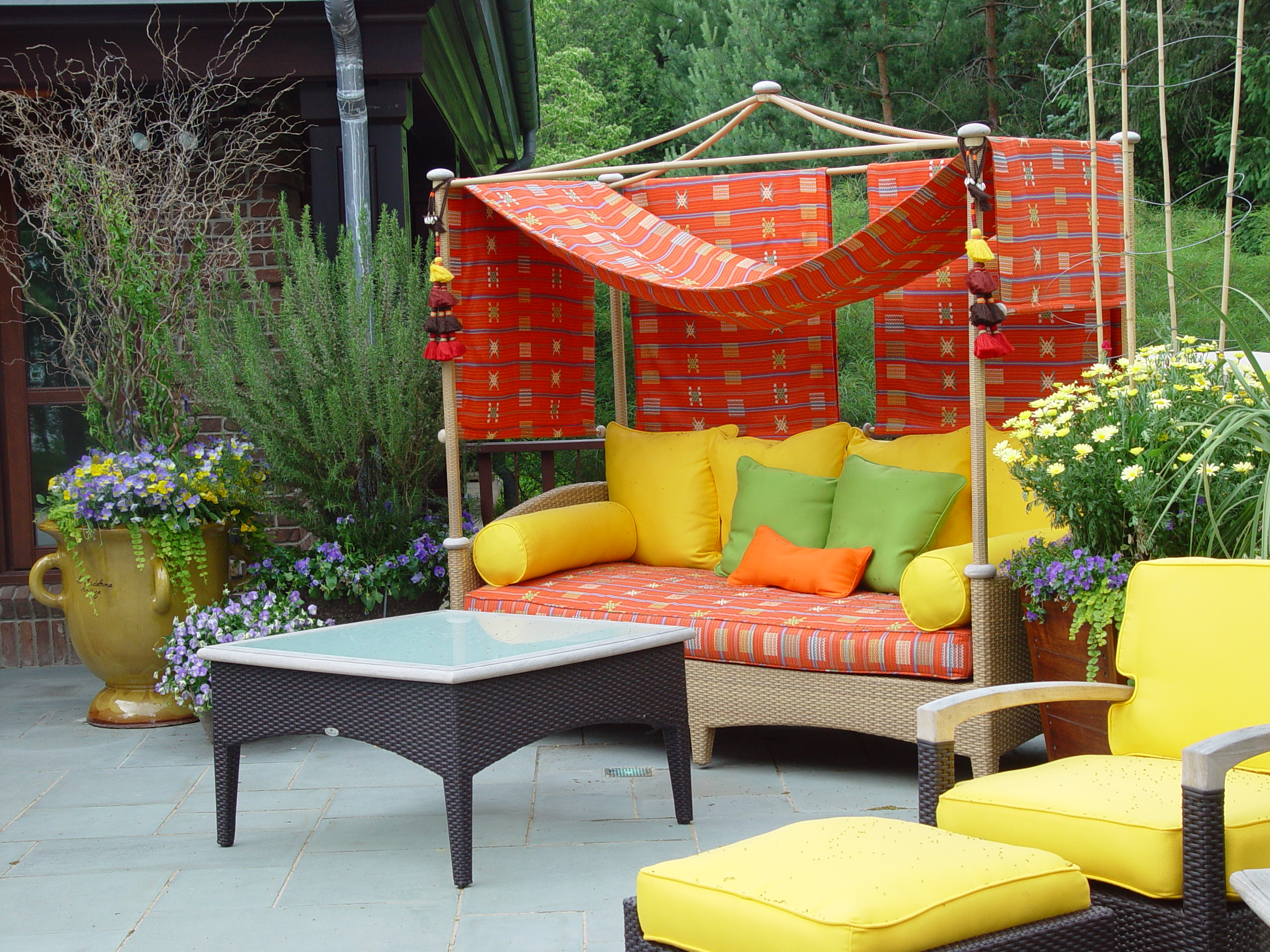
Donghia exterior fabrics

 Fabrics that can withstand the weather are of incredibly good quality now.  They resist fading and mildew.  This resin garden furniture from Gloucester would have a completely different look without all of the color provided by these fabrics.  Researching and choosing materials for the garden to come is a great way to spend some February time.

Sunday Opinion: Guaranteed

A garden comes with no real guarantee of success-just like everything else in life.  Gardeners buy plants-some work and take hold, some fail.  Some succumb to poor placement.  Some lack for water too long, and die.  Some rot and keel over from too much water.  Some cannot handle that once in ten years and especially vicious winter.  Some languish on for years, and finally give up.  Some plants die for no reason that you or I, or any other good gardener can figure out.  Some relationships just do not work. 

 A tree that is planted too deep will never grow out of that insult.  A maple in the right of way might take 35 years to die from girdling roots, but die it will.  A black walnut in a neighboring yard, 80 feet away from your spruce, is an unseen threat to your spruce.  Japanese beetles can defoliate your roses and lindens.  Anthracnose is a disease that kills dogwoods, and London Plane trees.  Impatiens downy mildew killed thousands of plants in my area this summer.  More than likely, this fungus will live over the soil where those impatiens were planted.

Late spring frosts, high winds, ice, drought-there are no end of natural conditions that conspire to kill your plants.  A kid rides a bike over your prize lilies.  A tree drops a huge rotten limb on your house-who knew it was rotted?  Disaster can happen in the blink of an eye.  The life of a garden is a big fluid situation for which there is no insurance policy available. 

 The salesperson who sold me my Chevy Suburban in 2004 wanted to go over the warranty agreement-line by line.  I was patient about that time I spent with her, but in my heart I knew it was my responsibility to maintain that truck.  I knew the vehicle would run a long time, provided that I provided the care it needed.  Parts wear out.  Fuses blow.  Electric windows quit working.  Oil leaks out onto the driveway.  All of this mayhem is to be expected.    

Nurseries, garden centers, and landscape professionals all have their individual version of a warranty on plants.  I warranty, and guarantee that I have placed plants properly.  I guarantee the health of the plants at the time of planting.  I guarantee that I have placed plants properly.   I go on to guarantee any situation in which is is impossible to determine what went wrong.  My clients are really great people.  Honoring a guarantee can be a way of saying thank you.  It is a way of saying I am in this with you-through thick and thin.  

I can guarantee that if you plant new trees or shrubs, and do not water them by hand, regularly, no doubt you will have problems.  I can guarantee that the smallest annual and perennial plants require the most attention.  A newly planted perennial lacking one moment too long for water can die.  A big tree, with an appropriately big rootball, might outlast and take hold in spite of intermittent care.    I can guarantee that any garden reads as the sum total of the care given to it.  I can guarantee that if you take on more than you are able to maintain, problems will arise.  I can guarantee that if you run your sprinkler system 2 times a day, and every day, plants will die.  A tree that sheds all of its leaves, or fails to leaf out-you need to call the doctor.   

Guarantees apply primarily to washers, garbage disposals, roofs, bed springs, phones and Chevies-mechanical devices.  Not living things.  Even so, I marvel that any manufacturer guarantees a device that they have no way of tracking.  Your doctor should be a great scientist, and an inspired diagnostitian.  Even if she is all of the above, she cannot guarantee a happy and care free outcome for your health.  No one will ever care about your health, your chevy, your washing machine or your myrtle topiary as much as you do.  Take care of all of the above.  At the first sign of trouble, ask for help.

 As for the garden, I would advise that you take charge.  From the day that landscape or garden is planted.  Clients hire me to design and plant. Beyond that,  I go the extra mile.  I coordinate with the irrigation contractor.  I swing by frequently for a few weeks.  I stay in touch.  I am happy to be a backstop.  Some clients contract for 6 months of supervision.  This says more about their sense of responsibility than their lack of attention to that landscape.  Lots of my clients are very busy people-should they ask for help, I give it.  In the end, most every gardener owns their own problems.  That includes me.  I have many times in hindsight kicked myself for the loss of a plant that I could have easily provided for.       

My advice? Be presidential.  Run your landscape as it should be run.  Self insure-it will free up your energy to do what you love best.  The time it takes to establish blame for a struggling garden is wasted time.  That negative energy-who wants to be stained by that?   Admit your failures, and move on.  Gripe all you want, and apply what you have learned to the next step.  

For sure, no one else will treasure your garden like you do.  Your garden is first and foremost your garden.  Take ownership.  Guarantee your committment.  Guarantee to learn from your failures.  This is what gardeners do.         


Breaking Ground


Theodore Roethke is one of America’s most respected poets.  He was born in Saginaw, Michigan in 1908, to German immigrant parents-Otto Roethke and Helen Heubner.  His parents were market gardeners, and owned and operated 25 acres of greenhouses with Theodore’s uncle.  Much of his childhood was spent in those greenhouses.  His second book, “The Lost Son”, contains several of what are known as his greenhouse poems. 

Images and metaphors derived from the natural world are much a part of his writing.  Long before I ever had the conscious idea to design gardens, I treasured his work. I studied early twentieth century poetry in some detail in college.  For whatever reason, many of the lines from his poems have stayed with me.

One phrase I have always liked- “The time comes when the vague life of the mouth no longer suffices…”  I am taking this phrase completely out of the contextural meaning of the poem, but it perfectly expresses that moment when the time for the designing, the discussion, the redesigning, and the additional discussion, comes to an end.  Enough decisions have been made in order for a project to proceed.   

A landscape plan is just so many marks on a page-a drawing.  That drawing has only two dimensions.  It does not really describe the sculpture that will be.  But drawings are critical in a project such as this.  Preceeding the landscape, a pool and poolhouse will be built.  Though my drawing described the physical location, shape and size of the pool, and the location of the poolhouse, that drawing needed lots of details-what materials would be used?  What would the poolhouse look like?  What features would be incorporated?  How many months of the year did the client foresee using it?  Building a pool and poolhouse is a complicated and considerable undertaking, but even the smallest landscape project needs to be thought through.

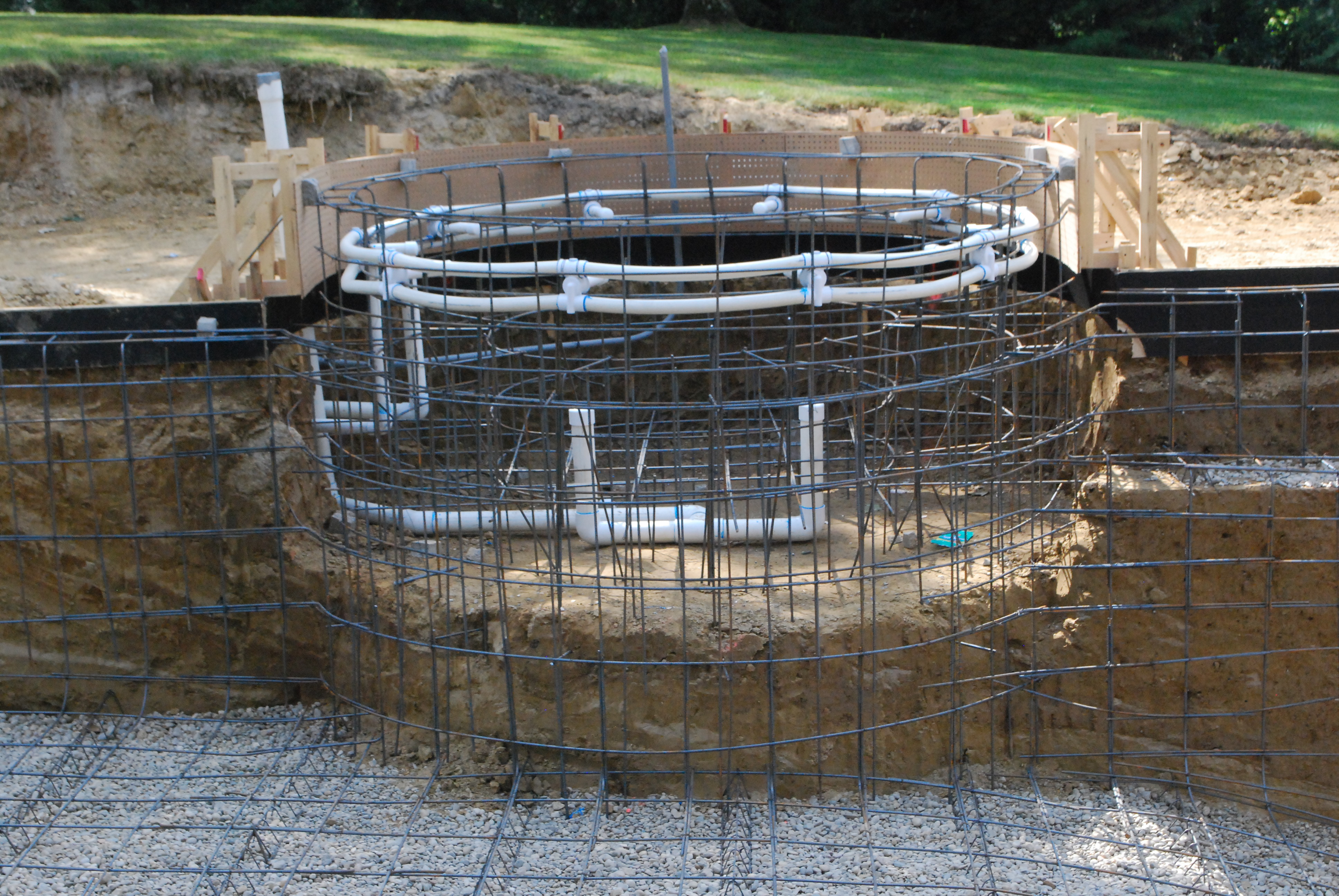
The integral spa on axis with the rear terrace was agreed upon, but the client wanted a slightly longer and slightly narrower pool.  The architect took my idea for a pair of poolhouses linked by a conservatory structure, and designed the poolhouse.  The general contractor decided with the client how the interior space would be handled.  He needed the poolhouse to be longer, so as to have inside space for the pool equipment.  He favored solar panels to warm the poolhouse early and late in the season.  I integrated these and every other good idea into what became the final landscape plan.  Ideas are one thing.  Building a project requires ideas that work. 


The pool contractor sorted out all of the many details needed to build the pool.  The depths of the water, the steps, the filtration system.  The general contractor oversees the entire project, so construction goes smoothly, and things happen in the right order.  This GC is very low key, and equally good at problem solving-just the person to handle a project like this. 

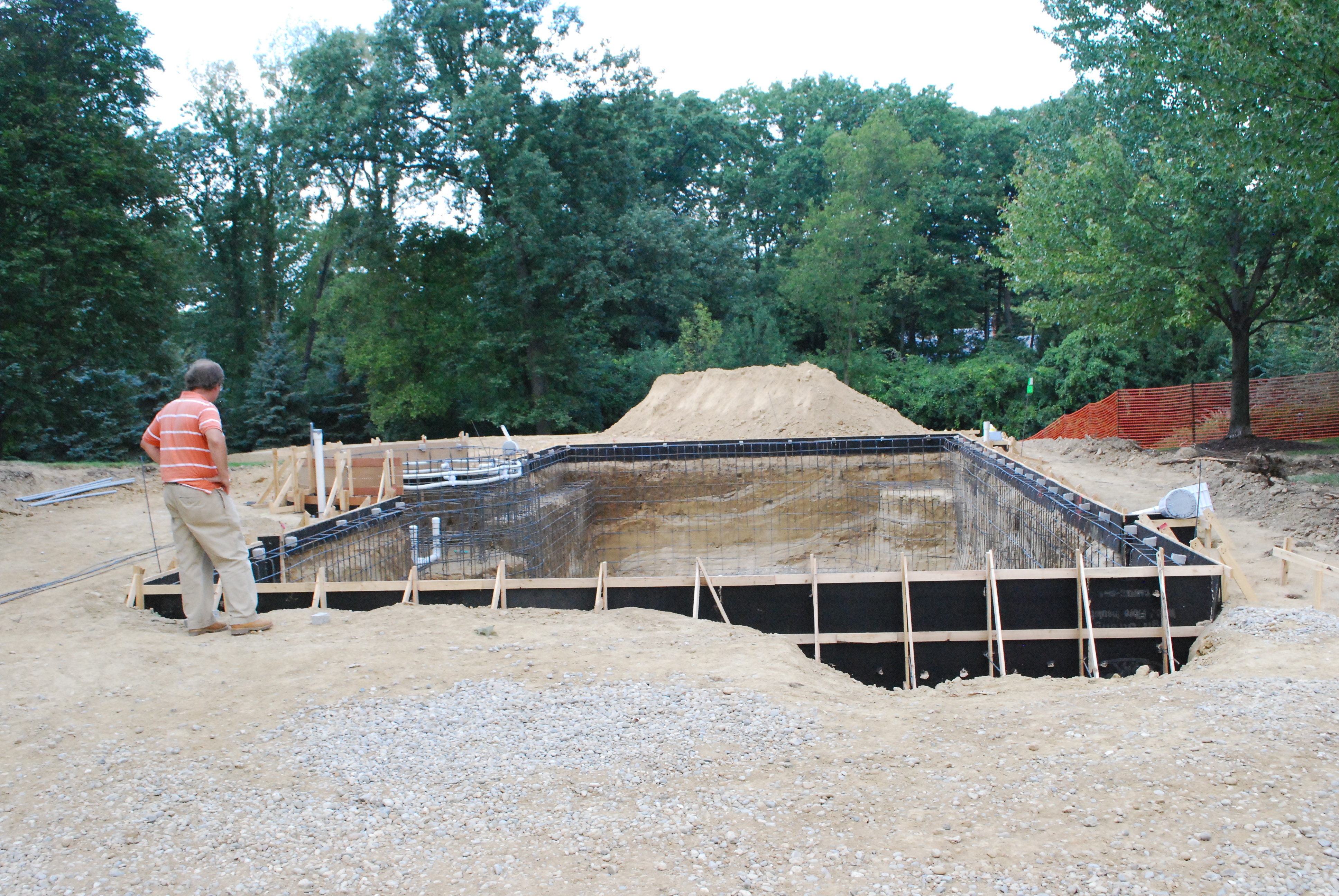
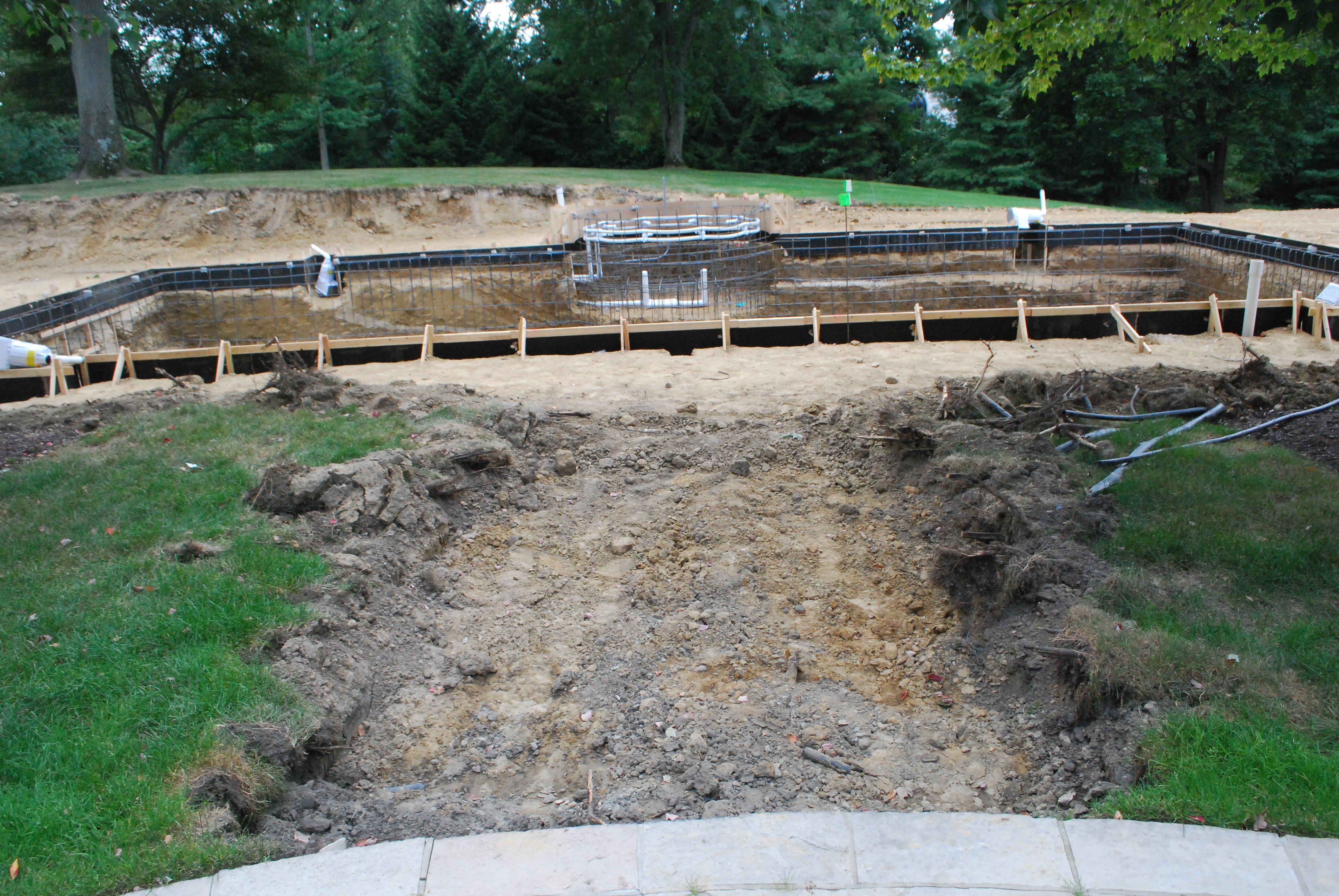
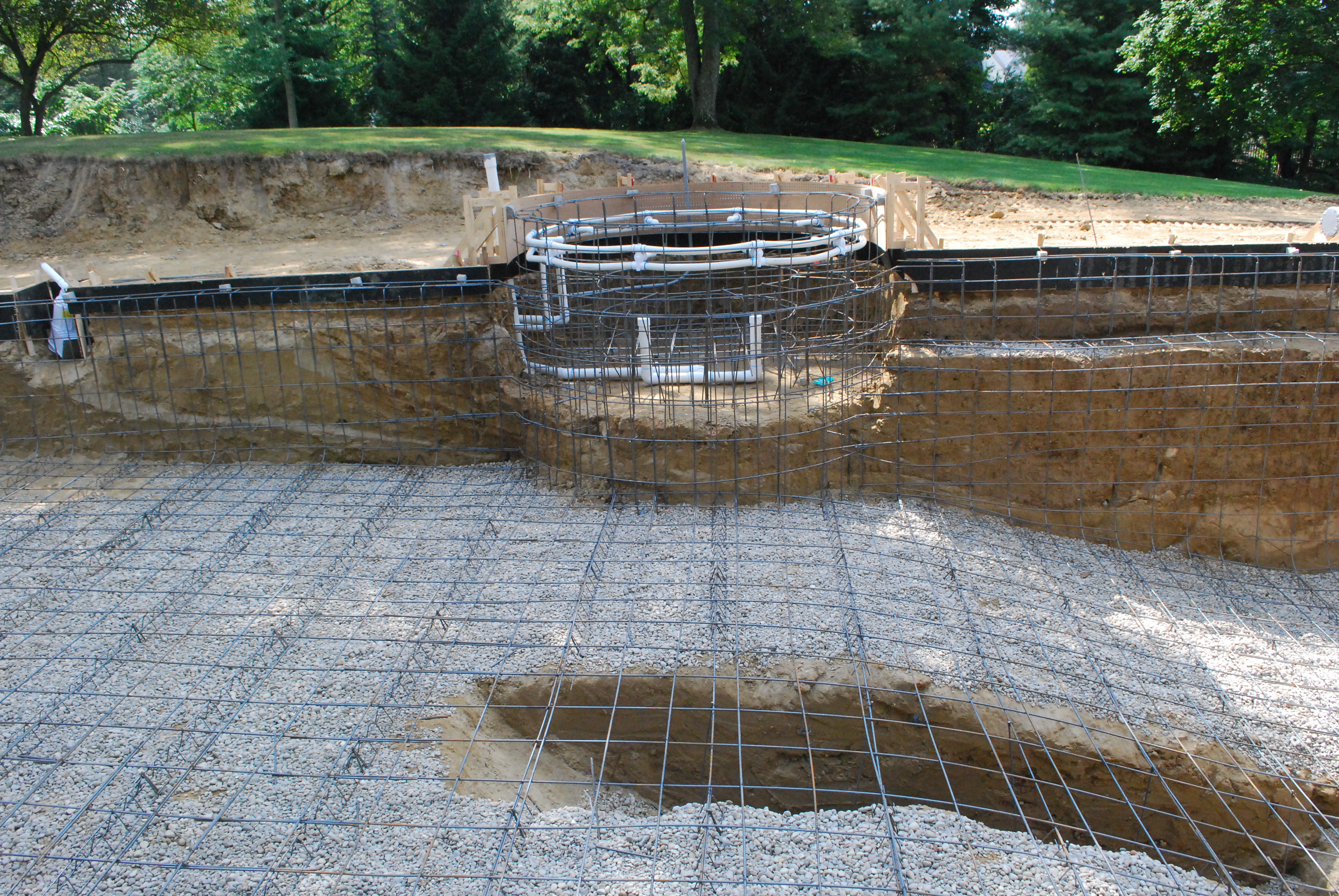
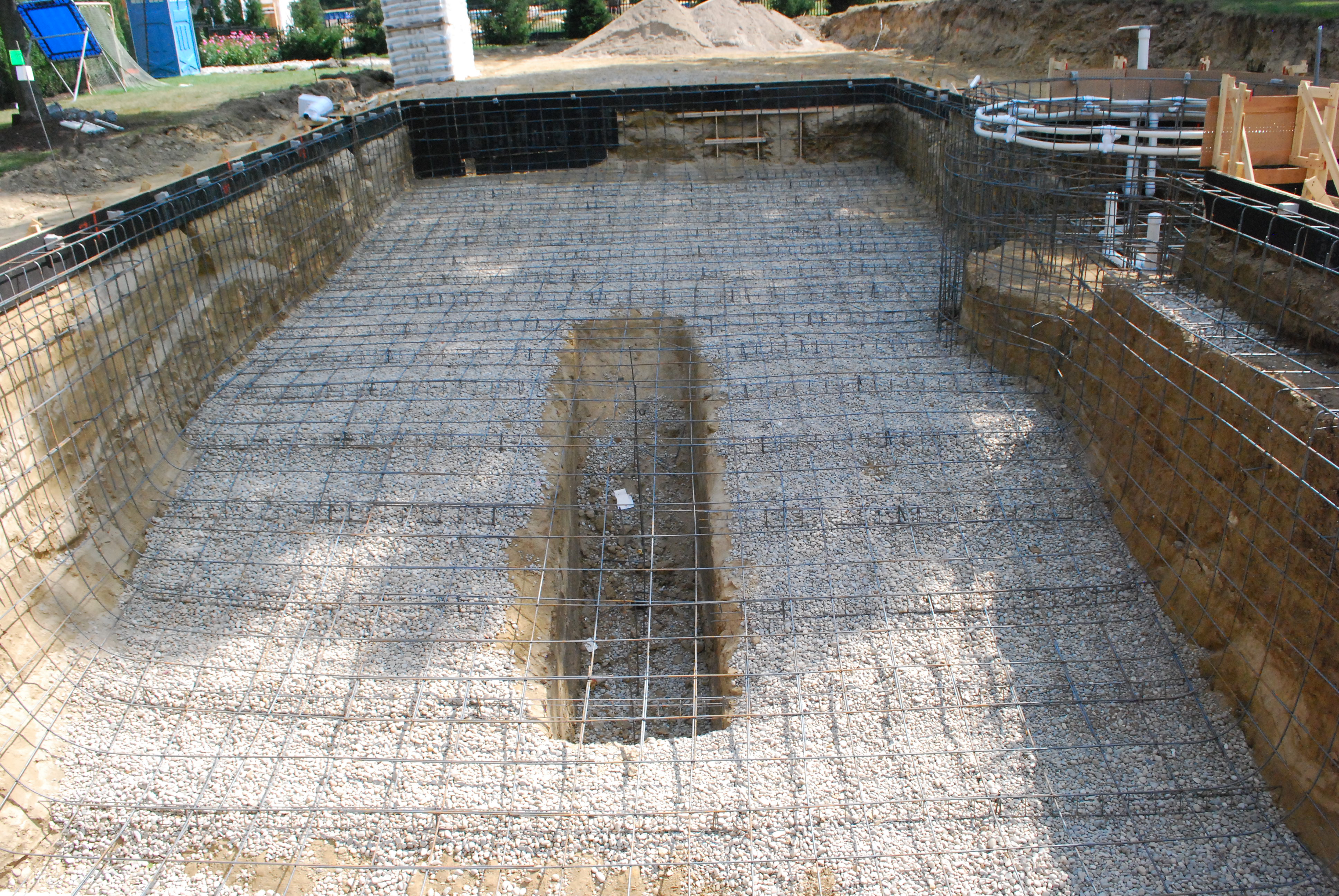
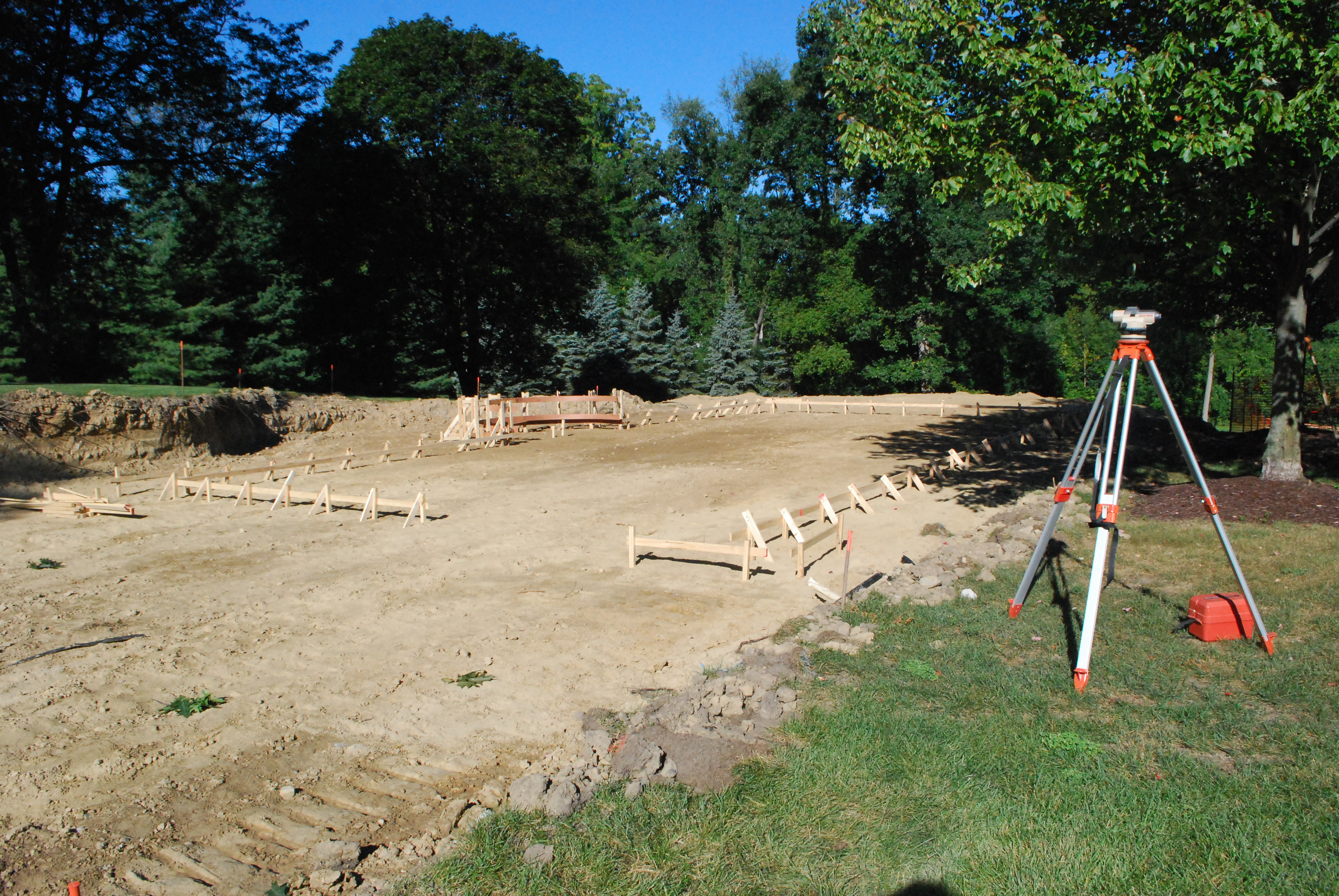
Once a coherent design emerged from the client and all of the design and build people, finish plans were drawn, and submitted for review to the planning board. Once the permit was issued, the pool was dug, and lined with a steel mesh that would reinforce the concrete.  The giant and deep hole you see here, encompassing the steep change of depth of the pool, will be filled with concrete.  This will stabilize the entire underwater structure. A pool needs to stay put.  Any action from the frost that might heave the pool upwards, and crack it-every effort is taken to avoid that. 

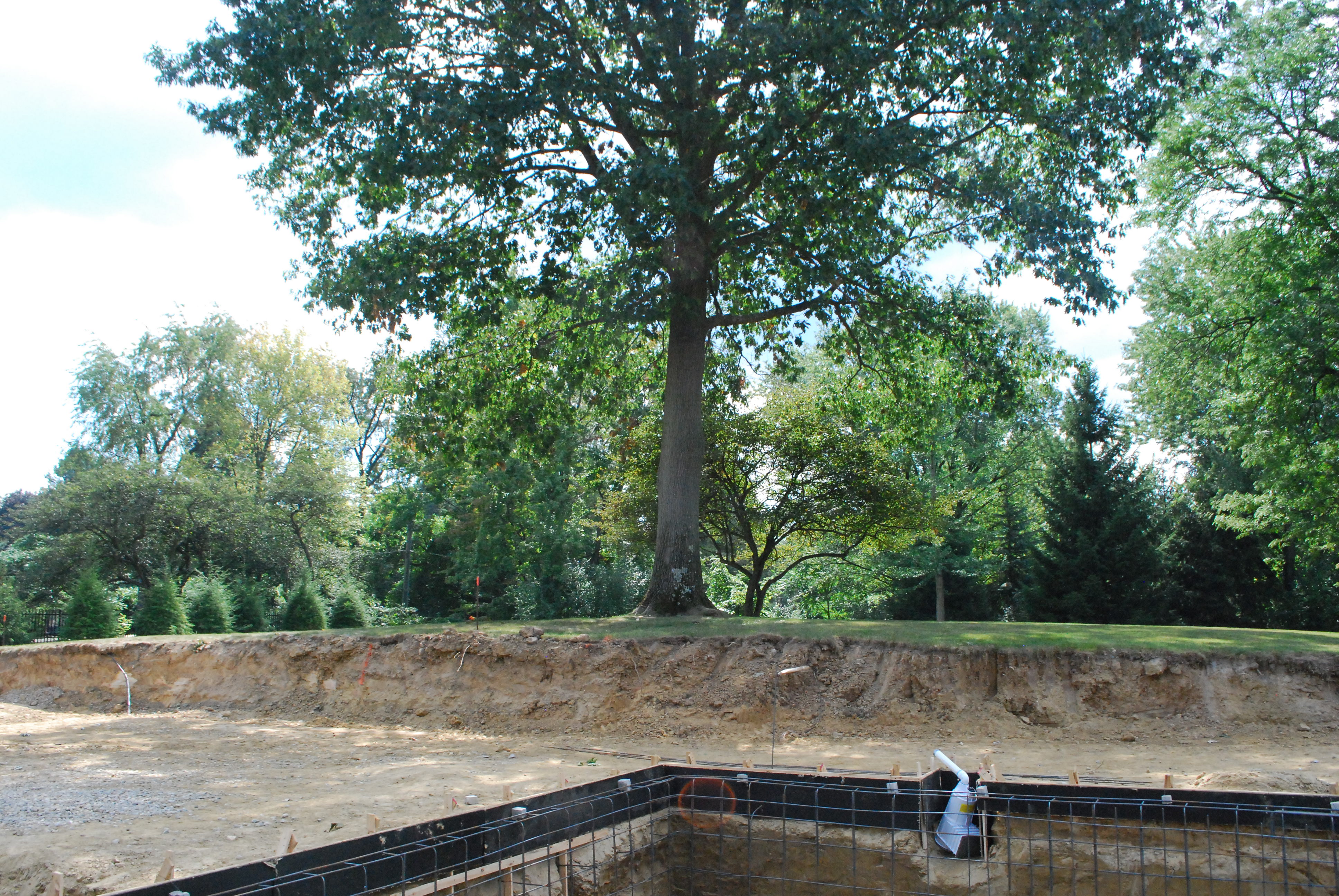
Of primary concern in the initial design-a gorgeous oak of considerable stature.  My clients love this tree.  The pool was sited to avoid any damage to it.  I was relieved to see no roots exposed in the excavation necessary to provide level ground for the pool.  This oak sits on a hill that slopes dramatically down to the house.  Eventually, a stone retaining wall between 3 and 4 feet tall will be built to hold the soil on the oak side.  The pool and surround will be built at the grade of an existing rear terrace.  A drainage plan for both the ground and the wall-a subject of much discussion and planning.  

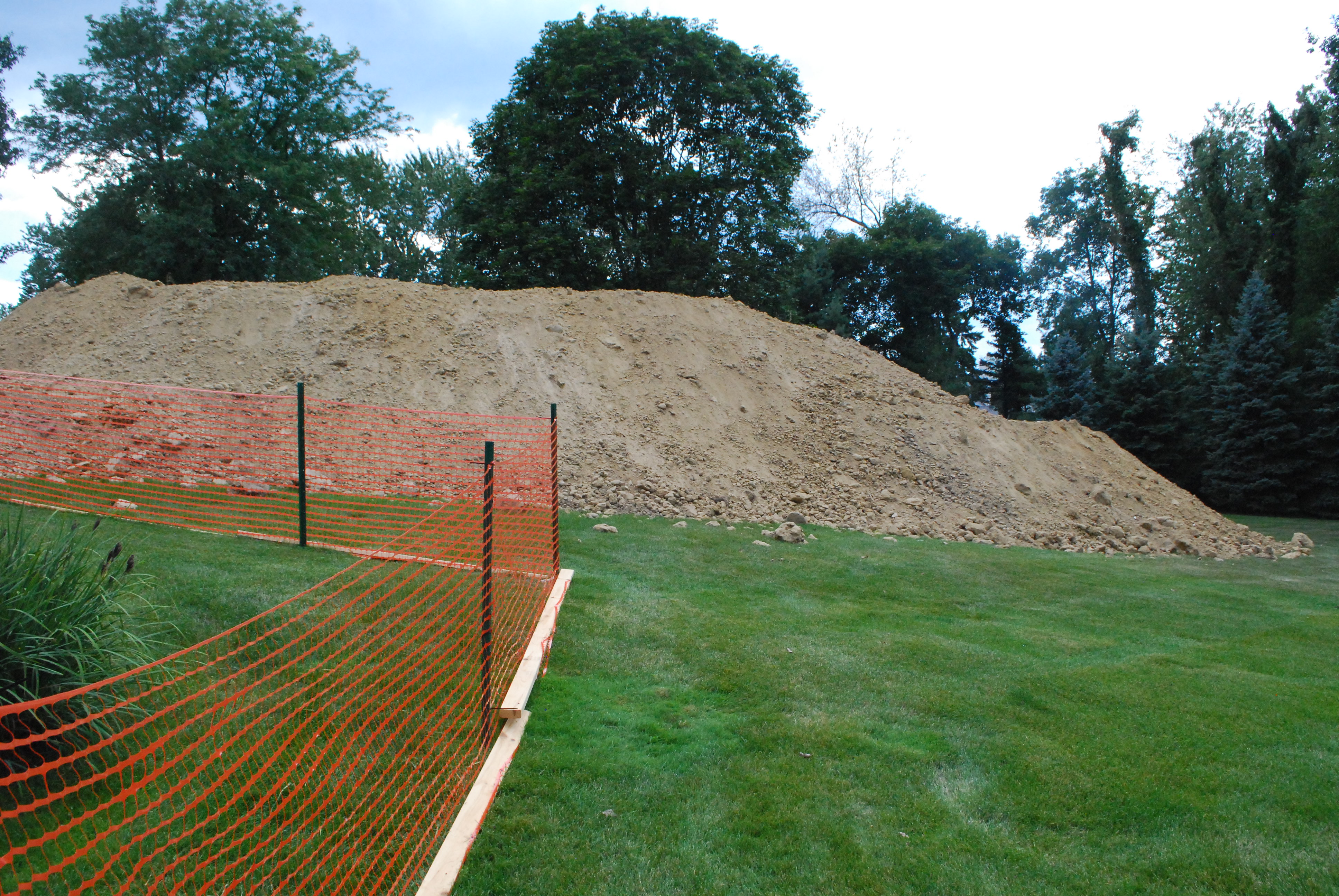
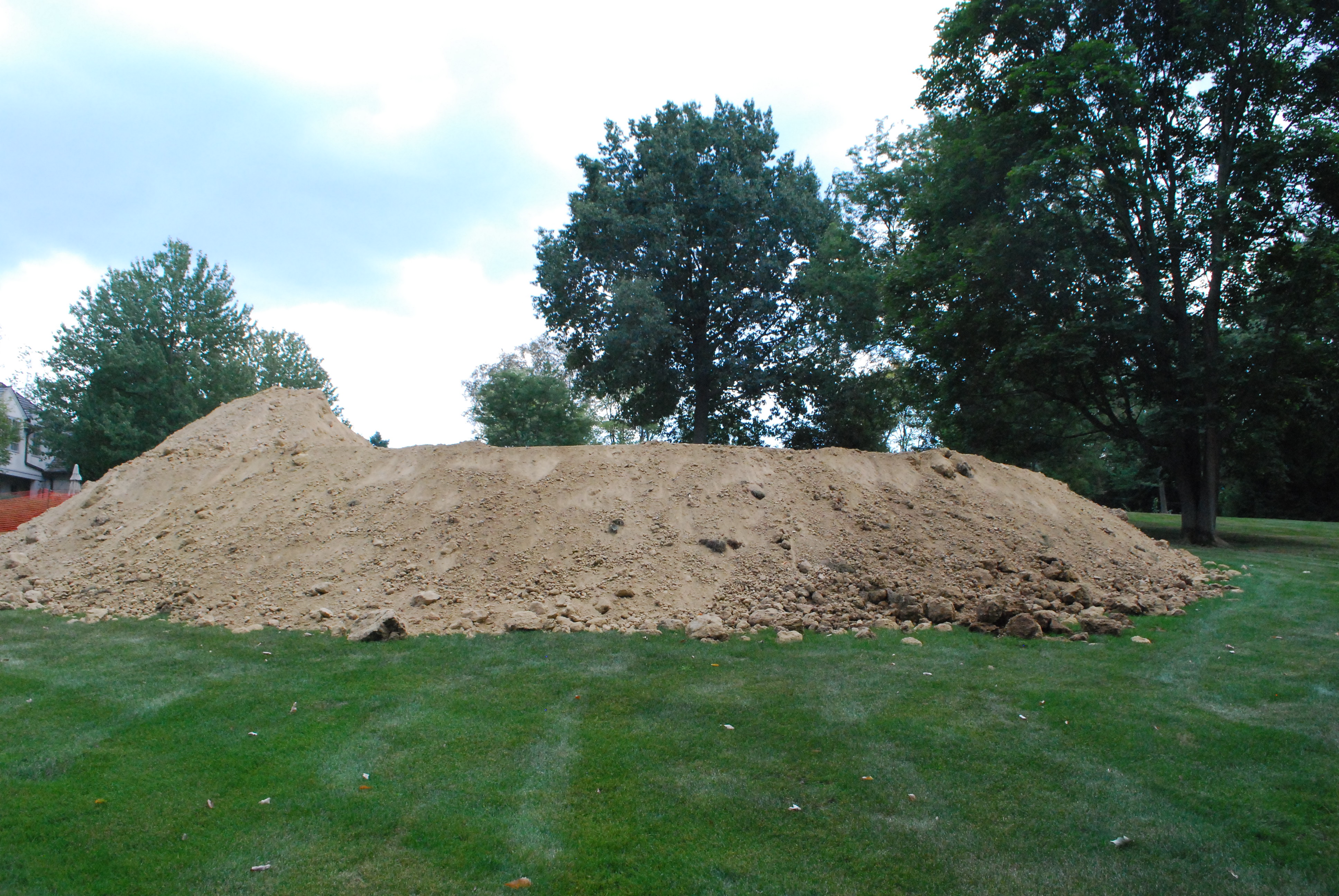
A decision was made to integrate the soil unearthed from the excavation of the pool into the existing property.  Hauling away soil is a time consuming and expensive process.    This is a large property, and I have ideas about where this soil can go.  The drainage work, and grading of this soil is part of the landscape project. 

No one could like a gigantic pile of dirt awaiting a sculptural disposition better than I.  I have walked the property at least 5 times, imagining what might be come of it.  I am inclined to leave most of it on this north end of the pool.  The natural grade of the land at the north end of what will be a pool slopes down precipitously.   A large area of level ground there would be ground they can use, enjoy, and garden.  More than likely I will be able to stablilize the soil with a gradual slope down.  Perhaps we will need some retaining on the east side.

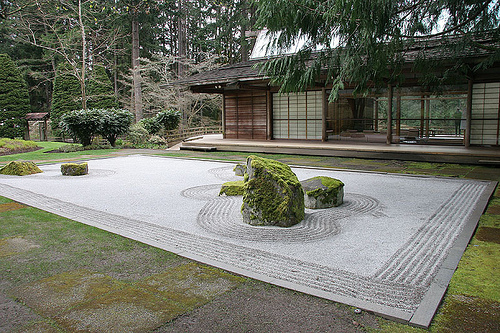
As for Thoedore Roethke,  I was thinking about him the past Friday.  He died in 1963 at the age of 55, at the home of a friend on Baimbridge Island in Washington- a heart attack while he was in the pool.   That pool was subsequently filled in, and today is the rock and sand Zen garden at the Bloedel Reserve.  No where is there any mention of Mr. Roethke, but I would imagine he would approve of a garden in this spot.  There does indeed come a time when the vague life of the mouth no longer suffices.  We broke ground.


A Small Space

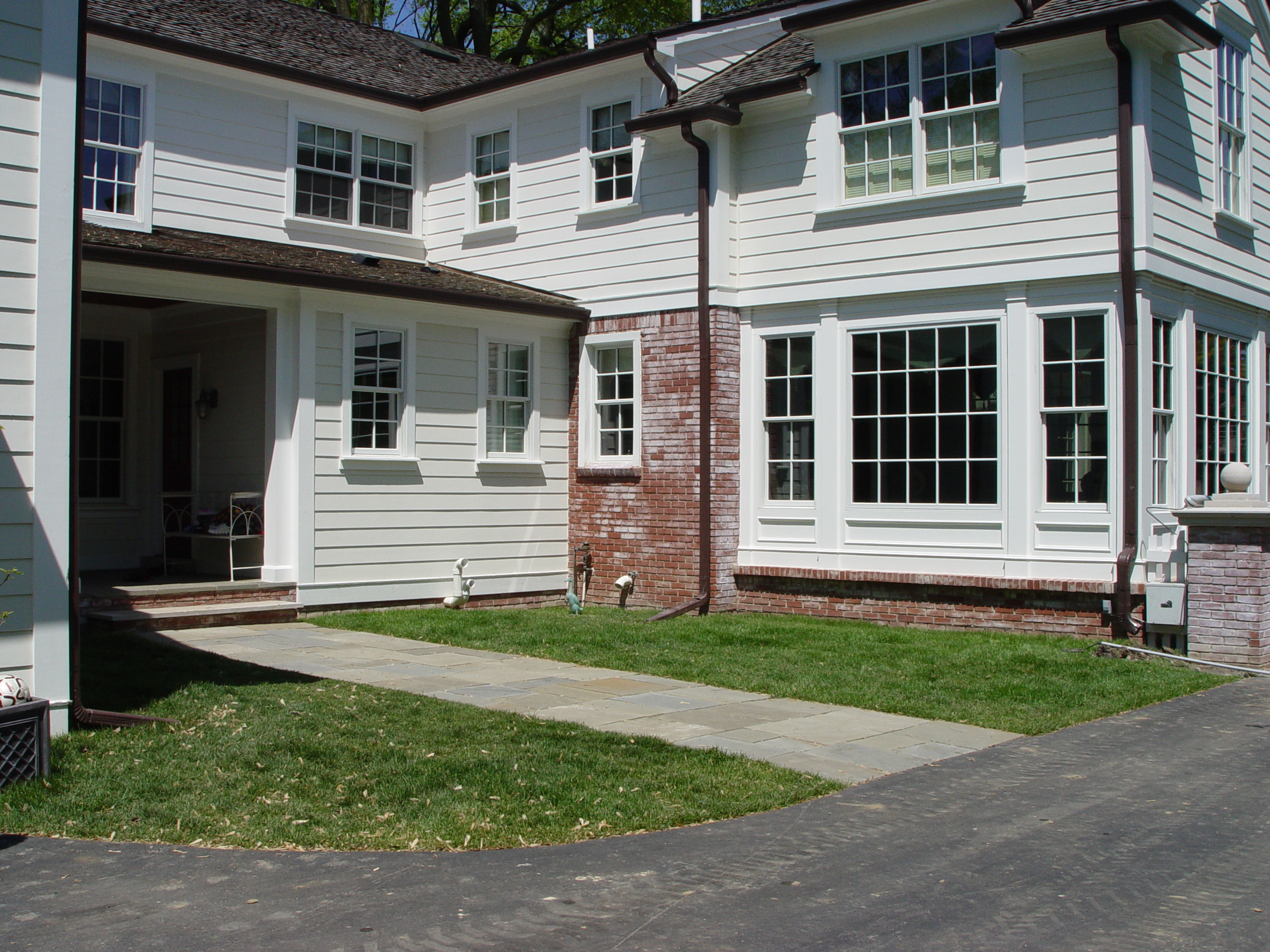
Everyone is plagued by it.  An awkward or small space.  The space that is what is left over after the invention of a more important space.  A closet, or a kitchen cabinet that is deeper than your arms are long, or way over your head.  The airspace underneath the stairs that asks for a piece of furniture that has yet to be imagined, much less made. The above picture details the problem.  A portion of the driveway on the way to the detached garage maroons a small space.  The overscaled bluestone walk to the side door chops the small space in even smaller bits.  On view, the dryer vent, the automatic gate mechanism, a hose bib, exhaust pipes, and a roof drain.  The windows are both high and low.  The two story house looms over this little space, as there is nothing going on at grade that would ground the eye.    

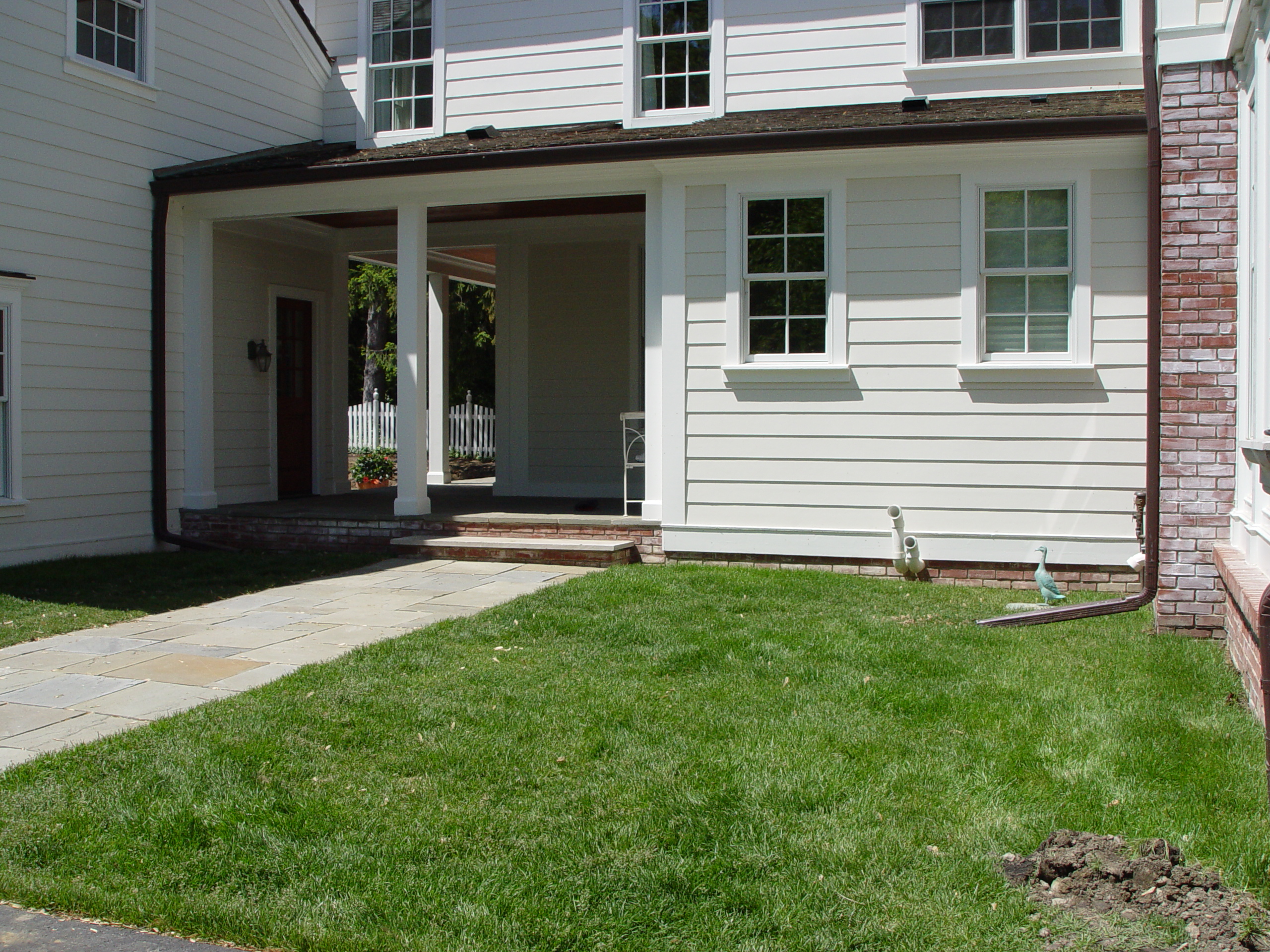
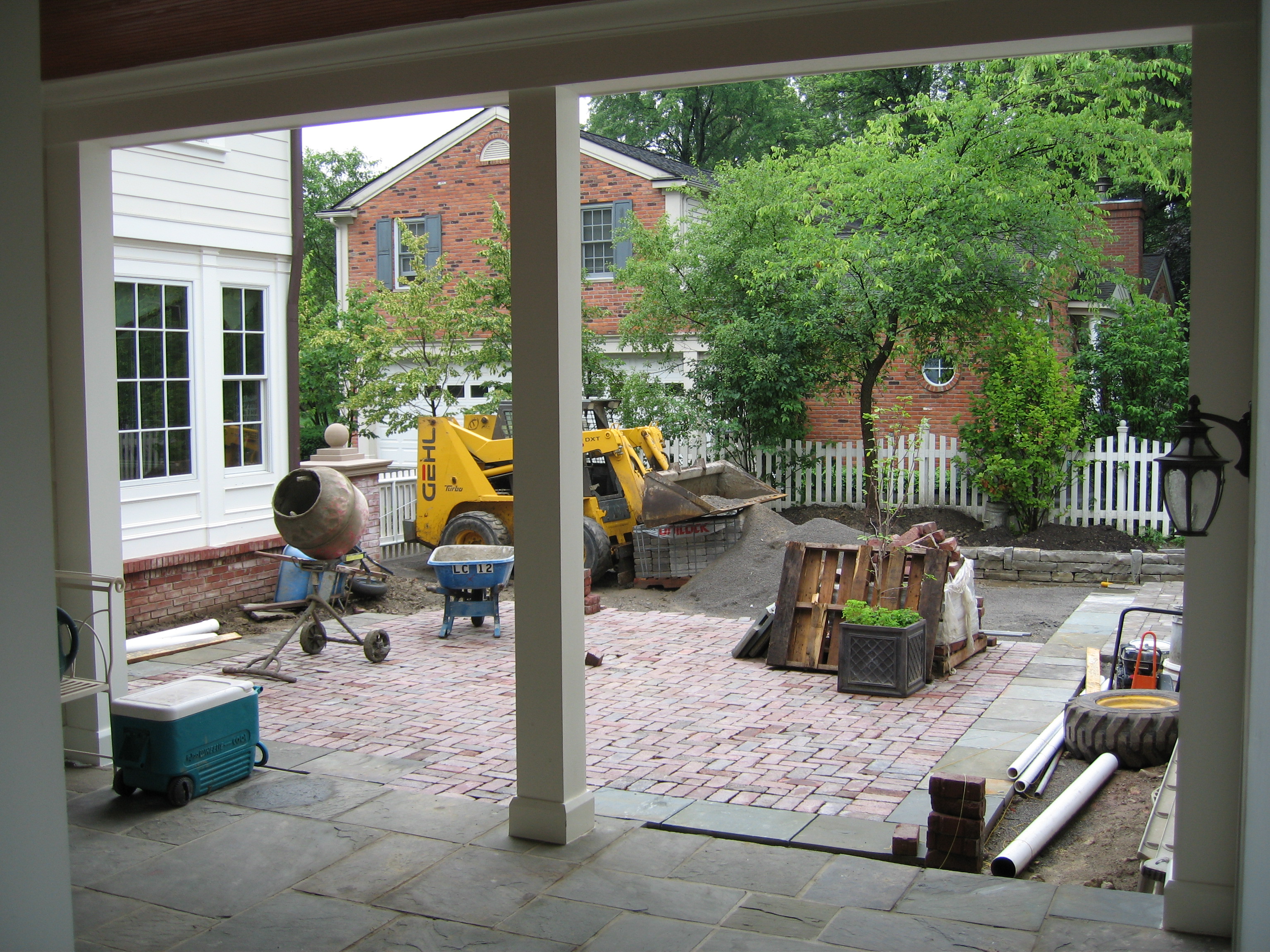
The view in the opposite direction tells the rest of the the story.  An L-shaped covered walkway to the garage that wraps around into a covered rear yard porch has produced this small but highly visible space.  No doubt this is a daily drop off or drive by.  The bottom of the garage window barely pictured on the left, is within 12 inches of the ground.  Given the numbers of different materials and angles and shapes, no wonder my client grassed over the ground. 

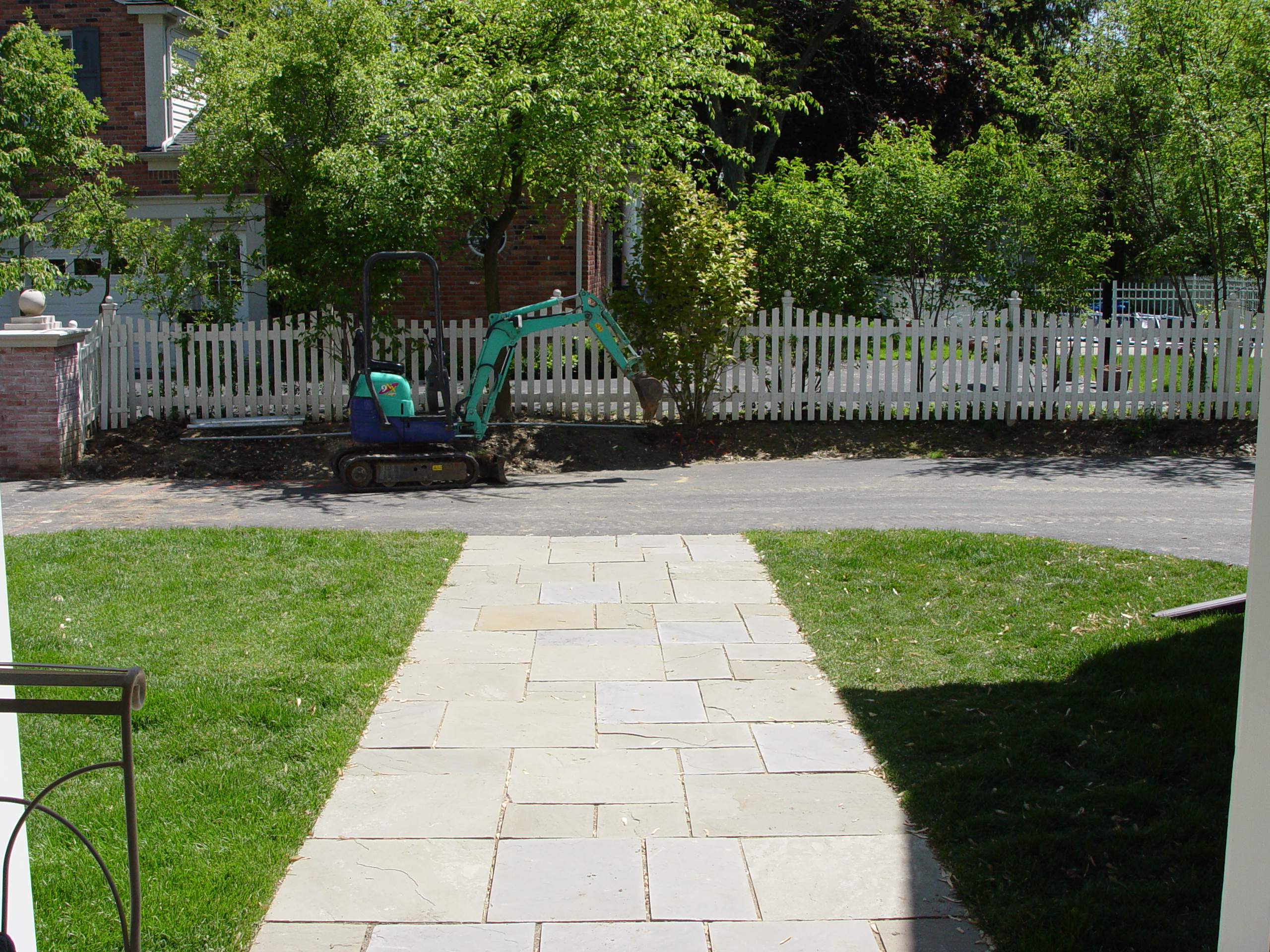
A driveway is a utilitarian gesture meant to easily accomodate motor vehicles coming and going.  It is rarely the most beautiful part of a landscape.  It is a necessity that frequently follows the fastest and most direct route from the street to the garage.  That does not mean that short trip cannot be a visually interesting one.  Given that the driveway comes so close to the house, it seemed like a good idea to pave it with a more architectural and beautiful material.  The proximity of the driveway to the fence line behind it presented another problem.  What landscape gesture could possibly be made in a space this shallow? 

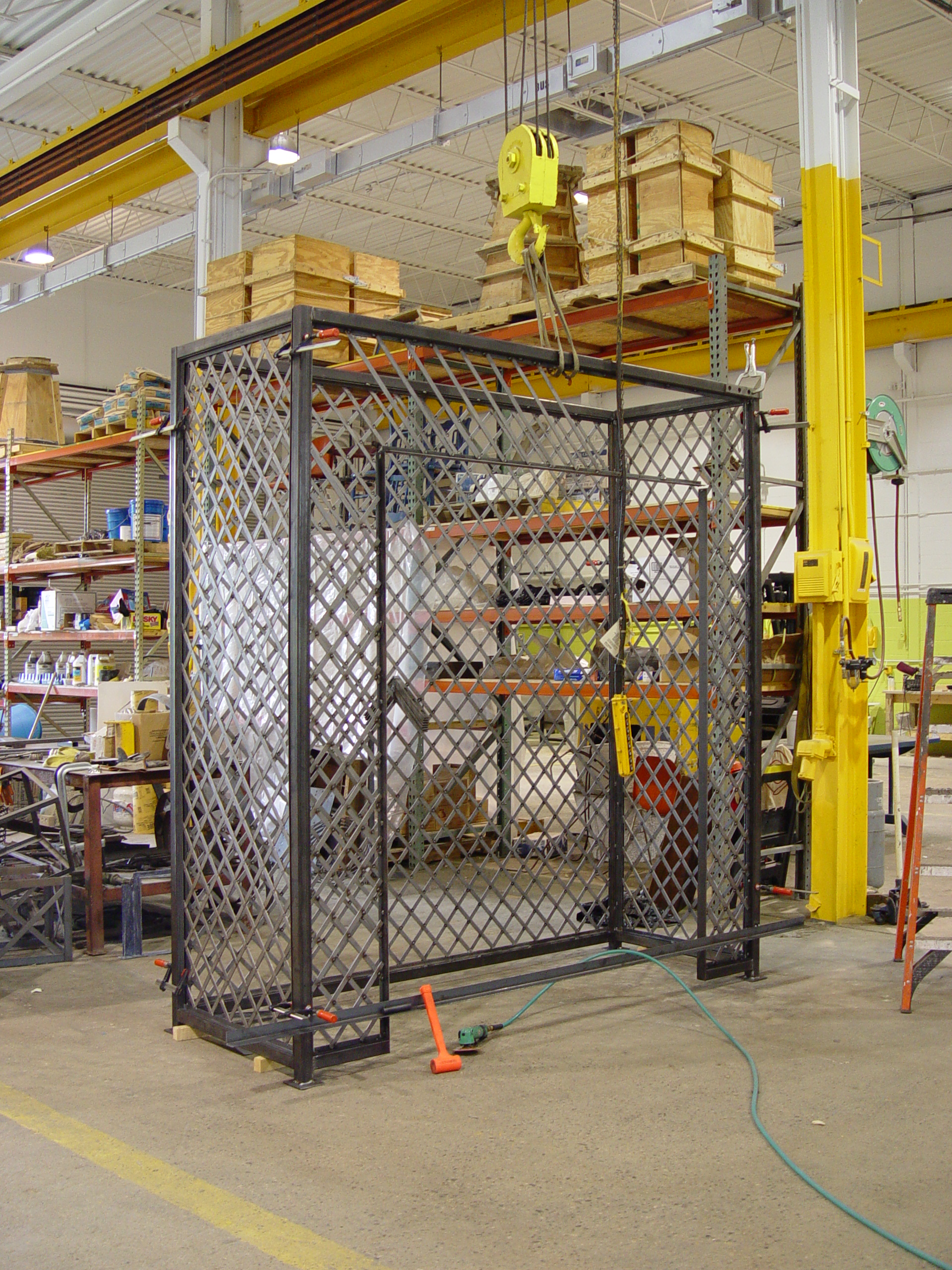
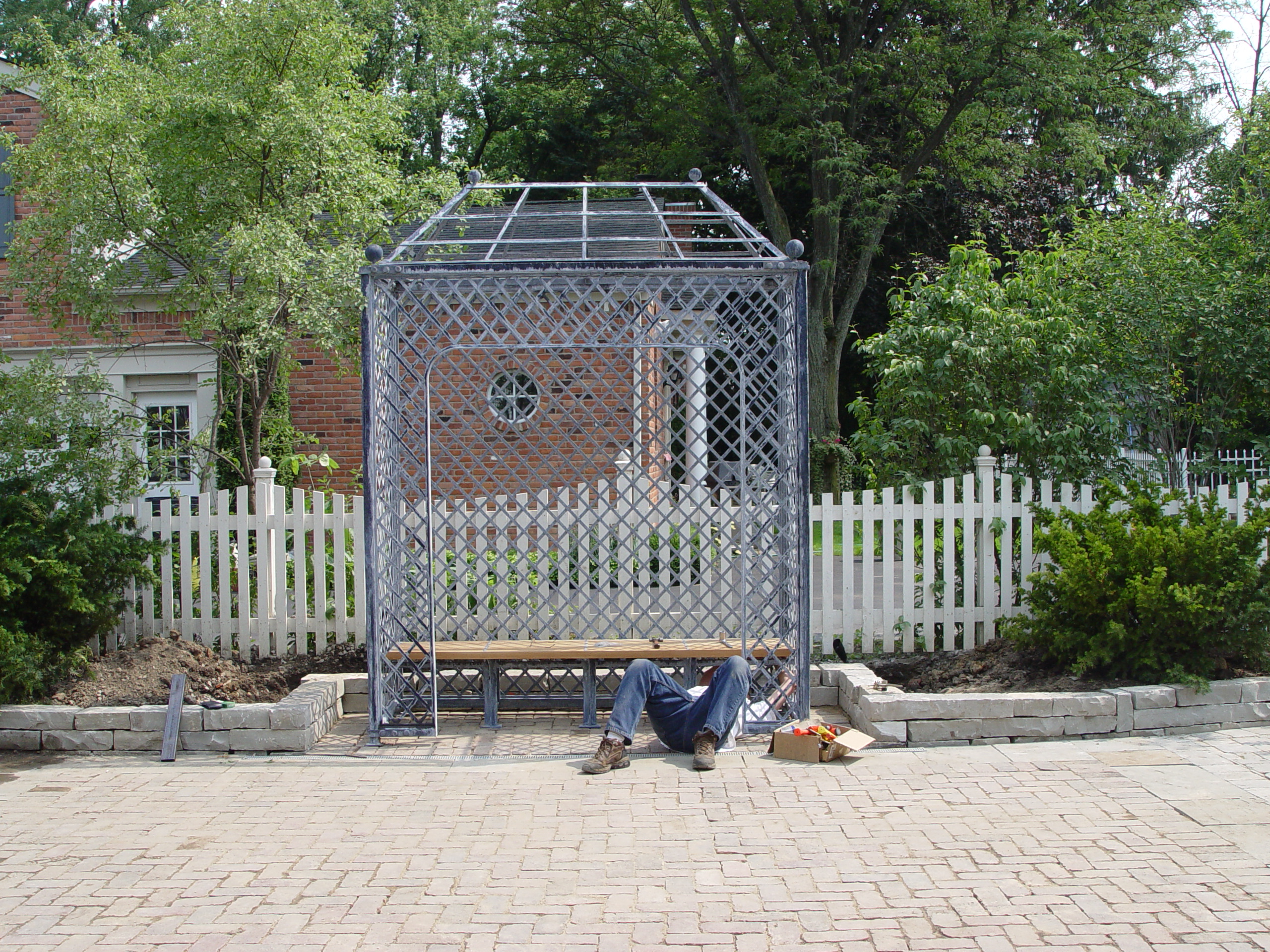
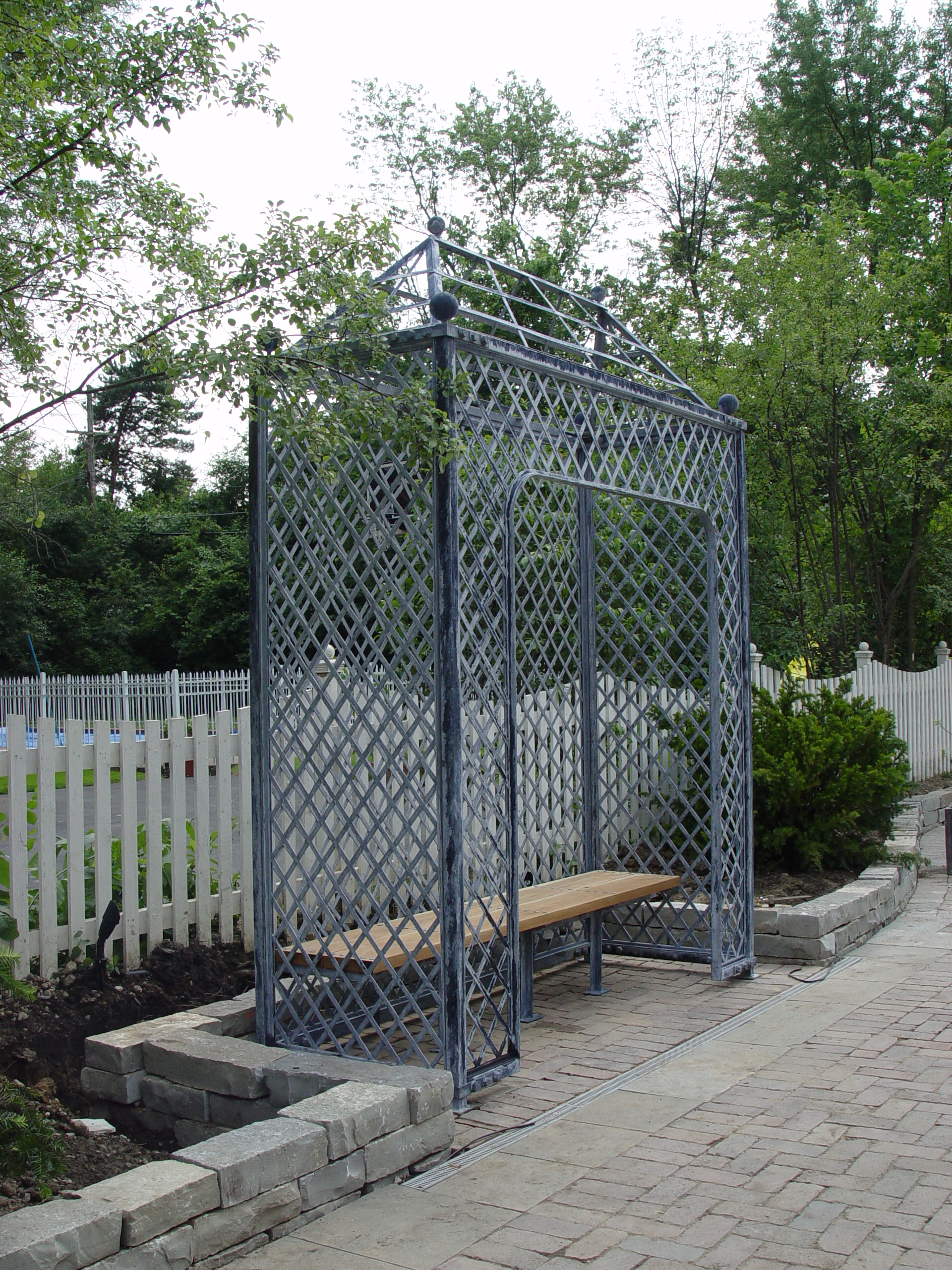
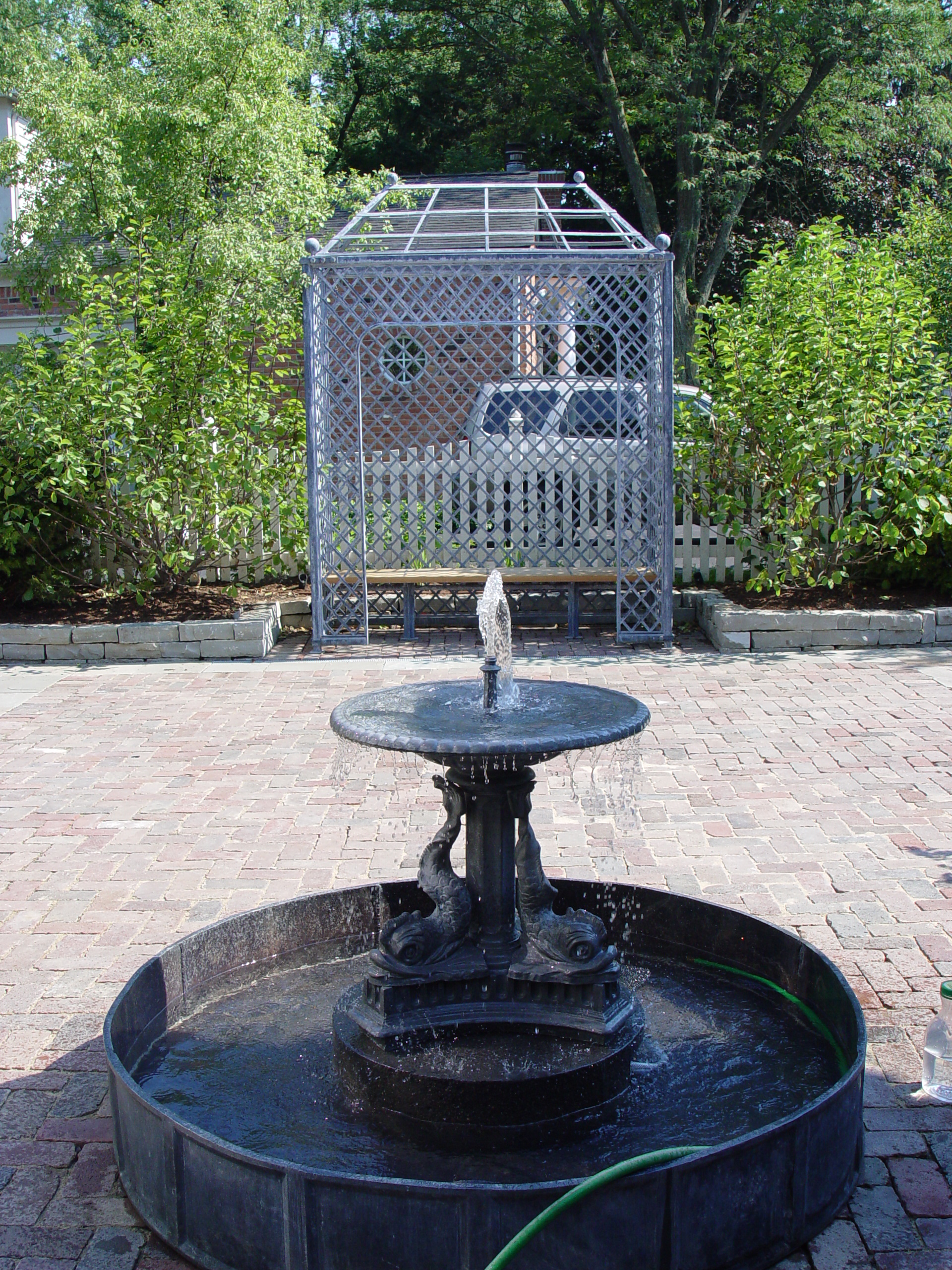
Sandwiching plant material between the driveway and the fence seemed like a short term solution at best.  Anything large enough to screen the property and garage in the neighboring yard would not like growing in such a restricted space.  The space directly opposite the porch steps was the narrowest spot.  We would try some multitrunked yellow magnolias.  But for the narrowest space, we built a car stop.  A smaller and more handsome version of a bus stop.  The steel lattice would screen the neighboring yard from view.  A bench would be built that oriented the view towards the house. 


This existing asphalt drive was removed in favor of a brick drive in a herringbone pattern. A herringbone pattern interlocks securely, and can handle vehicular traffic.  But the big move was to remove the grass and bluestone walk, and build a brick terrace that exactly matched the new material and pattern of the driveway.  This stubbornly unlovely spot has become a rather spacious terrace, thanks to the square footage added from the driveway.

An oak bench was installed inside the car stop. 

A brick landing for the car stop was built at the driveway grade.  A low dry stack stone wall would  permit the maximum width and depth of soil space for a pair of shrubby magnolias.  Amazingly, the house and driveway had been originally set below the grade of the perimeter of the property.  There were water problems.  Quite a bit of drainage work had to be done here.     

An English lead fountain with all of the supply lines running under the terrace was centered in the space.  The view of the neighbor’s car is not quite so prominent.  Once vines grow over the car stop, it will fade even further from view. 

The perimeter was planted with a row of large taxus densiformis, and nothing else.  They seemed to work well with all of the varying heights of the windows.  The bluestone from the walkway was repurposed to provide an edge for the brick terrace. Immediately, there was a good spot for another bench.  Who knows what other ornament or pots might be added later.  What once was an awkward space has become a market square of sorts for this family’s comings and goings.