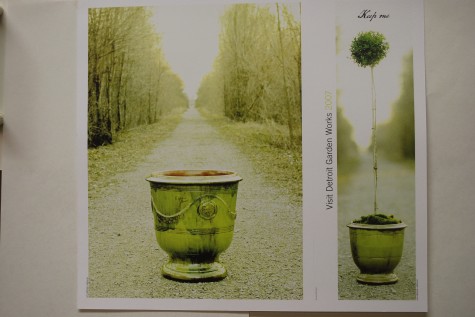
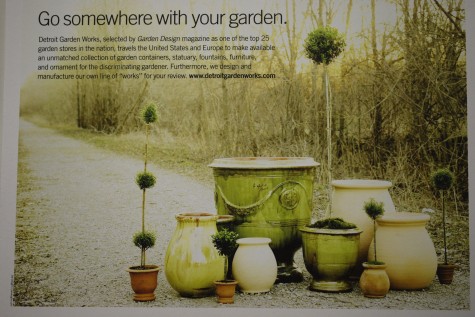
Though my post several days ago on glazed French terra cotta was intended as an introduction to a discussion of color in the landscape, Delphine, author of that fine French landscape and garden blog Paradis Express (www.paradisexpress.blogspot.com) published some of my photographs. She was clearly pleased than an American landscape designer knew, placed and planted French garden pots. The piece pictured above, featuring two pots from Les Enfant de Boisset, ran as an insert in the New York Times Sunday paper just before Mother’s Day in 2007.
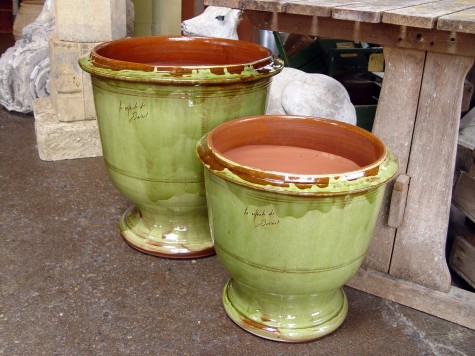 I have been importing garden pots handmade at a number of French potteries since 1992-I am as crazy about them today as I was 18 years ago. My very first purchase-a pallet of gorgeous cream colored clay pots from the Poterie Provencale in Biot. I am convinced a mutual love of beautiful objects for the garden overcame our language difficulties; I was so thrilled to get those pots. Les Enfant de Boisset does not produce an olive green pot. It was entirely Rob’s asking and their willingness to make a collection especially for us in this great color.
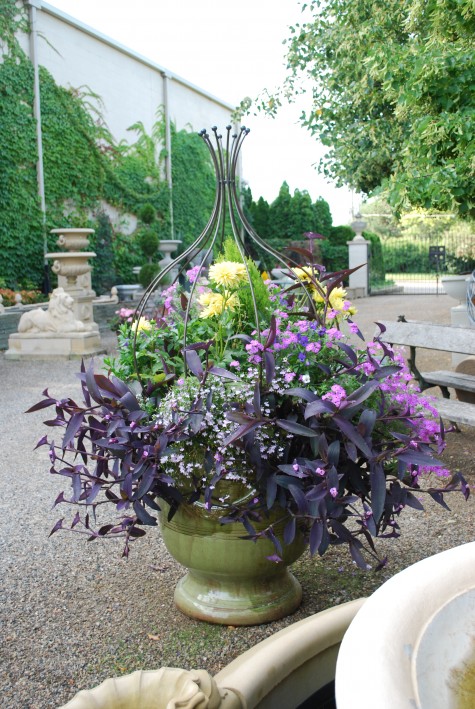 Planted up, these pots make for an entire landscape in a very small space. French garden pots are made today in much the same way, and with many of the same designs that have existed for centuries. They clearly show evidence of the human hand, and speak to their long history of landscape and garden. Some French poteries have added more modern designs, to round out their collections.
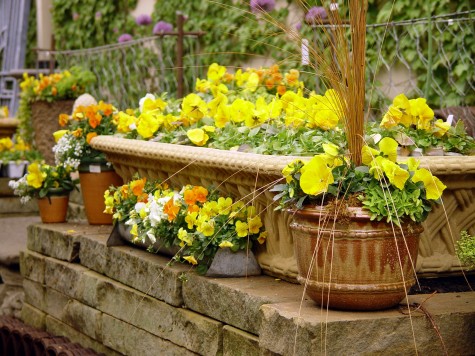 This yellow/brown glazed pot came from the Poterie De Cliousclat, a French pottery whose beginnings date back to the 16th century. Rob once brought me a small book detailing the history of the pots; the pages of the book had absorbed the smell of the clay from the dirt floors of the pottery. Though Cliousclat is no longer, I will never forget their pots, or the smell of the poterie inseparable from that book.
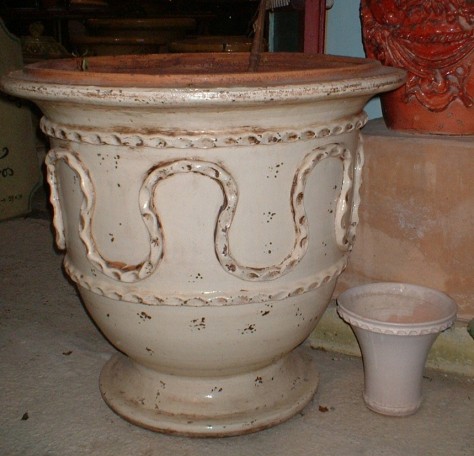
This white glazed pot is from the Poterie St. Jean de Fos, and is shown in the guarland pattern. This particular pattern features a rope garland.
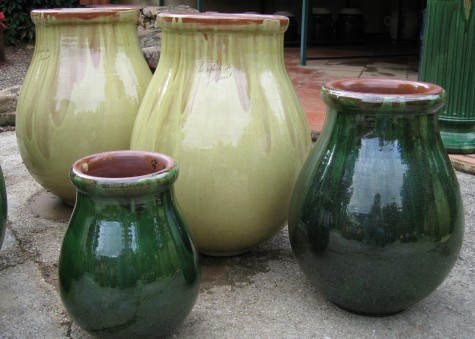
The classic jarre from the Poterie Les Enfant de Boisset
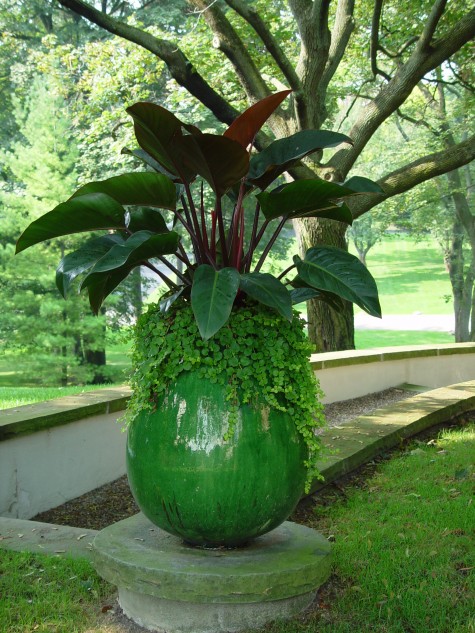
Classic jarre, planted
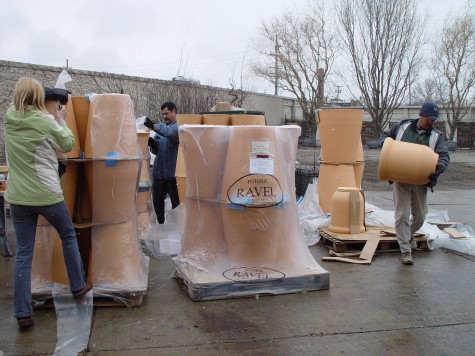 Arrival of a shipment of pots from the Poterie Ravel
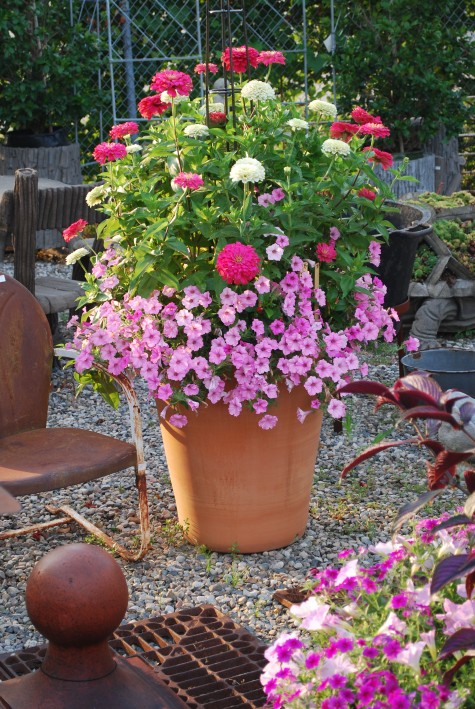 Large Ravel pot, planted
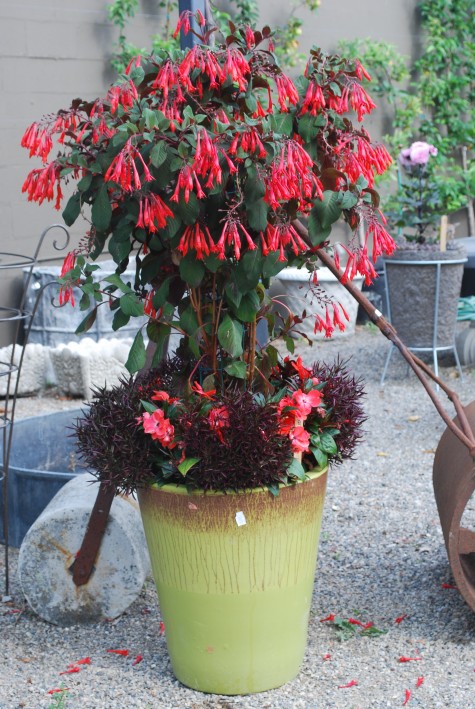
Ravel clay pot, painted and planted
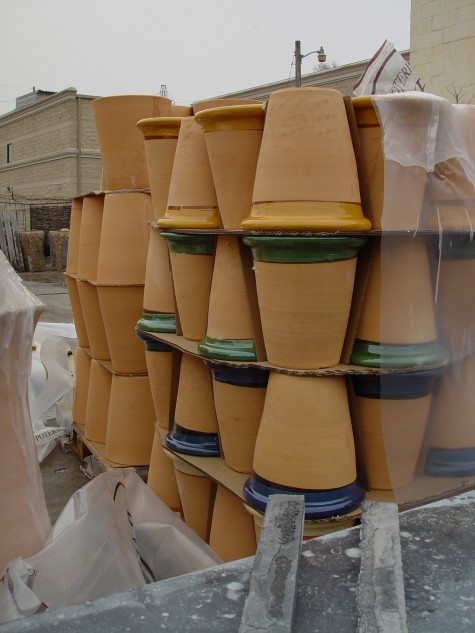
Ravel “Violetta” pots
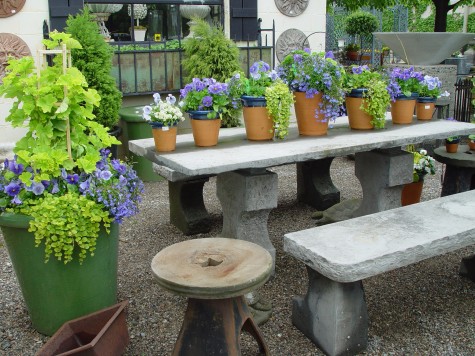 Planted Violetta pots
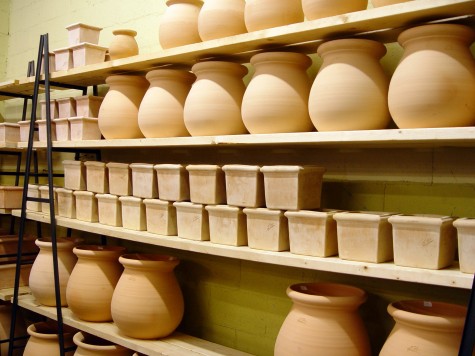
petit pots lisse from the Poterie Goicoechea, located in the Basque country of France
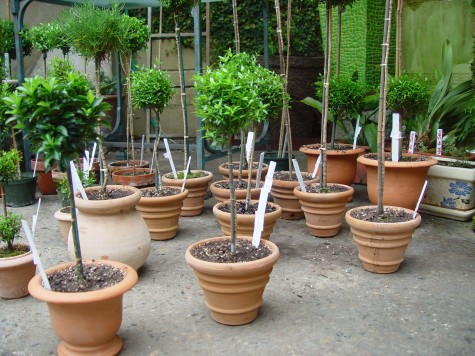
Planted pots from Goicoechea
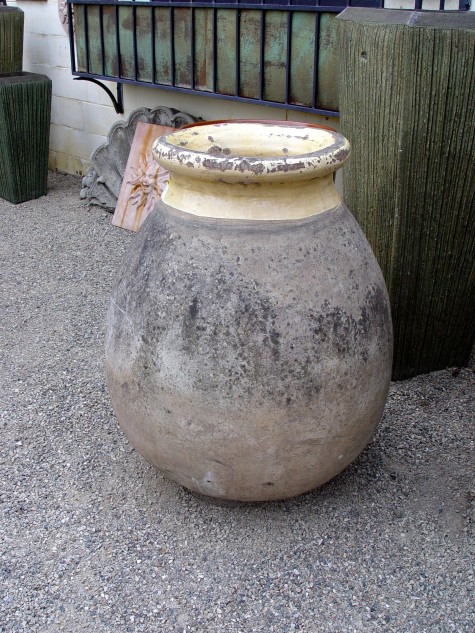
Jarre de Biot, from the Poterie Provencale, circa 1920
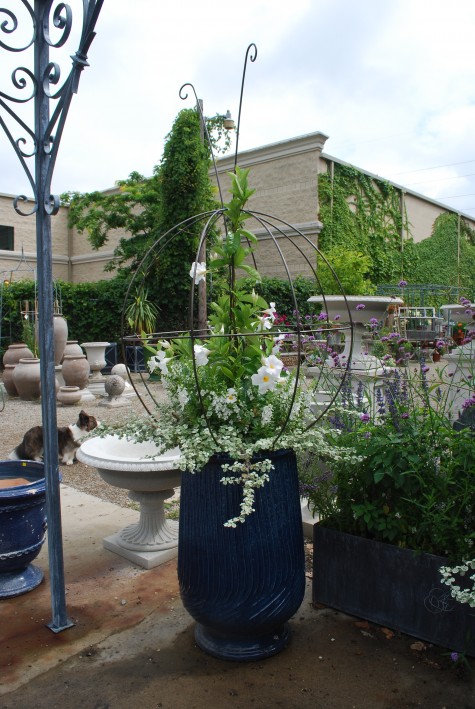 blue strie huile, from the Poterie de la Madeleine, in Anduze, planted
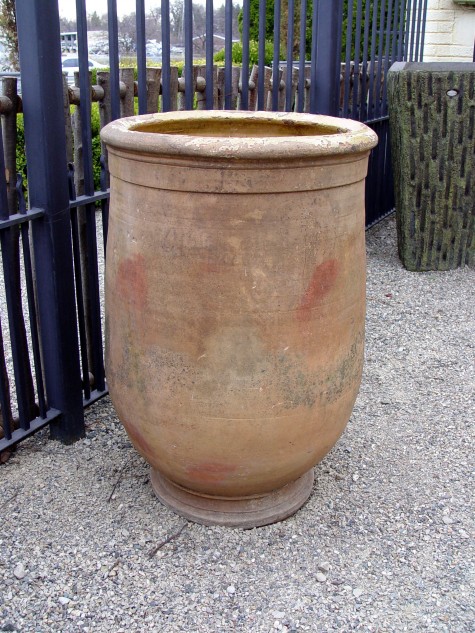 French huile, circa 1920
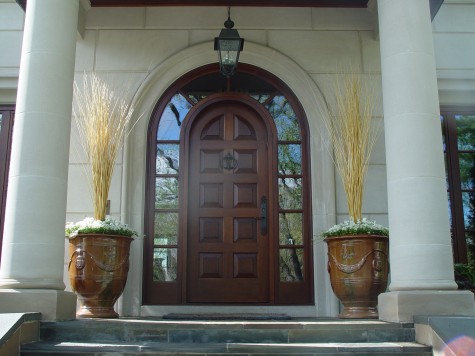 Classic Anduze pot, Poterie de la Madeleine, in the flamme finish
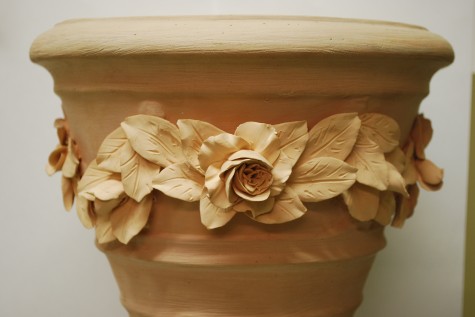
terra cotta jardiniere from Espace Buffon, Paris
I greatly admire the French garden pots. Though not pictured, we have bought many beautiful pots and ceramic garden pieces from the Poterie Provencale in Biot, Poterie du Mesnil de Bavant, Poterie Sampigny, salt glazed pots from Noron, gorgeous pots by Claudine Essautier at Raison de Plus, Jane Norbury-our list is long. I am sure there are others I do not know-yet. I hope each and every one of them goes on making beautiful things for the garden, for all the gardeners everywhere who so appreciate them.
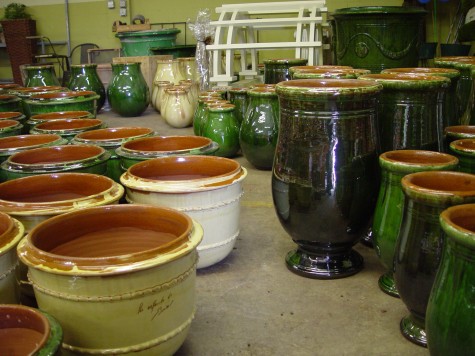 I reluctantly agreed to play ball with those dogs of mine yesterday-in spite of the 9 degree temperature. We were not outside for long, but long enough for me to see the color of my yews had gone so dark they almost looked black. This cold color could not be further from how those yews look dressed in their spring green foliage. This set me to thinking about color as a design element. The glazed terra cotta pots manufactured in France for hundreds of years make a big color statement. Their strong color has a very Mediterranean feeling to me; the color seems very much a product of the climate in which they are made. When I see a pink stucco house, I immediately think warm climate; no doubt I react to color with an entire set of pre-conceived notions hovering nearby.
 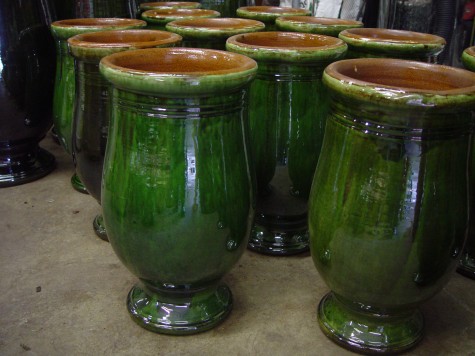 Though green is the dominant color of any landscape, this shiny green glaze is a color experience of a different kind. These pots have a much more formal appearance than a natural clay pot-whose natural and from the earth color is vastly more subdued than this. As glazed pots do not absorb water from the outside, the finish and color is as fresh in their tenth year as their first, provided none of the glaze has chipped. The vibrant color of these pots will strongly figure in how I would place and plant them.
 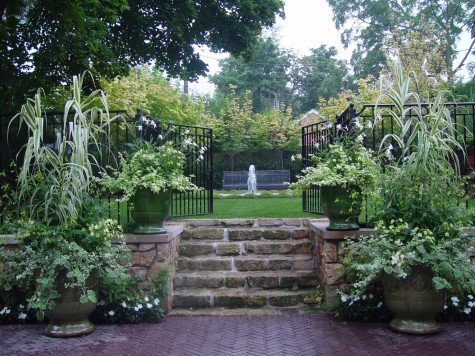 The color of these pots will always be a significant part of the planting composition. Unlike natural clay pots whose importance in the composition may be secondary or slight, the color of these pots attracts visual attention, and sets off the planting in a formal way. A green and white color scheme seems restrained and serene. Do these pots look out of their Mediterranean element? I think not. This leads me to think that before deciding a color won’t work, I should try it.
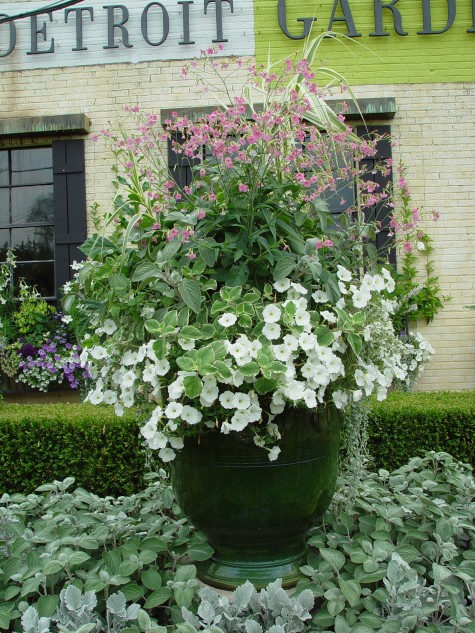 This color scheme branches out a bit into the pinks and greys. The pot is elevated on a concrete base, so the foot of the pot still reads even though the ground planting has grown in. The shiny green mass of the pot is a beautiful foil for the tiny naturally green leaves of the boxwood. Monochromatic, or one color schemes are quietly formal and restful in their simplicity.
 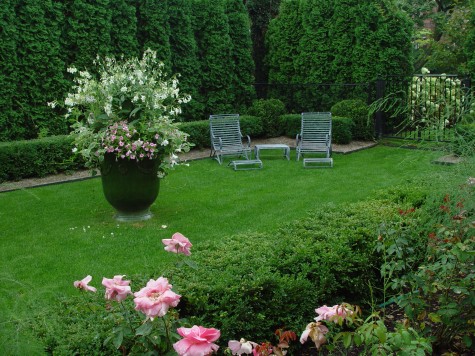 This pot is 12 years old. Mineral deposits from the water had dulled the shine of the glaze. It is remarkable how close the color is to the color of the existing evergreens and grass. This composition is more about texture, and mass, than color.
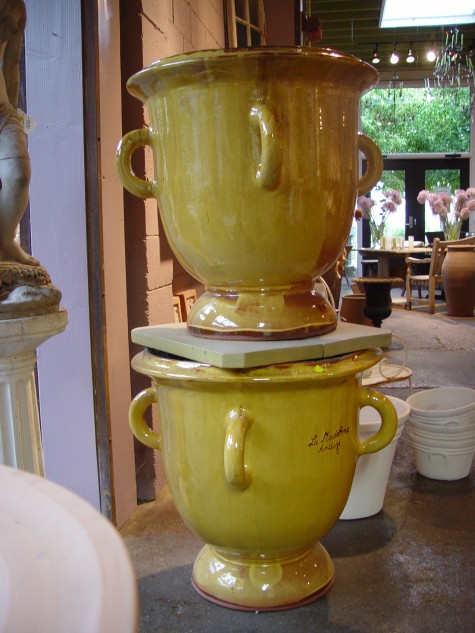 Yellow glazed French pots are perfect for places where any thing but neutral seems like a good idea. Shady gardens, or nondescript locations asking for a strong center of interest can get that from a splash of unexpected color.
 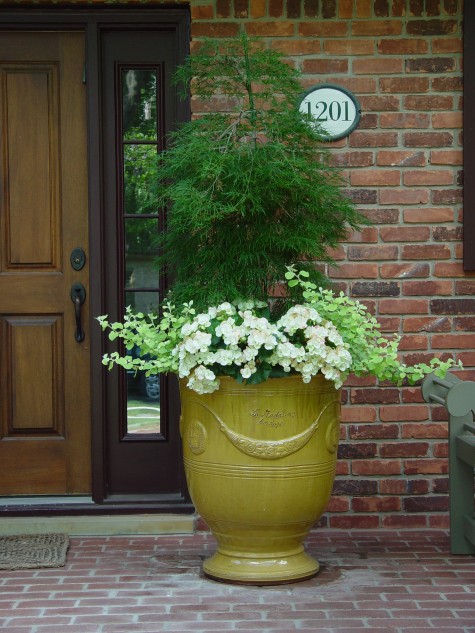 This pot is full of surprises; the yellow of the pot is just the beginning. A threadleaf Japanese maple makes an unusual centerpiece for the surrounding white begonias and lime licorice. The brick front porch, tough completely shaded by a second story balcony, has a fresh and striking appearance. Though delicate in color, these French pots are incredibly strong and durable. The clay of the large pots can be 3/8 of an inch thick or better, and they are high fired for extended periods of time.
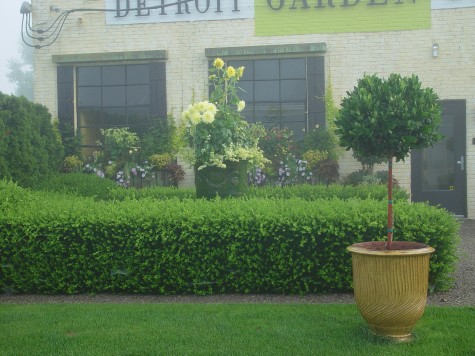 Some potteries have added more contemporary designs to their collections. This pot, known as a strie, refers to the striations formed from the pattern generated by the fingers of the potter; each pot is unique to the fingertips of the person who made it. The color of the pot helps to make it central to the entire composition of the garden. Simple color relationships read more clearly and strongly than mixed color compositions. Strong color relationships paired with more subtle color relationships is what creates rhythm in a composition.
 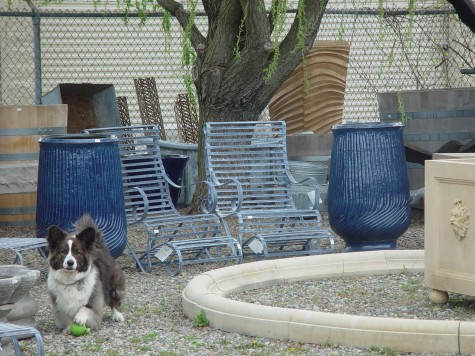 Blue glazed pots in the landscape can be tough to place. Though bluestone, acid washed steel, lead, water and sky all represent blue in one form or another, planting blue pots requires some thought. That glazed blue will be very influential in the look of the whole. Yellow flowers in a blue pot can look like a band uniform, or worse. Some shades of purple are deadly dull and irritating with this shade of blue; lavender and silver can be great.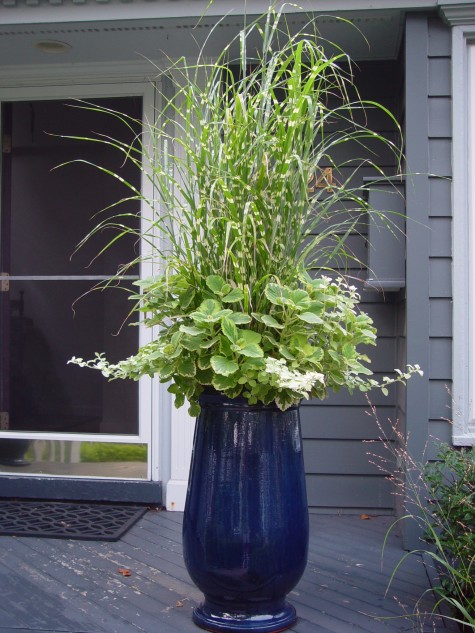
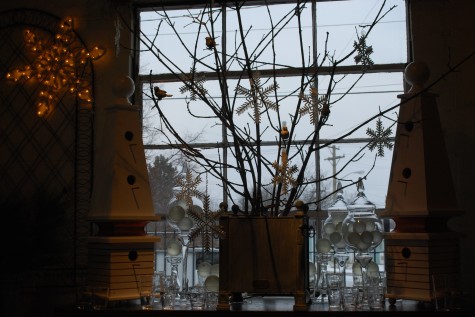 Rob does a lot of the holiday display work in the shop. It may take me a while to figure it out, but usually there is some recurring theme in his work that finally surfaces. In addition to his light garlands, this year of his was all about the trees. Trunks, branches, and stems got taken apart, and put back together in some beautiful way. This spot in the shop is home to its third tree of his making. This collection of bare box elder branches was assembled as a multistemmed holiday tree-this one simply decorated in beaded snowflakes and glass birds. The others, hung with glass icicles, have new homes for the holidays.
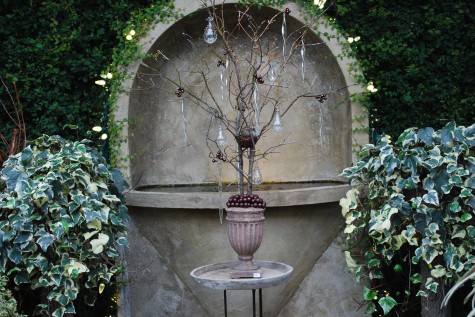 The idea of a holiday tree small enough for a sideboard or table is an appealing one. This “pear tree” is decorated with glass pear ornaments and icicles; the partridge is sitting in her brown glittered nest. This holiday tree is a one of a kind expression with a big visual impact.
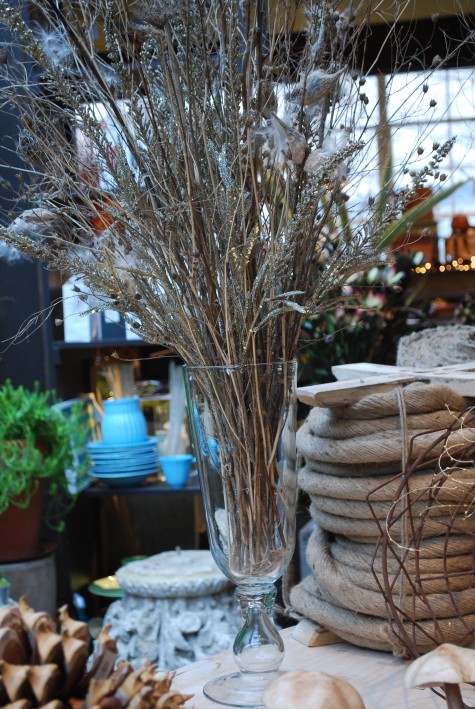 This glass vase he filled with the skeletal remnants of weeds from the field next door. The blown seed pots of asclepias tuberosa, or butterfly weed, softens the look of the sticks. A very subtle and unexpected addition? A few platinum glitter picks make what at first glance seems ordinary, sparkle softly.
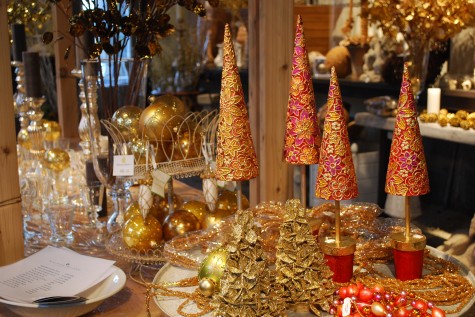 These very sparkly trees take up next to no room on a mantle or buffet. This Pucci-inspired version of a tree-great fun. The glittered seed pod trees have the same effect-very festive.
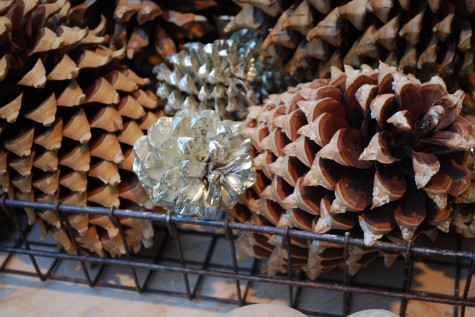 Coulter pine cones are the largest cones on the planet. They are little wood trees, in and of themselves. A very large Coulter cone which stands up on end, perfectly balanced, makes small but stunning holiday tree.
 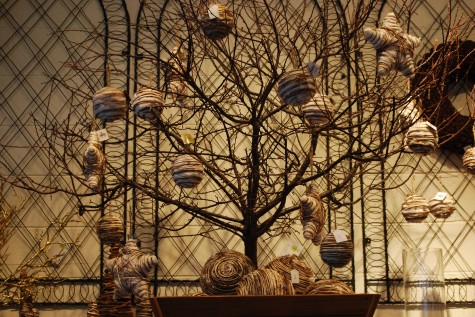 Rob frequently displays holiday ornament in tree branches. Many years ago I decorated a small deciduous tree from my property for the holidays. This does have an understated and spare look reminiscent of the feather trees so popular at the turn of the century. These ornaments from bark strips look right at home here.
 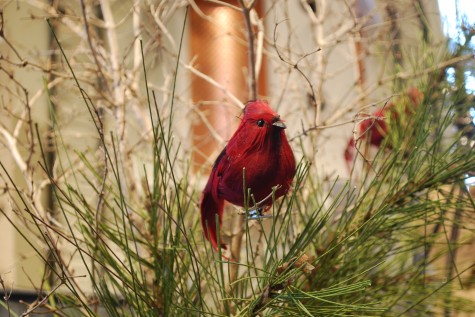 This vase with a tree comprised of a few pine boughs and field weeds gets some punch from a feathered cardinal ornament. It says holiday with the fewest words possible.