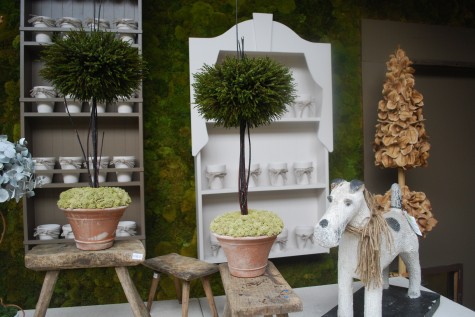
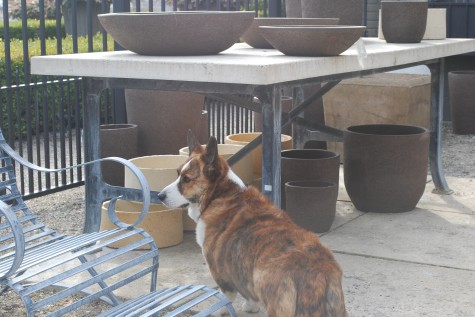
 I spent the better part of this week walking from one end of my property to the other- watching Rob and a crew haul out everything he had ordered for spring, tear the entire existing space apart, and put it all back together. I could not even guess how many thousands of pounds of terra cotta, stone, wood, lead, were involved all told-but I would guess many. I thought his method was smart-everything got moved into the driveway lane, leaving each side ready to be cleaned up, and re-raked. Though our all over surface is compacted decomposed granite, it doesn’t feel like spring until it every vestige of last year gets raked out. Those of you who know of the late Allen Haskell-he took up, washed, and relaid all of the gravel in his nursery every spring. Think of it. Beyond relevelling the gravel, even more interesting was how he put things together.
 I would not have a word for this, but for Pam. She designs, plants, and maintains gardens, so she has a point of view about it. She was telling me she admired another desgner she knows for her ability to “layer” in plants. By this she means plants are paired or grouped so while one is going quiet, another is coming on. Daffodils with daylilies, or oriental poppies with phlox, or phlox with Japanese anemone. Skilled perennial garden designers are adept at arranging plants to avoid what I call a gaposis. I like treating these perennial spaces with big growing annuals, but some like to handle this perennially. A large clump of oriental poppies going dormant is not such a pretty sight-something needs to be coming on strong in the spot in front of that poppy-otherwise a gaposis.
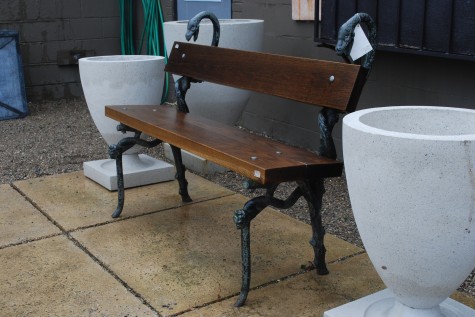
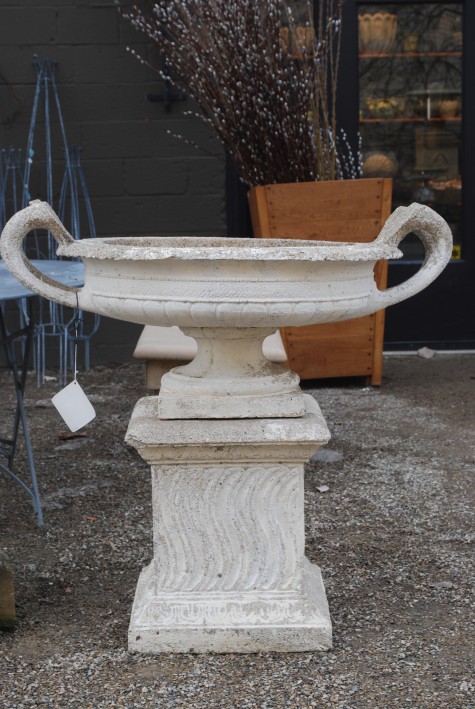
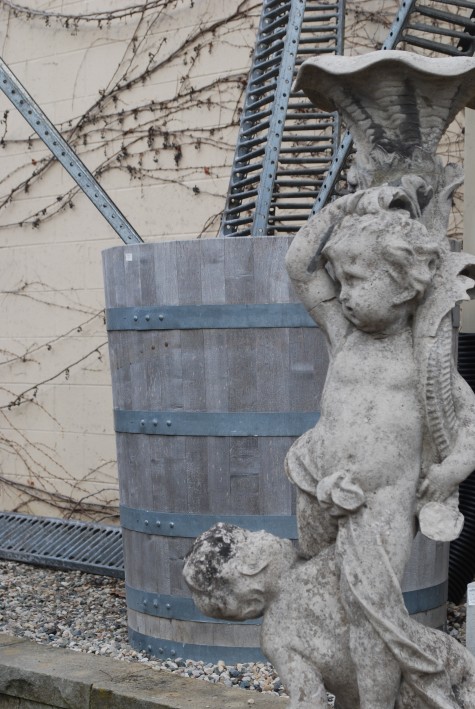
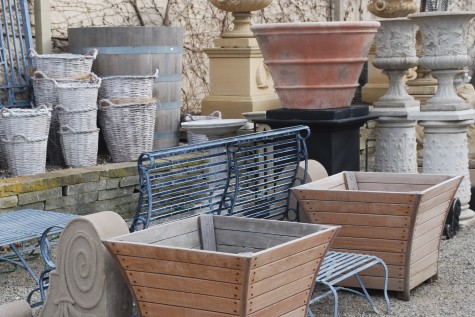 I think this is a good description of how Rob has arranged the outdoor spaces. He packed materials in close quarter that seemed to like each other or play off each other. In this case, the steel striped bench echo the wood stripes; its scrolls recalls the scrolling corbel detail. Surfaces and colors are different, but friendly. Lots of materials and styles are represented here. His arrangement is a conversation about choices.
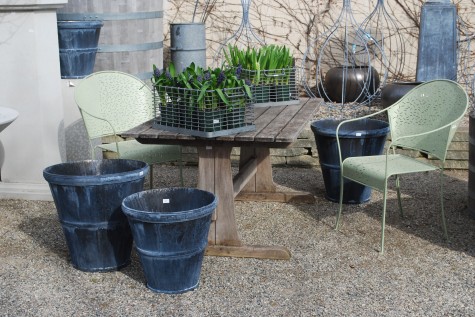
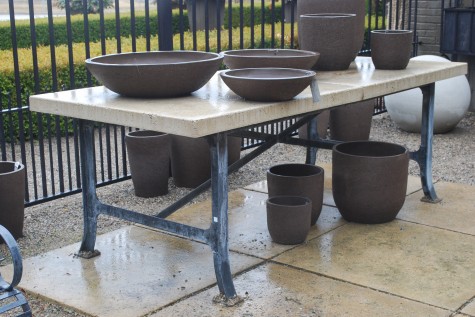
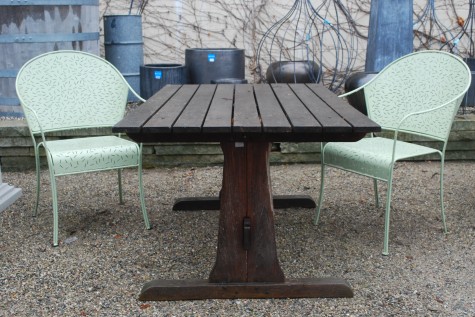
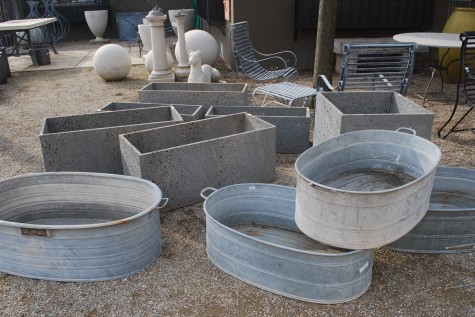
Contemporary garden ornament can include a wide range of objects. This early twentieth English wood trestle table is clean lined enough to be quite comfortable with some galvanized steel wire crates, and some painted French garden chairs. The round acid washed steel pots are finished with a nod to traditional forms, but have a subtly more modern shape.
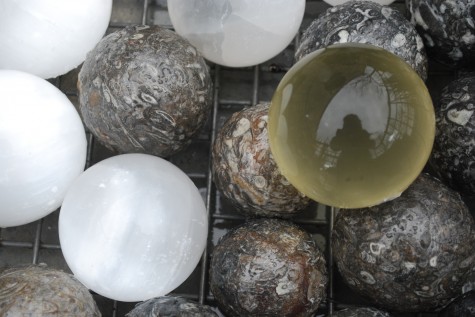
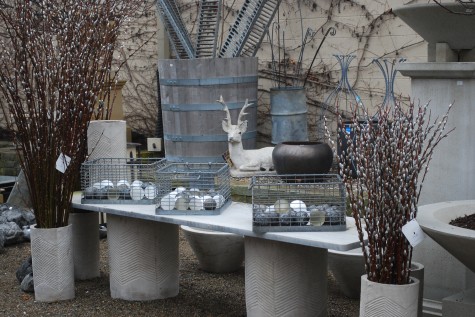
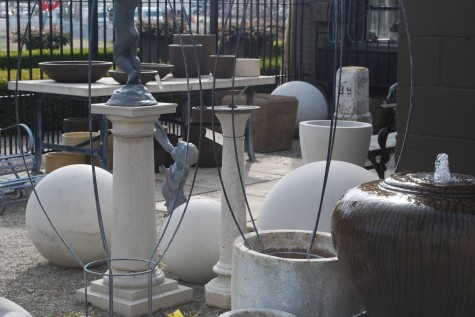 This space is densely populated. On the table, below the table, in the air, on the ground-everywhere you look, something is going on. I am surprised how amiable the contemporary limestone balls are to the modern lead sculptures of classical design. I do not see any argument about to erupt. I suppose any object for a garden implies that partnership-all of these things have a landscape to come in common. Maybe this accounts for how they all get along.
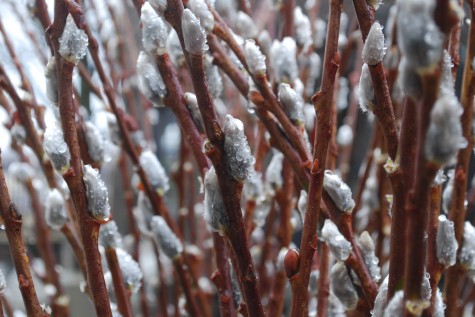
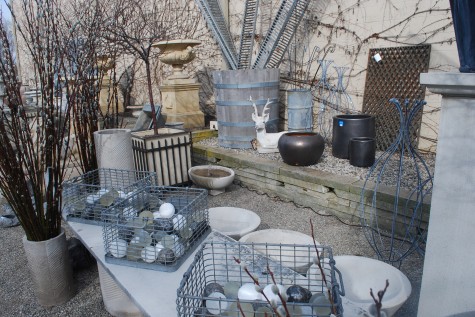 A pussy willow stem and a trench drain have almost nothing intrinsically in common. What they do share is how they are arranged in a similar V-shaped fashion. The color of the iron repeats the stems of the still dormant Boston ivy. What a different view will present itself once that wall is green. But given the early spring season, I like the bouquet shapes.
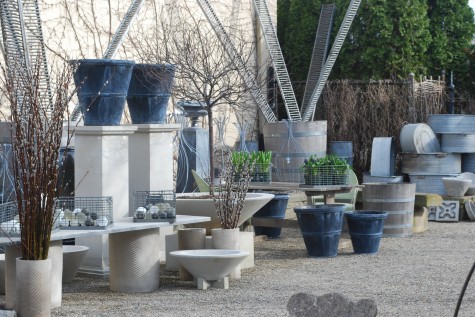
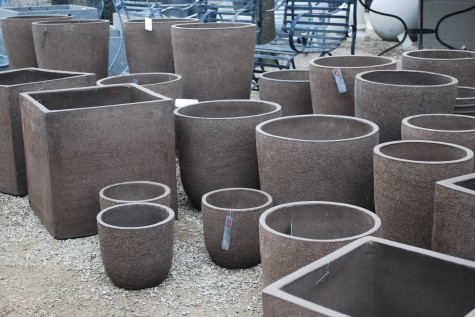
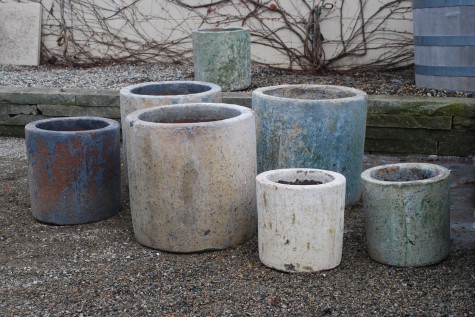
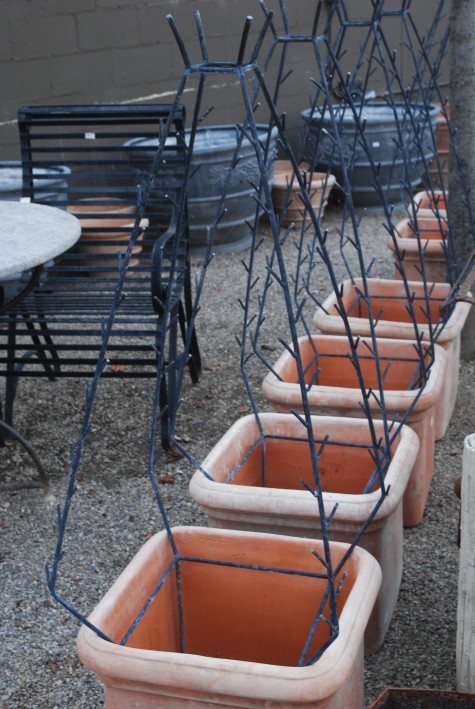 These steel tuteurs are Rob’s interpretation of some formally trimmed yews at Versailles. I have already been scheming about what could be planted inside them, that would still reveal the outer form. But it is the multiple forms in multiple pots that makes for such a big impact. The blue/grey and terra cotta color scheme is repeated in the background in a very rhythmic way, alternating pots of different shape and height.
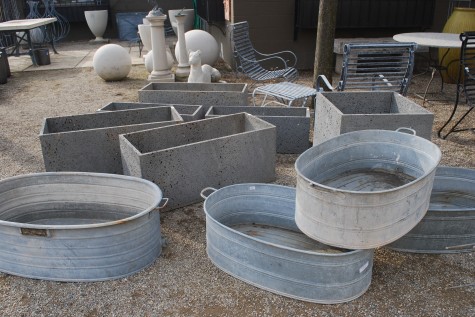
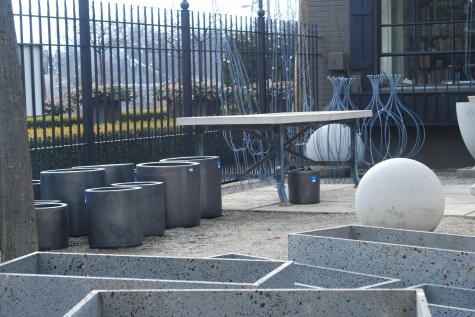
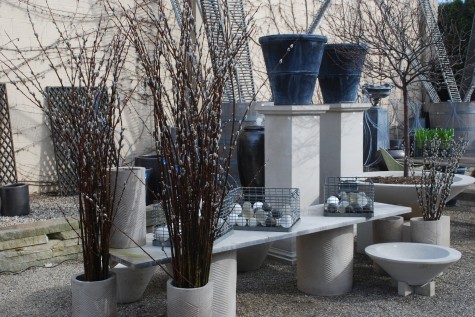 An arrangement of geometric shapes is so pleasing to the eye; the V-shapes in differing materials compliment that. The color is strikingly contrasting-black and white, with just a little in between. A restricted color palette is a modern gesture; the twigs soften this.
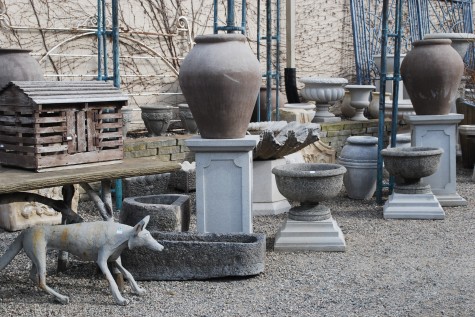
He has quite an eye, and an ability to layer all his own.
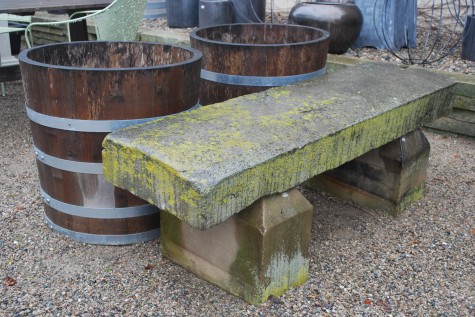
 Though the shop garden is very much frozen in time, there is work under way, under ground, in anticipation of spring. We planted 2600 tulips in this garden last fall. Each and every one of those bulbs is programmed to wake up and grow, come the spring thaw. Everything needed to grow and bloom is stored and waiting inside that bulb for that moment when the switch flips. Though it seems hard to believe, tulip bulbs do not freeze solid through and through. Planted some 8″ below the surface, they spend the winter chilled to right around 32 degrees. They need that hibernation time to properly spring forth.
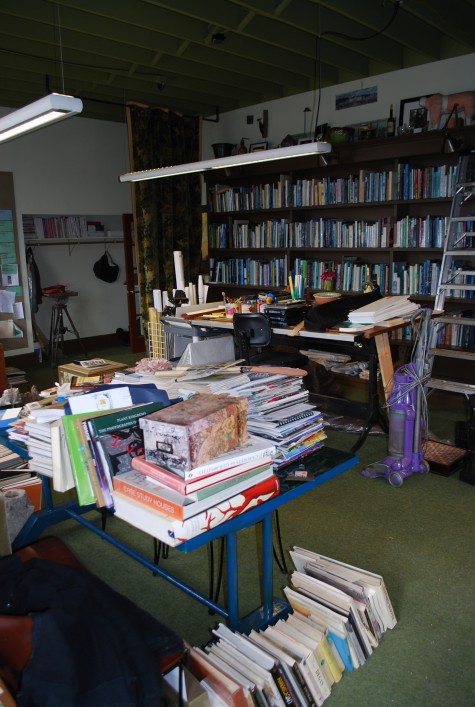 Inside the shop, it takes plenty to get ready for spring. We do a spring cleaning in February; once spring actually comes, there is no time for that. I do not mind that I have missed this part at all. Steve took every book off the library shelves, dusted them, cleaned the entire space, repainted the room, and put it all back together-all I had to do was choose the colors. Green for the walls of course-but a very light green this time. The room looks light and airy now. For the shelves and trim-what I call Belgian chocolate.
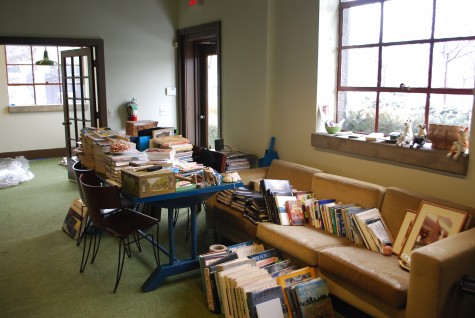 The floor of my office is courtesy of Flor-the company that makes carpet tiles in all kinds of colors and textures. This series is called house pet-it is so easy to pull up a stained square, and replace it with a new one. Gardening being the dirty business that it is, I think I am due for all new squares. Having a project indoors helps the winter fly by.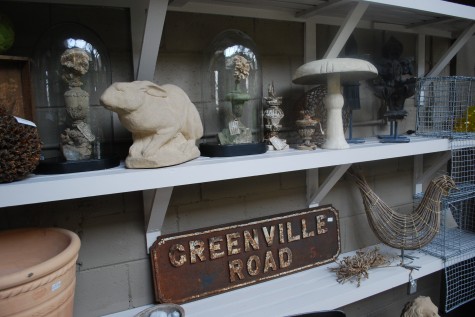
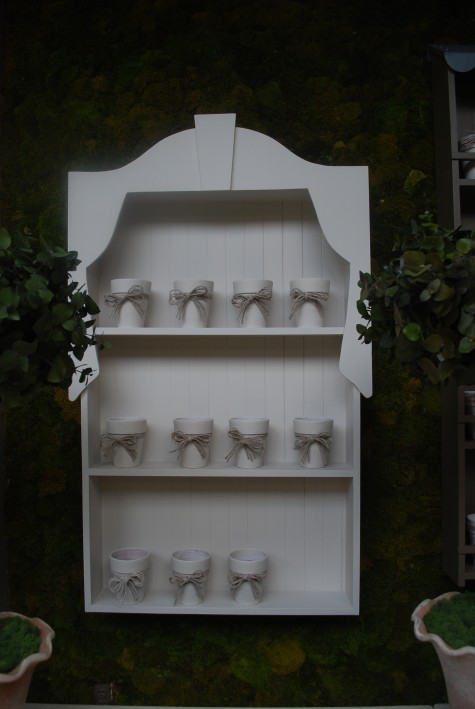 The auricula theatres got new outfits as well. The best fun was finishing the terra cotta pots. Each pot was primed in UGL basement waterproofing paint. This gave the pots a substantial gritty texture. This also keeps the top coat of paint from peeling off, once the pot is a home for wet soil. Each pot got a jute knot or bow. With the finish coat of ivory paint we soaked the bows in thinned paint; I like the look. I could see these pots planted with small growing herbs-or succulents-or even miniature ferns.
 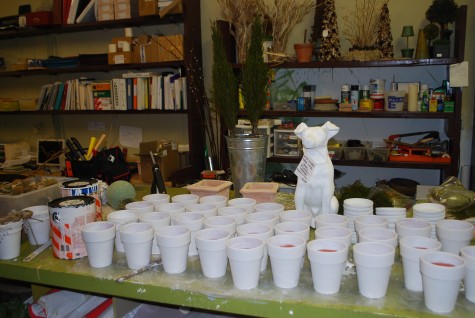 They layout table was handy for painting the pots. I could never again do without a table at a height comfortable for me to stand and work. This we made with a 4 by 8 foot sheet of exterior grade plywood. The top is held up by a pair of shelves four feet deep. These shelves hold long blueprints that I need to store.
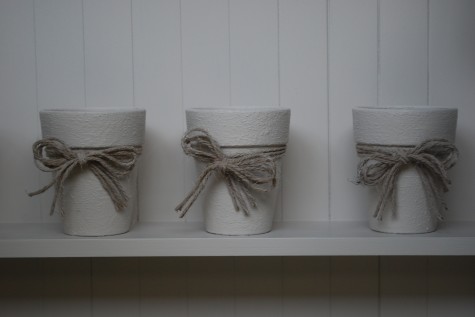 The little pots look great. Machine made terra cotta pots can be finished in so many ways, when you tire of that orange clay. This shape is called a rose pot-they are taller than standard terra cotta pots. They are great for growing plants with long root runs. Bareroot roses that are potted up for sale at nurseries are generally on the tall side. Large rose pots are also great for growing tomatoes. Rose pot and long tom are interchangeable common names for pots taller than they are wide.
 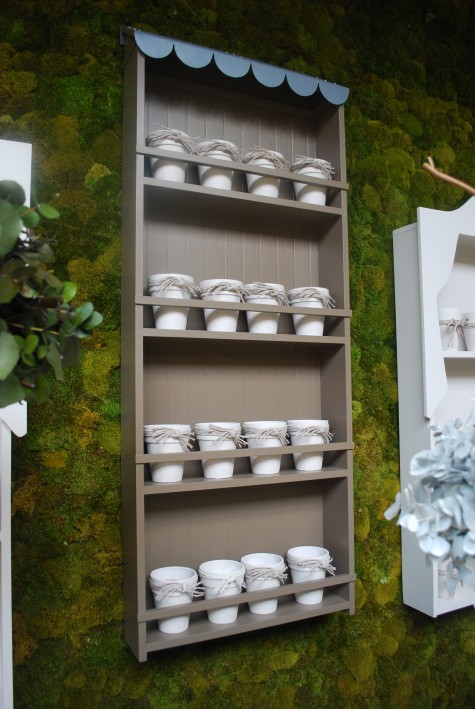 One of the plant theatres got a coat of Belgian chocolate paint.
 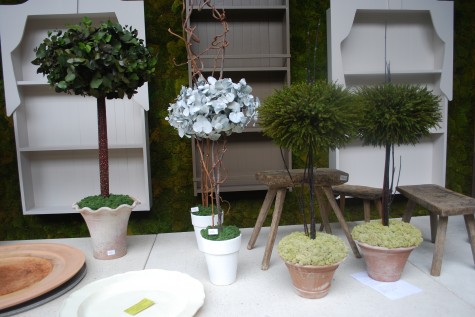 Pam has been making small topiary sculptures from preserved eucalyptus and other preserved greens. The trunks are made from cedar whips, kiwi vine, and fresh blacktwig dogwood. They are great for spots indoors asking for something soft, that will not support plant life. As I have no interest in house plants, these suit me fine.