Paint

fiberglas-garden-plaque.jpg

Paint is one of the most versatile and accessible of any decorative material.  Though cave paintings were done centuries ago, the first patent in the US for paint available in a can was granted in 1867.  Early paint was composed of many different materials and colorants, suspended in a medium which would make the color brushable.  Vintage painted steel and wood garden furniture is readily available-in various states of disrepair.  Old, chipped, and weather worn paint on a garden bench can be charming.  A fresh coat of paint can dramatically alter the appearance of a house, or shed.  Old style adirondacks chairs with original paint are always in demand.  Old chairs repainted in vivid colors are visually invigorating.  Paint types and formulas are available for every surface and situation imaginable.  Some day I would like to try Annie’s chalk paint ( http://www.anniesloan.com/index.html ) both inside and out.  The surface sounds beautiful, and it can be used inside and out.  No matter the circumstance, I use Porter Paint.  It is a favorite brand of sign painters.  In my opinion, it resists cracking, fading, and peeling better than any other paint I have used.  The exterior Acrishield is 100% acrylic paint-not latex paint.  We use this on any exterior surface we want to paint.  Porter Paint is made in Pennsylvania, and is not always easy to find, but amazingly, it is available in my neighborhood ( http://www.pontiacpaint.com/).  Paint is a relatively inexpensive decorating material with one caveat.  What was once painted will eventually need to be repainted.  Is that so bad?
fioberglas-garden-plaque.jpg

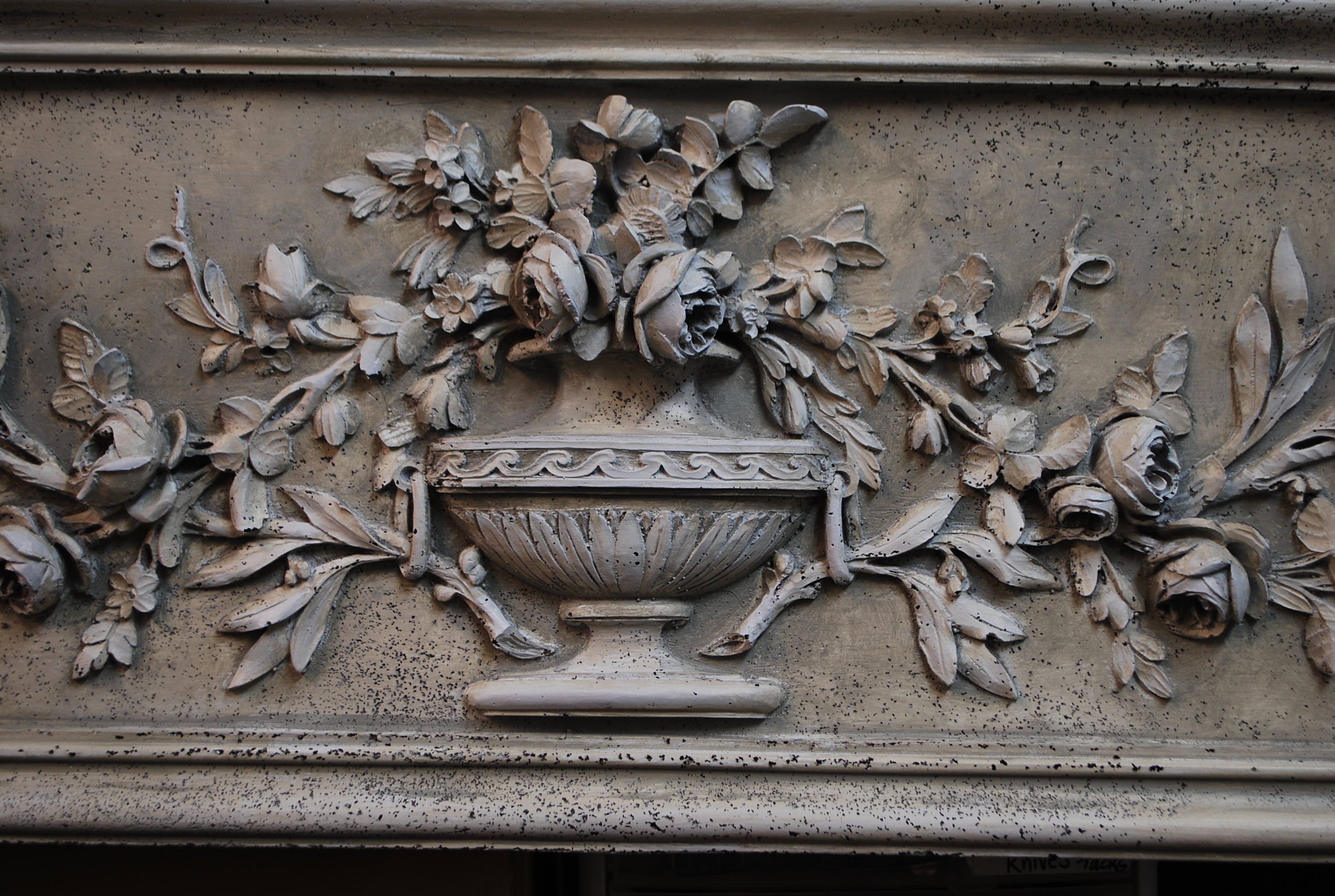
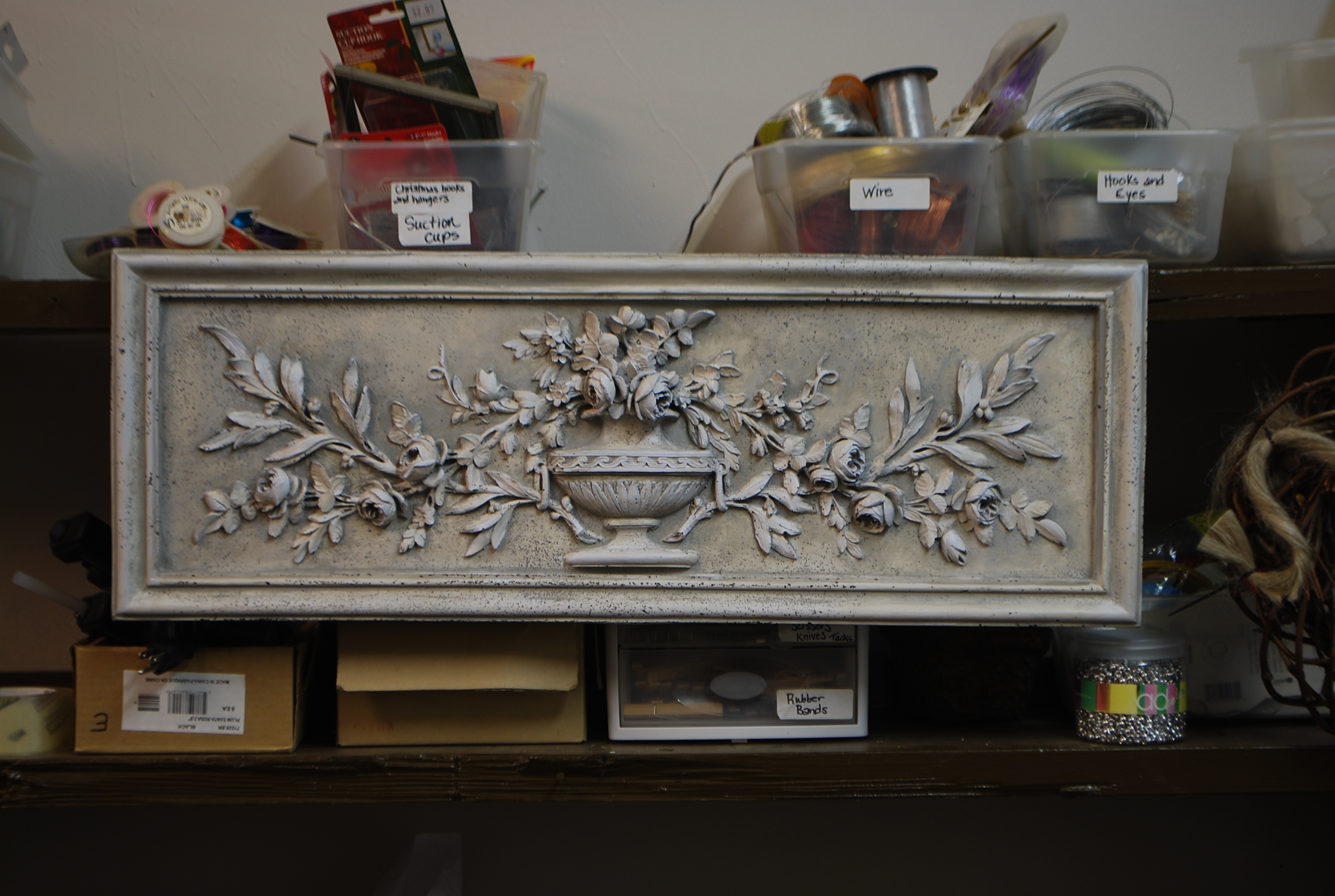
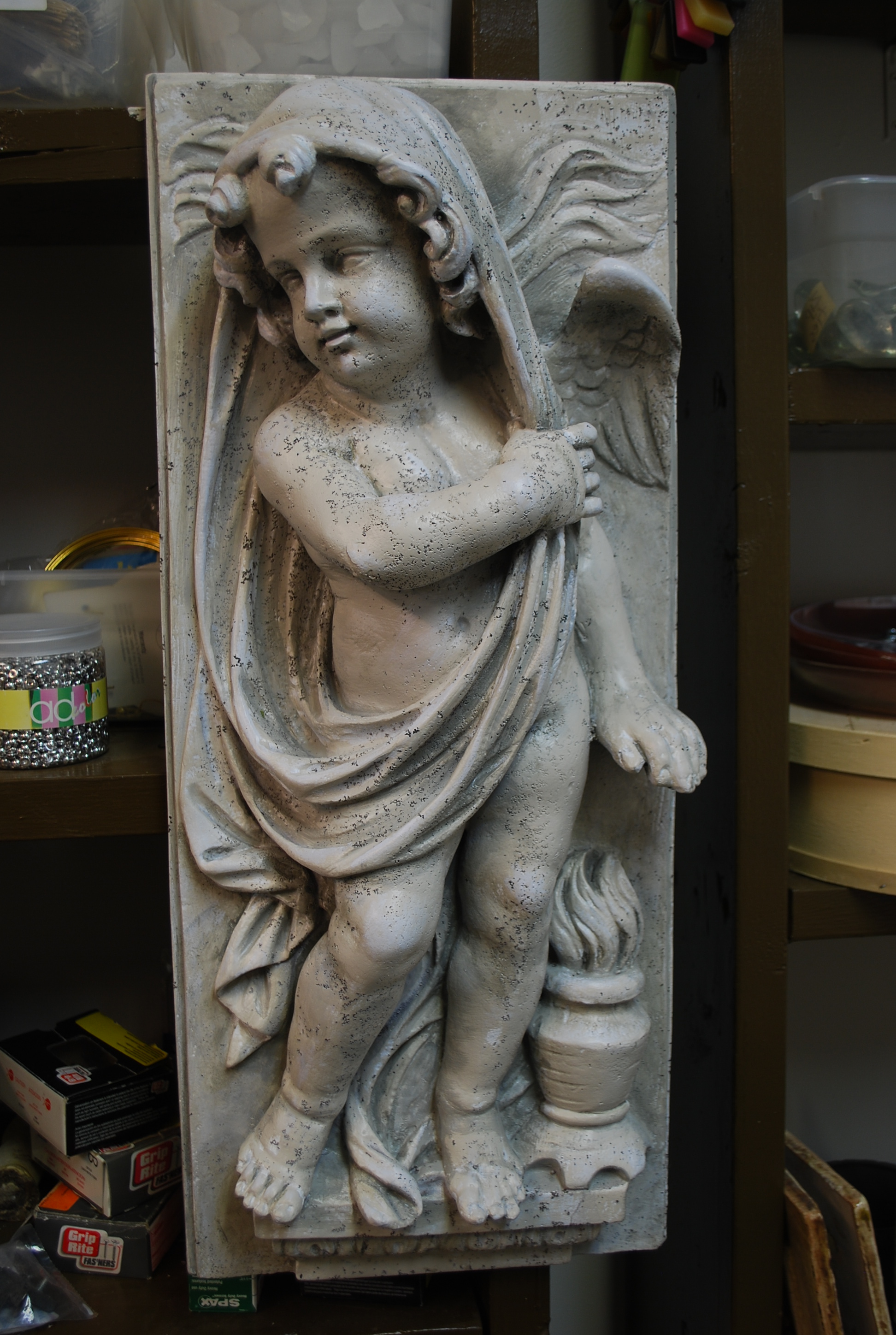
Rob and I bought a small collection of fiberglas garden ornament which was delivered late last week.  Though we had a lengthy discussion about the finish with the rep, I was not happy with what got delivered.  Fiberglas is a friendly material, in that it is impervious to weather, and light weight.  But it is by no means a natural material.  If I have to have fiberglas, I like it to look like fiberglas.  Fiberglas finished to look like something it is not-just saying.  The plaque pictured above had been spray painted the most horrifying shade of dead white imaginable.  I knew I had to paint it.  A dear friend had just introduced me to hand screened en grisaille wallpaper-meaning wallpaper that is all shades of gray from black to white.   Those gray landscapes have been on my mind.  I bought 4 quarts of Porter exterior paint, and went to work.  What is pictured above-the finish.  It is by no means a great work of decorative art, but this painted surface is much easier on the eye than what was. 
four-seasons.jpg

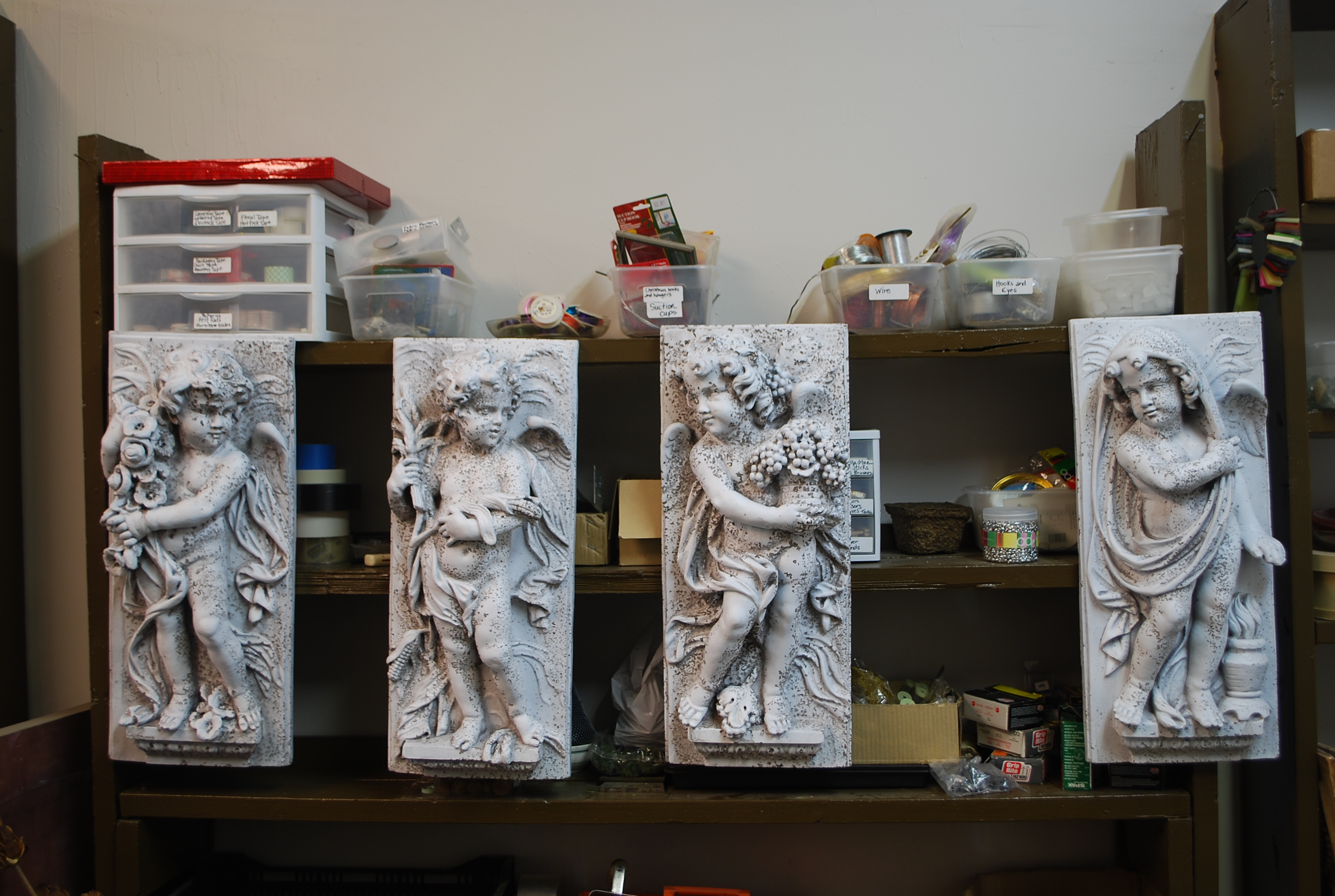
This set of wall hangings depicting a classical interpretation of the four seasons-not so great looking.  The white is harsh.  The pits in the surface of the fiberglas, even more harsh.  Beautiful white painted surfaces outdoors can be difficult to achieve.  A very stark architectural white that is fresh and airy on an indoor surface can be strident and off putting outdoors.  Toxic white I call it, as no one seems to warm up to it.  White outdoors is always warmed by the quality of natural light.  This flat and unnatural white made me squint.
fall-season.jpg

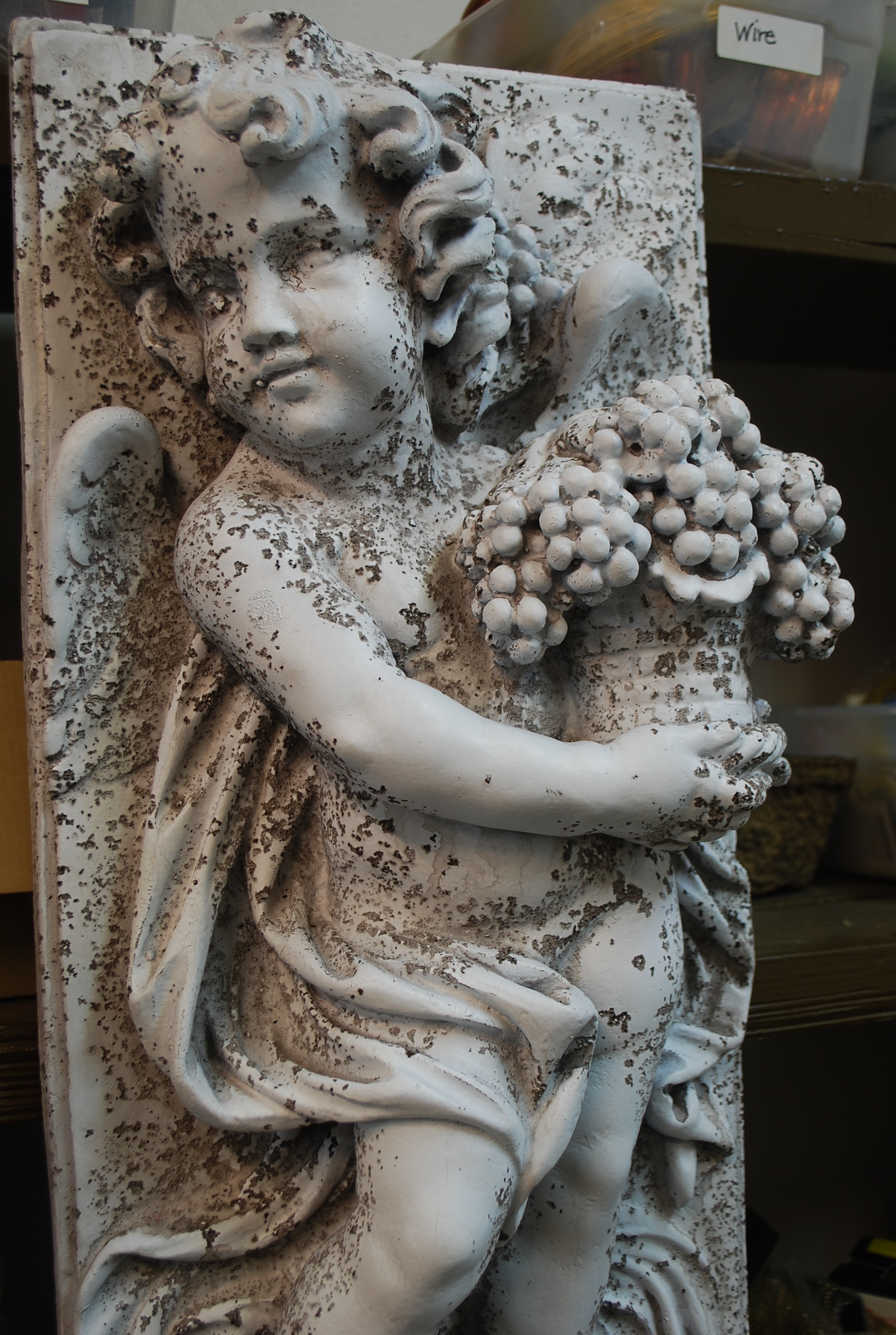
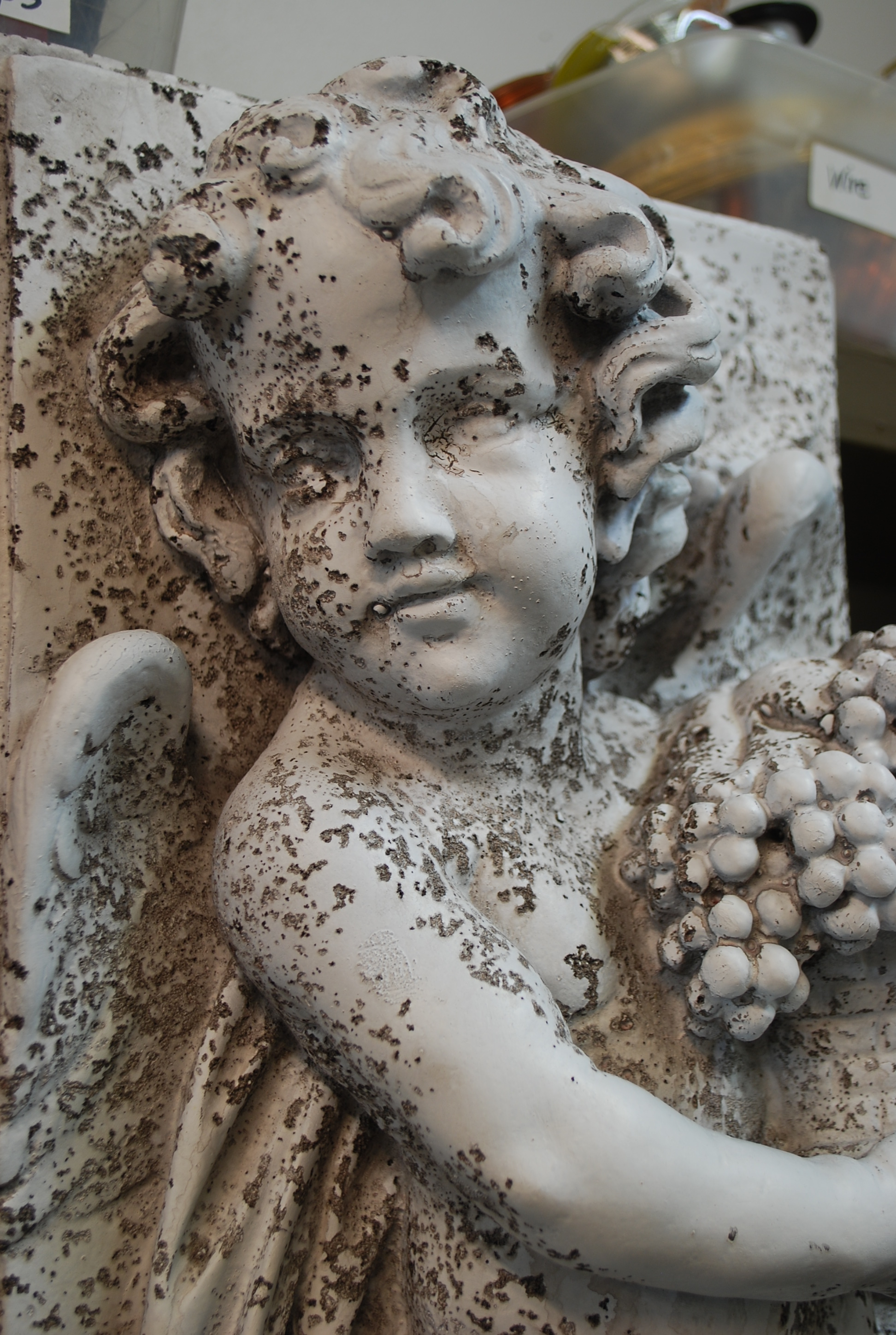
Buck tells me that cast concrete which is not vibrated sufficiently develops what is known as bug holes.  The air which produces this pitting has not been vibrated out of the mix.  I am sure these fiberglas bug holes were deliberate.  This was an effort to make brand new molded fiberglas look like aged stone.  I am sure it is as unconvincing a surface to you as it is to me. The pits were sprayed with a very dark stain.
cherub-face.jpg

This pitting is not so attractive. After all, cherubs are supposed to look sweet, or devilish-not scary.  The runny nose look-not my favorite. 

painted-plaque.jpg

The pitted areas would have been much more effective, has they been confined to the shadow areas.  A base coat of Porter exterior satin paint filled in the worst of them.
underpainting.jpg

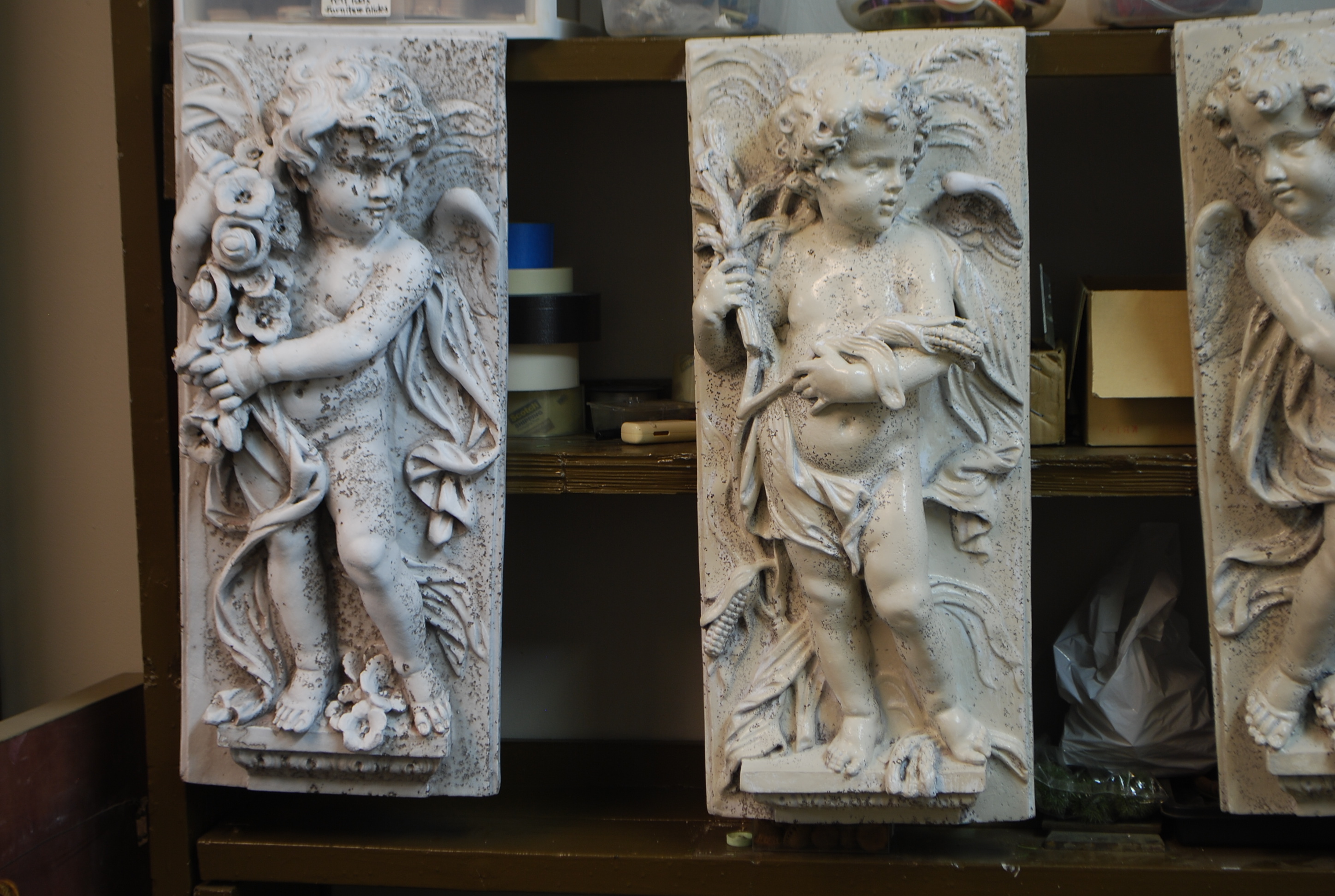
The figure of the summer season on the far left in its original state shows how some ornament for the garden can be vastly improved in appearance with a little paint.

painted-four-seasons.jpg

The annotated collection is much more to my liking.  After the base coat, I used a slightly darker color in the shadows, and a slightly lighter color on those surfaces closest to my eye.  A little paint can go a long way towards improving the looks of anything it touches.  The best part?  If a first effort or color doesn’t work, there’s always the option to try again.
painted-fiberglas-cherub.jpg

Though I would touch the surface of an antique or lovely vintage ornament for the garden,  a little paint can go a long way.
Austere

clay-pots.jpg

Austere would not describe me or my taste.  I am very attached to my pink Ugg slippers, left on the radiator all day, and again overnight.  Barefoot in the house- morning or evening- in February? Not likely.  The radiator in the kitchen hall is host to either my slippers, sneakers or boots-round the clock, all winter long.  I have a craving for baked potatoes, beef stew, potato chips, and bratwurst.  I load my coffee with half and half.  Did I mention that Beurre & Sel in NYC makes and ships cookies that makes winter vastly easier to bear?  I hate taking a shower this time of year; who wants to be both wet and cold?  I like lots.  Lots of plants.  Lots of styles.  Lots of gardens.  Lots of weather suitable for gardening.  Lots of color. Second helpings.

whitewashed-tree-trunk.jpgThe environment outdoors late in February-very austere.  Austere as in cold, and uniformly gray.  To this gardener, the winter is a 6 month sentence that is undeserved.    Austere?  From the dictionary, austere is an adjective that describes anything with is somber, grave, rigorously self disciplined, spartan in style, simple, and plain.  Without ornamentation.  Restrained. This is my best shot at a description of austere ; utterly simple design refers to a pared down and minimal expression. Winter is a good visual description of austere.  All the voices in the garden are hushed.  Everything is sleeping, struggling, or enduring.   Silently. It will be spring before any winter damage is apparent.  The colors outdoors are restricted to gray, taupe, brownie scout brown, and white-with a dash of black every so often.  Snow falling makes next to no sound.  Snow tastes and feels cold, and not much else.  Snow quickly turns to water, if you touch it.  In a whiteout, who can see?

clay-pot.jpg

The tree whose outline in full leave is extravagant, robust and juicy is reduced to sticks in the winter.  Sculptural sticks, OK yes, but sticks none the less.  The greens represented in the summer garden-silvery.  Blue greens.  Lime.  Forest. Grass green. Green, uncontained.  There’s nothing austere about a summer garden.  Sun and shade on green-a complex and visually enchanting tapestry.  Once the leaves fall, gardeners are left with the skeletal remains.  Frankly, winter leaves an ashy taste in my mouth.  Branches in winter are those shades of gray that take lots of visual work to sort out.  Can you tell I am really tired of the winter?

pots-and-trunks.jpg

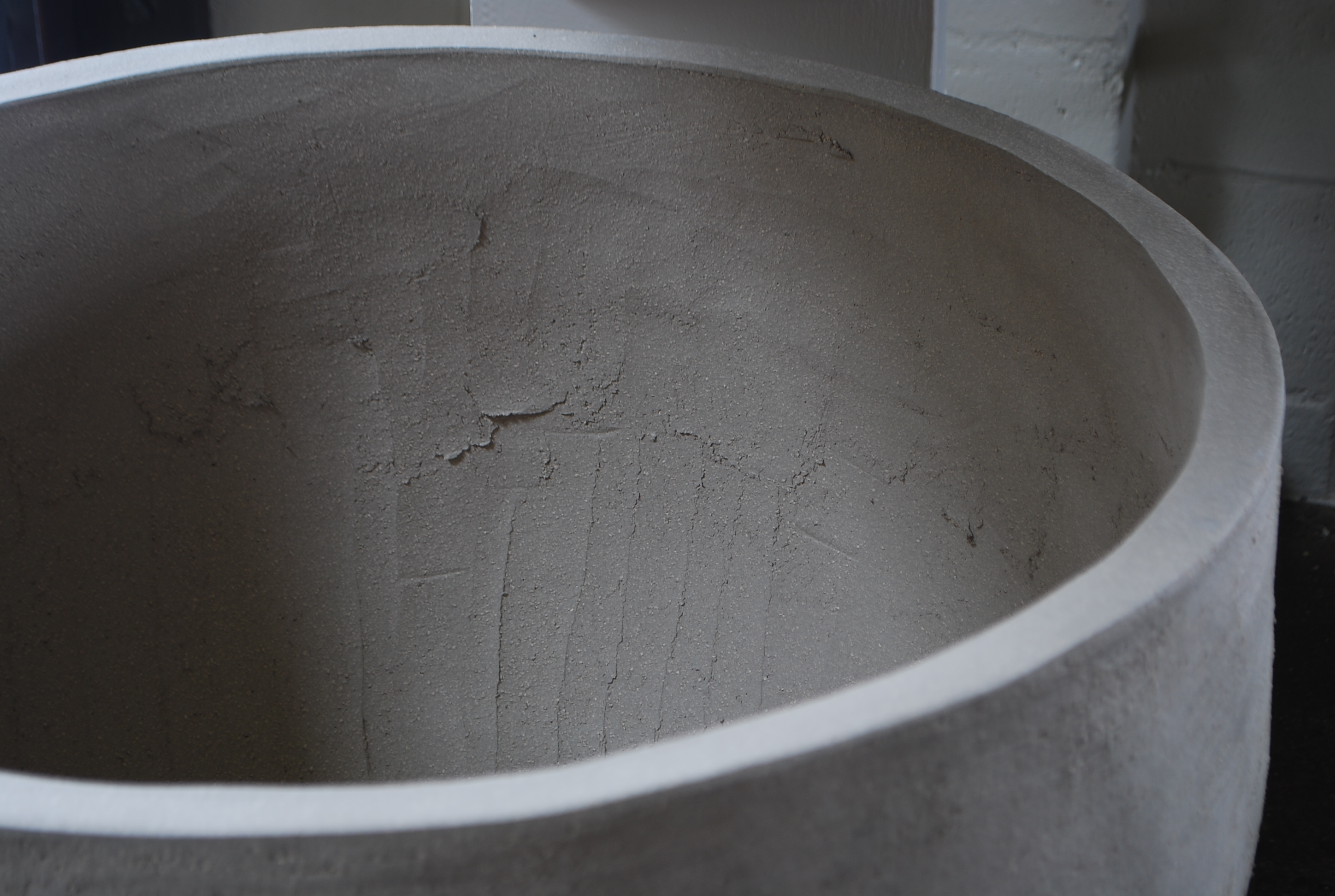
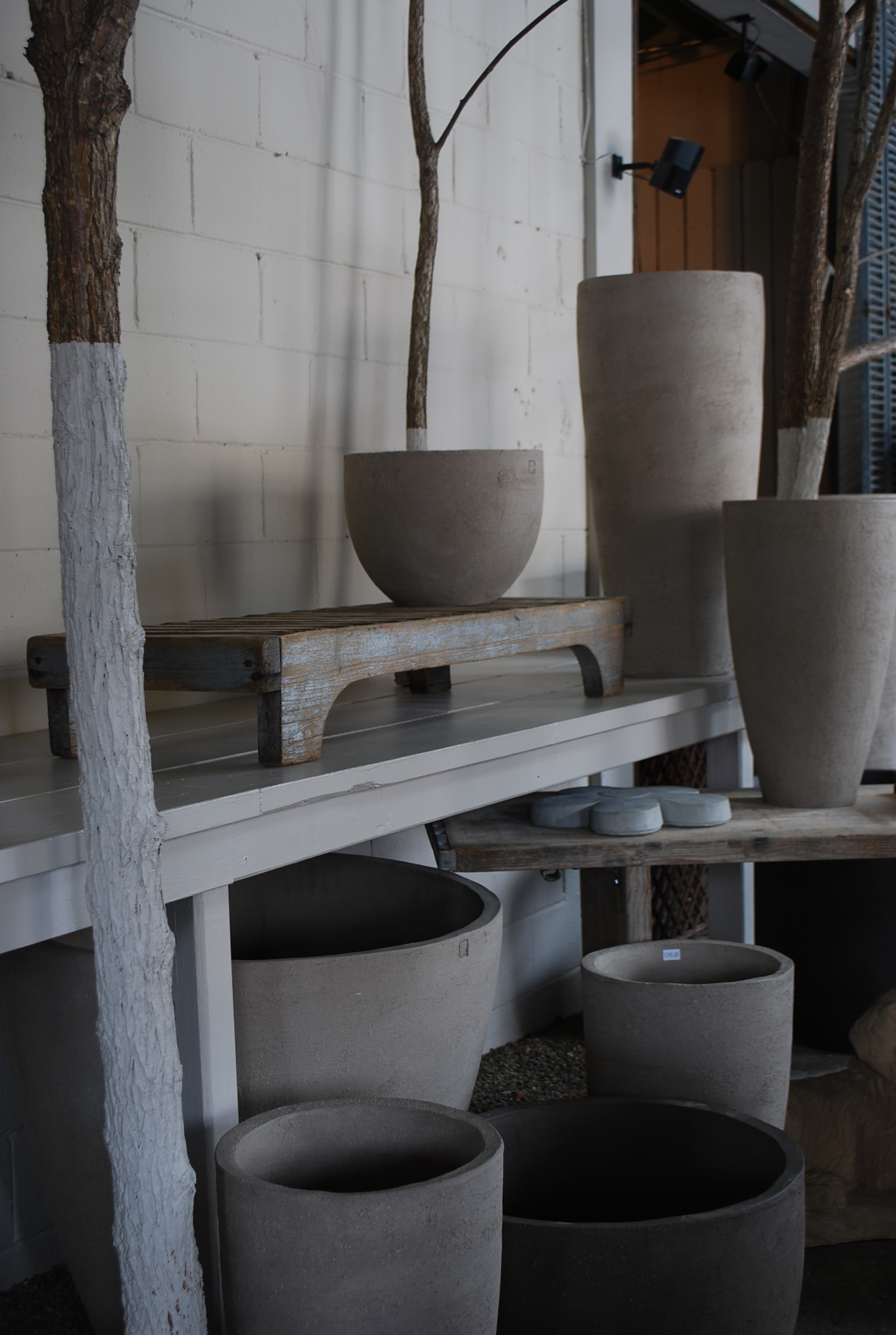
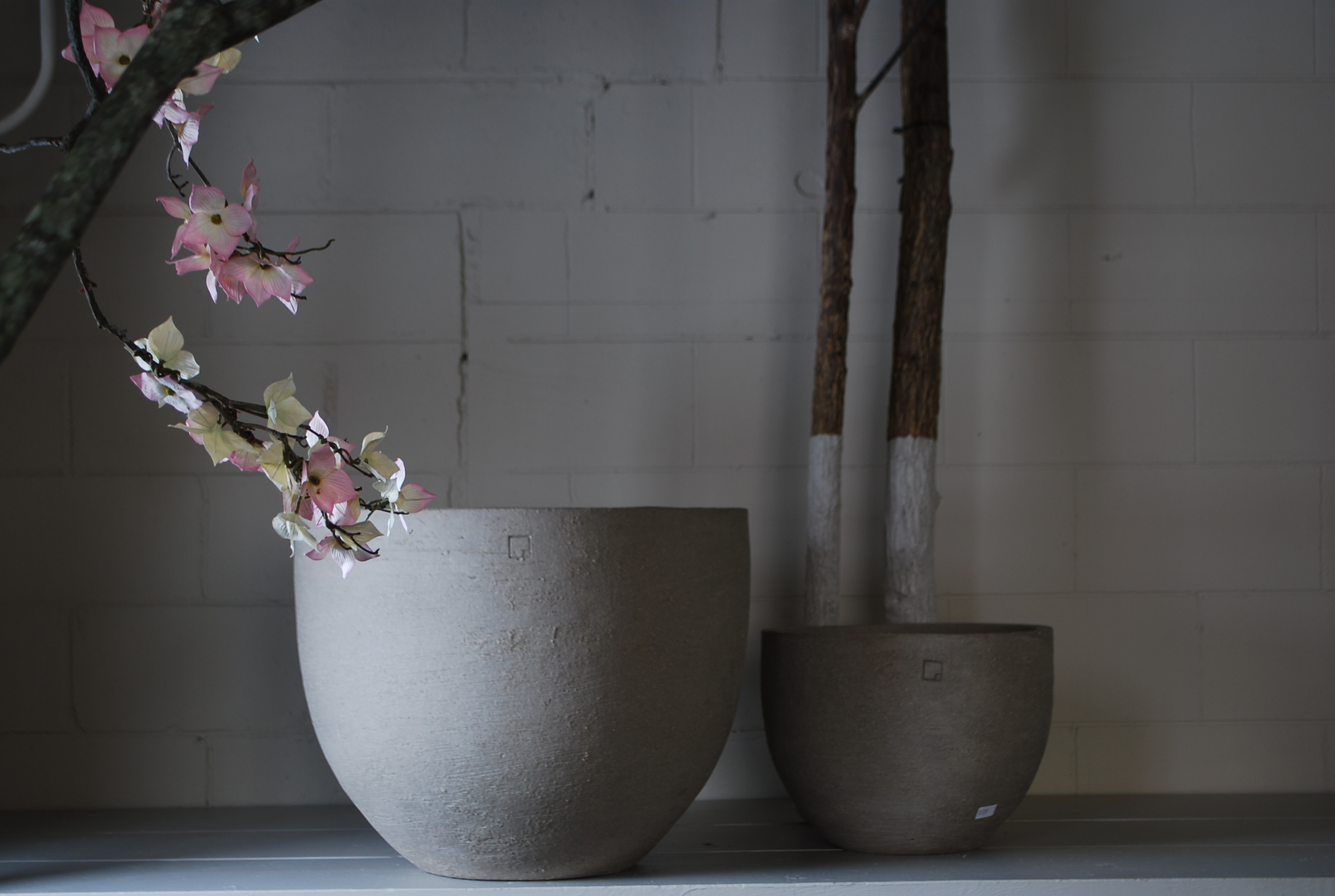
Why this discussion of austere?  The first two of Rob’s six containers due in this spring arrived this past Thursday.  Both containers were chock full of contemporary stoneware garden pots from Belgium.  The pottery insisted that they would pack the containers.  They insisted that nothing could be double stacked.  OK, we agreed.  When the first container was opened, the airspace in the upper portion-a strongly austere, and minimal gesture.  We paid to have air from Belgium, transported to the US.  Once I get past this, I find I am enchanted.  The pots are hand made from clay that is loaded with grog-hard particles.  Very definitely textured.  Each shape is available in a cool cream, a taupe, and black.  Very austere, this palette.  Not one bit like the open armed friendliness of a terra cotta clay pot.

interior.jpg

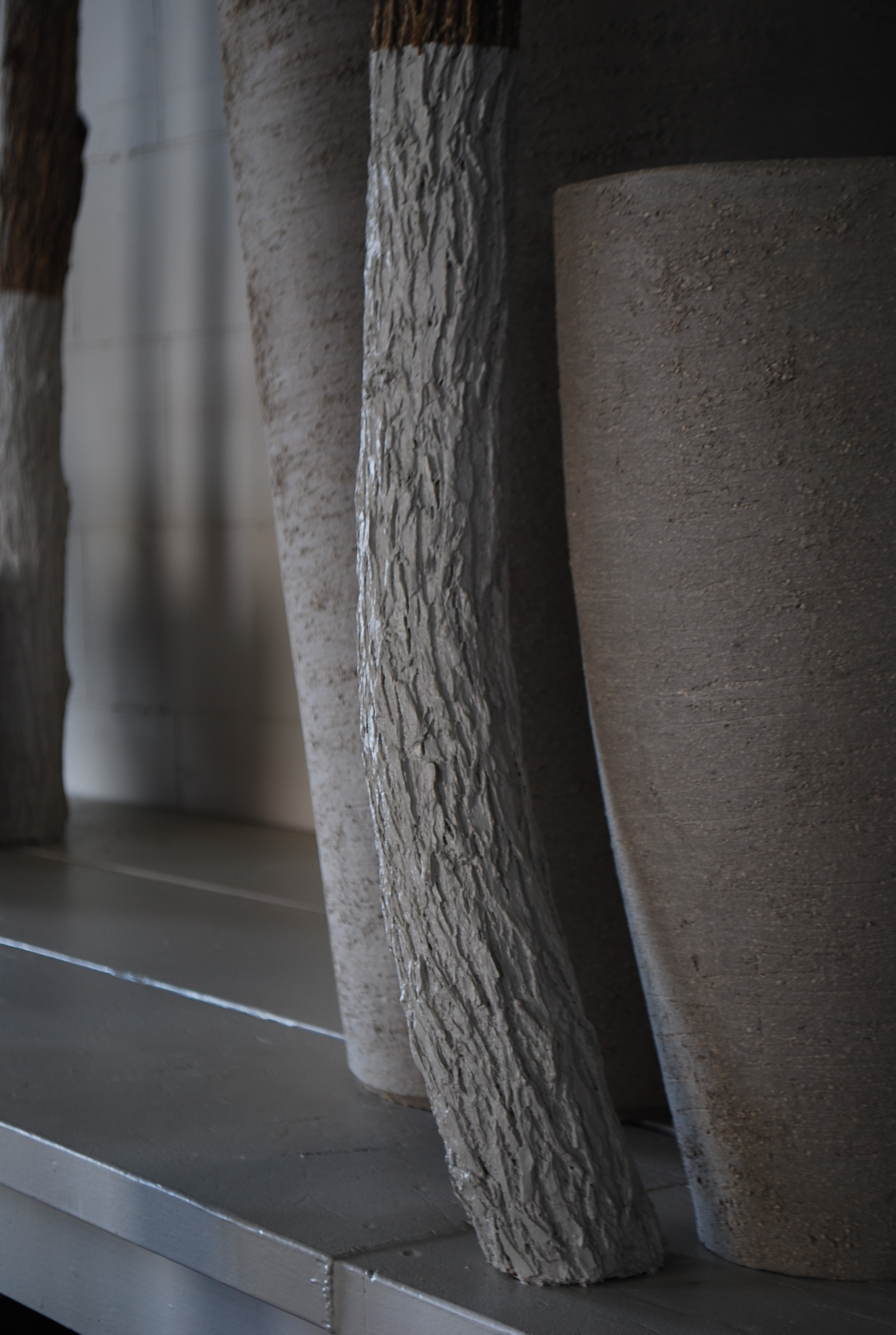
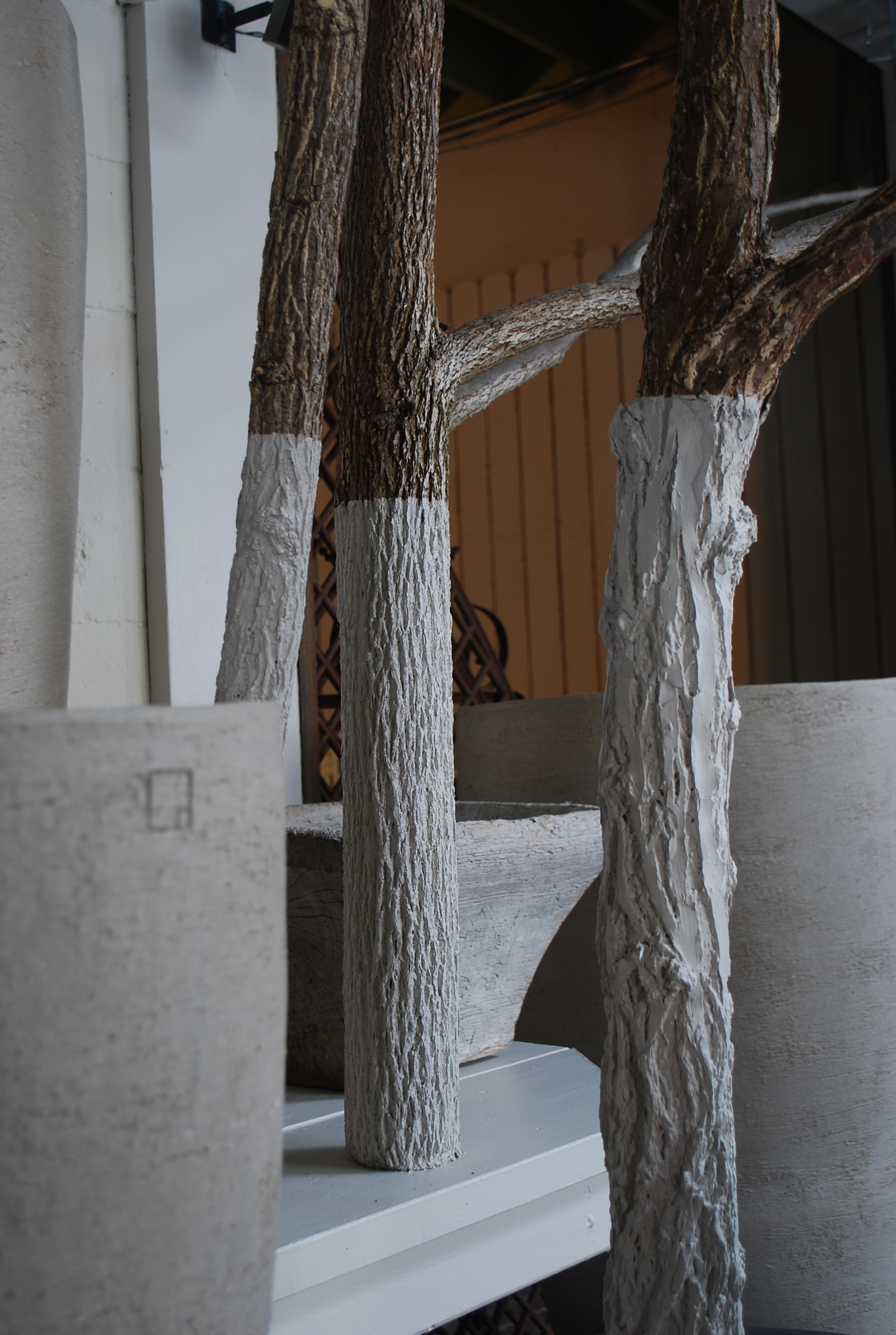
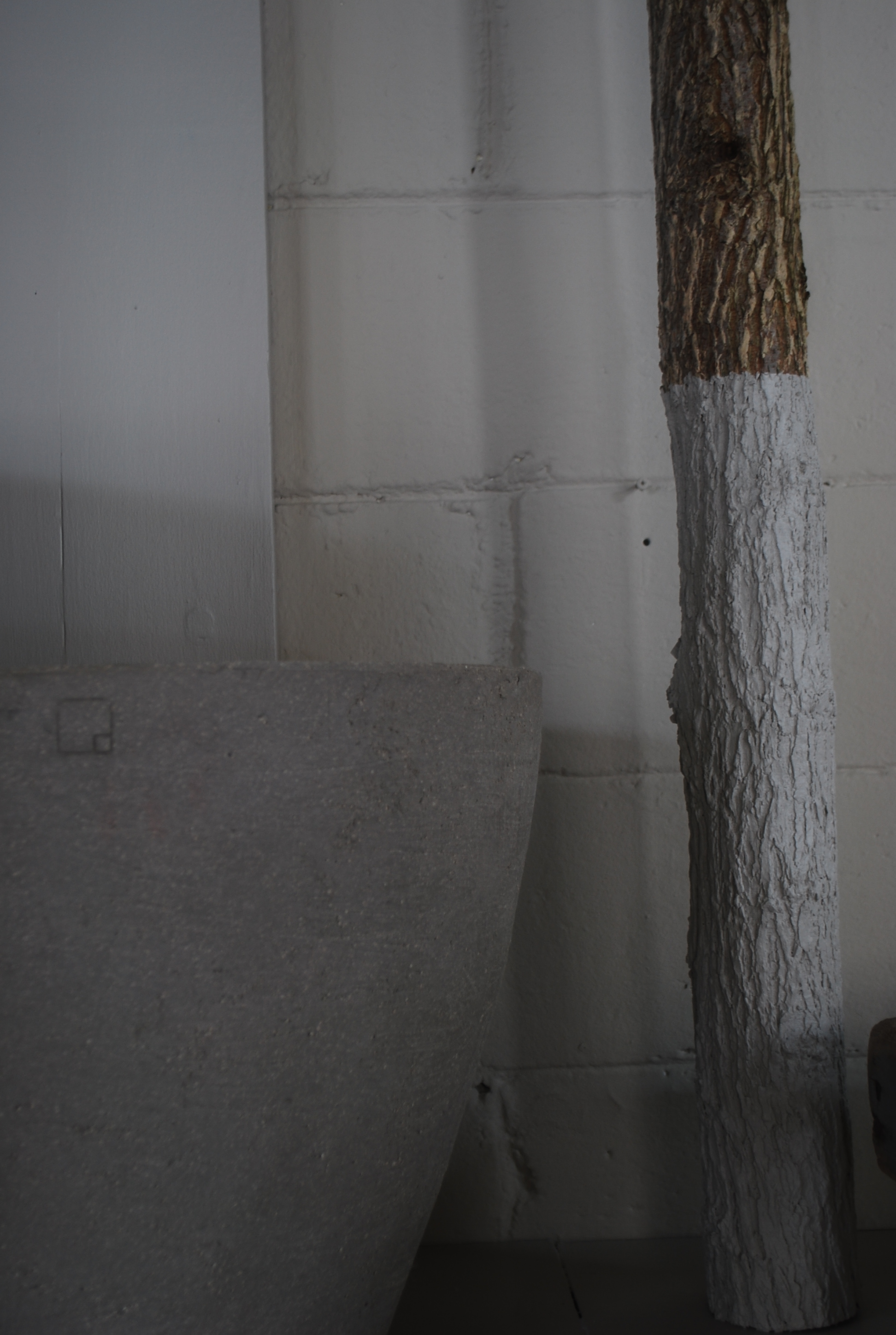
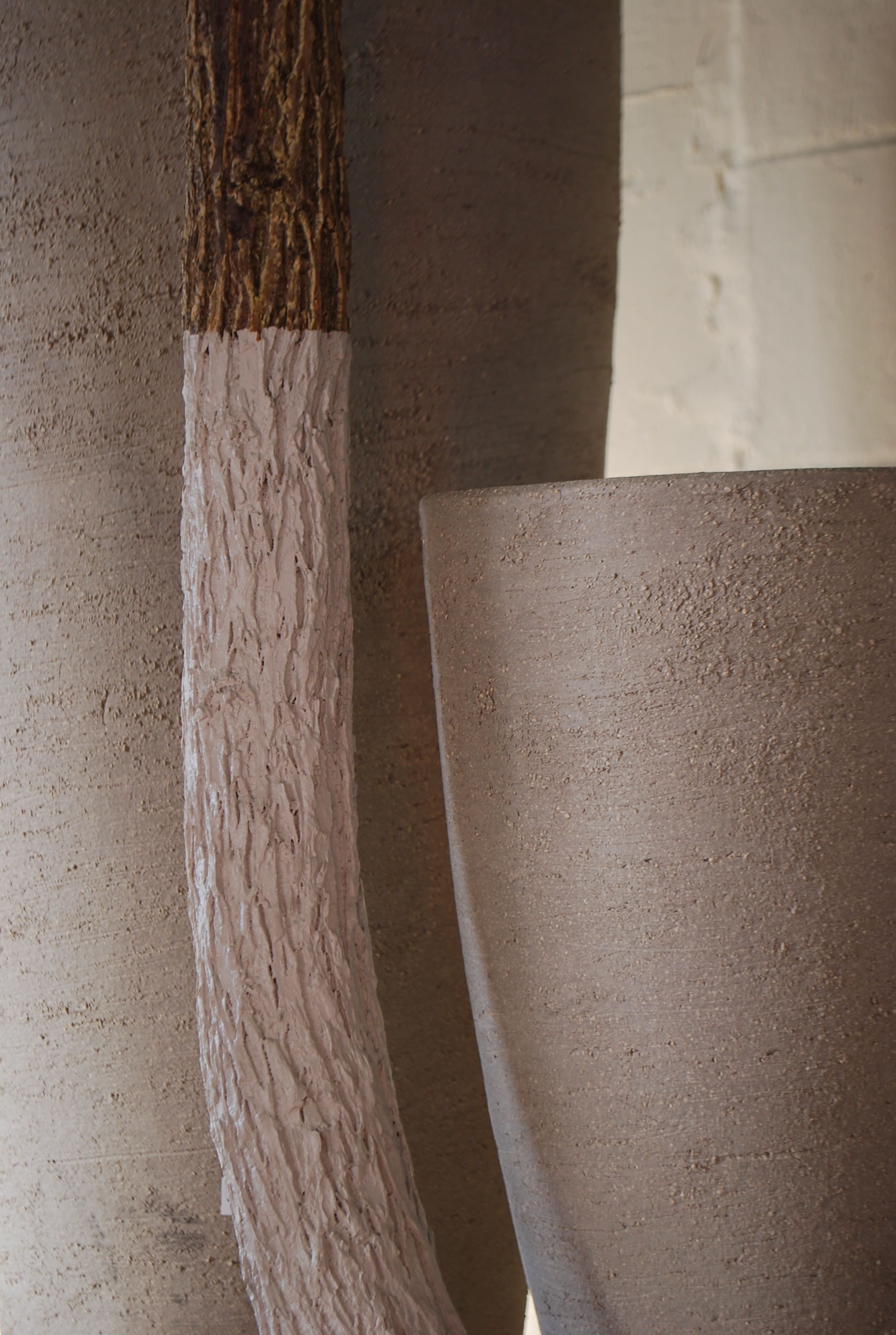
I planned ahead for their arrival. We dressed the floor and shelves with the trunks of a few small caliper trees. I thought the natural forms and textures of these trees would provide some warm company to these austere pots.  I never pitch a dead tree.  I keep it, in the hopes it might have another life.  The whitewash?  Traditional agricultural practice-kaolin clay on tree trunks is said to repel insects.  How the French whitewash the trunks of their trees-shockingly beautiful.  My whitewash is the same color as the pots.  The walls and trim were repainted the same color as those cooly cream colored pots.  We created an environment which is as close to the color of those cream pots as we could manage.

whitewashed-bark.jpg

I wanted to display them in a way that reveals why Rob admires them.  I have had a few days to look them over.  It took a day with both of my crews to unpack and take the packing material to be recycled. It took another day to put those pots in place.  Today I had the shop to myself.  This is the last Saturday we will be closed until January 15 of 2014.  Nonetheless, there was a steady stream of people stopping by.  They are tired of the winter too.  But they did like these pots.

clay-pots.jpg


I will say that an austere expression, if you give it enough time and attention, is just cause to slow down and reflect.  I am looking at shapes and shadows.  Texture.  Mass.  I am appreciating the quiet.  My fears about how chilly contemporary pots melted away.  The shapes are not only beautifully sculptural, the surfaces tell a story.

trunk.jpg

There is in fact something very warm and personal about these pots.  The hands that love and shape this clay are much in evidence.  I have never been so struck by the fact that the clay from which pots are made is an organic material.  From the earth.  A group of hands fashioning a fabulous collection of pots from clay dirt-this is a story of few words.  Minimal shapes and colors.  A subtle and highly edited point of view.  The quality of the available light greatly influences the appearance of the color.

stamp.jpg

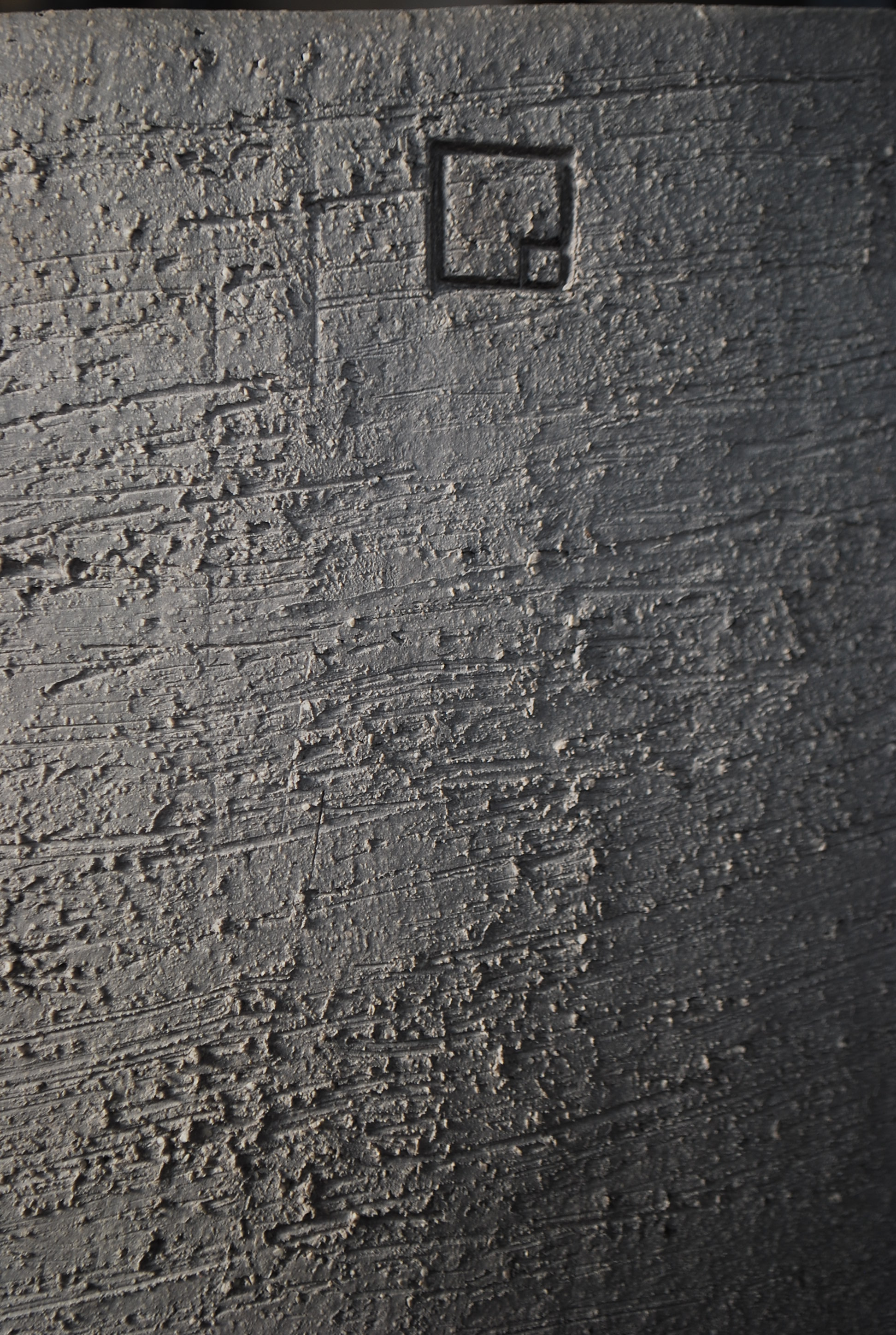
Their stamp-I can only imagine how it came to be.  A stamp is a signature.  This is who we are, and what we make.  Plain and simple. These contemporary pots-I have decided that I quite like them.

A Holiday Wreath


A wreath is first and foremost an expression of unity.  No matter the materials used or style, every wreath begins as a circle.  A circle is a complete, continuous, and visually satisfying form. That decorated shape displayed at the holidays expresses the sentiments of the season, as well as a point of view about beauty.  This simple grapevine wreath adorned with a few dried bits from the garden and a wired paper bow says hello and welcome.

The history of wreath making is long, dating back centuries.  Holiday wreaths traditionally begin with a circle of evergreens.  The evergreens last a long time, despite being cut.  There is a strong element of hope associated with evergreen wreaths-that despite the quiet winter season, the natural world is still very much alive, and will persist through the winter. 

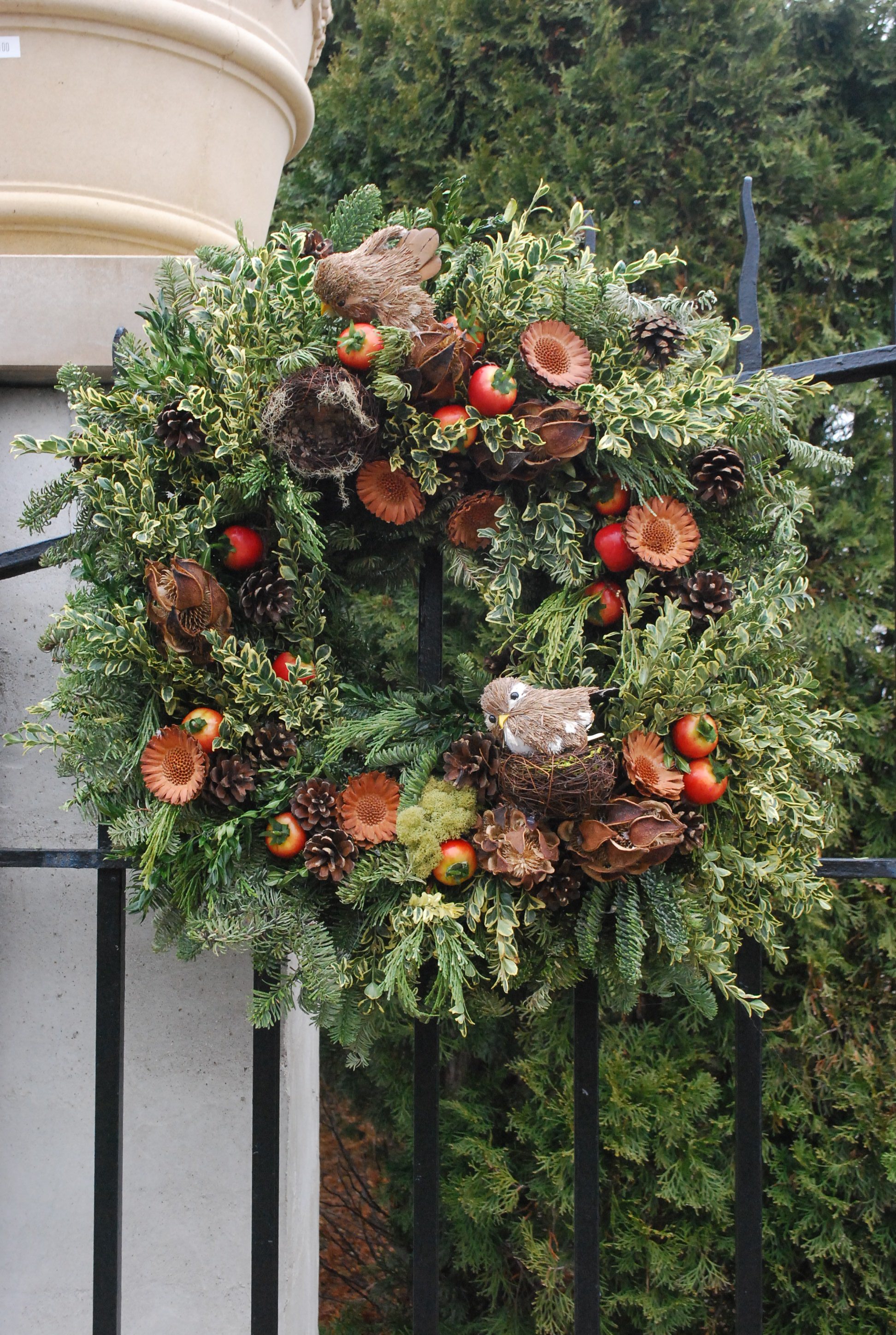
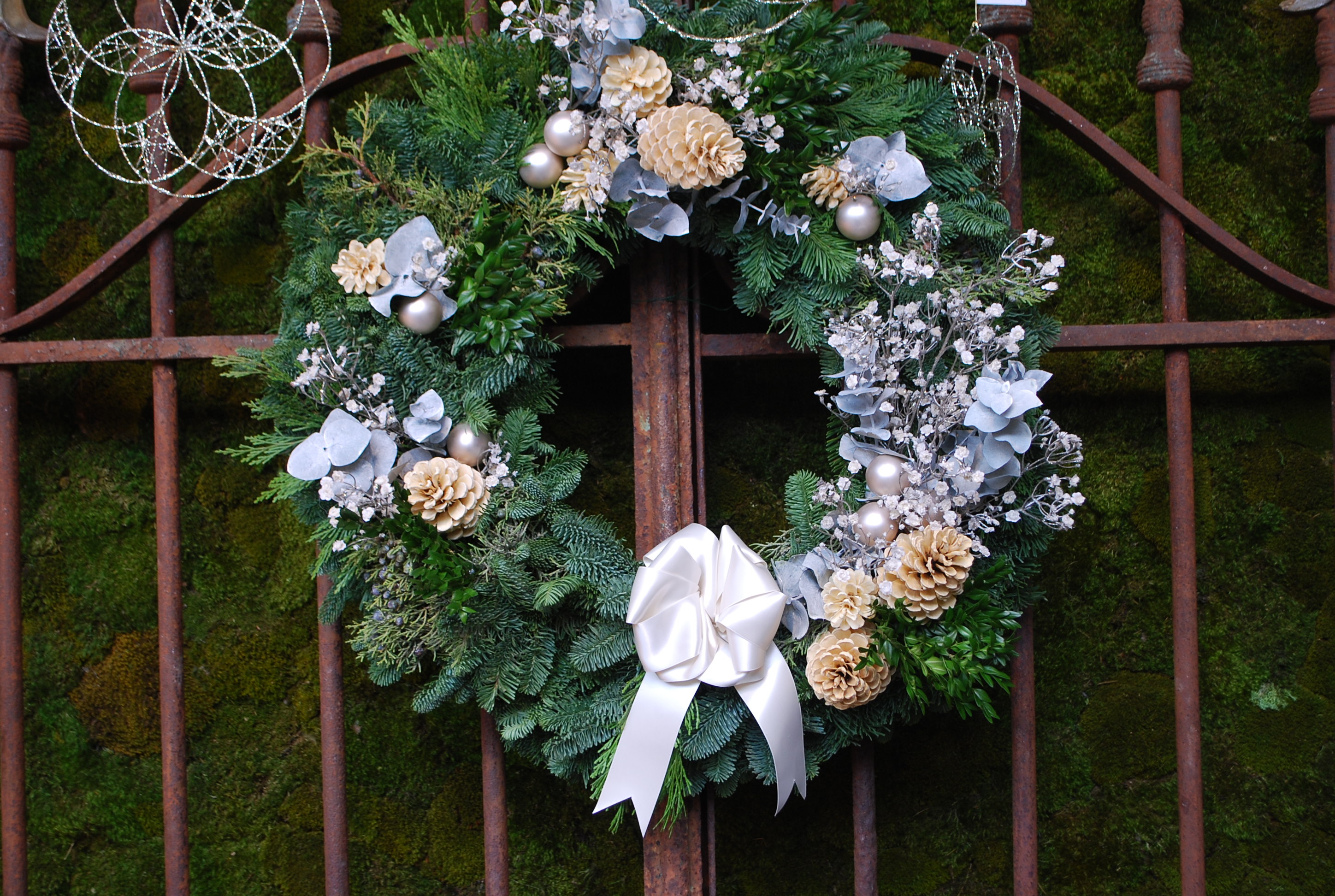
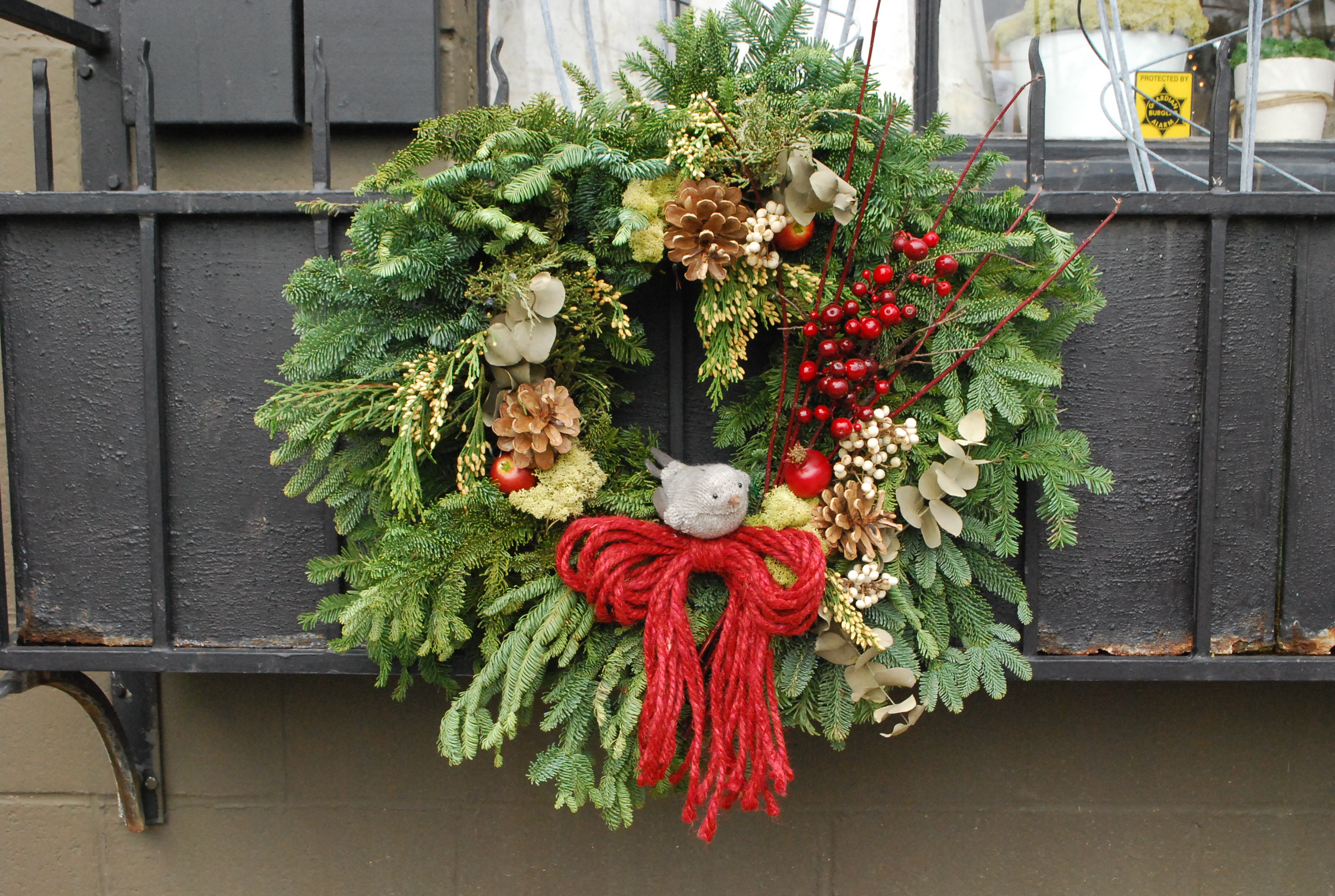
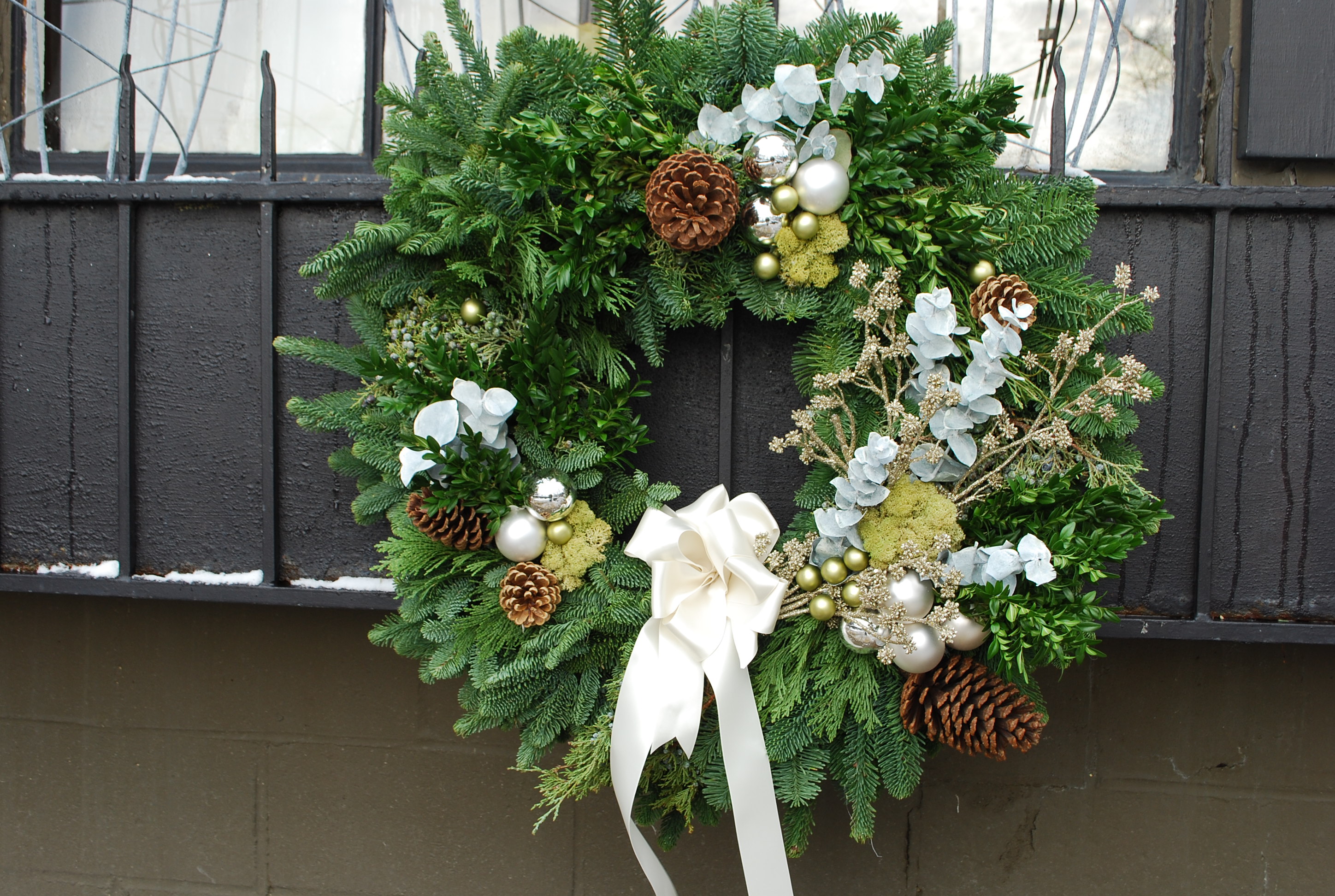
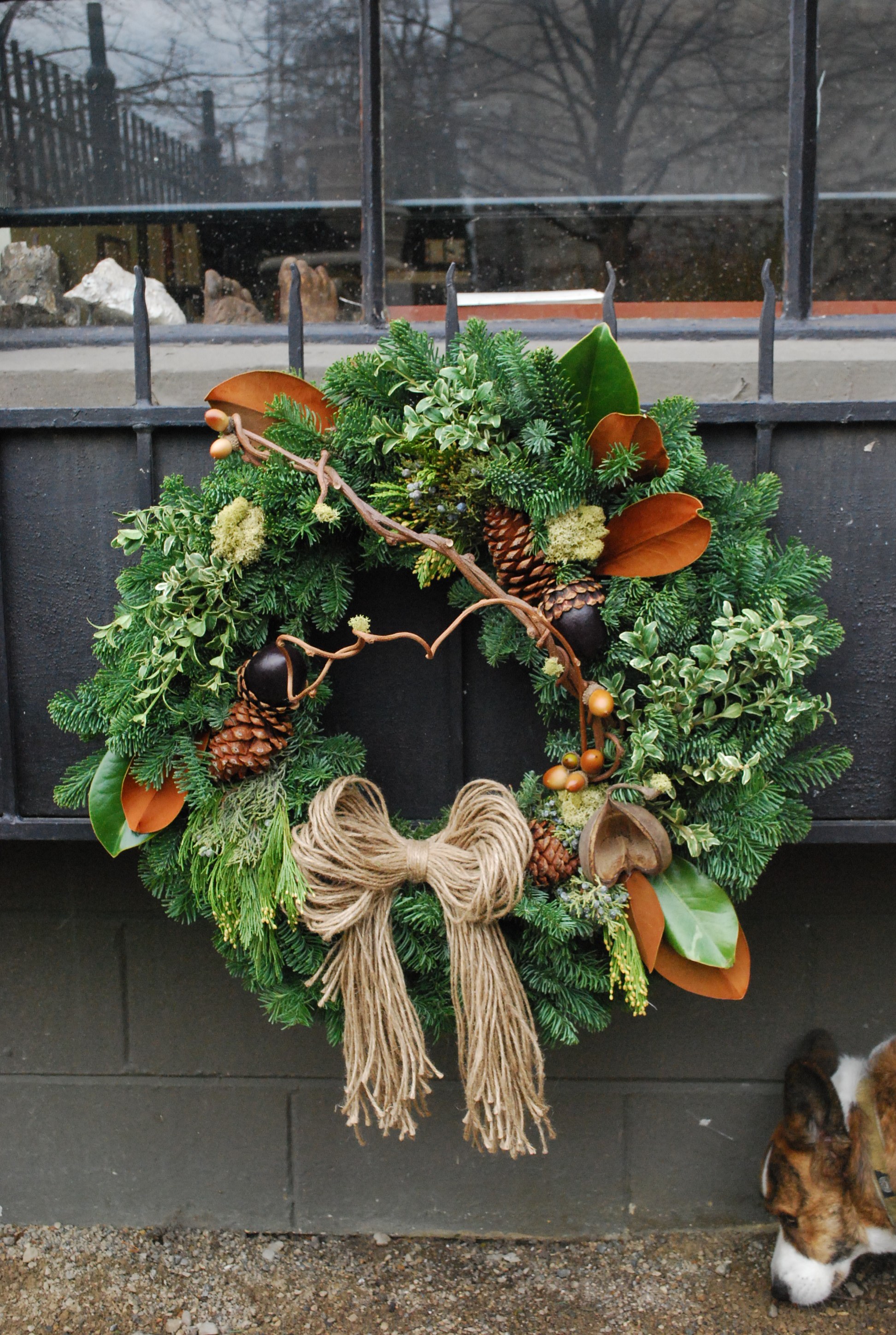
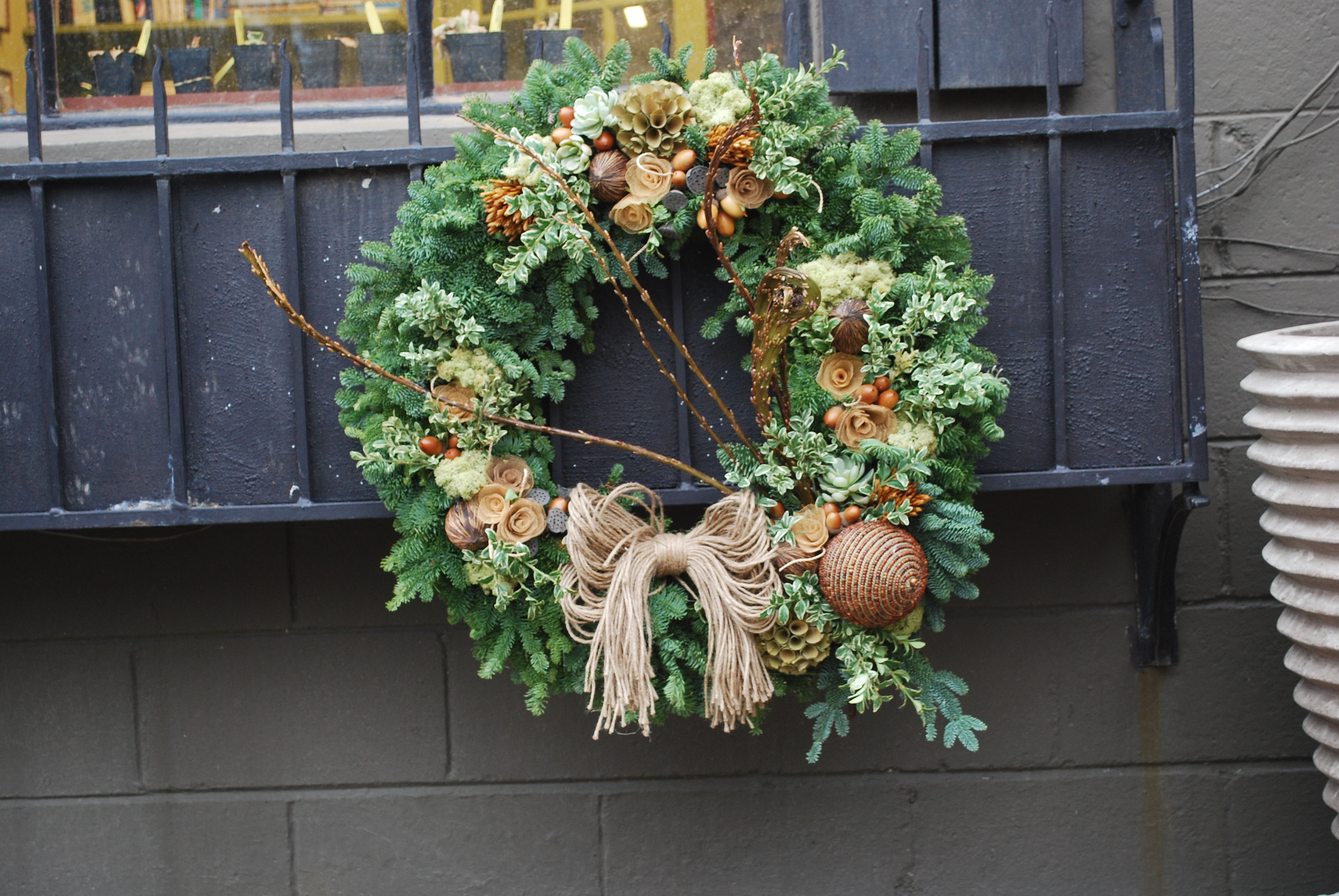
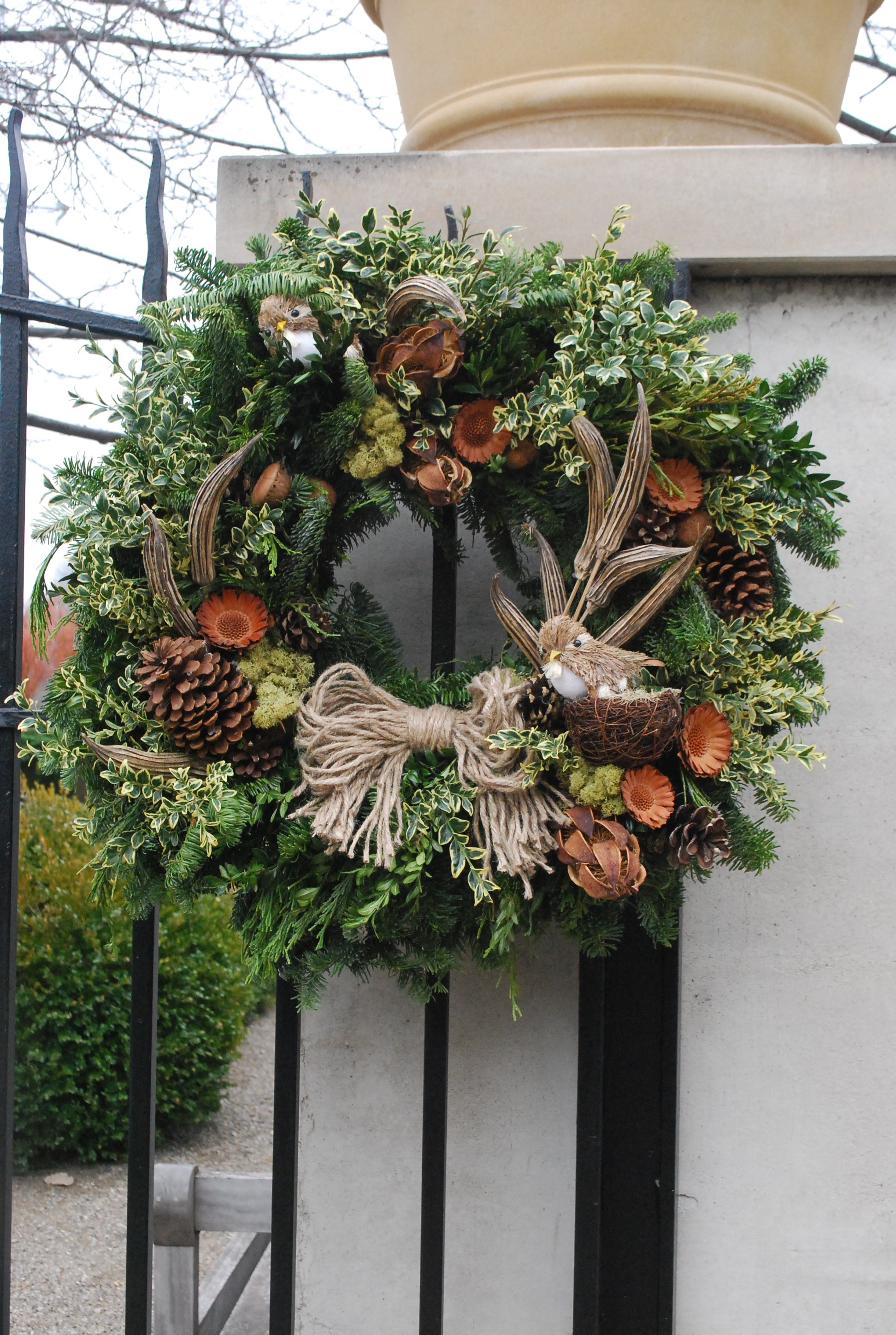
All of the evergreen wreaths at the shop are locally made to a certain size and heft that will keep its shape, no matter how much I may add to it.  The handmade part of them is obvious-they are not perfectly round, and they have a lively textured surface.

I like a basic mix of different types of fir.  Douglas, concolor, silver, noble and frazier fir stay fresh looking a long time.  Adding bits of other greens, such as boxwood, incense cedar, berried juniper and the like makes each wreath different-more personal.   

Decorating a wreath spices up the evergreen stew.  Natural materials-cones, mosses, dried berries, magnolia leaves, twigs, and eucalpytus provide color and texture of a different sort.  Arranging all of the materials-a satisfying and contemplative exercise in composition.    

I probably make upwards of 50 wreaths a year-how I enjoy this.  Each client has a singular idea about what they like in terms of color, materials and style.  Some are quite formal-others more low key.   

The mechanics of fastening has everything to do with the weight of the material and size of the material you are trying to attach.  Wire can be wrapped around the base of a pine cone, and poked through to the back of the wreath.  Anything that gets wired to the steel base of the wreath will stay put, no matter how blustery the weather.  I buy rolls of paddle wire.  The 22 gauge green wire is a continuous length wound round a paddle shaped spool.  I always have the perfect length of wire available.

Florist’s wire comes in different lengths and weights.  The advantage of this wire-it is straight.  A straight wire can be easier to poke through the evergreens.  Smaller materials like twig bunches can be easily fastened with a single piece of wire. 


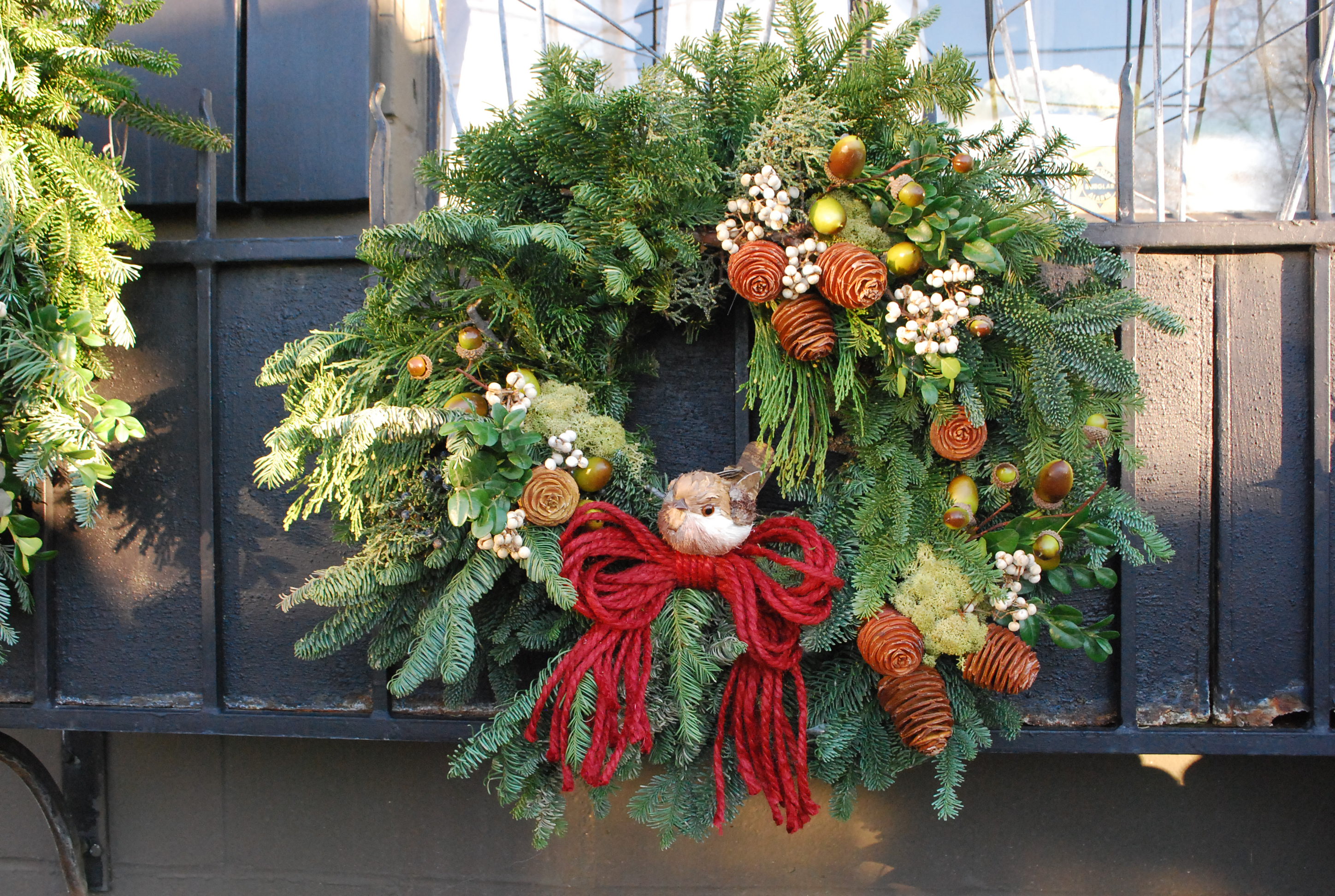
Some wreath materials are available already attached to heavy wire stems.  They can be wedged in between the evergreen branches. More often than not, I take the picks apart.  Many are just too large, or too long for the spot where I need them.  The acorn branches in the wreath pictured above came from a single pick.   

A jute bow is easy to attach with a zip tie that goes through the center knot, and around a stout branch.  Really heavy materials, such as faux fruit or ornaments like the bead ball pictured above need a fastening device that is both strong and rigid. Floral picks, or skewers come in various lengths, and can handle the heaviest ornament with ease.  Faux fruit is really tough skinned.  I pierce the surface with a steel awl,  butter the pick with hot melt glue, and insert the pick.  The wood pick can them be wired to the steel wreath frame.

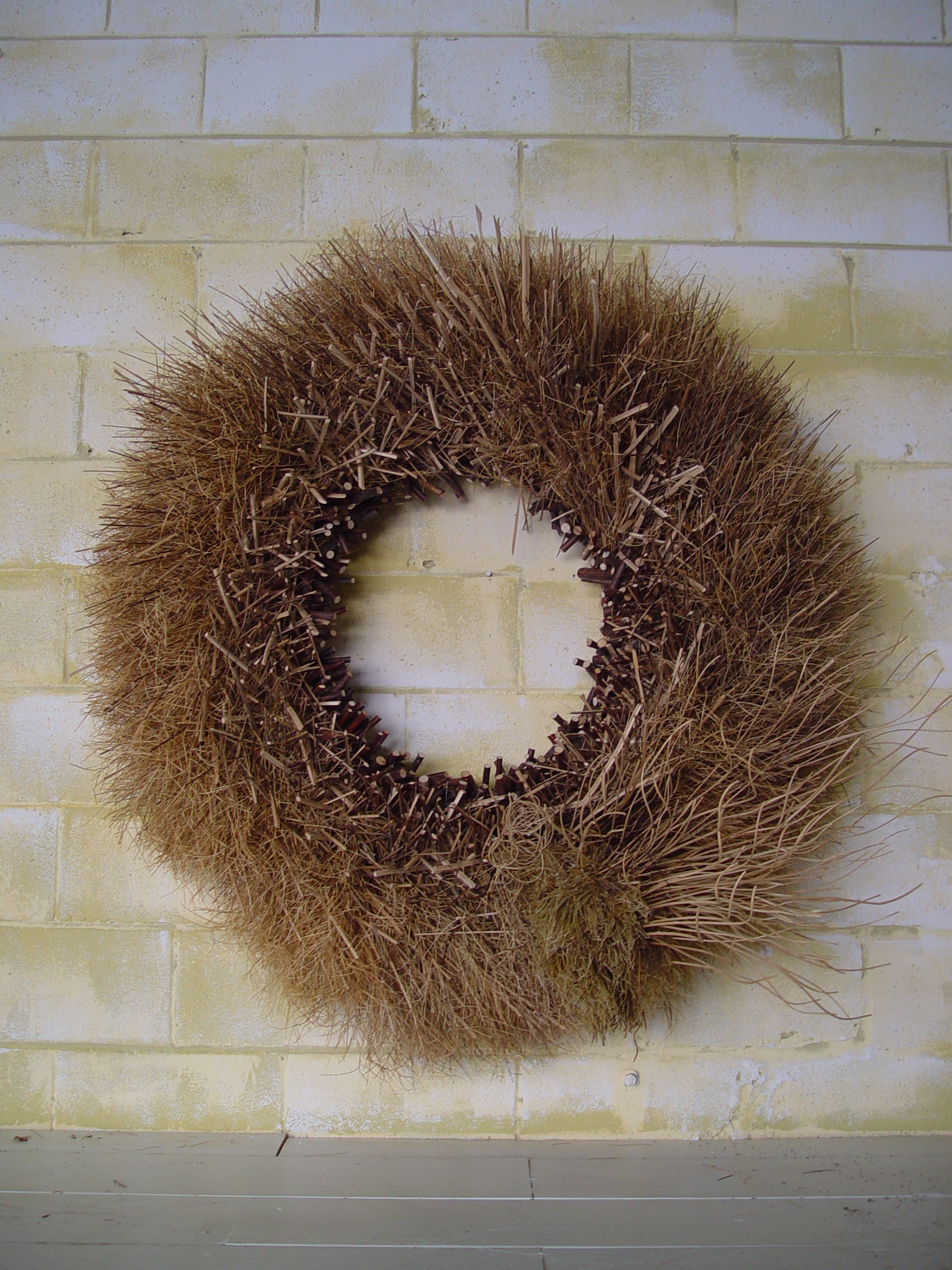
The hot melt glue gun is an indispensable, albeit dangerous tool.  Hot melt glue will stick to your skin just like anything else it touches.  My downfall almost always involves gluer dripping from the back of a piece of moss.  If you are using a glue gun more than 1 step from a sink, keep a bowl or glass of water handy, so you can put out the fire fast.  Gluing the sticks in the wreath above-not so dangerous.  The glue is at the other end.  This gluing project just took lots of time.  A wreath like this can last many years-and can be repaired if need be.   

I don’t really have a favorite wreath.  The favorite part is in the making, not in the end result.  Having some time, and a good sized space to make a mess is a big help.  Wreath making-a primitive form of cutting and pasting.  Much more ends up on the floor or table, than on the wreath. 

Hand made holiday decorations have a very special feeling about them.


At A Glance: Other Holidays

 
2003


2004

2005

2005

 2006

2006

2007

2008

2009

2010

2011