Holed Up

wintry-spring.jpg
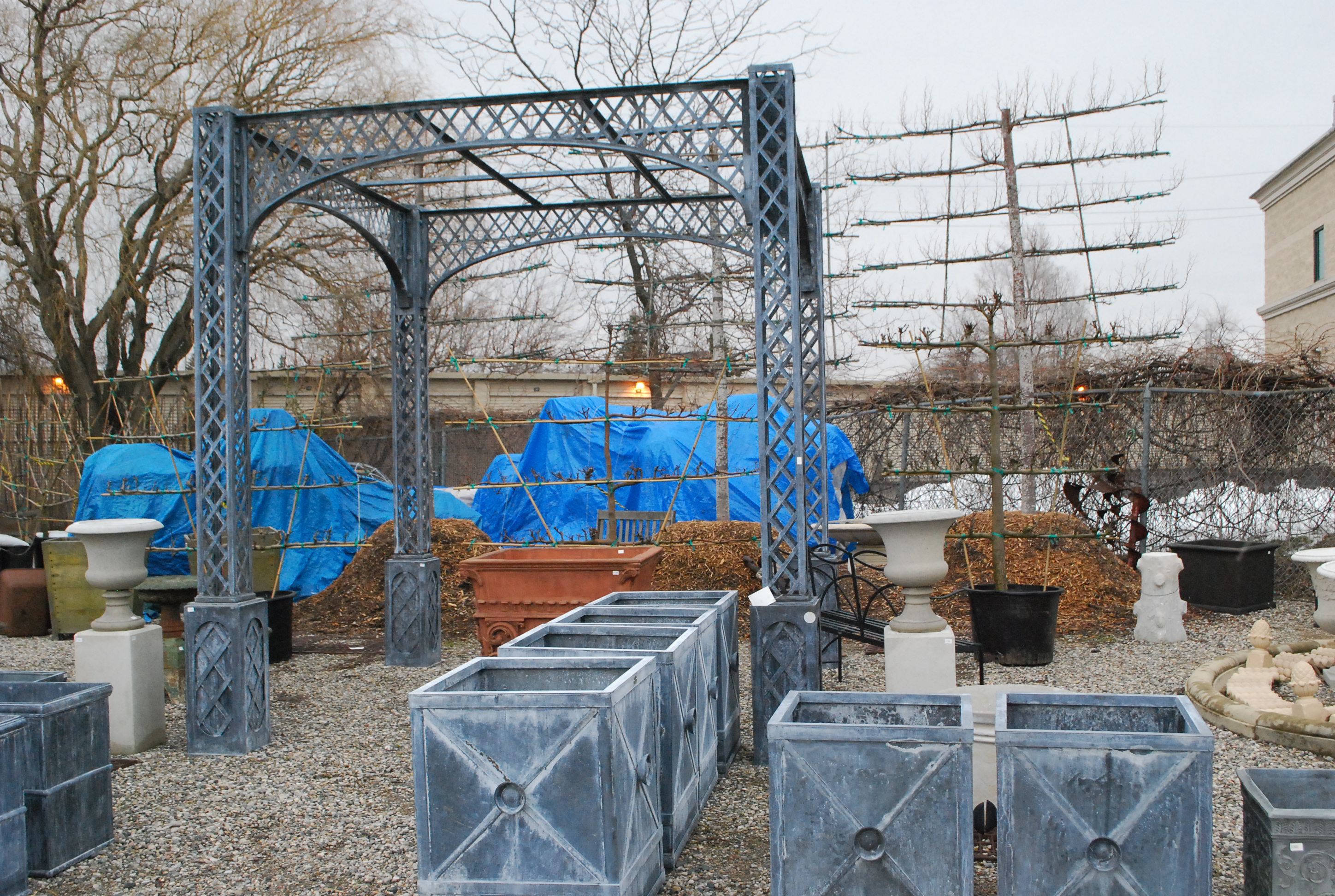
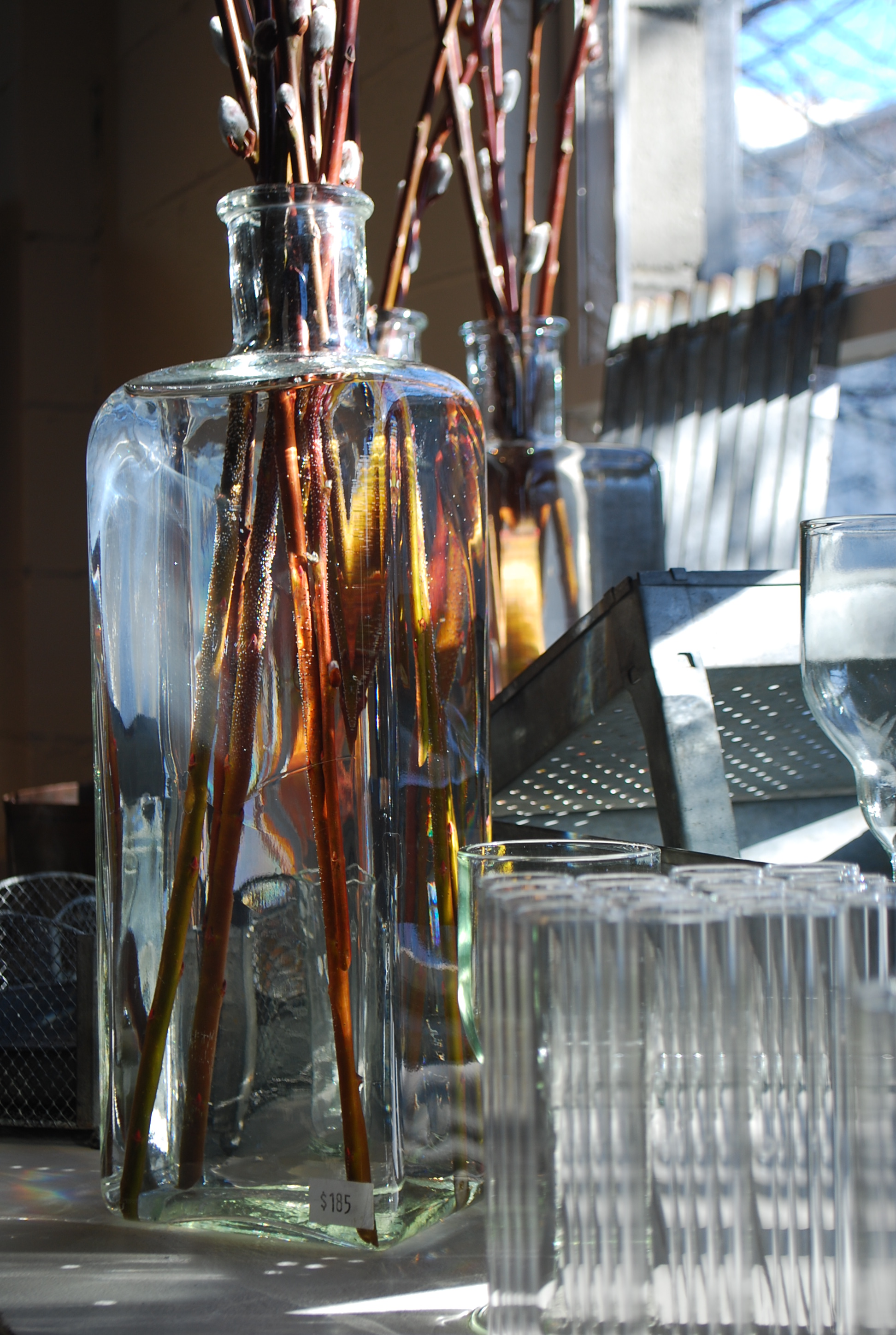
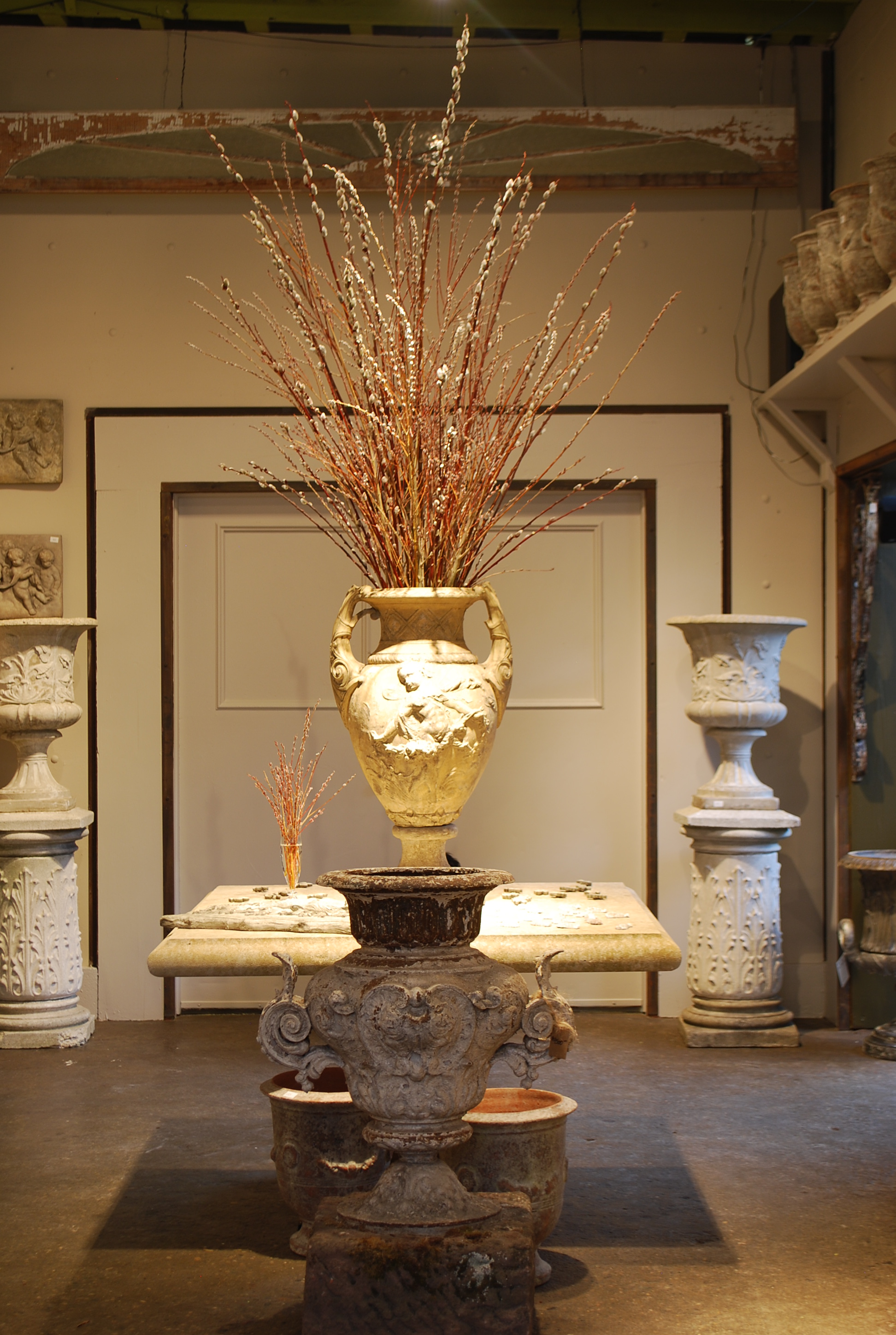
I expected to feel exasperated-but this scene made me laugh. The cut pussy willows are representing for all the world as if it were spring.  At their feet, the remnants of hard packed snow and frozen ground tell a different story.  Though it is late March, our weather is quite February-like.  This is the late winter hand we have been dealt.  We have not been able to do so much outside the shop, as everything is frozen to the ground.  Some espaliers breaking bud when the arrived went in the garage.  Other, unquestionably dormant, we placed outside-and we hope for the best.
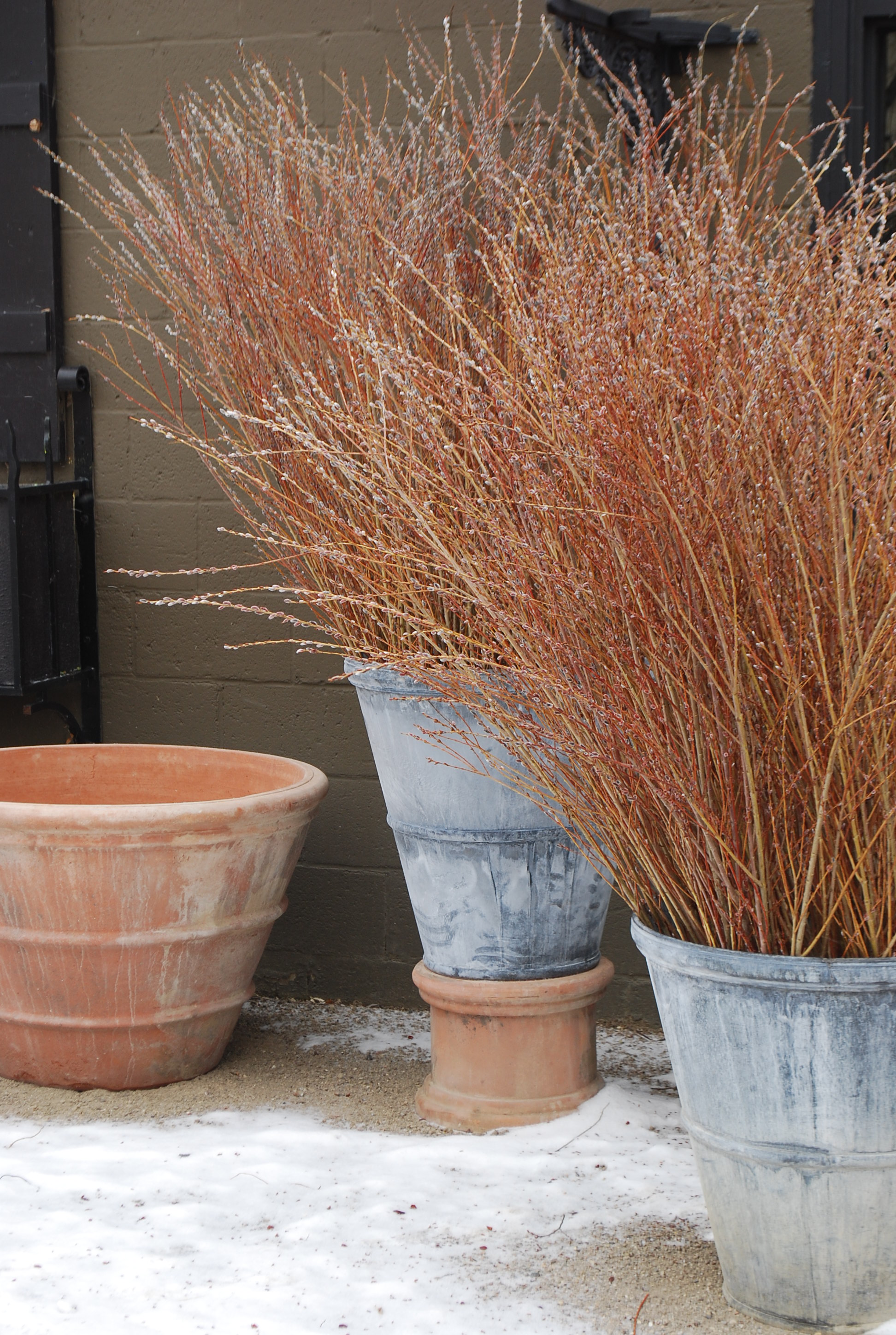
prairie-willow.jpgPrairie willow-I am confident it is tough as nails.  It grows in the prairies-this means that weather extremes are the norm.  I had no problem placing the bunches outdoors; they will shrug off the cold.  But what would anyone do with them?  Pots, and the soil in them, are still frozen solid.  A vase full of prairie willow inside-that would not only be beautiful, it’s just about all we can do.  The prairie willow may be fine outside given night temperatures in the teens, but we are holed up, pending a shift of the season.  Plants and animals have great mechanisms for dealing with untoward weather.  The bears hibernate.  The bats congregate deep in caves.  The plants go dormant, and stay that way.  Lichens go dull in color when dormant.  A heavy rain brings them roaring back to an interactive life.  Some pine cone seeds will not germinate, unless there is a fire. Other seeds will not germinate unless they have a cold period, or a good soaking.  The perennials die back to the ground.  They endure the winter, their life on hold- underground.

spring-plants.jpg
The first truly warm day of spring-insects hatch, and swarm. The grass puts on a green outfit. The bulbs, long silent underground, push up towards the sun.  The process by which the natural world wakes up after a winter is an extraordinary event to witness.  Who knows what day will signal sweet release from the dormant season.  No doubt, every northern gardener is waiting. Given that people do not hibernate, they are witness to every moment of the winter.
Wardian-case.jpg

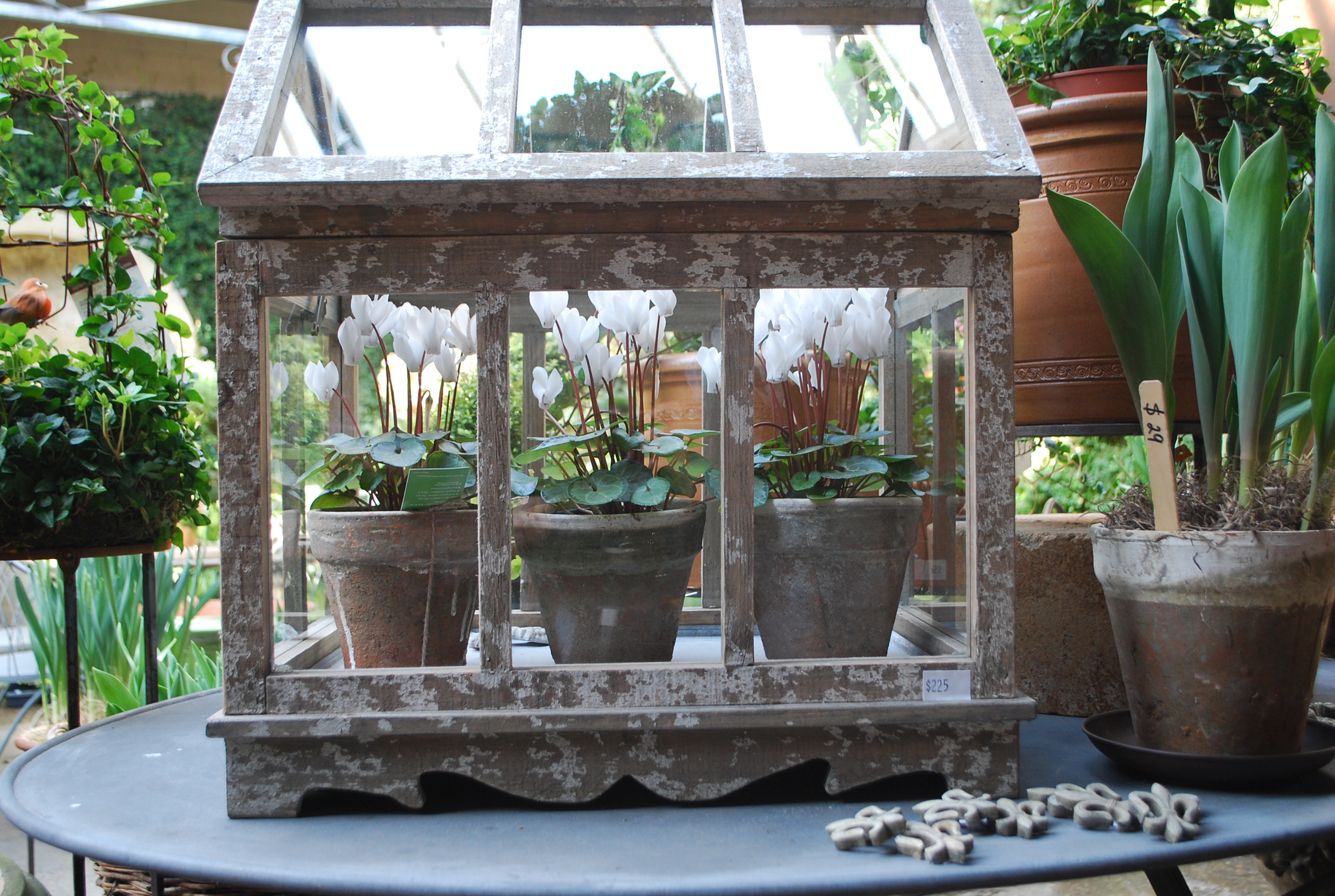
I am a natural organism that does not go dormant.  My winter life involves heat and shelter.  This means I live through the winter, like it or not. I am not a skier or a snow shoe afficianado-I endure.  My experience of the dormant season involves lots of winter gear-coat, boots, gloves, and hat.  And the time it takes to get dressed.  No doubt, I am a hothouse variety.  In Victorian times, miniature greenhouses known as Wardian cases would protect tropical plants from any hint of cold.  Rob’s placement of these cyclamen in a Wardian case-his dry and subtle humor at work.  Cyclamen cleave to the cold. No need to heat them up.   What really needs a place in this Wardian case-all of us gardeners living in northern climates.
greenhouse-space.jpg

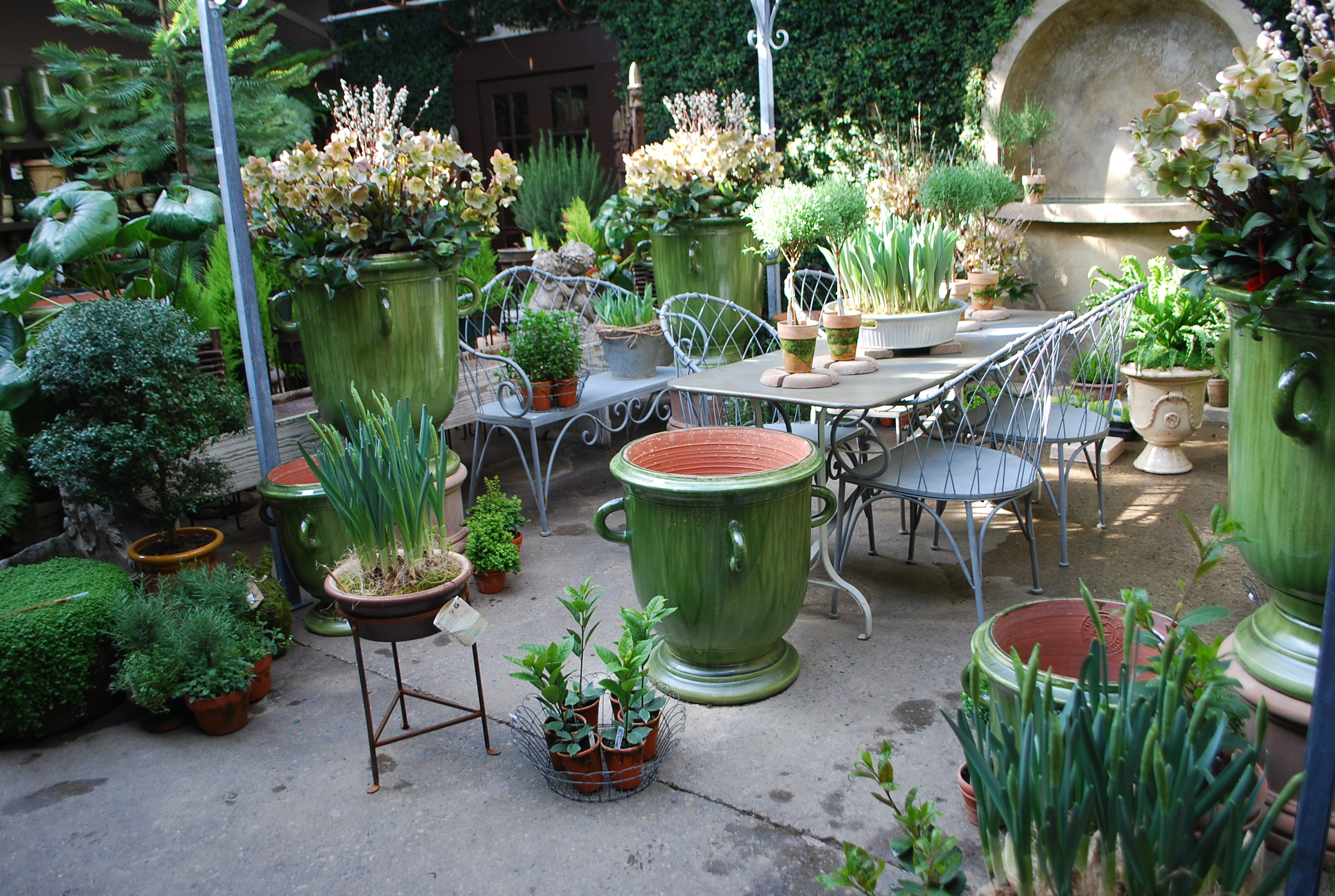
The late winter weather aside, we have plants.  Potted bulbs.  Hellebores.  Delivered just today, topiary plants, big and small.  Bulb pans overflowing with angelina.  Tiny euonymus topiaries.  We have had to make a place for the plants under glass, and inside.  We heat this space to 50 degrees.  Any amount of sunshine will quickly warm it up.  From now until the middle of May, this room will be stuffed with plants.  The moment the winter weather breaks, every gardener will be looking for plants.
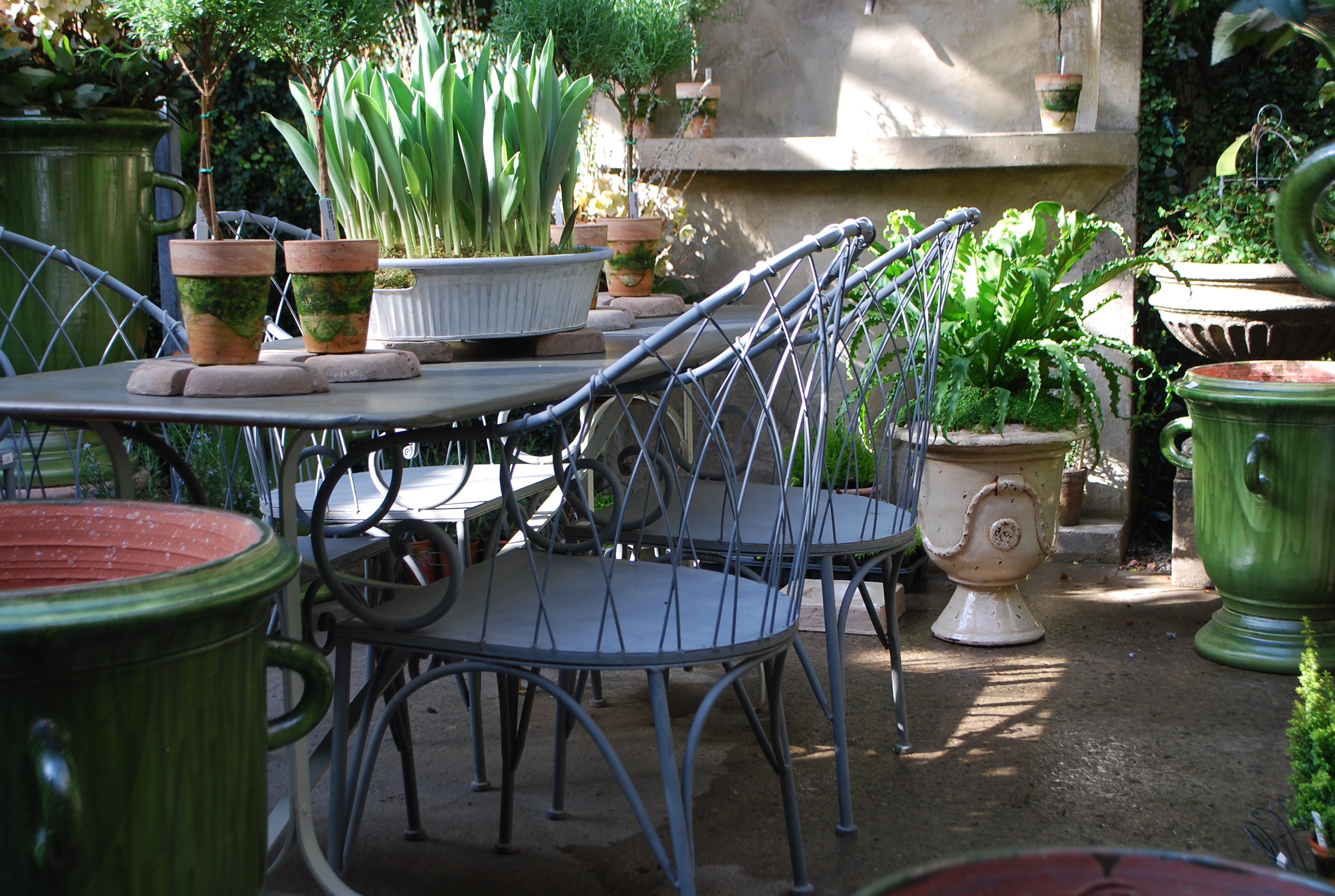
greenhouse-space.jpgThe plants make the space smell great.  The hyacinths blooming fill the entire space with their fragrance.  Rob washes down the floor almost every day.  The resulting humidity is a welcome break from the dry winter air.

stoneware-cats.jpg

Even this stoneware cat has an aura opf contentment, given a sunny spot on a bench.
topiaries.jpg
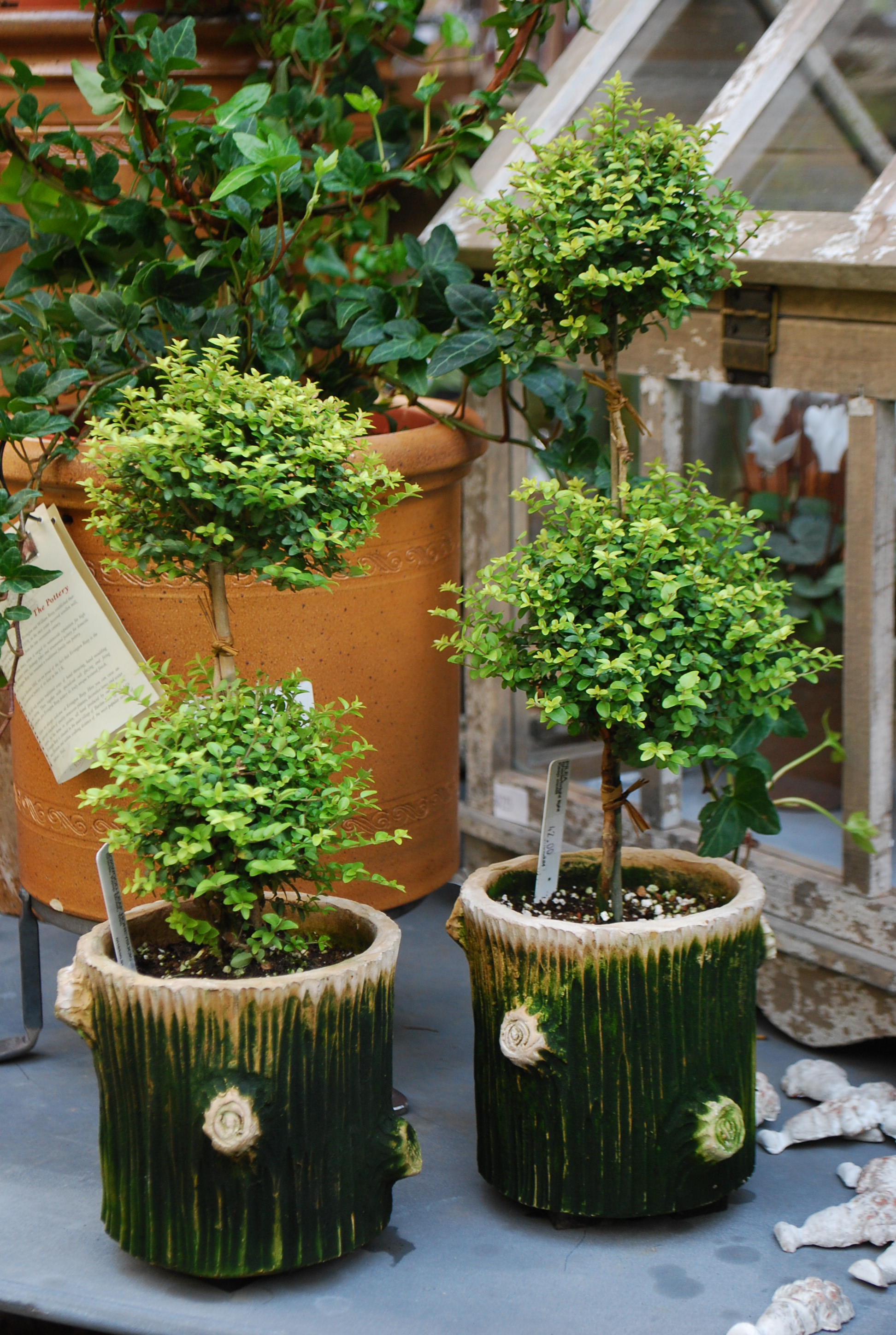
These double ball boxwood-leaved honeysuckle topiaries are charming in their stump pots.  The moss on the surface tells the story.  These plants have been grown with heat, water, and some shade.
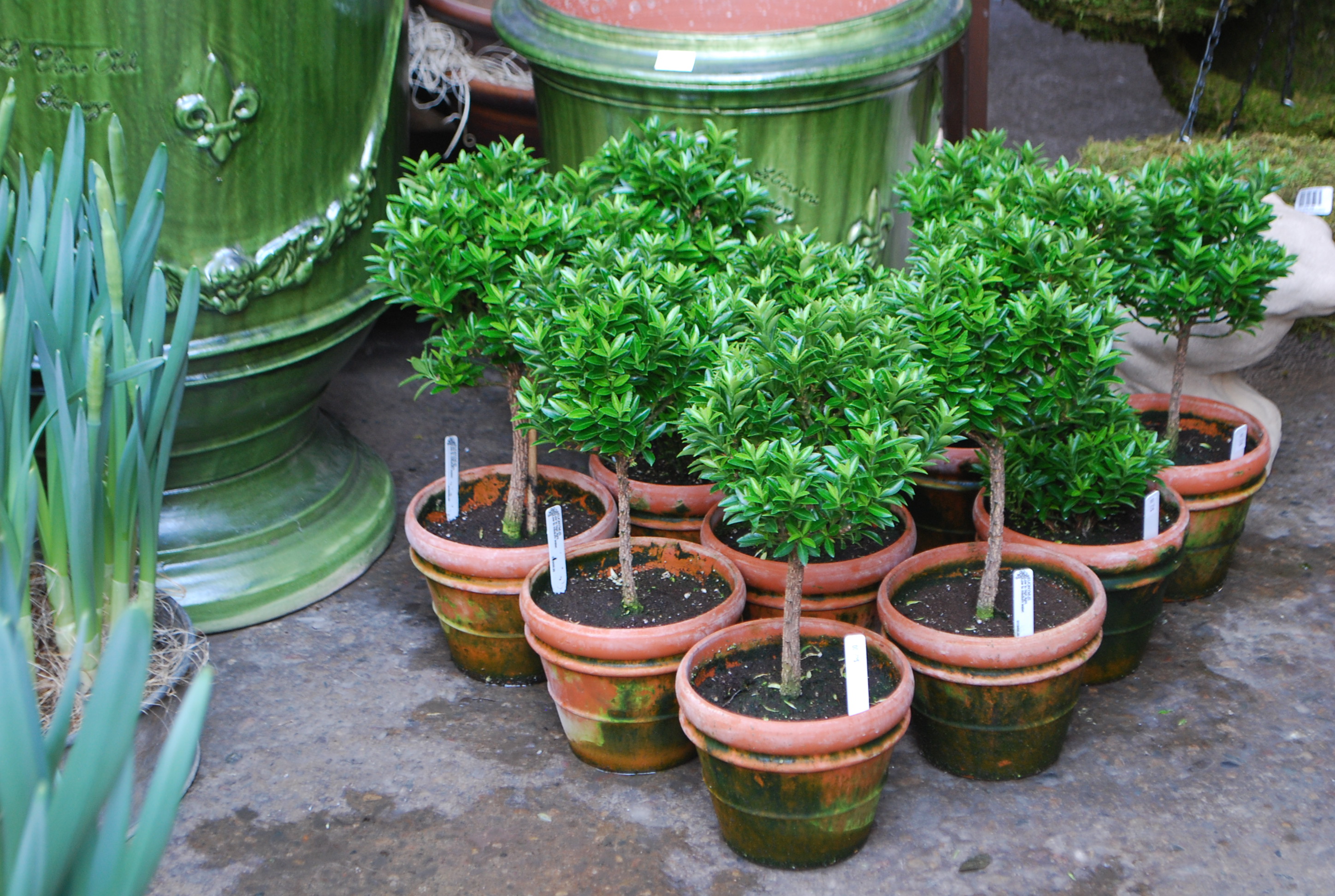
topiaries-in-pots.jpgEuonymus trained into a topiary standard is a great plant for a small space.  It is the most luscious shade of green imaginable.
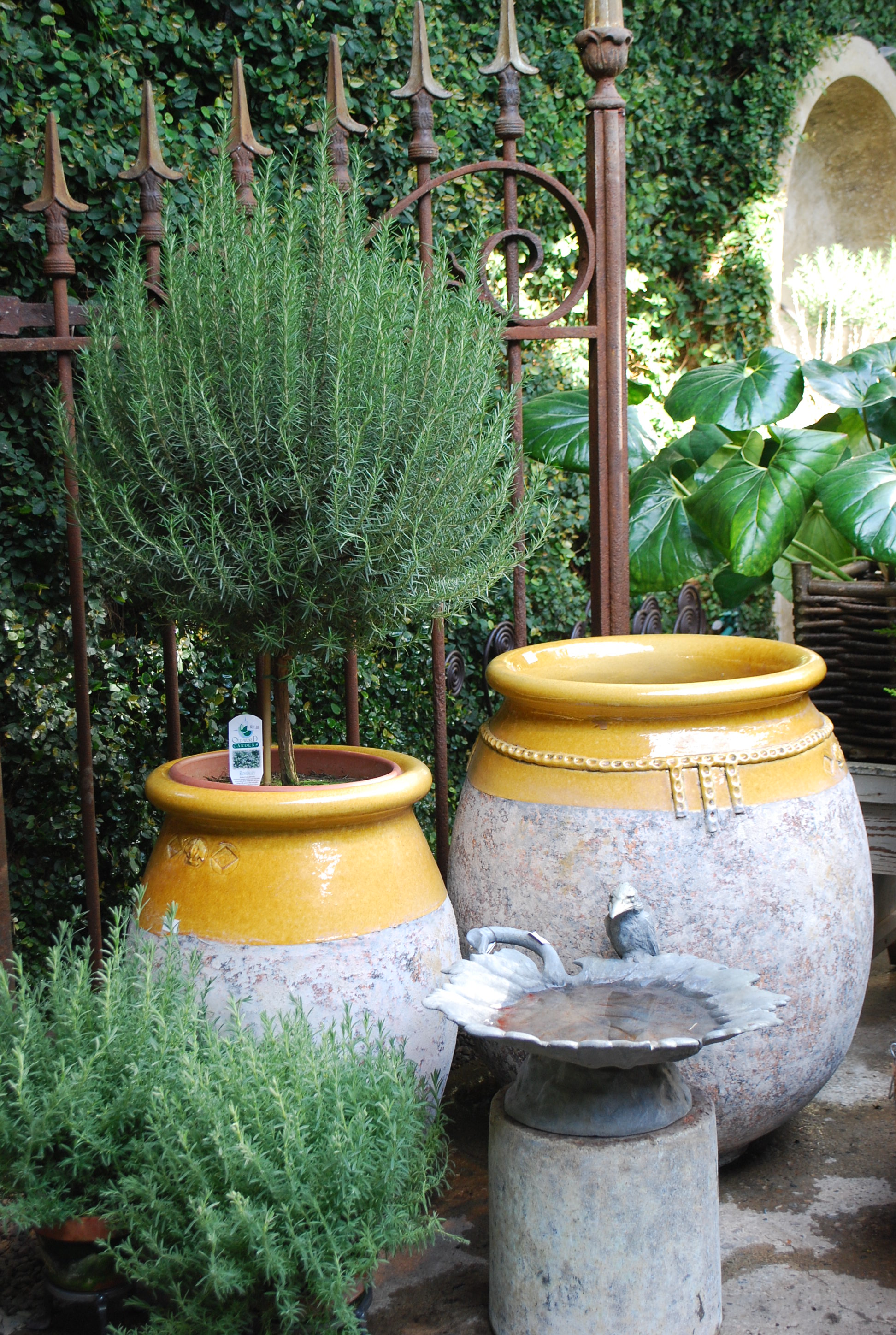
rosemary-topiary.jpgRosemary on standard, and tubs of lavender have that warm Mediterranean look-not to mention the fragrance.

rhubarb-and-lemon-cypress.jpgRob starts rhubarb in pots early-they make such great centerpieces in spring pots.  The large leaves atop red stalks-you can’t miss them.  Nothing could be further in color and texture from rhubarb than a lemon cypress. This lime foliaged version of an Italian cypress is not hardy in our zone, though it will tolerate fairly low temperatures.  They also look great in spring containers.  Plants wintered in a space that stays above freezing grow fast.
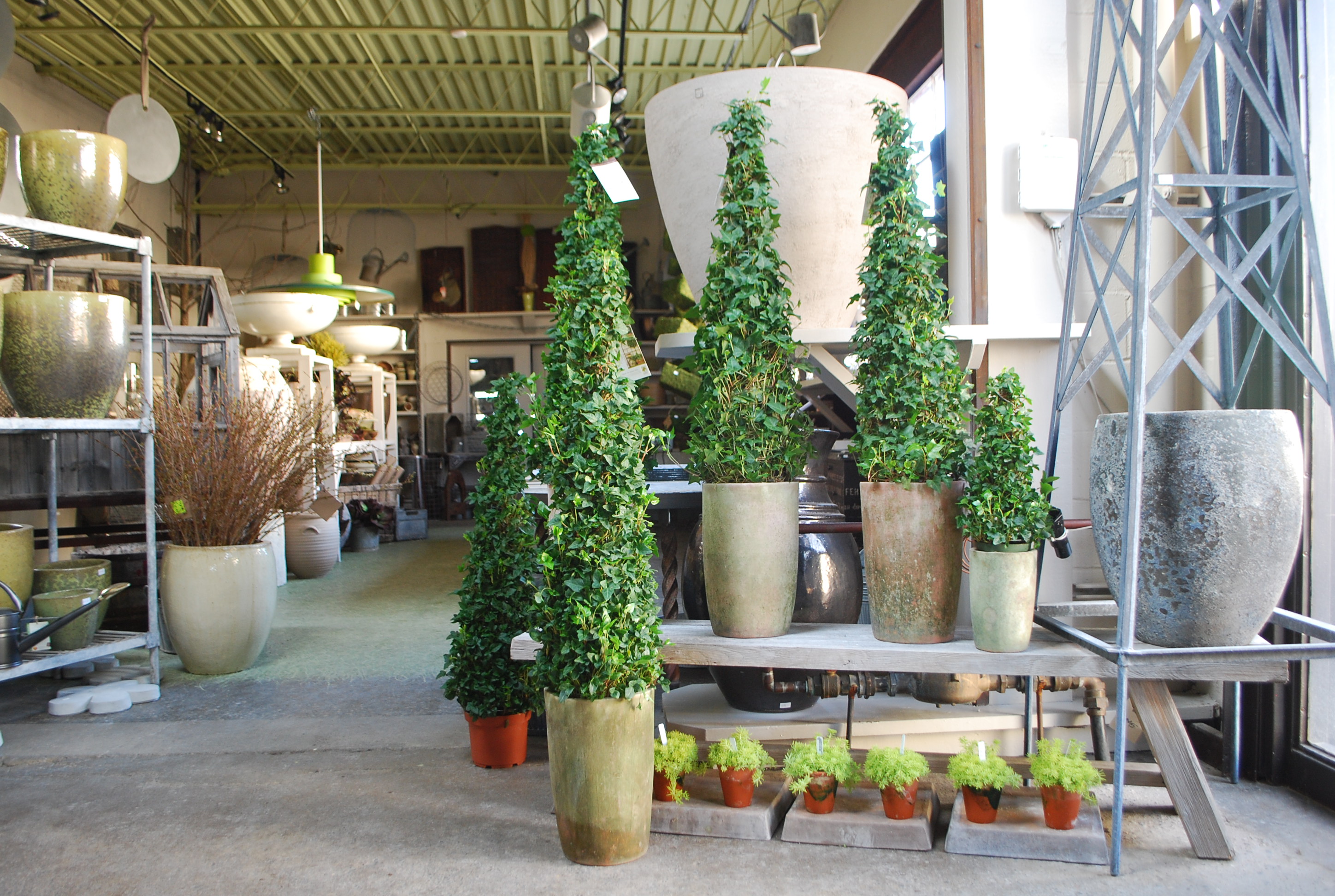
ivy-topiaries.jpgIvy topiaries are great for shady locations outdoors, and they are fairly easy to winter indoors.  The vines grow fast if they are happy.  Regular snipping to hold the shape is one of those garden chores that is actually a pleasure.  How Rob has paired them will simple terra cotta cylinders is handsome.
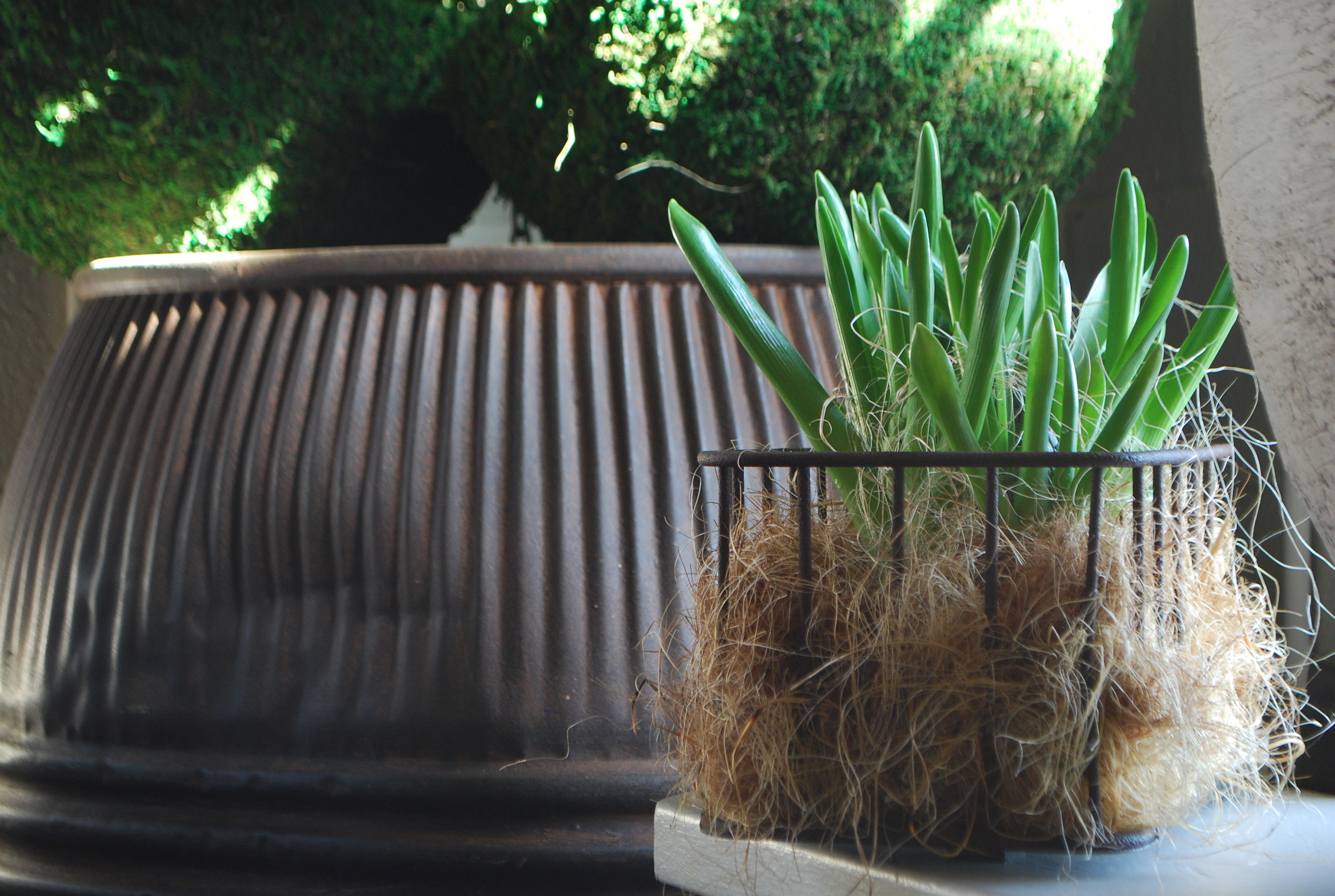
bulbs-in-a-basket.jpgThe shop has a few other places that get good light, and a fair amount of sun on a sunny day.  Forced bulbs are good for low light spots indoors.  They come already programmed to bloom.  If the light is too low, the green of the foliage will fade, and the leaves will stretch and flop over.  It’s only natural that plants seek the light-it is essential to their well being.
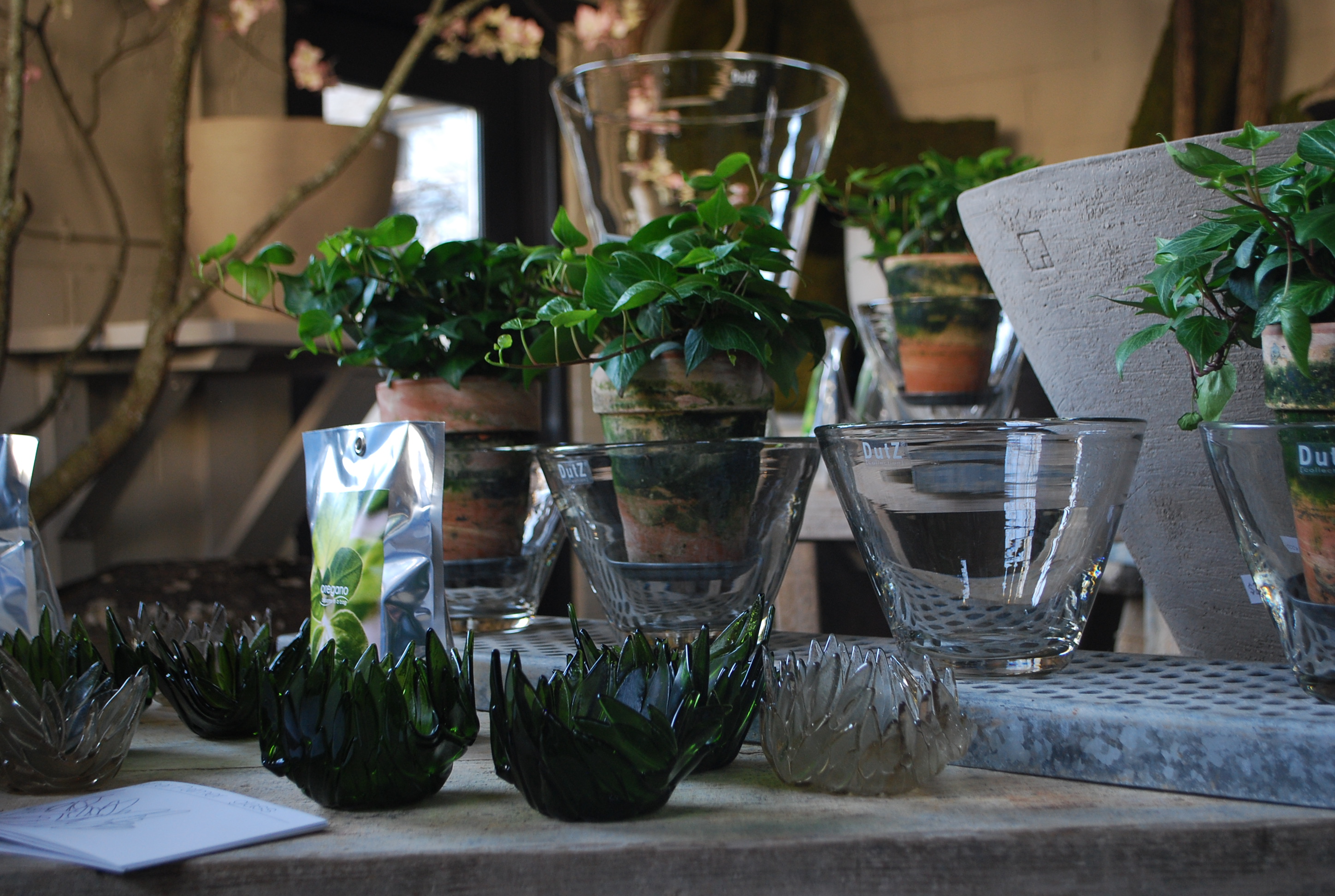
ivy-pots.jpgEven low light tolerant plants will struggle if that low light goes on for too long.  We rotate our plants in and out of low light areas, in a effort to keep them happy.  Plants placed in the dark too long look as grumpy as gardeners who are stuck indoors.
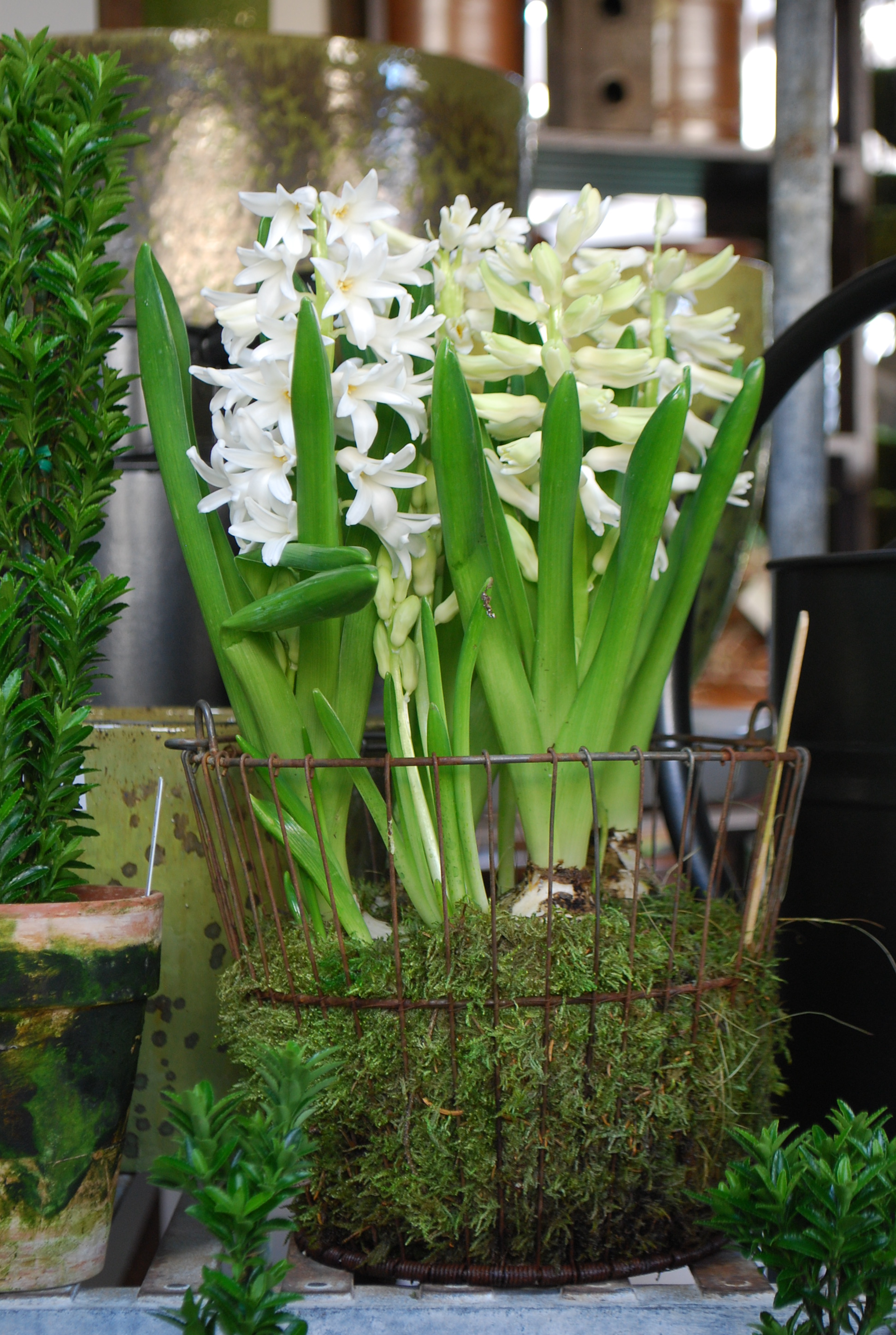
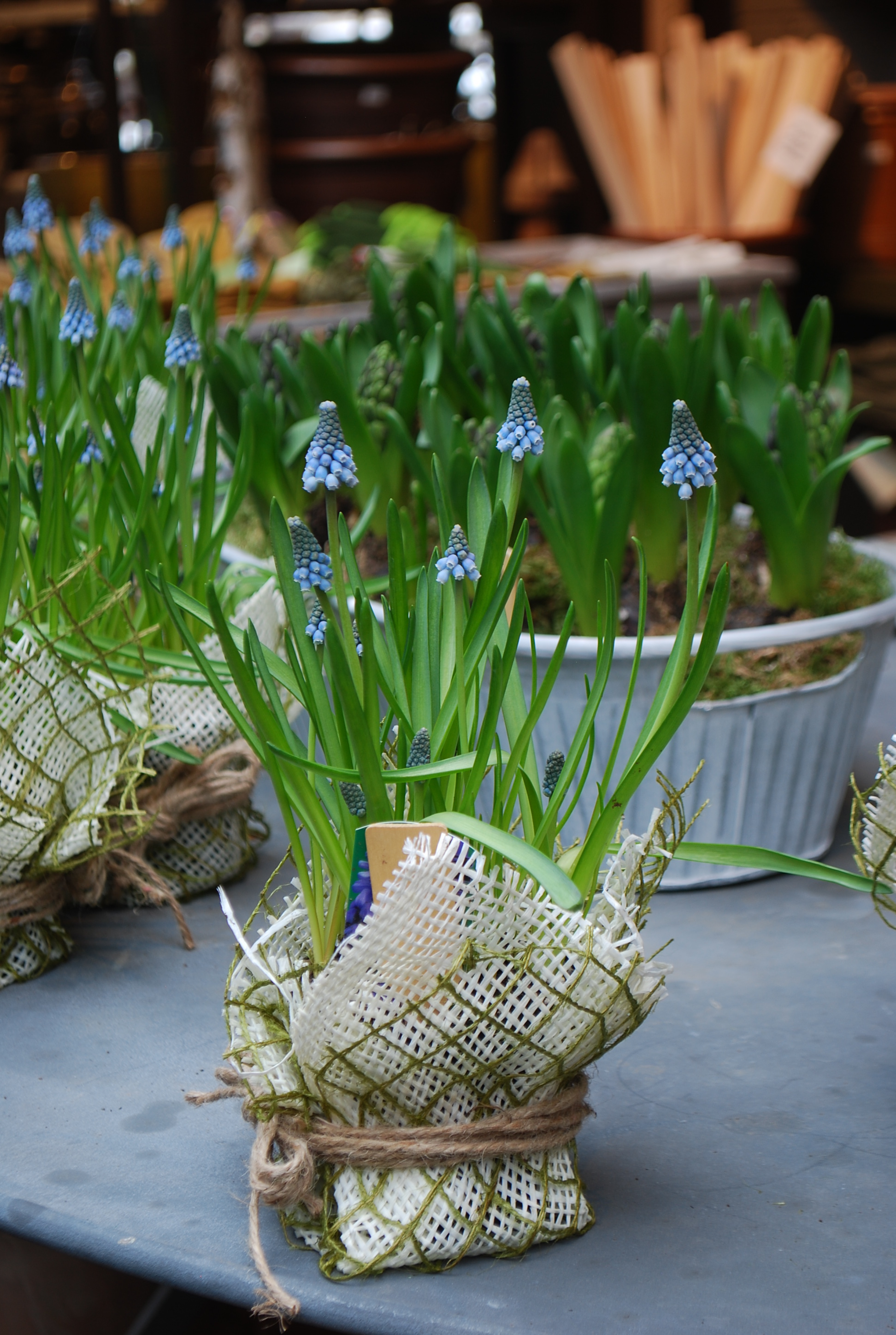
white-hyacinths.jpgHyacinths forced in pots provide a lot of late winter pleasure.  The leaves are good looking.  The buds are good looking.  The flowers will last quite a while, provided they have a well lit spot that is not too hot.  Potting them low in a container provides a little support for the big leaves and large flowering stalks.
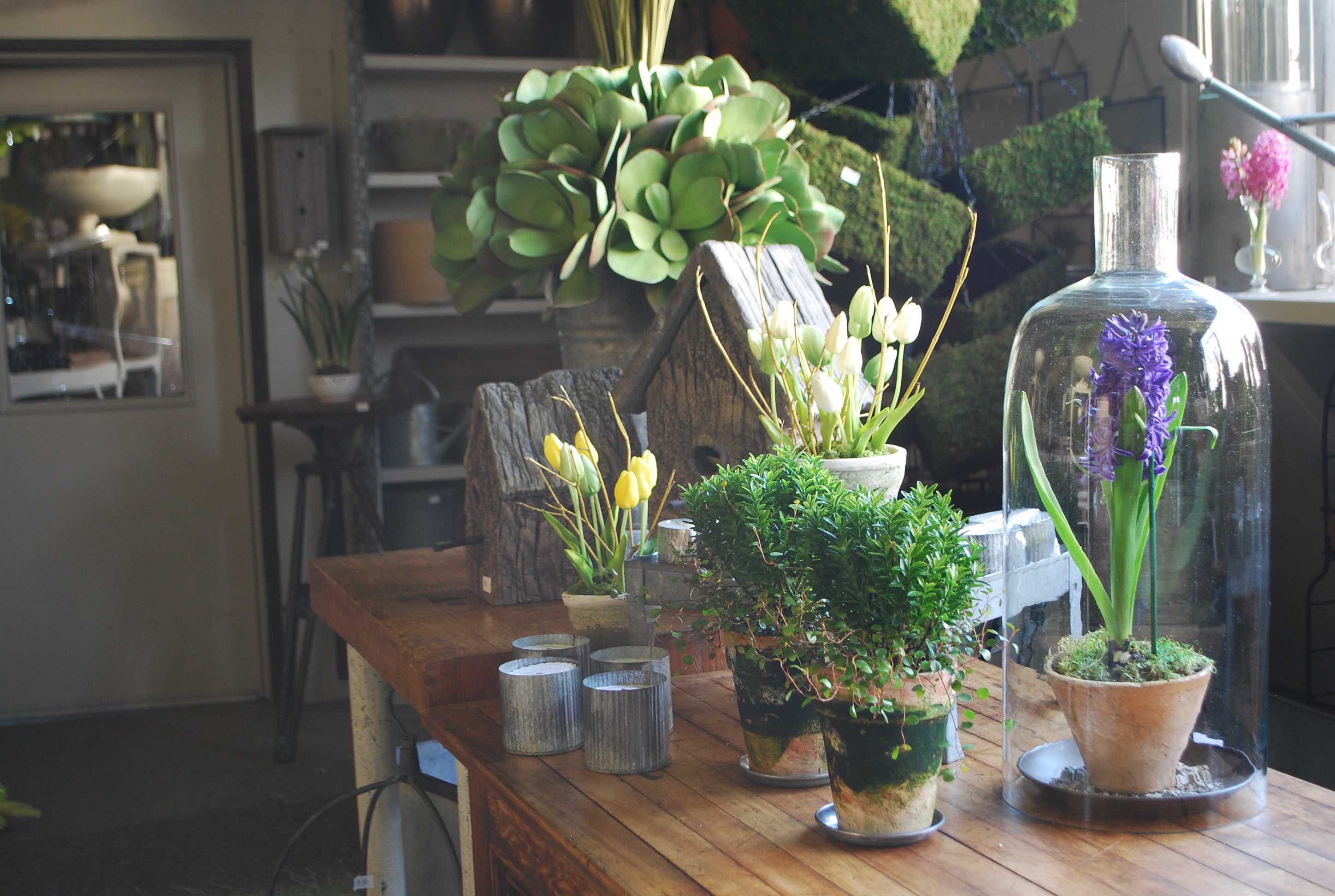
spring-plants.jpgSpring plants indoors-a way to make the best of the worst of it.
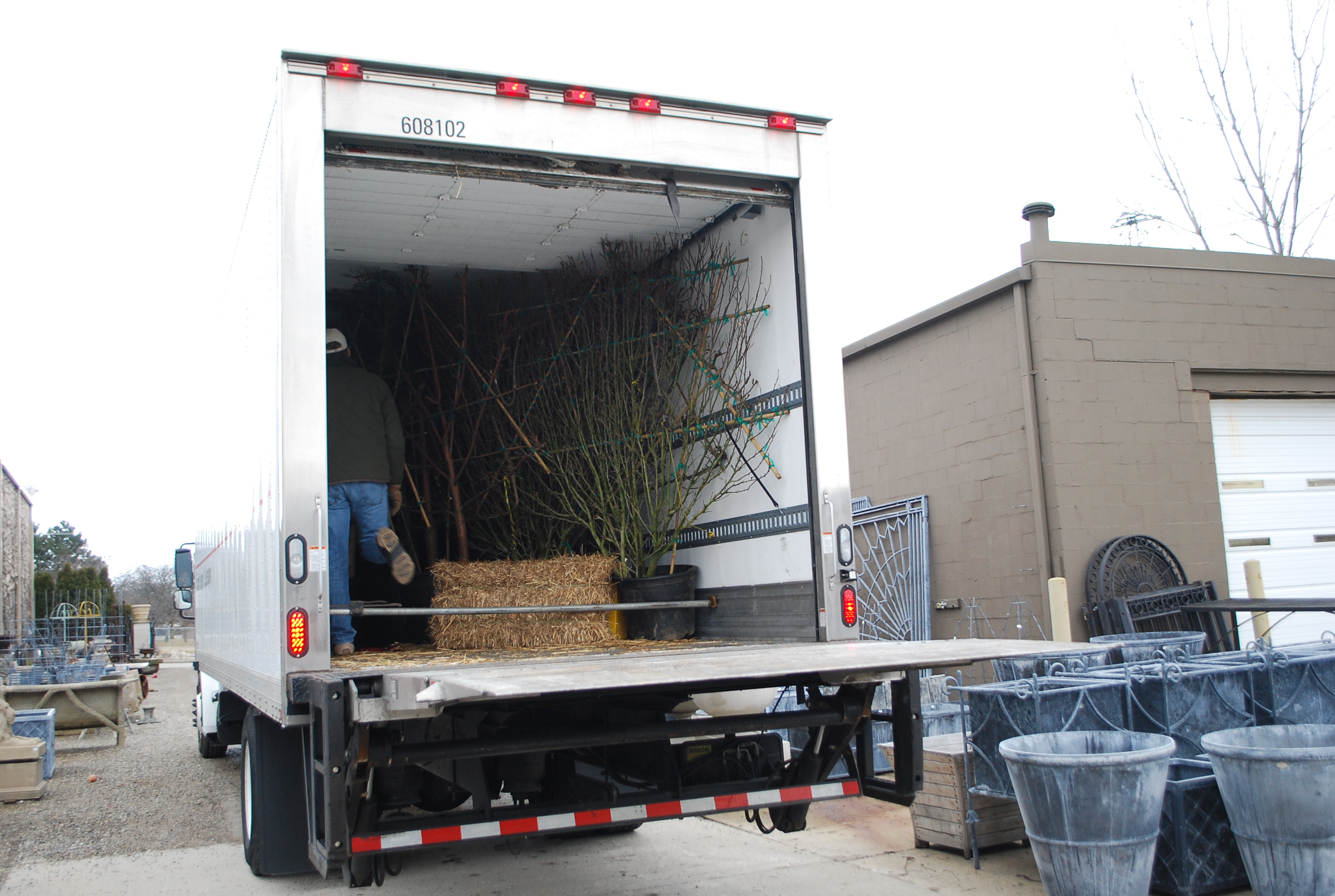
 

The 2013 Espaliers

espalier-delivery.jpg
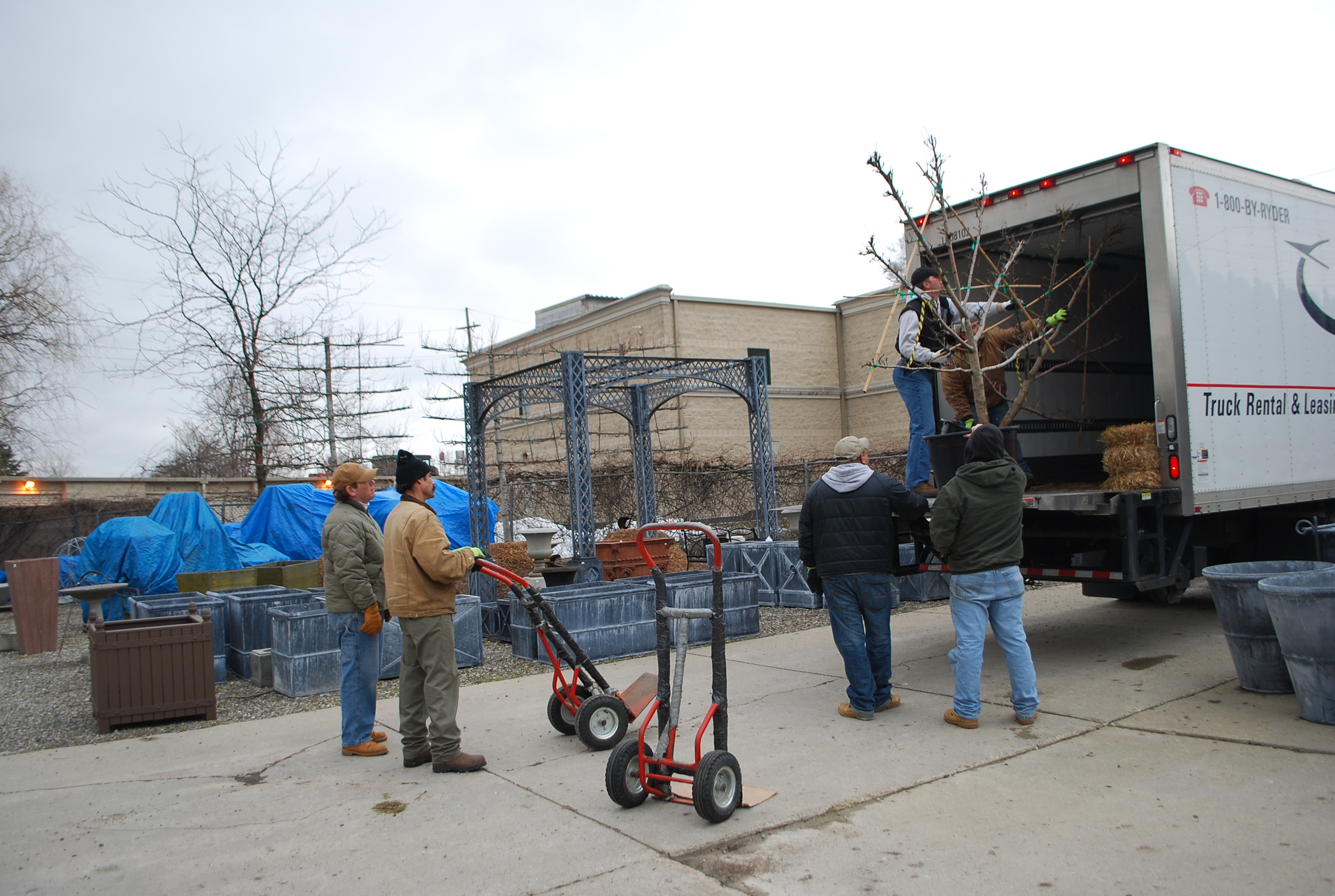
It is no secret that I am very fond of espaliered trees.  Espaliers?  These are trees or shrubs which are pruned to a 2-dimensional shape.  Though the practice dates back many centuries, a French monk, Fr. Legendre, published a book in 1684 entitled  “Palmette Legendre”.  He detailed his method for drastically pruning fruit trees so they could be grown against the monastery walls.  This made it possible to grow many more trees, and harvest more fruit, in a small space.  The French word espalier is derived from the Italian word “spalliera”, meaning “something to rest the shoulder (spalla) against”.  These fruit trees rested their shoulders against the wall.

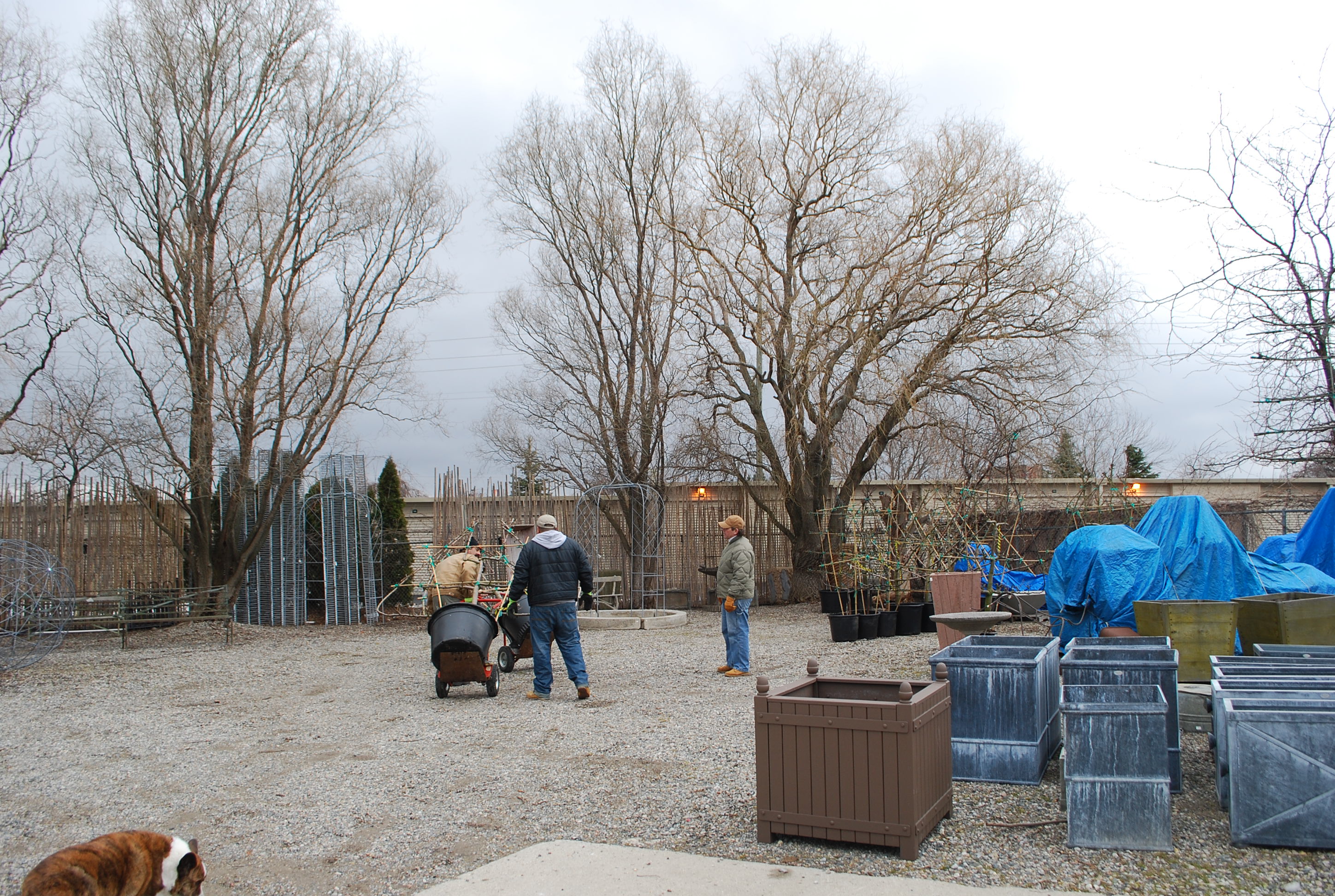
unloading-the-espaliers.jpgFr. Legendre discovered that fruit trees that were subject to this kind of hard pruning, and enjoying the warmth generated by the wall,  produced better yields.  The growth generated in the third dimension would be cut back to the fruiting spurs. The first espaliers were pruned to encourage long horizontal arms.  It seems that horizontal branches bear more fruit than vertical ones. This horizontal shape is known as a cordon, and is quite similar to how grapes are pruned.

unloading-espaliers.jpg

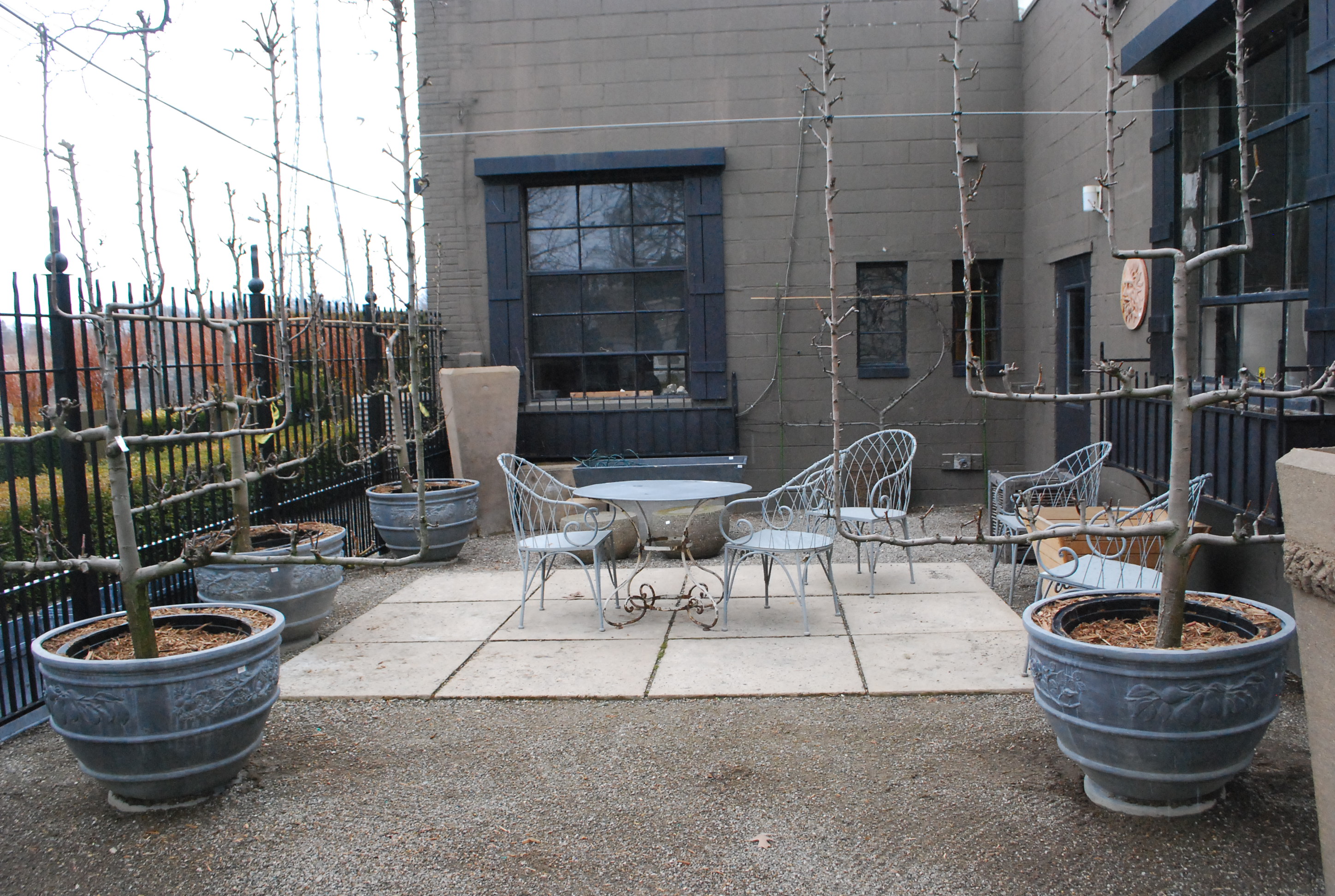
Eventually, many different styles of pruning emerged.  Some styles are just as decorative as they are utilitarian.  The tree pictured above has been trained into a classic fan shape.  All of the primary arms radiate outward from the trunk in the shape of a fan. This shape is great for a wall that is both tall and wide.  Blank walls in the landscape are a perfect spot for an espalier.  The pattern of green, light and shadow that the tree creates provides interest in a spot that is otherwise empty.  Should I under plant an espalier, I like like a short growing plant.  Part of the beauty of an espalier is being able to see the entire shape, from top to bottom.

espaliered-trees.jpgEspaliers are traditionally created from fruit bearing trees.  Though apples prefer a sunny location to fruit well, a pear tree is fairly tolerant of a shady location.  I am partial to pears.  Their glossy leaves are beautiful, and they seem more resistant to fungal problems.  Many fruit trees require another tree for cross pollination.  If you want to grow an espalier for fruit, be sure you grow a pair, or pick a variety that is self pollinating.  All  fruiting trees are beautiful when they bloom in the spring.  An espalier fruit tree in full bloom is especially gorgeous, as the white flowers dramatically detail the geometry of the shape.

espaliers-2013.jpg
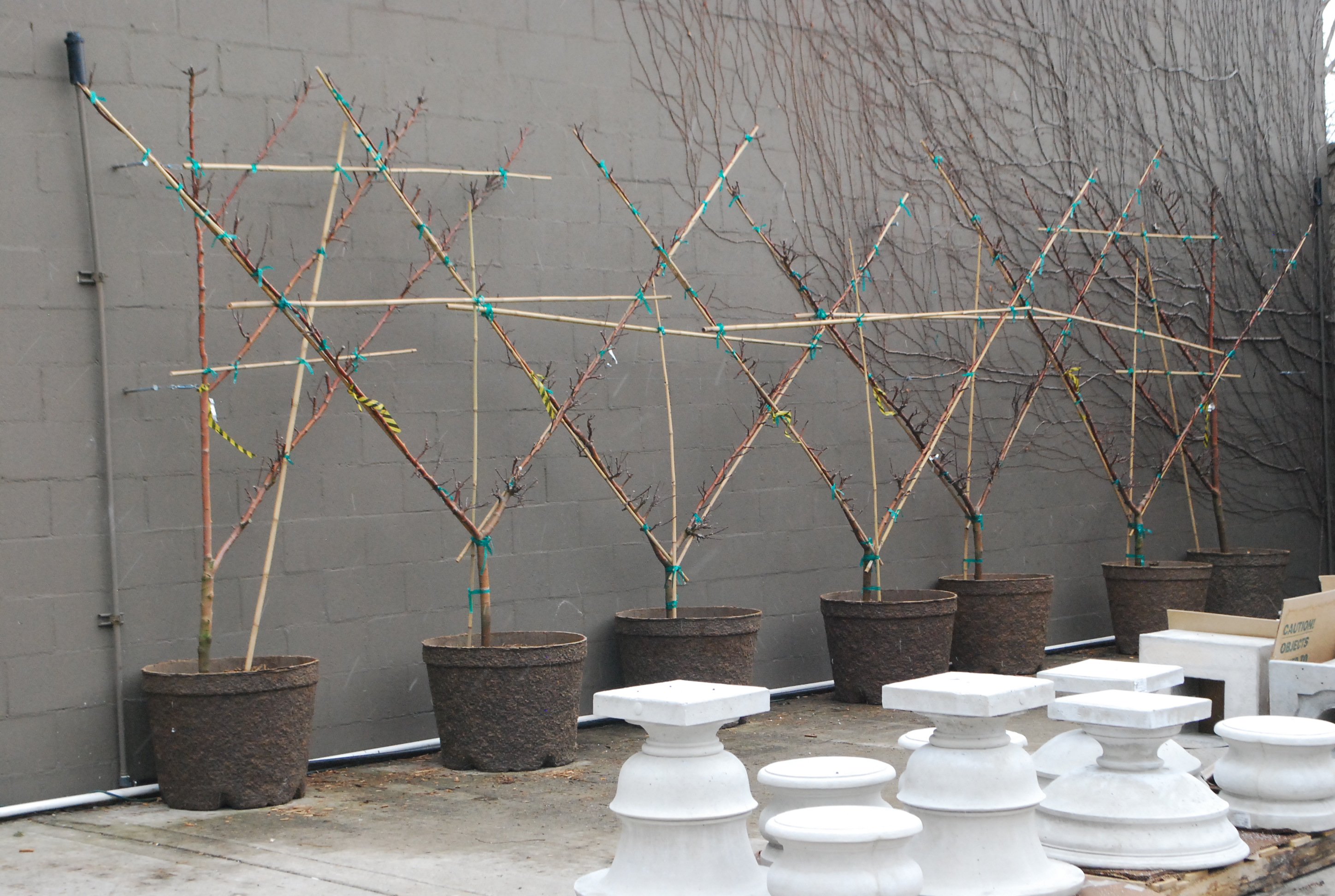
These four espaliers are Kieffer pears, trained in the candelabra form.  It is easy to see here that an overall form has been determined for the large branches.  Once a horizontal branch reaches the width desired, the young branch is turned towards the sky, and tied to a form.  That branch will require support until it gets enough to stand on its own.  Pear wood hardens off quickly.  If you are training an espalier, be sure to make any change in direction when the branch is still very young.  Barely visible at the top of this picture is a horizontal fish line.  The branches are tied to this to keep them vertical, and keep them the desired distance from neighboring branches.  We have secured the branches in this manner for display only.  Once they are planted against a wall, galvanized steel eyes will need to be installed in the mortar.  The branches will be tied to those eyes using a flexible and expandable landscape tie.

espaliered-rose-of-sharon.jpgThough a fruiting tree is a traditional subject for an espalier, lots of trees and shrubs readily take to this kind of pruning.  Pictured above is a white rose of sharon, trained into a fan. The picture is not the best.  Imagine many branches emerging from the soil in a line., rather than a mass.  Any branch which emerged from the ground outside of the line-either to the front or back-was removed.  The fan is created with many branches, rather than just a select few.  This shape of this shrub reminds me of fan coral.  It will be a solid mass of green, in leaf-and a solid mass of white in flower.

crabapple-Belgian-fence.jpg
A Belgian fence is a series of espaliered trees that are planted equidistant from each other. Each interior tree has a single trunk which comes up up out of the ground about 18″.  Years ago, that trunk was pruned down to 18″.  A pair of emerging side shoots were trained at a specific and repeating angle.  The collection of trees produces multiple diamond shapes.  Ideally, each diamond is the same size as its neighbor.  Maintaining the diamond shapes requires faithful and regular pruning.  The larger and simpler the diamonds, the easier the care.  This group of trees are Calloway crab apples.  They have a beautiful cinnamon colored bark, and flower and fruit like all crab apples.

horizontal-cordons.jpg
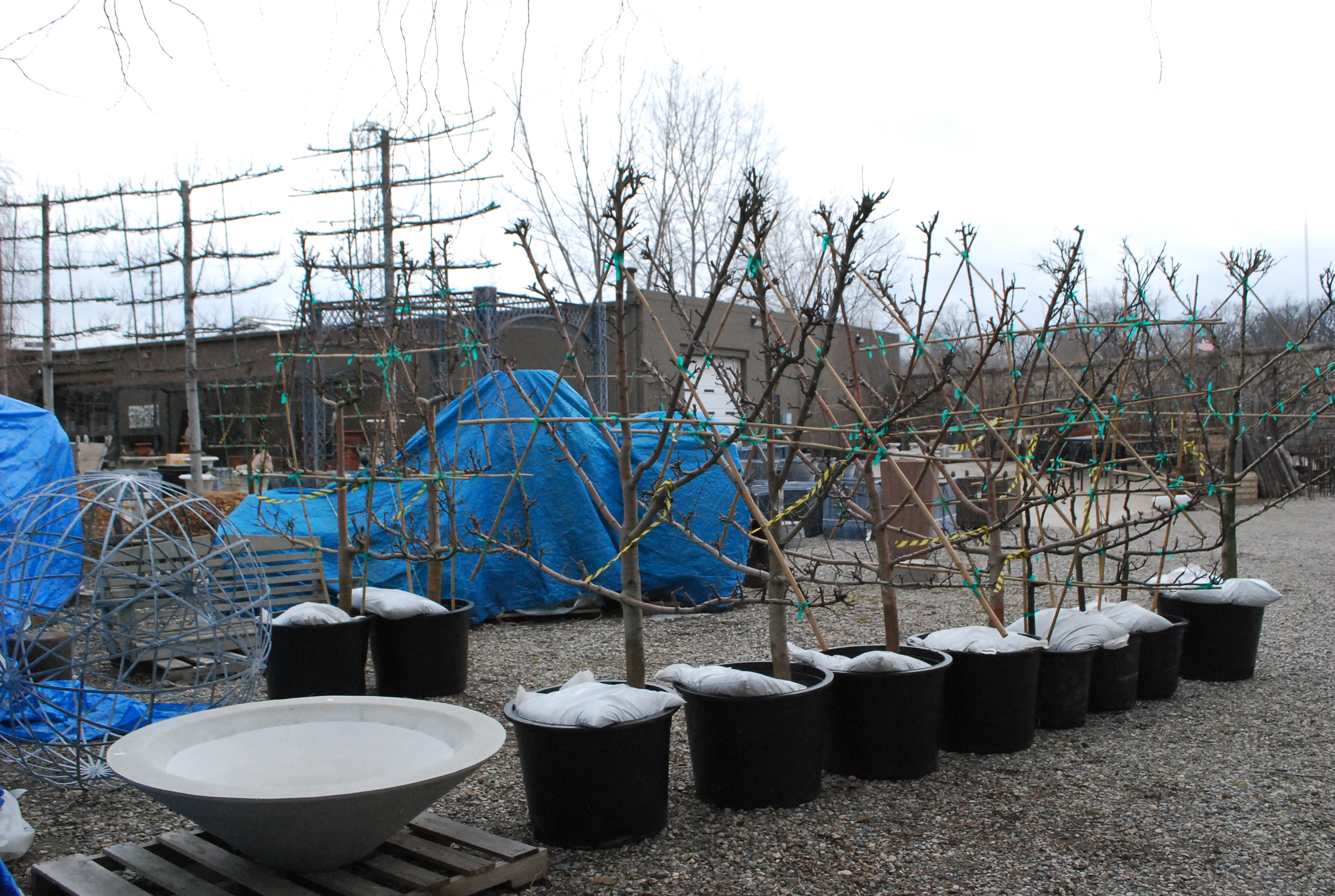
The large espaliers in this picture are lindens-old lindens. The cordon espaliers in front of them-Bradford pears. Both species are ornamental, and tolerate hard pruning. These trees may also be allowed to fill in between the horizontal layers. This would result in a solid thin wall of green.  They could be grown against a wall, or as a freestanding green wall.  Any espalier which is grown as a fence will need lots of support and direction in the early years.  Big bamboo stakes are prefect for this.  The bamboo you see on the foreground trees was attached to keep all the branches in place during shipping.

espalier-goblet.jpg
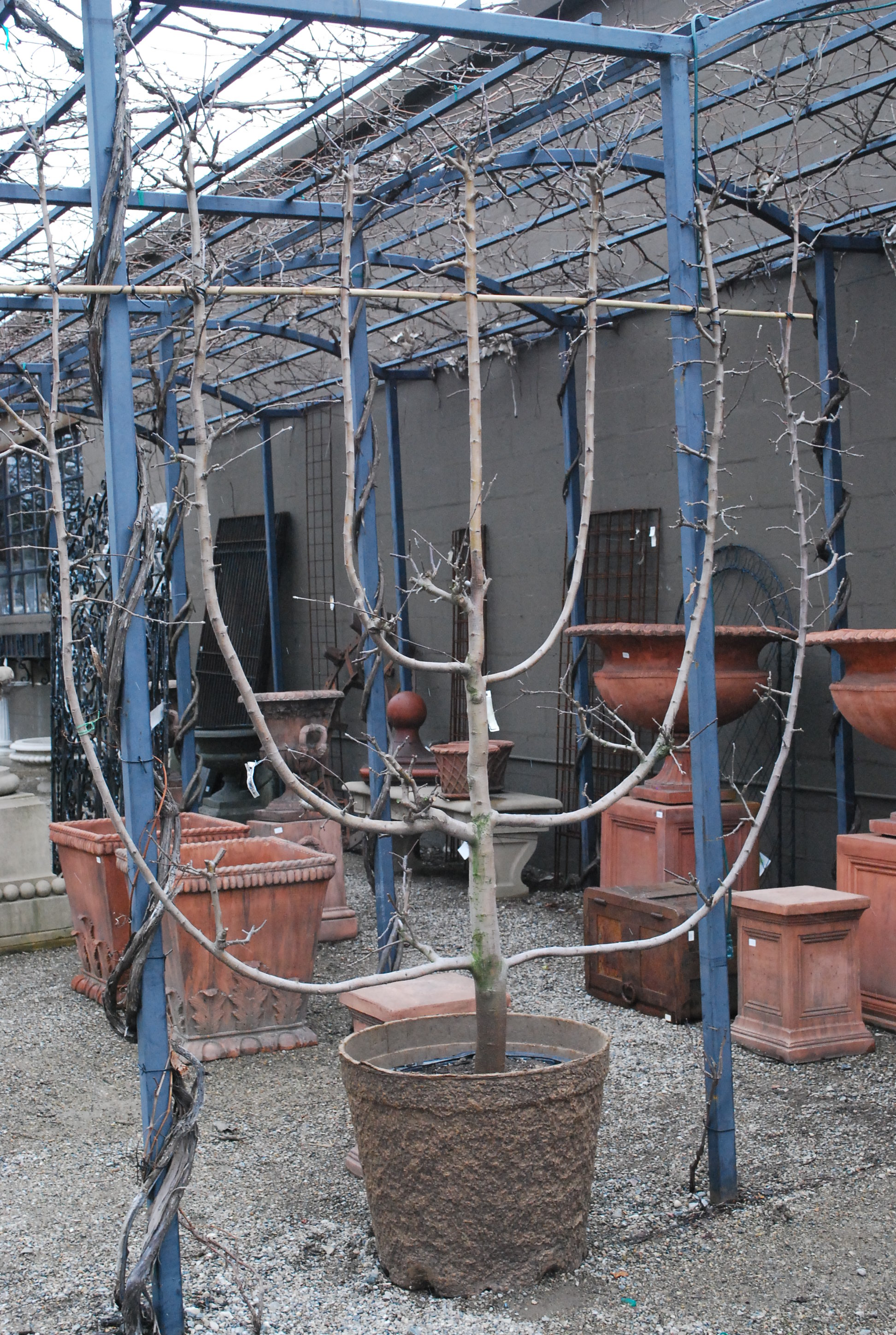
This espalier has been grown in a goblet shape. The change in direction from a horizontal to vertical is a gently curve, as opposed to the right angle of a candelabra style.  As the main arms are fairly well established, we only needed to secure the tops of the branches to keep the tree representing its intended shape.

espalier-fans.jpg

These fan espaliers are apples and pears of various varieties.  A whole orchard could be grown in a relatively small space.  Training espaliers is an art form, but a form that can be learned.  As slowly as trees grow, you would have time for your knowledge to grow.  A large caliper espalier is an investment, mainly due to the years it took to get it to size.  This particular grower does not sell any trees unless they are at least 7 years old.  Over the course of that 7 years, he waters and feeds, and keeps the yellow bellied sapsuckers from drilling holes in their trunks.  He has trees that have had a major arm die back-heartbreaking this.  But once an espalier is established, they are no more care than any other tree or shrub.  Some nurseries and garden centers carry 1-2 year old plants.  This makes it easy to give one a try.

At A Glance: Another Walk Through

spring-at-the-shop.jpg
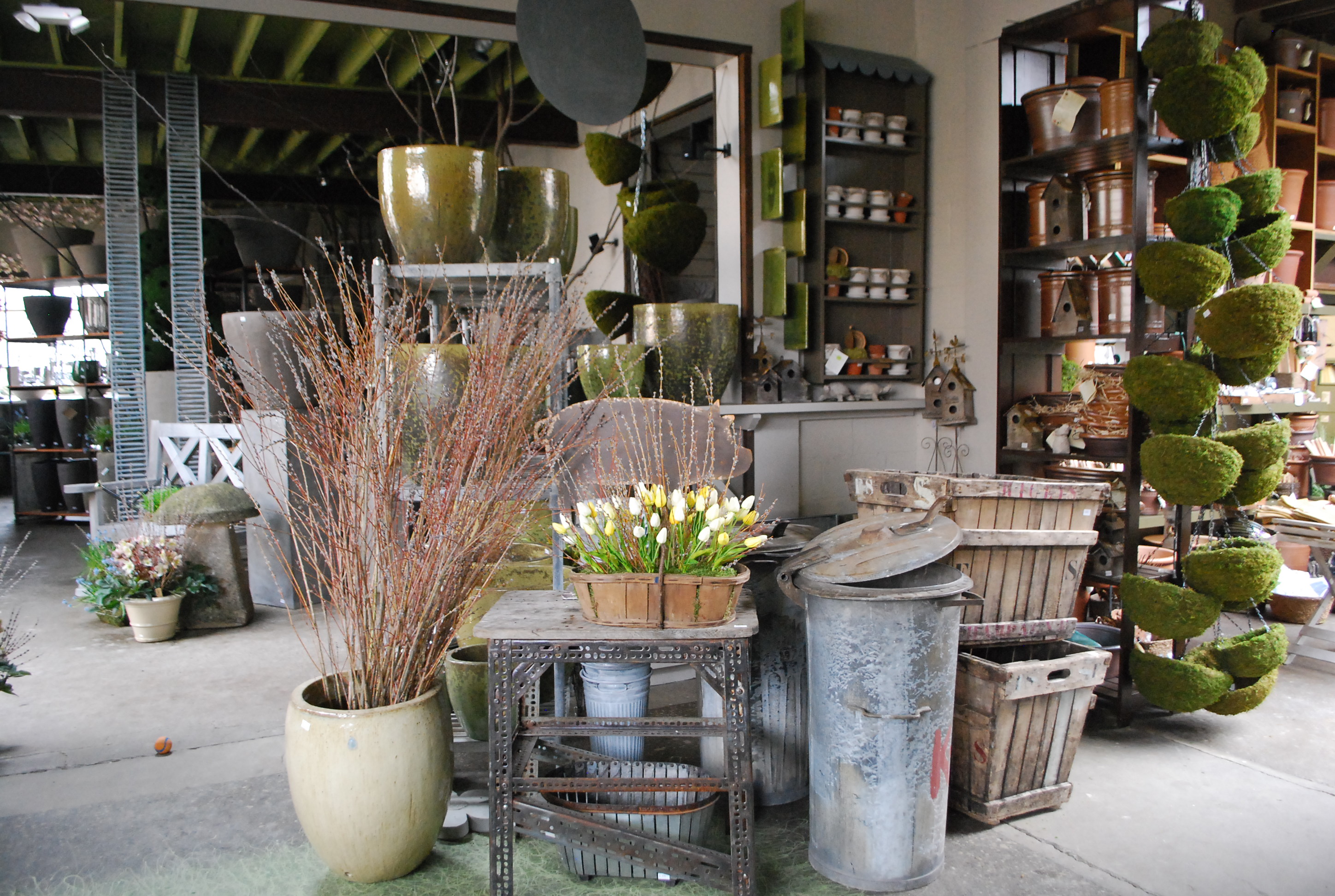
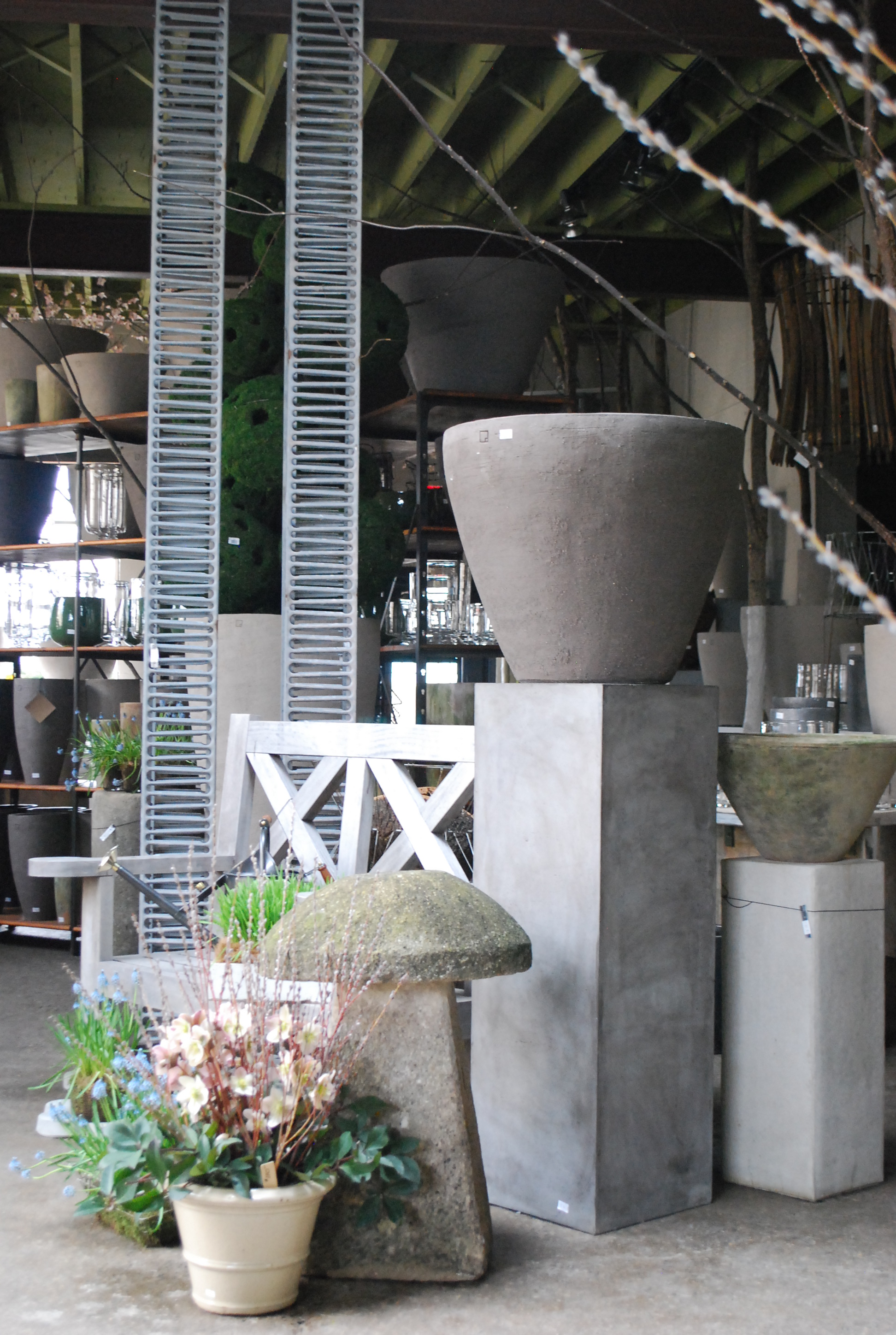
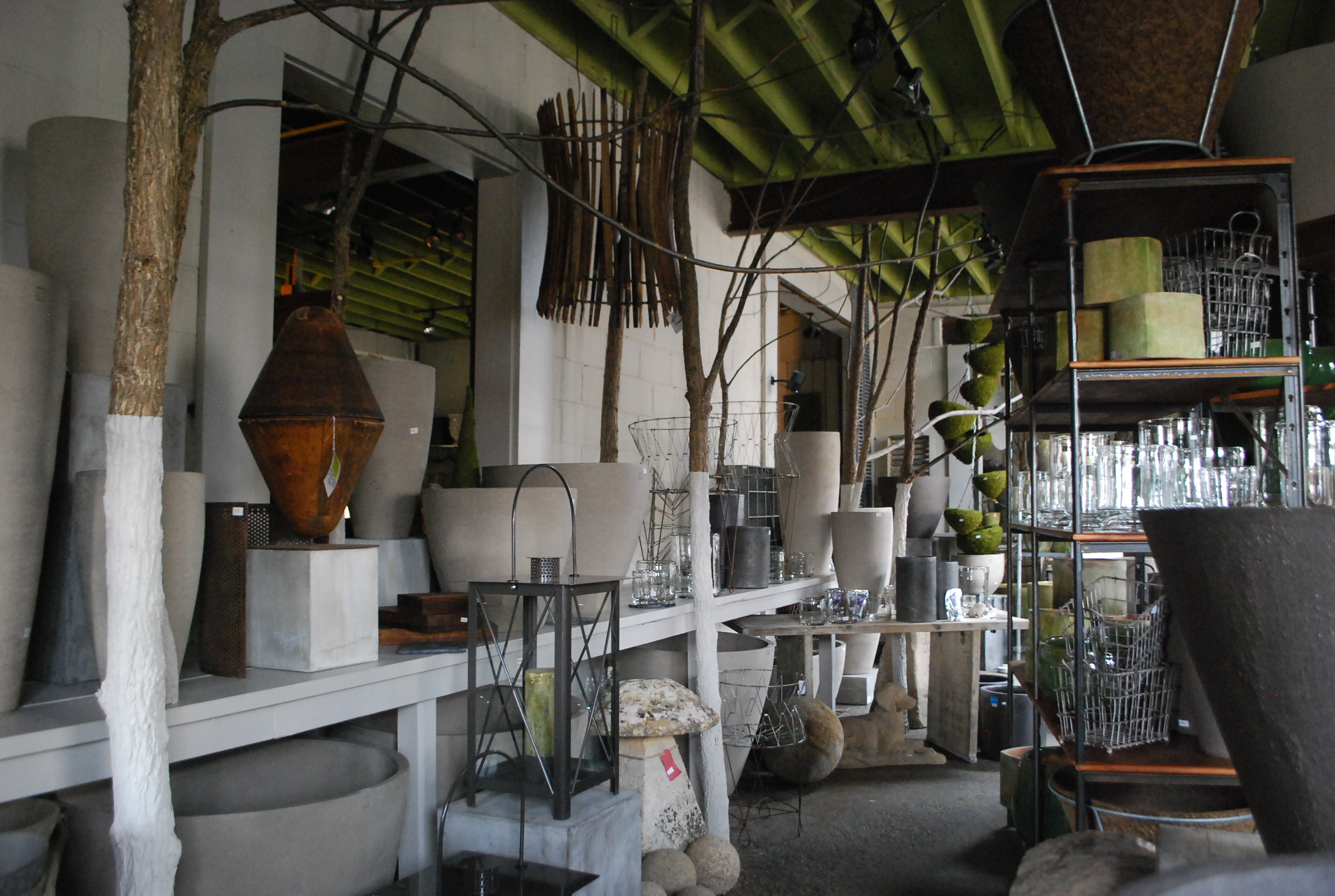
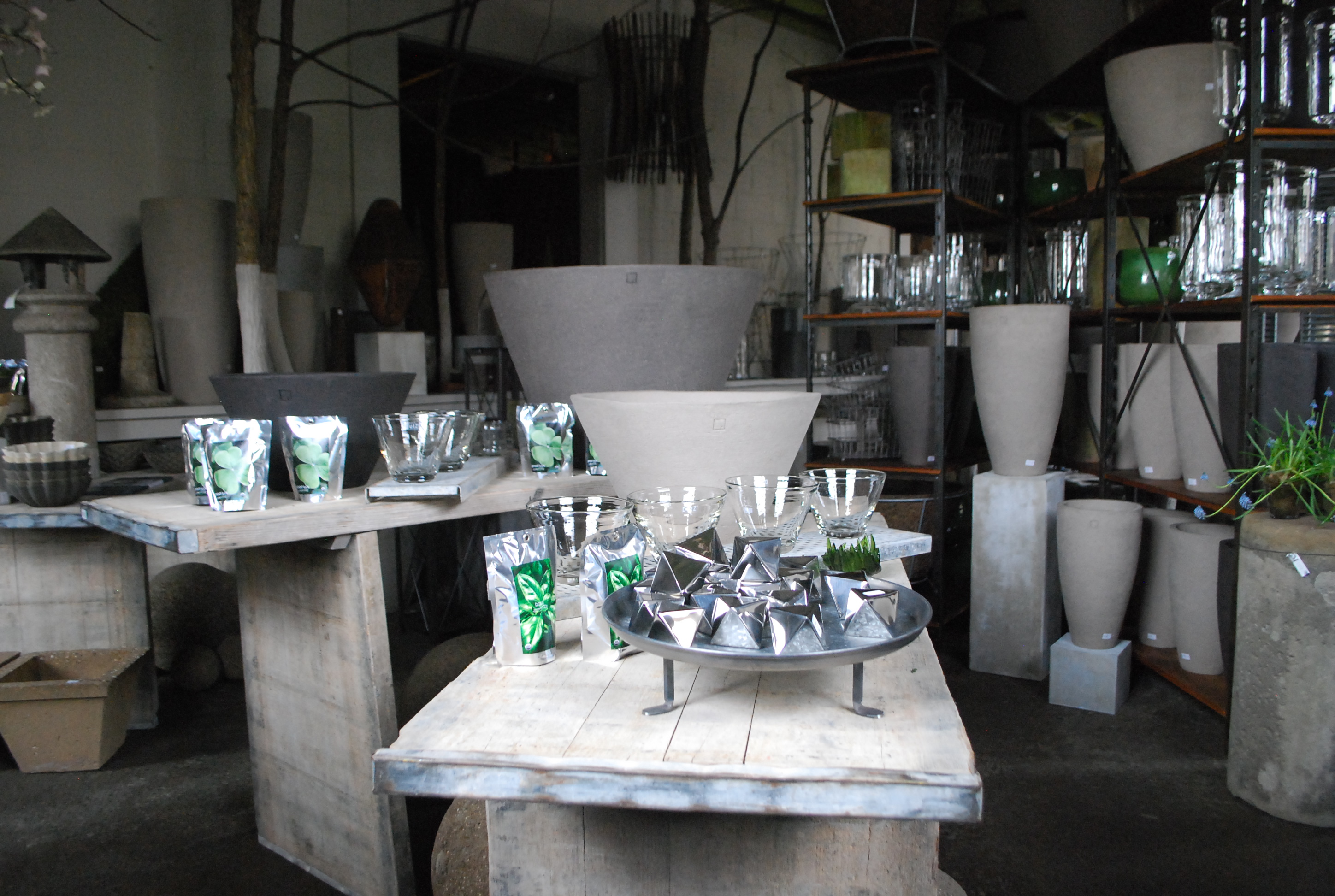
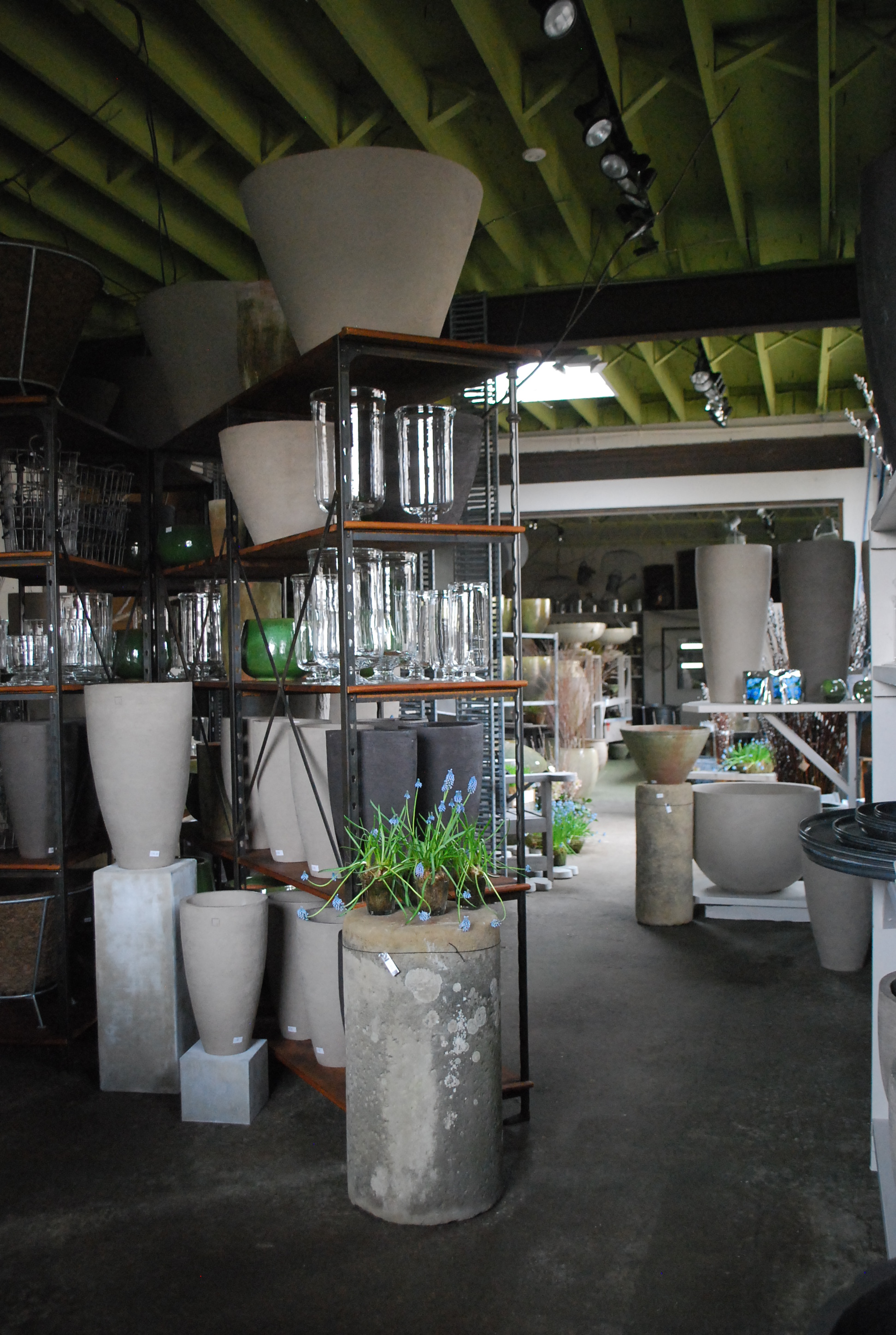
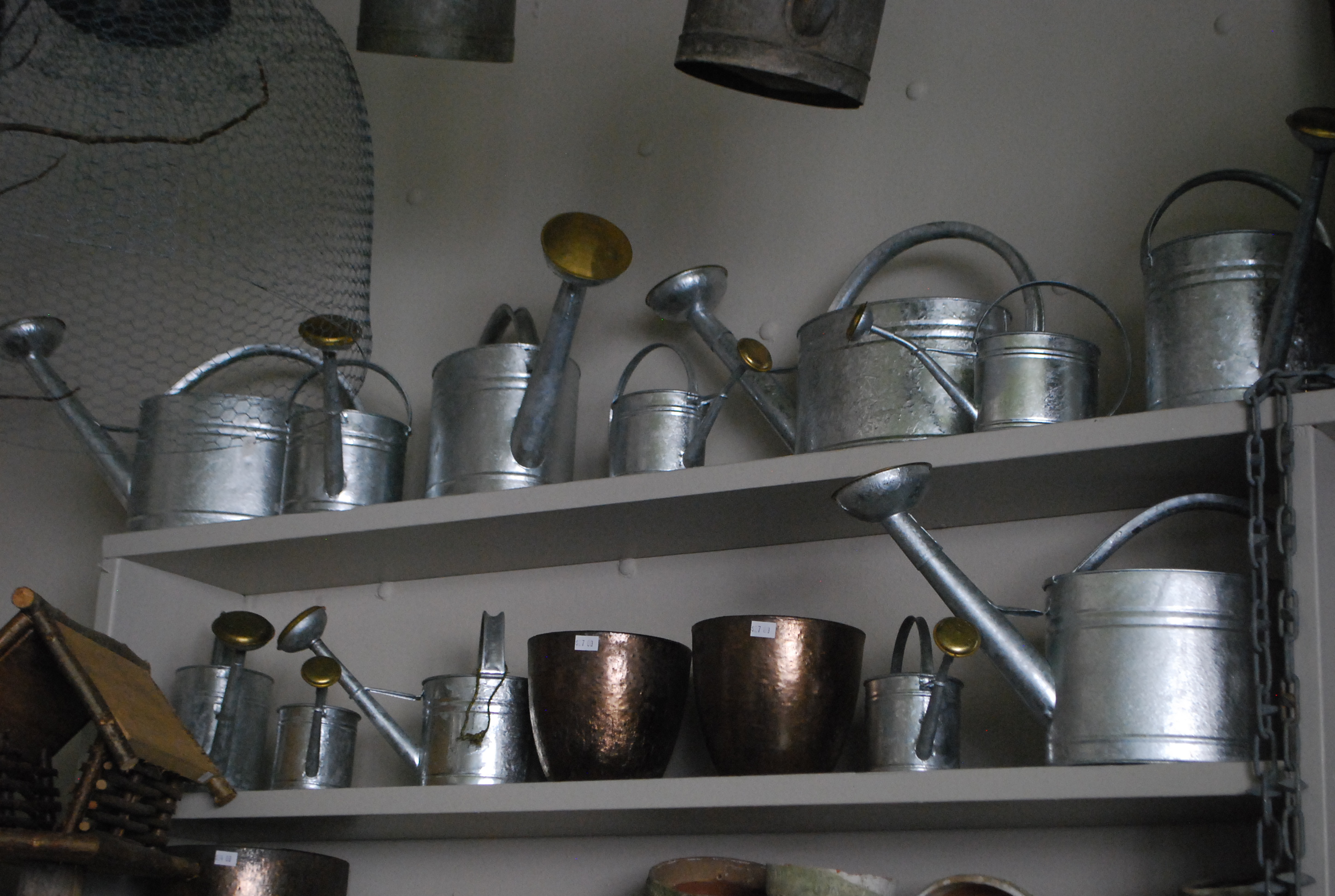
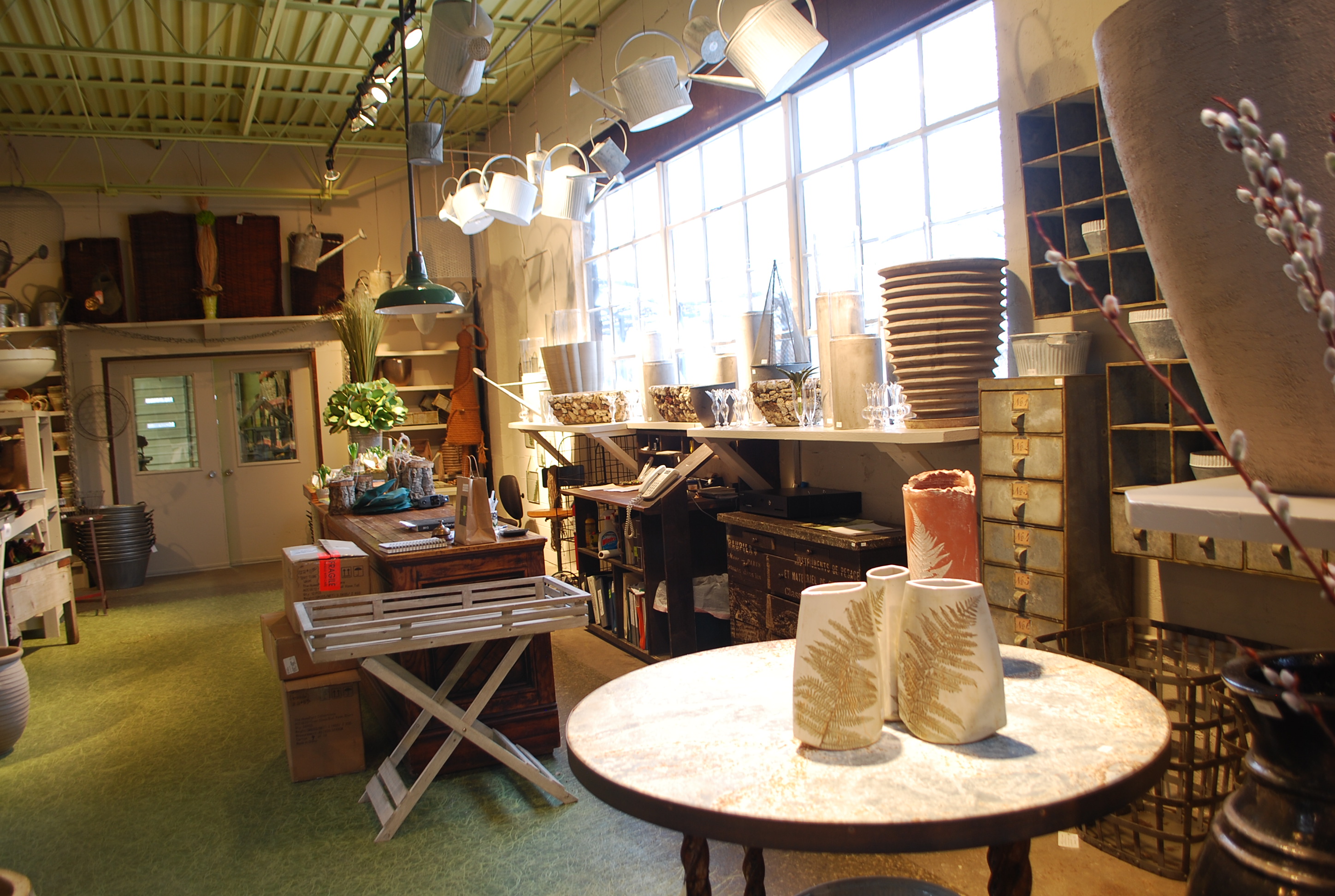
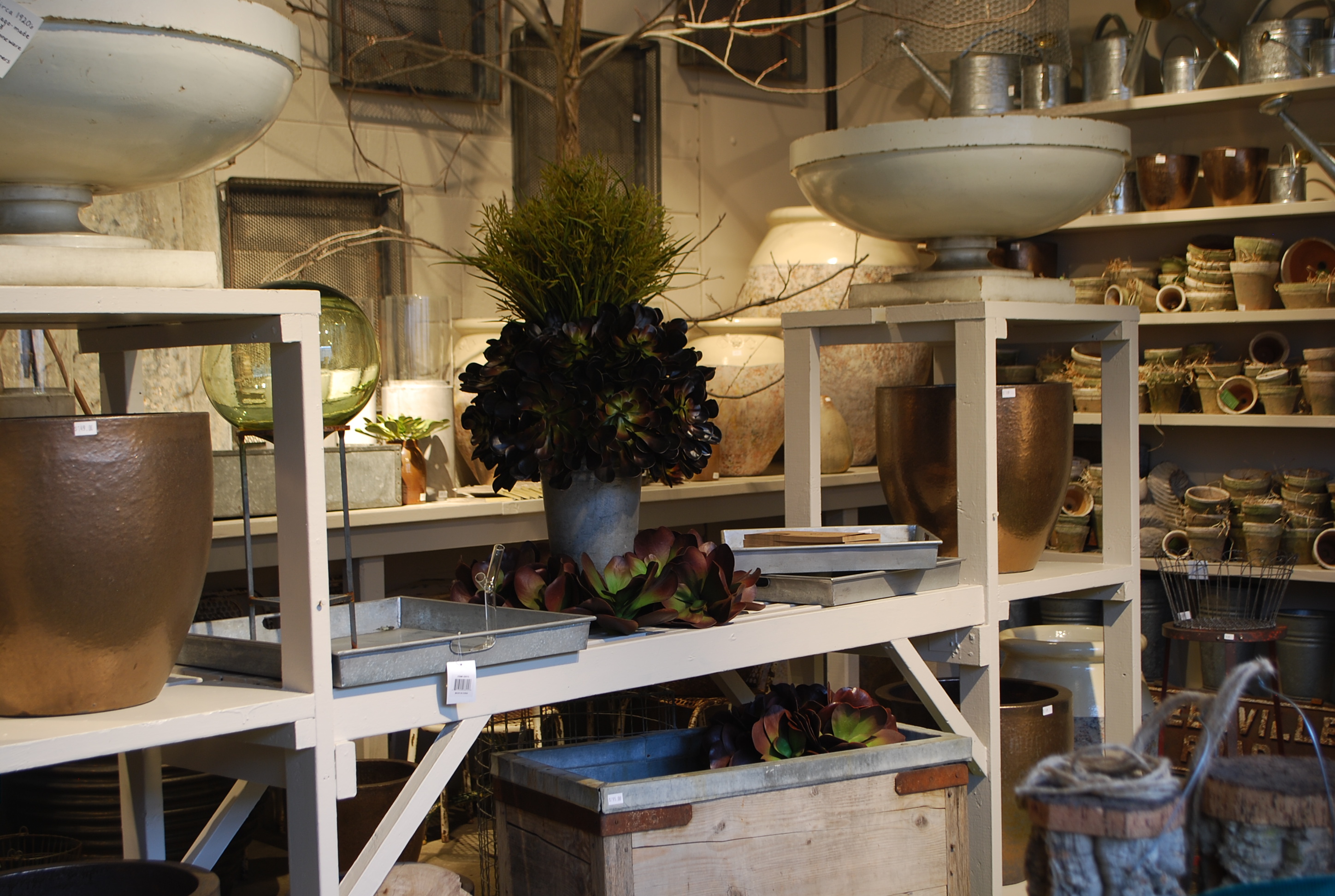
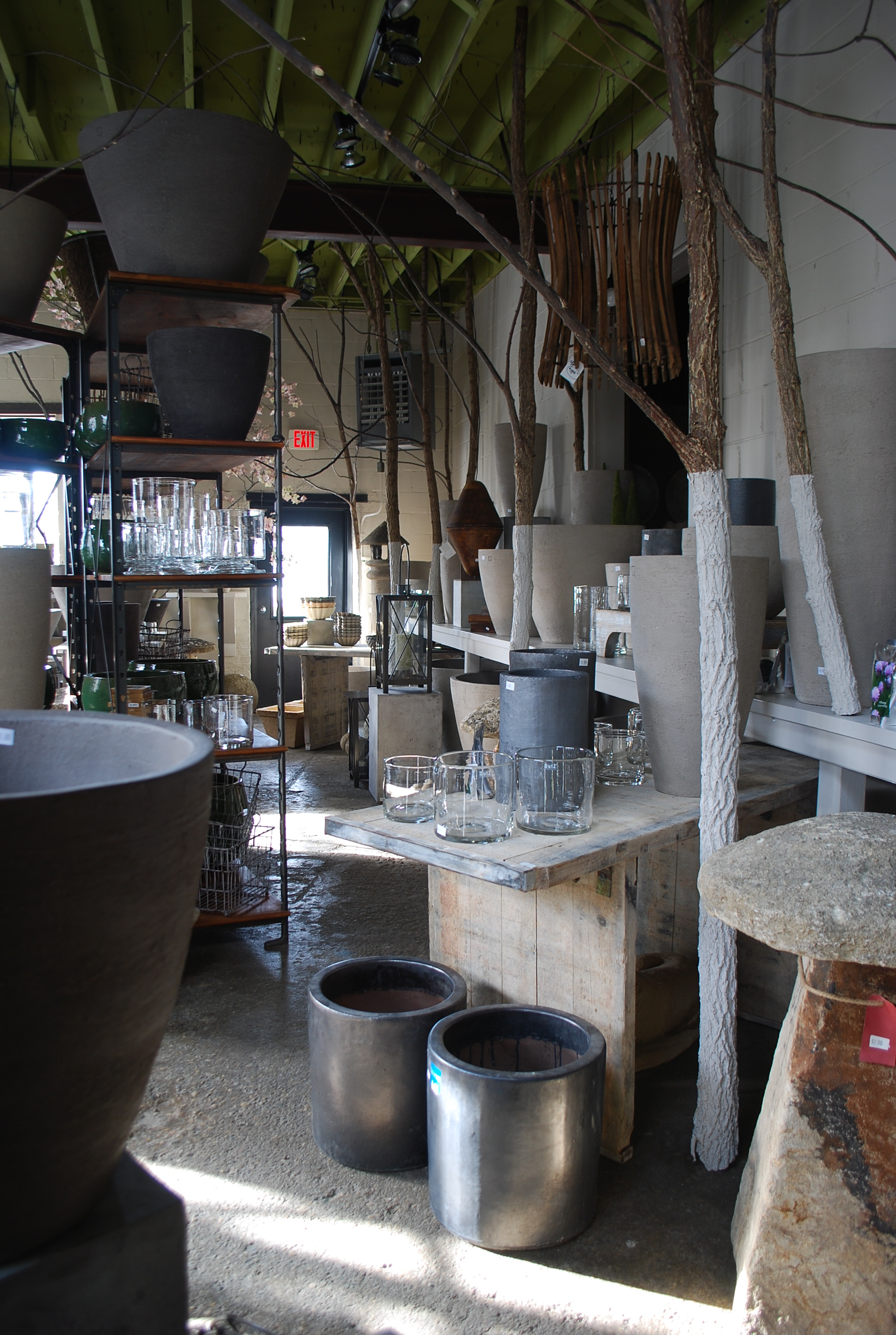
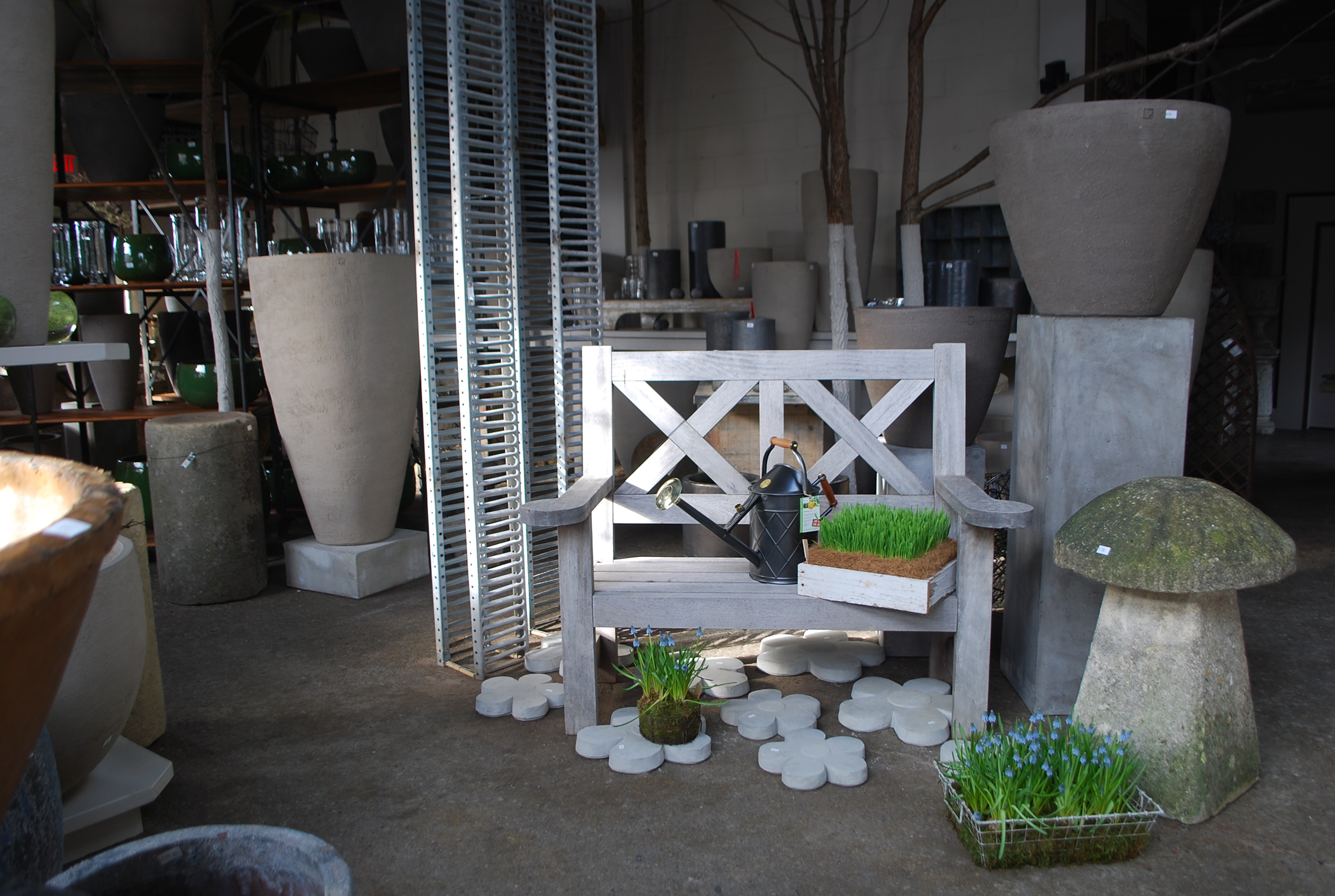
I did have requests for more pictures of the shop as it looks right now.

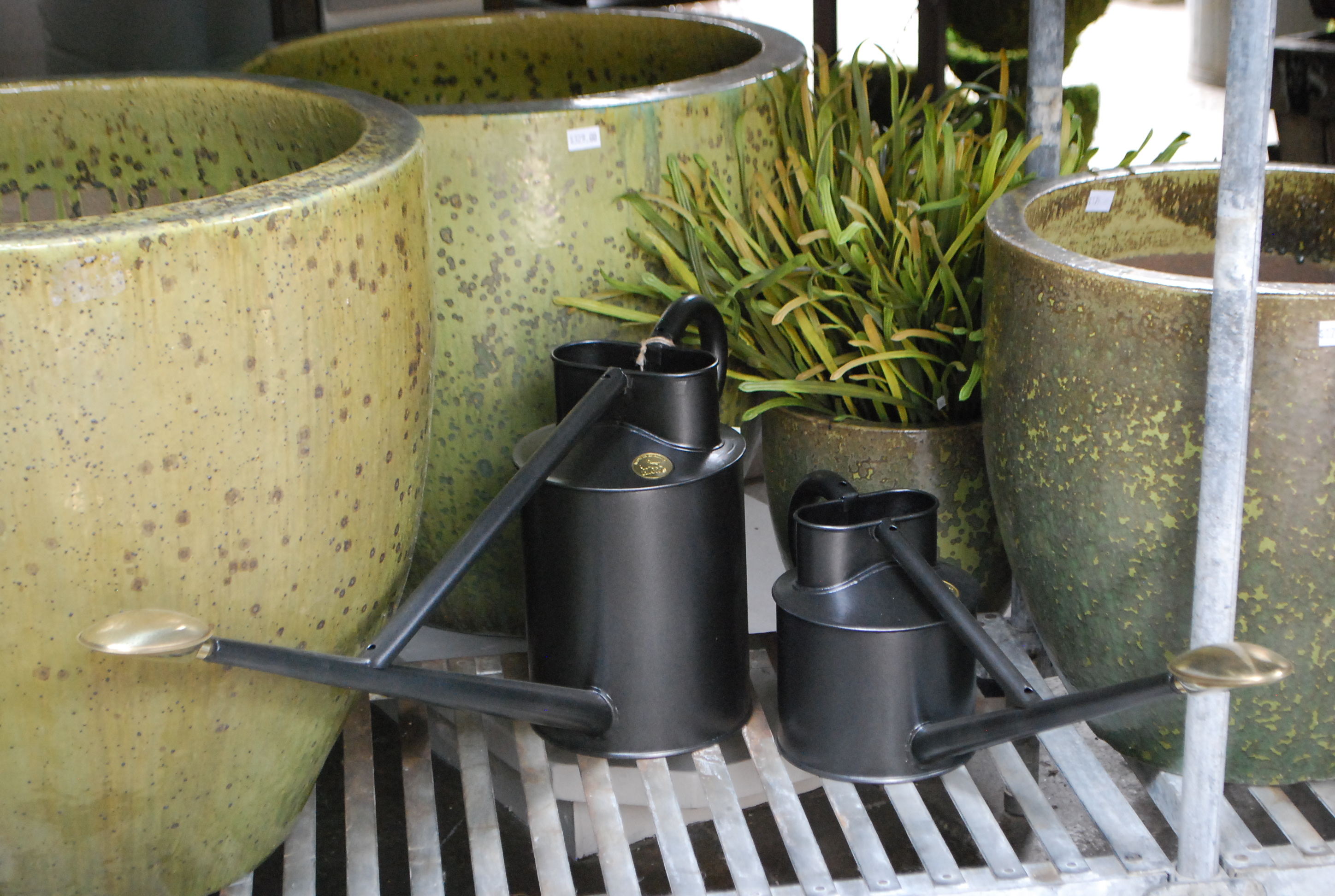
haws-watering-cans.jpg


shop-entrance.jpg


Belgian-stoneware.jpg


glazed-pots.jpg

contemporary-stoneware.jpg

petal-vase-with-prairie-willow.jpg

wire-planters.jpg

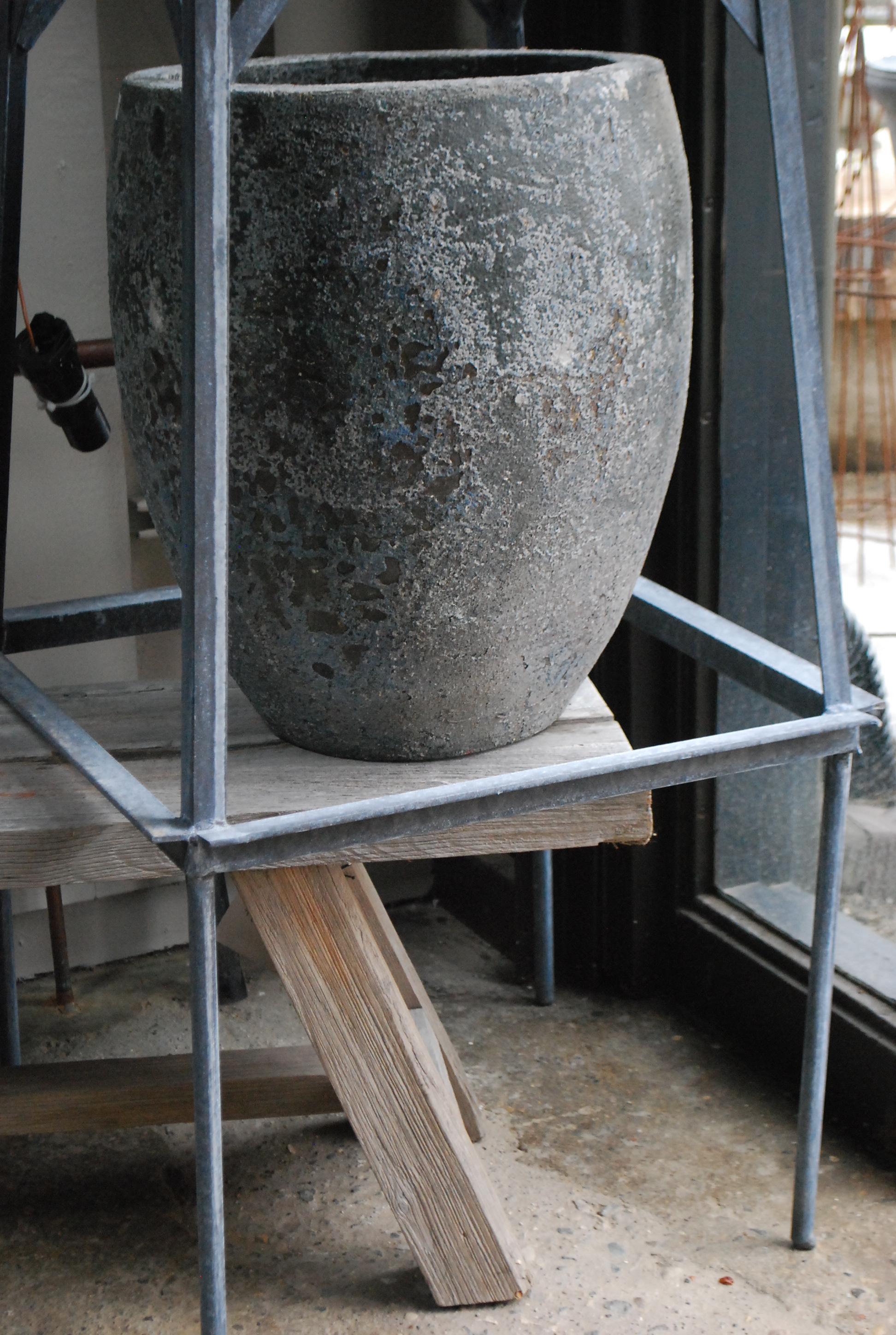
scaffolding-tables.jpg

glass-bud-vases.jpg

shop-shot.jpg

watering-cans.jpg

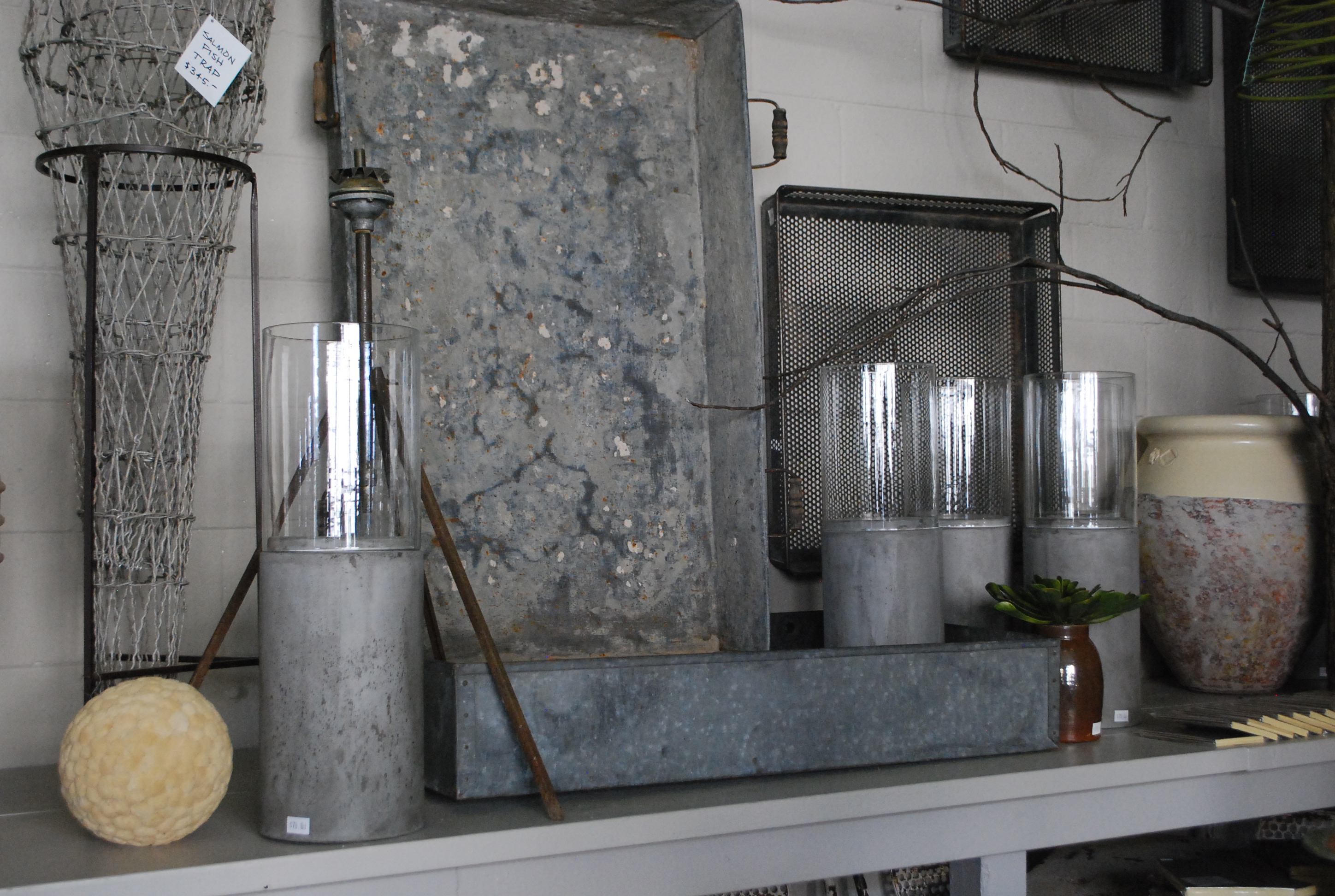
branch-vases-and-soap.jpg


terra-cotta-jar.jpg

glavanized-metal-trays.jpg

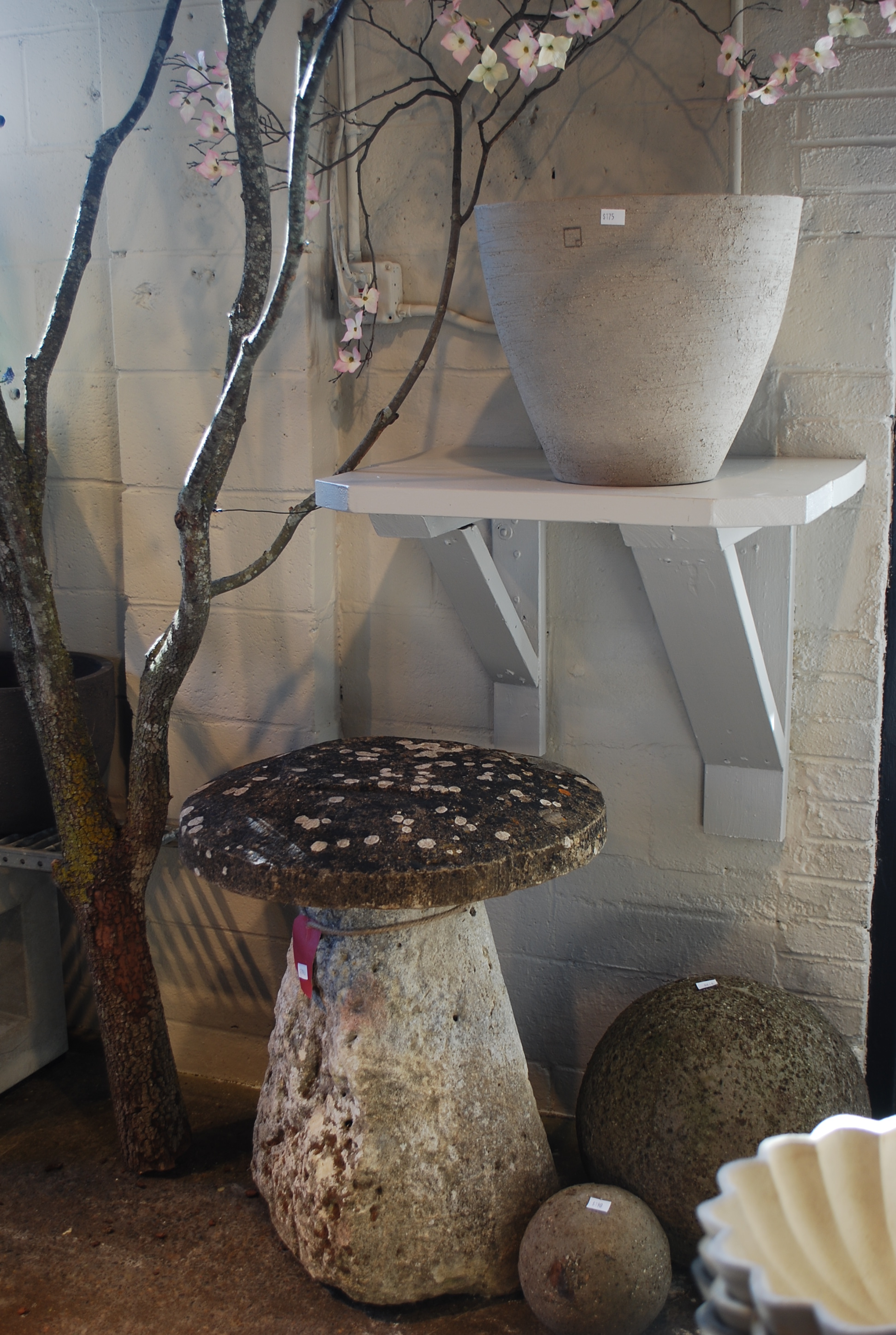
staddle-stone.jpg

glass jar.jpgaa

square-moss-baskets.jpg

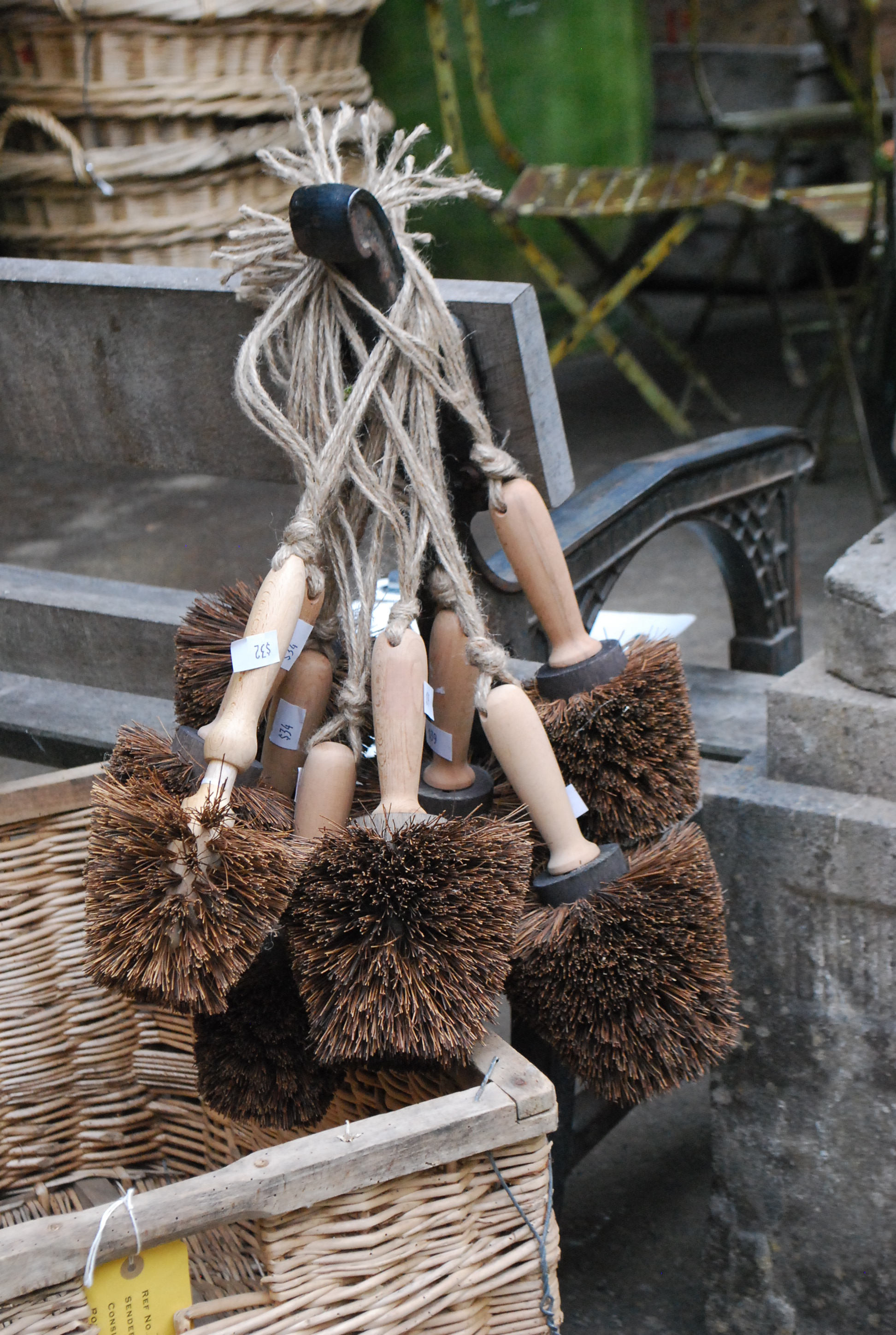
pot-brushes.jpg

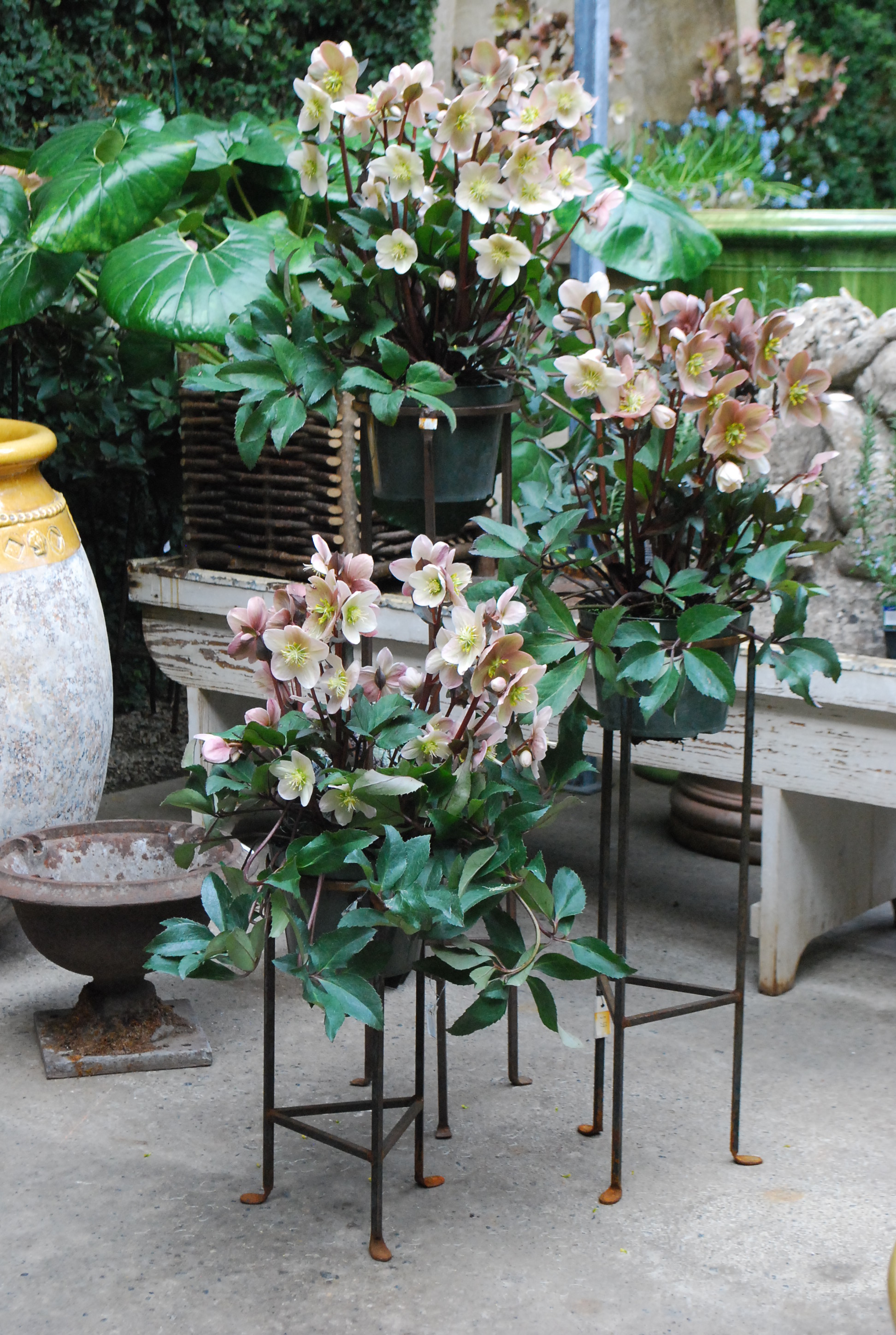
steel-plant-stands.jpg

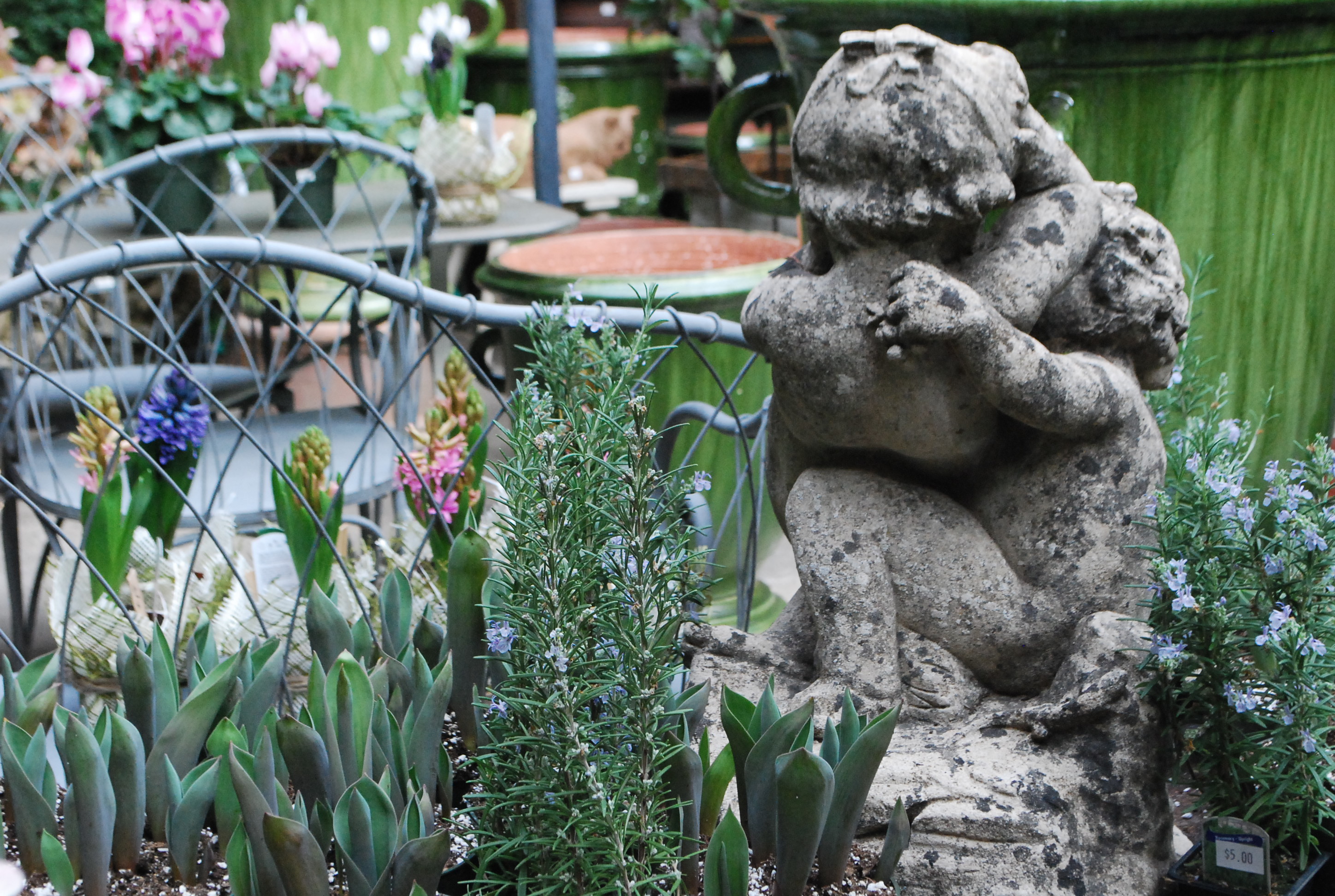
tulips-and-rosemary.jpgaa

wall-fountain.jpg

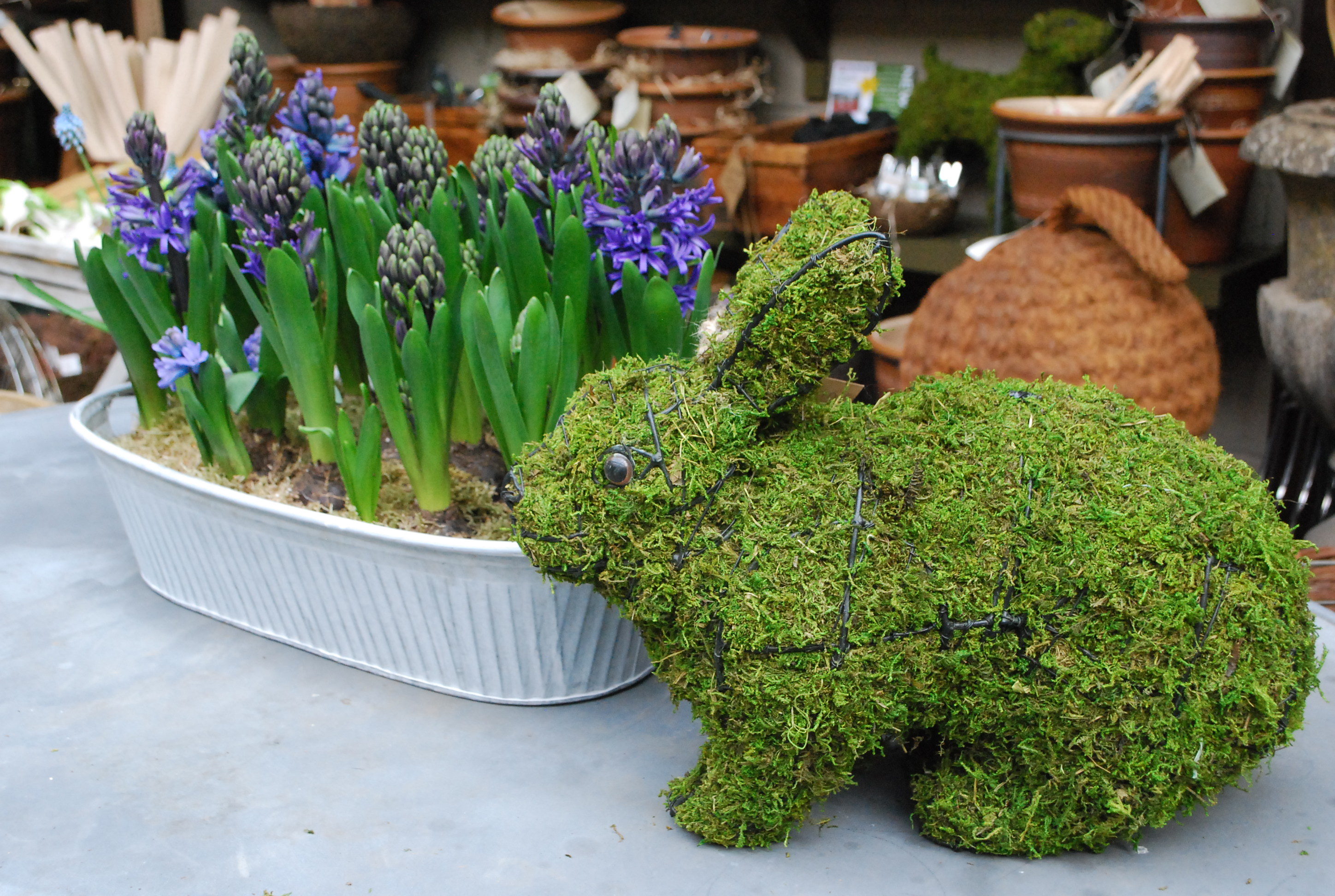
moss-rabbit.jpg

We’ve had a few warmer days-how great it will be to finally get outside to work.

Spring Season

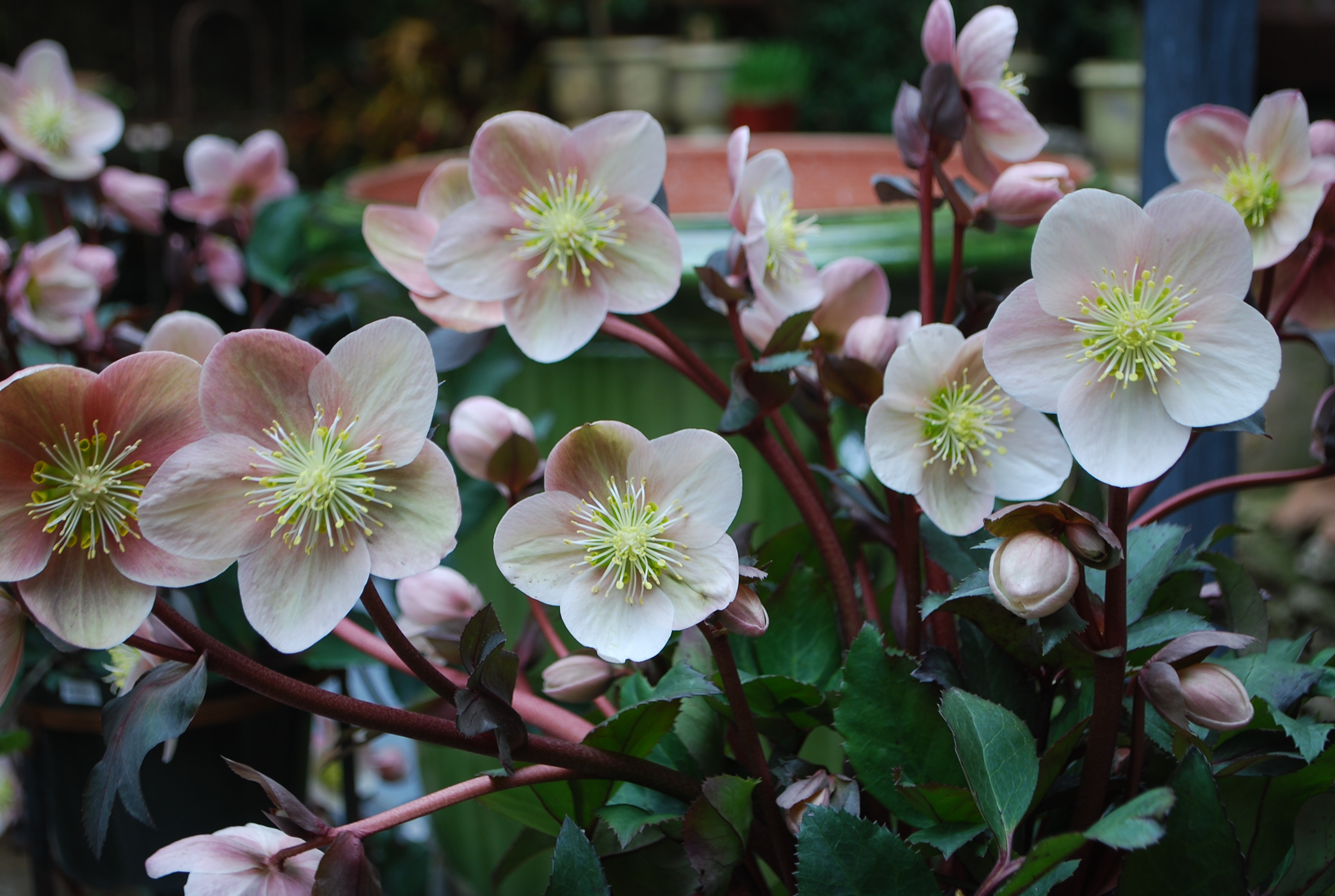
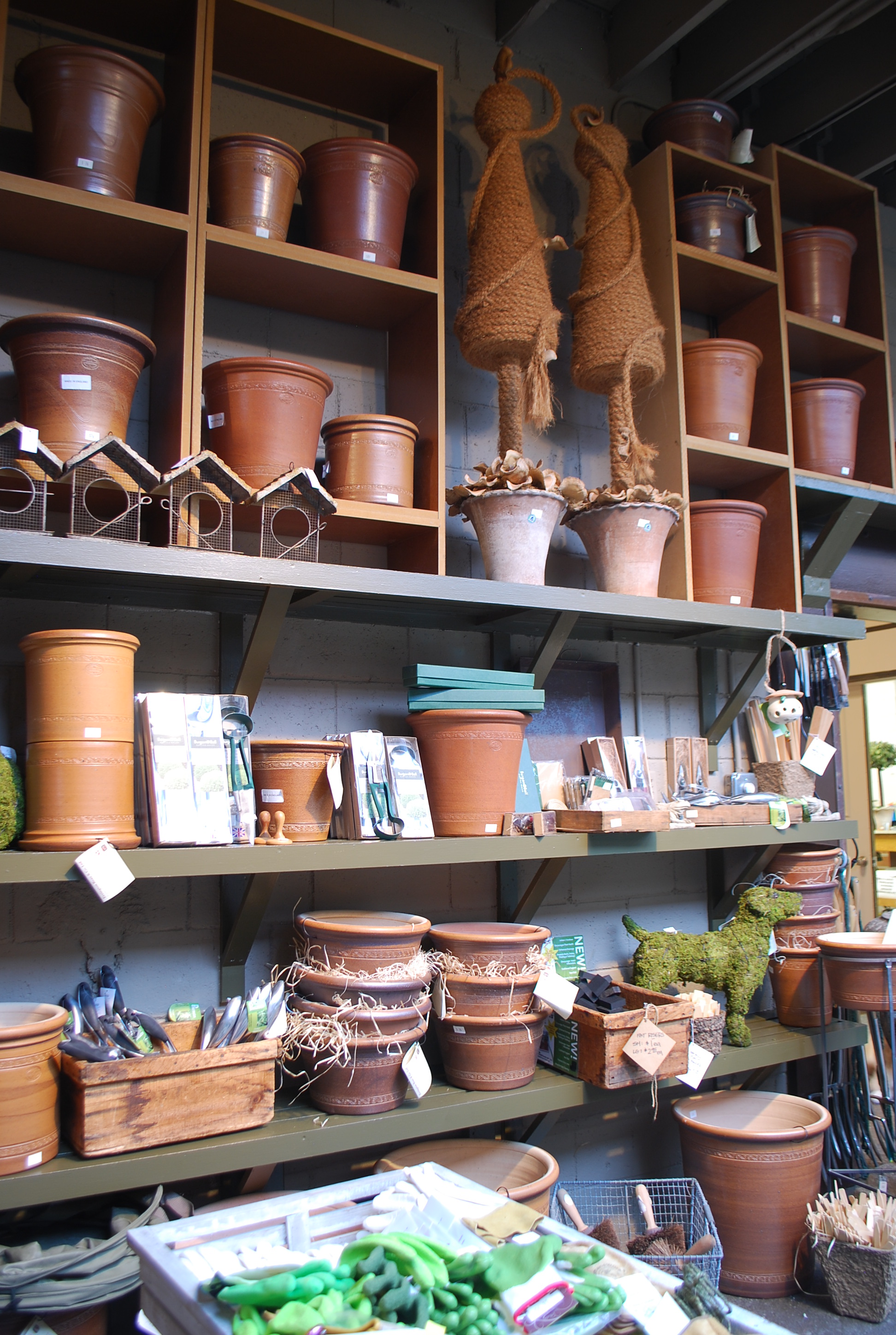
hellebore-blooming.jpgMy spring gardening season starts the same day every year.  The shop closes except by chance or appointment January 15 of every year.  The by chance or appointment part is code for “we do not keep the heat or lights on much, and we are in the inventory, repainting, cleaning and unpacking things for spring”.  In other words, we are not looking our best.  Most of us are here for those 6 weeks.  That’s how long it takes to take everything apart, clean, repaint, and reinvent the store for the spring to come.  We have gotten 2 containers in from Europe.  A third should be on the water next week.  But we formally reopen every March 1-ready or not.  The gates are open.  The hellebores are here.  And a good portion of what we will have to offer for spring is here.

Detroit-Garden-Works.jpg

A third container is still in Paris-stalled-awaiting a delivery from a Dutch manufacturer.  This happens.  Though Rob’s trip to Europe was months ago, some things he orders must be made.  Most of the companies are small.  This means but a few people hand produce all of the work.  Sometimes we have to wait.  Their concern is to produce a great product, not worry about the date we have decided on in advance for the beginning of spring.

spring-2013.jpg

The work of redoing 10,000 square feet of space is just that- work. My landscape crews do all of the painting, and the heavy moving.  The Detroit Garden Works regular staff does the cleaning, the inventory, and the checking in of new shipments.  This time of year, something new arrives every day from US suppliers. Rob and I have to figure out what goes where-with the big responsibility to Rob.  He is the only person who knows exactly what is coming.

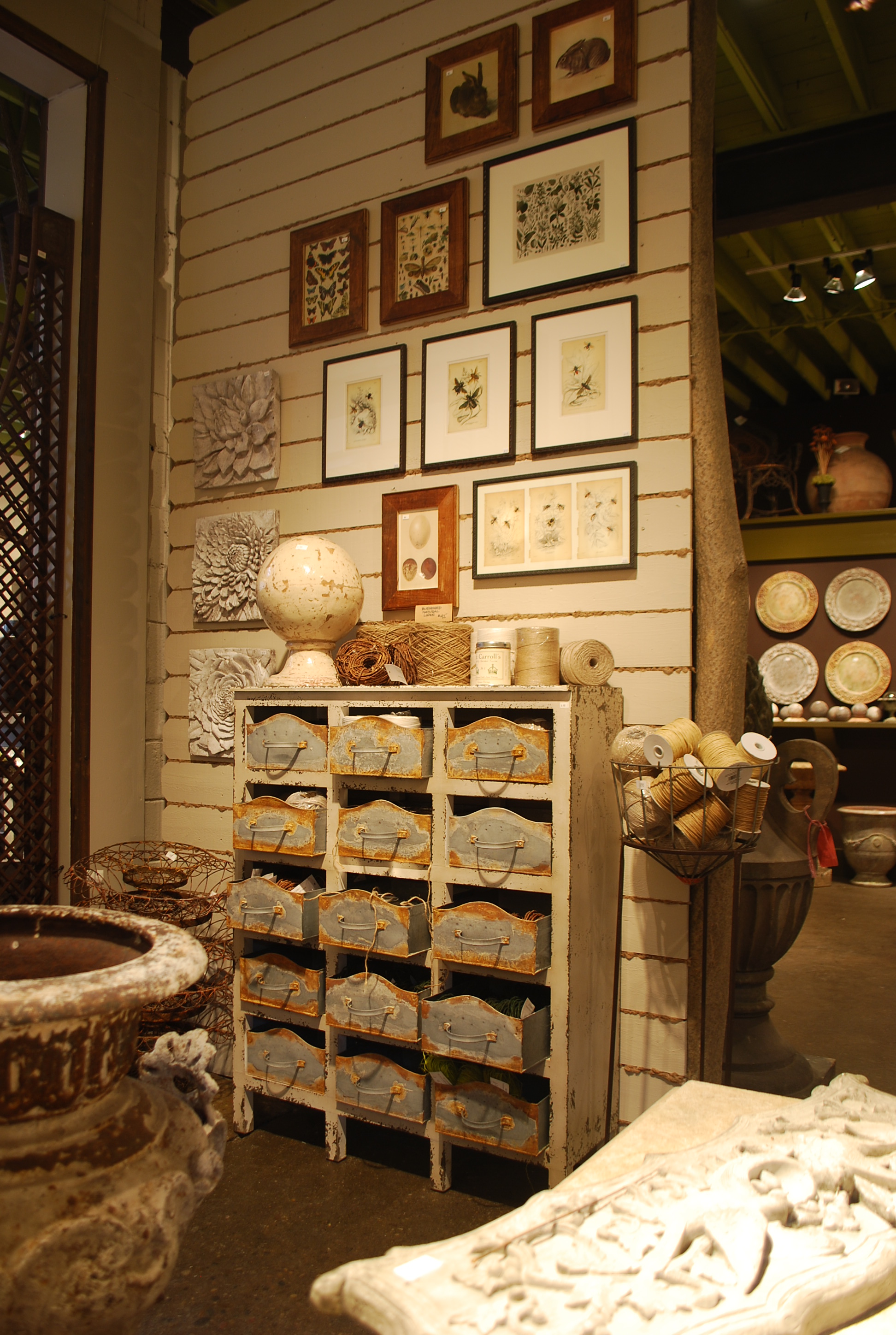
reproduction-French-cabinet.jpg

Monica manages the entire big fluid situation.  She has an uncanny ability to make sure that the day to day stays current and on track.  She also has no problem showing up in the garage to unpack when necessary-just like the rest of us.  I have no idea how other companies switch over from one season to the next-overnight.  We take everything down to the bare walls, and start over.

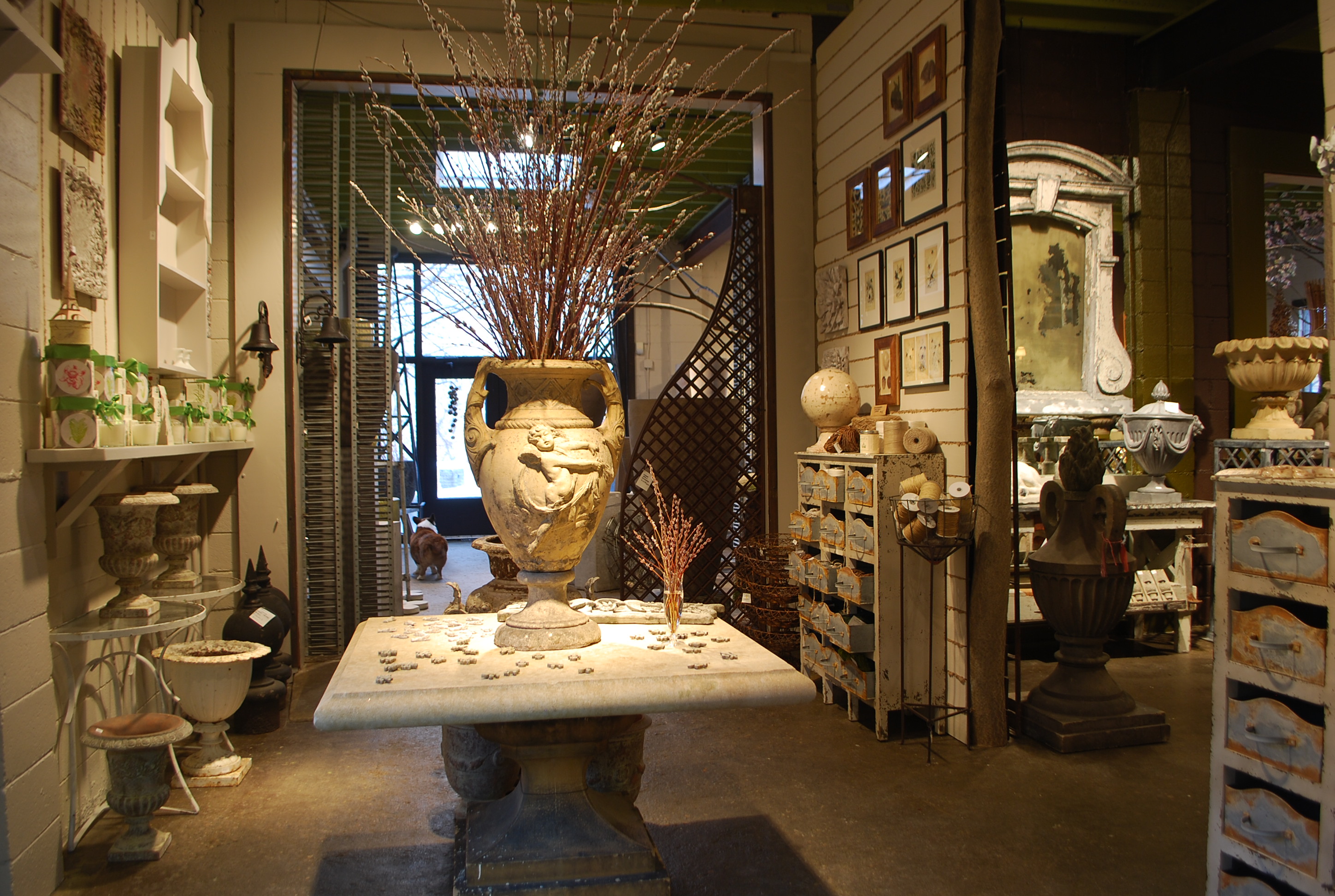
shop-display.jpgDreaming up what will go where, and with what-that is somewhat about skill.  But it has its roots in the process of making a creative gesture.  An overall look that flows.  Does this color look good with that one?  What flavors mix happily?  Where shall the tools go?  What color are we thinking this room needs to be painted?  Have we displayed this piece such that people understand why we chose it?

French-glazed-terra-cotta.jpgIs there a mix of textures, mass, color and shape that is appealing, and lively? Or somber and serious?  Or sassy.  Did we overthink this?  Did we not consider that?   How we group things in the shop is a visual discussion about the presentation of how we view good design.  An interest in really good design hovers over everything we do.  There are moments when my landscape crew makes a suggestion about a certain arrangement.  Happy to hear it-as if they take the trouble to speak up, I know they have thought it through.  If a vignette gets changed around a number of times, they are entirely good natured about it.
English-salt-glazed-pots.jpgA sincere interest in anything means that somewhere, there is a fire burning.  Sometimes the flames extinguish, and their is only the glow of an idea.  Sometimes there are lots of flames, and things move quickly.  I really enjoy this time of year, as we have set aside the time to let our ideas about the new season cook.
front-desk.jpg

A lot of hands are involved.  It takes Rob one entire long evening to redo all of the lighting.  The high ceilings are great for giving a sense of the sky, rather than an interior ceiling.  Judging the size of an object intended to go outdoors can be difficult in an indoor space.  Steve takes charge of arranging and hanging everything that must be hung on a wall.  He knows how to do the math, and he has a good landscape architect’s sense of design.  His graduate degree in landscape architecure is from North Carolina State University-enough said.

garden-shop.jpg
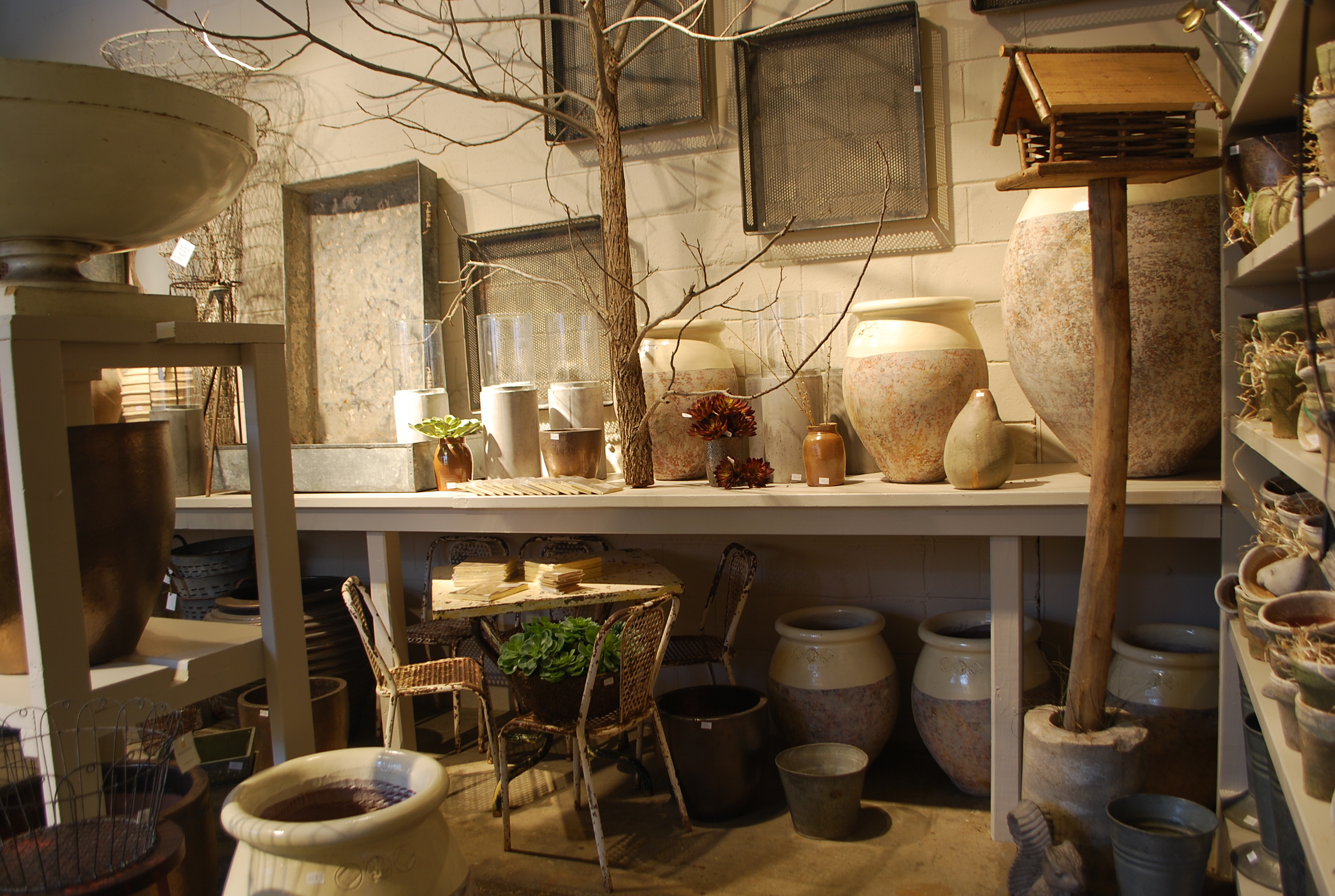
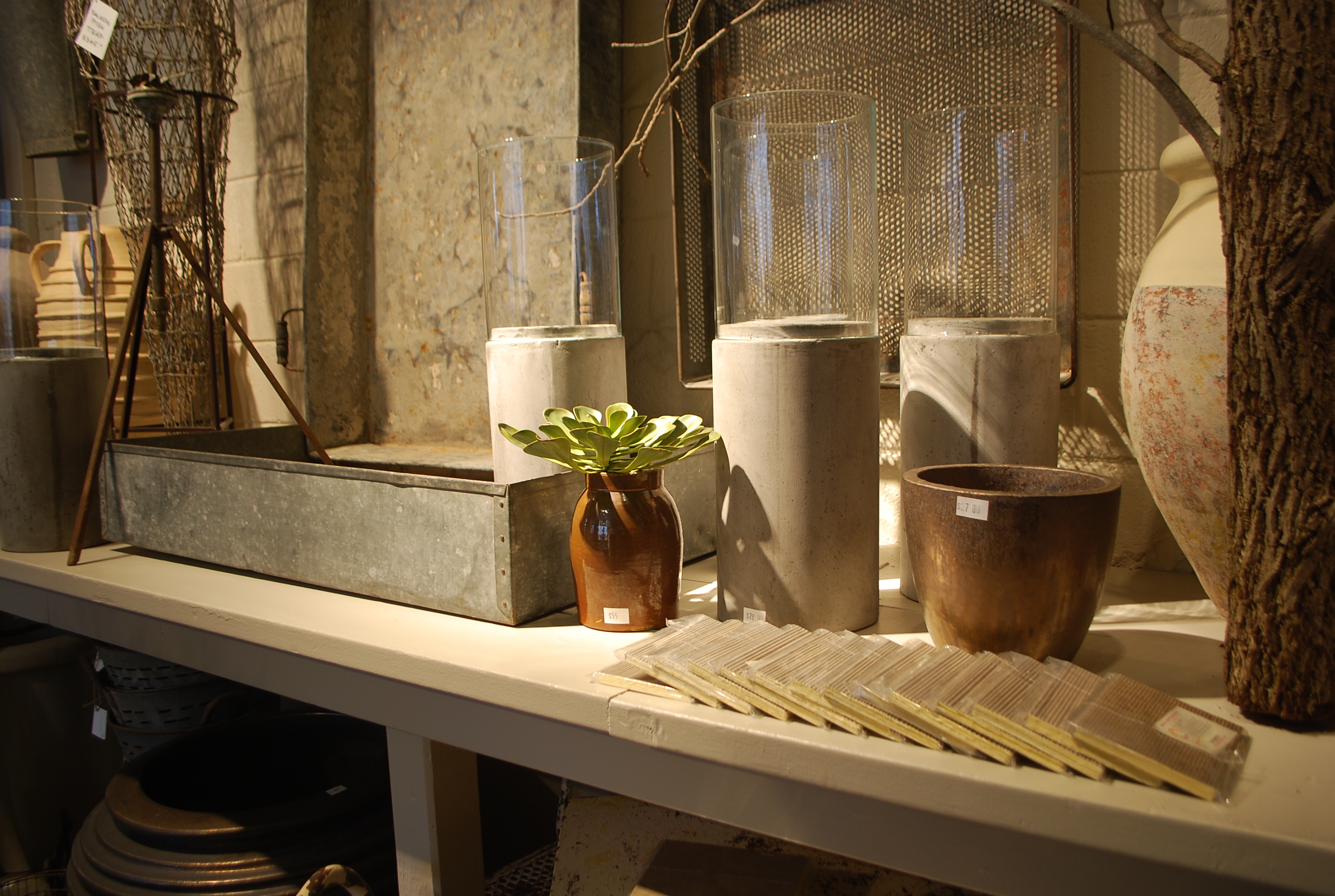
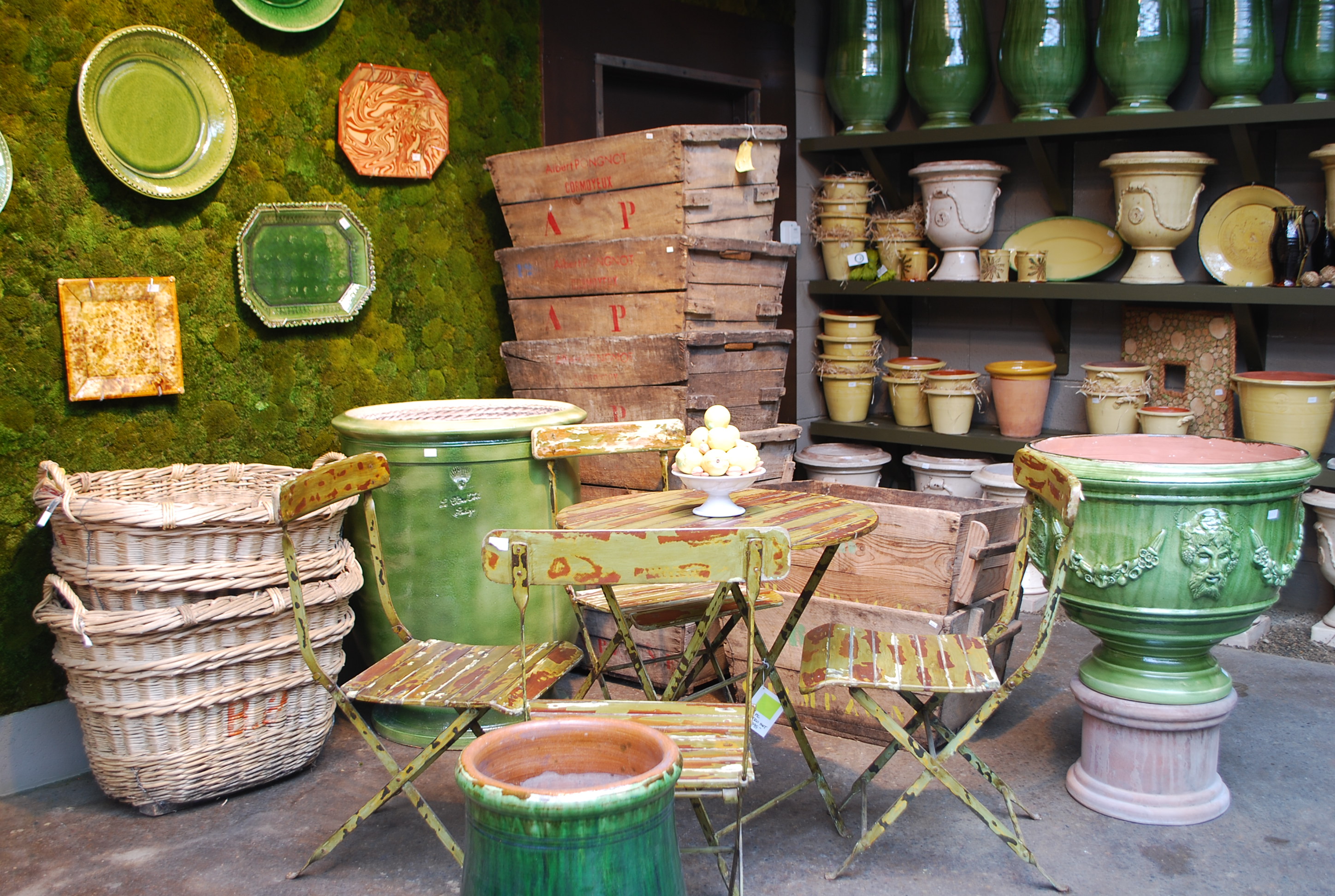
As usual, there is a wide range of styles, periods and materials.  But every year we try to do a thorough job of representing a certain point of view.  Rob’s mix is interesting this year.  His idea of contemporary garden ornament includes galvanized metal pieces from the farm that have very strong and simple shapes.  Terra cotta shapes whose origin is rooted in agriculture.  His idea of contemporary also means utilitarian.

spring-shop.jpg

Some contemporary garden ornament is cold. I am not crazy about objects that come with a built in echo.  I like things that fit in, and take on the feeling of their surroundings.

American-glazed-jar.jpg

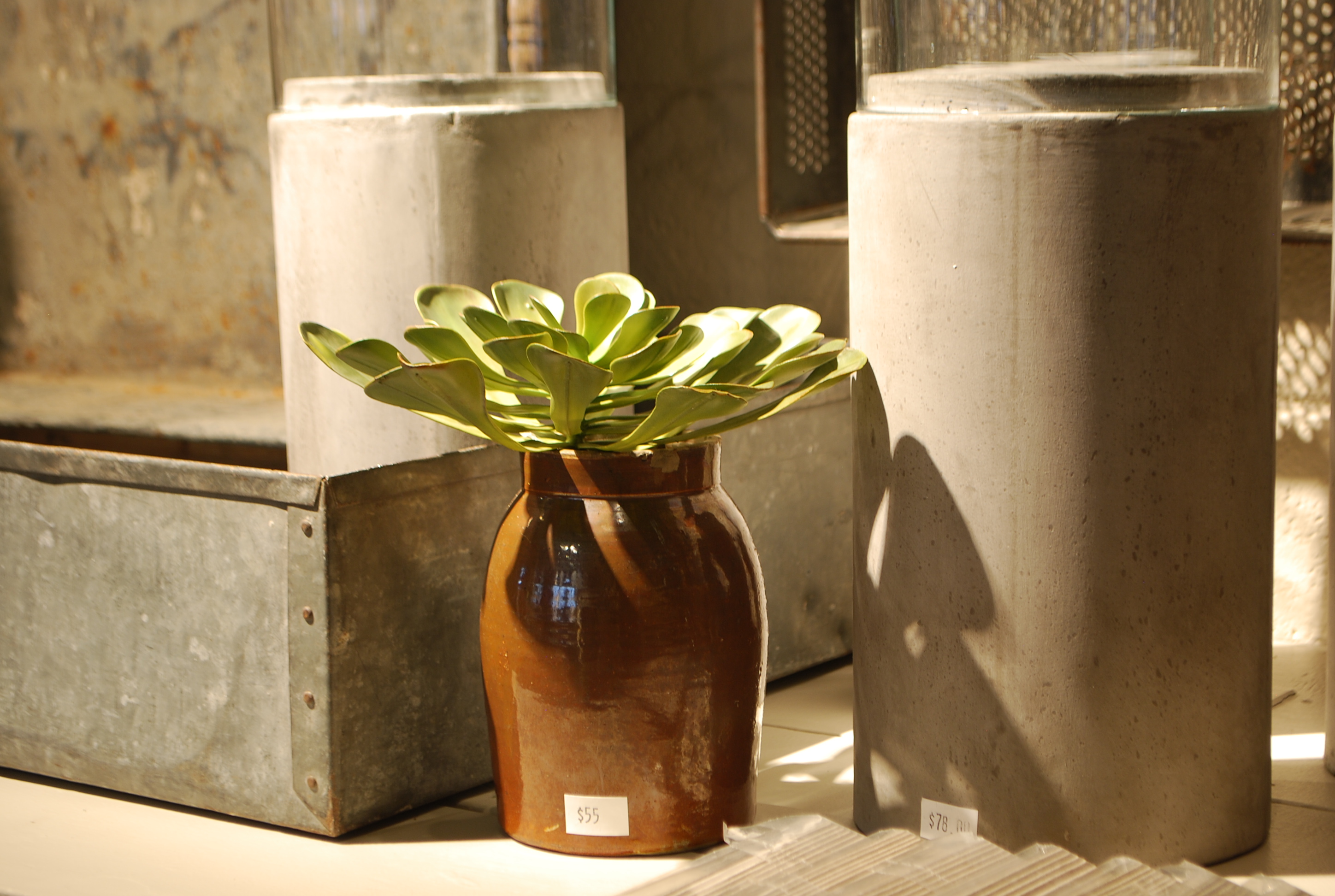
This 1920’s American glazed pickle crock is just as home in this setting, as it is in the pantry.

spring-gardening-season.jpg
This pair of cream glazed stoneware urns were made in Chicago in the early 20th century. They are not so easy to come by, as they are prized by gardener’s with urban landscapes.

March 2a, 2013 (32)

Howard has been as tireless as the rest of us, going over every inch of the place numerous times a day.  But we have made a lot of progress.

chives.jpg
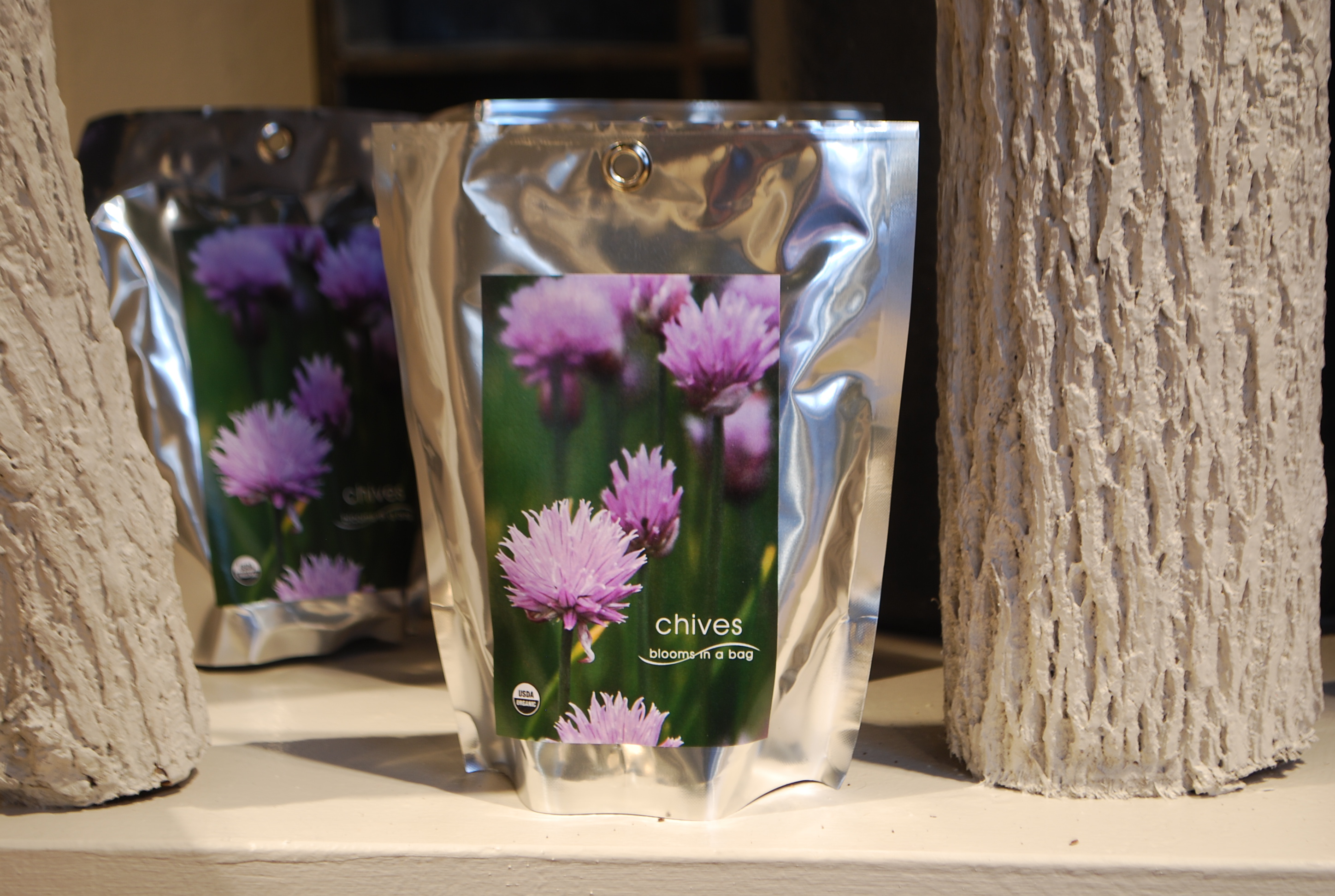
We like to have everything as ready as possible on the inside, before the weather warms enough to permit plants.  For gardeners who just cannot wait one more minute, snip off the top, water, and set in a sunny window sill.

spring-shop.jpg

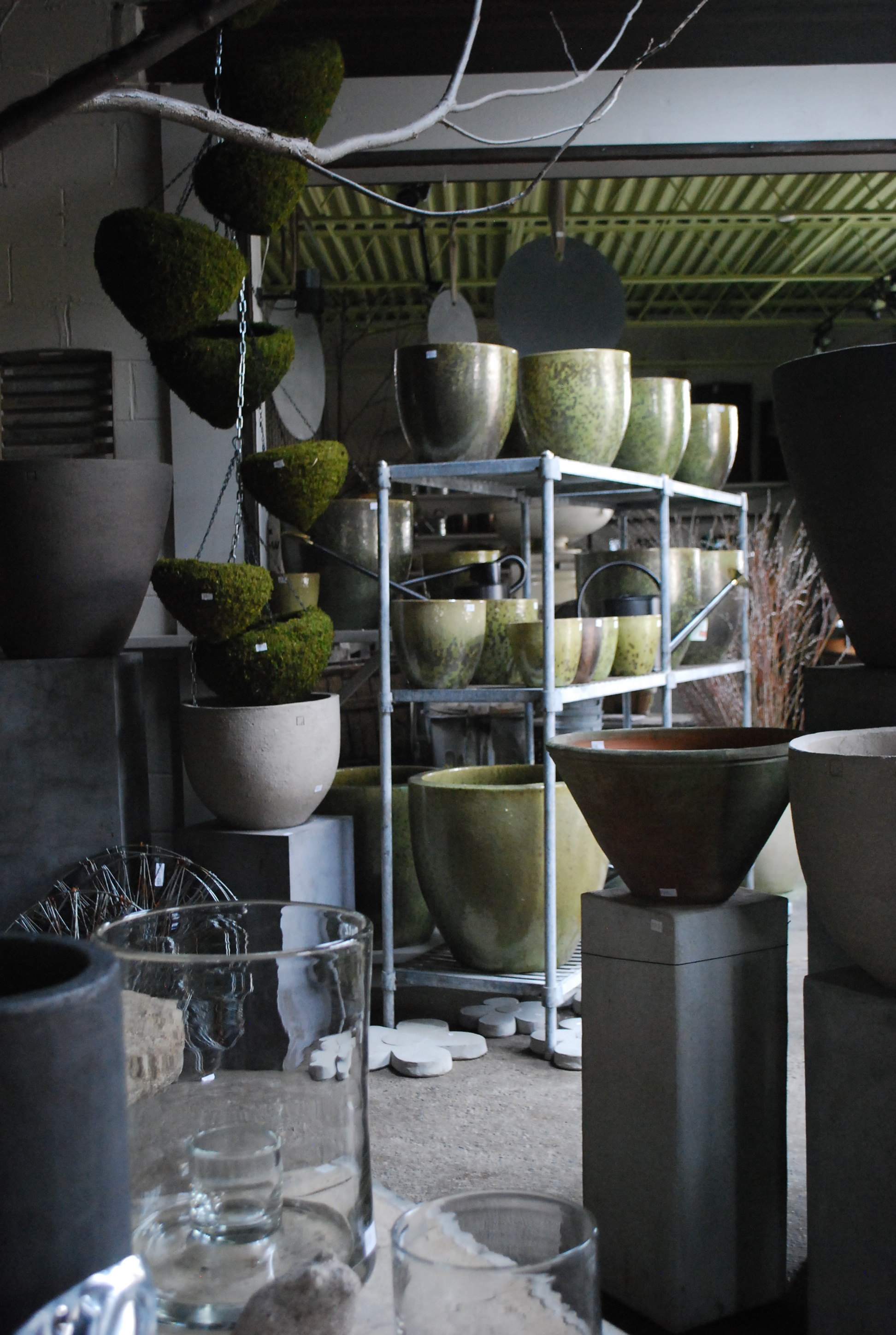
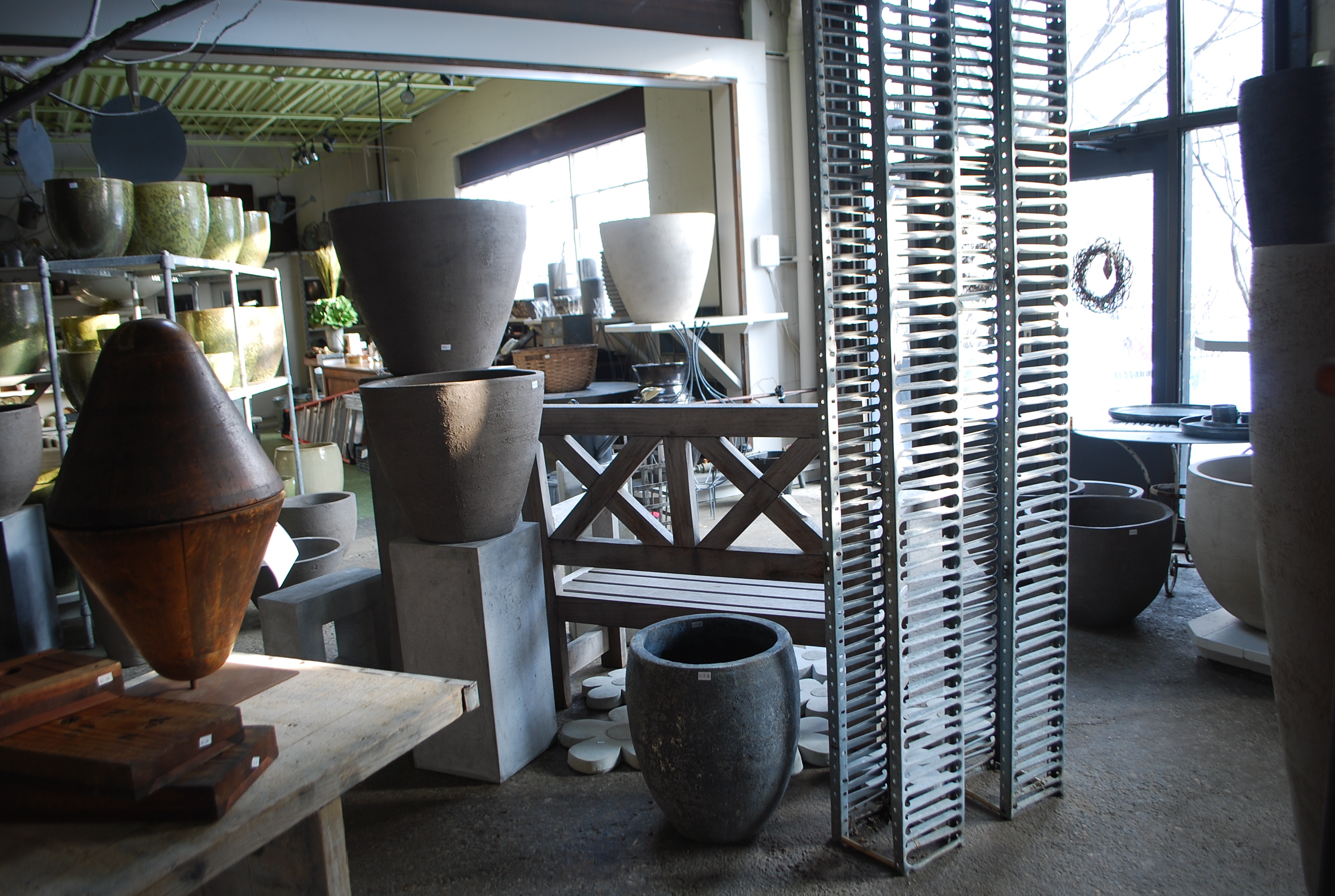
I know this is a lot of pictures to slog through, but those of you who do not live close enough to visit might want a look at what we have going on.

contemporary-Belgian-stoneware.jpg

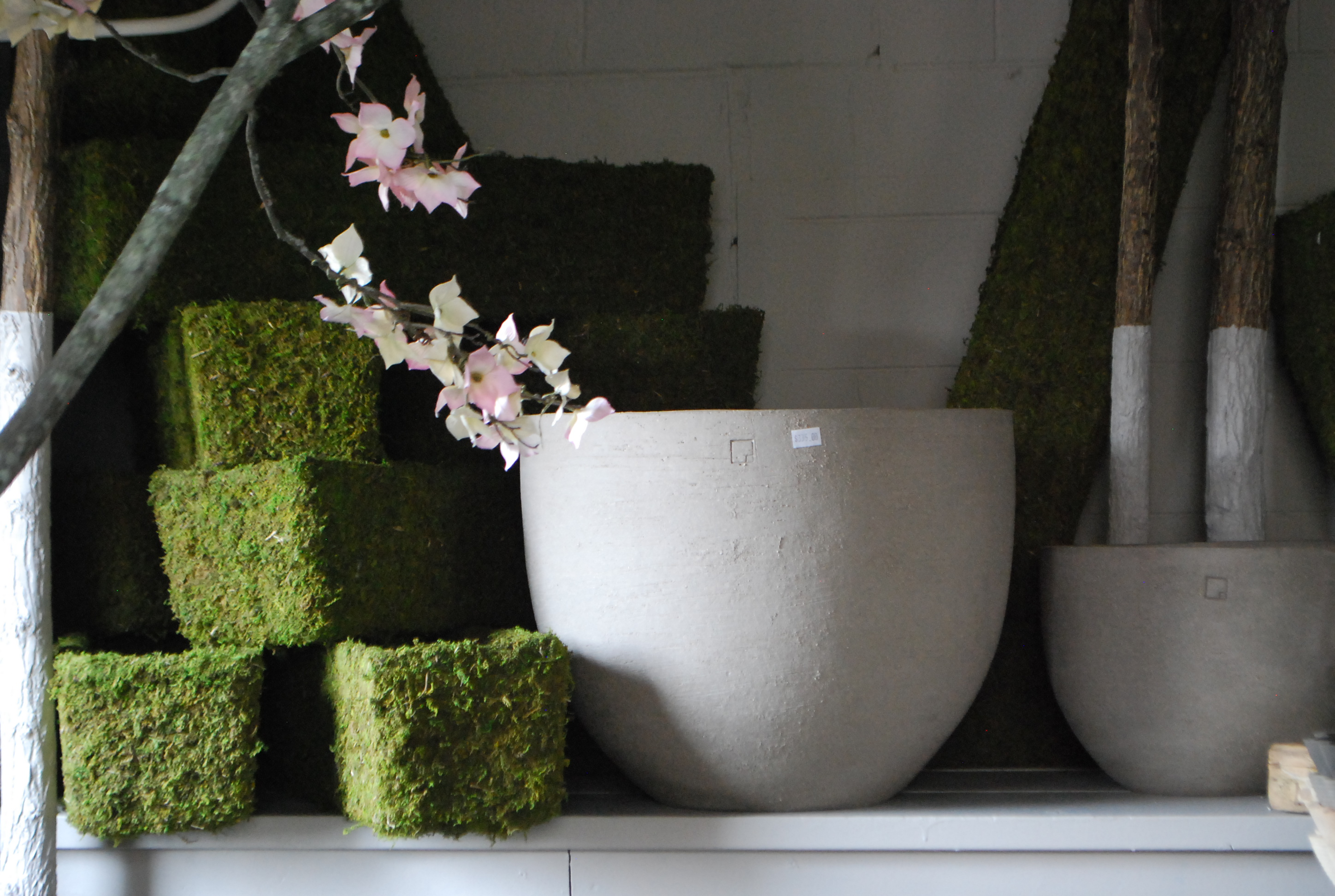
The Belgian stoneware pots are the feature of our spring collection.  Six of them are already gone-to 3 very different gardens.

spring-2013.jpg

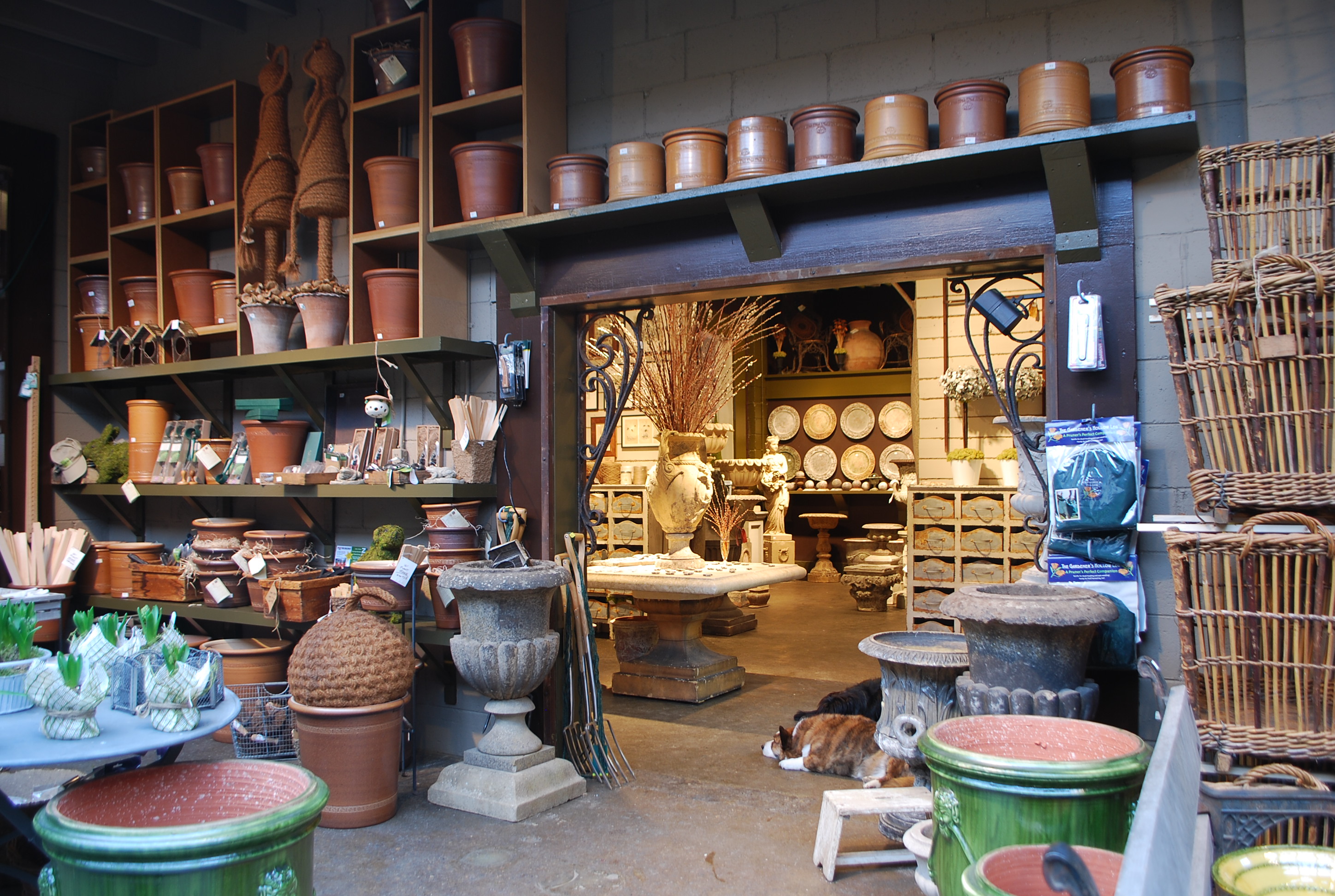
Though I will be glad for the day when we can prop the doors open, there is a sense of spring in the air here.

March 2a, 2013 (47) See what I mean?