Green Flowered Hellebores

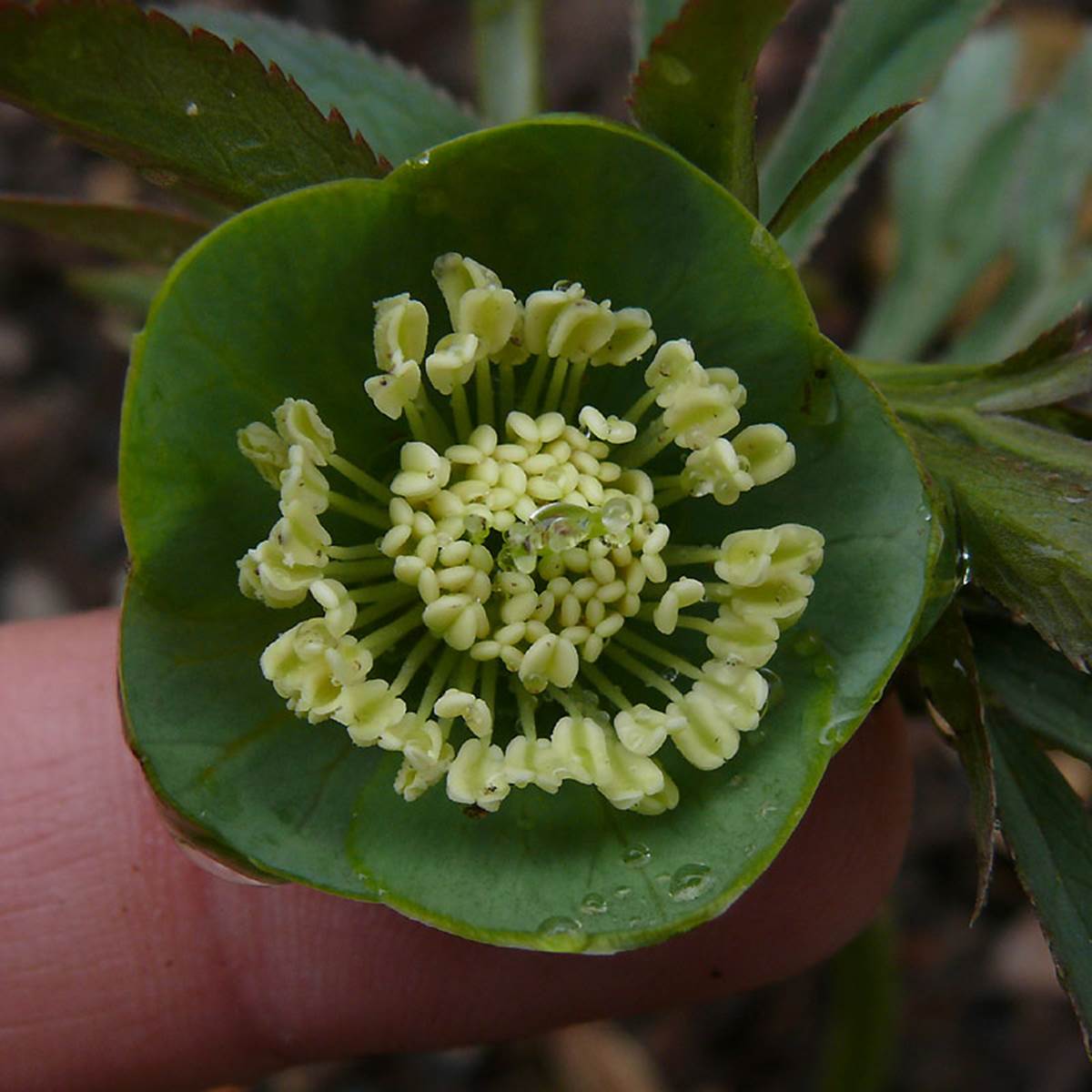
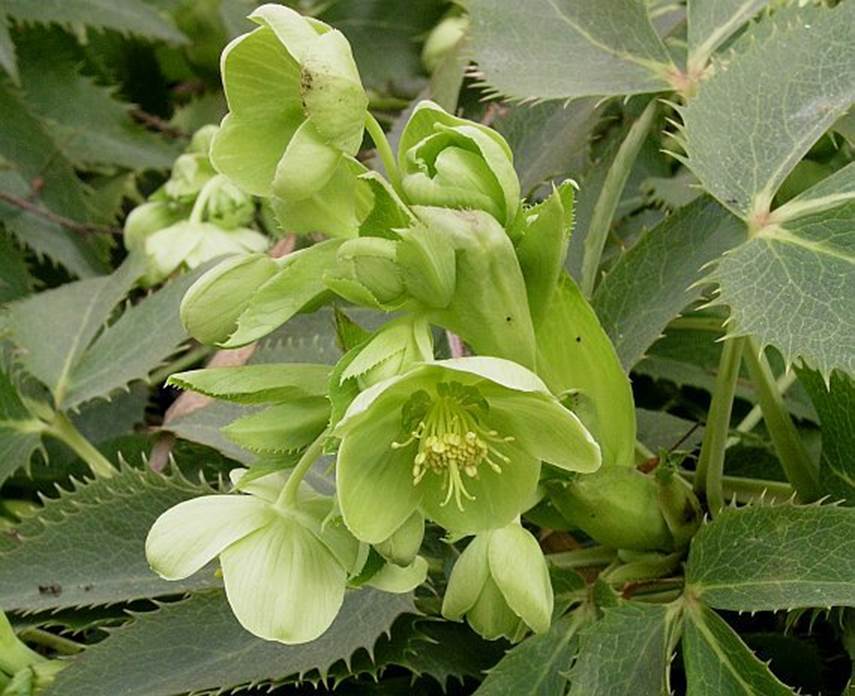
The herbaceous perennial helleborus is represented by 20 or so species.  It is a member of the ranunculus family.  This incredible picture of a flower of Helleborus Corsicus, from about-garden.com, tells the tale.  Hellebore flowers are comprised of 5 sepals, which persist in fruit.  The fact that hellebores emerge from the ground and bloom very early in our gardening year is plenty enough reason to grow them.  But the fact that the 5 sepals hang on for months-during and after the time that the flower sets seed-is even more compelling. The lustrous green foliage grows vigorously, and persists in my garden throughout the winter.  My plants are virtually care free.  They get sun, adequate moisture, and are protected from winter winds by an old stand of dwarf spruce-picea mucrunulatum.  I have never divided them, nor do I feed them.  I do spend plenty of time looking at them-they are that good looking.
helleborus argutifoliusI had a mind to grow helleborus argutifolius, as I am very fond of green flowers.  This species grows quite tall, and features shiny and spiny leaves.  I had no idea at the time that hellebores are divided into 2 groups-those that bloom on the leaf stalks like helleborus argutifolius, and those whose leafless flower stalks emerge from the ground in the spring.  I was never successful with this hellebore-the Michigan winters invariably rotted the buds before they could open in the spring.  I finally ripped them all out, in favor of those hellebores whose flowers were kept safely below ground until the freezing winter weather had passed.
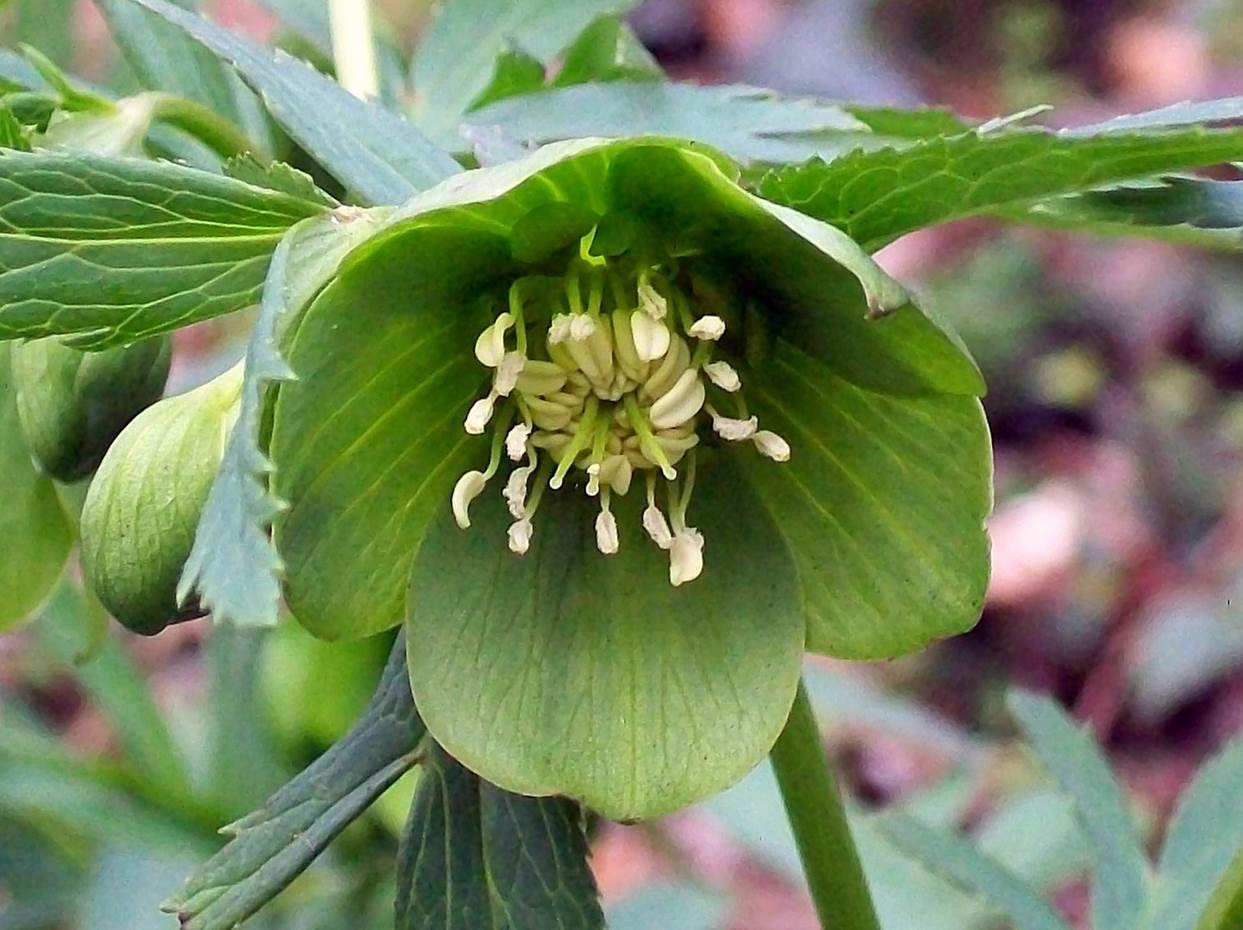
helleborus-viridis.jpgHelleborus viridis is fairly uncommon in the garden.  It is usually the darkest green, and the shortest of the green hellebores.  You can find excellent photographs and descriptions via Graham Rice.   http://www.grahamrice.com/hellebore/species/viridis/

spotted-green-hellebore.jpg

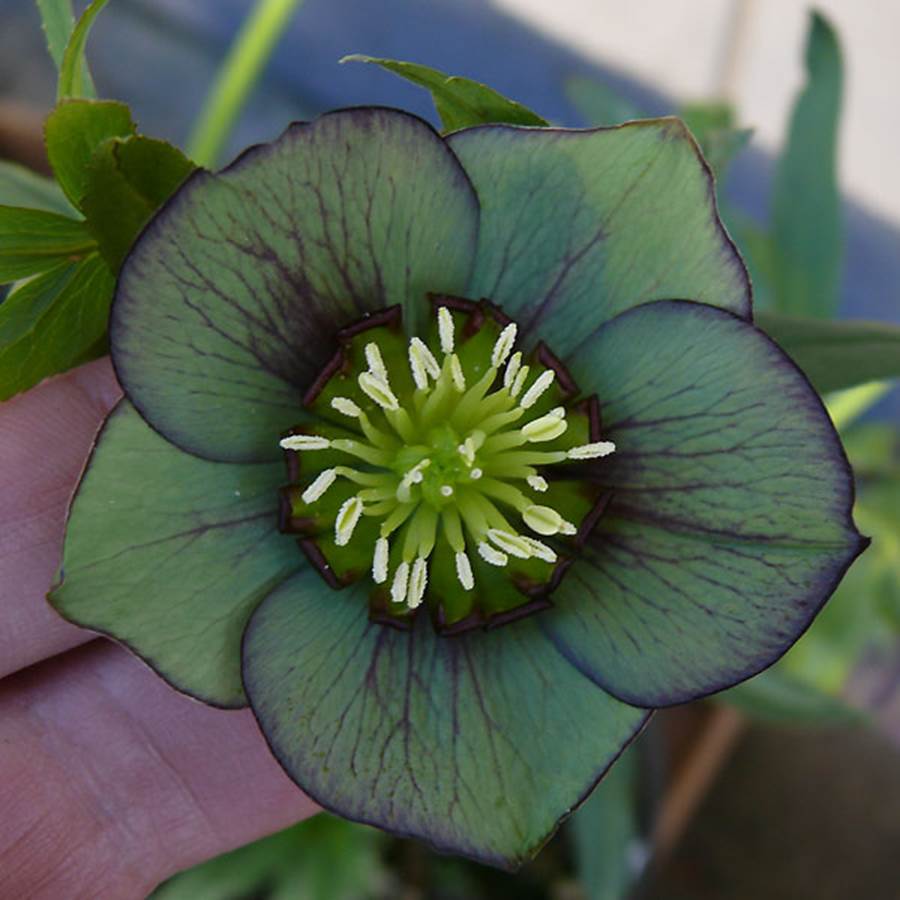
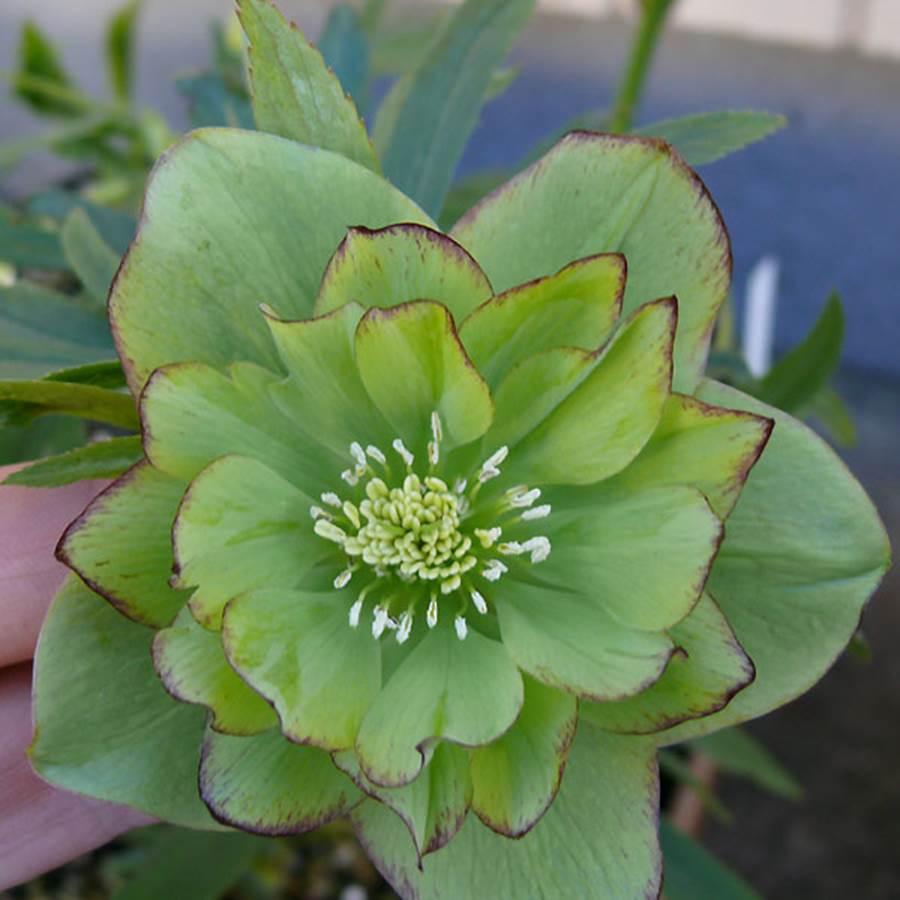
Helleborus orientalis has in recent years been the subject of considerable hybridization.  You can find beautiful green hellebores for sale at Carolyn’s Shade Garden, Pine Knot Farms, Plant Delights Nursery, Fraser’s Thimble Farms and Arrowhead Alpines.  If you love green flowers, and perennial plants that are beautiful the entire season long, try some green hellebores.  To follow is a collection of pictures that will give an idea of wide a range of green flowering cultivars are available.
green-hellebore-variation.jpg

double-green-hellebore-with-red-edges.jpg

dark-green-hellebore.jpg

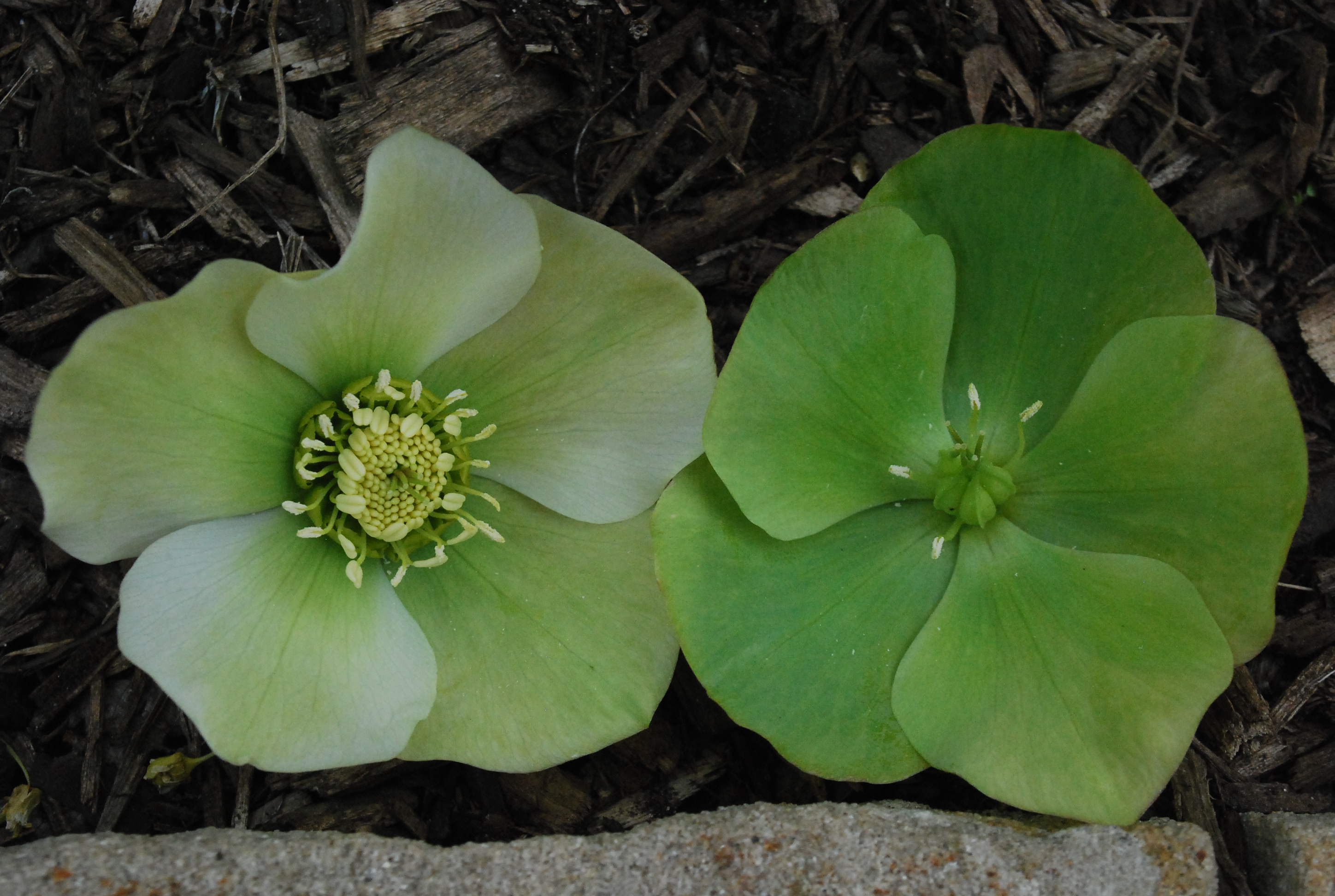
early-and-late-green-hellebore-flowers.jpgThis picture from my own garden shows the flower in full bloom on the left, and the sepals still intact on a flower from the same plant on the right.
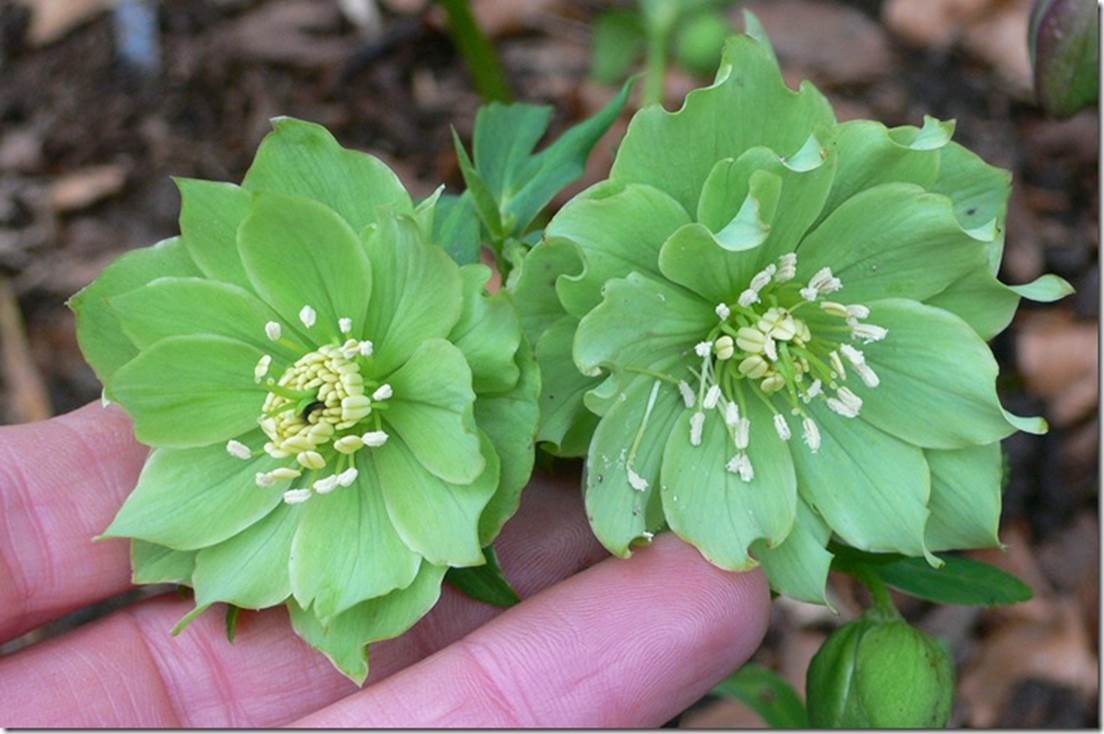
double-green-hellebore-flowers.jpgMany of  these pictures come from hellebores.org – an excellent reference, if you are looking for more information.
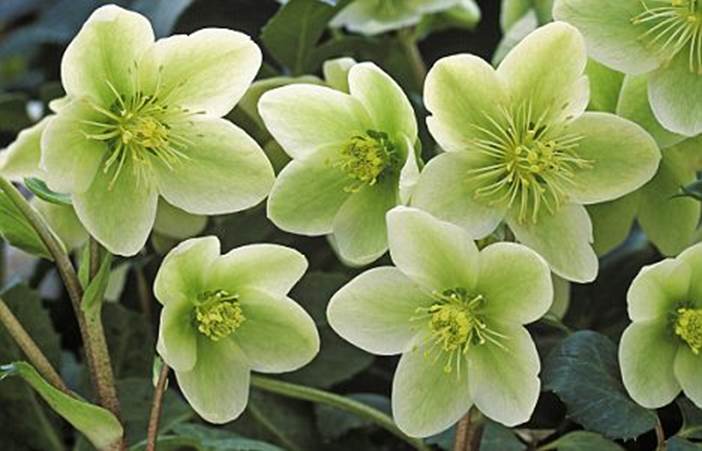
pale-green-helleborus-orientalis.jpgThis photo is from dailymail.co.uk.  My hellebores at home are just beginning to throw their flower stalks.  The next month will be such fun-watching them develop.

green-hellebore-flower.jpgThese flowers are incredibly beautiful.  Looking fore a plant that is worth all of your love and then some?  Try a hellebore.


Paint

fiberglas-garden-plaque.jpg

Paint is one of the most versatile and accessible of any decorative material.  Though cave paintings were done centuries ago, the first patent in the US for paint available in a can was granted in 1867.  Early paint was composed of many different materials and colorants, suspended in a medium which would make the color brushable.  Vintage painted steel and wood garden furniture is readily available-in various states of disrepair.  Old, chipped, and weather worn paint on a garden bench can be charming.  A fresh coat of paint can dramatically alter the appearance of a house, or shed.  Old style adirondacks chairs with original paint are always in demand.  Old chairs repainted in vivid colors are visually invigorating.  Paint types and formulas are available for every surface and situation imaginable.  Some day I would like to try Annie’s chalk paint ( http://www.anniesloan.com/index.html ) both inside and out.  The surface sounds beautiful, and it can be used inside and out.  No matter the circumstance, I use Porter Paint.  It is a favorite brand of sign painters.  In my opinion, it resists cracking, fading, and peeling better than any other paint I have used.  The exterior Acrishield is 100% acrylic paint-not latex paint.  We use this on any exterior surface we want to paint.  Porter Paint is made in Pennsylvania, and is not always easy to find, but amazingly, it is available in my neighborhood ( http://www.pontiacpaint.com/).  Paint is a relatively inexpensive decorating material with one caveat.  What was once painted will eventually need to be repainted.  Is that so bad?

fioberglas-garden-plaque.jpg

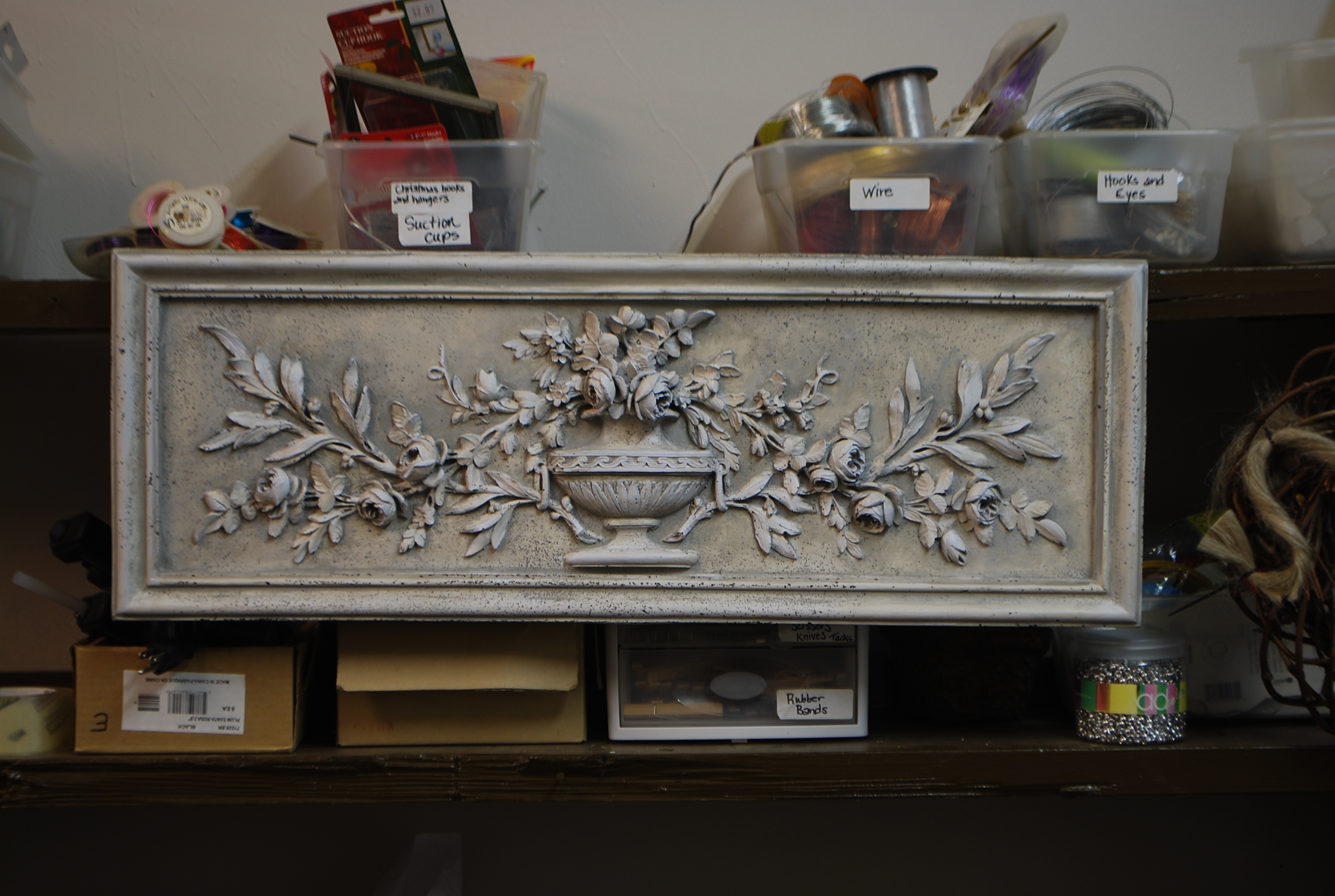
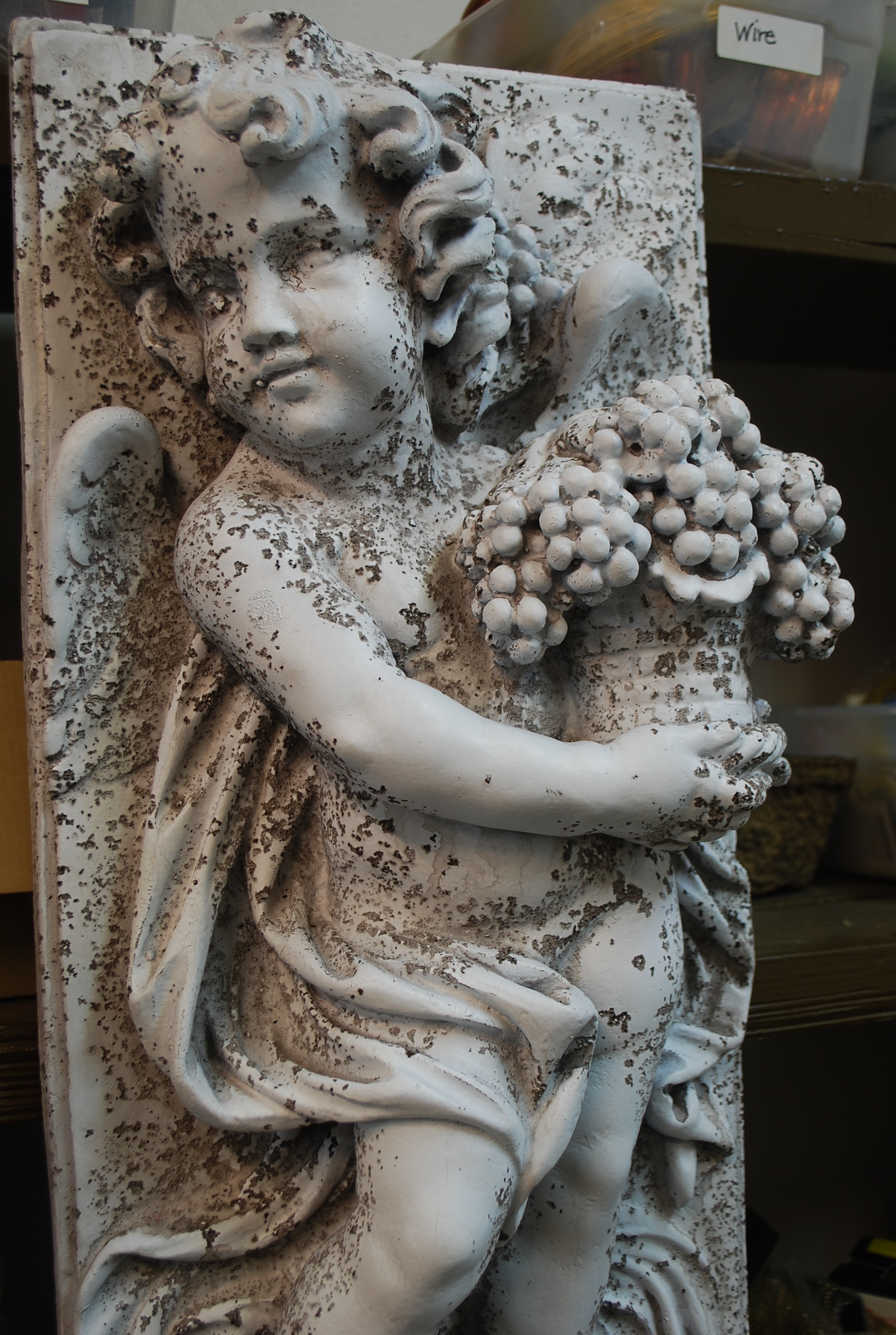
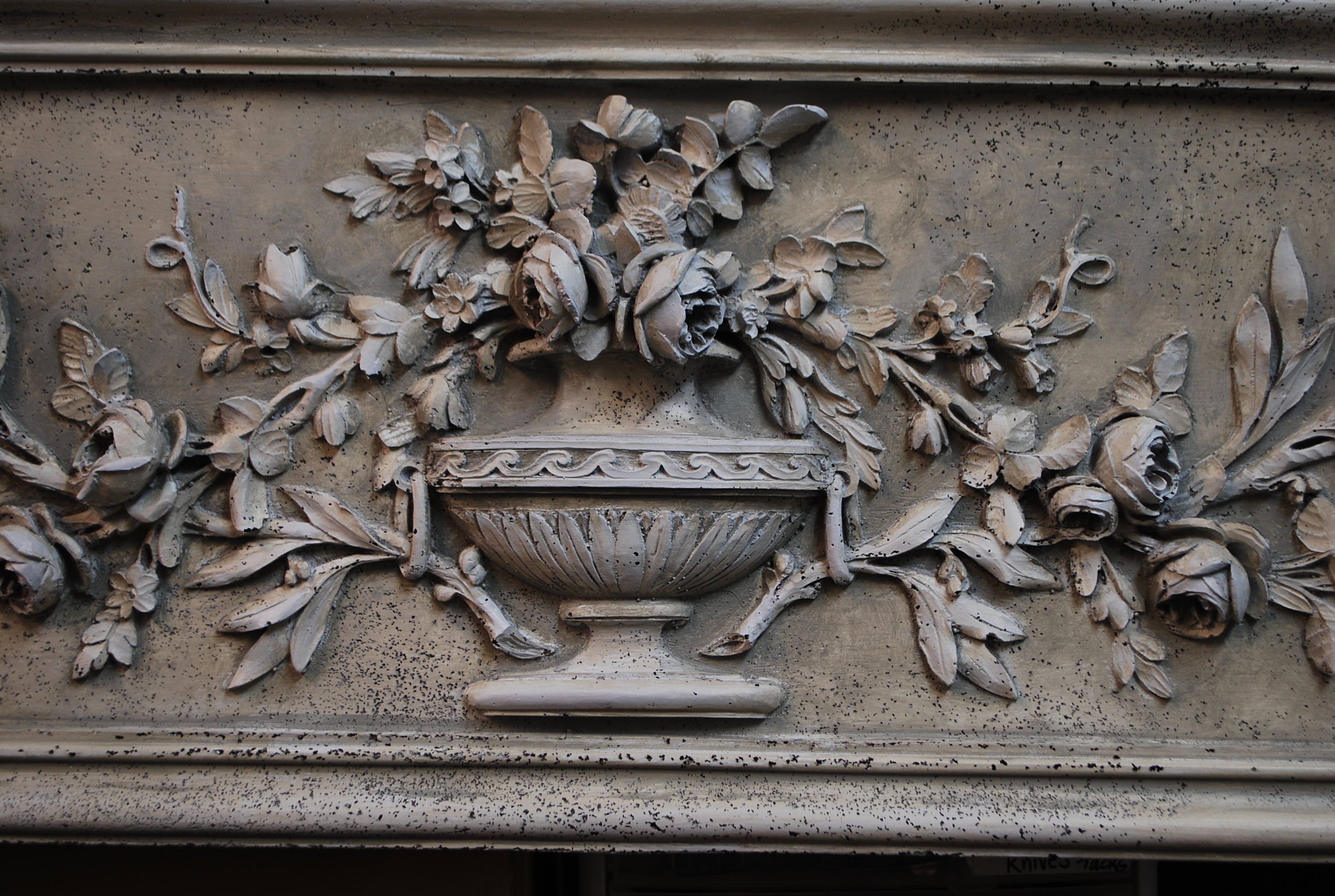
Rob and I bought a small collection of fiberglas garden ornament which was delivered late last week.  Though we had a lengthy discussion about the finish with the rep, I was not happy with what got delivered.  Fiberglas is a friendly material, in that it is impervious to weather, and light weight.  But it is by no means a natural material.  If I have to have fiberglas, I like it to look like fiberglas.  Fiberglas finished to look like something it is not-just saying.  The plaque pictured above had been spray painted the most horrifying shade of dead white imaginable.  I knew I had to paint it.  A dear friend had just introduced me to hand screened en grisaille wallpaper-meaning wallpaper that is all shades of gray from black to white.   Those gray landscapes have been on my mind.  I bought 4 quarts of Porter exterior paint, and went to work.  What is pictured above-the finish.  It is by no means a great work of decorative art, but this painted surface is much easier on the eye than what was. 

four-seasons.jpg

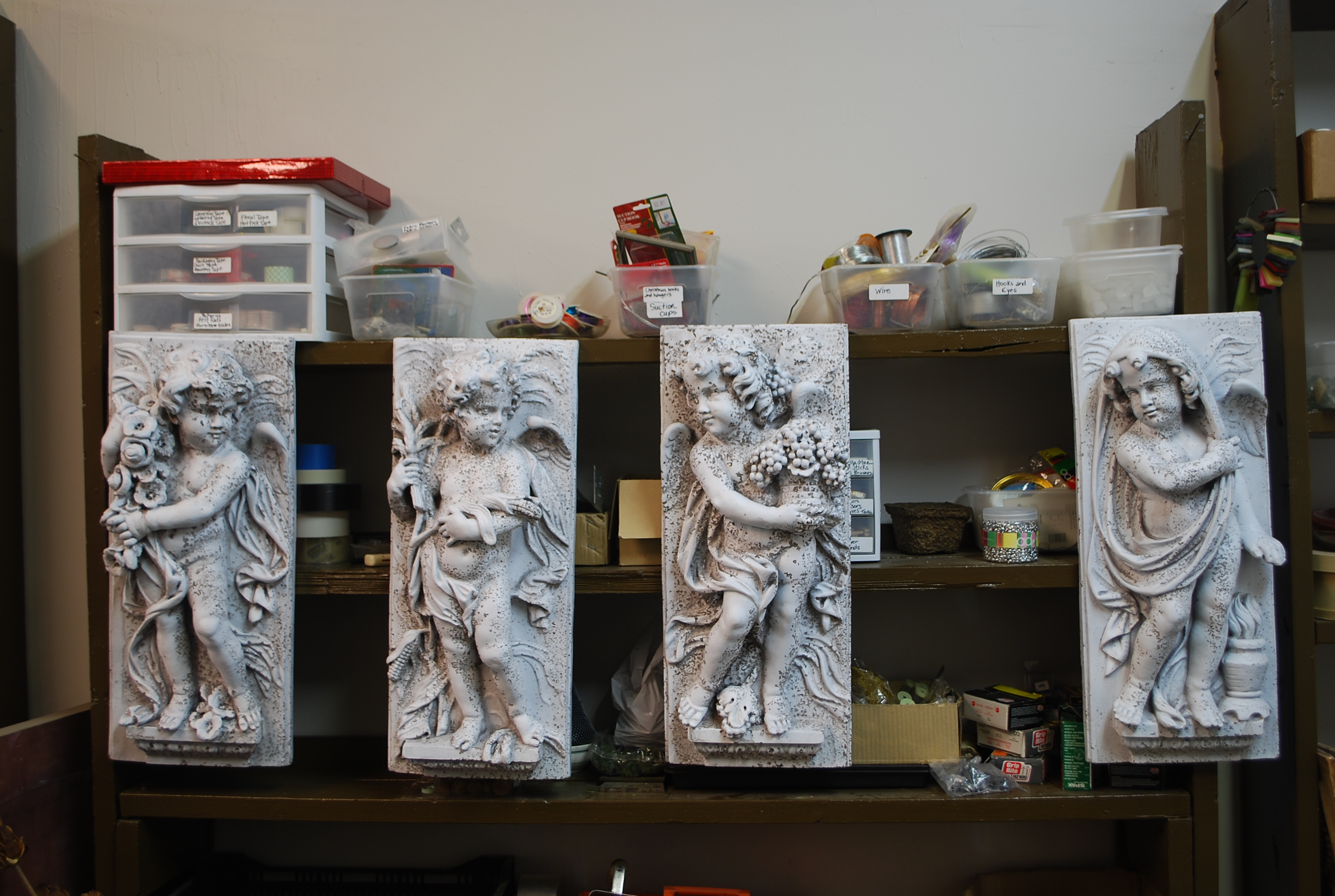
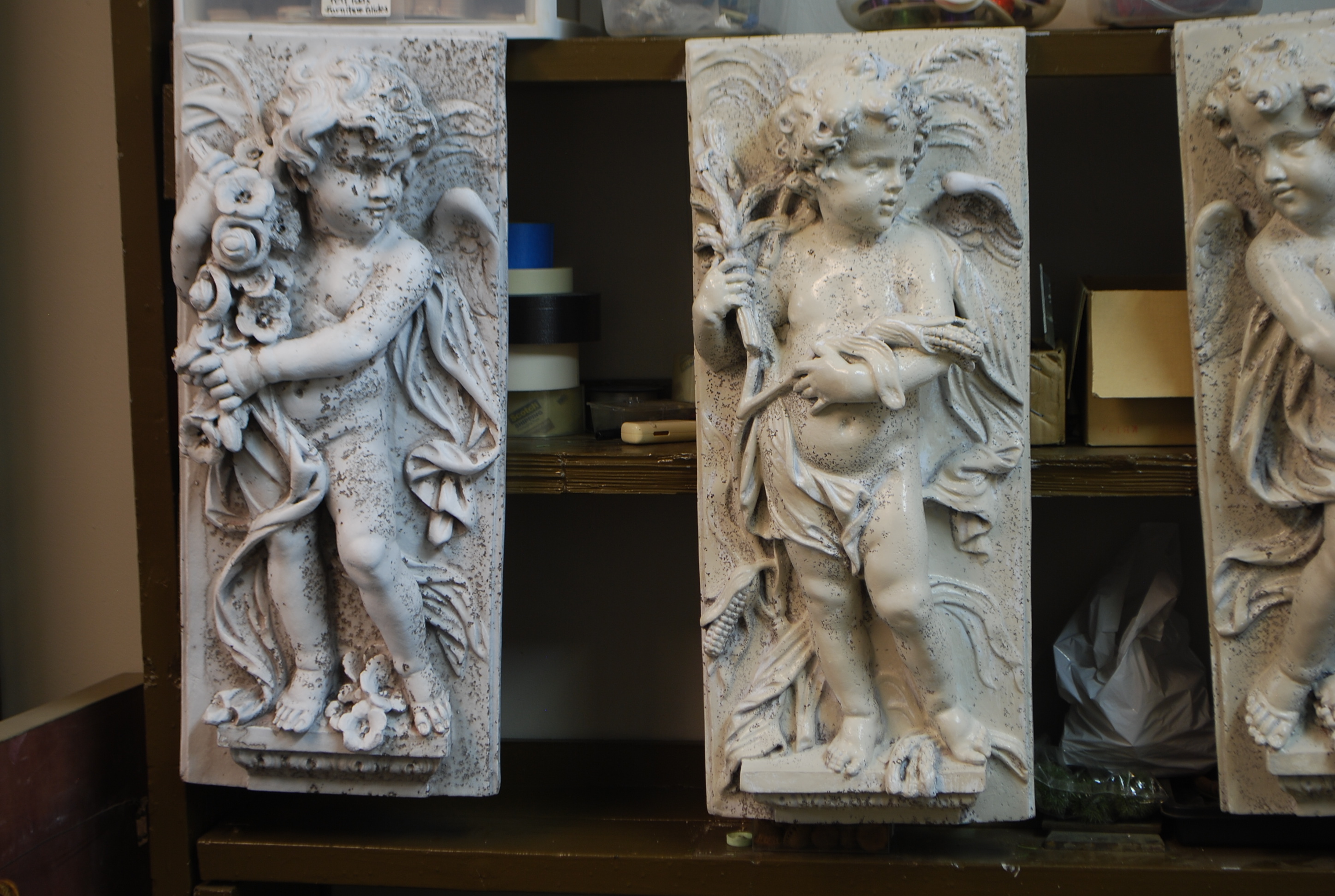
This set of wall hangings depicting a classical interpretation of the four seasons-not so great looking.  The white is harsh.  The pits in the surface of the fiberglas, even more harsh.  Beautiful white painted surfaces outdoors can be difficult to achieve.  A very stark architectural white that is fresh and airy on an indoor surface can be strident and off putting outdoors.  Toxic white I call it, as no one seems to warm up to it.  White outdoors is always warmed by the quality of natural light.  This flat and unnatural white made me squint.

fall-season.jpg

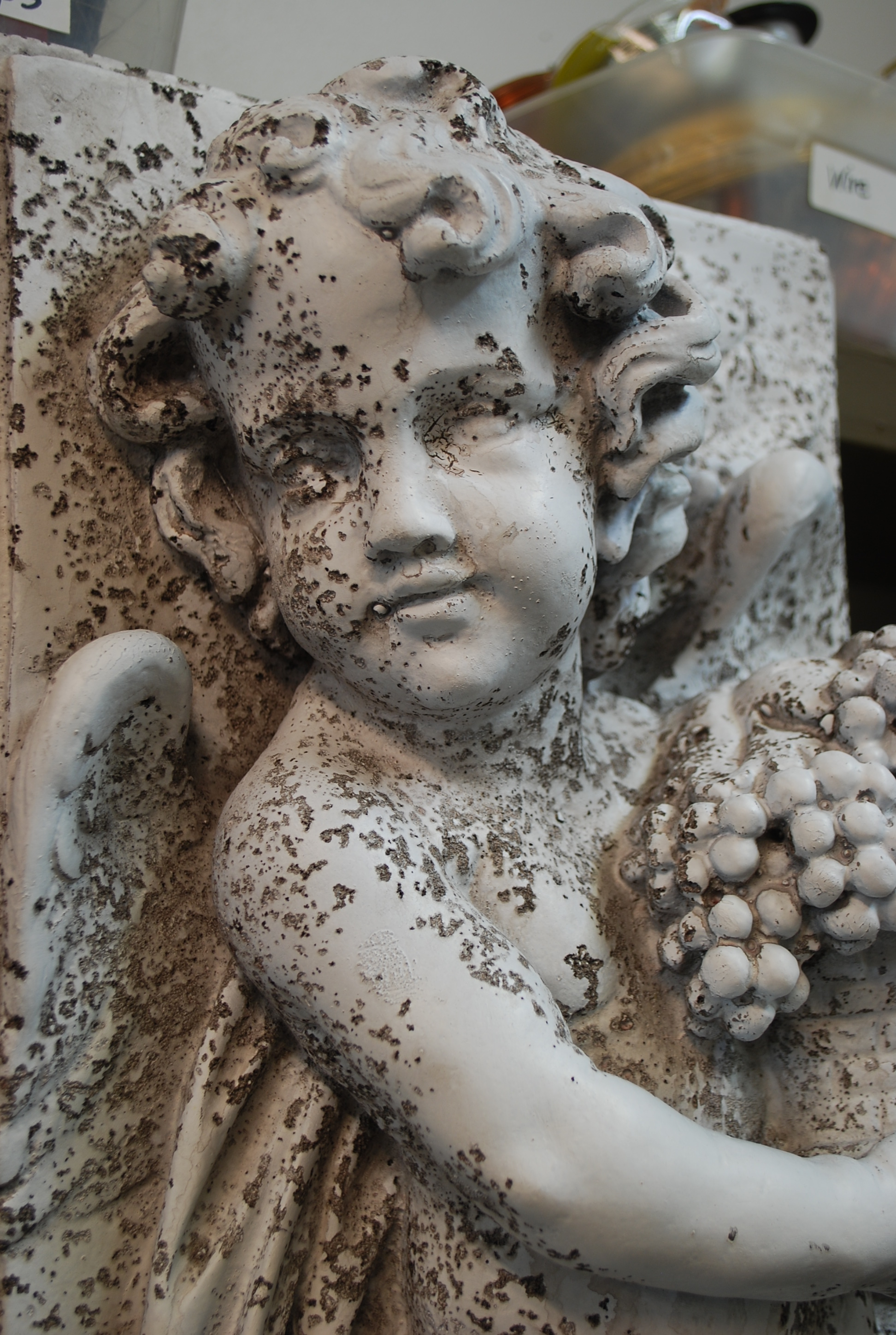
Buck tells me that cast concrete which is not vibrated sufficiently develops what is known as bug holes.  The air which produces this pitting has not been vibrated out of the mix.  I am sure these fiberglas bug holes were deliberate.  This was an effort to make brand new molded fiberglas look like aged stone.  I am sure it is as unconvincing a surface to you as it is to me. The pits were sprayed with a very dark stain.

cherub-face.jpg

This pitting is not so attractive. After all, cherubs are supposed to look sweet, or devilish-not scary.  The runny nose look-not my favorite. 

painted-plaque.jpg

The pitted areas would have been much more effective, has they been confined to the shadow areas.  A base coat of Porter exterior satin paint filled in the worst of them.

underpainting.jpg

The figure of the summer season on the far left in its original state shows how some ornament for the garden can be vastly improved in appearance with a little paint.

painted-four-seasons.jpg

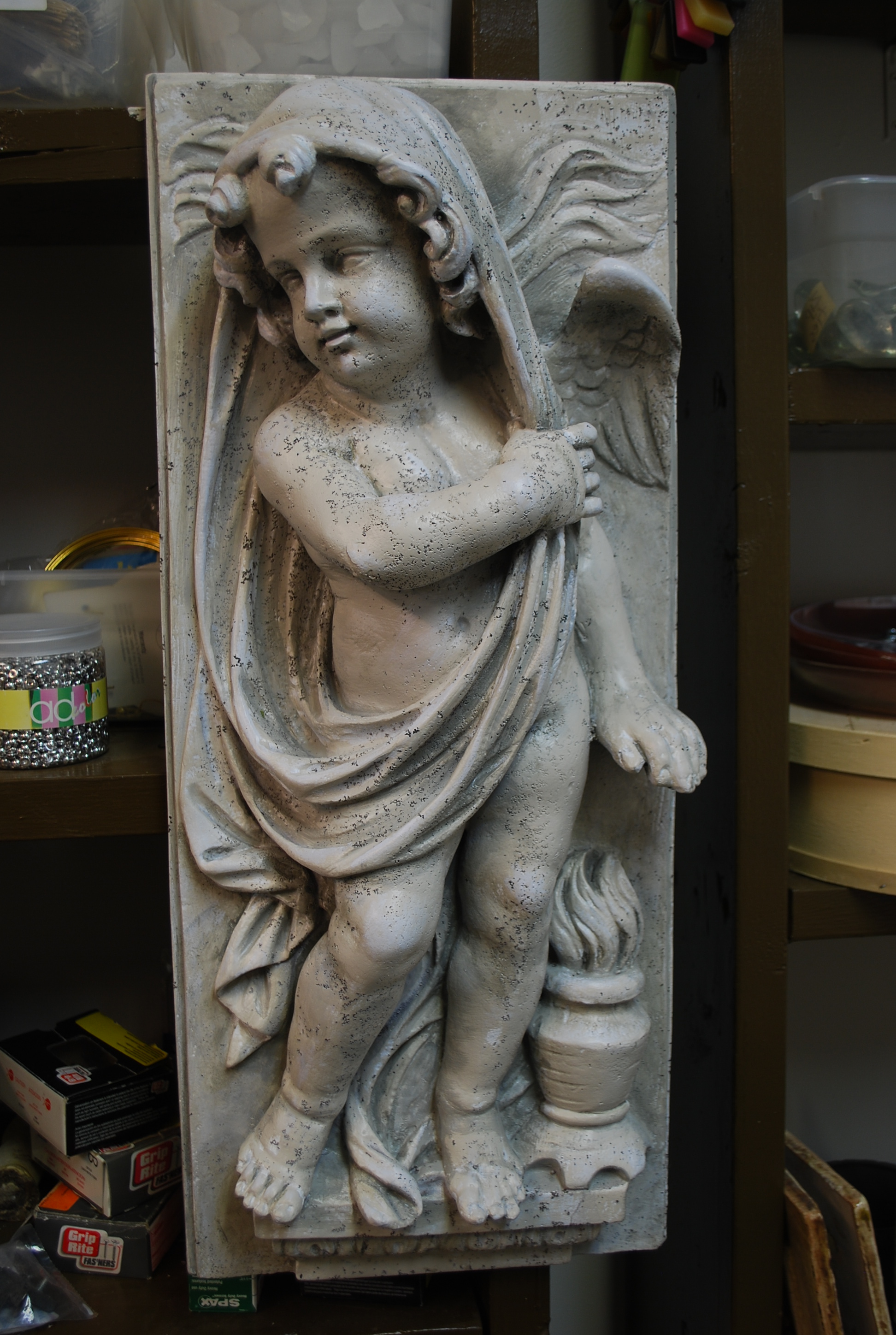
The annotated collection is much more to my liking.  After the base coat, I used a slightly darker color in the shadows, and a slightly lighter color on those surfaces closest to my eye.  A little paint can go a long way towards improving the looks of anything it touches.  The best part?  If a first effort or color doesn’t work, there’s always the option to try again.

painted-fiberglas-cherub.jpg

Though I would touch the surface of an antique or lovely vintage ornament for the garden,  a little paint can go a long way.

At A Glance: A Winter Party

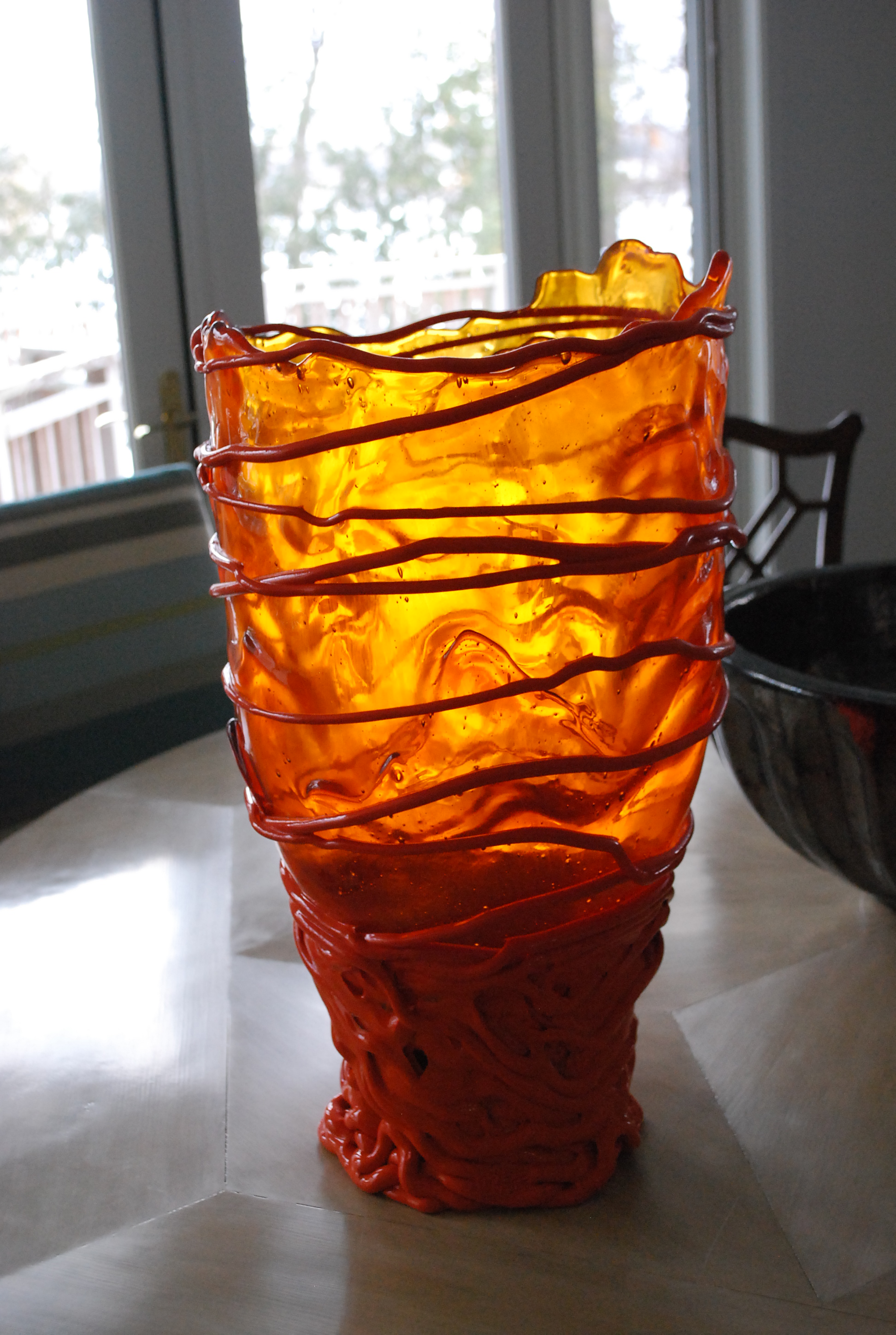
rubber-vase.jpg

I so welcome a chance to do cut flower arrangements for a party in the winter.  Flowers-who would elect to do without them!  At the moment,  I am a gardener without a garden.  This means I am wringing my hands over the dormant season.  I welcome any chance to step out of the gray.  This occasion-a 70th birthday.  The clients-their viewpoint is decidedly contemporary.  This rubber vase of theirs-astonishing in scale, material, and color.

copper-willow-branches.jpg

My interpretation speaks to the vase, as it should.  Lots and lots of dianthus Green Trick, and 100 stems of copper willow make something of this extraordinary vase.

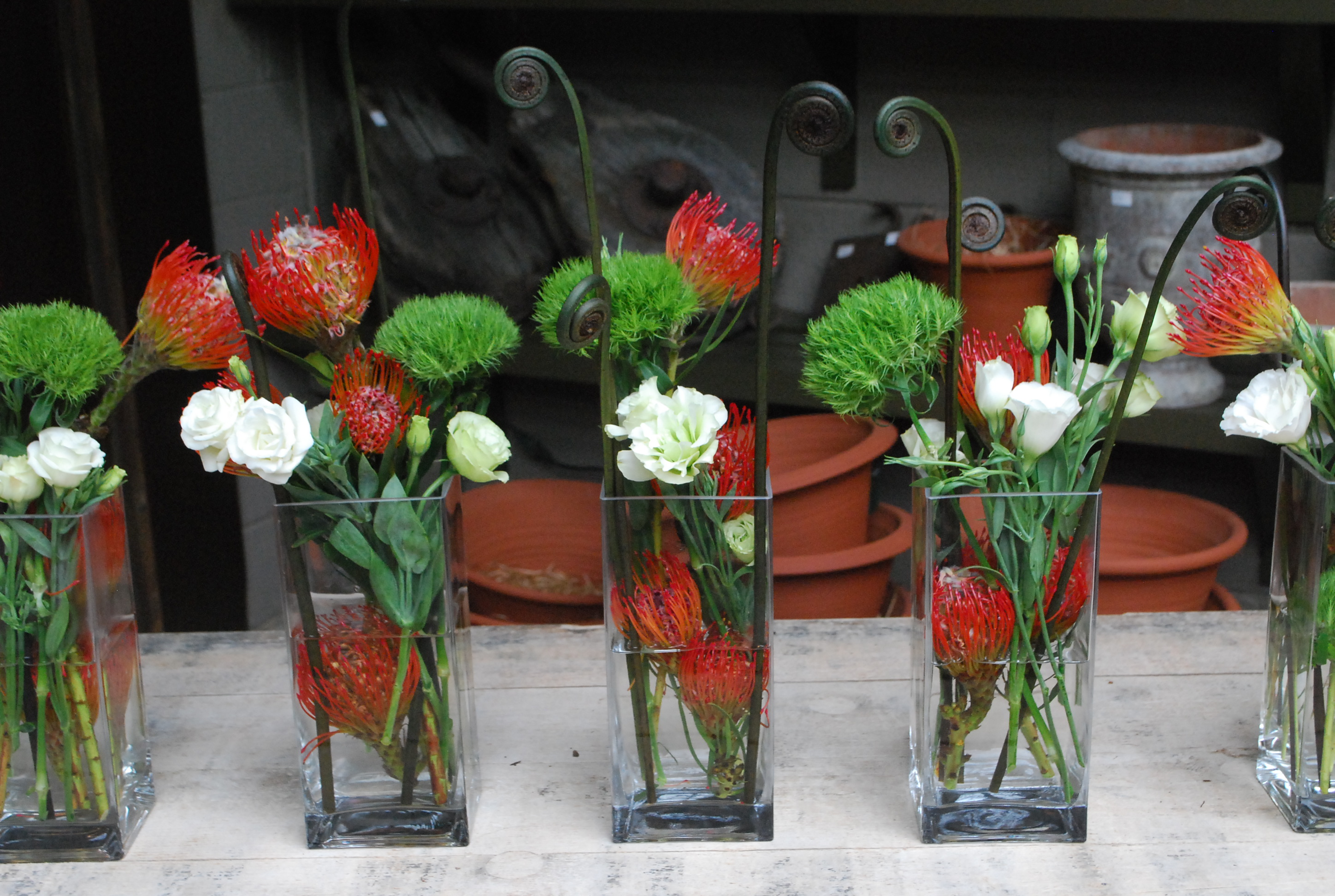
cut-flowers.jpg

The honoree of this particular birthday is a man.  He stands every inch of 6′ 6″, and has a heart many times this size.  What would I do for him?

green-cymbidiums.jpg

The choice of flowers had everything to do with what might delight him.  The color choices-entirely about the environment in which they live.

dianthus-Green-Trick.jpg

My part in this is but a very small part of the celebration.  Many friends and family would attend.  The occasion, the environment, the food-the community-all of these elements would provide atmosphere for a very special and important occasion.

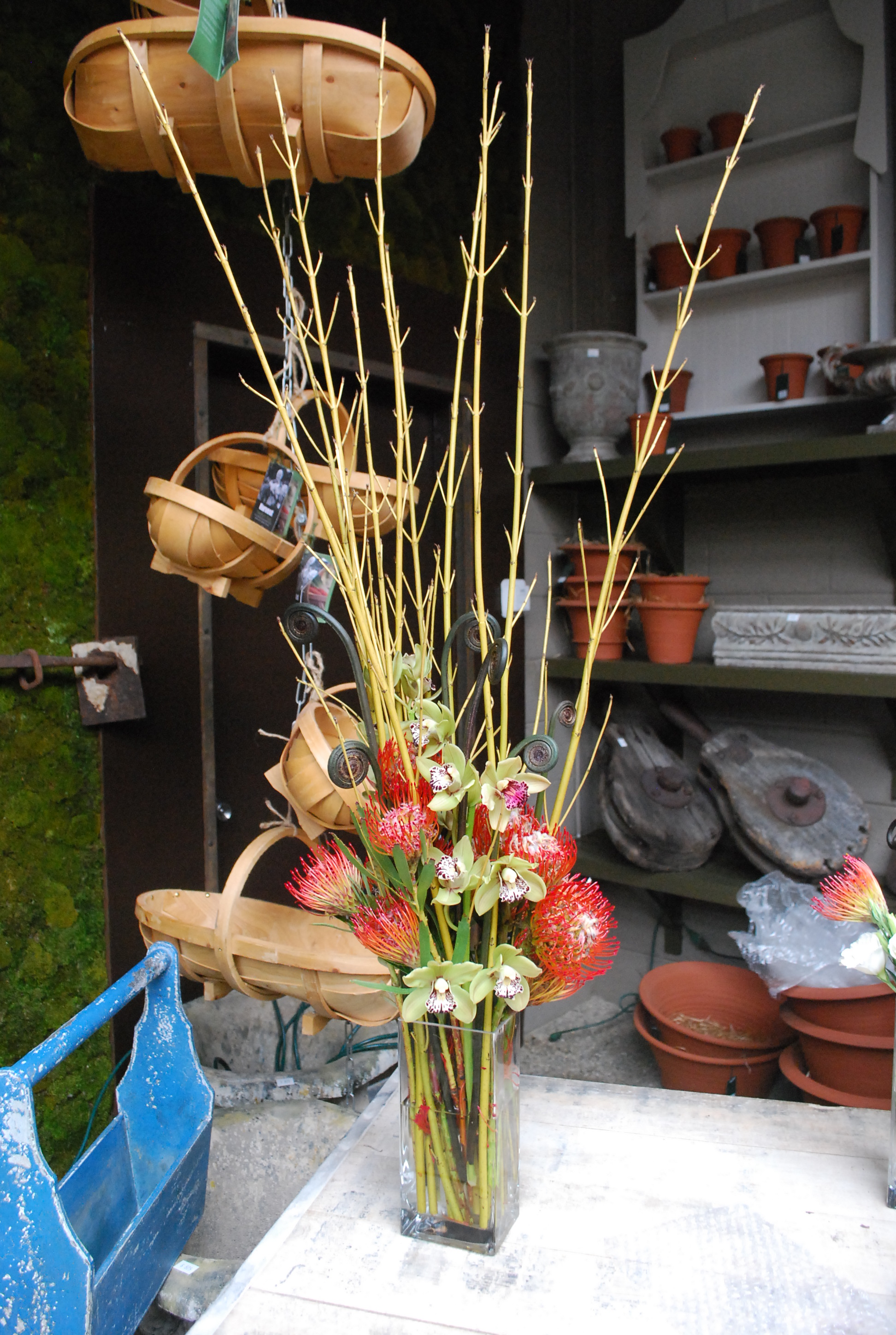
yellow-twig-dogwood.jpg

As for me, it was a shock and a delight to have an occasion to have flowers in sight.  Flowers in hand.  Flowers to arrange.  How I miss the flowers!  The long standing relationship with my clients-memories accompanied this work.  Garden oriented work in February-I treasure this, given this desolate part of the year.  Arranging flowers for this party, these particular people, did me a world of good.

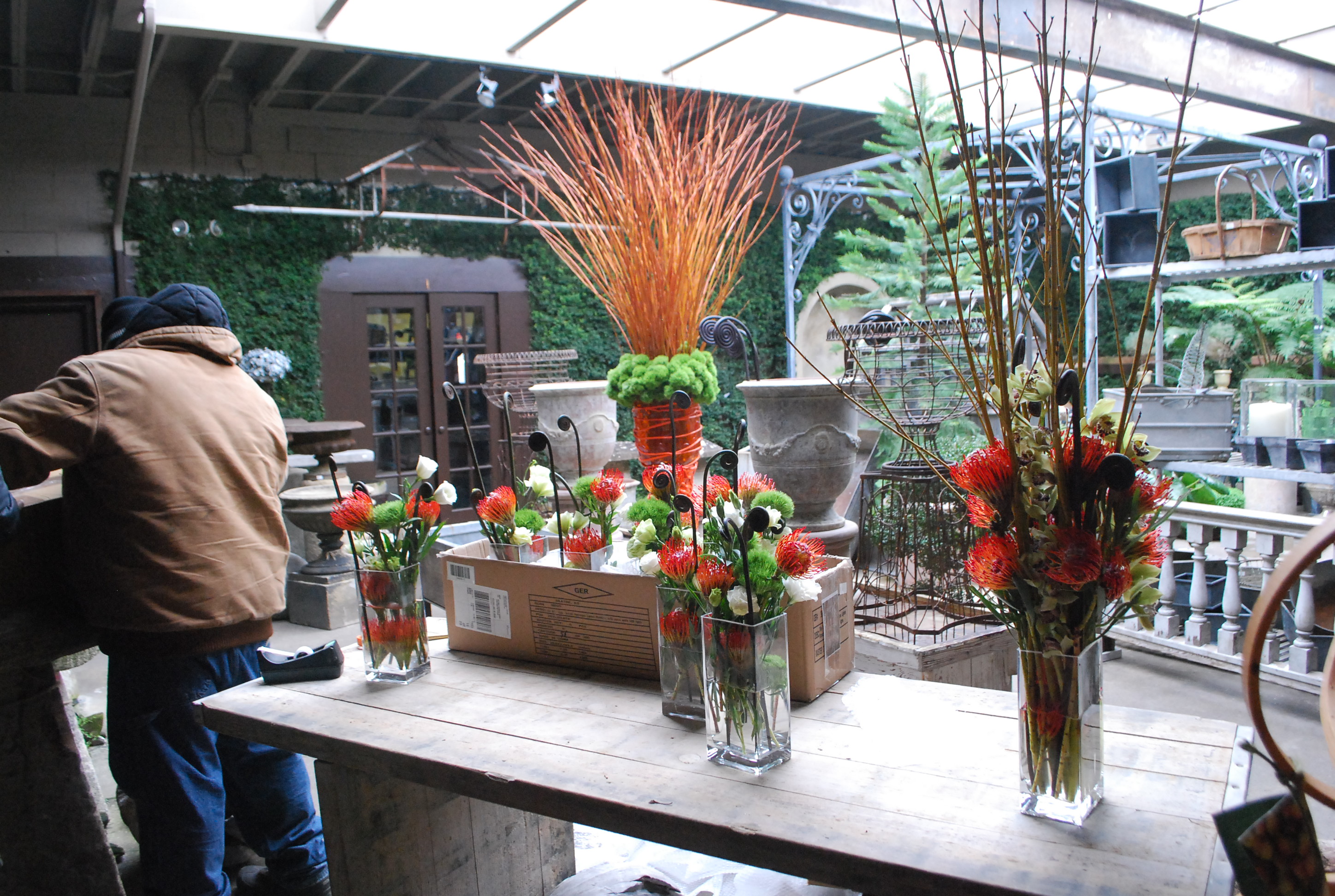
party-flowers.jpg

Gardeners, florists, and farmers-none of us are so far apart.  This is my read,  on this February day.

Shades Of Gray

galvanized-metal-tray.jpg

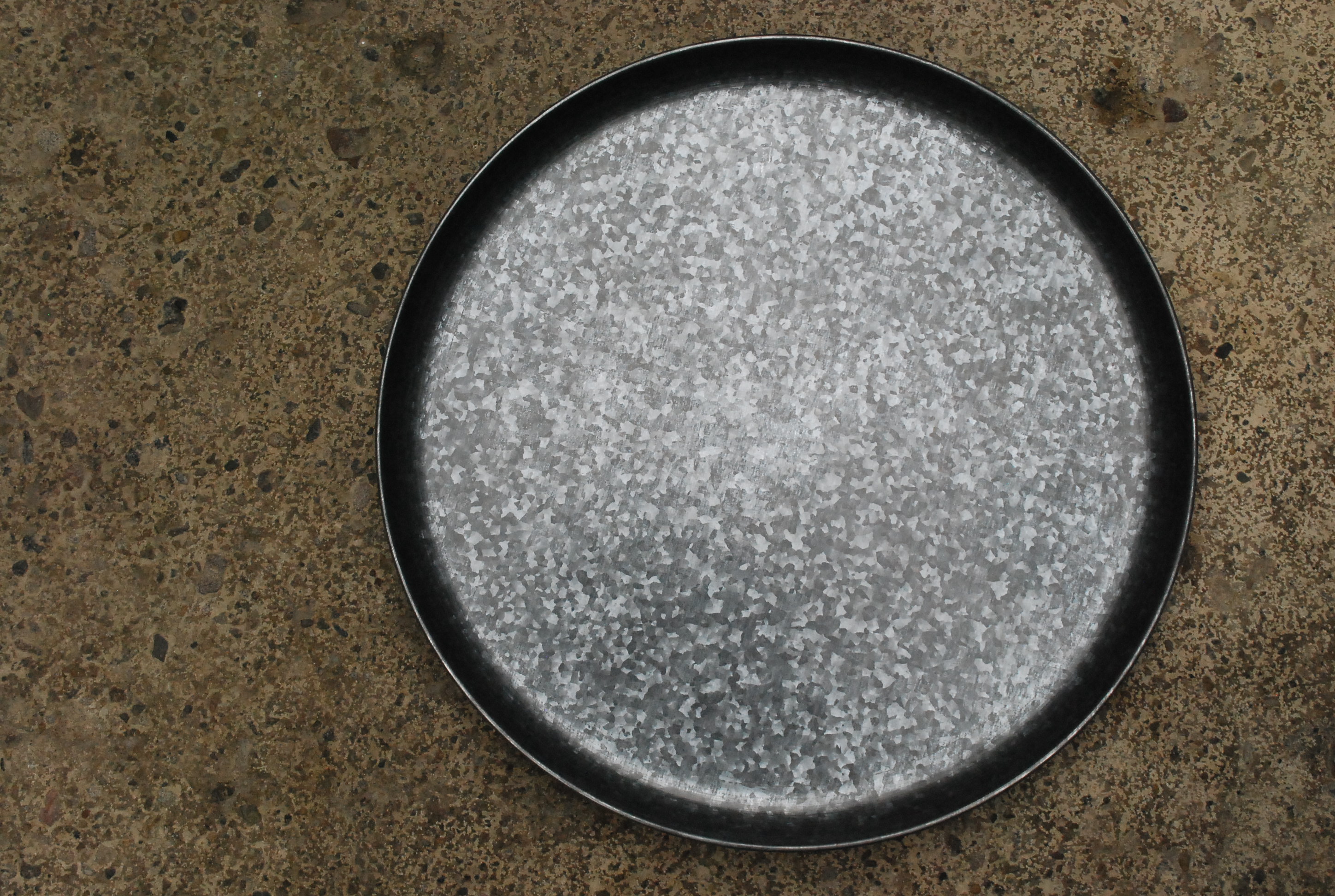
We are firmly entrenched in the gray zone now.  It’s February in Michigan.  Just about everything is one shade of gray or another.  The gray skies,  dirty snow, salted surfaces and relentless cold-an off key ode to gloom.  The trunks of the trees, the bare branches and the remains of the perennial garden have taken on that gray cast.  Relentless rain and fog for days gave way to temperatures in the teens.  I have leaks in the roof at Branch.  The backflow preventer at Detroit Garden Works failed-the leaking water was masked by the rain.  Now that it is 14 degrees, that water is transformed into a mountain of ice.  I can see every breath I take-great.  We lost power at home-what can be done for that?  We went to bed at 8:45pm, under a mountain of blankets.  The digital clock I have had since I was 19 was dead by morning.  The dogs want no part of going outside unless, much to my annoyance, I go with them.  This is by way of explaining that I have no gray walls, furniture or towels.  No gray car.  No gray boots, scarves, socks, dresses or sweaters.  But how this galvanized metal tray looks against the concrete floor in the shop-not bad.

antique-lead-cistern.jpg

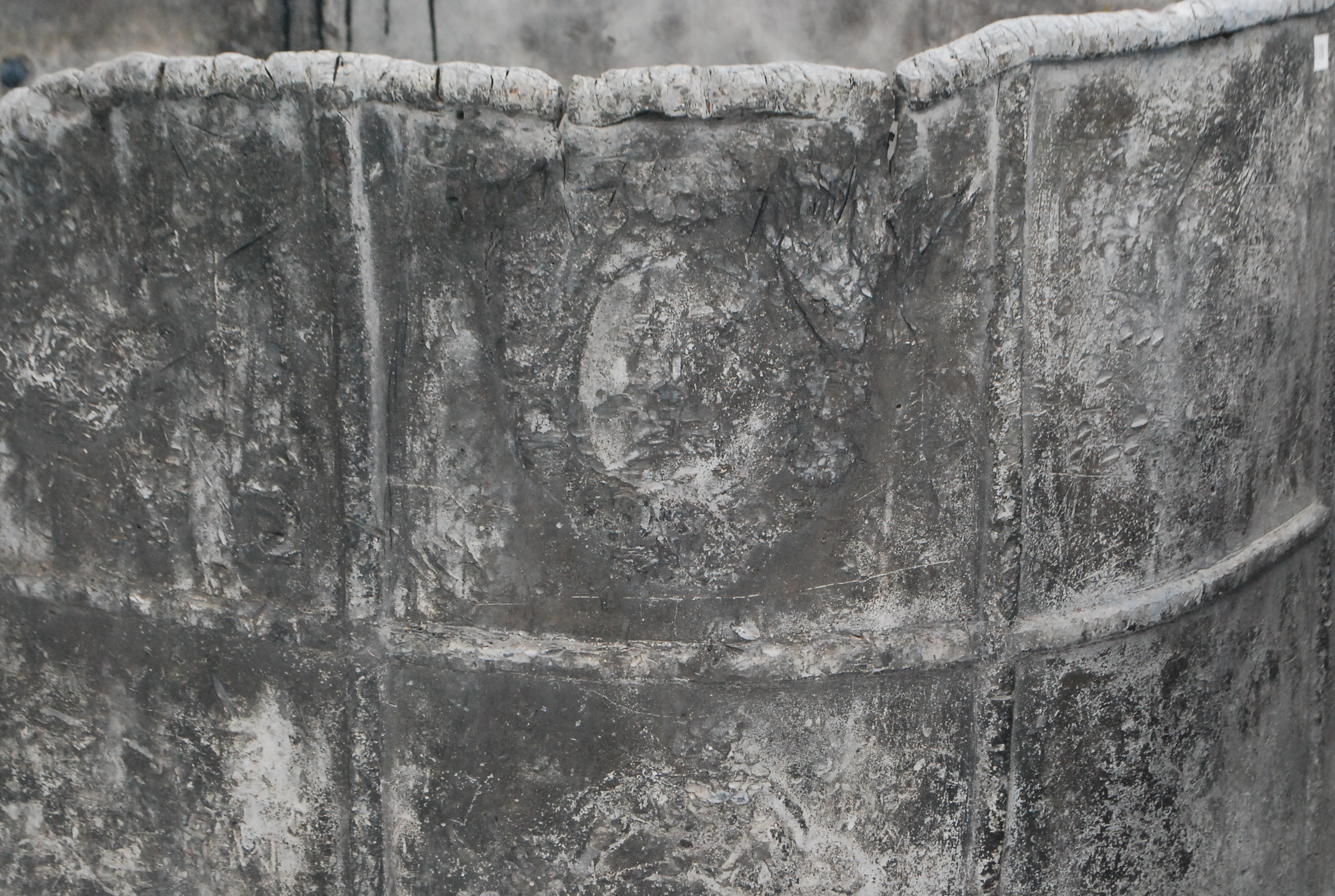
Lead is another word for gray, as in the phrase “leaden skies”.  Lead garden ornaments are among the earliest ever made.  It is remarkable how many from centuries ago still survive.  Lead is a soft, very dense and heavy metal.  You can dent it with a pencil.  Not the least of its attributes is its longevity.  Many garden ornaments eventually succumb to the weather.  Wood rots.  Iron rusts.  Concrete cracks.  Lead however,  is forever.  This cistern is several centuries old, and bears many scars-the story of which I will never know.  But it still holds water-perfectly.

vintage-lead-pots.jpg

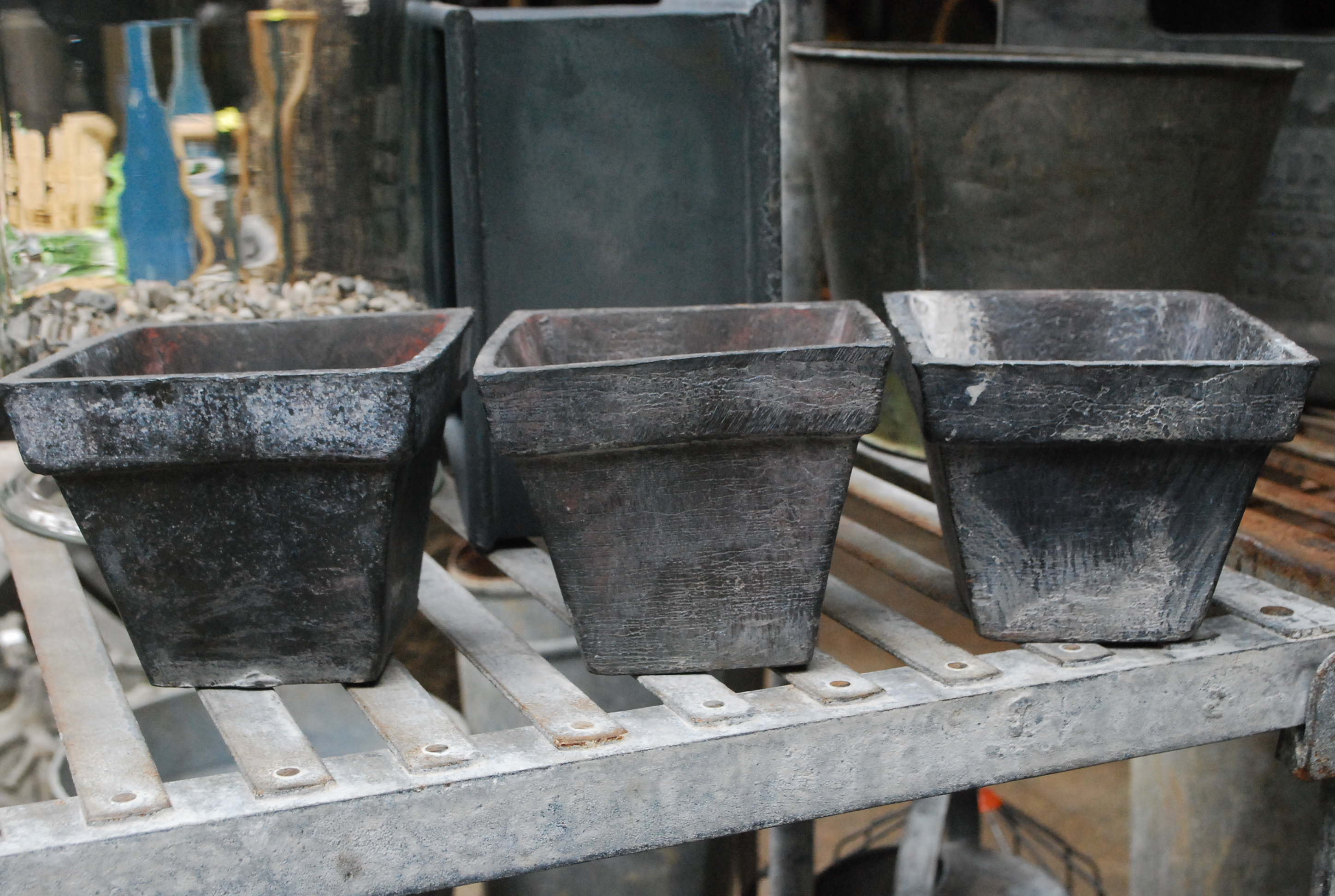
Lead has a very low melting point, making it an ideal metal for casting.  Lead toys were once common.  But now that the health hazards of breathing lead dust or ingesting lead are well known, its manufacture and use is confined to architectural materials and garden ornament.

modern-lead-container.jpg

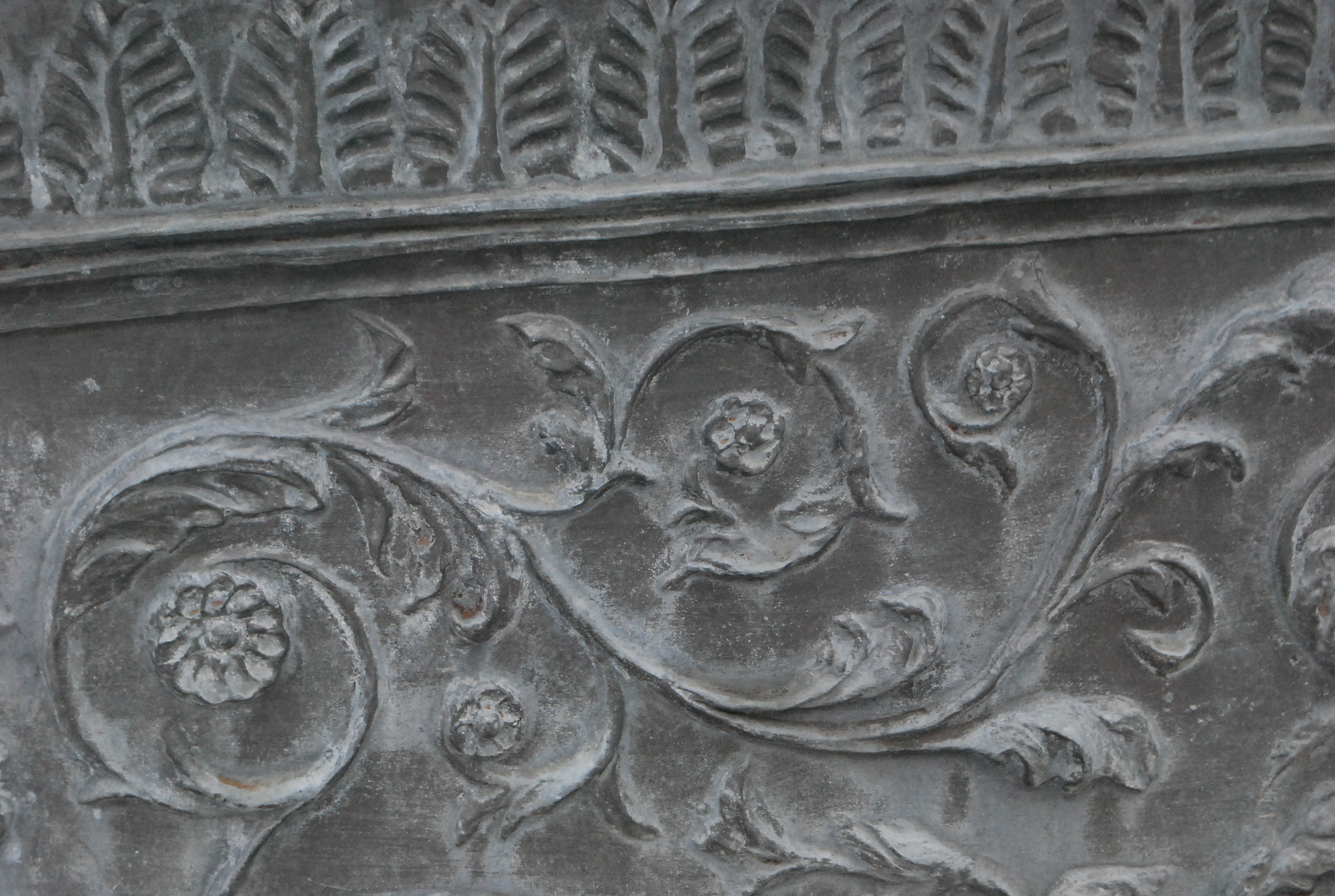
This picture is a detail from a lead square from Bulbeck.  Bulbeck Foundry in England manufactures very fine quality lead objects.  Contemporary lead ornament is incredibly expensive.  The price of the raw metal is astronomical now; I rarely buy lead for the garden anymore-the price is too dear.  I have a small collection of lead ornament-my supply has been steadily dwindling.  The day I have no lead to offer will be a sad day indeed.  This particular shade of gray is softly beautiful.  A lead pot is an elegant and permanent addition to the garden.

galvanized-metal-container.jpg

Galvanized metal-just what does this mean, exactly?  Steel and iron rust from contact with the air, and with water.  Rust eats away at the metal.  Eventually, unprotected steel will disintegrate.  Galvanizing is a process by which a coating of zinc is applied to steel.  Galvanized metal has a characteristic gray color.  Galvanizing is a process commonly applied to buckets, farm tools, screws, troughs, screens, and garbage cans.  Farming and industrial objects were coated with zinc to make them more weather worthy.  I have seen countertops made from solid zinc.  While solid zinc sheeting is very expensive, this metal is inert and non-toxic.  Zinc coated buckets and troughs are reasonable in price and quite durable.

detail-galvanized-metal.jpg

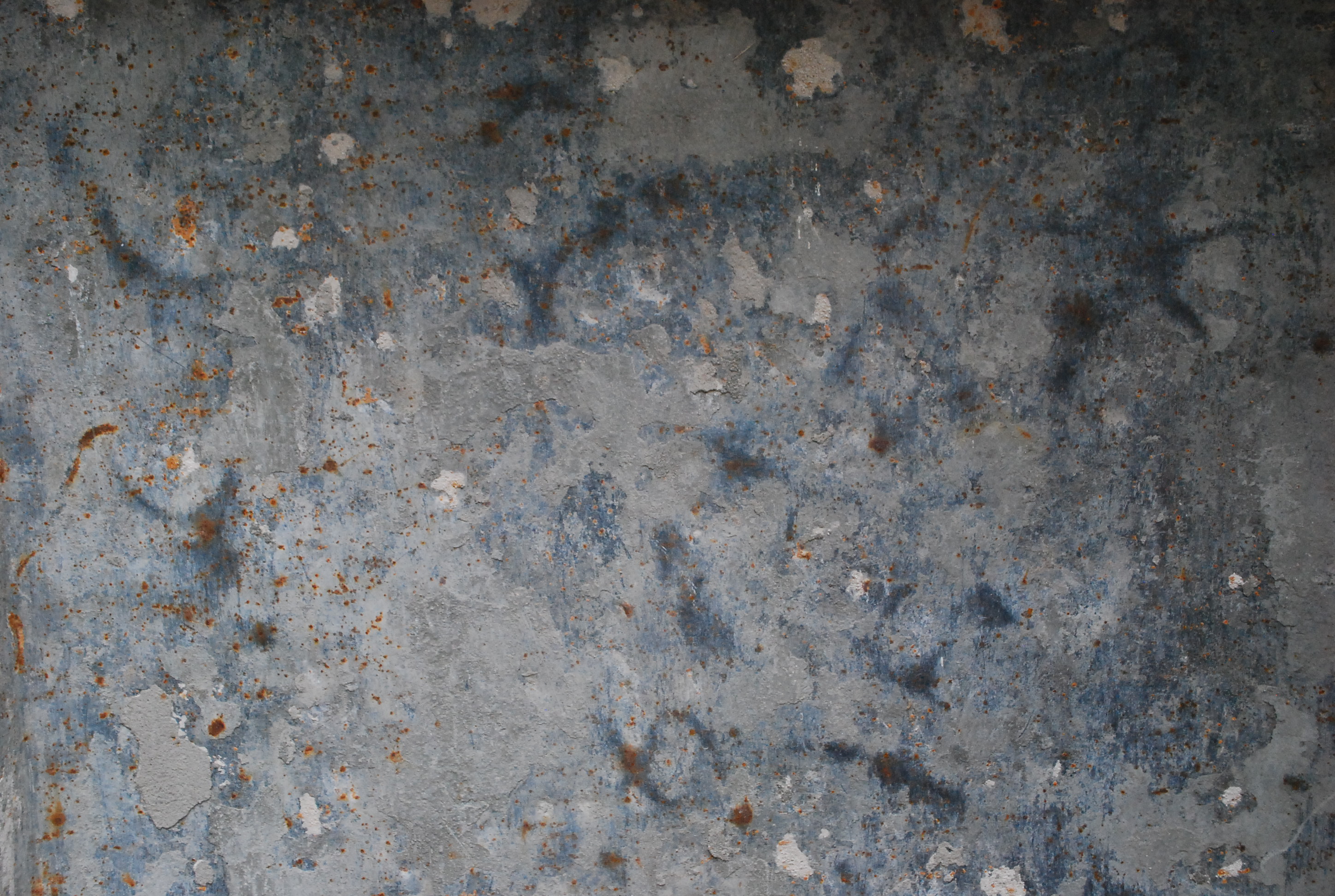
That gray color that is galvanized gray acquires a beatiful patina as it ages.  Rob is fond of those utilitarian objects that pertain to industry or agriculture that might find a new home in the garden.  Farm buckets planted with herbs enchant him in the same way as a galvanized trench drain might be repurposed as a garden shelf.  This old galvanized table top reveals its age.  Those places where the galvanizing has worn through are rusting.

vintage-bakery-bin.jpg

Galvanized metal containers that have been always used indoors can be easily moved outdoors.  We have repurposed both steel chocolate vats and industrial tubs for the garden.  A galvanized container planted for the season is at home in the country as it is the most contemporary of settings.  This galvanized bakery box could hold tools, or be planted. I could see it filled with water, and home to a lotus. This shade of gray has possibilities.

vintage-flower-bucket.jpg

I have a collection of galvanized metal flower buckets-they are very useful when I am conditioning flowers for a wedding or event.  This vintage bucket, graced with a brass tag identifying its origin, is a beautiful object in and of itself.  A collection of these buckets-yes, he spoke for all of them. Though I am not a fan of gray February days, gray as in galvanized is a good looking gray.

zinc-bucket-detail.jpg

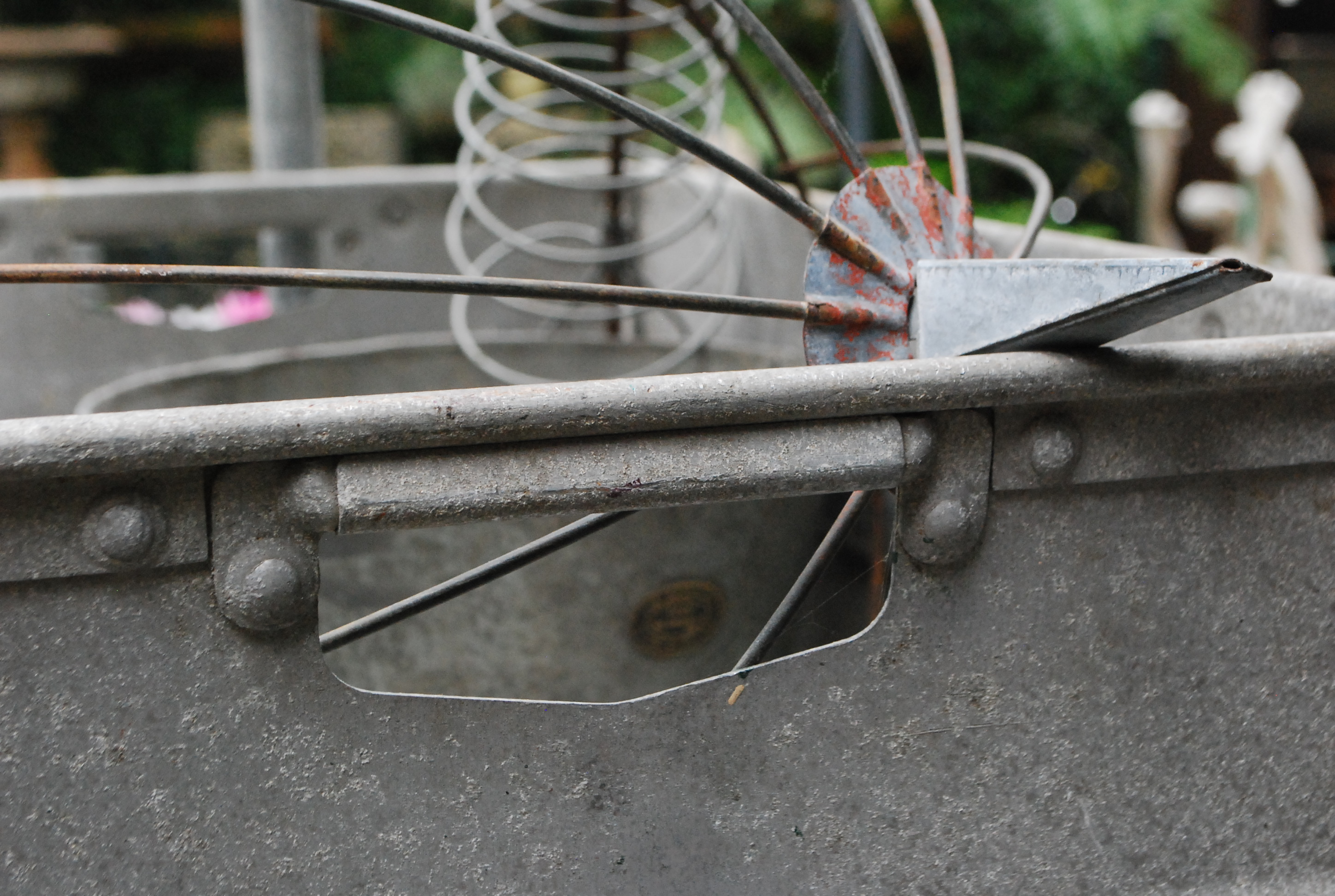
Every gardener is interested in ornament for the garden that is rugged, and easy to look after.  Galvanized metal is virtually maintenance free.  A large galvanized tub is relatively light weight-compared to lead, concrete or stone.  If I plant such a tub, I drill a number of holes in the bottom for drainage.  The zinc coating may eventually wear through to the base metal.  Some of the sheet metal window boxes at the shop will need replacing this year, as the zinc is worn through, and the steel is rusting out.  But those boxes were inexpensive to purchase, and lasted 15 years.

worn-galvanized-metal.jpg

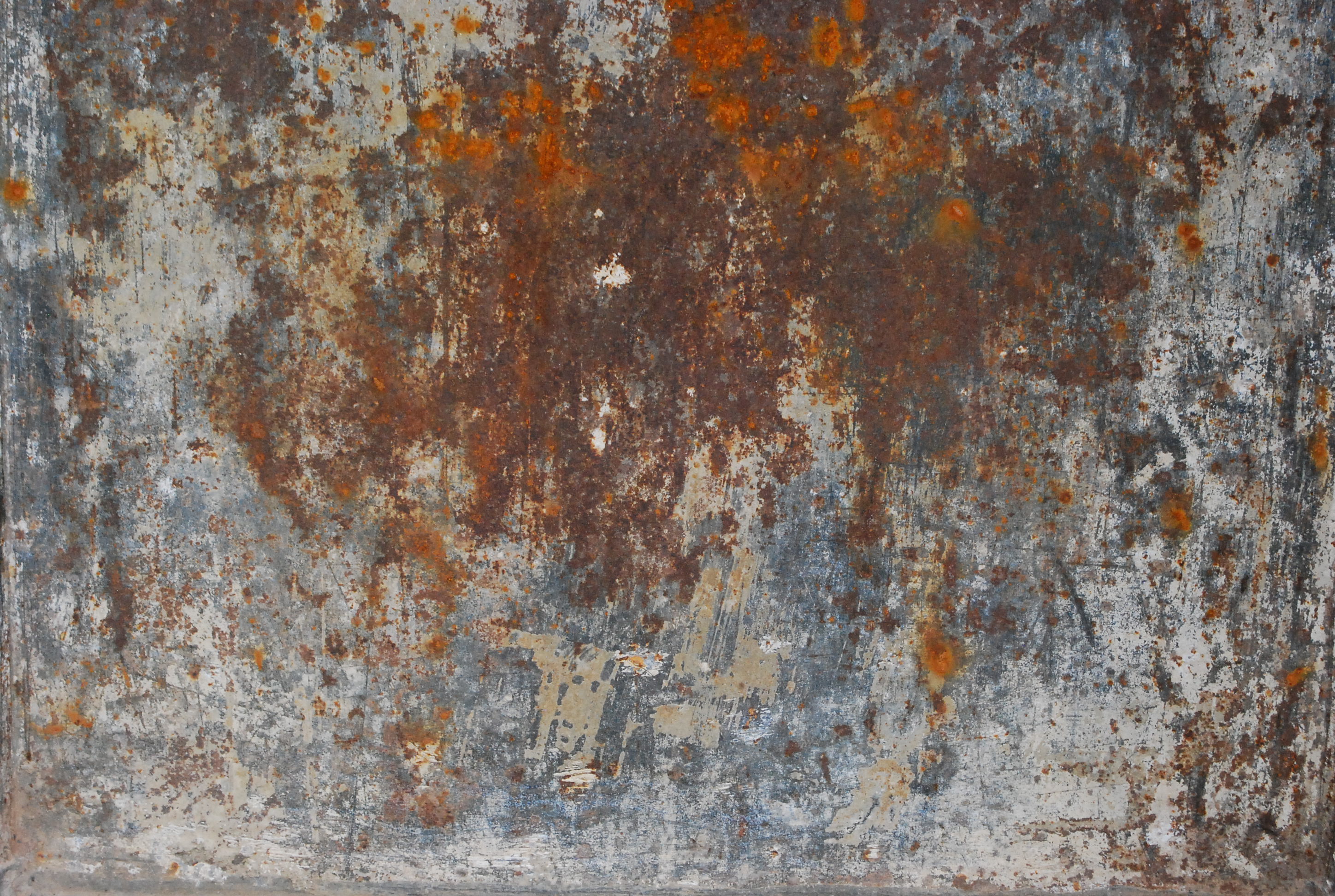
The bottom of this large vintage galvanized tub has a beautifully aged surface.  It is large enough to provide a home for a sizeable herb or flower garden.  Hung on a wall, it would be a visual discussion of what can be beautiful about gray.